International Journal of Scientific and Research Publications, Volume 9, Issue 2, February 2019 392 ISSN 2250-3153
A Study of Robotic Process Automation Among Artificial
Intelligence
K P Naveen Reddy
1, Undavalli Harichandana
2, T Alekhya
3, Rajesh S M
4Dept. of computer science and engenering, GITAM school of technology, Banglore ,India
DOI: 10.29322/IJSRP.9.02.2019.p8651 http://dx.doi.org/10.29322/IJSRP.9.02.2019.p8651
Abstract- Robotic process automation (or RPA) is associate rising type of business process automation technology supported the notion of software system robots or artificial intelligence (AI) workers. In traditional workflow automation tools, a software developer produces inventory actions to automatism a task and interface to the back-end system exploitation internal application programming interfaces (APIs) or dedicated scripting language. In distinction, RPA systems develop the action list by looking at the user perform that task within the application's graphical user interface (GUI), and then perform the automation by repetition those tasks directly with in the GUI. This may lower the barrier to use of automation in products that may not otherwise feature arthropod genus for this purpose.
Index Terms- Robots ,Automation theory, Robotic laws,
,Artificial intelligence ,Sensors, Controllers ,Programming .
I. INTRODUCTION
hen individuals initially hear the term “Robotic Process Automation” they could imagine shiny robots sailplaning around workspace buildings. In reality, this can be simply software package that may be created to perform the kinds of administrative tasks that otherwise need to stop-gap human handling .most operations teams adopting RPA have secure their employees that automation would not result in layoff. Instead, staff is redeployed to try doing a lot of fascinating work. One educational study highlighted that knowledge workers didn’t feel vulnerable by automation: they embraced it and viewed the robots as team-mates. Among different technological trends, is predicted to drive a new wave of productivity and efficiency gains in the global labor.
The difference between
RPAand traditional business method automation may be likened to a driverless robotic car versus a car using control. control merely modulates vehicle speed, whereas the driverless car is ready to remember, learn, adapt, and reply to numerous driving things, as an individual's would. This ability and awareness is what provides RPA the providng over traditional business and information technology process automation technology
The hosting of RPA services additionally aligns with the trope of a software robot, with every robotic instance having its own virtual workstation, very similar to somebody's employee. The automaton uses keyboard and mouse controls to require actions
and execute automations. Unremarkably all of those actions happen in exceedingly virtual surroundings and not on screen; the robot doesn't would like a physical screen to control, rather it interprets the screen show electronically. The measurability of recent solutions supported architectures like these owes a lot of to the appearance of virtualization technology, while not that the measurability of enormous deployments would be restricted by obtainable capability to manage physical hardware and by the associated prices.
To understand the idea of Robotic process Automation (RPA) little Illustration like, a team of eleven bank workers was allotted to manually review on a day to day a pair of,500 high-risk client accounts to work out whether or not or not payments ought to be processed or came. It took up to eight hours for these eleven workers to end the task. The work is currently performed by twenty computer code robots, whereas the workers are freed to try and do higher-value work.
II. AIANDROBOTICS
A manufacturing process is basically a stochastic process. An operator uses his arms, hands, sense, and brain to perform operations like grasping, holding orienting, inserting, aligning, fitting, screwing and turning of work pieces of various shapes and sizes. In small and medium batch production, programmable automation is adopted. Robots are important aids in programmable automation. For precision a robot has to interact with the environment around it in a manner similar to man. Therefore, a robot should be intelligent if it has to emulate human capabilities.
An intelligent robot has survived arm and end-effectors, has sensors and adaptive control functions with the help of computer. Adaptive control is necessary to correct the errors in position and orientations of the work pieces and the end-effectors .an intelligent robot must determine cause and effect phenomena. So it must detects the faults and minimize their effects. The thinking processes such as brain function are performed by a computer. Sensing and effecting are the body functions that can be performed using the basic laws and axioms of computer science. In order to accomplish a task, both the brain and the body function are to be coordinated. So a smart robot must have artificial intelligence that will differentiate the robot from another machine.
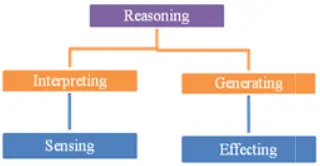
Figure 1: Simplified model of AI/Robotics
Sensing includes seeing, hearing, touching, smelling and measuring. The sensors gather and produce information. They have little ability to reason about it.
Effecting can be done by actions. The action can be accomplished by manipulators using body, arm, wrist, hands, fingers, legs, wheeled vehicles (mobile robot) and with various means of communications.
The components of interpreting, generating and reasoning are necessary to acquire knowledge about the environment. These components in fact, recognize, locate and assemble the objects and may direct the changes in the environments.
Interpreting information is a means to understanding the environment. However, interpreting information in proper context in the proper context is necessary. Generating function is a means to influence the environment. Reasoning is
cope with unforeseen, incomplete, and uncertain and perhaps, conflict ting information to act or react to the environment.
A. Robotic laws
Sir isaac asimov dealing on the subject of robotics framed three basic laws which the roboticists still obey with respect.the laws are philosophical in nature,they are as follows
First Law :A robot must not harm a human begin or through inaction,allow one to come to harm.
Second Law :A robot must always obey human begins unless it is in conflict with the first law.
Third Law :Arobot must protect itself from harm unless that is in conflict with the second laws.
B. Types of robot controls
There are different types of controller used in robotics. There are: 1. Drum controllers
2. Air logic controller 3. Programmable controller 4. Micro process –based controller 5. Minicomputer –bade controller
Drum controller
In drum controller, as the drum rotates, it actuates those switches which are wired to hydraulic or pneumatic valves. Thus, the manipulator movements are controlled by th
advancement of the drum. It is now obsolete.
Air logic controller
Figure 1: Simplified model of AI/Robotics
Sensing includes seeing, hearing, touching, smelling and measuring. The sensors gather and produce information. They Effecting can be done by actions. The action can be accomplished by manipulators using body, arm, wrist, hands, robot) and with various The components of interpreting, generating and reasoning are necessary to acquire knowledge about the environment. These components in fact, recognize, locate and assemble the objects
ges in the environments.
Interpreting information is a means to understanding the environment. However, interpreting information in proper context in the proper context is necessary. Generating function is a means to influence the environment. Reasoning is a means to cope with unforeseen, incomplete, and uncertain and perhaps, conflict ting information to act or react to the environment.
Sir isaac asimov dealing on the subject of robotics framed three y with respect.the laws First Law :A robot must not harm a human begin or through Second Law :A robot must always obey human begins unless it Third Law :Arobot must protect itself from harm unless that is
There are different types of controller used in robotics. There are:
In drum controller, as the drum rotates, it actuates those switches which are wired to hydraulic or pneumatic valves. Thus, the manipulator movements are controlled by the rotation
Air logic controller employs a number of pneumatic valves which in turn control the opening and closing of the main valves of the robot manipulator in close synchronization with
Programmable controllers
In a programmable controller , the sequential order in which the switches are to be operated in kept in the memory .it can be entered into the controller with the help of a keyboard .The program can also be displayed on the CRT screen. Programmable controllers may be wont to control and coordinate numerous tasks to be done by the peripheral devices as well as robots.
Microprocessor-based controller
The microprocessor based control is the most popular robot control system. Microcomputer of various types may be employed to program the sequential tasks or motions and store them in its memory. It contains special circuitry to interpret the programs kept in its memory and at the same time it can also count the number of sequential events or tasks accomplished. It is versatile, programmable and has good memory .point
continuous path and controlled path motions can be easily programmed in microprocessor –based robotic system.
Minicomputer-based controller
Robots having higher payload are manipulated through a minicomputer-based controller
C. PROGRAMMING METHODES
Programming of a robot can be done by several methods
• Lead through programming
• Teach pendant programming
• Textual programming using computer terminal
Lead through programming
In this method robot is switched to program mode when the operant holds the robot manipulator or its wrist and moves it through a desired path. The robot controller memorizes all the points so generated. During playback, the robot manipu describe the same path as taught during learning. Moreover, editing facility can be provided to compensate for error. Some of the robots with continuous path control system use joystick. As the joystick is moves in different axes, the robot manipula axes follow the motions exactly .speed commands are provided to increases or decrees the speed of the manipulator.
Teach pendant programming
Teach pendant is the most popular method of programming industrial robot.
Text programming
Micro computer are used for programming industrial robots and different languages has been devolved for both on
line monitoring. Robot software languages include facilities such as subroutines ,program branching ,interruptions and signaling to peripheral equipment ,etc. different languages for robot software system include VAL used in Animation robots, SIGLA used in sigma robots ,HELP used in pram assembly robots , AUTOPASS in IBM robots and so on .at present , there are many different robot programming languages with various important features Air logic controller employs a number of pneumatic valves which in turn control the opening and closing of the main valves of the robot manipulator in close synchronization with the timers.
In a programmable controller , the sequential order in which the switches are to be operated in kept in the memory .it can be entered into the controller with the help of a keyboard .The on the CRT screen. Programmable controllers may be wont to control and coordinate numerous tasks to be done by the peripheral devices as well as robots.
The microprocessor based control is the most popular robot system. Microcomputer of various types may be employed to program the sequential tasks or motions and store them in its memory. It contains special circuitry to interpret the programs kept in its memory and at the same time it can also sequential events or tasks accomplished. It is versatile, programmable and has good memory .point-to-point, continuous path and controlled path motions can be easily
based robotic system.
having higher payload are manipulated through a
PROGRAMMING METHODES
Programming of a robot can be done by several methods Lead through programming
Teach pendant programming
Textual programming using computer terminal
In this method robot is switched to program mode when the operant holds the robot manipulator or its wrist and moves it through a desired path. The robot controller memorizes all the points so generated. During playback, the robot manipulators describe the same path as taught during learning. Moreover, editing facility can be provided to compensate for error. Some of the robots with continuous path control system use joystick. As the joystick is moves in different axes, the robot manipulator axes follow the motions exactly .speed commands are provided to increases or decrees the speed of the manipulator.
Teach pendant is the most popular method of programming
International Journal of Scientific and Research Publications, Volume 9, Issue 2, February 2019 394 ISSN 2250-3153
like flexibility in editing ,interpreting ,compiling, simulating and debugging facilities.
D. Robot sensors
In order to function effectively, a robot has to receive information from the environment for necessary manipulations, send signals to various joints for necessary moments and interact with the peripheral equipment. The object should not be pressed had or deformed or slip. Sometimes it’s necessary to have prior knowledge regarding the form of the object before it’s gripped. Therefore, it’s needed to sense and measured all the important geometrical parameters of the object lying in an environment. Sensory feedback is, of cause, more important for unstructured environment
Usually there are two basic kinds of sensors for searching, recognizing, grasping and place the objects .they are tactile and non-tactile .Tactile sensors are contact sensors that has to brought connected with the object to get signals to measure the necessary quantities while non-tactile sensors are contactless sensors that sense the signals remotely, but only within the required range of distance from the object. When the tactile sensors make physical contact with the object, an electrical analog or digital signal is generated and sends to the robot controller. Electrical signals may be obtained through the contacts of micro switches .signals may also be obtained through mechanical pressures which changes resistances of electrical strain gauges in piezoelectric crystals
Typical contact type’s robotic sensors include
• Force sensors
• Torque sensors • Touch sensors
• Position sensors
Non tactile sensors detect and measures magnetic fields, infrared and ultraviolet light, x-rays, electrical fields, ultrasonic sound waves or electromagnetic waves
Typically non-contact sensors include
• Electro-optical imaging sensors
• Proximity sensors • Range imaging sensors
Imaging sensors may use a laser scanner. Computer-vision user artificial intelligence (AI) to determine cause and affect phenomena to detect the fault or minimize their effects. Vision – robots acquire knowledge about the environment by the interpreting, generating and reasoning components
E. Improved data Analytics
Each task the robot executes produces data that, once gathered, permits for an analysis. This drives better decision making within the areas of the processes being machine-controlled. once data is expeditiously combined, compared, and contrasted to data collected in different areas, it permits for better decision making on each a micro and macro level. As each step in a very process is traced, an organization is
ready to spot gaps wherever processes can be further optimized to extend potency.
F. Increased efficiency
As software package robots handle the plenty of repetitive, tedious jobs during a business, employees can participate in further else activities that involve personal interaction, problem determination, and deciding. Robotic process automation permits employees to finish tasks that are a lot of valuable to the company and its customers. once employees feel their work is valued and worthy, their productivity will increase, that will increase work retention rates. however on the far side having the ability to participate in additional added activities, employees area unit higher supported for their added tasks. this could facilitate increase productivity. Again, a similar volume of work can be done in less time, thereby permitting downstream work to begin sooner.
III. ADVANTAGES
Robotic process automation software system and services are ready to run applications the manner a person's operator would. Supported rules, the work flow operate automatically complicated tasks. RPA brings a full form of advantages like:
1) Continuing service: once it involves running real 24/7
service, software package robots emerge as obvious what they are doing, no need to take breaks while doing tasks.
2) Scalability: The processes fixed for one software robot are
often enlarge to any number of other robots and conversely, robots are often decommissioned of a process to work on another one.
3) Truthfulness: Once allotted tasks, robots are designed to
faithfully complete the instructions without failing.
4) Time: Whereas it takes years to implement traditional
projects with humans, it only takes weeks with robots.
5) Improved Efficiency- The wonder of RPA is that it’s
designed to alleviate human employees of their repetitive daily tasks. once technology handles these tasks and workflows, the method runs abundant faster and afterwards works more effectively.
6) Greater Productivity-When technology does the heavy
lifting, as is the case with RPA, output can be considerably increased.moreover, knowledge employees are going to be freed up to use their skills and knowledge to further necessary projects that drive innovation and growth.
7) Elimination of human errors-Even the foremost careful
human worker can make an occasional mistake. Unfortunately, typically these errors can prove to be incredibly costly. With robotic process automation technology, this risk is eliminated, resulting in larger accuracy.
8) Cost saving- While implementsing robotic process
automation does require an upfront investment, the overall increase in efficiency and productivity as well as reduction in human errors quite justify the expense.
9) Lower turnover- once human employees are no longer
additional high-level projects, additionally disposal to larger worker satisfaction and retention.
IV. DISADVANTAGES
1) Monetary Expense-Budgetary restrictions are among the
most important reasons why businesses are not prefer to implement RPA.
2) Lack of technical ability- Many of us believes that in
order to leverage robotic process automation, the end user should possess significant technical ability. This thought sometimes holds them back from reaping the various advantages that area unit accessible to them.
3) MajorChange- doping a replacement technology needs
modification, however with the proper tool, the impact of that change is much less noticeable and disruptive than many realize.
4) Redundancy- Another common concern of these
resistant to RPA is that the worry that robots will replace human workers, when its main purpose is to actually support humans within the work.
V. EXISTINGRPATASKS
a) RPA at workplace
While adopting RPA at businesses, it’s actually because they’ve known issues with their inheritance systems that area unit losing them time and money. As an example, once a business has an inefficient manual methodology for commercial document fulfillment wherever human agents have to be compelled to manually question the system for brand new orders and physically validate each, the method isn't solely long and tedious, however at risk of human errors. With RPA package, the method might instead operate just like the following:
1. The RPA system automatically pulls data from the client system, checking for brand new purchase orders, reducing fulfillment times and increasing productivity.
2. Once a purchase order is downloaded it will be right way pushed into the legacy system.
3. The agent acts as a “human-in-the-loop” and manually validates the order for accuracy based on the customer contract. 4. RPA software package then uploads the acquisition order into a database wherever discounts area unit automatically applied supported client agreements.
5. Agents then check the consummated order, guaranteeing quality control and human bit.
6. With additional machine learning capabilities, RPA software package will begin to find out and adapt to the present method for even larger gains in potency that over time, would require less human interaction to make sure accuracy.
By adding RPA to this legacy system, the fulfillment process can be significantly improved and bottlenecks in productivity, especially during busy seasons, can be eliminated entirely resulting in higher client satisfaction.
b) RPA at banking industry
How about we look the more carefully at the banking industry. RPA systems will effectively perform several tasks related to loan origination and account management. However, RPA
typically can’t determine if the person making the inquiry is who they say they are. By analyzing unstructured data (e.g. say, reviewing a scanned passport image and matching it against a customer’s account record), machine learning is then able to create a connection between doing and thinking in an automated environment.
c) In HR And Business Support - It's Coming
The use of artificial intelligence and advanced analytics are apparent and mature in industrial settings, whereas in support functions like unit of time, it's the potential to be even as revolutionary however the uptake has been a bit slower but the uptake has been a little slower. For example, in HR, on boarding the process of hiring new members of staff and putting them to work following recruitment generally takes around one month, according to recent research by CareerBuilder. The various processes taking up references, verifying identities, carrying out health and safety assessments and ensuring hires have an understanding of company practices, policies and culture requires a complex set of actions and toolsets which are not easy to automate. However, there’s a lot to gain as well as driving efficiency by cutting down time spent on mundane but vital processes and compliance, automating tasks like this will free up skilled workers to apply them more creatively. Finally it doesn’t mean we will replace HR departments with robots but that automation will severely augment the jobs people will be doing in support functions like HR. Parts of the workload dealing with interpersonal or disciplinary issues still require a human touch.
d) Intelligent process automation(ISP)
The next step within the automation journey is IPA (Intelligent process Automation). RPA is intended simply to follow directions, whereas IPA that is created from RPA and AI (Artificial Intelligence) has the aptitude of learning from expertise that it then applies to boost on future tasks. Almost without people noticing, AI is fast becoming part of our daily life. Examples include the mobile phone ‘personal assistants’ Sire and Cortana; Amazon’s ‘Alexa’ voice service, and several types of fraud detection software used by banks. Currently AI remains fairly immature, but evidence suggests that this disruptive technology will transform many industries, including insurance. A number of start-ups are capitalizing on this prediction, for example, the New York-based company Lemon.ade, which sells insurance using a Chabot Smartphone app and exploits automated algorithms to great success for speeding up its claims service. This is one example of AI but for insurers, the possibilities seem endless. From spotting patterns and suspicious activity for fraud detection to using virtual assistants with the addition of chat bots for a more natural interaction experience and finally self-service robotics, which provides the capabilities for websites and mobile applications to be dynamically created, and allow RPA/IPA to serve customer requests directly. For an industry typically viewed as staid and old-fashioned, this may present an opportunity for many insurance companies to rebrand themselves as leaders in digital innovation.
IPSoft, Inc., and Rage Frameworks Inc. in the US, and Blue
Prism in the UK, are established platforms already in use –
International Journal of Scientific and Research Publications, Volume 9, Issue 2, February 2019 396 ISSN 2250-3153
oil-well centrifugal pump manual in 31 seconds – and give instructions for repairs – and do the job of a call-center operator, a mortgage or insurance agent, even a medical assistant, with virtually no human help. Fluent in 21 languages, Amelia understands implied, not just stated, meanings, and improves Examples of Existing RPA and AI Products
e) Atos SE has been using RPA to automate IT tasks in
customer legacy infrastructure tasks in functions such as ticket management, incident management and server load balancing, which were previously done by humans.
f) Oracle Policy Automation Cloud Service is described as
RPA software that reads business rules and policies written in natural language and then, based on those rules and policies, decides what questions to ask the customer, performs eligibility checks and produces a decision report.
g) Ross, touted by its provider as “the world’s first
artificially intelligent lawyer” built on IBM’s Watson. Designed to understand language, postulate hypotheses when asked questions, research, and then generate responses asked questions, research, and then generate responses (along with references and citations) to back up its conclusions. Also monitors law around the clock to notify you of new court decisions that could affect your case.
h) RPA at business cases
In most industries, the average employee spends up to 80% of their day on repetitive tasks that don't require creativity or deep thinking. These mundane tasks are meant to be automated. To illustrate this, the following are a few of practical business cases:
• Fraud detection: Robots can assist human bank
employees performing background checks and time-consuming fraud investigations while the employee can focus on customer satisfaction.
• Form-checking: Robots can handle tedious customer
order-checking to prepare the delivery process. It decreases the required time and at the same time reduces the margin of error.
• Claim processing: Robots can review customer claims
and identify who will end up with a refund without requesting any aid from a human.
• Fax categorizing: Robots can convert fax images to
machine-readable text and then extract data and categorize faxes.
Artificial intelligence empowers RPA. Many various business cases for RPA are being realized within innovative companies from many different industries. Use cases include accounting, billing management, and customer on boarding, data validation, customer service inquiry routing, inventory list updating, loan qualification, risk assessment, and official document validation. RPA promises to be able to run 24/7 with no stops, no breaks, no sleeping time, no vacations, and no sick leave, without forgetting, omitting, misunderstanding, or underestimating errors and without encountering any problems.
VI. NEWCAPABILLITESWITHRPAANDAI
1) Increasing security.
A software robot could be used to execute a process as directed, without inappropriate data collection, fraudulent intervention or deviation from prescribed process. – E.g., could be particularly useful with the most sensitive data such as personal pensions and administrative affairs of armed forces personnel, or financial services where having a person access multiple systems could increase the risk of fraud New Capabilities with RPA and AI.
2) Promoting self-service.
A principal barrier to the adoption of self-service is often technological Robotic process automation could be used to provide a means of deploying new self-service solutions where robots simply mimic the behavior of humans to perform backend transcription or processing activities
3) Promoting use of big data.
RPA software could be used to collect and organize inconsistent data from among disparate systems to make it usable by AI for big data analytics. Helping legacy systems work with cloud-based systems. For example, RPA software could be used to enable automated ordering and provisioning of services through a cloud interface that is translated to work with more traditional systems.
4) Overcome Geographic Hurdles.
This could create new business opportunities for clients that have political or regulatory impediments to off shoring their IT functions or business processes. It could also reduce to need to relocate operations to take advantage of labor arbitrage.
VII. CONCLUSION
Robotic process automation (RPA) provides advanced software system robots taking the place humans whenever complicated processes or routine tasks will be machine-controlled. That being said, how will artificial intelligence and connected technologies empower it? As we have a tendency to enter the digital transformation era, our industries are coverage that their task forces are operational regarding eightieth of their IT processes manually, lowering their performance and motivation. At a similar time, they estimate that a minimum of five hundredth of those tasks may be automatic.RPA uses software package and methodologies that are capable of taking advantage of the most recent technologies together with artificial intelligence, machine learning, voice recognition, and linguistic communication process to require automation to future level. That creates it a requirement for corporations of all industries that wish to convey their business right along the digital transformation journey.
REFERENCES
[1] Albus, J.S.,C.R. Mclean and M.L.Fitzgerald,”hieracical control for robots in automated factory”,robots,7,1983
[2] Dutta,A.K.,’Sensor systems for robotic’,Ph.D Thesis,Jadavpur univ.Calcutta 1990
[3] Nitzan , D. et al.,”Machine intelligence research applied to industrial automation”,,9th,10th,11th reports,NSF Grands,SRI Projects, SRI
international ,Menlo park,CA.
[5] Paul Roy ,Peter Dickinsion ,”How Robotic Process Automation and Artificial Intelligence will Change Outsourcing”Seminar on June 7, 2016. [6] Anderw Burgess ,”Robotic Process Automation & Artificial Intelligence”
handbook posted on 7th june ,2017
[7] A business review on The symbiosis of RPA and machine learning by Abhijit Kakhandikii on May 29, 2017
[8] Fred Jacquet “How AI Will Take Robotic Process Automation to the Next Level” march 29 ,2018.
[9] “INTRODUCTION TO ROBOTIC PROCESS AUTOMATION”Instutue for robotic process automation and artificial intelligence, June 2015.
AUTHORS
First Author – K P NAVEEN REDDY, pursuing B.Tech degree (CS&E Branch) in GITAM school of technology, Bangalore campus .I published two article with name "Closed Form Solutions Of Funcanality of
Windshield Wipers" in IJEE (Volume 10 ,Issue 1) and “ Comparison of Programming Languages: Review” in IJCSE (Volume 9 Issue 2) which are UGC Recommended Journals. the research aims are Artificial intelligence ,Robotics, Machine learning and Big data.
Second Author – UNDAVALLI HARICHANDANA , pursuing B.Tech degree (CS&E Branch) in GITAM school of technology, Bangalore campus.The research interests are robotic process automation , Internet of things and Artificial intelligence.
Third Author – T ALEKHYA ,pursuing B.Tech degree (CS&E Branch) in GITAM school of technology, Bangalore campus .The research interests are artificial intelligence and robotic process automation.