ISSN 2250-3153
CNG (HCCI) Engine Performance on the Effect of
Formaldehyde expansion by Changing Inlet Temperature
Saw Yu Mon*
* Mechanical Engineering Department, Mandalay Technological University
DOI: 10.29322/IJSRP.9.09.2019.p9398 http://dx.doi.org/10.29322/IJSRP.9.09.2019.p9398
Abstract- In this paper, packed petroleum gas homogeneous charge pressure start motor, CNG (HCCI) performance on the effects of formaldehyde addition by changing inlet temperature were researched. In this examination, the four-chamber, four-stroke motor was utilized. The outcomes got from the utilization of different level of formaldehyde expansion in CNG (HCCI) motor were analyzed with several inlet temperatures. The outcomes showed that when expansion fuel added substance as the formaldehyde in CNG motor were utilized, motor execution parameters, for example, torque and power, brake mean successful weight and brake explicit fuel utilization are ideal condition at 0.13% formaldehyde option in CNG (HCCI) motor and these parameters are diminished with expanding over 0.13% formaldehyde option sum in the motor. It is additionally demonstrated that combustion temperature variation depends upon the percentage amount of fuel addition at corresponding inlet temperature.
Index Terms- natural gas, HCCI, formaldehyde, additive, combustion temperature
I. INTRODUCTION
ost of the vitality utilized on the planet is provided by petroleum products. Consuming of the petroleum products creates squander materials, chiefly outflows to the air as burning fuel gases and residue, just as some fiery debris or potentially clinker. These waste materials effect sly affect the earth, some of them locally, others with increasingly broad or even worldwide effect It is outstanding that vehicles with flammable gas present lower contamination and carbon dioxide outflows contrasted with fuel vehicles Petroleum gas motor has numerous points of interest, for example, higher productivity and lower heat misfortunes however as the motor runs near the supposed lean breaking point, issues may happen, for example, fizzling.
Homogeneous charge pressure start (HCCI) motors are being considered as a promising option in contrast to the current flash start (SI) and pressure start (CI) motors. HCCI motors have the potential in lessening the discharges of nitrogen oxides (NOx) and particulate issue (PM), while keeping up high warm effectiveness. The HCCI motor idea vows to join the upsides of both CI and SI motors, while limiting their disadvantages.
One of the key challenges in the execution of HCCI innovation underway motors is that start can't be legitimately activated. The planning of auto-start of HCCI burning is controlled by the chamber charge conditions, as opposed to the sparkle timing or the fuel infusion timing that are utilized to start ignition in the SI and CI motors, Myanmar has since set out to accomplish more inquires about and trials to utilize elective powers like petroleum gas. In writing, it is accounted for that many research bunches as of late have been taking a shot at flammable gas fuelled motors overall by means of test work or through reenactment studies and formaldehyde is one the most well-known added substances which has been used in numerous examines.
Fiveland et al. researched in the impact of beginning temperature, introductory weight of blend, gaseous petrol structure, heat move model, proportionality proportion and pressure proportion on start conduct of a HCCI motor. Kentaro et al. demonstrated that formaldehyde unequivocally influences creation/utilization pace of hydroxyl radicals and in this way it very well may be utilized to control the burning of a CNG (HCCI) motor. Numerical consequences of Moray et al. have demonstrated the impacts of utilizing formaldehyde on cutting edge auto ignition in flammable gas fueled motors. Manisha et al. has executed the oxidation instruments of methane in IC motor and anticipated the ignition temperature and weight in burning assembly of the IC motor. In another examination, the creators built up the dynamic components of reenactment based examination of CNG burning was completed Chen et al. made sense of formaldehyde would lessen the exothermic of low temperature burning response of diethyl ether and in this way prompts propelled ignition.
ISSN 2250-3153
ignition blend beginning of burning and motor execution qualities: motor power, motor torque, explicit fuel utilization and brake warm effectiveness are depicted in detail by numerical and hypothetical. The investigations have been accomplished for various introductory temperatures of bay air/fuel.
II. THEORETICAL DETERMINATION OF PERFORMANCE CHARACTERISTICS
Gaseous petrol is appropriate to the HCCI burning idea in view of negligible blend planning prerequisites and compound dependability. Numerous mixes, for example, propane, butane, hydrogen peroxide, and formaldehyde are utilized as an added substance in gaseous petrol fueled (HCCI) motors. Formaldehyde is the least complex aldehyde in natural mixes class with compound recipe CH2O. It is one of the middle types of flammable gas burning system. It can build the ignition response rates when utilized as
[image:2.612.131.474.276.439.2]an added substance. Table 1 demonstrates the physical properties of formaldehyde in contrast with real gases in flammable gas organization. Formaldehyde is classified as an unsafe material and it ought to be utilized under tight enactments.
Table I
Formaldehyde properties in contrast with real gases in petroleum gas
Petroleum gas powers, then again,
promptly produce homogeneous blends and can possibly fill in as HCCI powers. This model speaks to the burning chamber with a splendidly blended cluster arrangement of variable volume. Single zone models are broadly utilized in view of their low computational necessities, precise forecast of beginning of ignition [8]
This paper examines for a four stroke (HCCI) motor, the impact of ignition condition on the brake control, brake torque brake warm proficiency, explicit fuel utilization, and brake mean powerful weight. The hypothetical execution attributes for the motor, acquired from determined conditions, were additionally displayed [1]
The engine torque, Tis given by,
T = WR (1)
where, W is the brake load in Newton and Ris the torque arm in meters.
The real control accessible at the wrench shaft is the brake control, BP, given by,
(2)
where, Nis the engine speed in revolution per minute.
The brake mean compelling weight (BMEP) is the mean successful weight which would have created control identical to the brake control if the motor were frictionless, and for a four stroke motor is given by,
(3)
where, nis the number of cylinders and Vsis the swept volume.
The brake warm productivity, is the proportion of the brake capacity to the power provided by the fuel, is given by, Properties Formaldehyde Methane Ethane Propane
Chemical Structure CH2O CH4 C2H6 C3H8
Molar Weight
(g/mole) 30 16 30 44
Autoignition Tem;
(K) 430 595 515 470
Explosive Limits
(%) 7-73 5-15 3-12.5 2-9.5
2πNT BP =
60
s
2×BP BMEP =
ISSN 2250-3153
(4) (5)
where, mf is the mass flow rate of the fuel and QLV is the lower calorific value of the fuel.
The particular fuel utilization, BSFC is the all out fuel devoured per kilowatt power created and it is given by,
(6)
III.RESULTS AND DISCUSSION
Right off the bat, the impact of delta air/fuel temperature with including added substances has been examined. Fig 1 and 2 demonstrate the weight and temperature patterns for five distinct temperatures at delta valve close (IVC).
Fig. 1 Incylinder temperature variety for five distinctive beginning temperature at IVC
[image:3.612.179.442.476.637.2]As found in these figures, there is no burning in the TIVC = 400 K case in light of the fact that the blend weight and temperature don't arrive at the auto start limit. In such a case, it is normally noticed that the motor is out of its working extent. In TIVC = 500 K case, the burning happens marginally after TDC. By expanding the delta temperature above TIVC = 600K, the ignition happens before TDC and the most extreme estimation of weight and temperature rises.
Fig. 2 Incylinder weight variety for five diverse introductory temperatures at IVC
From these outcomes, it very well may be seen that the start postpone diminishes with expanding introductory temperature. The start postpone time can be assessed from the weight angle. Moreover, the ignition wonder is exceptionally worried to starting temperature and it tends to be utilized as a control parameter. Steady with above reenactment results, methane does not light at an underlying temperature of TIVC = 400 K and the start happen at TDC (wrench edge zero degree) by giving beginning temperature 600K. Furthermore, start happen before TDC (wrench point zero degree) with expanding beginning temperature.
in f LV
Q = m Q
bthin
BP
η =
Q
f
3600× m BSFC=
ISSN 2250-3153
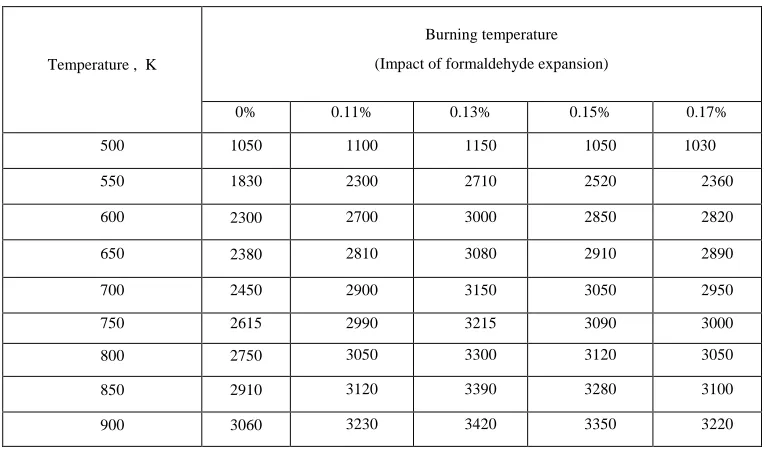
Formaldehyde has a lower auto start temperature in contrast with other gaseous petrol segments; in this way it is coherent that utilizing formaldehyde as an added substance would propel the CNG motor burning. Table 3 demonstrates the numerical consequences of ignition temperature at different level of formaldehyde expansion by utilizing COMSOL Multiphysis 4.3b.
[image:4.612.115.498.201.430.2]For a definite report on the impacts of utilizing formaldehyde as an added substance on the presentation, for example, control, torque, mean compelling weight, explicit fuel utilization and brake warm proficiency of a HCCI motor at different channel temperature. Figures demonstrate the impacts of including different level of formaldehyde the motor execution at different delta temperatures.Fig 3 demonstrates the brake control minor departure from the impact of formaldehyde expansion at different channel temperatures. As per the brake power slants, the greatest worth happens at 600K for every level of the formaldehyde.
TABLE III
Burning temperature at different level of formaldehyde expansion for CNG(HCCI) motor
In Fig 3, it tends to be seen that expanding formaldehyde from 0% to 0.13% causes expanding brake control from 5.823 kW
to 77.83 kW at 600K.At the point when the expansion of formaldehyde rate is over 0.13%, motor brake power is decreased.
Fig 3. The Effects of Using Formaldehyde on Engine Brake Power
Then again, motor power decline as a result of higher incylinder most extreme temperature and broadened high temperature
length in the burning stroke. 0 10 20 30 40 50 60 70 80
500 550 600 650 700 750 800 850 900
Brake
Po
wer
, k
W
Inlet temperature , K
0%
0.11%
0.13%
0.15%
0.17% Temperature , K
Burning temperature (Impact of formaldehyde expansion)
0% 0.11% 0.13% 0.15% 0.17%
500 1050 1100 1150 1050 1030
550 1830 2300 2710 2520 2360
600 2300 2700 3000 2850 2820
650 2380 2810 3080 2910 2890
700 2450 2900 3150 3050 2950
750 2615 2990 3215 3090 3000
800 2750 3050 3300 3120 3050
850 2910 3120 3390 3280 3100
[image:4.612.129.487.490.642.2]ISSN 2250-3153
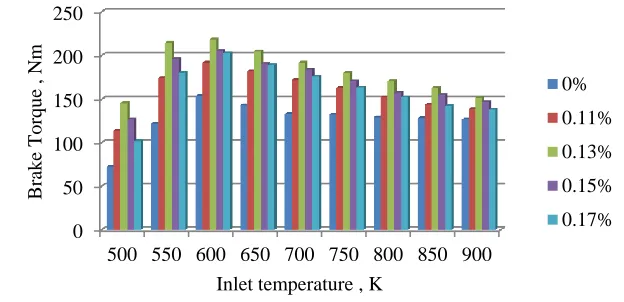
Fig 4. The Effects of Using Formaldehyde on Engine Brake Torque
The variety of brake torque on the impact of formaldehyde expansion at different bay temperatures is appeared in Fig 4.
[image:5.612.179.450.311.464.2]According to the investigation, the greatest brake torque likewise happens 0.13% formaldehyde expansion at gulf temperature 600K.
Fig 5. The Effects of Using Formaldehyde on Engine BMEP
Fig 5 demonstrates the brake mean powerful weight minor departure from the impact of formaldehyde expansion at different
gulf temperatures. From this Fig 6, it tends to be seen that the mean viable weight is most elevated at gulf valve close temperature
[image:5.612.164.463.560.688.2]600K with 0.13% formaldehyde expansion. The more level of formaldehyde expansion, the less brake mean successful weight.
Fig 6. The Effects of Using Formaldehyde on Engine BSFC
By examination of motor power results, the turnaround patterns happen in brake explicit fuel utilization (BSFC) in various cases. 0 50 100 150 200 250
500 550 600 650 700 750 800 850 900
Brake
Tor
qu
e
, Nm
Inlet temperature , K
0% 0.11% 0.13% 0.15% 0.17% 0 0.1 0.2 0.3 0.4 0.5 0.6 0.7 0.8 0.9
500 550 600 650 700 750 800 850 900
Break m ean ef fecti ve pressu re , M Pa
Inlet temperature , K
0% 0.11% 0.13% 0.15% 0.17% 0 0.1 0.2 0.3 0.4 0.5 0.6 0.7
500 550 600 650 700 750 800 850 900
BSFC
, k
g/k
Wh
r
Inlet temperature , K
0%
0.11%
0.13%
0.15%
ISSN 2250-3153
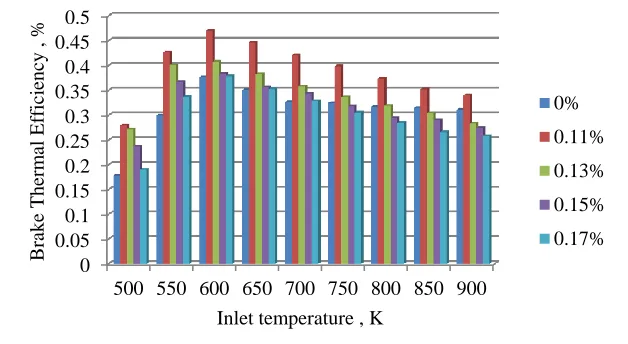
Fig 7. The Effects of Using Formaldehyde on Engine Brake Thermal Efficiency
The base estimation of BSFC happen 0.13% formaldehyde option and this worth increment by including formaldehyde over 0.13%. This outcome is appeared in Fig 7. The effect of formaldehyde addition on engine brake thermal efficiency at different delta temperatures is appeared in Fig 7. It very well may be seen that thermal efficiency is maximum condition at inlet temperature 600K. Moreover, 0.13% formaldehyde addition is greater than other formaldehyde addition percent in this inlet temperature 600K.
IV.CONCLUSION AND DISCUSSION
The best way to ensure that the objectives of the study are met is to look at its outcome. The conclusions reached from the present study are according to the numerical analysis of combustion condition with fuel additive 0.13%, the correct crank timining occur at inlet temperature 600K, inlet pressure 1.4bar, engine operating speed 3400 rpm, compression ratio 11 and equivalence ratio 1.2 which is the optimum condition for complete combustion in CNG (HCCI) engine. According to the engine performance trends, the maximum engine performance happens at 600 K for every level of the formaldehyde It might be seen that the numerical power delivered is somewhat higher than that of hypothetical examination. Due to the brake power can be ascribed to the expansion of the demonstrated mean viable CNG (HCCI) motor depends upon the ignition productivity of motor as well as the level of formaldehyde expansion.
The hypothetically considered parameters demonstrate that there is reduction by 23% in brake power, 22% in brake torque, and 23% in brake explicit fuel utilization of motor contrast and numerically. Thermal properties of combustion condition for diesel converted CNG (DISI) engine are 6.2214 MPa and 2093 K and the CNG (HCCI) engine (formaldehyde) are 6.4 MPa and 2373 K by theoretically. Therefore, engine performance of CNG (HCCI) engine is improved than CNG (DISI) engine. The exhaust product species in HCCI engine are not differed with DISI engine because of the fuel additive in HCCI engine is used as the catalysis instead of the spark plug. In this research, experimental study is not included. Therefore, the next researcher should be conducted the experimental study to approve the recreation results for the referenced parameters.
ACKNOWLEDGMENT
The as a matter of first importance, the creator wish to offer her profound thanks to Dr. Sint Soe, Rector, Mandalay Technological University, for his generosity significant authorization to summit this diary The creator additionally thankful to Dr. Ei Htwe, Associate Professor and Head, Mechanical Engineering Department, Mandalay Technological University, for his supportive, precious proposals and remarks during the present this research.
Moreover, special thanks to her supervisor Dr. Nyein Aye San for her kind supervision and encouragement, suggestions valuable guidance for throughout the entire process of this research work. This paper would not have been possible without her support.
Finally, the creator couldn't imagine anything better than to state thank to her family particularly her folks for their respectable help, support, and direction all through her whole life
References
[1] Myint Htay and Ko Lay.:Alternative Fuels for Petrol/Diesel Vehicles and Plant Equipment, Myanmar Oil and Gas Enterprise, Ministry of Energy,(1990). [2] Nakamura, H., Motoyama, H., Kiyota, Y.: Passenger car engines for the 21st century, SAE paper no. 911908,(1991).
0 0.05 0.1 0.15 0.2 0.25 0.3 0.35 0.4 0.45 0.5
500 550 600 650 700 750 800 850 900
B
rake
Therm
al
Effici
ency
,
%
Inlet temperature , K
0%
0.11%
0.13%
0.15%
ISSN 2250-3153
[3] Hyun, C.c., Bok, L.H., Lee, H.C., lung, Y.K..: Development work on HMC's natural gas fuelled 1.5L MPI DOHC engine , SAE paper no. 931869, (1993). [4] John B,Heywood.: Internal Combustion Engine Fundamental,(2000).
[5] Ke Zeng, Zuohua Huang, Bing Liu, Liangxin Liu, Deming Jiang, Yi Ren, Jinhua Wang, Combustion characteristics of a direct-injection natural gas engine under various fuel injection timings, Applied Thermal Engineering 26, 806–813,(2006).
[6] Wladyslaw Mitianiec, Tomasz Ziolo, Marcin Noga.: Theoretical And Experimental Study Of The Ignition Process In Cng Direct Injection Si Engines.(2007). [7] Mustafa Bahattin Çelik.: Fuel injection , August ,2010.
[8] Robert Kapaku.: Effects of Inlet Pressure and Temperature, and Fuel-Air Equivalence Ratio on Natural Gas Combustion Utilizing the GRI Mech 3.0 Chemical Kinetics Mechanism, September ,(2012).
[9] Anonymous.:COMSOL Multiphysics Modelling Guides ,2012
[10] Yu Liu .: A study of spray developed and combustion propagation processes of spark-ignited direct injection (SIDI) compressed natural gas (CNG), Mathematical and Computer Modelling 57,228 244,(2013).
[11] Osama H. Ghazal.: A Theoretical Study of the SI Engine Performance Operating with Different Fuels,August,(2013).
[12] Yu Liu .: A study of spray developed and combustion propagation processes of spark-ignited direct injection (SIDI) compressed natural gas (CNG), Mathematical and Computer Modelling 57,228 244,(2013).
[13] Simona Silvia Merola , Luca Marchitto.:Optical characterization of combustion processes in a DISI engine equipped with plasma-assisted ignition system, Applied Thermal Engineering 69 ,177-187,(2014).
[14] Anonymous.:Conventional car engine , (2014).
AUTHORS
First Author – Saw Yu Mon, Associate Professor, Mandalay Technological University,[email protected]