Visual management/visual controls
implementation pilot : 5S in highways
construction and maintenance
Tezel, BA and Aziz, ZUH
Title Visual management/visual controls implementation pilot : 5S in highways construction and maintenance
Authors Tezel, BA and Aziz, ZUH
Type Monograph
URL This version is available at: http://usir.salford.ac.uk/38582/ Published Date 2016
USIR is a digital collection of the research output of the University of Salford. Where copyright permits, full text material held in the repository is made freely available online and can be read, downloaded and copied for noncommercial private study or research purposes. Please check the manuscript for any further copyright restrictions.
Visual Management/ Visual Controls Implementation Pilot:
5S in Highways Construction and Maintenance
Algan Tezel
Zeeshan Aziz
Visual Management/ Visual Controls Implementation Pilot: 5S in Highways Construction and Maintenance
Visual Management/ Visual Controls Implementation Pilot: 5S in Highways Construction and Maintenance
Contacting Authors:
If you would like to find out more about this project please contact any of the following authors:
Algan Tezel Zeeshan Aziz
Research Fellow Senior Lecturer
University of Salford University of Salford
[email protected] [email protected]
School of the Built Environment,
University of Salford, Maxwell Building, Salford M5 4WT, United Kingdom
Tel: +44 (0) 161 295 4600 Web: www.salford.ac.uk
© Algan Tezel, Zeeshan Aziz
All rights reserved; no part of this publication may be reproduced, stored in a retrieval system, or transmitted in any form or by any means, electronic, mechanical, photopying, recording, or otherwise without prior written permission of the copyright owner. However, there is no restriction on the onward circulation of this report in electronic form provided it is transmitted in its entirety.
Permission to use copyright material has been sought and obtained where possible. While all reasonable efforts have been made by the University of Salford to trace and obtain permission from copyright holders some material may have been included where this has proven impossible within the time limits available. The University of Salford will be pleased to make amends to any such copyright holders at the earliest possible opportunity. Please contact [email protected]
Visual Management/ Visual Controls Implementation Pilot: 5S in Highways Construction and Maintenance
Contents
Executive Summary
1. Introduction
2. The 5S
3. The 5S Pilot and Its Benefits
4. Extension of the 5S in the Supply Chain
5. Evaluation of the Project by Highways
England’s Key Performance Indicators
6. Conclusion
7. References
5
6
9
16
28
30
32
33
Visual Management/ Visual Controls Implementation Pilot: 5S in Highways Construction and Maintenance
Visual Management/ Visual Controls Implementation Pilot: 5S in Highways Construction and Maintenance
Executive Summary
This reports presents a collaborative research effort between the University of Salford and Highways England on the implementation of the Visual Management (VM) concept, a fundamental element of lean construction, in the highways construction supply chain. After 10 visits to 5 different highways construction sites to identify VM implementation opportunities for the project, the 5S, which is a systematic visual workplace structuring methodology and the very first step to creating a visually transparent workplace, was implemented in one of the highways construction sites. The recorded benefits include a significant reduction in item transaction times (circa 50% reduction on average), savings in space (both vertical and horizontal), and improvements in the overall health and safety conditions. Alongside demonstrating the captured benefits, the report also explores the current 5S condition and how to disseminate the 5S concept further through the highways supply chain. A discussion of the 5S pilot and the 5S in general as per Highways England’s KPIs was also presented.
Visual Management/ Visual Controls Implementation Pilot: 5S in Highways Construction and Maintenance
Introduction
The Visual Management/ visual controls pilot implementation project is a part of the
research collaboration between the University of Salford and Highways England. Following on a preliminary report (Tezel and Aziz, 2015) on visual controls at the workface of
highways schemes, this research project aims at documenting and discussing the benefits of a pilot Visual Management/visual controls project implemented in the highways supply chain. Visual Management (VM) is a fundamental concept in the lean production system and also, in lean construction practices. It is an information management strategy that relies on the effectiveness of sensory information integrated into process elements; close to where information needs might occur (Tezel et al., 2015). Three characteristics distinguish information displayed in VM from other forms of communication: (i) the information is presented in a self-service fashion to create information fields, (ii) the
information is entirely determined ahead of time; and (iii) the information relies little or none on spoken words (Greif,1991; Suzaki, 1993). Its direct effect on processes is increased process transparency, which is the communication ability of process elements (Formoso et al., 2002).
According to Moser and Dos Santos (2003), increased process transparency induced by visual systems in construction leads to (i) simplification and greater coherence in decision making and production control, (ii) stimulation of informal contacts throughout different hierarchical levels, (iii) contribution to introduction of decentralization policies, (iv) broadened employee engagement and autonomy in management and (v) rapid comprehension and response to problems.
Construction sites, by their nature, present also specific barriers for increased process transparency; (i) they are constantly changing environments where a large number of crews move continuously; (ii) the site layout suffers several modifications throughout a project, demanding an intense effort to update and relocate the necessary set of visual devices; (iii) construction sites are relatively large places where different crews spread out; and (iv) non-removable visual barriers are incorporated into the working environment as the facility is being constructed (Formoso et al. 2002).
Visual Management/ Visual Controls Implementation Pilot: 5S in Highways Construction and Maintenance
Visual Management/ Visual Controls Implementation Pilot: 5S in Highways Construction and Maintenance
Before embarking on the project, 5 different highways construction sites in three different regions in England (Northwest, Yorkshire and Northeast) were visited for 10 times in total to identify the practical gaps and opportunities for the pilot (see Figure 1).
The primary data collection methods of the visits were site observations and open- ended discussions with the site mangers and staff. The visits, which took place between May-July 2015, revealed a set of VM implementation options. Those options included:
1. The 5S as a visual work place structuring/control effort;
2. Deployment of the A3 methodology for quality, safety and continuous improvement; 3. Developing collaborative meeting and continuous improvement boards for work teams; 4. A visual control board to connect the Collaborative Planning with site tasks.
[image:8.595.60.540.202.473.2]Visual Management/ Visual Controls Implementation Pilot: 5S in Highways Construction and Maintenance
In coordination with Highways England, the research team was directed particularly to two construction sites located in Northwest England for the pilot implementation; Project 1 and Project 2. A complete set of the implementation options was presented to and discussed with the staff of those schemes (see Figure 2).
However, Project 2 suffered personnel turnover and some unforeseen incidents between August-September 2015, which resulted in a significant slowdown in the research team’s engagement with the scheme stakeholders. In the meantime, the staff at Project 1 agreed to initiate a 5S pilot in September 2015. Therefore, a 5S implementation pilot was decided as the way forward with Project 1.
Visual Management/ Visual Controls Implementation Pilot: 5S in Highways Construction and Maintenance
[image:9.595.59.540.218.493.2]Visual Management/ Visual Controls Implementation Pilot: 5S in Highways Construction and Maintenance
Visual Management/ Visual Controls Implementation Pilot: 5S in Highways Construction and Maintenance
Visual Management/ Visual Controls Implementation Pilot: 5S in Highways Construction and Maintenance
2. The 5S
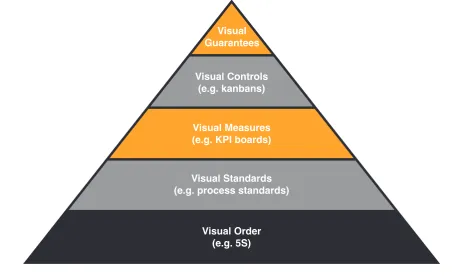
Being a fundamental lean concept, the 5S is a structured housekeeping methodology that is considered as the first step to creating a more transparent, visual workplace, with its many visual controls imposed on item transactions (Mastroianni and Abdelhamid, 2003; Galsworth, 2005; Kobayashi et al., 2008; Hodge et al., 2011). It also constitutes the basis for a visual workplace and many visual controls (Ortiz and Park, 2011) (see Figure 3).
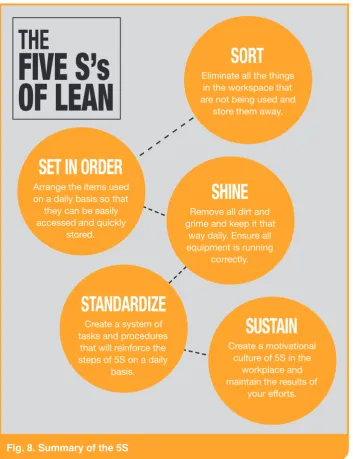
[image:10.595.67.538.287.567.2]The 5S consists of the following steps in order (Osada, 1991; Hirano, 1995; Ho, 1999) (see Figure 8):
Fig. 3. Fundamental role of visual order and the 5S in creating a visual workplace Visual
Guarantees
Visual Controls (e.g. kanbans)
Visual Measures (e.g. KPI boards)
Visual Standards (e.g. process standards)
Visual Order (e.g. 5S)
Visual Management/ Visual Controls Implementation Pilot: 5S in Highways Construction and Maintenance
Visual Management/ Visual Controls Implementation Pilot: 5S in Highways Construction and Maintenance
10
[image:11.595.60.538.256.538.2]1. Sorting: Disposing of unnecessary items. The first step in rendering workplace cleaned up and organized. This improves efficiency, helps increase quality, and makes it simpler to spot problems and enhances productivity. Usually, sorting is realised by a red tagging strategy, which is adding red or coloured tags to various items (everything - materials, tools, equipment, consumables, processes, paperwork, computers, computer files & programs, processes etc.) that people think they might no longer need (see Figure 4).
Fig. 4. Red tag examples for the sorting in the 5S
Visual Management/ Visual Controls Implementation Pilot: 5S in Highways Construction and Maintenance
Visual Management/ Visual Controls Implementation Pilot: 5S in Highways Construction and Maintenance
[image:12.595.57.541.129.400.2]11
Fig. 5. 5S order in the back of a workshop van.3. Shining: Systematic cleaning, maintenance and health and safety checking for space and equipment. Sweep and clean the work area. The key purpose is to keep everything in top condition so that when someone needs to use something, it is ready to be used in safe and reliable way. Cleaning a work area produces and opportunity to visually inspect equipment, tooling, materials and work conditions.
Visual Management/ Visual Controls Implementation Pilot: 5S in Highways Construction and Maintenance
[image:13.595.114.484.133.434.2]12
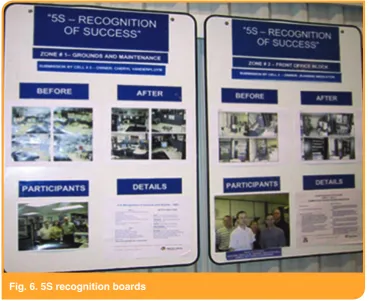
Fig. 6. 5S recognition boards [image:13.595.115.483.539.756.2]5. Sustaining: ensuring that the company continue to continually improve using the previous stages of 5S, maintain housekeeping, and conduct audits and so forth (see Figure 7). The 5S should become part of the culture of the business and the responsibility of everyone in the organization.
Visual Management/ Visual Controls Implementation Pilot: 5S in Highways Construction and Maintenance
Visual Management/ Visual Controls Implementation Pilot: 5S in Highways Construction and Maintenance
13
THE
FIVE S’s
OF LEAN
SORT
Eliminate all the things in the workspace that are not being used and
store them away.
SET IN ORDER
Arrange the items used on a daily basis so that
they can be easily accessed and quickly
stored.
SHINE
Remove all dirt and grime and keep it that
way daily. Ensure all equipment is running
correctly.
STANDARDIZE
Create a system of tasks and procedures
that will reinforce the steps of 5S on a daily
basis.
SUSTAIN
Create a motivational culture of 5S in the
workplace and maintain the results of
your efforts.
[image:14.595.123.477.130.590.2]The main benefits of the 5S in a workplace are a decrease in the non-value adding activities (e.g. motion wastes, searching, thinking, guessing etc.) and excess inventory, alongside an increase in the usable workspace, overall health and safety condition and in ensuring machine/equipment reliability (Hirano, 1995; Galsworth 2005; Gapp et al., 2008; Ikuma and Nahmens, 2014; Jaca et al., 2014). See Figure 9 for the extended benefits of the 5S.
Visual Management/ Visual Controls Implementation Pilot: 5S in Highways Construction and Maintenance
14
Product
Diversification QualityHigher LowerCosts DeliveriesReliable ImprovedSafety
Higher Availability
Rate
Zero
changeovers defectsZero wasteZero delaysZero injuriesZero breakdownsZero
Organization
(seiri) Orderliness(seiton) Cleanliness(seiso)
Work-shops where all defects are
made obvious Elimination of unnecessary inventory Elimination of defects Clarification of places to put things Distinguishing dangerous places from safe ones Longer equipment life Elimination of unneeded equipment Easy-to-understand workshops Proper storage of inspection gear Elimination of “searching”
waste Elimination of “picking up
and setting down” waste Elimination
[image:15.595.59.539.134.571.2]of errors in jig and part selection Prevention of break-downs A clean workshop environment Low absenteeism Better understanding of equipment conditions Elimination of unnecessary in-process stock Discipline (shitsuke) Standardized Cleanup (seiketsu)
Fig. 9. Benefits of the 5S (Hirano, 1995:20)
Empirical studies on the 5S in construction are scarce. In an investigation on the
Visual Management/ Visual Controls Implementation Pilot: 5S in Highways Construction and Maintenance
Visual Management/ Visual Controls Implementation Pilot: 5S in Highways Construction and Maintenance
15
the 5S implementation pilot described in this report is important both from the practical and research point of view.
Some interesting observations as to the implementation of the 5S in highways construction and maintenance schemes have been made during the site visits;
• As documented in Project 1, lack of ownership of the 5S results in unsuccessful 5S
initiatives,
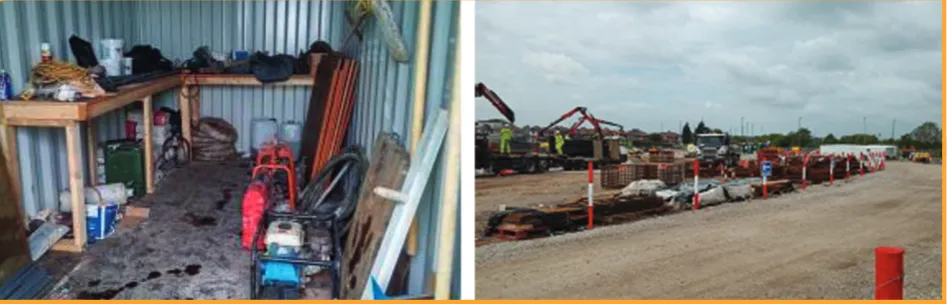
• In the supply chain, even within the same construction site, different service providers
[image:16.595.65.539.329.481.2](Tier 1s and Tier 2s) have varying level of visual workplace order. The level of standardization in visual workplace order is low (see Figure 10)
Fig. 10. Different visual order levels within the same construction site
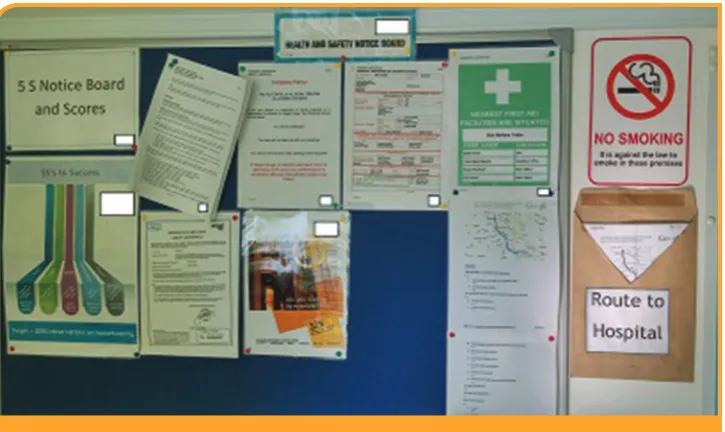
• The senior management at the service providers in the supply chain may think that the 5S
Visual Management/ Visual Controls Implementation Pilot: 5S in Highways Construction and Maintenance
[image:17.595.117.480.132.348.2]16
Fig. 11. 5S board on a site that was actually not implementing the 5S• The lean improvement managers of the visited sites struggle in explaining to their staff
that specific lean construction concepts, such as the 5S, are not just for the manufacturing industry,
• Better training covering also more operational staff in the supply chain as to what the 5S
actually is seems necessary,
• Highways England’s lead and impetus are essential drivers for the lean construction related
efforts in the supply chain. It makes a difference for the service providers, when Highways England clearly underlines and communicates the importance of a lean concept.
3. The 5S Pilot and Its Benefits
A 5S pilot project was implemented at the storehouse within a warehouse of Project 1. The regularly supplied equipment (i.e. safety items), materials and hand tools are stored in the storehouse with an average daily cumulative of 42 transactions. These transactions occur between the storehouse personnel and the site personnel (process map).
In line with the scheme’s lean construction and better housekeeping vision, the
Visual Management/ Visual Controls Implementation Pilot: 5S in Highways Construction and Maintenance
Visual Management/ Visual Controls Implementation Pilot: 5S in Highways Construction and Maintenance
17
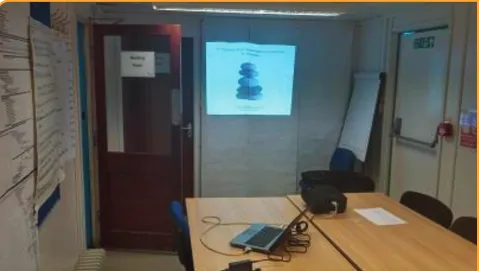
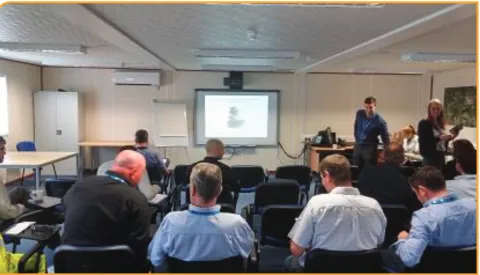
[image:18.595.119.481.237.445.2]the pilot project to expand and promote the 5S to the rest of the construction site with the help of the authors. The pilot project was commenced with a kick-off meeting with the warehouse personnel by outlining the aims and objectives of the project in general (see Figure 12). The personnel then were given a comprehensive introduction to the 5S and an implementation plan was agreed on.
Fig. 12. 5S introduction to the Project 1 warehouse personnel
Visual Management/ Visual Controls Implementation Pilot: 5S in Highways Construction and Maintenance
[image:19.595.58.542.135.511.2]18
Fig. 13. Situation of the storehouse before the 5SFig. 14. Situation of the storehouse before the 5S
Visual Management/ Visual Controls Implementation Pilot: 5S in Highways Construction and Maintenance
Visual Management/ Visual Controls Implementation Pilot: 5S in Highways Construction and Maintenance
19
Start
Demand item
Identify item
Bring item to counter
Fill out form
Give out item
End
Safety item ? Yes safety formFill out
[image:20.595.118.483.126.649.2]No
Visual Management/ Visual Controls Implementation Pilot: 5S in Highways Construction and Maintenance
For the initial step in the 5S plan, to better reflect the reality, the overall transaction process times, from the start of the item demand to the completion of the item handover, of one experienced warehouse personnel with more than 5 years of experience and one inexperienced warehouse personnel with less than 5 years of experience with equal
chances of serving an item request were recorded separately (see Table 1). The personnel had been previously informed that the transactions would be observed and recorded. In the small storehouse area, the transaction process variations (standard deviations) were observed to be minor, particularly with the experienced personnel. The inexperienced personnel, on the other hand, were struggling with identifying the correct safety item, and record books and sheets as there were no clear indication of their locations.
As the first S (sort) in the 5S, the storehouse personnel were asked to evaluate the items in the storehouse in terms of their short-term and long-term necessity. The less needed items that would not be possibly requested in a 6-month period or more were removed from the storehouse. The storehouse floor was cleared of the scattered materials and equipment, which saved around 30% of the total floor area.
By the introduction of pigeonholes, portable drawers and extra shelving, vertical and horizontal space savings were achieved on the storage racks. In the second S (set- in-order), the
locations of the items were rearranged as per their use and the demand (see Figure 16).
[image:21.595.113.480.506.712.2]Visual Management/ Visual Controls Implementation Pilot: 5S in Highways Construction and Maintenance
Visual Management/ Visual Controls Implementation Pilot: 5S in Highways Construction and Maintenance
21
[image:22.595.116.483.216.436.2]The more frequently requested items were located closer to the storehouse counter within an easier reach. The items were regrouped and rearranged by their types. The item names, item types, item locations and replenishment levels were clearly marked by highlighted visual clues (see Figure 17 - 18).
[image:22.595.117.480.464.695.2]Fig. 17. Setting order in the safety items
Visual Management/ Visual Controls Implementation Pilot: 5S in Highways Construction and Maintenance
22
[image:23.595.116.478.200.432.2]A particular attention was given to the safety items for their better identification. The record books were collected in the same location, just over the storehouse desk by the counter, and better organized (see Figure 19).
Fig. 19. Records were better organised
For the third S (shine), standard instructions for cleaning and health and safety checks for the storehouse were discussed and issued to the warehouse personnel. For the last two S (standardize and sustain), Project 1 management are regularly controlling the progress and sustaining the created 5S condition in the storehouse with their internal auditing practices. As the storehouse is small, the control practice should be relatively quick and simple.
Visual Management/ Visual Controls Implementation Pilot: 5S in Highways Construction and Maintenance
Visual Management/ Visual Controls Implementation Pilot: 5S in Highways Construction and Maintenance
23
10
30
50
0
20
40
60
70
80
90
38 61 49 41 38 40 35 83 59
Average Time Savings in Item Transactions after the 5S
Combined average of exper. and inexper. pers.
Experienced pers.
Inexperienced pers.
nAverage savings- others items (seconds) nAverage savings- safety gears (seconds)
[image:24.595.54.546.134.726.2]n General average savings (seconds)
Fig. 20. Average time savings in seconds after the 5S
100 80 60 40 20 0
99 29 28 62 32.5 47 31 65.5 Batteries Safety helmet Safety vest Safety googles Safety gloves Paint brush Oil Hammer [image:24.595.56.539.481.723.2]
Average Item Transaction Savings (Sec)
Visual Management/ Visual Controls Implementation Pilot: 5S in Highways Construction and Maintenance
24
[image:25.595.61.541.216.485.2]Savings (%) in Item Transaction Times in Inexperienced Pers. after the 5S
Fig. 22. Savings (%) in inexperienced personnel after the 5S
The recorded savings in percentage after the 5S in the item transactions for the inexperienced personnel, experienced personnel and the combined average savings of the inexperienced and experienced personnel can be seen in Figure 22, Figure 23 and Figure 24 respectively.
n Batteries
n Hammer
n Oil
n Paint brush
n Safety gloves
n Safety googles
n Safety vest
n Safety helmet
45%
27%
64%
28% 57%
27%
56% 75%
[image:25.595.61.537.534.766.2]Savings (%) in Item Transaction Times in Experienced Pers. after the 5S
Fig. 23. Savings (%) in experienced personnel after the 5S
n Batteries
n Hammer
n Oil
n Paint brush
n Safety gloves
n Safety googles
n Safety vest
n Safety helmet
49%
56%
66%
61% 30%
61%
53%
Visual Management/ Visual Controls Implementation Pilot: 5S in Highways Construction and Maintenance
Visual Management/ Visual Controls Implementation Pilot: 5S in Highways Construction and Maintenance
25
[image:26.595.58.545.136.419.2]Average Savings (%) in Item Transaction after the 5S
Fig. 24. Combined savings (%) of the personnel after the 5S
n Batteries
n Hammer
n Oil
n Paint brush
n Safety gloves
n Safety googles
n Safety vest
n Safety helmet
47%
56%
65%
44% 43%
44%
40% 64%
Thus, the combined average savings attained for the safety items, other items and all the items in general became 61, 38 and 49 seconds respectively. The savings are particularly conspicuous in the safety item transactions of the inexperienced personnel. Of the total 42 average daily transactions in the storehouse, 21 daily transactions are for the safety items and the remaining 21 are for the other items. The item transactions occur between at least two personnel; one site personnel and one storehouse personnel. Therefore, the total daily average man-second savings recorded on the transactions for the safety items, other items and all items respectively became after the 5S implementation;
• Number of average daily safety item transactions (21) X Two personnel (2) X Average savings in safety item transactions (61) = 2562 (21x2x61) man- seconds, • Number of average daily item transactions in other items (21) X Two personnel (2) X Average savings in other item transactions (38) = 1596 (21x2x38) man- seconds and • Number of average daily item transactions in all items (42) X Two personnel (2) X Average savings in all item transactions (49) = 4116 (42x2x49) man- seconds,
Visual Management/ Visual Controls Implementation Pilot: 5S in Highways Construction and Maintenance
[image:27.595.99.439.94.806.2]26
Table 1. Detailed comparison of the time savings in the Item transactions after the 5S
Before the 5S
After the 5S
Time savings after the 5S
Time savings after the 5S
Item
Inexperienced Pers. (Sec) Experienced Pers. (Sec) Inexperienced Pers. (Sec) Experienced Pers. (Sec) Inexperienced Pers. (Sec) Experienced Pers. (Sec) Inexperienced Pers. (% Experienced Pers. (%)
Batteries 67 57 37 29 30 28 45% 49% Hammer 48 70 35 27 13 43 27% 61% Oil 111 80 40 27 71 53 64% 66% Paint brush 87 67 63 26 24 41 28% 61% Safety gloves 146 86 63 38 83 48 57% 56% Safety googles 75 80 55 38 20 42 27% 53% Safety vest 136 60 60 42 76 18 56% 30% Safety helmet 203 85 50 40 153 45 75% 53%
Total average savings
Visual Management/ Visual Controls Implementation Pilot: 5S in Highways Construction and Maintenance
Visual Management/ Visual Controls Implementation Pilot: 5S in Highways Construction and Maintenance
27
The pilot 5S project implementation in the storehouse took 3 months between October-December 2015. The warehouse personnel’s approach to the implementation process in terms of their cooperation and compliance with the requirements from the authors was positive. They also stated their content with the improved situation and they would continue experimenting with the 5S steps at the storehouse during the implementation repeatedly. However, the authors’ drive, leadership and impulse had been constantly necessary during the implementation process. Being mostly a top-down effort, the 5S implementation at the storehouse would come to a halt without the presence and monitoring of at least one of the authors.
Although the storehouse personnel were mostly left to decide on the new layout of the storehouse and what items to keep or remove in the first and second S as per the instructions from the authors, obtaining the real acceptance or willingness of the personnel for their buy-ins for the 5S was challenging. The storehouse personnel had been sceptical of the expected benefits from the changes in their work routines and work environment throughout the implementation. They also did not feel empowered by the senior
management to take those decisions on their own. Moreover, although the organization provides a regular internal lean training, the warehouse personnel were mostly unaware of the lean production and construction systems. The level of awareness of the lean construction related concepts were lower at the operational level. Even though senior management has received varied levels of lean trainings, it was difficult to get their support and leadership for the 5S implementation pilot.
There was turnover among the storehouse personnel, which partly slowed down the
implementation process. All those factors affected the hardships faced in driving and sustaining the 5S effort. With the recorded benefits of the 5S pilot, the next step in the future for Project 1 will be monitoring and sustaining the 5S progress and extending the 5S program to the rest of the storehouse. As an initial effort, the rest of the warehouse was divided into zones and some data have been collected by Project 1’s management to better identify the nature of item transactions for future improvements (see Figure 25). There is also a potential to extend the application of the 5S to the rest of the construction site.
Before the 5S
After the 5S
Time savings after the 5S
Time savings after the 5S
Item
Inexperienced Pers. (Sec) Experienced Pers. (Sec) Inexperienced Pers. (Sec) Experienced Pers. (Sec) Inexperienced Pers. (Sec) Experienced Pers. (Sec) Inexperienced Pers. (% Experienced Pers. (%)
Batteries 67 57 37 29 30 28 45% 49% Hammer 48 70 35 27 13 43 27% 61% Oil 111 80 40 27 71 53 64% 66% Paint brush 87 67 63 26 24 41 28% 61% Safety gloves 146 86 63 38 83 48 57% 56% Safety googles 75 80 55 38 20 42 27% 53% Safety vest 136 60 60 42 76 18 56% 30% Safety helmet 203 85 50 40 153 45 75% 53%
Total average savings
Visual Management/ Visual Controls Implementation Pilot: 5S in Highways Construction and Maintenance
28
[image:29.595.213.381.132.376.2]4. Extension of the 5S in the Supply Chain
Fig. 25. Zoning (red and green) in the warehouse as a part of Project 1’s future 5S plans
In summary, the 5S pilot in that relatively small yet busy storage area;
• led to significant time and work savings in the items transactions (an approximate
50% time savings or 4116 man-seconds or 1.15 man-hour per day on average),
• increased the usable floor area by approximately 30%,
• raised the horizontal and vertical storage rack space utilization,
• helped better mark the item replenishment levels for an uninterrupted item flow, • improved the overall neatness, cleanliness, and health and safety condition (all
potential hazards were removed) of the storehouse and
• potentially, it can be used to keep track of the calibration and sell-by-dates of the
equipment and/or materials.
Visual Management/ Visual Controls Implementation Pilot: 5S in Highways Construction and Maintenance
Visual Management/ Visual Controls Implementation Pilot: 5S in Highways Construction and Maintenance
29
Considering the significant benefits captured form the pilot implementation in a relatively small storehouse, which is approximately 23 meter squares in area, an extensive
implementation of the 5S through the supply chain will lead to significant benefits to
Highways England’s and its service providers’ operations. Based on the captured benefits, an estimation of those general potential benefits can be made through extrapolating from the quantified 5S benefits from the current pilot in a 23- meter square storehouse to the total area of the compounds, warehouses, lay-down areas, maintenance vans, offices, labs etc.; where the 5S can be applied in the supply chain.
In order to drive a wider implementation of the 5S with its benefits in Highways England’s supply chain, the following points need to be addressed:
• Increasing the general awareness of the management and workforce on the 5S, • Highways England’s continuous leadership, championship and support for the 5S, • Challenging the belief that the 5S is solely a manufacturing concept and cannot be
applied in the supply chain,
• Challenging the belief that the 5S is just good-housekeeping; it is actually much
more than good-housekeeping,
• Challenging the belief that the 5S can be applied only in warehouses/storehouses, • Having more 5S pilot projects both in Tier 1 service providers and SMEs in the
supply chain,
• Further collaboration of the supply chain with academia for the implementation and
dissemination of the 5S philosophy,
• Organizing regular events and workshops through the supply chain on the 5S, • Using 5S benchmarking data from other industries,
• Extending the lean and 5S training in the supply chain to operational personnel, • Creating effective 5S training documentations,
• Auditing the service providers for the 5S by Highways England, which can be
particularly relevant to the construction and maintenance service providers.
This can be done by incorporating a specific 5S rating into the HELMA (Highways England Lean Maturity Assessment),
• Recognizing successful 5S efforts within the supply chain, • Contractual obligations for the 5S by Highways England,
• Obtaining buy-ins by clearly demonstrating the benefits of the 5S, and involving
Visual Management/ Visual Controls Implementation Pilot: 5S in Highways Construction and Maintenance
30
5. Evaluation of the Project by Highways
England’s Key Performance Indicators
Highways England’s key performance indicators as stated in the Business Plan 2014 are: making the networks safer, improving the user satisfaction, supporting the smooth flow of traffic, encouraging economic growth, delivering better environmental outcomes, helping cyclists, walkers and other vulnerable users, achieving real efficiency and keeping the network in good condition (Highways England, 2014). An assessment has been made between Highways England’s key performance indicators, and the 5S pilot and the 5S in general for future efforts, which can be seen in Table 2.
• Promoting the idea of providing the necessary level of authority to workforce to
take decisions on some issues in the first 3S (i.e. sorting, setting-in-order and shining) within their work areas,
• Advising management on on-going monitoring and sustaining of the 5S in a
Visual Management/ Visual Controls Implementation Pilot: 5S in Highways Construction and Maintenance
Visual Management/ Visual Controls Implementation Pilot: 5S in Highways Construction and Maintenance
[image:32.595.94.522.107.801.2]31
Table 2. Discussion of the 5S pilot and the 5S in general as per Highways England’
s key performance indicators
Highways England’
s KPIs
Discussion of the 5S pilot
Discussion of the 5S potential for future implementations
Making the networks safer
One of the benefits of the 5S is creating safer environments. By applying the 5S widely within construction sites, one will have greater confidence that all tests and inspections have been followed and access equipment used have been duly checked for calibration and working order
.
This benefit could apply both to service providers and road users in the network.
Improving the user satisfaction
Application of the 5S principles will decrease intervention durations, so the jobs should be completed within their time scales or earlier
.
This will increase customer satisfaction.
By extending the 5S to dif
ferent operations in the
supply chain, greater user satisfaction can be reached.
Supporting the smooth flow of traffic
The 5S can be tried in traffic management operations by using appropriate signage to better understand the potential benefits.
Encouraging economic growth
The 5S can contribute to economic growth by creating more efficient, cleaner and safer environments in Highways England’
s operations
and the network.
Delivering better environmental outcomes
More efficient operations in construction, maintenance and traffic management through the 5S will contribute to delivering improved environmental outcomes.
Helping cyclists, walkers and other vulnerable users The 5S can be tried in traffic management operations to better understand the potential benefits.
Achieving real efficiency
This pilot project has demonstrated that 5S implementation can increase overall efficiency
.
Keeping the network in good condition
Visual Management/ Visual Controls Implementation Pilot: 5S in Highways Construction and Maintenance
32
6. Conclusion
The 5S pilot implemented in the storehouse saved 50% in the item transaction times (4116 man-seconds or 1.15 man-hours saving per day), increased the usable floor area by 30%, increased the horizontal and vertical space utilization, helped achieve a better item flow, and improved the overall neatness, cleanliness, and health and safety condition. It can also potentially be used to keep track of the calibration and sell-by-dates of the equipment and/ or materials. The pilot proved that the 5S could be implemented in the supply chain with a number of benefits. However, some of the existing misperceptions of the 5S, such as “it is just good-housekeeping” and “it just yields benefits in manufacturing environments, not applicable in the construction context”, should be challenged. A number of other suggestions to take the 5S efforts further in the supply chain were also given in the report.
An extended implementation of the 5S holds a great potential for highways construction and maintenance operations in terms of motion waste reduction, space savings and improved health and safety. Being a systematic, visual structuring approach, the 5S can be also applied both in physical settings (warehouses, construction sites, maintenance vans, lay down areas etc.) and virtual environments (reports, computer systems, databases etc.) present in the supply chain. In order to realise those benefits, there is a need for more commitment and engagement from the line management and senior management from contractors. The 5S benefits also fit the strategic KPIs of Highways England well. Therefore, the
Visual Management/ Visual Controls Implementation Pilot: 5S in Highways Construction and Maintenance
Visual Management/ Visual Controls Implementation Pilot: 5S in Highways Construction and Maintenance
33
7. References
Formoso, C.T., Santos, a.D., and Powell, J.A. (2002). “An exploratory study on the applicability of process transparency in construction sites”, Journal of Construction
Research, 3(1), 35-54.
Galsworth, G.D. (2005). Work that Makes Sense, Visual- Lean Enterprise Press, USA.
Gapp, R., Fisher, R., and Kobayashi, K. (2008). “Implementing 5S within a Japanese Context: An Integrated Management System”, Management Decision, 46(4), 565-79.
Greif, M. (1991). The Visual Factory: Building Participation through Shared Information, Productivity Press, USA.
Highways England (2014). Strategic Business Plan: 2015-2020, Technical Report, Highways England, UK (available at: https://www.gov.uk/government/uploads/system/ uploads/attachment_data/file/39648 7/141209_Strategic_Business_Plan_Final.pdf)
Hirano, H. (1995). 5 Pillars of the Visual Workplace: The Sourcebook for 5S
Implementation, Productivity Press, USA.
Ho, S. K. (1999). “5-S Practice: The First Step towards Total Quality Management”, Total
Quality Management, 10(3), 345-356.
Hodge, G. L., Goforth Ross, K., Joines, J. A., and Thoney, K. (2011). “Adapting Lean Manufacturing Principles to the Textile Industry”, Production Planning & Control, 22(3), 237-247.
Ikuma, L. H., and Nahmens, I. (2014). “Making Safety an Integral Part of 5S in Healthcare”,
Work, 47(2), 243-251.
Jaca, C., Viles, E., Paipa-Galeano, L., Santos, J., and Mateo, R. (2014).”Learning 5S Principles from Japanese Best Practitioners: Case Studies of Five Manufacturing Companies”, International Journal of Production Research, 52(15), 4574-4586.
Visual Management/ Visual Controls Implementation Pilot: 5S in Highways Construction and Maintenance
34
Kobayashi, K., Fisher, R., and Gapp, R. (2008). “Business Improvement Strategy or Useful Tool? Analysis of the Application of the 5S Concept in Japan, the UK and the US”, Total
Quality Management, 19(3), 245-262.
Moser, L., and Dos Santos, A. (2003). “Exploring the role of visual controls on mobile cell manufacturing: a case study on drywall technology”, In Proc., Int. Group for Lean
Construction 11th Annual Conf.(IGLC-11) (pp. 11-23). Blacksburg, Va.: IGLC.
Mastroianni, R., and Abdelhamid, T. (2003). “The challenge: The impetus for change to lean project delivery”, In Proceedings of the 11th Annual Conference of the International
Group for Lean Construction, Blacksburg, Va(pp. 22-24).
Ortiz, C. A., and Park, M. (2011).Visual Controls: Applying Visual Management to the
Factory, CRC Press, USA.
Osada, T. (1991). The 5S’s: Five Keys to a Total Quality Environment, Asian Productivity Organisation, Tokyo, Japan.
Suzaki, K (1993). The New Shop Floor Management: Empowering People for Continuous
Improvement, The Free Press, New York, USA.
Tezel, A., and Aziz, Z. U. H. (2015). “Visual controls at the workface of road construction and maintenance: Preliminary report”, Technical Report for Highways England, University of Salford, UK.