
APPLICATION PATTERN OF RTI IN MDA-BASED HLA
SIMULATION
RONGLI ZHANG
Department of Computer, ShangLuoUniversity, ShangLuo 726000, ShaanXi, China
ABSTRACT
The combination of MDA and HLA is the need for HLA development. In this paper, MDA-based HLA simulation Framework is put forwards. The Domain partition of such framework is analyzed in detail. In that framework, RTI is regard as a sub domain in the service domain, not a platform as usual. But it is more benefit for the model reusability. At last, the integration method of RTI domain models and application models is provided. This method is a new thought for the application of MDA in HLA.
Keywords: Model Driven Architecture, High Level Architecture, Run-Time
1. INTRODUCTION
As the main technique in the distributed simulation area, High Level Architecture (HLA) needs to develop continuously. Although, the HLA-based application systems are concentrated in defense field, a well-designed defense simulation project also needs the support from other commercial departments, such as telecommunicate -ions, traffic etc... But the platforms of those commercial departments are often not the HLA-based applications. Some are HLA-based on CORBA, or some based on J2EE. Therefore, in order to develop a large scale simulation project, the combination of HLA and other software technology should be considered.
Model Driven Architecture (MDA) is the concept which was put forward by OMG in July 2001.It made the separation between the analysis design of the operation functions and the realization technology, which minishes the influence to system when using different technologies. The core method of MDA includes three steps: building the platform Independent model (PIM), transforming PIM to
platform Specific model (PSM) and last
transforming PSM to code .Both MDA and HLA work for the realization of system interoperation. But the former pays more attention to the solution of model reusability, and the later pays more attention to the domain interoperation from the view of communication and interconnection. In brief, to apply the technology and theory of MDA to HLA is one of the most important solutions for the system interoperation and reusability in the future. Therefore MDA-based HLA simulation technology will enhance the system reusability to the model level, which is the inevitable option for the HLA further development.
Firstly, this paper puts forward the MDA-based HLA simulation framework, and describes the position of RTI in the framework. Then, it discusses the method of the integration between RTI and other certain domain models.
2. THE DOMAIN PARTITION OF MDA-
BASED HLA SIMULATION
System Theory shows that “system can be also called architecture. It is an organic whole that is combined by many interactive and interdependent parts and has specific function”. As a kind of system, MDA-based HLA simulation framework has the major attributes of system, such as relativity, comparability and stability. So MDA-based HLA Simulation Framework should have some common lines for the system development. Therefore, we put forwards the domain partition of MDA-based HLA system.
2.1 Domain Partition of MDA-based System
MDA always decomposes the described system with the theme-based boundary strategy in order to realize all the advantages of MDA. The foundation of the theme partition is that any system is orbed by a series of theme. The theme is also called do main. Domain is a independence world constituted by a group of special classes. That world can be true, supposed or abstract, and those class behaviors are decided by the rules and strategies of different domains. Normally, the domains of a MDA-based system can be divided to 4 kinds: the application domain, service domain, architecture domain and implementation domain.
about the basic services concerning the application domain.
Architecture domain expresses the design and coding strategy applied in the overall system. The analysis of all domains is carried out based on the architecture domain.
Implementation domain expresses the existing components, including: the existing software components that will be reused later, the components built as part of the developing procedure, and the purchased components, such as compiler and database.
2.2 Domain Partition of MDA-based HLA Simulation System
According to the domain partition of based system described before, as for MDA-based HLA simulation system, we think of the HLA attributes and design the domain partition for that system. Compare with the common domain partition, the main differences are in the application domain and the service domain.
The application domain is the theme domain a -bout certain simulation application. Anything re -lated to the system user demands will be include -d. According to the different model types, the d -omain can be divided to different sub domains to raise model reusability. Here, the federate sub domain is designed especially for HLA-based simulation, which is used to offer the very only handle of the federate, and solves the functions associated with the HLA simulation. The benefit is t-hat other sub domains in the application domain can be reused in other simulation systems besides HLA-based system. When developing HLA-based system, integrating operation models with the federate sub domain model will get a fit federate. So do the other federate.
The service domain includes the user interface sub domain, log management sub domain and RTI sub domain. The front two domains are universal, and can be shared with other application systems besides HLA-based system. But RTI sub domain is a service sub domain only for MDA-based HLA simulation. As HLA has just determined the most common design rules for the simulation on the top level to guarantee the interoperation and reusability between system parts, as far as the HLA framework itself, it doesn’t restrict the idiographic realization method of simulation systems. Thus the Run-Time Infrastructure (RTI) could design and improve independently, which view makes it possible to set RTI as a sub domain.
The architecture domain includes 3 aspects. First, it offers the met model structure for MDA-based HLA simulation. Second, it offers the model transformation rules. The last, it offers the integration methods and rules for the models in different domains.
The Implementation domain includes some existing purchased software such as Oracle, Windows, etc...
The realization of the MDA-based HLA simulation system is to transform the models from PIM to PSM, and integrate the models in the four domains above. Later, we will discuss the integration of RTI and the models in HLA applica-tion domain.
3. THE APPLICATION PATTERN OF RTI
3.1 The position of RTI
Nowadays, there have been some researches on the MDA-based HLA. But most of them take RTI as a platform, and do much work on the transformation from the PIM to the RTI PSM.
The dissertation “The Research on the
Application of Model Driven Architecture in HLA-based Simulation System [1]” puts forwards the three major prerequisite conditions to apply MDA to HLA. One of them is to design the RTI-aimed UML profile for model transformation. “The Next Step - Applying the Model Driven Architecture to HLA [2]”and the dissertation “Research on the Component Based HLA Equipment Support Simulation [3]”are also the research taking RTI as a Platform.
only need to describe the business knowledge, without paying any attention to RTI characteristic.
3.2 Integration of RTI
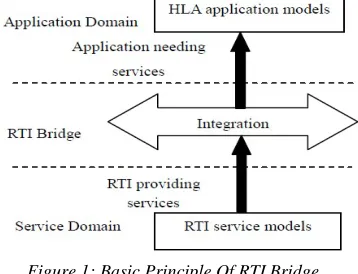
[image:3.612.108.287.237.374.2]As we talked above, the MDA-based HLA system is realized though integration of models[4-7].As we take RTI as a domain, it makes the communication hard between HLA application domain models and RTI sub domain models .So it is necessary to analyze the integration method in detail.
Figure 1: Basic Principle Of RTI Bridge
In this paper, we call the integration part of the business models and RTI models-RTI Bridge.Fig.1 shows the basic principle. The RTI models provide their functions about federate management, time management and so on, and then, the RTI Bridge encapsulates those functions to a “black box” to match the needs of the HLA application models. “Black box” means it is sightless to the application models. That is, the application model designers can get the corresponding services without knowing the detail of RTI .In PSM, according to the platform, RTI version, the RTI Bridge can transform to the suit platform.
Fig.3 has described the general structure of RTI Bridge. The internal structural of the RTI Bridge includes four modules: integration management module, application model management module, RTI service management module and simulation thread management module.
Figure 2:General Structure Of RTI Bridge
The integration management module is the core module, which coordinate the logic between other three modules as well as the communication with the external environment.
The application model management module realizes the management of all the entity model participating in the simulation, and forms the publish/subscribe information for the simulation object model [8].
The RTI service management module includes all the RTI interface services, which is responsible to realize the interoperation with RTI (such as call the RTI service functions and monitor the call-back message by RTI) [9-10].
The simulation thread management module is responsible to realize the management of the entire emulation course, and coordinate the simulation model thread and simulation main thread to conform them synchronous.
With the synchronous work of those four modules, the Integration will realize.
4. SYSTEM SIMULATION
Simulation environment supporting software configuration including the RTl settings and the OPNETModeler software configuration. In RTI need to set a new federal, and creating FOM files; according to the federal rules to generate.Fed documents; created in line with the federal rules of OPNET federal member of the SOM file. OPNET software settings including the use of HLA special properties to configure the Mod eler simulation; create for the transmission of OPNET federal member interacts with the packet; create a class mapping file to build classes and OPNET packet format, HLA parameter and the OPNET data packet fields of the mapping relationship between the semantic category, the mapping file modification process model to receive; representing the input interaction data packet; modify the process model to generate representative output interactive packets. Defined in the HLA .Fed file defines the class of mobile, now use RTI class to the OPNET object mapping rule OPNET simulation needs the class attribute, namely, to complete the mapping relation:
HLA definition of the class: (class
(attribute latitude…)
(attribute latitude longitude…) (attribute color…)
The HLA class is mapped to OPNET mobile
network model:
(class mobile station subnet op mobile (class set (name contain position string)) (creation mode)
(attribute latitude “Y position” double P)
(attribute latitude longitude Y position” double P”)
[image:4.612.93.280.168.368.2](attribute serial number id integer S) )
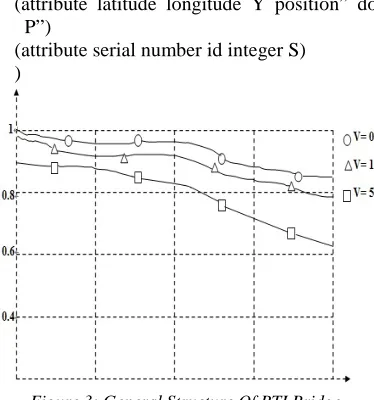
Figure 3: General Structure Of RTI Bridge
In the OPNET environment to achieve MANET for collaborative simulation, network settings distributed access mode (DCF ), using a carrier sense multiple access / collision avoidance protocol ( CSMA / CA ), through the HLA / RTI interface controlled by the federal member program can send different rate position information interaction class position sends location information, such as ( “ X = 20, with a = 30 ” ); sending the information is not directly transmitted to the federal member OPNET, but directly to RTI, RTI according to the position information of the order management, found that OPNET needs this information, and then call the OPNET provide the callback function to notify the federal member for receiving information, thereby completing the OPNET control site mobile characteristics.
Based on the simulation results the normalization analysis, can be seen, when the mobile station when stationary, MANET network throughput maximum, when the site is moving rate increase gradually, the throughput of the network maximum, when the site is moving rate increase gradually, the throughput of the network begins to drop, indicating that the network packet loss rate increased, the decline of the network performance.
5. CONCLUSION
This paper has put forwards MDA-based HLA simulation framework. Especially for RTI, we take
it as a service sub domain in this framework, which is different with other researches. And later, we show the benefit to do so, and put forwards the integrating method of RTI models and application models. The research provides a new thought for the MDA-based HLA research.
ACKNOWLEDGEMENTS
This work was supported by Shangluo university scientific projects, and project number: 10sky016.
This work was supported by Shangluo university scientific projects, and project number: 11sky005.
This work was supported by the Shaanxi Provincial Department of education scientific research projects, and project number: 12jk0950.
REFERENCES:
[1] Simon Julier,RobKing,Brad Colbert, Jim Durbin, “Lawrence Rosenb lum. Software architecture of a real time battle field visualization virtual
environment, Proceedings-Virtual Reality
Annual International Symposium, IEEE
Computer Society IEEE , Mar, 1999, pp.29-36. [2] Lee J Kale MW, Chi SD, “DEVS: HLA-based
modeling and simulation for intelligent
transportation systems”, SIMULATION, Vol. 79,
No. 8, 2003, pp. 423-439.
[3] Chris Raistrick,Paul Francis, John Wright, Colin Carter, Ian Wilkie.Model Driven Architecture with Executable UML.China Machine Press. 2006. 04, pp. 101-111.
[4] Okan Topçu, “A metamedel for federation
architectures”, ACM Transactions on Modeling
and Computer Simulation, Vol. 18, No. 3, 2008,
Article No. 10.
[5] Agrawal R, “Database Mining: A Performance
Perspective”, IEEE Tans actions on knowledge
and data engineering, Vol. 5, No.6, 1993,
pp.914-925.
[6] Anneke Kleppe, Jos Warmer, Wim Bast, MDA Explained. Posts Telecom Press, 2004, pp.5-6. [7] Cao Qi, He Zhongshi,Yu Lei, Agent-DEVS: an
extended DEVS formalism for intelligent
modeling and simulation”, Proceedings of the
Second International Conference on Modeling
and Simulation, Liverpool: World Academic
Union, 2009, pp. 286-291.
[8] Tang Fu-Hua. LU Yang-yang, “The basic method of data mining and its differences with the
expert system”, Computer applications, Vol. 19,
[9] Kilding Riles MM,Timms JM,Worthington J,Wilson AG, “Additional genetic susceptibility for rheumatoid arthritis telomeric of the DRB 1
locus”, Arthritis Rheum, Vol. 50, 2004, 50,
pp.763-769.
[10] Verjans GM, Brinkman BM, Van Doornik CE,Kijlstra A,Verweij CL, “Polymorphism of
tumor necrosis fac-tor-alpha (TNF-alpha)
atposition−308 inrelationtoan kylosing spondyl
itis”, Clin Exp Immunol, Vol. 97, No. 1, 1994,
![Assessment of Physiological Health Status in Relations to Different Anthropometric and Cardio respiratory Measures of Head Supported Load Carrying Male Porters of Sikkim, India [Article Retracted]](data:image/gif;base64,R0lGODlhAQABAIAAAP///wAAACH5BAEAAAAALAAAAAABAAEAAAICRAEAOw==)