HOW DO LEARNERS PERCEIVE
INTERACTIONAL FEEDBACK?
Alison Mackey
Georgetown UniversitySusan Gass
Michigan State University
Kim McDonough
Georgetown UniversityTheoretical claims about the benefits of conversational interaction have been made by Gass (1997), Long (1996), Pica (1994), and others.The Interaction Hypothesis suggests that negotiated interac-tion can facilitate SLA and that one reason for this could be that, during interaction, learners may receive feedback on their utter-ances.An interesting issue, which has challenged interactional re-search, concerns how learners perceive feedback and whether their perceptions affect their subsequent L2 development.The present research addresses the first of these issues—learners’ perceptions about interactional feedback.The study, involving 10 learners of En-glish as a second language and 7 learners of Italian as a foreign language, explores learners’ perceptions about feedback provided to them through task-based dyadic interaction.Learners received feedback focused on a range of morphosyntactic, lexical, and pho-nological forms.After completing the tasks, learners watched video-tapes of their previous interactions and were asked to introspect about their thoughts at the time the original interactions were in prog-ress.The results showed that learners were relatively accurate in
Funding for part of this project was provided by a Federal Grant to establish a National Foreign Language Resource Center at Michigan State University, grant #P229A60012. We are grateful to Sarah Lemelin for her assistance with the collection and transcription of the Italian data. We are also grate-ful for the extremely helpgrate-ful and thought-provoking comments of the anonymousSSLAreviewers, Patsy Lightbown, and Jennifer Leeman. All errors remain our own.
Address correspondence to: Alison Mackey, Department of Linguistics, Georgetown University, Washington, DC 20057–1051; e-mail: [email protected].
their perceptions about lexical, semantic, and phonological feed-back.However, morphosyntactic feedback was generally not per-ceived as such.Furthermore, the nature as well as the content of the feedback may have affected learners’ perceptions.
The role of conversational interaction in the acquisition of a second language (L2) is based on a research tradition that covers the past two decades, begin-ning in the early 1980s. This area of L2 research investigates the role that ne-gotiated interaction (between native [NS] and nonnative [NNS] speakers or between two nonnative speakers) plays in the development of an L2. Negoti-ated interaction can occur when two speakers work together to arrive at mu-tual understanding of each other’s utterances. Underlying this work is the Interaction Hypothesis, articulated recently by Long (1996):
. . . negotiation of meaning, and especially negotiation work that triggers in-teractional adjustments by the NS or more competent interlocutor, facili-tates acquisition because it connects input, internal learner capacities, particularly selective attention, and output in productive ways. (pp. 451– 452)
During the initial years of research into the learning and teaching of L2s, little attention was paid to how learning could result from language use. The common view at the time maintained that using language (e.g., in conversation or writing) was a way of practicing previously learned information rather than a means of obtaining new information.
In the 1980s, the role of conversation, and in particular the role of negotia-tion and the resultant conversanegotia-tional modificanegotia-tions, became an important fo-cus of research on learner language. Early studies attempted to describe the kind of language addressed to learners of a second or foreign language. We assume that, in order to understand how conversational input was an impor-tant factor in learning an L2, it was crucial to have accurate descriptions of the nature of that input (see Gass, 1997; Hatch, 1983, for descriptions).
In addition to research that demonstrates that these structural devices oc-cur with greater frequency in nonnative–nonnative as opposed to native– native discourse, there is also a small body of research in which learning outcomes were investigated. However, whereas numerous studies described negotiation routines, few studies were able to establish a link between ob-served negotiation and subsequent learning. This is, of course, a crucial ques-tion, if not the crux of the issue, as noted in the 1980s by Sato (1986) and Schachter (1986). One reason for the dearth of studies is the difficulty of get-ting reliable data. As Gass (1997) noted, “Short of taping all input learners re-ceive, every negotiation in which they engage, and every bit of subsequent output, there is little way of knowing just what the ‘source’ of change is” (p. 126).
To make an argument for a connection between interaction and learning, some assumptions need to be made. First, it is assumed that, through interac-tion, some aspect of learners’ attention may become focused on the parts of their language that deviate from target language norms or that, through inter-action, attention may be focused on forms not yet in the learners’ current rep-ertoire. A second assumption is that this attention, or noticing of the gap (Schmidt & Frota, 1986) between learner language forms and target language forms, is a step toward change.1 Example (1), from the data in the current study, illustrates the potential effects of negotiation.
(1) NNS: There’s a[besEn]of flowers on the bookshelf.
NS: A basin?
NNS: Base.
NS: A base?
NNS: A base.
NS: Oh, a vase.
NNS: Vase.
In this example, the NNS eventually changes his pronunciation of the word vase as a result of the negotiation between the speakers as well as the feed-back from the NS indicating that she cannot comprehend the word basebut does understandvase.
devel-opmentally advanced structures was noted in delayed posttests rather than immediately after the interaction. This supports the claim that interaction may function as a “priming device” (see Gass, 1997), which allows learners to focus attention on areas that they are working on. In some instances, thinking time or processing time may be needed before change can take place; in other instances, multiple exemplars are needed before a learner can understand the significance of the new language information. In this latter case, the first exem-plar can be seen as representing an initial step in the information-gathering stage. The need for multiple exemplars does not, of course, preclude the need for delayed processing time.
To understand how L2 learning takes place, it is necessary to understand inter alia the nature of linguistic knowledge (competence) and how that knowledge comes to be acquired. Attention, accomplished in part through ne-gotiation, may be one of the crucial mechanisms in this process, as has been argued by Long (1996) and Gass (1997). One way in which learners are able to manage the input they hear or read is by focusing attention on a limited, and hence controlled, amount of data at a given point in time. By limiting the data to which they attend, learners can focus on a reduced, and hence manageable, amount of language that allows them to take initial steps in moving from input to knowledge (as represented by their output). What this implies is that lan-guage processing is like other kinds of processing: Humans are constantly ex-posed to and often overwhelmed by various sorts of external stimuli and are able, through attentional devices, to tune in to some stimuli and to tune out others.
In a series of papers, Schmidt (1990, 1993, 1995) argued that attention is necessary for learning. Schmidt’s claims regarding the necessity and role of attention have been debated (e.g., by Schachter, Rounds, Wright, & Smith, 1998, and Truscott, 1998). However, there is little doubt as to the important role that some level of attention plays in L2 learning. Direct evidence about the role of attention has proven difficult to demonstrate, in part because of the difficulty of clearly operationalizing terms and evaluating online attention and acquisition (see, however, Leow, 1998a, 1998b; Tomlin & Villa, 1994).
meta-linguistic knowledge but not in the case of competence (in the technical sense).
In terms of indirect research findings, both qualitative and experimental studies have provided some support for Schmidt’s (1990, 1993, 1995) funda-mental claim that noticing of form is of crucial importance in the use learners make of the input they receive. For example, on the basis of a diary study of the acquisition of 21 verbal constructions in Portuguese by an L1 English learner, Schmidt and Frota (1986) suggested that those features of the input that were consciously noticed (that is, recorded in a diary) by the learner were processed on a level leading to eventual production by the learner.
Robinson (1996) examined the effects of four task conditions that aimed to differentially manipulate the focus of learner attention during exposure to tar-geted L2 structures differing in complexity. He found that noticing (as as-sessed through posttask responses to a debriefing questionnaire asking if learners noticed rules, were looking for rules, and could verbalize rules) did not lead to significantly more successful learning, although reports that learn-ers were looking for rules did predict more successful learning in one condi-tion. In addition, the ability to verbalize rules did predict more successful learning in two conditions, which supported his inference that greater levels of attention to and awareness of input led to greater learning. These results need to be interpreted with caution, however, given the brevity of the treat-ment session.
In one small-scale, classroom-based study, Roberts (1995) investigated whether learners noticed feedback provided during teacher-fronted activities in a university-level Japanese as a foreign language classroom. A 50-minute class was videotaped, and three student volunteers from the class viewed the video several days later. While watching the video, the students noted when they thought the teacher was correcting someone as well as their perception about the target of each correction. The students’ notes were compared with the researcher’s analysis of the same class. The students’ reports identified between 23.8% and 37.0% of the feedback episodes noted by the researcher, and they identified the nature of the error for only 16.3–25.0% of the total epi-sodes. Roberts concluded that the students were unaware of teacher feedback most of the time and were unlikely to understand the nature of the error that prompted feedback.
Recent research by Philp (1999) presented evidence that learners do notice feedback provided in the context of conversational interaction. In Philp’s study, 33 ESL learners took part in five sessions of NS–NNS dyadic interaction using tasks that elicited question forms. During the interaction, learners re-ceived recasts of all nontargetlike productions of question forms. Philp opera-tionalized noticing as immediate recall of a recast. Learners were asked to recall the recasts in response to hearing a sound cue that followed some re-casts. She found that over 70% of recasts were accurately recalled. Higher level (more advanced) learners showed greater accuracy than lower level learners. She also found correlations between accuracy of recall and variables such as the level of the learner, the length of the recast, and the number of changes in the recast. Philp suggested that three factors may constrain notic-ing of recasts: (a) the limited capacity of short-term memory, (b) the learner’s prior familiarity with the input, and (c) processing constraints that may bias the learner’s apperception (Gass, 1988, 1997) of the recast.
In sum, based on the literature, it seems likely that negotiated interaction is one means for drawing attention to linguistic form, making it salient and thereby creating a context for learning. One way in which this is accomplished is through the function of negotiated interaction as a vehicle for learners to receive feedback on their own production. When learners’ output does not conform to the standards of the target language and confusion results, they will sometimes receive an indication of the problem through an interlocutor’s response (see Swain, 1985, 1995) and have opportunities for further output.
Negotiated interaction can provide evidence to learners of a problem with their learner language grammar (or can be taken as such by learners).2White (1987), in fact, argued that what is necessary for initiating change in learner grammars is not comprehensible input but incomprehensible input. For exam-ple, negotiation (triggered by something incomprehensible) becomes the im-petus for learners to recognize an inadequacy in their own rule system.
L2 development. We explored learners’ perceptions about conversational in-teraction involving negotiation, which occurs when there is a breakdown in communication and learners or NSs reformulate their utterances in an effort to achieve message comprehensibility. Following Long (1996) and Long and Robinson (1998), we also explored learners’ perceptions about conversational interaction involving recasts, which occur when an interlocutor produces a more targetlike version of a learner’s utterance while preserving the semantic content of the learner’s utterance. Negotiation moves and recasts can also co-occur. We do not make claims about the efficacy of one kind of interactional feedback over another, and there has been little research in this regard. None-theless, in Mackey and Philp’s (1998) study, intensive recasting with negoti-ated interaction was more effective than negotinegoti-ated interaction alone. Leeman (2000) found that learners who participated in interaction with intensive re-casts showed greater accuracy on Spanish noun-adjective agreement than learners who were exposed to another type of implicit feedback.
The focus of the current study is an exploration of the claim that, through negotiated interaction, learners’ attention may be directed toward particular aspects of language. In order to explore whether interactional feedback and the allocation of focal attention to feedback play a role in the development of L2 knowledge, it is important to first investigate the extent to which that feed-back is in fact perceived as such by learners and whether their perceptions about the target of the feedback are correct. It is this interactional feedback-perception link that we specifically address in this study. We use (and opera-tionalize) the term perceptions in a nontechnical sense3 because we see our study as a first step in the process of investigating theoretical claims about interaction, learner attention, and L2 development. A more finely grained ana-lytical approach to interactional research operationalizing noticing the gap, or the various levels of attention or awareness defined by researchers in these areas, may eventually be warranted (albeit methodologically tricky); in this paper, however, we explore learners’ reports about their perceptions, which we see as an important initial step in investigating interactional feedback and L2 learning.
RESEARCH QUESTION
An investigation of learners’ perceptions about interaction is an important as-pect of examining the processes by which interaction can lead to L2 develop-ment. In this study, we are specifically concerned with the extent to which learners do in fact recognize or perceive (a) feedback provided through inter-action and (b) the target of the feedback, that is, what feedback is being pro-vided about.
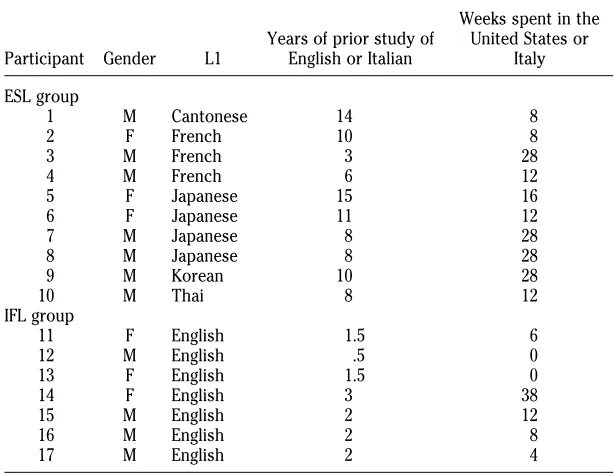
Table 1. Participant biodata
Weeks spent in the Years of prior study of United States or Participant Gender L1 English or Italian Italy ESL group
1 M Cantonese 14 8 2 F French 10 8 3 M French 3 28 4 M French 6 12 5 F Japanese 15 16 6 F Japanese 11 12 7 M Japanese 8 28 8 M Japanese 8 28 9 M Korean 10 28
10 M Thai 8 12
IFL group
11 F English 1.5 6 12 M English .5 0 13 F English 1.5 0 14 F English 3 38 15 M English 2 12 16 M English 2 8 17 M English 2 4
they perceive the feedback as feedback? and Do they recognize the target of that feedback?4
METHOD
Participants
The participants in this study were nonnative speakers in an ESL context and in an Italian as a foreign language (IFL) context.5The participants (n=17) were 11 male and 6 female adult learners enrolled in language courses at a U.S. uni-versity. The ESL learners (n=10) were from a variety of L1 backgrounds in-cluding Cantonese, French, Japanese, Korean, and Thai, with an average of 9.3 years of previous English study (ranging from 3 to 15 years). The majority of the students had recently arrived in the country, with an average length of residence of 4.5 months (ranging from 2 to 7 months). The IFL learners (n=7) had studied or were studying Italian. Their amount of previous study ranged from 6 months to 3 years with an average of 1.8 years. All participants were classified at the beginner or lower-intermediate level by their language pro-grams. Table 1 provides relevant biographical information on the 17 learners.
Procedure
ex-change activities. Each participant had a picture that was similar to his or her partner’s picture. The tasks involved the learners and interviewers working together to identify the differences between their pictures. Each session las-ted for approximately 15–20 minutes and was videotaped. During the interac-tion, the English and Italian interviewers provided interactional feedback when the participants produced a nontargetlike utterance. The interviewers were instructed to provide interactional feedback wherever it seemed appro-priate and in whatever form seemed approappro-priate during the interaction. Thus, the feedback provided during the task-based interaction occurred in response to errors in morphosyntax, phonology, lexis, or semantics and occurred in the form of negotiation and recasts.6A more complete description of the different types of feedback episodes and examples is presented in the section on error and feedback types (pp. 480–481). Not all nontargetlike utterances received feedback from the interviewers. This is probably because excessive (correc-tive) feedback can lead to dysfluencies or learner irritation (as noted by As-ton, 1986), and the goal was to carry out the communicative tasks, providing feedback where appropriate. Also, at times the content-based goals imposed by the task made interactional feedback seem unnatural. Finally, although the tasks provided contexts for a range of linguistic forms to be produced, the errors made by learners could not be tightly controlled, hence neither could the responses. In short, the design of the study required the interviewers to interact, providing feedback (in the form of recasts and negotiation) wherever it seemed natural and appropriate when there were opportunities for such feedback.
Immediately following completion of the task-based activities, the video-tape was rewound and played for the learner by a second researcher who also gave the directions for this part of the research to the learner. While watching the videotape, the learners could pause the tape at any time if they wished to describe their thoughts at any particular point in the interaction. The re-searcher also paused the tape after episodes in which interactional feedback was provided, and asked learners to recall their thoughts at the time the origi-nal interaction was going on. These recall sessions, which were audio taped, were conducted in English (the L2 for the ESL participants and the L1 for the IFL participants). This recall procedure was aimed at eliciting learners’ origi-nal perceptions about the feedback episodes—that is, their perceptions at the time they were taking part in the interaction.
Stim-ulated recall, like other types of verbal protocols, has been extensively de-bated in the literature. Some have questioned its validity, whereas others have leapt to its defense. As with all methodologies, it needs to be used cau-tiously and carefully (for example, specific instructions should be given to learners to orient them to the time of the stimulus), and care should be taken about claims that are made. For example, one limitation on stimulated recall as it is used in this study is that, although it may be sensitive to some of the issues involved in learners’ perceptions, it may not be coextensive with per-ceiving. For a more complete discussion of stimulated recall and the debate about the use of introspection in research, see Ericsson and Simon (1993), Gass and Mackey (2000), and Green (1998).
Analysis
The data set for this study comprises the interactional feedback episodes (n= 192) and the stimulated-recall comments that were provided about the epi-sodes. The number of feedback episodes, including the error and the feed-back, ranged from 7 to 18 for each participant, with an average of 11.3. Two separate analyses to code the data were conducted: Both the error and feed-back types and the stimulated-recall comments were coded. Definitions and examples of the coding categories for each analysis are given in the following sections.
Error and Feedback Types.Based on the videotapes of the interaction ses-sions, we transcribed all the episodes of feedback and categorized these epi-sodes based on the error type that had triggered the feedback. The four error types categorized were phonology, morphosyntax, lexis, and semantics. Exam-ples of each of these categories, taken from data in the current study, appear in (2)–(5). (In the Italian examples, “INT” refers to the near-native interviewer.)
(2) Phonological episode NNS: The rear, rear[rleks]. NS: The rear what? Legs?
NNS: [rεgs]Yeah.
In (2), the NNS pronounced the word legsin a nontargetlike way, which trig-gered negotiated interaction as the NS tried to understand the intended meaning.
(3) Morphosyntactic episode
NNS: There is a three bird my picture. NS: Three birds in your picture?
NNS: Three bird yeah.
forms. The NNS responded by repeating part of her original (uncorrected) ut-terance, but clarifying thatthreewas the correct number.
(4) Lexical episode
NNS: C’e` una verdi, uh. . . “There is a green, uh . . . ” INT: Una verdi?
“A green?”
NNS: Una, no, non lo so la lettera per questa.
“A, no, I don’t know the letter for this.” INT: Una qualcosa, una pianta?
“A something, a plant?” NNS: Sı`, sı`, sı` una pianta.
“Yes, yes, yes, a plant.”
In example (4), the NNS used an inappropriate lexical item, verdi,the plural form of the adjective “green,” which led the interviewer to question the word. The NNS responded by stating that he did not know the correct lexical item (“I don’t know the letter [word] for this”). Finally, the interviewer offered the correct word, which the NNS immediately accepted.
(5) Semantic episode NNS: He is on the tree.
NS: He is standing on the tree?
NNS: Yeah, standing on the tree.
Although the NNS’s utterance in this example was grammatically correct, the NS did not seem to understand, probably because the image of a person on a tree was unexpected. To better understand the NNS’s intended meaning, the NS requested clarification. This was classified as semantic and not lexical, be-cause it appears that the NS was requesting clarification of meaning.
Stimulated-Recall Comments.In addition to categorizing the original error and feedback types, the participants’ perceptions, in the form of their audio taped comments during the stimulated-recall sessions, were transcribed and categorized. The six categories for the stimulated-recall comments—lexical, semantic, phonological, morphosyntactic, no content, and unclassifiable—are described below; examples (6)–(11) are from the data in this study.
The lexical category was operationalized as containing specific comments about a known or unknown word, including the provision of a synonym and com-ments about a synonym, or the word itself. Two examples are provided in (6).
(6) Lexis
a. I thought branch is not proper word in this situation.
b. I tried to say French word and maybe it’s going to be the same.
an intended meaning. It also included instances in which the learner provided more detail or elaboration during the recall; examples are given in (7).
(7) Semantics
a. Some parts is different so it was hard to describe.
b. I tried this but she still doesn’t understand what I talkings.
c. Some of it is not not the same. I have tried to explain here what I talk and see here, here, I try to explain here as well about the bird, it is spots.
The phonological category was operationalized as specific comments about pronunciation, as seen in (8).
(8) Phonology
a. I thought my pronunciation was not good.
b. I know my problem with pronounce is the [f] sound.
This morphosyntax category was operationalized as comments about sen-tence formation and structure or word order, as well as comments on specific aspects of grammar such as subject-verb agreement and tense; examples are provided in (9).
(9) Morphosyntax
a. I didn’t make the sentence well.
b. I didn’t say the subject only the verb.
The no content category was operationalized as instances in which the sub-ject participated verbally in the recall, yet said nothing about the content, as in (10).
(10) No content
a. Ah, two cups, nothing special.
b. I don’t know, I don’t remember.
Coded as unclassifiable were instances in which the learner made com-ments about specific content, but those comcom-ments could not be classified into a particular category, as shown in (11).
(11) Unclassifiable
a. I’m not good because I make a mistake in front of the camera.
b. Maybe it’s crazy I made her laugh.
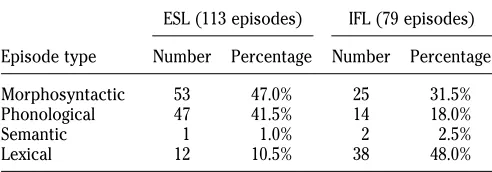
Table 2. Linguistic content of feedback episodes
ESL (113 episodes) IFL (79 episodes) Episode type Number Percentage Number Percentage Morphosyntactic 53 47.0% 25 31.5% Phonological 47 41.5% 14 18.0% Semantic 1 1.0% 2 2.5% Lexical 12 10.5% 38 48.0%
of meaning, recasts, and nontargetlike utterances; (b) they watched videos of two interaction sessions involving participants who were not part of this study; (c) they practiced coding the feedback episodes; (d) they were given information about the stimulated-recall procedure and the six coding catego-ries for recall comments; and (e) they practiced coding stimulated-recall comments from two subjects who were not included in this study.
To allay any concern that familiarity with the feedback episodes might in-fluence the raters’ categorization of stimulated-recall comments, one rater coded all stimulated-recall comments before coding the interaction sessions, and the other rater coded stimulated-recall comments from five subjects and interaction sessions from the other five subjects.
To calculate interrater reliability for the two independent raters, a subset (50%) of both the interaction data and the stimulated-recall data was com-pared. For the interaction data, all episodes that both raters had transcribed were counted;8agreement was 93%. For the stimulated-recall data, agreement was 80%. Additional measures of reliability were calculated by comparing the coding of the researchers with the independent raters. For the interaction data, agreement between the researchers and one independent rater was 91%; for the stimulated-recall data, agreement with the other independent rater was 96%.
RESULTS
ESL Data
Table 3. Linguistic content of stimulated-recall comments
[image:14.612.163.448.311.418.2]ESL (113 episodes) IFL (79 episodes) Comment types Number Percentage Number Percentage Morphosyntactic 9 7% 7 9% Phonological 30 27% 4 5% Semantic 26 23% 12 15% Lexical 29 26% 43 54% No content 13 12% 3 4% Unclassifiable 6 5% 10 13%
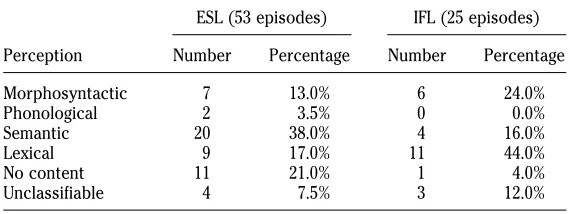
Table 4. Learners’ perceptions about morphosyntactic feedback
ESL (53 episodes) IFL (25 episodes) Perception Number Percentage Number Percentage Morphosyntactic 7 13.0% 6 24.0% Phonological 2 3.5% 0 0.0% Semantic 20 38.0% 4 16.0% Lexical 9 17.0% 11 44.0% No content 11 21.0% 1 4.0% Unclassifiable 4 7.5% 3 12.0%
The preceding description of the data shows that, whereas the feedback episodes primarily concerned morphosyntax and phonology, the learners’ stimulated-recall comments were more widely distributed across all six cate-gory types, with the greatest percentages occurring in phonology, lexis, and semantics.
As explained earlier, the research question concerns L2 learners’ percep-tions about interactional feedback, focusing on whether learners would gener-ally perceive a range of feedback accurately. The question related to whether learners perceived feedback as such, and whether they recognized what the feedback was about. To explore this question, the learners’ stimulated-recall comments indicating their perceptions about each type of feedback episode were tabulated. The distribution of stimulated-recall comments for the three feedback types is illustrated in Tables 4–6.
Table 5. Learners’ perceptions of feedback about phonology
ESL (47 episodes) IFL (14 episodes) Perception Number Percentage Number Percentage Morphosyntactic 2 4.0% 0 0.0% Phonological 28 60.0% 3 21.4% Semantic 5 11.0% 2 14.3% Lexical 9 19.0% 6 43.0% No content 1 2.0% 2 14.3% Unclassifiable 2 4.0% 1 7.0%
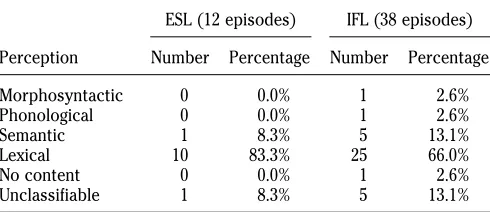
Table 6. Learners’ perceptions of feedback about lexis
ESL (12 episodes) IFL (38 episodes) Perception Number Percentage Number Percentage Morphosyntactic 0 0.0% 1 2.6% Phonological 0 0.0% 1 2.6% Semantic 1 8.3% 5 13.1% Lexical 10 83.3% 25 66.0% No content 0 0.0% 1 2.6% Unclassifiable 1 8.3% 5 13.1%
had no content (21% of the time); that is, they reported that at the time they did not think the morphosyntactic feedback related to anything at all. The ten-dency for learners to perceive morphosyntactic feedback as being about se-mantics is illustrated in example (12).
(12) Morphosyntactic feedback perceived as semantic NNS: So one man feed for the birds.
NS: So one man’s feeding the birds?
NNS: The birds.
Recall: When I saw the picture I thought this is a park and I tried to describe.
[image:15.612.183.428.296.402.2](13) Morphosyntactic feedback without recall of content NNS: It have mixed colors.
NS: It has mixed colors.
NNS: Mixed colors aha.
Recall: Uh, I was thinking . . . nothing, she just repeat what I said.
Example (13) shows a learner using nontargetlike subject-verb agreement. The NS reformulated the utterance by providing the targetlike verb form. In re-sponse, the learner simply repeated the phrasemixed colors. As shown by the recall comments, the learner reported that she did not recall having any thoughts about feedback at the time this episode occurred.
Although the pattern occurred only 13% of the time in the ESL data set, learners did sometimes perceive morphosyntactic feedback as being about morphosyntax, as illustrated in example (14).
(14) Morphosyntactic feedback perceived as morphosyntax NNS: Three key.
NS: Three?
NNS: Key er keys.
Recall: After “key” again, I make a little effort to say “keys” because you have three, I was thinking try a little better English.
In example (14), the learner omitted the plural morpheme onkey. The NS re-sponded by repeating the numberthreewith rising intonation. The learner ini-tially repeated the nontargetlike form but then provided the correct formkeys. When asked to comment on what he was thinking about at the time of the feedback, the learner indicated his awareness that he needed to try again, to say the word with the plural morpheme. As noted, this pattern of recognition of the target of the feedback was somewhat rare in these data.
We turn now to learners’ perceptions about phonological feedback. The data shown in Table 5 reveal a different pattern than was the case for morpho-syntactic feedback. As Table 5 shows, the learners in fact perceived the major-ity of phonological episodes (60%) as being about phonology. This finding is illustrated in example (15).
(15) Phonological feedback perceived as phonological NNS: There are[flurs]?
NS: Floors?
NNS: [fluwErs]uh flowers.
Recall: I was thinking that my pronounce, pronunciation is very horrible.
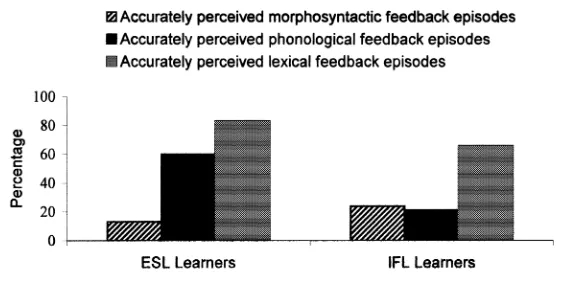
Figure 1. Accurate perception feedback reported by ESL and IFL learners.
Finally, we explore lexical feedback. It must be noted that the number of tokens for lexical feedback was very low (n=12), so the findings must be in-terpreted particularly cautiously. The participants most often perceived lexi-cal feedback episodes as being about lexis, as shown in Table 6 and in example (16).
(16) Lexical feedback perceived as lexis NNS: There is a library.
NS: A what?
NNS: A place where you put books.
NS: A bookshelf?
NNS: A book?
NS: Shelf.
NNS: Bookshelf.
Recall: That’s not a good word she was thinking about library like we have here on campus, yeah.
In example (16), the learner was describing the contents of a room and used the lexical itemlibraryto describe a bookshelf. The NS requested clarification and the NNS gave a definition of the lexical item. Once the learner’s intended meaning was understood, the NS provided the correct lexical item,bookshelf, which the NNS then repeated. As suggested by the stimulated-recall com-ments, the learner perceived the feedback as relating to a lexical item.
they recognized the target of morphosyntactic feedback (13%). In relation to morphosyntactic feedback, ESL learners were more likely to report that they were thinking about the semantic content of the morphosyntactic episodes (38%) or not about the content at all (21%). With such a small percentage of morphosyntactic feedback being recognized as being about morphosyntax, the window of opportunity for these learners to notice grammar in interaction may have been relatively small. Clearly, however, more focused research is necessary to examine the relationship between noticing and L2 development, and, as stated earlier, the current study did not aim to operationalize or test different levels of noticing.
IFL Data
The Italian data, like the ESL data, show some interesting patterns. As illus-trated in Table 2, the type of feedback provided by the Italian interviewer was primarily lexical or morphosyntactic, with fewer feedback episodes concern-ing phonology.9
As shown in Table 3, the IFL participants most often made remarks about lexis during the stimulated-recall sessions. The second most common responses were about semantics, and the third most common were unclassifiable. It is interesting to note the similarity to the ESL data—the par-ticipants’ reports concerned morphosyntax in only 9% of the data.
Thus, most of the feedback provided to the IFL learners, as well as the con-tent of their stimulated-recall comments, concerned lexis. Nearly half (48%) of all the feedback provided to the IFL learners was triggered by problems with lexical items. Furthermore, over half (54%) of the learners’ stimulated-recall comments mentioned lexical items. Even though morphosyntactic feedback occurred in nearly one third of the data, the IFL learners provided morphosyn-tactic stimulated-recall comments for only 9% of the data. Although phonologi-cal episodes account for 18% of the feedback, the IFL learners commented on phonology in only 5% of the stimulated-recall episodes. The data suggest that the IFL learners were largely oriented toward lexis, much more than phonol-ogy, morphosyntax, or semantics.10
As noted in the section on ESL, the research question concerned L2 learn-ers’ perceptions about interactional feedback. Again, the learnlearn-ers’ stimulat-ed-recall comments for each type of feedback episode were tabulated. The dis-tribution of stimulated-recall comments for the three feedback types under analysis are also illustrated in Tables 4–6 and Figure 1.
As noted, IFL learners’ comments about morphosyntactic feedback epi-sodes (Table 4) most often concerned lexis (44%), as illustrated in example (17).
(17) Morphosyntactic feedback perceived as lexis NNS: C’e` due tazzi.
“There is two cups (M-PL).” INT: Due tazz—come?
NNS: Tazzi, dove si puo´ mettere te`, come se dice questo?
“Cups(M-PL) where one can put tea, how do you say this?” INT: Tazze?
“Cups (F-PL)?” NNS: Okay, tazze.
“Okay, cups (F-PL).”
Recall: I wasn’t sure if I learned the proper word at the beginning.
The IFL learner in (17) responded to morphosyntactic feedback (appropriate ending for gender and number) with a comment reporting that he was think-ing about lexis. The second most common response to morphosyntactic feed-back was morphosyntax; the IFL learners perceived feedfeed-back on their morphosyntax correctly 24% of the time.
As can be seen from Table 5, nearly half of the phonological episodes (43%) were perceived as relating to lexis. Learners perceived phonological feedback as being about phonology only 21% of the time. An example of phonological feedback being perceived as such is provided in (18).
(18) Phonology perceived as phonology NNS: Vincino la tavolo e`. . .
“Near the table is . . . ” INT: Vicino?
“Near?” NNS: La, lu tavolo.
“The [??] table.”
Recall: I was thinking . . . when she said “vicino” I was thinking, “Okay did I pro-nounce that right there?”
As illustrated in Table 6, the participants perceived lexical feedback as be-ing about lexis most often, with 66% perceived as such. An example of this can be seen in (19). (This example is also seen above in [4] and is repeated here in the context of its accompanying recall.)
(19) Lexical feedback perceived as lexical NNS: C’e` una verdi, uh. . .
“There is a green, uh . . . ” INT: Una verdi?
“A green?”
NNS: Una, no, non lo so la lettera per questa.
“A, no, I don’t know the letter for this.” INT: Una qualcosa, una pianta?
“A something, a plant?” NNS: Sı`, sı`, sı` una pianta.
“Yes, yes, yes, a plant.”
Recall: What is the word for “plant”? I was thinking “plant,” I just don’t want to say “plant,” but then I was thinking “Gosh, I’ve seen so many plants, I can’t be-lieve in Italy I never had to say, ‘That’s a nice plant.’”
stimu-lated-recall comments of this learner, he perceived the target of the feedback, noting that it concerned a specific lexical item.
Summary of IFL Findings.As can be seen from Tables 4–6 and in Figure 1, when the feedback provided to the learner during interaction was morphosyn-tactic in nature, learners recognized the nature of 24% of the feedback. Almost half of the time, they perceived morphosyntactic feedback as being about lexis. The amount of phonological feedback provided to the learners was quite low (18%), with less than a quarter being perceived as related to phonology. In contrast, lexical feedback episodes were perceived to be about lexis almost two-thirds of the time (66%).
DISCUSSION
In this study of L2 learners’ perceptions about feedback in conversational in-teraction, learners were most accurate in their perceptions about lexical and phonological feedback, and were generally inaccurate in their perceptions about morphosyntactic feedback.11Morphosyntactic feedback was often per-ceived as being about semantics for the ESL learners and about lexis for the IFL learners.12 Proponents of the Interaction Hypothesis (Gass, 1997; Long, 1996; Pica, 1994) have suggested that interaction can result in feedback that focuses learners’ attention on aspects of their language that deviate from the target language. If learners’ reports about their perceptions can be equated with attention, then the findings in this study are consistent with the claims of the Interaction Hypothesis, at least with regard to the lexicon and phonol-ogy. In terms of morphosyntax, however, these findings are less consistent with researchers’ claims about the benefits of interaction, at least at first glance. Exploring the nature of feedback in more detail may shed further light on the findings.
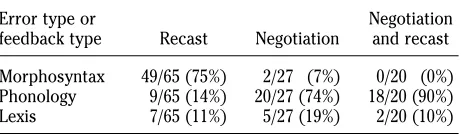
It is important to note (as outlined in the Method section) that, in this study, feedback was provided to learners as a natural (nonmanipulated) part of task-based interaction. Thus the nature of the feedback type and the forms that attracted feedback varied. Given the results on differing patterns of learner perceptions, we carried out a post hoc analysis to explore the relation-ship between learners’ perceptions, the nature of the interactional feedback, and the linguistic target of the feedback. All of the feedback provided to the learners of the ESL data set was implicit negative feedback (as defined by Long, 1996). We further explored the types of feedback by categorizing and examining the different types of feedback episodes in the data set: recasts, negotiation, and combinations, where negotiation and a recast both occurred in the same episode.
Table 7. Distribution of feedback type and error type
Error type or Negotiation feedback type Recast Negotiation and recast Morphosyntax 49/65 (75%) 2/27 (7%) 0/20 (0%) Phonology 9/65 (14%) 20/27 (74%) 18/20 (90%) Lexis 7/65 (11%) 5/27 (19%) 2/20 (10%)
to problems involving morphosyntax, 19% to lexis, and 74% to phonology). Combination episodes also mostly involved phonology (none of the combina-tion episodes involved problems with morphosyntax, 10% involved lexis, and 90% involved phonology). These findings are shown in Table 7.13In summary, the finding that morphosyntactic feedback was rarely perceived as being about morphosyntax becomes more interesting when we also note that mor-phosyntactic feedback was most often provided in the form of a recast.14
Long (1996) has argued that recasts and negotiation of meaning both func-tion to direct the learners’ attenfunc-tion toward linguistic form in the context of meaning-based communication. It may be that we can hypothesize that negoti-ation, because it can require more learner involvement and hence ensure that some processing has taken place on the part of the learner, might result in a greater likelihood that learners’ attention is focused on the language of the negotiation (Gass, 1997). Recasts, on the other hand, do not always make such participatory demands on the learner. They provide the learner with more tar-getlike forms but may be perceived by the learner as another way to say the same thing (Long, 1996). Thus a learner may not repeat or rephrase as a result of the recast and may not even perceive recasts as feedback. Of course, the finding reported here, that learners sometimes fail to identify feedback as feedback or, if they recognize that feedback is being provided, do not accu-rately identify the target of the feedback, does not necessarily imply that the feedback will not be beneficial to learners—that is an empirical question. Feedback may be advantageous in a number of ways. For example, Leeman (2000) has proposed that recasts may promote L2 development by enhancing the salience of target forms rather than by marking the learner’s production as problematic. Further research exploring the source of developmental bene-fits associated with feedback is clearly warranted. Detailed longitudinal stud-ies of feedback types and L2 development (possibly involving more finely tuned introspective methodologies) may also shed further light on these is-sues.
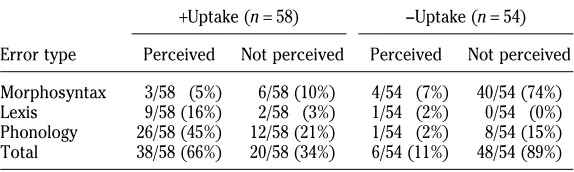
Table 8. Frequency of uptake and perception by error type
+Uptake (n=58) –Uptake (n=54) Error type Perceived Not perceived Perceived Not perceived Morphosyntax 3/58 (5%) 6/58 (10%) 4/54 (7%) 40/54 (74%) Lexis 9/58 (16%) 2/58 (3%) 1/54 (2%) 0/54 (0%) Phonology 26/58 (45%) 12/58 (21%) 1/54 (2%) 8/54 (15%) Total 38/58 (66%) 20/58 (34%) 6/54 (11%) 48/54 (89%)
to some aspect of the student’s initial utterance” (p. 49). In the present study, we useduptaketo refer to the learners’ modification of their original utterance following the NS’s provision of feedback through recasts or negotiation. Clearly, uptake of feedback should not be interpreted as constituting learning or development (as noted by Mackey & Philp, 1998), but uptake may be re-lated to learners’ perceptions about feedback at the time of the feedback. We, therefore, explored this issue further.
In these data, there was evidence of uptake after feedback for a little over half (52%) of all the feedback provided. Not surprisingly, learners’ stimulated-recall reports generally revealed accurate perceptions about feedback for which they had uptake at the time of the interaction. As shown in Table 8, for two-thirds (66%) of the feedback episodes with uptake, learners’ reports showed that they accurately perceived the target of the feedback. However, it is also interesting to note that, for 34% of the feedback episodes with uptake, the learners’ stimulated-recall reports indicate that they did not perceive the feedback. Thus, a little over one-third of the time, learners reacted to the feed-back by immediately modifying their output, but their stimulated-recall re-ports suggest that they did not accurately perceive the feedback at the time. The relationship between learners’ modifications to their output after feed-back and their reports about perceptions of the feedfeed-back is an important issue, especially when explored in the context of any subsequent L2 develop-ment (see Mackey, 2000).
these data, both uptake at the time of the interaction and reported accurate perceptions occurred for 82% of the lexical episodes and 69% of the phonolog-ical episodes. However, for morphosyntax, only 33% of the episodes resulted in uptake and accurate perceptions. Furthermore, as noted earlier, morpho-syntactic feedback often occurred in the form of recasts—a discourse type that may provide little opportunity for uptake. We suggest, following Swain (1995), that the relationship of modified output (and perceptions) to develop-ment is a worthy topic for future investigations, taking into account the poten-tial “no opportunity for uptake” factors identified by Oliver (1995) as important.
It would appear from the data in this study that morphosyntactic feedback was generally not perceived as being about morphosyntax. Further analysis showed that morphosyntactic feedback was usually provided through recasts. Using recasts to provide morphosyntactic feedback may have been subopti-mal, at least in terms of learners’ perceptions about the feedback. Given the low number of tokens and generally exploratory nature of the current study, it is clearly worthwhile for future research to investigate this issue further. One possible explanation for the low rate of accurate perception for morpho-syntactic feedback relates to the communicative nature of interaction. A major goal in any interaction is to understand one’s partner, and morphosyntax can be relatively unimportant in the goal of understanding. In this study, it is im-portant to note that the morphosyntactic focus was on aspects of language that were not crucial for understanding (e.g., agreement, plural formation). This is in direct contrast to issues of pronunciation and accurate lexical us-age, which had more potential to seriously interfere with understanding. Thus, the lack of perception of morphosyntactic feedback may, in part, be due to the lack of importance of morphosyntax in comprehension.
CONCLUSIONS
To summarize, we have shown that morphosyntactic feedback was seldom perceived as being about morphosyntax and was generally provided in the form of recasts. In contrast, feedback on phonology and lexis was perceived more accurately—that is, as being about phonology and lexis—and was gen-erally provided in the form of negotiation and combination episodes. Clearly, the absence of reports of perception does not mean that feedback was not perceived at some level, and perception does not automatically entail or imply L2 development or learning.
findings reported here shed light on Pica’s claims about interaction and gram-matical form. In this study, negotiation of meaning seldom involved grammar. However, problem utterances involving morphosyntax were generally recast. Our findings may suggest an additional reason for why interactional feedback may benefit lexis and phonology more than some aspects of grammar. It may be so because, even when morphosyntactic feedback is provided in interac-tion, through recasts, learners often do not perceive it as such, whereas when phonological and lexical feedback is provided in interaction, they are more likely to perceive it correctly. However, all of these questions need to be ad-dressed by studies that measure development.
Another possibility is that, if learners were able to correctly perceive all of the feedback that they received, this would result in a cognitive overload for them; if this is the case, then perceiving a limited amount of feedback at ex-actly the right developmental time is the optimal condition for the learner. Issues involving the quantity, quality, timing, and nature of feedback and L2 development still need to be carefully isolated and explored. Our findings do suggest that further studies would be worthwhile in the general goal of explor-ing interaction-driven L2 learnexplor-ing. Finally, we point out that our sample was small and our results should be taken as indicative of the need for further research. For example, individual differences in metalinguistic abilities, work-ing memory, and sensitivity to morphosyntax may have affected perceptions. More focused and finely grained studies (with more participants) are neces-sary.
(Received 23 August 1999)
NOTES
1. This is not unlike what Saxton (1997) has claimed for child language acquisition through his Direct Contrast Hypothesis. He claimed that the fact that a correct and an incorrect form are adja-cent is important in creating a conflict (highlighted through recasts or negotiation work) for the learner. The mere fact of a contrast or a conflict draws a learner’s attention to a deviant form.
2. The extent to which negative evidence can engage Universal Grammar is in dispute. Schwartz (1993) argued that only positive evidence can contribute to the formation and restructuring of L2 grammars. Conversational interaction can provide negative evidence in the sense that it can provide information about a learner’s own incorrect production. It cannot in all instances provide informa-tion as to what needs to be done to correct a faulty hypothesis. This is particularly the case when one is dealing with complex syntax.
3. Saxton (1997) also used the termperceptionin a similar nontechnical sense in his Direct Con-trast Hypothesis about the role of recasts in first language acquisition: “ . . . the child may perceive the adult form as being in contrast with the equivalent form. Cognizance of a relevant contrast can then form the basis for perceiving the adult form as a correct alternative to the child form” (p. 155). 4. Although a full discussion of the issues of conscious and unconscious learning is beyond the scope of this paper (see Schmidt, 1995, and Schachter et al., 1998), we do want to point out that it could be argued that learners may not perceive feedback at a conscious level but may still benefit from it. The focus of this paper, and of our hypothesis, is feedback that the learners were able to report.
5. We approached our questions by exploring the perceptions of learners in both a second and a foreign language setting, conducting the interviews with learners about their perceptions in both the L1 and the L2. Hence, two groups of learners were included in the study.
7. For the IFL data, the availability of raters precluded the same procedure used in rating the reliability for the coding of error type, feedback type, and stimulated-recall comments. Instead, one near-native speaker of Italian transcribed all the feedback episodes with their accompanying stimu-lated-recall comments and coded both episodes and comments according to the coding categories described in the text. A second near-neative speaker of Italian (one of the authors) coded a subset of the data (45%). Agreement between these two raters was 86% for the stimulated-recall data.
8. Episodes that one rater had transcribed but the other rater had not transcribed were not counted as disagreements. Only data that both raters had transcribed and then coded differently were considered to be disagreements. The total number of missed episodes for the subset of interac-tion data was 20.
9. One of the reasons that there was little phonological feedback may have had to do with the background of the Italian participants. Many were from Italian heritage families; they had little com-mand of Italian syntax or morphology, but, having grown up hearing Italian, their pronunciation in many instances was nativelike. Also, they shared an L1 (English) with the interviewer, which may have impacted comprehension of phonology. A full discussion of possible reasons for differences between the ESL and IFL learners is beyond the scope of this paper. However, it is to be noted that, in addition to the background of the participants, as mentioned previously, there may be differences that can be attributed to the nature of the instructional background of these individuals. ESL learn-ers generally have more experience in dealing with the kinds of tasks used in this study. IFL teaching tends to be more traditional and less interactive. Although this is only anecdotal, we did notice that those IFL learners who had little or no experience living in Italy (and hence little or no interactive experience) were least equipped to deal with the task and to understand what might be intended by feedback.
10. One question that arises from a study such as this is the issue of whether learners may have provided comments on some things and not others because of their linguistic abilities. An anony-mousSSLAreviewer pointed out that it is possible that learners might have greater difficulty verbal-izing perceptions about morphosyntax than lexis or semantics in their L2. However, the fact that the IFL learners carried out the recalls in their L1, and still showed asymmetric patterns in what they perceived, suggests that language knowledge may not be responsible for recall content. Furthermore, the morphosyntactic feedback was limited primarily to agreement and plurals, which are parts of language that are commonly referred to in language classrooms.
11. Following a query by an anonymousSSLAreviewer, we carried out a further analysis of the morphosyntax involved in the error-feedback episodes. There were no obvious patterns: 15 of the 53 morphosyntactic episodes (28%) involved the nontargetlike use of either definite or indefinite arti-cles; 12 out of 53 episodes (22.5%) involved progressive and third-person singular -sforms; plural noun marking and subject-verb agreement accounted for 10 (19%) and 8 (15%) of the episodes, re-spectively. The remaining episodes concerned subject omission (5.5%), locative constructions (4%), word order (4%), and possessives (2%). Uptake by the learners showed a similar seemingly nonsys-tematic distribution across different types of morphosyntactic episodes.
12. Although, as noted in the results section, the IFL learners’ perceptions about morphosyntax were more accurate than those of the ESL learners.
13. This finding is similar to one reported by Lyster (1998): “The teachers tended to select feed-back types in accordance with error types: Namely, recasts after grammatical and phonological er-rors and negotiation of form after lexical erer-rors” (p. 205).
14. We must point out, however, that a comparison of the effectiveness of different feedback types was not the primary goal of our study, and direct comparisons are not appropriate based on these data (because we did not experimentally manipulate the feedback and explore, for example, the perception of morphosyntactic feedback that was provided in equal amounts through recasts and negotiation moves).
REFERENCES
Alanen, R. (1995). Input enhancement and rule presentation in second language acquisition. In R. Schmidt (Ed.),Attention and awareness in foreign language learning(pp. 259–302). Honolulu: Uni-versity of Hawai’i Press.
Aston, G. (1986). Trouble-shooting in interaction with learners: The more the merrier?Applied Lin-guistics, 7,128–143.
Ericcson, K., & Simon, H. (1993).Protocol analysis: Verbal reports as data(Rev. ed.). Cambridge, MA: MIT Press.
Færch, C., & Kasper, G. (1987). From product to process: Introspective methods in second language research. In C. Færch & G. Kasper (Eds.),Introspection in second language research(pp. 5–23). Clevedon, UK: Multilingual Matters.
Gass, S. M. (1988). Integrating research areas: A framework for second language studies.Applied Lin-guistics, 9,198–217.
Gass, S. M. (1997).Input, interaction, and the second language learner. Mahwah, NJ: Erlbaum. Gass, S. M., & Mackey, A. (2000).Stimulated recall methodology in second language research. Mahwah,
NJ: Erlbaum.
Gass, S. M., Mackey, A., & Pica, T. (1998). The role of input and interaction in second language acqui-sition: An introduction.Modern Language Journal, 82,299–307.
Gass, S. M., & Varonis, E. M. (1994). Input, interaction, and second language production.Studies in Second Language Acquisition, 16,283–302.
Green, A. (1998).Verbal protocol analysis in language testing research: A handbook. New York: Cam-bridge University Press.
Hatch, E. (1983).Psycholinguistics: A second language perspective. Rowley, MA: Newbury House. Leeman, J. (2000).Investigating recasts and L2 development: Negative evidence and enhanced salience.
Paper presented at the American Association of Applied Linguistics Conference, Vancouver, British Columbia.
Leow, R. (1997). Attention, awareness, and foreign language behavior.Language Learning, 47,467– 506.
Leow, R. (1998a). The effects of amount and type of exposure on adult learners’ L2 development in SLA.Modern Language Journal, 82,50–68.
Leow, R. (1998b). Toward operationalizing the process of attention in SLA: Evidence for Tomlin and Villa’s (1994) fine-grained analysis of attention.Applied Psycholinguistics, 19,133–159.
Long, M. H. (1980).Input, interaction, and second language acquisition. Unpublished doctoral disserta-tion, University of California, Los Angeles.
Long, M. H. (1996). The role of the linguistic environment in second language acquisition. In W. C. Ritchie & T. K. Bhatia (Eds.),Handbook of language acquisition. Vol. 2: Second language acquisi-tion(pp. 413–468). New York: Academic Press.
Long, M. H., & Robinson, P. (1998). Focus on form: Theory, research, process. In C. Doughty & J. Williams (Eds.),Focus on form in classroom SLA(pp. 15–41). New York: Cambridge University Press.
Loschky, L. C. (1994). Comprehensible input and second language acquisition: What is the relation-ship?Studies in Second Language Acquisition, 16,303–325.
Lyster, R. (1998). Recasts, repetition, and ambiguity in L2 classroom discourse.Studies in Second Language Acquisition, 20,51–81.
Lyster, R., & Ranta, L. (1997). Corrective feedback and learner uptake.Studies in Second Language Acquisition, 19,36–66.
Mackey, A. (1999). Input, interaction, and second language development: An empirical study of ques-tion formaques-tion in ESL.Studies in Second Language Acquisition, 21,557–587.
Mackey, A. (2000). Interactional feedback on L2 morphosyntax: Learners’ perceptions and develop-mental outcomes. Paper presented at the American Association of Applied Linguistics Confer-ence, Vancouver, British Columbia.
Mackey, A., & Philp, J. (1998). Conversational interaction and second language development: Recasts, responses, and red herrings?Modern Language Journal, 82,338–356.
Oliver, R. (1995). Negative feedback in child NS/NNS conversation.Studies in Second Language Acquisi-tion, 17,459–483.
Philp, J. (1999).Interaction, noticing, and second language acquisition: An examination of learners’ notic-ing of recasts in task-based interaction. Unpublished doctoral dissertation, University of Tasma-nia, Australia.
Pica, T. (1994). Research on negotiation: What does it reveal about second-language learning condi-tions, processes, and outcomes?Language Learning, 44,493–527.
Roberts, M. (1995). Awareness and the efficacy of error correction. In R. Schmidt (Ed.),Attention and awareness in foreign language learning(pp. 163–182). Honolulu: University of Hawai’i Press. Robinson, P. (1996). Learning simple and complex second language rules under implicit, incidental,
(Ed.),“Talking to learn”: Conversation in second language acquisition(pp. 23–45). Rowley, MA: Newbury House.
Saxton, M. (1997). The contrast theory of negative input.Journal of Child Language, 24,139–161. Schachter, J. (1986). Three approaches to the study of input.Language Learning, 36,211–226. Schachter, J., Rounds, P. L., Wright, S., & Smith, T. (1998).Comparing conditions for learning syntactic
patterns: Attention and awareness. Unpublished manuscript, University of Oregon, Eugene. Schmidt, R. W. (1990). The role of consciousness in second language learning.Applied Linguistics, 11,
129–158.
Schmidt, R. W. (1993). Awareness and second language acquisition.Annual Review of Applied Linguis-tics, 13,206–226.
Schmidt, R. W. (1995). Consciousness and foreign language learning: A tutorial on the role of atten-tion and awareness in learning. In R. Schmidt (Ed.),Attention and awareness in foreign language learning(pp. 1–63). Honolulu: University of Hawai’i Press.
Schmidt, R. W., & Frota, S. (1986). Developing basic conversational ability in a second language: A case study of an adult learner of Portuguese. In R. Day (Ed.),“Talking to learn”: Conversation in second language acquisition(pp. 237–326). Rowley, MA: Newbury House.
Schwartz, B. (1993). On explicit and negative data effecting and affecting competence and linguistic behavior.Studies in Second Language Acquisition, 15,147–165.
Swain, M. (1985). Communicative competence: Some roles of comprehensible input and comprehen-sible output in its development. In S. Gass & C. Madden (Eds.),Input in second language acquisi-tion(pp. 235–253). Rowley, MA: Newbury House.
Swain, M. (1995). Three functions of output in second language learning. In G. Cook & B. Seidlhofer (Eds.),Principle and practice in applied linguistics: Studies in honour of H. G. Widdowson(pp. 125–144). Oxford: Oxford University Press.
Swain, M., & Lapkin, S. (1998). Interaction and second language learning: Two adolescent French im-mersion students working together.Modern Language Journal, 82,320–337.
Tarone, E., & Liu, G. (1995). Situational context, variation, and second language acquisition theory. In G. Cook & B. Seidlhofer (Eds.),Principle and practice in applied linguistics: Studies in honour of H. G. Widdowson(pp. 107–124). Oxford: Oxford University Press.
Tomlin, R., & Villa, V. (1994). Attention in cognitive science and second language learning.Studies in Second Language Acquisition, 16,183–203.
Truscott, J. (1998). Noticing in second language acquisition: A critical review.Second Language Re-search, 14,103–135.