http://dx.doi.org/10.4236/cs.2016.77100
Design and Comparison of Controller for the
Reduction of Conducted Electromagnetic
Interference in an Inverter
P. Narasimman
1, E. Latha Mercy
21Department of Electrical and Electronics Engineering, Kings College of Engineering, Thanjavur, India
2Department of Electrical and Electronics Engineering, Government College of Technology, Coimbatore, India
Received 21 March 2016; accepted 27 May 2016; published 30 May 2016
Copyright © 2016 by authors and Scientific Research Publishing Inc.
This work is licensed under the Creative Commons Attribution International License (CC BY). http://creativecommons.org/licenses/by/4.0/
Abstract
This paper presents the design of a controller for the measurement and reduction of conducted Electro Magnetic Interference (EMI) caused in the power electronic circuits. The conducted EMI is also separating the Common Mode (CM) and Differential Mode (DM) simultaneously using Line Impedance Stabilization Network (LISN). EMI is mitigated by the fuzzy controller. By comparing common mode voltage with the standard reference value, the generated error can be minimized by using fuzzy controller. Fuzzy controller is varying the PWM signal of the power electronic switching devices for reducing the electromagnetic interference. In this paper, comparison of PI and fuzzy controller of the open loop and closed loop models are implemented using MATLAB® SIMULINK for measurement and reduction of the EMI level; and also simulation results of the PI controller and fuzzy controller analysis are presented in this paper. The fuzzy controller is pro-vided to achieve the EMI level of the inverter within the standard limit.
Keywords
Conducted EMI, Common Mode, Differential Mode, PI Controller, Fuzzy Controller
1. Introduction
brings some serious Electro Magnetic Compatibility (EMC) problems. In order to satisfy the standard limits, EMI reduction method is most important. Insertion of filters [1][2] is the most common method which can be used to mitigate the conducted EMI. But, such filters are not perfect and designing is too difficult. It is quite bulky and takes much of the converter space. The various reduction methods have been proposed such as sigma-delta modulation [3], active filter [4], resonance technique [5] and soft switching methods [6]. This paper proposed a new technique to reduce the difficulties of filter design with minimum time. To reduce the conducted EMI, the designer has to measure the conducted EMI. LISN circuit is used to measure the conducted interference produced in the Equipment Under Test (EUT). The conducted EMI measured emissions from the EUT consists of the Common Mode (CM) and Differential Mode (DM) noise. When the measured emissions are above the standard limits, it is not easy to find the origin. One of the difficulties in the EMI is the lack of separation tools. Radio Frequency (RF) current probe [7] is the basic instrument for separation of the conducted EMI and its cost is too high and provides only the estimate. Out of the various techniques already proposed by authors, one such tech-nique given by [8] provides inaccurate result. Hence, the requirements for the measurement circuit evaluation and the LISN with EMI separator circuit were given by [9][10].
This paper presents a LISN circuit with EMI separator for measuring the CM and DM simultaneously in EUT and subsequent reduction of the same. EUT is the inverter, in which conducted EMI measurement is taken using PI and fuzzy controller which measures and reduces simultaneously comparison of the EMI level of CM/DM within CISPR-22 from Comité International Spécial des Perturbations Radioélectriques standard.
2. Measurement of Conducted EMI
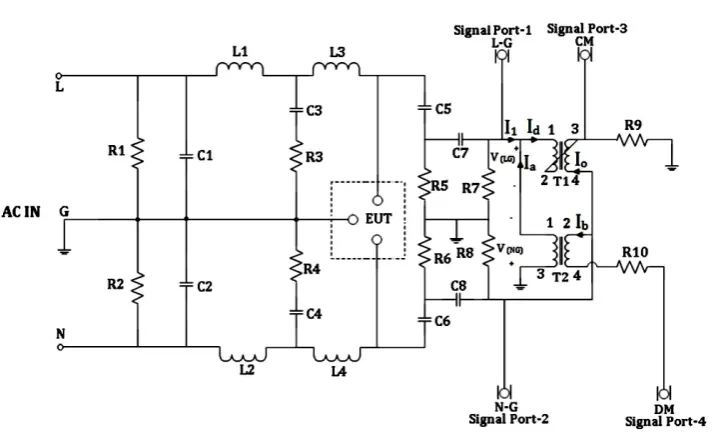
Conducted EMI from an inverter is caused by the switching actions. LISN circuit with EMI/noise separator is used to measure the conducted EMI, which is shown in Figure 1. The LISN is used to isolate the external noise which may be present on the outside of the external power line. The CM and DM noise voltages caused in the EUT are simultaneously measured from port 3 and port 4. The CM and DM noise voltages are the vector sum and difference of the Line-Ground (L-G) and Neutral-Ground (N-G) voltage respectively. The CM and DM vol-tages can be calculated from Equations (1)-(2).
LG NG
DM 50 DM
2
V V
V = − = ⋅i (1)
LG NG
CM 50 CM
2
V V
V = + = ⋅i (2)
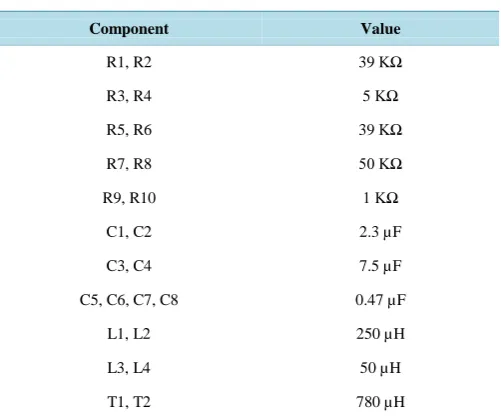
[image:2.595.136.495.487.708.2]The components details of LISN circuit with EMI separator are shown in Table 1[10].
Table 1. LISN component values.
Component Value
R1, R2 39 KΩ
R3, R4 5 KΩ
R5, R6 39 KΩ
R7, R8 50 KΩ
R9, R10 1 KΩ
C1, C2 2.3 µF
C3, C4 7.5 µF
C5, C6, C7, C8 0.47 µF
L1, L2 250 µH
L3, L4 50 µH
T1, T2 780 µH
The EMI separator circuit should satisfy two requirements to separate CM and DM mode noise and it would be taken into account as follows [10]:
a) Outputs of CM and DM from Equations (1) and (2) are equal. This requirement ensures the correct output of EMI separator.
b) The leakage output of CM and DM should be small which ensures the small interference between the CM and DM noise measurements.
In order to evaluate the EMI separator, the above requirements should be checked one by one.
The first requirement is the transmission coefficient of EMI separator. The CM Transmission Ratio (CMTR) and DM transmission ratio (DMTR) are defined by Equations (5)-(6) as follows,
For CM EMI separator:
ODM
CM
CMRR V
V
= (3)
For DM EMI separator:
OCM
DM
DMRR V
V
= (4)
The second requirement can be characterized by CM Rejection Ratio (CMRR) and the DM Rejection Ratio (DMRR) are defined by Equations (3)-(4) as follows.
For DM EMI separator:
OCM
CM
CMTR V
V
= (5)
For CM EMI separator:
ODM
DM
DMTR V
V
= (6)
where,
VOCM—CM EMI separator output voltage (i.e. Port 3); VODM—DM EMI separator output voltage (i.e. Port 4); VCM—CM EMI separator input voltage;
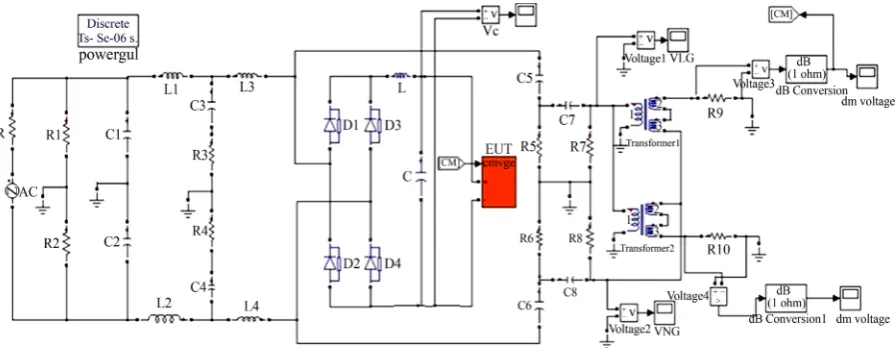
LISN with EMI separator is solved in MATLAB/Simulink SimPower Systems environment and the corres-ponding schematic is presented in Figure 2.
3. Equipment under Testing (EUT) Device-Inverter
Inverter is placed under the testing device in which the conducted EMI is caused in it. The conducted EMI caused in the inverter is due to the switching action of the device. The schematic diagram of the inverter is shown in Figure 3. The inverter operates four different modes depending on which switches (T1, T2, T3, and T4) are closed is shown in Table 2.
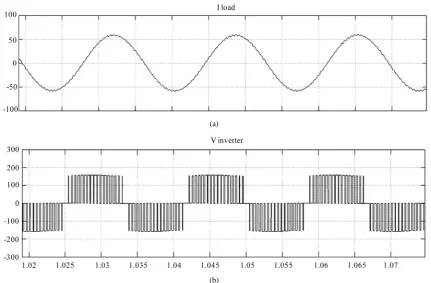
[image:4.595.91.539.236.410.2]The input supply to the inverter is given through the LISN circuit which provides the clean supply without in-terference from the power lines. The given supply to the inverter (Vdc) is 150 V which is converted to ac (Vac) 150 V by inverter. The output waveform of the inverter is shown inFigure 4.
Figure 2.Simulation diagram of LISN circuit with EMI separator.
[image:4.595.129.542.248.729.2]Figure 3.Schematic diagram of the inverter.
Table 2.Switching states of the inverter.
State Switches Closed Vo
1 T1 & T2 +Vdc
2 T3 & T4 −Vdc
3 T1 & T3 0
(a)
[image:5.595.98.530.84.367.2](b)
Figure 4.Output waveform of the inverter. (a) Load current; (b) Voltage.
4. Reduction of Conducted EMI Using Fuzzy Logic Controller (FLC)
EMI realized in the inverter is mainly due to the switching action of the switching device which is reduced here by FLC Controller.
4.1. PI Controller
PI controller is used in this paper for controlling the switching device of the EUT. It has been generating the PWM signal based on the CM noise voltage for maintaining the EMI level within the CISPR standard.
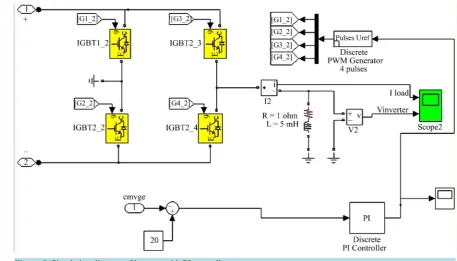
The PI controller is used to generate the PWM signal based on the CM noise voltage which is compared with the reference EMI noise voltage. The output of PI controller is compared with the reference PWM signal so that the switching action of the inverter is controlled based on the output of EMI separator. Figure 5 presents the in-verter simulation diagram with PI controller.
4.2. Fuzzy Logic Controller
Fuzzy logic controller is used in this paper for controlling the switching device of the EUT. It has been generat-ing the PWM signal based on the CM noise voltage for maintaingenerat-ing the EMI level within their CISPR standard.
The FLC is used to generating the PWM signal based on the CM noise voltage and which is compared with the reference EMI noise voltage. The output of FLC is compared with the reference PWM signal so that the switching action of the inverter is controlled based on the output of EMI separator. As shown in Figure 6, this presents the inverter simulation diagram with FLC.
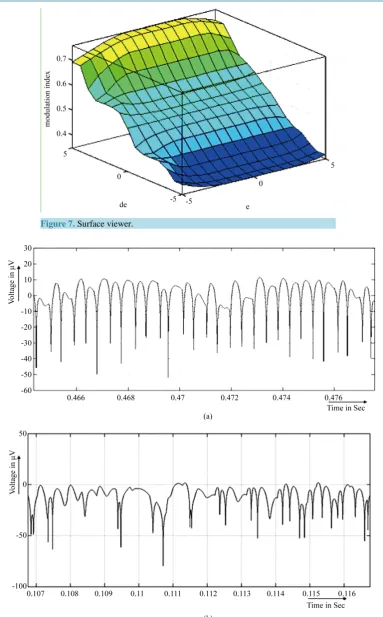
The entire variable for fuzzy inputs of “input 1” and “input 2” are defined as (NB, NS, ZERO, PS, and PB). In the Figure 7, the fuzzy control rules are illustrated in surface viewer, which inputs of error (e) and change in er-ror (de) are assigned in x-axis and output “Modulation Index” is assigned in y-axis.
5. Simulation Result
Figure 5. Simulation diagram of inverter with PI controller.
Figure 6. Simulation diagram of inverter with fuzzy controller.
surement in inverter.
5.1. Conducted EMI without Controller
Figure 7.Surface viewer.
5.2. Conducted EMI with PI Controller
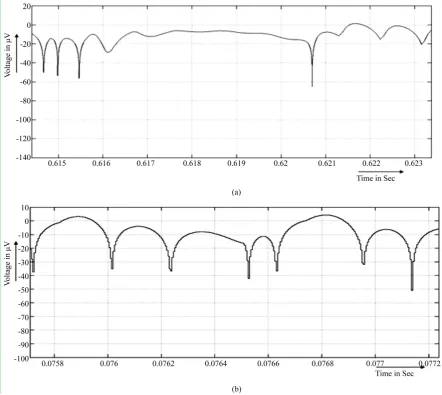
From the output of EMI separator circuit shown in Figure 5, the L-G and N-G noise voltages are not within CISPR-22 standards. Whereas, the outputs of L-G and N-G noise voltages of the PI controller shown in Figure 9.
5.3. Conducted EMI with FLC
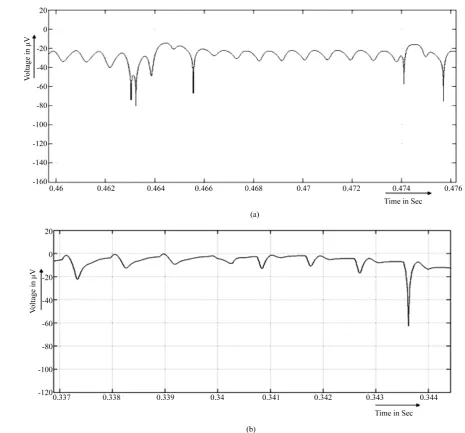
From the output of EMI separator circuit shown in Figure 6, the L-G and N-G noise voltages are satisfied with the CISPR-22 standard limits are shown in Figure 10.
6. Conclusions
The measurement of the conducted electromagnetic Interference caused in the inverter using LISN with EMI separator is designed and it is also measuring the noise from line, neutral, common mode and differential mode noise separation simultaneously. After comparing with open loop and closed loop of PI controller and fuzzy controller, the common mode voltage value reduced to around <40 µV. The results were shown in Table 3.
[image:8.595.91.534.307.702.2]The fuzzy controller can effectively reduce the conducted interference produced in the inverter by varying the pulse width modulation of the switching device of the gate signal. Finally, the result shows that the conducted
Figure 10. L-G and N-G voltage from inverter with FLC. (a) Line-ground voltage; (b) Neutral-ground voltage.
Table 3. Comparison of L-G and N-G voltages with controllers.
Parameter
L-G voltage (µV) L-G voltage (µV)
Min Max Min Max
Without controller −48 8 −50 −5
PI controller −45 −10 −38 2
Fuzzy logic controller −38 −22 −10 −2
interference in the inverter is maintained nearly within the CISPR-22 standard limits. It is very useful in design-ing the optimized power electronic circuits.
References
[image:9.595.91.539.551.644.2]Transac-tions on Industry ApplicaTransac-tions, 31, 1247-1256. http://dx.doi.org/10.1109/28.475694
[2] Kumar, M. and Agarwal, V. (2006) Power Line Filter Design for Conducted Electromagnetic Interference Using Time Domain Measurements. IEEE Transactions on Electromagnetic Compatibility, 48, 178-186.
http://dx.doi.org/10.1109/TEMC.2006.870697
[3] Paramesh, J. and Von Jouanne, A. (2001) Use of Sigma-Delta Modulation to Control EMI from Switch-Mode Power Supplies. IEEE Transactions on Industrial Electronics, 48, 111-117. http://dx.doi.org/10.1109/41.904570
[4] Son, Y.C. and Sul, S.K. (2003) Generalization of Active Filters for EMI Reduction and Harmonics Compensation. In-dustryApplications Conference, 2, 1209-1214.
[5] Bera, R., Bera, J., Sen, A.K. and Dasgupta, P.R. (1999) Reduction of EMI from SMPS (Switched Mode Power Sup-plies) by Resonance Technique and Its Utilities in Industrial Process Control Instruments. International Conference on Electromagnetic Interference and Compatibility, New Delhi, 6-8 December 1999, 445-448.
[6] Yoshida, K., Ishii, T. and Nagagata, N. (1992) Zero Voltage Switching Approach for Flyback Converter. International Telecommunications Energy Conference, 4-8 October 1992, 324-329. http://dx.doi.org/10.1109/intlec.1992.268424
[7] Morgan, D. (1994) A Handbook for EMC Testing and Measurement. Peter Peregrinus Ltd., London.
[8] Paul, C.R. and Hardin, K.B. (1988) Diagnosis and Reduction of Conducted Noise Emissions. IEEE Transactions on Electromagnetic Compatibility, 30, 553-560. http://dx.doi.org/10.1109/15.8769
[9] Wang, S., Lee, F.C. and Odendaal, W.G. (2005) Characterization Evaluation, and Design of Noise Separator for Con-ducted EMI Noise Diagnosis. IEEE Transactions on Power Electronics, 20, 974-982.
http://dx.doi.org/10.1109/TPEL.2005.850978