Several people helped me through this undertaking and deserve my thanks. They include my friends in Milan and London, my fellows at Bocconi University, my uncle Giovanni and my parents who emotionally supported me the whole time.
Four people have really made the difference and therefore deserve full recognition for their role in preparing this dissertation. Jacopo, born three years ago, gave me the optimism and joy required to find the pleasure to study. I wish I had spent more time with him, but I am sure that his passion for baby books owes something to LSE. I met Giuliana, my love and wife, in London and thus I am thankful to my PhD experience also for this. She has always encouraged me, despite the trade-off between studying and our life as a couple. Without her I would have never found the emotional balance to commit myself to this enterprise.
A Cost-Benefit Analysis of In-Vitro-Fertilisation
in Italy
Giovanni Fattore
The London School of Economics and Political Science
Thesis subm itted to the University of London for the degree of Doctor of Philosophy
UMI Number: U615695
All rights reserved
INFORMATION TO ALL USERS
The quality of this reproduction is dependent upon the quality of the copy submitted.
In the unlikely event that the author did not send a complete manuscript and there are missing pages, these will be noted. Also, if material had to be removed,
a note will indicate the deletion.
Dissertation Publishing
UMI U615695
Published by ProQuest LLC 2014. Copyright in the Dissertation held by the Author. Microform Edition © ProQuest LLC.
All rights reserved. This work is protected against unauthorized copying under Title 17, United States Code.
ProQuest LLC
789 East Eisenhower Parkway P.O. Box 1346
Abstract
This thesis presents a full cost-benefit analysis of In-Vitro-Fertilisation (IVF) from a societal perspective. It is based on a contingent valuation survey administered through internet to a sample of the Italian population. A referendum format and a payment scale were used to elicit willingness-to-pay (WTP) for a publicly funded program providing IVF to infertile couples. WTP was also elicited for a hypothetical situation in which the respondent was asked to imagine being infertile and willing to have a baby.
Overall, results show the feasibility of using this new method of administration of contingent valuation questionnaires. Responses reveal consistent patterns and the number of inconsistent answers is limited. WTP for private use (in case of infertility) and for a public program are positively associated with income, education, being within the fertility age range and being informed about infertility and IVF.
The take-it-or-leave-it format and a variant of the payment scale method result in different mean WTP estimates, but simulated and actual referendum WTP are very similar. There is evidence of an anchoring effect since the values presented in the take-it-or-leave-it question had an impact on the answers to the modified payment card questions that followed.
Table of Contents
Chapter 1 - Introduction
13
1.1. The purpose of the study 13
1.2. Why Cost-benefit Analysis? 16
1.3. Structure of the thesis 20
Chapter 2 - Infertility and Assisted Reproduction Techniques
23
2.1. Introduction 23
2.2. Infertility and its treatments 23
2.3. IVF and infertility treatments: a brief history 26
2.4. Effectiveness of IVF 28
2.5. Clinical side effects of IVF: the problem of multiple births 30
2.6. Ethical and social issues related to IVF 32
2.7. IVF regulation in Italy and other major European countries 36
2.8. Public funding of IVF 39
Chapter 3 - The contingent valuation method for measuring the benefits
of health care
42
3.1. Introduction 42
3.2. A framework to review contingent valuation studies 46
3.2.1. What question do we want to answer? 48
3.2.2. What type of measure can we use? 50
3.2.3. What do we need to ask of whom? 51
3.2.4. What characteristics of the programme are important for determining how it is
valued? 54
3.2.5. What question formats minimise bias and increase precision? 55 3.3. A literature review of contingent valuation studies in the health care field 59 3.3.1. General information on the search strategy and the collected studies 59
3.3.2. Methodological studies 67
3.3.3. Non cost-benefit studies providing inputs to decision makers 83
3.3.4. Cost-Benefit studies 86
3.3.7. Classification of the studies according to survey characteristics 98 3.4. Contingent valuation studies on In-Vitro-Fertilisation and other Assisted
Reproductive Techniques 104
3.5. Elicitation formats, use of internet and zero WTP in Environment Contingent
Valuation studies 113
3.5.1 Further considerations on the WTP elicitation format 113
3.5.2 The use of Internet for conducting CV surveys 115
3.5.3 Appropriate econometric techniques in case of zero and negative WTP 119
3.6. The expected contribution of the present study 123
Chapter 4 - Methods for measuring costs in healthcare
127
4.1. Introduction 127
4.2. The concept of opportunity costs 129
4.3. The classification of costs in the economic evaluation literature 130
4.4. Accounting information and types of accounting 132
4.4.1. Financial reporting data and its limitations to cost health care services 133
4.4.2. Types of management accounting 137
4.4.3. Full cost accounting 137
4.4.4. Differential cost accounting 138
4.4.5. Responsibility cost accounting 139
4.5. Types of costs in management accounting 140
4.6. The estimation of full costs 143
4.6.1. The allocation of indirect costs 146
4.6.2. Process costing and job order costing 148
4.6.3. Capital costs 149
4.7. The role of full costing in the economic evaluation of healthcare programmes 150
Chapter 5 - A cost-benefit analysis of In-Vitro-Fertilisation: Methodology
and data
153
5.1. Introduction 153
5.2. General characteristics of the survey 154
5.3. Socio-economic questions 158
5.4. Respondents' knowledge of infertility and Assisted Reproductive Techniques
(ARTs) 159
5.5. Hypothetical personal use of IVF 162
5.7. Willingness to pay for a publicly funded programme providing IVF to infertile
couples 166
5.8. Demographic and socio-economic determinants of WTP for a publicly funded
programme providing IVF to infertile couples 170
5.9. WTP estimates: the referendum format 172
5.10. WTP estimates: the modified payment card format 175
5.11. Validity analysis and comparison of the two elicitation methods. 176 5.12. Methods used to estimate costs of production and cost-effectiveness of
In-Vitro-Fertilization 177
5.13. Cost-benefit analysis 181
Chapter 6 - Knowledge, attitude and willingness to pay for
In-Vitro-Fertilisation
183
6.1. Introduction 183
6.2. Respondents’ socio-economic characteristics 183
6.3. Respondents' knowledge of infertility and Assisted Reproductive Techniques
(ARTs) 187
6.4. Hypothetical personal use of IVF 198
6.5. Variables explaining willingness to pay for personal use of IVF and for a publicly
funded programme 205
Chapter 7 - A cost-benefit analysis of In-Vitro-Fertilisation
213
7.1. Introduction 213
7.2. Willingness to pay for hypothetical personal use of IVF 213 7.3. Willingness to pay for a publicly funded programme providing IVF to infertile
couples 219
7.4. WTP estimates elicited from the referendum format 223
7.5. Spike models 226
7.6. WTP estimates elicited from the payment card format 228
7.7. Egoistic and altruistic willingness to pay 230
7.8. Validity considerations 232
7.9. A comparison between the two elicitation methods. 233
7.10. Cost estimates 236
7.11. Cost-effectiveness of In-Vitro-Fertilisation 240
Chapter 8 - Conclusions
247
8.1. Introduction 247
8.2. Testing actionable cost-benefit analysis 248
8.2.1. How to measure benefits of an IVF programme 250
8.2.2. Eliciting WTP for an IVF programme: Whose value? 254
8.2.3. Eliciting WTP for an IVF programme: using Internet 256 8.2.4. Eliciting WTP for an IVF programme: Which elicitation method? 259
8.2.5. Costing methods 262
8.3. Limitations of the study 263
8.4. Policy implications 265
Bibliography
271
List of Tables
Page 29 - Table 2.1.
Page 30 - Table 2.2.
Page 32 - Table 2.3.
Page 47 - Table 3.1.
Page 62 - Table 3.2.
Page 95 - Table 3.3.
Page 99 - Table 3.4
Page 107 - Table 3.5.
Page 117 - Table 3.6.
Page 134 - Table 4.1.
Page 134 - Table 4.2.
Page 137 - Table 4.3.
Page 140 - Table 4.4.
Page 141 - Table 4.5.
Page 159 - Table 5.1.
Page 164 - Table 5.2.
Page 165 - Table 5.3.
Page 170 - Table 5.4.
Outcome of ART cycles using fresh, non-donor eggs or embryos in 2003 in the United States.
Live birth rates by age of woman in the United Kingdom (non-donor fresh eggs only).
IVF clinical pregnancy and multiple clinical pregnancy by the number of embryos transferred in the United Kingdom.
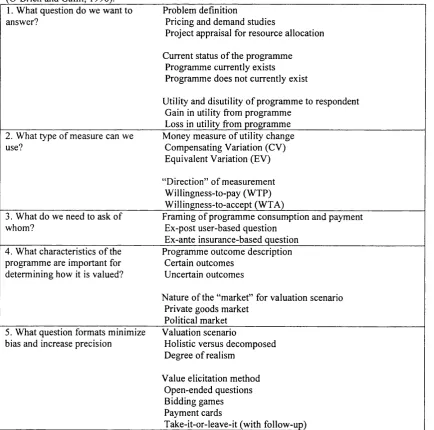
Questions and considerations for a contingent valuation study of a health care programme (O’Brien and Gafni, 1996).
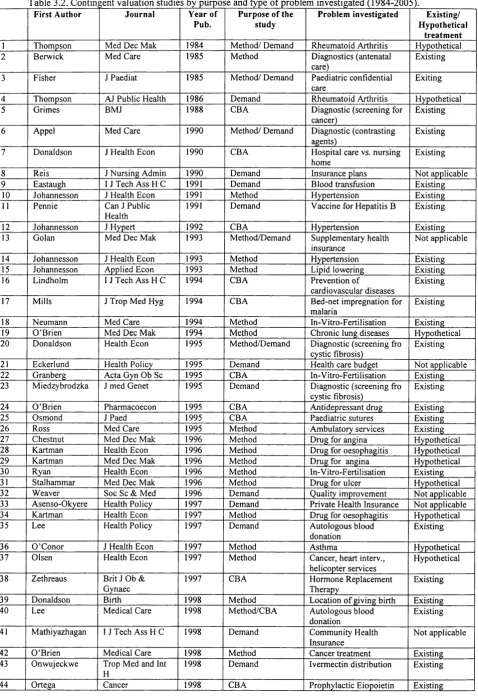
Contingent valuation studies by purpose and type of problem investigated (1984-2005).
Contingent valuation studies by type of welfare measure and type of scenario presented (1984-2005).
Contingent valuation studies by value elicitation method, mode of data collection and sampling characteristics (1984-2005).
Marginal WTP per statistical baby.
Types of Web surveys.
Balance Sheet of Newborn Fertility Centre (As a December 31 2003 (‘000 Euro).
Income Statement of the Newborn Infertility Centre 2003 (‘000 Euro).
Types of cost accounting information and their use (adapted from Anthony et al., 1985).
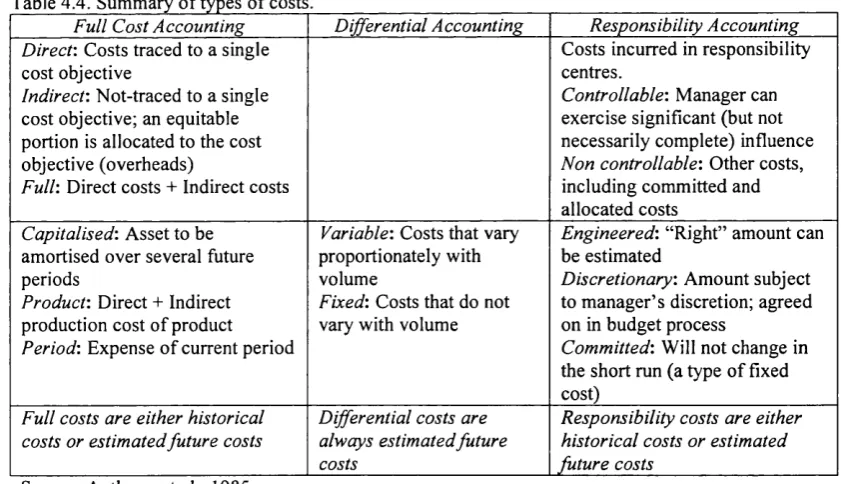
Summary of types of cost (Anthony et al., 1985).
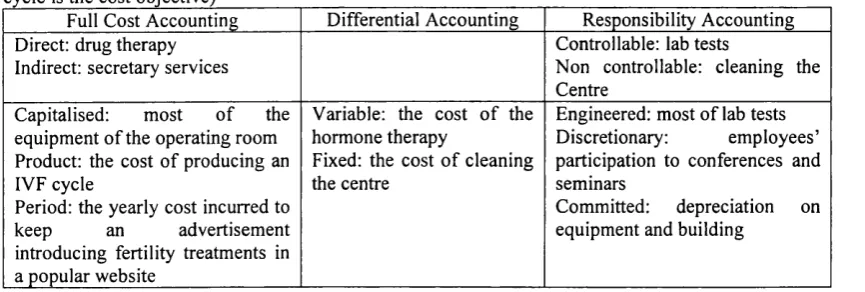
Example of types of cost in an Infertility Centre belonging to an Italian NHS Trust (IVF cycle is the cost objective).
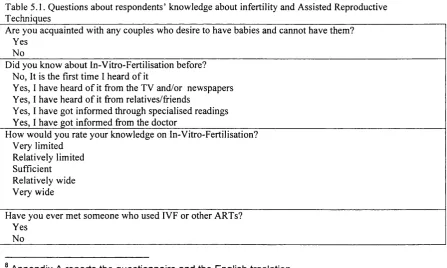
Questions about respondents’ knowledge about infertility and Assisted Reproductive Techniques.
On screen presentation of the question on willingness-to- pay for IVF.
Algorithm used to check the violation of rationality of answers to the questions about WTP for personal use.
Page 172 - Table 5.5.
Page 178 - Table 5.6
Page 184 - Table 6.1.
Page 186 - Table 6.2.
Page 188 - Table 6.3.
Page 191 - Table 6.4.
Page 192 - Table 6.5.
Page 194 - Table 6.6.
Page 195 - Table 6.7.
Page 197 - Table 6.8.
Page 199 - Table 6.9.
Approaches to estimate willingness to pay for the IVF programme elicited through the referendum format.
Cost categories and method of estimation.
Socio-demographic characteristics of survey respondents (n=5,739).
Socio-economic characteristics of survey respondents (n=5,739).
Respondents knowledge about infertility and Assisted Reproductive Techniques.
Logistic regression: Acquaintance with infertile couples and socio-economic characteristics (dependent variable: Are you acquaint with couples who desire to have babies and cannot have them? Yes (1) and No (0)).
Logistic regression: Knowledge of In-Vitro-Fertilisation and socio-economic characteristics (dependent variable: Did you know In-Vitro-Fertilisation before? Yes (1), No (0)).
Multiple regression: self reported level of Knowledge of In- Vitro-Fertilisation and socio-economic characteristics (dependent variable: You would state that your level of knowledge of In-Vitro-Fertilisation is: very limited (1), limited (2), intermediate (3), deep (4), very deep (5)).
Logistic regression: Acquaintance with someone who used In-Vitro-Fertilisation and socio-economic characteristics (dependent variable: Are you acquaint with someone who used In-Vitro-Fertilisation? Yes (1), No (0)).
Comparison between the coefficients (ft) for education on three logistic regression models on the knowledge of infertility and IVF (backward stepwise logistic regression on the full dataset of 5,739 respondents).
Respondents’ attitude towards IVF in a hypothetical condition of infertility. Answers to the question: "Imagine that you have been married for a few years and you have been unsuccessfully trying to have a baby. Imagine you are told to use IVF and that it has a 30% chance to be successful. Would you personally try IVF".
Page 201 - Table 6.10. Logistic regression: use of IVF in case of hypothetical infertility (dependent variable: "Imagine that you have been married for a few years and you have been unsuccessfully trying to have a baby. Imagine you are told to use IVF and that it has a 30% chance to be successful. Would you personally try IVF?" Yes (1), No (0)).
married for a few years and you have been unsuccessfully trying to have a baby. Imagine you are told to use IVF and that it has a 30% chance to be successful. Would you personally try IV F ?").
Page 2 0 4 -Table 6.12. Factors explaining willingness to try IVF: predictions from the logistic regression (Income dataset; dependent variable: "Imagine that you have been married for a few years and you have been unsuccessfully trying to have a baby. Imagine you are told to use IVF and that it has a 30% chance to be successful. Would you personally try IV F ?").
Page 206 - Table 6.13. Tobit regression models of willingness to pay for per personal use of IVF in case of infertility: modified payment card data (dependent variable: 6 values ranging from It. Liras 0 to It. Liras 50.000.000 (€ 25,823); dependent = log(WTP+1) and censored at 0 and log (200,001).
Page 2 0 7 -T a b le 6.14. Linear regression models of willingness to pay for per personal use of IVF in case of infertility: modified payment card data (dependent variable: 6 values ranging from It. Liras 0 to It. Liras 50,000,000 (€ 25,823); dependent variable = log (WTP+1) and censored at 0 and log (50.000.000). WTP data in thousand Italian Liras
Page 209 - Table 6.15. Logistic regression of the willingness to pay for a publicly funded IVF programme for infertile couples: TIOLI data (dependent variable: Yes definitely or probably (=1) and No definitely or probably (=0) to the question “Would you vote in favour of funding IVF with public money if you were asked an annual payment, that is a tax, of Italian £ X?””; bids = It Liras 5,000 (€ 2.6), 10,000 (€ 5.2), 20,000 (€ 10.3) and 50,000 (€ 25.8)).
Page 211 - Table 6.16. Ordered Logistic regression of the willingness to pay for a publicly funded IVF programme for infertile couples: TIOLI data (dependent variable: no, definitely not (1); no, probably not (2), do not know (3); yes, probably (4); yes, definitely (5) to the question “Would you vote in favour of funding IVF with public money if you were asked an annual payment, that is a tax, of Italian £ X?””: Bids = It. Liras 5,000 (€ 2.6), 10,000 (€ 5.2), 20,000 (€ 10.3) and 50,000 (€ 25.8)).
Page 212 - Table 6.17. Tobit regression models of willingness to pay for a publicly funded IVF programme for infertile couples: modifie payment card data (dependent variable: 8 values ranging from It. Liras 2,000 (Euro 1) to It. Liras 200,000 (€ 103.3); dependent variable censored at It. Liras 0 and Italian Liras 200,000).
Page 216 - Table 7.2.
Page 220 - Table 7.3.
Page 222 - Table 7.4.
Page 223 - Table 7.5.
Page 227 - Table 7.6.
Page 228 - Table 7.7.
Page 2 2 9 -Table 7.8.
Page 231 - Table 7.9.
Page 2 3 2 -Table 7.10.
Page 2 3 5 -Table 7.11.
Page 238 - Table 7.12.
Page 238 - Table 7.13.
Page 240 - Table 7.14.
Page 240 - Table 7.15.
Page 241 - Table 7.16.
Page 242 - Table 7.17.
Page 245 - Table 7.18.
Willingness to pay for using IVF in case of infertility (yes/no answers to 6 bids).
Willingness to pay for a publicly funded programme providing IVF to infertile couples: TIOLI format (each bid presented to one of the four sub-samples).
Willingness-to-pay for a publicly funded programme providing IVF to infertile couples: modified payment card format (all bids presented to the entire sample)
Logit regression results for the TIOLI data and estimates of mean willingness to pay.
Parametric estimates of mean WTP: the effects of zero WTP
Total and mean WTP for a public programme funding IVF to infertile couples of the total sample (5,739 respondents).
Total and mean WTP for a public programme funding IVF to infertile couples of a sample representative of the Italian population in respect of age, gender, education, employment status, geographical area and municipality size of respondent’ residence.
Personal use of IVF and willingness to pay for a national programme funding IVF to infertile couples.
Mean WTP from the modified payment card data: comparison of the four sub groups used in the TIOLI question.
Data collected from the TIOLI format questions and data generated by simulating TIOLI data from the answers to the modified payment questions.
Costs of Assisted Reproduction centre (year 1998).
Parameters used to allocate Costs of the Assisted Reproduction.
Costs of providing In Vitro Fertilization Services and cost per IVF cycle.
Effectiveness of IVF (Marginal and cumulative delivery rates).
Cost-effectiveness Analysis for the base scenario (World Register Data) (expected cost per delivery).
Cost-effectiveness analysis: sensitivity analysis.
List of Figures
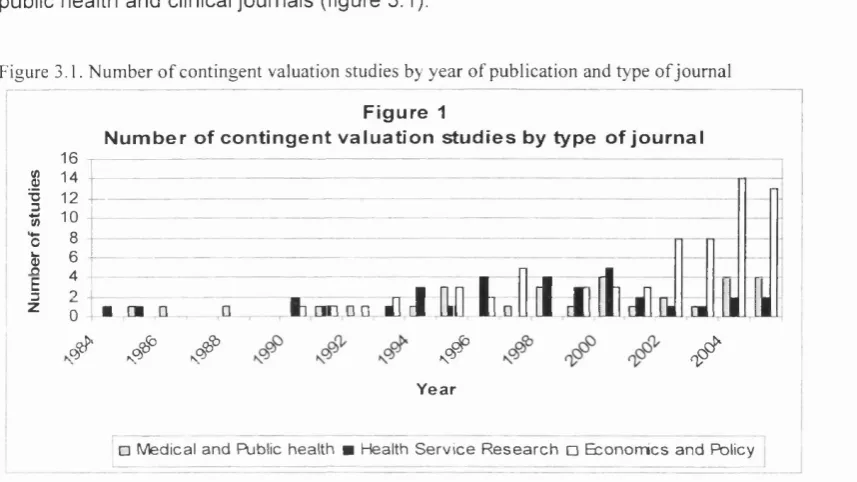
Page 44 - Figure 3.1. Number of contingent valuation studies by year of publication and type of journal.
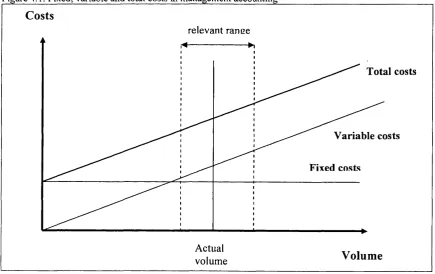
Page 142 - Figure 4.1. Fixed, variable and total costs in management accounting.
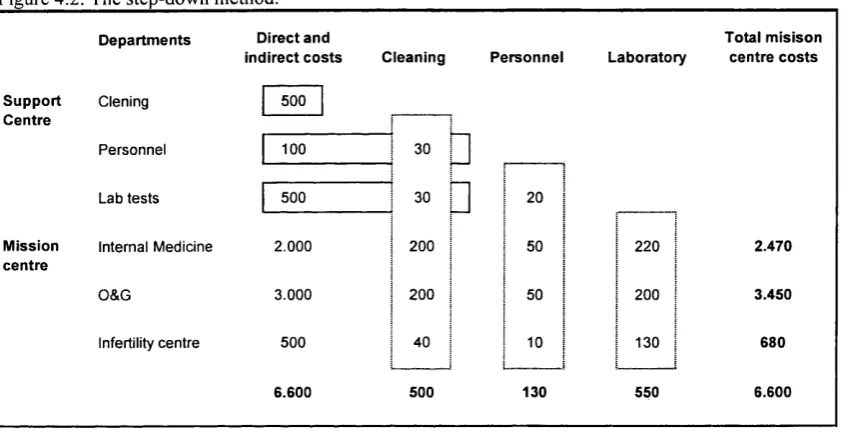
Page 144 - Figure 4.2. The step-down method (adapted from Anthony and Young, 1985).
Page 177 - Figure 5.1. Rappresentation of the methodology used to estimate the average full cost of providing an VF cycles.
Page 198 - Figure 6.1. The curvilinear relation between age and knowledge of infertility and IVF.
Page 217 - Figure 7.1. Number of respondents willing to pay for IVF at different bids.
Page 217 - Figure 7.2. Demand schedule for IVF (assuming respondents is willing to pay more than Italian 50 Million Liras - Euro 25,823).
List of Abbreviations
AR Assisted Reproduction
ART Assisted Reproduction Techniques
ACE Cost-effectiveness Analysis
ACU Cost-Utility Analysis
CBA Cost-Benefit Analysis
CV Contingent Valuation
DC Dichotomous Choice
DCE Discrete Choice Experiment
IVF In-Vitro-Fertilisation
MPC Modified Payment Card
NICE National Institute for Clinical Excellence
NOAA National Oceanic and Atmospheric Adminisration
OLS Ordinary Least Squares
OE Open-ended
OR Odds Ratio
PC Payment Card
SH Structured Haggling
TIOLI Take-it-or-leave-it
WTA Willingness-T o-Accept
Chapter 1
Introduction
1.1. The purpose of the study
The aim of this thesis is to present a full cost-benefit analysis of In-Vitro-Fertilisation (herein referred to as IVF). The research was designed and implemented to offer guidance on policy making for public funding of this form of intervention. Basically, we wanted to shed some light on the economic rationality for using government resources to provide IVF, a relatively sophisticated and expensive procedure that increases the chances of infertile couples of having a baby. Therefore our study deals with the allocation of resources in public health care systems and aims at illustrating how cost-benefit analysis may concretely help in making decisions about rationing.
The concepts of rationing and priority setting applied to healthcare are now receiving greater attention in many industrialised countries. In the Netherlands, Italy, New Zealand, Norway, Sweden, United Kingdom and the United States of America various initiatives have openly recognised that diverse forms of rationing take place in healthcare systems and that, at least potentially, there are merits in taking some steps towards more explicit, systematic and democratic rationing.
established than in the United Kingdom. Over the last ten years there have been a significant moves towards making governments’ decisions about funding medicines and, to a lesser extent, other technologies and interventions based on evidence of effectiveness and cost-effectiveness.
Despite the advances in explicit and systematic approaches to rationing and a wider use of economic evaluation studies to guide policy making, we are aware of a few explicit exclusions from public coverage in Europe. Despite clear evidence that resources made available by governments do not suffice to meet demand, rationing decisions are often left at organisational level and at the point of service delivery (Klein et al., 1996).
Nevertheless, there are some services that represent exceptions, as they tend to be a preferred target for explicit exclusion from public coverage - IVF is one of these exceptions. In 1994, almost a quarter of the Health Authorities in Britain refused to purchase IVF services (Evans, 1995). President Clinton’s ill-fated Health Security Act specifically excluded IVF services from the minimum package of services to be covered by insurance plans. In the Netherlands, the Dunning Committee (a committee set up to define the legal responsibilities of insurance schemes), argued that IVF should not be considered necessary, since childlessness does not interfere with the normal functioning of Dutch society.
Despite IVF having been targeted by explicit rationing in several situations, little is known about what IVF is worth to patients and to society. In particular, very few studies have been carried out to measure the value generated by the money spent on IVF treatment. This study aims to investigate the value generated by resources used on this intervention, which increases the probability of couples with fertility problems to have a child.
the healthcare systems and that, at least potentially, there are merits in taking some steps towards more explicit, systematic and democratic rationing.
Although it is increasingly recognised that implicit rationing is becoming less sustainable, so far only a few concrete initiatives have made rationing more explicit. Very often the policy debate tends to remain on the ground of principles and general criteria. However, economic evidence is required for reimbursement or coverage of pharmaceuticals in many countries (Taylor et al., 2004). The National Institute of Health and Clinical Excellence (NICE) in England and Wales and the Scottish Medicines Consortium (SMC) in Scotland regularly produce guidance based on economic evidence (Cairns, 2006). In Italy, the Netherlands, Canada, Australia and Sweden economic evidence is often required by regulatory bodies, but the process according to which economic data are analysed and assessed appear less well established than in the United Kingdom. Over the last ten years there have been a significant moves towards making governments’ decisions about funding medicines and, to a lesser extent, other technologies and interventions based on evidence of effectiveness and cost-effectiveness.
Despite the advances in explicit and systematic approaches to rationing and a wider use of economic evaluation studies to guide policy making, we are aware of a few explicit exclusions from public coverage in Europe. Despite clear evidence that resources made available by governments do not suffice to meet demand, rationing decisions are often left at organisational level and at the point of service delivery (Klein et al., 1996).
Despite IVF having been targeted by explicit rationing in several situations, little is known about what IVF is worth to patients and to society. In particular, very few studies have been carried out to measure the value generated by the money spent on IVF treatment. This study aims to investigate the value generated by resources used on this intervention, which increases the probability of couples with fertility problems to have a child.
1.2. Why Cost-benefit Analysis?
As argued by New and Le Grand (1996) moving towards more explicit, systematic and democratic forms of rationing is fraught with danger. In the areas where there is explicit rationing, decisions are made on the basis of facts rather than hypotheses. There is a clear need to identify rational approaches. One way to offer guidance to decision makers on a specific rationing decision is to perform an economic evaluation. In this type of evaluation, healthcare decisions are assessed by comparing costs of alternatives with their consequences or outcomes (Drummond et al., 1997). Traditionally, economic evaluations in the healthcare field have been carried out as either cost effectiveness-analysis or cost-utility analysis (ACU). In cost- effectiveness analysis (ACE) the cost per unit of health effects (i.e. life-years) gained by the adoption of the programme is estimated. In cost— utility analysis health effects are measured in terms of utility, in order to capture and combine in a single measure the different health benefits according to individuals’ judgement. Both cost- effectiveness and cost-utility analysis are inappropriate in the context of IVF. While it is theoretically possible to estimate the cost per new life or even the cost per Quality Adjusted Life Year (QALY) attributable to this technology, it is likely that these approaches will miss the real benefit of IVF: is the increase in welfare of giving an infertile couple a chance to have a baby.
valuation (CV) survey. However, the cost per live birth of using IVF or other ARTs cannot be compared to the cost per life saved or per year of life gained. Simply, new babies and saved lives are not commensurable as they refer to two completely different categories of benefits. Despite that both concern with life, there are no reason to assume that the contribution to the wellbeing of a new life is similar to that of a saved life. Therefore, cost-effectiveness data provide weak evidence, if any, to make decision about public coverage of IVF.
Cost-utility of healthcare intervention is becoming increasingly popular. In this type of study, health consequences of interventions are evaluated according to indexes (Quality Adjusted Life Years to mention the most widespread) that should represent a summary of patients’ preferences for different health states. In theory, the QALY construct could be used to measure the intensity of preference of a person (or a couple) for having a child in the case of infertility. For example, standard gamble exercises could be designed to ask respondents to trade between their years of life and the probability of having a child using IVF treatment. However, asking a person to trade her personal years of life with the probability of a newborn from IVF is logically far away from the QALY concept and the way it can be elicited.
An alternative approach to assess IVF from an economic perspective is to carry out a cost-benefit analysis (CBA). The main difference between CBA and the other techniques mentioned above is that the former seeks to place monetary values on both the inputs (costs) and outcomes (benefits) of the programme being evaluated, while the latter provides monetary measures of only the costs.
Cost-benefit analysis is more appropriate that ACE and ACU because it is more flexible and can thus go beyond the narrow health implications of procreating babies through IVF. It can measure the value of obtaining a child when one is infertile as well as also capture the benefits of undergoing the entire process, which can be associated with avoiding regret feelings (Ryan, 1999). In addition, CBA appears better grounded in welfare economics theory and provides clearer decision rules than ACE and ACU.
There are three steps in conducting a CBA for this specific medical intervention: a) to perform a cost-analysis to estimate the cost per cycle of treatment; b) to review effectiveness evidence to calculate the cost per unit of success, that is the cost per delivered baby; c) to compare the cost per delivered baby with the monetary value placed by society to have a baby from IVF. This study covers all the three steps and tries to provide some innovative advancements in terms of methodology on both costing and benefit measuring systems.
WTP can be measured using two main approaches: revealed preferences or expressed preferences. The revealed preference approach is based on the observation of actual behaviour, while the expressed preference approach is based on the direct elicitation of WTP from individuals through the use of carefully designed and administered sample surveys. This approach is usually named the contingent valuation (CV) method.
In this thesis we use the CV method to perform a full cost-benefit analysis of a government programme providing IVF to infertile couples. The CBA aims to provide solid evidence to policy makers. In particular, it aims to use economic analysis to inform decisions relating to government coverage of a major medical intervention that has been specifically targeted by explicit rationing decisions. More specifically, two main research questions are addressed by this empirical study:
1. Can a contingent valuation survey conducted via the internet be a feasible method to measure benefits of a health care programme in general, and of a programme providing IVF in particular?
2. Taking into account the experimental state of the methodology, is the expressed WTP of Italians for a public programme providing IVF to infertile couples greater than costs of implementing the programme? In other words, would the benefits of such programme exceed its costs?
These research questions are strongly connected with four broader issues that are discussed in the subsequent chapters. The first issue pertains to IVF. Through the survey we have collected evidence to broaden our knowledge concerning the attitude towards this particular service. IVF, despite absorbing relatively small amounts of resources, well represents the new medical technologies that raise exceptional ethical problems and in which treatments aim at improving human functioning and general wellbeing rather than curing diseases.
multitude of perspectives that influence decision making processes within the health care sector. The IVF case is analysed in the broader context of the problem of the scarcity of resources in the healthcare system. The specific focus of the empirical part of the thesis is on the feasibility of using economic analysis to offer guidance to rationing decisions.
Previous contingent valuation studies have mainly investigated the perspective of IVF users. Given that our research measured the willingness-to-pay (WTP) of a sample of the general population we were able to investigate the role of caring externalities. Therefore, the third aspect discussed in the thesis concerns the distinction between egoism and altruism in the context of reproductive medicine.
Finally, this thesis investigates a thorny issue in contingent valuation studies: the format to elicit WTP. Since our sample was asked three WTP questions we could compare the referendum to the Payment Card formats and investigate how they differ.
1.3. Structure of the thesis
A full understanding of a cost-benefit analysis of IVF requires some understanding about infertility, its treatment and a variety of issues that makes this medical intervention rather special. Chapter 2 deals with these issues thus presenting the background of the rest of the thesis. It also mentions some policy issues raised by the use of this intervention and its government funding.
In a full cost-benefit analysis both estimates of costs and benefits are important. Therefore we paid attention to both of these issues in the thesis. Chapter 3 reviews the literature on contingent valuation and specifically investigates previous contingent valuation studies on ARTs. The review of the vast literature review on CV in healthcare has provided us with important elements to design the survey and has been used to make sense of our results.
how to conduct a cost study for the purpose of a cost-benefit analysis aimed at providing guidance about public coverage of an intervention (chapter 4). Briefly, we reached the conclusion that cost-benefit analysis should be based on solid cost studies, rather than on the use of tariffs and prices, and that the full costing methodology has to be used.
Chapter 5 presents the methods used in the cost-benefit analysis and details the source of the data. The measurement of benefits is based on a large survey conducted via internet that was specifically designed for the purpose of this research. The survey collected information about the knowledge, attitude and willingness to pay for IVF of a sample of the Italian population. The sample is not probabilistic but it was built to make a representative picture of adult Italians with respect to age, gender, education and residence. To our knowledge, this is the first attempt to investigate WTP for a medical intervention through a CV survey administered via internet to a large national sample. The last part of chapter 4 presents the methods used to estimate the cost of IVF. It explains how we calculated the cost of an IVF cycle according to a full costing procedure and how we used it in the context of the CBA. The cost analysis presented in the thesis is based on data collected in two Assisted Reproduction Centres located in northern Italy, one run by the Italian National Health Service and the other private.
Presentation of results is split into two chapters. Chapter 6 reports the results of the survey to provide a picture of the information about infertility and IVF, attitude towards this technology and willingness-to-pay. The purpose of this chapter is to provide a picture of what the people in the sample think about these issues and to assess possible correlations. In this chapter, we present results of several regression analyses that try to explain how demographic and socio-economic variables influence knowledge, attitude and willingness to pay for IVF. In addition to improve our understanding of what people think about IVF, this chapter provides some important insights about the validity of the survey and the contingent valuation method.
answers to a referendum format question and to a second Payment Card battery of questions. Results are then compared, discussed and used to investigate their validity. The chapter then reports results of the cost analysis and briefly reports results of a cost-effectiveness analysis. Finally, estimates of benefits and costs are assembled to perform the cost-benefit analysis of a programme providing IVF to infertile couples in Italy. On the basis of reasonable assumptions, our study shows that such a programme would generate net benefit and thus should be endorsed by the government.
We conclude our thesis with a discussion of several methodological issues encountered and raised by the study (chapter 8). Overall, the study is encouraging as it shows that collecting information for cost-benefit analysis in population surveys is feasible and valid, at least to a certain extent. We do think that the spectacular advancements of Information and Communication Technologies create more opportunities to use public opinion to make collective choices, including public opinion data that can be used in the framework of rigorous economic analysis.
Chapter 2
Infertility and Assisted Reproduction Techniques
2.1. Introduction
This chapter provides a background to the rest of the thesis on infertility, the treatments to overcome it and some relevant ethical issues that influence policy making in this field of medicine. The chapter does not intend to cover in detail all the technical, ethical and legal aspects related to Assisted Reproduction Techniques (ARTs). Nevertheless it is written with the intention to give the reader a sufficient background to understand the rest of the thesis and to contextualise the use of economic analysis to offer guidance on public coverage of In Vitro Fertilisation (IVF) services.
The first two sections define infertility and its main treatments and provide a brief history of IVF, which was pioneered in the UK in the late 1970s. The following two sections concisely report the available evidence on the effectiveness and the possible side effects of IVF: it is now clear that this treatment does help infertile people to conceive but also presents a serious clinical side effect that is multiple births.
Section six briefly reports the main ethical problems at stake with ARTs. The aim of this section is to provide the reader with a summary of the issues that can influence public opinion and, in particular, attitudes towards public funding. The ethical and social issues arisen by IVF and other ARTs motivated European governments to enact specific legislation to regulate the matter. A summary of the regulation and public funding of IVF in the major EU member states are reported in section 7 and 8.
2.2. Infertility and its treatments
that is, failing to get pregnant after two years of regular unprotected sexual intercourse. Infertility can be classified as either primary or secondary. Primary infertility is diagnosed if the couple has never had a conception, while secondary infertility is the term applied to couples that have a history of at least one documented conception but who currently have not been able to conceive for at least twelve months (if the less stringent definition of infertility is applied).
It should be noted that the definitions of infertility are based on evidence of pregnancy over a period of time, rather than on a physiological status of the couple. The probability of a normal couple conceiving in a given menstrual cycle is called fecundability and is estimated to be 25%. Taking into account that a fraction of conceptions results in spontaneous abortion, it is estimated that over 90% of normal couples will have conceived at the end of one year of unprotected sexual intercourse. Therefore, for those who fail to conceive the diagnosis of infertility (as defined above) does not necessarily mean that conception cannot occur, but rather that the couple have been unable to conceive naturally over a twelve month period. These couples belong to a medically defined group that is less likely to conceive. Some of them may be able to conceive naturally after a few more attempts while others may be affected by various conditions that make natural conception either highly unlikely or impossible.
Infertility is thought to affect 10-15% of all couples of reproductive age. Infertility increases with the age of both the woman and the man. The aetiology of infertility can be divided into three major categories: (i) male factors, (ii) female factors and (iii) undetermined aetiology. Men and women equally contribute to couple infertility. In approximately 40% of couples the aetiology is primarily male factor. Female factor accounts for another 40% while the remaining 20% of couples’ infertility is attributed to a combination of male and female factors.
greatly benefited couples affected by male infertility as in almost all cases it can overcome the disfunction.
In approximately 40% of infertile women, the main aetiological factor is the failure to ovulate and in another 40% is related to tubal damage or other pelvic pathologies. Unusual causes and unexplained infertility account for the remaining 20%.
Treatment strategies for infertility depend on the specific aetiology of the infertility. The main strategies are surgery for anatomical defects and other specific conditions, ovulation induction with various drugs including compounds made through recombinant technology and ARTs, including sperm or egg donation. Indications for ARTs include tubal factor infertility, endometriosis, male factor infertility, immunologic infertility, and unexplained infertility. IVF is not the only or the most important intervention to overcome infertility. It is important to bear in mind that more simple techniques like artificial insemination are frequently used. Furthermore, it should be noted that pharmaceutical therapies increase the probability of pregnancy in many categories of patients. Scientists and clinicians suggest following a gradual approach to treating infertility and recommend the use of complicated (and often invasive) techniques only if the more simple ones fail.
IVF consists of a sequence of steps that, by overcoming possible male and female dysfunctions, make conception more likely than through the natural way. In the natural cycle an oocyte (egg) leaves an ovary and is transported through a fallopian tube. There it can be fertilized by a spermatozoon and become an embryo. The embryo may settle in the uterus and grow into a foetus. In an IVF cycle this sequence is altered by medical intervention. First, medication is given in order to obtain more oocytes. Then, if stimulation is successful, the oocytes are aspired from the ovaries. Here the in vitro phase begins. Basically, spermatozoa (previously collected) and oocytes are brought together in order to obtain embryos. These embryos are then transferred into the woman’s uterus three or five days after the aspiration. From this stage on, natural and assisted conceptions return to follow the same course.
IVF except that embryos are transferred into the Fallopian tubes rather than into the uterus. GIFT utilizes the same oocyte stimulation protocol as IVF; however, once the eggs are retrieved, they are mixed with sperm and immediately transferred into the tubes. GIFT and ZIFT techniques are not widely used and, according to the NICE Clinical Guideline issued in 2004, there is insufficient scientific evidence to recommend their use in preference to conventional IVF (National Collaborating Centres, 2004). ICSI is a micromanipulation technique. This sophisticated procedure introduces a single sperm directly into the cytoplasm of the egg and can produce fertilization even in cases with very poor-quality sperm. This technique overcomes almost all the causes of male infertility (Edwards, 1998), improves fertilisation rates and represents more than 50% of all IVF treatment in many countries (HFEA, 2006).
2.3. IVF and infertility treatments: a brief history
For centuries, human reproduction was a mystery and, in many societies, birth was considered as a miracle. Those who were unable to conceive could not receive significant help and were often stigmatised. Until the beginning of the last century, a variety of rites and primitive medicines, including ingredients such as pig’s teeth, frogs and spiders were the only hope for infertile couples (Edwards, 1998). Indeed, infertility, up until recently, was believed to be a female problem, although it is now undisputed that both female and male infertility cause couple infertility (see above).
IVF has diverse origins (Edwards, 1998) and the history of the technique may be characterised by three related periods of development (Iglesias, 1990). The first phase dates from the late nineteen century until the late 1960s - it was in the hands of research scientists. Dr. Heape is the person generally attributed as being the first researcher to make a significant contribution to the development of IVF. Heape transferred genetically marked embryos from one rabbit to another and obtained offspring. In the thirties the first attempts were made to culture mammalian embryos in vitro. Approximately during the same period various hormones influencing and regulating the gonads were discovered and in the following two decades they were tested on mice to induce ovarian stimulation.
IVF) in England. The team set up a very ambitious agenda: “to attempt (human) fertilisation in vitro and the culture of embryos in order to alleviate some forms of infertility, and to study the origin of inherited defects" (Edwards, 1983). In effect, this ten-year period led to the acquisition of all the fundamental steps required to implement IVF. They included the basic understanding and control of the maturation of a) the human egg, follicle growth and the process of ovulation, b) the fertilising capacitation of sperm, c) the aspiration of the pre-ovulatory egg, d) the replacement of the embryo in the womb, d) the implantation on the embryo in the womb and the continuation of pregnancy (Iglesias, 1990). Mastering these steps has made it possible to replace embryos into infertile mothers since 1972. The birth of the first baby successfully conceived in vitro, Louise Brown, was in July 1978.
The third phase (1978 to present), has seen significant technological developments and very rapid widespread use of the technique in industrialised countries. In the 1980s new drugs were introduced, the IVF technique was refined and variants of IVF were developed (gamete intra-fallopian transfer -G IFT- and zygote intra-fallopian transfer - ZIFT). In 1986 the diagnosis of genetic disease in human pre-implantation embryos was introduced. More recently, ICSI (intracytoplasmic sperm injection) has opened the era of direct manipulation of the human gamete. ICSI has significantly improved assisted reproduction by improving fertilisation rates in general and by extending the treatment population to include patients with male sub-fertility - previously not considered viable for classic IVF.
Since their first clinical success, IVF and other assisted reproductive techniques were rapidly adopted in many countries. At Bourn Hall, the private clinic established in England by the pioneers of IVF, from October 1980 to April 1983 139 babies were born as a result of IVF. In 2000 in the United Kingdom (UK), 72 IVF clinics were operating and about 6,500 babies were born after IVF or ICSI cycles (HFEA, 2000). Between April 2003 and March 2004 10,242 children were born through IVF (HFEA, 2006). They are approximately 1.5% of all the newborns in UK. These babies were procreated as a result of the commitment of 30,000 patients who underwent IVF for a total of about 38,000 cycles of IVF treatment.
Asian centres, approximately 267 ART centres (half of which in Japan) were operating in Asia (Shenker and Shushan, 1996). However, these centres were concentrated in only 16 countries, where the standard of living is relatively high. In the United States of America, where IVF was introduced in 1982, the market for IVF, excluding fertility drugs, is estimated at 1 trillions US $ (Spar, 2006). In 1986, there were roughly 100 fertility clinics, performing about 10,000 cycles of ARTs. In 2002, there were 428 clinics performing as many as 115,000 cycles.
2.4. Effectiveness of IVF
Despite the impressive development of IVF, the documentation of its effects has not been supported by large randomised clinical trials. Effectiveness is mainly documented by success rates reported by clinics and by national and international registries. Only recently, a few relatively small trials have reported significantly higher live birth rates with IVF/ICSI cycles when compared with no treatment in some categories of patients (National Collaborating Centres, 2004). Despite the lack of large clinical trials, however, it appears now undisputable that IVF is an effective procedure.
Since IVF is a chain of several treatment phases, success rates can be presented in several ways. The two main most meaningful measures are the pregnancy-per-cycle rate and the live birth-per-cycle rate. The pregnancy-per-cycle rate is the percentage of IVF cycles started that produced a pregnancy. This rate is higher than the live birth per cycle rate because some pregnancies end in miscarriage, therapeutic abortion, or stillbirth.
The live birth-per-cycle rate is the percentage of IVF cycles started that result in a live birth (a delivery of one or more babies). In terms of overall benefits, this is the most significant rate as it represents the average chance of having a live-born infant by using IVF. This rate is the main measure that will be used in this thesis.
corresponding delivery rates of 13 to 18% per cycle. Data from 49 countries for 2002 show that the delivery rate per initiated cycle is now 18.6% for conventional IVF and 20.4% for ICSI - the data refers to non donated material only (Adamson et al., 2006).
More recent data appear even more favourable. In the USA the 2003 Assisted Reproductive Technology Report shows basic statistics of almost all the clinics (399 of the 429 clinics) operating in the USA in that year (Centers for Disease Control and Prevention, 2005). Results reported in table 1 refer to all ART (IVF, GIFT and ZIFT) cycles that used fresh, non-donor eggs or embryos. Results mainly refer to IVF as GIFT and ZIFT were performed rarely (about 0.5% of treatments), while 56% of IVF cycles were performed using the micromanipulation technique ICSI (success rates in IVF cycles with and without ICSI appear similar). In 2003, according to the Report, 91,032 cycles were initiated with fresh non-donor eggs or embryos. They were responsible for 31,348 pregnancies and 15,367 live births. Consequently, pregnancy rates and live birth rates were 34.4% and 28.3%, respectively.
Table 2.1. Outcome o f A R T cycles using fresh, non-donor eggs or embryos in 2003 in the United States___________
#
Cycle initiated (1) 91,032 Pregnancy per cycle (4/1) 34,4% Egg retrieval (2) 79,602 Live birth per cycle (5/1) 28,3% Embryo transfers (3) 74,296 Live birth per retrieval (5/2) 32,4% Pregnancies (4) 31,348 Live birth per transfer (5/3) 34,7% Live births (5) 25,775 Live birth per pregnancy (4/5) 82,2%
Source: Centers for Disease Control and Prevention, 2005.
A similar registry is kept in the United Kingdom by the Human Fertilisation and Embriology Authority (HFEA, 2006). During the period 2003/04 the Authority collected data on 38,264 IVF cycles administered to 29,688 patients (the all cycles legally performed in the UK). In the 92/93 period there were reported 17,301 initiated cycles with a live birth per initiated cycle of 13.2%. In the late nineties the number of cycles performed in the UK almost doubled (28,689) and live birth rated reached 19.6. Data based on treatments carried out between April 2003 and March 2004 show that about 29,700 patients underwent IVF, that 38,264 cycles were initiated and that they facilitated 8,251 successful births (success rate = 21.6%).
woman. It is now clearly recognised that the woman’s age has a crucial effect on IVF success rate - this is clearly demonstrated by the American and the British registries. The evidence illustrates that pregnancy rates, live birth rates for ART Cycles using fresh non-donor eggs or embryos decrease with age. In the USA, while live birth rates for women who are 30 years old or less is above 40%, the average chance of live birth is 15.1% for women aged 40 (Centers for Disease Control, 2005).
The strong impact of age on IVF success rate is also reported in the UK (HFEA, 2006). Table 2 shows live birth rates by woman age. The live birth rates remain above 28% for women less than 35 years old. For older women this rate sharply declines, especially for those who are above forty. Out of 836 cycles performed in women aged 43 or above only 3.2% of the treatments resulted in a live birth. As we will see later in this thesis, these data have a very strong impact on the cost- effectiveness of IVF: older women, who are also often those who feel more compelled to procreate, present much less favourably in the cost-effectiveness ratios due to the limited effectiveness of the procedure on them.
Table 2.2. Live birth rates by age of woman in the United Kingdom (non-donor fresh eggs only)________________________
Woman age Treatment cycles Live birth rate per treatment cycle
Under 35 13,489 28.2%
35-37 7,077 23.6%
38-39 3,984 18.3%
40-42 2,965 10.6%
43 and over 836 3.2%
A ll patients 28,351 23.3%
Source: HFEA, 2006
2.5. Clinical side effects of IVF: the problem of multiple births
Hyperstimulation Syndrome, as well as the risk of infection and bleeding during oocye collection (Serour et al., 1999). Moreover, women undergoing IVF experience higher rates of miscarriage, ectopic pregnancy and heterotopic pregnancy. However, it is unclear if the higher rates can be attributed to the interventions or simply to the baseline condition of the woman (for example some of these side effects could be attributed solely to being older). Despite a long list of problems that can be associated with IVF, at present there is no strong evidence that side effects of IVF are so relevant and/or widespread to restrict its use in healthy couples.
The major clinical problem with IVF is somehow related to its effectiveness, which is multiple pregnancies and births. Multiple pregnancies are associated with greater risks for both mother and foetuses compared with a singleton pregnancy (Edwards, 1998). These include higher rates of caesarean section, low birth weight, and infant death and disability. In the USA in 2003, among the 31,348 pregnancies that resulted from ART cycles using fresh, non-donor eggs or embryos, 59% of pregnancies were singleton, 29% were twin pregnancies, and 6% were triplet or greater pregnancies (Centers for Disease Control, 2003). Thus, overall, about 35% of the pregnancies included more than one foetus.
The high rate of multiple foetus pregnancies results in multiple live births. Thirty-four percent of live births from ART involved more than one infant (31% twins and 3% triplets). This compares with a multiple-infant birth rate of less than 3% in the general US population. The multiple birth rates for IVF are also high in the United Kingdom. In the period 1998/99 about 24% of births were multiple, with almost 3% triplets or more (HFEA, 2006).
higher the chance of live birth. However, the higher the number of embryos transferred, the higher the risk of there being a multiple pregnancy.
Table 2.3. IV F clinical pregnancy and multiple clinical pregnancy by the number of embryos transferred in the United Kingdom________________________ ____________ _____________
Embryos transferred
Number o f cycles
Number o f clinical pregnancies
Clinical pregnancy rate
M ultiple clinical pregnancy rate Singleton Tw in Triplet or
greater
One 2,977 276 8 1 9.5% 3.2%
Two 14,144 2,721 959 15 26.1% 26.4%
Three 13,399 2,398 924 248 26.4% 33.1% Total 30,520 5,395 1,891 264 24.6% 28.7%
Source: HFEA, 2000
In the early nineties UK legislation limited the maximum number of embryos to be transferred to three. Similar rules are enforced in other European countries. Recently, the Human Embryology and Fertilisation Authority lowered the maximum to two. In the USA there is no such limitation thus meaning that almost 50% of cycles involve the transfer of more than three embryos. This may partially explain why the success rate in the USA is higher.
2.6. Ethical and social issues related to IVF
This dissertation focuses on the economic dimension of IVF, using economic analysis to assess whether this technology should be publicly funded. Therefore, a thorough analysis of the ethical and social implications of IVF and other ARTs is beyond the scope of the present study. However, as health policy process concerning reimbursement can be affected by the ethical and social concerns, this section will briefly present the main ethical issues raised by the use of ARTs.
These technologies have made possible to change reproduction in four ways (Koch, 1998). First, technology can be used to substitute, repair or circumvent physical elements of the reproductive process. This is the technology option mainly referred in this dissertation. The technical process is one in which non-donor fresh eggs and sperm are manipulated in vitro with the sole purpose of overcoming infertility.
related to both parents, whereas children conceived with donated sperm are genetically related to the mother but not to the father. Likewise, children conceived using donated eggs are genetically related to the father but not the mother. When both eggs and spermatozoa are donated, the child is not genetically related to either parent. This latter group of children is similar to adopted ones in that they are genetically unrelated to both parents, but differ in that parents experience pregnancy and develop a relationship with the child at the prenatal stage and subsequently birth. Moreover, the exchange of actors in the reproductive process may involve surrogacy: this is when a woman accepts to carry out a pregnancy to deliver a baby that it is immediately given to someone else (the child may be genetically related to neither, one or both parents).
The third class of technical options refers to the possibility to space out the elements of reproductive process by freezing. At present it is technically possible to freeze sperm, eggs and fertilised eggs (embryos). These options make possible to procreate post-mortem. In theory, a baby can be delivered years after the death of both their genetic parents.
The fourth class concerns pre-implantation genetic diagnosis and germ line therapy. Pre-implantation genetic diagnosis is a very early form of prenatal diagnosis aimed at eliminating embryos carrying serious genetic disorders. It can also be used to carry out gender selection. Although not feasible yet, gene therapy may soon allow to fix some genetic diseases at the embryonic stage.
As mentioned above, a systematic discussion of the implications of each of these technical options is beyond the scope of the dissertation. We only briefly present the main issues related to the first typology, which is directly involved by the economic evaluation presented in the following chapters. Before doing this, however, it appears appropriate to make a few general considerations on the overall advancements in human reproduction technology.
genetic material is used, that makes use of surrogacy and that include diagnostic activities, embryo selection and cryoconservation. This should have minimised the risk that surveyed individuals were influenced by ethical considerations that are not necessarily involved in conventional IVF (first typology described above). Nevertheless, it should be recognized that such an attempt to counterbalance the ethical issues raised by the other typologies of ARTs cannot be complete. We do expect that some of the respondents were influenced by the overall debate concerning new advancements in human procreation and the ethical issues it raises
The second consideration concerns the relationship between the new advancements in reproduction technology and public funding. The aim of this research is to assess if, from an economic point of view, traditional IVF deserves public funding. Here IVF is seen merely as a way of overcoming infertility. Consequently, we focused on traditional IVF because it is very relevant in economic terms and because it involves few of the ethical problems raised by the other typologies. However, it should be clarified that even more advanced techniques urgently require explicit decision regarding public funding. Let’s take for example pre-implantation gene diagnosis and gene therapy. They are extremely controversial as they may take relevant steps towards designing children and eugenics. However, it is also clear that the potential benefits are very relevant as certain diseases can be avoided or somehow made less distressing. In other words, these technologies pose serious ethical problems but also have the potential to provide great health benefits. At present, ARTs are not simply a way of overcoming infertility but also a potential way in which to promote health at the prenatal stage. If the use of ARTs expands as a means to improve people health it will be very important to carefully assess the costs and benefits of public funding. The risk we see in this area is that relevant ethical issues may encourage lesser government involvement in public funding resulting in health inequalities increasing.
is something spiritual) and procreation. As contraception denies the procreative dimension of the marital life and thus it is unethical, in a similar way IVF is unethical too because denies the marital (spiritual) union during the act of procreation. According to the official position of the Catholic Church, sex and procreation are necessarily linked and technology cannot be used to separate them.
This rather radical position appeals mainly to the Catholic community and does not exert sufficient influence at a political level to forbid traditional IVF in virtually all industrialised Christian countries. Indeed, this position was not even endorsed by Italian catholic parties during the parliamentary discussion on IVF in 2004. The Catholic Church, other religions, and also various non-religious cultural and ideological movements appear more rigid with regard to another critical issue related to IVF interventions: the generation and the use of embryos. The in-vitro phase of the procedure aims at producing more than one embryo to facilitate the choice of the best ones to be re-implanted and thus possibly re-implanting more than one embryo and, in some case, cryoconserving them for possible future use. The ethical focus here is on the nature of embryos. Those who consider embryos as a form of life harshly criticise IVF, as in many cases it requires suppressing some of them. In effect, even those who do not recognise embryos as a form of human life generally agree that some form of protection should be granted to embryos and that their handling should be regulated.
child is desired at a given time). From this point of view multi-foetal reduction may be considered even worse than a "normal" abortion as it contrasts procreation after a series of acts aimed at making it possible. On the other hand, some clinicians claim that multi-foetal reduction should not be considered as an abortion since the purpose of selective termination is the continuation of life, and not the termination of the pregnancy (Fasouliotis and Shenker, 1999). If selective termination is carried out to protect the other foetuses or the mother, it can be argued that the termination is carried out in order to protect life.
The last main ethical issue raised by traditional IVF is the generation of spare embryos that are usually obtained by the method of induced super-ovulation in the woman. The practice of inducing super-ovulation is performed for two main reasons: it avoids subjecting the woman to the trauma and the risks of repeated laparoscopies to recover oocytes (in the case more than one cycle is attempted) and it facilitates the selection of embryos prior to implantation (Shenker, 1997). In addition, the generation of spare embryos may be pursued in order to make spare "material" available for donation or scientific research. Although super-ovulation and thus the generation of spare embryos is not strictly a part of an IVF programme, this is a commonly diffused practice. The generation and use of spare embryos raises the issues of their destiny and their protection and are subjected to a lot of ethical disputes.
2.7. IVF regulation in Italy and other major European countries
women can have access to ARTs. In France, access to the techniques is restricted to couples (including those who co-habit), while in Germany assisted reproduction is allowed only to married couples. Legislation in these countries also differs as far as genetic material donation is concerned. The United Kingdom and Spain allow sperm, ovum and also embryo donation; France forbids embryo donation but permits sperm and ovum donation; Germany appears more restrictive as it forbids IVF with donated material. Germany is also more restrictive compared to the other mentioned countries concerning cryopreservation; it is illegal. Whereas, in France, Spain and UK cryopreservation is legal if aimed at making available extra embryos for transfer in a future cycle. In Spain and UK cryopreservation is also allowed for the purposes of pre-embryo research (pre-embryo refers to the first 14 days after fertilization).
In all of the above-mentioned countries selective foetal reduction of multiple pregnancies is practised. However, in order to avoid foetal reduction, all of the four countries’ medical guidelines suggest that no more than 3 or 4 embryos are transferred - the UK limits the number of transferred embryos to 2. Another commonality that these countries share is that the national government, regional governments or a specific national authority (like the HFEA in the UK) specifically regulate the activities of the centres that are licensed to provide ART services.
In contrast to the situation of these members of the European Union, Italy has kept infertility services provisionally regulated for a long period. It was only in 2004 that a piece of legislation was passed by the Italian Parliament that related to the regulation of ARTs. The matter was initially regulated by a Circular enacted by the Ministry of Health that was conceived as a provisional measure, further it was targeted only to the NHS. However, due to the lack of legislation, the Circular became the judicial reference for the practice of ARTs in the NHS and the private sector was left without regulation. As a result, until 2004, the