A Recommendation System Operating after
Assessment to Correct Learning Paths in a
Content Adapting System
Yassine Zaoui
Seghroucheni
Faculty of Sciences, Tetouan,Morocco
Al Achhab Mohammed
The National Applied ScienceSchool, Tetouan, Morocco
Badr Eddine EL Mohajir
Faculty of Sciences, Tetouan,Morocco
ABSTRACT
In this paper we present a model of an adapting learning system based on a recommendation system, operating after assessment to correct learning path of the learners who have experienced difficulties in the assessment. The approach aims to correct the learning path of the learners who have failed at the assessment, by calculating the similarities in behaviors between them and those who did, then recommend them the learning objects that can build the most relevant learning path.
Keywords
Content adapting system; Recommendation System; Learning Path; Learning Style; Learning Object.
1.
INTRODUCTION
The use of the Internet for educational purposes is currently growing in many forms, especially in universities. This teaching method, allowing the learner to be the actor of his training, is basically offering training according to his own pace regardless of other learners, and more adapted to his learner profile. Most intelligent systems that exist in e-learning are interested in adapting the training to learners profiles [1], [2], the logic to this, is that the accommodation of differences in content to learners, prerequisites, objectives, preferences [3] improves the systems performance which translates subsequently to a more satisfactory results on the learners side.
The Learners profiles provide learning systems with relevant information to adapt learning to the knowledge, skills, characteristics and preferences of the learner. However, most computing systems are based upon the initial calculating of profiles, [13], [14] and do not offer any correction of learning paths in case of a failure in assessments.
In this paper we propose a learning model which is based on the learning styles of Felder-Silverman (FSLSM) [4]. It aims to correct the leaning path of the learners who have failed at the assessment, by recommending them, the convenient learning path by calculating the similarities in behavior with the learners who have the same initial profile and having passed successfully the assessment.
The rest of this paper is organized as follow: We start in section 2 with a brief review of related works, and then in section 3 we expose the learning styles of Felder-Silverman [4] and the reasons behind this choice. In section 4 we will discuss the adaptation of the course and its structure. Sections 5 and 6 will be devoted to the importance of differentiating contents by creating multiples versions of the same learning object. Then we will propose a scenario of learning in section
7. Section 8 explains how to calculate the similarities based on the Bravais-Pearson formula. In section 9 we will be discussing the realization of the experimentation and finally some conclusions are drawn in section 10.
2.
RELATED WORK
There are several approaches that fall into the direction of personalizing learning path and offering an adapted content to the learner’s profiles, those works can be summarized into two categories:
The first category contains systems who tend to use implicit methods for identifying learning styles based mainly on the analysis [13], [17] and observation [9], [16] of the learners behaviors in the system, however those methods are not completely reliable given the fact that the learners can engage in other activities during learning. The second category contains the content adaptation systems that use explicit methods for identifying learning styles by using e-questionnaires [5], [7], [15] or letting the learners express their preferences [11] personal characteristics [12] or using the FSLSM [19], [20].
3.
FSLSM
There are several different models of learning styles in the literature such David A. Kolb [24], Honey and Mumford [25] and Felder and Silverman [19], each with different descriptions and classifications of types of learning. In this work, we focus on the model of learning style Felder-Silverman [4]. Most other models of learning classify learners in group’s style, while Felder and Silverman describe the learning style of a learner in detail, distinguishing their preferences on four dimensions. According to [26], the Felder model is most suitable for hypermedia courseware. The reasons for its popularity are summarized by [27], [28], justifying their choices for FSLSM with the fact that fulfills most of the criteria:
The model should be able to quantify learning styles.
The model should show a good degree of validity and reliability / internal consistency (and therefore provide accurate evaluation of learning style).
The model must be adapted for use with an adaptive educational system based on the web.
The model should be easy to administer for university learners.
FSLSM contains useful pragmatic recommendations to personalize teaching as learner profiles [28]. For all these reasons, we chose to use, among other things, FSLSM in this experience, presented later in this paper.
3.1
The four dimensions of FSLSM
In this section we will discuss the four dimensions of FSLSM as presented in [39], having said that, each learner is characterized by a particular preference for each of these dimensions:
Active / Reflective: How do you process information? Active: They learn by doing something with the information. They prefer to process information by talking and trying the subject of learning.
Reflective: They think about the information. They mostly prefer to understand before acting.
Sensing / Intuitive: How do you take the information? Sensing: They prefer to take information that is concrete and practical. They have a sense of detail, facts and figures and prefer to use proven procedures. They are realistic and like practical applications.
Intuitive: These learners prefer to take information that is abstract, original, and oriented theory. They look at the big picture and try to understand the general trends. They like to discover possibilities and relationships between ideas. Visual / verbal: How do you prefer information to be presented?
Visual: Visual learners prefer visual presentations of material diagrams, chart, graphs, pictures.
Verbal: Verbal learners prefer explanations with words- both written and spoken.
Sequential / Global: How do you prefer to organize information?
Sequential: Sequential learners prefer to organize information in a linear, orderly fashion. They learn in logically sequenced steps and work with information in an organized and systematic way.
Global: Global learners prefer to organize information more holistically and in a seemingly random manner without seeing connections. They often appear scattered and disorganized in their thinking yet often arrive at a creative or correct end product.
3.2
The Index of Learning Style
The Index of Learning Styles (ILS) developed by Felder and Soloman, is a questionnaire of 44 items to identify learning styles according FSLSM. As mentioned earlier, each student has a personal preference for each dimension. These preferences are expressed with values ranging from +11 to -11 per dimension, with steps + / -2 . This range has eleven questions that are asked for each dimension. In response to a question, for example, with an active preference, one is added to the value of the active / Reflective dimension while a response to a preference Reflective decreases the value of 1. Therefore, each question is answered either with a value of 1 (answer a) or -1 (answer b). Answer a is a preference for the first pole of each dimension (active, sensing, visual, or sequential), answer b is to the second pole of each dimension (Reflective, Intuitive, verbal or Global). The ILS is an index often used and well-studied to identify learning styles. In [30] the authors gave an overview of studies on the analysis of data from the ILS as regards the distribution of preferences for each dimension and to check the reliability and validity of the index.
4.
THE ADAPTATION OF THE COURSE
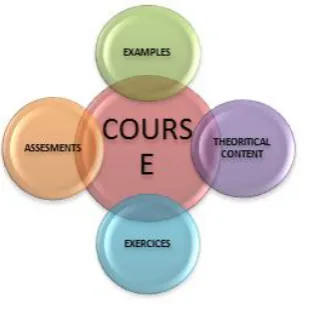
[image:2.595.354.511.137.292.2]In this section we will see how a course should be structured, thereby a course must change for learners with different learning styles. The essential elements of a course are detailed in the diagram below:
Fig 1: Key elements of a course.
According to FSLSM, the active learners prefer to learn by trying things out and do something active. Therefore, the number of exercises should increase, and the assessments are presented at the beginning and the end of a chapter. They also tend to be less interested in examples, as the examples show how others have done something rather than let them do it themselves. Therefore, a few examples are presented for active learners.
In contrast, Reflective learners prefer to learn by reflecting. Therefore, the number of elements requiring active behavior (such as exercises and self-assessment) should decrease. In addition, it is recommended to first present the learning material in terms of content objects so that learners can reflect and after show examples or asking them to do tasks on the basis of what has been learned.
The Sensing learners prefer to learn content such as data and facts. They tend to learn from examples; hence the number of examples should increase as the number of exercises too. On the other hand, intuitive learners like a challenge and therefore tasks such as tests and self-assessment exercises are presented frequently enough.
The Sequential learners prefer to learn in linear steps with a linear increase in complexity, so it is recommended to first present the learning materials and examples, assessment and exercises.
However, for Global learners it is very important for them to get an overview of the course. This can be supported by providing a large number of examples after the theoretical content. The presentation of examples, exercises and tests should be avoided at the beginning of a chapter and supported at the end of a chapter where learners already have a better overview.
4.1
The Structure of the course
EXRC represents a set of exercises (ER), each exercise is presented in different versions.
EXMP is a set of examples (EM), each example is presented in different versions.
THCON, ASMT represents respectively a set of theoretical content (TC) and assessments (AS), where each one is presented in different versions.
EXRC = where ER= )
EXMP= where EM= )
THCON = where TC= )
ASMT = where AS= )
Where Vi, Vj , Vk, and VL are the different versions available for each learning object.
Finally the mathematical representation of the course is:
COURSE =
4.2
The versioning of learning objects
The main reason behind the multiples versions of the same learning object is the differentiated pedagogy, which is according to [32] an approach of implementing a diverse set of resources and teaching procedures and learning, to enable students of different ages, abilities, skills and heterogeneous know-how to achieve, by different routes, common objectives and, ultimately, academic success.
Also, to differentiate for [33] is to implement a flexible framework where learning is explicit enough and diversified so that students can work on their own routes of ownership, while remaining in a collective educational process of required knowledge and expertise, which also aligns exactly with what suggests [34].
5.
THE DIFFERENTIATED PEDAGOGY
To differentiate is to break with a pedagogy that is frontal, the same lesson, the same exercises etc…for all learners. The goal is to put everyone in an optimal learning situation. This organization is to use all the educational resources available so that each learner is constantly or at least very often confronted with the most fruitful teaching situations for him.
5.1
Aspects of differentiation
According to Philippe Meiriu [35], it is essential to define a space in which the learning activity can be exercised. A learning situation is built around three intertwined poles which are the learner, teacher and knowledge. Meirieu emphasizes that the failure of some learning situations often is that it attaches importance to the two components which are knowledge and teaching at the expense of the third which is nevertheless the platform of the whole building. The practice of differentiated pedagogy must consider each of these three areas, and its success depends heavily on how they interacted.
5.2
Differentiation of content
The content of lessons may be differentiated based on what students already know. The most basic content of a lesson should cover the standards of learning set by the district or state. Some learners may be completely unfamiliar with the concepts in a lesson, some learners may have partial mastery of the content - or display mistaken ideas about the content, and some students may show mastery of the content before the lesson begins. The differentiation of the content could happen
by designing activities for groups of learners that cover different areas of Bloom's Taxonomy. For example, those who are unfamiliar with the concepts may be required to complete tasks on the lower levels of Bloom's Taxonomy: knowledge, comprehension, and application. Learners with partial mastery may be asked to complete tasks in the application, analysis and evaluation areas, and students who have high levels of mastery may be asked to complete tasks in evaluation and synthesis.
How to differentiate content?
Offer a variety of texts.
Use a variety of multimedia resources.
Extend the level of the didactic transposition; give more details of knowledge.
Etc…
6.
THE MULTIPLE VERSIONS OF THE
SAME LEARNING OBJECT
6.1
The few definitions of learning object
Currently, there are as many definitions of LOs as there are users. Here is a small sample:
1. "For this standard (Draft Standard for Learning Object Metadata v6.1), a Learning Object is defined as any entity, digital or non-digital, that may be used for learning, education or training" (IEEE Learning Technology Standards Committee 2001)
2. "...Learning Object... [is] ‘Any digital resource that can be reused to support learning.' This definition includes anything that can be delivered across the network on demand, be it large or small. Examples of smaller reusable digital resources include digital images or photos, live data feeds (like stock tickers), live or prerecorded video or audio snippets, small bits of text, animations, and smaller web-delivered applications, like a Java calculator. Examples of larger reusable digital resources include entire web pages that combine text, images and other media or applications to deliver complete experiences, such as a complete instructional event" [36].
3. "Learning Objects are a new way of thinking about learning content. Traditionally, content comes in a several hour chunk. Learning Objects are much smaller units of learning, typically ranging from 2 minutes to 15 minutes [37].
4. "[A Learning Object] is defined as the smallest independent structural experience that contains an objective, a learning activity and an assessment." [38].
6.2
Metadata for learning object
Metadata is usually defined as “data about data”, any kind of information that in some way references or describes aspects of some other piece of information. Metadata is introduced in information management systems in order to support certain administrative operations, including searching, displaying summaries or configuring interfaces. In essence, metadata creates a level of indirection, allowing systems to manage resources without even having to delve into their physical or digital internals.
relations between learning objects. For example learning objects metadata may be used by cataloguing software for indexing, by learning management systems for matching learners with relevant resources, and by content players that configure the learning object to the user’s environment and needs.
[image:4.595.330.533.217.268.2]A robust metadata set would contain information pertaining to areas such as object lifecycle, technical requirements, educational specifications, copyright, and classification. When looking for learning objects in a repository, it is the information contained in the metadata that is searched. Therefore consistency in specification and application of metadata, across an organization or community, facilitates searching. Having said that, a learning object can be summarized as follows:
Fig 2: A learning object.
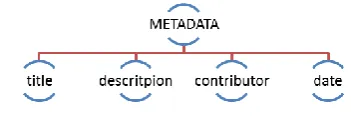
[image:4.595.123.222.253.361.2]A learning object is combination of the content and the metadata, here is below the key elements of a metadata.
Fig 3: Metadata elements
Taking into consideration the recommendation of the differentiated pedagogy, and the course model proposed in section 4, we choose to emphasize the following versions of a learning object:
Fig 4: The different versions of the same LO.
As the chart above shows, there are 4 different versions for the same LO: VM, VR, VD and VA
VM: a multimedia version.
VR: a version with a reminder of the previous LO.VD: a version with a deeper level of knowledge.
VA: a standard version.
[image:4.595.78.254.445.505.2]Having presented a learning object as above, new information on the metadata should be added. The presentation of the metadata presented in the figure 3 becomes:
Fig 5: Metadata elements after adding new versions.
As presented in the previous diagram, there are new elements added to the metadata; version: this attribute contains the LO version (VM, VD..), while index will increment according to the different hits for the learning object, this index will help to not overload the system, as it will serve for the future to eliminate from the system the versions with a low value of entry.
6.3
The graphical representation of the
course
We give in the chart below, a graphical representation of a course.
Fig 6: Example of learning paths
[image:4.595.336.541.458.555.2] [image:4.595.129.204.587.664.2]7.
THE SCENARIO OF LEARNING
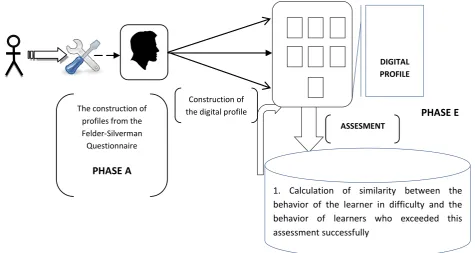
[image:5.595.59.535.109.362.2]The advancement of learning is explained in the diagram below:
Fig 7: The scenario of learning
For a first-timer, the learner must fill the questionnaire of FSLSM in order to determine his initial theoretical profile.
The next step is to allocate an appropriate version of the actual course according to the compatibility with his learning style.
Based on the result of the assessment, the system will correct the learning path of the leaners who have obtained non qualifying score by recommending the learning path of those who have passed successfully the assessment and have the same initial profile (FSLSM).
This recommendation will be based on the calculation of similarity between the behavior of the learner who has failed at the assessment and the behavior of other learners on the system. If the similarity exists, the learner in difficulty will be proposed for the current course the same versions of learning object and consequently the same learning path of the one with whom he has a similarity in the behavior.
7.1
Analyzing the outcomes of the scenario
In the figure above, there are three major phases:
Phase A: the phase where the FSLSM profile is constructed. Phase B: the observation of the learner’s behavior.
Phase E: this phase represents the assessment.
According to the figure above, the possible scenarios are:
1) If (A B) E (if the initial profile in the platform, match the alleged behavior to be adopted by the learner, and the result of the assessment is positive).
2) If (A B) E (if the initial profile in the platform, match the alleged behavior to be adopted by the learner, and yet the result of the assessment is negative).
3) If (A B) E (if the initial profile in the platform doesn’t match the alleged behavior to be adopted by the learner, and yet the result of the assessment is positive).
4) If (A B) E (if the initial profile in the platform doesn’t match the alleged behavior to be adopted by the learner, and the result of the assessment is negative).
The cases of interest are if (A=B) E and if (A B) E : because the recommendation is only to learners experiencing difficulties in learning.
a) The (A B) E case: The proposed solution is to calculate the similarity between the behavior of the learner in difficulty with the behavior of other learners who have the same theoretical profile and having successfully exceeded the assessment in question, and recommend subsequent path of learning to him; this similarity is based on the items described later in the Table 1 of the next section.
b) The (A B) E case: This specific case shows that there is clearly a problem with the course itself, and it’s up to the tutor himself to reevaluate the stages of the course and its didactic transposition [31].
ASSESMENT
PHASE E
DIGITALPROFILE
PHASE B
The construction of profiles from the Felder-Silverman Questionnaire
PHASE A
1. Calculation of similarity between the behavior of the learner in difficulty and the behavior of learners who exceeded this assessment successfully
2. Recommend their learning paths. Construction of
8.
THE RECOMMENDATION SYSTEM
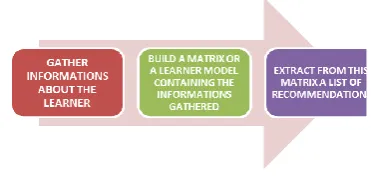
[image:6.595.75.261.181.269.2]The recommendation system that we want to develop is based on the calculation of similarity between the behavior of learners in the system, the study of behavior is an effective way to overcome the problem of the profiles stiffness, as it is believed that any learner is in a constant state of evolution, this must occur in the nature of the content offered to him. A recommendation system usually requires the three steps mentioned in the figure 8:
Fig 8: The steps of a recommender system
8.1
Gather informations about the learner
A distinction can be made between two forms of data collection:
Explicit data collection - Active filtering: based on the fact that the learner explicitly tells the system his interests in learning preferences, media, etc...
Implicit data collection - passive filtering: based on observation and analysis of the behavior of the learner made implicitly in the application that embeds the recommendation system, everything is done in background. This is the level where we intend to operate in the learning system, by first identifying learners with the same behavior as that of the learner in difficulty.
8.2
Learner model
The user model is generally in the form of a matrix. It can be represented as a table that contains data about the behavior of the learner. Judging from the elements already studied in section 4, the Learners Behavior in the platform varies according to the items listed in table 1:
Table 1. The list of the parameters referring to the behaviors
Designation Signification
NBREXR The number of exercises performed NBREXM The number of example studied NBRTST The number of assessment made ORDRPA The order of traversal of learning
objects
TMPTH The time allocated to the theoretical part
FC The frequency of the connection TCE the connections timing versus the
assessment
DP The degree of participation in forums, chat ...
TS The allocated time for each session
Therefore, the matrix of our recommendation system contains the elements indicated in the table above.
8.3
List of Recommendation
To retrieve a list of suggestions from a user model, the algorithms use the concept of similarity measure between objects or persons described by the model learner. The similarity aims to provide a value or a number (in the mathematical sense) to the similarity between two things. The stronger the similarity is, the bigger the value of the similarity will be. Conversely, the weaker the similarity is, the smaller the value of the similarity will be.
The conventional approach for recommendation systems is to build models of users based on information about them. In this system we are talking about the elements of Table 1
For 2 learners (Ui) and (Uj):
Pred (Ui, Uj) = α1 (TS) + α2 (FC) + α3 (DP) + α4 (TMPTH) + α5 (TCE) + α6 (NBREX) + α7 (NBREXM) + α8 (NBRTST) + α9 (ORDRPA)
Each learner can be considered as an incomplete vector which we know only a few components. However, it is possible to calculate a similarity between such vectors by restricting to only components they have in common. Assuming that the behavior of learners Ui and Uj are random variables Xi and Xj after an unknown joint distribution, it is possible to define the correlation coefficient between Xi and Xj by the Bravais-Pearson formula.
By having a sample size n, (X1i , X 1
j ); (X 2
i , X 2
j ); (X n
i , X n
j ) from a joint distribution, the amount:
is an estimate of ρ.
9.
CONDUCTING THE
EXPERIMENTATION
In order to complete this work, we will test this solution on a sample of students over three Moroccan academic institutions, namely the Science Faculty of Fez, the Science Faculty of Tetouan and the National Applied Sciences School of Tetouan. The choice of these three institutions in this case can be explained partly by the variety of student profiles observed, cultural diversity and also socioeconomic development of these regions. The platform used is Chamilo [www.chamilo.org] which is an open source e-learning platform. The course used for this experiment is the algorithmic / C language; this choice is dictated primarily by the fact that it does not necessarily require specific prerequisites.
10.
CONCLUSION
[image:6.595.48.286.553.708.2]recommend those paths to the learners who experienced difficulties, provided that they have the same initial profile and presenting a similar behavior in the system. The result of the experimentation will be used in future works, to identify other parameters relating to the behavior of learners in the system, which will help us for the future to include these parameters too, observed only by the experimentation, for more efficient and pertinent recommendation.
11.
REFERENCES
[1] Peter Brusilovsky, Methods and techniques of adaptive hypermedia, User Modeling and User Adapted Interaction, 1996, v 6, n 2-3, pp 87-129 , 1996.
[2] Sadat, H., & Ghorbani, A. A. (2004), On the Evaluation of Adaptive Web Systems. Proceedings of the Workshop on Web-based Support Systems,2004, 127-136.
[3] Brusilovsky, P., Milln, E. (2007) User models for adaptive hypermedia and adaptive educational systems. In: Brusilovsky, P., Kobsa, A., Neidl,W. (eds.): The Adaptive Web: Methods and Strategies of Web Personalization.Lecture Notes in Computer Science, Vol. 4321. Springer- Verlag, Berlin Heidelberg New York.
[4] Felder, R.M. and L.K. Silverman, Learning Styles and Teaching Styles in Engineering Education, Presented at the 1987 Annual Meeting of the American Institute of Chemical Engineers, New York, Nov. 1987.
[5] Paraskevi Tzouveli Phivos Mylonas, Stefanos Kollias, An intelligent e-learning system based on learner profiling and learning resources adaptation,National Technical University of Athens, School of Electrical and Computer Engineering, Athens, Greece Received 7 February 2007;received in revised form 4 May 2007; accepted 4 May 2007.
[6] Emmanuel Blanchard, Ryad Razaki, Claude Frasson Cross Cultural Adaptation of e-learning Contents, Emmanuel Blanchard, Ryad Razaki, Claude Frasson, HERON Laboratory, Computer Sciences Department Universit de Montral, C.P. 6128. Succ. Centre-Ville Montral, Qubec, Canada H3C3J7.
[7] Boyan Bontchev and Dessislava Vassileva Courseware Adaptation to learning styles and knowledge level, Department of Software Engineering, Sofia University, Sofia Bulgaria.
[8] Botchev et Vassileva 2011.
[9] Silvia Schiaffino , Patricio Garcia, Analia Amandi, E-teacher providing personalized assistance to e-learning students? SISTAN Research Institute Fac. Cs. Exactas - UNCPBA, Campus Universitario, Paraje Arroyo Seco, 7000 Tandil, Buenos Aires, Argentina, 2008.
[10] Elvira Popescu, Costin Badica and Lucian Morare, Accommodating learning styles in an adaptive educational system? University of Craiova, A.I.Cuza 13, 200585 Craiova, Romania.
[11] Ana-Elena Guerrero-Roldn , Juli Minguilln Alfonso Adaptive learning paths for Improving lifelong learning experiences? Department of Computer Science, Universitat Oberta de Catalunya, Barcelona, Spain.
[12] Stphanie Jean-Daubias, Thi-Thu-Hong Phan, Different levels of modeling for learner profiles,
[13] Vincenza Carchiolo and Alessandro Longheu and Michele Malgeri and Giuseppe Mangioni, An Architecture to Support Adaptive E-Learning, IJCSNS International Journal of Computer Science and Network Security, VOL.7 No.1, January 2007.
[14] Sampson, D., Karagiannidis, C., Cardinali, F, An Architecture for Webbased e-Learning Promoting Re-usable Adaptive Educational e-Content, Educational Technology Society 5 (4), 2002, ISSN 1436-4522.
[15] Sabone Graf, Silvia Rita Viola,Tommaso Leo and Kinshuk In-Depth Analysis of the Felder-Silverman Learning Style Dimensions, Journal of Research on Technology in Education, 2007, 40(1).
[16] Sabine Graf and Kinshuk Providing Adaptive Courses in Learning Management Systems with Respect to Learning Styles, Vienna University of Technology Women’s Postgraduate College for Internet Technologies Vienna, Austria Athabasca.
[17] Nabila Bousbia, Issam Reba, Jean-Marc Labat, Amar Balla, Analyzing the record Relationship between Learning Styles and Navigation Behavior in Web-Based Educational System, Knowledge Management ELearning: An International Journal, Vol.2, No.4. 400
[18] Carver, C. A. Howard , R. A. , Lane, W. D. , Enhancing student learning through hypermedia courseware and incorporation of student learning styles. IEEE Transactions on Education, 42 , p. 33-38 1999.
[19] Felder , R. M., Silverman , L. K. (1988), Learning and Teaching Styles in Engineering Education Education. Engineering , 78 (7). Preceded by a preface in 2002.
[20] Papanikolaou , KA , Grigoriadou , M., Kornilakis , H., Magoulas , GD (2003) Personalizing the interaction in a Web-based educational hypermedia system : the case of INSPIRE . User- Modeling and User -Adapted Interaction, 13, pp . 213-267.
[21] Cha, H. J. , Kim , Y. S., Lee , J. H. Yoon , T. B. 2006, An Adaptive Learning System with Learning Style Diagnosis based on Interface Behaviors, Creative Design Intelligent Tutoring Systems (CREDITS) Research Center12345 School of Information Communication Engineering Sungkyunkwan University, Suwon, Korea .
[22] Bajraktarevic, N., Hall, W., Fullick, P. Incorporating learning styles in hypermedia environment: Empirical evaluation. Proc. Workshop on Adaptive Hypermedia and Adaptive Web-Based Systems, pp.41-52, 2003.
[23] Popescu , Diagnosing Students Learning Style in an Educational Hypermedia System, Software Engineering Department, University of Craiova, Romania Str. A.I. Cuza nr. 13, 200585 Craiova, Romania 2009.
[24] David Kolb, Experiential learning: experience as the source of learning and development 1984.
[25] Honey and Mumford, Using Your Learning Styles - second edition, Peter Honey, Maidenhead, 1986.
[27] Brown New Learning Environments for the 21st Century - John Seely Brown, 2006
[28] Popescu, E. and Badica, C. and Trigano, P. Description and Organization of Instructional Resources in an Adaptive Educational System Focused on Learning Styles , Advances in Intelligent and Distributed Computing ed.: Springer, Vol. 78, ISBN : 978-3-540-74929-5, pp. 177- 186, 2008 ,
[29] E. Sangineto, N. Capuano, M. Gaeta, A. Micarelli, Adaptive Course Generation through Learning Styles Representation, International Journal of Universal Access in the Information Society, Vol. 7 (1), pp. 1-23, 2008
[30] Richard M. Felder and Joni Spurlin Applications, Reliability and Validity of the Index of Learning Styles, 2005
[31] Verret and Chevallard, Transposition Didactique, 1985,1991
[32] Conseil Suprieur de lducation, (CSE, 2001 dans Caron, 2003
[33] Halina Przesmycki, la pdagogie diffrencie, 2004, Hachette
[34] les ingalits et la diffrenciation de l’enseignement, Facult de psychologie et des sciences de l’ducation, Universit de Genve, 2003.
[35] Philippe Meiriu, Apprendre... oui, mais comment , ESF éditeur, Paris, 1987, 17° edition, 1999.
[36] David wiley,”Learning Objects: Difficulties and Opportunities”, 03april 2003.
[37] Miguel Latorre and al, “An experience on learning object reutilization based on educational resources developed, 2009.
[38] L'Allier, James J. (1997) Frame of Reference: NETg's Map to the Products, Their Structure and Core Beliefs. NetG.
[39] Self-directed learning: a four step process, Centre for Teaching Excellence, University of Waterloo. Available Online: https://uwaterloo.ca/centre-for-teaching-