Structural Reforms and Growth in Transition:
A Meta-Analysis
By: Jan Babecky and Tomas Havranek
Structural Reforms and Growth in Transition:
A Meta-Analysis
∗Jan Babeckya and Tomas Havraneka,b
aCzech National Bank
bCharles University, Prague
August 8, 2013
Abstract
The present fiscal difficulties of many countries amplify the call for structural reforms. To
provide stylized facts on how reforms worked in the past, we quantitatively review 60 studies
estimating the relation between reforms and growth. These studies examine structural
reforms carried out in 26 transition countries around the world. Our results show that an
average reform caused substantial costs in the short run, but had strong positive effects on
long-run growth. Reforms focused on external liberalization proved to be more beneficial
than others in both the short and long run. The findings hold even after correction for
publication bias and misspecifications present in some primary studies.
Keywords: Structural reforms, growth, transition economies, meta-analysis,
Bayesian model averaging
JEL Codes: C83, O11, P21
∗
1
Introduction
The recent financial and economic crisis has intensified the need for structural reforms conducive
to economic growth. As many countries experience fiscal problems that limit the ability of
governments to finance recovery by means of fiscal expansion, growth-enhancing reforms have
become the focus of attention in policy debates. To design new reform packages, however, policy
makers need to know how different reforms worked in the past.
The unprecedented process of transformation from a planned to a market economy brings
a unique opportunity to examine empirically the link between structural reforms and economic
performance. Indeed, for transition economies there is a large number of empirical studies that
use a similar measure of reforms, similar type of growth regressions, and similar coverage of
countries to uncover the reform effect. Yet the results of these studies vary a lot, ranging from
negative to positive estimates, while the average is close to zero.
When empirical studies disagree about the size and direction of an effect, tools of quantitative
literature reviews become particularly helpful to understand what lies behind the observed
variation in the reported results. The quantitative method of synthesizing information from
the stock of available literature is called meta-analysis (Stanley, 2001). Developed in medical science, meta-analysis has become widely used in social sciences including economics: see, for
example, Ashenfelter et al. (1999) for an assessment of returns to education, Rose & Stanley (2005) for an analysis of the effect of common currencies on international trade, and Havranek &
Irsova (2011) for an evidence on vertical spillovers from foreign direct investment. In the context
of the economic growth literature, Doucouliagos & Ulubasoglu (2008) apply meta-analysis to
examine the link between democracy and growth, while Nijkamp & Poot (2004) focus on the
relation between economic growth and fiscal policy.
Babecky & Campos (2011) analyze the variation in the reported effects of reforms on growth
using meta-analysis techniques and relate the variation to study characteristics such as
estima-tion methods, reform measurement, model specificaestima-tion, and study quality. Nevertheless, the
analysis of Babecky & Campos (2011) focuses on statistical significance: they use t-statistics
and do not examine the magnitude of the reform effect. Examination of the magnitude of the
reform effect is complicated because there is no “reform elasticity” due to different units of
this paper we extend the data set of Babecky & Campos (2011) and recompute the reported
effects to partial correlation coefficients, which allow us to examine the relative magnitude of
the effect of reforms. Moreover, we correct the average estimates for publication bias, use
Bayesian model averaging to find the most important factors driving the reported magnitude
of the reform effect, and compute the average value of the short- and long-run effect corrected
for misspecifications in some primary studies.
The remainder of the paper is organized as follows. Section 2 outlines how the reform
effects are usually estimated in the literature and presents an overview of primary studies.
Section 3 provides estimates of simple averages of the short- and long-run reform effect. Section 4
performs tests for publication bias and presents estimates of the reform effect corrected for the
bias. Section 5 computes the reform effect conditional on “best-practice” methodology used
in the literature. Section 7 concludes the paper and outlines suggestions for future research.
Appendices present details concerning the Bayesian model averaging exercise employed in the
paper.
2
Studies on Reforms and Growth
In the existing empirical studies the effect of structural reforms on economic performance is
typically estimated using growth regressions that take the following general form:
g=α+βR+δZ+, (1)
where g is real GDP growth, R is a measure of reform, Z is a vector of control variables including, for instance, initial conditions, measures of macroeconomic stabilization, institutional
development, factors of production; andis the error term. Coefficientβrepresents the estimate
of the effect of reforms on growth conditional on the set of control variables Z.
Specification (1) in its most basic form was applied by earlier studies, which examined the
effect of reforms on growth in a cross-section framework, using average values over a certain
period of time, for example, five to eight years (de Melo et al., 1997; Heybey & Murrell, 1999; Krueger & Ciolko, 1998, among others). Subsequently, specification (1) was extended into
measures of reforms (for instance, the level versus the speed of reforms). A typical panel version
of equation (1) used by studies in our sample takes one of the three following forms:
git=α+β(Rit−Rit−1) +δRit−1+γZit+it, (2)
git=α+βRit+δRit−1+γZit+it, (3)
git=α+βRit+γZit+it, (4)
where the sub-indices i and t denote the country and the time period. Specifically, t denotes the year of the sample since all reviewed studies work with yearly data, and the average number
of countries in panels is about 24. Notice that the coefficients β in equations (1) through (4)
are different (the constant terms and other coefficients being different as well).
One important difference in the effect of reforms on growth in specifications (1) to (4)
concerns the horizon considered, namely the difference between the short- and long-run effect.
The long-run (cumulative) effect of structural reform on growth is measured by: (i) coefficient
β in equation (1) estimated in a cross-section over a period of several years; (ii) coefficient δ in
equation (2); a sum of the coefficientsβandδin equation (3); and coefficientβin (4). The short-run (contemporaneous) effect of reform on growth is captured by (i) coefficient β in equation (1) if it is estimated for a given year; (ii) coefficient β in equation (3); and (iii) coefficient β in
equation (2), although in this case the explanatory variable is a change in reform as opposed to
the reform level in other specifications. Thus, we can distinguish whether the reform effect on
growth is an immediate one (within a year) or whether it corresponds to a longer horizon.
Furthermore, the coefficient β could be different even for the same type of specification
depending on whether the variables enter the equation in logarithms or in absolute values
(or as a combination of both), and on the units of measurement if absolute values are used.
Compared to the studies estimating, for example, the wage elasticity or employment elasticity,
the literature evaluating the effect of reform on growth does not have such a term as “reform
elasticity,” which complicates the comparison of results across studies. One way of converting
the estimates from different studies to a common metric is to record the estimated sign of the
effect. This was done by Babecky & Campos (2011) in their meta-analysis—but we choose a
Table 1: List of primary studies
Abed & Davoodi (2002) Fidrmuc & Tichit (2009) de Meloet al.(1997) Ahrens & Meurers (2002) Fischer & Sahay (2001) de Meloet al.(2001) Apolte (2011) Fischer & Sahay (2004) Merlevede (2003) Aslundet al.(1996) Fischeret al.(1996a) Mickiewicz (2005a) Aziz & Westcott (1997) Fischeret al.(1996b) Mickiewicz (2005b) Beck & Laeven (2006) Fischeret al.(1998) Nath (2009)
Borenszteinet al.(1999) Gillman & Harris (2010) Neyapti & Dincer (2005) Bower & Turrini (2009) Godoy & Stiglitz (2006) P¨a¨akk¨onen (2010) Cerovi´c & Nojkovi´c (2009) Havrylyshynet al.(2001) Pelipas & Chubrik (2008) Christoffersen & Doyle (2000) Havrylyshyn & van Rooden (2003) Piculescu (2003)
Cieslik & Tarsalewska (2013) Hernandez-Cata (1997) Polanec (2004)
Cungu & Swinnen (2003) Heybey & Murrell (1999) Radulescu & Barlow (2002) Denizer (1997) Iradian (2009) Radziwill & Smietanka (2009) Eicher & Schreiber (2010) Josifidiset al.(2012) Raimbaev (2011)
Eschenbach & Hoekman (2006) Kim & Pirttila (2003) Rapacki & Prchniak (2009) Falcettiet al.(2002) Krueger & Ciolko (1998) Sachs (1996)
Falcettiet al.(2006) Lawson & Wang (2005) Selowsky & Martin (1997) Fidrmuc (2001) Lejko & ˇStefan Bojnec (2012) Staehr (2005)
Fidrmuc (2003) Loungani & Sheets (1997) Stuckleret al.(2009) Fidrmuc & Tichit (2004) de Macedo & Martins (2008) Wolf (1999)
Notes: Both published and unpublished studies are included. The search for primary studies was terminated on May 1, 2013.
The selection of studies was performed using three criteria. A suitable study must (i) cover
transition economies, (ii) report estimates of the reform coefficients and their t-statistics (or
standard errors), and (iii) contain details on the estimation methodology, type of reform, and
country and period coverage. Primary studies were searched using the EconLit, SSRN, RePEc,
and Google Scholar, using keywords “reform,” “growth,” and “transition economies.” Next, the
search was extended to the references contained in the identified studies and to their citations.
For each reported coefficient a set of several dozen characteristics was recorded, including data
and estimation methods, type of reform, measure of reform dynamics, control variables, and
publication characteristics (details are provided in Section 5). In total, 60 studies issued since
1996 are included, both published and unpublished; they contain 537 empirical estimates of
the effect of various types of structural reform on growth in transition economies. The list of
studies is provided in Table 1.
In the next section we propose a refined measure of the reform effect on growth, which
captures both the magnitude and significance of the effect. This measure allows us to explicitly
estimate the average reform effect, and subsequently to construct an estimate of the effect
3
Estimating the Average Effect
Because the regression coefficients associated with the reform effect reported in primary studies
are not always comparable, due to different units and transformations of the variables employed,
it is necessary to use the corresponding t-statistics as a starting point. The t-statistics, however,
do not represent a standardized measure of the effect of structural reforms on economic growth,
since they depend on the number of degrees of freedom available for estimation in the primary
study. Hence, t-statistics cannot be directly aggregated; we need to standardize them. A
stan-dardized measure of statistical association, commonly employed in meta-analysis (for example,
Djankov & Murrell, 2002; Doucouliagos & Laroche, 2009), is the partial correlation coefficient,
computed in the following way:
r = p t
t2+df, (5)
where r denotes the partial correlation coefficient corresponding to the effect of reforms on growth,t denotes the t-statistic, anddf denotes the number of degrees of freedom available for estimation in the primary study. The partial correlation coefficient is limited to the interval
[−1,1]. The standard error of the partial correlation coefficient can be computed as SE=r/t. The data set enables us to construct 245 partial correlation coefficients for the short run and
292 coefficients for the long run.
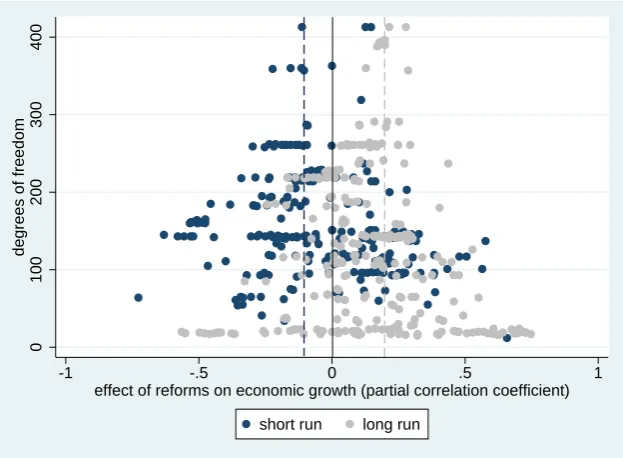
We illustrate the collected reform effects, converted to partial correlation coefficients, in
Figure 1. The figure depicts reform effects on the horizontal axis and the number of degrees of
freedom used in the estimation (which can be thought of as a measure of estimation precision)
on the vertical axis. Such a figure is usually called the funnel plot: if all estimates measure the
same effect, the most precise ones will be concentrated near the underlying reform effect, while
the imprecise ones will be widely dispersed. Therefore the cloud of the estimates should form
an inverted funnel with the tip pointing up at the underlying reform effect. Nevertheless, the
funnel depicted in Figure 1 apparently has two peaks, which suggests heterogeneity; in other
words, the collected estimates seem to cover two distinct effects.
Indeed, when the short-run effects are separated from the long-run ones in Figure 1, it is
clear that the cloud of the estimates consists of two overlapping funnels. Most of the precise
estimates of the short-run effect are negative, while for the long-run effect the precise estimates
Figure 1: Reforms hurt in the short run, but spur long-run growth
0
100
200
300
400
degrees of freedom
-1 -.5 0 .5 1
effect of reforms on economic growth (partial correlation coefficient)
short run long run
Notes: The figure shows a scatter plot of all reported estimates of the reform effect. The vertical axis measures the number of degrees of freedom available for estimation in each model. The dashed lines denote averages of the 10 estimates with
the most degrees of freedom for the short and long run.
the past in transition countries had non-negligible costs in the short run, but fueled growth in
the long run. In what follows, we need to examine the short-run and long-run effects separately.
The intuition given by Figure 1 is confirmed by the simple arithmetic averages reported in
Table 2: the estimated averages are −0.05 for the short run and 0.15 for the long run. The results hardly change when more specialized meta-analysis techniques are used: namely, the
fixed-effects estimator and random-effects estimator (see Borenstein et al., 2009). The fixed-effects estimator weights the partial correlation coefficients using the inverse of their standard
errors. This “precision weighting” is commonly applied in meta-analysis; if the weights were
instead based on the number of observations or degrees of freedom of the underlying model,
the results would be very similar. The implied averages are −0.08 for the short run and 0.14 for the long run. Finally, the random-effects estimator explicitly assumes that the underlying
reform effects estimated in different models may vary. Allowing for heterogeneity in this way
brings results broadly similar to the previous two methods: the average reaches −0.06 for the short run and 0.14 for the long run.
All averages estimated in Table 2 are different from zero at the 1% level of significance; the
Table 2: Estimating the average reform effect
Short run Long run
Method Estimated effect 95% confidence interval Estimated effect 95% confidence interval
Simple average -0.052 -0.084 -0.021 0.146 0.118 0.173
Fixed effects -0.081 -0.091 -0.072 0.135 0.125 0.145
Random effects -0.056 -0.087 -0.025 0.143 0.122 0.164
Notes: “Estimated effect” denotes the estimated partial correlation coefficient for the relation between structural reforms and economic growth. “Simple average” is the unweighted arithmetic average of all estimates. “Fixed effects” is the average weighted by the inverse of the standard error of the partial correlation coefficient. “Random effects” is the average weighted by the inverse of the standard error of the partial correlation coefficient; additionally, heterogeneity among estimates is taken into account.
it remains to be shown whether these effects are actually important in practice. According to
Doucouliagos’s guidelines for the importance of partial correlation in economics (Doucouliagos,
2011),1 values of partial correlation smaller than 0.07 in absolute value denote no important
effect, values between 0.07 and 0.17 denote a small effect, values between 0.17 and 0.33 denote
a medium effect, and values larger than 0.33 denote a strong effect.
In our case, the estimated short-run average suggests a negative, but small (or even
negli-gible) effect of structural reforms on economic growth in the short run. For the long-run, the
estimated average effect of reform on growth is positive and stronger, but still falls into the
category of “small” effects. The estimates reported in this section, however, do not take into
account that different estimates may have different probability of being reported (the problem
is usually referred to as publication bias) and that models estimating the effect of reforms are of different quality (heterogeneity). Both issues may have important consequences for the es-timates of the underlying effect, and we discuss them in turn in the following sections as we
refine our estimates of the effect of reforms.
4
Consequences of Publication Bias
It has long been recognized that scientific results showing a certain direction or statistical
significance may be more likely to get published than others; the other results often ending in
a “file drawer” (Rosenthal, 1979). The problem has been found especially strong in empirical
economics, as documented by, for example, Card & Krueger (1995), G¨org & Strobl (2001),
Havranek (2010), Rusnak et al. (2013), and Havraneket al. (2012). A recent survey of
meta-1
analyses conducted in economics (Doucouliagos & Stanley, 2013) documents that most areas of
empirical economics are affected by publication bias to a certain degree.
Most commonly, the bias manifests as a preference for results that are statistically
signifi-cant or consistent with a major theory (Stanley, 2005). While the problem is usually labeled
“publication” bias, it concerns unpublished manuscripts as well, since authors may use the sign
of their estimates as a specification check, and discard those with the “wrong” (that is,
unintu-itive) sign. Therefore, publication bias is a complex phenomenon stemming from the preferences
of authors, editors, and reviewers.
Publication bias can seriously distort the estimates of the average effect taken from the
literature, because if the bias is present, some types of results become systematically
under-represented, their correctness or incorrectness notwithstanding. For example, Stanley (2005)
shows how the average price elasticity of water demand reported in the literature is exaggerated
fourfold due to publication bias. In the literature on reforms and growth, we have perhaps
less reason to expect publication bias, since both positive and negative effects of reforms are
theoretically possible, particularly when comparing shot-run costs versus long-run benefits. On
the other hand, since the topic is politically attractive, researchers with a political agenda
may implicitly prefer strong results; positive or negative, depending on their ideological view.
Some researchers may simply like to report “good news” in contrast to negative or
insignifi-cant estimates. For example, in the literature on the effects of foreign direct investment on
the productivity of domestic firms in transition and developing countries, strong publication
bias toward positive results has been found (Havranek & Irsova, 2012). If a similar tendency is
present in the literature on reforms and growth, the average effects estimated in the previous
section must be corrected for publication bias.
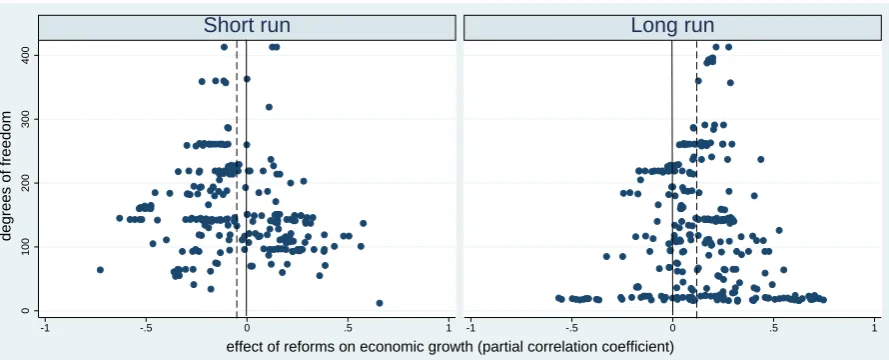
To test for publication bias, the funnel plot introduced in the previous section can be used
(Egger et al., 1997). Figure 2 shows separately the short- and long-run effect of reforms on growth. In the absence of publication bias, the funnels should be symmetrical with respect to
the line representing the average estimate. In other words, all imprecise estimates should have
the same probability of being reported, and in that case the average effect would also represent
the underlying reform effect. If, in contrast, publication bias plagues the literature, positive
Figure 2: Funnel plots suggest slight publication bias
0
100
200
300
400
-1 -.5 0 .5 1 -1 -.5 0 .5 1
Short run Long run
degrees of freedom
effect of reforms on economic growth (partial correlation coefficient)
Notes: The dashed lines denote averages of all reported estimates for the short and long run. In the absence of publication bias, the funnels should be symmetrical with respect to the line representing the average estimate.
Moreover, if statistically significant results were preferred to the insignificant ones, the funnel
would become hollow, since estimates that are small in magnitude and that are estimated with
low precision get low t-statistics.
The funnels depicted in Figure 2 are relatively symmetrical when compared to funnels
typ-ically reported in economics meta-analyses (Doucouliagos & Stanley, 2013), but some signs of
publication bias are still present. Both funnels are a little skewed; to the right for the
short-run effect and to the left for the long-short-run effect. The simple averages are smaller in absolute
value than the values of estimates with the highest precision. The funnels thus present some
evidence for a slight preference for positive results in the case of the reported short-run effects
and for negative results in the case of the long-run effects. Moreover, the funnel
correspond-ing to the short-run effects seems to be relatively hollow, suggestcorrespond-ing publication bias against
insignificant results. But since the visual test of publication bias is inevitably subjective, more
formal analysis is necessary to ascertain whether or not the bias is important.
The formal test of publication bias builds on Card & Krueger (1995) and Eggeret al.(1997): in the absence of publication bias, the estimated size of the partial correlation coefficient should
not be correlated with its standard error. If, in contrast, estimates of the reform effect are
This idea is formalized by the following regression:
ri =r0+β0·Se(ri) +ui, (6)
where ri is the partial correlation coefficient derived from an i-th primary study, r0 denotes
the underlying partial correlation corrected for publication bias, Se(ri) denotes the standard
error of ri, and β0 measures the direction and magnitude of publication bias. Nevertheless,
regression (6) is likely to be heteroscedastic, because the explanatory variable is a sample
estimate of the standard deviation of the response variable. To ensure efficiency, the regression
is usually estimated by weighted least squares (Stanley, 2005, 2008), where the precision of the
estimates (the inverse of the standard error) is taken as weight. In meta-analysis, this estimator
is usually called fixed effects, similarly to the estimator of the simple average introduced in
the previous section (now only the term capturing publication bias is added). To check the
sensitivity of our results, we also employ a robust method, iteratively re-weighted least squares
(Hamilton, 2006, pp. 239-256). Finally, because the estimated reform effects are extracted
from many studies, and different studies report a different number of estimates, in the third
[image:12.595.75.525.463.565.2]specification we cluster standard errors at the study level.
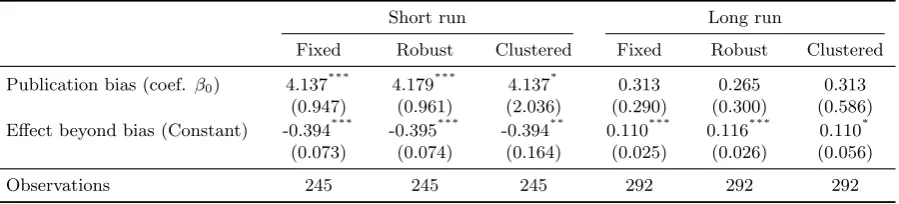
Table 3: Test of publication bias
Short run Long run
Fixed Robust Clustered Fixed Robust Clustered
Publication bias (coef. β0) 4.137
∗∗∗
4.179∗∗∗ 4.137∗ 0.313 0.265 0.313 (0.947) (0.961) (2.036) (0.290) (0.300) (0.586) Effect beyond bias (Constant) -0.394∗∗∗ -0.395∗∗∗ -0.394∗∗ 0.110∗∗∗ 0.116∗∗∗ 0.110∗
(0.073) (0.074) (0.164) (0.025) (0.026) (0.056)
Observations 245 245 245 292 292 292
Notes: Response variable is the effect of reforms on economic growth (partial correlation coefficient). Standard errors in parentheses. “Fixed” denotes the estimates by weighted least squares; weighted by the inverse of the standard error of the partial correlation coefficient. “Robust”: estimated by iteratively re-weighted least squares. “Clustered”: estimated by weighted least squares; standard errors clustered at the study level. ∗∗∗,∗∗, and∗ denote significance at the 1%, 5%, and 10% levels.
The results of the test for publication bias and the underlying effect corrected for the bias
are reported in Table 3. According to all three methods, publication bias is not statistically
significant for the estimates of the long-run reform effect, and consequently the corrected effect is
very close to the simple average (approximately 0.1). In contrast, publication bias is significant
becomes less significant when standard errors are clustered at the study level. In that case,
the p-value corresponding to β0 in (6) reaches 0.051. Nevertheless, the test for publication
bias is known to have low power (Egger et al., 1997; Stanley, 2005), so estimates of β0 on the
borderline of statistical significance still indicate evidence of publication bias. More importantly,
the corrected estimates of the short-run reform effect are consistent and significant at the 5%
level across all three methods: they reach −0.39, which is approximately four times more than the simple averages reported in the previous section.
Therefore, after correction for publication bias, the long-term effect of an average reform on
economic growth is still positive and small according to Doucouliagos’s guidelines. In the short
run, however, reforms seem to bring considerable costs in terms of economic performance: the
value of the short-run partial correlation equal to−0.39 would be classified as a “strong” effect according to Doucouliagos’s guidelines.
5
Consequences of Heterogeneity
The primary studies in our sample employ a variety of different methods to estimate the effect
of structural reforms on economic performance. The studies differ in terms of quality of the data
and econometric techniques used, for example. If these differences have a systematic influence
on the estimated reform effect, we need to take it into account and adjust the average estimate
presented in the previous section.
The heterogeneity in the estimates of the reform effect was examined and discussed in detail
in Babecky & Campos (2011); in this paper we use the variables capturing study design to
esti-mate the average effect conditional on the “best practice” from the literature. We have identified
32 variables describing the characteristics of data and methods used in the primary studies, the
type of the reform index employed, the measure of dynamics, specification characteristics, and
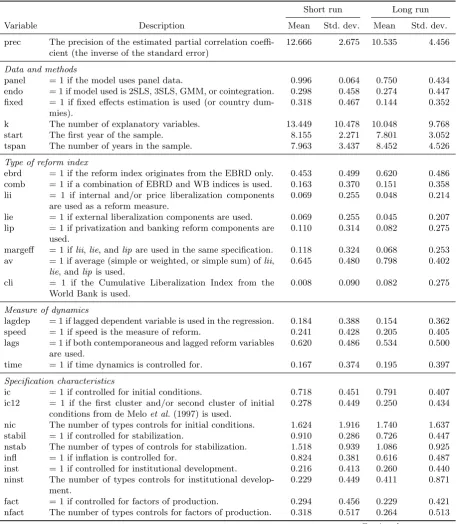
publication characteristics. All variables are explained and summarized in Table 4.
The data and method characteristics include information on whether panel or cross-sectional
data set is used and whether endogeneity is taken into account. Variables capturing the type of
the reform index include dummy variables for the institutions producing the index (The World
Bank, EBRD, or a combination of both). The category “measure of dynamics” captures, for
dy-namics is controlled for. Specification characteristics include, among others, dummy variables
for the control for initial conditions, stabilization, and institutional development. Publication
characteristics capture the affiliation of the authors (academia or policy institutions), the
[image:14.595.74.532.198.723.2]num-ber of citations of the study, and the type of publication (a journal article or a working paper).
Table 4: Description and summary statistics of explanatory variables
Short run Long run
Variable Description Mean Std. dev. Mean Std. dev.
prec The precision of the estimated partial correlation coeffi-cient (the inverse of the standard error)
12.666 2.675 10.535 4.456
Data and methods
panel = 1 if the model uses panel data. 0.996 0.064 0.750 0.434 endo = 1 if model used is 2SLS, 3SLS, GMM, or cointegration. 0.298 0.458 0.274 0.447 fixed = 1 if fixed effects estimation is used (or country
dum-mies).
0.318 0.467 0.144 0.352
k The number of explanatory variables. 13.449 10.478 10.048 9.768
start The first year of the sample. 8.155 2.271 7.801 3.052
tspan The number of years in the sample. 7.963 3.437 8.452 4.526
Type of reform index
ebrd = 1 if the reform index originates from the EBRD only. 0.453 0.499 0.620 0.486 comb = 1 if a combination of EBRD and WB indices is used. 0.163 0.370 0.151 0.358 lii = 1 if internal and/or price liberalization components
are used as a reform measure.
0.069 0.255 0.048 0.214
lie = 1 if external liberalization components are used. 0.069 0.255 0.045 0.207 lip = 1 if privatization and banking reform components are
used.
0.110 0.314 0.082 0.275
margeff = 1 iflii,lie, andlip are used in the same specification. 0.118 0.324 0.068 0.253 av = 1 if average (simple or weighted, or simple sum) oflii,
lie, andlip is used.
0.645 0.480 0.798 0.402
cli = 1 if the Cumulative Liberalization Index from the World Bank is used.
0.008 0.090 0.082 0.275
Measure of dynamics
lagdep = 1 if lagged dependent variable is used in the regression. 0.184 0.388 0.154 0.362 speed = 1 if speed is the measure of reform. 0.241 0.428 0.205 0.405 lags = 1 if both contemporaneous and lagged reform variables
are used.
0.620 0.486 0.534 0.500
time = 1 if time dynamics is controlled for. 0.167 0.374 0.195 0.397
Specification characteristics
ic = 1 if controlled for initial conditions. 0.718 0.451 0.791 0.407 ic12 = 1 if the first cluster and/or second cluster of initial
conditions from de Meloet al.(1997) is used.
0.278 0.449 0.250 0.434
nic The number of types controls for initial conditions. 1.624 1.916 1.740 1.637 stabil = 1 if controlled for stabilization. 0.910 0.286 0.726 0.447 nstab The number of types of controls for stabilization. 1.518 0.939 1.086 0.925 infl = 1 if inflation is controlled for. 0.824 0.381 0.616 0.487 inst = 1 if controlled for institutional development. 0.216 0.413 0.260 0.440 ninst The number of types controls for institutional
develop-ment.
0.229 0.449 0.411 0.871
fact = 1 if controlled for factors of production. 0.294 0.456 0.229 0.421 nfact The number of types controls for factors of production. 0.318 0.517 0.264 0.513
Table 4: Description and summary statistics of explanatory variables (continued)
Short run Long run
Variable Description Mean Std. dev. Mean Std. dev.
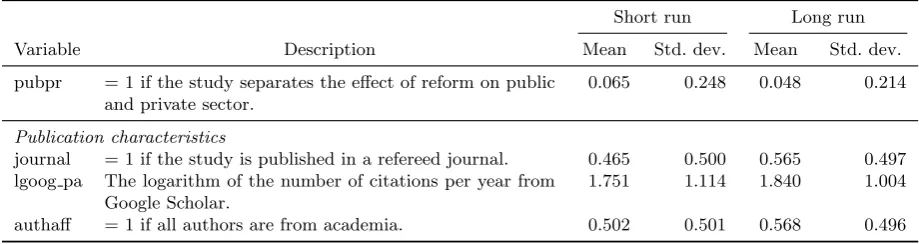
pubpr = 1 if the study separates the effect of reform on public and private sector.
0.065 0.248 0.048 0.214
Publication characteristics
journal = 1 if the study is published in a refereed journal. 0.465 0.500 0.565 0.497 lgoog pa The logarithm of the number of citations per year from
Google Scholar.
1.751 1.114 1.840 1.004
authaff = 1 if all authors are from academia. 0.502 0.501 0.568 0.496
Source of the data: Primary studies estimating the effect of structural reforms on economic growth. For the explanation of the differences among the reported short-run effects, variablespanel,lii, andcliare not used: the variation in these variables is too low or they are perfectly correlated with other variables.
We intend to explain the differences in the partial correlation coefficients corresponding to
the reported reform effects. To be specific, we need to plug the variables capturing heterogeneity
into equation (6) to get the following general model:
ri =r0+β0·Se(ri) +γ·Study design +vi, (7)
where Study design denotes a vector of variables listed in Table 4. The specification still controls for publication bias (β0 ·Se), but the estimate of the underlying reform effect, r0,
now becomes conditional on the values of the variables explaining heterogeneity. To correct for
heteroskedasticity, we still consider regression (7) in the fixed-effects form; that is, weighted by
precision (as explained in Section 4).
It is not reasonable to estimate a regression including all 32 explanatory variables. At the
same time, no theory can help us select which variables could matter for the reform effect and
which should be omitted. This is an example of model and parameter uncertainty, common in
meta-analysis, that can be addressed by a method called Bayesian model averaging (BMA; for
example, Fernandezet al., 2001; Sala-i-Martin et al., 2004; Ciccone & Jarocinski, 2010). BMA has been used in meta-analysis, for instance, by Moeltner & Woodward (2009) and Irsova &
Havranek (2013).
BMA estimates many regressions with the possible subsets of all explanatory variables on
the right-hand side and constructs a weighted average over these regressions. The weights used
in the BMA estimation are the so-called posterior model probabilities. The posterior model
R-squared: the models that fit the data best get the highest posterior model probability, and
vice versa. Moreover, for each explanatory variable we can compute the posterior inclusion
probability, which represents the sum of the posterior model probabilities of all models that
contain this particular variable. In other words, the posterior inclusion probability expresses
how likely it is that the particular variable should be included in the “true” regression. For the
estimation of the BMA exercise we use thebmspackage available in R (developed by Feldkircher
& Zeugner, 2009, who also provide a detailed explanation of BMA). More details on the BMA
procedure employed in this paper are available in Appendix B.
The results of the BMA estimation for the short and long run are reported graphically in
Figure 3 and Figure 4; different regressions estimated by BMA are depicted as different columns.
If the cell for a variable is blank, the variable is not included in the regression. If the cell is blue
(darker in grayscale), the variable is included and the estimated sign is positive; similarly, if
the cell is red (lighter in grayscale), the variable is included and the estimated sign is negative.
The width of the columns represents the weight for each regression. The variables are sorted by
their posterior inclusion probabilities: most models that include the variables on the top of the
figure belong among the good models (in terms of the posterior model probability), while the
models that include the variables on the bottom of the figure usually do not fit the data well.
Some variables are important (that is, have the posterior inclusion probability higher than
50%) for the estimates of the reform effect in both the short and long run. These are lie (a dummy variable capturing the type of the reform index, namely external liberalization), entering
with a positive sign, andlags (a dummy variable capturing whether both contemporaneous and lagged reform variables are used in the model) entering with a negative sign. Moreover, these
variables affect the estimates of the short- and long-run reform effect in the same direction.
Some other variables are important either only for the short-run estimates (for example,comb, a dummy variable reflecting whether a combination of the EBRD and World Bank indices is
used) or only for the long-run estimates (for example, tspan, the number of years included in the data set), and some do not seem to be important at all.
Our intention is to use the results concerning the sources of heterogeneity to improve our
estimate of the underlying reform effect (r0). Instead of selecting one of the regressions (columns
Figure 3: Ba y esian mo del a v eraging, mo del inclusion (short run)
Model Inc
lusion Based on Best 1000 Models
Cum
ulativ
e Model Probabilities
Figure 4: Ba y esian m o del a v eraging, mo del inclusion (long run)
Model Inc
lusion Based on Best 1000 Models
Cum
ulativ
e Model Probabilities
average of all regressions; the numerical details on the weighted average of the coefficients for
each variable are reported in Table A1 and Table A2 in Appendix A. To estimate the underlying
reform effect, we need to select the preferred value for each explanatory variable and plug it
into equation (7), using the regression coefficients given by BMA (the coefficients for variables
with a low posterior inclusion probability are very close to zero). In other words, from the
literature we create a synthetic model with best-practice methodology, the largest data set, and
maximum quality characteristics.
Of course, the authors of primary studies have different views on how best practice in
this literature should look like, but some aspects of methodology would be preferred by most
evaluators. We prefer panel-data models over cross-sectional models (that is, we plug in value 1
for the corresponding dummy variable), models explicitly addressing endogeneity, and models
employing country-level fixed effects. We prefer if the study uses data on the reform index from
both the World Bank and the EBRD and if it takes into account internal, external, privatization,
and banking reform components (not only a subset of those). We prefer models controlling for
time dynamics, initial conditions, stabilization, inflation, institutional development, and factors
of production. We also plug in sample maxima for the number of types of control for initial
conditions, the number of types of control for stabilization, the number of types of control for
institutional development, and the number of types of control for factors of production. Finally,
we prefer studies published in peer-reviewed journals and plug in sample maximum for the
number of citations. All other variables are set to sample means.
The improved estimate of the reform effect for the short run reaches −0.38, which means virtually no change compared with the case when we only corrected the simple average for
publication bias. In contrast, the improved estimate of the long-run effect reaches 0.27, which
is almost thrice more than the estimate in the previous section. Both effects are statistically
significant at the 5% level, and the numbers are robust to marginal changes in the definition
of best practice. All in all, when we correct for both publication bias and misspecifications,
according to Doucouliagos’s guidelines the short-run effect of an average structural reform on
economic growth would be classified as “strong,” while the resulting category for the long-run
6
Discussion of the Magnitude of the Reform Effect
We have noted that one of the advantages of this paper over the previous meta-analysis by
Babecky & Campos (2011) is our ability to estimate the strength of the reform effect (the other
advantages being adjustment for publication selection bias, correction for misspecifications, use
of Bayesian methods to address model uncertainty, and an updated data set). Babecky &
Cam-pos (2011) use t-statistics and experiment with three categories of reform effects: statistically
significant and negative, statistically insignificant, and statistically significant and positive. We
use partial correlation coefficients, which represent a statistical measure of the strength of the
underlying economic relationship and, in contrast to t-statistics, do not increase with the
num-ber of degrees of freedom and are therefore comparable across studies. Ideally we would like to
measure the economic effect directly, but elasticities of GDP growth with respect to changes in
reform indices are not available.
For the classification of partial correlation coefficients into “small,” “medium,” and “strong”
effects we use the guidelines of Doucouliagos (2011). In the guidelines Doucouliagos (2011)
collects 22,000 partial correlation coefficients reported in empirical economics. The thresholds
are determined according to the distribution of the coefficients: if the coefficient is smaller than
75% of all empirical estimates reported in economics, it is classified as not being important at
all. If the coefficient lies between the 25th and 50th centile of reported effects, it is classified
as small. The coefficient is classified as medium if it lies between the 50th and 75th centile,
and as large if it is greater than the 75th centile of partial correlation coefficients in empirical
economics. In sum, the classifications of Doucouliagos (2011) are relative to the size of effects
that economists typically find.
There are two reasons why in this case we cannot use elasticities, the preferred summary
statistic of economic meta-analyses. First, different studies use different functional forms, which
means that the reported estimates of reform effects are not directly comparable. Second, as
Barlow (2006, p. 509) put it concerning the EBRD indices: “A score of 4 of an index should not
be regarded as indicating double a score of 2.” An increase in the index indicates improvement
in the characteristic in question, but is not necessarily proportional to the previous value.
For example, the price liberalization index is defined as taking value 1 if “most prices are
administration; state procurement at non-market prices for the majority of product categories,”
and value 3 if there is “significant progress on price liberalization, but state procurement at
non-market prices remains substantial.” An improvement from value 1 to value 2 represents a 100%
increase in the index, but may actually be easier than a move from value 2 to value 3 (a 50%
increase).
Bearing the two limitations in mind, we believe it could still be interesting to try to compare
the results of studies on the relation between reforms and growth summarized in our
meta-analysis with effects of other macroeconomic shocks and policies.2 Such a comparison requires
judgment on several key parameters and should therefore be taken with a grain of salt. First, for
any meaningful estimate we need the elasticity of growth with respect to reforms, which cannot
be directly obtained for reasons described in the previous paragraph. As Doucouliagos (2011)
notes, there should be a positive relationship between the elasticity and partial correlation
coefficient, but the exact form of the relationship is uncertain. We use the data set of what
we believe is the largest meta-analysis conducted in economics so far, Havranek et al.(2013),3 and regress the elasticities reported there on partial correlations to get some idea about the
relationship. The regression yields a coefficient on partial correlations of 1 with an intercept of
0.34, and we will use these estimates in our analysis although we realize that the relation may
be field-specific.
The estimates imply the short-run elasticity of growth with respect to reforms of −0.72 and the long-run elasticity of 0.61. Next, we need an estimate of the percentage change in reform
indices due to typical reforms. Changes in EBRD reform scores of about 1/3 are relatively
common, as illustrated in EBRD (2004, p. 7): for example, such an improvement in the reform
index represented “approval of new competition law and creation of independent competition
authority” in Albania, “adoption of a new bankruptcy act, amendments to the law on public
companies and the introduction of measures to improve the effectiveness of the judiciary” in
Croatia, or “significant privatizations over the past year, including the oil and gas company
Petrom and other energy assets” in Romania. If we take the midpoint of the range of the indices,
such reforms reflect a 13% improvement of reform scores. Using the estimated elasticities and
assuming a transition country with a 4% trend growth rate, we find that a standardized reform
2We thank an anonymous referee for suggesting this analysis. 3
translates into a decrease of short-term growth by 0.4 percentage points and an increase in
the long-term growth rate by 0.3 percentage points. Our results from the previous section also
indicate that reforms affecting the index of external liberalization are more beneficial than other
types of reforms: the estimated effects for external liberalization compared to privatization are
smaller by about 20% in the short run and larger by 40% in the long run.
To put the effects of reforms into perspective, we can compare our estimates to the effects
of various macroeconomic shocks and policies. Concerning oil shocks, for example, Rasmussen
& Roitman (2011) report that a 25% increase in oil prices leads to a loss of 0.3% of GDP for
typical oil importers. For countries that import oil worth more than 5% of their GDP, the loss
amounts to approximately 1% of GDP. These numbers are comparable with our estimates of
the short-run costs of typical structural reforms. Next, one of the often discussed determinants
of growth is education, and Artadi & Sala-i-Martin (2003), for instance, suggest that if rates
of primary school enrollment in Africa were at the level of OECD countries, Africa would have
enjoyed GDP growth larger by about 1.5 percentage points in recent decades. That is about
five times our estimate of the long-run effect of a typical reform. Finally, available estimates
suggests that fiscal policy can compensate the negative short-run effect of reforms. There is
much discussion concerning the size of fiscal multipliers, but a recent meta-analysis reports an
average value of 0.8 (Gechert & Will, 2012). If we take this number and the average size of
financial stimulus packages designed in response to the 2008/2009 crisis (3.4% of 2008 GDP,
ILO, 2011), the average stimulus package could have boosted GDP by 2.7%, more than six
times the average short-run costs of a typical structural reform.
7
Conclusion
In this paper we examine the link between structural reforms and economic growth in transition
economies using the results of 60 empirical studies published in the period 1996–2013. We
summarize the reform effect by employing partial correlation coefficients, which capture both
the statistical significance of the effect and its magnitude. We find that, on average, in the
short run reforms lead to significant costs in terms of output growth, while in the long run the
the body of available empirical studies, thus corroborate the stylized fact that it takes time for
the benefits of structural reforms to materialize.
The type of reform determines how fast benefits materialize and how strong they are. The
results reported by primary studies allow us to control for several reform measures, namely the
origin of the index (EBRD, World Bank, or a combination of both) and the type of the index
(internal liberalization, external liberalization, privatization, the average of the above three
components, their marginal effects, and the cumulative liberalization index). Among these
alternative measures, external liberalization shows a robust positive effect on growth.
One direction for future research could be to explore the mechanism through which external
liberalization (that is, removing trade and capital account controls) affects growth, and the
inter-actions among reform components—the complementarity of reform. Moreover, as documented
in EBRD (2011), there is still a substantial potential for improving upon the implemented
reforms in a number of transition countries. In this paper we only review the so-called
first-generation structural reforms (stabilization, liberalization, and privatization), since these are
the ones covered by most of the existing literature on transition economies. As more
empir-ical evidence on the effects of second-generation reforms (for example, enterprise governance,
institutional change, and competitiveness) becomes available, evaluation of the effects of such
reforms in the meta-analysis framework may prove a perspective avenue for further research.
One caveat should be kept in mind when interpreting the results of the present study:
a meta-analysis can only filter out misspecifications that have been overcome by a sufficient
number of researchers. If a misspecification is shared by the entire literature and influences
the estimates in a systematic way, meta-analysis will give biased results. The measurement of
reforms, for example, has been especially controversial, and recently new measures have been
proposed (Campos & Horvath, 2012). Nevertheless, until the new measures are employed by a
sufficient number of researchers, they cannot be explored using meta-analysis tools.
References
Abed, G. & H.Davoodi(2002): “Corruption, Structural Reforms, and Economic Performance in the Transition Economies.” In G.Abed& S.Gupta (editors), “Governance, Corruption, and Economic Performance,” p. 489–537. Washington, DC: International Monetary Fund.
Apolte, T. (2011): “Democracy and prosperity in two decades of transition.” The Economics of Transition
19(4): pp. 693–722.
Artadi, E. V. & X.Sala-i-Martin(2003): “The Economic Tragedy of the XXth Century: Growth in Africa.”
NBER Working Papers 9865, National Bureau of Economic Research, Inc.
Ashenfelter, O., C. Harmon, & H. Oosterbeek (1999): “A review of estimates of the schooling/earnings relationship, with tests for publication bias.” Labour Economics 6(4): pp. 453–470.
Aslund, A., P.Boone, & S.Johnson(1996): “How to Stabilize: Lessons from Post-communist Countries.”
Brookings Papers on Economic Activity 27(1): pp. 217–314.
Aziz, J. & R. F.Westcott(1997): “Policy Complementarities and the Washington Consensus.”IMF Working Papers 97/118, International Monetary Fund.
Babecky, J. & N. F.Campos(2011): “Does reform work? An econometric survey of the reform–growth puzzle.”
Journal of Comparative Economics 39(2): pp. 140–158.
Barlow, D. (2006): “Growth in transition economies: A trade policy perspective.”The Economics of Transition
14(3): pp. 505–515.
Beck, T. & L.Laeven(2006): “Institution building and growth in transition economies.” Journal of Economic
Growth 11(2): pp. 157–186.
Borenstein, M., H. R.Rothstein, L. V.Hedges, & J. P. Higgins (2009): Introduction to Meta-Analysis. London: Wiley.
Borensztein, E., R. Sahay, J. Zettelmeyer, & A.Berg (1999): “The Evolution of Output in Transition Economies—Explaining the Differences.” IMF Working Papers 99/73, International Monetary Fund.
Bower, U. & A.Turrini(2009): “EU accession: A road to fast-track convergence?” European Economy - Eco-nomic Papers 393, Directorate General Economic and Monetary Affairs (DG ECFIN), European Commission.
Campos, N. F. & R.Horvath(2012): “Reform redux: Measurement, determinants and growth implications.”
European Journal of Political Economy 28(2): p. 227–237.
Card, D. & A. B. Krueger(1995): “Time-Series Minimum-Wage Studies: A Meta-analysis.” American
Eco-nomic Review 85(2): pp. 238–43.
Cerovi´c, B. & A.Nojkovi´c(2009): “Transition and growth: What was taught and what happened.”Economic
Annals LIV(183): pp. 7–31.
Christoffersen, P. & P.Doyle(2000): “From Inflation to Growth.” The Economics of Transition 8(2): pp. 421–451.
Ciccone, A. & M. Jarocinski (2010): “Determinants of Economic Growth: Will Data Tell?” American Economic Journal: Macroeconomics 2(4): pp. 222–46.
Cieslik, A. & M.Tarsalewska(2013): “Privatization, convergence, and growth.”Eastern European Economics 51(1): pp. 5–20.
Cohen, J. (1988): Statistical Power Analysis for the Behavioral Sciences. Hillsdale, NJ: Routledge Academic, second edition edition.
Cungu, A. & J. Swinnen (2003): “The Impact of Aid on Economic Growth in Transition Economies: An Empirical Study.” Discussion Papers 12803, Centre for Institutions and Economic Performance, K.U.Leuven.
Denizer, C. (1997): “Stabilization, adjustment, and growth prospects in transition economies.” Policy Research
Working Paper Series 1855, The World Bank.
Djankov, S. & P.Murrell(2002): “Enterprise restructuring in transition: A quantitative survey.” Journal of
Economic Literature 40(3): pp. 739–792.
Doucouliagos, C. & P. Laroche (2009): “Unions and Profits: A Meta-Regression Analysis.” Industrial
Doucouliagos, H. (2011): “How Large is Large? Preliminary and relative guidelines for interpreting partial correlations in economics.” Economics Series Working Paper 5, Deakin University.
Doucouliagos, H. & T. D.Stanley(2013): “Are All Economic Facts Greatly Exaggerated? Theory Compe-tition and Selectivity.” Journal of Economic Surveys 27(2): pp. 316–339.
Doucouliagos, H. & M.Ulubasoglu(2008): “Democracy and Economic Growth: A Meta-Analysis.”American Journal of Political Science 52(1): pp. 61–83.
EBRD(2004): Transition Report 2004. London: European Bank for Reconstruction and Development.
EBRD(2011): Transition Report 2011. London: European Bank for Reconstruction and Development.
Egger, M., G. D.Smith, M. Scheider, & C. Minder(1997): “Bias in meta-analysis detected by a simple, graphical test.” British Medical Journal316: pp. 320–246.
Eicher, T. S. & T.Schreiber (2010): “Structural policies and growth: Time series evidence from a natural experiment.” Journal of Development Economics 91(1): pp. 169–179.
Eschenbach, F. & B. Hoekman(2006): “Services Policy Reform and Economic Growth in Transition Econo-mies.” Review of World Economics 142(4): pp. 746–764.
Falcetti, E., T.Lysenko, & P.Sanfey(2006): “Reforms and growth in transition: Re-examining the evidence.”
Journal of Comparative Economics 34(3id): pp. 421–445.
Falcetti, E., M.Raiser, & P.Sanfey(2002): “Defying the Odds: Initial Conditions, Reforms, and Growth in the First Decade of Transition.” Journal of Comparative Economics30(2): pp. 229–250.
Feldkircher, M. & S.Zeugner(2009): “Benchmark Priors Revisited: On Adaptive Shrinkage and the Super-model Effect in Bayesian Model Averaging.” IMF Working Papers 09/202, International Monetary Fund.
Fernandez, C., E.Ley, & M. F. J.Steel(2001): “Benchmark priors for Bayesian model averaging.” Journal of Econometrics 100(2): pp. 381–427.
Fidrmuc, J. (2001): “Forecasting Growth in Transition Economies: A Reassessment.” Mimeo, Center for European Integration Studies.
Fidrmuc, J. (2003): “Economic reform, democracy and growth during post-communist transition.” European
Journal of Political Economy 19(3): pp. 583–604.
Fidrmuc, J. & A. Tichit (2004): “Mind the Break! Accounting for Changing Patterns of Growth during Transition.” William Davidson Institute Working Papers Series 2004-643, University of Michigan.
Fidrmuc, J. & A.Tichit(2009): “Mind the break! Accounting for changing patterns of growth during transi-tion.” Economic Systems33(2): pp. 138–154.
Fischer, S. & R.Sahay (2001): “The transition economies after ten years.” In L. Orlowski(editor), “The Ten-year Experience,” p. 3–47. Cheltenham, UK and Northampton, MA, USA: Edward Elgar.
Fischer, S. & R.Sahay(2004): “Transition economies: the role of institutions and initial conditions.” In “IMF Conference in Honour of Guillermo Calvo,” International Monetary Fund.
Fischer, S., R. Sahay, & C. A. V. Gramont (1998): “From Transition to Market—Evidence and Growth Prospects.” IMF Working Papers 98/52, International Monetary Fund.
Fischer, S., R.Sahay, & C. A.Vegh(1996a): “Economies in Transition: The Beginnings of Growth.”American Economic Review 86(2): pp. 229–33.
Fischer, S., R.Sahay, & C. A.Vegh(1996b): “Stabilization and Growth in Transition Economies: The Early Experience.” Journal of Economic Perspectives 10(2): pp. 45–66.
Gechert, S. & H.Will(2012): “Fiscal multipliers: A meta regression analysis.” IMK Working Paper 97-2012, IMK at the Hans Boeckler Foundation, Macroeconomic Policy Institute.
pp. 697–714.
Godoy, S. & J.Stiglitz (2006): “Growth, Initial Conditions, Law and Speed of Privatization in Transition Countries: 11 Years Later.” NBER Working Papers 11992, National Bureau of Economic Research, Inc.
G¨org, H. & E.Strobl(2001): “Multinational Companies and Productivity Spillovers: A Meta-analysis.” The Economic Journal 111(475): pp. F723–39.
Hamilton, L. C. (2006): Statistics with STATA. Belmont, CA: Duxbury Press.
Havranek, T. (2010): “Rose Effect and the Euro: Is the Magic Gone?” Review of World Economics 146(2): pp. 241–261.
Havranek, T., R. Horvath, Z. Irsova, & M. Rusnak (2013): “Cross-Country Heterogeneity in Intertem-poral Substitution.” Working paper, Czech National Bank and Charles University in Prague. Available at
meta-analysis.cz/substitution.
Havranek, T. & Z.Irsova (2011): “Estimating vertical spillovers from FDI: Why results vary and what the true effect is.” Journal of International Economics 85(2): pp. 234–244.
Havranek, T. & Z. Irsova (2012): “Survey Article: Publication Bias in the Literature on Foreign Direct Investment Spillovers.” Journal of Development Studies 48(10): pp. 1375–1396.
Havranek, T., Z.Irsova, & K.Janda(2012): “Demand for Gasoline is More Price-Inelastic than Commonly Thought.” Energy Economics 34(1): p. 201–207.
Havrylyshyn, O., I. Izvorski, & R. van Rooden (2001): “Recovery and growth in transition economies 1990–1997: a stylised regression analysis.” In H. Hoen(editor), “Good Governance in Central and Eastern Europe: The Puzzle of Capitalism by Design,” p. 26–53. Cheltenham, UK and Northampton, MA, USA: Edward Elgar.
Havrylyshyn, O. & R.van Rooden(2003): “Institutions Matter in Transition, But So Do Policies.” Compar-ative Economic Studies 45(1): pp. 2–24.
Hernandez-Cata, E. (1997): “Liberalization and the Behavior of Output during the Transition from Plan to Market.” IMF Staff Papers44(4): pp. 405–429.
Heybey, B. & P.Murrell(1999): “The relationship between economic growth and the speed of liberalization during transition.” Journal of Policy Reform 3(2): pp. 121–137.
ILO(2011): “A Review of Global Fiscal Stimulus.” EC-IILS joint discussion paper series no. 5, International Labour Organization, European Union, International Institute for Labour Studies.
Iradian, G. (2009): “What Explains the Rapid Growth in Transition Economies?” IMF Staff Papers 56(4): pp. 811–851.
Irsova, Z. & T. Havranek(2013): “Determinants of Horizontal Spillovers from FDI: Evidence from a Large Meta-Analysis.” World Development 42: pp. 1–15.
Josifidis, K., R. D. Mitrovi´c, & O. Ivanˇcev (2012): “Heterogeneity of Growth in the West Balkans and Emerging Europe: A Dynamic Panel Data Model Approach.” Panoeconomicus59(2): pp. 157–183.
Kim, B.-Y. & J.Pirttila(2003): “The political economy of reforms: Empirical evidence from post-communist transition in the 1990s.” BOFIT Discussion Papers 4/2003, Bank of Finland, Institute for Economies in Transition.
Krueger, G. & M.Ciolko(1998): “A Note on Initial Conditions and Liberalization during Transition.”Journal
of Comparative Economics 26(4): pp. 718–734.
Lawson, C. & H. Wang (2005): “Economic transition in central and Eastern Europe and the Former Soviet Union: which policies worked?” Technical report, University of Bath, Department of Economics and Interna-tional Development.
the European Union.” Ekonomick´y ˇcasopis / Journal of Economics 60(4): pp. 335–348.
Ley, E. & M. F.Steel(2009): “On the effect of prior assumptions in Bayesian model averaging with applications to growth regressions.” Journal of Applied Econometrics 24(4): pp. 651–674.
Loungani, P. & N. Sheets(1997): “Central Bank Independence, Inflation, and Growth in Transition Econo-mies.” Journal of Money, Credit and Banking 29(3): pp. 381–99.
de Macedo, J. B. & J. O. Martins (2008): “Growth, reform indicators and policy complementarities.” The Economics of Transition 16(2): pp. 141–164.
de Melo, M., C.Denizer, & A.Gelb(1997): “From plan to market: patterns of transition.” In M.Blejer & M. Skreb (editors), “Macroeconomic Stabilization in Transition Economies,” p. 17–72. Cambridge, UK: Cambridge University Press.
de Melo, M., C.Denizer, A.Gelb, & S.Tenev(2001): “Circumstance and choice: the role of initial conditions and policies in transition economies.” World Bank Economic Review 15: p. 1–31.
Merlevede, B. (2003): “Reform reversals and output growth in transition economies.” The Economics of
Transition 11(4): pp. 649–669.
Mickiewicz, T. (2005a): “Is the link between reforms and growth spurious? A comment.” In T.Mickiewicz (editor), “Economic Transition in Central Europe and the Commonwealth of Independent States,” p. 181–96. Houndsmills, UK: Palgrave Macmillan.
Mickiewicz, T. (2005b): “Post-communist recessions re-examined.” In T. Mickiewicz (editor), “Economic Transition in Central Europe and the Commonwealth of Independent States,” p. 99–118. Houndsmills, UK: Palgrave Macmillan.
Moeltner, K. & R.Woodward(2009): “Meta-Functional Benefit Transfer for Wetland Valuation: Making the Most of Small Samples.” Environmental & Resource Economics42(1): pp. 89–108.
Nath, H. K. (2009): “Trade, foreign direct investment, and growth: Evidence from transition economies.”
Comparative Economic Studies 51(1): pp. 20–50.
Neyapti, B. & N.Dincer(2005): “Measuring the Quality of Bank Regulation and Supervision with an Appli-cation to Transition Economies.” Economic Inquiry 43(1): pp. 79–99.
Nijkamp, P. & J.Poot (2004): “Meta-analysis of the effect of fiscal policies on long-run growth.” European
Journal of Political Economy 20(1): pp. 91–124.
Pelipas, I. & A. Chubrik (2008): “Market Reforms and Growth in Post-socialist Economies: Evidence from Panel Cointegration and Equilibrium Correction Model.” William Davidson Institute Working Papers Series 936, University of Michigan.
Piculescu, V. (2003): “Direct and Feedback Effects on Economic and Institutional Developments in Transition: A Path Analysis Approach.” Working paper, Goteborg University.
P¨a¨akk¨onen, J. (2010): “Economic freedom as driver of growth in transition.” Economic Systems 34(4): pp. 469–479.
Polanec, S. (2004): “Convergence at last? Evidence from Transition Countries.” Discussion Papers 14404, Centre for Institutions and Economic Performance, K.U.Leuven.
Radulescu, R. & D. Barlow(2002): “The relationship between policies and growth in transition countries.”
The Economics of Transition 10(3): pp. 719–745.
Radziwill, A. & P. Smietanka(2009): “EU’s Eastern Neighbours: Institutional Harmonisation and Potential Growth Bonus.” CASE Network Studies and Analyses 0386, CASE-Center for Social and Economic Research.
Raimbaev, A. (2011): “The case of transition economies: what institutions matter for growth?” Journal of
Economics and Econometrics 54(2): pp. 1–33.
countries.” European Economy - Economic Papers 367, Directorate General Economic and Monetary Affairs (DG ECFIN), European Commission.
Rasmussen, T. N. & A.Roitman(2011): “Oil shocks in a global perspective: Are they really that bad?” IMF Working Papers 11/194, International Monetary Fund.
Rose, A. K. & T. D.Stanley (2005): “A meta-analysis of the effect of common currencies on international trade.” Journal of Economic Surveys19(3): pp. 347–365.
Rosenthal, R. (1979): “The ‘file drawer problem’ and tolerance for null results.”Psychological Bulletin86: pp. 638–41.
Rusnak, M., T.Havranek, & R.Horvath(2013): “How to Solve the Price Puzzle? A Meta-Analysis.”Journal of Money, Credit and Banking 45(1): pp. 37–70.
Sachs, J. D. (1996): “The Transition at Mid Decade.” American Economic Review 86(2): pp. 128–33.
Sala-i-Martin, X., G.Doppelhofer, & R.Miller(2004): “Determinants of Long-Term Growth: A Bayesian Averaging of Classical Estimates (BACE) Approach.” American Economic Review94(4): pp. 813–835.
Selowsky, M. & R.Martin (1997): “Policy Performance and Output Growth in the Transition Economies.”
American Economic Review 87(2): pp. 349–53.
Staehr, K. (2005): “Reforms and Economic Growth in Transition Economies: Complementarity, Sequencing and Speed.” European Journal of Comparative Economics 2(2): pp. 177–202.
Stanley, T. D. (2001): “Wheat from Chaff: Meta-analysis as Quantitative Literature Review.” Journal of Economic Perspectives 15(3): pp. 131–150.
Stanley, T. D. (2005): “Beyond Publication Bias.” Journal of Economic Surveys 19(3): pp. 309–345.
Stanley, T. D. (2008): “Meta-Regression Methods for Detecting and Estimating Empirical Effects in the Pres-ence of Publication Selection.” Oxford Bulletin of Economics and Statistics 70(1): pp. 103–127.
Stuckler, D., L.King, & G.Patton(2009): “The social construction of successful market reforms.” Working Papers wp199, Political Economy Research Institute, University of Massachusetts at Amherst.
Wolf, H. (1999): “Transition Strategies: Choices and Outcomes.” Princeton Studies in International
Eco-nomics 85, International Economics Section, Departement of Economics Princeton University.
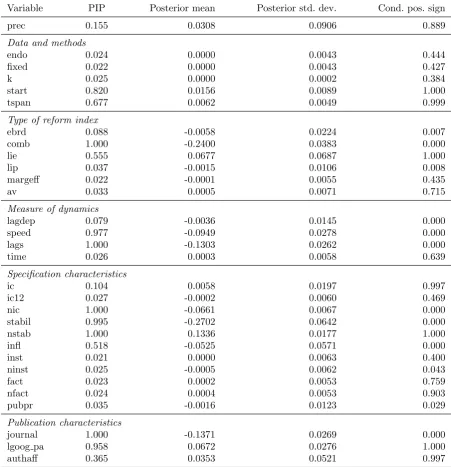
Table A1: Explaining the differences in the estimates of the reform effect (short run)
Variable PIP Posterior mean Posterior std. dev. Cond. pos. sign
prec 0.155 0.0308 0.0906 0.889
Data and methods
endo 0.024 0.0000 0.0043 0.444
fixed 0.022 0.0000 0.0043 0.427
k 0.025 0.0000 0.0002 0.384
start 0.820 0.0156 0.0089 1.000
tspan 0.677 0.0062 0.0049 0.999
Type of reform index
ebrd 0.088 -0.0058 0.0224 0.007
comb 1.000 -0.2400 0.0383 0.000
lie 0.555 0.0677 0.0687 1.000
lip 0.037 -0.0015 0.0106 0.008
margeff 0.022 -0.0001 0.0055 0.435
av 0.033 0.0005 0.0071 0.715
Measure of dynamics
lagdep 0.079 -0.0036 0.0145 0.000
speed 0.977 -0.0949 0.0278 0.000
lags 1.000 -0.1303 0.0262 0.000
time 0.026 0.0003 0.0058 0.639
Specification characteristics
ic 0.104 0.0058 0.0197 0.997
ic12 0.027 -0.0002 0.0060 0.469
nic 1.000 -0.0661 0.0067 0.000
stabil 0.995 -0.2702 0.0642 0.000
nstab 1.000 0.1336 0.0177 1.000
infl 0.518 -0.0525 0.0571 0.000
inst 0.021 0.0000 0.0063 0.400
ninst 0.025 -0.0005 0.0062 0.043
fact 0.023 0.0002 0.0053 0.759
nfact 0.024 0.0004 0.0053 0.903
pubpr 0.035 -0.0016 0.0123 0.029
Publication characteristics
journal 1.000 -0.1371 0.0269 0.000
lgoog pa 0.958 0.0672 0.0276 1.000
authaff 0.365 0.0353 0.0521 0.997
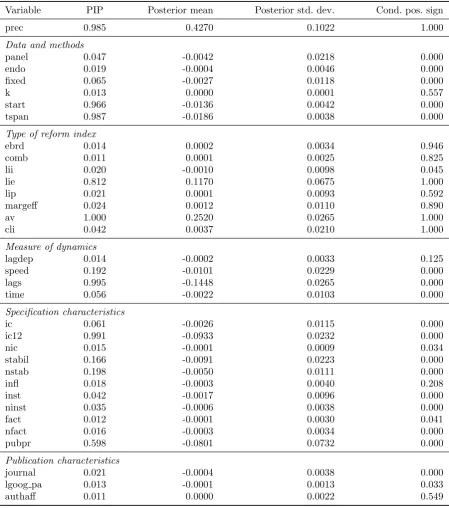
Table A2: Explaining the differences in the estimates of the reform effect (long run)
Variable PIP Posterior mean Posterior std. dev. Cond. pos. sign
prec 0.985 0.4270 0.1022 1.000
Data and methods
panel 0.047 -0.0042 0.0218 0.000
endo 0.019 -0.0004 0.0046 0.000
fixed 0.065 -0.0027 0.0118 0.000
k 0.013 0.0000 0.0001 0.557
start 0.966 -0.0136 0.0042 0.000
tspan 0.987 -0.0186 0.0038 0.000
Type of reform index
ebrd 0.014 0.0002 0.0034 0.946
comb 0.011 0.0001 0.0025 0.825
lii 0.020 -0.0010 0.0098 0.045
lie 0.812 0.1170 0.0675 1.000
lip 0.021 0.0001 0.0093 0.592
margeff 0.024 0.0012 0.0110 0.890
av 1.000 0.2520 0.0265 1.000
cli 0.042 0.0037 0.0210 1.000
Measure of dynamics
lagdep 0.014 -0.0002 0.0033 0.125
speed 0.192 -0.0101 0.0229 0.000
lags 0.995 -0.1448 0.0265 0.000
time 0.056 -0.0022 0.0103 0.000
Specification characteristics
ic 0.061 -0.0026 0.0115 0.000
ic12 0.991 -0.0933 0.0232 0.000
nic 0.015 -0.0001 0.0009 0.034
stabil 0.166 -0.0091 0.0223 0.000
nstab 0.198 -0.0050 0.0111 0.000
infl 0.018 -0.0003 0.0040 0.208
inst 0.042 -0.0017 0.0096 0.000
ninst 0.035 -0.0006 0.0038 0.000
fact 0.012 -0.0001 0.0030 0.041
nfact 0.016 -0.0003 0.0034 0.000
pubpr 0.598 -0.0801 0.0732 0.000
Publication characteristics
journal 0.021 -0.0004 0.0038 0.000
lgoog pa 0.013 -0.0001 0.0013 0.033
authaff 0.011 0.0000 0.0022 0.549
B
Diagnostics of BMA
Table B1: Summary of BMA estimation (short run)
Mean no. regressors Draws Burn-ins Time
11.7273 2·106 1·106 7.408883 minutes
No. models visited Modelspace Visited Topmodels
400,300 1.1·109 0.037% 96%
Corr PMP No. Obs. Model Prior g-Prior
0.9998 245 random BRIC
Shrinkage-Stats
Av= 0.9989
Notes: The “random” model prior refers to the beta-binomial prior advocated by Ley & Steel (2009): prior model probabilities are the same for all possible models; in other words, we do not a priori prefer any particular model size. We set the Zellner’s g prior following Fernandezet al.(2001).
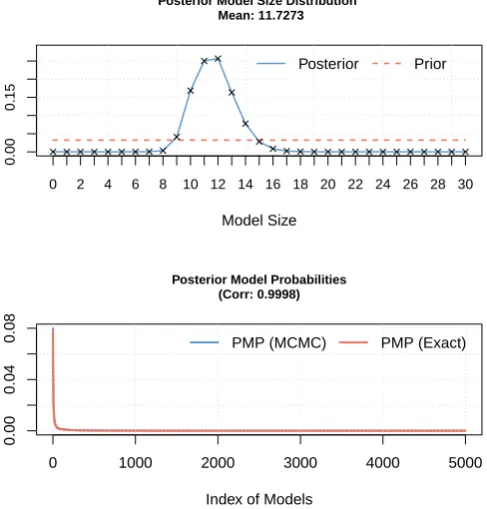
Figure B1: Model size and convergence (short run)
0.00
0.15
Posterior Model Size Distribution Mean: 11.7273
Model Size
0 2 4 6 8 10 12 14 16 18 20 22 24 26 28 30
Posterior Prior
0 1000 2000 3000 4000 5000
0.00
0.04
0.08
Posterior Model Probabilities (Corr: 0.9998)
Index of Models
[image:31.595.177.421.362.617.2]