by
Katie Lynn Krajewski
A thesis submitted in partial fulfillment of the requirements for the degree of
Master of Science (Psychology)
in the University of Michigan-Dearborn 2017
Master’s Thesis Committee:
i
Acknowledgements
ii
Table of Contents
Acknowledgements ……….…...i
List of Tables ……….v
List of Figures ………...vi
List of Appendices ………..vii
Abstract ………..viii
Chapter I ………1
Introduction ………...1
Theories of Stress ………3
Relationship Between Stress and Exercise ………...7
The Integration of Fatigue and Sleep Quality ………....9
The Integration of Exercise, Stress, Fatigue, and Sleep Quality ………..10
Treatments ……….11
Direction of the Current Study ………..12
Chapter II ………14
iii
Participants ………...14
Measures ………...15
Eligibility and Demographics Form ……….15
Perceived Stress Scale-10 Item (PSS-10) ……….15
Fatigue Severity Scale (FSS) ………16
Fitbit Flex Wireless Tracker ……….16
Self-Report Sleep Diary ………....17
Procedure ………...17
Data Collection and Storage ……….18
Chapter III ………...20
Results ………...20
Hypothesis 1 ………..20
Hypothesis 2 ………..21
Hypothesis 3 ………..21
Chapter IV ………...23
Discussion ………23
Hypothesis 1 ……….26
iv
Hypothesis 3 ………30
Exercise as a Coping Strategy ……….30
Strengths and Limitations of the Present Study ………..32
Limitations ………..33
Strengths ……….34
Future Research and Implications for Treatment ………...34
v
List of Tables
Tables
Table 1: Descriptive Statistics of Current Sample ………42
Table 2: Correlations between Perceived Stress, Fatigue, Exercise, and Sleep Quality………43
Table 3: Mediation Analysis of Stress and Fitbit Sleep Index to Exercise ………...44
Table 4: Mediation Analysis of Stress and Sleep Diary Index to Exercise ………..45
vi
List of Figures
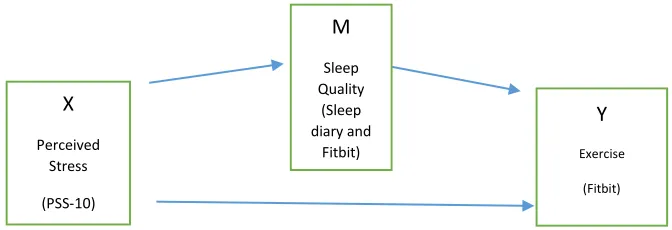
Figures Figure 1: Mediation Model of Stress and Sleep Quality to Exercise ………...….47
vii
List of Appendices
Appendix A: Eligibility and Demographics Form ………49
Appendix B: PSS-10 ……….51
Appendix C: FSS ………..53
Appendix D: Self-Report Sleep Diary ………..54
Appendix E: Consent Form ………..57
Appendix F: Research Protocol ………59
Appendix G: Fitbit Rules and Responsibilities Form ………..63
viii
Abstract
The lack of exercise in the United States is a reason for concern, especially when examining medical issues that are becoming more prevalent such as obesity, diabetes, and cancer. The majority of Americans do not adhere to the recommended guidelines regarding exercise. One of the possible explanations for this lack of exercise is stress. Stress is a natural process that is central to daily life, however, left unchecked it may become a chronic problem. Biological, psychological, and social aspects of stress may contribute to health conditions, such as obesity and chronic fatigue. Exercise is related to stress, sleep quality, and fatigue. Evidence suggests that an increase in stress may be related to an increase in fatigue and lower levels of exercise. The present study examined the relationships among stress, sleep, fatigue, and exercise. Sixty-eight undergraduate students at the University of Michigan-Dearborn completed measures concerning perceived stress, fatigue, and sleep quality and also wore a Fitbit Flex for one
1
Chapter I Introduction
Exercise is a broad term for various types of physical activity that have the potential to improve the health of people in general. Exercise can be anything from walking, to weight lifting, to running a marathon. There are many opinions regarding what types of exercise are the “best”, however one thing is generally agreed upon: exercise is an underutilized health tool. For
the purposes of the present study, exercise will be defined as number of steps taken per week. According to the 2015 American Time Use Survey (ATUS), a project undertaken by the Bureau of Labor Statistics, the average American civilian spends only 0.31 hours per day (18.6 minutes per day) participating in sports, exercise, and recreation. Results differ slightly when examining men and women separately, however the results are still low, averaging 0.39 hours per day for men and 0.22 hours per day for women. The Bureau of Labor Statistics (2015) also reveals that only 20.4% of the civilian population participates in sports, exercise, and recreation on a daily basis.
2
however, to obtain significant health benefits the NIH recommends that the average adult should aim for 150 minutes of moderate-intensity aerobic exercise per week, and for maximum health benefits, this suggestion increases to 300 minutes of moderate-intensity aerobic exercise. In general, the American population falls short of these suggestions.
In addition to missing out on the health benefits exercise can provide, populations that are less physically active tend to have lower consumption rates of fruits and vegetables, higher rates of influenza related hospitalizations, and higher rates of obesity (Charland, Buckeridge, Hoen, Berry, Elixhauser, Melton, & Brownstein, 2012). Furthermore, weight gain is a problem for those who do not exercise. Additional concerns due to lack of exercise include coronary heart disease (CHD), diabetes, and cancer. In general, populations that demonstrate lower rates of physical activity appear to have more health concerns overall.
In contrast, those who obtain adequate levels of exercise tend to maintain a healthy weight, and have a lower risk for depression, CHD, diabetes, cancer, and other diseases,
according to the NIH. It has also been shown that increased rates of exercise strengthen the heart and improve lung functioning. In addition, the general prevention of disease, improvement of symptoms of existing chronic disease, and reduction of negative drug side effects are possible with adequate exercise (Dirks-Naylor, Griffiths, Gibson, & Luu, 2016). Since there are significant health benefits that can result from exercise, one can begin to wonder why more Americans do not engage in exercise and/or exercise long enough to reap these rewards. Several obstacles may obstruct the path to healthy living, resulting in the dismal numbers reported in the ATUS.
3
well-being (Konde, Jairam, Peethambar, Noojady, & Kumar, 2016; Murray & Amin, 2014; Webster, 2017). For example, not a single pharmacy school in the U.S offered courses regarding the role of exercise in disease prevention (Dirks-Naylor et. al., 2016). The rise of the use of pharmacological interventions in the U.S. population could be one of the factors that sets
Americans back in the quest for healthier living. Another significant obstacle could be the impact psychological stress has on people in general.
Theories of Stress
One of the basic stress responses is the “fight or flight” reaction to immediate stressors.
This model of stress was proposed by Walter Cannon and asserts that an acute stress response occurs when an individual is confronted with immediate harm and involves a series of
biochemical cascades that result in either a “fight” (defensive) reaction or “flight” (escape)
reaction (Cannon & de la Paz, 1911). This mechanism that promotes the acute form of stress is the sympathetic-adrenal-medullary (SAM) system and is responsible for the fast onset of the “fight or flight” reaction to stimuli that is threatening (Kemeny, 2003). In addition to the SAM
system, the immediate activation of the hypothalamic-pituitary-adrenal (HPA) system is also responsible for this acute stress reaction. It is clear that having this type of stress reaction is advantageous when escaping or confronting a threatening situation, although generally this activation is short lived and long term harmful effects on the body are not overly prominent.
4
proposed by Hans Selye. This model involves three stages of the stress response: alarm,
resistance, and exhaustion (Selye, 1950). In the alarm stage, individuals experience the “fight or flight” response and an accompanying burst of energy to either defend themselves or flee the
threat. The resistance stage takes this response further by asserting that the body will further propagate this initial stress response by activating the HPA system. Finally, during the
exhaustion stage, the body can no longer sustain this response and is depleted of energy. Stress responses of this nature are more likely to result in physical damage. Activation of this system results in the release of cortisol (a common stress hormone) into the blood (Kemeny, 2003). Circulating cortisol is responsible for delayed stress responses, and prolonged exposure to higher levels of this hormone can result in organ and tissue damage as well as other problems such as cognitive decline and premature aging.
Departing slightly, although not completely from the previous models of stress, the stress model of allostasis was proposed by Sterling and Eyer in 1988. This model asserts that the stress regulation process is more complex than just a “fight or flight” reaction and can exist on a
longer-term basis than the GAS. In general, allostasis encompasses the idea that the central nervous system is constantly monitoring the balance between internal resources in the body and external demands the environment is placing on the individual (Ganzel, Morris, & Wethington, 2010). In addition, because of the load of external stressors, the individual will compensate by adjusting internal physiological systems which allows the individual to adapt to stressors over time. This model, in particular, makes sense when considering medical phenomena where people are functioning with higher than average levels of components such as blood sugar, blood
5
that although various internal and/or external variants may be changing, the body compensates in order to establish stability.
In addition to the models of Cannon, Selye, and Sterling and Eyer, stress has been
conceptualized as a transactional process by which individuals perceive, process, and physically, as well as mentally, respond to stimuli that they may appraise as threatening (Lazarus &
Folkman, 1984). The transactional model is congruent with the aspects of stress that are
investigated throughout this paper. The effects of Lazarus’ transactional process may be positive
or negative. One of the key factors of this model is the influence of the appraisal of the stressors encountered. People can make three appraisals: irrelevant, benign-positive (challenging), or stressful (threatening). If an individual makes an “irrelevant” appraisal, this means the situation being appraised does not apply. If an individual makes a “benign-positive” appraisal, this means the stressor may cause distress but the person has appropriate coping resources to overcome the stressor and to grow from the experience. If an individual makes a “stressful” appraisal, then the stressor poses real harm to the individual and adequate coping resources may not be available. If a stressor is appraised as “stressful” and the individual does not have appropriate resources, then
negative effects of stress may be experienced, such as sustained psychological distress with a continued stress response.
6
available coping resources. Some experiences that may evoke a prolonged stress response and tax an individual’s ability to manage this stress include major life events, environmental
stressors, work related stress, and social interactions. Given prolonged stress with inadequate coping resources, when large changes occur and stress levels are significantly elevated,
vulnerability to health risks increases (Rahe, Mahan, & Arthur, 1970). Situations such as divorce or the death of a loved one may result in chronic stress that may contribute to sickness or cause other health problems. Similarly, catastrophes (such as the 9/11 terror attacks) can significantly alter stress levels and pose serious health consequences Even daily environmental factors can influence stress levels, such as pollution, urban crowding, discrimination, etc.
However, stress is not a universal experience across all individuals and many different situations may arise that trigger the stress response. According to the transactional model of stress, this may be due to the many appraisals an individual can make regarding the stressor. What is perceived as threatening or challenging to one person may be perceived as irrelevant to another. Although stress is generally viewed as a negative concept, there are several mechanisms that can alleviate the harmful effects stress may impose on the body. In much the same way that the stress experience is idiosyncratic, so might the coping mechanisms selected. Certain
7
These concepts and examples encapsulate the integration of biological, psychological, and social influences on the stress process. Knowing this, we can examine how stress may cause health issues and/or put people at risk for health issues, specifically fatigue. One study found that when perceived stress increased along with the perception that stress influenced health, poorer health outcomes were found (Keller, Litzelman, Wisk, Maddox, Cheng, Creswell, & Witt, 2012). This means that those who believed that their stress levels were high and that their stress levels impacted their health, had poorer health overall. This is an interesting finding because it demonstrates that psychological processes and personal insight can alter an individual’s health based on whether or not that individual believes they are stressed and whether or not they believe this affects their health. A mere belief, or appraisal, can influence physical health conditions.
The Relationship Between Stress and Exercise
It has been demonstrated that exercise can lower stress levels in individuals (van der Zwan, de Vente, Huizink, Bogels, & de Bruin, 2015). In addition, while exercise can lower stress levels, there are also concurrent cognitive benefits, including increased stress-coping abilities in individuals that engaged in exercise (Collins, Hill, Chandramohan, Whitcomb, Droste, & Reul, 2009). Another study found that exercise actually reduced stress-induced cognitive impairment (Nakajima, Ohsawa, Ohta, Ohno, & Mikami, 2010). In a study examining older adults and the accumulation of a lifetime of stress, researchers found that those who were considered “low exercise engagement individuals” had greater cognitive declines due to stress compared to those who were “high exercise engagement individuals” (Head, Singh, & Bugg, 2012). In addition, this
study suggests that the general benefits of exercise might include reducing the negative
8
exercise resulting in lowered levels of stress and/or cognitive improvements, it is possible stress can also influence exercise.
The literature examining the impact of stress on exercise is sparse compared to the literature examining the impact of exercise on stress. It is possible for stress to impair the ability/desire to exercise, perhaps through mechanisms of decreased self-control and/or a decreased self-regulatory behaviors (Oaten & Cheng, 2005; Plessow, Kiesel, & Kirschbaum, 2012). This means stress may impair one’s ability to monitor and control one’s own thoughts and behaviors. Extrapolating to exercise, if the ability to monitor and control thoughts and behaviors is impaired, then the ability to decide to exercise as well as engage in exercise may also be impaired. Stress can also impair one’s self-control abilities at the neuronal level by enhancing the pleasure of immediate rewards and reducing the effectiveness of areas in the brain that promote behaviors relating to long term goals (Maier, Makwana, & Hare, 2015). This indicates stress may enhance the attractiveness of immediate rewards as opposed to greater, future rewards.
Consistent with the transactional model of stress, it is also possible stress appraisals have an impact on exercise, although this has not been thoroughly researched at this time. It is difficult to find empirical studies that investigate stress appraisals relating directly to exercise habits,
although it would make sense to conceptualize the relationship as an individual’s stress appraisal
9
available to devote to exercise. The relationship between stress and exercise may be bidirectional, however, the impact of stress on exercise will be emphasized throughout this paper.
The Integration of Fatigue and Sleep Quality
Another health condition that appears to be strongly influenced by stress is fatigue. Fatigue is the sensation of tiredness that does not seem to be alleviated by rest with or without other physical symptoms present (Lattie, Antoni, Fletcher, Penedo, Lopez, Perdomo, Sala, Nair, Fu, & Klimas, 2012). Many empirical studies demonstrate that fatigue is negatively influenced by stress and vice versa. It has been suggested that fatigue is most associated with perceived stress and perceived health status (Kocalevent, Hinz, Brahler, & Klapp, 2011). Thus, with increased stress there is an increased risk for chronic fatigue. This study also suggests that fatigue can be triggered by perceived stress and alter functioning within the individual. Knowing that the SAM and HPA systems evoke biological cascades that alter organ function which can result in damage to the body (in particular the HPA system), it is apparent that these processes can wear down the body. It has been demonstrated that increased stress leads to an increased risk for chronic fatigue, specifically because stress systems that are constantly active are going to fatigue the body (Kocalevent, Hinz, Brahler, & Klapp, 2011).
Chronic fatigue is viewed as a long term illness which results in impairment of
functioning across many areas of life. This impairment can negatively impact perceived stress (reciprocally) and quality of life (Taylor, Jason, Shiraishi, Schoeny, & Keller, 2006). In addition to these impairments, two areas of functioning that are strongly influenced by fatigue are
10
Welsh, & Maley, 2014). In the same study, it was demonstrated that controlled sleep schedules resulted in cognitive benefits, in essence, improved sleep also improved cognitive functioning. Other empirical studies demonstrate variants of this phenomenon as well. A study by Kunert, King, and Kolkhorst (2007) examining nurses and their levels of fatigue demonstrated that poor sleep quality was a contributing factor to fatigue. In another study by Lichstein, Means, Noe, and Aguillard (1997) they described decreased sleep efficiency as a variable that actually predicts fatigue. They also found that increased levels of fatigue were prevalent among sleep disorder patients. It is clear that sleep and fatigue share a relationship. This is a significant implication because it is already believed that perceived stress influences fatigue, and if sleep influences fatigue as well it is possible that sleep and perceived stress are also related.
The Integration of Exercise, Stress, Fatigue, and Sleep Quality
The relationship between exercise and perceived stress becomes more complex with the addition of fatigue and sleep. It is believed that fatigue negatively impacts exercise in the sense that it becomes harder for the individual to exercise, and exercise is viewed as an activity that requires heightened levels of effort mentally and physically. In a study by Marcora, Staiano, and Manning (2009) where participants were given a cognitive task to induce mental fatigue and asked to exercise to exhaustion, the mentally fatigued participants disengaged from the physical exercise task quicker than the non- mentally fatigued participants. The mentally fatigued
participants also reported significantly higher levels of effort required to engage in the physical exercise activity in the first place. Evidence like this suggests that fatigue acts as a mental hurdle to exercise.
Other studies have examined these exercise “barriers” and “motivators” in further detail.
11
found that barriers to exercise include treatment side effects, more specifically, physical fatigue (Blaney, Lowe-Strong, Rankin, Campbell, Allen, & Gracey, 2010). These patients find it difficult to engage in exercise due to fatigue. This study also described exercise motivators as perceived exercise benefits. If exercise benefits are perceived, it may lessen the effects of the barriers to exercise. More specifically, concerning those with Chronic Fatigue Syndrome, these patients were generally physically weaker, had a decreased exercise capacity, and perceived greater levels of effort required to exercise (Fulcher & White, 2000). Since it is believed that perceived stress, sleep, fatigue, and exercise are interrelated in their influence on health conditions, methods to correct these dysfunctions should be discussed.
Treatments
Cognitive behavioral therapies (CBT) have been suggested when treating stress and fatigue. It has been found that after implementing a stress management program, negative perceptions of stress and fatigue decreased (Lattie, Antoni, Fletcher, Penedo, Czaja, Lopez, Perdomo, Sala, Nair, Fu, & Klimas, 2012). Another major cognitive therapy that has shown promising results is mindfulness-based stress reduction therapy (MBSR). This therapy involves recognizing negative thoughts and helping patients gain psychological flexibility in the sense of realizing that negative thoughts do not control their lives. It was shown that MBSR helped significantly reduce sleep disturbances, stress, mood disturbances, and fatigue (Carlson & Garland, 2005).
Although the relationship between exercise, sleep, stress, and fatigue has not been
12
fatigue. This study demonstrated that certain facilitators such as having group-based, supervised, and gradually implemented exercise programs could increase participation and reduce fatigue levels.
Direction of the Current Study
The relationship between exercise and perceived stress is empirically supported, as described above. Research solidly supports the relationship between exercise and stress with increased exercise resulting in lower levels of stress. However, the relationship between stress and exercise (i.e., increased levels of stress negatively impact exercise) is not as solidly supported. Further research on this relationship may provide some insight as to why many Americans do not engage in exercise according to the guidelines set forth by the NIH. The relationship between fatigue and sleep quality is also supported, as described above, with sleep disturbances generally resulting in higher levels of fatigue. This also suggests complex
relationships among stress, fatigue, and sleep quality. The relationship between exercise and stress is apparent, although the role of fatigue as a mediating variable between these two factors has not been fully investigated. It is difficult to find empirical research that examines the
relationships between stress, sleep quality, fatigue, and exercise as a whole.
Since there is limited research investigating all four of these variables, the present study investigates these relationships. For the purposes of this study, exercise as a cardio construct of physical activity is investigated. Exercise is defined as number of steps per week. Walking is one of the simplest and most cost-friendly types of exercise, and many health benefits can be
13
Hayashida, Kim, Suzuki, & Nakamura, 2014). Furthermore, research indicates that walking increases positive affect, specifically outdoor walks (Focht, 2009). Taking into account the health benefits that can be garnered from walking as well as the cost-friendly and simplistic nature of this form of exercise, walking was an attractive form of exercise to examine. Coupled with the use of the Fitbit trackers and lack of funds for more intricate equipment, tracking exercise by the measurement of daily steps made the most sense. In addition, perceived stress will be investigated as opposed to other constructs of stress because perceived stress is more closely aligned with stress appraisals and the transactional model of stress, the model of stress being used in this study. Utilizing this construct of stress allows for the incorporation of a biopsychosocial approach instead of merely counting stressful life events. Three main
14
Chapter II Methods Participants
Participants were recruited from the voluntary subject pool at the University of Michigan-Dearborn. The participants were informed about the SONA recruitment website through their psychology professors. By participating in the present study, participants were awarded undergraduate course credit for introductory psychology courses.
Exclusion criteria includes disorders/syndromes that may interfere with accurate measurements of stress and/or fatigue levels. Participants with any mental disorder, Chronic Fatigue Syndrome (CFS), any sleep disorder, and those using prescription medications that may alter sleep or fatigue levels were excluded. Participants using seasonal allergy medications were included in the study and listed in the demographic information section.
Sixty-eight undergraduate students from the University of Michigan-Dearborn
15
Measures
Eligibility and Demographics questionnaire. (Appendix A) This form was completed by all participants in order to determine whether they were able to participate or not, based on the exclusion criteria listed above. This 11-item form also asked questions regarding age, academic year, ethnicity, gender, and employment status.
Perceived Stress Scale- 10 Item (PSS-10). (Appendix B) In order to determine participants’ general stress levels, each participant completed the Perceived Stress Scale-10
(PSS-10), a ten-item questionnaire that examines people’s feelings and thoughts regarding stressful things in their lives (Cohen, Kamarck, Mermelstein, 1983). This scale utilizes a 5-point Likert scale (0= never, 1= almost never, 2= sometimes, 3= fairly often, 4= very often) and asks participants to rate their thoughts and feelings over the prior week. Higher scores indicate higher levels of perceived stress. The PSS-10 demonstrates sound psychometric properties (Eun-Hyun, 2012; Mitchell, Crane, & Kim, 2008) as well as good validity (Ezzati, Jiang, Katz, Sliwinski, Zimmerman, & Lipton, 2014) across various populations. In the present study, the Cronbach’s alpha value was 0.853, indicating a good level of internal consistency reliability. Within this sample, the average score on the PSS-10 was M=15.98 (SD=5.99). Perceived stress was
16
exams are finished. Perhaps the reliability would be stronger more longitudinally, compared to only a one week period of time. It is also possible that measuring a more concrete construct of stress, such as life events, would have resulted in a more stable measure over time.
Fatigue Severity Scale (FSS). (Appendix C) The Fatigue Severity Scale (FSS) was used to determine participants’ overall level of fatigue. The FSS is a nine-item questionnaire that
explores various aspects of fatigue, such as physical, motivational, and social domains. This scale utilizes a 7-point Likert scale (1= strongly disagree to 7= strongly agree) and asks participants to rate the degree to which they agree with various statements regarding fatigue. Higher scores indicate higher levels of fatigue. The FSS also demonstrates sound psychometric properties (Impellizzeri, Agosti, De Col, & Sartorio, 2013; Learmonth, Dlugonski, Pilutti, Sandroff, Klaren, & Moti, 2013; Lerdal & Kottorp, 2011) across diverse populations. In the present study, the Cronbach’s alpha value was 0.857, indicating a good level of internal
consistency reliability. Within this sample, the average score on the FSS was M=3.59
(SD=1.05). Fatigue Severity was measured at Time 1 and Time 2 in order to assess the test-retest reliability of this measure (i.e., if this measure is stable over the course of a week). To determine this, scores on the FSS measured at Time 1 are correlated with scores on the FSS at Time 2. The correlation was r = 0.802 and indicated that this particular measure of fatigue had good reliability over the one week period. It is likely that this construct of fatigue (physical fatigue) is relatively stable over a shorter period of time. The participants’ fatigue levels did not appear to fluctuate much throughout the week.
17
instructed to leave it on for one continuous week. A Fitbit sleep index was calculated for each participant (total minutes asleep per week x average self-report sleep quality rating). Higher scores indicate higher quality of sleep. There is mixed research on the validity and reliability of the Fitbit (Evenson, Goto, & Furberg, 2015; Zambotti, Baker, Willoughby, Godino, Wing, Patrick, & Colrain, 2016), however research suggests the Fitbit generally demonstrated good validity and reliability overall, especially when compared to other wearable devices (Huang, Xu, Yu, & Shull, 2016; Storm, Heller, & Mazza, 2015). Within this sample, the average Fitbit sleep index score was M=1452.52 (SD=332.25). The average number of steps taken per week was M= 48328.88 (SD= 19523).
Self-report Sleep Diary. (Appendix D) A final measure, used to determine sleep length and quality of participants each night, was the completion of a sleep diary by each participant. This measure examines sleep quality more thoroughly and was useful in determining how participants perceived their average night of sleep. This diary asked participants to keep track of what time they physically got into bed each night, what time they actually fell asleep, how long they believed to be awake throughout the night (in minutes), what time they woke up, what time they physically got out of bed, whether or not they took sleeping medication, and a rating of how sound they believed their sleep to be (1= very restless, 2= restless, 3= average, 4= sound, 5= very sound). A sleep diary index was calculated for each participant (total minutes asleep per week x average self-report sleep quality rating). Higher scores indicates higher quality of sleep. Within this sample, the average sleep diary index score was M=1411.04 (SD=377.61).
Procedure
18
demographics and screening form. The PI (Katie Krajewski) was the only person who administered consent as well as administration of all other materials throughout the study. Participants were allowed to ask questions about consent and the PI answered those questions to the best of her ability. If they consented, they were asked to complete a demographics and eligibility form. No participants were excluded. Those included in the study completed the Time 1 measures (PRT-PSS-10, PRT-FSS, PRT-CSS-M) and were assigned a Fitbit. The participants were instructed to wear the Fitbit continuously for one week, except for when showering, swimming, or engaging in any activity in a body of water. Participants were instructed to wear their Fitbits throughout each night as well. Participants were also instructed on how to complete a sleep diary and asked to complete the sleep diary for each night’s sleep. After all consent forms and Time 1 measures were completed, Fitbits were assigned, sleep diary instructions were given, and then participants were dismissed from the meeting.
Participants collected data for one week and returned to the laboratory for the second part of the study. Participants were greeted at the laboratory and asked to return the Fitbits, and turned in their sleep diaries, and completed Time 2 measures for the PSS-10, and the FSS. If participants did not attend the second lab meeting or did not return the Fitbit, the second credit was not awarded. After completion of the Time 2 measures and Fitbit collection, participants were debriefed, awarded their second subject pool credit, and dismissed.
Data Collection and Storage
19
their names were not recorded anywhere that could be linked to their data. During data
20
Chapter III Results
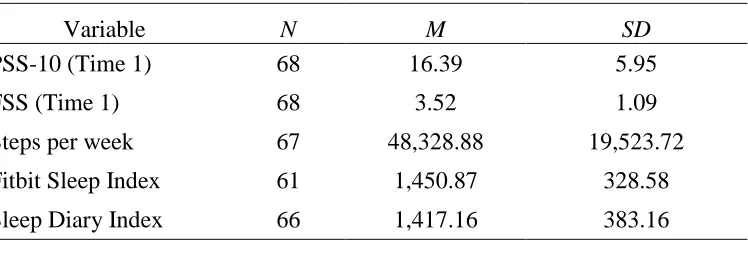
Bivariate correlation was used to test Hypothesis 1 and the Hayes Process Model (2013) was used to test Hypotheses 2 and 3. A process analysis mediation model was used to examine fatigue as a mediator between stress and exercise. Sleep quality (operationalized with Fitbit data and with self-report sleep diaries) as a mediator between stress and exercise was also examined. Since the present study was not meant to measure an intervention, only Time 1 measures were used in all analyses. Table 1 presents descriptive statistics for the study variables.
Hypothesis 1: Increased levels of stress will predict lower levels of exercise, higher levels of fatigue, and poor sleep quality.
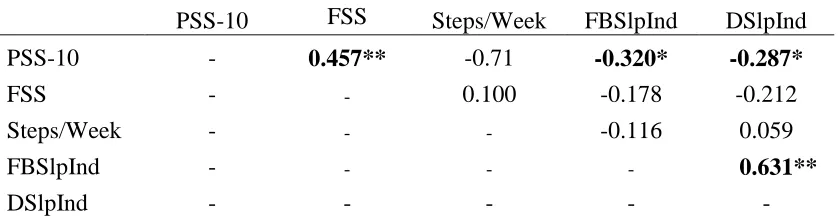
Table 2 shows the correlations between levels of stress, exercise, fatigue, and sleep quality. Scores on the PSS-10 and FSS indicate stress and fatigue were positively correlated (r=
0.457, n= 68, p<0.01) suggesting that those who experienced greater levels of stress also
experienced greater levels of fatigue. Scores on the PSS-10 and the Fitbit Sleep Index indicate stress and sleep quality reported by the Fitbits were negatively related (r= -0.320, n= 6, p<0.05) suggesting that those who experienced greater levels of stress had poorer sleep quality. Scores on the PSS-10 and the Sleep Diary Index indicate stress and self-report sleep quality were
21
levels of stress had poorer sleep quality. Finally, scores on the Fitbit Sleep Index and Sleep Diary Index were positively correlated (r= 0.631, n= 60, p<0.01) suggesting that those who reported higher sleep quality on the self-report measure also had higher sleep quality as reported by the Fitbit, and vice versa. Exercise was not significantly correlated with stress, fatigue, or sleep quality.
Hypothesis 2: The association between stress and exercise will be partially mediated by sleep quality.
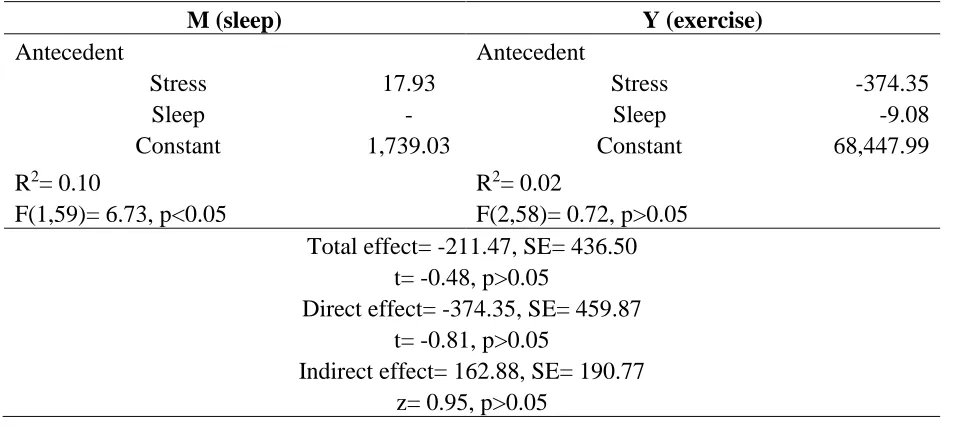
The Hayes Process model was used to test for mediation effects. Sleep quality was measured in two ways - using the Fitbit data and by self-report sleep diary. As seen in Table 3, the total effect of stress on exercise, mediated by sleep quality as measured by the Fitbit (t=
-0.48, SE= 436.50, p>0.05) was not significant. The direct effect of stress on exercise (t= -0.81,
SE= 459.87, p>0.05) was not significant nor was the indirect effect of stress on exercise (z=
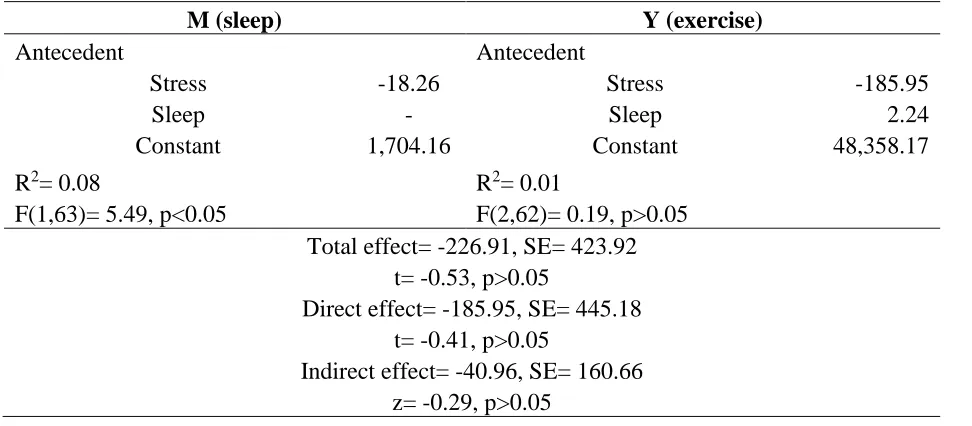
0.95, SE= 190.77, p>0.05). As seen in Table 4 the total effect of stress on exercise mediated by
sleep quality measured by the sleep diary (t= -0.53, SE= 423.92, p>0.05) was not significant. The direct effect of stress on exercise (t= -0.41, SE= 445.18, p>0.05) was not significant nor was the indirect effect of stress on exercise (z= -0.29, SE= 160.66, p>0.05). These results suggest that sleep quality does not mediate he relationship between stress and exercise, failing to support Hypothesis 2.
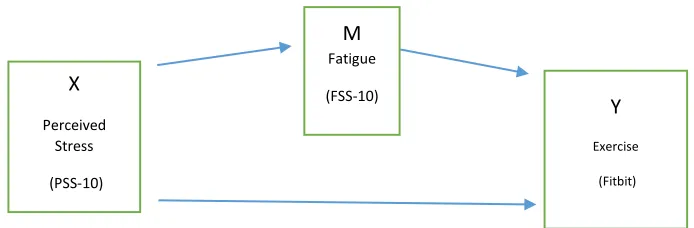
Hypothesis 3: The association between stress and exercise will be partially mediated by fatigue.
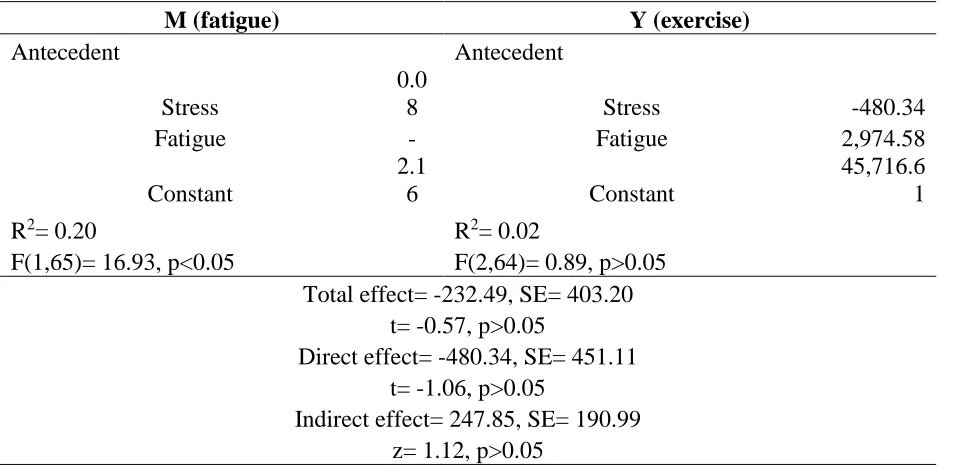
As seen in Table 5 the total effect of stress on exercise mediated by fatigue (t= -0.57,
22
451.11, p>0.05) was not significant nor was the indirect effect of stress on exercise (z= 1.12,
SE= 190.99, p>0.05). These results suggest that fatigue does not mediate between stress and
23
Chapter IV Discussion
Engaging in adequate levels of exercise is a problem across the United States. As
reported by the 2015 American Time Use Survey (ATUS), a project undertaken by the Bureau of Labor Statistics, Americans are not exercising to the standards put forth by the National Institute of Health (NIH). The lack of exercise can contribute to many medical conditions, such as
obesity, diabetes, and cardiovascular disease. Perceived stress may play a key role in this lack of exercise.
Several mechanisms of stress have been explained by various researchers. One of the basic stress responses is the “fight or flight” reaction to immediate stressors. Proposed by Walter
Cannon, this model of stress asserts that a stress response occurs when an individual is confronted with immediate harm and involves a series of biochemical cascades that result in either a “fight” (defensive) or “flight” (escape) reaction (Cannon & de la Paz, 1911). This
24
of the stress response: alarm, resistance, and exhaustion (Selye, 1950). The alarm stage involves the “fight or flight” response as described above. The resistance stage takes this response further by propagating this initial stress response by activating the HPA system. During the exhaustion stage, the body can no longer sustain this response and is depleted of energy. Activation of this system results in the release of cortisol (a common stress hormone) into the blood (Kemeny, 2003). Circulating cortisol is responsible for delayed stress responses, and prolonged exposure to higher levels of this hormone can result in damage to the body.
Another stress model, the stress model of allostasis, was proposed by Sterling and Eyer in 1988. This model explains that the stress regulation process is more complex and can actually exist on a longer-term basis than the GAS. Allostasis asserts that the central nervous system is constantly monitoring the balance between internal resources in the body and external demands the environment is placing on the individual with the goal of maintaining stability through change (Ganzel, Morris, & Wethington, 2010). If the load of external stressors becomes greater, the individual will compensate by adjusting internal physiological systems which allows the individual to adapt to these stressors over time. Stress has also been conceptualized as a
transactional process by which individuals perceive, process, and physically, as well as mentally, respond to stimuli that they may appraise as threatening (Lazarus & Folkman, 1984). This model of stress is more congruent with the aspects of stress that are investigated throughout this paper. The basis of this model is the influence of peoples’ appraisals of the stressors they may
25
psychological distress. A transactional model of stress indicates that the stress experience is biological, psychological, and social in nature, as opposed to only physical reactions. This study was designed to examine perceived stress and how that may influence an individual’s tendency
to exercise. Since the goal was to examine perceived stress, the transactional model of stress which utilizes appraisals (individual perceptions) of stressors was the most appropriate model. These appraisals may also influence and/or be influenced by levels of fatigue and sleep quality. For instance, if an individual is fatigued or sleep deprived, their appraisals of stressors may be significantly different from someone who may be energized and well rested. Overall, this study was not designed to illicit a “fight or flight” reaction, so the transactional model made the most
sense since it incorporates physical as well as psychological reactions to stress.
The relationship between stress and exercise may be a bidirectional relationship, however research more thoroughly supports exercise and its impact on stress as opposed to stress and its impact on exercise. A potential reason for this may be because manipulating stress levels may be more difficult compared to manipulating exercise levels, thus resulting in more thorough
research investigating the impact of exercise on stress. Research generally demonstrates that higher levels of exercise results in lower levels of stress (van der Zwan, de Vente, Huizink, Bogels, & de Bruin, 2015). Some research purports that higher levels of stress will impair self-regulatory behaviors and self-control (Oaten & Cheng, 2005; Plessow, Kiesel, & Kirschbaum, 2012). One can hypothesize that impairment in these abilities may also impair the ability/desire to exercise as well, although empirical support is needed.
26
Hinz, Brahler, & Klapp, 2011). Those with higher levels of stress have an increased risk for chronic fatigue. It has also been demonstrated that greater stress levels lead to an increased risk for chronic fatigue, specifically because stress systems that are constantly active will fatigue the body (Kocalevent, Hinz, Brahler, & Klapp, 2011). Sleep quality also relates to these variables. A study by Kunert, King, and Kolkhorst (2007) examining nurses and their levels of fatigue
demonstrated that poor sleep quality was a contributing factor to fatigue. In a study by Lichstein, Means, Noe, and Aguillard (1997) decreased sleep efficiency predicted fatigue. It is apparent that sleep and fatigue share a relationship. Since it is suggested that perceived stress influences
fatigue, and sleep influences fatigue as well, sleep and perceived stress may play a role in exercise level. Research is sparse when it comes to investigating these four variables in
combination. Often studies examine parts of these relationships or only a few of these variables at a time. The goal of the present study was to assess perceived stress as a possible factor influencing exercise and to determine whether sleep quality and fatigue may act as mediating variables within that relationship.
Hypothesis 1
It was expected that increased levels of stress would predict lower levels of exercise, higher levels of fatigue, and poor sleep quality. Restriction of range is a concern with the existing data set. That is, stress and fatigue levels were low to moderate with no participant indicating high levels of stress and fatigue. There is the possibility that the participants were not
27
sample data clustering around the center of a normal distribution. Scores settling around the middle are less likely to show any type of significant relationship. It is possible that the current sample was not representative or generalizable to a larger population. This may be due to the fact that students at the University of Michigan-Dearborn have a unique college experience. Since U of M-Dearborn is a commuter campus, most of the students must drive to and from school daily and daily living stressors may be lower than the typical college student residing on campus. In addition, steps may be limited with these college students because they are driving (i.e., it is not necessary to walk back and forth to class and dormitories). Other factors may also be playing a role, such as unique stressors that are associated with commuter campuses.
The link between stress and exercise was not significant. Since this link was not significant, a mediation effect was logically impossible. Perceived stress scores and fatigue scores were significantly correlated, suggesting that those with higher levels of stress tend to have higher levels of fatigue. This is consistent with past research stating that increased stress is associated with an increased risk for chronic fatigue (Kocalevent, Hinz, Brahler, & Klapp, 2011). Overactive stress systems can eventually wear down the body and deplete coping resources, thus fatiguing the body.
28
sleep onset latency times (Zoccola, Dickerson, & Lam, 2009). Specifically through a mechanism of rumination (i.e. subjects thinking about the stressor in a prolonged manner), participants who tended to ruminate more also had longer sleep onset latency times, thus decreasing their sleep quality (Zoccola, Dickerson, & Lam, 2009). Another study suggests that higher dispositional mindfulness is associated with lower levels of perceived stress as well as better sleep quality (Brisbon & Lachman, 2017). Further studies suggest that engaging in self-relaxation training can actually improve sleep quality (Jingxian, Jiaxun, Ping, & Hui, 2013).
Finally, scores on the Fitbit Sleep Index were significantly correlated with scores on the Sleep Diary Index, suggesting that those who reported better sleep quality also demonstrated better sleep quality via the Fitbit trackers, and vice versa. This is somewhat inconsistent with past research regarding validity of subjective sleep measures. Research generally indicates that subjective sleep measures do not validly correspond with objective sleep measures when
examining sleep quality (Girschik, Fritschi, Heyworth, & Waters, 2012). Although the literature on this topic is mixed and also suggests that subjective measures of sleep may predict changing sleep patterns as well as objective measures (Lockley, Skene, & Arendt, 1999). In addition, research investigating the reliability of subjective sleep measures is also mixed. One study argues that sleep that is measured subjectively for five weekday nights is reliable (Short, Arora,
Gradisar, Taheri, & Carskadon, 2017) while other studies argue that subjective sleep measures and objective sleep measures are measuring different dimensions of sleep and are therefore not reliable (Aili, Astrm-Paulsson, Stoetzer, Svartengren, & Hillert, 2017).
Although this hypothesis was not supported, these correlations have interesting
29
compared to perceived stress and exercise. It is also noteworthy that both sleep indices were positively correlated. This may suggest that participants are relatively accurate at judging the quality of their sleep, within the current sample.
Hypothesis 2
It was expected that the association between stress and exercise would be partially mediated by sleep quality. Findings were not significant and this hypothesis was not supported. This indicates that sleep quality was not partially mediating the relationship between stress and exercise in the present study. Given that the relationship between level of stress (X) and exercise (Y) could not be established with the current data set, sleep quality (M) could not logically serve as a mediator between X and Y. That is, a relationship between X and Y is necessary in order to examine mediation effects between them.
Several reasons might account for these non-significant findings. The current sample was relatively homogenous and made up entirely of college students. A more diverse sample in that respect may result in different findings. Although there was some age variation, the majority of the participants were in their early to mid- 20’s. More variation in that respect may also result in different findings. As mentioned above, a possible restriction of range effect may have
30
completely unrelated to the interaction between stress and exercise, but it is possible it may not play a big enough role alone and may be interacting with several other factors.
Hypothesis 3
It was expected that the association between stress and exercise would be partially mediated by fatigue. Findings were not significant and this hypothesis was not supported. Thus, Hypothesis 3 was not supported. Fatigue did not mediate between stress and exercise in the present study. Given that the relationship between level of stress (X) and exercise (Y) could not be established with the current data set, fatigue (M) could not logically serve as a mediator between X and Y. That is, a relationship between X and Y is necessary in order to examine mediation effects between them.
Several reasons might account for this finding such as, again, the issues with the current sample described above including a restriction of range effect. A more diverse and representative sample concerning age, occupation, stress levels, and exercise levels may result in different findings. It is also possible that fatigue is unrelated to the relationship between perceived stress and exercise. Although fatigue may not be completely unrelated to this interaction, it may not play a big enough role alone and, again, may be interacting with several other factors.
Exercise as a Coping Strategy
31
Instead of stress having a direct negative impact on exercise (i.e. greater levels of stress indicates lower levels of exercise), exercise may be better explained as a coping strategy.
Cross-sectional survey research indicates that 40% of the sample studied endorsed utilizing exercise as a coping mechanism for stress (Cairney, Kwan, Veldhuizen, & Faulkner, 2014). These participants were then more likely to endorse other “positive” and less harmful
methods of coping (i.e not alcohol or drug usage). It is possible that exercise as a coping mechanism may be an intrinsic quality and a form of emotion-focused coping. Since the
correlations between stress and fatigue as well as stress and sleep quality were significant within the current sample, yet the relationship between stress and exercise was not direct or significant and simultaneously contradicts past research, this may indicate that the relationships amongst these variables may not be strictly linear. Participants that score low on stress measures may be low exercisers while participants that score high on stress measures may be low exercisers as well, or some variation that is different than expected, perhaps fitting better within a quadratic model rather than a linear one (Chatkoff, Maier, Klein, 2010). These variables may share relationships that are not clear cut indicating interactions between one variable and another. For example, by conceptualizing exercise as a coping strategy, some highly stressed individuals may engage in exercise as a means to reduce stress levels while others may choose other forms of coping. This would result in highly stressed individuals engaging in higher levels of exercise as well as other highly stressed individuals engaging in lower levels of exercise, due to the choice of coping strategy. This highly individualized coping mechanism may be one possible
32
Relating this to the transactional model of stress, those who appraise a stressor as challenging may rely on exercise as one of their coping resources. Instead of the effect of stress on exercise being the outcome, exercise itself may be a coping strategy. It is important to consider the
possibility of exercise as a coping strategy, especially since past research indicates many benefits regarding the use of exercise to relieve stress. In particular, exercise programs that involve a mindfulness component, yoga in this case, have demonstrated a significant reduction in the levels of stress of the participants (Tripathi & Bano, 2014). In addition, other studies have examined exercises such as martial arts, tai chi, and qigong (an ancient form of martial arts) and their effects on stress levels. It was found that exercises of this nature significantly reduce stress and anxiety levels among healthy people (Chong-Wen, Celia, Chan, Ho, Chan, & Cecilia, 2014). Furthermore, exercise programs have been found to improve both mental and physical well-being in general. Specifically, one study examined exercise therapy and its impact on the mental and physical health of those with major depression and found that exercise improves various aspects of well-being, such as stress coping strategies, body image, and general quality of life (Knapen, Vancampfort, Morien, & Marchal, 2015).
While this conceptualization may not explain perceived stress’ role regarding why there is a lack of exercise in the United States, it may begin to explain the lack of a direct relationship between stress and exercise and why some stressed individuals may engage in higher levels of exercise while other stressed individuals do not. This conceptualization is more consistent with past research and the utilization of exercise as a coping strategy.
33
Limitations. Several limitations to the present study may have influenced the results to some degree. As mentioned above, the sample composition was relatively homogenous in the aspects of age distribution and occupation. Although there was some age variation, the majority of the sample were in their early to mid- 20’s. Again, the sample was composed entirely of college students. Variation in the occupation of participants may have afforded different results. Also mentioned before, a restriction of range on the PSS and FSS scores as well as exercise levels may have influenced the results.
As mentioned above, the Fitbit trackers may not have been the most accurate at tracking sleep patterns and steps. Although the Fitbit brand trackers tend to be the most valid and reliable wearable devices, there is mixed research on the validity and reliability of wearable devices as a whole (Evenson, Goto, & Furberg, 2015; Zambotti, Baker, Willoughby, Godino, Wing, Patrick, & Colrain, 2016). Higher quality tracking devices were not able to be used in the present study due to limited funds. In addition, not all participants reliably turned the sleep mode on each night.
Finally, the choice of measures could be a limitation overall. The PSS-10 was chosen because it measures perceived stress, the exact construct of stress being investigated in this study. However, the present study could be improved by utilizing more perceived stress
measures and/or examining a different construct of stress, such as concrete stressful life events. The FSS was chosen because it measures physical fatigue, which seemed most likely to
34
stress and one fatigue measure may have limited the data. Using several of these measures may enrich the quality of the data and afford different findings.
Strengths. A key strength of the present study is that it is the first study, to the author’s knowledge, to integrate perceived stress, exercise, sleep quality, and fatigue in one investigation. Several branches of research investigate these variables separately or combine a few of them in one study, although finding research that encompasses all four variables is difficult. Evaluating variables in this manner provides a broader scope to investigate these relationships. Another strength of the present study is that the self-report sleep measure and the Fitbit tracker were significantly correlated. The self-report sleep measure (the sleep diary) was used in order to obtain a subjective measurement of sleep quality. Likewise, the Fitbit was used to obtain an objective measure of sleep quality as well as exercise. Comparing subjective and objective measures of sleep quality was helpful in determining whether participants were accurately estimating their average nightly sleep quality. This accuracy suggests that, within the current sample, participants were able to adequately judge their sleep quality as compared to a wearable device.
Future Research and Implications for Treatment
35
Overall, the results suggest that the relationship between perceived stress and exercise may not be explained by sleep quality and fatigue as mediating variables. This lack of mediation effects may be explained by the fact that stress and exercise were not related to one another. Other factors may be playing a role, such as motivation to exercise. Research on motivation, along with other possible factors, may provide more insight into the relationship between perceived stress and exercise. Exercise may also be conceptualized as a coping strategy. Research involving exercise conceptualized this way may indicate a different relationship between stress and exercise. Instead of stress having a direct impact on the frequency/amount of exercise, exercise may be a way for people to lower their levels of stress.
A future experimental study may involve manipulating participants’ levels of stress such
that there would be a group of participants that are stressed and a group of participants that are not stressed. Participants in the stressed group could be informed that they would have to provide bad feedback to a peer or perform some other stressful task in one week. Throughout the week it would be expected that the participants would be thinking about this task and, theoretically, their stress levels would increase. The non-stressed group would not need to do a stressful task in one week and would be allowed to go about their week per usual. Exercise and sleep quality could be measured with a higher quality Fitbit, and fatigue and stress could be measured with several measures instead of one measure each. Experimentally changing the participants’ stress levels may allow different relationships between these variables to emerge.
36
37
References
Aili, K., Astrm-Paulsson, S., Stoetzer, U., Svartengren, M., & Hillert, L. (2017). Reliability of actigraphy and subjective sleep measurements in adults: the design of sleep assessments.
AMER ACAD Sleep Medicine, 13, 39-47.
Blaney, J., Lowe-Strong, A., Rankin, J., Campbell, A., Allen, J., & Gracey, J. (2010). The Cancer Rehabilitation Journey: Barriers to and Facilitators of Exercise among Patients with Cancer-Related Fatigue. Physical Therapy, 90, 1135-1147.
Brisbon, N.M. & Lachman, M.E. (2017). Dispositional mindfulness and memory problems: the Role of perceived stress and sleep quality. Mindfulness, 8, 379-386.
Bureau of Labor Statistics. U.S Department of Labor. (2015). American Time Use Survey. Web. http://www.bls.gov/news.release/pdf/atus.pdf.
Cairney, J., Kwan, M.Y.W., Veldhuizen, S., & Faulkner, G.E.J. (2014). Who uses exercise as a coping strategy for stress? Results from a national survey of Canadians. Human Kinetics
PUBL INC, 11, 908-916.
Cannon, W.B. & de la Paz, D. (1911). Emotional stimulation of adrenal secretion. American
Journal of Physiology, 28, 64-70.
Carlson, L.E & Garland, S.N. (2005). Impact of Mindfulness- Based Stress Reduction (MBSR) on Sleep, Mood, Stress and Fatigue Symptoms in Cancer Outpatients. International
Journal of Behavioral Medicine, 12, 278-285.
Charland, K.M., Buckeridge, D.L., Hoen, A.G., Berry, J.G., Elixhauser, A., Melton, F., & Brownstein, J.F. (2012). Relationship between community prevalence of obesity and associated behavioral factors and community rates of influenza- related hospitalizations in the United States. Influenza and Other Respiratory Viruses, 7, 718-728.
38
Chong-Wen., W., Celia, H.Y., Chan, R.T.H., Ho, J.S.M., Chan, SM.N., & Cecilia, L.W.C. (2014). Managing stress and anxiety through qigong exercise in healthy adults: a systematic review and meta-analysis of randomized controlled trials. BMC Complementary and Alternative Medicine, 14.
Cohen, S., Kamarck, T., Mermelstein, R. (1983). A global measure of perceived stress. Journal
of Health and Social Behavior, 24, 385-396.
Collins, A., Hill, L.E., Chandramohan, Y., Whitcomb, D., Droste, S.K., & Reul, J.M.H.M. (2009). Exercise improves cognitive responses to psychological stress through
enhancement of epigenetic mechanisms and gene expression in the dentate gyrus. PloS ONE, 4.
Dirks-Naylor, A.J., Griffiths, C.J., Gibson, J.L., Luu, J.A. (2016). The prevalence of exercise prescription- related course offerings in United States pharmacy school curricula: Exercise is Medicine. Advances in Physiology Education, 40, 319-322.
Eun-Hyun, L. (2012). Review of the psychometric evidence of the Perceived Stress Scale. Asian
Nursing Research, 6, 121-127.
Evenson, K.R., Goto, M.M., Furberg, R.D. (2015). Systematic review of the validity and reliability of consumer-wearable activity trackers. International Journal of Behavioral Nutrition and Physical Activity, 12.
Ezzati, A., Jiang, J., Katz, M.J., Sliwinski, M.J., Zimmerman, M.E., Lipton, R.B. (2014).
Validation of the Perceived Stress Scale in a community sample of older adults. Geriatric
Psychiatry, 29, 645-652.
Focht, B.C. (2009). Brief walks in outdoor and laboratory environments: Effects on affective responses, enjoyment, and intentions to walk for exercise. Research Quarterly for
Exercise and Sport, 80, 611-620.
Fulcher, K.Y. & White, P.D. (2000). Strength and physiological response to exercise in patients with chronic fatigue syndrome. Journal of Neurology, Neurosurgery, & Psychiatry, 69. Ganzel, B.L., Morris, P.A., & Wethington, E. (2010). Allostasis and the Human Brain:
Integrating models of stress from the social and life sciences. Psychological Review, 134-174.
Girschik, J., Fritschi, L., Heyworth, J., & Waters, F. (2012). Validation of self-reported sleep against actigraphy. Journal of Epidemiology, 22, 462-468.
39
Head, D., Singh, T., & Bugg, J.M. (2012). The moderating role of exercise on stress-related effects on the hippocampus and memory in later adulthood. Neuropsychology, 26, 133-143.
Huang, Y., Xu J., Yu, B., Shull, P.B. (2016). Validity of FitBit, Jawbone UP, Nike +, and other wearable devices for level and stair walking. Gait and Posture, 48, 36-41.
Impellizzeri, F.M., Agosti, F., De Col, A., Sartorio, A. (2013). Psychometric properties of the Fatigue Severity Scale in obese patients. Health and Quality of Life Outcomes, 11, 1-7. Jingxian, S., Jiaxun, K., Ping, W., & Hui, Z. (2013). Self-relaxation training can improve sleep
quality and cognitive functions in the older: a one-year randomized controlled trial.
Journal of Clinical Nursing, 22, 1270-1280.
Keller, A., Litzelman, K.L., Wisk, L.E., Maddox, T., Chen, E.R., Creswell P.D., & Witt, W.P. (2012). Does the perception that stress affects health matter? The association with health and mortality. Health Psychology, 31(5), 677-684.
Kemeny, M. (2003). The psychobiology of stress. Current Directions in Psychological Science, 12, 124-129.
Knapen, J., Vancampfort, D., Morien, Y., & Marchal, Y. (2015). Exercise therapy improves both mental and physical health in patients with major depression. Disability and
Rehabilitation, 37, 1490-1495.
Kocalevent, R.D., Hinz, A., Brahler E., & Klapp B.F. (2011). Determinants of fatigue and stress. BMC Research Notes, 4.
Konde, S., Jairam, L., Peethambar, P., Noojady, S., & Kumar, N. (2016). Antibiotic overusage and resistance: A cross-sectional survey among pediatric dentists. Journal of the Indian
Society of Pedodontics and Preventative Dentistry, 34, 145-151.
Kunert, K., King, M.L. & Kolkhorst, F.W. (2007). Fatigue and Sleep Quality in Nurses:
Tiredness can negatively affect hospital nurses’ quality of life and patient care. Journal of
Psychosocial Nursing, 45, 31-37.
Kwag, K.H., Martin, P., Russell, D., Franke, W., & Kohut, M. (2011). The impact of perceived stress, social support, and home-based physical activity on mental health among older adults. International Journal of Aging and Human Development, 72, 137-154.
Lattie, E.G., Antoni, M.H., Fletcher, M.A., Penedo, F., Czaja, S., Lopez, C., Perdomo D., Sala, A., Nair, S., Fu, S.H., & Klimas N. (2012). Stress management skills, neuroimmune processes and fatigue levels in persons with chronic fatigue syndrome. Brain, Behavior,
and Immunity, 26, 849-858.
40
Learmonth, Y.C., Dlugonski, D., Pilutti, L.A., Sandroff, B.M., Klaren, R., Moti, R.W. (2013). Psychometric properties of the Fatigue Severity Scale and the Modified Fatigue Impact Scale. Journal of the Neurological Sciences, 331, 102-107.
Lerdal, A. & Kottorp, A. (2011). Psychometric properties of the Fatigue Severity Scale- Rasch analyses of individual responses in a Norwegian stroke cohort. International Journal of
Nursing Studies, 48, 1258-1265.
Lichstein, K.L., Means, M.K., Noe, S.L. & Aguillard, R.N. (1997). Fatigue and sleep disorders.
Behav. Res. Ther., 35, 733-740.
Lockley, S.W., Skene, D.J., & Arendt, J. (1999). Comparison between subjective and actigraphic measurement of sleep and sleep rhythms. Journal of Sleep Research, 8, 175-183.
Maier, S.U., Makwana, A.B., & Hare, T.A. (2015). Acute stress impairs self-control in goal-directed choice by altering multiple functional connections within the brain’s decision circuits. Neuron, 87, 621-631.
Marcora, S.M., Staiano, W. & Manning, V. (2009). Mental fatigue impairs physical performance in humans. J. Applied Physiology, 106, 857-864.
Mitchell, A.M., Crane, P.A., Kim, Y. (2008). Perceived stress in survivors of suicide:
Psychometric properties of the Perceived Stress Scale. Research in Nursing and Health, 31, 576-585.
Murray, J.S. & Amin, P.M. (2014). Overprescribing antibiotics in children: An enduring public health concern. Journal for Specialists in Pediatric Nursing, 19, 266-269.
Nakajima, S., Ohsawa, I., Ohta, S., Ohno, M., & Mikami, T. (2010). Regular voluntary exercise cures stress-induced impairment of cognitive function and cell proliferation accompanied by increases in cerebral IGF-1 and GST activity in mice. Behavioural Brain Research,
211, 178-184.
National Institutes of Health. U.S Department of Health and Human Services. Web. http://www.nhlbi.nih.gov/health/health-topics/topics/phys/recommend.
Oaten, M. & Cheng, K. (2005). Academic examination stress impairs self-control. Journal of
Social and Clinical Psychology, 24, 254-279.
Palmer, L.K., Economou, P., Cruz, D., Abraham-Cook, S., Huntington, J.S., Maris, M,. Makhija, N., Welsh, T. & Maley, L. (2014). The relationship between stress, fatigue, and cognitive functioning. College Student Journal, 198-211.
41
Plessow, F., Kiesel, A., & Kirschbaum, C. (2012). The stressed prefrontal cortex and goal-directed behaviour: acute psychosocial stress impairs the flexible implementation of task goals. Experimental Brain Research, 216, 397-408.
Rahe, R.H., Mahan, J.L. & Arthur, R.J. (1970). Prediction of near-future health changes from subject’s preceding life changes. Journal of Psychosomatic Research, 14, 401-406.
Selye, H. (1950). Stress and the general adaptation syndrome. British Medical Journal, 1, 1383-1392.
Short, M.A., Arora, T., Gradisar, M., Taheri, S., & Carskadon, M.A. (2017). How many sleep diary entries are needed to reliably estimate adolescent sleep? Sleep, 40.
Storm, F.A., Heller, B.W., Mazza, C. (2015). Step detection and activity recognition accuracy of seven physical activity monitors. PLoS ONE, 10.
Taylor, R.R., Jason, L.A., Shiraishi, Y., Schoeny, M.E. & Keller, J. (2006). Conservation of resources theory, perceived stress, and chronic fatigue syndrome: outcomes of a consumer driven rehabilitation program. Rehabilitation Psychology, 51, 157-165. Tripathi, R.C. & Bano, S. (2014). Yogic practices: A healing therapy to relieve stress of middle
age people. Journal of Psychosocial Research, 9, 319-328.
Van der Zwan, J.E., de Vente, W., Huizink, A.C., Bogels, S.M., & de Bruin, E.I. (2015).
Physical activity, mindfulness meditation, or heart rate variability biofeedback for stress reduction: A randomized controlled trial. Applied Psychophysiology and Biofeedback, 40, 257-268.
Webster, P. (2017). Antibiotic overprescribing a growing problem. Canadian Medical Association Journal, 189.
Williams, P.T. & Thompson, P.D. (2013). Walking versus running for hypertension, cholesterol, and diabetes mellitus risk reduction. Arteriosclerosis, Thrombosis, and Vascular Biology, 33, 1085-1091.
Zambotti, M., Baker, F.C., Willoughby, A.R., Godino, J.G., Wing, D., Patrick, K., Colrain, I.M. (2016). Measures of sleep and cardiac functioning during sleep using a multi-sensory commercially-available wristband in adolescents. Physiology and Behavior, 158, 143-149.
42
[image:51.612.83.457.226.358.2]Tables and Figures Table 1.
Descriptive Statistics of Study Variables
Variable N M SD
PSS-10 (Time 1) 68 16.39 5.95
FSS (Time 1) 68 3.52 1.09
Steps per week 67 48,328.88 19,523.72
Fitbit Sleep Index 61 1,450.87 328.58
Sleep Diary Index 66 1,417.16 383.16
43
Table 2.
Correlations between Perceived Stress, Fatigue, Exercise, and Sleep Quality
PSS-10 FSS Steps/Week FBSlpInd DSlpInd
PSS-10 - 0.457** -0.71 -0.320* -0.287*
FSS - - 0.100 -0.178 -0.212
Steps/Week - - - -0.116 0.059
FBSlpInd - - - - 0.631**
DSlpInd - - - - -
44
Table 3.
Mediation Analysis of Stress and Fitbit Sleep Index to Exercise
M (sleep) Y (exercise)
Antecedent Antecedent
Stress 17.93 Stress -374.35
Sleep - Sleep -9.08
Constant 1,739.03 Constant 68,447.99
R2= 0.10 R2= 0.02
F(1,59)= 6.73, p<0.05 F(2,58)= 0.72, p>0.05 Total effect= -211.47, SE= 436.50
t= -0.48, p>0.05
Direct effect= -374.35, SE= 459.87 t= -0.81, p>0.05
45
Table 4.
Mediation Analysis of Stress and Sleep Diary Index to Exercise
M (sleep) Y (exercise)
Antecedent Antecedent
Stress -18.26 Stress -185.95
Sleep - Sleep 2.24
Constant 1,704.16 Constant 48,358.17
R2= 0.08 R2= 0.01
F(1,63)= 5.49, p<0.05 F(2,62)= 0.19, p>0.05 Total effect= -226.91, SE= 423.92
t= -0.53, p>0.05
Direct effect= -185.95, SE= 445.18 t= -0.41, p>0.05
46
Table 5.
Mediation Analysis of Stress and Fatigue to Exercise
M (fatigue) Y (exercise)
Antecedent Antecedent
Stress
0.0
8 Stress -480.34
Fatigue - Fatigue 2,974.58
Constant
2.1
6 Constant
45,716.6 1
R2= 0.20 R2= 0.02
F(1,65)= 16.93, p<0.05 F(2,64)= 0.89, p>0.05 Total effect= -232.49, SE= 403.20
t= -0.57, p>0.05
Direct effect= -480.34, SE= 451.11 t= -1.06, p>0.05