Technology (IJRASET)
Design and Implementation of Logic Gates and
Adder Circuits on FPGA Using ANN
Neelu Farha1., Ann Louisa Paul J2., Naadiya Kousar L S3., Devika S4., Prof. Ruckmani Divakaran5
1,2,3,4,5
Department of Electronics and communication Engineering, Dr.T.Thimmaiah Institute of Technology (Approved by AICTE, New Delhi & Affiliated to VTU, Belgavi ) Oorgaum, Kolar Dist.-563120,Karnataka
Abstract- In this paper, Design and hardware implementation of multiple neurons on Field Programmable (FPGA)is done sequentially. First Multiple Neurons are implemented then logic Gates and Adder circuit are implemented using Feed Forward Neural Network. FPGA has been used to reduce the neuron hardware by designing activation function inside the neuron without using lookup tables. With low precision neural network designs, FPGA's have higher speed and smaller in size for real time applications compare to VLSI.
Keywords- Artificial Neural Network, Activation functions, Feed Forward Neural Network, verilog.
I. INTRODUCTION
As the title suggests our project deals with the hardware implementation of Artificial Neural Networks using Activation functions as application on Logic Gates ,Half Adder and Full Adder. In technological view humans are trying to emulate the behavior of Biological Neuron. Artificial Neuron can be modeled to develop future applications in computational Neuroscience, as well as Artificial intelligence. ANN simplify the behavior of human brain so their applications are used in different fields such as Medical applications, Security, Robotics, Electronics, Military etc. ANN's are implemented in software, but designers need not to know the inner network of neural network elements, they are only to concentrate on application of neural network. However, software based ANN's used in real time application is slower execution compared with hardware based ANN's FPGA based architectures offer high flexibility designs. Digital system architecture is to realize Feed Forward Multilayer neural network. The developed architecture is designed using very high speed integrated circuit hardware description language. There are 3 important layers in neuron model, they are input layer, hidden layer and output layer. ANN's are biologically inspired and require parallel computation, hence microprocessors and DSP's are not suitable for parallel designs [1].
II. NEURON ACTIVATION FUNCTION
One of the most important part of a neuron is its Activation function and the Activation function of a node defines the output of that node given in an input or set of inputs. The non-linearity of the Activation function makes it possible to approximate any function. The types of Activation functions used in this work are Symmetrical Hard limit Activation Function, Saturating Linear Activation Function and Sigmoid Activation Function [2].
A. Symmetrical Hard limit Activation Function
Fig 1. Hardlimit Function
B. Saturated Linear Activation Function
[image:3.612.246.373.225.395.2]Satlin is a neural transfer function. Transfer function calculate a layers output from its net input. The output is as shown below
Fig 2. Satlin Function
C. Sigmoid Activation Function
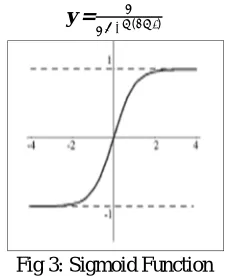
In the hardware concept of Neural Network it is not easy to implement on FPGA, because it consists of infinite exponential series. Formula to calculate sigmoid function is as follows.
[image:3.612.249.362.444.584.2]y = ( )
Fig 3: Sigmoid Function
III. COMPARISION OF BIOLOGICAL NEURON WITH ARTIFICIAL NEURON
Technology (IJRASET)
Fig 4. Comparison of biological Neuron and Artificial Neuron
IV. ARTIFICIAL NEURAL NETWORK WITH FEED FORWARD SYSTEM
Artificial Neural Network is an abstract description of human brain. It is a highly interconnected mathematical model that can be programmed in software and moduled in hardware. It provides very high degree of parallel computation.
Fig 5. Functional Model of an Artificial Neuron
A. Working of Neuron
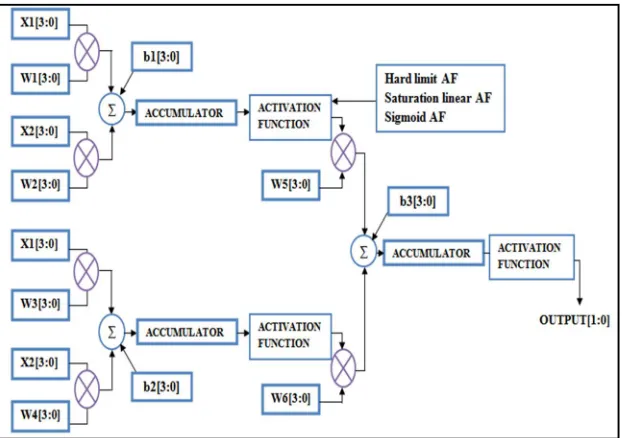
The working model of neuron is shown in Fig.5. It consists of n bits of input and weights which are multiplied with shift and add multiplier. There are two sub inputs for each neuron and output result is given to activation function [4]. These activation functions are used to fire the neuron when their action potential crosses its threshold. Result of corresponding activation block will generate 1 bit output signal to fire neuron.
u=∑ +
[image:4.612.152.463.342.561.2]Fig 6. Structure of Feed Forward Neural Network
V. DESIGN OF LOGIC GATES USING ARTIFICIAL NEURAL NETWORK
[image:5.612.178.425.218.336.2]A. AND Gate Using Hard Limit Activation Function
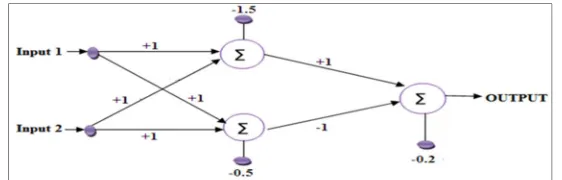
Fig 7. Neuron Model for AND Gate Hard Limit Activation Function
In case of Hard limit activation function A High output (1) results only if obtained output from neural network is greater than 0. The low output(-1) results only if obtained output from neural network is less than 0.
B. OR Gate Using Saturating Linear Activation Function
[image:5.612.173.410.449.553.2]The OR gate is a digital logic gate that implements logical disjunction. A HIGH output (1) results if one or both the inputs to the gate are high. If neither input is high, a LOW output 0 results. In Neural network, if output is greater than 0 it is considered as +1,if output is less than or greater than 0 it is considered to be -1.This can be decided by the Saturating Linear activation function.
Fig 8. Neuron Model for OR Gate using Saturating Linear Activation Function
[image:5.612.166.447.598.688.2]Technology (IJRASET)
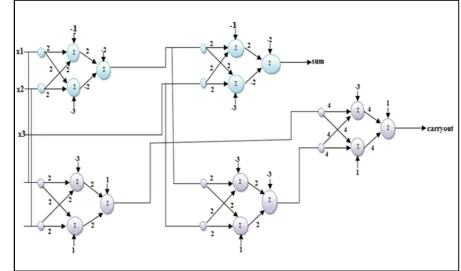
VI. DESIGN OF HALF ADDER AND FULL ADDER USING ANN
A. Half Adder Using Neural Network
Fig 10. Neuron Model for Half Adder
[image:6.612.70.531.436.707.2]VII. RESULTS
Fig12. Sigmoid MATLAB Curve
Technology (IJRASET)
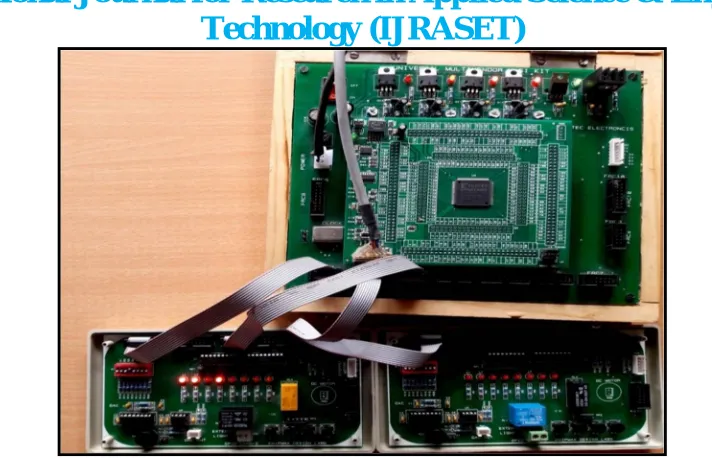
Fig 15.ANN Hardware implementation on Spartan-3 on FPGA
VIII. CONCLUSION
The Logic Gates, Half adder and Full adder using activation function is successfully implemented in Artificial Neural Network. The code is written in Verilog and successfully simulated and synthesized using Xilinx ISE9.1 using Spartan-3 FPGA. ANNs are resulting high degree of parallel computation. FPGA not only offers flexible designs and saving in cost .Hardware implementation of Logic Gates, Half Adder and Full Adder using Activation function is done on Spartan-3 FPGA and the device used is XC3S400 with package TQ144.Hence we can conclude that Artificial Neural Network is a best field to implement Combinational circuits on FPGA.
REFERENCES
[1] Engel,Fernando.M G.Moraes Rolf F. Molz, Paulo ," Codesign to Fully Parallel Neural Network for a Classification Problem",University Montpellier II, France, 2000.
[2]
[3]
Esraa Zeki Mohammed and Haitham Kareem Ali, “Hardware Implementation of Artificial Neural Network Using Field Programmable Gate Array” International Journal of Computer Theory and Engineering, Vol. 5, No. 5, October 2013.
Haitham Kareem Ali and Esraa Zeki Mohammed, “Design Artificial Neural Network Using FPGA” IJCSNS VOL.10 No.8, August 2010.
Hardik H. Makwana, Dharmesh J. Shah, Priyesh P. Gandhi,” FPGA Implementation of Artificial Neural Network” International Journal of Emerging Technology an Advanced Engineering Volume 3, Issue 1, January 2013