5
VIII
August 2017
International Journal for Research in Applied Science & Engineering Technology (IJRASET
)
ISSN: 2321-9653; IC Value: 45.98; SJ Impact Factor:6.887 Volume 5 Issue VIII, August 2017- Available at www.ijraset.com
Virtual Reality Latest Simulations
M.Mohamed Sikkandar Afzal1, K. M. Mugunth2, N. Naveen3 1,2,3Department of CSE, BIT, Sathy
Abstract: In this paper, we are implemented virtual reality augmented R.T.O. testing with an interactive virtual environment Ans also latest website using virtual reality tools.It is designed as a modular system that can convert a car using Google Cardboard to in virtual reality (VR) car and it can be also accessed through websites in online. Novel hardware components embedded with sensors were implemented on stationary car to monitor driver performance while immersing them in a virtual reality driving simulator providing to driver with visual and hepatic feedback.
Keywords: Virtual reality,virtual reality websites, Google Cardboard, Virtual reality driving simulator, R.T.O testing, Driver performance level.
I. INTRODUCTION
We believe in a safer world. world with quality drivers, a world with less accidental death and for this we are implementing a virtual world or we can say virtual driving simulation. This modular and adaptable system attaches to commercially-available stationary car systems and interfaces with an android phone for simulation and data acquisition processes. Parameters monitored by these systems are communicated to a driver interface screen and can be amplified before entering its virtual environment. This simulation will help R.T.O to provide learning license for qualified people; we can simulate real life scenarios like how to get away with an accident which is not possible in traditional question answer test system. In this there will be different test cases like applicant follow the rules designed by R.T.O. for example if the speed limit is 30 km/hr. then driver should not cross the speed limit and follow the traffic signal rules.
II.LITERATURE SURVEY
A. Evolution of Head Mounted Display(HMD)
Origins of the Google Cardboard are traced back to when David Coz and Damien Henry (5) at the Google Cultural Institute in Paris built a cardboard Smartphone housing to prototype VR experiences. In 1968 American Computer Scientist Ivan Sutherland at the University of Utah, with the help of his student Bob invented the first virtual reality (VR) and augmented reality (AR) head mounted display system. Sutherland head mounted display (HMD) was so heavy that it had to be suspended from the ceiling and the awesome appearance of device inspired its name-sword of Damocles. The system was primary both in terms of user. Interface and graphics comprising the virtual environment were simple wireframe rooms. One of the first commercially available HMDs was the Forte VFX-1 which was announces at CES in 1994.The VFX-1 had stereoscopic display, 3 - axis head – tracking and stereo headphones. Another inventor in this field was Sony who released the Glasstorn in 1997, which has an optional sensor which permitted the user to view the surrounding with respect to the head movement, providing a deep sense of immersion. Sony has released the personal 3D Viewer (or HMZ-T1), a complete surround – sound headset for 3D gaming and movies. Now a day’s many brands of video glasses can now to connected to video and DSLR cameras, making them applicable as a new age monitor. As a result of glasses ability to block out available light so that filmmakers and photographers are able to see clearer presentation of their live images. The Oculus Rift and Google cardboard is an upcoming virtual reality (VR) head mounted display as both comparison Google cardboard is cheaper than the Oculus Rift HMD.
ISSN: 2321-9653; IC Value: 45.98; SJ Impact Factor:6.887 Volume 5 Issue VIII, August 2017- Available at www.ijraset.com
B. Existing system of driving simulation
History of driving simulation has been motivated by general advancement of technology, related to various systems terms containing visual, auditory and interoception feedback and the equation of motion or vehicle dynamics that translate driver control action into vehicle motion.(1) The first prototype of the system was successful in demonstrating that a modular mechanical kit can monitor and record performance of cycle riders.(2) At present, a driving test is conducted in a fairly preferably environment provided by R.T.O on their premises during daytime where the candidate doesn’t face the real-life difficulty of driving and last few years 2D Driving simulator working in which driver seat in front of the T.V or display interface and with steering wheel, clutch, gear box, breaks etc. and driver start driving while video playing in T.V and according to driver moves like right turn or left turn using steering wheel or apply the brakes to stop so that the car in the video also response accordingly.
III. PROPOSED SYSTEM
A. Implementation of Virtual Reality Application in Driving Testing Simulator for R.T.O
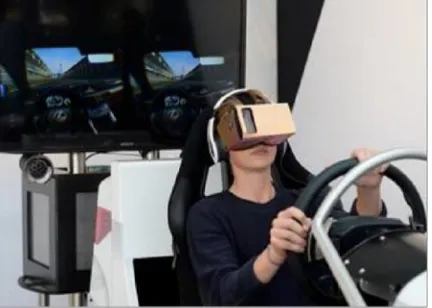
[image:3.612.200.416.302.456.2]In due time to apply for R.T.O learning licence we had to give an online examination. We plan to replace the online test with a virtual driving test. in which the test cases will be similar to the question and will be more of life. For an example if the speed limit given 30 km/hr. and the driver goes above the speed limit then he fails at that point. Our application will be a summation of such test cases which will automatically generate result if learning licence.
Fig 4. Driving Simulator using Google Cardboard
B. Following Steps Need to be Followed\
1) Step 1: Login page (Aadhar Card number, Date of birth) so that user will be able to proceed only if he is eligible for the test 2) Step 2: R.T.O will provide driving kit such as steering wheel, Clutch, breaks, gear box, accelerator, seat belt and head
mounted display in which he can see the tracks virtually.
3) Step 3: In this step, user starts driving virtual simulator of environment according to rules given by R.T.O.
4) Step 4: Now the test begins in which software checks if user is following the rules or not. Example: - If driver crosses the speed limit, breaking signal rules and handling steering wheel properly.
5) Step 5: So that user will feel he is driving real car and also he can get feel of surrounding virtual environment.
C. Software Requirement
1) Unity (game engine)
2) Android sdk
3) Java utility
International Journal for Research in Applied Science & Engineering Technology (IJRASET
)
ISSN: 2321-9653; IC Value: 45.98; SJ Impact Factor:6.887 Volume 5 Issue VIII, August 2017- Available at www.ijraset.com
development kit (SDK).
Fig 5.Unity (game engine)
Using unity game engine we have to develop a android app in that 3D video of driving track includes different test cases which follow rules designed by R.T.O.
From the above fig.5 there is two images one left frame and another right frame, when we see these images through Google Cardboard then we get the 3D view of the above images.
D. Hardware Requirement
1) Google Cardboard
2) Smart Phone (Sensor such as gyroscope, accelerometer)
3) Headphone to feel sounds
4) Driving kit
E. Google Cardboard
Google Cardboard is a simple head mounted display (5). It is fold-out cardboard when combined with lenses and you mustget two lenses that have a 40mm focal distance Google recommended Biconvex lenses because they prevent distortion around the edges. Google Cardboard include magnet, NFC tag. Once you have the Android App installed on your NFC-enabled mobile device, touch the front or back of your device to the sticker then it should launch the android app so that you don’t have to launch it manually! All that’s left before experiencing VR is to insert your mobile device into your Cardboard VR headset and a rubber band and held against the face, affords a virtual reality experience. A Smartphone with android app fits into Google Cardboard and the lenses allow a person to receive left and right images as a single three-dimensional image. Essentially, the assembly works by presenting two slightly different images, one to each eye. This is achieved by the application on your smart phone the screen in two and a strategically placed piece of card inside the viewer dissects the two images. Because each of your eyes is looking at a slightly dissimilar image, with the rest of your view blocked out so it creates an immersive 3D environment. The Google Cardboard project aims at developing inexpensive virtual reality (VR) tool to allow everyone to enjoy VR in a simple natural way. The Cardboard SDK for android helps to developers familiar to OpenGL so that they quickly start creating VR applications.
side. Your smart phone is able to sense the magnet’s movements using its magnetic sensor which allowing it to act as a clever little button.
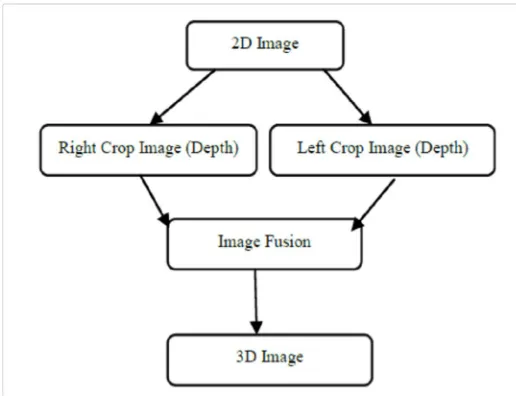
Fig 8. 2D to 3D image conversion
IV. RESULT ANALYSIS
From the above fig 8. We can see that the basic (4) algorithm of 2D to 3D image conversion in which 2D image as input file then it will be cropped as right crop and left crop after that these two images fused together to achieve 3D image.
A. Smart Phone
Smart phone which include android app so that we can placed inside the Google Cardboard i.e. head mounted display. Smartphone contain sensor, gyroscope, and accelerometer so that when driver moves head to right turn or left turn then gyroscope detect head movement and shows surrounding environment.
B. Headphone
Headphone is required feel sound effect which connected to the Smartphone
C. Driving Kit
Driving kit includes steering wheel, breaks, and clutch gear box, accelerator connected to Smartphone .when driver starts driving by wearing head mounted display i.e. Google Cardboard (VR) so it feels that he is actually driving the real car.
1) Speed Limit: if the speed limit given 30 km/hr. and the driver goes above the speed limit then he fails at that time and 20 points will be deducted from the total score i.e. 100 points. In this test case speed limit penalty included for example if user not control speed of vehicle then penalty will be added and if penalty occur more than 3, so the user will be failed.
2) Signboards : This test case check weather user follow signboards properly or not i.e. during the turns like there will be signboard of turn left or right and no turn left or no turn right. if user not follow signboards 20 points deducted.
3) On Curbs: In this test case if user driving the car offs the road then 30 point will be deducted.
4) Traffic Signal : In this test case, if user broke the traffic signal then 30 points will be deducted So accordingly software automatically generates the result that user will be pass or fail during the test
D. Virtual Reality Websites
International Journal for Research in Applied Science & Engineering Technology (IJRASET
)
ISSN: 2321-9653; IC Value: 45.98; SJ Impact Factor:6.887 Volume 5 Issue VIII, August 2017- Available at www.ijraset.com
reality navigation interface.Experimental builds of Google Chrome also use WebVR to support Oculus Rift, Google Cardboard, Project Tango and HTC Vive. In 2014, Google launched 'Chrome Experiments for Virtual Reality'; a Virtual Reality mobile site showcasing web-based Virtual Reality demos for Google Cardboard. In 2015, Mozilla released A-Frame (VR), an open source web framework for building VR experiences and websites. A-Frame is one of best tools in webvr which has wide range of functions and codes including 3d and 2d objects.
E. A-Frame
-Frame is a web framework for building virtual reality (VR) experiences. As originators of WebVR, the Mozilla VR team developed A-Frame to be the easiest as well as the most powerful way to develop WebVR content. As a fully open project,A-Frame has grown to be one of the largest and most welcoming VR communities.
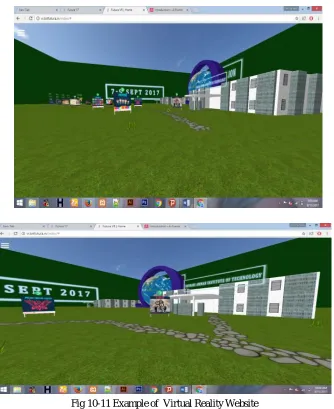
[image:6.612.142.476.288.697.2]A-Frame supports most VR headsets such as Vive, Rift, Daydream, GearVR, Cardboard, and can even be used for augmented reality. Although A-Frame supports the whole spectrum, A-Frame aims to define fully immersive interactive VR experiences that go beyond basic 360° content, making full use of positional tracking and controllers. The Mozilla VR team is currently using A-Frame as the foundation for a Metaverse-in-progress.
Fig 10-11 Example of Virtual Reality Website Bannari Amman Institute of technology
V.CONCLUSION
In this paper the virtual reality driving kit is a system with an interactive Virtual environment and hardware inputs. It will change the way to give test for driving license. It will certainly improve the quality of driver. In reality, the driver has to drive the vehicle in heavy traffic at night and in the rain. Thus, it is important to test their driving capabilities and skills in such environment the driving simulator would create such an environment and challenge the driver. The simulator is created to give a feeling of driving and it projects different environments and difficulties. This initiative is aimed to give skilled drivers who can respond in a better way after getting their licenses. This would also ensure the security of drivers and reduce accidents by ill-prepared drivers.
REFERENCES
[1] Richard Ranky, Mark Sivak, Jeffrey Lewis, Venkata Gade, Judith E. Deutsch and Constantinos Mavroidis VRACK – Virtual Reality Augmented Cycling Kit: Design and Validation IEEE Virtual Reality 2010. 20 - 24 March.
[2] Akinwuntan, A. E. De Weerdt, W. Feys, H., De Vooght, F.Devos, H. Baten, G. et al. (2007).
[3] attentional performance after stroke using a driving simulator.
[4] Elizabeth H. Oakes (2007) Encyclopedia of World Scientist Info Base Publishing. J. Caviedesand, J. Villegas, “Real time 2D to 3D conversion: Technical and visual quality requirements,” IEEE International Conference on Consumer Electronics, pp. 897-898, 2011.