The Implementations and Challenges of
Assessment Practices for Students' Learning
in Public Selected Universities, Ethiopia
Birhanu Moges
Department of Psychology, College of Education and Behavioral Sciences, Arsi University, Ethiopia
Copyright©2018 by authors, all rights reserved. Authors agree that this article remains permanently open access under the terms of the Creative Commons Attribution License 4.0 International License
Abstract
This study explored the instructors’ practices
of assessing students for learning in selected Ethiopian higher education institutions. Mixed method approach was employed in collecting data from 80(55 males & 25 females) instructors. Stratified and purposive sampling was used. Questionnaire, semi-structured interview, and observation were used as instruments for collecting data. For analysis frequency, percentage, mean, standard deviation, and one-sample t-test were used. The results showed that the practices of assessment for learning were very low. Most instructors were administered test items, homework, assignment and class work, but they did not integrate other assessment methods for learning. Those challenges are found lack of resources, large class size, shortage of instructional time, inadequate support, lack of instructional materials, instructors’ negative perception, lack of knowledge and skill in assessment, and large content of courses as major factors for proper implementation of assessment for quality learning. It was concluded that instructors should pay attention to the assessment of students learning and further study need to be conducted for identifying why they were paying less attention to student assessment than lecturers. Specifically, comprehensive and relevant assessment trainings should be given for instructors on a regular basis to integrate assessment with daily instruction to improve students’ learning.Keywords
Assessment, Challenges, Instructor, Students’ Learning, University1. Introduction
1.1. Background of the Study
Many factors are critical to a students’ success in higher
education institutions; assessment is one of those key factors. The reality is that in all teaching -learning transactions, students assessment is an inevitable construct that evokes and sustains effective learning. Assessment has long been recognized as maintaining a central position in students’ learning [16,14]. Practices of assessment can also have a powerful influence on the learning behaviour of students [11]. Offering a variety of assessment methods is often recommended as good practice in response to numerous critiques of the over-reliance on traditional tests. The arguments include the need to use strategies which more appropriately assess different kinds of learning processes, the need to cater for differences in students’ learning preferences and styles and the need to enhance learners’ psychological approaches to learning [2,3,7].
Studies [18,27] showed that assessment is one of the most important activities of higher education institutions. Instructors in higher education used different strategies in order to assess students’ learning outcomes. Broadly, instructors can be categorized types of test as objective and subjective items, performance and problem- based assessments. Each of these strategies has their pros and cons. Many types of tests encourage surface approach to learning where the intention is to memorize and rehearse – this is passive learning [3]. On the other hand, performance and problem- based assessments are argued to encourage deep approach to learning where the intention is to make sense of the course in terms of understanding and prior knowledge very much an active, transformative and constructivist approach to learning [27].
relevant and timely information for the improvement of quality education systems, presents descriptive survey study of teachers practices of assessing students learning outcome to enhance quality in higher education the motivating factors to ensure success, describes some national efforts, and proposes in HEIs, Ethiopia. Further, studies have shown that there are many problems associated with instructors’ assessment practices. These include teachers’ lack of an adequate knowledge base regarding the basic testing and measurement concepts [28], limited teacher training in assessment [13] and failure of teachers to employ and adhere to measurement guidelines they learned in measurement courses. Practices of assessment strategies influence the quality of teaching and learning.
1.2. Statement of the Problem
The type of assessment methods practiced by instructors should match with the learning outcomes. The learning outcomes should be stated at these higher levels of thinking. The type of assessment methods that match with these levels should be carefully selected and implemented. For this reason, it is imperative to understand the ways in which instructors feel about assessment practices, their perceptions regarding assessment training and their experiences as they attempt to use various assessment methods to evaluate students’ learning outcomes. The [24] suggested that the assessment of students in the modular delivery should be on continuous basis in relation to achievement of the modular-objectives with a passing standard of 50 percent. However, informal feedback from the students show that the assessment of students is not continuous and far from the suggested strategies. Teachers continue to use conventional methods of assessing students’ outcome with a claim that their assessment is continuous with the application of different strategies.
The study calls for quality education, supportive, coherent professional learning for instructors that fosters deeper understandings of different assessment strategies as well as for student learning to be aligned with current research-based understandings of student motivating factors to ensure success. Findings will be linked to educational research on both assessment and motivation. However, most often teachers’ assessment strategies in Ethiopian Higher Education Institutions (HEIs) were criticized as dominated by summative evaluation without due attention to formative evaluation [19]. Most of the studies on the assessment of students’ learning outcomes in Ethiopia were conducted at the primary and secondary school levels focusing on the status and challenges of continuous assessment. So far, as to the knowledge of the researcher, little study was conducted on the assessment strategies, type of test items practiced by teachers and the use of assessment for improving student learning in the Ethiopian context. So far, as to the knowledge of the
researcher, most studies in Ethiopia mainly focused on the summative value of formative assessment and on grading, no study was conducted on the assessment strategies, type of test items practiced by instructors and the use of assessment for improving student learning in the Ethiopian context. This study was designed to address these issues in the context of Ethiopian HEIs. Hence, this study is unique as it is conducted on the instructors’ practices of assessment of students learning at the HEIs, Ethiopia.
1.3. Objective of the Study
The general objective of the study was to critically analyze the practices of instructors in assessing students’ learning outcomes in selected HEIs in Ethiopia. The specific objectives of the study are to:
examine the extent instructors practices different assessment methods in their instruction to improve students’ learning in HEIs;
examine instructors’ perception toward assessment for students learning;
examine type of support instructors provided for the effective practices of assessment for learning;
explore how instructors give feedback to students in their teaching-learning process to improves quality of students learning and instruction;
analyze the challenges/ factors instructors’ are facing due to the implementation of formative methods to improve quality of education.
1.4. Research Questions
The basic research questions that guide this study were: 1. To what extent, do instructors practice different
assessment methods in their instruction to improve students’ learning?
2. How do the instructors perceive students’ assessment for learning?
3. What type of support instructors provided for the effective practices of assessment for learning? 4. How instructors give feedback to students in their
teaching-learning process to improve quality of teaching-learning process?
5. What are the major challenges/factors that affect instructors’ practice of assessment for learning?
1.5. Significance of the Study
instructors to collaborate and conduct action research and to promote professional trainings centered on formative assessment. The findings of this study can also help policy makers and teacher training institutions to evaluate the relevance of pre-service and in-service assessment trainings in order to integrate formative assessment into daily instruction. In general, the findings are informative for policy makers, educational experts, university leaders, instructors, and other concerned bodies about the current practices of assessment for learning in the selected universities and the importance it has to instructors to improve students’ learning. It can add a new knowledge to the exiting assessment theory and practice, particularly, in the context of Ethiopia.
2. Materials and Methods
2.1. Design of the Study
The approach of this study was mixed research design both qualitative and quantitative. The main reason of applying mixed research design in this study was to triangulate the results obtained from quantitative and qualitative data, to validate and to explore the different aspects of the phenomenon to get more detailed information about the issue [15]. The survey method with the use of questionnaire was the dominant method of data collection. Qualitative data were collected using semi-structured interview, observation and document analysis in order to substantiate the quantitative data.
2.2. Sources of Data
The sources of data for this research were both primary and secondary sources. The primary sources were information that collected from instructors, college deans and department heads. The secondary sources were sample colleges records or documents consisting of assessment guidelines and legislations, assessment course plans, feedback documents and students grade reports.
2.3. Participants of the Study
The participants of the study were 80 instructors from higher education institutions (Arsi University & Hawassa University). These two universities were selected purposely because of their long experiences and the possibility of getting data in the bands/fields of study. Further, these universities are their nearness and the possibility of getting data in the fields of study. The two selected universities under the study consists the same colleges (agriculture and environment sciences, business and economics, education and behavioral sciences, medicine and health sciences and social science and Humanities) at undergraduate level even though, the
graduate level focus of each university differ on their experiences since their establishments. The fields are common to all universities at undergraduate level, but at the graduate level the focus of each university differ on their experiences since their establishments.
2.4. Sampling Techniques
The researcher was employ simple random sampling method for the selection of the instructors in each college and for department heads and deans purposive sampling method was used. The respondents are a total of 80 instructors (55 males & 25 females) categorized as agriculture and life sciences, and business and economics, education and behavioral sciences, medicine and health sciences and social science and Humanity College.
2.5. Data Gathering Tools
To answer the research questions, both quantitative and qualitative data were used. Thus, for quantitative aspect closed-ended questionnaires were designed whereas for qualitative part in-depth semi-structured interview and observation were used to address the research question mentioned in introduction. The subsection of the questionnaires measure types and frequency of assessment strategies, types of test items practiced and analysis of practical challenges of assessment. Further, instructors’ capacity in assessment practices, students’ assessment based on a variety of competences, different assessment tools used, perceptions about test construction and grading practices, instructor’s practice in recording and reporting formative assessment and finally, instructor’s practical challenges in implementing the formative assessment methods. a 5-point likert scale ranging from never to often
was used to measure the practice sub-scale. The perception sub-scales were also measured by a 5-point likert scale ranging from strongly disagree to strongly agree. A dichotomous “yes or no” option was also used to assess the professional learning instructors received and its relevance to implement assessment for learning. Moreover, a 5-point likert scale ranging from very unlikely to very likely, was used to assess the possible factors of not applying assessment for learning in instruction. Semi-structured interview was used in order to gain a detailed picture of different assessment methods instructors practiced, feedback and supports provided by deans’, department heads, and practical challenges that hinder instructors’ to implement formative assessment for learning. Lesson observation was employed to gather detailed and live data related to the practice of assessment for learning and possible challenges that hinder such practices.
2.6. Validity and Reliability
reliability of the instruments with the objective of checking whether or not the items included in the instrument can enable the researcher to gather relevant information. Besides, the purpose of pilot testing was made necessary amendment so as to correct confusing and ambiguous questions. Following the deans and department heads, instructors, and peers appropriate corrections were made on the instruments. Hence, pilot study was conducted at Adama Science and Technology University on 20 instructors. The result of the pilot testing is statistically computed by the SPSS version 20 computer program. The Cronbach’s Alpha model was used for analysis [15]. Thereafter, all instruments were administered by the researcher and collected immediately. Based on the pilot test, the reliability coefficient of the instrument was found to be statistically calculated. To ensure the validity, senior colleagues and experienced instructors of university were personally consulted to provide their remark. The participants of the pilot test was also taken as firsthand informed about how to evaluate and give feedback on the relevance of the contents, item length, clarity of items and layout of the questionnaire. Based on the reflections, the instruments were improved before they were administered to the main participants of the study so that irrelevant items were removed, lengthy items were shortened and many unclear items were made clear.
2.7. Data Analyses
The characteristics of respondents analyzed by using frequency and percentage whereas the data from the questionnaires were analyzed through by computing mean, standard deviation and percentage. The data collected through observation and interview were analysed with an interpretive inquiry lens. The qualitative data analysis involved organising and interpreting data, in short, making sense of the data through the instructors’ definition and context of practicing formative assessment. The researcher provided detailed descriptions of each of the participants’ beliefs about formative assessment and feedback, and of the types of assessment and feedback in their classroom teaching practice, concerning both oral and written assessment and feedback. Using the data, a holistic picture of each instructor was developed around the concepts that marked the individual instructors, practical challenges, perception and implementation of formative assessment. In addition, the commentary to describe the themes that emerged from each participant was supported by the raw data in the form of quotes that were direct from the instructors.
3. Results
The purpose of this part of the study is to present the results of the practices of assessment for learning and the integration of such powerful formative assessment in their daily instruction to improve students’ learning and the hindering factors of such practice in selected university, Ethiopia. The results for each basic research question were presented below.
Research question one: To what extent do instructors practices different assessment methods in their instruction to improve students’ learning? The results of the practice of assessment for learning in the selected universities were presented in line with the six factors below.
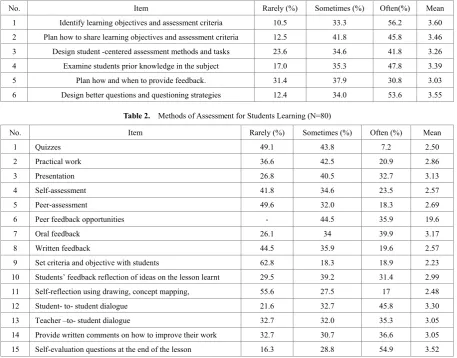
From the six items which are loaded for the “Planning of formative assessment” factor, (56.2%,M=3.60) and (53.6%, M=3.55) of instructors reported that they regularly identify learning objectives and assessment criteria and design better questioning strategies in the planning of their lessons respectively. Similarly, (45.8%, M=3.46); and (47.8%, M=3.39) of the respondents plan how to share learning objectives and assessment criteria, examine students’ prior knowledge in the subject. Moreover, design student-centered assessment methods and tasks, plan how and when to provide feedback (41.8%, M=3.26; 30.8%, 37.9%, and 31.4%) often, occasionally and once in a blue moon respectively (Table 1). The results indicated that the planning of formative assessment strategies as an integral part of the lesson preparation prior to collecting learning evidences was practiced by few instructors. Correspondingly, the instructors’ lesson preparation conventionally includes: rationales, learning objectives; unit contents; activities such as reviewing previous lesson, explaining important points, giving short notes, asking question…; students’ activity such as taking notes, listening, answering questions…; evaluation and summarization of main points in the lesson. Two examples were included for this explanation as:
Table 1. Planning of Formative Assessment (N=80)
No. Item Rarely (%) Sometimes (%) Often(%) Mean
1 Identify learning objectives and assessment criteria 10.5 33.3 56.2 3.60
2 Plan how to share learning objectives and assessment criteria 12.5 41.8 45.8 3.46
3 Design student -centered assessment methods and tasks 23.6 34.6 41.8 3.26
4 Examine students prior knowledge in the subject 17.0 35.3 47.8 3.39
5 Plan how and when to provide feedback. 31.4 37.9 30.8 3.03
[image:5.595.70.528.92.450.2]6 Design better questions and questioning strategies 12.4 34.0 53.6 3.55
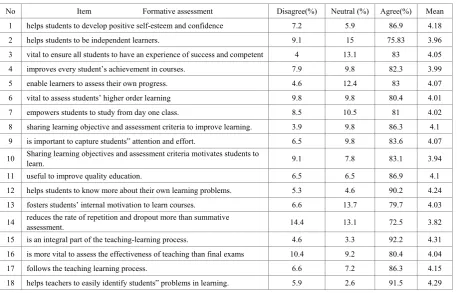
Table 2. Methods of Assessment for Students Learning (N=80)
No. Item Rarely (%) Sometimes (%) Often (%) Mean
1 Quizzes 49.1 43.8 7.2 2.50
2 Practical work 36.6 42.5 20.9 2.86
3 Presentation 26.8 40.5 32.7 3.13
4 Self-assessment 41.8 34.6 23.5 2.57
5 Peer-assessment 49.6 32.0 18.3 2.69
6 Peer feedback opportunities - 44.5 35.9 19.6
7 Oral feedback 26.1 34 39.9 3.17
8 Written feedback 44.5 35.9 19.6 2.57
9 Set criteria and objective with students 62.8 18.3 18.9 2.23
10 Students’ feedback reflection of ideas on the lesson learnt 29.5 39.2 31.4 2.99
11 Self-reflection using drawing, concept mapping, 55.6 27.5 17 2.48
12 Student- to- student dialogue 21.6 32.7 45.8 3.30
13 Teacher –to- student dialogue 32.7 32.0 35.3 3.05
14 Provide written comments on how to improve their work 32.7 30.7 36.6 3.05
15 Self-evaluation questions at the end of the lesson 16.3 28.8 54.9 3.52
Formative assessment strategies as one part of their lesson preparation helps instructors and students to collect learning evidences related to students’ knowledge, skills and attitude in the lesson and, as a result, to use such evidences as an input to improve students’ learning and to adjust instruction.
Under Table 2, it addressed how different assessment strategies are integrated in the teaching-learning process to collect information about students’ knowledge, skills and attitude in that lesson to decide steps in learning. Particularly, large number of instructors hardly put into action: criteria and objective setting with students (2.23), self-reflection through drawing and concept mapping (2.48), quizzes (2.5), self-assessment (2.57), written feedback (2.57), peer feedback (2.65), peer assessment (2.69), practical work (2.86), peer to peer questions (2.79) and students‟ reflection of ideas on the lesson learnt (2.99), which are the main components of assessment for learning to collect evidences. Similarly, other assessment for
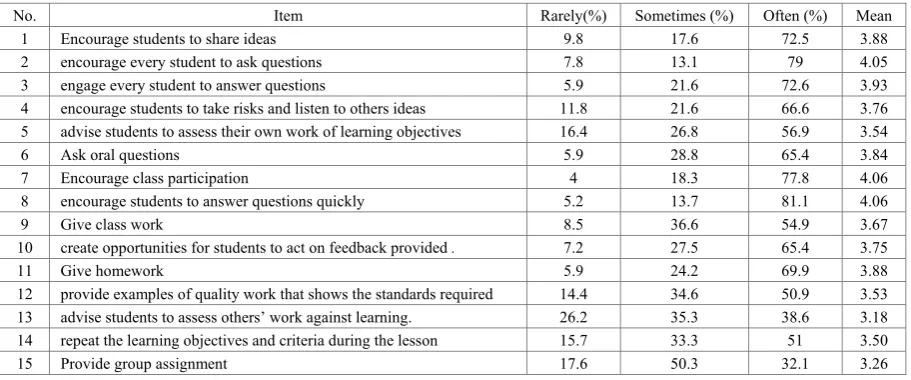
Table 3. Instructors perception of assessment for learning (N=80)
No Item Formative assessment Disagree(%) Neutral (%) Agree(%) Mean
1 helps students to develop positive self-esteem and confidence 7.2 5.9 86.9 4.18
2 helps students to be independent learners. 9.1 15 75.83 3.96
3 vital to ensure all students to have an experience of success and competent 4 13.1 83 4.05
4 improves every student’s achievement in courses. 7.9 9.8 82.3 3.99
5 enable learners to assess their own progress. 4.6 12.4 83 4.07
6 vital to assess students’ higher order learning 9.8 9.8 80.4 4.01
7 empowers students to study from day one class. 8.5 10.5 81 4.02
8 sharing learning objective and assessment criteria to improve learning. 3.9 9.8 86.3 4.1
9 is important to capture students‟ attention and effort. 6.5 9.8 83.6 4.07
10 Sharing learning objectives and assessment criteria motivates students to learn. 9.1 7.8 83.1 3.94
11 useful to improve quality education. 6.5 6.5 86.9 4.1
12 helps students to know more about their own learning problems. 5.3 4.6 90.2 4.24
13 fosters students’ internal motivation to learn courses. 6.6 13.7 79.7 4.03
14 reduces the rate of repetition and dropout more than summative assessment. 14.4 13.1 72.5 3.82
15 is an integral part of the teaching-learning process. 4.6 3.3 92.2 4.31
16 is more vital to assess the effectiveness of teaching than final exams 10.4 9.2 80.4 4.04
17 follows the teaching learning process. 6.6 7.2 86.3 4.15
18 helps teachers to easily identify students‟ problems in learning. 5.9 2.6 91.5 4.29
Research question two: How do university instructors perceive assessment for learning? In this research question, it can be analyzed instructors’ perception on the power of formative assessment to improve learning, students’ involvement. One-sample t-test also was used to assess significant differences in the mean of the three factor loadings in the perception sub-scale. The result showed statistically significant differences between the means of the three factors in the perception scale (p=0.000). The results were presented below. As indicated in Table 3, most instructors reported higher level of agreement in each item in both factors. However, items loaded on teachers’ perception of the “Power of formative assessment to improve learning” factor were highly perceived by most instructors in the selected universities. Particularly, most instructors (92.2%, 91.5%, and 90.2%) agreed on the idea that formative assessment is an integral part of the teaching learning process, that helps them to easily identify students’ problem in learning, and it allows students to know more about their own learning problems respectively.
Relating to its application, 80.4% of the instructors believed that formative assessment is vital to assess higher order thinking, to ensure all students to have an experience of success and it makes all of them competent learners (83%), and it improves every student’s achievement in science subjects (82.3%). Likewise, most instructors in the selected universities agreed that formative assessment is a mean to capture students’ attention and efforts (83.6% and a mean of 4.07), to start their study from day one (81% and a mean of 4.02), to develop positive self-esteem and
confidence among all students (86.9%), and to make them independent learners (75.8%) by fostering their internal motivation to learn science subjects (79.7% and a mean of 4.03). Similarly, reasonable numbers of teachers seem to realize the importance of mixing formative assessment with daily science lesson to improve learning, to assess the effectiveness of the teaching learning process and to decrease students‟ dropout and repetition in one class (86.9%, 80.4%; and 72.5%) than summative assessment respectively. Moreover, most of the science teachers reported that sharing of learning objectives and assessment criteria are vital to motivate students to learn (83.1%), to enable them to assess their own progress (83%) so that they improve their learning (86.3%). Thus, the result of this study gives the impression that most teachers in the selected schools have positive perception about the power of formative assessment to improve students’ science learning. However, evidences from teachers’ response on item number 17, on the same table indicated that 86.3% of the respondents negatively perceived formative assessment as a process that follows the teaching-learning process which supports the behavioural learning perspectives on assessment. This means that formative assessment is viewed as a tool that is used to evaluate students’ progress continuously in the lesson learnt rather than a means to improve their learning. Such contradictory responses of teachers on the same table indicate their misconception about formative assessment. The lesson observation and interview result also validate it.
[image:6.595.71.529.89.382.2]instructors provided for the effective practices of assessment for learning?
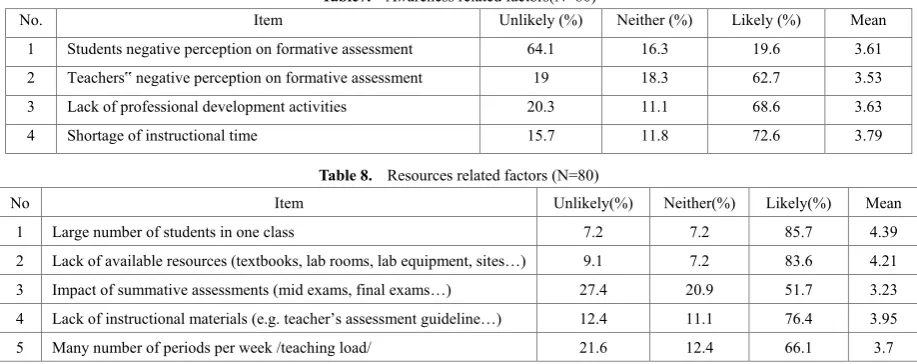
As indicated in Table 4, most instructors (79% with a mean of 4.05 and 77.8% with a mean of 4.06) revealed that they regularly encourage every student in their class to ask questions and to actively participate in the lesson. Moreover, considerable numbers of science teachers encourage students to share ideas (72.5% with a mean of 3.88), inspire every student’s to answer questions (72.6% with a mean of 3.93), give home works (69.9% with a mean of 3.88), ask oral questions (65.4% with a mean of 3.84), persuade their students to take risks and listen to others ideas carefully (66.6% with a mean of 3.76), and create opportunity for their students to act on the feedback provided (65.4% with a mean of 3.75). On the other hand, large number of teachers (81.1%) in the selected universities encourages their students to answer questions quickly. However, not everyone did think at the same speed or in the same way to be engaged in answering questions. Moreover, short waiting time during questioning did not allow students to think and build their thought to answer higher order questions and to get more explanation; rather such activities encourage rote learning and fast learners to answer simple facts. The results of the classroom observation also showed that most teachers in the selected universities did not encourage their students to actively participate in the lesson. In all of the observed classes, except in one English lesson (to some extent): Most of the students listen, read text books and take notes. Some fast students participate in answering questions and sometimes ask questions. If the expected answers were not forwarded; most teachers immediately answer the question and proceed to the next explanation; students’ were not given time to share ideas in group and to reflect it; Only volunteer students are encouraged to write their answer on the board (e.g. one psychology lesson observation). The
interview result also verified it. During the interview session most teachers stated that they regularly used lecture methods and simple oral questions because of students‟ expectation about themselves as a student who passively receive information and the role of the teacher as a good reservoir and impart of knowledge. For example:
Mostly, I used teacher-centered methods to explain important point in the lesson, because, most of my students expect me to clarify each point in the lesson to understand it better. If I did not explain it, they consider me as lazy teacher, who is careless and who does not worry about their learning. Moreover, they perceived the lesson that is not explained by the teacher as less important for their learning and ignore it. (Instructor B, Feb. 19, 2017).
Besides, one instructor reported that he encourages his students to share ideas in group and to ask and answer questions during the lesson. The lesson observation also verifies techniques to allow students to understand what they learn to score high marks on tests, rather than to reflect new ideas and thinking for future learning. He stated that:
After explaining the important points of the lesson, I mostly gave exercises from the text book to discuss in group (i.e. one to five grouping). I then ask oral questions randomly by calling their number and let them to ask questions, which are not clear for them. If they ask questions, I clearly explain the answer for them. However, still, I do not use other formative strategies to actively engage them in the lesson such as peer to peer questions, self-assessment, peer assessment, and peer feedback. (Instructor F, Feb. 18, 2017); Research question four: explore how instructors give feedback to students in their teaching-learning process to improve quality of students learning and instruction
Table 4. Support Provided to Engage Students Actively (N=80)
No. Item Rarely(%) Sometimes (%) Often (%) Mean
1 Encourage students to share ideas 9.8 17.6 72.5 3.88
2 encourage every student to ask questions 7.8 13.1 79 4.05
3 engage every student to answer questions 5.9 21.6 72.6 3.93
4 encourage students to take risks and listen to others ideas 11.8 21.6 66.6 3.76
5 advise students to assess their own work of learning objectives 16.4 26.8 56.9 3.54
6 Ask oral questions 5.9 28.8 65.4 3.84
7 Encourage class participation 4 18.3 77.8 4.06
8 encourage students to answer questions quickly 5.2 13.7 81.1 4.06
9 Give class work 8.5 36.6 54.9 3.67
10 create opportunities for students to act on feedback provided . 7.2 27.5 65.4 3.75
11 Give homework 5.9 24.2 69.9 3.88
12 provide examples of quality work that shows the standards required 14.4 34.6 50.9 3.53
13 advise students to assess others’ work against learning. 26.2 35.3 38.6 3.18
14 repeat the learning objectives and criteria during the lesson 15.7 33.3 51 3.50
[image:7.595.71.527.528.718.2]Regarding the “Application of assessment evidences (Table 5)” factor, most teachers showed inconsistency in their responses. This part of the practice sub-scale is the second loaded factor according to the results of the descriptive statistics (a mean score of 3.70, see Table 6). Even if, 66 % of teachers in the selected schools scored greater than the expected mean score in the factor, they also used assessment results for judgmental purpose mostly. As mentioned in Table 5, 80.4 % and 69.9% of instructors agreed that they regularly used the collected assessment evidences to modify their teaching strategies and to plan what to teach next respectively. Furthermore, most teachers (70.6% with a mean of 3.92) frequently used assessment results to identify the gap of students understanding and 74.5% of them used it to advise their students on how to fill such gaps in their learning. Similarly, more than a half of the science teachers (51.7% and 51.6%) suggest means for their students to plan their future learning and allow them to resubmit their work once they improved it respectively. In contrast to the above, 79.1% of respondents‟ regularly used assessment results for the purpose of recording for final marks. Moreover, 62.7%, 60.2% and 67.4% of respondents‟ described that they mostly used assessment evidences to categorize students into different groups based on their results, to make the students aware about their achievement against other students‟ result and to approve students who score high in the assessment task respectively. The interview result also confirmed that almost all science teachers in the selected
schools were guided by the traditional use of assessment results, which have no value for future learning. Teachers were asked to describe: For what purpose do you use
assessment evidence? For instance: I used assessment
results to classify students into different groups (high achiever, medium achiever and low achiever) and as a result to give tutorial accordingly. Moreover, I used it to create awareness among students about their level of understanding or rank against other students, because I believed that creating competitive environment between students is good to improve students’ learning. Finally, I record the result on the mark sheet for final result to decide whether a student passes or fails in the subject. (Instructor E, Feb.14, 2017)
In general, the results of this study clearly indicate that teachers need intensive support to effectively use the data or the collected assessment evidence to adjust their instruction and to improve students’ learning. The observation result also confirms it. In the observed lessons, there were no student to student and teacher to student dialogues; self-reflection through ideas, drawings, concept mapping…; self-and peer assessment; provision of constructive feedback; peer to peer questions; and except one lesson observation, others even did not write their learning objectives on the board; which are the main components of formative assessment to collect learning evidences and as a result to integrate it into the lesson to improve students’ learning.
Table 5. Application of Assessment Feedback (N=80)
No. Item Rarely (%) Sometimes (%) Often(%) Mean
1 Advise students about how to fill the gap in their learning 6.5 19 74.5 3.92
2 Modify my teaching strategies accordingly 5.2 14.4 80.4 4.04
3 Plan what to teach next 6.6 23.5 69.9 3.88
4 Approve students who score high result 9.8 22.9 67.4 3.83
5 Tell their achievement on a task against other students’ result 13.1 26.8 60.2 3.66
6 Identify the gaps in students‟ understanding 4.6 24.8 70.6 3.92
7 Categorize students into different groups 4.2 29.4 62.7 3.70
8 Orally suggest on how to improve their work 18.3 32.0 49.7 3.40
9 Suggest means for students to plan their future learning 20.9 27.5 51.7 3.46
10 Allow peer discussion on how to improve their work 16.4 36.6 47.1 3.42
11 Record assessment results 5.9 15 79.1 4.10
12 Permit students to resubmit their work once they improved it 17.6 30.7 51.6 3.46
13 Give written questions in group 15.7 47.7 36.6 3.31
Table6. Support related factors (N=80)
No. Item Unlikely(%) Neither(%) Likely(%) Mean
1 Lack of support from school principals 15.7 13.7 70.6 3.7
2 Government mandates on assessment issues 21.6 14.4 64.1 3.51
3 Lack of support from supervisors 17.6 15.7 66.7 3.61
4 Lack of support from colleagues 16.3 12.4 71.2 3.65
In the interview, the researcher explored the use of formative assessment tools in their lessons to collect learning evidences. When I asked instructors about formative assessment tools they used in their own lesson all teachers appeared to share similar practices. The common assessment methods they employed were tests, assignments, mid exams, homework, and oral questions and for some class works. However, these assessments are not effectively integrated in their daily instruction, but they are given at the end of the lesson or chapter to check students‟ understanding. Moreover, evidences collected through such assessment methods cannot reflect the full range of learning goals to identify learning gaps; rather, it will be applicable for recording and reporting results.
Instructor a, for example, said that: as I am a mathematics teacher, I regularly use oral questions,
class works and home work to know students‟ existing
knowledge about the chapter and to assess how much students understand the lesson learnt. It also helps me to identify high achiever, medium achiever and low achiever students; and it helps to give more attention for questions that are not well done by the students and to clarify difficult concepts for students. Moreover, after two and three weeks, I used tests, assignment and mid
exam to evaluate students‟ understanding about the
chapters and to collect marks for their final result. (Instructor A, Feb.20, 2017).
Some teachers viewed assessment and marks as two sides of the same coin and practiced accordingly, rather than embedding assessment with their daily instruction to collect learning evidences for the purpose of further learning. One example: …I always give mark for any assessment task. For example, when I give group assignment …I randomly call students to reflect what they do in the group. It helps me to identify those students who actively participate in the group and who did not, to give marks accordingly. ….moreover, I give marks for quizzes, test, assignments, class attendances… after I do questions in the class and then I allow them to see it. (Instructor E: Feb.14, 2017)
Moreover, during the interview sessions, teachers were asked to describe their experience in sharing learning objectives and assessment criteria for students, and implementing self-and peer assessment. However, there was not much evidence that pointed whether the teachers use these formative assessments or assessment for learning strategies regularly with their students to gather evidences. Most felt that large number of students in one class and limited instructional time were factors for them to effectively integrate such strategies into their lesson. That is why; most of them did not feel good to implement such assessment for learning strategies in their lesson to improve students’ learning. Thus, they did not give clear direction for their students to have knowledge of where they are going, where there now, and which strategies will help
them to achieve the learning objectives.
Some teachers described that involving students in assessing their own and others work and for other processes involved in assessment as vital to improve students’ learning; yet, they find themselves limited by time and large content coverage. Example: I want to tell the truth…Still I did not share learning objectives and assessment criteria for students and I did not implement self-and peer assessment, because the time given is very short and the content covered is too large to implement such assessment strategies. However, such assessment systems are very good to improve learning if I have time to employ them. (Instructor A, Feb.20, 2017)
Generally, most teachers seemed to still work in the view of traditional learning theories that formative assessment is a separate element that is not integrated with daily instruction but a tool that comes at the end of lesson to evaluate students‟ learning. Therefore, there is lack of continuous collection of students’ learning evidences during the teaching learning process to adjust instruction and to fill the gaps in students’ learning due to many factors.
Research question five: What are the major challenges/factors that affect instructors’ practice of
assessment for learning? Thus, based on the results, the
three factor loadings were presented below according to their possibility to be a factor of assessment for learning practice in science subjects in the selected universities.
Five items, which loaded “Support (Table 6)” factor were the third ranked possible factor of the implementation of assessment for learning in science subjects as mentioned by most teachers. Particularly, lack of support from principals and colleagues were charged as likely factor by 70.6% and 71.7% of respondents with mean of 3.7 and 3.65 respectively. In the same way, 66.7% (3.61), 64.1% (3.51), and 51% (3.24) of the respondents agreed that lack of support from supervisor, government mandates and pressure of national examination are likely factors respectively (Table 6).
“Awareness (Table 7)” factors were also indicated by
was not given during questioning. Moreover, most students passively listen and write what the teacher says, rather than actively engaging themselves through reflection, questioning and answering.
Most instructors reported that four items, which loaded the “Resources (Table 8)” factor were more likely that hinder the practice of assessment for learning in science subjects in the selected schools. Particularly, large number of students in one class (85.7% of respondents) and lack of available science resources (such as textbooks, lab rooms, lab equipment, demonstration sites…) (83.6% of respondents) delay their assessment for learning practice. Moreover, 76.4% and 51.7% of the respondents agreed on the impact of lack of instructional materials and summative assessment on the integration of assessment for learning strategies in their daily instructions respectively. The observation result showed that: the number of students is on average 55, the seating arrangements are u-shaped, the chairs and desks are permanently connected for three students, and there is at least one text book in each desk. Moreover, in one of the newly established schools, there is armchair for each student, who is easily movable and the number of students is on average 45, but the seating arrangement was facing toward the blackboard for lecturing. However, there was no well-organized and equipped laboratory rooms observed in the two colleges. Moreover, instructors were interviewed to elaborate on what some of the challenges they observed in the integration of formative assessment strategies into their daily instruction. In answering this question, instructors felt that there were challenges in the implementation. These are: limited time given for one lesson, students’ different understanding level and large number of students in one class. Similarly, instructors added that bulky content coverage, students’ negative perception on assessment, instructors’ lack of knowledge and skills and their negative perception on formative assessment strategies and its’ implementation and their long experience on the use of summative assessment are other factors o implementing formative assessment strategies. Examples include:
There are challenges to implement formative assessment strategies effectively in our school. For instance, large number of students in one class does not allow us to integrate formative assessment effectively in our daily instruction, because it is difficult to score and give feedback for each student and to see the difficulties of students by approaching them. (Teacher A, Feb.20, 2017). Different understanding levels of students (high, medium and low achievers), shortage of instructional time, and broad content coverage are major factors that hinder me in using formative assessment strategies effectively. (Teacher
C, Feb.18, 2017). Students mostly perceived assessment as
a tool to collect marks in order to decide whether they pass or fail the required grade. For instance, if a student gets low mark on the given assessment task, he or she argues with/ begging me to add extra marks, rather than she/he provides the opportunities for me to show his/her the correct answers and how to do it. My students‟ have also negative perception on their role in the learning process. All of the students expect as everything is done by the teacher. Majority of the teachers commented on the quality of teachers‟ professional knowledge and skill on assessment, because such pedagogical knowledge is essential to implement student-centered assessment and learning process through understanding students‟ difficulty and needs in learning, asking questions that stimulate productive thinking, interpreting their responses in line with the learning objectives, and using it for the next steps in learning. In addition, one grade eleven mathematics teacher felt that lack of integration in the curriculum content and many number of holly days are a factors for implementing formative assessment. For instance, he stated that:
…curriculum contents are not integrated vertically and horizontally to allow students to do by themselves and it is too vast to cover within the prescribed time and many numbers of holly days do not allow us to implement active learning methods and formative assessment strategies effectively. (Teacher F, Feb. 18, 2017)
Table7. Awareness related factors(N=80)
No. Item Unlikely (%) Neither (%) Likely (%) Mean
1 Students negative perception on formative assessment 64.1 16.3 19.6 3.61
2 Teachers‟ negative perception on formative assessment 19 18.3 62.7 3.53
3 Lack of professional development activities 20.3 11.1 68.6 3.63
4 Shortage of instructional time 15.7 11.8 72.6 3.79
Table 8. Resources related factors (N=80)
No Item Unlikely(%) Neither(%) Likely(%) Mean
1 Large number of students in one class 7.2 7.2 85.7 4.39
2 Lack of available resources (textbooks, lab rooms, lab equipment, sites…) 9.1 7.2 83.6 4.21
3 Impact of summative assessments (mid exams, final exams…) 27.4 20.9 51.7 3.23
4 Lack of instructional materials (e.g. teacher’s assessment guideline…) 12.4 11.1 76.4 3.95
[image:10.595.68.527.565.747.2]Teacher G believed that lack of motivation among teachers is a main factor in implementing formative assessment as a part of teaching and learning process to improve students’ science learning standards. Most of the teachers did not believe on their work. They do it, because there is no other option. This comes because of lack of motivations, incentives, supporting environment, low salary…. also give low attentions for teachers’ innovative works. Moreover, competent teachers and students are not selected from each school to let them to observe what others do in order to do their own innovative works in science and technology department. (Teacher G, Feb.18, 2017)
4. Discussion
This section discusses major findings of the study regarding instructors’ practice of assessment for learning, possible challenges that hinder the practice of assessment for learning, instructors’ perception on assessment for learning, college supports provided for instructors to implement formative assessment, and relevance to integrate assessment for learning into instruction.
Instructors’ practices of different assessment methods
for students learning: The practices of integrating
formative assessment with daily instruction to improve students’ learning standards in the selected universities are very low (Tables 1&2). Mostly, instructors implement formative assessment in a traditional way. Instructors use formative assessment to review learning over a period of time and to collect pieces of marks continuously rather than bearing in mind its learning value. However, research evidences [5,11] showed that formative assessment is not just a tool that instructors use to evaluate learning at a particular time and to collect mark. Rather, it is a way of seeking, gathering, interpreting, communicating, and using evidences minute-by-minute throughout the instruction for the purpose of improving learning and it is a way of getting a complete picture of a student’s progress. Studies revealed that the practice of formative assessment is cyclic in nature and consists of the following phases: defining learning objectives and success criteria, collection of learning evidences, interpretation of evidences, implementing interventions to close the gaps, and assessing the effectiveness of the interventions in closing the gaps [20,5]. The results of this study related to the six factors of the practice of assessment for learning sub-scales were discussed below.
Planning of formative assessment: According to [21],
planning of assessment for learning strategies is one of the major principles to integrate formative assessment with daily instruction to improve students’ learning. However, it was not the trepidation of most instructors in the selected universities. As mentioned on Table 1, half of the instructors reported that they frequently planned better
questioning strategies and learning objectives and assessment criteria in their lesson. While, considerable number of instructors reported that they occasionally plan to share learning objectives and assessment criteria; student-centered assessment methods such as self-assessment, peer assessment, self-reflection…; to provide feedback that will identifies next steps in learning; and to assess students’ prerequisite knowledge. Yet, formative assessment is not an occasional practice; rather it is a continuous process throughout the instruction for the purpose of learning. Similarly, the qualitative data revealed that planning of different assessment for learning strategies as an integral part of the lesson preparation was practiced hardly in the selected universities. Most interviewees articulated that they incorporate assessment methods such as class work, assignments, homework, and oral questions in their lesson plan, but they did not incorporate other assessment for learning strategies for the sake of improving learning. According to [20], careful thought and planning of various assessments for learning strategies is vital to gather learning evidences, to identify next steps, and to improve students’ learning in different courses.
Further, as illustrated in Table 2, large number of instructors rarely shared learning objectives and assessment criteria, and used self-assessment, peer assessment, self-reflection, quizzes, written feedback, peer feedback, practical work, and peer to peer questions. The interview data also revealed that: Learning objectives and assessment criteria’s were not shared, even some instructors expressed that they were not mindful for such activities; self-and peer assessment, peer feedback, self-reflections were not implemented; some instructors used self and peer assessment as a time saver for marking class works, home works…; and written feedbacks that suggest future works were not provided on students’ work. However, none of the observed instructors clearly shared learning objectives and assessment criteria with students; except one instructor, who wrote learning objectives on the board and read it for students; but no one gave attention towards it. Regardless of this fact, different research works proved that even writing learning objectives and success criteria on the board or telling it for students is not sufficient to understanding it to achieve the desired learning objectives [18,25,22]. Hence, students‟ need to have good understanding about learning objectives and assessment criteria together learning evidences, to interpret and identify next steps in in their learning and to be independent learners.
carefully planned encourage classroom discussions, actively engage students in the learning how to learn skills. Moreover, [31] confirmed the effectiveness of carefully planned question to inspire higher order thinking among students and provide information for instructors to adjust instruction. Besides, as observed in the lesson, most instructors frequently asked simple oral questions that came in their mind and gave homework from the textbooks at the end of their lesson. According to[30], the assessment tasks that instructors’ employed should enable students to demonstrate deep understanding of concepts and principles and give continuous evidence of their understanding and thinking for instructors and for themselves to close the gap between the existing understanding and the new understanding.
Provision of support to engage students actively in the
lesson: It is one of the interventions in the assessment
process to close the gaps in students understanding. Currently, assessment for learning is seen as an active social process, particularly accomplished by the quality of teacher-student and student-student interaction in the learning context [17,23,32]. This two-way exchange of information between instructors and students is the heart of formative assessment to improve students’ learning. Generally, even if 93.43% of instructors reported that they often provided support to engage students actively in the lesson, evidences from the qualitative data revealed that instructors had not developed the group work sprit with their students (Table 3). Students in the selected universities were not engaged actively to collect, interpret and use assessment evidences for their learning. Thus, the actual practice in the classroom showed that the provision of supports to engage students actively in the lesson was very low in the selected universities. Instructors became the only actors in the classroom, particularly in the assessment process, which had less value to achieve the desired learning objectives. Thus, assessment tasks need to be collaborative, interactive and dynamic and students must be involved in the generation of problems and solutions [20,21] because, according to [30], higher order thinking and skills are developed from the social environment in which the individual live and actively practiced.
Interviewees also expressed that there was one to five grouping in each class to allow discussion, to share ideas, and to do assignments in group and to help low achieving students to do more. However, most of respondents told that they did not use such mixed ability grouping in their instruction regularly for the purpose of learning because of students’ negative and low expectation about themselves. For this reason, most students passively listened, took notes, and read reference books to follow instructors’ explanation of contents, instead of actively engaging themselves in the lesson. In all of the observed universities, none of the instructors gave chance for students to discuss the questions raised in groups to allow every student to share
ideas and to actively engage all of them in the lesson. However, as mentioned in the literature, questioning is one of the key strategies in formative assessment to engage every student actively in the lesson through thinking, to assess students’ prior knowledge [30], to communicate learning objectives [25], and to develop a learning culture of open discussion or dialogue between students and students to teachers [20]. Despite of this fact, most instructors in the observed class did not provide enough thinking time during questioning to engage every student through thinking and to get more explanation about the question. Similarly, large number of instructors on Table 3 reported that they regularly “encouraged students to
answer questions quickly” which support fast learners and
memorization of discreet facts and principles. As mentioned in the literature, the perceptions that every instructor holds are a result of their personal experiences and assumptions. Therefore, probing instructors’ perception about assessment for learning is important in the sense that it provides an indication of how different assessment for learning strategies are being used or misused because instructors’ perception on assessment affected their assessment practices [30]. The results of this study showed that instructors in the selected universities seem to held misconception about assessment for learning. This was evident by their response inconsistency to items related to the power of formative assessment on learning and the provision of constructive feedback to fill the gaps in students’ learning.
of understanding continuously, to classify them accordingly and to record their marks for final result. However, according to [6], formative assessment is “--- if some action to improve learning during the learning was
involved.” Therefore, what makes any particular
assessment formative is not the specific assessment tool employed continuously but how the information gathered from the tool is used to improve learning and to adjust instructional strategies toward the learning goals.
College supports provided for instructors to implement
assessment for learning: Evidences showed that university
officials’ support was vital to implement any assessment methods effectively. According to [17], the provision of college support for instructors is a key element to the success of formative assessment. The findings of this study also confirmed it. As indicated on Table 4, most instructors believed on the importance of deans and department head support to put formative assessment into practice effectively. Similarly, they reported that their college encouraged them to work together and to observe and share experience each other within the colleges. In contrast, most instructors (Table 4) believed as they were not well supported to: Observe and share experiences with other college; meet on regular basis and provides opportunity for them to report their work; tryout and evaluates new ideas; observe models of quality practice to further their professional development; and carry out research with one or more colleagues to improve formative assessment practice.
As to most instructor respondents, even universities did not acknowledge instructors who implemented formative assessment effectively; rather they encouraged rushed curriculum coverage, collection of pieces of marks, and teaching to the test. Mostly, universities give recognition for instructors who dominantly used lecture methods and students too. That is why many instructors found difficulties in bringing their practice in line with the purpose of formative assessment, because instructors’ different opportunities to build their capacity largely depends on college structures, cultures, and leadership [27]. Hence, deans and heads needed to have a good understanding about assessment for learning and built commitment to the vision amongst the instructors and students to achieve the desired objectives in education. School leaders in the selected colleges had also poor performance to find resource funds to fulfill laboratory equipment (Table 4). It was supported by the interview result. Thus, department heads and deans in the selected universities, should support and provide opportunities for instructors to upgrade their professional knowledge and skills in formative assessment through discussion with their peers, observing best practices, visiting other schools, assessing their own practice with action research, participating in conferences and workshops, reviewing other related research works [20,28]; and providing opportunities to get professional courses founded on
formative assessment in pre-service and in-service trainings [26,32]. Generally, such assessment change took time and required continuous attention from policy makers, university leaders, researchers, and instructors themselves until it became a part of university culture.
Instructors’ perception on the provision of formative
feedback: As indicated on Table 5 almost all of instructor
respondents believed on the importance of using a variety of assessment method to get comprehensive evidence about students learning. They understood that formative assessment was the one that allowed them to use such variety of assessment methods. Similarly, most instructors believed feedback as a dialogue between instructors and students to identify gaps and to fill it and to improve learning. Yet, instructors in the selected universities failed to put such variety of assessment methods into practices to improve students’ learning. Even though they considered feedback as a key component of formative assessment to improve learning, they also negatively perceived it as detailed correction of students work. Moreover, instructors believed that giving marks provided direction for students about their progress against learning objectives (Table 5). Thus, feedbacks in the selected colleges were considered as provision of detailed correct answers and marks. The qualitative data also confirmed it. However, when feedback is viewed as a transmission of simple facts and correct answers to students, learning improvement become absent [32,26] and instructors workload increase year by year as students number and class size increases [28]. This implies deep changes both in instructors’ perception of their own role in relation to their students and in their classroom practice is important to implement classroom assessment changes effectively. Also, [20] revealed the requirement of a change in instructors’ perception towards students’ learning and to implement formative assessment successfully.
Factors that hinder the implementation of assessment
for learning: Ample research evidences in review
mentioned the possible factors that hinder the practice of assessment for learning in courses. Thus, the discussions were done based on the three factor loadings below (Tables 6-8).
Resources related factors: As Table 6 indicates, large
a courses. Other many researchers also specified the impact of recourses availability, layout and quality on formative assessment practice in science education [31,24].
Awareness related factors:According to Table 7, large
number of instructors supposed “shortage of instructional time” as possible factors that affected the implementation of formative assessment for learning. Most of the interviewed instructors also agreed on this idea. Most of them told that the time allotted for one period (i.e. 50 minutes) to cover large contents prevented them from implementing formative assessment methods for the rationale of improving students’ learning. The result is comparable to the statement of [32], “it is impossible to achieve visible learning outcomes, if time and other resources are limited and that the consequence is teaching to the test”. Moreover, [20] added the importance of time to share their experiences, to discuss on the barriers and enablers of their formative assessment practices, and to observe other model classrooms. Besides, she stated fear of time pressure as one of the main factor for most instructors not to integrate formative assessment in their instruction. On the other hand, the result of this study is contrasting to the work of [8,12,10] , which emphasis on the importance of implementing self-and peer assessment as an integral part of instruction to save time and resource and to reduced instructors’ workload. However, as to the current learning paradigm, students are not passive receiver of information or empty vessels to be filled by the instructor rather they are an active agents in the teaching-learning process [6]. Moreover, as to the response of most instructors, students’ viewed formative assessment as a preplaced system employed for their privilege to collect a piece of marks rather than an active method to improve their learning. The observation results also verified it. Despite this fact, formative assessment was designed and practiced primarily to improve students’ learning by actively engage them in the formative assessment process [25,30].
Support related factors: The results of this study
indicated that support related factors are the third ranked factors than the resource and awareness related factors to affect the practices of formative assessment for learning in the selected universities. Most instructors perceived that lack of support from colleagues, deans, department heads and university mandates on assessment issue as a major factor that hindered the practices of assessment for learning (Table 8). The interview result also confirmed it. As stated in the review part, the effective implementation of any educational changes depends on the effectiveness of support from deans and department heads. Specifically, [20] emphasized the importance of college deans and department heads support for instructors to implement inquiry based formative assessment for learning.
5. Conclusions
The conclusion of this study related to the formative
assessment practices, instructors’ perception, support, feedback of formative assessment for learning and challenges that hinder the implementation of formative assessment for learning.
Planning and practicing of different formative
assessment methods:- The findings of this study showed
that most instructors did not plan different formative assessment methods as part of their lesson preparation. Most of the interviewed instructors expressed that they did not plan to share learning objectives and assessment criteria; did not include peer and self-assessment as part of their lesson; did not plan when and how to give constructive feedback for their students to improve students’ learning standards in the selected universities. It was also suggested by instructors’ response inconsistency in the rest of the items in the questionnaire. Even, many instructors did not plan and conduct classroom questions in the way that might help students to learn.Most instructors were incorporated tests, assignments, class work, homework and mid exams in their plan to collect marks and to consolidate what they taught. Thus, planning of different formative assessment methods as an integral part of the lesson preparation to improve students’ learning is not a matter of most instructors and even for university officials in the selected universities, they all follow the traditional culture of lesson planning. As a result, the teaching-learning process becomes superficial which focuses on content coverage.
The results of study showed that: Learning objectives and assessment criteria’s were not clearly shared for students; self-and peer assessment, practical work, peer feedback, students reflection of ideas on the lesson learnt and self-reflection using drawings, and concept mapping were not well implemented. In the same way divergent questions were not forwarded both from instructors and students during the lesson; feedbacks were not delivered in a descriptive or constructive manner; and student to student dialogue, instructor to students’ dialogue were not implemented. Moreover, instructors mostly involved with continuously administering and scoring assessment tasks such as assignment, quiz, test, homework, mid exam… throughout the college year as a means of evaluating students learning and collecting marks. However, assessment, particularly formative assessment, is far from continuous scoring of different assessment tasks. Thus, students’ active involvement became suffered in the teaching-learning process to collect evidence for their learning to improve their understanding in future.
Instructors perceiving of assessment methods for
learning: Regarding instructors’ perception about
a process that follows the teaching learning process; detailed correction of students work is effective way of feedback to improve learning; andscores or marks provide direction for students about their progress against learning objectives.
Moreover, most of the interviewed instructors perceived formative assessment as variety of tools that continuously used at the end of the lesson to evaluate students’ understanding and to collect marks. The lesson observation also confirmed that. Most instructors practiced formative assessment accordingly. Thus, we can conclude that even if it seems that most instructors have positive perception on assessment for learning; their response instability on the items and the qualitative data disclosed their negative perception. As a result, assessment for learning was no implemented effectively to improve students’ learning in the selected universities. This clear discrepancy happened because of instructors’ lack of appropriate knowledge and skills about formative assessment methods and its role in learning.
Active engagement of students in formative assessment is the key element to improve their learning. In the new learning paradigm, students are at the center for any activity in the lesson to achieve the competencies required. Thus, students need to be involved actively in the lesson through peer assessment, self-assessment, reflection of ideas, provision of descriptive feedback, questioning, answering, dialogue, identifying gaps, and planning of next steps in learning. Because such activities help students to develop learning to learn skills, to be motivated to learn, to be self-regulated learner, to develop positive self-esteem and confidence, to develop a belief on their effort rather than on lack of ability, and finally, to improve their learning. The result of the current study, pertaining to instructors’ action to engage their students actively in the lesson, divulged that most instructors: encourage every students to actively participate in asking questions, answering and sharing of ideas;encourage students to take risks and listen to others ideas carefully;provide examples of quality work in the lesson;ask oral questions, give class work, and home works;andrepeat learning objectives and assessment criteria during the lesson to shape the learning direction.
Whereas, the results of the study showed that most instructors in the selected universities did not engage every student actively in the lesson to improve their learning. The observed and interviewed practice showed that: Students were not allowed to share ideas during a lesson; instructors predominantly used lecture method in their lesson; even some instructors did not see what students do at the backside, some students chat, laugh, and disturb nearby them; students were not encouraged to ask questions, but top students randomly ask question without getting the chance; and the majorities of students passively listen and take notes what instructors and some students say in the lesson. Thus, we can conclude that most instructors have a
theoretical knowledge on the provision of support to engage students actively in their lesson, but fail to put it into practices. The results of the study revealed that only a few fast students are participated dominantly to answer instructors’ oral questions. It was also supported by the result most of instructors reported that they frequently “encourage students to answer questions quickly.” Such activities, in turn troubled the development of independent, confident, self-regulated, and creative learners who are vital for today’s knowledge based society.
The type of Support University provide for the effective
practices of formative assessment for learning: The
findings of this study demonstrated lack of intensive support from department heads, deans and colleagues for instructors to implement formative assessment effectively. Thus, students’ learning in the selected colleges might not be as good as what it would be because of lack of exhaustive support from colleges, particularly on the effect implementation of formative assessment (Table 6). The qualitative data also supported that. Most interviewed instructors expressed that most college leaders and students mostly preferred and supported instructors who used dominantly instructor-centered methods rather than those instructors who implement student-centered teaching methods. This consequently affects instructors’ practices of formative assessment to improve students’ for learning.
The major factors that affect instructors’ practices
formative assessment for learning: The results revealed
that the major possible factors of instructors’ practice formative assessment for learning were as follows (as mentioned on Table 4): Large class size; lack of available resources (such as reference materials, lab rooms, lab equipment, and demonstration sites); lack of instructional material (e.g. instructors’ assessment guideline); shortage of instructional time; lack of support from colleagues and from college deans; lack of professional development activities (such as in-service, pre-service trainings…); lack of support from department heads; students’ and instructors’ negative perception on formative assessment; and university mandates on assessment issues. In addition, the results showed that large content coverage and lack of integration between contents, instructors’ motivation and lack of media coverage for instructors’ innovative work as possible factors that hinder the implementation of formative assessment for learning. Data from lesson observation also confirmed that lack of well-organized and equipped laboratory rooms as a possible factor. Thus, all of the factors mentioned above hinder the effective integration of assessment for learning into daily instruction to increase learning standards in the selected universities, Ethiopia.