Jason Rutter
University of Saford Institute for Social Research
Department of Sociology
This thesis explores stand-up comedy as live performance focusing on the manner in which audience, performer, jokes and venue combine to make a unique interactive experience. It outlines the failure of previous literature in humour research to move beyond simple stimulus models ofjoking and laughter. It argues for a shift in the study of humour towards in situ observation which draws on both conversation analysis and audience research. Through the observation of stand-up interaction the thesis demonstrates that audience laughter is organised in a consistent fashion and that the transition between comedian's talk and audience laughter is socially
They were just jokes.
1
TABLE OF CONTENTS
TABLEOF EXTRACTS ... vi
TABLEOF FIGURES ... xi
TABLEOF TABLES ... xii
CHAPTER1 ... I "This sociologist walks into a bar...": Stand-up and Sociology...I CHAPTER2 ... 6
HumourTheory: Classics, Jokes And Sociology...6
2.1 Classical Theories ... 8
2 .1.1 Superiority...g 2 .1.3 Relief...13
2 .1.3 Incongruity ...17
2.2 Joke Theory ... 22
2.3 Social Theories ... 26
2 .3.1 Maintenance Theories ...28
2 .3.2 Negotiation Theories...31
2 .3.3 Frame Theories...33
2.4 A Transformative Approach to Humour Research ... 37
Notes ... 49
CHAPTER3 ... 53
"You've been a great crowd": Audience Research and Laughter ...53
3.1 The Comedy Audience...54
3 .1.1 Spatial Variables...55
3 .1.2 Group Laughter...58
3 .1.3 Recorded Laughter...61
3.2.1 Effects Model .63
3.2.2 Encoding/Decoding...65
3.2.3 Ethnographic Approaches...66
3.2.4 Humour Audiences ...67
3.3 Stand-up In The Venue...71
Notes...84
CHAPTER4...87
4.1 Establishing a Methodology...88
4.2 Importance of Conversation Analysis ...95
4.3 Primary Data ...99
4.4 Fieldwork and Access...102
4.5 Conclusions...106
Notes...107
CHAPTER5...110
Funny, Ha Ha: Laughter as Part of Stand-up Interaction ...110
5.1 Laughter and Joking ...111
5.2 Laughter and Stand-up ...115
5.3 Laughter and Turn Taking ...121
5.3.1 Performer to Audience Transitions ...126
5.3.2 Audience to Performer Transitions ...130
5.4 Conclusions...139
Notes...142
CHAPTER6...144
Opening Lines: The Commencing of Stand-up Acts and Their Introductions...144
6.1 Introduction...144
111
6.3 Compere's Introduction .149
6 .3.1 Contextualisation ...151
6 .3.2 Framing of Response...154
6 .3.3 Evaluation of Comedian...154
6 .3.4 Request for Action ...156
6 .3.5 Introduction ...158
6 .3.6 Audience Applause...165
6.4 The Stand-up Opening ...168
6 .4.1
Greeting of Audience ...169
6 .4.2 Comment on the Setting ...172
6.4.2.1 Comment on the Audience ...173
6.4.2.2 Reference To The Local Geography Of The Venue ...177
6.4.2.3 Self-Reflexive Remarks On The Act...180
6.4.2.4 Meta-Comments...181
6 .4.3 Request for Audience Action ...184
6 .4.4 Response to Request by Audience...186
6 .4.5 FirstCannedJoke...188
6.5 Conclusions ... 190
Notes ... 193
CHAPTER7 ... 196
"It's the way I tell them" - The Rhetoric of Joking ... 196
7.1 Introduction ... 196
7.2 Common Rhetorical Techniques...199
7.2.1 Contrast ...201
7.2.2 List ...205
7.2.3 Puzzle-solution...211
7.2.4 Headline-punchline ...217
7.2.5 Position Taking ...218
7.2.6 Pursuit...221
7.4 Stand-up Specific Techniques . 227
7.4.1 Re-Incorporations ...228
7.4.2 Alliteration and Assonance ...231
7.4.3 Intonation...234
7.4.4 Adoption of Voices...236
7.5 Conclusions ... 240
Notes ... 243
CHAPTER8 ... 245
"Thanks for Staring" - Closing of Stand-up Performances ... 245
8.1 Introduction ... 245
8.2 Stand-up Closings and Conversation Closings...247
8.3 The Structure of Closings...251
8 .3.1 Pre-closings ...252
8 .3.2 Audience Laughter...260
8 .3.3 Comment on Audience ...263
8 .3.4 Re-Introduction ...266
8 .3.5 Appreciation...268
8 .3.6 Exclamatory Closing ...271
8.3.7 Audience Applause...273
8 .3.8 Compere's Outro...277
8.4 Conclusions ... 279
• NOTES ... 284
Notes ... 285
CHAPTER9 ... 289
"Hello, I must be going" - Conceptualising Stand-up comedy... . 289
9.1 Performance... 289
9.2 Interaction ... 292
NOTES . 297
BIBLIOGRAPHY...298
4.PPEfsJDlX I ...320
Noteson Transcription and Notation Used...320
LineNumbering ...321
TranscriptoinSymbols...321
NOTES...327
APPENDIX2...328
Transcripts of Performance Examples Used in Chapter 7 ... 328
AdrianCook: The Buzz: 22.6.95 ... 329
BillHicks: Revelations...343
APPENDIX3...388
TABLE OF EXTRACTS
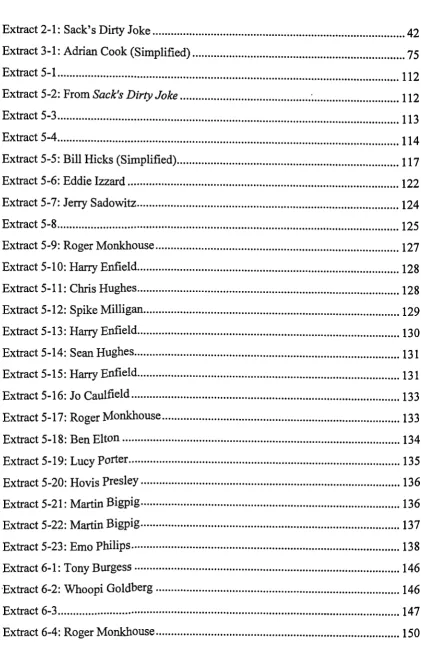
Extract2-1: Sack's Dirty Joke...42
Extract3-1: Adrian Cook (Simplified)...75
Extract5-1...112
Extract5-2:
From
Sack's Dirty Joke...112
Extract
5-3...113
Extract5-4...114
Extract
5-5:Bill Hicks (Simplified)...117
Extract
5-6:Eddie Izzard...122
Extract
5-7:Jerry Sadowitz...124
Extract5-8...125
Extract5-9: Roger Monkhouse...127
Extract
5-10:Harry Enfield...128
Extract5-11: Chris Hughes...128
Extract5-12: Spike Milligan...129
Extract
5-13:Harry Enfield...130
Extract5-14: Sean Hughes...131
Extract5-15: Harry Enlield...131
Extract
5-16:Jo Caulfield...133
Extract
5-17:Roger Monkhouse...133
Extract
5-18:Ben Elton...134
Extract
5-19:Lucy porter...135
Extract5-20: Hovis Presley...136
Extract
5-21:Martin Bigpig...136
Extract
5-22:Martin Bigpig...137
Extract
5-23:Emo Philips...138
Extract6-1: Tony Burgess ...146
Extract6-2: Whoopi Goldberg ...146
Extract6-3...147
Extract
6-5:Alex Boardman. 151
Extract6-6: Roger Monkhouse...
152Extract6-7: Roger Monkhouse...
152Extract6-8: Alex Boardman...
155Extract6-9: Alex Boardman...
155Extract6-10: Tony Burgess ...
155Extract6-11: Roger Monkhouse...
156Extract6-12: Johnny Vegas...
156Extract6-13: Johnny Vegas...157
Extract6-14...157
Extract
6-15:Roger Monkhouse...158
Extract6-16: Roger Monkhouse...159
Extract6-17: Johnny Vegas...160
Extract6-18: Johnny Vegas...162
Extract6-19: Johnny Vegas...163
Extract6-20: Johnny Vegas...166
Extract6-21: Adrian Cook...166
Extract6-22...168
Extract6-23: Johnny Vegas...168
Extract6-24: Whoopi Goldberg ...169
Extract
6-25:Tony Burgess ...171
Extract6-26: Roger Monkhouse (Simplified) ...173
Extract 6-27: Tony Burgess and Alex Boardman (Simplified)...174
Extract6-28: Tony Burgess ...175
Extract6-29: Frank Skinner...176
Extract6-3 0: Julian Clarey (aka Joan Collins Fan Club) ...176
Extract6-31: Morecambe & Wise...177
Extract6-32: Jo Caulfield...178
Extract6-33: Lucy Porter...178
Extract6-34: Frank Skinner...179
Extract
6-35:Tony Burgess ...179
Extract 6-37: Frank Skinner . 182
Extract6-38: Steve Punt & Hugh Dennis...182
Extract6-39: Graham Swanson...183
Extract6-40: Adrian Cook...
185
Extract6-41: Chris Addison...
185
Extract6-42: Tony Burgess ...185
Extract6-43: Hovis Presley...186
Extract6-44: Adrian Cook (Simplified)...187
Extract7-1: Anita Wise ...201
Extract7-2: Roger Monkhouse...202
Extract7-3: Martin Bigpig...204
Extract7-4...205
Extract
7-5...
206Extract7-6: Jo Caulfield...207
Extract7-7: Adrian Cook...207
Extract7-8: Lucy Porter...208
Extract7-9: Jerry Sadowitz...209
Extract7-10: Ben Elton ...209
Extract7-11: Tony Burgess ...211
Extract7-12: Adrian Cook...212
Extract7-13: Lucy Porter...212
Extract7-14: Jo Brand (Simplified)...213
Extract
7-15:
Tony Burgess ...213Extract7-16: Chris Addison...214
Extract7-17: Graham Swanson...215
Extract7-18: Bill Hicks (Simplified)...215
Extract7-19: Lucy Porter...216
Extract7-20: Bill Hicks (Simplified)...217
Extract7-21: Chris Addison...i... 218
Extract7-22: Lily Savage (Simplified)...219
Extract7-23: Adrian Cook...220
Extract
7-25:Bill Hicks (Simplified) . 222
Extract7-26; Tony Burgess ...222
Extract7-27: Woody Allen (Simplified) ...228
Extract7-28: Tony Burgess ...230
Extract7-29: Oliver Double ...232
Extract7-30: Harry Enfield...232
Extract7-31: Ben Elton...233
Extract7-32: Jo Brand...233
Extract7-33: Oliver Double ...234
Extract7-34: Roger Monkhouse...235
Extract
7-35:Greg Proops (Simplified)...237
Extract7-3 6: Sean Hughes...238
Extract7-37: Bill Hicks (Simplified)...239
Extract7-38: Chris Addison...241
Extract8-1...247
Extract8-2: Ben Elton...248
Extract8-3: Martin Bigpig...253
Extract8-4: Jo Brand...254
Extract
8-5:Roger Monkhouse...254
Extract8-6: Roger Monkhouse...
255Extract8-7: Chris Hughes...
256Extract8-8: Lucy Porter...
256Extract8-9: Roger Monkhouse...
256Extract8-10...257
Extract8-11: Oliver Double (Simplified)...
257Extract8-12: Oliver Double ...258
Extract8-13: Martin Bigpig...
259Extract8-14: Frank Skinner...260
Extract
8-15:Robert Newman...261
Extract8-16: Eddie Izzard...262
Extract8-17: Martin Bigpig...262
Extract 8-19: Frank Ser. 263
Extract8-20: Roger Monkhouse...264
Extract8-21: Johnny Vegas...264
Extract8-22: Graham Swanson... 265
Extract8-23: Jo Caulfield... 265
Extract8-24: Ben Elton...266
Extract 8-25: Chris Addison...267
Extract8-26: Chris Hughes...267
Extract8-27: Roger Monkhouse...267
Extract8-28: Adrian Cook...268
Extract8-29: Eddie Izzard...268
Extract8-30: Roger Monkhouse...269
Extract8-31: Lucy Porter (Simplified)...269
Extract8-32: Johnny Vegas...270
Extract8-33: Tony Burgess ...270
Extract8-34: Andrew "Dice" Clay...271
Extract 8-35: Adrian Cook...271
Extract8-3 6: Johnny Vegas...272
Extract8-3 7: Jo Caulfield...272
Extract8-3 8: Johnny Vegas...273
Extract8-39: Martin Bigpig...274
Extract8-40: Neil Masters...274
Extract8-41: Adrian Cook...275
Extract8-42: Roger Moiikllouse...277
Extract8-43: Graham Swanson...278
Extract8-44: Jo Caulfield...278
Extract8-45: Oliver Double ...278
TABLE OF FIGURES
Figure 2-1: From Koestler, 1964, p.35 .20
Figure2-2: From Attardo & Raskin, 1991, p.325...24
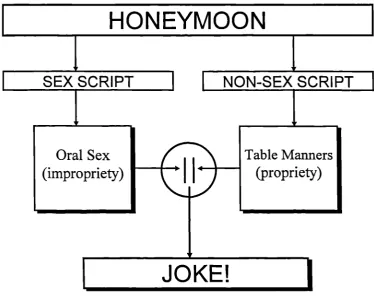
Figure2-3: Script Structure of Sack's Dirty Joke...41
Figure3-1: Stimulus-Response Model of Joke Telling...69
Figure4-1: Stimulus-Response Model of Joke Telling...90
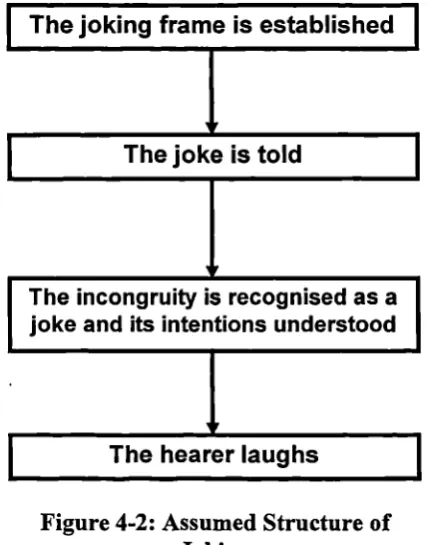
Figure4-2: Assumed Structure of Joking...90
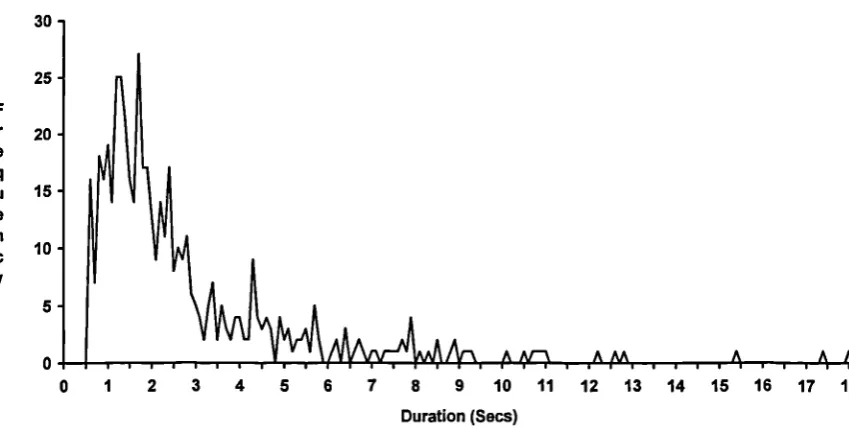
Figure 5-1: Frequency of Laughter Durations for Bill Hicks...117
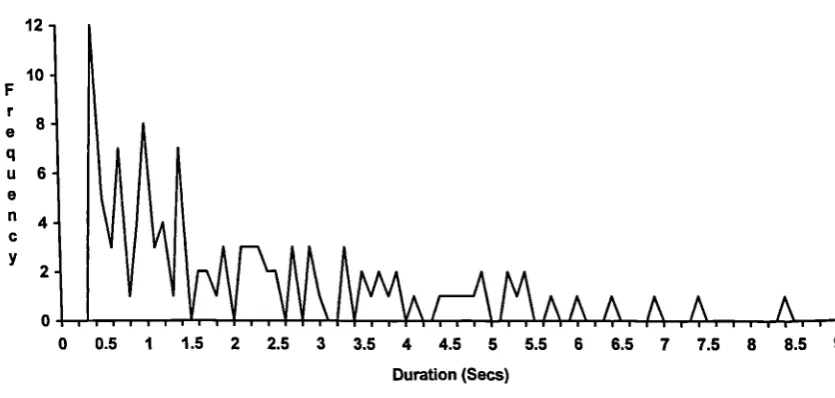
Figure 5-2: Frequency of Laughter Durations for Adrian Cook...119
Figure 5-3: Percentage Distribution of Audience Laughter Received...120
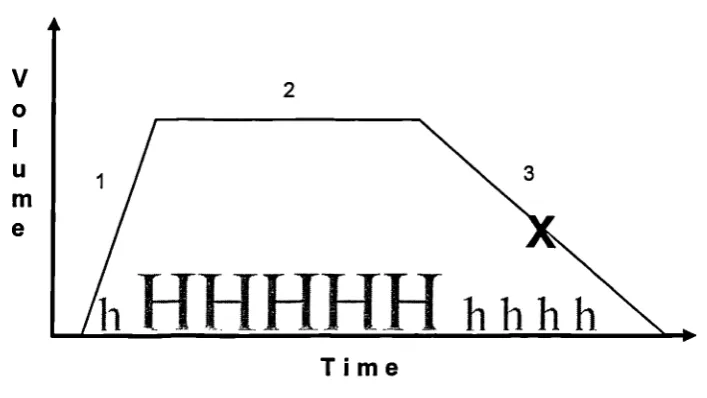
Figure 5-4: Basic Structure of Audience Laughter...132
Figure 6-1: The Preference Structure of Introduction Sequences in Stand-up ...164
Figure6-2: Dual Function of Applause...167
Figure6-3: Structure of Openings ...191
Figure8-1: Dual Function of Closing Applause...276
TABLE OF TABLES
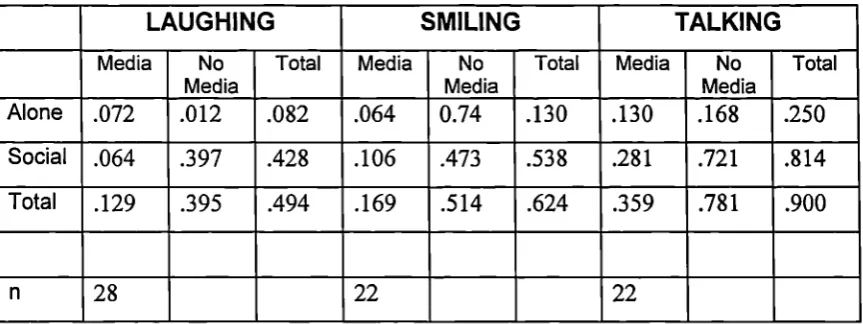
Table 3-1: Probability of awake subjects laughing, smiling, or talking in different
socialand media environments...60
Table 7-1: Frequency Distribution Of Rhetorical Formats...224
Table 7-2: Comparison Of Distribution Of Rhetorical Formats...225
Table 7-3: Distribution Of VaP Amongst Other Formats...240
Acknowledgements
"THIS SOCIOLOGIST WALKS INTO A BAR...": STAND-UP AND SOCIOLOGY
Mark my words, when a society has to resort to the lavatory for its humour, the writing is on the wall. Alan Bennett
Laughter, humour and joking surround and permeate our every business. They smooth our contact with other individuals, they pepper the media we are exposed to and they play a special part in the relationships we maintain. However very little attention has been paid to any of this by sociologists. It is as though only the
unpleasant or the unequal is suitable focus for sociologists' concerns. Indeed when joking has been opened to research it has tended to be investigations of how it
propagates sexism, racism or other forms of out-grouping. Looking at this literature it is very easy to forget what our everyday experience tells us - that joking and laughter are usually pleasant, warm and thoroughly unacademic experiences. Of course sociology is not alone in it lack of interest in humour and humour as a pleasurable thing to do, - but it provides a starting point.
The problem may be seen as an aspect of the secret guilt that is often associated with exploring pleasurable activities. The Protestant in us raises its ugly work ethic and points out the fun, and especially not rip roaring laughter, sits uneasily with hard work, dedication, and perseverance. Conversely, it may be because we can see inequality around us in concrete form, it has constancy and structure whereas laughter appears so much part of the moment, will 'o' the wisp, resistant to being pinned down with the laborious tools of the analyst. This thesis attempts to
studied but also that they can be investigated sociologically with precision and accuracy.
What this thesis does is to take a very specific, and in many ways a very simple, site ofjoking. It looks at live stand-up comedy and explores the interplay ofjokes, performance, laughter, venue, and audience which make up the experience and allow us to enjoy it. As such one of the main concerns of this thesis is to understand the significant differences between the telling ofj okes and the experience of stand-up. It seeks to establish how audience, venue and comedian each contribute in
manufacturing the stand-up performance which is recognisable by all concerned as well as the academic researcher as being a crucially different experience from the informal sharing ofjokes between friends or colleagues.
What thesis will not do is provide any additional or supplementary theory on the working of the joke text itself. As will be seen, the mechanics ofjoke construction and been thoroughly analysed elsewhere and therefore, I shall not hypothesise what makes a good joke different from a badjoke. Nor shall I investigate the quality of incongruity established by various comic jokes, acts and sequences as such avenues are not a major area for concern within an empirical sociological study of humour. What I am primarily interested in is looking at the way ajoke is performed. I will explore how it is received by an audience and how the dialogue between performer and members of an audience is ordered, maintained and regulated.
perspectives that have been developed to explore, understand and explain humour, joking and laughter. The chapter concludes that a new way of looking at humour is
needed, an approach based in the analysis of the way jokes are told, how hey are laughed at and the interactional space they inhabit.
The interactional space for stand-up is the comedy venue in which a performer and an audience work together to manufacture and evening of comedy. As such Chapter 3 proceeds to an examination of the mechanics this environment exploring what makes a comedy venue as well as how members of an audience fit into and negotiate themselves within it. Again I will review previous research in order to establish its weaknesses and its shortcomings as an academic approach to stand-up from a sociological perspective. Parallels will be drawn between stages of development in humour and audience research and a the case presented for adopting recent
ethnographic approaches of the latter to inform the former. Building on this I will present a detailed description of what going to see stand-up involves, how audiences recognise stand-up and how commonality between venues is encouraged as
beneficial for all concerned parties.
Chapter 2 and 3 present the building blocks of the theoretical perspective taken by this thesis and Chapter 4 takes a methodological turn. It explores how an in situ understanding of stand-up can be constructed and examines how such research can be conducted. It presents a set of criteria that such a new approach to humour has to meet in order to undertake the proposed project. It argues for an approach based upon conversation analysis to underpin it. With its focus on the step by step
Chapter 5 begins the examination and analysis of stand-up performance data. By exploring the relationship not only between punchline and laughter but between audience and comedian, the basic deficiencies in traditional humour research are once again highlighted. The assumed, natural, and omnipresent value of laughter as the consequence of ajoke's punchline cannot be empirically substantiated. Drawing on examples from natural conversation as well as stand-up, the chapter demonstrates that audience laughter is regular and organised in ways not recognised by previous humour research. The chapter develops the merits of a conversation analytic approach to stand-up as a distinct form of interaction. This approach pays special attention to the exchanges between comedian and audience and their placing within the flow of the comedy performance.
The next three chapters together offer a structured analysis of the stand-up itself. In turn they look at openings, middles and closing of acts with a view to examining at how they are organised, how they work, and how they involve the audience within them. Chapter 6 looks at the importance of a successful opening in the organisation of stand-up performances. It shows that, despite their apparent diversity, openings share a common set of organisational elements which have a number of similarities with conversation openings. It looks at both the introduction from the compere that comedians receive as well as the opening of the acts themselves. It offers examples of rule following openings and explains examples which deviate from the common organisation identified.
podium talk such as political speaking the chapter shows how a series of rhetorical formats are used with varying frequency in professional joke telling to maintain audience alertness as well as signpost when laughter is expected. It will demonstrate that these techniques are indeed linked to audience laughter before identifying a number of other performance techniques which are used specifically in stand-up.
Chapter 8 looks at the way comedians close their acts. It starts with the basic yet so far unarticulated observation that stand-up routines don't just finish but are brought to an end. Like Chapter 6 it explores the links between the organisation of
conversation and the social organisation of stand-up and establishes a system of moves which are used and contributed to by performer and audience to manufacture the stand-up sequence. It ends by offering a graphic and rule-based view of the closing of stand-up performances.
CHAPTER 2
HUMOUR THEORY: CL.Asslcs, JOKES AND SOCIOLOGY
"A joke's a serious thing" Charles Churchill, 1763
In the last two decades research into humour has developed into a multidisciplinary research area with its own literature, its own internal debates and a new wave of theory coming out of it. What was once primarily the concern of philosophers and literary critics is now a rich cross-disciplinary field of empirical, conceptual and analytical study. Since the addition to humour research of (social) science
methodologies in the 1 920s numerous disciplines have influenced its evolution. This development has been founded not only on an academic basis but also by an
increasingly organised institutional one as international conferences, journals, professional bodies and research institutes have come into being.
1976 witnessed the first International Conference on Humour and Laughter in founding of the Western Humor and Irony Membership (WHIM) and its associated publication, WHIMSY. These have developed since then into the International Society for Humor Studies (ISHS) and its own journal edited by Victor Raskin. At the same time courses dealing specifically with humour are increasingly less rare if still not common 1 and journals such as Humor: International Journal of Humor Research, Thalia: Studies in Literar y Humor and Studies in American Humor and the French language Humoresgues enjoy a growing readership.
interest and activity has continued, a pattern of major concerns has emerged and been consolidated. These focus on the following:
• Causes of laughter and smiling • Structures of humour
• Functions of humour
• Effects of humour on the individual
• Role of humour in the individual's character • Development of humour viewed diachronically • Differences in humour in various cultures
Each of these concerns has its own literature and principal researchers and is, in turn, divided into various subgroups of interests and approaches. However, they do, in general, tend to draw upon elements of a common body on which to build the foundations of their own concerns. Throughout this chapter it should be borne in mind that both the strength and weakness of humour studies is the manner in which it has a multidisciplinary appeal or at least appealed to scholars from a multitude of disciplines. 3 As a result, key ideas are tested, investigated and integrated by a variety of methods, concerns and specialities most of which fall outside the remit of this chapter. In addition, and partially through this process, these ideas have been redefined, specialised and reinterpreted to highlight specific concerns. Thus even
key terms such as Incongruity, Superiority, and Relief4 that organise the first section of this review,5 can often have differing implications in different academic milieus. Without an accepted nomenclature for Humorology (the term coined in Apte 1988 for a humour studies discipline and approach) it is impossible (and probably not
desirable) to use the discussion in this chapter to derive defmitions for the
terminology used. Instead it seeks to provide some understanding of the broadness and multiplicity that these terms both encompass and against which they struggle.
approach by providing a map of humour research from its roots in classical
philosophy to contemporary researchers. This will explore the three main conceptual themes of the field by outlining in turn the history and attitudes toward superiority theory, relief theory and incongruity theory. The second section of this chapter will turn towards an examination of the contribution made to humour studies by the recent development of the linguistics-influenced joke theory. The third section of the chapter will finish with an examination of the social and sociological theories of humour. This section suggests ways in which each of these approaches, while valuable, is lacking as far as concerns this current thesis. Finally, with extensive illustration, I will point out the unsubstantiated and false assumptions that have become ingrained in humour research Through this I will argue for a transformation
in humour research by introducing new way of examining humour as an interactional experience.
2.1 CLASSICAL THEORIES
Most humour theory can easily be viewed as being derivative of one or more of the three main strands on humour conceptualisation namely superiority, relief and incongruity. These categories represent the "classical theories" of humour research. Each of these three theories has a separate foundation and set of concerns. For example, superiority theory assumes a common psychological make-up for
humankind in which the desire to dominate is omnipresent; relief is based upon on understanding of physiology in which various energies are channelled and dissipated throughout the body and incongruity assumes a specific, linear cognitive model.
Many influential theories of humour, laughter and joking draw elements from more than one of these schools of thought. The primary purpose of the following review is to set out the constituent demands of each school of though. A further aim is to highlight the shortcomings of each approach and to give context to the work
2.1.1 Superiority
Although incongruity is the predominant contemporary theory of humour, superiority is not without its modem advocates such as Charles Gruner (1978) who provides an analysis of humour in which, like Plato (429-347 BC), equates laughing with
laughing at (specifically at the faults of friends rather than enemies). Superiority theory suggests that humour is essentially, if not ubiquitously, aggressive and the laughter that is based in superiority is the humour of ridicule, of the ludicrous and of the grotesque. This form of humour requires those who laugh at a joke viewing themselves as better than the butt of the joke. It is also known as disparagement humour (Suls 1977, McGhee & Duffey 1983, Ziliman 1983), putdown humour (Ziliman and Stocking 1976) and deprecatory humour (Davies 1991a).
We can see such humour as, in Plato's words, "a mixture of pain and pleasure" (Plijjebus, 48, p.56). It involves laughter at the folly of others, usually, and is directed against those who we perceive as inferior to ourselves (see also Aristotle,
1977). This is why, for Plato and Aristotle (3 84-322 BC), such joking is malicious, it is a vice, an activity that should, where possible, be avoided and discouraged. Aristotle argues that while laughter per se is not a vice, the failure to recognise the limits that mark the acceptability or otherwise of the joke is: "Because ridicule is a sort of deformation, and some forms of deformation are forbidden by law, and
presumably some kinds of ridicule should be forbidden too." (Ethics, Book IV, Chpt. 8, p.1 68)8 Therefore, in order for imperfections to be amusing, we must assess them as relatively minor in character (see also Bergson p.149, Rapp 1949 p.W7-88,
Zijderveld 1983 p.9-10, Flaherty 1984 p.76 and Powell 1988, p.93).
{T]he Ludicrous is merely a subdivision of the Ugly. It may be defmed as a defect or ugliness which is not painful or destructive. Thus for example, the comic mask is ugly and distorted, but does not cause pain.
Aristotle, 1977, Chpt 5
Similarly in The Passions of the Soul René Descartes (1596-1650) emphasises the object of humour must be of "some small evil" (Article 178). However, he adds that we must be perceive the butt of humour in successful joking as somehow deserving the derision and scorn of the joker. This view of humour as being somehow socially responsible is by no means common to all theorists of superiority. Thomas }iobbes (1588-1679), for example, argues his superiority theory of humour from a viewpoint
of people in a constant struggle for power and the will to prove superiority over others. For him humour is a way of both exhibiting power over others and a demonstration of superiority. In Human Nature (1650/1969) Hobbes states "we triumph when we laugh" and explicitly suggests that there are two types of laughter:
1. Laughter at one's self- at our jokes, at our ability to exceed our
expectations, or recognition of our own strengths which congratulates and consolidates our own superiority (the opposite to self-deprecatory humour and might be termed self-congratulatory humour)
2. Laughter at someone else - at their "infirmity or absurdity", the recognition that they are our inferiors, the realisation that they reinforce our eminence.
Hobbes, 1650, Chpt 8,13
Although Hobbes recognises the harm that the use of humour to attack others can do, the aggression of humour is essential and integral to its structure. He regards both the use of humour and the manner in which it is appreciated as containing a violent component. Central to the Hobbesian notion of superiority is the influential concept of "Sudden Glory", the belief that laughter is the result of an abrupt recognition of meaning or status. This Hobbes defines in Leviathan (1651/1 974) as:
conscious of the fewest abilities in themselves; who are forced to keep them selves in their own favour, by observing the imperfection of other men. And therefore, much laughter at defect of others, is a sign of pusillanimity. For of great minds, one of the proper works is, to help and free others from scorn; and compare themselves only with the most able.
Hobbes, 1974, p.52
Descartes suggests that laughter at the shortcomings of others (rather than the other themselves) is a beneficial activity that functions towards "reproving vices by making them appear ridiculous" (Articles 180). Such a viewpoint of superiority humour as a social corrective is most often associated with Henri Bergson
(1859-1941). Laughter, for Bergson, is not occasionally social in function but is essentially so. Laughter is the social gesture that highlights and embarrasses deviants into improvement or correction.
Polarities are central to Bergson's theory of laughter as he distinguishes between not only proper and improper social behaviour but between animal and human, the natural with the mechanical, the elastic with the inelastic. Unlike animals,'° humans are governed by the opposing forces of Tension and Elasticity. Imbalance in these forces results in "sickness and infirmity and accidents of every kind," (1911, p.1 8) and therefore have social ramifications beyond the individual. In Bergson's
phraseology we laugh as people's "mechanical inelasticity" (1911, p.10) 1 ' which is the result of habit, the result of acting solely in accordance to our previous
experience without paying heed to our contemporary situation.' 2 This formulation suggests that when we laugh, we laugh at the mechanical behaviour of an individual rather than at the individual themselves.
Such aggression expresses a psychological superiority that displays itself through laughter. However, for Albert Rapp (1949) such battling of the mind is just the most recent incarnation of physical aggression and bodily superiority. Although he makes no reference to Bergson, Rapp attempts to develop an evolutionary theory of
laughter" (p.84). Similarly, as society evolves and censures violence the physical battle becomes a battle of wit and the joke becomes the symbolic representation of the barbaric duel. The "duel of mental skill" (p.88)' in which laughter still marks the winner and the derision of the looser supersedes warfare. In Understandin g Laughter (1978) Gruner again paints the picture of our pre-vocal ancestors fighting "tooth and nail" (p.43) to settle differences with laughter being simultaneously a signal of victory and mockery over the inferior opponent. The verbal conflict becomes less formalised as the modem joke develops, the exchange becomes increasingly
removed from the site of conflict as issues of sport, play, and fun become socialised into the joking ritual.
Agreeing with Rapp's evolutionary narrative, Gruner' 5 is perhaps the most vocal proponent of aggression theory in contemporary humour studies with his placing of Rapp's theory firmly in the context of Hobbes' sudden glory.' 6 Joking for both Rapp
and Gruner is the contemporary version of battles. It has developed in accordance with a desire for social efficiency: the joking battle leaves no member of the community dead, physically wounded or unable to work. However, although the importance of the humiliation of the opponent becomes less central to the joking exchange, laughter still marks a victory over an inferior opponent. Where Gruner begins to supplement Rapp's theory is the importance he places on the development of language. This, he argues, not only made ridicule manufacturable on demand without the need for physical diversion, but allowed for exaggeration and distortion. Thus it was no longer possible to demonstrate victory only against those who are actually inferior. Language makes it feasible to represent others as being inferior through deliberate mockery.
The difficulty with superiority theory is that it requires such a malleable understanding of its key concept. Physical and mental superiority, social
responsibility, mockery of the afflicted, unfounded denigration and a contest for dominance are all included within definitions of superiority and make any cohesive definition difficult to arrive at. Further, such notions of superiority and the acts they inspire are common to other forms of attack and derision that are clearly not
often need redrawing or broadening in order to fit superiority theory so that they lose analytical cohesion. For example, Francis Hutcheson (1694-1756) points out if superiority is the essence of humour then it follows that greater superiority will lead to greater hilarity. However he suggests, using animals as an illustrative example, it is not the large differences (and therefore the greater superiority) which we laugh at but the lesser ones and even similarities. Thus we tend to find apes, cats and dogs funnier as they tend to be more easily personified than "asses, and owls, and snails" (1983, p.29).'8
2.1.3 Relief
Theories of relief tend to be based on variations of what might be called the head-of-steam principle. That is, something, whether it be "psychic energy" (Freud,
1905/1976) or "nerve force" (Spencer, 1911) builds up within a person's system and, having no more useful purpose, must be released. Such a release must be physical, abrupt and socially acceptable and laughter is thought, by relief-theorists, to ideally fit that purpose. Relief theory assumes that this build-up of surplus energy is
inefficient if not detrimental to physical or psychological well-being which is why a spontaneous release is necessary rather than a slow dissipation. Such a theory
obviously has appeal to those who wish to link good-health and laughter' 9 by arguing that laughter reduces stress, lowers blood pressure, helps the immune system,
increases pain tolerance, etc. 2° As such, relief theories tend to be primarily theories of laughter rather than theories of humour.
However, there is also a rich background of literature outlining a theory of humour grounded in the link between laughter and the release of tension, energy or from seriousness. For example, although Alexander Pain (1820-1903) is more commonly associated with superiority theory he wrote in 1859: "It is the coerced form of
This is a very unusual concept of relief as Bain's release is an escape from what Mulkay (1988) would refer to as "serious discourse" (p.22). In fact, Bain's work extensively criticises other relief theories, especially as found in Herbert Spencer's (1820-1903) essay on comedy, which stresses physical relief as the cause of humour. Spencer proposes a general theory for laughter by turning to physiology. He builds on observations concerning reflex actions (such as blinking, or movement of the foot on being tickled) and extrapolates a reflexive view of the human body in an attempt to understand voluntary actions as well as involuntary ones. He links nervous and
emotional states and provides illustrations of moments at which one effects the other such as facial movement almost universally accompanying joy, strength gained when life is under threat, the rise in pulse rate during stimulation. However, for Spencer, states such as fear do not just increase the ability for flight or fight but produce a surplus of energy that contributes to the "rapid current of ideas" (Morreall, 1987, p.102). The important thing is not how the nervous energy is used but that it must be dissipated through whatever physical channel is available. If one or more channel of discharge is obstructed, then this will increase the energy dissipated through other avenues. Laughter, for Spencer, is an effective method for the releasing of otherwise blocked nervous energy. If "nerve force" cannot be used practically in combat or through flight, the body will seek another option most commonly through the regularly used lungs, diaphragm, lips, tongue and face, that is through the physical action of laughing.
You are sitting in a theatre, absorbed in the progress of an interesting drama. Some climax has been reached which has aroused your sympathies - say, a reconciliation between the hero and heroine, after long and painful
misunderstanding [...] And now, while you are contemplating the
reconciliation with a pleasurable sympathy, there appears from behind the scenes a tame kid, which, having stared round at the audience, walks up to the lovers and sniffs at them.
Morreall, 1987, p.106
This is important to Spencer as it demonstrates the descending incongruity that arises in the emotional shift from expectation of an important event to the denial of this with the appearance of the goat. The emotional energy thus remains unchannelled and surplus and therefore, according to Spencer, is discharged through laughter.
It is, however, with Sigmund Freud (1856-1939) that relief theory reaches its zenith and its most influential position (both as influence and counter action). Freud suggests that "psychic energy" is produced by individuals to facilitate the
suppression of feelings in taboo areas such as sex, death or aggression. When we laugh at a dirty joke, the energy that would be used to suppress sexual feeling becomes surplus and laughter is used as a method of relieving ourselves of this energy. Laughing at the dirty joke not only releases the psychic energy but allows the entertainment of forbidden thoughts. Moreover the enjoyment of the joke correlates with the amount of energy that would have been used in suppression. Thus, in theory, the more repressed sexual feelings are, the more pleasure laughter at sexual jokes provides.
example the picking up of a piece of fruit involves the assessment of the amount of energy needed is before the action is performed. If on picking the fruit up, it is found to be lighter, then expended laughter will follow.2'
More conventionally for release theory, the release of psychic energy involved in the appreciation of humour is that provided as the pleasant sensations of experiencing humour replaces negative feelings such as pain, distress or sadness. Thus the observer of a person falling to the ground might normally feel pity or distress. However, if the faller is a clown, such feelings become inappropriate and are
discharged as laughter.
Freud's influence can be seen most clearly in the work of Grotjalm (e.g. 1957) and in Berlyne's (1972) theory of arousal jag. The idea of release through laughter is also present in the formulations of Koestler (1964),22 Gruner (1978) and Zillmann and Cantor (1976).23 However, problems still remain with both a Freudian and more general view of relief theory. Relief theories are essential physiological or psycho-physiological in nature but have little biological evidence to support their foundation in the conversion of energy to laughter. The head-of-steam principle they assert is vague and those physical effects of laughter that are observable such as lowering of blood pressure tend to be negligible.
Further, relief theories are non-contextual; that is they seek to explain all laughter through a single set of causes regardless of its time and place, history or persons involved. They cannot incorporate social specifics into their viewpoint and so fail to recognise difference in laughter between different environments. For example they
2.1.3 Incongruity
Incongruity has been and remains the most influential approach to the study of humour even though superiority predates it by approximately two thousand years. Although by no means the first or the most recent defmition of humorous
incongruity, Schopenhauer's analysis encapsulates the most common and central issues to incongruity theory:
The cause of laughter in every case is simply the sudden perception of the incongruity between a concept and the real objects which have been thought through it in some relation, and the laugh itself is just an expression of this incongruity.
Schopenhauer, 1883, p.76
Incorporated in this observation by Schopenhauer are the main components common to incongruity theories:
• Difference (between an object and a concept of that object)
• Codes/myths/scripts/roles (depending on disciplinary terminology) • Multiple sets of codes
• Presentation of the joke narrative (the stem)
• Presentation of the falseness of the narrative's congruity (punchline) • Rapidity of the realisation of the incongruity
genius; a lion of intrepidity; an ant or bee of low industry and prudent economy." (1973, p.109)
Given that objects carry an associated meaning, Hutcheson hypothesises in the association of contrasting elements, the mixing of high and low, the linking of perfection and profanity is essential to humour. So the simultaneous association and discrimination of two ideas (as in the pompous person falling on the archetypal banana skin) or the comparison of one object to another (as in Bottom's head being tuned into an ass' in A Midsummer's Ni ght Dream) are humorous. Similarly if gravity, seriousness and high thought are discovered to be built on pretence, the contrast between the two entities is laughable.24
Whereas for Hutcheson, humour arises from the incompatibility of emblematic meanings, for Kant the emphasis is on the incongruity of the bodily experience. Kant's often-quoted definition of humorous laughter as "an affection arising from the sudden transformation of a strained expectation into nothing" (1951, p.177) is the foundation of his theory of humour. He suggests that the things we laugh at are all very much like garden path stories in which arouse our expectations and peek our curiosity as we try to work out the (logical) conclusion of the tale, joke or happening. However, it is the unexpectedness of the conclusion of the story or event that leads to nothingness and so laughter. There are shades of relief theory here, especially with Kant's emphasis on the physiological. However, Kant reverses the usual relief equation suggesting that we laugh not because we need to expend the pent-up tension of expectation, but rather, because of the bodily shock of the joke's nothingness.
Kant's observation of humour's building up of expectation, followed by its transformation into nothingness and his assertion of the vitality of the suddenness
(1951, p.l'79) of that transformation are a blueprint for an analysis ofjoke structure. His period of expectation is the stem of the joke while the rapid transformation equates with the well-structured punchline. This, when supplemented with Arthur Schopenhauer's (1788-1860) analysis begins to come even closer to modem joke and incongruity theory (e.g. Attardo & Raskin 1991). In jokes examined through
concept then becomes applied to both objects and the objects become similar.
However, as the joke progresses, it becomes apparent that the concept only applies to one of the objects and the difference between them becomes apparent. Thus in a well-worn joke such as:
A: My dog has no nose
B: How does he smell
A: Terrible
Dog and Nose are the objects linked by the concept of smell and become part of the same unit. It is only when the response "Terrible" is added to the concept of smell that the realisation of a meaning applicable only to smell as a quality judgement rather than to smell as a biological action becomes apparent. Thus the hub of the joke structure lies not solely in the perception of incongruity but the resolution of
that incongruity in a congruous, if novel, manner. As such incongruity theory becomes more correctly titled incongruity/resolution theory.
Working with a similar notion of humour as the resolution of incongruous, co-present ideas, as the violent combination of dissimilar ideas, Arthur Koestler
Figure 2-1: From Koestler, 1964, p.35
Koestler explains this figure thus:
The pattern underlying both stories {Koestler's and Freud's] is the perceiving of a situation of idea, L, in two self-consistent but habitually incompatible frames of reference, M1 and M2. The event L, in which the two intersect, is
made to vibrate simultaneously on two different wavelengths, as it were. While this unusual situation lasts, L is not merely linked to one associative context, but bisociated with two.
Koestler, 1964, p.35
To return to the dog joke referred to above to illustrate Koestler's diagram, the horizontal (Ml) and vertical (M2) planes represent the dual meanings of "How does he smell". The joke's punchline precipitates a collision of these two incompatible meanings at the intersection of M i andM2 and this collision at L is the basis of the joke's humour. This for Koestler is the essence of bisociation: The logical
The geometric simplicity that incongruity demonstrates and is found in diagrams such a Koestler's along with powerful demonstrations in incongruity literature of incongruities present in canned jokes makes incongruity theory a very attractive manner of approaching the study ofjokes. However incongruity theory is essentially a theory ofjoke structure rather than an theory of humour, laughter or social use. As such it cannot address issues surrounding who is telling a joke, how it is told or who laughs at it. Further, incongruity theory is at a loss to sufficiently explain two basic questions that rise from its own argument: If incongruity relies on the surprise collision of two ideas why can we laugh at the same joke more that once? Why aren't all incongruities humorous? Finally, because of it conceptualisation of an all encompassing theory of humour incongruity theory cannot and does not address instances of humour which do not demonstrate the incongruous joke structure.
Despite this, the contribution of Koestler to humour theory has not only served as a focus to research dealing specifically with incongruity but has had a major influence on joke theory. This linguistics-centred field of humour research has developed out from his simple model of a canonical joke structure and seeks to explain the
2.2 JOKE THEORY
In the last decade, the development ofjoke theory has been immensely influential on all fields of humour research. This has developed primarily from linguistics and revolved around the work of Victor Raskin and later his graduate student Salvatore Attardo. Without doubt Raskin's Semantic Mechanism of Humor (1985), which develops a General Theory of Verbal Humor (GTVH), has been the most influential work in humour research in its recent history. The GTVH has become widely accepted across the various disciplines involved in humour studies as a theoretical basis for research. It has gained, despite its faults and lacks, a canonical status such that it is nearly impossible to find published humour research that does not make a reference to it in some way. It is in recognition of this that I will give a brief overview of this work.
Raskin's joke theory is essentially an incongruity/resolution theory but unlike other theorists, Raskin is rigorous in attempting to establish exactly what incongruities are thought funny and what incongruity in the context of humour actually means. The crux of his system is
(107) A text can be characterised as a single-joke-carrying text if both of the conditions in (108) are satisfied
(108) (i) The text is compatible, fully or in part, with two different scripts26 (ii) The two scripts with which the text is compatible are opposite
Raskin, 1985, p.99
"Is the doctor at home?" the patient asked in a bronchial whisper.
"No," the doctor's young pretty wife whispered in reply. "Come right in." Raskin, 1985, p.100
In this joke, suggests Raskin, we have first the DOCTOR script that is signalled by, and through which we read, "doctor", "patient" and "bronchial." However, the reply the doctor's wife gives at the end of the joke introduces a second script, that of LOVER. This second script is compatible with the text's narrative in that it provides a "natural" answer to the question asked. However, it is incompatible with the initial script as the text cannot be both about a patient calling for medical advice and a lover calling for an illicit rendezvous. For Raskin, these two scripts are opposite.27
Although this exposition is brief2 8 at this point Raskin appears, bar the addition of Gricean notions of communication and a semantic analysis, to have not progressed far from Schopenhauer's ideas discussed above. What makes this stream ofjoke theory so important is the development by Raskin and Attardo of the idea of
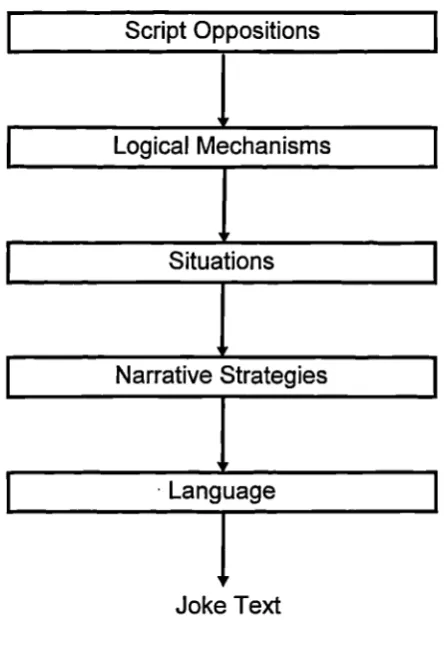
"knowledge resources" that Raskin briefly refers to in 1985 but developed more fully in Raskin and Attardo (1991). In this paper, Raskin and Attardo break down the hearer's and (teller's) mechanisms for understanding a joke text into six discrete categories: Language, Narrative Strategy, Target, Situation, Logical Mechanisms, Script Opposition.
Of course, each of these categories is found elsewhere in other humour research but the success of Attardo and Raskin has been to unite these structures into one coherent taxonomy. Further, the later testing of the system with psychological empiricism
Script Oppositions
Logical Mechanisms
Situations
Narrative Strategies
Language
[image:40.595.178.401.39.362.2]Joke Text
Figure 2-2: From Attardo & Raskin, 1991, p325
In many ways, the Raskin and Attardo application of script theory to humour
research is the ultimate progression of traditional humour research as it not only both grows out of and demonstrates a thorough awareness of previous traditions but incorporates all the features that are common to the main paradigm of incongruity theory. However, because of this it only succeed in providing an refmement of incongruity theory and does not address the basic problems of explaining which combinations of scripts are humorous and which are not nor issues surrounding the hearing and telling of incongruous humour within a lived social experience. 29
Indeed, joke theory is not alone in its failure to fully recognise the importance of the social context of humour which is missing in any extended form in all the
• General theories
They suggest that there is one root of all humour • Individualist
They are only concerned with the laughter of the individual • Causal
They presume that humour is caused • Act based
They argue that in any event the cause of humour can be attributed to an individual action (e.g. ajoke)
• Non-contextual
They all take a view of humour abstracted from chronology, culture or society
In short these theories lack any debate with the plurality that humour demonstrates and its manifestation within our everyday lived experiences. They create an abstract notion of what is laughed at and work from that laughter towards a hypothesis of what caused it. Through the assumption that laughter is the product of a single and identifiable experience they refuse to investigate how humour and laughter are negotiated, shared and manufactured in a social experience. Although Bergson recognises that "our laughter is always the laughter of the group" (1911, p.6) there is surprisingly little work produced by humour researchers or sociologists that
essentially social theories and those which are more properly sociological. That is a failure to differentiate between theorists, such as Bergson (1911), who make general comments of the community they observe and those, such as Flaherty (1984), whose work is based within a specific discipline and set of methodologies.
2.3 SocIAL THEORIES
There are indeed sociological works that deal with humour but as the review below will indicate, they provide contrasting, often contradictory perspectives from within a
social framework. The bodies of sociological work investigate uses and examples of humour in people ranging from small groups negotiating relationships in the
workplace to whole countries bolstering their national identities, and they employ methods ranging from the ethnography of Radcliffe-Brown (1940, 1949) to the interactionist theory of Mulkay (1988); from the micro-sociology of Harvey Sacks (1992) to the macro-analysis of Christie Davies (1980). So the problem arises as to what actually we may consider a sociological perspective for that study of humour. Attention towards or investigation into the social is not a useful criteria because it would include the bodies of psychological work such as Chapman's investigations
into children, social skills and humour (1975, 1973), folkiorists such as Dundes (1987) or Oring (1992), and cultural theorists such as Mintz (1987, 1992). Further there is a body of literature produced by sociologists that deals with subjects such as the use of humour in effective teaching or public speaking. Such work often has more to do with rhetorical analysis than social investigation.
It is more useful to investigate what common ground we can find in questions asked rather than method or topic. In choosing parameters for this review Francis' (1988) observation is a useful starting point. For Francis, the work of the sociologist
[t]he main problem is not "why do we laugh?" - though laughing and humour cannot be totally disentangled - but to understand the social nexus in which humour and laughing occur.
Francis, 1988, p159
By "social nexus" Francis means the cultural and social context that a joke and its audience share and through which an understanding of the joke, its context, its "meaning" and its consequences are learned. For the sociologist, the holy grail of humour research is not to establish what causes humour and laughter but to
understand the way in which it is contextually interpreted. The sociology of humour research is concerned with the encoding of the experience of humour. This
observation can be used to draw the parameters between the work of sociologists and the social-psychologists, philosophers and folkiorists. It encapsulates the central concern for both the research here and that of other sociologists in the experience of humour, the life of humour beyond the text and outside the recurrent paradigm which sees laughter as a response to the joke stimulus.
Through a shift from examination of the humour text to an analysis of the humour environment, it has become a central assumption to the sociological study of humour that humour is constructed and consumed on a utilitarian plane3 ' and joking can be seen to be part of many social actions. 32 For the sociologist studying humour, jokes and laughter are rarely just idle play or inconsequential fooling but are purposeful and effective ways of managing environments, situations and experiences. As such, I have categorised the sociologies of humour into three groups. Each of these
2.3.1 Maintenance Theories
Maintenance theories suggest that jokes are used by individuals to reinforce
established social roles and divisions. They directly link the personal act ofjoking with a much broader social agenda. According to maintenance theories, jokes contribute to consolidating familial roles, status in the workplace, national identities and any situation in which an us-and-them opposition is established as profitable. The basis of maintenance theory lies in A. R. Radcliffe-Brown's (1940, 1949) anthropological work on joking-relationships. The irony of Radcliffe-Brown's work is that it has become better known and referenced as an anthropological benchmark than as a significant contribution to the study of humour. It is easy to notice an
absence of references to his work in otherwise widely encompassing surveys in
humour theory. However, what Radcliffe-Brown suggests is that humour is used within established social organisations such as families to establish and maintain "social equilibrium" (1949, p.135). This done through the operation of "joking relationships" which he defines as:
[A] custom by which persons standing in certain relationships resulting either from kinship, or more usually from marriage, were permitted or required to behave towards one another in a disrespectful or insulting way at which no offence might be taken.
"privileged disrespect and freedom or even licence" (p.208) that is permissible. The joking relationships have recognised limits that must not be crossed by the joker if they are to avoid giving offence. In Radcliffe-Brown's we can see some of the themes of classic humour theory discussed above; superiority/subordination is encoded into the joking relationship and, as was alluded to above, we can see that there is a recognised limit to the joking that is observed.
In contemporary humour studies, it is the work of Christie Davies that we can most clearly associate with the notion that humour functions to build and maintain social structures. His work on ethnic humour (e.g. 1991, 1988, 1982) is often quoted as proof of the functional value of humour although his work is conceptual rather than
empirical. He argues that patterns can be observed in the jokes about stupidity told by various groups. For example, the English tell jokes about the Irish, the Americans tell jokes about the Poles, the Swedish tell jokes about the Finns and the Norwegians, etc.33 In these jokes, a mythical member of an out group becomes a synecdochic representative of all members of that group, all the Irish become identified with and through the Irishman in the joke.
However, one interesting observation in Davies' analysis, and one often missed or glossed over, is that these groups singled out for ridicule are invariably not the arch enemies that the society believes in (such as the cold war Russian to the British) or representatives of a real threat (such as the Japanese during World War ll). Rather the characters who are represented as the butts of the jokes are of a much more local and observable nature. The butts of these ethnic jokes are chosen not because they represent characters alien to the jokers but because they are similar. As such,
In general their relationship [that of the joker and the butt of the joke] may be described as one of centre to periphery. The centre laughs at the alleged stupidity of the periphery, at people who are seen not as aliens but rather as comic versions of themselves.
Davies, 1988, p.48
Davies sees this type of humour as essentially a useful and productive pastime; these jokes, he asserts, "provide the teller with a sudden playful superiority" (1988, p.45),
they "reduce anxiety" and "provide guidance" (1982, p.400). Such claims are one of the weaknesses of Davies' viewpoint. He does not provide evidence for these
cathartic effects of racial (and racist) joking and does not account for instances where such jokes do in fact cause insult and are conductors for bigotry.35
Francis (1988) on the other hand is far less ambivalent in his analysis of ethnic humour. In contrast to Davies, he highlights the basis ofjokes concerning ethnic derision within a culture of oppression and assumption of white superiority. The very fact that a society or group is willing to tell, laugh at and accept the values encoded into a joke's text demonstrates that "some things are proper topics for joking, that certain words are appropriate, that certain situations are appropriate"
(p.160). In such an analysis, the Irish, Jewish, Black, etc. become synonymous with stupidity, meanness, laziness, etc. Further, Francis problematises the just-joking excuse when he points out that jokes are consumed by a self-selecting audience: ethnic jokes communicate specific values to specific peoples. 36 Drawing on Cooper (1988/1711 - often referenced as Shaftesbury), he points out that testing assumptions with humour only becomes a valued expression if the humour can be validated with reason. Thus, ifjokes about race, sex, homosexuality, etc. remain in no way
derogatory once removed from the humorous context, only then can we consider them play.37
representation of a culture's feelings. 38 The cartoon interpellates the reader of it, as they recognise the situations that provoke humour or bathos. As such the cartoon, and by extension jokes, gives the analyst of humour a view of the culture that produced the joke.
In all these maintenance theories, the underlying assumption is that humour regulates by passing some inalienable truths about a society or community. They do not contemplate that these "truth" may not be held by people or that contrary beliefs or multiple viewpoints might be held. Further maintenance theories imply not only that humour reinforces accepted values but that there is indeed a stable set of these norms and that they are in no way negotiated. It is this idea of an ever changing social context that negotiation theories make some entry into exploring.
2.3.2 Negotiation Theories
Zijderveld's paper "Jokes and Their Relation to Social Reality" (1968) provides a thorough and extended study of humour from a specifically sociological
perspective. 39 This, along with his 1983 paper, provides a rich resource for the sociological researcher of comedy. One importance of his work that is often missing from maintenance theories is an emphatic placing of the appreciation of humour within an everyday framework. Humour for Zijderveld is inseparable from the processes of interactive exchange out of which it comes. He sees humour not as the text but as an event which involves agents, situation and interaction. Building on Bergson (and criticising Freud's lack of social awareness), Zijderveld suggests that:
Like most pleasures in human life, humour stands in need of at least one partner. The shipwrecked person on his lonely island may be the target of many jokes, but he himself has very little reason to laugh and few
opportunities to engage in humorous exploits.
Zijderveld, 1983, p.34°
the text. He notes that "it is the observer who defines [...] funny" (1983, p.8) and an old zote (a sexual joke) told by a child is funny "not because of the original substance and meaning, but because the narrator is still a child" (1968, p.291). It is with this change of focus that there is a moving towards an understanding of humour which provides an alternative to a stimulus/response model. In a social context then, incongruous narratives are not funny until we perceive them as such and the criteria we use to make judgements are socially and culturally informed. Jokes are empty vessels ready to be filled with meaning by the hearer. However, without an
explanation of how this total filling up takes place, or how consensus can be reached among hearers, Zijderveld cannot help falling back onto the position that there is some concrete meaning or object that is the basis of the response.
The importance of the social encoding is fully realised when used to provide a sociological grasp of traditional methods of humour theory. With the realisation that incongruity, aggression and relief are all culturally informed and specific
phenomenon, the effects of humour become relevant to an understanding of everyday experience. Zijderveld suggests that by filling a text with our values and
assumptions, humour can show us the breaks in our streams of understanding, highlight false assumptions and lead to revelations. During social interaction, ajoke can immediately reveal the rules governing interaction that we take for granted. In contrast to Davies then, Zijderveld makes the experience of humour an
intersubj ective one.
Similarly, Powell (1988) informs his analysis with ideas of specific cultural
knowledge when, (building on a foundation of Bergsonian control), he suggests that laughter at inappropriate actions is dependent on a number of social criteria including status, relationship and perceived threat. However, where Powell supplements
deviants controlled, but social values are discussed and negotiated. Laughter and humour have become once again a site for individuality and discussion. Consensus cannot be assumed in humour as both Zijderveld and Powell examine ways in which humour attempts to minimise difference but do not take it as read.4 ' Thus, the idea of humour's potential for plurality, confusion and contradiction highlights and further points towards the shortcomings in Davies' theorising.
2.3.3 Frame Theories
In contrast to negotiation theories which place joking against a background of understanding for the everyday culture of the joke frame theories suggest that jokes, riddles and spontaneous witticisms are not part of everyday serious social reality but are breaks from it or in it. They suggest that a time for humour outside serious interaction has to be established and consented to by those involved in joking in
order to be successful. Implicit as part of this consent is the understanding that the usual rules of social discourse are temporarily suspended for the duration of the joking frame established status roles are ignored, responsibility for opinion is denied
and taboos can be breached. The joker is allowed to stand outside normal discourse and protocol and present criticism without fear or retribution. Douglas (1968) investigates joking as ritual in which the joker is granted license to challenge "sense
and hierarchy" (p.370). As such the joke, the joker and their social and historical context are completely intertwined. They make not only the decoding of the joke possible but they control the social regulations that underlie what can be joked at and even what is indeed a joke. Thus, Douglas argues, there is an undeniable link
between social cultures and the joke in that "[t]he social dimension enters at all levels into the perception of ajoke. Even its typical patterning depends on a social valuation of the elements." (p.3 65) Like Zijderveld, but less successfully, she argues for a shift from the study ofjoking and humour as important only as social functions toward a viewpoint which suggests that it is the real world occurrence of the joking situation that is important. Standing in opposition to Radcliffe-Brown,
way in which joking might function towards maintaining social roles but the social context in which the humour is shared. What the humour research, for Douglas, must examine is the "relation between symbolic systems and experience" (1968, p.361).
Douglas' argument takes a previous position to Bogardus' (1945) system by arguing that it is only possible to recognise what a joke is in the first place by knowing the culture that produced it. Only by knowing a culture can an observer read what cultural regulations are being flouted. She suggests that the structures observed in standardised jokes cannot account for most spontaneous humour acts, nor can they define when, in insult rituals, the joking ends and the abuse begins. Jokes can only be understood as founded upon a social context but standing outside its normal discourse. Without knowledge of the relationship between the teller of the joke and its butt, jokes become meaningless. Therefore, for Douglas (and Powell, 1988, assumes this but never explicitly recognises it), jokes are reliant on social structure, they derive from and highlight social positions and anomalies, they are challenges to the social hierarchy. Therefore it is the perception of the "joke form" of the social structure and experience that contributes to the perception of humour more than the joke structure itself. Thus:
In the case of the bishop being stuck in the lift, a group of people are related together in a newly relevant pattern which overthrows the normal one: when one of them makes the smallest jest, something pertinent has been said about the social structure. Hence the enthusiasm with which a joke at the right time is always hailed.
Douglas, 1968, p.368
The joke is simultaneously part of and a reflection upon the social structure it inhabits. It is a symbolic reference to the social fonn and therefore is a rite set outside the normal nature of everyday discourse.