R E S E A R C H A R T I C L E
Open Access
Methylphenidate use and school
performance among primary school
children: a descriptive study
Jurjen van der Schans
1*, Rukiye Çiçek
1, Sefike Vardar
1, Jens HJ Bos
1, Tjalling W de Vries
2, Pieter J Hoekstra
3and Eelko Hak
1,4Abstract
Background:There is no conclusive evidence that stimulants have beneficial effects on major associated outcome parameters, particularly school performance. We assessed the differences in school performance among children using methylphenidate at the end of primary school in relation to various parameters of methylphenidate use.
Methods:We linked children from a pharmacy prescription database with standardized achievement test results at the end of primary school. We explored differences in test scores between current methylphenidate users versus never users and methylphenidate users who stopped treatment at least 6 months before the test, early versus late starters, different dosage of methylphenidate, and concurrent antipsychotic or asthma treatment.
Results: Out of the 7736 children, 377 (4.9%) children were treated with methylphenidate at the time of the test. After adjusting for confounders the methylphenidate users (532.58 ± .48) performed significantly lower on the test than never users (534.72 ± .11). Compared with late starters of methylphenidate treatment (536.94 ± 1.51) we found significantly lower test scores for the early starters (532.33 ± .50).
Conclusion:Our study indicates that children using methylphenidate still perform less at school compared to their peers. Our study also suggests that earlier start of methylphenidate treatment is associated with a lower school performance compared to children starting later with the treatment. This result could either indicate a limited effect of long term treatment or a more strongly affected group of early starters.
Keywords:Methylphenidate, Attention-deficit/hyperactivity disorder, School performance, Pediatrics
Background
Attention-deficit/Hyperactivity disorder (ADHD) is the most commonly diagnosed psychiatric disorder of child-hood and is prevalent among approximately 3–5% of school-aged children [1]. The negative impact of ADHD on school performance is profound. Children with ADHD have been shown to have lower grades, lower mathematics and reading achievement scores, and a higher rate of school dropout and grade retention [2–5]. Treatment of ADHD usually consists of a multi-model approach in which combinations of pharmacological and
non-pharmacological options are being used. Besides the non-pharmacological options like behavioral therapy (for both child and parents), cognitive training, neurofeed-back, psychoeducation, and dietary interventions [6], stimulants are the first drug of choice in the manage-ment of ADHD. In the Netherlands methylphenidate is most frequently used [7]. In a recent systematic review on the efficacy of methylphenidate the authors con-cluded that methylphenidate might have a positive effect on reported ADHD symptoms and teacher-reported general behavior, but quality of the reviewed studies was low and efficacy of psychostimulants was questioned [8]. However, as stated in a commentary on this study, the study’s methods has been criticized its outcome heavily contradicts the wealth of available stud-ies [9]. In general, most studstud-ies have concluded that the * Correspondence:[email protected]
1Groningen Research Institute of Pharmacy, PharmacoTherapy,
-Epidemiology & -Economics, University of Groningen, Antionius Deuginslaan 1, 9713 AV Groningen, the Netherlands
Full list of author information is available at the end of the article
use of methylphenidate in children and adolescents with ADHD also has a positive effect on school performance when looking at different medication types of methylphen-idate versus controls [10–13], and differences in adherence [14]. These results were confirmed by the meta-analysis of Prasad et al. in which the authors concluded that medica-tion used in ADHD treatment could improve academic achievement [15]. All in all, however, the long term effect-iveness of stimulants on school performance remains un-clear in spite of evidence of their short term efficacy in relieving the core symptoms of ADHD and the positive effect on school performance in controlled trial settings. Moreover, it is questioned whether the efficacy of methyl-phenidate on school performance holds in real-life treat-ment settings, outside of formal trials, especially on the long term. Therefore, population based studies, especially focusing on long term effectiveness are warranted.
In this study we explored the differences in school per-formance at the end of primary school between children using methylphenidate and their peers. In addition, we assessed differences in school performance among vari-ous relevant subgroups and characteristics of medica-tion use.
Methods
Study setting
For this cohort study an analysis of the University of Groningen IADB.nl pharmacy prescription database was performed. The IADB database is a longitudinal pharmacy-dispensing database with detailed patient-based drug pre-scription data from 1994 till 2012 from approximately 600.000 patients in the Netherlands. Prescription rates have been found to be representative of the Netherlands as a whole, and the database has been widely used for re-search [16]. Patient anonymity is guaranteed by the use of an unique anonymous identifier, hence the ethical approval for observational studies with data from the IADB has been waived. Dutch patients usually register at a single community pharmacy and therefore this pharmacy can provide an almost complete listing of the subject’s pre-scribed drugs [16].
Study population
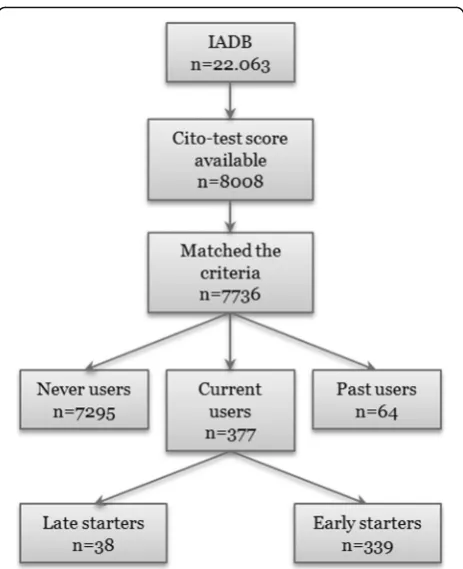
Our study population consisted of 22,063 children born between 1996 and 2001 (Fig. 1). By using a personal identification number unique to every citizen, a linkage with data from Statistics Netherlands (CBS) was formed. Statistics Netherlands was responsible for per-forming the linkage between the two datasets and removed all identification information from the dataset, hence researchers were unable to identify patients. The final study population comprised all children whose full data were available (n= 7736).
Outcome measure
In the Netherlands, all children at the end of primary education around the age of 12 choose which type of secondary education is the most appropriate for them. At the end of primary school, the Central Institute for Test Development (in Dutch: Cito-) test is performed yearly in February in about 85% of the Dutch primary schools [https://www.centraleeindtoetspo.nl/media/uplo ads/files/cvte_tabellen_schaalscore_per_schooltype_en_br ugklastype_2015.pdf]. The Cito-test score is a figure be-tween 501 and 550, based on a transformation of the number of correct answers for two hundred multiple choice questions covering language, arithmetic/mathematic, and general study skills. Because of this transformation we were able to compare the scores from year to year despite difference in difficulty of the tests. The score is an indicator for the learning achievement of a child; indirectly it also is an indicator for intelligence, motivation, concentration, and drives to learn. For the reasons mentioned above the Cito-test is used as an independent, standardized, educa-tional achievement test which indicates the most suitable type of secondary education(≤523: secondary education leading to vocational education level 3; 524–528: level 2; 529–536: level 1; 537–544: secondary education leading to higher professional education; ≥545 secondary education leading to university).
[image:2.595.306.538.85.370.2]Methylphenidate exposure
Methylphenidate exposure was defined as having at least one dispensed prescription for methylphenidate in the period 2001 to 2012. We included children with a follow-up period from the date of the first dispensing of a prescription to at least the year the Cito-test was taken. Children were only included in the study when they were present in the database for at least 1 year be-fore initiation of methylphenidate treatment. We ex-cluded children with the date of the first dispensing of a prescription after March in the year the Cito-test was taken. In addition, children who took the Cito-test twice were also excluded. Non-exposure (never users) was de-fined as having no prescription of methylphenidate, and no prescription of dexamphetamine or atomoxetine due to their association with ADHD. The diagnostic status of the children was not available.
Methylphenidate users
We considered children to have been treated on their test day (February) if they had at least one dispensed prescription for methylphenidate in the year the Cito-test was taken from January 1st to March 31st. We de-fined this treatment group as current users.
We compared current with past users, children who have had at least one dispensed prescription of methyl-phenidate but no prescription of methylmethyl-phenidate in the 6 months before the Cito-test.
To estimate the influence of confounding by indication we further assessed the association between school per-formance and different patterns of methylphenidate use by comparing early versus late start of treatment, current versus past users, different dose regimens and co-occurring conditions such as psychiatric disorders treated with antipsychotics and atopic diseases which may all in-fluence school performances [17]. Children with ADHD are more commonly affected with atopic diseases like ec-zema, asthma, and allergic rhinitis [18, 19].
Start of treatment
The start of treatment for each child was defined by the date of the first dispensing of a prescription for methyl-phenidate within the study period. We compared school performance within the current users group according to methylphenidate treatment start, e.g. early vs. late start of treatment. We used February in the year of the Cito-test as reference date and we defined starting the treatment within 12 months (late start) and later than 12 months (early start) before this reference date.
Dosage of methylphenidate treatment
We compared school performance within the current users group according to their different dosage of me-thylphenidate treatment. The dosage was defined as the
number of Defined Daily Dose (NDDD) per day, which we calculated by dividing the total number of DDD’s prescribed for the drug by the theoretical number of days the drug would be used. To compare different me-thylphenidate dosage treatment groups we classified the current users with prescriptions for methylphenidate in different subgroups according to NDDD’s per day. Since all children take the Cito tests around the same age we assumed the dosage was not dependent on body weight, but related to severity.
Concurrent treatment
We also considered concurrent drug use of other psy-chotropic drugs. Concurrent drug use was defined as at least 1 prescription for any psychotropic drug in the year the Cito-test was taken from January 1st to March 31st in addition to at least 1 prescription for methyl-phenidate in the same period. Other psychotropic drugs were defined as all psychotropic drugs other than methylphenidate.
In addition, we also sought to determine concurrent use of medication for atopic diseases, i.e., inhaled corti-costeroids, short acting beta agonists, nasal steroids, and dermatological corticosteroids. Concurrent use of medi-cation for atopic diseases was defined as having at least 2 prescriptions within a 12-month period in the year the Cito-test was taken, in addition to having at least 1 pre-scription from January 1st
to March 31st.
Potential covariates
Demographic data on every child during the study period, including sex, ethnicity, presence of single par-enthood, and household income was obtained from the CBS. We used data registered to 2012, which repre-sented the most recent years of the IADB prescription data available at the time of our study. We used the household income data of the year 2011, which repre-sents the halfway of the period in which the Cito-test scores were available. Also, we used the type of house-hold information of the year the Cito-test was taken. As all children were 12 or 13 years old we did not include birth year as a potential confounding factor.
Statistical analysis
The frequencies of the baseline characteristics were com-pared by using Pearson chi-squared test. We also described the characteristics of methylphenidate treatment, e.g. start of treatment, dosage of treatment, and concurrent use of antipsychotics or asthma medication. We described crude mean Cito-test scores and tested for significance difference with analysis of variance (ANOVA). Then we tested the interaction terms between covariates and methylphenidate exposure by using backward elimination to exclude non-contributable confounding (pvalue > .05) from the predic-tion model to measure whether the associapredic-tion between methylphenidate use and Cito-test scores differed. An ana-lysis of covariance (ANCOVA) was subsequently con-ducted to test whether there was a statistically significant difference in school performance measured by Cito-test scores between the methylphenidate treatment groups after controlling simultaneously for the effects of confounding. Finally, we performed ANCOVA analyses to test for signifi-cant differences in school performance between the
different treatment groups. In this study only children with full data on all of the included variables were analyzed. Cohen’s d was calculated to determine the standardized difference between two means for the significant findings (Cohen’s d≥0.20; small difference;≥0.50: moderate differ-ence; ≥0.80 large difference). All analyses were conducted using Statistical Package for Social Sciences (SPSS) version 22 and a two sidedpvalue <0.05 was considered to be sta-tistically significant.
Results
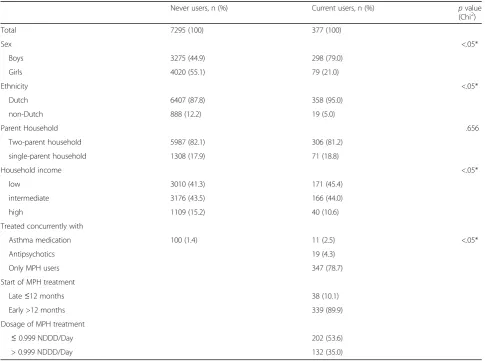
Characteristics between never users of methylphenidate and current users during the time of Cito-test are shown in Table 1. Baseline characteristics among our study population varied for sex, ethnicity and household in-come. Single parenthood was equally distributed over the current and never users.
[image:4.595.56.542.355.716.2]We only found sufficient numbers of medication users with regard to antipsychotics in the other psychotropic medication group, and asthma medication in the atopic
Table 1Comparison of the characteristics between never users and current users
Never users, n (%) Current users, n (%) pvalue
(Chi2)
Total 7295 (100) 377 (100)
Sex <.05*
Boys 3275 (44.9) 298 (79.0)
Girls 4020 (55.1) 79 (21.0)
Ethnicity <.05*
Dutch 6407 (87.8) 358 (95.0)
non-Dutch 888 (12.2) 19 (5.0)
Parent Household .656
Two-parent household 5987 (82.1) 306 (81.2)
single-parent household 1308 (17.9) 71 (18.8)
Household income <.05*
low 3010 (41.3) 171 (45.4)
intermediate 3176 (43.5) 166 (44.0)
high 1109 (15.2) 40 (10.6)
Treated concurrently with
Asthma medication 100 (1.4) 11 (2.5) <.05*
Antipsychotics 19 (4.3)
Only MPH users 347 (78.7)
Start of MPH treatment
Late≤12 months 38 (10.1)
Early >12 months 339 (89.9)
Dosage of MPH treatment
≤0.999 NDDD/Day 202 (53.6)
> 0.999 NDDD/Day 132 (35.0)
medication group. Therefore we could only compare concurrent use of antipsychotics with methylphenidate use and concurrent use of asthma medication with me-thylphenidate use.
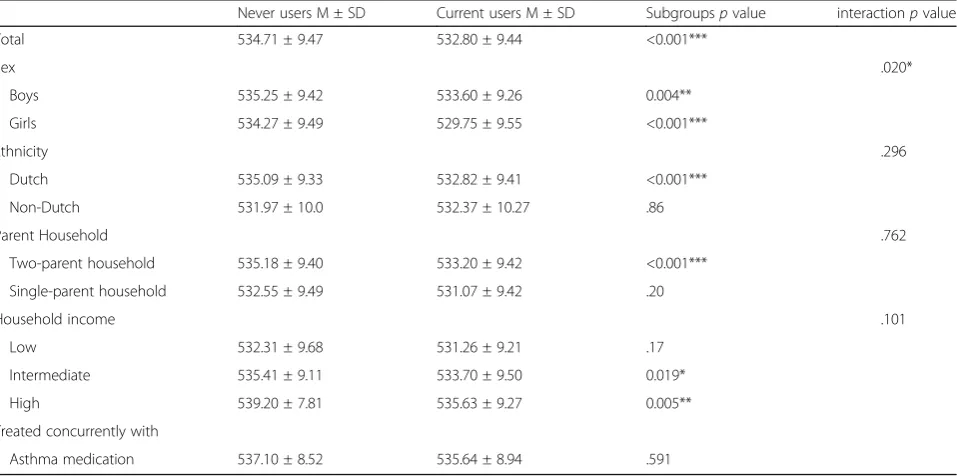
Table 2 shows the baseline characteristics of the study population and results of univariate analyses of the pos-sible confounders in relation to Cito-test scores.
The difference in Cito-test scores between the house-hold income categories tended to significance after ex-cluding the non-significant interaction terms (pvalue .101 from.153).
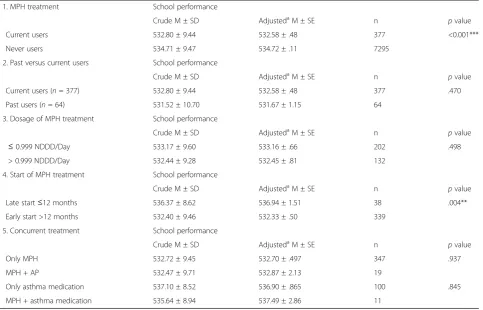
Results of the crude and adjusted mean Cito-test scores controlled for potential effects of sex, ethnicity, parent household and household income are presented in Table 3. After adjustments for the potential confounders, the means of Cito-test scores still differed significantly be-tween the current users and never users. The difference in test score between groups corresponds to a 4% differ-ence when taking into account the score range and a small standardized difference between means (Cohen’s d of 0.20). The adjusted mean estimates remained similar to the crude mean Cito-test scores indicating limited in-fluence of confounding.
In the second part of the table the comparison is made between past and current users of methylphenidate. Both crude and adjusted analyses show no significant difference between both groups. All the covariates, sex, ethnicity, parent household, and household income, had significant influence on the outcome of the mean Cito-test scores.
When comparing the different dose regimens of me-thylphenidate (≤0.999 & >0.999 NDDD/Day) no signifi-cant difference was shown in both the crude and the adjusted models.
Compared with late starters (536.94 ± 1.51) we found significantly lower Cito-test scores for the early starters (532.33 ± .50) with a small standardized difference be-tween means of the crude data (Cohen’s d of 0.43). The adjusted mean of the effect of start treatment on Cito-test scores changed only minimally when we included the covariates, indicating only negligible confounding by these variables. The average Cito-test scores did not differ significantly between early and late starters among the covariates ethnicity and parent household. The adjusted mean Cito-test scores reported remained nearly the same when controlling simultaneously for all covariates except for the methylphenidate + asthma medication group. We found no significant differences in Cito-test scores when comparing the different con-current medication groups. Average Cito-test scores differed significantly only among the covariate sex for the concurrent treatment with antipsychotics.
Discussion
[image:5.595.60.539.469.707.2]This study shows that methylphenidate users have a lower school performance compared to children who have no history of ADHD medication. Furthermore, our results indicate that early starters of methylphenidate treatment have significantly lower school performance
Table 2Baseline characteristics of the study population and results of univariate analyses of the possible confounders in relation to Cito-test scores
Never users M ± SD Current users M ± SD Subgroupspvalue interactionpvalue
Total 534.71 ± 9.47 532.80 ± 9.44 <0.001***
Sex .020*
Boys 535.25 ± 9.42 533.60 ± 9.26 0.004**
Girls 534.27 ± 9.49 529.75 ± 9.55 <0.001***
Ethnicity .296
Dutch 535.09 ± 9.33 532.82 ± 9.41 <0.001***
Non-Dutch 531.97 ± 10.0 532.37 ± 10.27 .86
Parent Household .762
Two-parent household 535.18 ± 9.40 533.20 ± 9.42 <0.001***
Single-parent household 532.55 ± 9.49 531.07 ± 9.42 .20
Household income .101
Low 532.31 ± 9.68 531.26 ± 9.21 .17
Intermediate 535.41 ± 9.11 533.70 ± 9.50 0.019*
High 539.20 ± 7.81 535.63 ± 9.27 0.005**
Treated concurrently with
Asthma medication 537.10 ± 8.52 535.64 ± 8.94 .591
than children starting later with the treatment. Finally, past treatment compared to current treatment of me-thylphenidate, different dosage of methylphenidate and concurrent treatment with antipsychotic or asthma medication all appear to not be related to school performance.
In line with the previously established association be-tween ADHD and poor school performance we found that children using methylphenidate had lower school performance compared with those who never used me-thylphenidate [2–5, 20]. This indicates that methylphenid-ate treatment does not normalize school performance in our study population, however, it may be questioned whether the difference is clinically relevant which is reflected by the small standardized differences between school performances of the different treatment groups. To what extent methylphenidate treatment may still have contributed to improvement of school performance can-not be concluded from our observational data given the lack of a non-treated ADHD group. The absent associ-ation between methylphenidate dosage and school per-formance suggests no major effects. Grizenko et al.(2006) found that children with ADHD and comorbid learning
disability tended to respond more poorly to methylphen-idate [21]. It could be that normalization of school per-formance only occurred in children without comorbid learning disabilities and therefor lowered the result of our analyses.In our study, we found that early starters of me-thylphenidate treatment had significantly lower school performance than children starting later with the treat-ment. It may be important to emphasize that late starters had a higher average Cito-test score than the national average of the Netherlands, which is around 535 [http:// www.cito.nl/onderzoek%20en%20wetenschap/achtergrond informatie/primair_speciaal_onderwijs/eindtoets_onderzo ek_achtergrond]. When comparing early start of treat-ment with late start of treattreat-ment, the short-term effects of methylphenidate may explain these findings, whereas the long-term effects seem less effective. This is in line with existing studies that demonstrated the efficacy of short-term stimulant treatment [22–24]. With the correction for confounding factors it is not likely that we could be deal-ing with a subgroup of highly intellectual children.
[image:6.595.59.543.99.409.2]However, we cannot rule out bias due to different dis-ease characteristics between children starting treatment late and early. These differences may introduce bias to Table 3Crude and adjusted mean Cito-test scores for different methylphenidate treatment characteristics
1. MPH treatment School performance
Crude M ± SD AdjustedaM ± SE n pvalue
Current users 532.80 ± 9.44 532.58 ± .48 377 <0.001***
Never users 534.71 ± 9.47 534.72 ± .11 7295
2. Past versus current users School performance
Crude M ± SD AdjustedaM ± SE n pvalue
Current users (n= 377) 532.80 ± 9.44 532.58 ± .48 377 .470
Past users (n= 64) 531.52 ± 10.70 531.67 ± 1.15 64
3. Dosage of MPH treatment School performance
Crude M ± SD AdjustedaM ± SE n pvalue
≤0.999 NDDD/Day 533.17 ± 9.60 533.16 ± .66 202 .498
> 0.999 NDDD/Day 532.44 ± 9.28 532.45 ± .81 132
4. Start of MPH treatment School performance
Crude M ± SD AdjustedaM ± SE n pvalue
Late start≤12 months 536.37 ± 8.62 536.94 ± 1.51 38 .004**
Early start >12 months 532.40 ± 9.46 532.33 ± .50 339
5. Concurrent treatment School performance
Crude M ± SD AdjustedaM ± SE n pvalue
Only MPH 532.72 ± 9.45 532.70 ± .497 347 .937
MPH + AP 532.47 ± 9.71 532.87 ± 2.13 19
Only asthma medication 537.10 ± 8.52 536.90 ± .865 100 .845
MPH + asthma medication 535.64 ± 8.94 537.49 ± 2.86 11
Abbreviations: M, mean; SD, standard deviation; SE, standard error; n; sample size*Significant at the .05 level **Significant at the 0.01 level
***Significant at the 0.001 level a
comparison, i.e., confounding by indication. It might be expected that children with severe symptoms and more persistent school problems start treatment earlier than those with less severe symptoms. With regard to the subtypes of ADHD, children with hyperactive/impulsive symptoms might be recognized and treated earlier than those who have predominantly inattentive symptoms, because the hyperactivity/impulsive behavior is more disruptive in the classroom [17]. A previous study in Iceland also investigated the difference in start of treat-ment [17]. Although they reported a significantly lower risk of decline in school performance between ages 9 and 12 with earlier start of stimulants. Within our study the influence of treatment on school performance over time could not be examined, as we looked at the per-formance on one test.
Comparing current users and past users showed no difference on school performance, which strengthens the conclusion that methylphenidate treatment either is los-ing its long-term effect or that the past users are a group with less severe ADHD problems. Because there was no difference measured in the different dosage of treatment groups it is less likely that the early starters of methyl-phenidate consist of children with more severe ADHD. It is not likely that missing data of dosage information in 11.4% of the children affected these results, because the missing data of the dosage information is caused by the incorrect or missing registration of this information by the pharmacist.
With respect to potential confounding by co-morbidities, on which we also lack direct information, we attempted to capture co-existing psychiatric disorders by accounting for concurrent antipsychotic use.However, we were unable to identify an association between school performance and use of antipsychotics This is in line with other studies [25, 26].
In addition, we investigated the difference in school performance among children who were concurrently treated with asthma medication and only asthma medi-cation users. Again, no significant difference was found.
In the current study, we employed the unique setting by linking dispensed prescription records with school re-cords to assess the effect of methylphenidate use in childhood on primary school performance. A strength of this study was, that we measured drug use by using pharmacy records. This minimized the risk of recall bias, often associated with survey data, and selection bias as-sociated with use of localized community data. Another strong aspect is the possibility to track children over time until the Cito-test was taken [16]. Furthermore, our objective outcome measure was standardized test scores and because of this we were able to compare the scores from year to year despite differences in the difficulty of the tests.
The study also had several limitations. The biggest limitation is the fact that we were not able to take base-line ADHD severity into account. It is not unreasonable to assume that more severely affected children would have been identified at earlier ages and therefore started earlier on methylphenidate. In the absence of any con-trols, it is impossible to know how these children would have performed on the Cito-test had they not received methylphenidate.
In addition, there was no information about the mag-nitude of potential bias created by other possible medi-cation use, family factors and additional school services, which could have over- or underestimated the actual dif-ference in overall school performance between methyl-phenidate users and never users. Since the IADB.nl database contains only records of dispensed medication it is not possible to measure the actual medication use. Non-adherence could have led to an overestimation of the actual use of methylphenidate.
Finally, in this study we controlled for several con-founders. Our data indicate that methylphenidate use and school performance is somewhat different across boys and girls. Boys performed better on Cito-test than girls. Additionally, in the multivariable analysis the inter-action between methylphenidate use and child’s sex was significant. This is in line with existing studies, which re-veal that boys are three to four times more likely than girls to be diagnosed with ADHD based on studies of community samples. In clinically referred samples the sex differences is as high as five- to nine-fold [27–29]. We assume that methylphenidate use does not have sex-specific effects on school performance and it is therefore likely that ADHD plays a major role. The other possible confounders, which we included in our multivariable analysis, did not show significant effects.
In the subgroup analysis, it was remarkable that in both the methylphenidate users and the never users group the school performance was better as household income was higher. On average, children with a high household in-come scored nearly 7 point higher in the never users group and approximately 4 points higher in the current users group compared to the lowest income bracket. This is consistent with a previous study that is also conducted with Cito-test scores by researchers of the CBS. [http:// www.cbs.nl/en-GB/menu/themas/onderwijs/publicaties/ar tikelen/archief/2013/2013-3815-wm.htm].
comorbid learning disabilities could have influenced the school performance. It is known from literature that children with comorbid learning disabilities respond poorer to stimulant treatment, and this should be taken into account in a future study [21]. We also lack infor-mation about non-pharmacological treatment like con-current behavior therapy and additional school services. However, from literature we know that concurrent be-havioral therapy provides only modest advantages com-pared with drug treatment alone [30]. Thus, this may not be of major concern.
We suspect that children who received special educa-tional services had better outcomes than children without such services. In a further study this effect could be better explored, while also taking into account the perspectives of the teachers.
Although our study showed an association between various parameters of methylphenidate use and school performance, it must be noted that without a clear comparator group and using only correlational data no conclusions can be drawn about cause and effect of methylphenidate use and school performance.
Importantly we need prospective, controlled and large-scaled studies on the long term to evaluate whether short term or chronic methylphenidate treatment will improve school performance of children with ADHD.
Conclusion
In this retrospective descriptive study, earlier start of methylphenidate treatment was associated with a lower school performance than children starting later with the treatment which could indicate a limited effect of long term treatment or a more strongly affected group of early starters. Our study also indicates that children using methylphenidate still perform less at school com-pared to their peers. More study is however warranted to unravel why children who are methylphenidate treated do not score similar as their peers, especially when treatment starts early.
Abbreviations
ADHD:Attention-Deficit/Hyperactivity Disorder; IADB: InterAction Database; NDDD: Number of defined daily dose
Acknowledgements None.
Funding
This study received no specific funding.
Availability of data and materials
Data will not be shared because of restrictions of the use of data imposed by the external data source.
Authors’contributions
Conceived and designed the study: EH PJH TWV JvdS. Acquisition of data: SV RC HJB. Analyzed the data: RC SV HJB JvdS. Wrote the manuscript: JvdS RC SV PJH TWV EH. All authors read and approved the final manuscript.
Competing interests
The authors declare that they have no competing interests.
Consent for publication Not applicable.
Ethics approval and consent to participate
Statistics Netherlands was responsible for performing the linkage between the two datasets and removed all identification information from the dataset, hence researchers were unable to identify patients. Therefore, use of all patient data was in line with the Dutch Law for the Protection of Personal Data and the Declaration of Helsinki.
Publisher’s Note
Springer Nature remains neutral with regard to jurisdictional claims in published maps and institutional affiliations.
Author details
1Groningen Research Institute of Pharmacy, PharmacoTherapy,
-Epidemiology & -Economics, University of Groningen, Antionius Deuginslaan 1, 9713 AV Groningen, the Netherlands.2Department of Pediatrics, Medical Center Leeuwarden, Henri Dunantweg 2, 8934 AD Leeuwarden, the Netherlands.3Department of Psychiatry, University of Groningen, University Medical Center Groningen, Hanzeplein 1, 9713 GZ Groningen, the Netherlands.4Department of Epidemiology, University Medical Center Groningen, Hanzeplein 1, 9713 GZ Groningen, the Netherlands.
Received: 10 November 2016 Accepted: 18 March 2017
References
1. Polanczyk GV, Willcutt EG, Salum GA, Kieling C, Rohde LA. ADHD prevalence estimates across three decades: an updated systematic review and meta-regression analysis. Int J Epidemiol. 2014;43(2):434–42.
2. Barbaresi WJ, Katusic SK, Colligan RC, Weaver AL, Jacobsen SJ. Long-term school outcomes for children with attention-deficit/hyperactivity disorder: a population-based perspective. J Dev Behav Pediatr. 2007;28(4):265–73. 3. Loe IM, Feldman HM. Academic and educational outcomes of children with
ADHD. J Pediatr Psychol. 2007;32(6):643–54.
4. Polderman TJ, Boomsma DI, Bartels M, Verhulst FC, Huizink AC. A systematic review of prospective studies on attention problems and academic achievement. Acta Psychiatr Scand. 2010;122(4):271–84.
5. Barry T, Lyman R, Klinger L. Academic underachievement and attentiondeficit/ hyperactivity disorder: the negative impact of symptom severity on school performance. J Sch Psychol. 2002;40:459–283.
6. Sonuga-Barke EJ, Brandeis D, Cortese S, Daley D, Ferrin M, Holtmann M, Stevenson J, Danckaerts M, van der Oord S, Dopfner M, Dittmann RW, Simonoff E, Zuddas A, Banaschewski T, Buitelaar J, Coghill D, Hollis C, Konofal E, Lecendreux M, Wong IC, Sergeant J. European ADHD guidelines group: Nonpharmacological interventions for ADHD: systematic review and meta-analyses of randomized controlled trials of dietary and psychological treatments. Am J Psychiatry. 2013;170(3):275–89.
7. Trip AM, Visser ST, Kalverdijk LJ, de Jong-van den Berg LT. Large increase of the use of psycho-stimulants among youth in the Netherlands between 1996 and 2006. Br J Clin Pharmacol. 2009;67(4):466–8.
8. Storebo OJ, Krogh HB, Ramstad E, Moreira-Maia CR, Holmskov M, Skoog M, Nilausen TD, Magnusson FL, Zwi M, Gillies D, Rosendal S, Groth C, Rasmussen KB, Gauci D, Kirubakaran R, Forsbol B, Simonsen E, Gluud C. Methylphenidate for attention-deficit/hyperactivity disorder in children and adolescents: Cochrane systematic review with meta-analyses and trial sequential analyses of randomised clinical trials. BMJ. 2015;351:h5203.
9. Banaschewski T, Gerlach M, Becker K, Holtmann M, Dopfner M, Romanos M. Trust, but verify. The errors and misinterpretations in the Cochrane analysis by O. J. Storebo and colleagues on the efficacy and safety of
methylphenidate for the treatment of children and adolescents with ADHD. Z Kinder Jugendpsychiatr Psychother. 2016;44(4):307–14.
11. Wigal SB, Childress AC, Belden HW, Berry SA. NWP06, an extended-release oral suspension of methylphenidate, improved attention-deficit/hyperactivity disorder symptoms compared with placebo in a laboratory classroom study. J Child Adolesc Psychopharmacol. 2013;23(1):3–10.
12. Hammerness P, Fried R, Petty C, Meller B, Biederman J. Assessment of cognitive domains during treatment with OROS methylphenidate in adolescents with ADHD. Child Neuropsychol. 2014;20(3):319–27.
13. Hechtman L, Abikoff H, Klein RG, Weiss G, Respitz C, Kouri J, Blum C, Greenfield B, Etcovitch J, Fleiss K, Pollack S. Academic achievement and emotional status of children with ADHD treated with long-term methylphenidate and multimodal psychosocial treatment. J Am Acad Child Adolesc Psychiatry. 2004; 43(7):812–9.
14. Marcus SC, Durkin M. Stimulant adherence and academic performance in urban youth with attention-deficit/hyperactivity disorder. J Am Acad Child Adolesc Psychiatry. 2011;50(5):480–9.
15. Prasad V, Brogan E, Mulvaney C, Grainge M, Stanton W, Sayal K. How effective are drug treatments for children with ADHD at improving on-task behaviour and academic achievement in the school classroom? A systematic review and meta-analysis. Eur Child Adolesc Psychiatry. 2013;22(4):203–16.
16. Visser ST, Schuiling-Veninga CC, Bos JH, de Jong-van den Berg LT, Postma MJ. The population-based prescription database IADB.Nl: its development, usefulness in outcomes research and challenges. Expert Rev Pharmacoecon Outcomes Res. 2013;13(3):285–92.
17. Zoega H, Rothman KJ, Huybrechts KF, Olafsson O, Baldursson G, Almarsdottir AB, Jonsdottir S, Halldorsson M, Hernandez-Diaz S, Valdimarsdottir UA. A population-based study of stimulant drug treatment of ADHD and academic progress in children. Pediatrics. 2012;130(1):e53–62.
18. Schmitt J, Buske-Kirschbaum A, Roessner V. Is atopic disease a risk factor for attention-deficit/hyperactivity disorder? A systematic review. Allergy. 2010; 65(12):1506–24.
19. Hak E, de Vries TW, Hoekstra PJ, Jick SS. Association of childhood attention-deficit/hyperactivity disorder with atopic diseases and skin infections?A matched case-control study using the general practice research database. Ann Allergy Asthma Immunol. 2013;111(2):102–106.e2.
20. Wilens TE, Biederman J, Brown S, Tanguay S, Monuteaux MC, Blake C, Spencer TJ. Psychiatric comorbidity and functioning in clinically referred preschool children and school-age youths with ADHD. J Am Acad Child Adolesc Psychiatry. 2002; 41(3):262–8.
21. Grizenko N, Bhat M, Schwartz G, Ter-Stepanian M, Joober R. Efficacy of methylphenidate in children with attention-deficit hyperactivity disorder and learning disabilities: a randomized crossover trial. J Psychiatry Neurosci. 2006;31(1):46–51.
22. Abikoff H, Hechtman L, Klein RG, Weiss G, Fleiss K, Etcovitch J, Cousins L, Greenfield B, Martin D, Pollack S. Symptomatic improvement in children with ADHD treated with long-term methylphenidate and multimodal psychosocial treatment. J Am Acad Child Adolesc Psychiatry. 2004;43(7):802–11. 23. Vitiello B. Long-term effects of stimulant medications on the brain: possible
relevance to the treatment of attention deficit hyperactivity disorder. J Child Adolesc Psychopharmacol. 2001;11(1):25–34.
24. Biederman J, Faraone SV. Attention-deficit hyperactivity disorder. Lancet. 2005;366(9481):237–48.
25. Barbaresi WJ, Katusic SK, Colligan RC, Weaver AL, Jacobsen SJ. Modifiers of long-term school outcomes for children with attention-deficit/hyperactivity disorder: does treatment with stimulant medication make a difference? Results from a population-based study. J Dev Behav Pediatr. 2007;28(4):274–87. 26. Frick PJ, Kamphaus RW, Lahey BB, Loeber R, Christ MA, Hart EL, Tannenbaum LE.
Academic underachievement and the disruptive behavior disorders. J Consult Clin Psychol. 1991;59(2):289–94.
27. Barkley RA. Attention-deficit hyperactivity disorder: a handbook for diagnosis and treatment. Fourth ed. New York: The Guilford Press; 2014.
28. Gaub M, Carlson CL. Gender differences in ADHD: a meta-analysis and critical review. J Am Acad Child Adolesc Psychiatry. 1997;36(8):1036–45.
29. Gershon J. A meta-analytic review of gender differences in ADHD. J Atten Disord. 2002;5(3):143–54.
30. Sonuga-Barke EJ, Brandeis D, Cortese S, Daley D, Ferrin M, Holtmann M, Stevenson J, Danckaerts M, van der Oord S, Dopfner M, Dittmann RW, Simonoff E, Zuddas A, Banaschewski T, Buitelaar J, Coghill D, Hollis C, Konofal E, Lecendreux M, Wong IC, Sergeant J, European ADHD Guidelines Group. Nonpharmacological interventions for ADHD: systematic review and meta-analyses of randomized controlled trials of dietary and psychological treatments. Am J Psychiatry. 2013;170(3):275–89.
• We accept pre-submission inquiries
• Our selector tool helps you to find the most relevant journal
• We provide round the clock customer support
• Convenient online submission
• Thorough peer review
• Inclusion in PubMed and all major indexing services
• Maximum visibility for your research
Submit your manuscript at www.biomedcentral.com/submit