Development of Denoising Method for Digital Image
in Low-Light Condition
Suhaila Sari, Sharifah Zahidah Hasan Al Fakkri, Hazli Roslan, Zarina Tukiran
Faculty of Electrical and Electronic EngineeringUniversiti Tun Hussein Onn Malaysia Johor, Malaysia
[email protected], [email protected], {hazli, zarin}@uthm.edu.my
Abstract—A good noise reduction is a method that can reduce the noise level and preserve the details of the image. This paper proposes the development of a denoising method through hybridization of bilateral filters and wavelet thresholding for digital images in low light condition.In the first stage, the noisy image is passed through Bilateral Filter. However, only some amount of noise gets reduced and the image gives a blurred appearance. Hence to preserve the edge details and reduce the blur effect, Wavelet Thresholding is applied and it is proved that the proposed method is more successful to preserve the edges while suppressing the noise.
Index Terms— Bilateral Filter, Wavelet Thresholding, edge preservation, image denoising.
I.INTRODUCTION
Nowadays, an image is synonymous to digital image and is very important for daily life applications such as satellite television, computer vision, medical imaging and etc. Digital images are inseparable parts of many applications. Acquisition, processing, and transmission of image, especially when performed in cost effective ways will generate undesirable artifact. For example, digital images taken by consumer’s digital camera may suffer from thermal sensor noise demosaicking noise and quantization noise [1].
In image denoising process, noise is undesired information that contaminates the image [2]. The information about the type of noise corrupting in the original image plays a significant role to determine the denoising technique. Typical images are corrupted with noise modeled as either or combination of the Gaussian noise, Salt and Pepper noise, Speckle noise, or Poisson noise.
Low-light noise is a significant problem in photography. Most consumers’ cameras have poor low-light characteristics, which typically result in images with noticeable noise artifacts. Although camera technology has been improved extensively, noise still could not be eliminated completely [3]. Therefore this study proposes a denoising method which aims in noise reduction for digital image captured in low light condition.
Many denoising methods have been proposed over the years, such as the Wiener Filter, Wavelet Thresholding [4][5], anisotropic filtering [6], Bilateral Filter [7], Total Variation method [8], and Non-Local Means methods [9].
In the Wavelet Thresholding, a signal is decomposed into approximation (low-frequency) and detail (high-frequency) subbands, and the coefficients in the detail subbands are processed via hard or soft thresholding [10]. The main task of the wavelet thresholding is the selection of threshold value. Various threshold selection strategies have been proposed, for example, VISU Shrink, SURE Shrink and Bayes Shrink [11]. The Bayes Shrink approach determines the threshold value in a Bayesian framework, assuming a Gaussian distribution of the wavelet coefficient [12].
The Bilateral Filter was proposed by Tomasi et al [7]. It applies spatially weighted averaging. This is achieved by combining two Gaussian filters; one filter works in spatial domain, the other in the intensity domain. Therefore, not only the spatial distance but also the intensity distance is important for the determination of weights [12]. Hence, these types of filters can remove the noise in an image effectively [11].
Combination of Bilateral Filter and Wavelet Thresholding was applied by Zhang and Guntruk to eliminate noise in real noisy images [11]. This method is also used by Sudipta Roy, Nidul Sinha and Asoke K. Sen to eliminate noise in medical image [13]. In these papers, the noise is modeled as Gaussian noise. Through these researches, this method has proven significant improvement in noise reduction for images corrupted by Gaussian noise. Since the Gaussian noise distribution has some similar characteristic with Poisson noise [14], this method is expected to provide effective noise reduction for Poisson noise as well. Thus, this work is done to investigate the performance of this method in digital image contaminated with Poisson noise. To our knowledge, such studies in hybridization of bilateral filtering and wavelet thresholding for Poisson noise reduction in digital image have not yet been done.
The paper is organized as follows. The proposed method is described in Section 2. The results and analysis are discussed in Section 3. Finally, concluding remarks are drawn in Section 4.
II.PROPOSED METHOD
both Bilateral Filter and Wavelet Thresholding. Therefore the proposed method is expected to contribute a better preservation of fine details and edges in the image. While applying the threshold rule, the important features like edges, curves and textures can be identified.
A. Bilateral Filter
The Bilateral Filter is a nonlinear weighted averaging filter. The weights depend on both the spatial distance and the intensity distance with respect to the center pixel. It smoothes images while preserving edges with the nonlinear combination of nearby pixel values. This can be achieved by combining two Gaussian filters; one filter works in spatial domain, the other filter works in intensity domain. Therefore, not only the spatial distance but also the intensity distance is important for the determination of weights.
The weakness of the Bilateral Filter is its inability to remove salt and pepper type of noise. It could not access to the different frequency components of a signal which fails to remove low frequency noise. Besides that, there is no study on the optimal values of σd and σr which are the parameters that control the behavior of the Bilateral Filter. Bilateral Filter is known to have good performance in noise reduction, but tend to oversmooth the fine details and edges.
B. Wavelet Thresholding
The wavelets play a major role in image compression and image denoising. Wavelet coefficients calculated by a wavelet transform represent change in the time series at a particular resolution. By considering the time series at various resolutions, it is then possible to filter out noise. The term Wavelet Thresholding is explained as decomposition of the data or the image into wavelet coefficients, comparing the detail coefficients with a given threshold value, and shrinking these coefficients close to zero to take away the effect of noise in the data.
During thresholding, a wavelet coefficient is compared with a given threshold and is set to zero if its magnitude is less than the threshold; otherwise, it is retained or modified depending on the threshold rule. Thresholding distinguishes between the coefficients due to noise and the ones consisting of important signal information. There are two general categories of thresholding which are hard thresholding and soft thresholding. Hard thresholding is a “keep or kill” procedure and is more intuitively appealing while soft thresholding shrinks coefficients above the threshold in absolute value. Wavelet threshold is effective in reducing certain amount of noise while preserving fine details and edges.
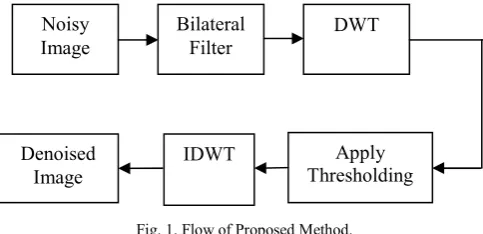
[image:2.595.310.552.62.179.2]In the first stage of this method, the noisy image is passed through Bilateral Filter to reduce as much as possible the amount of noise. In the second stage, the Bilateral Filter output is passed through the Wavelet Thresholding method to reduce the blurring at the fine details and edges regions. The process flow for the proposed method is shown in Fig. 1.
Fig. 1. Flow of Proposed Method.
III.RESULTS AND ANALYSIS
We have conducted some tests to the selected images which are ‘Kuala Lumpur’ (367x374), ‘Johor’ (375x500) and ‘Sarawak’ (599x442). All of the three images are tested with Method 1: Bilateral Filter and Method 2: Proposed Method (Hybridization of Bilateral Filter and Wavelet Thresholding (db4, Bayes soft thresholding, level of decomposition = 1)). These images are corrupted by Poisson noise. To do a quantitative comparison, we simulated the test images under different Poisson distribution, λ, which represent low noise; 0.00001, medium noise; 0.001, and high noise; 0.1, respectively. From the test, there are three evaluation methods that we utilized, which are: a) Peak Signal to Noise Ratio (PSNR), b) Mean Squared Error (MSE), and c) visual effects. To calculate the PSNR, we used:
PSNR 10 log10 255 255 / MSE (1)
While for the MSE, we used:
MSE ∑
A , M NB , (2)where :A is the original image and B is the reconstructed image. M and N are the number of rows and columns in the input images.
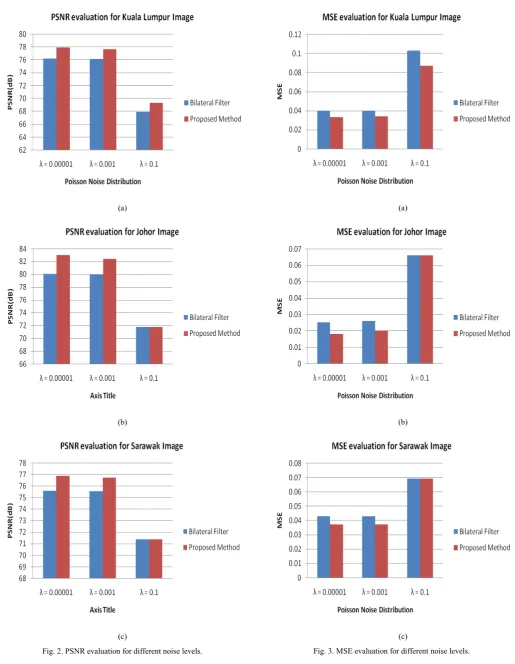
The higher values of the PSNR we get, the better quality of images are produced, whereas the lower value of MSE, the lower error in the images.
The evaluation results are given in Figs. 2 and 3, respectively. From Figs. 2 and 3, we can see that the results for PSNR and MSE values vary for different noise levels. For low and medium noise levels, the values of the PSNR and MSE for the Proposed Method are higher than Bilateral Filter. On the other hand, for higher noise scale, the value for Proposed Method is comparable to Bilateral Filter. From here, we can conclude that the Proposed Method has significantly better denoising performance in comparison to Bilateral Filter alone. Noisy Image Apply Thresholding Bilateral
Filter DWT
IDWT Denoised
(a)
(b)
[image:3.595.40.556.50.715.2](c)
Fig. 2. PSNR evaluation for different noisse levels. Fig. 3. MSE evaluation (a)
(b)
(c)
a) Original Image b) Noisy Image
[image:4.595.300.546.61.345.2]c) Bilateral Filter d) Proposed Method
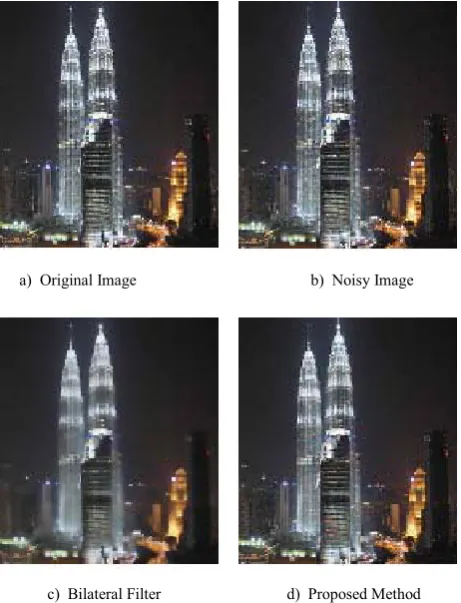
Fig. 4. Kuala Lumpur with low noise level (λ = 0.00001)
a) Original Image b) Noisy Image
[image:4.595.35.262.67.363.2]c) Bilateral Filter d) Proposed Method
Fig. 5. Johor with low noise level (λ = 0.00001).
a) Original Image b) Noisy Image
[image:4.595.311.542.390.692.2]
c) Bilateral Filter d) Proposed Method
Fig. 6. Sarawak low noise level (λ = 0.00001).
a) Original Image b) Noisy Image
c) Bilateral Filter d) Proposed Method
[image:4.595.36.252.393.680.2]
a) Original Image b) Noisy Image
[image:5.595.46.260.54.334.2]
c) Bilateral Filter d) Proposed Method
Fig. 8. Johor with medium noise level (λ = 0.001).
a) Original Image b) Noisy Image
[image:5.595.307.531.54.337.2]c) Bilateral Filter d) Proposed Method
Fig. 9. Sarawak with medium noise level (λ = 0.001).
a) Original Image b) Noisy Image
[image:5.595.30.270.397.667.2]
c) Bilateral Filter d) Proposed Method
Fig. 10. Kuala Lumpur with high noise level (λ = 0.1).
a) Original Image b) Noisy Image
c) Bilateral Filter d) Proposed Method
[image:5.595.320.542.400.677.2]a) Original Image b) Noisy Image
[image:6.595.33.283.59.360.2]c) Bilateral Filter d) Proposed Method
Fig. 12. Sarawak with high noise level (λ = 0.1).
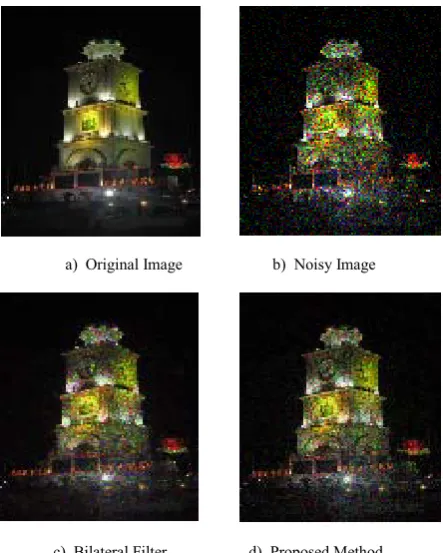
Figs. 4 to12 show the visual effects comparison of denoising result for different night vision images. Figs. (4, 5, 6) illustrate the effect of low Poisson noise level, Figs. (7, 8, 9) are for medium Poisson noise level, and Figs. (10, 11, 12) are for high Poisson noise level, respectively.
Based on the visual effects, they show that although the output images from Bilateral Filter looks smooth and clear, but most of the fine details and edges are oversmoothed and the image blurred. Therefore, by applying Wavelet Thresholding, it multiplies the adjacent wavelet sub bands and strengthens the significant features in the image which indicates that our proposed method is better in image denoising.
IV.CONCLUSION
In this paper, image denoising using hybridization, which integrates both Wavelet Thresholding and Bilateral Filtering is performed. From the result, we can conclude that the performance of the method is significantly better than Bilateral Filter in most noise levels in terms of PSNR and MSE. As for the visual effects, the proposed method provided better denoising while preserving the fine details and edges.
ACKNOWLEDGMENT
The authors would like to thank Universiti Tun Hussein Onn Malaysia (UTHM) and Malaysia Government for the support and sponsor of this study.
REFERENCES
[1] S. Roy, N. Sinha, and A. K. Sen, “A New Hybrid Image Denoising Method,” International Journal of Information Technology and Knowledge Management, vol. 2, no. 2, pp. 491-497, 2010.
[2] M. Teimouri, E. Vahedi, A.N. Avanaki, and Z.H. Shahi, “An Efficient Denoising Method for Color Images,” Proc. of IEEE Conf. on Signal Processing and Its Applications, pp. 1-4, 2007.
[3] P. Chatterjee, N. Joshi, S. B. Kang, and Y. Matsushita, “Noise Suppression in Low-Light Images Joint Denoising and Demosaicing”, IEEE Conf. on Computer Vision & Pattern Recognition (CVPR), pp. 321-328, 2011.
[4] D.L. Donoho, I.M. Johnstone, “Ideal Spatial Adaptation by Wavelet Shrinkage,” Biometrika, vol. 81, no. 3, pp. 425–455, 1994.
[5] Koichi Ogawa, Masahiko Sakata, and Yu Li, “Adaptive Noise Reduction of Scintigrams with a Wavelet Transform”, International Journal of Biomedical Imaging, vol. 2012 (2012), http://dx.doi.org/10.1155/2012/130482.
[6] P. Perona and J. Malik, “Scale-space and Edge Detection using Anisotropic Diffusion,” IEEE Trans.Pattern Analysis and Machine Intelligence, vol. 12, no. 7, pp. 629–639, 1990. [7] C. Tomasi and R. Manduchi, “Bilateral Filtering for Gray and
Color Images,” in Proc. Int. Conf. Computer Vision, pp. 839– 846, 1998.
[8] L. I. Rudin, S. Osher, and E. Fatemi, “Nonlinear Total Variation based Noise Removal Algorithms,” Physica D, 60, no. 1-4, pp. 259–268, 1992.
[9] A. Buades, B. Coll, and J. Morel, “Neighborhood Filters and PDE’s,” Numerische Mathematik, 105, no. 1, pp. 1-34, 2006. [10] David L. Donoho and Iain M. Johnstone, “Adapting to
Unknown Smoothness via Wavelet Shrinkage”, Journal of American Statistical Association, vol. 90, no. 432, pp. 1200-1224, Dec 1995.
[11] Ming Zhang and Bahadir Gunturk, “A New Image Denoising Method based on the Bilateral Filter”, ICASSP, IEEE, pp. 929-932, 2008.
[12] S. Grace Chang, Bin Yu, Martin Vetterli, “Adaptive Wavelet Thresholding for Image Denoising and Compression”, IEEE Transactions on Image Processing, vol. 9, no. 9, pp. 1532 –1546, Sept. 2000.
[13] Sudipta Roy, Nidul Sinha, Asoke K. Sen, “An Efficient Denoising Model based on Wavelet and Bilateral Filters”, International Journal of Computer Applications (0975-8887), vol. 53, no. 10, Sept. 2012.