279
TECHNOLOGICAL CAPABILITY ASSESSMENT
PROCESS: A PERSPECTIVE
Alina Shamsuddin1, Eta Wahab2, Nor Hazana Abdullah3, Nor Kamariah Kamaruddin4
1234Faculty of Technology Management and Business, Universiti Tun Hussein Onn Malaysia,
86400, Johor, Malaysia
ABSTRACT
Technological capability comprises of the soft aspect (intangible), which is the skills, knowledge and experience, the hard aspect, which refers to systems, machines and equipments (tangible) and also the organizational alignment that provide the basis for competitive advantage by enabling organizations to reshape their skills and structures. Literally, technological capability is the ability of firms to undertake a set range of productive tasks aimed at improving their ability to operate specific functions and compete in specific markets and industries. Despite the importance of technological capability, there is still a scarcity of research on the integration of technological capability into the performance measurement system in order to quantify the causal impact of technological capability on the business performance. Existing methodologies, concepts, models, tools and techniques do not provide rigorous tools to allow managers to make investment decisions to enhance their technological capabilities whilst maximising its impact on business performance. This paper describes the development of an assessment model for assessing the impact of technological capability on the performance of a firm. The assessment model has two related objectives, which are: to lead the technological capability improvements and technological determination on the processes and to map the as is and should be of technological capability in relation to the performance of the firm. .
1. INTRODUCTION
280
emphasize self-assessment and those designed to help manager’s measure and improve business processes. A common theme in the newer integrated performance models has been a determined attempt to tie performance metrics more closely to a firm’s strategy and long-term vision (Wongrassamee et. el., 2003). It strives to align the organizational
process with corporate strategy using both performance drivers and outcomes measures (Bremser et. al., 2004). Inappropriate measures lead to actions incongruent with strategies, however well formulated and communicated. Appropriate measures should provide and strengthen this link and both lead to attainment of strategic goals and impact on the goals and strategies needed to achieve them (Amaratunga et. al., 2001).
According to the balanced scorecard model, (Kaplan and Norton, 1996), by learning and innovation, organization will improve its abilities that will facilitate a better performance in internal processes, increasing the efficiency and effectiveness and productivity. As a result, it will fulfil customers’ requirements and enhance customers’ satisfaction and will result a better financial performance. One of the approaches of achieving it is by the technological approach. As agreed by various authors, technological capability enhancement is a learning process (Okejiri 2000, Figueiredo 2002, Costa, Queiroz, 2002, Archibugi, Coco 2004). Furthermore innovation is part of technological capability (Figueiredo 2002). Kaplan and Norton (1996) also note that the measures for the learning and growth is less developed compare to the financial measures, customers satisfaction measures and also in internal business processes measures (Kaplan and Norton, 1996). Thus, developing the measures for learning and growth is essential.
At the early stage of this research, numerous methodologies, frameworks, models have been proposed in recent years, to assess performance, which based on their own views of organizational performance, particularly in the literature of performance measurement, management of technology, knowledge management, and strategic management. All of them are adding value in their own right. Indeed, there has been much effort among scholars and practit ioners to understanding technological capabilities, but very little progress has been paid on integrating technological capabilities into performance management system. Moreover, we still know very little about deployment of technological capabilities on the business processes and the causal effect on performance. The lack of such information represents a gap in our knowledge of technological capability. As continuing the study in technological capability, this paper attempts to develop an assessment met hodology of technological capability in operate processes to lead the technological capability improvements and technological determination on the processes and to map the as is and should be of technological capability in relation to the performance of the firm.
2. BACKGROUND
2.1 Technological capability: Towards a definition
281
capability.
Technological capability has been defined in numerous and varying approaches. It comprises:
The ability to make effective use of technological knowledge (Kim, 1999).
282
The skills, technical knowledge and organizational coherence required to utilise a given technology efficiency, and accomplish any process of technological change (Lall, 1992).
The skills, knowledge and experience required for a firm to achieve technological change at different levels (Costa, Queiroz, 2002).
The knowledge and skills required for firm to choose, install, operate, maintain, adapt, improve and develop technologies (Madanmohan et. al., 2003).
The skills, knowledge and organization needed to absorb, reproduce, adapt and improve new technologies (Caniels and Romijn, 2003).
A set of functional abilities, reflected in the firm’s performance through various technological activities and whose ultimate purpose is firm level value management by developing difficult to copy organizational abilities (Panda and Ramanathan, 1995).
The ability of a firm to transform inputs into outputs (Fransman, 1984).
The operational of the transformation process by regarding technological capability as the ability of a firm to use the resources to combine/recombine components, linkages between components, methods, processes and techniques and underpinning core concepts to offer products (Afuah, 2002).
The ability of firm to undertake a set range of productive tasks aims improving their ability to operate specific functions and compete in specific markets and industries (Lynskey, 1999).
The specific capacity of the research and development (R&D) related resources to create performance (Praest, 1998).
After reviewing the definitions, it became apparent that, having high technology solely does not guarantee profitability. The increase in hardware capacity must go hand in hand with the development of local skills and knowledge to effectively assimilate technology, adapt, improve and ultimately create new technology locally. Further more, management’s ability to engage and operationalise these two aspects and create an environment to maximise the utilisation of the soft and hard aspects are nevertheless important. Therefore, we define technological capability as the soft (comprises the skills, knowledge and experience), hard (machines, equipments, systems, procedure) and also the organizational alignment that define a firm’s ability to effectively and efficiently leverage its technological resources to create competitive advantage. Figure 1. explains our definition of technological capability.
Organizational alignment
Knowledge
283
284
When reviewing the definitions of technological capability, it became apparent that technological capability is intangible. In fact some of the authors use proxies to measure technological capability development (Acha, 2000). It also involves the organizational learning aspect. Organizational learning is concerned with improving the behaviour and capability of individuals so that the organization can more effectively respond to the environment. One major question then arises, would there be any causal connections between technological capability and performance of a firm?
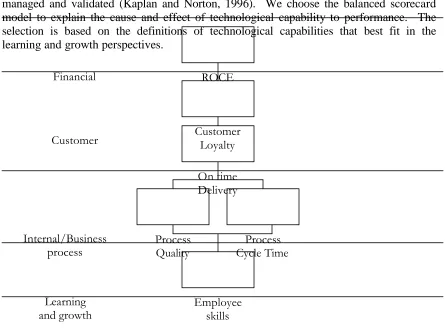
The measurement system should make the relationships (hypotheses) among objectives (and measures) in the various perspectives explicit so that they can be managed and validated (Kaplan and Norton, 1996). We choose the balanced scorecard model to explain the cause and effect of technological capability to performance. The selection is based on the definitions of technological capabilities that best fit in the learning and growth perspectives.
Financial
Customer
ROCE
Customer Loyalty
On time Delivery
Internal/Business process
Learning and growth
Process
Quality Cycle Time Process
[image:6.612.88.534.253.581.2]Employee skills
Figure 2. Strategy maps
Source : Kaplan and Norton, 1996
285
286
financial, customers and internal business process objectives depends on the organizational capabilities for learning and growth (Kaplan and Norton, 1996).
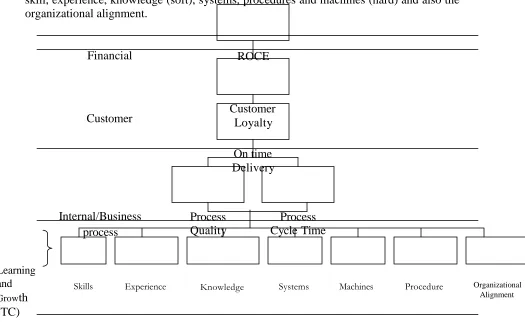
From the literature, we deduce the learning and growth perspective into seven generic drivers, which represent the definition of techno logical capability (TC) which are skill, experience, knowledge (soft), systems, procedures and machines (hard) and also the organizational alignment.
Financial
Customer
ROCE
Customer Loyalty
On time Delivery
Internal/Business process
Process Quality
Process Cycle Time
Learning and
Growth (TC)
[image:8.612.65.590.174.497.2]Skills Experience Knowledge Systems Machines Procedure Organizational Alignment
Figure 3. Cause and effects of technological capability in the strategy maps
2.2 Classifications of technological capability
Earlier works have also contributed to the classification of technological capability as follows:
Investment capability (identify, prepare, obtain technology for design, construct, equip, staff and commission a new facility), production capability (quality control, operation, and maintenance to more advanced ones such as adaptation and linkage capabilities (skills and technology to and receive them from, component or raw materials suppliers, subcontractors, consultants, service firms, and technology institutions) (Lall, 1992).
Experience capability, budget capability, equipment capability, output capability, information capability and management capability (Lin, 1997).
287
288
assimilate, use, master and make minor adaptation of important product and process technologies;
o Improvement capabilities are skills and knowledge associated with major creative imitation of technologies adopted, that is the firm’s ability to improve upon technologies developed by external agents;
o Generative capabilities are characterized by technological creative skills and knowledge.
Meta technological capability, which facilitate the dynamic of the knowledge accumulation itself. There are two meta technological capability which are::
o Learning- knowledge in managing the learning process, there fore it is required through the learning process itself, interacting- is associated with abilities to interact and exchange knowledge with external agents and so it is accumulated through the interaction itself.
o Monitoring- the skills and knowledge required to identify, localize and keep abreast of relevant knowledge in the technological fields related to a firm’s activities. (Costa, Queiroz, 1999).
In contrast, Kumar et. al (1999) classify technological capability as investment capability, operational capabilities and dynamic learning capabilities involved in the technology transfer process.
Investment capabilities are the skills and information needed to identify feasible investment projects, locate and purchase suitable technologies, design and engineer the plant and manage the construction, commissioning and start up. Operational capability generally consists of the skills and information needed to operate, maintain, repair and adapt the technology for increased production and efficiency.
Dynamic learning capability consists of the skills and information needed to generate dynamic technical and organizational changes and to manage the changes (Kumar et. al., 1999)
Panda and Ramanathan (1996 and 1997) classify technological capability into three major classifications, which are;
Strategic technological capabilities, comprises creation, design and engineering and construction capabilities,
Tactical technological capabilities, includes production, marketing and selling and servicing capabilities
Supplementary technological capabilities consist of acquiring and supportive capability (Panda and Ramanthan, 1996, 1997).
289 S et D ir ec tio n Fo rmu lat e S tr at eg ie s D ire ct Bu sine ss M an ag e Fi na nc e S up po rt Pe rs onne l M an ag e Te ch nol og y Manage Processes Operate Processes Get Order Develop Product Fulfil Order Support Product Support Processes
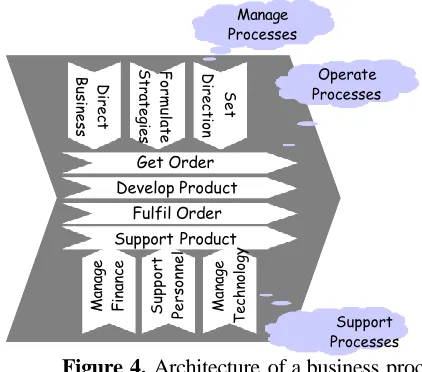
Figure 4. Architecture of a business process
Source : Bititci and Turner, 1999
According to this architecture, value is created through operate-processes, which are supported by support-processes and managed by manage-processes.
2.3 Determinants of technological capability
Researchers have also identified the factors, which influence the enhancing of technological capability of a firm. Those factors are R&D investment, planning and control, technical personnel, training programs, market orientation, government support, national technology infrastructure and mode of transfer (Madanmohan et. al., 2003), collaborations among firms (Lynskey, 1999), general education, formal education, working experience, internal efforts to assimilate and improve products, search for new technological information, external technical assistance and age of firm (Romijn, 1997).
2.4 Assessment of technological capability
There are several methods, frameworks, and models on assessing technological capability. Some of the examples are through benchmarking process (Panda and Ramanthan, 1996), using indirect measures (proxies) (Archa, 2000), technological capability indexes (Archibugi, Coco,2004, Haq, 1985) and also direct measures ((Panda and Ramanthan, 1996, Prencipe, 2000; Lin, 1997) . But, despite a volume of research undertaken, there is scarcity of research on impact on overall performance (Kuen, 2003).
Arguably, if firms do not know the impact of technological capabilities on performance, it is very difficult for them to align technological capabilities with their corporate and functional objectives. Thus, an assessment of technological capability is essential. Furthermore, the assessment output provides the effectiveness of using resources; ability to effectively import technology, enable products and processes to be changed in order to suit local and in the case of exports and external conditions (Fransman, 1984). It also assesses a firm’s ability to:
290
291
Panda and Ramanthan (1996) suggest a five step approach in conducting technological capability assessment which are:
Identification of value addition stages
Identification of the technological capability needed to perform the necessary value addition
Development of a set of indicators for assessing each technological capability Bench marking of technological capability of the firm for the state-of-the art company finding the existing level of technological capability
Determination of the gaps in technological capability (Panda and Ramanathan, 1996)
2.5 Technological capability vs. performance management
One of the important issues in any assessment is the measure used. Measures and measurement system should derive directly from the strategic planning and implementation process (Mc Adam R. and Bailie Brian, 2002). Despite the numbers of work that had been carried out in the area of technological capability, there is still a scarce incorporating activity between technological capability and the whole system of a business. But how can it be done?
Before that, we need to understand a few terminologies in the area of performance management. According to Bititci et. al., (1997), performance management process is the process by which a firm manages its performance in line with its corporate and functional strategies and objectives. The objective is to provide a proactive closed loop control system, where the corporate and functional strategies are deployed to all business processes, activities, tasks and personnel and feedback is obtained through performance measurement system to enable appropriate management decision (Bititci et. el, 1997).
Performance measurement can be defined as the process of quantifying the efficiency and effectiveness of past action (Neely et.al., 2002). A performance measure is a parameter used to quantify the efficiency and/or effectiveness of past action (Neely et. al., 2002). A performance measurement system enables informed decisions to be made and actions to be taken because it quantifies the efficiency and effectiveness of past actions through the acquisition, collation, sorting, analysis and interpretation of appropriate data (Neely et. al. 2002).
Performance measurement system is vital in companies to: Monitor performance
Identify areas that need attention Enhance motivation
Improve communication and
Strengthening accountability (Waggoner et. al., 1999).
292
293
system and behaviour rather than simply or minor or problem solving tools (Gregory 1993).
Consequently, Neely (1999) explains seven important reasons for lots amount of interest in performance measurement systems, namely the changing nature of work; increasing competition; specific improvement initiatives; national and international awards; changing organizational roles; changing external demands; and the power of information technology.
2.6 Conclusions
Based on the literature review, we can draw three important conclusions as follows:
i) Technological capability can be incorporated into the performance measurement system. Based on the definitions that we constructed, it fits most into the learning and growth perspectives in the balanced scorecard.
ii) The assessment of technological capability will be on operate processes where it involves most of the technologies and also it creates value for competitive advantage.
iii) The output of the assessment of technological capability is an input in strategic planning and enables appropriate decision making by providing a quantitative measures. Thus, a better approach in monitoring the enhancement of technological capability can be carried out.
3. ASSESSMENT METHODOLOGY OF TECHNOLOGICAL CAPABILITY
294 Im p r o v e p r o c e ss e s Financial Perspective Customer Perspective
Technological capability assessment
Business Process Technological capability Get order Develop product
Fulfil order
Support product
Output
Determine GAPS and improve performance
Efficient improvements in
[image:16.612.98.574.72.457.2]technological capability
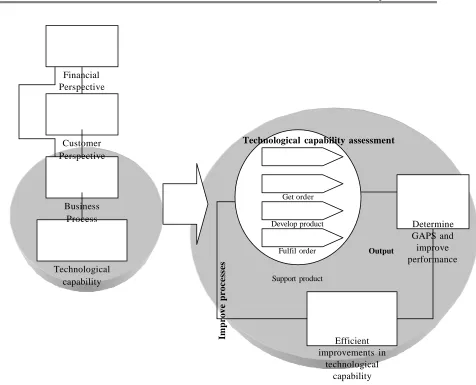
Figure 5.: The assessment methodology framework
The assessment methodology approach has six steps as follows:
Identify technology requirements
The technology requirements of a company are based on the classification of the company’s operation. (Engineer to stock (ETO), Manufacture to stock (MTS) and manufacture to order (MTO). Score model will be used as a reference for each classification.
Priories the technology requirements
The technology requirements will be prioritised according to their needs which are: critical needs, importance and nice to have.
i) Assess Gap in technological capability for each technology for now
The gap for current technological capability will be assess to a 1-5 likert scale.
ii) Assess Gap in technological capability for each technology for future
The gap for future technological capability will be assess to a 1-5 likert scale.
Identify the reasons behind the gaps
295
Establish current and future consequences for not fulfilling the gap on business performance
The consequences on the business performance will be illustrated using a strategy map.
Prioritise the GAPS
The technological capabilities gaps will be prioritise using the AHP technique.
4. CONCLUSION
The output of the assessment illustrates the causal connections between performance of a firm and it’s technological capability. It leads to the technological capability improvements and technological determination on the processes and to map the as is and should be of technological capability in relation to the performance of the firm. As a result, it allows managers to make investment decisions to enhance their technological capabilities whilst maximising its impact on business performance.
5. REFERENCES
Abdul Haq A.K.M, 1985.A methodology for measuring technological capability of a country,
Engineering Management International , 3 ,pp191- 198
Afuah A.(2002),`Mapping technological capabilities into product markets and competitive advantage: The case of cholesterol drugs’, Strategic Management Journal, 23:pp. 171-179 Amaratunga D., Baldry David and Sarshar M. 2001,’Process Improvement Through Performance
Measurement: The Balanced Scorecard Methodology’, Work Study, Vol. 50 Number 5, 179- 188
Archa V. (2000),`The role of technological capability in determining performance:The case of the upstream petroleum industry,’DRID winter Conference on Industrial Dynamics,Hillerod, January 6-8,2000
Archibugi D and Coco A, 2004. A new indicator of technological capabilities for developed and developing countries, World Development Vol. 32, No. 4 pp. 629-654 .
Bititci U S and Turner T J, 1999,"The Viable Business Structure", International Journal of Agile Manufacturing Systems, vol.1 no.3, 1999.
Bititci U S, Carrie A S, McDevitt L G. 1997.Integrated Performance Measurement Systems: A Development Guide, International Journal of Operations and Production Management, Vol 17 no 6, May/June 1997, MCB University Press, ISSN 0144-3577, pp. 522-535
Bititci U S, Turner, T. and Begememn C. 2000. Dynamics of Performance Measurement Systems, International Journal of Operations Management, Vol 20, no. 6, pp 692-704. Bremsey G.Wayne and Barsky P. Noah (2004). Utiliz ing the balanced scorecard for R&D
performance measurement. R&D Management 34, 3.pp229-238
Caniels M and Romijn H. 2003,`Agglomeration advantages and capability building in industrial clusters: The missing Link,’The Journal of Development Studies,Vol.39,No.3,pp.129-154 Costa I. And Sergio R.R. de Queroz.,’Foreign Direct Investment and Technological capabilities
in Brazillian Industry’, Research Policy, 31, 1431-1443
Figueiredo P.N. 2002.’Learning processes Features and Technological Capability Accumulation: Explaining Inter-firm Differences’, Technovation 22, 685-698
297
Ghalayini Alaa and Noble S. James (1996).The Changing basis of performance measurement,
International Journal of Operations and Production Management, Vol. 16, No 8, 1996, pp.
63-80
Gregory, M.J. 1993. Integrated performance measurement: A review of current practice and emerging trends. International Journal of Production Economics, 30-31, pp.281-296
Kaplan R.S and Norton D.P. 1996. Translating Strategy into Action: The Balanced Scorecard,
Harvard Business School Press, Boston.
Kennerly M and Neely A. 2002. A frameworks of the factors affecting the evolution of performance measurement system. International Journal of Operations and Production
Management,Vol 22, No.11, pp. 1222-1245
Kim L. 1999.’ Building technological capability for industrialization: Analytical frameworks and Korea’s experience’, Industrial and Corporate Change, March 1999, 8,1 pp.111-135
Kuen-Hung Tsai, 2004,’The impact of technological capability on firm performance in Taiwan’s electronics industry, Journal of High Technology Management Research.
Kumar,V.,Kumar U. and Persaud A., 1999,’building technological capability through importing technology: The case of Indonesian manufacturing industry’,Journal Of Technology Transfer, April 1999, 24(1),81- 96
Lall S.1992.Technological capabilities and industrialization’,World Development, Vol. 20, No. 2, pp. 165-186.
Lin Ming Ji James 1997.`The research on the measurement of corporate technological capability’,
International Journal of Technology Management, Vol. 13, No. 2.
Lynskey Michael J., 1999.`The transfer of resources and competences for developing technological capabilities: The case of Fujitsu-ICL’,Technology Analysis & Strategic
Management, Vol. 11 No. 3.
Madanmohan T.R, Kumar U. and Kumar V.2003.`Import- led technological capability: A comparative analysis of Indian and Indonesian manufacturing firms’, Technovation, 2003 McAdam R. and Bailie B. 2002. Business performance measures and alignment impact on
strategy. International Journal of Operations and Production Management,Vol 22, No.9, pp. 972-996
Neely A., Adams C. and Kennerly M.2002. Performance Prism, Prentice Hall Great Britain. Neely, A. 1999. The performance revolution:Why now and where next? International Journal of
Operations and Production Management,Vol 19, No.2, pp. 205- 228
Okejiri E . 2000.`Foreign technology and development of indigenous technological capabilities in the Nigerian manufacturing industry’, Technology in Society ,22, pp 189- 199
Panda H & Ramanathan P. 1996.` Technological Capability Assessment Of A Firm In The Electricity Sector’, Technovation, 16(10),pp 561-588.
Panda H. and Ramanathan K. 1997. Technological Capability Assessment As An Input For Strategic Planning: Case Studies At Electricite De France And Electicity Generating Authority Of Thailand, Technovation, 17(7),pp 359- 390.
Praest M. 1998. `Changing Technological capabilities in High-Tech Firms: A study of the Telecommunications Industry’, The Journal of High Technology Management Research, Vol. 9, No. 2, pp 175-193.
Prencipe A.2000.`Breadth and depth of technological capabilities in CoPS:the cas of the aircraft engine control system’, Research Policy 29, pp. 895- 911
Romijn H. 1997.`Acquisition of technological capability in development: A quantitative case study of Pakistan’s capital goods sector’, World Development, Vol 25, No 3, pp 359-377. Sharif N., 1994.’Integrating Business and Technology Strategies in developing Countries’,
298
299
Wongreassamee S. 2003. Performance Measurement tools: The balanced Scorecard and the EFQM Excellence Model. Measuring Business Excellence, Vol. 7 no.1, pp. 14- 29.