Georgia State University
ScholarWorks @ Georgia State University
Public Health Theses School of Public Health
Spring 5-15-2015
Association Between Adverse Health Behaviors
and Depression in American Adults with Metabolic
Syndrome
Ebenezer Dawodu
Follow this and additional works at:https://scholarworks.gsu.edu/iph_theses
This Thesis is brought to you for free and open access by the School of Public Health at ScholarWorks @ Georgia State University. It has been accepted for inclusion in Public Health Theses by an authorized administrator of ScholarWorks @ Georgia State University. For more information, please contact
Recommended Citation
Dawodu, Ebenezer, "Association Between Adverse Health Behaviors and Depression in American Adults with Metabolic Syndrome." Thesis, Georgia State University, 2015.
ASSOCIATION BETWEEN ADVERSE HEALTH BEHAVIORS AND
DEPRESSION IN AMERICAN ADULTS WITH METABOLIC SYNDROME
BY
EBENEZER ADEBOYE DAWODU, MD
School of Public Health, Georgia State University, Atlanta, Georgia
A Thesis submitted to the Graduate Faculty of the Georgia State University in partial fulfillment
Of the Requirements for the degree of
Master of Public Health
Atlanta, Georgia
ABSTRACT
Background: Metabolic Syndrome has been defined as a complex of risk factors that increase the risk of cardiovascular disease, type 2 Diabetes and all-cause mortality. Dyslipidemia, abdominal obesity, elevated Fasting Blood Glucose and elevated Blood pressure are established clusters of risk factors for Metabolic Syndrome. Smoking, Alcohol use, sedentary behavior and Depression continue to be major public health issues. Several studies have shown association between Smoking, Alcohol use, depression and metabolic syndrome. No study has revealed association between clusters of adverse behavioral risk factors and depression in individuals with Metabolic Syndrome.
Objective: To investigate the relationship between clusters of adverse behavioral risk factors and depression in American Adults with Metabolic Syndrome.
Methods: logistic regression and NHANES 2009 – 2010 and 2011 – 2012 data were utilized to measure the association between the independent variables and the outcome variable.
Results: Smoking was significantly associated with increased odds of depression among Non-Hispanic Whites (OR = 2.67 [(95% CI = 1.66 – 4.30]), Non-Non-Hispanic Blacks (OR = 2.38 [95% CI = 1.49 – 3.81]), Mexican Americans (OR= 2.87 [95% CI= 1.33 - 6.21]) and other
races/ethnicities (OR= 2.4 [95% CI= 1.18 - 4.86}). A joint occurrence of alcohol use and smoking was associated with 2.78 (95% CI = 1.96 – 3.91), 3.00 (95% CI = 1.80 – 5.02), 2.81 (95% CI = 1.51 – 5.22), 2.86 (95% CI = 1.13 – 7.28) increased odds of depression in the total sample, NHW, NHB and MA respectively. Joint occurrence of Smoking and Sedentarism was associated with 2.30 (95% CI = 1.20 – 4.40) and 2.59 (95% CI = 1.03 – 6.54) increased odds of depression in the total sample and NHW respectively. Joint occurrence of Alcohol use, smoking and Sedentarism was associated with 2.30 (95% CI = 1.05 - 5.03) and 2.77 (95% CI = 1.03 - 6.54) increased odds of depression in the total and NHW respectively.
Conclusion: The study established that being a current smoker was significantly associated with increased odds of depression. The joint occurrence of selected behavioral risk factors was positively associated with depression in individuals who met the criteria for Metabolic
Syndrome. People who are diagnosed with Metabolic Syndrome need to be evaluated for the risk of adverse behavioral risk factors and depression. Intervention should be designed to target individuals with these risk factors among those with Metabolic Syndrome.
APPROVAL PAGE
ASSOCIATION BETWEEN ADVERSE HEALTH BEHAVIORS AND
DEPRESSION IN AMERICAN ADULTS WITH METABOLIC SYNDROME
APPROVED:
Dr. Ike S Okosun Dr. Ike S Okosun Dr. Ike S Okosun Dr. Ike S Okosun_ Committee Chair
Dr. Sheryl Strasser Dr. Sheryl Strasser Dr. Sheryl Strasser Dr. Sheryl Strasser_ Committee Member
Copyright by
Ebenezer Adeboye Dawodu, MD
DEDICATION
Author’s Statement Page
In presenting this thesis as a partial fulfillment of the requirements for an advanced degree from Georgia State University, I agree that the Library of the University shall make it available for inspection and circulation in accordance with its regulations governing materials of this type. I agree that permission to quote from, to copy from, or to publish this thesis may be granted by the author or, in his/her absence, by the professor under whose direction it was written, or in his/her absence, by the Associate Dean, College of Health and Human Sciences. Such quoting, copying, or publishing must be solely for scholarly purposes and will not involve potential financial gain. It is understood that any copying from or publication of this dissertation which involves potential financial gain will not be allowed without written permission of the author.
Notice to Borrowers Page
All theses deposited in the Georgia State University Library must be used in accordance with the stipulations prescribed by the author in the preceding statement.
The author of this thesis is:
Student’s Name:
Street Address:
City, State, and Zip Code:
The Chair of the committee for this thesis is:
Professor’s Name:
School: School of Public Health Georgia State University P.O. Box 3995
Atlanta, Georgia 30302-3995
Users of this thesis who not regularly enrolled as students at Georgia State University are required to attest acceptance of the preceding stipulation by signing below. Libraries borrowing this thesis for the use of their patrons are required to see that each user records here the
information requested.
NAME OF USER ADDRESS DATE TYPE OF USE
(EXAMINATION ONLY OR
ACKNOWLEDGEMENTS
This thesis is dedicated to the Almighty GOD who is Omniscient, for the ability to complete
this work. It is also dedicated to my entire family, Dupe Dawodu, MD, my wife for her
dedication, my kids, Oluwadarasimi, Olorunbe and Christina for their patience, my father,
of blessed memory, Victor Adeyemi Dawodu, I wish you were here with me and my mother,
Comfort Mojisola Dawodu for her steadfastness in prayer, my siblings Victoria,
Christianah, Ernest and Victor for their prayers and encouragement. I would like to
express my gratitude to my thesis committee chairman Dr. Ike S Okosun and thesis
committee member Dr. Sheryl Strasser for their dedication to excellence and their support
from the commencement to completion of this thesis. I am also mindful of Mr. Reynolds
Morrison (PhD candidate) for his invaluable technical advice. Lastly, to all members of
staff and faculty of the School of Public Health, Georgia State University, Atlanta Georgia,
you are the best team ever!
TABLE OF CONTENTS
Title Page - 1
Abstract - 2
Approval page -3
Copyright page -4
Dedication -5
Authors' statement page -6
Notice to borrowers page -7
Acknowledgement -8
Table of contents -9,10
List of tables and figures -11
Introduction -12
• Background -12
• Objectices -13
• Research questions -14
Methods -15
• Source of Data -15
• Inclusion and exclusion criteria -16
• Definition of terms -18
• Statistical analysis -21
Results -22
Discussion -27
• Weakness/limitations -28
Conclusion -29
References -30
List of Tables and Figures
Table 1: Demographic Characteristics of American Adults with Metabolic Syndrome
Table 2: Rates (%) of Behavioral Risk factors and Depression in American Adults with Metabolic Syndrome by Race/ethnicity
Table 3: Association between selected risk factors among American Adults with Metabolic Syndrome
Table 4: Association between behavioral risk factor combinations and depression among US adults with metabolic syndrome
INTRODUCTION
Background
Metabolic Syndrome consists of a cluster of risk factors including dyslipidemia,
abdominal obesity, elevated Fasting Blood Glucose or Impaired Glucose Tolerance and elevated
Blood pressure to mention a few. It is a group of signs and symptoms occurring in a complex
that can increase the risk of cardiovascular disease, Type 2 Diabetes and all-cause mortality
(Grundy et al, 2015 and Okosun et al, 2015).
Prevalence estimates done on 1999 to 2010 National Health and Nutrition Education Survey
(NHANES) data revealed in American Adults ≥ 20 yearsthe age-adjusted prevalence of
Metabolic Syndrome decreased from 25.5% (95% confidence interval: 22.5% to 28.6%) to
22.9% (95% CI: 20.3% to 25.5%). In spite of the decline, there was a bidirectional trend in the
prevalence of components of metabolic syndrome. The rate of rise of blood glucose and
abdominal obesity was found to be increasing (Beltrán-Sánchez et al 2013). The rate of
Metabolic Syndrome is known to increase with age and this increase is exponential among older
individuals compared to younger subjects (Ford et al, 2002 and Kraja et al 2006). The
encumbrance of Metabolic Syndrome components is enormous in terms of economic cost and
physiologic dysfunction. The presence of Metabolic Syndrome greatly increases the odds of
cardiovascular disease which includes Ischemic Heart Disease (Myocardial Infarction, Angina
Pectoris), Cerebrovascular diseases (Strokes, Amaurosis Fugax, total blindness), Kidney disease
(Hypertension, renal failure), Aortic Aneurysm and Peripheral Arterial Disease among myriads
of known complications of Metabolic Syndrome and majority of these sequelae are preventable.
associated with Metabolic Syndrome. Increased odds of Metabolic Syndrome have been seen in
individuals with Psoriasis (Ford et al 2002 and Danielsen et al, 2015).
In the literature, association between Metabolic Syndrome and a host of behavioral
drivers such as smoking, alcohol abuse, sedentary life style and depression have been studied
(Aizawa et al 2006). Smoking, Alcohol use, Depression and Suicide continue to be major public
health issues. During 2009–2012, 7.6% of Americans aged 12 and over had depression in the
previous 2 weeks (CDC). Individuals with neuropsychiatric disorders have higher rates of
Metabolic Syndrome than those without mental disorders. Higher rates of anxiety, depression
and life change indices have been seen in individuals with Metabolic Syndrome (Maslov et al
2009). Metabolic Syndrome and inflammation are independently associated with depressive
symptoms in older subjects (Viscogliosi et al, 2012). No study has shown the relationship
between clustering of behavioral risk factors and the risk of depressive symptoms in American
Adults with Metabolic Syndrome.
Several definitions of the metabolic Syndrome have been applied in the Literature. The widely
used Third Report of the National Cholesterol Education Program (NCEP) Expert Panel on
Detection, Evaluation and Treatment of High Blood Cholesterol in Adults (Adult Treatment
Panel III) definition was applied in this study.
Objectives: To investigate the relationship between joint occurrence of negative behavioral risk
Research questions:
(1) How do selected behavioral risk factors and depression cluster among US adults with
metabolic syndrome?
(2) What is the relationship between the identified behavioral risk factors and depression,
stratified by race/ethnicity?
(3) Which combinations or clusters are mostly associated with depression?
METHODS
Source of data
The 2009 - 2010 and 2011 – 2012 data from the National Health and Nutrition Survey
(NHANES) were used in this study. NHANES is a foremost program of the National Center for
Health Statistics (NCHS) designed to evaluate the nutrition and health of the population of the
United States (US). NCHS is a component of the Centers for Disease Control and Prevention
(CDC) concerned with generating national vital and health statistics. NHANES surveys are
stratified multistage probability sampling schemes used to select a representative sample of the
civilian non-institutionalized population of the US. A nationally representative sample of about
5,000 subjects were examined each year. Subjects were surveyed in 15 counties situated across
the US. Subjects were selected through a complex statistical process using the most current
Census information. The country was divided into communities. The communities were divided
into neighborhoods. The neighborhoods were selected at random. From each neighborhood,
housing units were selected at random. Selected households were approached by interviewers
who asked residents a few questions to determine if their household was eligible for the study.
Subjects were interviewed at home and examined fully at Mobile Examination Centers (MECs).
The institutional review board of NCHS approved the protocol for the survey
Inclusion and exclusion criteria
Subjects included in this study were 20 years and older who met 3 or more of the criteria
for the diagnosis of Metabolic Syndrome and with values for the following variables: sex, age,
income, education, race/ethnicity, waist circumference, height, weight, oral glucose tolerance test
(OGTT) and fasting blood glucose (FPG), HbA1c, triglycerides, high-density lipoprotein (HDL),
low-density lipoprotein (LDL), blood pressure (BP), physical activity, alcohol use, smoking
status and Depression. Excluded were subjects who were below 20 years of age, or pregnant or
had missing data.
Measures and variables
In the NHANES data used in this study, demographic variables were determined as
reported by the subjects. Anthropometric measurements and blood samples were taken in the
mobile examination centers (MECs). Comprehensive accounts of the anthropometric,
venipuncture, and blood pressure measurement procedures can be found in the
CDC/NCHS/NHANES anthropometry, laboratory, and physician examination procedures
manuals.
Demographic variables
AGE: This is the age provided by the subjects at the screening interview. Age was
classified into five groups in years (20 – 34, 35 – 44, 45 – 64, and ≥65).
RACE/ ETHNICITY: This variable was derived from responses to the survey questions
on race/ethnicity. The races/ ethnic groups were classified into four groups namely,
Non-Hispanic Whites (NHW), Non-Non-Hispanic Blacks (NHB), Mexican Americans (MA) and
other races/ethnicities (Others).
EDUCATION: This is the highest level of education completed. Education was grouped
into three sets (less than high school, high school graduates, greater than high school
education).
INCOME: This is the estimated total annual household income, reported in dollars.
Annual household income was categorized into four groups (under $35K, $35K -
>$54,999, $55K - >$74,999, and ≥$75K).
OTHER VARIABLES
ANTHROPOMETRIC: In NHANES, waist circumference was obtained by tape and
assessed above the right iliac crest at the mid-axillary line. Height was measured using a
fixed Stadiometer with a vertical backboard and a moveable headboard. Weight was
measured using a Toledo digital weight scale in a standing position. Measurement was
made at the end of a normal expiration and to the nearest 0.1 cm.
Body Mass Index (BMI): in this study, Body mass index was reported in Kg/m2
Blood pressure (BP): Systolic and Diastolic Blood Pressures were measured in mmHg.
After resting quietly in a sitting position for 5 minutes, three consecutive blood pressure
averages of the three systolic and diastolic blood pressure readings were used as
representative of the subject's systolic and diastolic blood pressure values.
Fasting blood glucose (FPG): In the survey, blood samples were taken after a 9-hour fast.
Blood specimens were processed, stored shipped to the Fairview Medical Center
Laboratory at the University of Minnesota, Minneapolis Minnesota for analysis. Analysis
involved enzymatic processes leading to the production of intermediate that
causes increase in absorbance at 340 nm. The endpoint reaction was specific for glucose.
Other laboratory protocols were observed.
Triglycerides, High-density lipoprotein (HDL), Low-density lipoprotein (LDL):
Measurement of lipids was done after at least 8.5 hour fast. Blood specimens were
processed, stored in vials at –20°C until they were shipped to University of Minnesota,
Minneapolis Minnesota for analysis. Analysis involved enzyme-linked measurements.
Triglyceride, HDL cholesterol and LDL cholesterol were all measured in mg/dL.
Definition of terms
Metabolic Syndrome: The NCEP/ATP III revised criteria for Metabolic Syndrome were
used in categorizing individuals in the analytic sample. To be diagnosed with Metabolic
Syndrome, subjects must meet 3 or more of these criteria. The criteria used in this study
include:
(1) Elevated Waist Circumference: >102 cm (>40 in) in men and >88 cm (>35 in) in
women.
(3) Reduced HDL cholesterol: <40 mg/dL (men) and <50 mg/dL (women) or on
cholesterol medication
(4) Elevated Blood pressure: Systolic Blood Pressure ≥135/ Diastolic Blood Pressure ≥85
mm Hg or undergoing treatment for previously diagnosed hypertension or taking a
blood pressure medication.
(5) Elevated Fasting glucose: ≥100 mg/dL or on diabetes medication.
Clustering of Behavioral factors:Clustering of adverse health behaviorswas defined as
joint occurrence of 2 or 3 ofthe following in a single individual (Okosun et al 2002):
(1)Current cigarette smoker, defined as having smoked 100 cigarettes in a lifetime or
answered yes to the question; do you now smoke cigarette?
(2) Alcohol use, defined as having had 12 or more drinks of any kind in the past I year.
(3) Sedentary lifestyle, defined as having watched Television or video in sitting position
or played computer games or used the computer outside of work or school for ≥3 hours
per day in the previous 30 days (Shuna et al 2013).
Depression: Depression was defined using the Depression Scores from PHQ-9. PHQ-9 is
a highly predictive screening tool used in characterizing depressive states and the risk of
development of severe depression. Respondents were asked to choose between 1 of 4
responses to 9 questions about the occurrence of depressive symptoms during the
previous 2 weeks and an additional question that gauged the difficulty with having any of
the depressive symptoms.Those scoring ≥5 were characterized as having at least mild
depressive symptoms (Shim et al, 2011). In this study a score of ≥5 was classified as
Interpretation of Total Score
Total Score Depression Severity
1-4 Minimal depression
5-9 Mild depression
10-14 Moderate depression
15-19 Moderately severe depression
20-27 Severe depression
Statistical analysis
Statistical Analysis System (SAS) 9.4 software package was used in all analyses
in this study. Adjustments were made by applying appropriate sample weights, strata and
cluster variables for variations in probability of selection, oversampling, and nonresponse.
Survey frequency function was used to generate the descriptive statistics. Survey logistic
function was used to create multiple logistic regression models to determine the
association between individual behavioral risk factor and clusters (2 factors and 3 factors)
of behavioral risk factors and depression using Odds Ratios (OR) stratified by
race/ethnicity. Statistical adjustments were made for age, sex and education. Statistical
RESULTS
The basic descriptive characteristics of those who met the criteria for the definition of
Metabolic Syndrome (N = 2,956) is shown in Table 1. Overall there were more females (53.4%)
than males (46.5%). There were more Mexican American (MA) males (51.3% [95% CI = 48.2 -
54.4]) then Non-Hispanic White (NHW) males, Non-Hispanic Black (NHB) males, and males of
other races (Others) at 48% (95% CI= 43.3 – 52.8), 34% (95% CI= 29.9 - 38.1) and 48.4% (95%
CI= 42.0 - 54.9) respectively. Also Non-Hispanic Black (NHB) females had higher rates (66.0%
[95% CI = 61.9 - 70.1]) then NHW females (52.0%), MA females (48.7%) and females of other
races (51.6%). Non-Hispanic Whites where older, more educated and earned more income than
Non-Hispanic Blacks, Mexican Americans and other races/ ethnicities (P < 0.05).
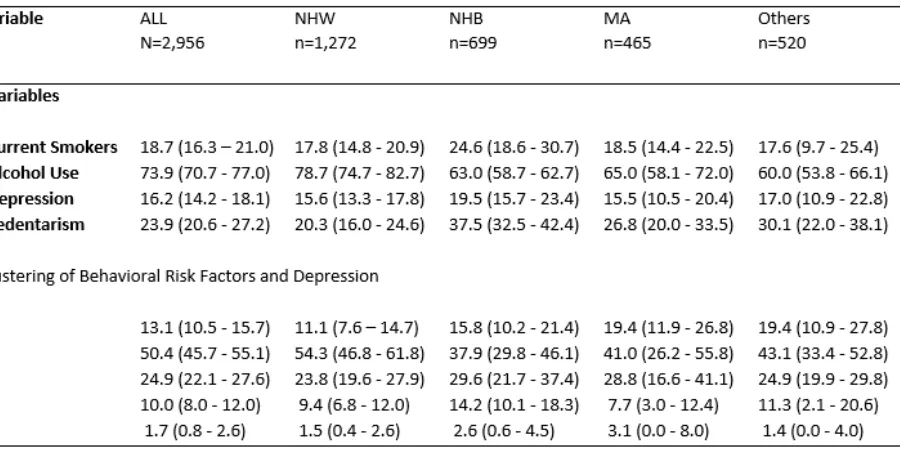
Table 2, reveals the prevalence rates of individual behavioral risk factor and depression
and the prevalence rates of clusters of adverse risk factors and depression in American Adults
stratified by race/ethnicity in the study sample. Overall, Non-Hispanic Blacks had higher rates of
Smoking, Sedentarism and depression compared to NHW, MA and Others. Alcohol use was
more common in Non-Hispanic Whites compared to NHB, MA and Others. The prevalence of
clusters or the joint occurrence of 2 or more behavioral risk factors and depression was
significantly higher in Non-Hispanic Blacks than NHW, MA and Others with values of 46%,
Table 3 showed the association between the selected risk factors when adjustment was
made for age, sex and education among American Adults with metabolic syndrome. In the entire
study sample, current smokers were significantly more likely to be depressed (OR = 2.58, 95%
CI = 1.90 – 3.50, P < 0.05) 1.78 times more likely to be sedentary and 2.36 times more likely to
use alcohol. Alcohol use was found to be independently associated with 2.0 (95% CI = 1.22 -
3.27), 3.39 (95% CI = 1.93 - 5.93), 3.01 (95% CI = 1.13 - 8.02) and 3.41 (95% CI = 1.48 - 7.86)
increased odds of being current smoker among NHW, NHB, MA and Other racial/ethnic groups
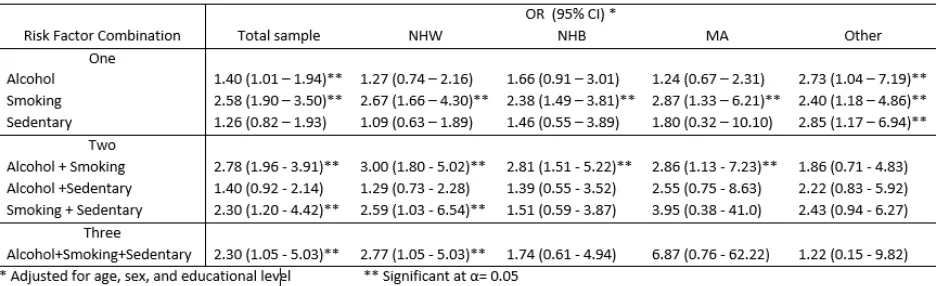
Table 4 shows the Association between each behavioral risk factor and joint occurrence of
behavioral risk factors and the odds of depression among US adults with metabolic syndrome.
As shown, Smoking was significantly associated with increased odds of depression among NHW
(OR = 2.67 [(95% CI = 1.66 – 4.30]), NHB (OR = 2.38 [95% CI = 1.49 – 3.81]), MA 2.87 (1.33
- 6.21) and other races/ethnicities 2.4 (1.18 - 4.86). Among subjects reporting their race/ethnicity
to be others, Alcohol use and Sedentarism independently are associated with 2.78 and 2.85
increased odds of depression (P < 0.05), respectively.
Variables that were independently significant were further investigated to determine the effects
of their joint occurrence. The analysis was designed to determine if the clustering of these
of Alcohol use and Smoking, combination of smoking and Sedentarism and joint occurrence of
alcohol use, smoking and Sedentarism were revealed to be associated with significantly
increased odds of depression. Joint occurrence of alcohol and smoking was associated with 2.78
(95% CI = 1.96 – 3.91), 3.00 (95% CI = 1.80 – 5.02), 2.81 (95% CI = 1.51 – 5.22), 2.86 (95% CI
= 1.13 – 7.28) increased odds of depression in the total sample, NHW, NHB and MA
respectively. Joint occurrence of smoking and Sedentarism was associated with 2.30(95% CI =
1.20 – 4.40) and 2.59(95% CI = 1.03 – 6.54) increased odds of depression in the total sample and
NHW respectively. Joint occurrence of Alcohol use, smoking and Sedentarism was associated
with 2.30 (95% CI = 1.05 - 5.03) and 2.77 (95% CI = 1.03 - 6.54) increased odds of depression
in the total sample and NHW respectively. These relationships were not significant in NHB, MA
DISCUSSION
Although some studies have shown a decline in the prevalence of Metabolic Syndrome in
recent times, literature has shown a mixed picture in the trend of individual components of the
Metabolic Syndrome. Abdominal obesity (Ford et al, 2014) and blood glucose levels are
increasing (Beltrán-Sánchez et al 2013) in the US, while the prevalence of elevated blood
pressure and blood lipid levels appear to be decreasing. The decline in blood pressure and
decline in dyslipidemia prevalence were attributed to public health intervention and drug
treatment. Several studies have demonstrated significant association between Metabolic
Syndrome and depression (Cohen et al, 2010, Marijnissen et al, 2013 and Butnoriene et al, 2014).
Other studies have shown association between independent behavioral risk factors and Metabolic
Syndrome (Kahl et al, 2010, Chen et al 2013, Sun et al, 2014). Regardless of the public health
importance of depression, suicide, smoking, alcohol use and lack of physical activity, no study
has shown the relationship between joint occurrence of negative behavioral risk factors and the
risk of development of depressive symptoms in American Adults with Metabolic Syndrome.
This study investigated if selected behavioral risk factors and depression clustered among US
adults with metabolic syndrome. The study also investigated the relationship between the
identified behavioral risk factors and depression, stratified by race/ethnicity. Moreover, the study
determined which combinations or clusters were mostly associated with depression.
The main findings in this study overall, Current Smoking status was significantly
associated with increased odds of depression across races/ethnicities (Mineur et al, 2010 and
Chaiton et al, 2015). There was significant association between clusters of negative behavioral
factors and depression in American Adults with Metabolic Syndrome. This clustering was
and smoking was associated with 2.78 times increased odds of depression in the entire sample
and across race/ethnicity except in other races. Joint occurrence of smoking and Sedentarism was
associated with 2.30(95% CI = 1.20 – 4.40) and 2.59(95% CI = 1.03 – 6.54) increased odds of
depression in the entire sample and NHW respectively. There is no significant association
between occurrence of Sedentarism and depression across the races in NHW, NHB and MA
except in those who identified as other races/ethnicities who had 2.85 times (95% CI = 1.17 –
6.94) increased risk of depression. This is probably due to missing values.
Joint occurrence of Alcohol use, smoking and sedentarism was significantly associated with 2.30
(95% CI = 1.05 - 5.03) and 2.77 (95% CI = 1.03 - 6.54) increased odds of depression in the
entire sample and NHW respectively. This relationship is not significant in NHB, MA and
Others. Missing value may also account for the lack of significant association with joint
occurrence of the three adverse risk factors.
Strengths: The reliability of the NHANES data is based on the national
representativeness of the data as well as quality control applied to measures and instruments use
in data collection.
Limitations: The study design which is a cross-sectional study design limited the
establishment of temporal relationship between dependent variable and risk factors. Missing
values are not expected to introduce bias because the of the survey design. Adequate adjustments
have been made by the application of appropriate weights. Self-reported behaviors may limit
accuracy of some data.
Further studies are suggested and introduction of other risk factors to the mixed perhaps will
CONCLUSION
The study established that being a current smoker was significantly associated with
increased odds of depression. The joint occurrence of selected behavioral risk factors was
positively associated with depression in individuals who met the criteria for Metabolic Syndrome.
People who are diagnosed with Metabolic Syndrome need to be evaluated for the risk of
adverse behavioral risk factors and depression. Intervention should be designed to target
individuals with these risk factors among those with Metabolic Syndrome.
National Health and Nutrition Education Survey (NHANES).
http://wwwn.cdc.gov/nchs/nhanes/search/nhanes09_10.aspx visited on January 20, 2015.
National Health and Nutrition Education Survey (NHANES).
http://wwwn.cdc.gov/nchs/nhanes/search/nhanes11_12.aspx visited in January 20, 2015.
National Health and Nutrition Education Survey (NHANES)Anthropometry Procedures Manual.
http://www.cdc.gov/nchs/data/nhanes/nhanes_09_10/BodyMeasures_09.pdf visited April
19, 2015.
Center for Disease Control and Prevention (CDC)/ National Center for Health Statistics (NCHS).
http://www.cdc.gov/nchs/data/nhanes/nhanes_09_10/lab.pdf visited on April 19, 2015.
NCHS Data Brief. Number 172, December 2014
http://www.cdc.gov/nchs/data/databriefs/db172.htm visited on April 26, 2015.
Danielsen k, Wilsgaard T, Olsen A O, Eggen A E, Olsen K, Cassano P A and Furberg A S
(2015).
Elevated odds of metabolic syndrome in psoriasis: a population-based study of age and
sex differences British Journal of Dermatology 172, pp419
Chaiton M, Cohen J E, Rehm J, Abdulle M, O'Loughlin J (2015). Confounders or intermediate
variables? Testing mechanisms for the relationship between depression and smoking in a
Sun K, Ren M, Liu D, Wang C, Yang C, Yan L (2014). Alcohol consumption and risk of
metabolic
syndrome: A meta-analysis of prospective studies. Clinical Nutrition 33 596e602.
Okosun I S, Annor F, Dawodu E A, Eriksen M P (2014). Clustering of Cardiometabolic Risk
Factors and Risk of Elevated HbA1c in Non-Hispanic White, Non-Hispanic Black and
Mexican American Adults with Type 2 Diabetes. Diabetes & Metabolic Syndrome:
Clinical Research & Reviews 8 (2014) 75–81.
Ford E S, Maynard L M, Li C (2014). Trends in Mean Waist Circumference and Abdominal
Obesity Among US Adults, 1999-2012. JAMA September 17, Volume 312, Number 11.
Butnoriene J, Bunevicius A, Norkus A, Bunevicius R (2014). Depression but not anxiety is
associated with metabolic syndrome in primary care based community sample.
Psychoneuroendocrinology 40, 269—276.
Beltrán-Sánchez H, Harhay M O, Harhay M M, McElligott S (2013). Prevalence and trends of
metabolic syndrome in the adult U.S. population, 1999-2010. J Am Coll Cardiol. Aug 20;
62(8):697-703.
Marijnissen R M, Smits J E M P, Schoevers R A, Brink R H S Y, Holewijn S, Franke B,
deGraaf J, Voshaar R C O (2013). Association between metabolic syndrome and
depressive symptom profiles—Sex-specific? Journal of Affective Disorders 151, 1138–
Schuna Jr. J M, Johnson W D and Tudor-Locke C (2013). Adult self-reported and objectively
monitored physical activity and sedentary behavior: NHANES 2005–2006. International
Journal of Behavioral Nutrition and Physical Activity, 10:126
Ching-Chu Chen, Wen-Yuan Linc, Chia-Ing Lie, Chiu-Shong Liuc, Tsai-Chung Lif, Ying-Tzu
Chene, Chuan-Wei Yange, Man-Ping Changh, Cheng-Chieh Lin (2012). The association
of alcohol consumption with metabolic syndrome and its individual components: the
Taichung community health study. Nutrition Research 32, 24–29.
Shim R S, Baltrus P, Ye J, Rust G (2011). Prevalence, Treatment, and Control of Depressive
Symptoms in the United States: Results from the National Health and Nutrition
Examination Survey (NHANES), 2005–2008. J Am Board Fam Med. 24(1):33-38
Cohen B E, Panguluri P, Na B, Whooley M A (2010). Psychological risk factors and the
metabolic
syndrome in patients with coronary heart disease: Findings from the Heart and Soul
Study. Psychiatry Research 175, 133–137.
Kahl K G, Greggersen W, Schweiger U, Cordes J, Correll C U, Ristow J, Burow J, Findel C,
Stoll A, Balijepalli C, Göres L, Lösch C, Hillemacher T, Bleich S & Moebus S (2010).
Prevalence of the metabolic syndrome in men and women with alcohol dependence:
results from a cross-sectional study during behavioral treatment in a controlled
Mineur Y S and Picciotto M R (2010). Nicotine receptors and depression: revisiting and
revising the cholinergic hypothesis. Trends in Pharmacological Sciences. Volume 31,
Issue 12, December, Pages 580–586
Ervin R B, Ph.D., R.D. (2009) Prevalence of Metabolic Syndrome Among Adults 20 Years
of Age and Over, by Sex, Age, Race and Ethnicity, and Body Mass Index: United States,
2003–2006. National Health Statistics Reports Number 13 May 5
Aizawa Y, Kamimura N, Watanabe H, Aizawa Y, Makiyama Y, Usuda Y, Watanabe T,
Kurashina Y (2006).Cardiovascular risk factors are really linked in the metabolic
syndrome: This phenomenon suggests clustering rather than coincidence. International
Journal of Cardiology 109, 213 – 218
Kraja A T, Borecki I B, North K, Tang W, Myers R H, Hopkins P N, Arnett D, Corbett J,
Adelman A and Province M A (2006). Longitudinal and age trends of metabolic
syndrome and its risk factors: The Family Heart Study. Nutrition & Metabolism, 3:41
Grundy S M, Brewer Jr H B, Cleeman J I, Smith Jr S C, Lenfant C, (2004). Definition of
Metabolic
Syndrome. Report of the National Heart, Lung, and Blood Institute/American Heart
Association Conference on Scientific Issues Related to Definition. Circulation. 109:
Ford E S, Giles W H, Dietz W H (2002). Prevalence of the metabolic syndrome among US
adults:
findings from the third National Health and Nutrition Examination Survey. JAMA. Jan
16; 287(3):356-9.
Okosun I S, Prewitt T E, Chandra K M D (2002). Serum Carotenoids and Clustering of Adverse
Health Behaviors in American Adults. Am J Health Behav 26(2):145-158.
Third Report of the National Cholesterol Education Program (NCEP) Expert Panel on Detection,
Evaluation, and Treatment of High Blood Cholesterol in Adults (Adult Treatment Panel
III) Final Report (2002). National Cholesterol Education Program National Heart, Lung,
and Blood Institute National Institutes of Health NIH Publication No. 02-5215 September.
Maslov B, Marcinko D, Milicevic R, Babic D, Dordevic V and Jakovljevic M (2009).
Metabolic Syndrome, Anxiety, Depression and Suicidal Tendencies in Post-Traumatic
Stress Disorder and Schizophrenic Patients.Coll. Antropol. 33, Suppl. 2: 7-10
Viscogliosi G, Andreozzi P, Chiriac I M, Cipriani E, Servello A, Marigliano B, Ettorre E and
incenzo Marigliano V (2013). Depressive symptoms in older people with metabolic
syndrome: is there a relationship with inflammation? Int J Geriatr Psychiatry 28: 242–