Art and Design Theses Ernest G. Welch School of Art and Design
5-9-2015
Interdisciplinary Infusion in the Discipline Based
Middle School Art Classroom
Mary Breazeale
Follow this and additional works at:https://scholarworks.gsu.edu/art_design_theses
This Thesis is brought to you for free and open access by the Ernest G. Welch School of Art and Design at ScholarWorks @ Georgia State University. It has been accepted for inclusion in Art and Design Theses by an authorized administrator of ScholarWorks @ Georgia State University. For more information, please [email protected].
Recommended Citation
Breazeale, Mary, "Interdisciplinary Infusion in the Discipline Based Middle School Art Classroom." Thesis, Georgia State University, 2015.
INTERDISCIPLINARY INFUSION IN THE DISCIPLINE BASED MIDDLE SCHOOL ART CLASSROOM
by
MARY BREAZEALE
Under the Direction of Melody Milbrandt, PhD
Abstract:
This research has a primary focus on the middle school setting and how schools, students, and art educators might benefit from an interdisciplinary art curriculum. In this thesis I outline how cross-curricular inclusions in art lessons have the potential to be a fantastic advocacy tool for fine arts departments. I also investigate the differences between interdisciplinary inclusions in the visual art classroom and arts integrated school models as well as the beneficial relationship that can exist between these two pedagogical approaches. Additionally, I examine through literary review and curriculum development, some of the positive and negative influence in academic subject areas and more importantly art disciplines. My final and primary aim in examining various methods of cross-curricular inclusion is to shed light upon the immense potential for student development via dynamic interdisciplinary art curriculum.
INTERDISCIPLINARY INFUSION IN THE DISCIPLINE BASED MIDDLE SCHOOL ART CLASSROOM
by
MARY BREAZEALE
A Thesis Submitted in Partial Fulfillment of the Requirements for the Degree of Master of Arts
in the College of Arts and Sciences Georgia State University
Copyright by Mary Fountain Breazeale
INTERDISCIPLINARY INFUSION IN THE DISCIPLINE BASED MIDDLE SCHOOL ART CLASSROOM
by
MARY BREAZEALE
Committee Chair: Melody Milbrandt
Committee: Melanie Davenport Kevin Hsieh Electronic Version Approved:
DEDICATION
ACKNOWLEDGMENTS
TABLE OF CONTENTS
ACKNOWLEDGMENTS ... v
LIST OF FIGURES ... viii
1 INTRODUCTION ... 1
Need for the Study ... 1
1.1 Purpose of the Study ... 5
1.2 2 LITERATURE REVIEW ... 7
Defining Cross Curricular ... 7
2.1 Why use art to teach other subjects? ... 10
2.2 Interdisciplinary Teaching as Student Centered Teaching ... 12
2.3 Piaget’s Constructivist Theory ... 12
2.4 2.4.1 Assimilation ... 13
2.4.2 Accommodation ... 13
Psychological and Biological Factors ... 15
2.5 Connections Between Disciplines ... 16
2.6 2.6.1 Social Studies ... 16
2.6.2 Language Arts ... 19
2.6.3 Science ... 21
2.6.4 Math ... 22
Convincing Art Educators ... 23
2.7 2.7.1 Strengthening Art’s Value in Schools ... 26
3 CURRICULUM CONSTRUCTION ... 29
Overview ... 29
3.1 Explicit Acknowledgement of Connection ... 35
3.2 4 CURRICULUM ... 36
Implementing Unit 1: 2D Design ... 36
4.1.1.1 Sample Letter ... 45
4.1.1.2 Lesson 1.1 Worksheet ... 46
4.1.1.3 Ticket out the Door ... 47
4.1.2 Unit 1, Lesson 2: Cyanotypes and Chemical Changes ... 48
4.1.2.1 Lesson 1.2 Worksheet ... 55
4.1.3 Unit 1, Lesson 3: Shibori Dying and Georgia ... 56
4.1.3.1 Lesson 1.3 Worksheet ... 63
4.1.4 Unit 1, lesson 4: Batik Designs and Math ... 64
4.1.4.1 Lesson 1.4 Worksheet 1 ... 71
4.1.4.2 Lesson 1.4 Worksheet 2 ... 72
Implementing Unit 2: 3D Design ... 73
4.2 4.2.1 Unit 2, Lesson 1: Georgia History and Weaving ... 75
4.2.2 Unit 2, Lesson 2: Critique Poems and Narrative Silhouettes ... 82
4.2.2.1 Feldman’s Model of Art Criticism Outline ... 90
4.2.3 Unit 2, Lesson 3: Kinetic Sculptures and Gravity/Mass ... 91
4.2.3.1 Lesson 2.3 Handout ... 99
4.2.4 Unit 2, Lesson 4: Balance and Symmetry Paper Sculptures ... 100
Implementing Unit 3: Ceramics ... 107
4.3 4.3.1 Unit 3, Lesson 1: Chemical Changes in Clay and Glazes ... 109
4.3.1.1 Lesson 3.1 Worksheet ... 116
4.3.2 Unit 3, Lesson 2: Pinch Pots and Native Georgians ... 117
4.3.3 Unit 3, Lesson 3: Selling Art and Calculating Volumes ... 125
4.3.3.1 Lesson 3.3 Worksheet ... 132
4.3.4 Unit 3, Lesson 4: Story Totems ... 133
5 CHAPTER 5: REFLECTION ... 140
Reflection ... 140
5.1 Implementing at the High School Level ... 142
LIST OF FIGURES
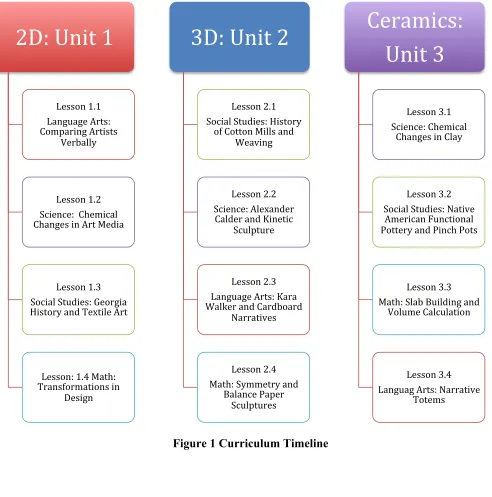
Figure 1 Curriculum Timeline ... 32
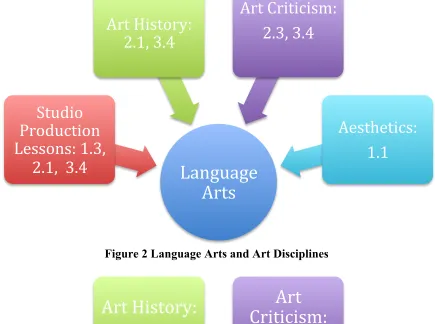
Figure 2 Language Arts and Art Disciplines ... 33
Figure 3 Social Studies and Art Disciplines ... 33
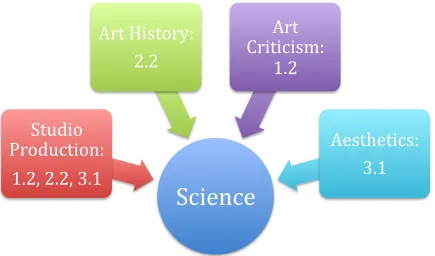
Figure 4 Science and Art Disciplines ... 34
1 INTRODUCTION
Need for the Study
1.1
To understand my inspiration for this research, I must explain how I became interested in teaching and learning. Visual art has been my passion for as long as I can remember. The
plethora of information I have learned from making and discussing art has made me an
empathetic individual, which has fueled my desire to teach. I gained inspiration for this research as a result of a reflection upon my public school experiences. Retrospectively, in public school, I never made the connection from art (the main class that had my attention), to the real world or even to the other classes that I attended daily; these entities always seemed to exist separately in my mind. From this realization, I began to think about how my cognitive development might have been impacted if I made connections between the art and academic arenas of school culture at the K-12 level. I concluded that I could have greatly benefitted from a more dynamic art teaching approach that incorporated explicit instruction that revealed the connections between art, academic subjects, and real world experiences. This concept is pivotal to the art teaching approach I wish to advocate. This reflective conclusion is the driving force behind my interest in constructivist education and more specifically the cross-curricular potential for art lessons.
In undertaking this research, I aim to develop a nine-week curriculum for 6th-8th grade students that has well-balanced, mutually beneficial, cross-curricular, discipline based art lessons at its core. In developing this curriculum, I intend to create a classroom environment that
necessity of art blatantly obvious within school culture; acting as an advocacy tool to gain school-wide recognition and support.
First, it is very important to note the specific definition of cross-curricular education around which I have developed my curriculum . As Kelly (2012) describes in her article,
cross curricular approaches are informed by a constructivist view of learning. This is based on the proposition that learning is an active mental process in which connections are made between experience, prior knowledge and new ideas, to develop and refine children’s knowledge and understanding of the subject or topic.” (p. 4, para 2). I admittedly partly ascribe to the ideas and theories of both Piagetian psychological constructivism as well as Vygotsky’s social constructivism. The primary reason that I am concerned with both of these constructivist view points is that the implications of educational psychology and social cognition are highly important due to the specificity of the ages and grade levels examined. In this research, cognitive psychology and social cognition are considered momentous influences upon what goes on in the middle school classroom. This study recognizes middle school as a particularly sensitive time for students and the conclusions drawn from this research reflects such sensitivity, citing various theories in educational psychology and social cognition for support based upon internal and external factors that influence the middle school aged learner. Psychological constructivists see “the purpose of constructivist teaching being to lead toward higher levels of understanding and analytic capabilities” (Richardson 1992, p. 5). These theorists believe that the teacher should encourage their students to think at a higher level by “devising tasks that hopefully lead to a reorganization of existing cognitive maps”
constructivists see “the social as instrumental, if not essential, in both construction and appropriation of knowledge” (Richardson 1992, p. 74). This study exhibits how
educational psychology can be used to directly affect the middle school aged learner and the implications of that impact on teaching visual arts education. Though inherently different from psychological theories on cognition, social cognition is another major proponent of this curriculum development and literary review. Middle school students are often at a critical point in their education where their social lives and interests greatly influence their learning.
Richardson (1997) notes how certain traditional pedagogical methods are the cause for disjuncture between subject areas and topics. Richardson (1997) states “the transmission model- promotes neither the interaction between prior and new knowledge nor the conversations that are necessary for internalization and deep understanding” (p. 3). As a pre-service art teacher, knowing this causes me to worry, as I desire my art classes to have excellent potential for inspiring students to think at an elevated level. In the past I have seemingly become consumed by the idea of building vast knowledge via art lessons. Through this research my goal was to develop a curriculum that uses a better, more dynamic pedagogical approach.
and major emphasis on educational research at the high school level since the students are preparing for perhaps furthering their education and/or career paths. One can generally conclude that researchers and teachers as action researchers spend a considerable amount of time focusing on these two specific groups, and that is no different when specifically examining the research in visual arts education. Conversely, I found fewer studies which focus on middle school art curriculum that exhibits explicit connections to academic disciplines.
The second half of the issue to be addressed in this research involves the
perception that many art educators are not comfortable using cross-curricular educational methods in their classrooms. Many art educators believe there is a potential for such inclusions to overtake their curriculum. Visual arts educators fear that development within the arts will be inhibited if other subjects become the foci of their curricula. Since visual art teachers already frequently have to advocate for their programs in order to gain funding or recognition in their schools and districts, this really becomes a problem. I, however, argue that a more, mutually supportive cross curricular education falls in line with what Dewey (1915) cites as effective;
This study and curriculum development encourages art teachers to consider the broader picture of student learning rather than partake in “arbitrary inventions” as Dewey (1915) mentions.
Purpose of the Study
1.2
Constructivist education is a popular student centered school of thought that regards building knowledge as the pathway to greater student achievement. An interdisciplinary approach to curriculum development is an aspect of this educational model that can have a major and positive impact on the visual art classroom and art teaching techniques. This study aims to exhibit previous research that suggests ways which middle school aged students can greatly benefit from curriculum construction methods that incorporate interdisciplinary infusions. There is a need to compile these methods into a curriculum and utilize them in education as there is a hole in the literature about these approaches at the middle school level. The purpose of this study is to
2 LITERATURE REVIEW
Though interdisciplinary education is a long-standing teaching approach, it has infrequently been utilized in American classrooms until a recent “renewed interest” (Wood 2009, p. 2). Interdisciplinary education’s reintroduction into American teaching spheres has apparently spurred from the tighter governmental regulations on academic performance in schools. Teachers are looking for ways to keep their students competitive in this global economy and are turning to interdisciplinary education for the answers. Though interdisciplinary education has been picking up support in the US, art education programs have seemingly had less involvement. Through this research I hope to
encourage art educators to implement an interdisciplinary approach in their classrooms. The following information examines benefits and prior successes that have resulted from interdisciplinary teaching methods across the academic spectrum; there is a specific emphasis on cross curricular ties with the visual arts. This research also examines how an art curriculum that incorporates other subject area connections can greatly
contribute to developing innovative, interesting, and expressive lessons for the visual arts. This research and curriculum development is primarily focused on middle school aged learners since there are few existing publications that focus on the implications of utilizing interdisciplinary inclusions in middle school art lessons.
Defining Cross Curricular
2.1
in different schools and other learning arenas” (Savage 2010, p. 29 para. 5); as a result of there being so many different and globally known perspectives of pedagogy existing in today’s highly connected digital world.
studies or language arts. I plan to use the infusion approach in constructing my interdisciplinary visual art curriculum.
For the purpose of this research, I draw the teacher’s role as the leader to higher thinking via challenging and probing lessons that require the recall of other, existing knowledge; this being the aspect of this curriculum supported by psychological
constructivism. I also developed this curriculum based upon social factors inherent to the middle school classroom setting; this being another aspect drawn from a constructivist base. In the true sense of constructivist education, the lessons manufactured in this study cohesively rely upon art practices as the vehicle for greater understanding of non art topics through educator guidance and social interpretations.
Beyond the educational theory that supports this research, a further explanation of the term “interdisciplinary” is necessary. Moran (2010) states “Interdisciplinarity to mean any form of dialogue or interaction between two or more disciplines: the level, type, purpose and effect of this interaction remain to be examined.” The relationship between art and other disciplines within this curriculum is strong yet balanced. “The Consortium recommends that arts specialists seek a balance between disciplinary and interdisciplinary learning emphases in their classrooms and in their work with other teachers in school” (Consortium, 2002, p.3). Since these lessons are based in the art classroom it is
engaging all learners with diverse, big ideas about the past and present that are connected to meaningful interdisciplinary relationships” (p. 53).
The art lessons to be developed from this research draw from all of these definitive notions about teaching information through interdisciplinary methods. Each lesson is based around one (or more) visual arts disciplines while featuring a connection to an academic discipline. The curriculum consists of three units: two dimensional design, three dimensional design, and ceramics. Within each unit there are four lessons, each lesson features one academic subject connection relevant to the performance standards for the 8th grade level and subject area of focus. The instructional approach derived from this curriculum considers the constructivist theory as important for student success.
Why use art to teach other subjects?
2.2
Since visual arts education and interdisciplinary teaching offer benefits both individually and when combined, students who participate in such curriculum stand to gain a significant amount of knowledge across academic disciplines. The question may arise as to why art can be such an effective vehicle for explaining topics across other subjects disciplines; Sandell (2011) offers some insight as to why interdisciplinary art teaching can be so effective: “Quality visual arts instruction gives students opportunities to be proactive learners through direct, firsthand experiences that involve transformative creative processes as well as informative critical thinking processes that apply to learning for life” (p. 50); an aspect at the foundation of Piaget’s constructivist theory.
When considering this question of art as a vehicle for interdisciplinarity,
which there are no words” (p. 17). Art as a visual language is an aspect that can help students fill in the gaps of understanding across disciplines. Art also provides many opportunities for educators to teach to the various modes of learning that Gardner (1991) outlines in his theory of multiple intelligences. When teaching art lessons, the visual, linguistic, written, and kinesthetic requirements are so often inherent to the lessons that these aspects are often overlooked as a benefit to teaching other subject disciplines through art activities; this notion is proven through educational/developmental theory to be discussed later in this research.
Through this research I aim to shed light on the possible benefits that middle school aged students may gain as a result of participating in a well developed, interdisciplinary art curriculum. “An interdisciplinary focus promotes learning by providing students with opportunities to solve problems and make meaningful connections within their hearts and across disciplines. Interdisciplinary curriculum
Interdisciplinary Teaching as Student Centered Teaching
2.3
"The challenge of the teacher is not to truncate, deflect, or otherwise correct an approach to art, but to augment it with multiple points of view. A teacher learns alongside her students" (Stokrocki 2005, p. 254). Despite there being aspects of teaching an
interdisciplinary art curriculum that seem difficult or interfering, these minor obstacles should not hinder the end goal of all teachers: to help students succeed. Karakas (2010) pointedly stated:
While it is important to acknowledge our differences, it is also important not to lose sight of those things that we share in common, and to recognize that, as educators, we are not only providing our students with specialized knowledge to help them succeed in their chosen field of study. We are also engaged in a collective effort to help our students learn to think more clearly, critically and creatively than they did before coming under our care” (p. 6-7).
Harish et al (2011) provide a solid epistemological reason for using cross curricular teaching, noting that teachers “should connect the subject with all disciplines so that rather than opening the new memory location the information will store on the location which was already created on the brain” (p.1). Beyond this notion of building knowledge, Piaget’s (1952) constructivist theory offers further reasoning that present interdisciplinary teaching as a positive and effective method for student learning in multiple disciplines.
Piaget’s Constructivist Theory
2.4
teaching through the arts. Constructivist teaching is a method that requires the learning environment and teaching approach to support constructivist theory. Accredited to Jean Piaget, constructivist theory involves accommodation and assimilation of cognitive comprehension. This theory is essentially grounded on the idea that people learn by experience and reflection of experience (Piaget 1952). This method of teaching is helpful, as Ackerman (2001) succinctly stated, because “Piaget’s theory provides a solid framework for understanding children's ways of doing and thinking at different levels of their development ” (p.3).
2.4.1 Assimilation
Assimilation refers to the process in which a learner incorporates a new idea into their existing breadth of knowledge without violating the principles of said existing knowledge (McLeod, 2009). When students have information reiterated to them, no matter what academic area it may exist in, the student is more likely to retain the given information. Providing information in a new manner and giving a different point of view allows for students to have information both reinforced as well as assimilated. In an interdisciplinary art classroom, students should partake in arts based activities that incorporate an element from another subject area class. Students will likely assimilate both arts related information and academic subject information through this approach as a different perspective usually reveals new, unknown information.
2.4.2 Accommodation
knowledge; whether it is fixing the structural elements of a sculpture or correcting an incorrectly drawn line of an illustration, studio art processes provide ways for students to practice accommodating new information through hands on exploration. When it comes to the addition of other subject areas into the art classroom, accommodation also plays a key role in how students learn the non-art information. Students may enter an art lesson with specific established schema related to the academic subject to be explored in that particular art lesson. By exploring that subject through the arts, the student may require accommodation of new information learned through this new different mode of
teaching/reinforcing topics in math, science, social studies, or language arts.
This theory provides insight as to why a cross-curricular approach might lead to greater student success. “To Piaget, knowledge is not information to be delivered at one end, and encoded, memorized, retrieved, and applied at the other end. Instead, knowledge is experience that is acquired through interaction with the world, people and things” (Ackerman 2001 p.3). The art room is an excellent vehicle for this type of learning to take place, so why not incorporate more diverse information? “In constructivism, students have to learn how to problem-solve, collaborate, and manage themselves—all assets to be fostered in arts education” (Saraniero, Unknown Date, p. 2). When students are given the opportunity to learn something about a non-art topic, in an art classroom, the student is given a new way to interact with that information.
“Fine Art education was found to have particular strengths in: developing learner identities; personalizing learning to support independence; and promoting student engagement” (p. 33). When both of these aspects of constructivist theory are at play, “Kids don’t just take in what’s being said. Instead, they interpret what they hear in the light of their own knowledge and experience. They transform the input.” (Ackerman, 2004, p. 21)
Psychological and Biological Factors
2.5
It is also important to note, when specifically considering middle school aged learners, that it is imperative to understand the unique outside influences upon cognition and development of this age group. Middle school students must transition into and out of this stage of life rather quickly and a transition often “includes changes in school climate and size, peer relationships, academic expectations, and degree of compartmentalization” (Cauley and Jovanovich, 2006, p. 1).
Middle school students are undergoing biological and environmental changes that impact their performance in school. Puberty can greatly influence emotional behavior (Dahl, 2004, p. 18) in the classroom while other social factors further impact student achievement. Buchanan et al. (1992) describe how changing peer relationships are the major social influence upon student performance in the classroom. It is also important to note that once students enter middle school, many new environmental demands require their attention; for example, changing classes for each subject, higher teacher
Connections Between Disciplines
2.6
Another definitive aspect of the interdisciplinary curriculum to be developed through this research is the teacher’s instructional responsibility of distinctly drawing connections between subjects. Taylor (2014) describes her interest in stretching her students’ imaginations through guiding them in digital activities so that they might make connections between disciplines. Taylor (2014) states, “It all started with the idea that student connections- among visual art and other modes of learning, thinking, working, making, and knowing- could be readily visibly clarified” (p. 14). I believe the need for explicit connection between subjects, concepts, etc. is important, and as Taylor (2014) explains is straightforward and easily to elucidate. Taylor (2014) describes the successes as “students who make relevant connections among their study in and outside of school are compelled to learn and know beyond the curriculum guidelines” (p. 14).
In order for an art educator to be successful in reaching positive outcomes from students through their interdisciplinary teaching, they must understand the need for connecting these elements of their teaching into a seamless, well-developed art
curriculum. Teachers must also understand the necessity of specifically discussing with students this connection between domain specific and general learning in the art
classroom. Recognizing this connection is a higher order thinking task that students must often be guided to, rather than it being an element that they naturally discover.
2.6.1 Social Studies
man where words could not be used and in place images can. Art’s relationship with social studies is inherently strong because art is deeply ingrained in the human experience is therefore an easily relevant topic in social studies and visa-versa. Art provides a
fantastic way for participants to connect the past to the present, as Dewey (1934) states “art celebrates with peculiar intensity the moments in which the past reinforces the present in which the future is a quickening of what now is” (p.17). Totten and Feinburg (2001) state “ unlike the printed text, which unfolds over time, pictorial art can speak volumes at a glance” (p.239).
students will find deeper meaning and understanding of topics that utilize art as the vehicle for instruction.
Kiddy and Woodward (2013), professors at Albright College, participated in an interdisciplinary teaching model that combined Latin American history and printmaking. The authors explained “We wanted to use a different kind of technology to help students understand the past, and use Latin America's revolutionary past to help students
understand the different ways that art has been used to promote social change” (p. 169). The benefits of this model became evident to the authors through formative and
summative assessment. As these students are at a more mature level in their education, the authors identified that they enjoyed the fact that “they have been pushed out of their comfort zones (and majors) and that they have benefitted from seeing the
interdisciplinary connections” (Kiddy and Woodward, 2013, p. 188).
Thorsen (2010), a high school history teacher was interested in utilizing the arts as a method for teaching about genocide. Thorsen (2010) collaborated with the art teachers at his school to provide them with content information relevant to the topic he was interested in teaching through art. Thorsen (2010) stated “I worked with three of my colleagues AP Studio Art instructors in photography, graphic design, and drawing and painting, in a collaborative effort to design curriculum implemented within the art
“to represent the critical shades of meaning that they gained through the study of such human experience” (p. 5).
The developed curriculum associated with this research is oriented towards 8th graders in Georgia; the State Performance Standards for social studies at this age level are primarily associated with George history. Georgia’s (somewhat) short history is
connected to art in a plethora of ways; agriculture and industrialization during the Colonial period are two topics in which there is a strong connection. The curricula developed from this research also aims to incorporate multiculturalism as a bridge between the discipline of art and that of Georgia’s history. Native American and Chinese history will help connect art to important topics in Georgia history.
2.6.2 Language Arts
Artists are often required to write about or verbally articulate information regarding their artwork; this fact exhibits change to how the language arts have an existing relationship with the visual arts. When an art teacher can specifically point out the various connections between art and language, students are put in a position that allows them to develop higher order thinking skills. Indicating that this specific
connection exists is as simple as stating that fact, however including other, more specific language arts material can be done with just a little effort.
narrative, and metaphor were the four topics that Newland (2013) covered in her exploration of interdisciplinary connections in the art classroom. In her unit on visual idioms Newland (2013) noted that one of the fourth-grade teachers at her school requested she repeat the lesson where interdisciplinary infusion was used the following year; this particular teacher saw her students succeed at a greater. This is excellent evidence for how interdisciplinary arts education can provide students with a greater potential for achievement in visual art as well as language art. Within her narrative unit, Newland (2013)
found that students were sincerely engaged in the writing and the art making portion of this unit. I knew my students were genuinely engaged when they willingly worked well beyond the stated objectives, asking if they could stand up and read their stories for the class even before I suggested sharing” (p.48). This is another piece of evidence that supports cross-curricular arts education as an effective model for greater student achievement and higher order thinking via greater student engagement. The author describes the occurrence of major, positive changes in the artworks her students produced as a result of the cross-curricular methodology. The author explained how the students’ artworks were utilized as a vehicle for understanding and obtaining information for the language arts aspects of this lesson, which subsequently inspired students to incorporate more detail (Newland 2013). Newland (2013)
2.6.3 Science
Art and science are connected in many ways and numerous artists throughout history are exemplars of this junction of disciplines. Artists often operate in a scientific manner through close investigations of their world, which are then translated into an artistic form. Leonard da Vinci and Johannes Vermeer are examples of artists who produce works through meticulously observing their surroundings while also incorporating expressive elements that are inherent to the process of creating art.
Eskridge (2003) provided interesting insight into one of Vermeer’s paintings: “The globe at which the astronomer gazes evidences the link between science and art most pointedly, for it demonstrates this astronomer’s—and his culture’s—combined interest in finely crafted objects and scientific systems, such as cartography and astronomy” (p. 1). Karakas (2010) gives another example of an artist who used scientific inquiry in his artistic studies: “as seen in his creation of the painting Guernica, Picasso’s innovations in style often came as a result of research, analysis and experimentation” (p. 7).
Contemporary artist Nathalie Miebach (2011) explains that her “work focuses on the intersection of art and science and the visual articulation of scientific observations...using the methodologies and processes of both disciplines” (Miebach, 2011 ).
Art and science are tied together and impact one another in a way that cannot easily be measured because both disciplines allow for practicing “critical and creative thinking” (Karakas 2010, p. 1), an aspect of learning that cannot be so easily assessed. In the book The Art of Thought, Wallas (1926), describes the four “stages of control” in creative thinking:
Illumination: the creative idea appears in a sudden “flash” of inspiration, following a series of subconscious trains of association; 4. Verification: the validity of the new idea is tested, and the idea is reduced to exact form (p. 79-107).
Each of these steps can be applied to artistic and scientific thinking methods. Since both art and science promote thinking at a higher level “We argue that interdisciplinary work in the arts and sciences can lead to curricular components that combine aesthetic and analytical modes of thinking to the betterment of both science and art” (Bequette et. al 2012, p. 43).
Some K-12 educators who have employed an interdisciplinary connection
between art and science exhibit how this relationship can exist so fluidly in the classroom and thus positively impact student performance. Through action research in an
interdisciplinary art classroom, Irvin (2008) described the results of implementing science topics in her elementary art class: “Based on student responses, the researcher was able to conclude that the study validates the importance of interdisciplinary learning between science and art, and notes the enthusiasm students clearly expressed” (p. 36). Irvin further explains the results of her research; “Students experience a connection between investigating a topic for scientific purpose, and exploring a subject for artistic reasons” (p. 39).
2.6.4 Math
Math is seemingly the most difficult subject area to incorporate into an art
ways. Artists benefit from math skills primarily during studio practices. Perspective, for example, is an aspect of drawing that is quite mathematical; perspective employs
transversals and orthogonals to create the perception of three dimensional space on a two dimensional plane. Pattern, a principle of design, relies on meticulous measurement to create accurately. Through measurement and placement calculation, an artist can determine pattern design choices to a very precise degree. Ceramic artists can calculate the volume of created vessels through mathematical equations. Mathematics learning can be enhanced in the art classroom since students will be able to see certain mathematical problems in a more visual manner. A math infused art lesson might include a studio activity where students create geometric paper sculptures then calculate the polyhedra net; the latter activity is an example of making math more visual.
Though there is seemingly sparse information on the topic of utilizing math in an interdisciplinary capacity in the art classroom, various articles reveal the success of integrating art practices into the math classroom. Despite the fact that integration does not exhibit the interdisciplinary benefits which art may receive from another subject, it offers some insight into how the subject areas can interact to the benefit of the learner. DeLeo (2003) explains: “Integrating the arts into other subject areas such as math fosters development of the whole brain, linking and strengthening both the cognitive and affective regions of the mind” (p. 4).
Convincing Art Educators
2.7
Despite the fact that there are numerous proven benefits to teaching an
participate. As a result of the required demands inherent to the interdisciplinary model, the concern for art becoming submissive is at the forefront of most art teachers’ minds.
The Consortium (2002) noted that “For many teachers, interdisciplinary work is satisfying but challenging in that it requires new ways of thinking about content,
students’ engagement, and often, collaborative planning with other teachers” (p. 5). Though these negative factors seem daunting, developing and implementing an interdisciplinary curriculum is simpler than it appears, as art is so connected to
everything; it is essentially a visual language. The level of thinking required to develop an interdisciplinary curriculum should not me seen as difficult, especially in today’s incredibly well connected, digital world. With just a little bit of research art can be connected to nearly anything, not only because it is a visual language but because it is a major part of any long standing culture. Student engagement should not be considered severely problematic as many arts integrated general education classrooms have proven that student engagement is higher during arts based lessons. Though it may still be argued that other subjects infused into the art classroom setting is too difficult or different and can negatively impact student engagement, it should be noted that a balanced approach to interdisciplinary teaching would provide the best opportunity to prevent such phenomena. In describing her research in a number of arts integrated public school classrooms,
is still unsure of how or where to start, there is a plethora of free interdisciplinary resources available online. The National Gallery website has numerous, very detailed interdisciplinary lessons that are freely available to teachers.
Another reason that many art pedagogues do not have an enthusiasm for teaching interdisciplinary art education are because of the potential for art to become subservient to other subject areas. Savage et al (2010) outline the risks involved in including cross-curricular topics in art classrooms. These authors were particularly concerned with art becoming a “handmaiden” to other disciplines, however, they go on to state that interdisciplinary art education can become “multilayered and symbiotic with other learning” if the educator can transcend the individualism associated with multiple subject matters (p. 28). Newland (2013), a teacher employing interdisciplinary approaches in her elementary classroom stated: “I feel confident I am not focusing solely on what art can do for other disciplines, but what the inclusion of other disciplines can add to my art
instruction.” (p. 50). Newland (2013) also brings up a valid point regarding cross-curricular instruction: “Interdisciplinary art education helps students recognize that the segregation of subjects within a school day is not indicative of what happens in life outside of school” (p. 47). By pointing out this fact Newland (2013) addresses how interdisciplinary education impacts both domain specific and general learning.
Further reason why art teachers are reluctant to employ cross-curricular practices in their classrooms is a result of state mandated tests. Since these visual arts tests,
which will later help determine teacher pay. Since TKEs will (in the future) impact teacher compensation, and TKEs grading is impacted by SLOs, art teachers are more likely to keep focus solely on the content included on these tests. This is a good reason why many art teachers are, in fact, less than eager to include cross-curricular connections in their art lessons. This research advocates for the practice of interdisciplinary
curriculum implementation within the middle school art classroom that effectively teaches the necessary information for students to be successful in the visual art
disciplines and further on SLO tests. As previously stated, the visual arts do not become subservient to the other subjects, rather the other subjects serve as an enhancer to the visual arts lessons. Though there are now content specific tests that art educators must teach to, using interdisciplinary approaches would not hinder student success in visual art disciplines. The curriculum that is designed based on this research is fully tied to art performance standards as well as state performance and Common Core standards of math, science, social studies, and language arts.
2.7.1 Strengthening Art’s Value in Schools
art or music” (p. 1). Fang (2013) also states that,“Philadelphia city schools are dealing with a $304 million budget shortfall by completely eliminating funding for art and music programs, among other painful cuts” (p.1). As cases like these have been abundant over the last number of years, art teachers are having to greatly rely on arts advocacy as a means to fight for the visual arts to remain important in schools. Using interdisciplinary approaches in education is becoming a good reason why art is solidly in the “fight.” Surprisingly, academic subject areas are coming to the rescue.
The Science, Technology, Engineering, and Math programs, otherwise known as the STEM program, is becoming very popular throughout the United States and is proving why art is so important to a child’s success in school. President Obama has an initiative to place more focus on these STEM subject areas in schools so that the United States can remain as a global leader in education. The U.S. Board of Education has projected large percentage increases in STEM job fields by 2020, which also plays a key role in the popularity of STEM programs (US DOE, p. 1). The best part about this STEM initiative is that many of these programs are realizing that art plays a major role in
Advocacy, Unknown Date p. 1). When art is added to a STEM program, it becomes a more effective STEAM program. A successful STEAM program allows these subject areas to provide support for one another. An Atlanta high school, participating in the STEM program, chose to incorporate the arts into a major project that had students designing and creating gumball machines. One high school student working through this STEAM project stated “I've always been hands on, but I'm also very interested in
working in the design field and this is both, I liked the creative process of it” (Cauley 2015, p. 1). This student’s teacher, Mervich, also stated “It's the art component— that’s the heart of the design process, it's the artistic bent that draws people in. Here we focus on STEAM and work on efforts to introduce kids to the art of engineering and
technology” (Cauley 2015, p. 1).
3 CURRICULUM CONSTRUCTION
Overview
3.1
The content of the curriculum to be developed in this research involves the four major disciplines in the study of visual arts as well as the four major traditional academic subject areas (language arts, science, social studies, and math). This curriculum provides evidence for the importance of a relationship between visual art disciplines and academic disciplines via constructivist methods. This curriculum also allows for language arts, science, social studies, and math to be included in each of the following visual studio art units: two-dimensional design, three-dimensional design, drawing, and ceramics. There are art production, art criticism, art history, and aesthetics activities throughout each studio unit; it is important to note that these elements cross over with one another throughout each unit as that is an inherent aspect of teaching art.
This curriculum uses studio art practices as a vehicle for supporting and
establishing relationships with other subject areas via visual and kinesthetic learning. The studio art lessons developed in this curriculum are designed so that the lessons are art centered yet well balanced, with a clear relationship between subjects. Development of art studio skills is the major proponent of art production based interdisciplinary lessons, however, the use of other subject areas provides students the opportunity to be expressive based on the parameters set by or inspiration drawn from the other subject area.
domain specific and general capacities. Students are further expected to show
understanding of the connection between subjects, further exhibiting critical thinking skills. It should also be noted that the art criticism activities are designed to be facilitated in group settings, which Mims (1994) cites as a means to heighten higher order thinking skills: “Critical thinking skills can best be developed by creating an environment
conducive to full participation by the group in which everyone works together to seek answers” (p 12). A common method t used in this dynamic curriculum is to cater to the social obligation of learning through not only teaching art criticism lessons in a group setting but production, history, and aesthetics lessons as well.
Art history lessons incorporate production, criticism, and aesthetics activities as a means to aid in the development of greater student understanding across multiple subjects covered. These art history lessons take the notion of different learning styles into
consideration in both the instructional methods and lesson design. Though history/social studies topics are relatively similar (interchangeable) and easily related to art history, there is still a plethora of ways in which math, language arts, and science can provide for an interesting interdisciplinary connection to art history.
subject discipline.
Figure 1 Curriculum Timeline
2D: Unit 1
Lesson 1.1 Language Arts: Comparing Artists
Verbally
Lesson 1.2 Science: Chemical Changes in Art Media
Lesson 1.3 Social Studies: Georgia History and Textile Art
Lesson: 1.4 Math: Transformations in
Design
3D: Unit 2
Lesson 2.1 Social Studies: History
of Cotton Mills and Weaving
Lesson 2.2 Science: Alexander
Calder and Kinetic Sculpture
Lesson 2.3 Language Arts: Kara Walker and Cardboard
Narratives
Lesson 2.4 Math: Symmetry and
Balance Paper Sculptures
Ceramics:
Unit 3
Lesson 3.1 Science: Chemical
Changes in Clay
Lesson 3.2 Social Studies: Native
American Functional Pottery and Pinch Pots
Lesson 3.3 Math: Slab Building and
Volume Calculation
Lesson 3.4 Languag Arts: Narrative
Figure 2 Language Arts and Art Disciplines
[image:43.612.96.524.350.613.2]
Figure 3 Social Studies and Art Disciplines
Language
Arts
Studio
Production
Lessons: 1.3,
2.1, 3.4
Art History:
2.1, 3.4
Art Criticism:
2.3, 3.4
Aesthetics:
1.1
Social
Studies
Studio
Production:
1.3, 2.1, 3.2
Art History:
1.4, 2.1
Art
Criticism:
1.3, 3.2
Figure 4 Science and Art Disciplines
[image:44.612.89.525.83.619.2]
Figure 5 Math and Art Disciplines
Science
Studio
Production:
1.2, 2.2, 3.1
Art History:
2.2
Art
Criticism:
1.2
Aesthetics:
3.1
Math
Studio
Production:
1.4, 2.4, 3.3
Art History:
3.3
Art
Criticism:
1.4
Explicit Acknowledgement of Connection
3.2
A very important aspect of this curriculum development was to include explicit instructions for educators that involve citing connections between these art lessons and their students’ other academic subjects. Heywood et al. (2012) note, “The successful implementation of a cross-curricular curriculum depends on teachers’ abilities to integrate knowledge so that pupils are able to make productive links between subjects” (p. 90). Without explicit acknowledgment of the connection between these
interdisciplinary art lessons and their general education classes, students might not benefit from such curriculum. The age of middle school learners requires there be such a distinct acknowledgment of the connection between subject areas, since their cognitive ability might not recognize this otherwise.
4 CURRICULUM
Implementing Unit 1: 2D Design
4.1
The lessons in unit one are all developed around either discussing or making two- dimensional art. These lessons require the middle school art educator to be familiar with other discipline topics: comparative writing, chemical changes, Georgia history, and mathematical transformations. Though an art teacher might not immediately be familiar these topics and their correlating performance standards, the necessary information to understand them is provided within each lesson. The links listed in the “Resources” section of each lesson are either corresponding videos or tutorial articles that can be used to inform the art teacher on the non-art content. The performance standards are also listed in each lesson for both art content and the other disciplines’ content.
Lesson one is based on comparatively writing about two dimensional linear perspective art. Familiarity with linear perspective and comparative writing is necessary for the success of this lesson. Though most middle school art educators are familiar with linear perspective, some may be less familiar with teaching about comparative writing. Ehrenworth’s (2003)book Looking to Write is an excellent resource for any art educator interested in incorporating writing activities into their classrooms. For the purpose of this lesson, a good place to start would be in chapter one of this book, page 31, under the heading “Teaching Children to Look Closely.” Ehrenworth (2003) provides excellent information about helping students see details in artwork as well as compare more than one image.
materials is imperative for this lesson; pre-coated, sun print cyanotype paper should be purchased. The process for creating cyanotype prints is very simple and is described in the lesson instructions. This lesson additionally requires the art teacher to be familiar with chemical and physical changes. There are links provided in the “Reference” section of this lesson that contain the basic information necessary to successfully implement the science portion. The art educator should be able to easily apply the information on chemical and physical changes to more than one art making process, for example: cyanotype printing is a chemical change, while cutting paper (for collage making, perhaps) is a physical change.
Lesson three of unit one involves an understanding of shibori dyeing history and processes as well as Georgia history and it’s involvement in the textile industry. The tutorial web page listed in the lesson plan is comprehensive with both written and video instructions on making Shibori dyed fabric. Links to information about Georgia’s early textile industry can also be found within the lesson plan. Art educators should be able to easily decipher the content of these online resources as they are very quick and easy to read. The primary piece of Georgia history content that the art instructor should be knowledgeable on is the role of indigo dye within the textile industry. The dye, which is the primary dye in Japanese shibori, was a major industry in Georgia during the pre Revolution period.
4.1.1 Unit 1, Lesson 1: Art History and Perspective: Past, Meet Present
GPS Standards or District:
VAHSPACU.1 Articulates ideas and universal themes from diverse cultures of the past and present.
VAHSPACU.2 Demonstrates an understanding of how art history impacts the creative process of art making.
VAHSPAAR.2 Critiques artwork of others individually and in groups settings. ELACC8W1 Text Types and Purposes: Write arguments to support claims with clear reasons and relevant evidence.
Lesson Themes:
Perspective, art history, contemporary art,
Objectives:
The student will write a one-page letter to an historical artist describing at least two contemporary examples of art that uses linear perspective and draws at least three comparisons from the contemporary art to the artwork of the artist they are writing. The student will identify one point, two point, and or atmospheric perspective in the artworks they are describing.
Sample:
See section 4.1.1 1 for sample.
Resources:
http://www.artic.edu/aic/education/sciarttech/2d1.html
http://legacy.mos.org/sln/Leonardo/ExploringLinearPerspective.html Ehrenworth, M., (2003). Looking to Write.
See section 4.1.1.2 and 4.1.1.3 for project worksheets.
Introduction/Motivation:
A presentation, which includes historical and contemporary art that clearly uses linear perspective, will be given to start this project.
Content Paper or PowerPoint:
http://prezi.com/h66bmkywv2it/linear-perspective/ See attached for project handout.
Instructor’s Procedures:
1. The instructor will begin this lesson by presenting a Prezi on both historical and contemporary art that exhibits perspective. One point and two point linear and atmospheric perspective must be outlined and delineated for clarification.
2. During the presentation the instructor should call upon students to determine which images employ which type(s) of perspective.
3. The instructor will then provide students with the assignment outline via a small handout (see content paper section for handout). The assignment will also be verbally explained. The instructor should clearly state that the students should write a letter to a historical artist that was studied in the presentation. Further details of the assignment should also be detailed: a description of two contemporary artworks that employ
perspective, one picture of the described artworks that is no larger than 1/4 page, as well as three direct comparisons between the recipient’s work and the contemporary artworks described.
5. Before the students may print their letters, the instructor should be notified for review. 6. The instructor should conclude this lesson with a “ticket out the door” activity.
Materials and Materials Management:
Computers Printer Printer paper School letterhead
Students will be allowed to work on computers that are present in the classroom after they have hand written a draft of their letter. Once each student has finished their draft, they must bring it to the instructor for approval or feedback. Once approved, students may individually log onto the computers to begin typing their letters on the school
letterhead. Students will be instructed on how to obtain the letterhead file from the shared class folder on the school’s network.
Student Procedures:
1. To start this lesson the students should remain attentive during the presentation on historical art that employs perspective.
2. The student should listen for prompts to participate in an exercise that requires them to identify perspective in artworks in front of the class. When this activity concludes, the assignment parameters will be given.
3. The student should develop a well-written letter addressed to a historical artist
contemporary imagery, (b) at least three comparisons between contemporary art and the work of the artist in which the student is writing, (c) at least one contemporary image (no larger than 1⁄4 of the page, set in line with the text) should be included (The
contemporary image included must be one that is being described in the letter.
4. After the assignment information been presented, students should ask questions for further clarification.
5. Students will then begin to work on their letters, beginning by handwriting them. 6. Once the student has finished hand writing their letter, they may then proceed to log onto the computers available in the classroom. Once logged on, the student must find the school’s letterhead file in the class’ folder, open, copy and paste it into a new document. 7. The student should then proceed to type their letter.
8. A contemporary artist’s image must be found online and then added to the letter. The found image must be cited by: stating the artist’s name, title of work and date.
9. The student must submit the letter to the instructor for review. 10. Once approved, the letter should then be printed and submitted.
11. To conclude this lesson the students complete a “ticket out the door activity.”
Closure/Review:
This lesson will close with a “ticket out the door” activity. The students will be asked a series of three questions regarding perspective within art and the artists who depict them
Assessment:
a detailed description of two contemporary artworks that employ perspective, one picture of the described artworks that is no larger than 1/4 page, as well as three direct
comparisons between the recipient’s work and the contemporary artworks described.
Assessment Questions:
What is the difference between one and two point perspective?
What artist, famous for painting the Mona Lisa, employs perspective drawing? Name one artwork by Pieter Breugel.
Assessment Instrument:
Descriptions Comparisons Image Ticket out the
Door
A Detailed
descriptions of two contemporary artworks are clearly present.
Three distinct comparisons are drawn.
Image is present, labeled correctly, and sized correctly.
All three answers are correct.
B Semi-detailed descriptions of two contemporary artworks are clearly present.
Two distinct comparisons are drawn.
Image is present, labeled partially, and sized correctly.
Two answers are correct.
C Descriptions of two contemporary artworks are present but not detailed.
One distinct comparison is drawn.
Image is present, labeled partially, and sized
incorrectly.
One answer is correct.
D A description of one contemporary artworks is present.
One comparison is
vaguely drawn. Image is present but not labeled or sized correctly.
No answers are correct, student made attempt.
F No description is evident.
No comparisons are evident.
Image is not present.
EXTENSION/ Differentiation or Adaptation:
Gifted students will also be held to a higher standard regarding their writing composition, vocabulary usage, and syntax.
A student with physical disabilities will be allowed to skip the hand writing portion of the lesson and do their draft on a computer. Adaptive tools may be provided in order to make typing easier for said student. The student will also be given additional time to complete their assignment.
4.1.1.1 Sample Letter
Beasley Middle School
Dear Mr. Bruegel,
I am writing to you because I sincerely appreciate and enjoy your artwork. I have been learning about linear perspective in my art class and I wanted to tell you about some contemporary artists that I enjoy who use the principles of perspective in their artwork. Known as Os Gemos, twin brothers from Brazil, are the ones who painted the image I have included. The beautiful rainbow “burst” employs linear perspective and gives
the optical illusion of three dimensional space on a two dimensional plane. These brothers also incorporate atmospheric perspective by making the background become more hazy as it disappears into the horizon. I particularly like these artists because they create their artwork in public spaces where anyone can walk by and see it. Brendan Moore, another contemporary artist whose work I admire, incorporates perspective into many of his works. A mostly green painting that depicts abstract, tall “lumps” receding into the distance while on the brink of sinking
into a large separation is an image I find quite interesting. Called Divide, this work reminds me of your
piece, The Harvesters. Both seemingly have a visual divider across the plane of the image while both of
them also incorporate atmospheric perspective to achieve three-dimensional space on the two-dimensional plane. Repetition is another element of art that is also playing both of these images. While your image is much more realistic, and Moore's image is pure abstraction, the eye moves around each image in a similar fashion. I hope you find these contemporary examples interesting, the world has changed so much!
Always in Art,
4.1.1.2 Lesson 1.1 Worksheet
Develop a well-written letter addressed to a historical artist!DUE DATE:
Choose from: Leonardo da Vinci, Pieter Breugel, Pietre Perugino, or Dai Jin
■ In the letter, at least two examples of contemporary perspective art should be described in detail; this part of the letter should also discuss the type of perspective depicted in the contemporary imagery.
■ This letter should include at least three comparisons between contemporary perspective art and the art of the artist in which you are writing.
■ The letter should include one contemporary image (no larger than ¼ of the page), set in line with the text, that incorporates perspective. (This image must be one that is not being described in the letter.)
■ You must also state the name of the artist, the artwork, and the date of the image you include as well as why you chose to include that particular image.
_______________________________________________________________________
Develop a well-written letter addressed to a historical artist! DUE DATE:
Choose from: Leonardo da Vinci, Pieter Breugel, Pietre Perugino, or Dai Jin
■ In the letter, at least two examples of contemporary perspective art should be described in detail; this part of the letter should also discuss the type of perspective depicted in the contemporary imagery.
■ This letter should include at least three comparisons between contemporary perspective art and the art of the artist in which you are writing.
■ The letter should include one contemporary image (no larger than ¼ of the page), set in line with the text, that incorporates perspective. (This image must be one that is not being described in the letter.)
4.1.2 Unit 1, Lesson 2: Cyanotypes and Chemical Changes
GPS Standards or District:
VA8PR.1 Engages in art making process with care and craftsmanship.
Explores the properties of art materials and various techniques/processes in preparation for art making.
VA8AR.1 Critiques personal artworks as well as artwork of others using visual and verbal approaches.
Provides respectful and constructive criticism to peers in formal class critiques. S8P2. Students will be familiar with the forms and transformations of energy.
Distinguish between changes in matter as physical (i.e., physical change) or chemical (development of a gas, formation of precipitate, and change in color).
Lesson Themes:
Cyanotypes, photograms, principles of design, chemical and physical changes
Objectives:
The student will create a cyanotype print correctly while using the photogram method to create a composition that incorporates two principles of design.
The student will exhibit understanding of the principles of design by writing an explanation of the principles used in the composition.
The student will exhibit an understanding of the chemical changes by completing the “chemical changes” mini worksheet (see worksheet in section 4.4.2).
Sample:
Resources:
http://antoine.frostburg.edu/chem/senese/101/matter/faq/physical-chemical.shtml http://pinhole.stanford.edu/images/class09/pam.jpg
http://thephotographersgallery.org.uk/images/14_a_chemistry_and_art_connection_54fee 37f3ff77.pdf
See section 4.1.2.1 for worksheet.
Introduction/Motivation:
This lesson will begin with a Prezi that introduces the photogram and cyanotype printing. This presentation will incorporate the scientific concepts of physical and chemical
changes. Students will have a short worksheet to complete as the presentation is given.
Content Paper or PowerPoint:
https://prezi.com/sp5-wdafpbdg/cyanotypes-and-chemical-changes/
Instructor’s Procedures:
1. Before this lesson begins the instructor should prepare materials for the students to easily access during studio time. Special cyanotype paper should be purchased in
to be used in the photograms should be set out on supply tables. The instructor should have examples and a teacher sample prepared before the lesson, as well.
2. The instructor will begin this lesson by giving a presentation on photogram and cyanotype printing. The instructor should describe cyanotype and black-and-white darkroom printing as chemical changes. Photogram samples that employ various principles of design should be shown and an oral activity where students identify the principles of design are at play in the given examples.
A document camera should be used to exhibit how a photogram might be set up in the dark room or outside on cyanotype paper.
3. The instructor should facilitate a discussion about the differences between chemical and physical changes not only in science but also in making art.
4. The instructional time should wrap up with an explanation of the assignment requirements. The student will create a cyanotype print correctly while using the photogram method to create a composition that incorporates two principles of design. The instructor should further explain that students will be expected to write a brief statement on how they employed these principles of design.
6. Once all students have completed their traced compositions the instructor should lead the students outside with their objects and photographic paper to create the photogram compositions.
7. When the students have exposed their cyanotype paper for approximately 10 to 15 minutes (based on the sunlight), the instructor should lead the class back inside to rinse out all the prints.
8. After the prints have rinsed and are drying, the instructor should direct students to write a statement explaining the use of design principles in their composition. 9. This lesson will end with a short large group critique
Materials and Materials Management:
Cyanotype paper paper
marker
small objects with varying shapes Sink with running water
The cyanotype paper will be handled only by the instructor until the students are ready to make their prints. All of the cyanotype paper will be precut by the instructor and kept in a light tight bag until ready for use. All of the photogram objects will be in bins that are laid out on the supply tables for students to easily access.
Student Procedures: