ScholarWorks @ Georgia State University
ScholarWorks @ Georgia State University
English Dissertations Department of English
Winter 12-2-2013
Sublime Subjects and Ticklish Objects in Early Modern English
Sublime Subjects and Ticklish Objects in Early Modern English
Utopias
Utopias
Stephen Mills
Follow this and additional works at: https://scholarworks.gsu.edu/english_diss
Recommended Citation Recommended Citation
Mills, Stephen, "Sublime Subjects and Ticklish Objects in Early Modern English Utopias." Dissertation, Georgia State University, 2013.
https://scholarworks.gsu.edu/english_diss/116
EARLY MODERN ENGLISH UTOPIAS
by
STEPHEN DANIEL MILLS
Under the Direction of Dr. Calvin Thomas and Dr. Paul J. Voss
ABSTRACT
Critical theory has historically situated the beginning of the “modern” era of subjectivity
near the end of the seventeenth century. Michel Foucault himself once said in an interview that
modernity began with the writings of the late seventeenth-century philosopher Benedict Spinoza.
But an examination of early modern English utopian literature demonstrates that a modern notion
of subjectivity can be found in texts that pre-date Spinoza. In this dissertation, I examine four
utopian texts—Thomas More’s Utopia, Francis Bacon’s New Atlantis, Margaret Cavendish’s
Description of a New World, Called the Blazing World, and Henry Neville’s Isle of Pines— through the paradigm of Jacques Lacan’s tripartite model of subjectivity—the Imaginary, the
Symbolic, and the Real. To mediate between Lacan’s psychoanalytic model and the historical
po-Lacanian philosopher, Slavoj Žižek, to show that “early modern” subjectivity is in in fact no
dif-ferent from critical theory’s “modern” subject, despite pre-dating the supposed inception of such
subjectivity. In addition, I engage with other prominent theorists, including Fredric Jameson,
Jacques Derrida, and Donna Haraway, to come to an understanding about the ways in which
crit-ical theory can be useful to understand not only early modern literature, but also the
contempo-rary, “real” world and the subjectivity we all seek to attain.
EARLY MODERN ENGLISH UTOPIAS
by
STEPHEN DANIEL MILLS
A Dissertation Submitted in Partial Fulfillment of the Requirements for the Degree of
Doctor of Philosophy
in the College of Arts and Sciences
Georgia State University
Copyright by Stephen Daniel Mills
EARLY MODERN ENGLISH UTOPIAS
by
STEPHEN DANIEL MILLS
Committee Chairs: Calvin Thomas
Paul J. Voss
Reader: Paul Schmidt
Electronic Version Approved:
Office of Graduate Studies
College of Arts and Sciences
Georgia State University
DEDICATION
ACKNOWLEDGEMENTS
I would like to extend thanks to the Georgia State University department of English for
shaping and molding me into a scholar who could complete this dissertation. The department
chairs during my time at Georgia State--Matthew Roudanéand Randy Malamud--fostered an
ex-emplary environment for undergraduate and graduate learning.
I have also benefitted from the pedagogical training I received at Georgia State
Universi-ty. The Directors of First Year Writing during my time as a Graduate Teaching
Assistant--LynéeGaillet, Marti Singer, and Baotong Gu--provided extensive support in indoctrinating me
and other graduate students into college-level teaching. I would also like to thank Elizabeth
Lopez, taught me how to teach business writing. Because of these faculty members I quickly
learned how to teach and that teaching is my calling.
Some individual faculty members also deserve thanks, including Scott Lightsey, who
made me love Chaucer even more, Reiner Somlinski, who made me love Edward Taylor, and
Beth Burmester, who got me to read innumerable classical texts on rhetoric. Their guidance has
stayed with me since I took their classes. Thanks to Murray Brown taught me the finer arts of
organizing a conference. And finally, I thank Tom McHaney, who brought me into the graduate
program.
I would also like to thank the four Renaissance literature faculty members at Georgia
State, each of whom taught me a great deal about Renaissance literature, writing, and how to
ex-ist in the academic profession. Wayne Erickson led me through the winding roads of Edmund
finally, Jim Hirsh provided me a new perspective on Shakespeare with his uncanny ability to
make the seemingly simple much more complex and to make the complex seem much more
sim-ple.
And finally I would like to thank my dissertation committee, all of whom provided
de-tailed yet succinct feedback during my writing of this dissertation. Ian Almond introduced me to
the Frankfurt School. Paul Schmidt taught the first class I took as a graduate student, and did not
call me out even though I was late to the first day of class. My director, Calvin Thomas,
intro-duced me to critical theory and was immensely helpful in making sure my use of theory made
sense. And finally, I want to thank Paul Voss, the professor who originally gave me the crazy
idea of going to graduate school. Graduate school has been an invaluable, life-affirming, and
life-changing experience that was made easier through Paul Voss’s mentorship, guidance, and
TABLE OF CONTENTS
ACKNOWLEDGEMENTS v
LIST OF FIGURES x
CHAPTER 1: INTRODUCING UTOPIA
THE SYMBOLIC ORDER: FRANCIS BACON’S NEW ATLANTIS
THE IMAGINARY ORDER: MARGARET CAVENDISH’S A
DE-SCRIPTION OF A NEW WORLD, CALLED THE BLAZING WORLD
THE REAL: HENRY NEVILLE’S THE ISLE OF PINES
UTOPIAN STUDIES THAT ILLUSTRATE LACAN’S SYMBOLIC
ORDER
UTOPIAN STUDIES THAT ILLUSTRATE LACAN’S IMAGINARY
ORDER
UTOPIAN STUDIES THAT ILLUSTRATE LACAN’S REAL
1
2
4
8
10
13
20
CHAPTER 2: “IF ONLY THIS WERE SOME DAY POSSIBLE”: THE
EXE-CRATION, CONSEEXE-CRATION, AND CATECHIZATION OF HUMANIST
OPTIMISM IN THOMAS MORE'S UTOPIA
MORE’S UTOPIA: THE TEXT AND ITS CRITICAL HERITAGE
THE SYMBOLIC ORDER IN UTOPIA: PATRIARCHALISM,
FAMI-LY, AND THE NAME OF THE FATHER
THE SYMBOLIC ORDER IN UTOPIA: OBLIGATORY
TEMPER-ANCE AND THE FORECLOSURE OF DESIRE
THE IMAGINARY ORDER IN UTOPIA: RELIGION AND THE
24
26
34
FELLING OF TRADITION
THE IMAGINARY ORDER IN UTOPIA: ALIENATION
THE IMAGINARY ORDER IN UTOPIA: SCIENCE
THE IMAGINARY ORDER IN UTOPIA: PRIVILEGED SUBJECTS
THE IMAGINARY ORDER IN UTOPIA: MONEY AND PRIVATE
PROPERTY
THE IMAGINARY ORDER IN UTOPIA: MACHIAVELLI
THE IMAGINARY ORDER IN UTOPIA: MADE-UP WAR
THE IMAGINARY ORDER IN UTOPIA: MADE UP LANGUAGE
THE REAL IN UTOPIA: CHARACTER,
MORE-THE-AUTHOR, AND MORE-THE-NEITHER
THE AFTERLIFE OF MORE’S UTOPIA: SIXTEENTH CENTURY
AND BEYOND 44 48 51 52 53 54 56 57 59 62
CHAPTER 3: POWER IS KNOWLEDGE: FRANCIS BACON’S NEW
ATLANTIS AND SUBJECTIVITY
PATRIARCHY IN BACON’S NEW ATLANTIS
RELIGION IN BACON’S NEW ATLANTIS
THE HOUSE OF SALOMON
TECHNOLOGY IN BACON’S NEW ATLANTIS
AUTHORITARIANISM IN BACON’S NEW ATLANTIS
CONCLUSION 65 66 74 78 82 89 92
CHAPTER 4: MARGARET CAVENDISH AND THE CREATION,
WORLD
BIOGRAPHY OF CAVENDISH
ANALYSIS OF CAVENDISH’S WORKS
THE BLAZING WORLD IN DIGEST
GENDER
ISOLATION AND ALIENATION
FOUCAULT’S ART OF GOVERNMENT
AUTHORITARIANISM
INTERROGATION OF SCIENTISTS
SUBJECTIVITY THROUH BADIOU
POST-HUMANISM: “IN ANIMALS, KNOWLEDGE IS A
COAPTATION, AN IMAGINARY COAPTATION”
CONCLUSION 94 95 96 99 102 105 108 111 117 118 121 126
CHAPTER 5: HENRY NEVILLE'S ISLE OF PINES AND THE FOUR
WIVES OF THE (REAL) APOCALYPSE
NEVILLE’S ISLE OF PINES: TEXTS, PARATEXTS, AND
PRESEN-TATION
PATRIARCHY AND RACE IN THE ISLE OF PINES
RELIGION IN THE ISLE OF PINES
TECHNOLOGY IN THE ISLE OF PINES
ISOLATION IN THE ISLE OF PINES
CONCLUSION 128 130 136 143 148 150 163
LIST OF FIGURES
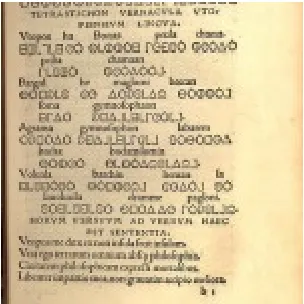
Figure 2.1 - Utopian alphabet and verses from the 1516 Louvain edition of
Utopia
58
Figure 2.2 - Utopian alphabet and verses from the 1518 Basel edition of Utopia 58
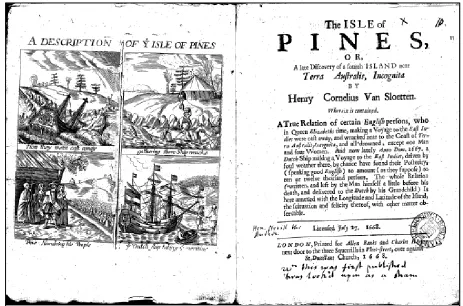
Figure 5.1 - Isle of Pines Frontispiece 132
Figure 5.2 - Isle of Pines Frontispiece Top Left Detail 133
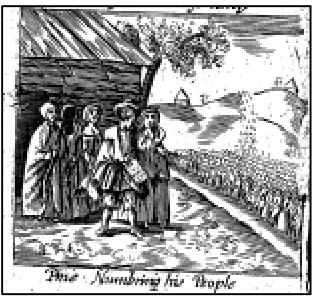
Figure 5.3 - Isle of Pines Frontispiece Top Right Detail 133
Figure 5.4 - Isle of Pines Frontispiece Bottom Left Detail 134
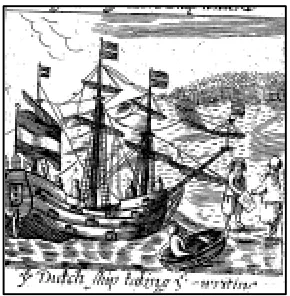
Figure 5.5 - Isle of Pines Frontispiece Bottom Right Detail 135
Figure 5.6 - Isle of Pines Frontispiece Bottom Left Detail 145
CHAPTER 1: INTRODUCING UTOPIA
It is true that this isolated “being”—foreign to what is not it—is the form in which existence and
truth at first appeared to you. It is to this irreducible difference—which you are—that you must
relate the sense of each object. Yet the unity which you are flees from you and escapes: this
uni-ty would only be a dreamless slumber if chance disposed of it according to your most anxious
will.
Georges Bataille - Inner Experience
Utopia is a state of mind. It is not a socially-constructed psychological state or an
ideol-ogy, but merely an attitude, a specific state of consciousness. Achieving utopia may not happen,
but if an individual’s utopia appears, it arrives at the very moment of individuation.1 To
illus-trate this definition I will examine Thomas More’s (1478-1535) seminal Utopia (1516) and three
seventeenth-century utopian texts by employing the tripartite model of subjectivity developed by
French psychoanalyst Jacques Lacan (1901-1981): the Symbolic, the Imaginary, and the Real.
Thomas More’s Utopia demonstrates all three of Lacan’s orders; Francis Bacon’s (1561-1626)
New Atlantis (1624) demonstrates the Symbolic order; Margaret Cavendish’s (1623-1673) The Description of a New World, Called the Blazing World (1666)demonstrates the Imaginary order;
and Henry Neville’s (1620-1694) The Isle of Pines (1668) demonstrates the Lacanian Real. Lit-erary critic Malcolm Bowie (1943-2007) has called this three-part model the “unholy trinity”:
“The would be truth-seeker will find that the Imaginary, the Symbolic, and the Real are an
unho-ly trinity whose members could as easiunho-ly be called Fraud, Absence, and Impossibility” (112). To
1 This differs from Fatima Viera’s assertion that utopia “is to be seen as a matter of attitude, as a kind of reaction to
mediate between the historical and psychoanalytical implications of these utopian texts, I will
employ the Marxist-Lacanian model of Slovenian philosopher Slavoj Žižek (b.1949).
Although Lacan began his career as a psychoanalyst, his lasting contributions to
twenti-eth century intellectual history stand alongside the practitioners of continental philosophy and
Critical Theory. He published very little during his lifetime and much of the development of his
thought has become available only in the posthumous publications of transcriptions of his
Semi-nars. Lacan has, however, remained important to psychoanalysis and talk therapy among a small
number of practicing Lacanian psychoanalysts. Bruce Fink, for example, has published widely
on Lacan from both the perspective of clinical psychology as well as that of Lacan’s place in
in-tellectual history. According to Bruce Fink, Lacan “finds the concept of subjectivity
indispensa-ble and explores what it means to be a subject, how one comes to be a subject, the conditions
re-sponsible for the failure to become a subject (leading to psychosis), and the tools [. . .] to induce
a ‘precipitation of subjectivity’” (TheLacanian Subject: Between Language and Jouissance xi). Through Lacan’s understanding of subjectivity, I will demonstrate the entirely psychological
state of utopianism in the four literary texts listed above.
THE SYMBOLIC ORDER: FRANCIS BACON’S NEW ATLANTIS
Francis Bacon’s New Atlantis exemplifies Lacan’s notion of the Symbolic order. For Lacan, the Symbolic order resides in the strict law of language. By implication, Lacan’s notion
of the Symbolic order corresponds most closely to the Old Testament, the part of Christianity
that provided the Pentateuch, the Law of Moses, and demonstrated its applications and trans-gressions through the subsequent individual books of the Hebrew Bible. In addition, the
the father gave Moses, the primary patriarch of the Old Testament, the law and commanded he
spread it to the subsequent patriarchs that served as subjects for the rest of the Old Testament.
Lacan’s Symbolic order is very unforgiving. He argues that the Symbolic realm, which
constitutes that of language, ushers in subjectivity: “The subject sets itself up as operating, as
human, as I, from the moment the symbolic system appears” (Seminar II 52). But Lacan recog-nizes that initiation into the Symbolic order does not necessitate the literal act of speech on the
part of the subject: “Development only takes place in so far as the subject integrates himself into
the symbolic system, acts within it, asserts himself in it through the use of genuine speech. It isn't
even essential, you should note, that this speech be his own” (Seminar I 86). In other words, the
Symbolic order descends upon the soon-to-be Lacanian “subject” without his or her having any
way of questioning it or stopping it. It simply becomes part of the reality for this subject, who
becomes a subject immediately upon its introduction. Lacan argues that subjectivity via the
Symbolic order comes about through conscious and unconscious submission to mutual and
all-encompassing difference within the system of “law”: the subject “enters into the symbolic
rela-tion of I and you, in a relarela-tion of cultural recognirela-tion and transcendence, into the order of a law
which is already quite ready to encompass the history of each individual” (Seminar I 177).
Lacan’s subject, in other words, receives the Symbolic order through culture and this serves the
subjects’ differentiation from the Other.
The Symbolic order for Lacan constitutes and is constituted by law, i.e., the Law, the
Name-of-the-Father. Dylan Evans describes the Name-of-the-father in very political and legal
terms by assigning it “the legislative and prohibitive function of the symbolic father” (119).
Lacan’s Symbolic order precisely describes the orderly society Bensalem. The very patriarchal
society and most closely demonstrate Lacan’s notion of the Symbolic order through strict codes
of conduct for the inhabitants and visitors to the island society. The Feast of the Family, a very
patriarchal ceremony and holiday in Bensalem, calls to mind Lacan’s notion of the
Name-of-the-father. In addition, women play virtually no role in both the society of Bensalem as well as the
narrative Bacon presents in The New Atlantis. Žižek writes that the “symbolic space acts like a yardstick against which I can measure myself [. . .] the ‘God’ who watches over me from
be-yond, and over all real individuals” (How to Read Lacan 9). This closely describes the House of Solomon in Bensalem, the seat of government that keeps a watchful eye of the entire island
soci-ety.
THE IMAGINARY ORDER: MARGARET CAVENDISH’S A DESCRIPTION OF A NEW
WORLD, CALLED THE BLAZING WORLD
The Symbolic order does not hold complete control over the “subject,” and the subject
can with relative ease move in and out of the Imaginary order. Lacan distinguishes the Symbolic
from the Imaginary thus:
[I]t's the symbolic relation which defines the position of the subject as seeing. It is
speech, the symbolic relation, which determines the greater or lesser degree of
perfection, of completeness, of approximation, of the imaginary. This
representa-tion allows us to draw the distincrepresenta-tion between [. . .] the ideal ego and the
ego-ideal. The ego-ideal governs the interplay of relations on which all relations with
others depend. And on this relation to others depends the more or less satisfying
character of the imaginary structuration. (Seminar I 141)
“Ego-ideal” refers to the “signifier operating as ideal, an internalized plan of the law, the guide
This ego-ideal “signifier” operates paradoxically as the “ideal,” or rather the Saussurean notion
of the “sign” or “signified,” which in many ways resembles Plato’s notion of the ideal. The
“ideal-ego” refers to that which “always accompanies the ego, as an ever-present attempt to
re-gain the omnipotence of the preoedipal dual relation” (Evans 52). The Imaginary in other words
rests in a realm that relies upon elements of metaphor, symbolization, allegory, etc. In this order,
the Other becomes an important concept, as it takes the place of the Symbolic gaze that the
House of Solomon represents. According to Žižek, the “Ego-Ideal is the agency whose gaze I try
to impress with my ego image, the big Other who watches over me and impels me to give my
best, the ideal I try to follow and actualize” (How to Read Lacan 80). In essence the subject
governs himself unconsciously because of indoctrination into the Symbolic order.
In Margaret Cavendish’s Blazing World, the Empress acts without any oversight,
howev-er, and thus corresponds with Lacan’s Imaginary order. The protagonist of The Blazing World, the Empress, immediately demonstrates challenges to the law and to the status quo immediately
after the native inhabitants of the Blazing World make her Emperor. Despite her attacks on
sci-ence, the native inhabitants of the Blazing World frequently speak of the Empress as a messiah.
And finally, the Empress demonstrates her fraudulent ascension, firstly, by bringing the text’s
author, Cavendish herself, into the Blazing World, and secondly, by choosing to retreat into her
own mind, narcissistically turning her back on the responsibilities she assumed by accepting the
position of Empress. Žižek argues that the ego becomes split in the Imaginary order into the
“ideal ego” and the “ego ideal”: the “ideal ego is imaginary, what Lacan calls the ‘small other,’
the idealized mirror-image of my ego”; in other words, the ideal ego represents “the way I would
de-scribes the way in which the Duchess in Cavendish’s Blazing World attempts to assimilate both
within and above the society that has put her in charge.
Lacan’s notion of the Imaginary order corresponds most closely with that of New
Tes-tament, the dialectical marriage of man and deity through the unseeable Holy Ghost. It thus also
aligns with notions of the savior or son and the alienation that comes with challenging the law, or
Symbolic order. Lacan locates the Imaginary order near the differentiation the subject has with
the literal and Symbolic father: “the narcissistic or imaginary relation to the father is distinct
from the symbolic relation, and also from the relation that we really do have to call real -which is
residual with respect to the edifice which commands our attention in analysis (Seminar I 66).
Lacan argues that the Imaginary resides within the challenge to the status quo and allows the
ego-driven subject to challenge the law of the Symbolic order: “the subject, having projected his
sadism, sees it coming back from these objects, and, by this very fact, finds himself jammed up
by an anxious fear, don't you have the feeling that we are in the domain of the imaginary?” (
Sem-inar I 74). For Lacan, the Imaginary represents an adversarial challenge to the Symbolic. Lacan also argues that the ego itself resides within the Imaginary order:
In its most essential aspect, the ego is an imaginary function. That is a discovery
yielded by experience, and not a category which I might almost qualify as a priori,
like that of the symbolic. On account of this point, I would almost say on account
of this point alone, we find in human experience a door opened out on to an
ele-ment of typicality. (Seminar II 36) Lacan again locates the ego in the Imaginary:
The ego is inscribed in the imaginary. Everything pertaining to the ego is
ego are on the same side. Narcissism is libidinal. The ego isn't a superior power,
nor a pure spirit, nor an autonomous agency, nor a conflict-free sphere - as some
dare to write - in which we could find some support. (Seminar II 326).
The Empress in The Blazing World does closely follow this model; she does not represent a
“su-perior power,” but merely a challenge to tradition and the status quo. Nevertheless, as I will
demonstrate in Chapter 3, the native inhabitants of the Blazing World treat the Empress as a
sav-ior.
Dylan Evans argues that the Imaginary “has connotations of illusion, fascination and
se-duction, and relates specifically to the dual relation between the Ego and the specular Image”
(82). Evans defines the dual relation as that which “is characterized by illusions of similarity,
symmetry, and reciprocity” (49) and he define Lacan’s notion of “specular image” as “referring
to the reflection of one’s own body in the mirror, the image of oneself which is simultaneously
oneself and Other” (190). He continues: “The imaginary is thus the order of surface appearances
which are deceptive, observable phenomena which hide underlying structure” (82), or, in
Bow-ie’s words, fraud. Although he does not refer to Lacan, Jean Baudrillard places alienation within
the Imaginary: “‘Alienation’ is still the imaginary of the subject, even of the subject of history.
The subject does not have to become a total man again, the subject does not have to rediscover
himself” (176). The Empress in The Blazing World consistently makes errors in judgment yet receives no advice or corrective action from the populace who has put her into power; she thus
overtly personifies fraud. The Empress represents a significantly subversive element to the
Blaz-ing World. Baudrillard in kind sees as part of utopia a subversive element: “Utopia seeks speech
against power and against the reality principle, which is the only phantasm of the system and of
Empress’s lengthy question and answer session with the scientists of the Blazing World amounts
to no new understandings on the part of the Empress, and ultimately represents only a series of
word games and unnecessary speech into which the Empress gets lost.
THE REAL: HENRY NEVILLE’S THE ISLE OF PINES
Lacan’s notion of the Real corresponds with the child, the pre-Oedipal, the post-law,
im-possibility, revelation, and apocalypse. According to Bruce Fink, the real corresponds with
an infant’s body before it comes under the sway of the Symbolic order, before it is
subjected to toilet training and instructed in the ways of the world. In the course
of socialization, the body is progressively written or overwritten with signifiers;
pleasure is localized in certain zones, while other zones are neutralized by the
word and coaxed into compliance with social, behavioral norms. (Lacanian S
ub-ject 24)
Fink qualifies the Real by writing that it “does not exist, since it precedes language” (Lacanian
Subject, Fink’s emphasis, 25). The real represents “that which has not been symbolized, remains
to be symbolized, or even resists symbolization; and it may perfectly well exist ‘alongside’ and
in spite of a speaker’s considerable linguistic capabilities” (Fink, his emphasis, Lacanian Subject
25). Žižek argues that the “figuration of the Real” consists of:
first, the real of the lamella, of the terrifying formless Thing; then the scientific
Real, the real of a formula that expresses nature’s automatic and senseless
func-tioning [. . .] The difference hinges on the different starting point: if we start with
the Imaginary [. . .] we get the Real in its imaginary dimension, the horrifying
.] we get language deprived of the wealth of its human sense, transformed into the
real of a meaningless formula. (How To Read Lacan 66)
Žižek also claims that “for Lacan the Real, at its most radical, has to be totally desubstantialized.
It is not an external thing, but the fissure within the symbolic network itself. The Real as the
monstrous Thing behind the veil of appearances is the ultimate lure that lends itself easily to
New Age appropriation” (How to Read Lacan 72). The arrangements on the Isle of Pines
cer-tainly appear “New Age” in their reliance on the disintegration of marital law and custom. As
Dylan Evans argues, “the real is the impossible [. . .] because it is impossible to imagine,
impos-sible to integrate into the symbolic order, and imposimpos-sible to attain in any way. It is this character
of impossibility and of resistance to symbolization which lends the real its essentially traumatic
quality” (160). Indeed, the traumatic shipwreck serves as a tame precursor to the “impossible”
polygamy and the traumatic civil war that eventually erupts on the island.
The four survivors of the shipwreck in Henry Neville’s The Isle of Pines immediately begin to procreate and over the course of four generations of their offspring humanity itself
re-gresses, with the inhabitants ultimately wearing no clothes and falling into tribal warfare. The
society on the Isle of Pines indeed seems “impossible” in its depiction of sexual anarchy and
wanton procreation (the society eventually numbers 10,000). It also approximates the
pre-linguistic aspects of the Lacanian Real, as it depicts humanity in as far of a regression as possible
in a post-linguistic, Symbolic world. As Lacan’s Real also exists in the realm of post-Symbolic
law, the Isle of Pines also represents horrific lawlessness in the civil war that eventually destroys
the society. The destruction creates on a microcosmic scale a literal apocalypse. Indeed, as
Frank Manuel argues, “the greatest distinction between the sixteenth- and eighteenth century
History of Utopias" 78). Žižek argues that “the Real is the impossible hard core which we
can-not confront directly, but only through the lenses of a multitude of symbolic fictions, virtual
for-mations [and] this very hard core is purely virtually, actually non-existent” (The Parallax View
26). In The Isle of Pines, Neville creates a society that through his own authorial choices he does
not allow the reader to see directly. The narrative of The Isle of Pines uses multiple narratives frames to further remove the reader and audience from the “reality” of the entirely “unreal” or
“impossible” societal arrangements on the island.
In the following I provide a survey of utopian studies scholarship by categorizing
indi-vidual studies into the appropriate domain of Lacan’s tripartite model.
UTOPIAN STUDIES THAT ILLUSTRATE LACAN’S SYMBOLIC ORDER
Formal (which might suggest “Symbolic”) studies of utopia have appeared. In “Varieties
of Literary Utopias,” (1966), literary critic Northrop Frye (1912-1991) argues that “utopia is a
speculative myth” and that “The utopian writer looks at his own society first and tries to see
what, for his purposes, its significant elements are. The utopia itself shows what society would
be like if those elements were fully developed” (25, 26). The notion of “fully developed”
sug-gests some level of perfection, a kind of completion with a monolithic stability similar to Law.
He also writes that utopia relies upon “a corresponding increase in the amount of ritual habit
necessary to life, and a new ritual habit must be conscious, and so constraining, before it
be-comes automatic or unconscious” (28). In Francis Bacon’s New Atlantis, the “Symbolic” utopia
of this present study, the society’s inhabitants engage in many ritualistic and repetitive activities
simply because of tradition. In the very formalist but highly influential Utopia and the Ideal
the political structure of that fictional state or community” (16). Davis goes on to argue that
uto-pia must deal with “the totality of change envisaged, its closed-society nature, and the order of
stability of the new establishment” (19). Bensalem in Bacon’s New Atlantis certainly qualifies as a “closed-society.”
Utopian studies have also frequently focused on the authoritarian nature of societies
de-picted in utopian texts, readings of utopian thought, and utopian studies in general. In Ideology
and Utopia: An Introduction to the Sociology of Knowledge (first published in German in 1929 and in English in 1936), Hungarian sociologist Karl Mannheim (1893-1947) argues that an
un-derstanding of “the functions of the press, or the popularization of knowledge and of propaganda
contribute[s] to a more precise conception of the role of ideas in political and social movements
and of the value of knowledge as an instrument in controlling social reality” (xxix). Mannheim
here interestingly links early printing to control of the populace. Mannheim also claims that
“Utopias too transcend the social situation, for they too orient conduct towards elements which
the situation, in so far as it is realized at the time, does not contain. But they are not ideologies,
i.e. they are not ideologies in the measure and in so far as they succeed through counteractivity in
transforming the existing historical reality into one more in accord with their own conception”
(195-6); Mannheim in other words argues for an unconscious self-justifying subjectivity formed
by external, state-driven pressure. Mannheim also argues that creativity can exist in utopia: “The
belief that the significance of individual creative power is to be denied is the most widespread
misunderstanding of the findings of sociology” (206). He also argues that true utopias represent
becoming and not being (224). In "Utopia, the City and the Machine" (1966), Lewis Mumford
argues that there exists an “authoritarian nature of [. . .] many utopias” (3). He goes on to argue
above, absolute obedience below, never entirely passed out of existence” (19). Mannheim and
Mumford both acknowledge the importance of strictly controlling the utopian state.
Much of Marxist critical theorist Fredric Jameson’s (b. 1934) work has come near to
uto-pian studies as well. In Marxism and Form (1971), Jameson claims that “in the older society [. .
.] Utopian thought represented a diversion of revolutionary energy into idle wish-fulfillment and
imaginary satisfactions,” whereas more recent Utopian thought “has undergone a dialectical
re-versal. Now it is practical thinking which everywhere represents a capitulation to the system
it-self, and stands as a testimony to the power of that system to transform even its adversaries into
its own mirror image” (110-1). Jameson’s dichotomy of “older” utopian thought and “newer”
utopian thought illustrates very clearly the typical prejudice leveled by critical theorists against
pre- or even early modern intellectual history, as Jameson seems to imply that on the very day of
Immanuel Kant’s birth the modern age instantly began.
In The Political Unconscious (1981), Jameson argues that “In its contemporary form, the critique of such identity theory argues not merely that the concept of ‘totality’ is here a code
word for Absolute Spirit, but that a whole vision of history is herein perpetuated, in which
Uto-pia (read: communism) is understood as achieving its ultimate identity by the obliteration of
dif-ference through sheer force” (51). Although not alone in doing so, Jameson here conflates
uto-pia with communism in a very dangerous and counterproductive essentialist statement. This
ges-ture calls to mind the cliché notion that “one man’s utopia is another man’s dystopia.” Jameson
also refers to and seeks to undermine Ernst Bloch’s “Utopia fantasies of plenty” (86) and
con-cludes that “it is the proposition that all class consciousness—or in other words, all ideology in
much as that of oppositional or oppressed classes—is in its very nature Utopia” (289).
Jame-son’s figuration of utopia here sounds very totalitarian as well as essentialist.
In Archaeologies of the Future: The Desire Called Utopia and Other Science Fictions
(2005), Jameson expands on this notion of utopia by arguing that in Utopia
the effacement of the private property of the self and the emergence of some new
decentered and collective practice of social and individual relations, it would in
the best of cases scarcely correspond to an abolition of subjectivity but rather
merely to a new form of the latter, in which bourgeois individualism—another
name for the old humanist ‘centered subject’ under attack by contemporary
theo-ry—has been replaced by the ‘multiple subject positions’ of postmodernity and
late capitalism. Once again the notion of the replication of the system becomes
the final form of conspiracy theory, and the concept of a Utopian transformation
becomes an additional resource in the warehouse of late capitalism’s ruses and
lures. (168)
He goes on to say “in Utopia, the ruse of representation whereby the Utopian impulse colonizes
purely private fantasy spaces is by definition undone and socialized by their very realization”
(230). In other words, the utopian “colonizer” (Symbolic order) wins the battle with the
Imagi-nary order, the “purely private fantasy spaces.”
UTOPIAN STUDIES THAT ILLUSTRATE LACAN’S IMAGINARY ORDER
In the early yet highly influential The Story of Utopias (first published in 1922), utopian studies literary critic Lewis Mumford (1895-1990) distinguishes between two types of utopia:
escapist and reconstructive. The escapist utopia eliminates the mundane elements of life and, as
Such utopian works offer an escape from the trials of everyday life and offer nothing "to sharpen
your teeth upon” (13). Utopias of reconstruction establish entirely new types of human
relation-ships, habits, values, and institutions. Reconstructing, cultivating, and controlling the
environ-ment prove integral in reconstructive utopias; Mumford writes, "The utopia of reconstruction is
what its name implies: a vision of a reconstituted environment which is better adapted to the
na-ture and aims of the human beings who dwell within than the actual one" (13). Mumford also
relates three ways in which man may react to some kind of hostile or unsatisfactory condition of
existence: running away, trying to hold his own, and attacking. The reaction of flight tends to
inspire utopias of escape, while holding one's own and attacking tend to align themselves with
utopias of reconstruction. While it has legal and sociological implications, transgression must
first originate from an unconscious psychological deficit or from a conscious decision to commit
a transgression. Such deficits rest in the ego, and utopian studies have long incorporated ideas of
psychology into definitions and paradigms. Mumford defends the proliferation of utopias by
saying "It is hard to conceive a social order so complete and satisfactory that it would rob us of
the necessity of having recourse, from time to time, to an imaginary world in which our
suffer-ings could be purged or our delights heightened” (13). Here Mumford uses the very word
“im-aginary,” suggesting a challenge to what he sees as the “sufferings” humanity wants to purge.
To justify the source for this creation of an idealized world, Mumford first distinguishes
between the two worlds in which man exists: the world within and the world without. The world
without represents the physical, mundane, day-to-day realities of human existence: interacting
with the environment, interacting with others, and satisfying the physical requirements of eating
and sleeping. The inner world, to Mumford, represents the springing board for utopias. He calls
intends it to include "all the philosophies, fantasies, rationalizations, projections, images, and
opinions" that influence the pattern of human behavior. This all inclusive "idolum" inspires the
mind of man to have the very desire to imagine for himself a better reality in which he has more
direct control over environmental and societal realities. Again, this notion of utopia resides
with-in an with-individual’s imagwith-ination, or rather, that which escapes the mundane, quotidian realities of
the “real” world.
The Frankfurt School provided a significant body of theoretical scholarship, which we
now call “Critical Theory,” that attempted to unite the political and economic implications of the
writings of Karl Marx (1818-1883) and the psychoanalytic practices of Sigmund Freud
(1856-1939). One such Frankfurt School luminary, German philosopher Ernst Bloch (1885-1977),
wrote extensively on utopia. In Philosophy of the Future (1963), Bloch argues that
Nevertheless a distinction has to be made between the utopistic and the Utopian;
the one approaches circumstances only immediately and abstractly, in order to
improve them in a purely cerebral fashion, whereas the other has always brought
along the constructional equipment of externality. Of course only utopism, as it
reaches out abstractly above reality, need not fight shy of a mere empiricism that
undertakes only another form of abstract apprehension below reality. (89)
In other words, utopia must not hide from “mere empiricism,” which we can take to mean Law,
or by association, the Symbolic: that is to say, the laws of science, which will repeatedly produce
the same results. For Bloch, utopia transcends reality and in essence resides in the Imaginary
order. In The Spirit of Utopia (1964), Bloch argues that
To shape a path from the lonely waking inner-dream of the inner self-encounter to
as locus minoris resistantiae or even as the instrumentation for the goal. And just
this, the explication of ‘glossolalia’ as ‘prophecy,’ of the metaphysical system,
distinguishes the passage to the ‘world’ of the soul, which is neither of this world
nor of that, but is nonetheless not simply acosmic and closed to the cosmos, but
turned toward the new, all-pervading power of the subject-object space. (237)
Again, Bloch here places utopian in a realm outside of the literal, the waking world, or practical
reality. For Bloch utopia rests in the Imaginary order.
In “The Three Faces of Utopianism” (1967), political science professor and utopia studies
luminary Lyman Tower Sargent lists three manifestations of utopia: utopian thought, the utopian
novel, and communitarian experiments. Sargent in this essay establishes a great deal of the
foundation to what has become “utopia studies” in the Western academic world. Sargent’s three
manifestations suggests that utopian thought can exist independent of both literary and real world
utopian thought experiments. Sargent in this designation places a great power on the notion of
“utopian thought” by not mandating its attachment to something more tangible. In his “The
Three Faces of Utopianism Revisited” (1994), Sargent argues that “utopias, written in different
times and places, need to be understood both in their historical and linguistic context and for
what they communicate to a contemporary reader” (3). Indeed, linguistic implications of utopia
figure prominently in my chapter on Thomas More’s Utopia, to which More added an artificial language and examples of Utopian verse in this language. He goes on to say that “utopianism is
the result of the human propensity to dream while both asleep and awake” and that “this dual
propensity [. . .] is basic to the conflict over the political nature of utopianism, particularly for the
twentieth argument that utopianism necessarily leads to totalitarianism and violence” (4). Again,
that “Utopia is primarily a type of prose fiction” (7), he recognizes the prevalence of “utopian”
thought across cultures, and by implication, across crude literary definitions and genres:
[T]hose who limit utopias to the West are demonstrably wrong” by asserting that
“1. Utopianism (social dreaming) is a common human phenomenon; 2. Every
cul-ture has produced body utopias; 3. There are city utopias and even independent
utopian traditions outside the Christian West; [and] 4. Thomas More invented a
particular literary form that spread rapidly. More’s invention was of immense
importance; it gave a form of utopianism that has been adopted universally. This
form sprung from traditions and precursors and has now produced many
off-shoots. (19)
He also argues that “there is a basic ambiguity in utopianism” (26), which, as I will demonstrate
in Chapter 2, precisely describes More’s Utopia.
The title of More’s text and the literary genre it started also has fallen into ambiguous
complications with regards to conveniences such as definition and meaning. Sargent argues in
“Utopia: The Problem of Definition” (1975) that perfection has never characterized utopian
fic-tion, but the misuse of the word perfect continues. In this same article Sargent argues that
“un-less the purely formal characteristics of the genre are stressed, most contemporary Utopias are
lost” (145). In “A Note on the Other Side of Human Nature in the Utopian Novel” (1975),
Sar-gent argues that utopia relies on the following assumption: “people are essentially good, but the
system, economic, social, and/or political, is either fundamentally wrong or somewhat out of
balance; and if the system is corrected people will behave well” (89). Sargent here suggests that
the established order, the status quo, needs rethinking in a break from tradition, i.e., the Law or
ar-gues that utopia can represent danger: “utopianism is somewhat dangerous, [and] the danger
in-heres in the process of transforming visions into political movements, not in utopia itself” (566).
Sargent sees utopia as only a possibility, and a rather unlikely one at that: “Utopia is a possibility
rather than a certainty [. . .] it is designed to break through the barriers of the present and
encour-age people to want, and work for, change [. . .] Far from being the road to totalitarianism, it is the
road away from totalitarianism” (“Authority & Utopia: Utopianism in Political Thought” 574).
Indeed, true “utopianism” however defined would want to break from the totalitarian, the Law,
and the Symbolic order.
In Utopianism: A Very Short Introduction (2010), Sargent argues that utopias
tell stories about good (and later bad) places, representing them as if they were
re-al. Thus they show people going about their everyday lives and depict marriage
and the family, education, meals work, and the like, as well as the political and
economic systems. It is this showing of everyday life transformed that
character-izes a utopia, and utopianism is about just that transformation of the everyday. (4)
The everyday here suggests a quotidian or thoughtless existence under the thumb of the
signify-ing network. Sargent lists six purposes of literary utopia: “a fantasy, [. . .] a description of a
desirable or an undesirable society, an extrapolation, a warning, an alternative to the present, or a
model to be achieved. And the intentional community as utopia adds a seventh purpose, to
demonstrate that living a better life is possible in the here and now” (Utopianism: A Very Short
Introduction 8). In his introduction to Paul Ricouer’s (1913-2005) Lectures on Ideology and Utopia (1986), George Taylor similarly sees the pragmatic possibilities of utopia: “Utopia is the
view from ‘nowhere’—the literal meaning of the word—that ensures that we no longer take for
utopia conceptually exists primarily to evoke appreciation and mindfulness about our “present
reality.”
The natural human urge to escape “present reality,” goes beyond producing utopian texts
or experiments, and has contributed to the growth of science fiction. Cavendish’s Blazing World
has many elements of science fiction it, as do several other early modern utopia texts.
Yugoslav-born science fiction literary critic Darko Suvin (b. 1930) argues in “Defining the Literary Genre
of Utopia: Some Historical Semantics, Some Genology (sic), a Proposal and a Plea” (1973) that
“Utopia operates by example and demonstration dialectically” (121). Suvin also sees utopia as
residing in an ostensible “imaginary” space which reality cannot obtain or reach: “Utopia is an
Other World immanent in the world of human endeavor, dominion, and hypothetic possibility—
and not transcendental in a religious sense. It is a non-existent country on the map of this globe,
a ‘this-worldly other world’” (126). In Perversion and Utopia: Studies in Psychoanalysis and Critical Theory (1995), psychoanalyst Joel Whitebook pits Freud against Herbert Marcuse in an attempt to bring into Critical Theory an untouched opposition by arguing that “the ego, far from
being an agency of truth and emancipation, is in fact the defensive structure, a submissive slave,
sycophant, opportunist and liar—a symptom, as Lacan puts it—that narcissistically seeks to
pro-tect the individual from otherness and, in so doing, ultimately violates the otherness of the
Oth-er” (122). This sounds very similar to Malcolm Bowie’s equation of the Imaginary with Fraud,
and, by association, the Empress in The Blazing World.
In The Concept of Utopia (1990), sociologist Ruth Levitas argues that “Utopia is the ex-pression of the desire for a better way of living” (8), interestingly using Lacanian language to
between things as they are and things as they should be. It is a presentation of a positive and
possible alternative to the social reality, intended as a model to be emulated or aspired to” (1).
Here again a utopian studies critic uses the word “imaginary” to describe utopia, in this case the
very title of Eliav-Feldon’s book. In Visions of Utopia (2004) architectural critic Herbert
Muschamp (1947-2007) writes, “The conventional utopia—the imaginary ideal city or world—
seems to me a transitional state between belief in an almighty dignity, a supreme being capable
of bending the laws of nature, and the acceptance of personal responsibility in whatever sphere
life happens to place us” (29). Again, utopianism’s challenge to the established order plays
prominently in definitions of utopia.
UTOPIAN STUDIES THAT ILLUSTRATE LACAN’S REAL
Whether utopia relies upon including or excluding oppression or implementing or
stop-ping authoritarianism, it always includes some kind of law and order that invites transgression.
In his Utopics: The Semiological Play of Textual Spaces (first published in English in 1984), French philosopher Louis Marin (1931-1992) argues that “utopics are spatial play” (26) and that
“Utopia [is] the experience of a neutralized world, that of the same and yet Other World” (48).
He argues that “Utopia established transgressions as norm. Subversion becomes figurative
rep-resentation of the law. In other words, in utopia transgression is not related to law; it has
be-comes the law” (79). In Henry Neville’s Isle of Pines, the very fabric of the society, the polyga-mous marital relations and generally regressive humanity on the island, constitutes a
transgres-sion impossible anywhere else than on the island itself.
After transgression apocalypse might follow, and thus utopian studies frequently address
apocalyptic aspects of idealized societies. For example, literary critic David Ketterer in
established utopia is an illusion, albeit an illusion of major motivational importance” (81).
Ketterer also sees an eschatological aspect of millenarian utopia and argues that “The coming
millennium, although technically outside human control, might, in a limited sense, be achieved.
The sense implied here, of a temporally-bounded utopia, preceded by the loosing of Satan and
existing unchanged until the end of the world, may have some analogy in the common literary
conception of utopia as a spatially-bounded area” (85). He also traces this millennial aspect of
utopia to Genesis, arguing that “Pastoral or Arcadian models of utopia derive their conviction
largely from belief in the Garden of Eden” (89). He argues that utopia cannot contain a plot
(90). Indeed, the society created in Neville’s largely plotless Isle of Pines at first appears as an
Edenic fantasy but ultimately turns into destruction and death. Ketterer succinctly articulates the
way in which utopia operates in Neville’s text: “The verbal fabric of a utopian fiction is in a
con-stant incipient state of conflict or insurrection which is nullified when presented as a fantasy or
transcended in visionary apocalyptic writing but encouraged in the apocalyptic mode of science
fiction” (95). Suvin also sees Edenic paradise as utopian (140) and such a formal approach to the
study utopia could correlate with a “Symbolic” approach in the Lacanian sense, as formal studies
and definitions seek to set laws, rules, and consistency in the study of utopian thought.
Bruce Fink points to what he calls “kinks in the Symbolic order” as “something
anoma-lous always shows up in language, something unaccountable, unexplainable, an aporia”
(Lacanian Subject 30). In Fink’s sense, these “kinks” might appear as transgressions of the Law,
the place where the systematic order of the Symbolic order does not hold sway. Marina Leslie in
Renaissance Utopias and the Problem of History (1998) argues that in the early modern period,
historical crisis serves not simply as the backdrop or context of utopian fiction but
repre-sents is, in short, a crisis of representation. To put it another way, utopia, to be
ef-fective either as a narrative or model, must show how history is made up—in the
double sense of ‘constituted’ and ‘fictionalized’—in order to show how it can be
made over. (8)
Leslie’s notion of a “crisis” in essence suggests a break in the Symbolic order. Lucy Sargisson
in Utopian Bodies and the Politics of Transgression (2000) also sees transgression as important
to the utopian impulse: “utopian thought works thus: it issues from political dissatisfaction and
offers political critique; it articulates estrangement and offers an alternative perspective, from an
alien (or new) space; it is creative and imaginative and often fictional; it has subversive and
transformative potential” (3). Transgression goes further than the Imaginary in its challenge to
the Symbolic order, and this brings it into the realm of the Real.
In Living in the End Times (2010), Žižek argues that “‘ideology’ represents precisely such a reduction to the simplified "essence" that conveniently forgets the "background noise"
which provides the density of its actual meaning. Such an erasure of the ‘background noise’ is
the very core of utopian dreaming" (5-6). By “essence,” Žižek means, I think, that the
unstruc-tured, lawless of the Real. He also says,
This is the true utopia, the idea that a legal order can make recompense for its
founding crimes, thereby retroactively cleansing itself of its guilt and regaining its
innocence. What lies at the end of this road is the ecological utopia of humanity
in its entirety repaying debt to Nature for all its past exploitation [. . .] The
under-lying utopian notion is the same: the system which emerged through violence
Neville’s Isle of Pines begins with natural violence in the storm that creates the shipwreck and
ultimately moves into man-made violence in the civil war that destroys the island’s large
popula-tion.
In the chapters that follow, I will use the writings of Žižek to connect historical
consider-ations with the Lacanian model of subjectivity; at times I will also engage the writings of Michel
Foucault, Fredric Jameson, and other prominent twentieth-century theorists. While Žižek overtly
advertises himself as a “Marxist-Lacanian,” I plan to use the four early modern utopian texts to
illustrate the way in which the literary utopian does NOT need Marxist, socialist, or communist
aspects to create an “ideal” society. I plan to challenge Žižek’s reliance on this mandatory
Marx-ism to illustrate the ways in which MarxMarx-ism can itself assist in merely political analysis of
liter-ary texts. This rests on my belief in the difference between “believing” in Marxism (and the
log-ical follow through of revolution) and merely “knowing” Marxism (knowing what he wrote), and
I wish these early modern utopian texts to illustrate this differences among their depiction of the
CHAPTER 2: “IF ONLY THIS WERE SOME DAY POSSIBLE”: THE EXECRATION,
CONSECRATION, AND CATECHIZATION OF HUMANIST OPTIMISM IN THOMAS
MORE'S UTOPIA
Communism doesn't work because people like to own stuff.
Frank Zappa
Communism is like one big phone company.
Lenny Bruce
In Minima Moralia, Theodor Adorno writes, "In the inner recesses of humanism, as its very soul, there rages a frantic prisoner who, as a Fascist, turns the world into a prison” (89).2
Humanism, which emphasizes the power of the individual to control his own existence, played a
significant role in the European Renaissance at its inception in the fourteenth century and in the
English Renaissance when it began in the early sixteenth century. The literary period in England
that Thomas More’s Utopia inaugurates, once called "the Renaissance," has now become the "early modern" period, as literary critics have documented the "modern" aspects of culture and
society gleaned from the literature of the period. In Utopia, however, Thomas More in fact un-dermines humanism, optimism, and "utopian" ideals through his depiction of a very
proto-modern notion of individual subjectivity with a cynicism that eerily foreshadows
twentieth-century post-war and post-holocaust nihilism in a complete abandonment of humanistic ideals.3
2 Jacob Burckhardt too sees the misery inherent in a career as a humanist: “The career of the humanists was, as a
rule, of such a kind that only the strongest could pass through unscathed [. . .] But worst of all was, that the position of the humanist was almost incompatible with a fixed home, since it either made frequent changes of dwelling nec-essary for a livelihood, or so affected the mind of the individual that he could never be happy for long in one place" (186-7).
3 J.H. Hexter points out that in Utopia, “his [More’s] own alienation—he calls it a prison—would end” (“The Loom of Language and the Fabric of Imperatives: The Cases of Il Principe and Utopia 966).
Uto-When analyzed through the perspectives of Marxist-Lacanian theorist Slavoj Žižek, More’s
Uto-pia becomes a depiction of a prison that neither embraces nor rejects what previous critics have claimed; on the contrary, More consciously praises and indicts both sides of his intentionally
ambiguous utopian political spectrum. More’s Utopians find themselves in a lose-lose conflict
between the two extremes presented in More’s text, pre-capitalism and communism.
Thomas More was born the son of lawyer Sir John More in London in 1478. He began
his university studies at Oxford in 1492 but left to pursue legal training and joined the bar in
1492. He had four children by his first wife, Jane Colt, and none by his second wife, Alice
Mid-dleton. His political career began with his election to Parliament in 1504, and he soon performed
diplomatic duties and received his knighthood in 1521. He eventually acted as a go-between for
King Henry VIII and the Lord Chancellor, Thomas Wolsey, whom he succeeded in 1529. When
Henry VIII broke from the Catholic Church to enable him to divorce Catherine of Aragon and
marry Anne Boleyn, Thomas More found himself at odds with the King’s 1534 Act of
Suprema-cy, which required all Englishmen to denounce the Roman Catholic Church in favor of the new
Church of England. After spending time imprisoned in the Tower of London for his
insubordi-nation, King Henry VIII had the piously Catholic More executed in 1535.
More counted among his friends the Dutch humanist Desiderius Erasmus (1466-1536),
with whom More would correspond throughout much of his life.4 The Greek title of Erasmus’s
most famous text, The Praise of Folly (first printed 1511), refers to Erasmus’s friend More, as
the text’s Greek title, Morius Enkomion, also translates as the “Praise of More.” More’s other important texts include his History of King Richard III (first printed 1518) and A Dialogue
pia is seriously at odds with the theological understanding of human freedom” (Utopian Communism and Political Thought in Early Modern England 16).
4 For a more detailed discussion of More’s friendship with Erasmus, see Wootton and Huizinga, esp. pp. 29-38,
cerning Heresies (first printed 1529). In 1504 Thomas More translated Giovanni Francesco Pico
della Mirandola’s (1470-1533) The Life of John Picus (first printed in 1510), which gives an ac-count of his uncle and Italian Renaissance humanist, Giovanni Pico della Mirandola
(1463-1494). Pico della Mirandola’s “Oration on the Dignity of Man” (1486) represented one of the
more concise yet thorough explanations of the notion of a “Renaissance Man and the humanist
belief in the autonomy and power of the individual.”5 R. W. Chambers outlines four “distinct
stages in More’s life: youth, early maturity, later maturity, and a final period in which he seems
to have his feet planted on paths which lead elsewhere.” Utopia belongs to the “adolescent” peri-od of More’s life (51, 52).6
MORE’S UTOPIA: THE TEXT AND ITS CRITICAL HERITAGE
More likely began working on Utopia in 1515. Publisher Thierry Martin printed the first
edition in 1516 in Louvain, entirely in Latin, with the title, De optimo reipublicae statu deque noua Insula Vtopia. A year later in 1517, Gilles de Gourmont in Paris published a second edi-tion with revisions by More. The first printed English version would not appear until the
print-ing of the 1551 translation by Ralph Robinson.7 All early editions of More’s Utopia appeared in print with what critics now call parerga, essentially paratexts that vary with each edition.8 The
parerga include a map of Utopia, an illustration of the Utopian alphabet, an example of Utopian
poetry, and epistolary correspondence between and among Thomas More and Erasmus, John
5 More too exemplified the epitome of Renaissance humanist, which meant, according to John Olin, “he was trained
in an educational tradition centered in a revived classical rhetoric” (13). According to Johan Huizinga, nobody in the humanist circle of More and Erasmus, nobody’s “spirit was ever softer, sweeter or happier than that of Thomas More” (34).
6 R. J. Schoeck similarly argues that More’s Utopia presents a “strong sense of Angst” in More (281, Schoeck’s em-phasis).
7 Interestingly, as Henry Donner points out, More’s “did not choose to adopt Utopia among his English works [. . .] and it must claim its rank as a work of literature before an international court among the foremost productions of its age” (7).
Froben, William Bude, Peter Giles, Thomas Lupset, and Jerome de Busleyden of France.9 More
includes the map and alphabet largely to make his text resemble a travel narrative, and these
“parerga” have become increasingly important in understanding the narrative proper of Utopia.10
Although his Utopia named the genre influenced by it, More followed the precedents of
literary idealized societies depicted in Plato’s Republic (4th century BC), Saint Augustine’s City of God (5th century AD), and Lucian of Samosata’s True History (2nd century AD).11More in
fact translated some of Lucian’s works from Greek into Latin, including the Cynicus, Philopseudes, Tyrannicida, and, perhaps most importantly, Menippus. Third century author Menippus has given name to the term Menippean satire, a prose satire focusing on psychological
concepts or deficiencies, and critics have long accepted More’s influence from Menippean
sat-ire.12 More also likely had familiarity with the early fourteenth-century poem, Land of
Cokaygne, one of the Kildare Poems, which depicts lecherous monks living a luxurious life in the fictitious Cokaygne.13 In addition, travel writing by such authors as Marco Polo
(1254-1324), and the author of The Travels of Sir John Mandeville (fourteenth century) had circulated
9 For an exhaustive study of the paratexts of various editions of More’s Utopia, see Terence Cave’s Thomas More’s
“Utopia” in Early Modern Europe: Paratexts and Contexts (Manchester UP, 2008) and J.H. Hexter, “Introduction,” clxxxiii-cxciv.
10 J. Duncan M. Derrett argues that More felt as though Utopia “should have the usual accompaniment to a semi-fabulous adventure-story, namely, a script, or alphabet, and specimens of the language” (“The Utopian Alphabet” 62). Similarly, Marina Leslie argues that “the Utopian language announces the absurdity of such an esoteric project of translation, even as it teases the reader to make the attempt” (64).Peter Allen notes that “these letters and verses were of very great importance to Utopia, not just in ensuring its success but in determining the degree of seriousness with which it would be taken and the kind of interpretation it would be given” (99).
11 According to R. W. Chambers, “More’s place [is] a link in the continuity of thought [that points] back to Plato”
(34). For more on More’s influence from Plato’s Republic, see White.
12 For a detailed account of More’s Utopia as satire, see Heiserman, esp. n. 3, and Elliott, pp. 29-49.
13 The fourteenth-century Kildare Poems included 16 poems in an Irish dialect of Middle English. For an account of
in the early modern world around the time More wrote his work, and More likely wished his
work to play on some of the tropes established in these works.14
More invented the very word “utopia,” which comes from combining the Greek words
for “good” and “place,” to form outopía, but this combination of Greek words can also mean
“no-place.”15 In his influential study of English utopias, Utopia and the Ideal Society: A Study of English Utopian Writing, 1516-1700, J. C. Davis argues that More creates “a world of stability,
rationality, and moral meaning with a secular history (of historical myth) of that meaning; a
world which was neither apocalyptic nor classical republican. In doing so he created a mode of
ideal society and gave it a name, utopia” (43). In essence, by creating what Davis labels as a
place “neither apocalyptic nor classical,” More means for the word “utopia” to not only refer to
the fictional island “Utopia” but also to a “good place” and a “no-place,” a place both unlike
any-thing else in a good (or bad) sense and also a “no-place,” as in a place unattainable in its very
ontology as unlike anything else. The double meaning of the very title of More’s text illustrates
the binary and non-committal nature of the narrative it describes.
Many early critics simply argued that Utopia depicts a positive alternative to More’s con-temporary society in England.16 C.S. Lewis, however, argues that “the Utopians represent the
natural virtues working at their ideal best in isolation from the theological; it will be remembered
14 But, Nina Chordas notes, More “most likely saw himself as producing [a] parody of the travel writing that was
widely known in his time” (39). Chordas offers a rather extensive account of More’s engagement with travel writ-ing, esp. pp. 35-64.
15 Richard S. Sylvester argues that to reading the word “utopia” to “mean an ideally perfect society [contradicts] the
avowed etymology of the word as it was first invented and employed and that [contradicts] the unavowed intention of its author” (“Si Hythlodaeo Credimus: Vision and Revision in Thomas More’s Utopia” 290).
16 Robert P. Adams, for instance, argues that Utopia “suggest[s] the grand social optimism of men of good will eve-rywhere on the continent” (“Designs by More and Erasmus for a New Social Order” 134). Russell Ames similarly argues that Utopia has “value” because “More’s special qualities and experiences enabled him to give a rich, clear-headed, and humane description of social progress” (6). Henry Donner by contrast argues that Utopia contains an “implied criticism of society in the description of a commonwealth whose institutions appear ideal by means of the contrast it presents to the conditions actually prevailing” (5). Joshua Phillips argues that “the attitude expressed in Utopia by Hythloday and the Utopians accords well with the attitudes of More’s closest friends and