ScholarWorks @ Georgia State University
ScholarWorks @ Georgia State University
Nursing Dissertations (PhD) School of Nursing
Spring 4-27-2013
African American Women: Gender Beliefs, Peer Perception,
African American Women: Gender Beliefs, Peer Perception,
Relationship Power, and Sexual Behavior
Relationship Power, and Sexual Behavior
Latrona R. Lanier
Follow this and additional works at: https://scholarworks.gsu.edu/nursing_diss
Recommended Citation Recommended Citation
Lanier, Latrona R., "African American Women: Gender Beliefs, Peer Perception, Relationship Power, and Sexual Behavior." Dissertation, Georgia State University, 2013.
https://scholarworks.gsu.edu/nursing_diss/36
ACCEPTANCE
This dissertation, AFRICAN AMERICAN WOMEN: GENDER BELIEFS, PEER PERCEPTION, RELATIONSHIP POWER, AND SEXUAL BEHAVIOR by Latrona Lanier was prepared under the direction of the candidate’s dissertation committee. It is accepted by the committee members in partial fulfillment of the requirements for the degree of Doctor of Philosophy in Nursing in the Byrdine F. Lewis School of Nursing in the College of Health and Human Sciences, Georgia State University.
____________________________________ Cecelia Grindel, PhD, RN, FAAN
Committee Chairperson
____________________________________ Rosanna DeMarco, PhD, RN, PHCNS-BC,
APHN-BC, FAAN Committee Member
____________________________________ Michelle Nelson, PhD, RN, MS, FNP
Committee Member
____________________________________ Date
This dissertation meets the format and style requirements established by the Byrdine F. Lewis School of Nursing and Health Professions. It is acceptable for binding, for placement in the University Library and Archives, and for reproduction and
distribution to the scholarly and lay community by University Microfilms International.
______________________________ Ptlene Minick, PhD, RN
Doctoral Program Coordinator
Byrdine F. Lewis School of Nursing and Health Professions
________________________________ Joan Cranford, EdD, RN
Assistant Dean for Nursing
i
AUTHOR’S STATEMENT
In presenting this dissertation as a partial fulfillment of the requirements for an advanced degree from Georgia State University, I agree that the Library of the University shall make it available for inspection and circulation in accordance with its regulations governing materials of this type. I agree that permission to quote from, to copy from, or to publish this dissertation may be granted by the author or, in his/her absence, by the professor under whose direction it was written, or in his/her absence, by the Coordinator of the Doctoral Program in Nursing, Byrdine F. Lewis School of Nursing and Health Professions. Such quoting, copying, or publishing must be solely for scholarly purposes and will not involve potential financial gain. It is understood that any copying from or publication of this dissertation which involves potential financial gain will not be allowed without written permission from the author.
____________________________________
ii
NOTICE TO BORROWERS
All dissertations deposited in the Georgia State University Library must be used in accordance with the stipulations prescribed by the author in the preceding statement.
The author of this dissertation is:
Latrona Lanier 610 Partridge Drive Albany, GA 31707
The director of this dissertation is:
Cecelia Grindel, PhD, RN, FAAN Professor Emeritus
Byrdine F. Lewis School of Nursing Georgia State University
P.O. Box 4019
Atlanta, GA 30302-4019
Users of this dissertation regularly enrolled as students at Georgia State University are required to attest acceptance of the preceding stipulations by signing below. Libraries borrowing this dissertation for the use of their patrons are required to see that each user records here the information requested.
NAME OF USER ADDRESS DATE TYPE OF USE
iii
VITA
Latrona R. Lanier
ADDRESS: 610 Partridge Drive
Albany, GA 31707
EDUCATION:
Ph.D. 2013 Georgia State University
Atlanta, Georgia
M.S.N. 2006 Albany State University
Albany, Georgia
B.S.N. 1998 Albany State University
Albany, Georgia
A.S.N. 1993 Darton College
Albany, Georgia
PROFESSIONAL EXPERIENCE:
2009 Assistant Professor of Nursing, Darton College 2006 Instructor of Nursing, Darton College
2000 – 2006 Critical Care Nurse – Phoebe Putney Memorial Hospital
1995 – 2000 Charge Nurse – SICU - Palymra Medical Center
1993 – 1994 Director of Nursing – Long Term Care - Heritage Home
PROFESSIONAL ORGANIZATIONS AND CERTIFICATIONS:
2006 – Present National League for Nursing
2006 – Present Sigma Theta Tau Mu Pi Chapter
2006 – 2010 National Oncology Nursing Association
2007 – 2009 Secretary - Sigma Theta Tau Mu Pi Chapter
2009 – Present Southwest Georgia Care-Net
AWARDS:
2012 Darton State College Nursing Commencement Speaker
2010 Darton College Nursing Commencement Speaker
iv
ABSTRACT
AFRICAN AMERICAN WOMEN: GENDER BELIEFS, PEER PERCEPTION,
RELATIONSHIP POWER, AND SEXUAL BEHAVIOR
by
LATRONA LANIER
African American women living in the U.S. face immense challenges to protect
themselves from HIV infection. One in every 32 African American women is diagnosed
with the disease and heterosexual contact is the primary mode of transmission. A better
understanding of the African American woman’s beliefs and decisions related to safe sex
practices can give direction to strategies to promote safer sexual behaviors. The purpose
of this study was to explore the association of the African American woman’s attitudinal
beliefs (gender ratio imbalance, gender role), normative beliefs (peer perception of sexual
behaviors), and relationship control beliefs (relationship power) with self-reported sexual
behaviors. The Theory of Planned Behavior served as the study’s theoretical framework,
supporting the premise that beliefs are precursors to explanations, predictions, and
understanding human behavior.
Using a cross-sectional, correlational design, a convenience sample of 95 African
American women from the southeastern United States was obtained. Results confirmed a
statistically significant 1) positive relationship between gender role beliefs and
relationship power, (r = 0.354, p < .001); 2) negative relationship between gender ratio
v
0.001); 4) negative correlation between gender ratio imbalance beliefs and risky sexual
behaviors, (r = -0.235, p = 0.022); and 5) positive correlation between safer sexual
behavior and peer perceptions of safer sex behaviors, (r = 0.475, p < 0.001). Results from
a stepwise multiple regression indicated that relationship power (p = 0.001) and peer
perception of sexual behavior (p < 0.001) were significant predictors of sexual behavior,
accounting for 31% (p < 0.001) of the variance. African American women with a strong
sense of relationship power and peer perceptions of safer sexual behaviors were more
likely to practice safer sexual behaviors.
Testing the relationships between key beliefs systems hypothesized to be related
to HIV protective behaviors in African American women is significant in advancing
knowledge in HIV prevention. This work sets the stage for further development of
targeted gender-sensitive, culturally relevant prevention science for African American
vi
RELATIONSHIP POWER, AND SEXUAL BEHAVIOR
by
LATRONA LANIER
A DISSERTATION
Presented in Partial Fulfillment of Requirements for the Degree of Doctor of Philosophy in Nursing in the Byrdine F. Lewis
School of Nursing and Health Professions in the College of Health and Human Sciences
Georgia State University
Atlanta, Georgia
vii
Copyright by
Latrona Lanier
viii
ACKNOWLEDGEMENTS
This dissertation has been filled with hard work, dedication, and joyful moments
as achievements were realized. This has been a rigorous journey that required the
dedication of many.
Dr. Cecelia Grindel who through this process has become my mentor and friend
deserves accolades for her leadership as chair of my dissertation committee. She has
groomed me to be an effective, well-versed professional nurse researcher. I will forever
be indebted to her for the guidance, emotional support, and friendship she bestowed upon
me. I will always be reminded of her words, “No one knows your research like you. You
are the expert.” To the other members of my committee, Dr. Rosanna DeMarco and Dr.
Michelle Nelson, their guidance and support are irreplaceable, I thank you. To other
Georgia State University faculty members, Dr. Patricia Clark who was the first person to
make me feel my desires in nursing research could be realized and Dr. Ptlene Minick who
literally assisted me with drying tears from my eyes, I thank you.
I would like to acknowledge my statistician, Dr. George Costonis of Emory
University and research assistant, LeaOndrea Fisher, RN who were dedicated and always
willing to do more. To the faculty and staff of Darton State College, Albany State
University, and the employees and nurses of the Dougherty County Health Department,
your collaborative efforts made this journey a little lighter and its accomplishment
possible. I would like to offer a special thank you to all of the African American women,
ix
Thomas. She stayed by my side through this entire journey, always showing love and
support. To my children Lea, Lloyd, and Lonzell, thank you for all of your love and
support. To my sister Kayano, thank you for reading my papers and for your assistance in
keeping the page breaks in order.
I would like to acknowledge the person who inspired me to explore the constructs
of this study. To my niece, Jewel Sharee Williams, who succumbed to the many tragedies
of this world, her life made the difference in my life. I thank God for everyone who
shared in this journey with me, for their contributions, and for their support during my
studies. Thank you all.
x
List of Tables………...xiii
List of Figures………...xiv
List of Abbreviations………...xv
Chapter I. INTRODUCTION ...1
Statement of the Problem ...2
Significance of the Study for Nursing ...3
Research Questions ...6
Theoretical Framework ...8
Summary ...8
II. REVIEW OF LITERATURE ...27
The Influence of Gender and Culture ...27
Gender Role Beliefs ...30
Peer Perception ...32
Relationship Power ...34
Multiple Partners and a History of STI ...36
Socioeconomic Status ...39
Educational Attainment ...41
xi
Sample...46
Protection of Human Subjects ...48
Instruments ...49
Sexual Behavior ...49
Condom Use...52
Gender Role Beliefs Scale ...53
Gender Ratio Imbalance Beliefs and Behaviors Scale ...54
Peer Norms Scale ...56
Sexual Relationship Power Scale...58
Data Analysis ...60
IV. RESULTS ...64
Sample...64
Descriptives...65
Research Question One ...70
Research Question Two ...70
Research Question Three ...70
Research Question Four ...70
Research Question Five ...71
Research Question Six ...71
Research Question Seven ...71
Research Question Eight ...73
Research Question Nine ...75
Research Question Ten ...75
xii
V. DISCUSSION AND CONCLUSIONS ...79
Discussion/Conclusions ...80
Strengths ...86
Limitations ...86
Implications...88
Suggestions for Future Research ...91
REFERENCES ...94
APPENDICES ...110
Appendix A: Recruitment Flyer...111
Appendix B: Gender Role Beliefs Questionnaire ...112
Appendix C: Gender Ratio Imbalance Beliefs and Behaviors Questionnaire ...115
Appendix D: Peer Norms Questionnaire ...117
Appendix E: Relationship Power Questionnaire ...118
Appendix F: Sexual Behavior Questionnaire ...120
Appendix G: Condom Use Rating ...123
Appendix H: Sociodemographics Questionnaire ...124
Appendix I: Informed Consent Form ...126
xiii
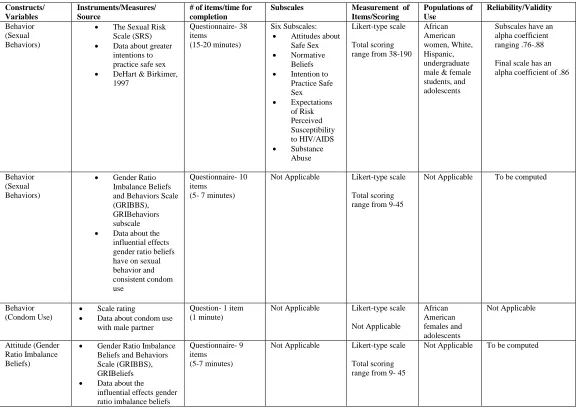
1. Instruments for Measuring the Sexual Decision Making Behavior of Women ...62
2. Characteristics of the Sample...65
3. GRIBehaviors Items and Scale Statistics ...70
4. Correlation Matrix for Study Variables ...72
5. Model Summary for Research Question 8 ...74
6. ANOVA ...74
7. Coefficients ...75
8. Variables Entered/Removed ...76
9. Model Summary...77
xiv
LIST OF FIGURES
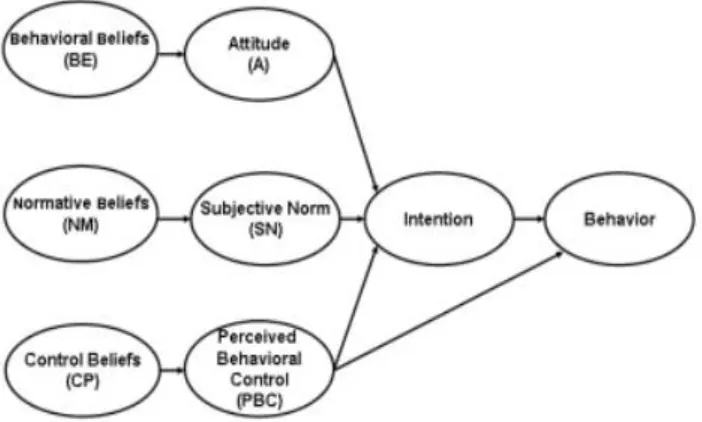
1. The Theory of Planned Behavior ...10
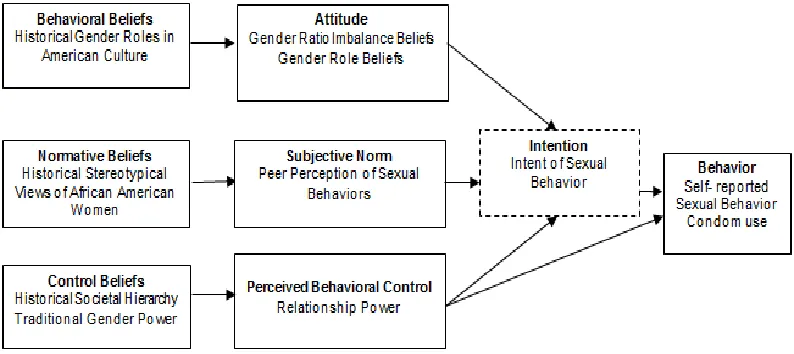
2. A Conceptual Model for the Theory of Planned Behavior and Sexual Behavior ...20
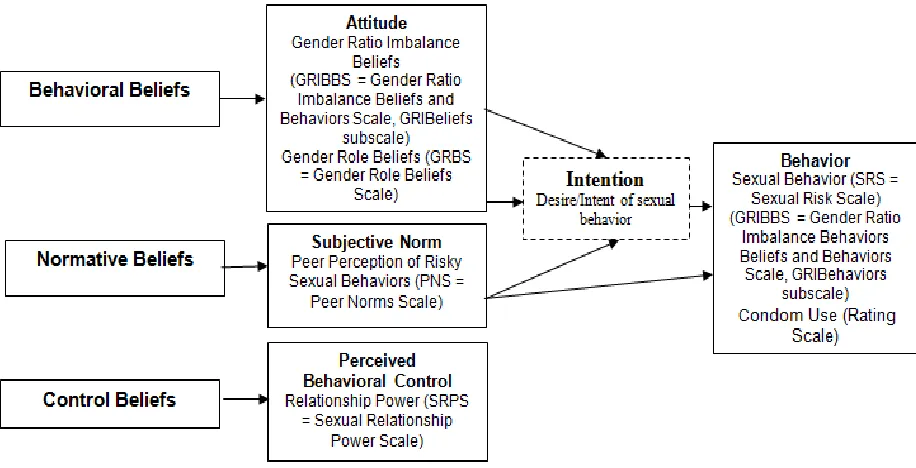
3. A Conceptual Model for the Theory of Planned Behavior and Sexual Behavior and
xv
LIST OF ABBREVIATIONS
AIDS Acquired Immune Deficiency Syndrome
AWS Attitude toward Women Scale
CVI Content Validity Index
GRIBBS Gender Ratio Imbalance Beliefs and Behaviors Scale
GRIBehaviors Gender Ratio Imbalance Behaviors Subscale
GRIBeliefs Gender Ratio Imbalance Beliefs Subscale
GRBS Gender Role Beliefs Scale
HIV Human Immunodeficiency Virus
IRB Institutional Review Board
PNS Peer Norms Scale
SES Socioeconomic Status
SET Self Efficacy Theory
SRPS Sexual Relationship Power Scale
SRS Sexual Risk Scale
STI Sexually Transmitted Infection
STS Theory of Silencing the Self
TPB Theory of Planned Behavior
TRA Theory of Reasoned Action
1
CHAPTER I
INTRODUCTION
Although the evolutionary purpose of sexual behavior is reproduction, it is an
intersectionality of race, gender, and culture rooted within a civilization shaped by
societal positions that influence the behavior (Amaro, Raj, & Reed, 2001;
Fernandez-Esquer, Diamond, & Atkinson, 2010; Hunt & Jung, 2009; Nguyen et al., 2010; Noar &
Morokoff, 2002). While there are commonly shared norms and beliefs concerning sexual
behavior, cultures and gender groups vary in their conformity to such shared and agreed
upon ideals. Even so, because of the disparate number of Human Immunodeficiency
Virus/Acquired Immune Deficiency Syndrome (HIV/AIDS) infections among African
American women in the United States (US), it is essential to understand how these
racially incurred, gender-based, and culturally sensitive beliefs influence the sexual
behavior of African American women.
Worldwide, the HIV/AIDS epidemic has proven to be a social, economic, and
cultural healthcare struggle related to gender role, abuse, and oppression (CDC, 2008). In
the US alone, more than one million people are infected with HIV and greater than
17,700 deaths occurred in 2009 from AIDS (CDC, 2012a). Since the emergence of the
global pandemic, over a span of three decades greater than 619,400 people in the US
billion dollars was spent internationally on the malady, compared to 300 million dollars
in 1996 (UNAIDS, 2011; UNAIDS, 2009).
Despite the progression of effective treatment regimens and a decreasing
incidence of HIV/AIDS infections among other risk groups (i.e., whites, Hispanics), by
race, African Americans continue to be disproportionately affected by the disease.
Although African Americans are a minority populace in the US, accounting for
approximately 14% of the population, they account for nearly half (46%) of all HIV
infections; 44% of all newly acquired HIV infections (CDC, 2011a); and 44% of all
AIDS cases (CDC, 2008). Moreover, in 2007 HIV was the ninth leading cause of death
for all African Americans and the third leading cause of death for both African American
men and women 35-44 years of age (CDC, 2011a). Additionally, in 2006, HIV was the
fourth leading cause of death for African American women 25-34 years of age (CDC,
2008). In 2009, approximately 16,741 African Americans were diagnosed with AIDS
(CDC, 2011a).
Problem
Women represent a core group disproportionately affected by HIV/AIDS (CDC,
2011a). Since the late 1980s, the global pandemic has been increasing annually among
the group (CDC, 2010) and despite effective preventive regimens for the disease women
accounted for the greatest number of HIV/AIDS infections in 2009 (CDC, 2010). Women
constitute 51% of the US population and 23% of those newly infected with HIV, with one
in every 139 women being diagnosed with HIV in her lifetime (CDC, 2011b). Moreover,
African American women are disproportionately affected at all stages of HIV infection
people having origins in any of the Black racial groups of Africa, more generally
accounted for 57% of the total number of newly diagnosed HIV infections in women,
while Caucasians accounted for 21%, and Hispanics/Latinas represented 16% (CDC,
2011b). Simply stated, an African American woman is 15 times more likely than a
Caucasian woman, and greater than three times more likely than a Hispanic/Latina
woman to become infected with HIV/AIDS (CDC, 2011b).
African American women are disproportionately affected by HIV/AIDS,
particularly in the southeastern United States, with one in every 32 African American
women being diagnosed with HIV (CDC, 2011a; CDC, 2013). In 87% of diagnosed
HIV/AIDS cases among African American women, heterosexual contact with an infected
male partner has been identified as the primary mode of transmission (CDC, 2013),
suggesting risky sexual behavior practices amongst the group. Although consistent and
effective condom use has been identified as the single most effective preventive strategy
against HIV/AIDS infections, research indicates there is an inconsistent use of condoms
by African American women (CDC, 2007). Consequently, sexually active African
American women, particularly those who practice risky sexual behaviors such as the lack
or inconsistent use of condoms, are placing themselves at an immense risk for contracting
HIV/AIDS and other sexually transmitted infections (STIs).
Clearly, these statistics make evident the urgent need for research endeavors
aimed at specifically ascertaining the foundational core of the African American
woman’s sexual behavioral practices, eventually assisting in the development of tailored
HIV/AIDS preventive strategies. To achieve this goal, it was necessary to delve into
in the African American woman’s sexual behavior, some of which have not been
evaluated in previous research.
Empirical research suggests the African American woman’s sexual behavior
involving inconsistent condom use is partially because it may be a challenge getting her
partner to use a condom (Bird & Harvey, 2001). Several factors support this behavior,
including gender ratio imbalance beliefs, a female to male ratio imbalance in the African
American community with fewer African American men (Corneille, Zyzniewski, &
Belgrave, 2008; Jarama, Belgrave, Bradford, Young, & Honnold, 2007); gender role
beliefs, the idea that the woman should care for others (Corneille et al., 2008); peer
perception, the social influence of one’s peers (Crosby et al., 2003; Friedman et al., 2001;
Raiford, DiClemente, & Wingood, 2007); and relationship power and its unequal
distribution (Bird & Harvey, 2001; Bogart & Thorburn, 2005; Bruhin, 2003; Corneille,
Tademy, Reid, & Belgrave, 2008; Ferguson, Quinn, Eng, & Sandelowski, 2006; Harvey,
Bird, Galavotti, Duncan, & Greenberg, 2002; Pulerwitz, Gortmaker, & DeJong, 2000;
Wingood & DiClemente, 2000). Still, the actual role, influence, and relationship between
gender beliefs, gender ratio imbalance and gender role on risky sexual behaviors is not
clear and little research had been conducted to understand these relationships specifically
when African American women try to avoid risky sexual behavior. The possibility
existed that the African American woman was basing her condom use behavior on her
gender beliefs to maintain her relationship (Corneille, Zyzniewski, et al., 2008). To
promote culturally sensitive preventive strategies, this study investigated the extent to
which gender beliefs, peer perception, and relationship power influenced the African
relationship power in the African American woman was investigated as a hidden
mediator in her sexual behavior, specifically her condom use.
Purpose/Significance
Past research has not focused exclusively on the intersectionality of the African
American woman’s race, gender, and culture specifically addressing those influential
factors associated with her sexual behavior and unequal dissemination of HIV/AIDS in
America. Collectively investigating gender beliefs, peer perception, and relationship
power and their precise association with the African American woman’s sexual behavior
will further assist in the development of tailored HIV/AIDS preventive strategies.
The purpose of this study was to investigate the relationship of an African
American woman’s gender beliefs (i.e., gender ratio imbalance beliefs and gender role
beliefs), peer perceptions of sexual behavior, relationship power, and sexual behavior
(i.e., condom use behavior), ultimately narrowing the gap in literature regarding gender
beliefs and sexual behavior. An establishment of how these concepts contribute to and
interact on various and often concurrent levels to the African American woman’s
decision making and sexual behavior concerning the prevention of HIV/AIDS in
American culture was explicitly addressed. Additionally, consideration to the application
of these findings, suggesting where the scientific community should focus future
investigative efforts was addressed. The goal of this study was to increase the current
level of knowledge regarding the African American woman’s sexual behavioral practices
(i.e. condom use) ultimately promoting tailored HIV/AIDS preventive strategies. This
combined effect on the sexual behavior of African American women. Most importantly,
perhaps, this study maintained a gender-based, culturally sensitive focus.
Research Questions
This study specifically examined the following research questions in a sample of
African American women:
1. Are more gender role beliefs associated with lower perceived relationship
power?
2. Are stronger gender ratio imbalance beliefs associated with lower perceived
relationship power?
3. Is more relationship power associated with an avoidance of risky sexual
behavior?
4. Are stronger gender ratio imbalance beliefs associated with a decrease in the
avoidance of risky sexual behavior?
5. Are more gender role beliefs associated with lower risky sexual behavior?
6. Are greater peer perceptions of safer sex behaviors with partners associated
with safer sexual behavior?
7. Are stronger gender ratio imbalance beliefs associated with an increase in
gender ratio imbalance beliefs influenced sexual behavior?
8. What is the relationship of an African American woman’s attitude (gender
ratio imbalance beliefs and gender role beliefs), subjective norm (peer
perceptions of sexual behavior), perceived behavioral control (relationship
9. What is the relationship of an African American woman’s attitude (gender
ratio imbalance beliefs and gender role beliefs), subjective norm (peer
perceptions of risky sexual behavior), perceived behavioral control
(relationship power), and her condom use behavior?
10.Does relationship power mediate the relationship between attitude (gender
ratio imbalance beliefs and gender role beliefs) and risky sexual behaviors?
A long term goal of the study is to develop culturally sensitive and gender specific
interventions to reduce those risky sexual behaviors of African American women based
on gender beliefs and relationship power. The integration of new and innovative nursing
research studies, such as this one, may give direction to resolving a multitude of
challenges in the area of healthcare. By linking the intersectionality among race, gender,
and culture, this study will add relevant and sensitive knowledge that is necessary to
create appropriate interventions that are tailored for a group affected by health disparities
and healthcare inequities. Singularly addressing each factor, as in previous research, may
have concealed the true intricacy of gender beliefs, peer perception, and relationship
power.
Given the racial and gender differences in the incidence of HIV/AIDS infections,
research that investigates the behavioral outcome of consistent condom use advances
from a more complex analysis of various influential factors and achieves greater
awareness of the interwoven aspects of race, gender, and culture. Additionally, this study
contributed to the sparse literature regarding the collective association among gender
beliefs, peer perception, and relationship power in the African American woman, which
Innovative nursing research, with a focus on the gaps in knowledge allows health
care professionals, specifically nurses, to incorporate the use of tailored approaches in
their day-to-day HIV preventive messages. As the utilization of evidence-based practice
increases in the nursing profession, knowledge development and the advancement of
certain theoretical perspectives may enlighten nurses’ and preventive messages. This
study investigated those specific influential factors that impact the African American
woman’s sexual behavior.
Theoretical Framework
Human behaviors are goal-oriented actions with many being planned, a number
being deliberate, and still others being oblivious not requiring any form of conscious
awareness or a behavioral plan (Ajzen, 1985). Therefore, to understand the countless
complexities of behavior including the relationship between intentions and actions, the
influence of goals and plans, and the other innumerable determinants that are influential
in behavior modification, researchers have used various empirical research models to
explain the behavior of individuals, cultures, and populaces. Nevertheless, because
understanding what causes behavior is essential in the prediction, modification, and
promotion of that behavior, this study used the Theory of Planned Behavior (TPB)
(Ajzen, 1985), to examine gender beliefs, peer perception, relationship power, and the
African American woman’s sexual behaviors (i.e., condom use).
Developed to investigate behavior, the TPB is a direct descendant and an
extended version of the Theory of Reasoned Action (TRA) (Ajzen, 1985, 1991). It is a
highly regarded and popular conceptual framework that has been used to explain, predict,
human behavior (Ajzen, 1991). Still, the TPB does not limit itself to the modification of
behavior. As a reputable conceptual framework, it also provides rationalization for a
variety of human behaviors, including sexual behavior (i.e., condom use).
Theory of Reasoned Action (TRA)
To provide a thorough overview and understanding of the TPB, it will be first
necessary to review briefly its predecessor, the TRA. In 1975, Ajzen and Fishbein
formulated the TRA from research geared at investigating the incongruities among
attitude and behavior. The TRA describes the influence of beliefs, through attitudes and
intentions, to actual behavior performance; it suggests that an individual’s behavioral
intention depends on his/her attitude regarding the behavior and subjective norms (Ajzen,
1985). In other words, the TRA examines how a person's deliberate behavior is based
upon and predicted by his or her attitude regarding the behavior in question (attitude) and
his/her perception of how others, such as those within his/her social network will view
him/her if he/she performs or not performs the behavior (subjective norm). Attitude and
subjective norm are not weighted equally in predicting behavior (Ajzen, 1985).
The TRA is based on the assumption that individuals will behave in a certain
manner once the outcome of their actions are considered (Ajzen, 1985). Through the
TRA, Ajzen and Fishbein (1975) explored the relationship among intentions and actions
including those factors that guide a person to alter his or her intentions and impede
successful completion of a given behavior. According to the TRA, if an individual
assesses the suggested behavior as positive (attitude), and if he/she thinks others want
the behavior which results in a greater likelihood that the behavior will be achieved
(Ajzen, 1985).
Research has suggested behavioral intention does not always lead to actual
behavior due to circumstantial limitations (Ajzen, 1985). Therefore, Ajzen (1991)
introduced the concept of perceived behavioral control to address the issue of behavioral
intention not being the exclusive determinant of behavior, suggesting an individual’s
control over behavior is incomplete. In doing this, Ajzen (1985) extended and modified
the original theory, the TRA, to include those obstacles that occur in the performance of a
[image:27.612.151.502.364.575.2]behavior that an individual has limited control over (see Figure 1).
Figure 1.The Theory of Planned Behavior (Ajzen, 1985, 1991).
Development of the Theory of Planned Behavior (TPB)
The development of the TPB addressed the limitation of a person’s inability to
control those obstacles over which he or she has limited control and emphasized that
behavioral intention is effective only if the behavior in question is under deliberate
external obstacles can interfere with the intention-behavior relationship, which supports
the conclusion that behavioral intention can be altered by non-motivational factors.
Non-motivational factors according to Ajzen (1985) may include time, money, skills,
knowledge, cooperation with others, and opportunity. For these reasons, Ajzen (1985)
proposed behavioral intention as an individual’s intention to try and perform a certain
behavior. For example, applying this principle to the sexual behavior of African
American women, if an individual asserts she is going to try and avoid HIV/AIDS, her
intention of trying to avoid the epidemic is still considered an intention although there
may be other factors that may influence her ability to actually avoid the disease. These
influencing factors could include her lack of income to purchase condoms, not possessing
the knowledge to prevent contraction of the disease, or could possibly be attributed to a
family member continuously telling her the disease is not avoidable. These factors
determine an individual’s control over the questioned behavior. Therefore, Ajzen (1991)
proposed if an individual has the resources, the intention, the opportunity, and the belief
that he or she can achieve a specific behavior, his/her behavioral goal will be achieved.
Through the TPB, Ajzen (1991) introduced a new concept known as perceived behavioral
control that takes into account those perceived as well as actual controls of behavior.
Major Concepts of the TPB
Ajzen (1985) made the assumption that behavior is influenced by intention with
intentions being explained by attitudes and subjective norm and those attitudes and
subjective norm being explained by beliefs. Ultimately, behavior is explained by beliefs.
thorough review of the TPB concepts, each major concept was individually addressed as
well as its relationship to the ultimate goal of behavioral performance.
Behavioral beliefs and attitude toward the behavior. Behavioral beliefs are
defined as, “those beliefs that underlie a person’s attitude toward the behavior” (Ajzen,
1985, p.14). Attitude toward the behavior is the individual’s personal evaluation of
factors, positive or negative, in performing the behavior (Ajzen, 1985). Attitude toward
the behavior is influenced by a person’s beliefs, behavioral beliefs. For instance, if an
individual has an attitude she will achieve the behavior, she will most likely succeed in
achieving the behavior. Likewise, if an individual has an attitude she will not be
successful in achieving a behavior she is more likely to fail. Because an individual’s
attitude toward the behavior is influenced by her personal beliefs, traditions, customs, and
culture are influential in their attitude toward the behavior. For example, being a male is
traditionally associated with strength and being a female is associated with nurturance
and weakness (Blaine, 2007). Historically, in American culture Caucasian men are the
primary beneficiaries of the societal hierarchy and are first on the communal ladder
(Hooks, 1981); whereas, Black women are the primary inheritors of the negative aspects
of the societal hierarchy and are last on the communal ladder — a position that generates
gender roles that are subservient, demonstrates powerlessness, and confines them to
being seen as inferior to all men (Blaine, 2007; Hooks, 1981). Moreover, today, hostile
sexism continues to espouse women are inferior to men, continually assigning Black
women to traditional, subordinate, and sexual object roles (Blaine, 2007). It is within
weakness, that those negative gender roles of being an African American female are
founded (e.g., subordinate, inferior, sexual object).
To completely understand attitude toward the behavior, one must understand that
it is also founded on salient beliefs, which influence the amount of value individuals
place upon the behavior (Ajzen, 1985). For example, if a person, an African American
woman, believes wearing a condom (behavior) will prevent her from becoming infected
with HIV/AIDS, hinder the AIDS epidemic in African American communities, and
increase the lifespan of the African American population (outcomes), she is more likely
to engage in the use of condoms (behavior). This suggests attitude toward the behavior is
determined by an evaluation of the possible outcomes of the behavior and the strength of
the associations (Ajzen, 1985). Therefore, Ajzen (1985) emphasized it is a combination
of belief strength and outcome evaluation that predicts the person’s attitude toward the
behavior and it is through behavioral beliefs that a person’s intention is influenced by
ultimately producing a favorable or unfavorable attitude toward the behavior.
Normative beliefs and subjective norm.Normative beliefs are “the person’s
beliefs that specific individuals or groups think she should or should not perform the
behavior” (Ajzen, 1985, p.14). Subjective norms are those perceived social pressures the
individual experiences to perform or not to perform the behavior (Ajzen, 1985).
Subjective norm is influenced by a person’s beliefs, normative beliefs. For example, if an
individual perceives enthusiasm and support from other people to achieve a behavior, she
is more likely to achieve the behavior. Likewise, if an individual perceives a lack of
support from others to achieve a behavior, she is less likely to achieve the behavior. Yet
during slavery Black women were humiliated and often designated as sexually corrupt,
immoral, and promiscuous, aiding in the emergence of stereotypical views regarding their
sexual behavior (Hooks, 1981). No matter the African American woman’s behavior,
slave or free, stereotypical views have followed her throughout time and today, she
continues to struggle with many of those negative stereotypical views proposed by
American culture (Blaine, 2007; Hooks, 1981). African American women were
consistently reminded they would never be seen through the eyes of “white society” as
respectable women (Hooks, 1981). Moreover, because cultural stereotype beliefs are
transmitted through socializing agents (e.g., family, friends, and media) and are passed on
from one generation to the next (Blaine, 2007), they are slow to change. For example, the
stereotypical views of African American women have changed little since the 1930s
(Blaine, 2007).
Control beliefs and perceived behavioral control.The influence of deliberate
control is an individual’s belief of personal control or lack of control over behaviors
(Ajzen, 1985). To further assess these factors, Ajzen (1985) investigated those internal
factors such as personal attributes and characteristics needed to perform the behavior. For
example, individuals with the intention to use behaviors to prevent becoming infected
with HIV/AIDS may realize they lack the needed information, skills, or ability to do so.
Therefore, even though it is essential to assess intentions, it is also vital to assess the
amount of control the person has over the behavior. This lack of assessment was
demonstrated in the TRA that led to the concept that extended the TRA to the TPB —
In the TPB, Ajzen (1985, 1991) introduced and later classified the concept of
behavioral expectation or perceived behavioral control, which is defined as the person’s
prediction of the ease or difficulty of performing a behavior and focus upon those
non-deliberate factors associated with behavior. The link between perceived behavioral
control and actual behavior depends on the person’s belief about the amount of control
they have over the behavior and the actual amount of control they truly possessed (Ajzen,
1985).
Just as attitude toward the behavior and subjective norm are influenced by a
person’s belief, perceived behavioral control is influenced by control beliefs (Ajzen,
1991). Control beliefs are those factors that assist a person in coping with the presence or
absence of resources or opportunities (Ajzen, 1991). Individuals with a more favorable
perceived behavioral control are more likely to form intentions to perform a behavior,
more so than individuals who have an unfavorable perception (Ajzen, 1991). For
example, historically, it was a combination of race and gender, double oppression, that
altered the experience of Black womanhood in America (White, 1999). Because race, like
gender, is deeply-rooted within an individual’s visible physical characteristics serving as
a functional tool in organizing communal civilization (Blaine, 2007), African American
women lack behavioral control in their oppression. In fact, it was slavery that shaped all
subsequent relationships that African American women had within their families,
communities, and even among themselves (Collins, 2000). Those images applied to the
Black woman during slavery saturated the social structure of American culture and are
still considered natural or normal within certain domains of American beliefs (Collins,
welfare mom as an African American promiscuous woman, and the predetermined
ranking of the African American woman as being the most inferior of all genders are all
stereotypical views in today’s culture that remain fundamental in her oppression (Blaine,
2007; Collins, 2000; Hooks, 1981).
In American culture, gender serves as a form of cultural bias in which the man is
valued more and has more relationship power than the woman, resulting in discrimination
against women that extends into many areas of life (Blaine, 2007). Yet again, today, this
form of social control keeps African American women in a culturally assigned,
subordinate role while supporting whites and males, the dominating culture, and
discriminatory worldviews (Collins, 2000).
The race of the Black woman commanded her to be a slave and her gender
stipulated she be considered the least of all human beings (Blaine, 2007; Hooks, 1981;
White, 1999). Historically, African American women, a statistical majority group in the
US, have endured discrimination which includes a second-class status relative to men in
many domains of life including that of sexual intercourse when compared to Caucasians
(Blaine, 2007; Hooks, 1981). Today, modern forms of sexism persist and traditional
views are maintained, treating African American women as inferior sexual objects to be
controlled (Blaine, 2007). Moreover, such views are not only condoned by men but, are
also endorsed by women including African American women (Blaine, 2007).
Perceived behavioral control can influence behavior directly (Ajzen, 1991). This
suggestion is based on the notion that perceived behavioral control is interlinked with an
individual’s plan. When individuals develop a plan, they also develop a series of
a plan of using condoms with every sexual encounter. However, to accomplish this plan,
purchasing the condoms, placing the condoms in their wallet or purse, having condoms
readily available, and having a mate willing to use the condom when sexual behavior
actually takes place must accompany their intentions.
Ajzen (1991) proposed that the relationship between perceived control and
behavioral performance was supported by Bandura’s Self Efficacy Theory (SET). Those
judgments that capture how well people will respond to situations reflect the concept of
perceived self-efficacy (Bandura, 1977, 1982). Research revealed that behavior is
strongly influenced by confidence to achieve the behavior (Bandura, 1982). Likewise,
perceived behavioral control in combination with behavioral intention, strongly predicts
behavioral achievement through an individual’s favorable or unfavorable perception of
the behavior (Ajzen, 1991). Generally, the more favorable the attitude and subjective
norm and the greater perceived control, the more resilient the individual’s intention is to
achieve the desired behavior (Ajzen, 1991).
Intention.Another major concept of the TPB is that of a person’s intention.
Intention is defined as “those factors that capture the motivational factors that influence a
behavior” (Ajzen, 1991, p.181). According to the TPB, a person’s intention is influenced
by two factors: their personal view of achieving the behavior (attitude) and their
perception of the view of others in achieving the behavior (subjective norm) (Ajzen,
1985). In other words, intention is an indicator of how much effort a person is willing to
exert in achieving the behavior (Ajzen, 1991). Ajzen (1991) emphasized the stronger the
intention, the more likely the behavior in question will be achieved. For example, if Jane
healthy and long-lasting life; her belief that her mother, husband, and children want her to
live a prolonged life; and her desire for no other African American woman to experience
the turmoil her niece experienced prior to succumbing to AIDS, she is more likely to
avoid HIV/AIDS infection. Jane Doe will be influenced by this combination of factors to
achieve her behavior (effort), which ultimately produces stronger intention. However, if
intention predicts an individual’s attempts of performing a behavior yet neglects to
predict completion of the behavioral goal, as the TPB emphasizes, it is likely due to
factors beyond the individual’s control (Ajzen, 1985). For example, if Jane Doe does not
successfully avoid HIV/AIDS, it is not due to her intentions; it is likely due to an obstacle
that she has little control over, such as her finances to purchase condoms, her lack of
knowledge concerning effective disease preventive methods, or her inability to get her
partner to use a condom.
There are influences upon intentions which include changes in intention, time,
confidence, commitment, individual differences, long-range prediction, and deliberate
control. Intentions may change with time, and while these changes may be due to the
passing of time itself, they may also depend on the surfacing of new information (Ajzen,
1985). For example, despite an African American woman’s faithful condom use, she
becomes infected with a STI because others, her social network, change their opinion
about using condoms with every sexual encounter. In this example, behavioral intentions
are a better indicator of attempted behavior rather than actual behavior. Additionally,
although both attitude and subjective norm influence intention, they are not weighted
influenced by what others think; subjective norm would have little influence on their
achievement of a behavior as best summarized by Ajzen (1985):
“Strictly speaking, intentions can only be expected to predict a person’s attempt to
perform a behavior, not necessarily its actual performance” (p.29).
Behavior.Collectively, the concepts of behavioral beliefs (attitude toward the
behavior), normative beliefs (subjective norm), control beliefs (perceived behavioral
control), and intentions lead to the final major concept of behavior, which Ajzen (1985)
defined as actions of well formulated plans. Nevertheless, after consideration of
perceived behavioral control, behavior was a difficult concept for researchers to define,
ultimately due to the fact it could be approached from many perspectives (Ajzen, 1991).
Ajzen (1985) approached the concept of behavior from a social and scientific perspective
that examined actions from many different views (i.e., attitudes, social influence, control
variables).
The TPB, African American Women, and Sexual Behavior
When discussing the TPB, it was essential to discuss the application of the theory
and its’ variables to African American women and factors associated with their sexual
behavior (see Figure 2).
Attitude.In the context of African American women and factors associated with
their sexual behavior, gender ratio imbalance beliefs and gender role beliefs were
regarded as attitude. Gender ratio imbalance beliefs were conceptualized as the African
American woman’s belief there are fewer African American men for intimate
relationships requiring her to comply with the African American man’s sexual behavior
female role beliefs in today’s society, specifically, the African American woman placing
the care of others before the care of herself (Corneille, Zyzniewski, et al., 2008). In an
intimate relationship, these gender beliefs may influence the woman’s willingness to
exert her relationship power to influence her partner, particularly in the area of sexual
[image:37.612.144.541.239.416.2]intimacy.
Figure 2. A Conceptual Model for the Theory of Planned Behavior and Sexual Behavior
a. Broken lines represent latent constructs.
b. Adapted from the Theory of Planned Behavior Ajzen (1985, 1991).
Subjective Norm.In this study, subjective norm was conceptualized as peer
perception. In the context of understanding African American women and factors
influencing their sexual behaviors, peer perception was conceptualized as the social
influence of what other African American women think of their sexual behavior,
specifically condom use. For example, if an African American woman perceived
antagonism and negativity from other African American women regarding risky sexual
behaviors and inconsistent or lack of condom use, she would have been more likely to
avoid such behaviors and, instead, use condoms consistently. Likewise, if the African
regarding inconsistent condom use behavior, she would have been more likely to engage
in such risky sexual behaviors and use condoms inconsistently.
Perceived Behavioral Control.Relationship power was seen as perceived
behavioral control. In the context of African American women and their sexual behavior,
relationship power was defined as the influential authority an African American woman
possesses in the negotiation, communication, and persuasion of her sexual partner to use
a condom. If she felt she had the power in the relationship, she was more willing to
discuss condom use or require condom use of her partner. Moreover, she would even set
the limitation that she would not participate in unprotected sex. That is, she put her needs
first and not that of others. Other evidence that an African American woman may
perceive that she holds power in the relationship may have been her plan to use condoms
consistently with every sexual encounter, to purchase condoms herself, and to have the
condoms readily available should sexual behavior may occur. Whether an African
American woman believes she had relationship power may be related to her gender ratio
imbalance and gender role beliefs.
Intention.In the context of African American women and their sexual behavior,
intention was conceptualized as the African American woman’s intent or desire related to
sexual behavior. Her intention could have been based on her desire to maintain a
relationship, desire for sexual intimacy, her partner’s desire for sexual intimacy, or her
desire to avoid HIV/AIDS infection. Intention was influenced by the strength, weak or
strong, of her gender ratio imbalance beliefs, gender role beliefs, peer perception of
woman’s desires and intent for behavior, it was a latent construct and was not specifically
measured in this study.
Behavior.In the context of African American women and their sexual behavior,
behavior was conceptualized as the African American woman’s sexual behavior
specifically her condom use behavior. This could have been the use of a condom by her
partner, her use of a female condom, or her avoidance of risky sexual behaviors.
Strengths and Limitations of the Theory of Planned Behavior
The extensive use of TPB has revealed strengths and limitations in its application
to studying the sexual behaviors of women, in particular African American women. A
major strength of the model includes its past performance, which has effectively
evaluated its concepts (Albarracin, Fishbein, Johnson, & Muellerleile, 2001; Hyde &
White, 2009; Judson & Langdon, 2009; Kwan, Bray, & Ginis, 2009; McMillan et al.,
2008). Another strength is the theory’s inclusion of behaviors that an individual lacks
control, which makes it particularly useful in the current study when considering the
concept of relationship power (Albarracin et al., 2001; Judson & Langdon, 2009).
Moreover, the TPB takes into account the social influence of others (i.e., family, friends,
communities, society) (Manning, 2009). An additional strength of the model includes its
comprehensive development, which investigates behavioral, normative, and control
beliefs. Most important, the TPB offered a clear direction of its concepts, demonstrating
their collective association and linkage to behavior. These advantages contributed to the
current study in that the use of TPB enhanced the credibility of the study by effectively
the sexual behavior of the African American woman. Nevertheless, the TPB is not
without shortcomings.
A limitation of the TPB is the complexity of the model, which requires separate
explorations of each concept and ultimately, their collective association. Another
limitation was the major concepts of the theory focus on explaining intentions but do not
take into account an individual’s emotions, which research has demonstrated are
influential in predicting health behaviors (i.e., condom use) (Dutta-Bergman, 2005).
Additionally, the TPB did not take into account the effect of cultural variables, such as
race and ethnicity nor did it account for gender. However, previous studies did offer
support to the TPB’s applicability across cultural and gender groups (Blanchard et al.,
2003; Blanchard et al., 2004; Godin et al., 1996; McMillian et al., 2008).
To effectively and consistently investigate the sexual behavior of African
American women, the TPB’s connectedness to this study and demonstrated cultural and
gender applicability in the population of interest supports its selection as the theoretical
foundation of this study.
The Theory Planned Behavior: Validation as the Theory of Choice
The TPB has been applied to numerous studies and research has confirmed
relationships between attitudes, subjective norms, and perceived behavioral control and
intention, and ultimately, behavior (Albarracin et al., 2001; Hyde & White, 2009; Judson
& Langdon, 2009; Kwan, Bray, & Ginis, 2009; McMillian et al., 2008). Perhaps, this is
why health care researchers have used the model time and time again in research
study, this paper explored several recent research studies and their support of the theory’s
concepts.
Support for the Role of Beliefs
Hyde and White (2009) investigated TPB to understand the impact of beliefs on
organ donation. Behavioral and normative beliefs correlated with being registered to be
an organ donor (Hyde & White, 2009). Control beliefs were negatively correlated with
donation decision making; yet, it was a significant predictor for being registered (Hyde &
White, 2009). Given that control beliefs assist in coping with obstacles in achieving a
behavior, the study results were not surprising. The use of the TPB identified behavioral
and normative beliefs as consistent predictors of intention, which provided support for
the concept of beliefs.
Support for Perceived Behavioral Control and Behavior
Albarracin et al., 2001 performed a meta-analysis of 42 studies and 96 data sets
that determined condom use was influenced by perceived behavioral control. Perceived
behavioral control was strongly associated with past behavior, p = < .001 (.34 vs. .25)
and historical behavior influenced intentions (Albarracin et al., 2001), which
substantiated the concept of perceived behavioral control.
Judson and Langdon (2009) investigated the illicit use of prescription stimulants
among college students. Study measures included survey forms, a questionnaire, and
questions pertaining to the TPB in regards to attitude, subjective norms, and perceived
behavioral control towards the illicit use of drugs. The primary motivation for illicit drug
use was to improve concentration and mental alertness, and low perceived behavioral
rationalization for illicit drug use (Judson & Langdon, 2009). The students felt behavior
could not be performed at ease without stimulants (i.e., drug use). Results supported the
TPB and its concept of perceived behavioral control (Judson & Langdon, 2009).
Support for Predicting Intentions
A span of issues have addressed the prediction of intention in behaviors such as
physical activity (Kwan et al., 2009), online grocery buying (Hansen, Jensen, & Solgaard,
2004), social support for grieving people (Bath, 2009), attendance at screening programs
(Cooke & French, 2008), eating a healthy diet (Pawlak, Malinauskas, & Rivera, 2009),
and breastfeeding (McMillian et al., 2008).
McMillan et al. (2008) examined intention to breastfeed and subsequent
breastfeeding. Results revealed the main predictors of intention to breastfeed included a
positive attitude, high perceived behavioral control, high moral norms, and a strong
personal identity as a breast feeder. Collectively, these concepts explained 72% of the
variance regarding intention to breastfeed, which suggested intention was a significant
predictor of breastfeeding (McMillan et al., 2008), which supported the concept of
intention.
Kwan et al. (2009) investigated the prediction of physical activity among 212
first-year university students by investigating attitudes, subjective norms, perceived
behavioral control, intentions, physical activity behavior and past physical activity
behavior. Results revealed positive attitudes toward physical activity, perceived
capability to perform the physical activity, and strong intentions to become physically
active during their first-year of college (Kwan et al., 2009). Pearson’s correlation
perceived behavioral control, and intentions and subjective norm. Perceived behavioral
control was moderately correlated with intention. Collectively, these findings supported
the concept of intention.
Summary
As should be clear from the foregoing, disproportionate statistics and limited
quantitative investigative endeavors underscored the need for tailored HIV/AIDS
preventive strategies related to the attitude (gender ratio imbalance beliefs and gender
role beliefs), subjective norm (peer perception), perceived behavioral control
(relationship power), intention, and behavior (sexual behavior and condom use) in
African American women. The influence of gender beliefs, peer perception, and
relationship power suggested a need for gender-based and culturally sensitive preventive
strategies to reach the African American woman, perhaps, revealing why current
preventive strategies were not enough to subdue the global HIV/AIDS pandemic in
African American women. It was anticipated that a collective investigation would prove
valuable for this purpose, reaping the rich rewards of effective preventive strategies that
are to be articulated in the daily preventive messages of health care professionals to
27
CHAPTER II
REVIEW OF LITERATURE
Researchers have long been interested in understanding why African American
women are disproportionately affected by the HIV/AIDS pandemic. The focal point of
this literature review is to provide a structured review regarding the TPB’s constructs and
variables while demonstrating how researchers, using various theoretical models and
study designs in recent studies, have attempted to understand the sexual behaviors of
African American women. Sexual behaviors, specifically condom use behavior, were
considered essential predictors of HIV/AIDS risk and were, therefore, essential in
discerning the core influence of the dissimilar rate of HIV/AIDS infections in African
American women.
The Influence of Gender and Culture
While those factors most commonly associated with HIV infection in African
American women have been clearly investigated, the influence of gender and culture
were not well studied concepts although research has revealed multiple dimensions of
both are instrumental in the sexual behavior of women (Bohnert & Latkin, 2009;
Bontempi, Eng, & Quinn, 2008; Corneille, Zyzniewski et al., 2008). The African
American woman faces a number of gender-based and culturally sensitive challenges,
ratio imbalance beliefs, a female to male ratio imbalance in the African American
population with fewer African American men; gender role beliefs, the idea the African
American woman should care for others before caring for herself; peer perception, the
social influence of other African American women; and relationship power and its
unequal distribution. In view of this, previous research on selected dimensions of the
African American woman’s gender and culture deemed influential in her sexual behavior
are discussed.
Attitude Toward the Behavior
Gender ratio imbalance beliefs.In the United States, a gender ratio imbalance
among African American men and women exists. There is a shortage of African
American men (Bontempi et al., 2008; US Census Bureau, 2011, 2005). In fact, there are
91.4 African American men to every 100 African American women — the highest gender
ratio imbalance among all races (US Census Bureau, 2011, 2005). This gender ratio
imbalance is associated with many factors, including African American men
experiencing a higher number of incarcerations, higher morbidity, and higher mortality
rates (Bontempi et al., 2008). African American women are confronted with more
obstacles in refusing sexual intimacy, condom negotiation, and influencing their partners
because of power differentials stemming from the gender ratio imbalance (Jarama et al.,
2007). Moreover, the “shortage” of African American men in communities (Bontempi et
al., 2008) has been associated with the African American woman’s relationship power
and condom negotiation abilities (Corneille, Zyzniewski et al., 2008).
In a qualitative focus group study investigating 31 African American male and
ratio imbalance included female students complying with the male students’ condom use
preferences (Ferguson et al., 2006). Because the African American male was in greater
demand female students allowed him to decide their condom use behavior or forego
dating — relationship power was characterized by the gender ratio imbalance. Strengths
of this study included 1) this was the first to investigate the influence of the gender ratio
imbalance on HIV/AIDS-related risk behaviors, and, 2) four comparable focus groups
comprised the sample. Also, grounded theory methods were used to explore an area
where little was known (Ferguson et al., 2006). A study limitation was the
generalizability of the participants’ (e.g. teenagers) to African American women who are
in a different developmental stage of life.
Similarly, in a qualitative study of 36 African American women 40 to 64 years of
age, the theme of “Getting Caught Up” emerged from collected data and was based on
three factors associated with sexual behavior: shortage of men, reliance on men partners,
and sexual desire (Mallory, Harris, & Stampley, 2009). Most women in the study agreed
the shortage of African American men hindered their ability to avoid risky sexual
behavior (Mallory et al., 2009) and being in demand was associated with increased
relationship power among the men. Strengths of the study included the use of multiple
theoretical frameworks and a qualitative research design which included a consecutive
step-by-step process of four components: theoretical sampling, intensive interviewing
through which codes and categories were generated, and constant comparative analysis.
An additional strength of the study included the researcher identifying her roles as a
research tool and learner throughout the investigation (Currie, 2009). Also, through the
study were the generalizability of the sample due to the participant’s limited geographic
diversity and omission of exclusion criteria that may have proven beneficial for future
research endeavors and study replication.
Although numerous qualitative studies have explored the sexual behavior of
African American women by investigating gender ratio imbalance beliefs, previously no
quantitative or qualitative study had examined the relationship among gender ratio
imbalance beliefs, relationship power and possible moderating role of relationship power
on sexual behavior (i.e., consistent condom use).
Gender role beliefs. Empirical research has demonstrated that the concealment of
a Black woman’s true feelings and the setting aside of her needs for others to promote a
reduction of conflict in her relationships (i.e., silencing the self), is highly related to the
prevention of HIV/AIDS from negotiating safe sex to letting others know what one needs
to advance self-care. The Theory of Silencing the Self (STS) (Jack, 1991) proposes
women often silence themselves as a mechanism to secure and maintain relationships and
to sustain adherence to the traditional female role. Tested and studied in HIV-infected
Black women for more than a decade (DeMarco, Johnsen et al., 2001; DeMarco,
Kendricks, Dolmo, Looby, & Rinne, 2009; DeMarco, Miller, Patsdaughter, Grindel, &
Chisholm, 1998), the theory of STS has demonstrated the concept “silencing the self”
applies to African American women who, in general put others first in their lives, do not
tell others their true feelings, and/or are outwardly compliant to how others feel they
should behave while feeling angry within (DeMarco, Johnsen, Fukuda, & Deffenbaugh,
American women can generate obstacles in safer sex negotiation in the context of barriers
to HIV/AIDS prevention and diagnosis.
Preliminary evidence has revealed gender role beliefs as an influential concept in
the sexual behavior of African American women (Corneille, Zyzniewski et al., 2008;
Jack, 1991). The traditional gender role of a woman in the US encourages her to care for
others, yet it promotes engagement in risky sexual behaviors in hope of maintaining the
relationship (Corneille, Zyzniewski et al., 2008). In an intimate relationship, gender role
beliefs may influence the African American woman’s willingness to exert her
relationship power to influence her partner, particularly in the area of sexual intimacy.
For instance, if an African American woman believes she would not marry because there
are few African American men, and that, as a woman, her role is to care for others,
specifically her partner, she may be less likely to insist that her partner wears a condom.
Even more, she may be less likely to initiate the conversation regarding condom use,
resulting in less consistent condom use behavior. Likewise, if an African American
woman did not believe the lack of African American men would decrease her likelihood
of marriage, and did not hold the traditional gender role belief that she must care for
others, but instead she placed the care of herself first, she would have been more likely to
be successful in achieving consistent condom use behavior.
Using the concepts of STS, the findings in a study of 325 African American
women 18 to 61 years of age, indicated that traditional gender role beliefs were
associated with a woman’s fear of potentially losing her relationship, which affected her
condom use behavior (Corneille, Zyzniewski et al., 2008). Strengths of the study included
Control variables allowed the researcher to hold constant the effect of previously deemed
influential variables across all the groups so that the relationship between the independent
and dependent variables were effectively assessed. A limitation of the study included the
exclusion of a cohort analysis due to an unequal number of women (Corneille,
Zyzniewski et al., 2008).
An association among gender role beliefs and sexual behavior exists; however,
the extent of gender role beliefs regarding the African American woman’s sexual
behavior and its association to relationship power were not well studied concepts. Still,
these were concepts that may have been particularly relevant in achieving a
gender-based, culturally sensitive perspective of why African American women engage in risky
sexual behaviors such as inconsistent condom use.
Subjective Norm
Peer perception. Previous research, primarily in adolescent and young adult
samples, has demonstrated peer perception as an influential concept in the achievement
of consistent condom use behavior (Crosby et al., 2003; Friedman et al., 2001; Raiford,
Wingood, & DiClemente, 2009). For example, if an African American woman perceived
antagonism and negativity from other African American women regarding her sexual
behaviors and inconsistent or lack of condom use, she was more likely to avoid such
behaviors and, instead, use condoms consistently. Likewise, if the African American
woman perceived support and agreement from other African American women regarding
inconsistent condom use behavior, she was more likely to engage in such behaviors and