Original Article
Association of MTHFR C677T
and A1298C polymorphisms with
the development of type 2 diabetic nephropathy
and their interaction with environmental factors
Di Wang, Liwei Bai, Qianqian Zhai, Yan Li, Meng Cao, Jie Hai, Qinggui Zhang
Department of Endocrinology, The First Affiliated Hospital of Xinxiang Medical University, Weihui, China
Received August 8, 2016; Accepted August 23, 2016; Epub March 1, 2017; Published March 15, 2017
Abstract: Type 2 diabetic nephropathy is a major cause of end-stage renal disease. MTHFR plays a vital role in folate metabolism, DNA methylation, and RNA synthesis. The aim of this study was to investigate the association between MTHFR C677T and A1298C genomic polymorphisms and development of type 2 diabetic nephropathy in a Chinese population. A hospital-based case-control study was performed. A total of 162 patients with type 2 diabetic
nephropathy and 302 controls were recruited from the First Affiliated Hospital of Xinxiang Medical University be -tween January 2013 and February 2015. Genotyping of the MTHFR C677T and A1298C polymorphisms was done by polymerase chain reaction-restriction fragment length polymorphism (PCR-RFLP) methods. By the chi-square
test, a statistically significant difference was observed between the patients and controls in regards to the genetic
distributions of MTHFR C677T (χ2=13.51, P=0.001), whereas no significant difference was observed in the genetic
distributions of MTHFR A1298C. Individuals carrying with the TT genotype of MTHFR C677T was associated with
a significant increase in type 2 diabetic nephropathy risk compared to the CC genotype, and the adjusted OR was
3.79 (1.69-8.70). In addition, the T allele of MTHFR C677T significantly elevated type 2 diabetic nephropathy risk in comparison to the C allele (OR=1.60, OR=1.18-2.17). In conclusion, we found that the MTHFR C677T genomic
polymorphism can influence the development of type 2 diabetic nephropathy in a Chinese population.
Keywords:MTHFR, C677T, A1298C, diabetic nephropathy, Chinese population
Introduction
Type 2 diabetic nephropathy is a major cause of end-stage renal disease, and it shows high mortality in diabetic patients [1]. Type 2 diabet-ic nephropathy was increasing rapidly world-wide. Although improvements in early detection and treatments have decreased the mortality rate of type 2 diabetic nephropathy in recent years, the lack of effective preventative mea -sures for type 2 diabetic nephropathy remains a major public health problem. The develop-ment of type 2 diabetic nephropathy occurs over a long period of time, involves multifacto-rial processes, and has many associated risk factors, including high blood pressure, high glomerular filtration rate, glycemic control, and race were reported to be associated with type 2 diabetic nephropathy development [2].
Besides, genetic susceptibility may also be an important determinant of both the incidence and severity of type 2 diabetic nephropathy [3]. Previous studies have reported that many genetic factors, such as angiotensin II type 1 receptor (AT1R) gene, plasminogen activator inhibitor-1 (PAI-1) gene, hypoxia-inducible factor-1α (HIF-1α) gene, MicroRNA-125, Interleukin-6R, peroxisome proliferators-activated receptor γ (PPARγ) gene, matrix metalloproteinase 9 (MMP9) gene and transcription factor 7-like 2 gene (TCF7L2), play important roles in the development of type 2 diabetic nephropathy [4-10].
conversion of 5,10-methylenetetrahydrofolate to 5-methylenetetrahydrofolate, which is the main form of folic acid in plasma and tissues, and is involved in the conversion of homocyste-ine into S2 adenoshomocyste-ine methionhomocyste-ine. S2 adenos-ine methionadenos-ine plays an important role in DNA methylation, nucleic acid synthesis, and metab-olism. A common C677T mutation (rs1801133) in the MTHFR gene has been widely studies, and it causes the conversion of the amino acid alanine to valine at position 226 in the protein. This genomic polymorphism is correlated with a 50% reduction of MTHFR enzyme activity, an increased risk in plasma homocysteine concen -tration, a decreased risk in plasma folic acid concentration and a high homocysteine that causes the vascular injury [11, 12]. Genomic polymorphism of A1298C (rs1801131) is another common mutation and locates in exon 7, and this genomic variation could cause a change from glutamate to alanine with decreased enzyme activity in vitro. Genetic polymorphisms of MTHFR C677T and A1298C result in decreased gene transcription, and their associated amino acid substitutions may influence the function of the MTHFR protein. Previous studies have reported MTHFR C677T and A1298C genomic polymorphisms are along with increased plasma homocysteines are cor-related with development of complication of type 2 diabetes, such as diabetic retinopathy and diabetic nephropathy [13-17], but the results are conflicting. The aim of this study was to investigate the association between
MTHFR C677T and A1298C genomic polymor-phisms and development of type 2 diabetic nephropathy in a Chinese population, and their interaction with environmental characteristics.
Material and methods
Subjects
A hospital-based case-control design was per-formed in this study. A total of 162 patients diagnosed with type 2 diabetic nephropathy were recruited from the First Affiliated Hospital of Xinxiang Medical University between January 2013 and February 2015. Patients with type 2 diabetes mellitus were confirmed according to the criteria from WHO in 1999 [18]. Nephropathy in diabetic patients was defined as the protein -uria of at least 500 mg/24 h and glomerular filtration rates less than 25 mL/min. The exclu -sion criteria were as follows: those with a
his-tory of type I diabetes mellitus, other tumors, other endocrine diseases except for type 2 dia-betes mellitus and liver diseases, and intake of folate, Vitamin B6 and Vitamin B12.
A total of 302 control subjects were selected from individuals who received health examina-tions in the First Affiliated Hospital of Xinxiang Medical University between May 2014 and February 2015. All control subjects were con-firmed to be free of a history of type 2 diabetes mellitus, nephropathy or endocrine diseases, as well as serious liver diseases.
The demographic and lifestyle characteristics of all study subjects were collected from a structured questionnaire, including age, sex, diabetic duration, hypertension and body mass index (BMI). Clinical information was collected from medical records, including systolic and diastolic blood pressure and the levels of total cholesterol, triglyceride, high-density lipopro-tein, low-density lipoprolipopro-tein, and creatinine. In type 2 diabetic nephropathy patients, the mean ages were 57.54±8.50 years, and there were 56 males and 106 females. The BMI of patients was 25.83±3.11 kg/m2, and the duration of diabetes was 12.53±4.35 years. In controls, the mean age of type 2 diabetic nephropathy patients were 55.95±9.11 years, and there were 125 males and 177 females. The BMI of diabetic controls was 24.13±2.72 kg/m2. Blood sample (5 mL) was taken from each patient and control subject for analysis and stored in EDTA-containing tubes at -20°C until using. All the investigated subjects signed an informed consent before enrollment. The proto-col was approved by the Clinical Research Ethics Committee of the First Affiliated Hospital of Xinxiang Medical University, and perfor -mance of this study was according to the Helsinki Declaration of 1964.
Genotyping
Genomic DNA was extracted from peripheral blood leukocytes using the QIAamp DNA Blood Mini kit (Qiagen, Hilden, Germany). Genotyping of the MTHFR C677T and A1298C polymor-phisms was done by polymerase chain reac-tion-restriction fragment length polymorphism (PCR-RFLP) methods. The primers for the
MTHFR A1298C were 5’-TCCTCTTCCCCTGCC- TTTG-3’ (forward) and 5’-CCACTCCAGCATCAC- TCACTTT-3’ (reverse). The restriction enzymes for digestion of MTHFR C677T and A1298C were HinfI and MboII, respectively. The MTHFR
C677T and A1298C polymorphisms result in the digestion of the 198 bp and 163 bp, respec-tively. PCR was performed in a 25 μl reaction mixture containing 2.0 μl of DNA, 1.0 μl of each primer, 2.0 μl of dNTP mixtures, 2.0 μl of MgCl2 solution, 2.0 μl of Taq DNA polymerase and 2.5 μl of 10× PCR Buffer. The PCR condi -tion was set at: 94°C for 5 minutes, and then followed by 36 cycles of 94°C for 55 s, 55°C for 55 s and 72°C for 60 s, and a final elongation of 7 minutes at 72°C.
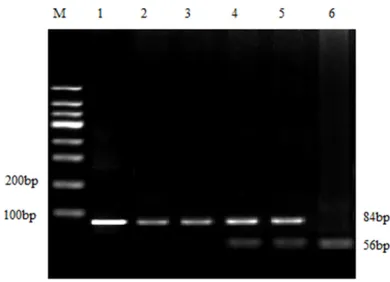
For MTHFR C677T, the CC genotype was digest-ed into 198 bp fragments, the CT genotype was digested into 175 and 23 bp fragments, and
the TT genotype was digested into 175 and 23 bp fragments (Figure 1). For A1298C, the CC genotype was digested into 84, 31, 30 and 18 bp fragments, the AC genotype was digested into 84, 56, 31, 30, 28, 28 and 18 bp frag-ments, and the AA genotype was digested into 56, 31, 30, 28, 28 and 18 bp fragments (Figure 2). The PCR products were analyzed by electrophoresis on a 2% agarose gel and stained with ethidium bromide. The DNA bands were visualized under UV light.
Statistical analysis
The demographic and clinical characteristics, as well as MTHFR C677T and A1298C geno-type frequencies in geno-type 2 diabetic nephropa-thy patients and control subjects were com-pared using chi-squared (χ2) tests or Student’s
t-test. The goodness-of-fit χ2-test was per-formed to determine whether the genotype fre-quencies at MTHFR C677T and A1298C were in agreement with the Hardy-Weinberg equilib-rium (HWE). The minor allele frequencies of
MTHFR C677T and A1298C were compared with those in National Center for Biotechnology Information SNP database. The association between MTHFR C677T and A1298C genotype polymorphisms and susceptibility to type 2 diabetic nephropathy was analyzed by multiple logistic regression analysis, and the results was expressed by Odd’s ratio (OR) along with 95% Confidence Interval (CI). Moreover, Spearman interaction analysis was taken to estimate the correlation between MTHFR
C677T and A1298C genotype polymorphisms and demographic, lifestyle and clinical charac-teristics in the risk of diabetic nephropathy. The above analyses were completed by Stata software version 12.0 for Windows (StataCorp, College Station, Texas, USA). All statistical tests were two-sided with a statistical signifi -cance level of P<0.05.
Results
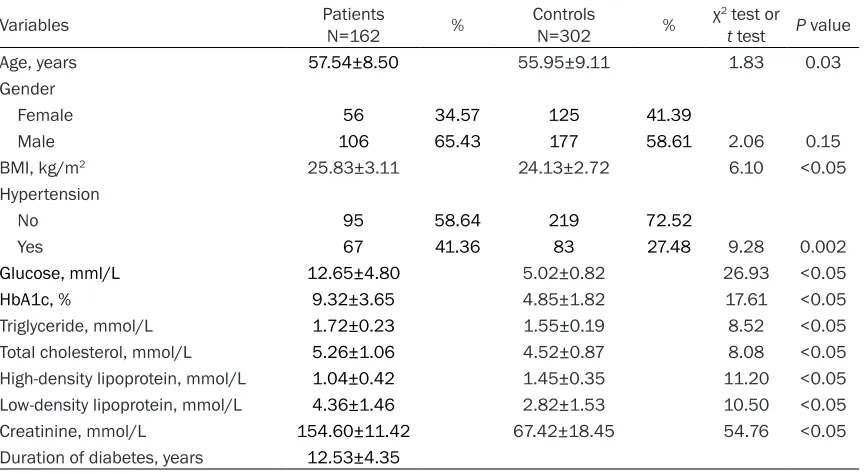
The demographic, lifestyle and clinical data of type 2 diabetic nephropathy patients and con-trol subjects are shown in Table 1. Using Chi-square test, we observed that type 2 diabetic nephropathy patients were more likely to have higher age (t=1.83, P=0.03), BMI (t=6.10,
P<0.05), glucose (t=26.93, P<0.05), HbA1c (t= 17.61, P<0.05), triglyceride (t=8.52, P<0.05), total cholesterol (t=8.08, P<0.05) and low-den-Figure 1. Polymorphism determination of MTHFR
[image:3.612.91.290.72.200.2]C667T gene by PCR-RFLP: Lane 1 and 2 were the CC genotype; lane 3 and 4 were the CT genotype; lane 5 was the TT genotype.
Figure 2. Polymorphism determination of MTHFR
[image:3.612.90.285.276.417.2]sity lipoprotein (t=54.76, P<0.05), have lower high-density lipoprotein (t=11.20, P<0.05) and suffer from hypertension (χ2=9.28, P<0.05) in comparison to the control subjects.
The genotype frequencies of MTHFR C677T and A1298C polymorphisms in type 2 diabetic nephropathy patients and controls are shown in Table 2. According to the goodness-of-fit chi-squared test, the genotype distributions of
MTHFR C677T (P<0.05) and A1298C (P=0.24) polymorphisms were agreement with Hardy-Weinberg equilibrium in the control group. By the chi-square test, a statistically significant difference was observed between the patients and controls in regards to the genetic distribu-tions of MTHFR C677T (χ2=13.51, P=0.001),
whereas no significant difference was obser-ved in the genetic distributions of MTHFR
A1298C. The minor allele frequencies of
MTHFR C677T and A1298C in controls were similar to those reported by the National Cen- ter for Biotechnology Information (NCBI) SNP database.
[image:4.612.93.527.85.322.2]As determined by multiple logistic regression analysis, individuals carrying with the TT geno-type of MTHFR C677T were associated with a significant increase in type 2 diabetic nephrop -athy risk compared to the CC genotype, and the adjusted OR was 3.79 (1.69-8.70) (Table 3). In addition, the T allele of MTHFR C677T signifi -cantly elevated type 2 diabetic nephropathy risk when compared with the C allele (OR=1.60, Table 1. Demographic, lifestyle and clinical data of study subjects
Variables Patients N=162 % Controls N=302 % χ2 test or t test P value
Age, years 57.54±8.50 55.95±9.11 1.83 0.03
Gender
Female 56 34.57 125 41.39
Male 106 65.43 177 58.61 2.06 0.15
BMI, kg/m2 25.83±3.11 24.13±2.72 6.10 <0.05
Hypertension
No 95 58.64 219 72.52
Yes 67 41.36 83 27.48 9.28 0.002
Glucose, mml/L 12.65±4.80 5.02±0.82 26.93 <0.05
HbA1c, % 9.32±3.65 4.85±1.82 17.61 <0.05
Triglyceride, mmol/L 1.72±0.23 1.55±0.19 8.52 <0.05 Total cholesterol, mmol/L 5.26±1.06 4.52±0.87 8.08 <0.05 High-density lipoprotein, mmol/L 1.04±0.42 1.45±0.35 11.20 <0.05 Low-density lipoprotein, mmol/L 4.36±1.46 2.82±1.53 10.50 <0.05 Creatinine, mmol/L 154.60±11.42 67.42±18.45 54.76 <0.05 Duration of diabetes, years 12.53±4.35
Table 2. Genotype frequencies of MTHFR C677T and A1298C between type 2 diabetic nephropathy patients and controls
MTHFR Patients % Controls % χ2 test P value P for HWE MAF
Controls Database C677T
CC 69 42.59 162 53.64
CT 72 44.44 127 42.05
TT 21 12.96 13 4.30 13.51 0.001 0.05 0.2533 0.2454
A1298C
AA 81 50.00 163 53.97
AC 69 42.59 123 40.73
[image:4.612.96.522.368.501.2]OR=1.18-2.17). However, no significant rela -tionship was observed between MTHFR
A1298C polymorphism and susceptibility to diabetic nephropathy.
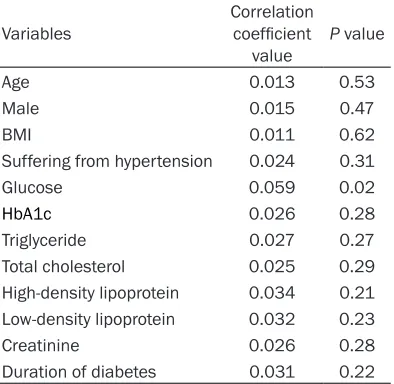
Moreover, we conducted interaction between
MTHFR C677T and demographic, lifestyle and clinical characteristics in the risk of diabetic nephropathy, such as age, gender, BMI,
hyper-are thought to affect susceptibility to human diseases. In recent years, genomic susceptibil-ity to diseases has attracted a growing atten-tion to research the genetic polymorphisms involving in pathogenesis of diseases. One of these genes that might be associated with type 2 diabetic nephropathy is MTHFR gene. In the present study, we firstly evaluated the relation -ship between MTHFR C677T and A1298C genetic polymorphisms and type 2 diabetic nephropathy risk in a Chinese population, and we observed that the MTHFR C677T genomic variation did contribute to the development of type 2 diabetic nephropathy in a Chinese population.
MTHFR is an important enzyme in the metabol-ic process of homocysteine, whmetabol-ich could cata-lyze 5,10-methylene four hydrogen folic acid into 5,10-methylenetetrahydrofolate. During the process of metabolism process, the pro-duced methyl promotes homocysteine into methionine, and thus reduces the plasma level of homocysteine. The mutation of MTHFR
C677T and A1298C could influence the activity and thermal stability. Previous studies have indicated that low activity of MTHFR could promote the level of plasma homocysteine that is the independent risk factor for the athero -sclerosis and arterial thrombosis related dis-eases [19, 20]. The homocysteine could
dam-Table 3. Relationship between MTHFR C677T and A1298C genomic polymorphisms and susceptibility to type 2 diabetic nephropathy
MTHFR Patients % Controls % OR (95% CI)1 P value
C677T
CC 69 42.59 162 53.64 1.0 (Ref.) CT 72 44.44 127 42.05 1.33 (0.87-2.03) 0.16 TT 21 12.96 13 4.30 3.79 (1.69-8.70) <0.05 Allele
C 210 64.82 451 74.67 1.0 (Ref.) T 114 35.19 153 25.33 1.60 (1.18-2.17) 0.002 A1298C
AA 81 50.00 163 53.97 1.0 (Ref.) AC 69 42.59 123 40.73 1.13 (0.74-1.71) 0.55 CC 12 7.41 16 5.30 1.51 (0.62-3.58) 0.31 Allele
A 231 71.30 449 74.34 1.0 (Ref.) C 93 28.70 155 25.66 1.17 (0.85-1.59) 0.32
1Adjusted for age, gender, BMI, hypertension, glucose, HbA1c, triglyceride, total
[image:5.612.90.368.109.307.2]cholesterol, high-density lipoprotein, low-density lipoprotein and creatinine.
Table 4. Interaction MTHFR C677T genetic polymorphism with Demographic, lifestyle and clinical variables in the risk of type 2 diabetic nephropathy
Variables Correlation coefficient
value P value
Age 0.013 0.53
Male 0.015 0.47
BMI 0.011 0.62
Suffering from hypertension 0.024 0.31
Glucose 0.059 0.02
HbA1c 0.026 0.28
Triglyceride 0.027 0.27 Total cholesterol 0.025 0.29 High-density lipoprotein 0.034 0.21 Low-density lipoprotein 0.032 0.23
Creatinine 0.026 0.28
Duration of diabetes 0.031 0.22
tension, glucose, HbA1c, triglyc-eride, total cholesterol, high-density lipoprotein, low-high-density lipoprotein and creatinine (Ta- ble 4). Moreover, we found
MTHFR C677T polymorphism had interaction with the glucose value in the risk of type 2 dia -betic nephropathy (Correlation coefficient value=0.059, P= 0.02).
Discussion
[image:5.612.92.289.402.594.2]age vascular endothelial cells through oxidative stress, stimulate the diary of vascular smooth muscle proliferation and collagen synthesis, increase platelet adhesion and coordinate gly-cosylation, and then contribute to the patho-genesis of type 2 diabetic nephropathy through changing selective filtration function and the aperture size of glomerulus and increasing glo-merular filtration rate.
Polymorphisms contribute to the regulation the expression of protein and play an important role in the discrepancies in the susceptibility and severity to a disease in human. Previous studies have shown that the MTHFR C677T and A1298C genomic polymorphisms are cor-related with several kinds of endocrine diseas -es, such as obesity, Graves’ disease, rheuma-toid arthritis, osteoporosis, polycystic ovary syndrome and hypertension [21-25]. Lewis et al. conducted a population-based study in a Caucasian population, and reported that the TT genotype of MTHFR C677T was associated with an increased risk of obesity BMI≥30 [21]. Mao et al. carried out a study with 199 Graves’ disease patients and 235 healthy controls, and reported that the CT+TT genotypes of MTHFR
C677T were associated with an approximately 42% reduction in the risk of this disease in women [22]. Brambila-Tapia et al. carried out a study in 71 rheumatoid arthritis patients, and reported that MTHFR C677T polymorphism conferred a risk of developing osteoporosis in patients with rheumatoid arthritis [23]. Jain et al. carried out a study to investigate the rela-tionship between MTHFR C677T polymorphism and polycystic ovary syndrome, and found that the CT genotype of MTHFR C677T was corre-lated with the susceptibility to hyperlipidemia in women with polycystic ovary syndrome [25]. Alghasham et al. carried out a study with 123 hypertensive cases and 250 healthy controls, and showed that MTHFR C677T and A1298C genomic variations were associated with risk of hypertension in patients with obesity and dia-betes [24]. These results have indicated that
MTHFR C677T polymorphism is correlated with risk of developing endocrine diseases.
In regards to the role of MTHFR C677T and A1298C polymorphisms in type 2 diabetic nephropathy risk, several previous studies have shown conflicting results [26-31]. Zhou et al. reported that the TT genotype and T allele of
MTHFR C677T might be a significant genetic
molecular marker for the risk of type 2 diabetic nephropathy in patients [26]. El-Baz et al. car-ried out a study in a Egyptian population, and reported that the MTHFR C677T and A1298C were genetic risk factors for type 2 diabetic nephropathy in patients with type 2 diabetes [29]. Sibireva carried out a study in a Chinese population with 90 patients with diabetic nephropathy, and reported that MTHFR C677T mutation was associated with increased blood coagulation potential and platelet hyperactiva-tion [31]. Cui et al. conducted a meta-analysis with 12 studies in a Chinese population, and reported that MTHFR 677T allele showed sig-nificant association with diabetic nephropathy, but not for diabetes mellitus [30]. In our study, we found that only TT and T allele of MTHFR
C677T could modify the development of type 2 diabetic nephropathy in a Chinese population, but no such relationship was established in regard to MTHFR A1298C variant. Therefore, additional studies with larger sample sizes are needed to validate our findings.
Some limitations should be considered in this study. First, the selection bias could not be avoided, since the patients and controls were selected from one hospital. However, the geno-type distributions of MTHFR C677T and A1298C are in agreement with the Hardy-Weinberg equilibrium in controls and are similar with the MAF in NCBI SNP database, suggested that the study population could represent the general population. Second, our analysis might overlook the possibility of gene-gene or SNP-SNP interactions, or linkage disequilibrium between polymorphisms. Further investiga-tions with more sample sizes are expected to confirm our results.
In conclusion, we found that the MTHFR C677T genomic polymorphism can influence the devel -opment of type 2 diabetic nephropathy in a Chinese population, and further studies using larger sample sizes and employing either simi-lar or different analytic strategies may help to elucidate the impact of MTHFR C677T and A1298C polymorphisms on risk of diabetic nephropathy.
Acknowledgements
Disclosure of conflict of interest
None.
Address correspondence to: Qinggui Zhang, De-
partment of Endocrinology, The First Affiliated Hospital of Xinxiang Medical University, 88 Jian-kang Road, Weihui 453100, China. Tel:
+86-373-4402408; Fax: +86-373-+86-373-4402408; E-mail: [email protected]
References
[1] Dronavalli S, Duka I and Bakris GL. The patho -genesis of diabetic nephropathy. Nat Clin Pract Endocrinol Metab 2008; 4: 444-452.
[2] Rossing P, Hougaard P and Parving HH. Risk
factors for development of incipient and overt diabetic nephropathy in type 1 diabetic pa-tients: a 10-year prospective observational study. Diabetes Care 2002; 25: 859-864. [3] Tang ZH, Fang Z and Zhou L. Human genetics
of diabetic vascular complications. J Genet 2013; 92: 677-694.
[4] Ajdinovic B, Dragovic T, Magic Z and Kocev N. The importance of angiotensin II type 1 recep-tor gene polymorphism to losartan treatment in improving glomerulopathy in type 1 diabetic patients. Hell J Nucl Med 2015; 18 Suppl 1: 153.
[5] Xu F, Liu H and Sun Y. Association of plasmino -gen activator inhibitor-1 -gene polymorphism and type 2 diabetic nephropathy. Ren Fail 2016; 38: 157-162.
[6] Bi Y, Yu L and Jin G. Correlation between
poly-morphisms of hypoxia-inducible factor-1α
Pro582Ser and type 2 diabetic nephropathy. Genet Mol Res 2015; 14: 14503-14509. [7] Li C and Lei T. Rs12976445 Polymorphism
is Associated with Risk of Diabetic
Nephro-pathy Through Modulating Expression of
MicroRNA-125 and Interleukin-6R. Med Sci
Monit 2015; 21: 3490-3497.
[8] Ding J, Zhu C, Mei X, Zhou Y, Feng B and Guo Z. Peroxisome proliferator-activated receptor γ Pro12Ala polymorphism decrease the risk of
diabetic nephropathy in type 2 diabetes: a meta analysis. Int J Clin Exp Med 2015; 8: 7655-7660.
[9] Zhang Z, Wu X, Cai T, Gao W, Zhou X, Zhao J,
Yao J, Shang H, Dong J and Liao L. Matrix Metalloproteinase 9 Gene Promoter (rs
3918242) Mutation Reduces the Risk of
Diabetic Microvascular Complications. Int J Environ Res Public Health 2015; 12: 8023-8033.
[10] Bodhini D, Chidambaram M, Liju S, Prakash VG, Gayathri V, Shanthirani CS, Ranjith U,
Anjana RM, Mohan V and Radha V. Associ- ation of TCF7L2 Polymorphism with Diabetic Nephropathy in the South Indian Population. Ann Hum Genet 2015; [Epub ahead of print]. [11] Christensen B, Arbour L, Tran P, Leclerc D,
Sabbaghian N, Platt R, Gilfix BM, Rosenblatt
DS, Gravel RA, Forbes P and Rozen R. Genetic polymorphisms in methylenetetrahydrofolate reductase and methionine synthase, folate
lev-els in red blood cells, and risk of neural tube
defects. Am J Med Genet 1999; 84: 151-157. [12] Ueland PM, Hustad S, Schneede J, Refsum H
and Vollset SE. Biological and clinical implica-tions of the MTHFR C677T polymorphism. Trends Pharmacol Sci 2001; 22: 195-201. [13] Parvanova A, Iliev I, Dimitrov BD, Arnoldi F,
Zaletel J, Remuzzi G and Ruggenenti P.
Hyperhomocysteinemia and increased risk of
retinopathy: a cross-sectional, case-control study in patients with type 2 diabetes. Diabetes Care 2002; 25: 2361.
[14] Neugebauer S, Baba T, Kurokawa K and
Watanabe T. Defective homocysteine
metabo-lism as a risk factor for diabetic retinopathy.
Lancet 1997; 349: 473-474.
[15] Hultberg B, Agardh E, Andersson A, Brattström
L, Isaksson A, Israelsson B and Agardh C.
Increased levels of plasma homocysteine are associated with nephropathy, but not severe retinopathy in type 1 diabetes mellitus. Scand J Clin Lab Invest 1991; 51: 277-282.
[16] Zintzaras E, Uhlig K, Koukoulis G,
Papatha-nasiou A and Stefanidis I. Methylenete- trahydrofolate reductase gene polymorphism
as a risk factor for diabetic nephropathy: a
meta-analysis. J Hum Genet 2007; 52: 881-890.
[17] Noiri E, Taguchi J, Nakao A and Fujita T. MTHFR
gene polymorphism as an exacerbation factor of diabetic nephropathy in type 2 diabetes. Diabetes Care 2000; 23: 260.
[18] WHO Study Group Report of a WHO consulta
-tion. Part 1. Diagnosis and classification of
diabetes mellitus. Geneva: World Health
Organization; 1999.
[19] Almawi WY, Ameen G, Tamim H, Finan RR and
Irani-Hakime N. Factor V G1691A, prothrombin
G20210A, and methylenetetrahydrofolate re-ductase [MTHFR] C677T gene polymorphism in angiographically documented coronary ar-tery disease. J Thromb Thrombolysis 2004; 17: 199-205.
[20] Sofi F, Lari B, Rogolino A, Marcucci R, Pratesi G,
Dorigo W, Pratesi C, Gensini G, Abbate R and
Prisco D. Thrombophilic risk factors for symp -tomatic peripheral arterial disease. J Vasc Surg 2005; 41: 255-260.
and Smith G. The methylenetetrahydrofolate
reductase C677T genotype and the risk of obe -sity in three large population-based cohorts. Eur J Endocrinol 2008; 159: 35-40.
[22] Mao R, Fan Y, Zuo L, Geng D, Meng F, Zhu J, Li Q, Qiao H, Jin Y, Bai J and Fu S. Association study between methylenetetrahydrofolate re-ductase gene polymorphisms and Graves’ dis-ease. Cell Biochem Funct 2010; 28: 585-590. [23] Brambila-Tapia AJ, Duran-Gonzalez J,
Sandoval-Ramirez L, Mena JP, Salazar-Paramo M, Gamez-Nava JI, Gonzalez-Lopez L,
Lazalde-Medina BB, Davalos NO, Peralta-Leal V,
Vazquez del Mercado M, Beltran-Miranda CP and Davalos IP. MTHFR C677T, MTHFR
A1298C, and OPG A163G polymorphisms in
Mexican patients with rheumatoid arthritis and
osteoporosis. Dis Markers 2012; 32: 109-114.
[24] Alghasham A, Settin AA, Ali A, Dowaidar M and Ismail H. Association of MTHFR C677T and A1298C gene polymorphisms with hyperten-sion. Int J Health Sci (Qassim) 2012; 6: 3-11. [25] Jain M, Pandey P, Tiwary N and Jain S. MTHFR
C677T polymorphism is associated with hyper-lipidemia in women with polycystic ovary syn-drome. J Hum Reprod Sci 2012; 5: 52-56. [26] Zhou T, Drummen G, Jiang Z and Li H.
Methylenetetrahydrofolate reductase (MTHFR) C677T gene polymorphism and diabetic ne-phropathy susceptibility in patients with type 2 diabetes mellitus. Ren Fail 2015; 37: 1247-1259.
[27] Tomić N, Marusić S, Bozikov V, Kusec R, Bacić-Vrca V and Tadić M. The relationship between
methylenetetrahydrofolate reductase C677T gene polymorphism and diabetic nephropathy in Croatian type 2 diabetic patients. Coll Antropol 2013; 37: 789-793.
[28] Chang W, Zhang L, Yao Y, Su H, Jin Y and Chen Y. Methylenetetrahydrofolate reductase (MTHFR) C677T polymorphism and suscepti-bility to diabetic nephropathy in Chinese type 2 diabetic patients: a meta-analysis. Ren Fail 2013; 35: 1038-1043.
[29] El-Baz R, Settin A, Ismaeel A, Khaleel A, Abbas T, Tolba W, Abd Allah W and Sobh M. MTHFR C677T, A1298C and ACE I/D polymorphisms
as risk factors for diabetic nephropathy among
type 2 diabetic patients. J Renin Angiotensin Aldosterone Syst 2012; 13: 472-477.
[30] Cui W, Du B, Jia Y, Zhou W, Liu S, Cui Y, Ma F, Luo P and Miao L. Is C677T polymorphism in methylenetetrahydrofolate reductase gene a
risk factor for diabetic nephropathy or diabetes
mellitus in a Chinese population? Arch Med Res 2012; 43: 42-50.