Monoxenic Rearing of Ditylenchus weischeri
and
D. dipsaci
and Microplot Examination of the Host Suitability
of Yellow Pea to D. weischeri
Abolfazl HAjiHAssAni 1, Mario TenuTA1* and Robert H. GulDen 2
1Department of soil science and 2Department of Plant science, university of Manitoba, Winnipeg, Manitoba, Canada
*Corresponding author: [email protected]
Abstract
Hajihassani A., Tenuta M., Gulden R.H. (2017): Monoxenic rearing of Ditylenchus weischeri and D. dipsaci and microplot examination of the host suitability of yellow pea to D. weischeri. Plant Protect. Sci., 53: 254–264.
Ditylenchus weischeri was recently reported in the provinces of Manitoba and Saskatchewan, Canada. Populations of D. weischeri from creeping thistle (Cirsium arvense L.) in Manitoba and D. dipsaci from garlic (Allium cepa L.) in Ontario were examined for their potential to grow on callused carrot (Daucus carota subsp. sativus) disks, alfalfa (Medi- cago sativa L.) and creeping thistle callus tissues, and pure cultures of eight fungal species, Botrytis cinerea, Fusarium solani, Rhizoctonia solani, Verticillium dahliae, sclerotinia sclerotiorum, Cladosporium cucumerinum, Colletotrichum gloeosporioides, and Chaetomium spp. Ditylenchus weischeri and D. dipsaci could not be reared on any of the fungal isolates nor in the callus tissues of creeping thistle. In contrast to D. weischeri, D. dipsaci was successfully reared on the alfalfa callus tissue. On the callused carrot disks, with no media, an increase of 54 and 244 times the initial density of 80 nematodes was obtained for D. weischeri and D. dipsaci, respectively. Monoxenic rearing was performed using callused carrot disks to provide sufficient D.weischeriinoculum for the microplot study. The effect of D.weischeri
on yellow pea varieties Agassiz and Bronco was determined in a microplot trial using initial densities of 0, 100, 200, 400, 800, 1600, and 3200 nematodes/plant. While it had no impact on pea grain yield, D. weischeri slightly reduced plant height, aboveground biomass, and pod length at the population densities of 1600 and 3200 nematodes/plant. The final population densities at harvest were not significantly different from the initial densities indicating the pea varieties were poor hosts to D. weischeri. The results of the present study indicate that D. weischeri is unlikely to be a pest of yellow pea for weather conditions of the Canadian Prairies.
Keywords: callused carrot disk; stem nematode; host; plot; yield
The genus Ditylenchus Filipjev, 1936 is a large and geographically widespread group of migratory endo-parasitic nematodes with many species affecting both agricultural crops and weeds. Most members are soil dwelling nematodes feeding on fungi, while some are obligate parasites of below- and above-ground parts of plants (Sturhan & Brzeski 1991; Plowright et al. 2002; CABI 2015). Ditylenchusdipsaci (Kühn
1857) Filipjev 1936 is the most prevalent plant para-site within the genus and a destructive pest of many crops (Subottin et al. 2005). Recently, D. weischeri Chizhov, Borisov & Subbotin was described para-sitising creeping thistle, Cirsium arvense L. Scop., in Russia (Chizhov et al. 2010). More recently Tenuta et al. (2014) reported D. weischeri associated with creeping thistle seeds and above-ground tissues
from the provinces of Saskatchewan and Manitoba in Canada.
The understanding of the plant host range of D. weischeri is limited. Results of greenhouse assays showed creeping thistle to be a host (Hajihassani et al. 2016) and lentil (lens culinaris L.), chickpea (Cicer arietinum L.), common bean (Phaseolus vulgaris L.), garlic (Allium sativum L.), spring wheat (Triticum aestivum L.), canola (Brassica napus L.), onion ( Al-lium cepa L.) and strawberry (Fragaria × ananassa) not to be hosts (Chizov et al. 2010; Hajihassani et al. 2016). Recently, under greenhouse conditions, we reported that D. weischeri reproduced slightly (1 < reproduction factor < 2) on cvs Agassiz and Golden yellow pea (Pisum sativum L.) without producing any symptoms on the plants (Hajihassani et al. 2016). We recovered D. weischeri from stems and leaves of plants, indicating that the nematode was not a seed-borne parasite of yellow pea. In another study, D. weischeri failed to complete its life cycle on yellow pea and its development was arrested at the adult stage with no eggs produced at 17 and 22°C (Hajihassani et al. 2017). Host screening studies with D. weischeri have been conducted under green-house conditions. Under commercial field-grown conditions, canopy closure can increase humidity and inter-plant contact possibly increasing the suc-cess of parasitism. Thus, whereas a plant is a poor host under greenhouse conditions, it may not be a good host under field conditions. In a previous greenhouse screening study, we examined the ef-fect of only one population density (100 nematodes/ plant) of D. weischeri on yellow pea. It is unknown if increasing population density affects the reproduc-tion of D. weischeri on yellow pea. Additionally, it is also important to examine the effect of increasing nematode density under field conditions where plant growth could be impacted by several biotic (such as soil and foliar fungal pathogens) and abiotic (such as temperature) factors that may affect both nematode development and plant performance.
Rearing of D. weischeri has relied upon cultures of greenhouse-grown creeping thistle (Hajihassani et al. 2016). Rearing on creeping thistle requires a great deal of planning, labour, and resources for mass produc-tion and extracproduc-tion from a lot of plant tissues. Further, nematodes other than D. weischeri are recovered from greenhouse cultures complicating the interpretation of results. Mass rearing of D. weischeri under monoxenic conditions would provide an easy, inexpensive, and reliable means of producing D. weischeri for research.
There are many different techniques to rear plant-parasitic nematodes monoxenically which include in vitro procedures such as fungal cultures as well as a variety of callus tissues derived from carrot (Daucus carota subsp. sativus /Hoffm./ Schübl. & G. Martens), alfalfa (Medicago sativa L.), onion (Allium cepa L.), clovers (Trifolium repens L.), and corn (Zea mays subsp. mays L.). Anumber of studies have reported species of Ditylenchus such as D. destructor, D. an-gustus, and D. triformis feeding and reproducing on fungal hyphae in culture (Faulkner & Darling 1961; Hussey & Krusberg 1971; Latif & Mian 1995). Callus induction from carrot disks has been used to rear migratory endoparasitic nematodes such as Pratylenchus vulnus (Moody et al. 1973), P. thornei (Hajihassani et al. 2013), Radopholus similis and Zygotylenchus guevarai (Verdejo-Lucas & Pinochet 1992),and D. dipsaci (Kühnhold et al. 2006). Alfalfa callus tissue culture has been used for mass production of many plant-parasitic nematodes including D. dipsaci, P. penetrans, P. zeae, Bursap-helenchus lignicolus, and Aphelenchoides ritzema-bosi (Krusberg 1961; Krusberg & Blickenstaff 1964; Riedel et al. 1973; Tamura & Mamiya 1975; Verdejo-Lucas & Pinochet 1992).
Since no information was available in literature for monoxenic rearing of D. weischeri, different rearing methods (fungal cultures, callus of alfalfa and creeping thistle, callused carrot disk) were first explored in order to produce sufficient inoculum of the nema-tode to challenge yellow pea seedlings with D. wei- scheri. These methods were also used with D. dipsaci which was used as a reference nematode. The host suitability of yellow pea under field conditions to challenge an increasing density of monoxenically reared D. weischeri individuals was then examined in a microplot study. The examination of D. dipsaci in the field microplot was not possible because the nematode is not known to be present in Manitoba.
MATERIAL AND METHODS
Nematode source and species determination.
and morphometric characters of adult individuals (Tenuta et al. 2014) and species-specific primers (Madani et al. 2015).
Preparation of nematode inoculum for rearing experiments. Vermiform individuals of D. weischeri and D. dipsaci were extracted from infected plant tis-sues using the Baermann pan method (Whitehead & Hemming 1965). The plant parts were cut into small pieces and spread onto laboratory tissue (Kimwipe; Kimberly-Clark, Roswell, USA) on a metal mesh (700-µm screen size) in a plastic pan supported by 5-mm thick plastic rings. Tap water was added to pans to just cover the plant material and then pans were incubated for 74 h at room temperature. Thereafter, the nematode suspensions were passed through a 25-µm-mesh size screen, collected in glass conical tubes with tap water and then centrifuged at 1500 g for 3 to 4 minutes. The supernatant was carefully discarded and nematodes were transferred to sterile 2-ml microcentrifuge tubes containing a disinfectant; streptomycin sulphate (4000 mg/l; Sigma-Aldrich, St. Louis, USA) overnight then transferred to a mercuric chloride solution (1000 mg/l; Fisher Scientific, Fair Lawn, USA) for 10 min at 4°C and then rinsed with sterile water three times. Nematodes were stored in water at 4°C until use. Nematodes were isolated in the above manner for all subsequent investigations presented here.
Fungal cultures. Pure cultures of Botrytis cinerea, Fusarium solani, Rhizoctonia solani AG3, Verticil-lium dahliae, sclerotinia sclerotiorum, Cladosporium cucumerinum, Colletotrichumgloeosporioides, and Chaetomium spp. (isolated from creeping thistle leaves) were examined for their ability to support D. weischeri and D. dipsaci reproduction. The fun-gal isolates were obtained from the Department of Plant Science fungal collection at University of Manitoba, Winnipeg. A plug of each fungal culture was transferred onto potato-dextrose agar (BD Difco; Becton, Dickinson and Company Canada, Missis-sauga, Canada) in 9-cm Petri dishes and stored in the dark at 24°C for 7 to 10 days. When mycelium cov-ered the Petri plates, 80 surface-sterilised juvenile stage 4 (J4) individuals of D. weischeri or D. dipsaci in 100 µl sterile water were pipetted onto plates of fungal culture and lids were sealed with laboratory film (Parafilm; Bemis, Oshkosh, USA). Prior to ad-dition, the nematode suspension was microscopically examined to confirm all nematode individuals were viable J4. Fungal cultures not inoculated with the nematodes were used as control. The plates were
then placed in an incubator at 23 ± 1°C in the dark for 45 days (Figure 1A). Twoexperiments were per-formed in a completely randomised design (CRD) with 10 replications.
Callus of creeping thistle. Because creeping thistle seed had a very low germination power under labora-tory conditions, our attempts of growing plants on germination media failed. Due to this fact, root buds of creeping thistle were used to establish the callus tissue. Small pieces of root were surface sterilised in 1% (v/v) NaOCl solution and planted in poly-ethylene pots containing equal parts of sterilised clay and peat. After 4 weeks incubation in a growth chamber at 23°C, the young plants were harvested, leaves were detached and stems were chopped to 2- to 3-cm sections and surface-sterilised in 200 ml of NaOCl solution supplemented with three drops of surfactant (Tween-20; Fisher Scientific Canada, Ottawa, Canada) while agitated using an orbital shaker for 10 minutes. The stem pieces were then dipped in 95% ethanol for 15–30 s, rinsed several times with sterile distilled water and dried on sterile paper towels. Stem pieces were then placed on the solid Murashige and Skoog basal salt mixture with Gamborg’s vitamin powder (MS, 4.4%; Sigma-Aldrich Company Canada, Oakville, Canada), 1 ml/l 2,4-di-chlorophenoxyacetic acid (2,4-D; Nufarm, Calgary, Canada), 0.5 g/l 2-(N-Morpholino) ethanesulfonic acid (MES), 1 mg/l kinetin, 30 g/l sucrose (all Sigma-Aldrich Co., Canada), and 8 g/l micropropagation agar (pH 5.8; Caisson Laboratories Inc., Smithfield, USA) in deep Petri dishes (6 cm × 2 cm diam.). The cultures were incubated at 24°C for 20–30 days. Cultures of creeping thistle callus contaminated with bacteria or fungi were discarded. Eighty surface-sterilised J4 of D. weischeri or D. dipsaci in 100 µl sterile water were pipetted onto the plates of callus tissue (Figure 1B), lids were sealed with laboratory film and the plates were incubated at 23 ± 1°C in the dark for 3 months. Callus cultures of creeping thistle not inoculated with the nematodes were used as control. Two experiments were conducted in a CRD arrangement with 10 replications.
micropropagation agar, then incubated at 24°C. After 3–5 days, when the radicles were 2 cm long, seedlings were transferred to magenta boxes (Sigma-Aldrich Co., Canada) containing shoot elongation media of MS medium supplemented with 0.5 g/l MES, 3 g/l sucrose, 7 g/l micropropagation agar, and 50 mg/l kanamycin (Caisson laboratory, Inc. North Logan, USA). The boxes were incubated at 24°C for ap-proximately 10 days. Thereafter, alfalfa seedlings free of microbial contamination were removed from the media, the root system was detached and seed-lings were chopped into 2- to 3-cm sections under sterile conditions. Stem and leaf pieces were placed on MS medium as described previously and then incubated for 20–30 days. Eighty surface-sterilised J4 of D. weischeri or D. dipsaci in 100 µl sterile water were pipetted onto callus and lids were sealed with laboratory film (Figure 1C). Callus cultures of alfalfa not inoculated with the nematodes were used as control. Cultures were incubated in the dark at 23 ± 1°C for 3 months. Twoexperiments were performed in a CRD arrangement with 10 replications.
[image:4.595.63.377.393.755.2]Callusedcarrot disks. Callused carrot disks were prepared as described by Kaplan and Davis (1990), but with some modifications. The modifications in-cluded substitution of gentamycin, tetracycline, and chlorhexidine digluconate by streptomycin sulphate and mercuric chloride, and that no nutrient agar was used in this procedure for inducing callus and maintaining moisture in Petri dishes.Fresh grocery store carrots were thoroughly washed with tap water, surface sterilised in a 6% (v/v) NaOCl solution for 2 min, peeled, and soaked in 95% ethanol for 15 min-utes. Thereafter, the outer surface was thoroughly flamed, peeled, and sliced into 4- to 5-mm thick disks. One disk was placed with forceps into 35-mm Petri dishes and then incubated in the dark at 23 ± 1°C for 12–18 days until the formation of callus on the surface of disks. During this time, disks contaminated with bacteria and fungi were discarded. Eighty fresh surface-sterilised J4 of D. weischeri or D. dipsaci in 100 µl sterile water were transferred to the margins of callus produced on the carrot disks (Figure 1D), and lids were sealed with laboratory film to prevent
moisture loss. The disks were incubated at 23 ± 1°C in the dark for 3 months before extracting the nema-todes as described previously. Twoexperiments were conducted in a CRD arrangement with 10 replications. Effect of D. weischeri on growth and yield of yellow pea in microplots. A microplot study was conducted at the University of Manitoba Point Re-search Station in Winnipeg to determine the effect of different population densities of D. weischeri on growth and yield of field-grown yellow pea. Two varieties of yellow pea, Agassiz and Bronco, were examined having previously the highest (1.6) and the lowest (0.9) reproduction factor (Rf ) value for D. weischeri, respectively, of five varieties examined under greenhouse conditions (Hajihassani et al. 2016). A 4 × 8 m section of the field was used in the present study. Soil was of the Black Lake series of pH 7.4, electrical conductivity 0.40 (dS/m), 6.7% organic matter, and silt loam in texture (Manitoba Agriculture, Food and Rural Development 2010). To examine if the soil is free of D. weischeri, five soil samples were taken from the plots and were placed in a Baermann pan to extract the nematodes which were then counted.
The study was arranged as an RCBD split-plot ex-periment where pea variety was the main plot and nematode initial densities were sub-plots. Soil was tilled on June 1, 2015 to a depth of 20 cm using a small rotary tiller. Each experimental plot was 1 × 1 m with 6 replications. Seeds were surface sterilised using 1% (v/v) NaOCl for 5 min and planted by hand to a depth of 3 cm at a rate of 80 seeds/m2 on June 1, 2015, equivalent to a commercial seeding density of approximately 65 kg seeds/ha. Seed spacing was 7 cm and row spacing was 20 cm, being typical of com-mercial fields in Prairie Canada (Saskatchewan Pulse Growers, 2015). A commercial inoculant of N-fixing bacteria, Rhizobium leguminosarum (BASF AgSolu-tions, Mississauga, Canada), was added to each planted seed to ensure the propernodule formation and op-timum growth of peas. Randomly selected plants for nematode inoculation had 7-cm in diameter × 12-cm long PVC tubes inserted around a seed with the tube protruding 2 cm above the soil surface. These tubes were considered as microplots and used to prevent the movement of inoculated nematodes away from the root zone.
Ditylenchus weischeri added to emerged yellow pea seedlings were obtained from callused carrot disks as described previously. The plots were hand watered 1 day before inoculation and then selected seedlings
were inoculated with initial population (Pi) densities of 0, 100, 200, 400, 800, 1600, or 3200 mixed vermi-form life-stages/plantin 1 ml water. The nematode suspensions were pipetted into the soil just beside the stem of each seedling. Each nematode addition was replicated 6 times. After nematode addition, the top part of a 2-l soft-drink bottle was placed on each PVC collar for 2 days to prevent soil drying, protect nematodes from sunlight, and increase humidity around the seedlings. The experimental area was enclosed in a 2.5-cm-mesh screen and 1.5 m high snow fence to prevent deer grazing of the yellow pea.
Rosettes of creeping thistle naturally growing around the experimental site were inoculated with D. weischeri and considered as positive controls. Three creeping thistle plants were tested with three population densi-ties of 0, 100, or 3200 nematodes/plant as described previously. Mean daily air temperature and total daily precipitation were monitored 200 m from the study site at a weather station using a shielded temperature/ relative humidity probe (HMP50; Vaisala, Vantaa, Finland) and a tipping bucket rain gage (TE525M; Texas Electronics, Dallas, USA).
Assessment procedure.At the end of each experi-ment, the fungal, callus tissue, and callused carrot disk cultures were chopped into small pieces and vermiform life stages of the nematodes were recovered by using the Baermann pan. Nematode eggs were recovered by sucrose flotation (Eisenback 2000). The cultures were blended with 30% (w/v) sucrose solution for 10–15 s and centrifuged at 1500 g and the supernatant was passed through a 149-µm-pore sieve over a 20-µm-pore sieve. The numbers of eggs, juveniles, and adults of either D. weischeri or D. dip-saci were counted using a compound microscope at 40× and either the whole suspension was examined in a gridded Petri dish or for large populations, using a 1-ml counting slide.
Baer-mann pan. Similarly, three to four non-treated plants around each treated plant were examined for the transmission of nematodes from infected plants. The final number of recovered nematodes was counted and then the Rf of D. weischeri was determined by dividing the number of nematodes recovered at the end of the experiment by the initial density.
Statistical analysis. Statistical assessments were performed using a mixed model analysis of variance in SAS 9.3 (SAS Institute, Cary, USA). Prior to analy-sis, the assumptions for normality of residuals were tested using the Shapiro-Wilk test and homogeneity of variance was examined based on Akaike’s infor-mation criterion and corrected when necessary. To meet the assumption of normality, nematode data were log-transformed before analysis. For the rearing study, data for the two repeat trials for each rearing technique were pooled as there was no difference between means of repeats and no interaction effect with nematode inoculation (P > F = 1.0). Effect of the rearing method on nematode recovery was done with rearing technique considered as a fixed effect while replication and repeat trial were taken as random effects. In the microplot field study, pea varieties (main plot) and addition density (subplot) were fixed effects, while block (replication) was a random ef-fect. When treatment means were significant at P < 0.05, Tukey’s Honestly Significant Difference test and the pdmix800 macro (Saxton 1998) were used for means comparison.
In the microplot field study, the relationships between plant performance indicators and final nematode population were checked using regres-sion analysis. Since the regresregres-sion analysis did not yield any significant slopes between the recovered nematode densities and plant performance indicators, least squares means (LS means) t-tests were used to examine if any Rf means were significantly different from 1. For this purpose, the data were log-trans-formed and individual LS means t-tests indicating whether a mean was significantly different from zero were used; zero was used because being equal to the base 10 logarithm of 1. Thus, significant t-tests that treatment means were significantly different from 0 indicated that the Rf deviated significantly from 1.
RESULTS
Rearing D. weischeri and D. dipsaci on fungi. Neither nematode species increased on F. solani,
B. cinerea, R. solani, V. dahliae, s. sclerotiorum, C. gloeosporioides, C. cucumerinum, or Chaetomium spp. The individuals recovered from fungal cultures were J4 and adult stages indicating that nematodes had no reproduction by the time of nematode extraction (Table 1). Furthermore, no live D. weischeri were recov-ered from V. dahliae and s. sclerotiorum cultures, nor D. dipsaci from Chaetomium spp. cultures (Table 1).
Rearing D. weischeri and D. dipsaci on callus tissue of creeping thistle. The callus cultures of creep-ing thistle did not support D. dipsaci or D. weischeri reproduction and growth (Table 1).
Rearing D. weischeri and D. dipsaci on alfalfa callus tissue. No increase in the recovery of D. weischeri was observed. Some live individuals of J4 were recovered from the callus tissues indicating that D. weischeri was slightlycapable of surviving after 3 months of incubation (Table 1). Alfalfa callus tissue inoculated with D. dipsaci resulted in the recovery of 67 times the number initially added. The prevalence of eggs, juveniles (second, third and fourth stages) and adults (males and females) was 23, 62, and 15%, respectively (Table 1).
[image:6.595.307.530.545.701.2]Rearing D. weischeri and D. dipsaci on callused carrot disks. This study showed that both D. dip-saci and D. weischeri were capable of reproducing on callused carrot discs (Table 1). The number of nematodes recovered from callused carrot discs varied significantly for the two species examined (P ≤ 0.05). In the present study, masses of dormant individu-als of both D. weischeri and D. dipsaci were noticed on the inside surface of lids of some Petri dishes of callused carrot disks (Figures 1E and 1F). The ad-dition of 80 individuals of D. weischeri resulted in a 54-fold increase after 3 months incubation period.
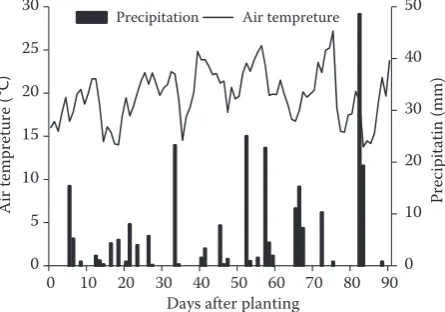
Figure 2. Mean daily air temperatures and total daily rainfall at University of Manitoba Point Research Station during the microplot study from June 1 (day of planting) to the end of August 2015
0 10 20 30 40 50
0 5 10 15 20 25 30
0 10 20 30 40 50 60 70 80 90
Pr
ec
ip
itati
n
(m
m
)
Air
tempreture
(
°C)
Days after planting
The prevalence of eggs, juveniles and adults was 14, 76, and 10%, respectively (Table 1). An increase of 244 times was obtained with D. dipsaci with the proportions of 13, 71 and 16% for eggs, juveniles and adults, respectively (Table 1).
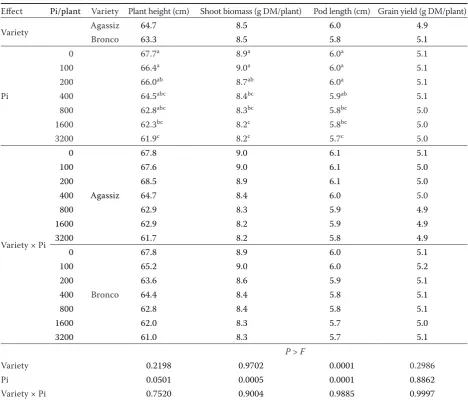
Effect of D. weischeri on growth and yield of yel-low pea in microplots. In the microplot study, the average daily air temperature generally fluctuated between 13°C to 26°C during the experiment. The mean daily air temperature in June, July and August was19, 21, and 19°C. About 259 mm of rainfall oc-curred between June 1 and August 26, 2015 (Figure 2). In the present study, the symptoms of damage caused by D. weischeri to the stems, leaves and pods of plants were not apparent. Additionally, migration of the nematodes from infected yellow pea plants to adjacent non-infected plants was not observed in plots with overlapping plant canopies (data not shown). The effect of the increasing Pi of nematodes was significant for all plant performance indicators, except grain yield (Table 2). The Pi, variety, and
variety by Pi interaction did not affect grain yield (Table 2) indicating that D. weischeri had no effect on grain yield even at the highest Pi. Compared to the untreated control, Pi of 100, 200, 400, and 800 nematodes/plant did not affect plant height, shoot biomass, and pod length (P < 0.05) (Table 2). How-ever, at Pi of 1600 and 3200, differences (P < 0.05) in these plant growth indicators were observed in comparison with the untreated control (Table 2).
[image:7.595.58.525.139.439.2]In our study, D. weischeri reproduced well (Ta-ble 3) on the creeping thistle plants used as posi-tive controls. A significant variety by Pi interaction (F = 3.57, P < 0.0072) was found for the recovery of nematodes by the end of the microplot study. The interaction resulted because recovery at Pi of 800, 1600, and 3200 was greater on cv. Bronco than cv. Agassiz (Figure 3). The Rfof D. weischeri was nu-merically slightly higher than 1 at densities of 100, 200, and 800 individuals per plant on cv Agassiz, and for 200 per plant on cv. Bronco (Table 3); however, Rf values did not differ statistically from 1 (Table 3). Table 1. Mean number of Ditylenchus weischeri and D. dipsaci recovered from callused carrot disks, callus tissues of alfalfa, and creeping thistle after 90 days after inoculation as well as fungal cultures after 45 dai having been inocu-lated with 80 individuals
Nematode Culture Eggs/culture Juveniles/culture Adults/culture Total number/culture
D. wei
sc
her
i
Callused carrot disk 616 ± 20X 3 294 ± 41 439 ± 16 4 351 ± 66a
Alfalfa callus tissue 0 25 ± 3 17 ± 2 42 ± 5b
Creeping thistle callus tissue 0 18 ± 3 15 ± 1 33 ± 5b
Fusarium solani 0 8 ± 3 11 ± 1 19 ± 5b
Botrytis cinerea 0 18 ± 3 20 ± 2 38 ± 6b
Rhizoctonia solani 0 15 ± 2 8 ± 1 23 ± 4b
Verticillium dahliae 0 0 0 0Y
sclerotinia sclerotiorum 0 0 0 0Z
Cladosporium cucumerinum 0 27 ± 3 14 ± 2 41 ± 7b
Colletotrichum gloeosporioides 0 14 ± 3 8 ± 1 22 ± 5b
Chaetomium spp. 0 12 ± 2 5 ± 1 17 ± 4b
D. d
ip
saci
Callused carrot disk 2 495 ± 38 13 872 ± 132 3 189 ± 41 19 556 ± 150a Alfalfa callus tissue 1 229 ± 29 3 310 ± 40 814 ± 13 5 353 ± 101b
Creeping thistle callus tissue 0 13 ± 3 8 ± 1 21 ± 5c
Fusarium solani 0 25 ± 3 13 ± 1 38 ± 5c
Botrytis cinerea 0 30 ± 3 11 ± 2 41 ± 6c
Rhizoctonia solani 0 12 ± 1 7 ± 1 19 ± 3c
Verticillium dahliae 0 14 ± 2 6 ± 2 20 ± 4c
sclerotinia sclerotiorum 0 0 0 0Y
Cladosporium cucumerinum 0 24 ± 2 12 ± 2 36 ± 7c
Colletotrichum gloeosporioides 0 16 ± 3 14 ± 1 30 ± 6c
Chaetomium spp. 0 0 0 0Z
Table 2. Effect of the initial population density (Pi) of Ditylenchus weischeri on plant growth of two yellow pea vari-eties in a microplot study
Effect Pi/plant Variety Plantheight (cm) Shoot biomass (g DM/plant) Pod length (cm) Grain yield (g DM/plant)
Variety Agassiz 64.7 8.5 6.0 4.9
Bronco 63.3 8.5 5.8 5.1
Pi
0 67.7a 8.9a 6.0a 5.1
100 66.4a 9.0a 6.0a 5.1
200 66.0ab 8.7ab 6.0a 5.1
400 64.5abc 8.4bc 5.9ab 5.1
800 62.8abc 8.3bc 5.8bc 5.0
1600 62.3bc 8.2c 5.8bc 5.0
3200 61.9c 8.2c 5.7c 5.0
Variety × Pi 0
Agassiz
67.8 9.0 6.1 5.1
100 67.6 9.0 6.1 5.0
200 68.5 8.9 6.1 5.0
400 64.7 8.4 6.0 5.0
800 62.9 8.3 5.9 4.9
1600 62.9 8.2 5.9 4.9
3200 61.7 8.2 5.8 4.9
0
Bronco
67.8 8.9 6.0 5.1
100 65.2 9.0 6.0 5.2
200 63.6 8.6 5.9 5.1
400 64.4 8.4 5.8 5.1
800 62.8 8.4 5.8 5.1
1600 62.0 8.3 5.7 5.0
3200 61.0 8.3 5.7 5.1
P > F
Variety 0.2198 0.9702 0.0001 0.2986
Pi 0.0501 0.0005 0.0001 0.8862
Variety × Pi 0.7520 0.9004 0.9885 0.9997
[image:8.595.63.532.123.523.2]Means (n = 12) with the same letter are not different significantly according to Tukey’s Honestly Significant Difference test (P = 0.05); DM – dry matter
Figure 3. Ditylenchus weischeri final population from two yellow pea varieties at harvest from different inoculation levels of the nematode. Values are means (n = 6). The bars with the same letters are not different from each other according to Tukey’s Honestly Significant Difference test (P = 0.05)
3500 3000 2500 2000 1500 1000 500 0
0 100 200 400 800 1600 3200 0 100 200 400 800 1600 3200
Nematode initial population (Pi)
N
em
at
ode fin
al p
op
ul
at
io
n (P
[image:8.595.111.465.570.710.2]DISCUSSION
Nematode rearing study. Ditylenchus weischeri and D. dipsaci could not be reared on any of the fungal isolates nor in the callus tissues of creeping thistle. Al-though the slight multiplication of a garlic population of D. dipsaci on V. theobromae and Cladosporium spp. was reported (Viglierchio 1971), other studies noted that fungi are unsuitable to rear D. dipsaci (Hooper & Southey 1978; Tenente et al. 1995). In general, our results indicated that the feeding behaviour and multiplication of D. dipsaci and D. weischeri are differ-ent from other Ditylenchus species which are capable of being reared on fungi.
In the present study, D. dipsaci, and not D. weischeri, was successfully reared on the alfalfa callus tissue. Mass production of D. dipsaci onalfalfa callus tissues has been reported with variable rates of success (Krusberg 1961; Krusberg & Blickenstaff 1964; Riedel & Foster 1970; Riedel et al. 1973). For instance, alfalfa callus tissue on a nutrient agar medium with an initial population of 50 D. dipsaci resulted in the recovery of 40 000 to 80 000 nematodes after 8 weeks. Similarly, D. dipsaci reproduced very well on the callus tissue
of onion on Krusberg’s medium (Riedel & Foster 1970; Riedel et al. 1973). Addition of 2,4-D to growth media can make callus tissue incompatible with plant-parasitic nematodes to being compatible (Webster & Lowe 1966). Krusbergand Blickenstaff(1964) reported that alfalfa callus tissue grown on a medium containing 2,4-D and kinetin considerably increased the reproduction of D. dipsaci. In the present study, kinetin and 2,4-D were included in the growth media. The rearing of D. weischeri using a monoxenic cul-ture procedure based on callused carrot disks was demonstrated for the first time in the present study. Our previous attempt to rear D. weischeri on callused carrot disks placed on nutrition agar in Petri dishes with 20 to 30 nematode individuals was unsuccess-ful, perhaps because of the contamination of callused carrot disks with bacteria that grew on nutrient agar. The present culture procedure was capable of provid-ing large quantities of individuals for use in a host suitability of two yellow pea varieties in a microplot study. The culture procedure was also successful with D. dipsaci, which reproduced more rapidly than the closely related D. weischeri. Additionally, the multipli-cation of D. weischeri on the callused carrot discs was considerably lower than that of D. dipsaci.
Neither agarose nor nutrient agar as a basal medium for inducing callus tissues of carrot disks or maintain-ing the moisture in Petri dishes was used in our study. The callused carrot disks were not dried even after the 3-month incubation period. Rearing nematodes on callused carrot disks without adding nutrient agar has previously been used for other migratory endopara-sites such as Pratylenchus spp. and Radopholus spp. (Moody et al. 1973; Verdejo-Lucas & Pinochet 1992). Rearing nematodes on callused carrot discs without growth medium is simple and inexpensive. In general, the callused carrot disk cultures are less costly, laborious and complicated to undertake compared to other monoxenic rearing procedures.
Effect of D. weischeri on growth and yield of yel-low pea in microplots. In Winnipeg, Manitoba over the past 20 years (1996 to 2015), the average daily air temperature in June, July, and August was 17, 20, and 20°C with 230 mm of rainfall (using daily mean tem-peratures and precipitation from Environment Canada 2015; http://climate.weather.gc.ca/). This shows that the average temperature and total precipitation of the study was fairly similar to the climate normal for the area.
In the microplot study here similar to plant density, soil and environmental conditions of commercial pea fields on the Canadian Prairies, D. wiescheri was Table 3. Recovery and reproduction factor (Rf) of
Ditylen-chus weischeri added at increasing density to two varieties of yellow pea and also creeping thistle in a microplot study
Pi/plant Nematode Rf Yellow pea variety
Agassiz
100 1.21*
200 1.16*
400 0.97*
800 1.06*
1600 0.97*
3200 0.90*
Bronco
100 0.96*
200 1.04*
400 0.95*
800 0.86*
1600 0.89*
3200 0.82*
Creeping thistleb
100 3.9 ± 0.5
3200 2.2 ± 0.6
[image:9.595.56.283.139.356.2]unable to reproduce on two varieties of yellow pea. This result is in agreement with the results from a previous greenhouse study (Hajihassani et al. 2016), which demonstrated that though D. weischeri is capable of invading yellow peas, the ability of the nematodeto reproduce on the plant is negligible.
Further, the failure to reproduce on plants was not due to Pi. In fact, the reproduction factor of D. weischeri decreased with the increasing nematode density possibly due to the lack of suitable temperature for D. weischeri development and reproduction (Hajihassani et al. 2017). The minimum generation time of D. weischeri on yellow pea cv. Agassiz was 30 days under growth chamber conditions at a constant temperature of 27°C (Hajihassani et al. 2017). During the present microplot study, the mean daily air temperature during the crop growth reached 27°C once (75 days after planting). Thus temperature likely restricted D. weischeri reproduction on yellow pea but not on creeping thistle.
Not surprisingly, D. wiescheri failed to migrate to pea plants adjacent to infected plants despite the plant contact within a canopy. Ditylenchus weischeri was not recovered from seed-pods and seeds of either variety tested but it was recovered only from stems and leaves. Similarly, we reported recently that D. weischeri was unable to infect seed-pods and seed of yellow pea cv. Agassiz grown under greenhouse conditions (Hajihassani et al. 2016). In the present study, the increasing D. weischeri population had no impact on yellow pea growth and yield at most of the nematode densities, however, slight reductions were observed in plant height, shoot biomass, and pod length of yellow pea varieties Agassiz and Bronco at Pi of 1200 and 3200 nematodes/plant. These re-ductions could be due to the nematode feeding as Griffin (1975) stated that D.dipsaci is able to feed and develop on non-host plants without subsequent reproduction. The results of the present microplot study under field conditions confirm a previous greenhouse-based study (Hajihassani et al. 2016) that D. weischeri was unable to parasitize yellow pea and the nematode is unlikely to be a pest of yellow pea for weather conditions of the Canadian Prairies.
Acknowledgments. We thank Dr. Fouad Daayf and Lorne Adam (University of Manitoba) for providing fungal isolates, Lorne Adam for weather data, and Dr. Tom D. Warkentin and Brent Barlow (University of Saskatchewan) for providing yellow pea seeds. We are grateful to members of the Soil Ecology Laboratory at the University of Manitoba for technical assistance.
References
CABI (2015): Ditylenchus dipsaci. Invasive Species Com-pendium Datasheets, maps, images, abstracts and full text on invasive species of the world. Available at http://www. cabi.org/isc/datasheet/19287(accessed Apr 23, 2016). Chizhov V.N., Borisov B.A., Subbotin S.A. (2010): A new
stem nematode, Ditylenchus weischeri sp.n. (Nematoda: Tylenchida), a parasite of Cirsium arvense (L.) Scop. in the central region of the non-chernozem zone of Russia. Russian Journal of Nematology, 18: 95–102.
Eisenback J.D. (2000): Techniques for measuring nematode development and egg production. In: Wheeler T., Forge T., Caswell-Chen E. (eds): Techniques in Nematode Ecol-ogy. Hyatsville, Society of Nematologists: 16–19. Faulkner L.R., Darling H.M. (1961): Pathological histology,
hosts, and culture of the potato rot nematode. Phytopa-thology, 51: 778–786.
Griffin G.D. (1975): Parasitism of nonhost cultivars by Ditylenchus dipsaci. Journal of Nematology, 7: 236–238. Hajihassani A., Smiley R.W., Jahanshahi Afshar F. (2013): Effects of co-inoculation with Pratylenchus thornei and Fusarium culmorum on growth and yield of winter wheat. Plant Disease, 97: 1470–1477.
Hajihassani A., Tenuta M., Gulden R.H. (2016): Host prefer-ence and seed-borne transmission of the stem nematodes, Ditylenchus weischeri and D. dipsaci on select pulse and non-pulse crops grown in the Canadian Prairies. Plant Disease, 100: 1087–1092.
Hajihassani A., Tenuta M., Gulden R.H. (2017): Influence of temperature on development and reproduction of Ditylenchus weischeri and D. dipsaci on yellow pea. Plant Disease, 101: 297–305.
Hooper D.J., Southey J.F. (1978): Ditylenchus, Anguina and related genera. In: Southey J.F. (ed.): Plant Nematology. 3rd Ed. London, Ministry of Agriculture, Fisheries and Food: 78–79.
Hussey R.S., Krusberg L.R. (1971): Disc-electrophoretic patterns of enzymes and soluble proteins of Ditylenchus dipsaci and D. triformis. Journal of Nematology, 3: 79–84. Kaplan D.T., Davis E.L. (1990): Improved nematode extrac-tion from carrot disk culture. Journal of Nematology, 22: 399–406.
Krusberg L.R. (1961): Studies on the culturing and parasit-ism of plant-parasitic nematodes, in particular Ditylen-chus dipsaci and Apheienchoides ritzemabosi on alfalfa tissues. Nematologica, 6: 181–200.
Kühnhold V., Kiewnick S., Sikora R.A. (2006): Development of an in vivo bioassay to identify sugar beet resistance to the stem nematode Ditylenchus dipsaci. Nematology, 8: 641–645.
Latif M.A., Mian I.H. (1995): Fungal hosts and gnotobiotic culture of Ditylenchus angustus. Japanese Journal of Ne-matology, 25: 11–15.
Madani M., Tenuta M., Chizhov V.N., Subbotin S.A. (2015): Diagnostics of stem and bulb nematodes Ditylenchus weischeri and D. dipsaci (Nematoda: Anguinidae) using PCR with species specific primers. Canadian Journal of Plant Pathology, 37: 212–220.
Manitoba Agriculture, Food and Rural Development (2010): The description of soil series in Manitoba. Available at https://www.gov.mb.ca/agriculture/land/soil-survey/ (accessed Dec 10, 2015).
Moody E.H., Lownsbery B.E., Ahmed J.M. (1973): Culture of the root-lesion nematode Pratylenchus vulnus on carrot discs. Journal of Nematology, 5: 225–226.
Plowright R., Caubel G., Mizen K.A. (2002): Ditylenchus species. In: Starr J.L., Cook R., Bridge J. (eds): Plant Re-sistance to Parasitic Nematodes. Wallingford, CAB In-ternational: 107–139
Riedel R.M., Foster J.G. (1970): Monoxenic culture of Ditylenchus dipsaci and Pratylenchus penetrans with modified Krusberg’s and White’s media. Plant Disease Reporter, 54: 251–254.
Riedel R.M., Foster J.G., Mai W.F. (1973): A simplified me-dium for monoxenic culture of Pratylenchus penetrans and Ditylenchus dipsaci. Journal of Nematology, 5: 71. Saskatchewan Pulse Growers. (2015): Growing peas.
Avail-able at http://saskpulse.com/growing/peas/ (accessed Oct 4, 2016).
Saxton A.M. (1998): A macro for converting mean separa-tion output to letter groupings in PROC MIXED. In: Book of Abstracts. 23rd SAS User Group International Conference, Cary. New York, SAS Institute: 1243–1246.
Sturhan D., Brzeski M.W. (1991): Stem and bulb nematodes, Ditylenchus spp. In: Nickle W.R. (ed.): Manual of Agricul-tural Nematology. New York, Marcel Dekker: 423–464. Subbotin S.A., Madani M., Krall E., Sturhan D., Moens M.
(2005): Molecular diagnosis, taxonomy, and phylogeny of the stem nematode Ditylenchus dipsaci species complex based on the sequences of the ITS-rDNA. Phytopathol-ogy, 95: 1308–1315.
Tamura H., Mamiya Y. (1975): Reproduction of Bursap-helenchus lignicolus on Alfalfa callus tissues. Nemato-logica, 21: 449–454.
Tenente R.V., Mendes M.A.S., Neto E.G. (1995): No repro-duction of two populations of Ditylenchus dipsaci on three species of fungi. Nematologia Brasileira, 19: 67–71. Tenuta M., Madani M., Briar S.H., Molina O., Gulden R.H.,
Subbotin S.A. (2014): Occurrence of Ditylenchus wei-scheri and not D. dipsaci in field pea harvest samples and Cirsium arvense in the Canadian Prairies. Journal of Nematology, 46: 376–384.
Verdejo-Lucas S., Pinochet J. (1992): Population densities of five migratory endoparasitic nematodes in carrot disk cultures. Journal of Nematology, 24: 96–98.
Viglierchio D.R. (1971): Race genesis in Ditylenchus dipsaci. Nematologica, 17: 386–392.
Webster J.M., Lowe D. (1966): The effect of the synthetic plant-growth substance 2,4-dichlorophenoxyacetic acid, on the host-parasite relationships of some plant-parasitic nematodes in monoxenic callus culture. Parasitology, 56: 313–322.
Whithead A.G., Hemming J.R. (1965): A comparison of some quantitative methods of extracting small vermiform nematodes from soil. Annual Applied Biology, 55: 25–38.