The oral presentation was made by Dr. Apeagyei.
This is a reproduction of an article whose final and definitive form has been published in Road Materials and Pavement Design© 2014 Taylor & Francis. The article is available online at:
HTTP://DX.DOI.ORG/
Moisture-Induced Strength Degradation of
Aggregate-Asphalt Mastic Bonds
Alex K. Apeagyei
a*, James R. A. Grenfell
aand Gordon D. Airey
aa Nottingham Transportation Engineering Centre, Department of Civil Engineering,
University of Nottingham, University Park, Nottingham NG7 2RD, United Kingdom
ABSTRACT:Moisture-induced damage is one of the most important factors influencing the durability of
suggesting a diffusion process controls the aggregate-mastic bond strength degradation in the presence of moisture. This was supported by the excellent correlation between the interfacial moisture content and strength. A good correlation was found between the thermodynamic work of adhesion and the measured practical work of adhesion. This suggests physical adsorption controls the moisture-damage mechanism at the aggregate-mastic interface. Aggregate-mastic bonds comprising granite mastics performed worse in terms of moisture resistance than limestone mastic bonds which could be attributed to the nature of the mineral phases in the granite. The dominant mineral phases in the granite (albite, feldspar and quartz) have been associated with moisture sensitivity and interfacial failure in bitumen-aggregate bonds in previous studies. It was concluded that the presence of moisture at the aggregate-mastic interface was associated with significant strength degradation and increased brittleness. Moisture-induced strength degradation of the aggregate-mastic bond is influenced by both physico-chemical characteristics and mineralogical composition of the individual asphalt components. The effect of moisture on the aggregate-mastic interfacial bond appears to be more detrimental than the effect of moisture on the bulk mastic.
KEYWORDS: Asphalt mastic, adhesive strength, bitumen, moisture diffusion, moisture-induced damage
1. Introduction
One of the most important factors influencing the durability of asphalt mixtures designed for pavement construction is moisture-induced damage. A common manifestation of moisture-induced damage is a loss of cohesion in the mixture and/or loss of adhesion between the bitumen and aggregate interface (Airey and Choi, 2002) or more realistically, a loss of adhesion at the aggregate-asphalt mastic interface and/or cohesion within the bulk mastic (Airey et al., 2007).
may play a fundamental and more significant role in the generation of moisture-damage, than bitumen properties such as penetration grade, acid number, and molecular size distribution. The same study showed that surface energy measurements and associated bond energy calculations can be used as an effective tool to identify bitumen-aggregate pairs that are susceptible to induced damage. Thus the mechanism of moisture-induced damage in asphalt mixtures can be better understood if the mineralogical composition of aggregates as well as the physico-chemical characteristics of aggregate and mastics can be linked with the aggregate-mastic mechanical bond strength.
This paper presents a study of moisture-induced strength degradation of aggregate-mastic joints subjected to various moisture conditioning regimes at 20°C for extended conditioning times. The differences in the resistance to the effect of moisture on various aggregate-mastic specimens were explained using multiple adhesion theories as well as the differences in mineralogy of the aggregates used. Most current studies do not relate the magnitude of the interfacial water to bond strength but rather relate bond strength degradation with moisture conditioning time. In this study, the quantity of water at the aggregate-mastic interface was determined by applying Fick’s diffusion model to moisture transport to the aggregate-mastic interface via the granite aggregate substrate and analyzing the results to establish relationships between bond strength and moisture concentration.
2. Theories
2.1 Fick’s Diffusion Model
Diffusion can be defined as the movement of molecules from a region of high concentration to a region of low concentration. Diffusion is considered one of the key modes of moisture transport in pavements that influence durability of asphalt mixtures. Diffusing moisture can cause pavement deterioration in two general ways: 1) by attacking and weakening the adhesive bond between asphalt mastic and aggregate, and 2) by degrading the cohesive strength of the asphalt mastic. By measuring the diffusion coefficient of asphalt mastics and of aggregates, the effect of moisture on pavements deterioration can be modeled numerically in order to better understand the moisture damage phenomenon.
cross-sectional area is proportional to the concentration gradient measured normal to the section (Eq.1), and 2) the rate of change of concentration of the diffusing substance under unsteady state conditions is proportional to diffusion coefficient (Eq.2). The solution to the differential equation in Eq. 2 for a sample with planar infinite geometry is given by Eq. 3. Using the moisture uptake data and Eq. 3, moisture diffusion coefficient values for the mastics and aggregate substrates used in this study were estimated.
x
C
D
F
(1)where F is the rate of transfer per unit area of section (flux), D the diffusion coefficient, C the concentration of the diffusing substance; and the space coordinate measured perpendicular to the section (Crank, 1975).
2 2
x
C
D
t
C
(2)where t is time.
2 2 2 ) 1 2 (
0
(
2
1
)
2 28
1
l t n D n te
n
M
M
(3)where:
Mt = Moisture uptake at time t; M∞ = equilibrium moisture uptake; = specimen thickness; and n = an integer.
2.2 Moisture Uptake Profiles
uptake increases until it reaches a thermodynamic equilibrium at which point no further changes in moisture uptake occurs. The moisture content at thermodynamic equilibrium (M∞) is called equilibrium moisture uptake.
0 0
(%)
w
w
w
M
uptake
Mass
tt
(4)
2.3 Adhesion theories
As previously mentioned, asphalt mastic can be considered as the main adhesive that binds the aggregates in a mix together. Therefore, in order to better understand the moisture damage problem, it is essential to appreciate some of the concepts behind the adhesion and debonding processes. Several adhesion theories have been proposed in the past. They include the physical adsorption theory; chemical bonding theory; diffusion theory; electrostatic interactions theory; mechanical interlocking theory; and weak boundary layer theory (Wake, 1978). For asphalt mixtures, the first two theories might be the most relevant as discussed next.
Key concepts of the physical adsorption theory include 1) adhesive and substrate are in intimate contact and van der Waals forces operate between them, 2) van der Waals forces consists of two components – polar and dispersion – which could be evaluated by using contact angle and vapor sorption measurement techniques, 3) thermodynamic work of adhesion, calculated using the two component van der Waals forces, can be used to assess the stability of the bond between an adhesive and a substrate (Wake, 1978). Adhesive-substrate bonds with positive thermodynamic work of adhesion are considered stable while bonds with negative work of adhesion are considered unstable. One manifestation of damage for a bond with negative work of adhesion in the presence of water is an irreversible loss of bond strength. For asphalt mixtures, concepts based on physical adsorption theory is currently the most widely used method (Bhasin et al., 2006). The basis for this could be attributed to the fact that the bond between bitumen and aggregate involves intimate contact between thin films of asphalt and aggregates during mixing.
2 0
2 1
4
r
q
q
F
r
(5)Water at ambient temperatures has a very high relative permittivity of 80. The corresponding relative permittivity of bituminous materials, however, are quite low with reported values in the range of 2.6-2.8 for bitumen, 4.0-4.6 for newly constructed dry asphalt pavements, and 6-8 for wet or moisture damaged pavements (Saarenketo, 2013; Chang et al. 2011; Vlachovicova et al., 2003; Evans et al., 2007). Since an approximately linear relationship exists between the relative permittivities of mixtures of water and organic solvents and mixture composition (Comyn, 2005; Bottcher, 1973; Sihvola, 1999), the high εr of water means even small amounts of absorbed water in the adhesive can cause large increases in εr and a reduction in F. The reduction in F due to moisture absorption by an adhesive is reversible; hence complete removal of water (say by drying) from an adhesive joint can restore F to the original value. Thus the major difference between the adsorption theory and the chemical bond theory of adhesion is that the latter permits partial recovery of damage in a wet adhesive bond when the bond is dried while the former determines whether an adhesive bond is stable or not stable (zero strength) in the presence of water.
On the basis of the aforementioned adhesion theories, several possible mechanisms by which the bond between an adhesive and a substrate can be damaged by moisture are obvious. Moisture can weaken the adhesive bond by 1) causing reversible changes in the adhesive properties as exemplified by recovery of joint strengths in previously wet joints, 2) causing irreversible changes in adhesive properties leading to cracking, crazing, or hydrolyses, 3) attacking the adhesive-substrate interface by displacing or weakening of van der Waals interactions leading to a reduction in the thermodynamic work of adhesion, and 4) causing swelling in the adhesive and or the substrates leading to swelling stresses (Comyn, 1983). The reversible changes in adhesive properties (strength and stiffness, etc) with moisture could be explained by the chemical bonding theory whilst the physical adhesion theory could explain most of the other mechanisms of moisture damage. Reversible loss of adhesion could also be attributed to plasticization (decrease in glass transition temperature) of the adhesion by water. In the latter case, Fox equation (Fox, 1956) could be used to estimate, approximately, changes in glass transition temperature. For most adhesive bonds it is conceivable to expect a combination of the various damage mechanisms to occur simultaneously. This is the approach adopted in this study to investigate the moisture damage problem.
3.1 Aggregates
Samples of limestone and granite mineral aggregates, aggregate boulders, and mineral fillers were obtained from various UK quarries. Data from previous studies (Airey et al., 2007) suggest asphalt mixtures fabricated from these aggregates exhibit significantly different moisture sensitivity under laboratory conditions. Therefore, it was expected that mastic specimens made from the selected aggregates would show different moisture-induced strength degradation with time. The aggregates for the mastics were mechanically sieved in the laboratory to obtain only materials passing the 1-mm sieve and retained on 0.125-mm sieve (fine aggregate). In addition to the fine aggregates, limestone and granite mineral fillers satisfying BS EN 1097-7-2008 were used. Again, the choice of the mineral fillers was made to quantify the effect, if any, of different types of fillers used in asphalt mixtures.
As previously discussed, the mineralogical compositions of aggregates are believed to have profound influence on moisture-damage susceptibility of asphalt mixtures. The mineralogical compositions of the aggregates were characterized using a Mineral Liberation Analyzer (FEI Quanta 600 SEM). The device combines an automated Scanning Electron Microscope and multiple Energy Dispersive X-ray detectors with state-of-the-art analysis software to produce quantitative mineralogy measurements. The results were used to identify key mineral phases and their influence on the moisture-induced aggregate-mastic adhesive strength degradation.
Surface characteristics such as porosity, specific surface area, and surface free energy, are key physico-chemical properties of aggregates that influence the adhesion strength of asphalt mixtures. The physico-chemical properties of samples of the aggregates were characterized using a dynamic sorption device (DVS Advantage). The technique involved exposing aggregate samples to varying concentrations (partial vapor pressures) of carefully selected probe liquids and measuring the mass gain with time using a sensitive microbalance (0.1 µg). The probe liquids used included chloroform, ethyl acetate and octane. Detailed discussion of the sorption technique is provided elsewhere (Grenfell et al., 2013; Grenfell et al., 2014). The results were used to generate a series of sorption isotherms from which the BET specific surface area and surface free energy components of the aggregates were estimated. The results were also used to estimate the relative porosity of the aggregates, and the thermodynamic work of adhesion and debonding of the aggregate-bitumen bond. The estimated intrinsic work of adhesion was compared with the practical work of adhesion obtained through tensile butt joint specimen testing.
uncoated aggregates disks with nominal dimensions 23 mm diameter by 15 mm thick in deionized water and measuring moisture uptake using a sensitive microbalance (0.1 μg resolution). The data (mass uptake and conditioning time) were fitted to a Peleg-type model as shown in Eq. 6 (Peleg, 1988). The model parameter C1 represents the rate of moisture uptake while C2 is a measure of the equilibrium moisture content (reciprocal of the maximum water uptake). The results were compared with the aggregate-mastic bond strength in an attempt to quantify the effect of water on bond strength degradation. Moisture uptake profiles were computed as the ratio of moisture uptake at a given time to the original dry weight of the sample at the beginning of the test (Eq. 4). The moisture uptake versus conditioning time data also enabled the estimation of an apparent moisture diffusion coefficient. Apparent moisture diffusion coefficient D of the aggregate substrate was estimated assuming Fickian diffusion (Eq. 7) based on the moisture uptake profiles, where l is the thickness of the aggregate substrate and t0.5 the time to reach one half of the maximum water uptake.
2
1
t
*
C
C
t
M
t
(6)
5 . 0 2049
.
0
t
l
D
(7)]
)
(
5
.
0
[
0.5
x x i e ixx
erf
l
D
m
m
m
m
x x (8)]
)
(
5
.
0
[
0.5
y y i e iy yD
l
erf
m
m
m
m
y y (9) 5 . 0 int int
x y y xD
D
m
m
m
m
(10)3.2 Asphalt Mastics
Four asphalt mastics were fabricated for testing using the same bitumen but two fine aggregates (GA for granite or LA for limestone) and two mineral fillers (GF for granite or LF for limestone). The proportion of the constituent components (fine aggregate, mineral filler, bitumen) of the mastics used was 50:25:25 by weight of mixture and was chosen to mimic mastic mix design typically used in open-graded friction course asphalt mixtures in the Netherlands (Kringos et al. 2008). A 40/60 pen grade from a single source was used for preparing all the mastics. The bitumen is typical of those that are commonly used for asphalt mixture production in the UK with a reported total surface free energy of about 31 mJ/m2 (Grenfell et al., 2013; Grenfell et al., 2014). The mastics were produced by combining the dried aggregates and molten bitumen using a Hobart mechanical mixer at a mixing temperature of 185°C. The mastics were then put in quart tins and stored in temperature controlled (20°C, 50% RH) conditions until testing. The bulk specific gravity of the mastics was estimated to be approximately 1.917.
3.3 Adhesion tests
3.3.1 Adhesion tests - Aggregate substrate fabrication
Samples of granite boulders that were used for making the aggregate substrates were obtained from a local rock quarry and transported to the lab. Once in the lab, several 23-mm diameter cores were obtained from the boulders. The cores were then saw-cut using a water-cooled tile saw with carbide-tipped blade into disk-shaped substrates measuring approximately 23 mm diameter by 15 mm thick. The top and bottom surfaces of the substrates were polished using No. 5 sandpaper, to remove all blemishes left by the sawing process, in order to ensure parallel surfaces necessary for accurate adhesion testing. The fabrication of the substrates was completed by washing the substrates in deionized water (25°C) and then drying them in an oven at 70°C for 48 hours.
Only about 70 substrates were fabricated using the above procedures, because of lack of materials. The 70 substrates were deemed sufficient to fabricate enough butt-jointed aggregate-mastic specimens for the first three moisture conditioning steps (0, 1 day, and 7) for the four mastic types. It was anticipated that the substrates used for the 3 conditioning cycles would be cleaned and reused for additional testing beyond seven days. Thus the rest of the substrates were obtained by cleaning the used aggregate substrates. The mastic coated aggregates were cleaned using acetone followed by a thorough rinse in deionized water. Initially, this approach was considered adequate for restoring the aggregate substrates to their original state. However, as would be discussed later, it appears the cleaned aggregates had water absorption properties that were different from the virgin aggregate.
3.3.2 Adhesion tests - Adhesion specimen fabrication and moisture conditioning
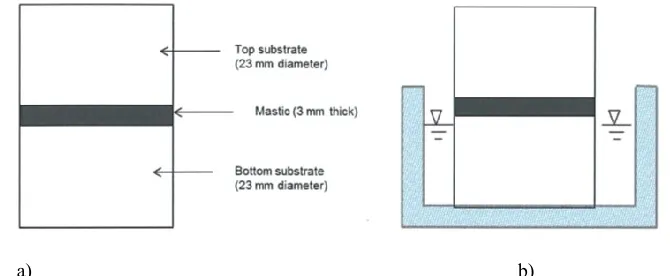
the mastic film during the 2-hour period to ensure that no material leaked out of the mastic. At this stage, the specimens were either stored dry or moisture conditioned and then tested. Moisture conditioning was performed at 20°C by partially submerging substrate in water such that only about 1-2 mm of the bottom aggregate substrate was exposed to the open air (Figure 1b). The arrangement ensured that the aggregate-mastic interface was completely dry at the beginning of a test and, therefore, moisture reached the aggregate/mastic bond only through the aggregate. Thus the potential for moisture-induced adhesive failure was enhanced as the interface (not the bulk mastic) was in direct contact with the diffusing water during the duration of the moisture conditioning.
[image:11.612.137.472.274.412.2]a) b)
Figure 1. a) Adhesion test specimen showing butt-jointed specimens consisting of 3-mm thick asphalt mastic sandwiched between two 15-mm thick by 23 mm diameter aggregate substrates. b) Specimen with bottom substrate partially submerged to ensure water enters aggregate-mastic interface before entering bulk mastic material.
3.3.3 Adhesion tests - Aggregate-mastic interfacial bond strength
Bond strength was computed as the ratio of the peak load divided by the cross-sectional area of the butt joint. Adhesion energy was computed as the area under the force-displacement curve divided by the cross-sectional area of the butt joint specimen (Griffith, 1920). Comparisons were made between the moisture uptake and the adhesive strength as well as the practical work of adhesion. The results also enabled a comparison between the thermodynamic work of adhesion and de bonding, and the practical work of adhesion.
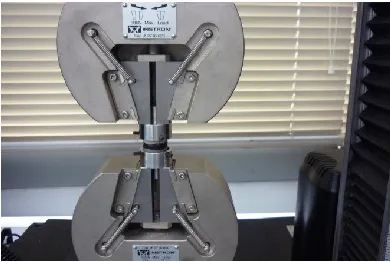
Figure 2. Adhesion strength test set up.
3.4 Mastic Cohesion tests
3.3.1 Cohesion tests - Specimen fabrication, conditioning and testing
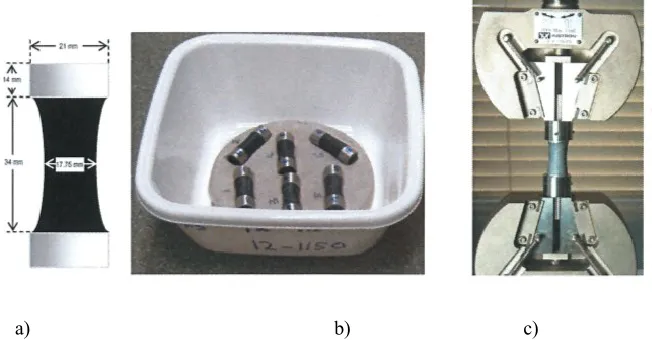
Figure 3 shows details of the dog bone-shaped tensile specimens used to determine the cohesion (tensile strength) of the mastics. Also shown are the photograph of sample water baths used to moisture condition the mastics. Similar specimen configurations have been used by Kringos et al., 2011 to measure tensile strength of mastic. Samples were conditioned in water at 20°C for 112 days. Moisture uptake was computed using Eq. 4. The results were used to estimate apparent diffusion coefficient. The moisture uptake results were also used to estimate glass transition temperature using models proposed by Fox (1956). The latter calculations enabled a determination to be made about the level of plasticization, if any, that occur during the 112 days of conditioning the mastics in water.
partially dried samples, samples of the 112 moisture conditioned specimens were covered with plastic on all sides except the two ends so that water can evaporate from the ends only (Kringos et al. 2008). All the tensile tests were conducted at 20°C using a loading rate of 20 mm/min cross-head speed on an Instron machine (Figure 3c).
[image:13.612.138.464.215.386.2]a) b) c)
Figure 3. Asphalt mastic cohesive strength test. a), specimen dimensions. b) Samples in water bath. c) Tensile strength test set.
4. Results and Discussion
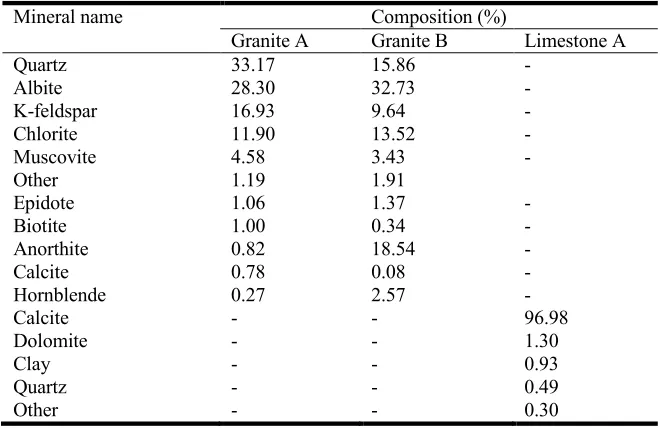
4.1 Aggregates - Mineralogical composition
Table 1. Mineral composition of aggregates.
Mineral name Composition (%)
Granite A Granite B Limestone A
Quartz 33.17 15.86 -
Albite 28.30 32.73 -
K-feldspar 16.93 9.64 -
Chlorite 11.90 13.52 -
Muscovite 4.58 3.43 -
Other 1.19 1.91
Epidote 1.06 1.37 -
Biotite 1.00 0.34 -
Anorthite 0.82 18.54 -
Calcite 0.78 0.08 -
Hornblende 0.27 2.57 -
Calcite - - 96.98
Dolomite - - 1.30
Clay - - 0.93
Quartz - - 0.49
Other - - 0.30
NOTE: K-feldspar = potassium-dominant feldspar; - = Not applicable. Note that Granite B was used as the substrate during the adhesion testing.
4.2 Aggregates - Physico-chemical properties
2013; Grenfell et al., 2014). From the latter study, the total SFE of the granite and limestone was reported as 353 and 223 mJ/m2, respectively.
Figure 4. Octane sorption isotherms for aggregates (1.18 mm size fraction) used for fabricating mastics. Higher absorption for granite suggests the aggregate is more porous than limestone.
4.3Aggregate substrate moisture absorption
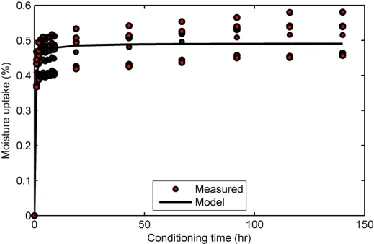
Water uptake data was obtained for seven granite aggregate substrate specimens measuring 23-mm diameter by about 15 mm thick. Testing was limited to the granite because only this aggregate was used as the substrate for the adhesive strength tests. The average initial (dry) mass of the aggregate substrates was 15.61 g. The average ‘equilibrium’ moisture uptake at the end of tests was 0.491%. Figure 5 shows a sample moisture uptake versus time plot for the aggregates. It can be seen from Figure 5 that for the aggregate considered, more than 90 percent of the equilibrium moisture uptake occurred during the first 24 hours of water conditioning. This was typical for all the replicate samples tested.
[image:15.612.173.428.192.357.2]model-predicted equilibrium uptake of 0.493% (equal to reciprocal of C2) and the experimentally determined equilibrium uptake of 0.491%.
[image:16.612.210.397.231.353.2]The moisture uptake versus time data as well as the specimen dimensions was also used to determine apparent moisture diffusion coefficient (Eq. 3) of the aggregate as 7350e-12 m2/s.
Figure 5. Water absorption in granite aggregate at 20°C. Excellent agreement between the Peleg model predictions and the measured data.
4.4 Mastic moisture absorption
Moisture absorption was obtained for each of the four mastic types (LA+LF, LA+GF, GA+LF, and GA+GF). For each mastic type, at least 6 replicate specimens were tested. The average dry weight of the mastic specimens at the beginning of testing was about 30 g. Figure 6 depicts the kinetics of the average water absorption for the four mastics. Compared to the aggregate substrates previously discussed, the rate of moisture uptake was slower with the time to reach equilibrium being significantly higher. In fact for most of the mastics, it appears that equilibrium could not be completely reached after 112 days of soaking in 20°C water. This compares with about a day for the aggregate substrates as previously discussed.
in the moisture uptake profiles suggests none of the mastics achieved true equilibrium moisture after 112 days of moisture conditioning at 20°C.
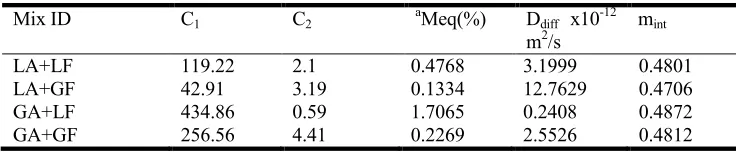
[image:17.612.121.489.384.460.2]Using the moisture uptake versus time data as well as the specimen dimensions as inputs to Eq. 3, the apparent moisture diffusion coefficient was estimated. It must be noted that because of the specimen geometry, application of Eq. 3 to find moisture diffusion coefficient of the mastics is a gross simplification. Therefore, the computed diffusion coefficient should be considered tenuous and should only be used under conditions similar to those employed in this study. The Peleg model was used to fit the experimental data. The model parameters C1 and C2, equilibrium moisture uptake, as well as the computed diffusion coefficient of the bulk mastics are summarized in Table 2. Also shown in Table 2 are the interfacial moisture content computed using Eqs. 8-10. Because of the large disparity in moisture diffusion coefficient between the aggregate substrate (7350e-12 m2/s) and the mastics (0.2408 to 12.76e-12 m2/s), it appears the amount of water at the interface of the aggregate-mastic bond were mainly influenced by the aggregate substrates’ moisture content (Table 2). Future studies should consider simulation of interfacial moisture transport via the mastic as a way to better understand the effect of mastic film thickness on moisture sensitivity.
Table 2. Moisture diffusion properties of mastics.
Figure 6. Moisture uptake of asphalt mastic containing different mineral aggregates and fillers. The sudden drop in moisture indicate the start of the drying phase after about 112 days of moisture conditioning. LA= limestone aggregate; LF = limestone filler; GA = granite aggregate; GF=granite filler.
4.5 Thermodynamic work of adhesion and debonding
(γT = 30.6 mJ/m2) and the work of adhesion between aggregate and bitumen in the dry state (131 and 128 mJ/m2 for granite and limestone, respectively). This is typical of the bond between a high surface energy material (in this case aggregate) and a low surface energy material (bitumen). Therefore, in the absence of moisture, the dominant failure mode in asphalt mixtures should be cohesive which is in accordance with common experience.
Table 3. SFE and thermodynamic work of adhesion and debonding of aggregate-bitumen.
Material SFE components (mJ/m2) TWAAB (mJ/m2) TWDAWB (mJ/m2) ER1 γLW γAB γT
Bitumen 30.6 0.0 30.6 352.5 222.7
N/A N/A N/A
Granite A 67.8 284.0 131 -109 1.20
Limestone A 75.2 147.0 128 -51 2.51
NOTE: TWAAB = Thermodynamic work of adhesion between aggregate and bitumen; TWDAWB = Thermodynamic work of debonding aggregate-bitumen bond in the presence of water; N/A = not applicable.
4.6 Strength of aggregate butt joints – Locus of failure
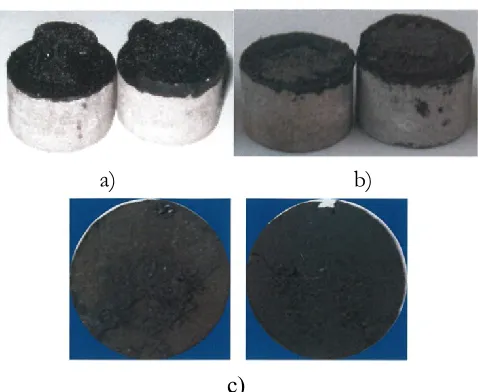
a) b)
c)
Figure 7. Loci of failure for moisture-induced damage in aggregate-asphalt mastic systems showing effect of conditioning time and aggregate type. (a). Mastic containing limestone aggregate and limestone filler (LA+LF) after 20 hours of moisture conditioning. (b). Mastic containing granite aggregate and limestone filler (GA+LF) after 20 hours of moisture conditioning. c). Mastic GA+LF after three 168 hours of moisture conditioning. Stripping of mastic containing granite aggregates was more severe than limestone aggregate mastics.
4.7 Aggregate butt joints – Moisture effects on mechanical properties
Moisture conditioning at 20°C had measurable effect on several mechanical properties of the aggregate-mastic butt joints, including the stress-strain behavior, adhesive strength, and fracture energy.
[image:20.612.188.427.150.346.2]Figure 8. Effect of moisture conditioning time on stress-strain behavior of aggregate-mastic butt joint. For majority of the mixtures, moisture conditioning resulted in strength reduction and increased brittlness. LA= limestone aggregate; LF = limestone filler; GA = granite aggregate; GF=granite filler.
[image:21.612.148.460.157.365.2]Figure 9. Effect of moisture conditioning time on bond strength of aggregate-mastic butt joints. Moisture caused negligible strength degradation in limestone aggregate mastics (a) compared to granite aggregate mastics (b). Mastics containing granite aggregates lost about 20% and 80% of their adhesion strength within the first 20 and 168 hours, respectively (c). LA= limestone aggregate; LF = limestone filler; GA = granite aggregate; GF=granite filler.
Figure 10. Relationship between aggregate-mastic bond strength and square root of conditioning time for mastic containing granite mastics. The excellent (R2=0.98) linear fit between adhesive strength and square root of moisture conditioning time suggests a diffusion process controls mastic bond strength degradation. GA = granite aggregate; GF=granite filler; LF = limestone filler.
4.8 Aggregate butt joints – Fracture energy
The effect of moisture on the stress-strain curve as well as on bond strength could be captured using a single fracture energy parameter as a more elegant and unified way of characterizing aggregate-mastic bond strength. In general, the larger the magnitude of fracture energy of a joint, the greater the resistance to failure from applied loading. As shown in Figure 11, one effect of moisture on aggregate-mastic bond strength is a reduction in fracture energy with conditioning time. The effect was more pronounced in mastics containing granite aggregates than those containing limestone aggregates. As shown in Fig. 11b, mastics containing granite aggregates retained only less than 10 percent of their original fracture energy after 168 hours of moisture conditioning compared to about 80-100 percent in the case of limestone aggregate mastics.
[image:23.612.211.396.156.281.2]The significant loss in adhesive strength seen in Figure 11 after seven days of conditioning for the granite mastics could be explained using the physical adsorption theory and the nature of the mineral phases in the aggregates. In the case of physical adsorption, water attacks the adhesive-substrate interface by weakening the van der Waals interactions resulting in a reduction in the thermodynamic work of adhesion. For the aggregates considered, the dominant mineral phases of the granite (quartz, albite, etc) could be used to explain the sensitivity of the granite mastic to water. Table 3 lists the thermodynamic work of adhesion and debonding. Based on the physical adsorption theory, if the thermodynamic work of adhesion is positive then the bond is stable; a negative value suggests bond instability. It can be seen from Table 3 that in the dry condition, all aggregate-bitumen bonds exhibit positive work of adhesion (stable bonds) and negative values (unstable bonds) in the presence of moisture. The higher magnitude of the granite mixtures work of debonding compared with limestone suggest the former is more sensitive to moisture damage than the later which is in agreement with the practical work of adhesion obtained in this study. However, the negative sign in front of the work of de-bonding in the presence of water suggests all the aggregate-bitumen bonds, for the materials considered in this study, are unstable in the presence of water. The value of the ER1 parameter (2.51) for limestone mastics bonds was higher than the ER1 (1.20) for granite mastics, which is in agreement with mechanical test results.
Figure 11. Effects of moisture conditioning on fracture energy of aggregate-asphalt mastic bond. Mastics containing granite aggregates retained only less than 10 percent of their original fracture energy after 168 hours of moisture conditioning compared to about 80-100 percent in the case of limestone aggregate mastics.
4.9 Effect of moisture uptake amount on bond strength
[image:24.612.137.474.396.499.2]and Table 3). For instance, the aggregate demonstrated high moisture diffusivity (7355x10 -12 m2/s) and equilibrium water uptake (0.491%) at 20°C. The analyses using Eqs. 6-10 showed the amount of moisture reaching the aggregate-mastic interface is mainly controlled by the diffusivity of the aggregate substrate. It is conceivable that different aggregate types will exhibit different moisture diffusion characteristics and therefore different moisture sensitivity. Under the same condition, a porous aggregate would absorb more moisture than a less porous aggregate over the same conditioning time. Therefore moisture conditioning time alone may not completely describe the damage mechanism in aggregate-mastic joints. In this case moisture concentration/uptake has been suggested as a more realistic parameter for characterizing the effect of moisture on bond strength degradation. For this reason, finite element simulation can be used (Kringos et al., 2008; Kringos et al., 2011) as a tool to determine moisture uptake at the aggregate-mastic interface in asphalt mixtures. For the purpose of the current paper, the Peleg model (Eq. 6) together with Eq.10 was used to estimate the variation of water uptake at the aggregate-mastic interface with time. This enabled a direct comparison between bond strength and moisture content (Figure 12) for the granite mastics that suffered significant strength degradation as a function of conditioning time. The correlation between moisture content and bond strength was found to be excellent as seen in Figure 13 where a plot of strength loss versus moisture content of the aggregate-mastic joint is depicted. Plots, such as Figure 13, might be useful in predicting critical moisture content for allowable levels of moisture damage in asphalt mixtures.
[image:25.612.191.436.423.576.2]Figure 13. Correlation of moisture content of mastic with strength showing excellent correlation for GA+LF. Similar results were obtained for GA+GF.
4.10 Effect of re-using aggregate substrates on moisture absorption and bond strength
[image:26.612.224.384.156.263.2]Table 4. Effect of re-using aggregates substrates on mastic adhesive bond strength. Lower moisture uptake by recycled substrate resulted in higher bond strength.
Mix ID Substrate Moisture uptake
(%) 7-day strength (MPa) bond
GA+LF Original 0.5592 0.9732
Recycled 0.4691 3.7684
GA+GF Original 0.5592 1.4460
Recycled 0.4691 3.3265
Figure 14. Effect of re-using aggregate substrates on moisture absorption.
4.11 Mastic cohesive tensile strength – Effect of conditioning time
isothermal aging resulting from the stiffening effect of granite mineral fillers in the bitumen.
Second, the effect of long-term moisture conditioning (112 days at 20°C) on asphalt mastic is an increase in cohesive tensile strength. Mastics that had been conditioned in water for 112 days exhibited about 60 percent greater tensile strength than those stored dried. It is generally assumed that the effect of moisture on asphalt mixtures is a reduction in strength. Therefore, these results were not expected. One possible explanation is that amount of moisture absorbed by the mastic after 112 days was not enough to affect the cohesive strength of the mastic. This assertion is supported by data presented in Figure 6 where it can be seen that even after 112 day of soaking, none of the mastics studied showed any signs of reaching equilibrium moisture content. This increase in cohesive strength with moisture exposure has been reported in certain polymers where the phenomenon has been attributed to plasticization.
Third, upon drying after 112 days of moisture conditioning, a slight decrease in tensile strength followed by some recovery of strength was observed. However, even after 112 days of drying, tensile strength of the ‘partially’ dried mastics was still lower than the ‘fully wet’ specimens. The initial drop in tensile strength just after removing the mastics from the water bath could be attributed to stress relaxation as the specimen were no longer submerged.
The lack of significant stiffness degradation observed in the mastics after 214 days of conditioning suggest, some other mechanism in addition to cohesive failure might be responsible for partially saturated asphalt mixtures. Also conditioning time alone might not be describing the effect of moisture on strength sufficiently well.
[image:28.612.139.468.480.582.2]4.12 Effect of moisture content on cohesive and adhesive strength
The amount and the rate of moisture absorption were found to vary depending on mastic type. Therefore, the effect of conditioning time alone may not completely describe moisture sensitivity of the different mastics. In this case, the relationship between moisture content and strength may give a more useful description. Examples of two such plots are shown in Figure 16 and Figure 17, for cohesive and adhesive strength, respectively.
From Figure 16, a positive correlation between moisture content and mastic cohesive strength is found. Since the mastics did not achieve equilibrium moisture (Figure 6), it is reasonable to expect that after a certain level of moisture uptake, the trend in the relationship between moisture will reverse. Such behavior has been reported for other materials (Bowditch, 1996) to describe cohesive failure and suggests plasticization of a material by water and or internal stress relaxation. It should be noted that even though plasticization may lead to softening of an adhesive, in some cases at low moisture contents, moisture may actually lead to increased strength, which Figure 16a appears to show somewhat for the limestone mastics.
)
(
)
(
)
(
)
(
1
m
T
m
p
w
T
w
p
T
g g g
[image:30.612.121.490.221.295.2]
(11)Table 5. Effect of moisture conditioning on estimated asphalt-mastic glass transition temperature.
Mix ID Meq, % Tg(w), °C Tg(m), °C p(w) p(m)
LA+LF 0.48 -136 -20 0.00477 0.99523
LA+GF 0.13 -136 -20 0.00133 0.99867
GA+LF 1.71 -136 -20 0.01710 0.98290
GA+GF 0.23 -136 -20 0.00227 0.99773
In contrast to the effect of moisture on cohesive strength of mastics, a trend of decreasing adhesive tensile strength with moisture was found (Figure 17). A major difference between the failure mode in Figure 16 and that in Figure 17 is that the rate of strength degradation with moisture uptake is an order of magnitude higher for adhesive strength than for cohesive strength. The results appear to be in general agreement with previous studies that suggested the amount of water molecules required for interfacial failure of aggregate-bitumen bonds is in the order of 35-45 nm thick (Nguyen et al., 1995). The results suggest the effect of moisture on adhesive strength is more detrimental than the effect of moisture on cohesive strength. It is important to remember, however, that the nature of the experimental setup for conditioning the adhesive butt joints (Figure 1) meant that moisture diffusion into the aggregate-mastic interface through the uncoated aggregate was faster than through the bulk mastic. Future study focused on simulating moisture diffusion to the aggregate-mastic interface via the bulk mastic may be warranted.
[image:30.612.140.471.474.573.2]Figure 17. Effect of moisture uptake at 20°C on adhesive strength of asphalt mastics. Data for asphalt mastics containing granite aggregates. Tensile strength was obtained using a loading rate of 20 mm/min at a temperature of 20°C.
5. Conclusions
The objective of this paper was to investigate the effect of moisture on the strength of aggregate-mastic bonds using tensile butt joints and dog bone-shape tensile specimens fabricated from four different mastics and subjected to various moisture conditioning regimes. The following conclusions were reached based on the data presented in the paper: From the analyses conducted in this study, the following is recommended:
Moisture-induced degradation of the aggregate-mastic bond strength is influenced by aggregate type and conditioning time. Aggregate-mastic joints with the mastics containing granite aggregate lost 20% and 80% of their adhesion strength within the first 20 and 160 hours, respectively. Mastics containing limestone aggregates, on the other hand, retained over 100% of their initial adhesive strength over the same period.
Results of mineralogical analyses suggest the worse moisture resistance of the granite mastics compared to the limestone mastic bonds could be explained, in part, by the dominant mineral phases in the granite. The three dominant minerals in granite namely albite, feldspar, and quartz have been associated with poor adhesion and interfacial failure in bitumen-aggregate bonds in previous studies.
[image:31.612.212.396.157.282.2] A good correlation was found between the thermodynamic work of adhesion and de-bonding, and the practical work of adhesion of the aggregate-mastic bonds. This suggests physical adsorption controls the moisture damage in aggregate-mastic bonds.
The presence of moisture at the aggregate-mastic interface was associated with significant strength degradation and increased brittleness, which was mastic specific. Given that the same aggregate substrate was used, it can be concluded that moisture-induced strength degradation of the aggregate-mastic bond is influenced by both physico-chemical characteristics and mineralogical composition of the asphalt components.
The interfacial bond between aggregate and asphalt mastic weakens on exposure to moisture which is in accordance with the intrinsic bond strength calculated based on surface free energy measurement. The effect of moisture on the aggregate-mastic interfacial bond appears to be more detrimental than the effect on the bulk mastic.
The technique, based on tensile butt joints and simulated interfacial moisture conditioning, developed in this study appears to be promising for rapidly evaluating moisture sensitivity of asphalt mixtures in the laboratory.
The current study simulated moisture transport to the aggregate-mastic interface via the aggregate substrate. Future studies focused on simulating moisture diffusion to the aggregate-mastic interface via the mastic layer are warranted.
6.0 Acknowledgment
The funding for this project was provided in part by the UK Engineering and Physical Sciences Research Council (EPSRC).
7.0 References
Airey, G.D. and Choi, Y.K. “State of the Art Report on Moisture Sensitivity Test Methods for Bituminous Pavement Materials.” Road Materials and Pavement Design, Vol. 3, Issue 4, 2002, p. 355-372.
Airey, G.D., Masad, E., Bhasin, A., Caro, S. and Little, D. “Asphalt Mixture Moisture Damage Assessment Combined with Surface Energy Characterization.” In
Apeagyei, A.K., Grenfell, J.R.A. and Airey, G.D. "Evaluation of Moisture Sorption and Diffusion Characteristics of Asphalt Mastics Using Manual and Automated Gravimetric Sorption Techniques." Journal of Materials in Civil Engineering, 2013, 10.1061/(ASCE)MT.1943-5533.0000929.
Arambula, E., Caro, S. and Masad, E. “Experimental Measurement and Numerical Simulation of Water Vapor Diffusion Through Asphalt Pavement Materials.” Journal of Materials in Civil Engineering, 22(6), 2010, p. 588–598.
Bell, L.N. and Labuza, T.P. “Moisture Sorption: Practical Aspects of Isotherm Measurements and Use.” American Association of Cereal Chemists, St. Paul, MN, 2000.
Bhasin, A., Masad, E., Little, D.N. and Lytton, R.L. “Limits on Adhesive Bond Energy for Improved Resistance of Hot-Mix Asphalt to Moisture Damage.” Transportation Research Record, No. 1970, 2006, p. 3-13.
Bottcher, C.J. “Theory of Electric Polarization, Vol. 1: Dielectrics in Static Fields.” Elsevier, New York, 1973.
Bowditch, M.R. “The Durability of Adhesive Joints in the Presence of Water.” International Journal of Adhesion and Adhesives, Vol. 16, 1996, p. 73-79.
Caro, S., Masad, E., Bhasin, A. and Little, D. “Moisture Susceptibility of Asphalt Mixtures, Part 1: Mechanisms.” International Journal of Pavement Engineering, 9(2), 2008, p. 81-98.
Chang, C., Chen, J. and Wu, T. “Dielectric Modeling of Asphalt Mixtures and Relationship with Density.” Journal of Transportation Engineering, ASCE, 137(2), 2011, p. 104–111.
Comyn, J. “Environmental (Durability) Effects.” In Adhesive Bonding: Science, Technology and Applications. Adams, R.D. Ed. CRC Press, Boca Raton, 2005, p. 123-142.
Comyn, J. “Durability of Structural Adhesives.” Kinloch, A.J. Ed. Applied Science Publishers, New York, 1983.
Evans, R., Frost, M., Stonecliffe-Jones, M. and Dixon, N. “Assessment of the In-Situ Dielectric Constant of Pavement Materials.” Transportation Research Record, No. 2037, 2007, p. 128-135.
Fox, T.G. “Influence of Diluents and of Copolymer Composition on the Glass Temperature of a Polymer System.” Bulletin of the American Physical Society, 1: 1956, p. 123-132.
Grenfell, J.R.A., Ahmad, N., Liu, Y., Apeagyei, A.K., Airey, G.D. and Large, D. “Assessing Asphalt Mixture Moisture Susceptibility Through Intrinsic Adhesion, Bitumen Stripping and Mechanical Damage.” Road Materials and Pavement Design,
15(1), 2014, p. 131-152.
Grenfell, J.R.A., Ahmad, N., Liu, Y., Apeagyei, A.K., Airey, G.D. and Large, D. “Application of Surface Free Energy Techniques to Evaluate Bitumen Aggregate Bonding Strength and Asphalt Mixture Moisture Sensitivity.” ICE Construction, DOI: 10.1680/coma.13.00003, 2013.
Griffith, A.A. “The Phenomena of Flow and Rupture in Solids.” Philosophical Transactions of the Royal Society of London, Series A, Vol. 221, 1920, p. 163–198.
Kassem, E.A., Masad, E., Bulut, R. and Lytton, R.L. “Measurements of Moisture Suction and Diffusion Coefficient in Hot-Mix Asphalt and their Relationships to Moisture Damage.” Transportation Research Record, No. 1970 , 2006, p. 45–54.
Kringos, N., Khedoe, R., Scarpas, A. and de Bondt, A. “A New Asphalt Concrete Moisture Susceptibility Test Methodology.” Transportation Research Board Annual Meeting, Washington, DC, 2011.
Kringos, N., Scarpas, A. and deBondt, A. “Determination of Moisture Susceptibility of Mastic-Stone Bond Strength and Comparison to Thermodynamical Properties.”
Journal of the Association of asphalt Paving Technology, Vol. 77, 2008, p. 435-478.
Nguyen, T., Byrd, E., Alsheh, D. and Bentz, D. “Relation between Adhesion Loss and Water at the Polymer/Substrate Interface.” Proceedings Adhesion Society Meeting,
Hilton Head Island, SC, 1995.
Peleg, M. “An Empirical Model for the Description of Moisture Sorption Curves.”
Journal of Food Science, 53(4), 1988, p. 1216-1219.
Saarenketo, T. “Measuring Electromagnetic Properties of Asphalt for Pavement Quality
http://www.vegagerdin.is/nvf33.nsf/0/6423655ed26a5bd400256de90031ecaf/$FILE/ Asphalt_electromagnetics_TimoS_030603.pdf. Accessed July 24, 2013.
Sihvola, A.H. “Electromagnetic Mixing Formulas ansd Applications.” Institution of Electrical Engineers, London, 1999.
Vasconcelos, K.L., Bhasin, A., Little, D.N. and Lytton, R.L. “Experimental Measurement of Water Diffusion through Fine Aggregate Mixtures.” Journal of Materials in Civil Engineering, 23(4), 2011, p. 445-452.
Vlachovicova, Z., Stastna, J. and Zanzotto, L. “Shear Viscosity and Dielectric Permittivity on Asphalt Modified by SBS.” Petroleum and Coal, Vol. 45, 3-4, 2003, p. 178-183.