Available from Sheffield Hallam University Research Archive (SHURA) at:
http://shura.shu.ac.uk/512/
This document is the author deposited version. You are advised to consult the
publisher's version if you wish to cite from it.
Published version
KRZYWINSKI, Jens (2009). Design concept development in transportation design.
In: Undisciplined! Design Research Society Conference 2008, Sheffield Hallam
University, Sheffield, UK, 16-19 July 2008.
Copyright and re-use policy
Design concept development in transportation design
Jens Krzywinski, Technische Universität Dresden, Industrial Design Engineering, Germany
Abstract
The paper presents results of a study about design concept development in transportation design. The main question of this study concerns mainly the existence and development of design concepts and its status in the design process furthermore it partially describes its content, manifestation and function.
From the view of industrial psychology, the design concept is one of the most important stages in the design process, because its availability determines the success, regarding the design object. A design concept can be understood as the first solid and focused unit of knowledge in design processes with ill-defined problems. In the Design Process Planning, based on Action Regulation Theory, design concepts act as a compact guiding principle, including the anticipation of the artefact. Using this as a scientific basis a long term study with 25 students including cross section and longitudinal aspects were held from 2005 to 2008.
Three concept types derived from the literature preceded the investigation, whereby the holistic experience-oriented one after Uhlmann (2006a) forms the beginning. This focus was confirmed within the investigation for the majority of the projects, yet one must assume that, functional (construction-oriented) or formal concepts successfully finds to application. Holistic concepts enable a more comprehensive and more balanced treatment within the design process.
Within the work two general methods of generating design concepts:
extracting and compiling were defined. Following the typical processes they can be assigned to different fields: transportation design (extracting) and industrial design (compiling). Furthermore three designer types and an open category could be identified. The three types “automobile”, “design” and “story” can be clearly and consistently assigned by the students.
The research closes with a recommendation of a hybrid design concept processing using aspects of the two generating methods as well as instruments of different designer types.
Keywords
Design Concept, Transportation Design, Field study, Early stages
concept-oriented working patterns in practice of product development and design is, however, still comparatively new (Clarkson, 2005).
“Concepting is a relatively new idea within product development." (Keinonen, 2006)
Deeper research about the inner processes of generating design concepts can, however, lead to a more universal understanding of creative activity in general.
The aims of this research are the investigation of design concepts as
instruments that transform subjective experience (Cross 2002) into innovative design solutions and to later assistance of this transformative process. The main question concerns the existence and development of design concepts, its status in the design process and the description of its content, manifestation and function. We employ empirical data, collected over the course of three years, to describe the important early stages of the design process and to aid the process of design concept generation. In this paper, we will discuss the results of our work.
Founding theory
Our understanding of design concepts is based on a theory of design knowledge and a model of procedure planning for the design process (Uhlmann, 2005). Based on the psychological Action Regulation Theory (Hacker, 2000, 2005), this planning model describes the stages of the design process and thus the collection, processing and use of knowledge within design.
“Action Regulation Theory is not only a description tool but also a normative guide to efficient and humanized work; it became a foundation of
international standards in work design. The regular mode of action regulation is knowledge based regulation. Innovation in mental work, e.g., product development, follows a hybrid model of action regulation combining knowledge-driven opportunistic sequences with systematically planned episodes of work. Innovative work can be improved by facilitating an
interaction of mental and psychomotor operations in action: Thinking in and by action is a general principle of innovative mental work.” (Hacker, 2003) Every design starts with an assignment or idea that will later be converted into a result – the goal. Our hypothesis asserts that the design concept is a crucial link between gaining aim-relevant knowledge and achieving the intended design goal. Furthermore we consider the design concept to be the
concentration of essential knowledge about the design object as well as the necessary tools for the concept’s implementation (Krzywinski, 2006).
The design concept is the concentration of all knowledge - collected in
Theoretical fundamentals about design concepts
The design concept is the first stable unit of knowledge in the design process (see first principles of Cross 2001, Cagan 2002 and others).
"A principal solution is found, recognized, the moment someone sees how some laws of nature can be 'forced' to produce a desired effect by a specific form and way of use of an artefact. Speaking of the kernel of the design process, I have particularly this moment in mind." (Roozenburg, 1993, p.12) It is the summary of an intended design result at the very beginning of the design process, in one or very few thoughts (central thought, nucleus). This thought contains cognitive, conative and emotional components of implicit and explicit knowledge and is – in this unity – a holistic thought (Mangold, 1993). One of the major functions of the design concept is to guide the designer in the whole process from a highly aggregated mental idea to the actual result of the design (Uhlmannn, 2005, Ulrich& Eppinger, 2003, p.98). The central idea of the design may therefore also be called a guiding principle. They furthermore offer a very general image of a structured concept
production within concept generation.
A further very interesting approach about the new cross-linking of thoughts, under exclusion of the generic connections, which usually appear first, can also be found at Fauconnier (2003). Since this paper is focusing on the results it won’t be discussed in this one.
The key content of the design concept is the subjective definition of the essential design objective. Although mainly subjective, it includes objective knowledge. The design concept is goal setting; as a "nucleus" it holds all nature-determining characteristics of the design focusing on the users
experiencing (Press, 2003). The "design concept is the definition of the object’s essence..." (Uhlmann, 2006).
What are the significant main and individual features of design concepts that shall be discussed for the sake of better handling? The following is a brief description of the features derived from or observed in the 'Design Process Planning'. They also form the basis of the study hypotheses:
Design concepts are the first stable knowledge units of the design process.
A design concept is the summary of an intended design result. The design concept guides the designer through the whole process. If a design concept is missing or if it is insufficiently pronounced, results and process of the design are unsatisfactory.
A design concept is most subjective. The design concept processes towards its final state during its formulation (compare to “particular perspective” in Cross 2001).
background as a basis of personal knowledge - into innovative solutions.
"Design has been more than just object-oriented for a long time, despite terms like ‘good form’ and similar are still frequently used. Design contains today above all a conceptual problem solution; one cannot see it simple as such, one can only recognize it by practically experiencing it.” (van den Boom, 1994, p.13)
“Nevertheless the classification of what one connects with a concept in the Design is so far very vaguely described.” (Keinonen, 2006, p.16)
Having this in mind and following the hypotheses, a classification to structure the design concepts is necessary. The basis idea for the categories is
developed from Roozenburg evolved further with Uhlmannn.
According to the basis general views of design the definition attempts - for a design concept or similar - can also be differentiated. Oriented at the
arrangement of the models of the design process (Roozenburg, Eekels, 1995) one can distinguish three model types of concepts, regarding the three hierarchy levels of a design process: task-oriented, engineering
design-oriented and development-design-oriented. An especially experience-design-oriented type of model does not exist until now.
A short characterisation of the model types:
Construction-oriented, determined as technical and functional, in the heritage of the engineering design concept model (Roozenburg, 1993a, p.12);
Development-oriented, economically based concept model, frequently used in the field of design management (Ulrich, Eppinger, 2003, p.98);
Experience-oriented, as a holistic concept model with the character definition as central content and oriented towards experiencing the product (Uhlmann 2005).
According to the basic design understanding as experience-centred, a
referring definition for the design concept is chosen for the investigation. Since this is the most comprehensive definition, it contains the main content of all other models.
Research methods and procedures
Past studies (as Uhlmann 2002) and observations stated that design-concept-based working is of high value - especially in transportation design - while in other design fields comparable procedures are less complex and perfected (Uhlmann, Krzywinski, 2004).
Due to the decision for the field of transportation design the selection of possible education institutes and industrial enterprises reduces drastically. Therefore Students of the Hochschule Pforzheim is selected as major probands for the investigation. This is due to the fact, that it is accepted as one of the five best and most recognized universities for transportation design. Two relevant points result for the investigation: Firstly, the level of expertise of the test persons is supposed to be at a high level. Further on one can assume the design process - in the industry - itself is considerably influenced by Pforzheimer graduates.
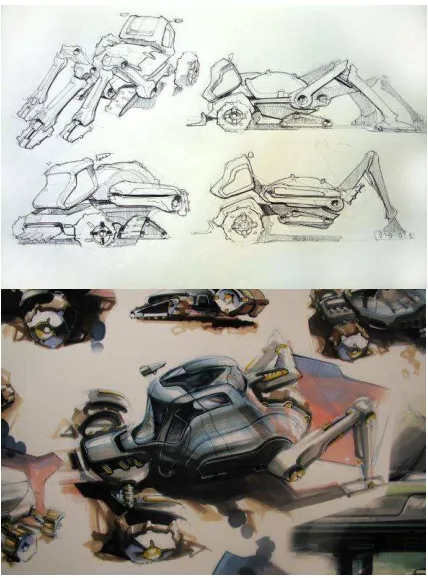
Two arguments underline this choice: the restriction of the investigation on this distinct area – with a comparatively clearly defined design process – reduces the number of variables and is important for the qualitative design of the study. And the lack of sufficient literature about transportation design processes besides Tovey (2003) or Wickenheiser (2005) makes research necessary. This investigation is a qualitative field study with a comparatively long observation period (core time 14 days) in the field of Transportation Design (Fig. 1). Investigative techniques include documentation analysis and
Fig. 1: 10 projects from 5. semester Honda Off-track an 4. semester soapbox A restriction of the time period or the sources of information - accessible to the designers - is estimated as unsuitable for an investigation of the production of a design concept or its application. In contrast, the study tries to link – by means of pre- and main investigation during three terms – longitudinal (Fig. 2) and cross section investigations with each other. The broad portfolio of
investigation instruments appears suitable to win – at least for a small group - a very intensive and detailed view of the origins of the design object, the early phases of the design process, the design concept and the designer.
The final research used documentation analysis (Mayring, 2003, 2005) supported by interviews and observation supported by interviews (Gläser,
2006, Bortz, 2006) as investigation instruments.
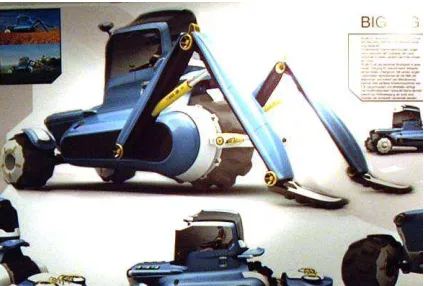
Fig. 2: 3 projects by Florian Theis from 5/7 and diploma semester
With open and guided journals, actions during the design process were noted over several weeks. This collection gives thereby references to two specific aspects: Use of the design concept and critical actions for the
development/change of the same (Fig. 3).
Open interviews with different designers about the design concept, the procedure and the biographic background formed an emphasis of the preliminary investigation. The result is a collection of design-relevant, biographic data. These designer profiles lead to a first attempt of a
Fig. 3: 3 different phases showing the evolution of the design concept to the final design, by Christoph Kölle
Design concept development
How does the development of a design concept take place? Despite a multiplicity from publications about creative techniques, the process itself remains vague. Within the design process all other phases appear by far more intensively investigated.
“The concept development process includes the following activities: identifying customer needs, establishing target specifications, concept generation, concept selection, concept testing, setting final specifications, project planning, economic analysis, benchmarking of competitive products, modelling and prototyping.” (pp. 16-17)
“Five step method: clarify the problem, search externally, search internally, explore systematically, reflect on the solutions and the process” (Ulrich & Eppinger, 2003, p.99)
The listing after Ulrich & Eppinger makes clear that one can understand almost everything under design concept. Beyond that he offers an image of a
structured concept production within concept generation. However these five steps appear very general and thus scarcely helpful for an exact knowledge of the process behind the concept development.
However it can be stated that the development of a design concept is - with high probability – not a pure sequentially running process.
Explanations for that can be expected within psychology, under the focus of problem solving (e.g. in Dörner). Others (e.g. Roozenburg, 1993a) speak of abductive reasoning as the key action during the concept development. "Innovative abduction is the key mode of reasoning in design and therefore highly characteristic for this activity. But it is not unique to design. In both science and technology, and in daily life, abductive steps are taken in the search for new ideas." (Roozenburg, 1993a, p.17)
Furthermore there are two general methods of generating design concepts: extracting and compiling. They can be assigned to different fields:
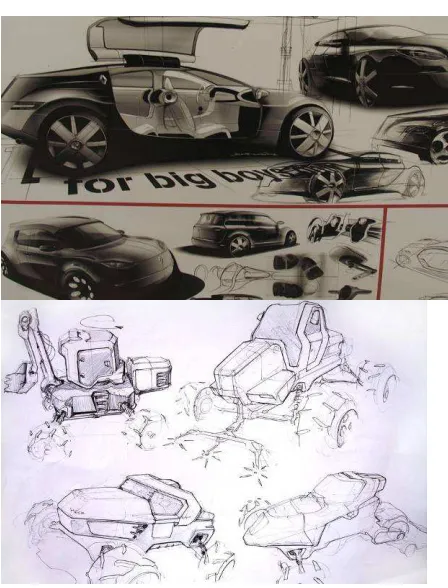
sketching and drawing. Afterwards, one design concept is chosen from a number of versions.
[image:11.595.120.344.111.405.2]
Fig. 4: typical examples of an extracting conceptualization, by Ingo Scheinhütte and Adis Ragipovic
The extracting method creates a large number of comparable versions, whereas the compiling method focuses on the content of a single version of a design concept. In both methods the design concept is developed iteratively while working on first versions. The time necessary for developing a design concept is about two weeks, with only slight variations. In the field of
transportation design, concept drafts exist within hours or days, but selection and further development take approximately two weeks.
Results and reflections
Existence and function of design concepts
meaning of a design concept can be confirmed, in particular for the early phases of the design process. This makes it necessary to support the concept production even more then today. The early validation of the design, already in the concept phase, should be used more intensively.
[image:12.595.120.335.484.737.2]
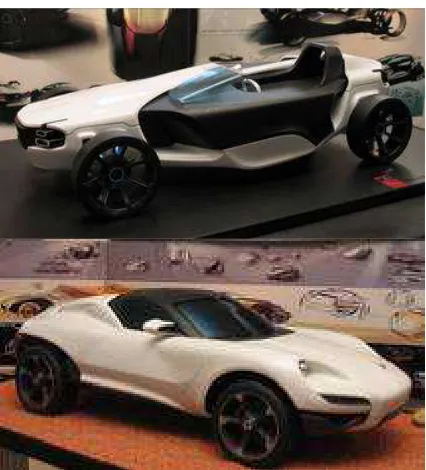
Fig. 5: typical examples of designs with a design concept focusing on formal aspects, by Adis Ragipovic
Fig. 6: typical examples of designs with an holistic design concept, by Florian Flattau
Also the second hypothesis to define a design concept:
/2/ Design concepts are high-grade consolidated mental starting points of the design.
[image:13.595.121.334.314.549.2]They can be called therefore nucleus (of the design), at the same time they can be confirmed as guidelines to the artefact. On basis of the theoretical preview and the empirical data typical contents can be identified and statements about there completeness can be made. The kind, quantity and the degree of the compression of information, as well as the conscious and/or unconscious application of the concept, dependent strongly of the designer (Zimolong & Reitenbach, Fig. 7; Faulwetter & Gebhardt, Fig. 8). It appears that, the development and use of design concept depend far less by the actual design object.
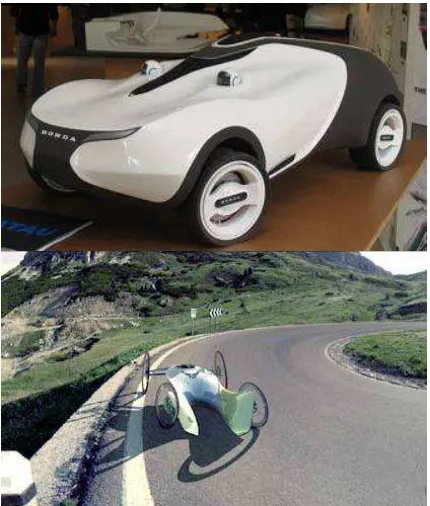
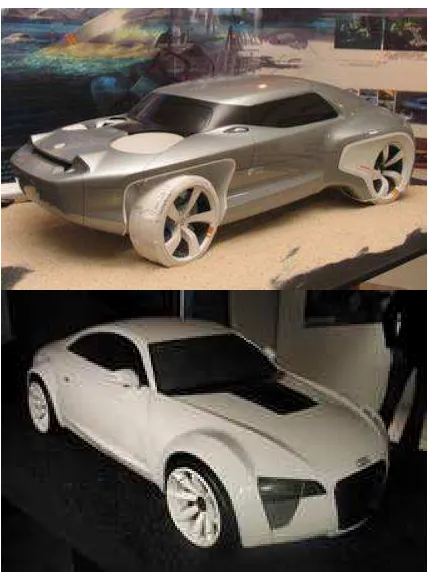
Fig. 8: comparison of two designs developed out extremely different concept understandings, by Patrick Faulwetter and Michael Gebhardt
The third hypothesis can’t be confirmed completely:
/3/ The design concept fulfils the aim-function within the action regularization theory. It is thereby the basis for the action process and the object to be designed.
The design concept fulfils its aim-function to the object itself, but a structuring of the design process affected via the concept doesn’t exist or is not provable. Instead the design process is strongly regularised (in particular according to time schedule) and becomes automated during the education process. It can be assumed that there are training-specific processing models, which find application independently form object and concept. Within these borders each designer develops its individually adapted procedure.
These statements apply only to the examined students of Transportation Design. A stronger bond between concept and process exists probably for experts. Condition for it are however various experiences with different design objects and processes, which lead to a higher flexibility and reflexion of the own procedure.
The hypotheses four to six form the basic structure of the following remarks to the topic field - origin of design concepts.
[image:15.595.120.334.395.677.2]
Concerning the object and context binding no reliable statements can be made, due to the available material.
/5/ design concepts use episodic and factual knowledge.
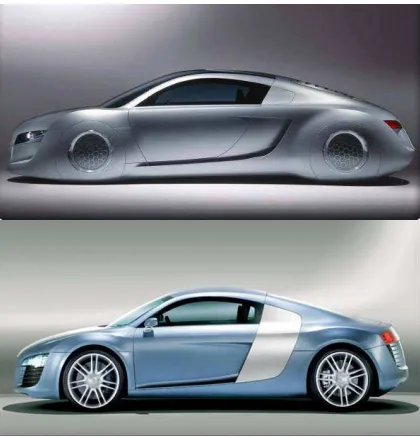
[image:16.595.122.332.183.402.2]Hypothesis five can be confirmed without reservation. And it is underlined by the RSQ project, which is strongly influenced by the Audi Le Mans, because the designer was engaged in this project at the same time (Fig. 11).
Fig. 11: Audi RSQ and Audi Le Mans in side view
/6/ design concepts are generally very strongly biographically shaped, by the world knowledge of the designer contained.
The hypothesis six is fully confirmed by the test results. The used knowledge and the biographic imprint are the key to a vivid and individual design concept. This fulfils thereby one of the principal claims of design: putting the focus on the experiencing of the product user and the differentiation from the competition.
On the other hand the hypothesis is especially important in Transportation Design, because compared with the complexity of the product hardly any time exist for an analysis and/or an examination phase. Accordingly relevant points of the solution are often based on personal assumptions of the designer.
Design branches, concept types and designer personalities
In addition to the general statements about the design concept in the following some conclusions are discussed and applied to the designers themselves. First the two missing hypotheses are regarded.
/7/ Contents and functions of the design concepts, are comparable with one another in Industrial Design and in Transportation Design.
concept contents differ. This affects among other things formal considerations as well as ergonomics.
/8/ The development of design concepts in Transportation Design differ in important points from Industrial Design.
This fact is discussed in some places before, therefore only the substantial two points are mentioned: very strong orientation on sketching as well as a much broader variant development characterize Transportation Design.
Within Transportation Design the analysis of tasks and crucial problems takes place, frequently only on the basis own rough sketches. At the beginning an uncertainty of the designers hardly exists or does not settle obviously in the behaviour. This is confirmed by Press (2003).
"Concept design [in the car industry] depends upon the quick production of a number of illustrations or sketches, which can be loose or informal or
dimensionally rigorous." (Press, 2003, p.141)
In the Industrial Design process the concept phase is supported graphically, but runs off to large parts cognitively, linguistically and internally. The
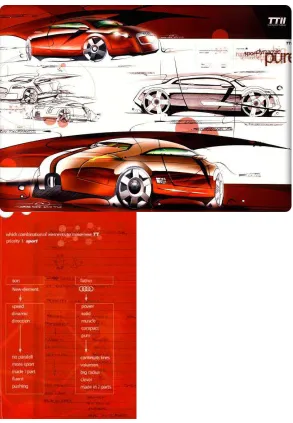
Fig. 10: concept presentation by an Audi Designer
Beyond the hypotheses further conclusions can be drawn and theses for coming research projects are formulated:
Strongly conceptual working, in the past understanding a mainly theoretical, abstract, internal and generating task, hardly takes place in transportation design. The diploma theses form an exception, in which this part is explicitly mentioned. Within the most topics the naturally generated idea pool and thus the extracted concept stand in the centre. An investigation - regarding this problem - within different master programmes offers itself as a possible next research step.
Three concept types derived from the literature preceded the investigation, whereby the holistic, experience-oriented one after Uhlmann forms the basis. This focus was confirmed within the investigation for the majority of the
projects, yet one must assume that, functional (construction-oriented) or formal concepts successfully finds to application. Development-oriented concepts (including marketing, production...) are however hardly used. Holistic concepts enable a more comprehensive and more balanced
design quality in dependence of the design concept, there are still no empirical documents for this hypothesis.
Within the work three designer types and a still open category could be identified. This structure is a first, still by no means sufficient, attempt of clustering of transportation designers. The three types “automobile” (Fig. 7b, 8b), “design” (Fig. 9, 10) and “story” (Fig. 6, 8a) can be clearly and consistently assigned to the students. The knowledge of these types will help to adapt education, task formulation as well as team composition more precisely to project and person, in the future.
As helpful tools for a generating and extracting concept production mood board, mood words, user scenarios as well as a specific target person can be recommended.
Interpretation and next steps
The available study points out the high meaning of design concepts for the Transportation Design. Possible reasons for the clear results are:
the homogeneity of the group concerning aesthetic sensitization, an emotional aligned design,
a shaping environment in which older classes can be permanently experienced during processing,
the consistency and clarity of the education including the specific design stations,
And from a methodical perspective an interview-centred investigation with one interviewer is questionable.
Thus the value of the test results does not sink however, because the available explorative view forms the basis for future, comparative studies. In these, the first three points can be used as possible investigation variables as well as further research methods could be used.
Due to the results the question arises, why one does not work consciously and more intensively with design concepts now? In particular, the structured concept production and reflected handling of concepts isn’t common
neither in the education nor in practice. Therefore three interpretation aspects are mentioned:
Within the two examined design ranges Transportation and Industrial Design the developing of design concepts offers surprisingly differently processes. The contents are comparable to a large part, on the other hand. Substantial reasons for the differences are known objects and the high specialisation in transportation design processes, versus fairly unknown products and a holistic approach in industrial design processes.
The inter-individual differences were not regarded in the investigation. Therefore it can be only assumed that these are so large, that selected representatives of both groups practice a design process comparable to the majority of the other one.
The reliability of the design process is amazing, compared to their own design experience collected before. An example is formulating the task as essence of the design.
"The major term was power and then developing a tractor for the different scenarios. Over 200 HP, a giant. Those were the requirements." (Interview, 1.21) Why that functions apparently naturally, is essentially based on the talent of the students. At the same time, it is however very probable that it concerns thereby a typically human procedure, which was not buried by a learned strongly analytically, dismembering working manner. Instead this procedure was strengthened by the past design education.
A similar estimate wins one reading formulations of life-genuine, close-to-reality scenarios without ever experienced by the students themselves. "F: Okay. And do you have with the scenarios which you illustrate now to do otherwise somehow? Rescue missions, disasters or whatever?"
"A: Actually, not at all". (Interview, 5.11)
The answer could point to a less fact than experience-oriented education again. This could have unconsciously developed on the basis personal preferences in childhood and youth.
Generally extracting approaches - developed on well-known, fast available solutions - if sufficiently know-how is present. They save much time, which would be necessary for a fundamental argument otherwise. They are common among other things with engineers and very comparably also in many other branches. In practice one would break off after building three to five variants, frequently.
The main problems of the extracting procedure are depth and grade of innovation of the produced solutions. Due to developing, comparatively fast, concrete proposals for solutions, the search field is frequently restricted
strongly on direct or very easily available topics. Or the solution area - still wide open at the beginning – is filled with sketched beginnings. Both can lead to an unnecessary restriction of the solutions.
This is reflected in a conscious change of generating and extracting
procedures, as process recommendation. Some of the presented concepts confirm this generating preparation and extracting completing.
"So far it was important to start with the philosophy. Remembering the TT I start writing on paper not sketching. For me the best way to introduce a philosophy is to write in the beginning, how can you do this car better and you have to make it nice.
The writing I mean I make this three days, not more. Because afterwards you have a sketch presentation, so normally I need it for my sketches. Normally two weeks of sketching are ok, but I think its good version to write first, because then you have a direction. And even when you saw your designs you have something to support, it’s better to sell it after. It’s a strong support having an idea behind instead presenting it sketch by sketch". (Interview 5.41) Possibly it is this ability, which designers bring along, which for their drafts
convincing concepts are certified. A goal of the training should be sensitizing for both kinds of procedure. The goal of being able, to change naturally between both kinds of the concept production, nevertheless not all design students will be able to reach. The attempt is worth however, because then the strengths of both kinds of action could come to carrying.
In the confidence on those talents, one can expose oneself likewise to haven’t tried out all variants as well as, and developing design variants without knowing all definitions in detail. The attempt to run through the concept production, as critical phase, several times with different topics, appears very much promising.
Further similar investigations with a focus on the professional design environment are advisable to substantiate and refine current results,
especially with regard to the process of generating and developing design concepts. The collection of comparable data in different design fields, e.g. in industrial design, could reveal interesting differences and/or similarities. The development of an assistance tool for the conceptual design phase for educational use would be a first applicable benefit of the research. First attempts are planned.
Deeper research about the inner processes of developing a design concept will lead to a more universal understanding of creative activity in general. "The point to which degree a product satisfies customers and can be
successfully commercialized depends to a large measure on the quality of the underlying concept." (Ulrich, 2003, p.98)
Five years after Ulrich the consequences of his statement are still rarely
Concretely derivable questions are:
Which concrete creation processes are there (within and outside of the rough arrangement in generative and explorative) and how efficient are these for solving different problems?
What are critical concept contents and how differ these in dependence of the design object?
How is the concrete design evaluation on the basis of concepts working? And which validity do these evaluations possess?
How can one support the concept production in their hybrid modalities, more meaningfully also directly at the computer?
How can the reflection about a design concept (the complete design process, if possible) be supported concretely?
A second emphasis should be the clarifying of restrictions and possibilities of the design concept, concerning its subjectivity versus general validity. And the third emphasis could be on the communication function of design concepts. Interesting starting points would be teamwork in different
heterogeneous teams, application in differently complex projects and in broadly varying industries.
The decision for future research questions in this surrounding is closely
attached to the future development in the different design fields. The author assumes the fact that it comes to a stronger adjustment of the design ranges, by an increasing interaction between design disciplines. For a future training profile that means, more common content, which could be combined not additive but intelligently integrated. The multiplicity of positive personal expressions of students confirms this assumption. The basis is that common things and differences between industrial and transportation design are specified, communicated and discussed. That means for a future training a very specific product selection, however combined with large, reflected, methodical knowledge, in consequence.
The next steps of the author will be a more strongly international cross-linking of the topic with Nagai, Keinonen and further, as well as an integration of the results into the construction-scientific and economical research.
References
Boom, H. van den (1994) Betrifft Design. Unterwegs zur Designwissenschaft in
fünf Gedankengängen. Alfter: VDG Verl. und Datenbank für Geisteswiss. (Art
in science - science in art Schriftenreihe der Hochschule für Bildende Künste Braunschweig N.F., 5).
Cagan, J. & Vogel, C. M. (2002) Creating breakthrough products. Innovation
from product planning to program approval. Upper Saddle River NJ: Prentice
Hall PTR; Financial Times Prentice Hall.
Clarkson, John & Eckert, Claudia (2005) Design process improvement. A review of current practice. London: Springer.
Candy, L. & Edmonds, E. (1996) Creative design of the Lotus bicycle. In: Design Studies, H. 1, 71–90.
Cross, N. (1999) Design research: A disciplined conversation, Design Issues, 15(2), 5–10.
Cross, N. (2002) 'Strategic Knowledge Exercised by Outstanding Designers' in J. Gero & K. Hori (eds.) Strategic Knowledge and Concept Formation III, Key Centre of Design, University of Sydney, Australia, 2001, pp. 17-30.
Cross, N., Christiaans, H., Dorst, Kees (ed.) (1996) Analysing design activity (proceedings of the Second Delft Workshop on Research in Design Thinking, held in Delft in September 1994), Wiley, Chichester.
Fauconnier, G. & Turner, M. (2003) The Way We Think: Conceptual Blending
and the Mind's Hidden Complexities.New York: Basic Books. New York NY:
Basic Books.
Gläser, J. & Laudel, G. (2006) Experteninterviews und qualitative Inhaltsanalyse
als Instrumente rekonstruierender Untersuchungen. Wiesbaden: VS Verl. für
Sozialwissenschaften.
Hacker, W. (2000) Konstruktives Entwickeln als Tätigkeit. Versuch einer Reinterpretation des Entwurfsdenkens. Dresden. (Forschungsberichte Psychologie, TU Dresden, 76).
Hacker, W. (2003) Action Regulation Theory: A practical tool for the design of modern work processes? European Journal Of Work And Organizational Psychology, 12 (2), 105–130.
Hacker, W. (2005) Allgemeine Arbeitspsychologie. Psychische Regulation von Wissens-, Denk- und körperlicher Arbeit. Bern: Huber (Schriften zur
Arbeitspsychologie, p.58)
Keinonen, T. (2006) Product concept design: A review of the conceptual design of products in industry, Springer, London.
Krzywinski, J. (2004) Erkundungsuntersuchung zu Designkonzepten.
Diplomarbeit. Dresden. TU Dresden. Technisches Design.
Mayring, P. (2003) Qualitative Inhaltsanalyse. Grundlagen und Techniken.
Weinheim: Beltz Verlag (UTB;Pädagogik, 8229).
Mayring, P. (2005) Die Praxis der Qualitativen Inhaltsanalyse. Weinheim: Beltz Verlag (UTB;Pädagogik, Psychologie, 8269).
Morrison, J. (2006): Everything but the walls. Baden: Lars Müller publishers; Müller.
Nagai, Y., Candy, L., Edmonds, E.: Representations of Design Thinking. A Review of Recent Studies. Online verfügbar unter
http://www.idemployee.id.tue.nl/g.w.m.rauterberg/conferences/CD_doNotO pen/ADC/final_paper/341.pdf, zuletzt geprüft am 07.03.2007.
Press, M. & Cooper, R. (2003) The design experience: The role of design and designers in the twenty-first century, Ashgate, Aldershot.
Restrepo, J. & Christiaans, H. (2004) Problem Structuring and Information Access in Design, In: The Journal of Design Research, 2, available online at: http://research.it.uts.edu.au/creative/design/papers/25RestrepoDTRS6.pdf, lastly checked on 07.03.2007
Roozenburg, N. (1993a) On the pattern of reasoning in innovative design, In:
Design Studies, 14 (1), 4–18.
Roozenburg, N. (1993b) Design theory and methodology, Books and Publications, In: Design Studies, 14, (2), 222–224.
Roozenburg, N. F. M. & Eekels, J. (1995) Product design. Fundamentals and
methods. Chichester: John Wiley and Sons Ltd.; Wiley (Wiley series in product
development: planning, designing, engineering).
Tovey, M., Newman, R. M. & Porter, S. (2003) Sketching, concept development and automotive design. In: Design Studies, 135–153.
Uhlmannn, J. (2002) Terra incognita. Technisches Design.Feuilletonistische Beschreibung eines Forschungsfeldes unter dem Focus moderner
Informationstechnologien. Unveröffentlichtes Manuskript, 2002, Dresden. Uhlmannn, J. (2005) Die Vorgehensplanung Designprozess für Objekte der Technik, TUDpress, Dresden.
Uhlmannn, J. (2006a) Kunst in der Technik, TU Dresden, Dresden.
Uhlmannn, J., Krzywinski, J. & Wölfel, C. (2006b) Study on Core Design Ideas in Transportation Design, In: Friedman, Ken/Love, Terence/Corte-Real, Eduardo: Wonderground,
Ulrich, Karl T.; Eppinger, Steven D. (2003) Product design and development. 3. ed., internat. ed., McGraw-Hill, Boston Mass
Wickenheiser, O. (2005) Audi-Design. Automobildesign von 1965 bis zur Gegenwart. Berlin: Nicolai (Edition Audi-Tradition).
Jens Krzywinski
Jens Krzywinski studied Industrial Design Engineering at the Technische Universität Dresden, Germany. He was a visiting student at the Burg
a pneumatic rescue shelter, won Mia Seeger and Saxony Design Awards. Since 2005, he has been a research associate at the Centre for Industrial Design, Technische Universität Dresden, where he works on research projects as well as a lecturer and advisor. His research interests concern design
processes and methods, with a focus on conceptualisation in early stages of the design process especially in transportation design.
Technische Universität Dresden
Faculty of Mechanical Engineering, Industrial Design Engineering 01062 Dresden
Germany
Phone +49-351-463-35750 or 0351 20 86 318 Fax +49-351-463-35753