23
Leaching as a pretreatment process to complement torrefaction in
improving co-firing characteristics of Jatropha curcas seed cake
Buddhike Neminda Madanayakea, Suyin Gana, *, Carol Eastwickb, Hoon Kiat Ngc
a
Department of Chemical and Environmental Engineering, The University of Nottingham
Malaysia Campus, Jalan Broga, 43500 Semenyih, Selangor Darul Ehsan, Malaysia.
b
Energy and Sustainability Research Division, Faculty of Engineering, The University of
Nottingham, University Park, Nottingham NG7 2RD, UK.
c
Department of Mechanical, Materials and Manufacturing Engineering, The University of
Nottingham Malaysia Campus, Jalan Broga, 43500 Semenyih, Selangor Darul Ehsan, Malaysia.
*Corresponding author. Tel. +603 8924 8162; fax. +603 8924 8017. E-mail address:
[email protected] (S. Gan)
Abstract
The presence of certain inorganic elements in biomass causes issues such as slagging, fouling
and corrosion when co-firing with coal for power generation. In this work, the efficacy of
leaching to remove these elements from Jatropha curcas seed cake was investigated. Leaching
of both untorrefied and torrefied seed cakes was carried out in Milli-Q water at temperatures of
200C, 350C and 500C. At 200C, the two critical elements, potassium and chlorine, decreased by
as much as 85% and 97%, respectively. Leaching at higher temperatures was only beneficial for
24
conductivity and ion content of the leachates were measured, as were the inorganic elemental
content, dry ash content, volatile matter content and higher heating value (HHV) of the solid
seed cake. A secondary benefit of the leaching was an increase in the HHV by up to 10%.
Keywords
Leaching, biomass, Jatropha curcas, coal co-firing
1.
Introduction
Biomass co-firing has the potential to become a key contributor to the global energy mix in
the future. It allows the non-renewability and carbon-neutrality of biomass to be exploited to an
extent while utilising existing coal power plants. However, the combustion of biomass has its
own set of drawbacks which are a result of the different thermophysical and chemical properties
of biomass compared with coal. Pretreatment processes such as torrefaction and leaching which
could curtail these issues are hence an important avenue of research. Torrefaction is the mild
pyrolysis of biomass at a temperature of 2000C – 3000C in an inert atmosphere to improve fuel
characteristics such as the higher heating value and energy density. The aim of leaching – the
focus of this study – is to reduce the typically high inorganic content of biomass, which is one of
the main concerns associated with biomass combustion. Alkali and alkaline earth metals result in
the formation of deposit-forming compounds, which cause a host of problems during
combustion. These include slagging in grate-fired combustors, fouling of heat transfer surfaces
and bed agglomeration in fluidised bed combustors. Potassium (K) and calcium (Ca) are two key
metals of concern [1–4]. In addition to this, biomass may contain chlorine (Cl) and sulphur (S)
25
surfaces within the combustion system [5]. Together, the presence of these inorganic elements
has a negative impact on combustion efficiency, plant reliability and maintenance costs; plant
performance and overall operating costs suffer [7].
Leaching studies have been conducted on a number of different types of raw biomass with
the primary aim of reducing the inorganic content. Different approaches to leaching such as
spraying, flushing and soaking have been compared by a few studies [8, 9]. However, most
laboratory-based investigations employ soaking, i.e. submerging the biomass in water for a
specific period of time [3, 10–15]. This method is favoured in laboratory-scale studies since it is
simple to implement and allows variables such as the leaching time and/or water temperature to
be controlled and hence their effect on the leaching efficacy investigated. The soaking method
also allows leachate samples to be collected at regular intervals and analysed, hence facilitating
the monitoring of the progress of the leaching process with time [9, 16, 17]. For these reasons,
the present study’s leaching technique is also based on soaking, with a shaking water bath used
to control the temperature and standardise mixing. Since the properties and behaviour of biomass
can vary widely, standardising leaching techniques and limits of the parameters (such as the
liquid:solid ratio, particle size and soaking time) poses difficulties. Hence when considering an
as-yet-unstudied type of biomass, an initial laboratory-based study such as this would provide an
invaluable overview of its leaching characteristics; these results would provide a baseline for
future studies which are more finely tuned to the biomass in question.
The biomass used in this study is derived from Jatropha curcas seeds which are gaining
recognition as viable feedstock for biodiesel production. It is drought-resistant and its toxicity
prevents competition with the food industry [18, 19]. Since the oil yield from the seeds is only
26
as a substitute for coal in combustion systems [21]. Although the efficacy of torrefaction and
leaching as independent pre-treatments on biomass has been investigated before, there is a dearth
of information on the combined effects of both processes on any particular biomass. The purpose
of this study is to explore the use of leaching as a pre-treatment process to reduce the inorganic
content of Jatropha seed cake, and hence compliment torrefaction in mitigating the potential
problems arising when it is cofired with coal for power generation. To this effect, the leaching of
both untorrefied and torrefied Jatropha seed cake was investigated. To the best knowledge of the
authors, this is the first study of its kind on Jatropha seed cake.
2.
Material and methods
2.1. Materials
Jatropha curcas seeds provided by ACGT Sdn. Bhd. (Malaysia) were extracted for oil at an
external facility. The oil yield was 12%. The resulting solid residue (seed cake) consisted of two
distinct components – hard, dark, rod-like structures (“type A”) in a soft, oily, loose soil-like
matrix (“type B”). The type B was approximately ¾ by weight of the total seed cake, and hence
was the primary subject of the study. Samples of type B were torrefied in a horizontal tube
furnace under an inert (nitrogen) atmosphere at temperatures of 2000C, 2500C and 3000C for a
period of 30 min each (“LT”, “MT” and “HT”, respectively). Triplicate torrefaction runs were
carried out at each temperature. The type A seed cake was not torrefied, but was milled and
sieved to two particle size fractions – <1 mm (“fine” particle size) and 1–2.36 mm (“medium”
particle size).
2.2. Leaching experimental matrix
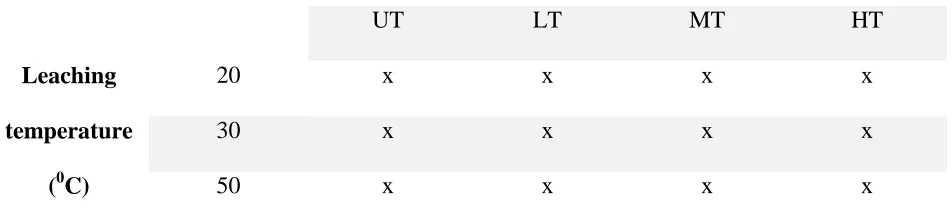
The major leaching study involved the type B seed cake. Two factors were varied, the
27
shown in Table 1. For the type A seed cake, only untorrefied samples were leached at a
temperature of 350C and the variation was in the particle size fraction. All runs were triplicated.
A control run with no biomass added was also incorporated for each leaching temperature.
2.3. Leaching methodology
The leaching process was carried out for 24 h in a Jeiotech BS-21 water bath. 3.0 g of each
biomass sample was submerged in 300 ml of Milli-Q water in a glass jar. EC readings were
taken every hour for the first 6 h, and the last 3 h of the 24-h period. At the end of the 24-h
period, leachate samples (10 ml) were extracted from each jar using a syringe and the solid
separated out by decanting and filtration. The solid was dried in a vacuum oven at 600C under a
gauge vacuum of 900 mbar for 4 h.
2.4. Analytical methods
Thermogravimetric analysis (TGA) and X-ray fluorescence (XRF) spectrometry were carried
out on each solid sample to determine their proximate composition and inorganic elemental
content, respectively. The TGA was carried out in a TA Instruments Q500, using a heating
profile based on the conditions outlined in British Standards publications concerning the
proximate analysis of biomass (British Standards BS EN 14774-2:2009, BS EN 15148:2009, BS
EN 14775:2009). A Bruker S8 Tiger instrument was used for the XRF spectrometry. A bomb
calorimeter (IKA C5000) was used to measure the higher heating value (HHV) of selected
samples. Inductively coupled plasma mass spectroscopy (ICP-MS) and ion chromatography (IC)
were carried out on the leachate samples to measure the cation and anion levels present,
respectively. ICP-MS was performed on a Thermo iCAP Q while a Thermo Dionex ICS-1000
was used for IC. A 1-in-10 dilution was carried out on the leachate samples using 2% nitric acid
28
3.
Results and discussion
3.1. Electrical conductivity (EC)
Fig. 1 shows the variation of the EC during the course of leaching of type B seed cake. Since
EC of a solution is a function of the concentration of ions in it and can be measured instantly
using an EC meter, it provides a useful method of monitoring the progress of the leaching
process with time. The mean EC for the final 3 h are approximately constant. Thus, it can be
assumed that by this time, the leaching process is complete.
The final EC of the HT runs are the lowest, followed by that of the MT runs. There is a
degree of overlap between the LT and UT runs. The observed trends indicate that increasing the
torrefaction intensity makes the biomass more resistant to the leaching process. This is also
reflected in the initial leaching rates (curve gradient). The lowest rate is in the HT samples,
followed by the MT samples. Again, there is some overlap between the LT and UT samples.
There is a general increase in the leaching rate as well as the final EC at higher leaching
temperatures. However, the effect of the temperature appears to be highly dependent on the
torrefaction state. The separation of the respective curves is significantly greater for the HT and
MT samples. Increasing the leaching temperature is thus much more effective in increasing the
leachability of the more intensely torrefied samples, which are also the most resistant to the
leaching process.
3.2. Ion analysis of leachate
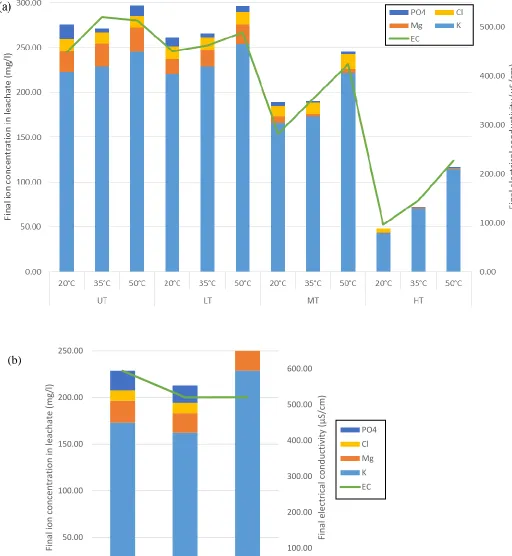
Fig. 2 shows the final concentration (net value calculated using the control run) of the major
cations and anions present in the leachate as measured by ICP-MS and IC, respectively. The ions
29
superimposed; this value is the difference between the EC after 24 h and the initial EC. Although
not exact, a correlation can be observed as expected between the total ion concentration and the
EC. The extent of removal of the individual elements indicated by the net ion concentration
cannot be directly compared with the elemental content of the solid leached biomass (from XRF
spectroscopy; Section 3.3), as the elemental content of the solid is represented as a % by weight
while the leachate ion concentration shows a measurement in absolute terms.
From Fig. 2(a), a clear positive trend can be observed in the effect of the leaching
temperature on the K levels in the type B leachate. When the leaching temperature is increased
from 200C to 500C, the K levels in the UT and LT samples increase by 10.2% and 15.1%,
respectively. For the MT sample, the increase is a more substantial 33.6%. However, for the HT
sample, the increase is 164.3%, i.e. more than doubled. Thus, increasing the leaching
temperature has a more substantial effect with the more intensely-torrefied samples. Also, the ion
content leached out (in absolute terms) decreases as the torrefaction temperature is increased.
From Fig. 2(b), it can be seen that the larger particle size results in lower EC and ion
concentration in the type A leachate. This can be explained by the smaller surface
area-to-volume ratio of the larger particles. The final EC and K content of the leachate drops by 12.4%
and 6.9%, respectively, when the larger particle size is used. Since the most prominent ion
present in the leachate by a significant margin is K, the trends observed in the total ion levels are
comparable to those of K; this is true of both type A and type B.
3.3. XRF spectroscopy
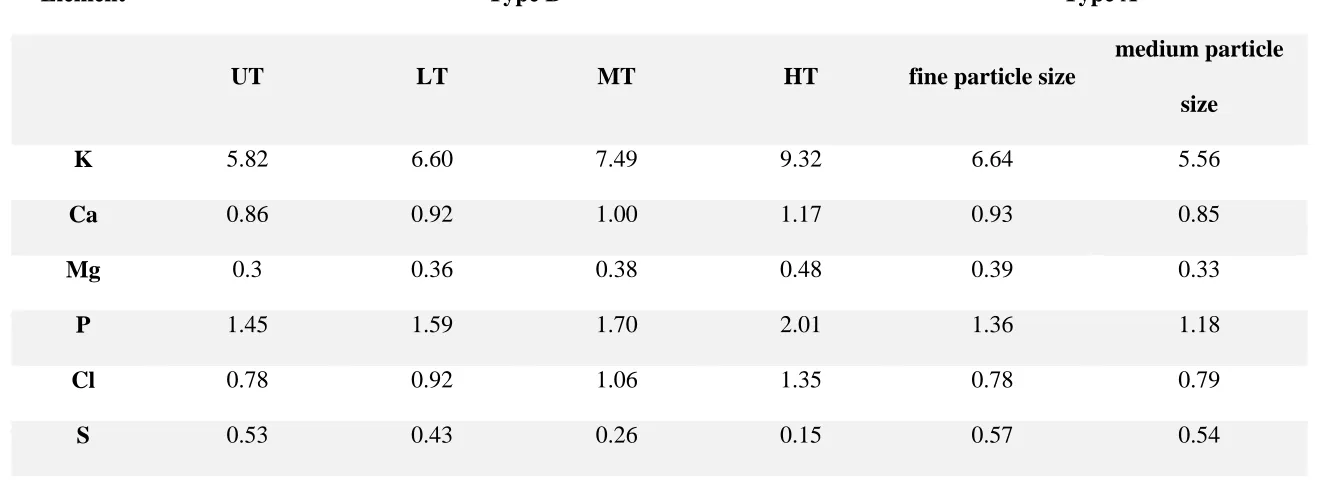
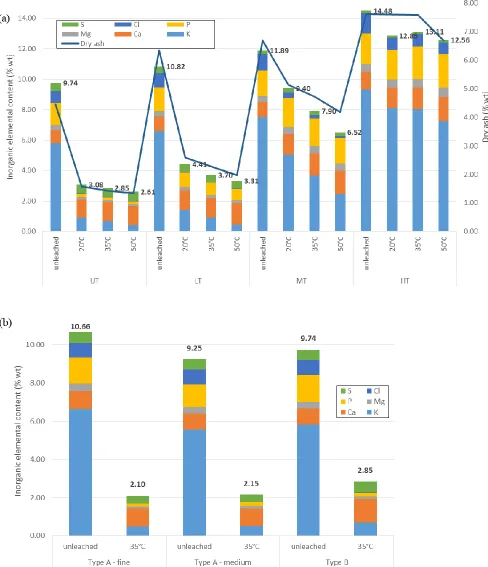
Table 2 and Fig. 3 show the elemental inorganic composition of the solid biomass. These are
the mean levels of the most abundant inorganic elements measured using XRF spectroscopy –K,
30
each column on the chart. The dry ash content obtained from TGA has been superimposed on the
graph as well to illustrate the expected correlation between the inorganic content and the ash
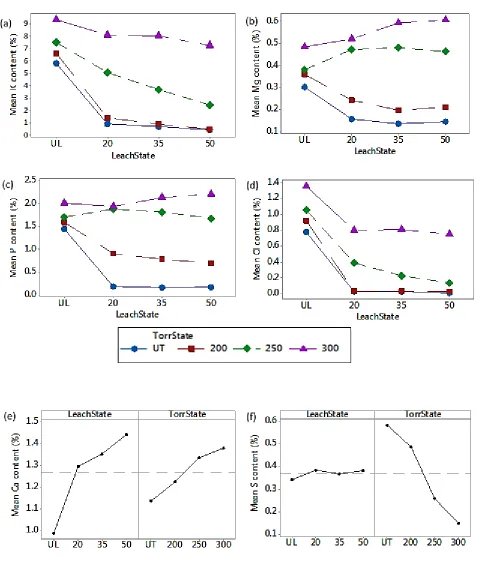
content. Fig. 4 show the main effects plots and interaction plots (whichever is relevant) for the
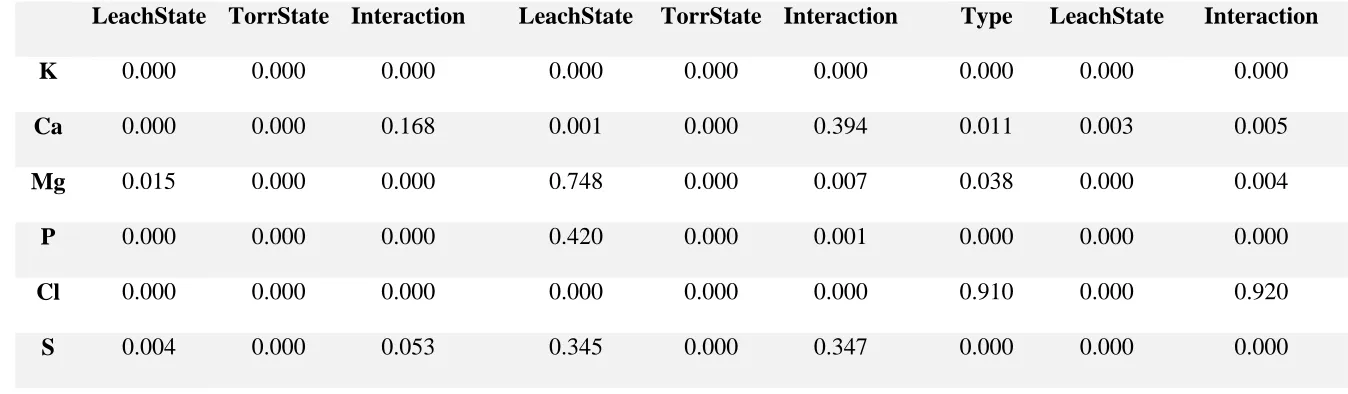
XRF data generated by Minitab for type B. Table 3 shows the p-values obtained from the
analysis of variance (ANOVA) carried out by the software. Throughout the Minitab analysis, the
variable “LeachState” shows the leaching temperature in degrees Celsius or “UL” if unleached,
while “TorrState” refers to the temperature in degrees Celsius at which the sample has been
torrefied (all at 30 min holding time) or “UT” if untorrefied. To analyse the effect of the leaching
temperature more closely, the statistical analysis was repeated with the data for the unleached
samples omitted.
Sections 3.3.1 to 3.3.3 analyse the results pertaining to the type B seed cake.
3.3.1. K and Cl
K and Cl have been considered in previous studies to be the critical inorganic elements which
are responsible for ash deposit formation and corrosion [22–25]. Of the inorganic elements
investigated, K and Cl show the most significant decrease following leaching.
Looking at the interaction plots for K and Cl, it can be seen that for the torrefied and mildly
torrefied (LT) seed cake, there is no appreciable effect of using higher leaching temperatures. For
the MT seed cake, a linear drop of the K level is observed as the water temperature is increased.
For the HT seed cake, the drop is only observed after 350C. This indicates that as far as K and Cl
are concerned, a higher torrefaction temperature increases the resistance of the biomass to
leaching, and consequently, a higher leaching temperature is required. In the HT samples, the K
content decreases by only 0.09 wt% when the temperature is increased from 200C to 350C, and
31
torrefaction, a much higher water temperature (>500C) would be required to cause any
appreciable leaching. Very high water temperatures have negative practical implications such as
controlling evaporation and a higher energy expenditure to maintain the temperature for
extended periods of time.
K is the dominant inorganic component of Jatropha seed cake, and hence its reduction is a
vital outcome of the leaching process. At 200C, the K and Cl content of the untorrefied type B
Jatropha biomass decreased by 85% (to <1 wt%) and 97% (to approximately 0.02 wt%),
respectively. In comparison, the K and Cl range of typical coals is 0.01-0.09 wt% and 0.01-0.03
wt%, respectively [26]. The leaching process is hence effective in bringing down the levels of
these crucial inorganic elements in the untorrefied biomass closer to those of coal.
The relative ease of leaching of K and Cl from the untorrefied Jatropha is consistent with
results from leaching studies conducted on other types of biomass – wheat straw [13], rice straw
[9, 12, 13], olive-derived biomass [3], grassland herbage [27], switchgrass [15]. The extent to
which these elements are removed by leaching is related to the mode in which they occur in the
structure of the biomass. K is typically found as K+ ions which are either dissolved in water
present in the plant tissue or organically bound [28]. Cl is found as free Cl- ions or as part of
organic compounds [13]. The high water-leachability of K and Cl from the untorrefied Jatropha
suggests that these elements are present as simple ions which readily dissolve in water. The
decrease in their extraction as the torrefaction intensity is increased indicates that the structural
changes occurring in the biomass during the torrefaction process has an effect on the mode of
occurrence of K and Cl within the biomass structure, causing the free ions to be bound more
32
break these bonds, hence the enhancement of the leachability of the torrefied biomass that was
observed at higher water temperatures.
3.3.2. Mg and P
From interaction plots for Mg and P, it can be seen that the UT and mildly torrefied (LT)
seed cake undergo a decrease in the levels of these elements following the leaching process; the
Mg content undergoes a slight increase and the P content remains approximately unchanged in
the highly-torrefied (MT and HT) biomass. The irregularities in the Mg content can be attributed
to inhomogeneity and measurement uncertainty introduced by the instrument, compounded by
the very low levels detected (less than 0.6 wt%).
While the measured P content does not exceed 2.5 wt%, the levels fall to <0.25 wt% and <1
wt% in the untorrefied and LT samples, respectively; there is no appreciable effect of increasing
the leaching water temperature. P in biomass can occur as soluble phosphate salts or as
P-containing organic molecules [28]. The results suggest that they occur as the former in the
untreated Jatropha seed cake, but undergoes a transformation to the latter during the torrefaction
process. Since even the high-temperature leaching (which was effective in the case of the K
content) did not reduce the P content of the torrefied biomass, it appears that the P atoms become
more rigidly bonded to the organic molecules than the K atoms. Due to the fact that P can occur
in both water-soluble and water-insoluble forms in biomass, there is a wide range of P
leachability that is reported in the literature, from as much as >50% [29] to non-detectable [30]
and even slightly increased levels [8].
3.3.3. Ca and S
Since the interaction between torrefaction state and leaching is statistically insignificant for
Ca and S (interaction p>0.05), the main effects plots are considered here. The Ca levels show a
33
more irregular in this case. The low main effects p-values (p<0.05) also reflect this. Since the
leaching process cannot increase the levels of any element, the conclusion derived from these
observations is that there is a very high degree of inhomogeneity in the Ca and S levels (more so
than the other major inorganic elements) throughout the type B seed cake. The problem is
aggravated by the fact that the measured quantities of these elements are relatively low (less than
1.5%), which increases the uncertainty of the measurement.
3.3.4. Effect of particle size
Comparing the two categories of type A as illustrated in Fig. 3(b), the effect of particle size
can be determined; the smaller particles undergo a decrease of 80% compared to the 77%
reduction in the larger particle size. Although the magnitude of the difference is not substantial,
this would be the expected direction of change since the larger particle size would have less
overall surface area exposed to the water for the same mass of seed cake. The inorganic
composition of the two leached type A size fractions appear to be similar. Type B sees a decrease
by an even smaller 71% after leaching at 350C. A possible explanation for this is that the oil
content of the type B seed cake interferes with the mechanism by which the ions leave the
structure of the biomass.
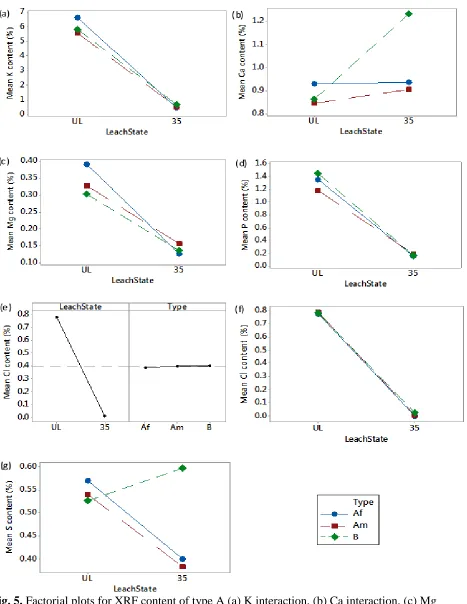
From the p-values in Table 3, it can be seen that there is a significant interaction between the
factors for all elements except Cl, i.e. the different types of seed cake respond differently to the
leaching, with respect to the levels of these elements. The nature of this variation can be seen by
examining the interaction plots in Fig. 5. K, Mg, P and Cl see falling levels during leaching, in
all three types of seed cake. The type A (fine) undergoes a greater decrease in the K, Mg and P
content compared to the type A (medium). All 3 types of seed cake show a similar response to
34
Ca content even appearing to increase) and these are attributed to the inhomogeneity in the
biomass and uncertainty of the instrument when measuring small quantities, as in the Ca and S
results for the type B biomass.
3.4. Dry ash free volatile matter (DAF VM) content and higher heating value
(HHV)
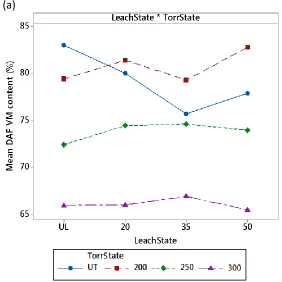
Fig. 6(a) show the main effects plot and the interaction plot for the DAF VM content of type
B. The p-value for the interaction is 0.032; looking at the interaction plot, it can be seen that
there is a marked difference between the behaviour of the UT and torrefied seed cake. The
torrefied samples all show irregular behaviour, while the UT case shows an appreciable decrease
in the DAF VM. The leaching process would be expected to remove some of volatiles from the
seed cake, which is what is observed in the UT samples. However, torrefaction (even mildly)
appears to reduce the leachability of the volatiles. A possible explanation is that the light
volatiles that are driven off in the torrefaction process are the ones that are more readily soluble
in water and are hence removed from the UT biomass during leaching. The volatiles that are left
following torrefaction process are heavier and are either insoluble in water or adsorbed onto the
structure of the biomass, and are thus impervious to the leaching process.
The relationship between the DAF VM content and the higher heating value (HHV) has been
demonstrated in literature. A decreasing DAF VM content corresponds to an increasing DAF
fixed carbon (FC) content as the volatiles lost contain less carbon (C) atoms than hydrogen (H)
and oxygen (O) atoms. This leads to a reduction in the H/C and O/C ratios, and since H and
35
relationship is reflected in the factorial plots for the HHV of the leached samples, shown in Fig.
6(b). A p-value of 0.004 indicates a statistically significant interaction and this is illustrated in
the interaction plot by the non-parallel lines. The highly-torrefied seed cake shows an irregular
trend, while the UT case shows a clear increase in the HHV after the sample is leached. As
explained earlier, this agrees with the trends observed in the DAF VM content. The mean HHV
increases from 24.06 MJ/kg to 25.32 MJ/kg (by 5%) and 26.47 MJ/kg (by 10%) after leaching at
200C and 500C, respectively.
The increase in the HHV that was observed was not one of the primary aims behind
leaching; instead, torrefaction is the pretreatment process that aims to enhance the HHV.
However, the mild increase in HHV following leaching is a welcome secondary benefit, since a
higher HHV is a desirable characteristic for a biofuel. Enhancement of the HHV following
leaching has been reported previously as well [12, 30].
Although the higher HHV following leaching is advantageous, it should be noted that it is at
the cost of the total energy content of the biomass, as some organic content is being lost via the
leachate. Quantification of the relative energy loss is beyond the scope of this study, but is
suggested as an area for future investigations. Relative energy losses ranging from 1% to 28%
have been reported in the literature, with increasing leaching temperature having a detrimental
effect on the loss value [13].
4.
Conclusions
The K and Cl content of both type A and type B seed cake (from XRF) show the most
36
respectively (at 200C). More intensely-torrefied samples are more resistant to leaching, and
higher leaching temperatures are required to overcome this. EC and ion analysis of the leachate
corroborates the XRF data. A secondary benefit of the leaching is a mild increase in the HHV.
Acknowledgements
This work was supported by the Faculty of Engineering, University of Nottingham (UK and
Malaysia) under the Engineering InterCampus PhD Scholarship. The authors would also like to
thank ACGT Sdn Bhd (Malaysia) and Dr. Cheah Suan Choo for providing the Jatrophacurcas
seeds.
References
1. Baxter, L.L., Miles, T.R., Jenkins, B.M., Milne, T., Dayton, D., Bryers, R.W., Oden, L.L.: The behavior of inorganic material in biomass-fired power boilers: field and laboratory experiences. Fuel Process. Technol. 54, 47–78 (1998).
2. Turn, S., Kinoshita, C., Ishimura, D.: Removal of inorganic constituents of biomass feedstocks by mechanical dewatering and leaching. Biomass and Bioenergy. (1997).
3. Vamvuka, D., Zografos, D., Alevizos, G.: Control methods for mitigating biomass ash-related problems in fluidized beds. Bioresour. Technol. 99, 3534–44 (2008).
4. Werther, J., Saenger, M., Hartge, E.-U., Ogada, T., Siagi, Z.: Combustion of agricultural residues. Prog. Energy Combust. Sci. 26, 1–27 (2000).
5. Dayton, D., Jenkins, B., Turn, S.: Release of inorganic constituents from leached biomass during thermal conversion. Energy & Fuels. 1977, 860–870 (1999).
37
7. Kargbo, F., Xing, J., Zhang, Y.: Pretreatment for energy use of rice straw: A review. African J. Agric. Res. 4, 1560–1565 (2009).
8. Carrillo, M. a., Staggenborg, S. a., Pineda, J. a.: Washing sorghum biomass with water to improve its quality for combustion. Fuel. 116, 427–431 (2014).
9. Jenkins, B., Bakker, R., Wei, J.: On the properties of washed straw. Biomass and Bioenergy. I, 177–200 (1995).
10. Lam, P.Y., Lim, C.J., Sokhansanj, S., Lam, P.S., Stephen, J.D., Pribowo, A., Mabee, W.E.: Leaching characteristics of inorganic constituents from oil palm residues by water. Ind. Eng. Chem. Res. 53, 11822–11827 (2014).
11. Chin, K.L., H’ng, P.S., Paridah, M.T., Szymona, K., Maminski, M., Lee, S.H., Lum, W.C., Nurliyana, M.Y., Chow, M.J., Go, W.Z.: Reducing ash related operation problems of fast growing timber species and oil palm biomass for combustion applications using leaching techniques. Energy. 1–9 (2015).
12. Yu, C., Thy, P., Wang, L., Anderson, S.N., VanderGheynst, J.S., Upadhyaya, S.K., Jenkins, B.M.: Influence of leaching pretreatment on fuel properties of biomass. Fuel Process. Technol. 128, 43–53 (2014).
13. Deng, L., Zhang, T., Che, D.: Effect of water washing on fuel properties, pyrolysis and combustion characteristics, and ash fusibility of biomass. Fuel Process. Technol. 106, 712–720 (2013).
14. Davidsson, K., Korsgren, J., Pettersson, J., Jäglid, U.: The effects of fuel washing techniques on alkali release from biomass. Fuel. 81, 137–142 (2002).
15. Ravichandran, P., Gibb, D., Corscadden, K.: Controlled Batch Leaching Conditions for Optimal Upgrading of Agricultural Biomass. J. Sustain. Bioenergy Syst. 03, 186–193 (2013).
16. Jensen, P. a., Sander, B., Dam-Johansen, K.: Removal of K and Cl by leaching of straw char. Biomass and Bioenergy. 20, 447–457 (2001).
17. Ho, Y.S., Harouna-Oumarou, H.A., Fauduet, H., Porte, C.: Kinetics and model building of leaching of water-soluble compounds of Tilia sapwood. Sep. Purif. Technol. 45, 169–173 (2005).
18. Gübitz, G., Mittelbach, M., Trabi, M.: Exploitation of the tropical oil seed plant Jatropha curcas L. Bioresour. Technol. 67, 73–82 (1999).
38
20. Sricharoenchaikul, V., Atong, D.: Thermal decomposition study on Jatropha curcas L. waste using TGA and fixed bed reactor. J. Anal. Appl. Pyrolysis. 85, 155–162 (2009).
21. Singh, R.N., Vyas, D.K., Srivastava, N.S.L., Narra, M.: SPRERI experience on holistic approach to utilize all parts of Jatropha curcas fruit for energy. Renew. Energy. 33, 1868– 1873 (2008).
22. Hansen, L., Nielsen, H.: Influence of deposit formation on corrosion at a straw-fired boiler. Fuel Process. Technol. 189–209 (2000).
23. Sander, B.: Properties of Danish biofuels and the requirements for power production. Biomass and Bioenergy. 12, 177–183 (1997).
24. Wieck-Hansen, K., Overgaard, P., Larsen, O.: Cofiring coal and straw in a 150 MW e power boiler experiences. Biomass and Bioenergy. 19, 395–409 (2000).
25. Yin, C., Rosendahl, L. a., Kær, S.K.: Grate-firing of biomass for heat and power production. Prog. Energy Combust. Sci. 34, 725–754 (2008).
26. Oleschko, H., Schimrosczyk, a, Lippert, H., Muller, M.: Influence of coal composition on the release of Na-, K-, Cl-, and S-species during the combustion of brown coal. Fuel. 86, 2275–2282 (2007).
27. Tonn, B., Dengler, V., Thumm, U., Piepho, H.-P., Claupein, W.: Influence of leaching on the chemical composition of grassland biomass for combustion. Grass Forage Sci. 66, 464–473 (2011).
28. Zevenhoven, M., Yrjas, P., Skrifvars, B.-J., Hupa, M.: Characterization of Ash-Forming Matter in Various Solid Fuels by Selective Leaching and Its Implications for Fluidized-Bed Combustion. Energy & Fuels. 26, 6366–6386 (2012).
29. Zhang, S., Dong, Q., Zhang, L., Xiong, Y., Liu, X., Zhu, S.: Effects of water washing and torrefaction pretreatments on rice husk pyrolysis by microwave heating. Bioresour. Technol. 193, 442–448 (2015).
30. Said, N., Bishara, T., García-Maraver, a., Zamorano, M.: Effect of water washing on the thermal behavior of rice straw. Waste Manag. 33, 2250–2256 (2013).
31. McKendry, P.: Energy production from biomass (Part 1): Overview of biomass. Bioresour. Technol. 83, 37–46 (2002).
23
Tables
Table 1: Experimental matrix
Torrefaction state
UT LT MT HT
Leaching
temperature
(0C)
20 x x x x
30 x x x x
50 x x x x
24
Table 2: Most abundant inorganic elements (from XRF spectroscopy) of unleached biomass (all values given in % weight).
Element Type B Type A
UT LT MT HT fine particle size
medium particle
size
K 5.82 6.60 7.49 9.32 6.64 5.56
Ca 0.86 0.92 1.00 1.17 0.93 0.85
Mg 0.3 0.36 0.38 0.48 0.39 0.33
P 1.45 1.59 1.70 2.01 1.36 1.18
Cl 0.78 0.92 1.06 1.35 0.78 0.79
25
Table 3: p-values from ANOVA of XRF data.
Type B (unleached and leached) Type B (leached) Type A (unleached and leached)
LeachState TorrState Interaction LeachState TorrState Interaction Type LeachState Interaction
K 0.000 0.000 0.000 0.000 0.000 0.000 0.000 0.000 0.000
Ca 0.000 0.000 0.168 0.001 0.000 0.394 0.011 0.003 0.005
Mg 0.015 0.000 0.000 0.748 0.000 0.007 0.038 0.000 0.004
P 0.000 0.000 0.000 0.420 0.000 0.001 0.000 0.000 0.000
Cl 0.000 0.000 0.000 0.000 0.000 0.000 0.910 0.000 0.920
23
Figures
Fig. 1. Progression of mean EC with time. 0
100 200 300 400 500 600
0 3 6 9 12 15 18 21 24
Ele
ctrical
con
d
u
ctiv
ity
(
µ
S/cm
)
Time (hours)
UT 20°C UT 35°C UT 50°C LT 20°C LT 35°C LT 50°C
24
Fig. 2. Net ion concentration and EC after 24 h for (a) type B and (b) type A 0.00 100.00 200.00 300.00 400.00 500.00 600.00 0.00 50.00 100.00 150.00 200.00 250.00
Type A - fine Type A - medium Type B
25
Fig. 3. Total inorganic content from XRF for leached and unleached (a) untorrefied and
26
27
28
Fig. 6. Interaction plots for type B (a) DAF VM content and (b) HHV.
(a)