Generating Sentence Planning Variations for Story Telling
Stephanie M. Lukin, Lena I. Reed & Marilyn A. Walker Natural Language and Dialogue Systems
University of California, Santa Cruz Baskin School of Engineering
slukin,lireed,[email protected]
Abstract
There has been a recent explosion in ap-plications for dialogue interaction rang-ing from direction-givrang-ing and tourist infor-mation to interactive story systems. Yet the natural language generation (NLG) component for many of these systems re-mains largely handcrafted. This limita-tion greatly restricts the range of applica-tions; it also means that it is impossible to take advantage of recent work in expres-sive and statistical language generation that can dynamically and automatically produce a large number of variations of given content. We propose that a solution to this problem lies in new methods for developing language generation resources. We describe theES-TRANSLATOR, a
com-putational language generator that has pre-viously been applied only to fables, and quantitatively evaluate the domain inde-pendence of theESTby applying it to
per-sonal narratives from weblogs. We then take advantage of recent work on language generation to create a parameterized sen-tence planner for story generation that pro-vides aggregation operations, variations in discourse and in point of view. Finally, we present a user evaluation of different per-sonal narrative retellings.
1 Introduction
Recently there has been an explosion in applica-tions for natural language and dialogue interac-tion ranging from direcinterac-tion-giving and tourist in-formation to interactive story systems (Dethlefs et al., 2014; Walker et al., 2011; Hu et al., 2015). While this is due in part to progress in statisti-cal natural language understanding, many appli-cations require the system to actually respond in a meaningful way. Yet the natural language gener-ation (NLG) component of many interactive dia-logue systems remains largely handcrafted. This
Original
This is one of those times I wish I had a digital camera. We keep a large stainless steel bowl of water outside on the back deck for Benjamin to drink out of when he’s playing outside. His bowl has become a very popular site. Throughout the day, many birds drink out of it and bathe in it. The birds literally line up on the railing and wait their turn. Squirrels also come to drink out of it. The craziest squirrel just came by- he was literally jumping in fright at what I believe was his own reflec-tion in the bowl. He was startled so much at one point that he leap in the air and fell off the deck. But not quite, I saw his one little paw hanging on! After a moment or two his paw slipped and he tumbled down a few feet. But oh, if you could have seen the look on his startled face and how he jumped back each time he caught his reflection in the bowl!
Table 1: The Startled Squirrel Weblog Story
limitation greatly restricts the range of applica-tions; it also means that it is impossible to take advantage of recent work in expressive and sta-tistical language generation that can dynamically and automatically produce a large number of vari-ations of given content (Rieser and Lemon, 2011; Paiva and Evans, 2004; Langkilde, 1998; Rowe et al., 2008; Mairesse and Walker, 2011). Such variations are important for expressive purposes, we well as for user adaptation and personalization (Zukerman and Litman, 2001; Wang et al., 2005; McQuiggan et al., 2008). We propose that a solu-tion to this problem lies in new methods for devel-oping language generation resources.
First we describe the ES-TRANSLATOR (or EST), a computational language generator that has
previously been applied only to fables, e.g. the fable in Table 3 (Rishes et al., 2013). We quanti-tatively evaluate the domain independence of the
ESTby applying it to social media narratives, such
as theStartled Squirrelstory in Table 1. We then present a parameterized general-purpose frame-work built on the ESTpipeline, EST2.0, that can
generate many different tellings of the same story, by utilizing sentence planning and point of view parameters. Automatically generated story varia-tions are shown in Table 2 and Table 4.
We hypothesize many potential uses for our
EST 2.0
Benjamin wanted to drink the bowl’s water, so I placed the bowl on the deck. The bowl was popular. The birds drank the bowl’s water. The birds bathed themselves in the bowl. The birds organized themselves on the deck’s railing because the birds wanted to wait. The squirrels drank the bowl’s water. The squirrel approached the bowl. The squirrel was startled because the squirrel saw the squirrel’s reflection. Because it was startled, the squir-rel leapt. The squirsquir-rel fell over the deck’s railing because the squirrel leaped because the squirrel was startled. The squirrel held the deck’s railing with the squirrel’s paw. The squirrel’s paw slipped off the deck’s railing. The squirrel fell.
Table 2: Retelling of the Startled Squirrel
proach to repurposing and retelling existing sto-ries. First, such stories are created daily in the thousands and cover any topic imaginable. They are natural and personal, and may be funny, sad, heart-warming or serious. There are many poten-tial applications: virtual companions, educational storytelling, or to share troubles in therapeutic set-tings (Bickmore, 2003; Pennebaker and Seagal, 1999; Gratch et al., 2012).
Previous research on NLG of linguistic style shows that dialogue systems are more effective if they can generate stylistic linguistic variations based on the user’s emotional state, personality, style, confidence, or other factors (Andr´e et al., 2000; Piwek, 2003; McQuiggan et al., 2008; Porayska-Pomsta and Mellish, 2004; Forbes-Riley and Litman, 2011; Wang et al., 2005; Dethlefs et al., 2014). Other work focuses on variation in journalistic writing or instruction manuals, where stylistic variations as well as journalistic slant or connotations have been explored (Hovy, 1988; Green and DiMarco, 1993; Paris and Scott, 1994; Power et al., 2003; Inkpen and Hirst, 2004). Pre-vious iterations of theEST simply presented a
se-quence of events (Rishes et al., 2013). This work implements parameterized variation of linguistic style in the context of weblogs in order to intro-duce discourse structure into our generated stories. Our approach differs from previous work on NLG for narrative because we emphasize (1) domain-independent methods; and (2) generating a large range of variation, both narratological and stylistic. (Lukin and Walker, 2015)’s work on the
EST is the first to generate dialogue within
sto-ries, to have the ability to vary direct vs. indirect speech, and to generate dialogue utterances using different stylistic models for character voices. Pre-vious work can generate narratological variations, but is domain dependent (Callaway and Lester, 2002; Montfort, 2007).
Sec. 2 describes our corpus of stories and the
ar-Original
A Crow was sitting on a branch of a tree with a piece of cheese in her beak when a Fox observed her and set his wits to work to discover some way of getting the cheese. Coming and standing under the tree he looked up and said, “What a noble bird I see above me! Her beauty is without equal, the hue of her plumage exquisite. If only her voice is as sweet as her looks are fair, she ought without doubt to be Queen of the Birds.” The Crow was hugely flattered by this, and just to show the Fox that she could sing she gave a loud caw. Down came the cheese,of course, and the Fox, snatching it up, said, “You have a voice, madam, I see: what you want is wits.”
Table 3: “The Fox and the Crow”
chitecture of our story generation framework,EST
2.0.1Sec. 3 describes experiments testing the
cov-erage and correctness ofEST2.0. Sec. 4 describes
experiments testing user perceptions of different linguistic variations in storytelling. Our contribu-tions are:
• We produceSIG representations of 100
per-sonal narratives from a weblog corpus, using the story annotation tool Scheherezade (El-son and McKeown, 2009; El(El-son, 2012); • We compare EST 2.0 to EST and show how
we have not only made improvements to the translation algorithm, but can extend and compare to personal narratives.
• We implement a parameterized variation of linguistic style in order to introduce discourse structure into our generated narratives. • We carry out experiments to gather user
perceptions of different sentence planning choices that can be made with complex sen-tences in stories.
We sum up and discuss future work in Sec. 5.
[image:2.595.307.526.560.662.2]2 Story Generation Framework
Figure 1: NLG pipeline method of the ES Trans-lator.
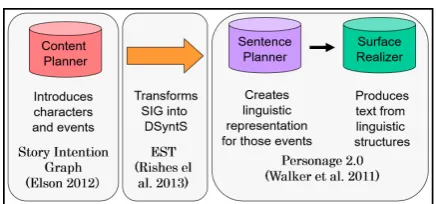
Fig. 1 illustrates our overall architecture, which uses NLG modules to separate the process of plan-ningWhat to say(content planning and selection,
1The corpus is available from http:nlds.soe.
fabula) from decisions about How to say it (sen-tence planning and realization, discourse). We build on three existing tools from previous work: the SCHEHEREZADE story annotation tool, the PERSONAGEgenerator, and the ES-TRANSLATOR
(EST) (Elson, 2012; Mairesse and Walker, 2011;
Rishes et al., 2013). The EST uses the STORY INTENTION GRAPH(SIG) representation produced
bySCHEHEREZADE and its theoretical grounding
as a basis for the content for generation. The
ESTbridges the narrative representation of theSIG
to the representation required by PERSONAGEby
generating the text plans and the deep syntactic structures that PERSONAGE requires. Thus any
story or content represented as aSIGcan be retold
usingPERSONAGE. See Fig. 1.
There are several advantages to using theSIGas
the representation for a content pool:
• Elson’s DRAMABANK provides stories
en-coded as SIGs including 36 Aesop’s Fables,
such asThe Fox and the Crowin Table 3. • The SIG framework includes an annotation
tool called SCHEHERAZADE that supports
representing any narrative as aSIG.
• SCHEHEREZADE comes with a realizer that
regenerates stories from theSIG: this realizer
provides alternative story realizations that we can compare to theEST2.0 output.
We currently have 100 personal narratives an-notated with theSIGrepresentation on topics such
as travel, storms, gardening, funerals, going to the doctor, camping, and snorkeling, selected from a corpus of a million stories (Gordon and Swanson, 2009). We use the stories in Tables 1 and 3 in this paper to explain our framework.
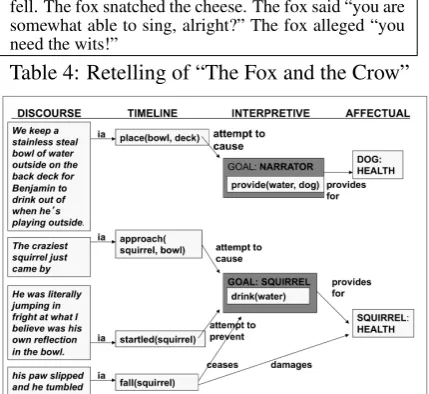
Fig. 2 shows the SIGfor The Startled Squirrel
story in Table 1. To create aSIG, SCHEHERAZADE
annotators: (1) identify key entities; (2) model events and statives as propositions and arrange them in a timeline; and (3) model the annotator’s understanding of the overarching goals, plans and beliefs of the story’s agents. SCHEHERAZADE
al-lows users to annotate a story along several di-mensions, starting with the surface form of the story (first column in Table 2) and then pro-ceeding to deeper representations. The first di-mension (second column in Table 2) is called the “timeline layer”, in which the story is en-coded as predicate-argument structures (propo-sitions) that are temporally ordered on a time-line. SCHEHERAZADE adapts information about
predicate-argument structures from the VerbNet lexical database (Kipper et al., 2006) and uses
EST 2.0
[image:3.595.310.525.221.418.2]The crow sat on the tree’s branch. The cheese was in the crow’s pecker. The crow thought “I will eat the cheese on the branch of the tree because the clarity of the sky is so-somewhat beautiful.” The fox observed the crow. The fox thought “I will obtain the cheese from the crow’s nib.” The fox came. The fox stood under the tree. The fox looked toward the crow. The fox avered “I see you!” The fox alleged ‘your’s beauty is quite incomparable, okay?” The fox alleged ‘your’s feather’s chromaticity is damn exquisite.” The fox said “if your’s voice’s pleasantness is equal to your’s vi-sual aspect’s loveliness you undoubtedly are every ev-ery birds’s queen!” The crow thought “the fox was so-somewhat flattering.” The crow thought “I will demon-strate my voice.” The crow loudly cawed. The cheese fell. The fox snatched the cheese. The fox said “you are somewhat able to sing, alright?” The fox alleged “you need the wits!”
Table 4: Retelling of “The Fox and the Crow”
Figure 2: Part of the STORYINTENTIONGRAPH
(SIG) forThe Startled Squirrel.
WordNet (Fellbaum, 1998) as its noun and adjec-tives taxonomy. The arcs of the story graph are labeled with discourse relations, such asattempts to cause, ortemporal order(see Chapter 4 of (El-son, 2012).)
The EST applies a model of syntax to the SIG
which translates from the semantic representation of theSIGto the syntactic formalism of Deep
Syn-tactic Structures (DSYNTS) required by the PER -SONAGE generator (Lavoie and Rambow, 1997;
Melˇcuk, 1988; Mairesse and Walker, 2011). Fig. 1 provides a high level view of the architecture of
EST. The full translation methodology is described
in (Rishes et al., 2013).
DSYNTS are a flexible dependency tree
repre-sentation of an utterance that gives us access to the underlying linguistic structure of a sentence that goes beyond surface string manipulation. The nodes of the DSYNTS syntactic trees are labeled
with lexemes and the arcs of the tree are labeled with syntactic relations. The DSYNTS
Variation Blog Output Fable Output Original We keep a large stainless steel bowl of water
out-side on the back deck for Benjamin to drink out of when he’s playing outside.
The Crow was hugely flattered by this, and just to show the Fox that she could sing she gave a loud caw.
Sch A narrator placed a steely and large bowl on a back deck in order for a dog to drink the water of the bowl.
The crow cawed loudly in order for she to show him that she was able to sing.
EST 1.0 I placed the bowl on the deck in order for
Ben-jamin to drink the bowl’s water. The crow cawed loudly in order to show the foxthe crow was able to sing. becauseNS I placed the bowl on the deck because Benjamin
wanted to drink the bowl’s water. The crow cawed loudly because she wanted toshow the fox the crow was able to sing. becauseSN Because Benjamin wanted to drink the bowl’s
water, I placed the bowl on the deck. Because the crow wanted to show the fox thecrow was able to sing, she cawed loudly. NS I placed the bowl on the deck. Benjamin wanted
to drink the bowl’s water. The crow cawed loudly. She wanted to show thefox the crow was able to sing. N I placed the bowl on the deck. The crow cawed loudly.
soSN Benjamin wanted to drink the bowl’s water, so I
[image:4.595.82.516.59.265.2]placed the bowl on the deck. The crow wanted to show the fox the crow wasable to sing, so she cawed loudly.
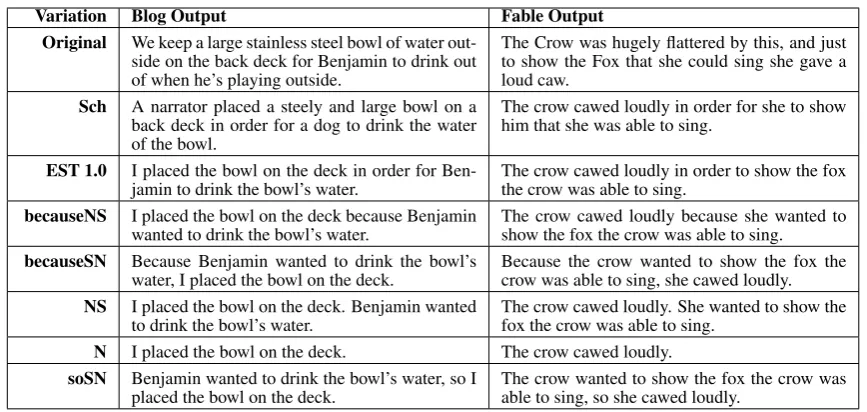
Table 5: Sentence Planning Variations added toEST2.0 for Contingency relations, exemplified byThe
Startled SquirrelandThe Fox and the Crow. VariationNis intended to test whether the content of the satellite can be recovered from context.Schis the realization produced by Scheherezade.
(subject, direct and indirect object etc). Lexical-ized nodes also contain a range of grammatical features used in generation. RealPro handles mor-phology, agreement and function words to produce an output string.
This paper utilizes the ability of the EST 2.0
and the flexibility of DSYNTS to produce direct
speech that varies the character voice as illustrated in Table 4 (Lukin and Walker, 2015). By simply modifying theperson parameter in the DSYNTS,
we can change the sentence to be realized in the first person. For example, to produce the varia-tions in Table 4, we use both first person, and di-rect speech, as well as linguistic styles fromPER -SONAGE: a neutral voice for the narrator, a shy
voice for the crow, and a laid-back voice for the fox (Lukin and Walker, 2015). We fully utilize this variation when we retell personal narratives in
EST2.0.
This paper and introduces support for new dis-course relations, such as aggregating clauses re-lated by the contingency discourse relation (one of many listed in the Penn Discourse Tree Bank (PDTB) (Prasad et al., 2008)). In SIG encoding,
contingency clauses are always expressed with the “in order to” relation (Table 6, 1). To support lin-guistic variation, we introduce “de-aggregation” onto these aggregating clauses in order to have the flexibility to rephrase, restructure, or ignore clauses as indicated by our parameterized sentence planner. We identify candidate story points in the
SIGthat contain a contingency relation (annotated
in the Timeline layer) and deliberately break apart
this hard relationship to create nucleus and satel-lite DSYNTS that represents the entire sentence
(Table 6, 2) (Mann and Thompson, 1988). We create a text plan (Table 6, 3) to allow the sen-tence planner to reconstruct this content in various ways. Table 5 shows sentence planning variations for the contingency relation for both fables and personal narratives (soSN, becauseNS, becaus-eSN, NS,N), the output of EST 1.0, the original
sentence (original), and the SCHEHERAZADE
re-alization (Sch) which provides an additional base-line. TheSch variant is the original “in order to” contingency relationship produced by the SIG
an-notation. The becauseNS operation presents the nucleusfirst, followed by abecause, and then the satellite. We can also treat the nucleus and satel-lite as two different sentences (NS) or completely leave off the satellite (N). We believe theNvariant is useful if the satellite can be easily inferred from the prior context.
The richness of the discourse information present in theSIGand our ability to de-aggregate
and aggregate will enable us to implement other discourse relations in future work.
3 Personal Narrative Evaluation
After annotating our 100 stories with the
SCHEHERAZADE annotation tool, we ran them
through the EST, and examined the output. We
discovered several bugs arising from variation in the blogs that are not present in the Fables, and fixed them. In previous work on the EST,
Table 6: 1: original unbroken DSYNTS; 2)
deag-gregatedDSYNTS; 3) contingency text plan
1: ORIGINAL <dsynts id="5_6">
<dsyntnode class="verb" lexeme="organize" mode="" mood="ind" rel="II" tense="past"> <dsyntnode article="def" class="common_noun"
lexeme="bird" number="pl" person="" rel="I"/> <dsyntnode article="def" class="common_noun"
lexeme="bird" number="pl" person="" rel="II"/> <dsyntnode class="preposition" lexeme="on"
rel="ATTR">
<dsyntnode article="def" class="common_noun" lexeme="railing" number="sg" person="" rel="II"> <dsyntnode article="no-art" class="common_noun" lexeme="deck" number="sg" person="" rel="I"/> </dsyntnode>
</dsyntnode>
<dsyntnode class="preposition" lexeme="in_order" rel="ATTR">
<dsyntnode class="verb" extrapo="+" lexeme="wait" mode="inf-to" mood="inf-to"
rel="II" tense="inf-to">
<dsyntnode article="def" class="common_noun" lexeme="bird" number="pl" person="" rel="I"/> </dsyntnode>
</dsyntnode> </dsyntnode> </dsynts>
2: DEAGGREGATION <dsynts id="5">
<dsyntnode class="verb" lexeme="organize" mood="ind" rel="II" tense="past">
<dsyntnode article="def" class="common_noun" lexeme="bird" number="pl" person="" rel="I"/> <dsyntnode article="def" class="common_noun"
lexeme="bird" number="pl" person="" rel="II"/> <dsyntnode class="preposition" lexeme="on"
rel="ATTR">
<dsyntnode article="def" class="common_noun" l lexeme="railing" number="sg"
person="" rel="II">
<dsyntnode article="no-art" class="common_noun" lexeme="deck" number="sg" person="" rel="I"/> </dsyntnode>
</dsyntnode> </dsyntnode> </dsynts> <dsynts id="6">
<dsyntnode class="verb" lexeme="want" mood="ind" rel="II" tense="past"> <dsyntnode article="def" class="common_noun"
lexeme="bird" number="pl" person="" r <dsyntnode class="verb" extrapo="+"
lexeme="wait" mode="inf-to" mood="inf-to" rel="II" tense="inf-to"/>
</dsyntnode> </dsynts>
3: AGGREGATION TEXT PLAN <speechplan voice="Narrator"> <rstplan>
<relation name="contingency_cause"> <proposition id="1" ns="nucleus"/> <proposition id="2" ns="satellite"/> </relation>
</rstplan>
<proposition dialogue_act="5" id="1"/> <proposition dialogue_act="6" id="2"/> </speechplan>
the original Aesop’s Fables to their generated
ESTandSCHEHERAZADEreproductions (denoted EST andSch) (Rishes et al., 2013). These met-rics are not ideal for evaluating story quality, es-pecially when generating stylistic variations of the original story. However they allow us to automat-ically test some aspects of system coverage, so we repeat this evaluation on the blog dataset.
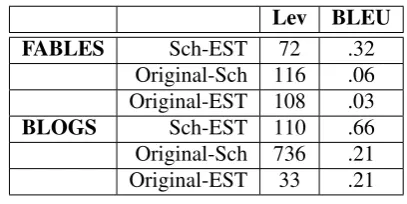
Table 7 presents BLEU and Levenshtein scores for the original 36 Fables and all 100 blog stories, compared to bothSch andEST 1.0. Levenshtein
[image:5.595.313.517.265.367.2]distance computes the minimum edit distance be-tween two strings, so we compare the entire orig-inal story to a generated version. A lower score indicates a closer comparison. BLEU score com-putes the overlap between two strings taking word order into consideration: a higher BLEU score in-dicates a closer match between candidate strings. Thus Table 7 provides quantitative evidence that the style of the original blogs is very different from Aesop’s Fables. Neither the EST output nor the Schoutput comes close to representing the origi-nal textual style (Blogs Origiorigi-nal-Sch and Origiorigi-nal- Original-EST).
Table 7: Mean for Levenshtein and BLEU on the Fables development set vs. the Blogs
Lev BLEU
FABLES Sch-EST 72 .32
Original-Sch 116 .06 Original-EST 108 .03
BLOGS Sch-EST 110 .66
Original-Sch 736 .21 Original-EST 33 .21
However we find thatESTcompares favorably to Sch on the blogs with a relatively low Lev-enshtein score, and higher BLEU score (Blogs Sch-EST) than the original Fables evaluation (Fa-bles Sch-EST). This indicates that even though the blogs have a diversity of language and style, our translation comes close to theSchbaseline.
4 Experimental Design and Results
We conduct two experiments on Mechanical Turk to test variations generated with the de-aggregation and point of view parameters. We compare the variations amongst themselves and to the original sentence in a story. We are also inter-ested in identifying differences among individual stories.
In the first experiment, we show an excerpt from the original story telling and indicate to the partic-ipants that “any of the following sentences could come next in the story”. We then list all variations of the following sentence with the “in order to” contingency relationship (examples from the Star-tled SquirrellabeledEST2.0 in Table 5).
the original blog sentence and the EST 1.0 output before de-aggregation and sentence planning. We emphasize that the readers should read each varia-tionin the context of the entire storyand encourage them to reread the story with each new sentence to understand this context.
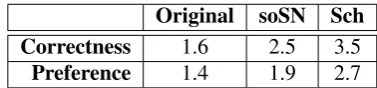
In the second experiment, we compare the orig-inal sentence with our best realization, and the realization produced by SCHEHEREZADE (Sch).
We expect that SCHEHEREZADE will score more
poorly in this instance because it cannot change point of view from third person to first person, even though its output is more fluent thanEST2.0
for many cases.
4.1 Results Experiment 1
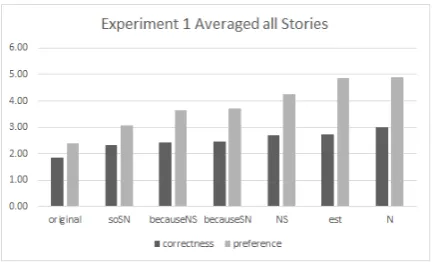
We had 7 participants analyze each of the 16 story segments. All participants were native English speakers. Table 8 shows the means and standard deviations for correctness and preference rankings in the first experiment. We find that averaged across all stories, there is a clear order for correct-ness and preference: original, soSN, becauseNS, becauseSN, NS, EST, N.
We performed an ANOVA on preference and found that story has no significant effect on the re-sults (F(1, 15)=0.18, p=1.00), indicating that all stories are well-formed and there are no outliers in the story selection. On the other hand, realization does have a significant effect on preference (F(1, 6)=33.74, p=0.00). This supports our hypothe-sis that the realizations are distinct from each other and there are preferences amongst them.
Fig. 3 shows the average correctness and prefer-ence for all stories. Paired t-tests show that there is a significant difference in reported correctness be-tweenorigandsoSN(p<0.05), but no difference betweensoSNandbecauseNS(p = 0.133), or be-causeSN(p = 0.08). There is a difference between
soSN and NS (p < 0.005), as well as between the two differentbecauseoperations andNS(p<
0.05). There are no other significant differences. The are larger differences on the preference metric. Paired t-tests show that there is a sig-nificant difference between orig and soSN (p <
0.0001) and soSN and becauseNS (p < 0.05). There is no difference in preference between be-causeNS and becauseSN (p = 0.31). However there is a significant difference betweensoSNand
becauseSN (p< 0.005) andbecauseNS andNS
(p< 0.0001). Finally, there is significant differ-ence betweenbecauseSNandNS(p<0.005) and
NSandEST(p<0.005). There is no difference betweenESTandN(p = 0.375), but there is a dif-ference betweenNSandN(p<0.05).
Figure 3: Histogram of Correctness and Pref-erence for Experiment 1 averaged across story (lower is better)
These results indicate that the original sentence, as expected, is the most correct and preferred. Qualitative feedback on the original sentence in-cluded: “The one I ranked first makes a more interesting story. Most of the others would be sufficient, but boring.”; “The sentence I ranked first makes more sense in the context of the story. The others tell you similar info, but do not really fit.”. Some participants rankedsoSN as their pre-ferred variant (although the difference was never statistically significant): “The one I rated the best sounded really natural.”
Although we observe an overall ranking trend, there are some differences by story forNSandN. Most of the time, these two are ranked the lowest. Some subjects observe: “#1 [orig] & #2 [soSN] had a lot of detail. #7 [N] did not explain what the person wanted to see” (a044 in Table 10); “The sentence I rated the worst [N] didn’t explain why the person wanted to cook them, but it would have been an okay sentence.” (a060 in Table 10); “I ranked the lower number [N] because they either did not contain the full thought of the subject or they added details that are to be assumed.” (a044 in Table 10); “They were all fairly good sentences. The one I ranked worst [N] just left out why they decided to use facebook.” (a042 in Table 10).
[image:6.595.308.526.61.192.2]Orig soSN becauseNS becauseSN NS EST N
ALL C 1.8 2.3 2.4 2.5 2.7 2.7 3.0
P 2.4 3.1 3.7 3.8 4.2 4.9 4.9
Protest C 4.9 2.7 2.4 3.9 2.1 2.7 2.7
P 1.0 4.1 4.3 4.4 4.4 4.4 2.8
Story 042 C 4.2 4.2 4.3 3.8 3.7 4.2 2.7
[image:7.595.119.483.63.164.2]P 3.3 3.7 3.6 4.6 3.1 5 4
Table 8: Exp 1: Means for correctnessCand preferencePfor original sentences and generated variations forALLstories vs. theProtest Storyanda042(stimuli in Table 10). Lower is better.
were having a good time. It doesn’t make sense that parent would want to do something to annoy them [the satellite utterance]” (a060 in Table 10). This person preferred leaving off the satellite and rankedNas the highest preference.
We examined these interactions between story and preference ranking for NS andN. This may be depend on either context or on the SIG
anno-tations. For example, in one story (protest in Ta-ble 10) our best realizationsoSN, produces: “The protesters wanted to block the street, so the per-son said for the protesters to protest in the street in order to block it.” and N produces “The per-son said for the protesters to protest in the street in order to block it.”. One subject, who rankedN
second only tooriginal, observed: “Since the po-lice were coming there with tear gas, it appears the protesters had already shut things down. There is no need to tell them to block the street.” Another subject who rankedNas second preference simi-larly observed “Frankly using the word protesters and protest too many times made it seem like a word puzzle or riddle. The meaning was lost in too many variations of the word ‘protest.’ If the wording was awkward, I tried to assign it toward the ‘worst’ end of the scale. If it seemed to flow more naturally, as a story would, I tried to assign it toward the ‘best’ end.”
Figure 4: Histogram of Correctness and Pref-erence for Experiment 1 averaged across story (lower is better)
Although the means in this story seem very dis-tinct (Table 8), there is only a significant difference betweenorigandN(p<0.005) andNandEST(p
<0.05). Table 8 also includes the means for story a042 (Table 10) where NS is ranked highest for preference. Despite this, the only significant dif-ference betweenNSis withEST 1.0(p<0.05).
4.2 Results Experiment 2
Experiment 2 compares our best realization to the
SCHEHERAZADErealizer, exploiting the ability of EST2.0 to change the point of view. Seven
partic-ipants analyzed each of the 16 story segments. All participants were native English speakers.
Original soSN Sch
Correctness 1.6 2.5 3.5
[image:7.595.320.509.412.456.2]Preference 1.4 1.9 2.7
Table 9: Exp 2: Means for correctness and pref-erence for original sentence, our best realization
soSN, and Sch. Lower is better.
Table 9 shows the means for correctness and preference rankings. Figure 4 shows a histogram of average correctness and preference by realiza-tion for all stories. There is a clear order for cor-rectness and preference: original, soSN, Sch, with significant differences between all pairs of realiza-tions (p<0.0001).
[image:7.595.73.291.591.720.2]the sentences in order of best explanatory detail” (Startled Squirrelin Table 5).
Compare the soSN realization in the protest story in Table 10 “The leaders wanted to talk, so they met near the workplace.” with Sch “The group of leaders was meeting in order to talk about running a group of countries and near a work-place.” Sch has so much more detail thansoSN. While the EST has massively improved and over-all is preferred toSch, some semantic components are lost in the translation process.
5 Discussion and Conclusions
To our knowledge, this is the first time that sentence planning variations for story telling have been implemented in a framework where the discourse (telling) is completely independent of the fabula (content) of the story (Lonneker, 2005). We also show for the first time that the
SCHEHEREZADE annotation tool can be applied
to informal narratives such as personal narratives from weblogs, and the resulting SIG
representa-tions work with existing tools for translating from theSIGto a retelling of a story.
We present a parameterized sentence planner for story generation, that provides aggregation op-erations and variations in point of view. The tech-nical aspects of de-aggregation and aggregation builds on previous work in NLG and our earlier work on SPaRKy (Cahill et al., 2001; Scott and de Souza, 1990; Paris and Scott, 1994; Nakatsu and White, 2010; Howcroft et al., 2013; Walker et al., 2007; Stent and Molina, 2009). However we are not aware of previous NLG applications needing to first de-aggregate the content, before applying aggregation operations.
Our experiments show that, as expected, readers almost always prefer the original sentence over au-tomatically produced variations, but that thesoSN
variant is preferred. We examine two specific sto-ries where preferences vary from the overall trend: these stories suggest future possible experiments where we might vary more aspects of the story context and audience. We also compare our best variation to whatSCHEHERAZADEproduces.
De-spite the fact that the SCHEHERAZADE realizer
was targeted at the SIG, our best variant is most
often ranked as a preferred choice.
In future work, we aim to explore interactions between a number of our novel narratological parameters. We expect to do this both with a rule-based approach, as well as by building on recent work on statistical models for expressive generation (Rieser and Lemon, 2011; Paiva and
Evans, 2004; Langkilde, 1998; Rowe et al., 2008; Mairesse and Walker, 2011). This should allow us to train a narrative generator to achieve particular narrative effects, such as engagement or empathy with particular characters. We will also expand the discourse relations thatEST2.0 can handle. Acknowledgements. This research was sup-ported by Nuance Foundation Grant SC-14-74, NSF Grants IIS-HCC-1115742 and IIS-1002921.
Appendix.Table 10 provides additional examples of the output of the EST 2.0 system, illustrating
particular user preferences and system strengths and weaknesses.
References
E. Andr´e, T. Rist, S. van Mulken, M. Klesen, and S. Baldes. 2000. The automated design of believ-able dialogues for animated presentation teams. Em-bodied conversational agents, pp. 220–255. T.W. Bickmore. 2003. Relational agents:
Effect-ing change through human-computer relationships. Ph.D. thesis, MIT Media Lab.
L. Cahill, J. Carroll, R. Evans, D. Paiva, R. Power, D. Scott, and K. van Deemter. 2001. From rags to riches: exploiting the potential of a flexible gener-ation architecture. InACL-01
C.B. Callaway and J.C. Lester. 2002. Narrative prose generation* 1. Artificial Intelligence, 139(2):213– 252.
N. Dethlefs, H. Cuay´ahuitl, H. Hastie, V. Rieser, and O. Lemon. 2014. Cluster-based prediction of user ratings for stylistic surface realisation. EACL 2014, page 702.
D.K. Elson and K.R. McKeown. 2009. A tool for deep semantic encoding of narrative texts. InProc. of the ACL-IJCNLP 2009 Software Demonstrations, pp. 9– 12.
D.K. Elson. 2012. Modeling Narrative Discourse. Ph.D. thesis, Columbia University, New York City. C. Fellbaum. 1998. WordNet: An Electronic Lexical
Database. MIT Press, Cambridge, MA.
K. Forbes-Riley and D. Litman. 2011. Designing and evaluating a wizarded uncertainty-adaptive spoken dialogue tutoring system. Computer Speech & Lan-guage, 25(1):105–126.
A. Gordon and R. Swanson. 2009. Identifying per-sonal stories in millions of weblog entries. InThird Int. Conf. on Weblogs and Social Media, Data Chal-lenge Workshop, San Jose, CA.
a001 Bug out for blood the other night, I left the patio door open just long enough to let in a dozen bugs of various size. I didn’t notice them until the middle of the night, when I saw them clinging to the ceiling. I grabbed the closest object within reach, and with a rolled-up comic book I smote mine enemies and smeared their greasy bug guts. All except for the biggest one. I only clipped that one, taking off one of its limbs. But it got away before I could finish the job. So now there’s a five-limbed insect lurking in the apartment, no doubt looking for some vengeance against me.
orig I’m looking around corners, checking the toilet before sitting down
Sch The narrator began to check the toilet seat of the narrator for the leader of the group of bugs in order for she to sit down on the toilet seat of the narrator
EST I wanted to sit down on my toilet seat, so I checked my toilet seat for the bugs’s leader.
a042-1 This last week I was exploring the FamilySearch Learning Center area to see what was new. I ran-domly choose a video to check it out. In the middle of the video he was talking about using Facebook as a research tool. I listened as he talked about finding a family group on Facebook, on which he found pictures and information.
orig I considered this and decided it was time to set up our Family Facebook to find those branches that have not yet been found.
Sch The narrator decided to use the utility in order to find the family of the narrator. soSN I wanted to find my family, so I decided to use Facebook.
becauseNS I decided to use Facebook because I wanted to find my family. becauseSN Because I wanted to find my family, I decided to use Facebook.
NS I decided to use Facebook. I wanted to find my family. EST I decided to use Facebook in order for me to find my family.
N I decided to use Facebook.
a044 I’m writing this from the Bogota airport, waiting for my flight back to Santiago. When I last posted, I was about to head off to northern Colombia to Cartagena. So, how was it?
orig I split the 4 days between Cartagena and Santa Marta Sch
soSN I wanted to see Cartagena, so I traveled to Colombia. becauseNS I traveled to Colombia because I wanted to see Cartagena. becauseSN Because I wanted to see Cartagena, I traveled to Colombia.
NS I traveled to Colombia. I wanted to see Cartagena.
EST I traveled to Colombia in order for me to see Cartagena and for me to see Santa Marta. N I traveled to Colombia.
a060-1 I hope everyone survived the snow! With the early school dismissal on Friday, it felt like a 3 day weekend. My kids are just not creatures of Winter. I did manage to take them and some of the neighborhood kids out sledding on Friday and Saturday. That was a blast. The kids had more fun, and I had a fire in the shelter with a bag of marshmallows and just enjoying myself. Followed up, of course, with hot chocolate at home. I even managed to cook cornbread from scratch, in an old (my grandmothers) cast-iron skillet, with chicken and gravy for dinner.
orig If I had any collard greens, I think I would have cooked them too (just to annoy the kids).
Sch The narrator wanted to cook a group of collards in order to annoy the group of children of the narrator. soSN I wanted to annoy my children, so I wanted to cook the collards.
becauseNS I wanted to cook the collards because I wanted to annoy my children. becauseSN Because I wanted to annoy my children, I wanted to cook the collards.
NS I wanted to cook the collards. I wanted to annoy my children. EST I wanted to cook the collards in order for me to annoy my child.
N I wanted to cook the collards.
protest The protesters apparently started their protest at the Capitol Building then moved to downtown. We happened to be standing at the corner of 16th and Stout when somebody said that the Police were getting ready to tear-gas a group of demonstrators. We looked around the corner and there were Police everywhere.
orig They had blockaded the whole street, and shut down the light rail.
Sch A person said that the group of protesters had protested in a street and in order to block the street. soSN The protesters wanted to block the street, so the person said for the protesters to protest in the street
in order to block it.
becauseNS The person said for the protesters to protest in the street in order to block it because the protesters wanted to block the street.
becauseSN Because the protesters wanted to block the street, the person said for the protesters to protest in the street in order to block it.
NS The person said for the protesters to protest in the street in order to block it. The protesters wanted to block the street.
[image:9.595.87.513.92.703.2]EST The person said for the protesters to protest in the street in order for the protesters to block the street. N The person said for the protesters to protest in the street in order to block it.
S.J. Green and C. DiMarco. 1993. Stylistic decision-making in natural language generation. InProc. of the 4th European Workshop on Natural Language Generation.
E.H. Hovy. 1988. Planning coherent multisentential text. InProc. 26th Annual Meeting of the Associa-tion for ComputaAssocia-tional Linguistics, pp. 163–169. D. M. Howcroft, C. Nakatsu, and M. White. 2013.
En-hancing the expression of contrast in the SPARKY restaurant corpus. ENLG 2013, page 30.
Z. Hu, M. Walker, M. Neff, and J.E. Fox Tree. 2015. Storytelling agents with personality and adaptivity. Intelligent Virtual Agents.
D.Z. Inkpen and G. Hirst. 2004. Near-synonym choice in natural language generation. InRecent Advances in Natural Language Processing III.
K. Kipper, A. Korhonen, N. Ryant, and M. Palmer. 2006. Extending verbnet with novel verb classes. In Proc. of the 6th Int. Conf. on Language Resources and Evaluation (LREC 2006), Genoa, Italy.
I. Langkilde. 1998. Forest-based statistical sentence generation. In In Proc. of the 1st Meeting of the North American Chapter of the ACL (ANLP-NAACL 2000), pp. 170–177.
B. Lavoie and O. Rambow. 1997. A fast and portable realizer for text generation systems. InProc. of the Third Conf. on Applied Natural Language Process-ing, ANLP97, pp. 265–268.
B. Lonneker. 2005. Narratological knowledge for nat-ural language generation. InProc. of the 10th Eu-ropean Workshop on Natural Language Generation (ENLG 2005), pp. 91–100, Aberdeen, Scotland. S. Lukin and M. Walker. 2015. Narrative variations in
a virtual storyteller.Intelligent Virtual Agents. F. Mairesse and M.A. Walker. 2011. Controlling user
perceptions of linguistic style: Trainable generation of personality traits. Computational Linguistics. W.C. Mann and S.A. Thompson 1988. Rhetorical
structure theory: Toward a functional theory of text organization. Text-Interdisciplinary Journal for the Study of Discourse.
S.W. McQuiggan, B.W. Mott, and J.C. Lester. 2008. Modeling self-efficacy in intelligent tutoring sys-tems: An inductive approach. User Modeling and User-Adapted Interaction, 18-1:81123.
I.A. Melˇcuk. 1988. Dependency Syntax: Theory and Practice. SUNY, Albany, New York.
N. Montfort. 2007. Generating narrative variation in interactive fiction. Ph.D. thesis, University of Penn-sylvania.
C. Nakatsu and M. White. 2010. Generating with Discourse Combinatory Categorial Grammar. In Linguistic Issues in Language Technology, 4(1). pp. 162.
D.S. Paiva and R. Evans. 2004. A framework for stylistically controlled generation. InNatural Lan-guage Generation, Third Int. Conf., INLG 2004, number 3123 in LNAI, pp 120–129.
C. Paris and D. Scott. 1994. Stylistic variation in mul-tilingual instructions. InThe 7th Int. Conf. on Natu-ral Language Generation.
J.W. Pennebaker and J.D. Seagal. 1999. Forming a story: The health benefits of narrative. Journal of clinical psychology, 55(10):1243–1254.
P. Piwek. 2003. A flexible pragmatics-driven language generator for animated agents. InProc. of Annual Meeting of the European Chapter of the Association for Computational Linguistics (EACL).
K. Porayska-Pomsta and C. Mellish. 2004. Modelling politeness in natural language generation. InProc. of the 3rd Conf. on INLG, pp. 141–150.
R. Power, D. Scott, and N. Bouayad-Agha. 2003. Gen-erating texts with style. InProc. of the 4th Int. Conf. on Intelligent Text Processing and Computational Linguistics.
R. Prasad, N. Dinesh, A. Lee, E. Miltsakaki, L. Robaldo, A. Joshi, K. Aravind B.L. Webber 2008. The Penn Discourse TreeBank 2.0. In Lan-guage Resources and Evaluation Conference. V. Rieser and O. Lemon. 2011. Reinforcement
learn-ing for adaptive dialogue systems: a data-driven methodology for dialogue management and natural language generation. Springer.
E. Rishes, S.M. Lukin, D.K. Elson, and M.A. Walker. 2013. Generating different story tellings from se-mantic representations of narrative. In Interactive Storytelling, pp. 192–204. Springer.
J. Rowe, E. Ha, and J. Lester. 2008. Archetype-Driven Character Dialogue Generation for Interac-tive NarraInterac-tive. InIntelligent Virtual Agents, pp. 45– 58. Springer.
D. R. Scott and C. S. de Souza. 1990. Getting the mes-sage across in RST-based text generation. In Dale, Mellish, and Zock, ed,Current Research in Natural Language Generation.
A. Stent and M. Molina 2009 Evaluating automatic extraction of rules for sentence plan construction In The 10th Annual Meeting of the Special Interest Group on Discourse and Dialogue
M.A. Walker, A. Stent, F. Mairesse and R. Prasad 2007 Individual and Domain Adaptation in Sen-tence Planning for Dialogue Journal of Artificial In-telligence Research (JAIR). 30:413-456.
M.A. Walker, R. Grant, J. Sawyer, G.I. Lin, N. Wardrip-Fruin, and M. Buell. 2011. Perceived or not perceived: Film character models for expressive nlg. InInt. Conf. on Interactive Digital Storytelling, ICIDS’11.
N. Wang, W. Lewis Johnson, R.E. Mayer, P. Rizzo, E. Shaw, and H. Collins. 2005. The polite-ness effect: Pedagogical agents and learning gains. Frontiers in Artificial Intelligence and Applications, 125:686–693.