A COMPARATIVE STUDY ON EFFICACY
USING FUNCTIONAL TASK-ORIENTED INTERVENTIO
*Jibin, K. V., Dr. Kamaraj
Department of Physiotherapy, Institute of Paramedical Sciences, Kannur Medical College, Anj
ARTICLE INFO ABSTRACT
Background:
leads us to propose a worldwide goal for stroke: a 2% reduction each year o
may happen as a result of better case management and treatment. The experience of high countries indicates that sustained interventions can achieve at least the required 4% annual average decline in stroke mortality for peop
determine whether functional task
versa in enhancing walking balance and distance among post stroke survivors. Methodology:
randomly divided into two groups by using simple random sampling method. A total of 40 subjects (n=40) were included with the following inclusion criteria; patients with clini
stroke, Patients above 40 years of age of either sex. Subjects with hemiparesis of _6 month’s duration after unilateral, supratentorial, ischemic, or hemorrhage stroke were recruited.
Result
calculated value > ‘t’ table value. These statistical test suggests that when the two intervention are applied to respective groups, they indicate positive and good results in term of walking distance, regain strength and control of the lower limbs. Whereas when both groups are compared there is very minimal significance changes. According to the generated result it can be suggested that these two interventions can be given for stroke patient for better a
stroke rehabilitation treatment protocol. Conclusion:
task-oriented intervention are effective in chronic stroke rehabilit
compared there is very minimal significance changes seen. According to the generated result it can be suggested that these two interventions can be given for stroke patient for better and early recovery and can be includ
intervention gives better response and is more effective than Bobath intervention in enhancing walking balance, distance and speed in post
Copyright © 2017, Jibin et al. This is an open access distribution, and reproduction in any medium, provided
INTRODUCTION
Stroke is a major public health problem (Kappelle
Lai et al., 1995). Stroke caused an estimated 5·7 million deaths
in 2005 and 87% of these deaths were in low
middle-income countries. Without intervention, the number of global deaths is projected to rise to 6·5 million in 2015 and to 7·8 million in 2030. The rising burden of stroke, especially in low-income and middle-income countries, leads us to propose a worldwide goal for stroke: a 2% reduction each year over and
*Corresponding author: Jibin, K. V.
Department of Physiotherapy, Institute of Paramedical Sciences, Kannur Medical College, Anjarakandy, Kannur, Kerala, India 670612
ISSN: 0975-833X
Vol.
Article History:
Received 11th August, 2017
Received in revised form 25th September, 2017
Accepted 21st October, 2017
Published online 30th November, 2017
Citation: Jibin, K. V., Dr. Kamaraj, B., Dr. K. Syed Abudaheer
chronic-stroke survivors using functional task-oriented intervention versus bobath intervention 60593.
Key words:
Stroke Rehabilitation, Physiotherapy, Bobath Technique,
Functional task-oriented intervention, Gait Training,
Neurological rehabilitation.
RESEARCH ARTICLE
EFFICACY OF GAIT PARAMETERS IN CHRONIC
ORIENTED INTERVENTION VERSUS BOBATH INTE
, Dr. Kamaraj, B., Dr. K. Syed Abudaheer
and Rahul Krishnan Kutty
Department of Physiotherapy, Institute of Paramedical Sciences, Kannur Medical College, Anj
Kerala, India 670612
ABSTRACT
Background: The rising burden of stroke, especially in low-income and middle leads us to propose a worldwide goal for stroke: a 2% reduction each year o
may happen as a result of better case management and treatment. The experience of high countries indicates that sustained interventions can achieve at least the required 4% annual average decline in stroke mortality for people age 60–69 years. The aim and objective of the study is to determine whether functional task-oriented intervention is effective than Bobath intervention or vice versa in enhancing walking balance and distance among post stroke survivors.
Methodology: An experimental, randomized and single blinded comparative design and subjects were randomly divided into two groups by using simple random sampling method. A total of 40 subjects (n=40) were included with the following inclusion criteria; patients with clini
stroke, Patients above 40 years of age of either sex. Subjects with hemiparesis of _6 month’s duration after unilateral, supratentorial, ischemic, or hemorrhage stroke were recruited.
Result: ‘t’ table value for (n1+n2-2) degrees of freedom at 5% level of significance was taken. ‘t’
calculated value > ‘t’ table value. These statistical test suggests that when the two intervention are applied to respective groups, they indicate positive and good results in term of walking distance, egain strength and control of the lower limbs. Whereas when both groups are compared there is very minimal significance changes. According to the generated result it can be suggested that these two interventions can be given for stroke patient for better and early recovery and can be included in the stroke rehabilitation treatment protocol.
Conclusion: The studysuggest that it has been observed that both Bobath intervention and Functional oriented intervention are effective in chronic stroke rehabilitation. Whereas when both groups are compared there is very minimal significance changes seen. According to the generated result it can be suggested that these two interventions can be given for stroke patient for better and early recovery and can be included in the stroke rehabilitation treatment protocol. Moreover, Functional task
intervention gives better response and is more effective than Bobath intervention in enhancing walking balance, distance and speed in post-stroke patients.
access article distributed under the Creative Commons Attribution License, the original work is properly cited.
(Kappelle et al., 1994; ated 5·7 million deaths and 87% of these deaths were in low-income and income countries. Without intervention, the number of global deaths is projected to rise to 6·5 million in 2015 and to 7·8 million in 2030. The rising burden of stroke, especially in income countries, leads us to propose a worldwide goal for stroke: a 2% reduction each year over and
Department of Physiotherapy, Institute of Paramedical Sciences, Kannur ala, India 670612
above that which may happen as a result of better case management and treatment. The experience of high
countries indicates that sustained interventions can achieve at least the required 4% annual average decline in stroke mortality for people age 60–69
stroke would result in 6·4 million fewer deaths from stroke from 2005 to 2015. More of these deaths will be averted in low-income and middle-i ncome countries than in high
countries (Kathleen et al., 2007
cerebrovascular disease was found to be 13/100,000 population per year in a study conducted at Vellore in 1969
33/100,000 per year in a study conducted at Rohtak. A WHO study in 1990 quoted incidence of mortality due to stroke in
International Journal of Current Research Vol. 9, Issue, 11, pp.60589-60593, November, 2017
, K. V., Dr. Kamaraj, B., Dr. K. Syed Abudaheerand Rahul Krishnan Kutty, 2017. “A comparative study on efficay of gait parameters in
oriented intervention versus bobath intervention”, International Journal of
N CHRONIC-STROKE SURVIVORS
N VERSUS BOBATH INTERVENTION
Rahul Krishnan Kutty
Department of Physiotherapy, Institute of Paramedical Sciences, Kannur Medical College, Anjarakandy, Kannur,
income and middle-income countries, leads us to propose a worldwide goal for stroke: a 2% reduction each year over and above that which may happen as a result of better case management and treatment. The experience of high-income countries indicates that sustained interventions can achieve at least the required 4% annual average 69 years. The aim and objective of the study is to oriented intervention is effective than Bobath intervention or vice-versa in enhancing walking balance and distance among post stroke survivors.
experimental, randomized and single blinded comparative design and subjects were randomly divided into two groups by using simple random sampling method. A total of 40 subjects (n=40) were included with the following inclusion criteria; patients with clinical diagnosis of a first stroke, Patients above 40 years of age of either sex. Subjects with hemiparesis of _6 month’s duration after unilateral, supratentorial, ischemic, or hemorrhage stroke were recruited.
f freedom at 5% level of significance was taken. ‘t’ calculated value > ‘t’ table value. These statistical test suggests that when the two intervention are applied to respective groups, they indicate positive and good results in term of walking distance, egain strength and control of the lower limbs. Whereas when both groups are compared there is very minimal significance changes. According to the generated result it can be suggested that these two nd early recovery and can be included in the
The studysuggest that it has been observed that both Bobath intervention and Functional ation. Whereas when both groups are compared there is very minimal significance changes seen. According to the generated result it can be suggested that these two interventions can be given for stroke patient for better and early recovery and ed in the stroke rehabilitation treatment protocol. Moreover, Functional task-oriented intervention gives better response and is more effective than Bobath intervention in enhancing
License, which permits unrestricted use,
that which may happen as a result of better case management and treatment. The experience of high-income countries indicates that sustained interventions can achieve at least the required 4% annual average decline in stroke 69 years. Achieving this goal for stroke would result in 6·4 million fewer deaths from stroke from 2005 to 2015. More of these deaths will be averted in ncome countries than in high-income 2007). In India, the incidence of cerebrovascular disease was found to be 13/100,000 population per year in a study conducted at Vellore in 1969-1971 and 33/100,000 per year in a study conducted at Rohtak. A WHO study in 1990 quoted incidence of mortality due to stroke in
OF CURRENT RESEARCH
comparative study on efficay of gait parameters in
60589-India to be 73/100,000 per year (Prasad, 1999). The effects of stroke are variable and may include impairment in motor and sensory systems, emotion, language, perception, and cognitive function. Impairment of motor function involves paralysis or paresis of the muscles on the side of the body contralateral to the side of the supratentorial lesion. Damage to the descending neural pathways results in abnormal regulation of spinal motoneurons, causing alterations in postural and stretch reflexes and voluntary movement. Abnormalities in the temporal and spatial recruitment of motor units slow the ability of muscles to generate tension, leading to prolonged agonist contractions (Peurala, Sinikka 2005). One crucial component of the rehabilitation of stroke is the restoration of mobility in an attempt to regain independent living and walking. The time course and degree of the recovery of walking function after stroke and the influence of initial lower extremity paresis were studied prospectively in a community-based population of 804 consecutive acute stroke patients in Copenhagen study (Jorgensen et al., 1995b). Initial walking function is impaired in two-thirds of the stroke population and this deficit is the greatest contributor to functional disability after stroke (Jorgensen et al., 1995). A single common pattern of hemiplegic gait does not exist and disturbances of the temporal, spatial and kinematic patterns are well documented (Olney et al., 1994; Olney et al., 1991). Approximately 80% of individuals post stroke regain some locomotor function, although many present with significantgait deficits, including reduced gait speeds (Lord and Rochester, 2005) and spatiotemporal abnormalities (Roth et al., 1997). To improve ambulation post stroke, the use of locomotor training (LT) (Plummer et al., 2007) performed on a treadmill or over ground has received considerable attention (Barbeau, 2003). Basedprimarily on investigations in animal models of complete spinal cord injury (Edgerton et al., 2004), LT consists of task-specific gait training which reinforces task-specific sensorimotor inputs associated with upright locomotion. LT has been shown to yield greater increases in locomotor ability than conventional rehabilitation protocols, (Ada et al., 2003; Macko
et al., 2005; Pohl et al., 2002) with the extent of improvements
dependenton the severity of gait deficits (Plummer et al., 2007; Sullivan et al., 2002). Providing weight support during LT (Visintin et al., 1998), particularly in those with greater deficits (Roth et al., 1997), allows reduced but symmetrical weight bearing, which may facilitate stepping in subjects unable to bear their full weight and discourage use of compensatory strategies.
The self-selected gait speed is a well-known indicator of overall gait performance and has been commonly used to monitor performance and evaluate the effects of treatment in stroke rehabilitation (Sharp et al., 1997). However, when used alone, gait speed assists in neither understanding the nature of the gait deficiencies nor directing future training. By the same token, while the use of kinematic profiles is well known, it is generally agreed that they yield little information about the mechanisms underlying abnormal movement patterns (Winter, 1991). Balance problems are thought to be common after stroke and they have been implicated in the poor recovery of activities of daily living (ADL) and mobility and an increased risk of falls (Nyberg and Gustafson, 1996). Walking is possible for the majority of patients following stroke, but it rarely returns to normal (Jorgensen et al., 1995). Therefore, gait reeducation is an important physical therapy intervention for patients following stroke. The walking patterns of both individuals without mobility problems (Winter et al., 1990) and patients
with hemiplegia have been well documented (Olney and Richards, 1996). The gait of people following stroke is characterized by problems with generating, timing, and grading of muscle activity, hypertonicity, and mechanical changes in soft tissues. Gait speed, stride length, and cadence are lower than normal values. Common kinematic deviations during the stance phase of the gait cycle are decreased peak hip extension angles, decreased lateral pelvic displacement, changed knee extension, and decreased plantar-flexion angles (Moseley et al., 1993). Common kinematic deviations during the swing phase of the gait cycle are decreased hip flexion, knee extension, and dorsiflexion (Moore et al.). Kinetic characteristics and abnormal motion of the unaffected side have not been commonly documented in patients following stroke (De Quervain et al., 1996).The most effective treatment strategies to use in gait re-education following stroke remain unknown (Ashburn et al., 1993).
Bobath considered abnormal coordination of movement patterns and abnormal tone to be the main problems of people with hemiplegia (Bobath, 1990). Tone is defined as the amount of tension in a muscle (muscle tone) or the overall state of tension in the body (postural tone) (Ryerson and Levitt, 1997). Therapists using Bobath’s concept believe that abnormal tone, which can be lower or higher than normal, influences the patient’s movement patterns adversely. Normalizing tone is seen as necessary preparation for practicing functional activities such as walking (Ryerson and Levitt, 1997). Facilitation of selective control of movement, achieved by the re-education of basic movement patterns of the trunk, the pelvis, and the limbs, is a key feature of the approach (Lynch and Grisogono, 1991). Therapists believe that too much effort by the patient and overuse of the unaffected side reinforce abnormal tone and movement of the affected side (Lynch and Grisogono, 1991; Lennon, 1996). This is why there is an emphasis on “hands-on” therapy to encourage the use of the affected side and an avoidance of resisted exercise to strengthen muscle. Therapists use their handling techniques to correct alignment, to assist movement that the patient struggles to perform independently, and to block atypical movements (i.e., movements that differ from patterns of coordination used in everyday tasks). This reduces the patient’s effort during movement, thus normalizing tone and producing more selective movement as opposed to stereotypical mass patterns (Ryerson and Levitt, 1997). Resisted exercise also may result in excess effort by the patient. Therapists using Bobath’s concept believe that this overexertion will produce overflow and irradiation through the body, thereby reinforcing abnormal tone and stereotypical mass patterns of the affected side. Therefore, resisted exercise is usually avoided in patients with abnormal tone, mass movement patterns, and mal-alignment. The aim and objective of the study is to determine whether functional task-oriented intervention is effective than Bobath intervention or vice-versa in enhancing walking balance and distance among post stroke survivors.
MATERIALS AND METHODS
Subjects: A total of 40 subjects (n=40) were included with the
subjects were required to walk, with ability to walk 10 meters independently, using an aid or orthotic, with or without supervision. The study population included in the study is of 28 males and 12 female subject. The study was conducted over 4 months at the Rehabilitation centre at the Kannur medical college hospital. All procedures were approved by the Institutional Review Board. All subjects provided written informed consent. Exclusion criteria included: Head injury, epilepsy, significant cardiorespiratory/metabolic disease, or other neurological or orthopedic injury that may limit exercise participation or impair locomotion; no botulinum toxin therapy in the lower limbs _6 months prior to enrollment; scores _23 on the Mini Mental Status examination (MMSE) 28 (Tombaugh, 2005) and, subjects could not receive concurrent physical therapy. All subjects required medical clearance to participate.
Study design: Design used in this study is an experimental,
randomized and single blinded comparative design and subjects were randomly divided into two groups by using simple random sampling method. Each group consists of 20 subjects.
Procedures: The Berg Balance scale and Six minute Walk test
were the valid and reliable tool to measure the Balance, Walking speed and the walking distance respectively. Berg balance scale is a measure of functional balance. The ability to maintain balance while performing 14 tasks required in everyday living is scored on a five-point scale, rendering a range of scores from 0-56. Higher scores reflect a better level of balance ability. Six Minute Walking Test is a measure of exercise tolerance. The subjects were instructed to walk back and forth, unaided if possible, along a 30-meter walkway. Rests were taken as needed. They were given verbal encouragement every 30 seconds. The maximum distance walked in 6 minutes was recorded. Their Blood pressure and pulse rate were recorded before and after the performance. BBS and SMWT was measured prior commencing intervention on the first day. Respective intervention was given to the patients on alternate days for 3 times a week for 12 weeks for respective groups allocated. Bobath intervention includes Gait-specific activities, Working on the different phase of gait or walking with assistance of the therapist and Functional task-oriented intervention includes Standing up and walk, Step-ups, Balance beam, Stair climbing, Walk and carry activities. Each session extended for 1-hr (60 mins). At the end of 12 weeks post intervention, BBS and SMWT were measured. The values of pre and post intervention were compared statistically.
RESULTS
[image:3.595.317.549.124.165.2]Demographical data
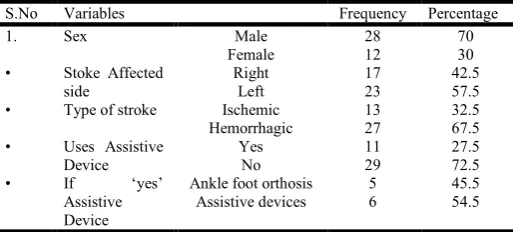
Table I. It illustrates the demographical data used in the study
S.No Variables Frequency Percentage
1. Sex Male 28 70
Female 12 30
• Stoke Affected side
Right 17 42.5
Left 23 57.5
• Type of stroke Ischemic 13 32.5
Hemorrhagic 27 67.5
• Uses Assistive Device
Yes 11 27.5
No 29 72.5
• If ‘yes’
Assistive Device
Ankle foot orthosis 5 45.5 Assistive devices 6 54.5
Table II & III illustrates, the collected data were subjected to paired ‘t’ test individually for experimental group I and experimental group II respectively.
Table II. Paired ‘t’ test for experimental group I
Variables t – tab value t – cal value
Balance 2.145 5.25
Walking speed 2.145 6.35
[image:3.595.318.548.199.242.2]Walking distance 2.145 6.32
Table III. Paired ‘t’ test for experimental group II
Variables t – tab value t – cal value
Balance 2.145 12.54
Walking speed 2.145 7.98
Walking distance 2.145 8.35
[image:3.595.312.551.379.422.2]Later, the ‘t’ cal value is compared with t-tab value for (n-1) degree of freedom at 5% level of significance. ‘t’ calculated value > ‘t’ table value. Further the data were statistically analyzed using the paired t-test. The data were subjected to independent t-task to analysis any significant difference between experimental group I and experimental group II. Table iv shows the comparison of the ‘t’ value (t table & calculated values).
Table IV. Independent ‘t’ test
Variables t – tab value t – cal value
Balance 2.050 4.35
Walking speed 2.050 5.27
Walking distance 2.050 6.58
The ‘t’ table value for (n1+n2-2) degrees of freedom at 5%
level of significance was taken. ‘t’ calculated value > ‘t’ table value. These statistical test suggests that when the two intervention are applied to respective groups, they indicate positive and good results in term of walking distance, regain strength and control of the lower limbs. Whereas when both groups are compared there is very minimal significance changes. According to the generated result it can be suggested that these two interventions can be given for stroke patient for better and early recovery and can be included in the stroke rehabilitation treatment protocol.
DISCUSSION
[image:3.595.35.292.688.804.2]another study, greater improvements in over ground gait speed and impaired single limb stance were observed in ambulatory stroke survivors who received therapist- versus robotic-assisted LT. Although larger changes were observed in subjects with less severe gait deficits, the lack of interaction between main factors of treatment and locomotor impairment indicates that therapist-assisted LT was superior for all chronic ambulatory subjects (Robertson et al., 1997). Spontaneous recovery happens naturally to most patients due to resolution of edema or reperfusion of the ischemic penumbra. Much of the recovery after the initial two weeks is likely due to brain plasticity. Functional reorganization of sensory and motor systems is well documented after stroke. Regaining lost sensory and motor abilities usually happens during the first few weeks of recovery, but steady progress can take place over a longer period of time. Recovery mechanisms may include unmasking of pre-existing connections, activity-dependent synaptic changes, sprouting of new axon terminals and formation of new synapses. Functional neuroimaging studies showed that rehabilitation programs enhance reorganization after stroke. There is strong evidence that stroke patients benefit from early-organized multidisciplinary care and exercise programs in which functional tasks are directly and intensively trained. It has been shown that functional specificity and the progressive complexity of tasks being trained are the key variables of motor training and cortical reorganization. Hence the combined effects have helped in improving walking balance; distance covered and speed in post-stroke patients.
Conclusion
The study suggest that it has been observed that both Bobath intervention and Functional task-oriented intervention are effective in chronic stroke rehabilitation. Whereas when both groups are compared there is very minimal significance changes seen. According to the generated result it can be suggested that these two interventions can be given for stroke patient for better and early recovery and can be included in the stroke rehabilitation treatment protocol. Moreover, Functional task-oriented intervention gives better response and is more effective than Bobath intervention in enhancing walking balance, distance and speed in post-stroke patients. A long term follow up studies with large populations are warranted to see the effectiveness of the intervention which might reveal the higher statistical significance and give more lucid conclusion in this regard. Further research should focus on defining clinically meaningful change in SMWT performance in patients with stroke. And also on identify interventions that benefit patients with different levels of walking deficit.
Conflicts of interest
No conflicts of interest among authors.
REFERENCES
Ada L, Dean CM, Hall JM, Bampton J, Crompton S. 2003. A treadmill and overground walking program improves walking in persons residing in the community after stroke: A placebo-controlled, randomized trial. ArchPhys Med
Rehabil., 84:1486 –1491.
Ashburn A, Partridge C, De Souza L. 1993. Physiotherapy in the rehabilitation of stroke: a review. Clinical
Rehabilitation, 7:337–345.
Barbeau H. 2003. Locomotor training in neurorehabilitation: Emerging rehabilitation concepts. Neurorehabil Neural
Repair, 17:3–11.
Bobath B. 1990. Adult Hemiplegia: Evaluation and Treatment. Oxford, England: Heinemann.
De Quervain IA, Simon SR, Leurgens S, et al. 1996. Gait pattern in the early recovery period after stroke. J Bone
Joint Surg Am., 78:1506–1514.
Edgerton VR, Tillakaratne NJ, Bigbee AJ, de Leon RD, Roy RR. 2004. Plasticity of the spinal neural circuitry after injury. Annu Rev Neurosci., 27:145–167.
George Hornby, T. PhD, MPT; Donielle D. Campbell, PTA; Jennifer H. Kahn, DPT; Tobey Demott, MPT; Jennifer L. Moore, MPT; Heidi R. Roth, MSPT Stroke. 2008; 39:1786-1792; Enhanced Gait-Related Improvements After Therapist- Versus Robotic-Assisted Locomotor Training in Subjects With Chronic Stroke.
Jorgensen H, Nakayama H, Raaschou H, Olsen T. 1995. Recovery of walking function in stroke patients: the Copenhagen study. Arch Phys Med Rehabil., 76: 27–32. Jorgensen HS, Nakayama H, Raaschou HO and Olsen TS.
1995b., Recovery of walking function in stroke patients: the Copenhagen Stroke Study. Arch Phys Med Rehabil., 76:27-32.
Kappelle LJ, Adams HP, Jr, Heffner ML, Torner JC, Gomez F, Biller J. 1994. Prognosis of young adults with ischemic stroke. A long-term follow-up study assessing recurrent vascular events and functional outcome in the Iowa Registry of Stroke in Young Adults. Stroke, 25:1360–5. Lai SM, Alter M, Friday G, Sobel E. 1995. Prognosis for
survival after an initial stroke. Stroke, 26:2011–5.
Lennon SM. 1996. The Bobath concept: a critical review of the theoretical assumptions that guide physiotherapy practice in stroke rehabilitation. Physical Therapy Reviews, 1:35– 45.
Lord SE, Rochester L. 2005. Measurement of community ambulation after stroke: Current status and future developments. Stroke, 36: 1457–1461.
Lynch M, Grisogono V. 1991. Strokes and Head Injuries: A Guide for Patients, Families, and Carers. London, England: John Murray; 23, 114–116.
Macko RF, Ivey FM, Forrester LW, Hanley D, Sorkin JD, Katzel LI, Silver KH, Goldberg AP. 2005. Treadmill exercise rehabilitation improves ambulatory function and cardiovascular fitness in patients with chronic stroke: A randomized, controlled trial. Stroke, 36:2206 –2211. Moore A, Schurr K, Wales A, et al. Observation and analysis
of hemiplegic gait: swing phase. Australian Journal of
Physiotherapy, Vol. No 39., Issue No.4 & Page
No.259-267.
Moseley A,Wales A, Herbert R, et al. 1993. Observation and analysis of hemiplegic gait: stance phase. Australian
Journal of Physiotherapy, 39:259–267.
Nyberg L, Gustafson Y. 1996. Using the Downton Index to predict those prone to falls in stroke rehabilitation. Stroke 27:1821–25.
Olney S, Grif. n M, McBride I. 1994. Temporal, kinematic, and kinetic variables related to gait speed in subjects with hemiplegia: a regression approach. PhysTher., 74: 872– 885.
Olney S, Grif. n M, Monga T, McBride I. 1991. Work and power in gait of stroke patients. Arch Phys Med Rehabil., 67: 92–98.
PEURALA, SINIKKA H. 2005. Rehabilitation of Gait in Chronic Stroke Patients. Series of Reports, No 74, Department of Neurology, University of Kuopio, 108 p. Plummer P, Behrman AL, Duncan PW, Spigel P, Saracino D,
Martin J, Fox E, Thigpen M, Kautz SA. 2007. Effects of stroke severity and trainingduration on locomotor recovery after stroke: A pilot study. Neurorehabil Neural Repair, 21:137–151.
Pohl M, Mehrholz J, Ritschel C, Ruckriem S. 2002. Speed-dependent treadmill training in ambulatory hemiparetic stroke patients: A randomized controlled trial. Stroke, 33:553–558.
Prasad K. 1999. “Epidemiology of cerebrovascular disorders in India”. In recent concept in stroke by Bansal BC(ed) Indian college of physicians New Delhi, 4; 19.
Preventing stroke: saving lives around the world, Strong, Kathleen et al. The Lancet Neurology, Volume 6, Issue 2, 182 - 187
Robertson I H, Ridgeway V, Greenfield E, et al. 1997.Motor recovery after stroke depends on intact sustained attention: A 2-year follow-up study. Neuropsychology, 11:290–5 Roth EJ, Merbitz C, Mroczek K, Dugan SA, Suh WW. 1997.
Hemiplegic gait. Relationships between walking speed and other temporal parameters. Am J Phys Med Rehabil., 76:128 –133.
Ryerson S, Levitt K. 1997. Functional Movement Reeducation. London, England: Churchill Livingstone; 1–13, 20, 26–43, 58–68, 458–468.
Sharp SA, Brouwer BJ. 1997. Isokinetic strength training of the hemiparetic knee: effects of function and spasticity.
Arch Phys Med Rehabil., 78: 1231–1236
Sullivan KJ, Knowlton BJ, Dobkin BH. 2002. Step training with body weight support: Effect of treadmill speed and practice paradigms on poststrokelocomotor recovery. Arch
Phys Med Rehabil., 83:683– 691.
Tombaugh TN. 2005. Test-retest reliable coefficients and 5-year change scores for the mmse and 3ms. Arch
ClinNeuropsychol., 20:485–50.
Visintin M, Barbeau H, Korner-Bitensky N, Mayo NE. 1998. A new approach to retrain gait in stroke patients through body weight support and treadmill stimulation. Stroke, 29:1122–1128.
Winter D. 1991. The biomechanics and motor control of human gait: normal, elderly, and pathological. Waterloo: University of Waterloo Press.
Winter DA, Patla AE, Frank JS, Walt SE. 1990. Biomechanical walking patterns changes in the fit and healthy elderly. PhysTher., 70:340–347.