Utilization of Special Potential Scan Programs for Cyclic
Voltammetric Development of Different Nickel
Oxide-Hydroxide Species on Ni Based Electrodes
Diego E. Pissinis, Leónides E. Sereno, Juan M. Marioli*
Departamento de Química, Universidad Nacional de Río Cuarto, Río Cuarto, Argentina Email: *[email protected]
Received July 21, 2011; revised September 24, 2011; accepted November 1, 2011
ABSTRACT
Special potential scan programs were designed for cyclic voltammetric development of β-NiOOH or γ-NiOOH/
β-NiOOH mixtures on the surface of nickel or nickel-chromium (80:20) alloy electrodes in NaOH 0.10 M. The pro- grams consisted on changing the anodic or cathodic switching limit to facilitate the chemical reactions taking place ei- ther between Ni(II) hydroxides or between Ni(III) oxides-hydroxides. The electrochemical charge density under the oxidative wave, observed at Ni or Ni-Cr electrode surfaces at approximately 0.48 V (vs SCE), remained almost con- stant with the number of cv cycles after approximately 600 cv cycles at 0.050 V/s. Thus, it can be suggested that a stable proportion of Ni(II)/Ni(III) oxides-hydroxides was obtained on the electrode surfaces. The relative amounts of
β-NiOOH or γ-NiOOH species were calculated from the electrochemical charges under their reduction waves in the voltammetric experiments. Higher charge densities were always obtained with Ni-Cr alloy electrodes as compared to pure Ni electrodes. Linear relationships were obtained in our study on the dependence of the oxidative peak current with the square root of the scan rate at a scan rate range between 0.01 V/s and 0.16 V/s.
Keywords: Nickel; Nickel-Chromium Alloy; Oxides; Cyclic Voltammetry
1. Introduction
Since the 1970s, the oxidation of organic compounds on nickel electrodes in alkaline solutions has been exten-sively investigated [1,2]. Recently, nickel hydroxide ele- ctrodes have shown good electrocatalytic properties for the oxidation of aspirin [3], methane [4], and acetylcho-line [5]. The nickel electrode exhibit catalytic activity in the oxidation of a wide variety of organic compounds in alkaline solutions. The Ni(III) species is generated on the electrode surface at potentials in the region 0f 0.4 V to 0.5 V vs Ag/AgCl. The reactions are [6-11] (and refer-ences therein):
2Ni 2OH Ni OH + 2e (1)
2 2Ni OH OH NiOOH + H O + e (2)
2NiOOH Analyte Ni OH Radical
(3)
Radical Product e (4) Reaction (1) represents the oxidation of Ni(0) to Ni(II) in alkaline solutions, which occurs at approximately −0.8 V (vs Saturated Calomel Electrode, SCE). Reaction (2) represents the reversible oxidation of Ni(II) to Ni(III), which is observed at nearly 0.4 V to 0.6 V vs SCE. Reac-
tion (3) stands for the electrocatalytic oxidation of an analyte to regenerate Ni(II) species and to produce a radical, which is further oxidized to products (Reaction 4). Taking into account that electrocatalytic processes depend on the ability of the electroactive molecules to interact with the electrode [12], it is then important to understand as far as possible the electrochemistry of the electrode surface itself.
An advance in the understanding of the reactions of the nickel hydroxide electrode was made by Bode [13], who established the existence of two forms of Ni(OH)2
and two forms of NiOOH. According to Bode et al., electrochemical reactions of the Ni(OH)2/NiOOH
elec-trode can be summarized as in Scheme 1.
-Ni(OH)2 + OH- -NiOOH + H2O + e
-Ni(OH)2 + OH- -NiOOH + H2O + e
A
B
C D
Scheme 1. Pathways A and B represent one electron elec-trochemical reactions, and pathways C and D represent chemical reactions; the arrows represent the most probable reaction path.
It is well known that the alloying of some metals can markedly lower their corrosion rate. As regards nickel, it has been suggested that its corrosion resistance is con- siderably improved by alloying it with chromium [14-16]. A two-layer structure, with an inner oxide part formed directly at the metal surface and an outer hydroxide part in contact with the electrolyte, was proposed for Ni-Cr alloys in 1 M NaOH solutions as deduced from X-Ray photoelectron spectroscopic examinations of the electro- chemically formed passive layers. The oxide layer con- sisted mainly of Cr2O3 and NiO entered only in the
transpassive potential range. Moreover, it was suggested that Ni is enriched at the metal surface and it forms the outer hydroxide layer in contact with 1 M NaOH, espe- cially at positive potentials and for long passivation times. Some soluble Cr(VI) was found within the hydroxide layer. However, due to the low solubility of Ni(OH)2 in
alkaline solutions, it has been suggested that Cr(VI) may be trapped within the hydroxide layer [16]. Above the passivation potential, Ni(III) species also accumulated within the passive layer, behaving as dopants and causing a shift of the Fermi level to lower energy.
We reported earlier that nickel-chromium alloys were good electrode materials for the electrochemical detec- tion of molecules after HPLC separations using alkaline mobile phases [6,7,17]. It was observed that in alkaline solutions the Ni-Cr (80:20) alloy had a cyclic voltam- metric (cv) response in the potential range from 0.00 V to 0.60 V (vs SCE) similar to that of a pure Ni electrode [18]. It was also reported there that the α, β and γ crys- tallographic forms of Ni oxides-hydroxides found at pure Ni electrodes were also present in the Ni-Cr (80:20) alloy electrode. However, the electrochemical charge density and peak current of the oxidative wave obtained at ap- proximately 0.48 V (vs SCE) at the Ni-Cr alloy elec- trode were always higher than those obtained at pure Ni electrodes under similar experimental conditions. Thus, we considered it important to find the perturbation condi- tions under which the Ni(OH)2/NiOOH species present at
the Ni-Cr working electrodes may invariably be observed in a stable proportion. These perturbation conditions will allow us to begin surface studies to compare the ox- ides-hydroxides obtained at Ni or Ni-Cr alloy electrodes under similar potentiodynamic perturbations.
In this study, we developed a cyclic voltammetric procedure to obtain β-NiOOH or γ-NiOOH/β-NiOOH mixtures on Ni or Ni-Cr (80:20) alloy electrodes surfaces. The quantification of each NiOOH species was per- formed by fitting the cv response of the reverse scan with Lorentzian functions. This procedure allowed us to eva- luate the effect of the working electrode perturbation waveform on the production of different nickel oxide- hydroxide species. The number of cv cycles needed to obtain a steady voltammogram (indicating that the oxide
layer on the electrode did not grow noticeably) was also assessed. Finally, we studied the effect of the potential scan rate on the electrode response. Linear relation be- tween the anodic peak current and the square root of the scan rate were studied and it was stated that the global electrode process is controlled by diffusion. The cyclic voltammetric electrode conditioning reported here allows obtaining a stable proportion of oxides-hydroxides on the surface of nickel or nickel-chromium alloys. This condi- tion is important to begin with surface analysis experi- ments of nickel and nickel-chromium alloy electrodes.
2. Experimental
2.1. Electrode Preparation and Software
Working electrodes were made of Ni (Goodfellow, Eng- land, 99.99+%), or Ni-Cr (80:20) (Goodfellow, England, catalog number NI055150) wires of 0.10 cm diameter embedded in Teflon® shrinkable tubes (See
Scheme 2).
The metallic wire (approximately 10 cm long) was in- troduced into the Teflon® shrinkable tube (9 cm long), so
nearly 1 cm was used for electric contact. This assembly was transferred to an electrical oven at approximately 300˚C until a complete shrinkage of the Teflon® tube was
observed. The electrodes were polished with sand paper and then with fine alumina down to 0.05 µm, rinsed with triply distilled water, sonicated during 5 minutes, rinsed again with triply distilled water and immersed in the electrochemical cell. The exposed geometrical area ob- tained after polishing was ca. 7.8 × 10⁻³ cm2. Before cv
experiments, –1.00 V was applied to the working elec- trodes for about 60 seconds in order to minimize oxides formation. A platinum foil of a large area (ca. 0.8 cm2)
was used as the counter electrode. All potentials were measured with reference to the Saturated Calomel Elec- trode (SCE). The SCE was held in a separate compart- ment of the electrochemical cell finishing in a Luggin capillary.
The electrochemical cell was a conventional two- compartment glass cell. Autolab models PGSTAT-30 or PGSTSAT-12 potentiostats were used to control the po- tential between the working and reference electrodes. The potentiostats were controlled by PC compatible com- puters using the PGSTAT software version 4.9. Graphics were obtained with a conventional printer. The tempera- ture of the electrochemical cell was kept at 25.5˚C ± 0.2˚C.
To facilitate the growth of each crystallographic form of NiOOH, two working electrode perturbation wave-forms (Figure 1) were developed. The working electrode
potential was swept over the potential range from 0.00 V to 0.60 V during 5 cv cycles, then a smaller potential range (0.50 V) was swept during 10 cv cycles, and finally an even smaller potential range (0.40 V) was swept dur-ing the remaindur-ing cv cycles. Thus, by shifting the small-est potential sweep range either in the anodic or in the cathodic direction (see Figure 1, panels A and B, from
now on treatment A and treatment B, respectively), we were able to grow the crystallographic forms of NiOOH. The underlying principle of these waveforms was that the oxidized species remained in their oxidized form for a longer time by shifting the smallest potential sweep range toward the anodic direction, thus favoring the chemical reaction β-NiOOH γ-NiOOH (reaction D in Scheme 1). On the other hand, reaction C could be fa- vored by shifting the smallest potential sweep range to- ward the cathodic direction, where reduced species re- mained longer times. Thus, treatment A allowed us to obtain an electrode surface with almost even quantities of
β-NiOOH and γ-NiOOH, while treatment B allowed us to obtain preferentially β-NiOOH. These results were ob-tained either with Ni or Ni-Cr alloy electrodes (See Fig-ure 1).
The fitting of the voltammetric traces was performed by using Origin 6.0 built-in Lorentzian function:
0 2 2
c
2A w
y y
π 4(x x ) w
(5)
where y0 is the offset, xc is the function center (peak po-
tential in our case), w the width of the wave, and A represents the area under the curve.
2.2. Preparation of Chemicals
Sodium hydroxide solutions were prepared with triply distilled degassed water and analytical grade reagents (Merck, Argentina). They were standardized with potas- sium hydrogen phthalate (Merck, Argentina). The solu- tions were degassed by bubbling high purity N2 prior to
electrochemical experiments. Contact with atmospheric CO2 was minimized by maintaining N2 over the solutions
during the electrochemical experiments.
3. Results and Discussion
In a previous study using Ni-Cr (80:20) alloy electrodes, we showed that the voltammetric behavior of the alloy in the potential range from –1.10 V to 0.00 V (vs SCE) in 0.10 M NaOH solution was similar to that of pure Ni electrodes in the same electrolyte [18]. The presence of chromium in the electrode was only noticeable on the i/E
Figure 1. Potential-time programs used as working elec
arting at –1.0 V (vs ECS) [16]. Similar results were
ve 0.0 V
3.1. Voltammetric Response of Nickel and
Figu Ni-Cr
to the oxidation of Ni(OH)2 to NiOOH, as represented in -trode perturbation waveforms for oxide growth at Ni and Ni-Cr alloy electrode in 0.10 M NaOH. (a) Waveforms used to grow -NiOOH and β-NiOOH; (b) Waveforms used to grow preferentially β-NiOOH.
st
found by other authors in X-rays photoelectron spectros-copy (XPS) examinations of the electrochemically formed passive layers on Ni-Cr alloys [16]. They found that the XPS analysis of the passive layer formed at a potential range from –1.0 V to 0.0 V showed that Ni(II) and Cr(III) oxides and hydroxides were developed. An increase of the hydroxide and the oxide part of the XPS signal and a related decrease of the metal contribution was found when the passivation potential was higher than –0.5 V. We have found that no significant currents were observed on the voltammetric i/E traces after con-tinuous cycling of the Ni-Cr electrode at the potential range from –1.0 V to 0.0 V in 0.1 M NaOH [18].
Ni(III) species are only formed at potentials abo (vs SCE) [19]. The presence of NiOOH on the elec- trode surface is important for the electrocatalysis of or- ganic molecules. Thus, the characterization of the elec- trochemical behavior of Ni and Ni-Cr alloy electrodes in alkaline solution at the potential range between 0.0 V and 0.6 V is of crucial importance for understanding the mechanism of electro-oxidation of organic molecules. In the following section, we show the results of a systematic study of the voltammetric behavior of Ni and Ni-Cr al- loys in 0.10 M NaOH.
Nickel-Chromium Electrodes at the Potential Range from 0.00 V to 0.60 V
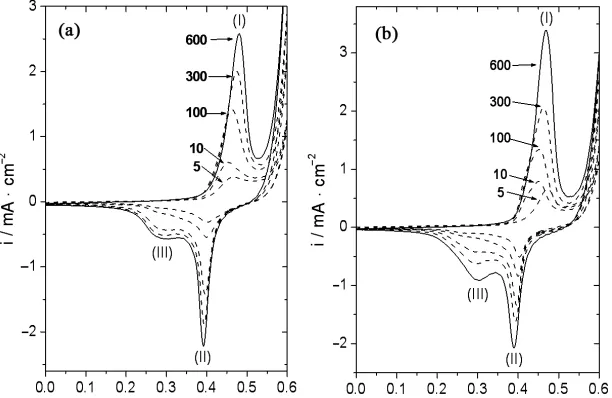
re 2 shows the i/E trace obtained with Ni and
alloy electrodes after different numbers of cv scans at a potential range between 0.00 V and 0.60 V in 0.10 M NaOH. An oxidative wave (peak I) was observed at the potential range between 0.40 V and 0.50 V at either Ni or Ni-Cr electrodes (Figure 2) during the positive going
[image:3.595.311.539.86.223.2]ve 0.4 V was notice- ab
t the potential range from 0.0 V to 0.6 V indicates th
electrochemical steps A and B in Scheme 1. A reductive wave (peak II) was observed at a potential range from 0.35 V to 0.45 V during the negative going potential scan. This wave may be complementary to the anodic one (Equation (1)). We identified this reductive wave as due to the reduction of β-NiOOH [18].
Jabs et al. [16] reported that the formation of Ni(III) species at electrode potentials abo
the negative going potential scan. This new wave was identified as due to the reduction of γ-NiOOH [18].
Different authors have reported on the multiplicity of anodic and cathodic voltammetric current peaks at Ni oxide electrodes [20,21] (and references therein). The peak current multiplicity was related to the presence of different Ni(OH)2 species on the electrode surface. Arvía
et al. [20,21] developed experimental methodologies that enabled them to separate and study the processes occur- ring at Ni(OH)2 surfaces under potentiodynamic condi-
tions in alkaline solutions. By applying complex perturb- bation conditions to the working electrode, or by working at different temperatures, Arvía et al. were able to sepa- rate the anodic voltammetric current peak into two cur- rent peaks, indicating the presence of at least two differ- ent species on the electrode surface. They found that the electro-oxidation of the more unstable species was char- acterized by the first anodic current peak which was lo- cated at approximately 0.61 V and that the one corre- sponding to the most stable species was located at approxi-mately 0.65 V (referred to the standard hydrogen elec-trode). Therefore, they suggested that the energy dif- ference for electro-oxidation was in the range of 0.5 - 1.0 kcal·mol–1, a value too small for structural rearrange-
ments involving bond breaks of any type. The splitting of the cathodic current peak occurred similarly to that of the anodic current peak.
le on both the i/E voltammetric trace and the XPS data. A redox system was observed on the i/E trace as a well-defined pair of anodic and cathodic waves at a po- tential range from 0.3 V to 0.5 V. On the other hand, a shift of the binding energies of all oxidic and hydroxidic XPS lines was informed. This shift could be related to the doping of the passive layer with higher valent Ni(III) species. They suggested a two-layer model for the pas- sive layers formed at Ni-Cr (80:20) alloy electrodes, an inner oxide layer in contact with the metal and an outer hydroxide layer in contact with the electrolyte. The XPS data showed that Ni(OH)2 and Cr(OH)3 are present in the
outer hydroxide layer, Ni(III) and some soluble Cr(VI) are only observed in the transpassive potential range [16]. Only the redox couple Ni(II)/Ni(III) was observed on the i/E voltammetric trace at a potential range from 0.0 V to 0.6 V.
A review of our cv results with Ni and Ni-Cr elec- trodes a
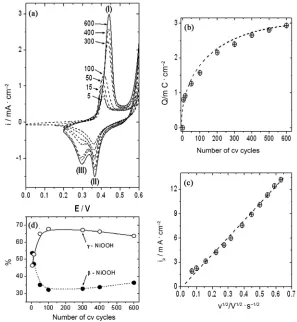
at the complexity of both the oxidative and the reduc- tive waves increased with the number of cv scans. As shown in Figure 2, panels A and B, the peak current of
the oxidative wave increased with the number of cv scans. On the other hand, a new reductive wave developed (peak III, EpIII at a potential range between 0.25 V and
0.35 V) on both Ni and Ni-Cr electrode surfaces during
In our work, a further analysis of the results obtained at Ni (Figure 2, panel (a)) and Ni-Cr (Figure 2, panel B)
[image:4.595.146.452.508.707.2]showed that the potential of the oxidative current peak decreased during the first few cv scans, then increased during approximately 150 cv scans, and finally became constant. At nickel electrodes, the oxidative current peak potential was nearly 0.47 V after 5 cv cycles, while it
became 0.45 V after 10 cv cycles. Finally, it slowly in- reased and became co
surface concentrations of species. Thus, the charges ob-c nstant at approximately 0.48 V
H were pro- du
tained under waves II and III were representative of the
s is symmet- ric
after 600 cv cycles. At nickel-chromium alloys, the oxi- dative current peak potential observed after 5 cv cycles was nearly 0.47 V. It decreased to approximately 0.46 V after 10 cv cycles, and then slowly increased until it be- came constant at nearly 0.47 V after 600 cv cycles. Moreover, an analysis of the first derivative of the cur- rent with respect to potential (i/E, results not shown) clearly showed that a shoulder developed at potentials slightly smaller than EpI (i.e. 0.42 V) for the Ni-Cr elec-
trode during the first 100 cv scans (see for example trace 10 in panel B, Figure 2), and then merged with peak I.
This shoulder may be taken as indicative of an electro- chemical process taking place at potentials very close to the main peak potential. On the contrary, this shoulder was not observed (or it was hardly distinguishable) at the Ni electrode. Finally, both anodic and cathodic peak charges and peak currents observed at the Ni-Cr elec- trode were higher (approximately 35% after 600 cv scans) than those observed with the Ni electrode.
The results obtained at Ni-Cr electrodes showed that at least two crystallographic forms of NiOO
ced during the voltammetric cycles. Moreover, since the overall anodic and cathodic charges remained practi-cally constant after the stabilization period, the relative proportion of oxidized Ni species (in principle β-NiOOH and γ-NiOOH) could be said to depend on the electrode perturbation waveform employed. Then, assuming that the charge under peak II and peak III represented each a single electrochemical reaction and that the dissolution of species was negligible, it could be suggested that the charge under each cathodic wave was indicative of the
amount of β-NiOOH and γ-NiOOH produced during the positive going potential scan, respectively.
Considering that the cyclic voltammetric response of surface confined electron transfer processe
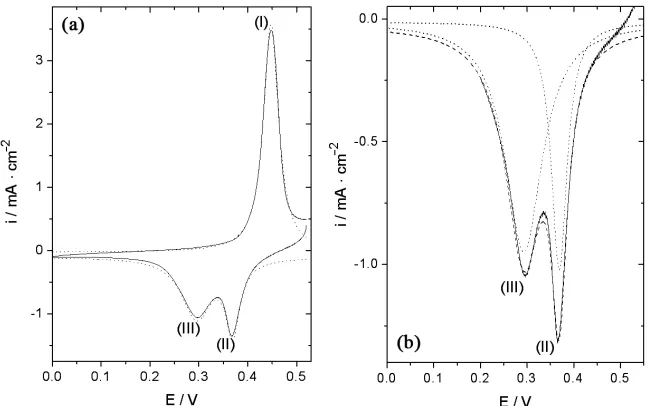
[image:5.595.136.463.494.697.2]al [22], we tried various probability distribution equa- tions to fit the experimental data. The best results were obtained with the Lorentz distribution (or Cauchy-Lor- entz distribution). To obtain the electrochemical charge of the cathodic processes, each cathodic peak was fitted with a Lorentzian function with the following restraints: 1) the total electrochemical charge of the cathodic proc- esses must be equal to that of the anodic process; 2) the addition of the individual electrochemical charges in the cathodic trace must be equal to that of the total cathodic process; and 3) the peak potentials obtained from the Lorentzian fitting process must be equal to those ob- tained experimentally. For the anodic trace, only the fit- ting obtained after 600 voltammetric cv scans is shown in
Figure 3 (panel (a), dotted line) as only one peak was
observed during the positive going potential scan. In re- gards to the reductive waves, the cathodic i-E trace was deconvoluted into two Lorentzian components, and the area (charge) under each peak was then calculated. Thus, the individual contribution of each crystallographic form (β-NiOOH andγ-NiOOH) to the total cathodic current could be estimated at different numbers of cv scans. As an example, Figure 3, panel B, shows the reconstruction
of the experimental cathodic trace observed after 400 cv
scans. Dotted lines represent the individual reduction of
β-NiOOH to β-Ni(OH)2 and of γ-NiOOH to α-Ni(OH)2 at
approximately 0.37 V and 0.30 V, respectively. The dashed
Figure 3. (a) Lorentzian fits of the anodic and cathodic traces obtained after 600 cv cycles. v = 0.050 V/s, 0.10 M NaOH. Ex-perimental current (——), sum of individual Lorentzian fits (- - -); (b) Lorentzian fit of the cathodic tra obtained after 400 cv scans. Individual Lorentzian fits (····), sum of individual Loentzian fits (- - -), experimental cathodic current (——).
line represents the sum of the individual contributions. The experimental cathodic current is plotted as a solid ine. A good match between the experimental cathodic
600 cv cycles are also shown in Figure 4, panel A. The
potential for peak current I shifted to slightly higher val-ues with the number of cv cycles, and the charge l
current and the sum of the individual contributions was obtained. Good matches were obtained in all cases (dif-ferent numbers of cv scans). Thus, the amount of each oxide-hydroxide crystallographic form could be esti-mated by assuming that one electron was transferred in each reductive step. This procedure was applied at dif- ferent numbers of cv scans and allowed us to evaluate the differences in growth of the oxide-hydroxide species obtained by using each of the electrode potential sweep program developed.
3.2. Oxides-Hydroxides Formation at Ni Electrodes
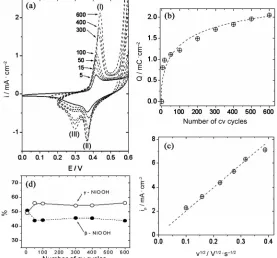
Approximately equal amounts of β-NiOOH and γ-N were obtained at Ni electrodes (peaks II and III, Fi
A) by using t
iOOH
gure 4,
panel reatment A. The first five cycles were
under
of this
performed by sweeping the electrode potential between 0.00 V and 0.60 V. The fifth cycle is shown in Figure 4,
panel A (trace 5). Then, the cathodic inverting potential was changed to 0.10 V during the following 10 cycles. The fifteenth cycle is shown in Figure 4, panel A (trace
15). Finally, the cathodic inverting potential was changed to 0.20 V for the remaining part of the experiment (600
cv cycles). Traces obtained at 50, 100, 300, 400, and
[image:6.595.159.436.435.693.2]this oxidative peak grew until it remained almost con-stant at approximately 2.04 mC/cm2 (
Figure 4, panel B).
On the other hand, the electrochemical response ob-served during the cathodic scan also evolved with the number of cv cycles. The charge under the reductive wave II increased until it remained almost constant. Be-sides, a new peak developed (peak III) at approximately 0.30 V. The charge under this wave also increased until it remained constant after 600 cv cycles. Thus, the total sum of charges under the cathodic waves remained con-stant after the 600 cv cycles at ca. 2.12 mC/cm2, which
was very close to the anodic charge, so the ratio
QpI/(QpII + QpIII) = 0.96. This little difference may be attributed to the proximity of the waves to the oxygen evolution potential. Nevertheless, the closeness ratio to unity could be said to indicate that the electro-chemical reactions were reversible, in the sense that all the species oxidized during the positive going potential scan were reduced during the reverse scan. It could also indicate that the dissolution of oxide species from the electrode surface was negligible. Moreover, approxi-mately the same anodic and cathodic charges were ob-tained in the voltammetric experiments after the elec-trode was left in 0.1 M NaOH during a week, pointing to the stability of the film.
We considered that after 600 cv cycles the species at the electrode surface had attained a stable concentration, nd we studied the electrode response at different scan
and γ-NiOOH, respectively, calculated after 5, 15, 50, 100, 300, 400 and 600 cv cycles. It is clear from Figure 4,
panel D, that γ-NiOOH gr a
rat
layer growth. The ca
ew preferentially during the
ent B. The first five cv cycles were pe
es at a scan rate range between 0.01 and 0.16 V/s (Figure 4, panel (c)). The current at peak I increased
linearly with the square root of the potential scan rate, which could be indicating that the global electrochemical process is diffusion controlled. It has been suggested in the literature that diffusion of species inside the oxide film is the dominating process at these scan rates [23]. Gosanlves et al. suggested that the redox processes in aqueous alkali metal hydroxides may involve incorpora-tion/expulsion of H3O+ and/or OH– and/or hydrated ca-
tions, as well as solvent transfer [24].
Figure 4, panel D, shows the variation of the relative
amounts of β-NiOOH and γ-NiOOH calculated at differ- ent stages of the oxides-hydroxides
lculations were performed from the Lorentzian fits of the cathodic traces, as explained before. The points (black dots and open circles) indicate the amounts of β-NiOOH
first few cv cycles. After that, the relative amounts of
γ-NiOOH and β-NiOOH remained almost constant with the number of voltammetric cv cycles, although the ox- ide-hydroxide layer grew, as can be deduced from the increase of the oxidative electrochemical charge with the number of cv cycles.
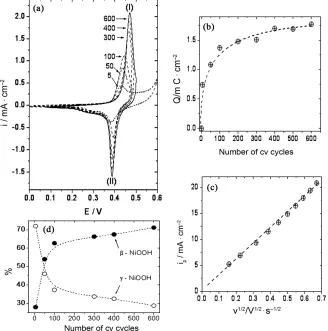
[image:7.595.118.476.343.696.2]A clear growth of β-NiOOH was observed (peak II,
Figure 5, panel (a)) when the working electrode was
perturbed with treatm
rformed by sweeping the electrode potential between 0.00 V and 0.60 V (trace 5 in Figure 5, panel (a)). Then,
other ten cv cycles were performed at a potential range between 0.00 V and 0.50 V (Figure 5, trace 15). Finally,
the working electrode potential was scanned between approximately 0.10 V and 0.50 V during the remaining part of the experiment. Traces obtained at 50, 100, 300, 400 and 600 cv cycles are also shown in Figure 5, panel
A. The charge measured under the oxidative wave after 600 cv cycles was ca. 1.31 mC/cm2. On the other hand,
he electrochemical response observed during the nega-
Although the formation of a little amount of γ-NiOOH may be deduced from the reductive wave observed at a po
t
tive going potential scan also changed with the number of cv cycles. The growth of the wave ascribed to the re- duction of β-NiOOH was the main process observed on these scans. The cathodic trace also attained a stable electrochemical response after approximately 600 cv cy- cles, and the charge measured under the reductive wave II was ca. 1.37 mC/cm2. Again, the ratio of anodic to
cathodic charges was close to one (0.96), which may be interpreted as indicating the reversibility of the electro-chemical system.
After approximately 300 cv cycles, the charge meas- ured under the oxidative wave I remained almost con- stant, as observed in Figure 5, panel B. Then, it seemed
re
tential range from 0.30 V to 0.35 V, it is clear that the de
trodes
elop- asonable to think that the species on the electrode sur-
face had attained a stable concentration, and we studied the electrode response with the scan rate at a scan rate range between 0.01 and 0.16 V/s. Again, we observed a linear relationship between ipI and the square root of the
scan rate, which may be attributed to the diffusion of species inside the oxide film covering the electrode surface.
velopment of β-NiOOH was the main process taking place by using treatment B. A preferential development of β-NiOOH against γ-NiOOH can be deduced from the analysis of the electrochemical charges under voltam-metric peaks II and III, represented in Figure 5, panel D,
as the relative amounts of oxide-hydroxide species. This development is evident during the first hundred cv cycles. After that, the relative amounts of γ-NiOOH and - NiOOH remained almost constant until the end of the stabilization period (600 voltammetric cv cycles). The final relative amounts of β-NiOOH and γ-NiOOH ob- tained after the 600 cv cycles stabilization period by ap- plying treatments A and B at Ni electrodes are listed in
Table 1.
[image:8.595.147.444.375.697.2]3.3. Oxides-Hydroxides Formation at Ni-Cr Elec
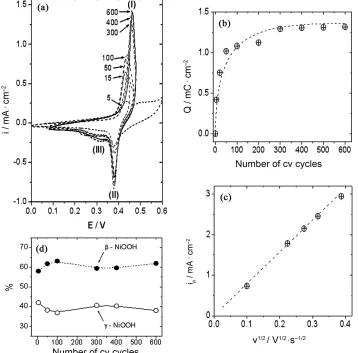
Figure 6, panel (a), shows the oxide-hydroxide dev
ment obtained with Ni-Cr (80:20) alloy electrodes by
Table 1. Relative amountsa of oxide-hydroxides obtained with different working electrode perturbation programs.
Ni NiCr
1Ab 1Bb 1Ab 1Bb
β-NiOOH 44 62 37 72
γ-Ni OH O 56 38 63 28
aAmount rcent) of β- H and iOOH ined at Ni and
Ni-Cr ele ifferent w ng ele pertur tion pro ms.
bWorkin rturbation w form (r o Figu
rodes as ompared to Ni electrodes (compare panels (a) in
Fig-.
ith the square root of
lculated from the Lorentzian fits of the cathodic tra
s (charge pe ctrodes using d
NiOO orki
γ-N ctrode
obta
ba gra g electrode pe ave efer t re 1).
using treatment A. The formation of higher quantities of
γ-NiOOH was observed at Ni-Cr alloy elect c
ures 4 and 6). The electrochemical charge measured
un-der peak I at Ni-Cr electrodes was higher than that re-lated to the same process at pure Ni electrodes, i.e. ap- proximately 2.95 mC/cm2 vs 2.04 mC/cm2, respectively
(compare panels B in Figures 4 and 6). On the other
hand, the total charge measured under the reductive waves during the negative going potential scan was also higher at Ni-Cr electrodes as compared to pure Ni elec-
trodes, ca. 2.86 mC/cm2 and 2.12 mC/cm2, respectively.
The ratio QpI/(QpII + QpIII) observed at Ni-Cr alloy elec-
trodes was also close to one, i.e. 1.03
Finally, the peak current of the oxidative wave (ipI),
obtained after the stabilization period (approximately 600 cv cycles), had a linear relationship w
the scan rate at a scan rate range between 0.01 and 0.16 V/s, pointing to a diffusion dependence of the proc-ess.
Figure 6, panel (d), shows the change in the relative
amounts of γ-NiOOH and β-NiOOH oxides-hydroxides, as ca
ces, at different stages of the stabilization period. The relative amount of γ-NiOOH clearly increased during the first 100 voltammetric cv cycles, as compared to the rela-tive amount of β-NiOOH. The relative amounts of γ- NiOOH and β-NiOOH remained almost constant after that number of cv scans, although the oxide-hydroxide layer thickened, as deduced from the increase in the an-odic charges (Figure 6, panel (b)).
The growth of mainly β-NiOOH was observed when treatment B, was used (Figure 7, panel (a)). The potential
[image:9.595.134.462.366.697.2]for peak current shifted to more positive values during the first few scans, and then remained constant up to the nd of the experiment (approximately 600 cv cycles).
of oxide-hydroxide species on Ni, as well as on Ni-Cr alloy electrodes, can be easily controlled. β-NiOOH can prefe
e
The peak current and electrochemical charge under the oxidative wave observed during the positive going po-tential scan increased with the number of cv cycles up to approximately 400 cv cycles, and then remained almost constant until the end of the experiment (600 cv cycles). The electrochemical charge measured under this wave was higher than that obtained with pure Ni electrodes under the same perturbation program, ca. 1.74 mC/cm2
vs 1.31 mC/cm2. On the other hand, the reductive wave
attributed to the reduction of β-NiOOH was the main process which could be observed during the negative going potential scan (Figure 7, panel (a)). The charge
under this reductive wave was ca. 1.69 mC/cm2, higher
than that obtained when a pure Ni electrode was used (ca. 1.37 mC/cm2). Again, the ratio Qp
I/QpII obtained at
Ni-Cr alloy electrodes was close to one, i.e. 1.03.
The dependence of ipI with the scan rate was studied at
a scan rate range between 0.01 and 0.16 V/s once the proportion of Ni oxides-hydroxides on the electrode sur-fa
d γ-NiOOH species slightly higher th
oped fo rowth of different nickel oxide-hy-Ni based electrodes. The proportion
rentially be developed by allowing the Ni(II)
cathodic charges were ob
ents
is a permanent tigador Científico de CON-
urnal of the Chemical Society, Per- kin Transactions, Vol. 2, No. 10, 1972, pp. 1396-1403.
[2] B. E. Conway and Organic
Sub-ce was stable, i.e. after approximately 600 cv cycles. A linear relationship was observed with the square root of the scan rate, indicating that the diffusion of species could be the main process observed at these scan rates (Figure 7, panel (c)).
Table 1 summarizes the results of the development of
the different Ni oxide-hydroxide crystallographic species. Treatment A develope
an β-NiOOH species at both Ni and Ni-Cr alloy elec- trodes. However, this difference was more evident at Ni-Cr alloy electrodes as compared to Ni electrodes. On the other hand, the preferential development of β-NiOOH species was the main process observed when treatment B was used in the cv experiments. Higher relative amounts of β-NiOOH species were obtained at Ni-Cr alloy elec- trodes as compared to Ni electrodes. These results indi- cate that the presence of Cr in the electrode material also has an influence on the proportion of Ni oxide-hydroxide species developed by the different working conditions proposed in this work. However, a stable proportion of Ni oxide-hydroxide species can be obtained when either treatment A or treatment B is applied in cv experiments using Ni or Ni-Cr alloy electrodes. This stable proportion of species will allow us to begin surface studies to further understand the electrocatalytic processes taking place when organic substances are oxidized by Ni or Ni-Cr alloy electrodes in alkaline solutions.
4. Conclusions
Special potential scan programs were devel r cy- stances with and at Anodic Oxide Films at Electrodes,” In:S. Trasatti, Ed., Electrodes of Conducting Metallic Oxides, Elsevier, Amsterdam, 1981, pp. 433-517.
[3] S. Majdi, A. Jabbari, and H. Heli, “A Study of the
Elec-clic voltammetric g droxide species on
droxides to remain longer times on the electrode surface, facilitating the chemical transformation of α-Ni(OH)2 to β-Ni(OH)2. On the contrary, a mixture of γ-NiOOH and β-NiOOH was obtained when Ni(III) oxides-hydroxides were allowed to stay longer times on the electrode sur-face. Deconvolution of the cathodic trace into Lorentzian components showed that the preferential development of a given crystallographic form of Ni oxide-hydroxides occurred during the first 100 - 200 voltammetric cv cy-cles. Then, the relative amounts of the crystallographic forms remained constant, although the oxide-hydroxide layer thickened, as deduced from the increases in charge of the electrochemical reactions.
A stable oxides-hydroxides proportion on the Ni or Ni-Cr electrode surfaces could be attained after approxi- mately 400 to 500 cv cycles, as deduced from the shape of the voltammograms or the constancy of the oxidative charge with the number of cv cycles. Moreover, ap- proximately the same anodic and
tained in the voltammetric experiments after the elec- trode was left in 0.1 M NaOH during a week, pointing to the stability of the film. The electrochemical reactions occurring at the potential range studied were reversible, meaning that almost all of the Ni(III) formed during the positive going potential scan were reduced to Ni(II) dur- ing the reverse scan.
Finally, a linear dependence of the peak current with the square root of the scan rate was observed. This be-havior was considered to indicate that the global electro-chemical process is diffusion controlled.
5. Acknowledgem
The authors acknowledge Universidad Nacional de Río Cuarto for financial support. DEP acknowledges Consejo Nacional de Investigaciones Científicas y Técnicas (CON-ICET) for his doctoral fellowship. JMM
member of Carrera del Inves ICET (CIC-CONICET).
REFERENCES
[1] M. Fleischmann, K. Korinek and D. Pletcher, “The Ki-netics and Mechanism of the Oxidation of Amines and Alcohols at Oxide-Covered Nickel, Silver, Copper, and Cobalt Electrodes,” Jo
trocatalytic Oxidation of Aspirin on a Nickel Hydrox-ide-Modified Nickel Electrode,” Journal of Solid State Electrochemistry, Vol. 11, No. 5, 2007, pp. 601-607. doi:10.1007/s10008-006-0205-0
[4] M. Jafarian, M. G. Mahjani, H. Heli, F. Gobal and M. Heydarpoor, “Electrocatalytic Oxidation of Methane at Nickel Hydroxide Modified Nickel Electrode in Alkaline Solution,” Electrochemistry Communications, Vol. 5, No. 2, 2003, pp. 184-188.
doi:10.1016/S1388-2481(03)00017-1
[5] S. M. A. Shibli, K. S. Beenakumari and N. D. Suma, “Nano Nickel Oxide/Nickel Incorporated Nickel Com-posite Coating for Sensing and Estimation of Acetylcho-line,” Biosenensor and Bioelectronics, Vol. 22, No. 5, 2006, pp. 633-638. doi:10.1016/j.bios.2006.01.020 [6] J. M. Marioli and T. Kuwana, “Electrochemical Detection
of Carbohydrates at Nickel-Copper and Nickel-Chromium- Iron Alloy Electrodes,” Electroanalysis, Vol. 5, No. 1, 1993, pp. 11-15. doi:10.1002/elan.1140050104
[7] J. M. Marioli, “Electrochemical Detection of Carbohy-drates in HPLC,” Current Topics in Electrochemistry, Vol. 8, 2001, pp. 43-55.
[8] M. Hajjizadeh, A. Jabbari, H. Heli, A. A. Moosavi- Movahedi, A. Shafiee and K. Karimian, “Electrocatalytic Oxidation and Determination of Deferasirox and De-feriprone on a Nickel Oxyhydroxide-Modified Electrode,” Analalytical Biochemistry, Vol. 373, No. 2, 2008, pp. 337-348. doi:10.1016/j.ab.2007.10.030
[9] Q. Yi, J. Zhang, W. Huang and X. Liu, “Electrocatalytic Oxidation of Cyclohexanol on a Nickel Oxyhydroxide Modified Nickel Electrode in Alkaline Solutions,” Ca-talysis Communications, Vol. 8, No. 7, 2007, pp. 1017- 1022. doi:10.1016/j.catcom.2006.10.009
[10] B. S. Hui and C. O. Huber, “Amperometric Detection of Amines and Amino Acids in Flow Injection Systems with a Nickel Oxide Electrode,” Analytica Chimica Acta, Vol. 134, 1982, pp. 211-218.
doi:10.1016/S0003-2670(01)84191-X
[11] I. L. de Mattos, D. Melo and E. A. G. Zagatto, “Nickel- Chromium Electrode as a Detector in Flow-Inyection Amperometry: Determination of Glycerol,” Analytical Sciences, Vol. 15, No. 6, 1999, 537-541.
doi:10.2116/analsci.15.537
[12] N. Alonso-Vante, “Generalidades Sobre Electrocatá
ckel (II)-Hydro-ta, Vol. 11, No. 8, 1966, pp
lisis,”
. In: N. Alonso-Vante, Ed., Electroquímica y Electrocatálisis, Buenos Aires, 2003, pp. 18-90.
[13] H. Bode, K. Dehmelt and J. Witte, “Zur Kenntnis der Nickelhydroxidelektrode—I. Über das Ni
xidhydrat,” Electrochim Ac
1079-1087. doi:10.1016/0013-4686(66)80045-2
[14] H. H. Huang, “Surface Characterization of Passive Film on NiCr-Based Dental Casting Alloys,” Biomaterials, Vol.
24, No. 9, 2003, pp. 1575-1582. doi:10.1016/S0142-9612(02)00544-6
[15] M. Bojinov, G. Fabricius, P. Kinnunen, T. Laitinen, K. Mäkëla, T. Saario and G. Sundholm, “The Mech
Transpassive Dissolution of Ni-Cr Alloys in Sulphate anism of Solutions,” Electrochimica Acta, Vol. 45, No. 17, 2000, 2791-2802. doi:10.1016/S0013-4686(00)00387-X [16] T. Jabs, P. Borthen and H. H. Strehblow, “X-Ray
Photo-electron Spectroscopic Examinatios of Electrochemically Formed Passive Layers on Ni-Cr Alloys,” Journal of the Electrochemical Society, Vol. 144, No. 4, 1997, pp. 1231- 1243. doi:10.1149/1.1837577
[17] J. M. Marioli and L. E. Sereno, “Electrochemical Detec-tion of Underivatized Amino Acids with a Ni-Cr Alloy Electrode,” Journal of Liquid Chromatography & Related Technologies, Vol. 19, No. 15, 1996, pp. 2505-2515. doi:10.1080/10826079608014033
[18] J. M. Marioli and L. E. Sereno, “The Potentiodynamic Behavior of Nickel-Chromium (80:20) Alloy Electro in 0.10 N Sodium Hydroxide,” Ele
des ctrochimica Acta, Vol. 40, No. 8, 1995, pp. 983-989.
doi:10.1080/10826079608014033
[19] S.-G. Sun, “Studying Electrocatalytic Oxidation of Small Organic Molecules with in-Situ I
Lipkowski and P. N. Ross, Eds., Electrocata
nfra Spectroscopy,” In: J. lysis, Series
ied Electrochemistry, Vol. 9, No. 2, of Frontiers in Electrochemistry, Wiley-VCH, New York, 1998, pp. 243-290.
[20] R. S. Schrebler Guzmán, J. R. Vilche and A. J. Arvía, “Non-Equilibrium Effects in the Nickel Hydroxide Elec-trode,” Journal of Appl
1979, pp. 183-189. doi:10.1007/BF00616088
[21] H. Gómez Meier, J. R. Vilche and A. J. Arvía, “The In-fluence of Temperature on the Current Peak Multiplicity Related to the Nickel Hydroxide Electrode,” Journal of Applied Electrochemistry, Vol. 10, No. 5, 1980, pp. 611- 621. doi:10.1007/BF00615484
[22] A. J. Bard and L. R. Faulkner, “Electrochemical Methods: Fundamentals and Applications,” Chapter 13, 2nd Edition, John Wiley & Sons, New York, 2001.
OH by Combined [23] H. M. French, M. J. Henderson, A. R. Hillman and E. Vieil, “Ion and Solvent Transfer Discrimination at a Nickel Hydroxide Film Exposed to Li
Electrochemical Quartz Crystal Microbalance (EQCM) and Probe Beam Deflection (PBD) Techniques,” Journal of Electroanalytical Chemistry, Vol. 500, No. 1-2, 2001, pp. 192-207. doi:10.1016/S0022-0728(00)00373-9 [24] M. Gonsalves and A. R. Hillman, “Effect of Time Scale
on Redox-Driven Ion and Solvent Transfers at Nickel Hydroxide Films in Aqueous Lithium Hydroxide Solu-tions,” Journal of Electroanalytcal Chemistry, Vol. 454, No. 1-2, 1998, pp. 183-202.