Using Co-Design to Develop ‘Autshare’,
an Online Solution-Sharing Platform
for Autistic Individuals
By:
Wojtek Jarosinski
Bachelor Thesis
Creative Technology - University of Twente
Supervisor:
Jelle van Dijk
Critical Observer:
Wendy Oude Nijeweme-d’Hollosy
Abstract
Autistic individuals face a number of challenges on a daily basis. One of these is the fact that while solutions made for, with, and by autistic individuals do exist, users are oftentimes unaware of them. This results in autistic individuals missing out on solutions which could assist them in their daily life. The purpose of this project was to develop “Autshare”, an online platform for autistic individuals to share knowledge and solutions amongst each other. This thesis describes the development process of this platform. The methods used included co-design, as well as, the implementation of 3 iterations of online user testing. Each of these consisted of sharing a version of the platform, alongside a survey asking questions about it. The target group of this project was tech-savvy autistic adults. The key findings of this project were the obtained user requirements specific to tech-savvy autistic individuals, which were divided into three categories: content requirements, technical requirements, and co-design requirements. An evaluation performed at the end of the project indicated that: the website scored well with regards to usability; it implemented a majority of the defined requirements; users liked both the concept behind the platform, as well as, the participation process; and they would like to see the platform develop further in the future. Conclusively, the project succeeded in the creation of a solution-sharing platform for tech-savvy autistic individuals. Therefore, this thesis serves as an addition to the body of literature that supports the use of co-design in the development process of web-platforms.
Acknowledgements
I would like to thank my supervisor Jelle van Dijk for his help, guidance and supervision, as well as, the critical observer of this project, namely, Wendy Oude Nijeweme-d’Hollosy. I would also like to thank my two group members, Alan Deuvletian and Marise van Noordenne. Thirdly, I would like to express my great appreciation to all of the users who participated in this project and assisted in developing the platform. Finally, I would like to thank my family and friends for their continued support throughout my studies, and graduation project.
Table of Contents
1. Introduction 6
1.1 Motivation and Background 6
1.2 Goals and Challenges 8
1.3 Problem Statement and Research Questions 8
1.4 Thesis Outline 9
2. State of the Art 10
2.1 Literature Review 10
2.1.1 Introduction 10
2.1.2 Characteristics of Autism 11
2.1.3 The Relationship Between Autism and Online Technology 12
2.1.4 Potential Developments and Improvements for the Relationship Between Autistic
Individuals and Online Technology 14
2.1.5 Conclusion 16
2.2 Competitor Analysis 17
2.2.1 Wrong Planet 17
2.2.2 wikiHow 19
2.2.3 Reddit 21
2.2.4 Autism Speaks 23
2.2.5 Twitter 25
2.3 Conclusion 26
3. Methods and Techniques 28
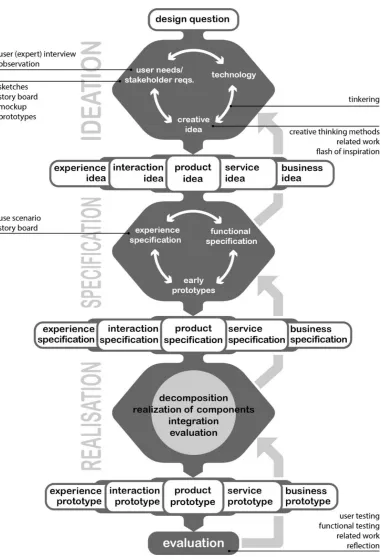
3.1 Creative Technology Design Process 28
3.1.1 Ideation Phase 30
3.1.2 Specification Phase 30
3.1.3 Realization Phase 30
3.1.4 Evaluation Phase 30
3.1.5 Adaptation for this Project 31
3.2 Co-Design 31
3.2.1 Description of Co-Design 31
3.2.2 Advantages and Challenges 32
3.2.3 Web-Based Co-Design 32
4. Preparation 34
4.1 Plan for Interacting with Users 34
4.2 Initial Requirements 36
4.3 Plan for the Project 36
5. Co-Design Iterations 38
5.1 Iteration 1: General Feedback 38
5.1.1 Website Version 1 38
5.1.2 Questionnaire 1 38
First Release 39
Results 40
5.2 Iteration 2: Functionalities 42
5.2.1 Website Version 2 42
5.2.2 Questionnaire 2 44
Results 44
5.3 Iteration 3: Design and Evaluation 45
5.3.1 Website Version 3 45
5.3.2 Questionnaire 3 48
6. Requirements 49
6.1 Content Requirements 49
6.2 Technical Requirements 50
6.3 Co-design Requirements 51
7. Realization 52
7.1 Wix 52
7.1.1 Choosing Web Building Tool 52
7.1.2 Making Website Using Wix 53
7.2 User Experience and User Interface Design 55
7.3 Accessibility 57
7.3.1 Optimization for Screen Readers 57
7.3.2 Additional Optimizations 57
7.4 Final Website 58
8. Evaluation and Discussion 61
8.1 Results from User Test 3: Evaluation 61
8.2 Evaluation of User Requirements 66
8.3 Discussion 68
8.6.3 Obtaining Participants 71
8.6.4 Communication 72
8.6.5 Quality of Feedback 73
8.6.6 Advantages and Disadvantages of Co-design 73
8.6.7 Differences in Platform Outcomes 75
8.6.8 Conclusion of Shared Discussion 76
9. Conclusion and Future Work 77
9.1 Conclusion 77
9.2 Future Work 78
9.2.1 Platform 78
9.2.2 Co-design 79
References 81
Appendices 85
Appendix A: Initial Posts 85
Appendix B: Twitter Messages 87
Appendix C: Website - Version 1 89
Appendix D: Website - Version 2 95
Appendix E: Website - Final 101
Appendix F: Survey 1 - General Questions 111
Appendix G: Survey 2 - Functionalities 120
Introduction
Chapter 1
1.1 Motivation and Background
Online autistic communities are growing in popularity and the internet is proving to be very beneficial for autistic individuals. Simultaneously, technologies, as well as, practical solutions for autistic individuals are being developed and created. Unfortunately, at this point in time, no dedicated platform exists with the purpose of sharing these solutions and technologies for autistic individuals. Furthermore, many of the other existing platforms are either outdated, not focused on autistic individuals, or poorly designed. Due to this, many autistic users migrate to platforms such as Facebook, Tumblr, Reddit, and Twitter. While these serve the purpose of bringing these individuals together well, they are not designed to accommodate their special needs.
What this graduation project aims to accomplish is to create an online, solution-sharing platform for autistic individuals. This will make it possible for such individuals to share technological, practical, social, as well as, do-it-yourself solutions with each other. Throughout the development of this project, 4 key topics were focused upon: (1) understanding the challenges whichautistic individualsexperience, (2) implementing co-design into the design process, (3) studying comparative online platforms currently available to autistic individuals, and finally, (4) narrowing the target group to focus specifically on
tech-savvyusers, who may have different requirements from other autistic individuals for a web-platform.
Each of these will be briefly introduced below.
Autistic Individuals
often times observed with regards to autism. These, for instance, include improved systemizing, engineering and spatial reasoning skills (Jordan, 2010).
Co-design
Co-design is an approach which includes the active involvement of users in the design process (Ehn, 2008; Mattelmäki, 2008). It is growing in popularity, and can be useful in narrowing down user needs and requirements (Sanders & Stappers, 2008). This project aims to implement co-design through including autistic individuals in the design process.
Online Platforms
Currently, autistic individuals use a mixture of both general social media platforms, as well as platforms dedicated for autism-related topics. With regards to social media, Tumblr, Facebook, Twitter and YouTube are often used by autistic individuals (Nguyen, Phung, & Venkatesh, 2013). As for autistic platforms, sites such as WrongPlanet are popular. These platforms are all used to discuss various topics, both related and unrelated to autism.
Tech-savvy Users
This project places focus on tech-savvy autistic individuals. This particular user group is interesting as it can provide specific technical feedback to the project, and may continue the development of the platform in the future, if the project is released to the public.
1.2 Goals and Challenges
Prior to the development of the platform, both the goals and the challenges of the project were considered. They were referred to throughout the development, as to ensure that the goals were met, and that the challenges were tackled.
The primary goal was to create a developed version of a solution-sharing, online platform. This goal incorporated implementing co-design and user feedback to iterate the platform and improve it. Co-design in itself was also a significant aspect of this project, and therefore, successfully implementing it was also one of the key goals. Another goal was to learn from the development about what the specific user group, being tech-savvy adults, as well as the broader autistic audience, desires from a platform such as this. More specifically, the project aimed to narrow down on user specifications for a solution-sharing platform.
Several challenges had to be tackled during the development of this project. One of the key challenges was the technical implementation of the project. Creating a user-interaction oriented platform which allowed for posting, rating and commenting proved to sometimes be difficult. Another challenge stemmed from the fact that autistic individuals have a history of not wanting to use platforms run, or made by, non-autistic individuals. Furthermore, the co-design aspect of the project proved to be difficult. This was for several reasons, the first being that it was hard to obtain enough feedback from users, while the second being the fact that users had to be convinced to participate. Lastly, communication between the team and autistic individuals was a challenge.
1.3 Problem Statement and Research Questions
The sub-questions for this paper were:
“What are the factors to be considered when developing an online platform for autistic individuals?”
“How does one implement co-design with autistic individuals, during the development of an online platform?”
“How does co-designing the online platform, with tech-savvy adults, impact the online platform?”
1.4 Thesis Outline
This section describes the various sections of this thesis paper. Chapter 2describes the state of the art research done for this project. This involves both a literature review, as well as an analysis of competitors.
Chapter 3introduces the methods and techniques implemented during the development of this project: a
combination of the Creative Technology Design Process, and co-design. Chapter 4 describes what happened in preparation for the specification and realization part of the project. This includes coming up with a plan for the interaction with users, defining the target group, defining the initial requirements, and planning the process which would be implemented throughout the development of the project. Chapter 5 describes the co-design iteration process. Each iteration consists of the release of a new version of the platform, alongside a survey asking questions about it, and is described in an individual section. Chapter 6explains the various requirements which were obtained from carrying out the project. These are divided into 3 categories, namely: content requirements, technical requirements, and co-design requirements.
Chapter 7describes the practical aspects of realizing the project. It summarizes the development process
from a technical perspective, and shows the final version of the website. Chapter 8 describes the user evaluation of the final version of the website, as well as the discussion of the project. Furthermore, a shared discussion is included, written by all 3 group members, in which the 3 experiences are compared.
Chapter 9, the final chapter of the report, includes a conclusion of the project, and presents points for
State of the Art
Chapter 2
2.1 Literature Review
A literature review was performed in order to obtain a better understanding of the topic of this graduation project. This was to be based on scientific literature, and provide a foundation for the development process of the platform.
2.1.1 Introduction
Autistic individuals face challenges on a regular basis. Online communities for such individuals have become an integral part of their daily lives. These are places where they can share experiences, questions, thoughts, and communicate with people similar to themselves (Jordan, 2010). At this point in time; however, no dedicated online platforms exist with the purpose of promoting either practical or technological solutions to people with autism, and allowing autistic users to exchange their experiences and thoughts regarding these technologies. The goal of the graduation project was, therefore, to create such a platform. Prior to the development, relevant knowledge about the key topics was needed. This included investigating autism, as well as looking into the way in which these individuals use online technology.
2.1.2 Characteristics of Autism
The defining characteristics of autism have developed over time. The original characteristics were described as twofold: a lack of emotional contact with others and a strong insistence on sameness (Baruch, 2001). Nowadays, however, the characteristics of autism are described as a triad (Baruch, 2001; Nguyen, Duong, Venkatesh, & Phung, 2015; Nguyen et al., 2013; Putnam & Chong, 2008). These three attributes include: difficulties in communication, difficulties in social interaction, as well as, repetitive behaviours (Baruch, 2001; Nguyen et al., 2015; Nguyen et al., 2013; Putnam & Chong, 2008). However, when defining autism, researchers sometimes place their focus only on some of the characteristics. For instance, Jordan (2010) focuses only on the lack of communication and social skills. Similarly, Mitchell (2003), solely mentions impaired social skills, as a characteristic of autism. Furthermore, Baruch (2001), Gillberg, Gillberg, Råstam, and Wentz (2001),Nguyen et al. (2015), and Putnam and Chong (2008) add to the list of three, by stating that narrow interests are also a key characteristic of individuals with autism. Having identified the attributes of people with autism, it is also valuable to understand more about the condition itself. Autism is a developmental, neurological disorder which requires a continuous network of support from parents, relatives and friends (Nguyen et al., 2015; Nguyen et al., 2013). Putnam and Chong (2008) expand on this description by stating that it is a disorder which affects everyone differently and is therefore called a spectrum disorder. Based on these characteristics, alongside the additional knowledge obtained about autism, the actual meaning of autism becomes clearer.
Aside from the defining characteristics of autism, autistic individuals may experience a variety of everyday struggles. These may include, but are not limited to, struggling with unexpected or new situations, time management, sensory overload, processing information, and mental health challenges (Van Hees et al., 2015) . Ghaziuddin (2005) expands on this, stating that oftentimes the symptoms which present themselves are not necessarily the deficiencies in communication and social interaction, but instead, problems such as depression, hyperactivity, or anger outbursts.
2.1.3 The Relationship Between Autism and Online
Technology
Online technology has proven to be of great value and assistance to autistic individuals. As stated by Jordan (2010), the web may be described as an extension of the autistic brain. Mitchell (2003, p. 3) concurs with this statement, going as far as to say that “the Internet is for many high-functioning autistics what sign language is for the deaf.” This is in agreement with statements made by Nguyen et al. (2015), who highlight the importance of the internet for autistic individuals. It is made clear that the relationship between autism and online technology is a significant one.
Online technology is a tool which is fitting for autistic individuals, due to a number of reasons. The internet offers a unique opportunity for them, with regards to both their impairments, as well as unique abilities (Jordan, 2010; Putnam & Chong, 2008). Baruch (2001) and Jordan (2010) expand on these abilities, naming spatial reasoning, engineering and systemizing skills as some of the qualities which are often found in high-functioning autistic individuals, which correlate strongly with computer technology and engineering. This further suggests that the strengths of autistic individuals can be implemented when interacting with online technology. This technology also addresses the potential weaknesses of these individuals. It provides an opportunity for them to interact within a familiar setting, being their computer or mobile device, which further accommodates their unique traits such as that which makes them prefer sameness (Jordan, 2010; Newton, Kramer, & McIntosh, 2009; Putnam & Chong, 2008). Conclusively, it can be said, that online technology does a solid job of accommodating both the strengths and weaknesses of autistic individuals.
2003). Other than the practical aspects of online technology, online platforms provide the opportunity for individuals and small groups scattered around the world to unite, discover and empower themselves (Mitchell, 2003; Nguyen et al., 2013). The importance of social, online platforms for autistic individuals is clear, and brings forth validation for the creation of a new platform.
Other than improving the social lives and skills of autistic individuals, the internet provides other quality of life improvements. An example of this is the fact that, for some autistic individuals, shopping online causes much less stress and anxiety as compared to shopping in a physical store (Mitchell, 2003). Mitchell (2003) states that the same benefits apply with regard to activities such as finding employment. These unique benefits of the internet, amongst others, must be kept in mind during the development of the technology-sharing platform, as they play a significant role in the relationship between people with autism and online technology.
Technologies developed for autistic individuals are in the market; however, many potential users do not know of their existence. Given the previously mentioned strength of the internet in bringing autistic communities together, spreading knowledge about these technological solutions is something which could and should be tackled, online. Goldsmith and Leblanc (2004), as well as, Putnam and Chong (2008) have noted that more and more technological solutions for people with autism have been appearing, with Putnam and Chong (2008) additionally observing a growing interest and enthusiasm in such solutions. Putnam and Chong (2008) point out; however, that little is known with regards to the extent and success of the integration of the technology. In a survey conducted by Putnam and Chong (2008), only 25% of the respondents had any experience with either software or technology developed specifically for people with cognitive disabilities. As for the types of technology which are being developed, these include: virtual reality simulations, assistive technology devices, facial recognition assistors, robots, virtual assistants, language teaching assistants, cooperative games and activity scheduling applications (Putnam & Chong 2008). The existence of such solutions combined with the fact that the integration is currently rather low, suggests a need for an online platform or medium which would encourage the use of the technologies.
that as the online presence and representation of autistic individuals increases, so does the number of people, possibly wrongly, self-diagnosing themselves with conditions such as autism. Aside from the main risk of people living with a wrong self-diagnosis, this presents a risk in the form of actually autistic individuals interacting with such people and being misinformed or misguided (Mitchell 2003). These risks and dangers associated with online technology are an important factor to consider when evaluating the overall relationship between the internet and autistic individuals.
2.1.4 Potential Developments and Improvements for the
Relationship Between Autistic Individuals and Online
Technology
The improvements and developments which can be made in the relationship between autistic individuals and online technology should primarily be grounded in the existing functionalities and observations, but taken to a new and improved level. These improvements were considered when developing the platform for this graduation project. As stated previously, the internet offers a unique set of opportunities for such individuals (Abel et al., 2019; Jordan, 2010) and should, therefore, be utilized to the fullest extent. It should be used as a tool to connect these individuals with like-minded people and to spread awareness, while also introducing them to technologies which may assist them.
One of the major areas in which the internet can provide assistance for autistic individuals is in the field of social relations. Jordan (2010) states that many of these people desire social relationships; however, they struggle in engaging in fulfilling interactions. Online technology should, therefore, continue in making it easier for autistic individuals to interact, both with each other, as well as other, non-autistic individuals. It should also; however, work in a way which encourages face-to-face interaction in order to counteract the potential downsides of online interaction, such as further desocialization, as mentioned by Jordan (2010), Mitchell (2003), as well as, Putnam and Chong (2008). Conclusively, social interaction is a field which should continue being addressed in future developments of online technology, as it is currently both a large asset, as well as, a potential risk for autistic individuals.
platform for these individuals to represent and develop themselves. With regards to the future, it should continue doing so. A way to accomplish this could be via the creation of new and updated platforms for them to use, as compared to the currently existing, outdated ones. In the past, when online platforms were ran by doctors or parents the actual people affected by autism oftentimes opted out (Jordan, 2010; Mitchell, 2003), therefore, the trend of such platforms being developed or co-designed by autistic individuals should be continued. Co-design is a design technique that is growing in popularity, which places a large emphasis on user input during the development of a product or service ( Sanders & Stappers, 2008). The implementation of this could be largely beneficial for the development of the online platform for technology-sharing. It is of paramount importance that the internet continues serving as a tool for people with autism to express and develop themselves.
Online technology should do better in providing autistic individuals with information regarding technologies which may assist them. Moreover, the various ideas as well as needs which this group has, should be made visible to developers. At the moment, little is known about the level of implementation of such solutions (Putnam & Chong, 2008), Therefore, not only should the integration of these technologies be more widespread, but also more information about them should be collected and made available. This can be done through the implementation of forums and reviews which would discuss these technological solutions. Such forums could also allow for these individuals to share suggestions and ideas which they may have about technologies which they would like to have. Putnam and Chong (2008) highlight three primary areas in which autistic individuals would like technological assistance: social skills, academic skills, and organization skills. It is important that these areas become a focus for developers so that the end-user goals align with the technologies, which, according to Putnam and Chong (2008), has not been the case so far. It is also important that these future technologies ensure that the target group’s unique traits, such as the difficulty to distinguish between the trivial and the important, as pointed out by Baruch (2001), should be addressed when designing for them. The importance of providing, as well as gathering, information regarding technological solutions for people with autism is an important aspect in future developments of online technology.
technology should try and address this issue. Another downside which should be addressed stems from the autistic community rather than from the technology. As described by Jordan (2010), a divide is forming between autistic groups which believe that future developments should aim to cure autism, and groups which believe that it should be embraced and supported. This, alongside the other existing downsides, should be addressed in future online technology developments, with the purpose of bringing the community together, rather than separating it.
2.1.5 Conclusion
The research question which this literature review aimed to address was “What are the factors to be considered when developing online technology for autistic individuals?” It defined autism as a developmental, neurological disorder which presents itself in three primary attributes including: difficulties in communication and social interaction, repetitive behaviours, and narrow interests. The people affected by autism require varying levels of support from various networks. The internet has proven to be valuable as one of these networks, as it allowed for the creation and development of communities, allowed for previously unseen levels of social interaction of autistic individuals, and provided these people with many general quality of life improvements. As with all things, online technologies also carry some downsides for people with autism, the primary example of this being the risk of further de-socialization of these individuals if they become too dependent on the internet for all of their social interactions. Through considering these, among other factors, certain suggestions and areas for improvement have been identified for future developments of online technologies targeted at autistic individuals. The internet should continue being a medium which allows for the representation, development and empowerment of the autistic community. Furthermore, technological developments in this area should strive to align with the user goals of these people.
2.2 Competitor Analysis
When developing the online platform, looking into existing platforms and similar technologies was also valuable. Firstly, this was done as to not ‘reinvent the wheel’ by creating a platform which already exists, but also to learn from the existing alternatives what works, what does not, and what is missing. These alternatives were looked at within this section of the thesis.
2.2.1 Wrong Planet
https://wrongplanet.net/
Description
Key Features
As an online platform, WrongPlanet offers many features. These include pages focused on: forums, videos, friends and relationships, community newsmakers, schools and jobs, parenting, autism news, as well as, therapies and services. The forums offer discussions on subjects such as: general discussions, off-topic discussions, coping in life, topical discussions, age/gender related discussions, administration, and foreign languages. Pages such as friends and relationships, schools and jobs, parenting, autism news, as well as, therapies and services, provide access to relevant articles regarding the subjects. The forums appear to be the most active and largest section of the website, while the more article based pages are updated with a new post approximately once a year.
Advantages
The primary advantage of this platform is the fact that it is one of the oldest and most established online autistic communities available. It is also relatively easy to use and covers a broad range of topics.
Disadvantages
While the platform covers a range of topics, many of them are not covered in detail and updated very scarcely. What this means is that if someone wishes to visit the website and find out about a specific subject which is technically covered, they may be disappointed to find outdated articles from several years ago. Furthermore, the platform itself, from a design perspective, is not very aesthetically pleasing.
2.2.2 wikiHow
www.wikihow.com/Main-Page
Description
wikiHow is an online community which grants access to a large database of how-to guides. These cover a wide range of topics from technical guides on how to fix something, to social guides on how to behave in specific situations. However, important to note is the fact that wikiHow, as a platform, is developed for the general public, and not specifically with autistic individuals in mind.
Key Features
Advantages
Advantages of this platform include the fact that it is very well established. It is the most popular how-to-guide platform and features a very wide range of topics. The interface is also rather friendly to the users. Furthermore, the platform allows for the guides to be written by co-authors.
Disadvantages
2.2.3 Reddit
https://www.reddit.com/
Description
Reddit is a very unique platform. It features news, content rating, and discussions. Logged-in users can submit content as posts, and comment on the posts of others. The platform is subdivided into subreddits. These are similar to subforums regarding specific subjects. For example, the ‘r/autism’ subreddit, features the sharing of content and discussions regarding the subject of autism. However, as a platform, it targets the general public, and not specifically autistic individuals.
Key Features
Advantages
The biggest advantage of Reddit is its sheer size and variety of subjects covered. The fact that users are the driving force behind the platform and can express their opinions via either comments or votes, makes the platform rather democratic. In the specific case of subreddits like the ‘r/autism’ subreddit, an advantage is the fact that the autistic users are able to discuss whatever they wish to discuss with a large community.
Disadvantages
2.2.4 Autism Speaks
https://www.autismspeaks.org/
Description
Autism Speaks is an online platform which works as the hub for the Autism Speaks Inc. organization. It is a website which features a large amount of information about autism. Its primary purpose is to raise awareness, inform visitors, and shine light on important issues. It differs from the previously mentioned platforms as its primary focus is to provide information, and not to share user generated content.
Key Features
Advantages
A key advantage of this platform is the fact that it aims to spread awareness about autism. Furthermore, it provides a large amount of high quality information regarding the subject. The resource finding tool is also very customizable and can be helpful for a wide range of audiences.
Disadvantages
2.2.5 Twitter
https://twitter.com/
Description
Twitter is an online social media platform. Users interact on this platform using ‘tweets.’ Tweets can be directed at people, they can be used to reply to other tweets, or just be posted on the posters profile. It is one of the most popular social media, and has one of the biggest user bases.
Key Features
Advantages
One key advantage of Twitter is the size of its user base. A second advantage is the simplicity of use of the platform. Users can simply type a post up on their device and submit it for the world to see. The platform is also very powerful in bringing people together, as anyone can reply to a public tweet, meaning that unlikely people may interact. In the case of autistic individuals, the platform brings these people together and encourages discussions.
Disadvantages
The unique feature of the platform can also be a disadvantage. Tweets, due to their limited length, may be a limiting factor when users wish to discuss things to a greater extent. Furthermore, it is oftentimes difficult for smaller users to reach audiences as compared to larger ones. What this means is that even if an individual makes a valid point, if they do not have an audience, they will spark no conversation and the subject will end there. Furthermore, it was not specifically developed with autistic individuals in mind.
2.3 Conclusion
Conclusively, the state of the art research has indicated a need for this graduation project by showing the potential of online technology with regards to autistic individuals, and by exploring the existing competitors.
The literature review chapter of this paper, identified key features of the relationship between autistic individuals and online technology. Online technology has been described as an extension of the brain for autistic individuals. It’s importance has been highlighted alongside the fact that online technology works well with both the strengths and weaknesses of autistic individuals. The significance of social platforms and other quality of life improvements were described. Several downsides of the relationship were also explored. These include the threat of further desocialization of users, as well as, the risk of the rise in misinformation, regarding autism, being spread online.
area in which online technology can develop, further assisting autistic users in this regard. Furthermore, online technology was identified as a tool which should continue being implemented and developed for the self-expression and self-advocacy of autistic individuals. An important factor for consideration, given the context of this project, which the literature review mentions is the fact that online technology should do a better job in providing autistic individuals with information regarding technologies and solutions which are being developed which could assist them.
Looking into competitors and existing products, has shown various platforms which function at the moment, highlighting both their strengths and weaknesses. These competitors included: WrongPlanet, wikiHow, Reddit, Autism Speaks, and Twitter. Although some of these platforms are designed specifically for autistic individuals, many of them are not. Therefore, there is a valid need for the creation of the platform, central to this paper. The following chapters will describe the preparation done prior to working on the project, the actual development process, and the discussion, evaluation, as well as, conclusion.
Methods and Techniques
Chapter 3
This chapter describes the methods and techniques which were implemented during the completion of this graduation project, from a theoretical perspective. The actual implementation of the methods and techniques is described later. The two primary methods implemented within this project were: a variation on the Creative Technology Design Process (Mader & Eggink, 2014), as well as, co-design.
3.1 Creative Technology Design Process
3.1.1 Ideation Phase
The ideation phase is the starting point of the design process. In the case of this project, the design question was presented in the form of an instruction from the supervisor. This request was: the creation of “a technology evaluation platform for and with autistic adults.” The ideation phase includes defining the problem, acquiring relevant information and generating ideas. Looking at the state of the art is also relevant in this phase, as it allows the designer to see what is already available, and what is yet to be made. The end goal of this phase is to have a more elaborated project idea, combined with problem requirements.
3.1.2 Specification Phase
The specification phase describes the process through which the designer aims to obtain the requirements for the project. Oftentimes, prototypes are implemented in order to assist with this, as by showing users a potential version of the final product, they can have a better understanding of the product, but also provide deeper insight with their feedback. The specifications which are to be defined within this phase may include factors such as functionality, as well as experience. The goal of this phase is to establish what the requirements and specifications for the project are.
3.1.3 Realization Phase
The realization phase incorporates the implementation of the specifications, as well as requirements of the project. These are oftentimes approached individually and developed one by one. The goal of this phase is to implement the requirements, and then to evaluate whether the end result meets the specifications.
3.1.4 Evaluation Phase
3.1.5 Adaptation for this Project
In order to involve the users throughout the design process, adaptations to the Creative Technology Design Process were made. The traditional order would involve first ideating, then specifying requirements, implementing them in the realization, and finally evaluating the results. In the case of this project, requirements were collected and implemented 3 times. This meant that the project shifted between specification and realization several times, rather than first specifying and then realizing. Due to this, the “Ideation” phase was changed into “Preparation.” This phase includes both elements from ideation, as well as the methods leading to the obtaining of specifications. Conclusively, it included everything prior to the beginning of the first iteration. Similarly, “Specification” was changed into “Co-design Iterations.” It still focused on the obtaining of specifications and requirements, however, it also included the changes implemented in between iterations.
3.2 Co-Design
3.2.1 Description of Co-Design
they have skills which become useful in the larger scale of the project, considering various factors, their complexity, and in making decisions (Sanders & Stappers, 2008).
3.2.2 Advantages and Challenges
In many ways, including the intended users in the design process can help better align what the designer wants to make, and what the users want and need. The primary benefit of including users in the design process is obtaining a better understanding of their wants and needs. Through doing so, the end product will be better suited for the users (Sanders & Stappers, 2008). On the other hand, by not including users in the design process, the translation of what the designers want to create, into what users actually want, may fail (Liem & Sanders, 2011). Co-design has the advantage of being able to prevent this.
Challenges of co-design, among others, include the fact that when multiple user opinions are gathered, they may clash. This may lead to a difficulty, for the designers, in processing the various stakeholder inputs (Mattelmäki, 2008). Furthermore, when including users inexperienced in design, several additional risks become present. This includes: the possibility of inefficiency, with users focusing on irrelevant details, users feeling as though they do not have the sufficient level of knowledge necessary to provide input, and users who may feel inadequately creative to provide feedback during development (Sanders & Westerlund, 2011). Additionally, co-design may be especially difficult when involving autistic individuals in the design process as they may not trust non, autistic individuals to design a platform for them.
3.2.3 Web-Based Co-Design
media is particularly useful in the exploration and ideation phase (Friedrich, 2013), and is very applicable to this project, as it aims to determine what users want and need from an online platform, for solution sharing, thereby exploring the user requirements.
3.2.4 Co-Design with Autistic Individuals
As mentioned before, autistic individuals are oftentimes excluded from design research. Furthermore, when design research regarding autism is performed, the majority of it is done with autistic children in focus (Gaudion, et al., 2015), meaning that autistic adults are even further excluded. There exist significant differences between autistic adults and children which should be addressed through design research. This emphasises the significance of co-designing with autistic adults, as by doing so, their, potentially, unheard design opinions can be noted and implemented.
Preparation
Chapter 4
The preparation phase of this project involved everything which was done prior to the development of the first iteration of the platform. This included research, defining requirements, but also planning ahead with regards to methodology.
4.1 Plan for Interacting with Users
In the words of Dr. Stephen Shore: “If you’ve met one person with autism, you’ve met one person with autism” (Autism Awareness Month: Interview with Stephen Shore, 2009). What this means is that all autistic individuals are different. With this in mind, when designing for such individuals, it is of great importance to consider the various user groups which may be addressed, alongside their specific wants and needs. Due to this, it became evident that targeting more specific sub-groups within the target population could be of value, as it would ensure that the feedback of individuals belonging to different groups would be heard, and would ultimately allow for a more personalized user experience.
Defining the Target Groups
Having chosen the 3 focus groups, it was also important to consider the groups which were potentially excluded from voicing their opinions during the design process. This included elderly users, but also users who may not be completely independent, such as individuals with disabilities. It is of importance to keep these users in mind for potential future developments of the project, which may attempt to broaden the user group even further.
Interaction with Users
Given the user-centered design focus of this project, it was crucial that the opinions of users were the driving force behind any decision being made. Due to this, the way in which user opinions and feedback would be obtained had to be decided upon. The user base which the project aimed to address, being autistic individuals, meant that the pool from which users could be asked was already rather limited in size. This was an important factor which brought forth the concept of interacting with users online, rather than finding autistic individuals in close physical proximity to the University of Twente. It was therefore decided that for the two adult user groups, online interaction would be the method implemented in order to obtain feedback. In the case of the school aged users, a local high school, which had dedicated classes for autistic individuals, was used.
Following the decision making behind the reaching of users, the way in which feedback would be obtained from tech-savvy adults was decided. Several options were considered, however, the final decision was made that users would be reached out to via social media platforms including: Twitter and Reddit. On Twitter this would be done by creating a ‘tweet’ and adding the appropriate hashtags to ensure a proper outreach. Meanwhile, on Reddit, a post could be made in the appropriate, autism related, subreddits.
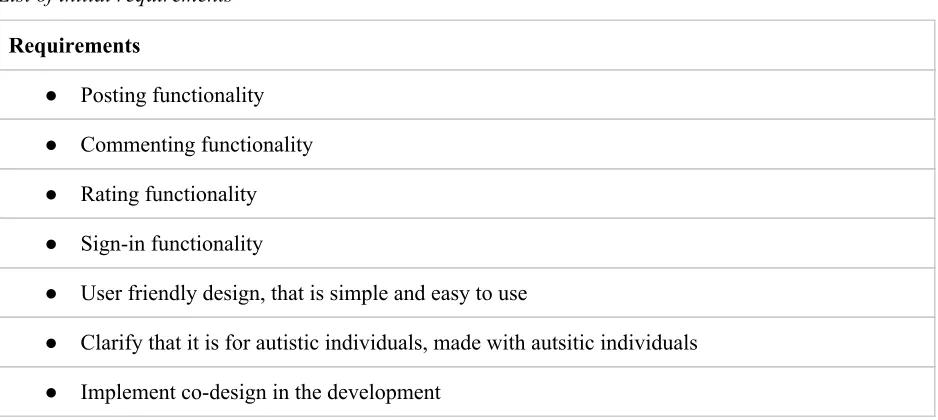
4.2 Initial Requirements
[image:37.612.73.542.201.411.2]Based on the research done, several core requirements and specifications were determined. A list of these original requirements can be found in Table 1.
Table 1.
List of initial requirements
Requirements
● Posting functionality
● Commenting functionality
● Rating functionality
● Sign-in functionality
● User friendly design, that is simple and easy to use
● Clarify that it is for autistic individuals, made with autsitic individuals
● Implement co-design in the development
4.3 Plan for the Project
Figure 2. Diagram showing the 3 iterations.
It was decided that towards the end of the project, the 3 group members would come together and discuss their findings; more specifically, in what ways they were similar, and in what ways they differed. Furthermore, the key observations from each prototype would then be summarized and combined, creating specifications to be followed when developing the project in the future. Aside from this, the observations made regarding the co-design process with autistic individuals would also be compared, also creating a list of pointers for future, related projects. This comparison and discussion can be found in Chapter 8.5.
Co-Design Iterations
Chapter 5
This phase of the development process is a variation on the specification phase mentioned in Chapter 3. It describes each iteration, including the corresponding version of the website and survey.
5.1 Iteration 1: General Feedback
5.1.1 Website Version 1
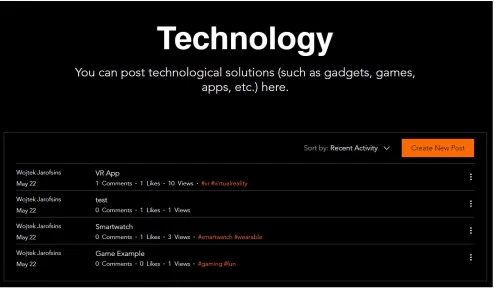
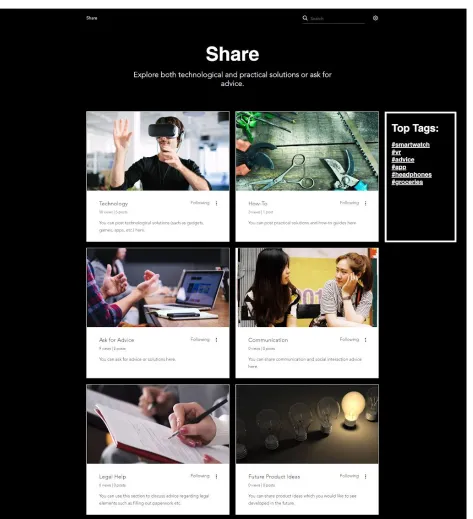
Iteration 1 involved the releasing of the first version of the platform, and releasing the first survey, to obtain feedback. The first version of the platform, as stated in Chapter 4 was created by all 3 of the team members working on the project. This version was based on the core requirements which were extracted both from the project requirements, but also from research. The website therefore included: an explanatory landing page, a forum page, a members page, an about page, and a rules page. The key element was the forum page on which two different categories for posts were located. These included “Technology” and “How-to.” Screenshots showing the first version of the platform can be found in Appendix C.
5.1.2 Questionnaire 1
First Release
Having both the first version of the platform and the survey, the two elements were ready to be shared with users. It was decided that the team would start by creating a Twitter account, and sharing it there. This was decided based on the outreach which Twitter provides, and the ability to target a specific audience using hashtags. A Reddit account was also created with the purpose of posting in the ‘r/autism’ and ‘r/aspergers’ subreddits. Before publishing the posts, a draft of the tweet and Reddit post were sent to several autistic individuals,to ensure that the message was clear and appropriate. Based on the feedback, some minor changes were made. Next, the Reddit post was shared, followed by the tweet, which was posted using the hashtags: “#askingautistics,” “#autism,” “#asd,” and “#autismlife.” These were chosen, as they are some of the most popular autism related hashtags to use for such inquiries.
The tweet was retweeted 11 times, was liked by 19 users and had 5 comment threads. Furthermore, the supervisor for our project retweeted the tweet, with his tweet being retweeted 35 times, receiving 45 likes, and sparking 5 comment threads. Despite these numbers, only 2 users filled in the survey. Furthermore, one user was quick to point out that the text on the landing page of the website was offensive to him, as it used “people with autism spectrum disorders” when referring to autistic individuals. This was immediately changed, however, the number of total survey replies remained at 2. The tweet in question can be found in Appendix A.
As for the Reddit post, it was posted on 2 subreddits. However, the bigger, “r/aspergers,” subreddit removed the post as it violated their rules. Having contacted the moderators it was explained that they do not allow the sharing of surveys if they are not approved by an ethics committee.. The post made in the other subreddit, namely “r/autism,” did not receive any attention, receiving only 1 upvote and no comments. The post can be found in Appendix A.
Changing Strategy to Tackle Low Response Rates
Given the low number of responses for the first questionnaire, a new strategy was considered. This involved messaging users who showed interest in the original tweet directly, which lead to a total of 9 individuals showing interest in participating. Since this point, reaching out to users directly via private messages was chosen as the main approach of contacting users. The messages which were sent out to users are shown in Appendix B.
Results
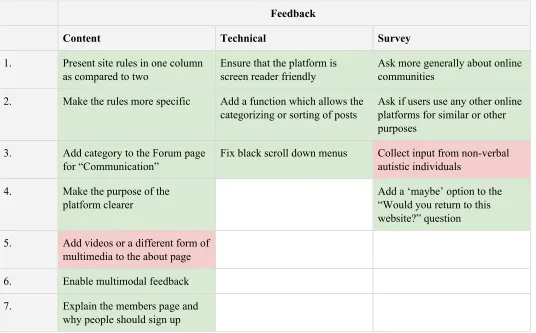
Having waited an appropriate amount of time, of approximately a week, the various requirements and changes suggested by the users were combined, categorized and listed. These are shown in Table 2. The table also indicates whether the suggestion was implemented or not within version 2 of the website. The details of the implementation of these changes are described in Chapter 5.2.
[image:41.612.43.579.379.712.2]Table 2.
Table showing the requirements and suggestions made by users in Iteration 1.
Feedback
Content Technical Survey
1. Present site rules in one column as compared to two
Ensure that the platform is screen reader friendly
Ask more generally about online communities
2. Make the rules more specific Add a function which allows the categorizing or sorting of posts
Ask if users use any other online platforms for similar or other purposes
3. Add category to the Forum page for “Communication”
Fix black scroll down menus Collect input from non-verbal autistic individuals
4. Make the purpose of the platform clearer
Add a ‘maybe’ option to the “Would you return to this website?” question 5. Add videos or a different form of
8. Add who will be moderating 9. Include examples for the rules 10. Give examples of things people
may want to give feedback on
11. Move FAQ
Note. Green indicates that the suggestion was implemented, while red indicates that it was not.
5.2 Iteration 2: Functionalities
5.2.1 Website Version 2
Iteration 2 focused on implementing the suggestions and requirements obtained from users during iteration 1 (see Table 2). Screenshots showing the second version of the platform can be found in Appendix D.
Improved Website Rules
The site rules received a significant amount of feedback, primarily regarding the content. It was emphasised by several users that the rules should be made more specific, as compared to what they were, to avoid confusion. Furthermore, certain users highlighted the need for examples of what the rules are referring to, as to avoid the risk of potential misunderstandings. These changes were implemented and the change is shown in Figure 3 .The new rules expanded on the rules from the first version of the website, but also took inspiration from similar websites, such as WrongPlanet.
Figure 3. Diagram showing the comparison between the old website rules (on the left) and the new
Screen Reader Compatibility
Another change which was implemented involved ensuring that the website was compatible with screen readers, which certain autistic individuals use when using their devices. These read the text present on the screen out loud, making it easier for certain individuals to use. This suggestion was implemented, and further accessibility-related steps were taken to make the website as accessible as possible. This process is described in more detail in Chapter 7.
Improved Forum
[image:44.612.60.554.378.669.2]While multiple changes were implemented based on user feedback, certain suggestions were not. For instance, the addition of multimedia to the about page was not completed. This was due to the fact that, while an explanatory video or image would be beneficial, this should be done properly, and can therefore be an element to be implemented in the future.
5.2.2 Questionnaire 2
The second questionnaire was focused on functionality and usability, and had a total of 4 participants. It aimed to determine what users thought about the features available on the platform, such as ‘liking’ using hearts, the tagging system, and how posts are viewed. Alongside this, the survey asked some general questions, e.g. to find out what other social online platforms they use. The full survey can be found in Appendix G. Furthermore, the second questionnaire implemented feedback from the first one, improving the clarity and the overall quality of the survey. These improvements included:
● Reviewing the formulation of the questions to ensure they were phrased appropriately.
● Including pictures to make it easier for users to answer questions, as they would no longer need to go back and forth between the website and the survey.
Results
Table 3.
Table showing the requirements and suggestions made by users in Iteration 2.
Feedback
Content Technical
1. Change the name Change the color of the post from black
background and white text, to white background and black text
2. Add “Legal Help” as a new category in the forum Make the menu smaller so it does not obstruct the view as much
3. Explain “Communication” as a category better Make the menu disappear when users scroll down 4. Add subcategories to the categories of the Forum. Different rating system
Note. Green indicates that the suggestion was implemented, while red indicates that it was not.
5.3 Iteration 3: Design and Evaluation
5.3.1 Website Version 3
The third iteration of the website implemented improvements indicated by users, through the use of the survey, alongside other developments made to the platform.
Changing Name from ‘Shaut’ to ‘Autshare’
One of the primary changes made in this iteration was a change of the name. Within the survey, users rated the previous name, “Shaut”, with an average of 2.5 on a five-point scale. This suggested that users found the name to be suboptimal, due to a variety of reasons. These included the fact that the name left some room for mispronunciation, and that the name was not very clear in indicating what it stood for. Keeping this feedback in mind, a new name was chosen. This new name was “Autshare.”
certain official procedures, this was added. However, a factor to consider regarding this is to what extent legal help can be provided through the website. Another change which was implemented in the forum was the improvement of the description of the “Communication” category. A user pointed out that this section seemed slightly vague and therefore, the description was edited. Additionally, a category was added to the forum without the feedback of users. This was “Future Product Ideas.” Within this category, users are to post ideas which they would like to see developed in the future as products or services. These can then be used by businesses for inspiration. The remaining categories within the Forum were kept without any changes being made, as users indicated that they found them relevant. Although a user suggested further sub-categorization of the existing categories in the forum, this was not implemented, as the website did not have enough posts for it to be suitable. A prior design decision which was supported by user feedback, was the implementation of hashtags as a way to categorize and tag posts. The average response to this feature was 4.75 out of 5, meaning that users strongly agreed with the functionality
Technical Improvements to Design
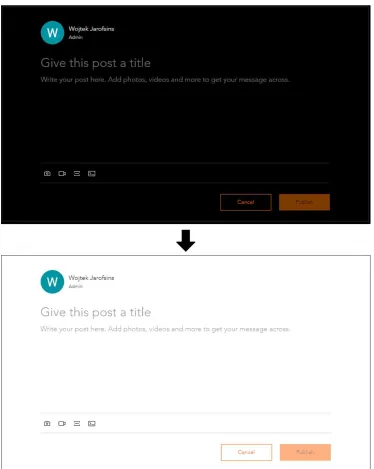
One suggestion which was made regarding the general design elements of the website was changing the colors within the posting functionality (see Figure 5). The changes were made due to the fact that users pointed out that the old format may be challenging for users with impaired vision to view. Aside from this, the users liked the feature for making new posts. Another technical improvement which was suggested was the tweaking of the menu bar at the top of the page. Although the users liked the top menu overall (average score of 4.75), it was suggested that the menu bar could be made smaller, as to obstruct less of the actual website view, and to make it disappear when users scroll down, reappearing when users scroll back up. These changes were implemented.
Update to Front Page: Featured Posts
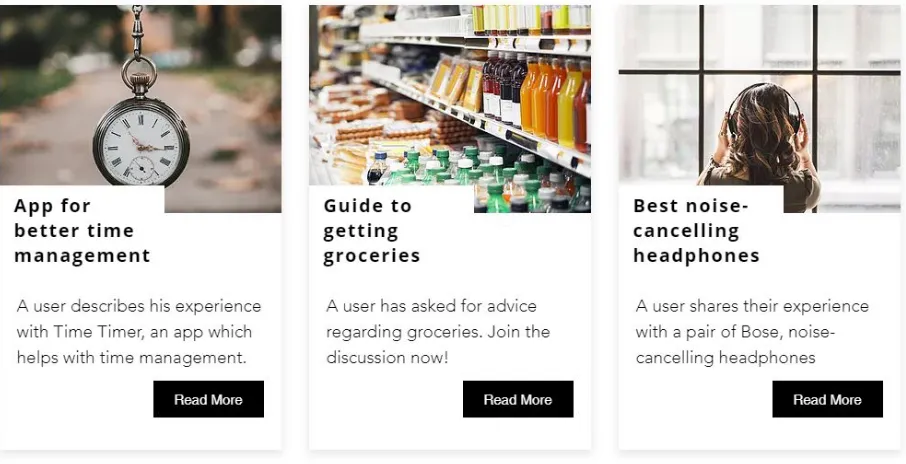
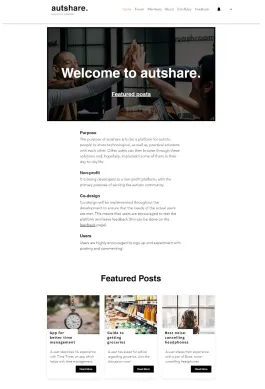
[image:49.612.82.535.258.490.2]An addition was made to the website during this iteration, based on factors other than the opinions of users. This new feature was the addition of the “Featured Posts” on bottom of the front page of the website, which includes 3 recommended posts to the visitor (see Figure 6). This feature was added in order to improve the user experience and usability of the front page, without overstimulating the visitors.
Figure 6.
Screenshot showing the “Featured Posts” feature.
5.3.2 Questionnaire 3
Requirements
Chapter 6
A large focus of this project was to, through the implementation of co-design and research, obtain requirements regarding the development of an online, solution-sharing platform for autistic individuals. Once obtained, these requirements were divided into 3 categories: content requirements, technical requirements, and co-design requirements. Each of these will be discussed individually.
6.1 Content Requirements
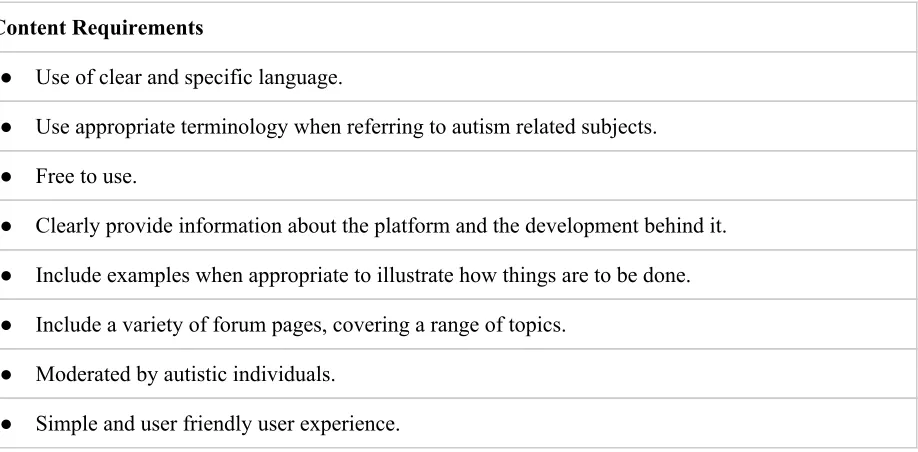
Content requirements referred to requirements regarding the website, which were not technical. This included the things which were to be on the website, such as the text, images, but also the characteristics of the website, such as it being free to use.
[image:50.612.82.541.444.670.2]Table 4.
Table showing the content requirements for a solution-sharing platform, as observed during the development of this project.
Content Requirements
● Use of clear and specific language.
● Use appropriate terminology when referring to autism related subjects.
● Free to use.
● Clearly provide information about the platform and the development behind it.
● Include examples when appropriate to illustrate how things are to be done.
● Include a variety of forum pages, covering a range of topics.
● Moderated by autistic individuals.
6.2 Technical Requirements
The technical requirements of the website referred to the technical features and functionalities which were found to be crucial in the development of an online, solution-sharing platform for autistic individuals.
Table 5.
Table showing the technical requirements for a solution-sharing platform, as observed during the development of this project.
Technical Requirements
● A posting functionality.
● A commenting functionality.
● A rating functionality.
● A sign-in functionality.
● Clutter free.
● Categorization.
● Accessibility.
6.3 Co-design Requirements
The co-design requirements referred to the requirements regarding, not the platform, but instead the process of co-designing with autistic individuals.
Table 6.
Table showing the co-design requirements for the development of a solution-sharing platform, as observed during the development of this project.
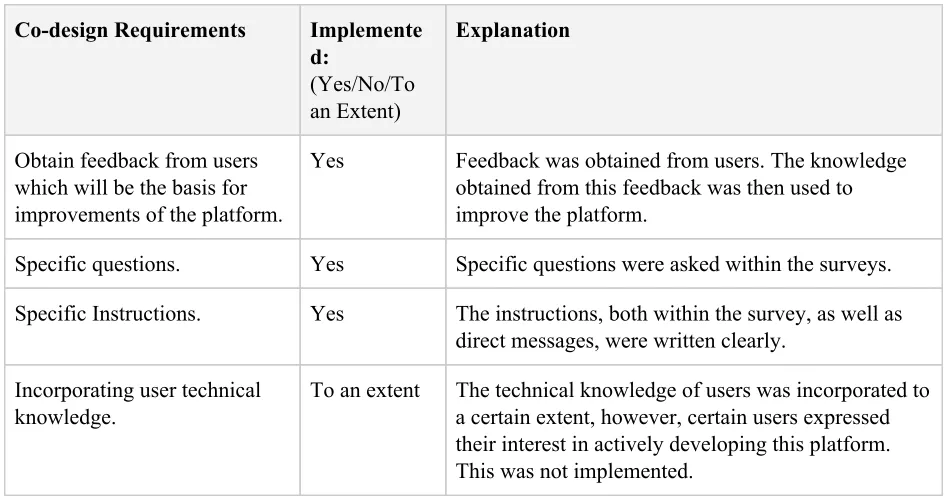
Co-design Requirements
● Obtain feedback from users which will be the basis for improvements of the platform.
● Specific questions.
● Specific instructions.
● Include images in surveys.
● Incorporating user technical knowledge.
Realization
Chapter 7
This chapter will explain the realization and practical development of the project. This includes factors such as creating the online platform via a website development tool, and implementing the requirements and specifications.
7.1 Wix
7.1.1 Choosing Web Building Tool
Several options were considered for the creation of the website. These ranged from the implementation of manual tools, such as programming the website from scratch, to using online website-development tools. Due to the nature of this project, it was quickly decided that making the website from scratch was not the best option. This was based on several factors including the fact that the planned process included the creation of a quick first draft, and the sharing of it as soon as possible. If this was to be done from scratch, either the quality of the website would suffer, or the time it would take to create such a website would take far too long. Furthermore, several iterations were to be created during this project, in a limited time frame. The manual implementation of these could be time consuming and present too many challenges, taking the focus away from determining what users want, to trying to create a functioning platform by programming it.
Having decided this, the next step was to determine how the platform was to be created through the implementation of a website creation tool. This included deciding which tool would be best suited for this. Several options were considered. These included: Squarespace, Wix, and Wordpress. Wix was1
categorization of posts. Furthermore, the tool was deemed to be good for quick iterations, customization and allowed multiple users to work on a website together. This feature was useful during the creation of the first version of the website which was done together. An additional benefit of using Wix was the feature of transferable site ownerships. This was a valuable feature due to the fact that after the completion of the project, the ownership of the website could then be passed on to individuals who may be interested in continuing the project.
The way in which one uses Wix to develop a platform is either by creating a website from scratch by drag and dropping features, or by basing it on a template. The way in which this was done with regards to autshare is described in the next section.
7.1.2 Making Website Using Wix
Given the fact that a quick first draft of the platform had to be made, it was decided that the website would be based on a template offered by Wix. In order to make a website based on a template the “My Sites” page on Wix was visited. Following this, the “Create New Site” button was pressed. This then loaded a new page in which a website category was to be chosen. Due to the fact that none of the highlighted categories included “Forum,” the button “Other” was pressed. The next step was to choose how the website was to be created. The choice was between letting Wix create a website based on answers to questions, or creating a website using the Wix editor based on a template. The latter option was chosen as customization was of significance. In the page which then appeared the term “Forum” was searched for and the template: “Social Forum,” was chosen. This template already included a skeleton of most of the pages which were to be used in the platform, and therefore, was deemed as appropriate. The template also featured several elements which had to be removed such as animated GIFs, slide shows, and text animations. It was decided that these elements were potentially detrimental when dealing with autistic individuals as the target group, as too many on-screen stimuli could lead to a sensory overload.
The forum was customized by navigating to the forum page, opening the “Forum Settings” window, going to “Categories” and pressing the “Add New Category” button. Following this, the new categories could be edited. Here it was possible to add a name, header title, description, and tweak design elements, such as the header image. Furthermore, the forum settings allowed for the changing of the layout of the forum. For the main page of the forum, the “Cards” layout was chosen. This was done to make the page easier to look at and provide a clear indication of the different categories through the use of pictures. For the individual category pages however, the “Compact” layout was chosen as to ensure that many posts could be present on the page at the same time, without making users scroll down the page. The way in which these layouts were chosen was by going to the “Layout” page within the Forum settings and navigating either to the “Main Page” for the main page of the forum, or navigating to the “Posts Page” for the sub-category pages of the forum.
In the case of this platform the following forum structure was chosen:
Figure 7. Diagram showing the structure chosen for the forum of the website.