Anatomy of
the Caelus® Disk Cartridge Drive
The facts are these: this high density 44 megabit capacity. Random access disk drive provides the lowest bit heads. Both disks are removable. cost in the country. Available in sin- Rack mountable in your cabinet or gle or dual configuration with 22 or ours, with ease of access for
mainte-nance. Single power supply. The disk cartridges, drives and test units are made by Caelus, which says it all for quality and performance.
f'-:J~~
~l ~~
CJElUS®
MEMORIES, INC.
P.O. Box 6297, San Jose, California 95133. Telephone (408) 298-7080no One Ever Heard of
Colorado Instruments
.• . except for some of the world·s outstanding
manuf9cturers! who save time. money and
man-hours with (II source data collection systems.
We're the great unknown. Except for a number of installations within some of the best known firms in the country.
They're taking advantage of Colorado Instruments' brand of source
data collection systems: Peripheral components that collect data from its source ... the man on the job .... and transmit it on or off-line to the computer. Fast. Re-liably. Economically. Source data collection eliminates keypunching. Eliminates record keeping. Reduces cost. Increases ac-. curacyac-. Increases speed of
trans-mission. 3213 TERMINAL
And because of the flexible modularity of CII components, applications are open to the boundaries of imaginative systems design. We've applied our very special logic to solving problems in time and attendance recording,
production reporting, inventory and materials control and ordering, purchasing and receiving, machine loading, and a variety of others. In
of-fices. In libraries. In hospitals. In educational institutions and manufacturing
environ-ments.
In fact, wherever there's a gap between people and
computers.
So we're taking this time, and space-at no small expense-to tell you how good we really are. And that we intend, within a short time, to be widely known as the hottest source for source data col-lection systems in the world.
You can help by getting to know Colorado In-struments. Write for literature, or call toll free
800/525-1625.
*Names available upon request
filling the gop between people and computers.
COLORADO
.DD
INSTRUMENTS
ONE PARK STREET. BROOMFIELD, COLORADO 80020. (303) 466-1881
CI-211
It lets you talk
to
your computer
without running your phone bills sky-high.
With our Frequency Division
Mul-tiplexer you can link your computer
and terminals with the least number
of phone lines.
And at the least expense.
It's the only FDM that has 20 rna,
60 rna, and ErA interfaces standard
in every unit. So it will interface with
any terminal or computer on the
mar-ket-which makes it real off-the-shelf
stuff.
(That's one reason we can deliver
a system in 30 days and have it
run-ning on the 31st.)
.
Our lnultiplexer is really a set of
modems, each tuned to a different
frequency. We make 4-channel and
I-channel units. So it's easy to set up
an FDM system with the exact
num-ber of terminals you have at any
location.
And you don't have to pay for any
nlore equipment than you need.
At speeds of 110 baud, the system
can handle up to 18 channels on a
voice-grade line. It allows data
trans-mission at speeds from 75 to 600 bps.
Once they're installed, there's no
reason why our FDM's won't work
forever. But if anything goes wrong,
we have a nationwide service
organi-zation that will fix the trouble fast.
You can lease or buy our FDM
system at very favorable prices. (One
of our customers replaced his old
sys-tem with ours at a saving of $3000
per month.)
Ultronic runs one of the world's
largest communication systems. Since
we sell a complete line of
communi-cation products, including video
ter-minals, front-end processors and Time
Division Multiplexers, we have no
axe to grind when it comes to
advis-ing you on your multiplexadvis-ing needs.
The kind of data you send from
point to point is, of course, your
bus-iness.
How to get it there cheaper is our
We'll explain if you call
609-235-7300. Or write:
UltronicSystemsCor-poration, Mount Laurel Industrial
Park, Moorestown, N.J. 08057.
ULTRONIC SYSTEMS
General Telephone
&
Electronics
DATAMATI&lN®
OCTOBER 15, 1970
volume 16
number 13
departments
Calendar 9 Letters to the Editor 11Look Ahead. 17 Editor's Readout 23
Perspective 36 News Scene 71
Hardware 93
Software 109 Literature 121
World Roundup 129 People 135
Index to Advertisers 139 The Forum 141
October
15,
1970[i]ECHNICAL
24 Plug-to- Plug
Unbundled IBM-compatible peripherals seem headed for a banner year. Our survey looks at disc drives, tape units, and large core storage.
66 Extended Spectra
There are significant changes in RCA's new product line, but the basis is the old product line.
[ioijENERAL
42
Medical Network
To serve the medical community, edp must not only im-prove institutional procedures, but must also imim-prove patient care and provide maximum security of data. The medical services in the Buffalo area have proposed and are developing an areawide health data network to do this.
51
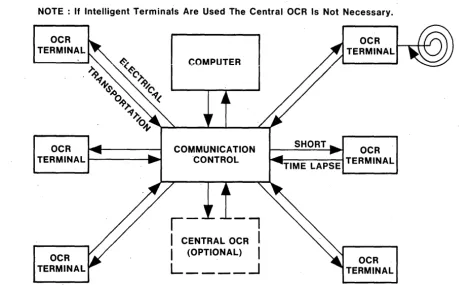
Smart Terminals
Two types of intelligent terminals are considered: OCRIT (optical character recognizing intelligent terminal) and SCANIT (scan-only intelligent terminal). The features of each are examined and contrasted, and they are com-pared with classical OCR units for applications.
MANAGEMENT
46
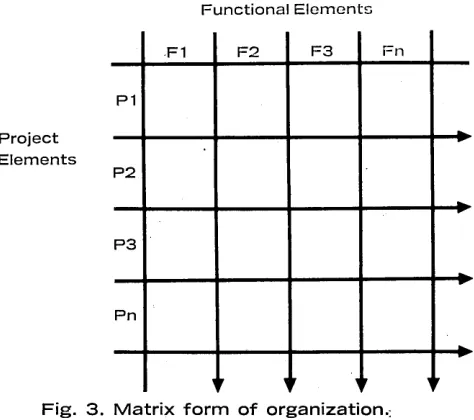
Matrix Management
The author argues that the matrix for~ of management is more flexible, adaptive, and efficient than the functional or the project structure. The limitations and advantages of each are discussed.
59
Program Control
Given an understanding of the stages in the progress of a programming project, standard management techniques can be applied effectively.
~-:lDMMENTARV
36 Perspective
As money stays tight and purchases look less and less attractive, leasing companies expect to look more attractive to the customer with the uptight budget.
Disorder on campuses grows and the com11uter facilities have become a primary target of the militants, with ex-tensive damage wreaked at the Univ. of \Visconsill amI Fresno State.
AT&T gives a little, maybe, in its battle with indepen-dent peripheral makers by agreeing to certify, perhaps, certain foreign attachments.
About the Cover
Flexibility-here, the free-flowing movement of information through a continually modifying pattern; without inter-ruption, without hang-ups. That's what compatibility is all about. Our design is by Barbara Benson.
OCTOBER 15. 1970
volume
16
number
13
EDITOR
EDITORIAL STAFF
EDITORIAL OFFICES
GRAPHIC DESIGN
AND PRODUCTION
CIRCULATION
35 Mason Street Greenwich, Conn. 06830
PUBLISHER
ASSISTA~T PUBLISHER1=1#.'
Circulation audited by Business Publications Audit--~
M em er, b A mencan . B · usmess Press, Inc ... ,...,
AlP
4
D A T A M A T I C N ® T h i s issue
105,616
copies
ROBERT B. FOREST
Managing Editor EDWARD K. YASAKI Senior Associate
Editors WILLIAM J. ROLPH TOM McCUSKER Special Features
Editor ANGELINE PANTAGES Associate Editors AUBREY DAHL RICHARD A. McLAUGHLIN EDITH D. MYERS JOHN .T. WATERHOUSE
Copy Editor JANET EYLER Assistant Editors ANNE WilKS MICHAEL WILLIAM CASHMAN Eastern Editors JOHN WESSLER F. BARRY NELSON New Enflland
Editor W. DAVID GARDNER Washington Editor PHIL HIRSCH
Midwestern
Editor LAWRENCE RAGAN
PEARCE WRIGHT European Editor
Australian
Editor FREDERICK A. BLAND
Contributing Editors
Editorial Adviser
HOWARD ~ROMBERG
. ROBERT V. HEAD PHILIP H. DORN LOUIS B. MARIENTHAL DANIEL D. McCRACKEN F. G. WITHINGTON PAUL ARMER ROBERT P. BIGELOW
ROBERT L. PATRICK
Technical
Consultant LOWELL AMDAHL
HEADQUARTERS: 94 S. Los Robles Ave., Pasadena, Calif. 91101, Phone: (213) 681·8486; EASTERN: 35 Mason St., Greenwich, Conn. 06830, (203) 661·5400; NEW ENGLAND: 19 Marlborough St., Boston, Mass. 02116, (617) 267·9414; WASHINGTON: 9805 Singleton Dr., Bethesda, Md. 20034, (301) 365·8671; MIDWESTERN: 407 S. Dearborn St., Chicago, III. 60605, (312) 922·8245. FOREIGN: 65, Hill Road, Chelmsford, Essex, England; 322, Park Regis, Park St., Sydney, NSW 2000, Australia.
Art & Production Director
CLEVE MARIE BOUTELL
Director of Circulation Circulation
Manager
FRANK De CARLO
MAE VAN RENNES
GARDNER F. LANDON
JAMES M. MORRIS
Production Manager Production Assistants
MARILEE PITMAN
GLORIA CASTAGNA LOUISE T. O'CONNOR
Marketing Research
Director DOUGLAS DeCARLO
DATAMATION is published twice monthly on or about the first and fifteenth day of every month by Thompson Division, Technical Publishing Company, 1301 South Grove Ave., Barrington, Illinois 60010; Arthur l. Rice Jr., PresIdent; Gardner F. landon, Executive Vice President. Executive, Circulation and Advertising offices, 35 Mason Street, Greenwich, Conn. 06830 (203) 661·5400. Editorial offices, 94 So. los Robles Avenue, Pasadena, California 91101. Published at Chicago, III.
DATAMATION is circulated without charge by name and title to certain qualified individuals who are employed by companies Involved with automatic information handling equipment. Available to others by subscription at the rate of $25 annually in the U.S. and Canada. Reduced rate for qualified students. Foreign subscriptions are on a paid basis only at a rate of $38 annually. No subscription agency is authorized by us to solicit or take orders for sbbscriptions. Controlled circulation paid at Columbus, O. and Form 3579 to be sent to Technical Publishing Company, P.O. Box 2000, GreenWich, Conn. 06830.
Copyright 1970, Technical Publishing Company. Microfilm copies of DATAMATION may be obtained from University Microfilms, Inc., 313 No. First St., Ann Arbor, Michigan.
Printed by Beslow AssocIates, Inc.
COSMOS is the world's first Applications Management System.
Think about all the new commercial proc-essing applications you've been unable to develop. COSMOS will design, implement and produce those applications in a cohesive, efficient. framework ... easily adjusted, easily combined. With all the nuts and bolts taken care of, think of all the time you'll have ... to think ... to produce ... to grow.
A lot of expertise went into COSMOS. The men who designed it, our Professional Services
group, are now ready to tackle your most difficult computer problem, be it system design, interface, software development or whatever.
consultants for systems applications and development· an array of supporting software· a computer network offering sophisticated hardware, software, and technical assistance· comprehensive data processing services.
6
OPTICAL
SPEED READING
new answers to the challenges of
costly data conversion, paper work and errors
Until now, the time and money saving benefits of Optical Character Readers could only be enjoyed by big businesses ... special users like banks ... or those who could justify a major initi'al invest-ment. But Control Data believes everyone should be able to enjoy OCR speed and accuracy. So now CDC offers an entire family of OCR systems to fit any budget.
The day of the versatile,
multi-purpose OCR is here
For anyone wanting to speed input from a wide variety of sources, Control Data announces the CDC® 955 . . . our newest family member. It's actually two machines in one . . . a page and document reader in one versatile system. High resolution optics enable the "955" to read material from typewriters, high-speed line printers, and journal tapes from cash registers and adding machines. It also recognizes degraded print from carbons, poorly inked credit card copies ... even handprint! And it accepts up to nine different upper and lower case fonts at 750 characters per second. Insurance firms, utilities and banks now can process a range of material and avoid bottlenecks. Service bureaus, credit card concerns and other large volume users can drastically reduce head-aches in billing and accounting. And because of the upper and lower case option on the "955" graphic arts people can set type directly from typewritten copy.
Reads 90,000 documents an hour
The CDC® 936 Document Reader is an extremely efficient, high-resolution OCR with a brain. Not only does it convert information into computer-ready form quickly, it also edits, audits and formats the data for your business.Because it's a stand-alone unit, data input is instantly recorded on its own magnetic tape trans-port. No need to tie up your central system.
HOT LINE 612-884-8195
A single reader can replace
up to 90 keypunch stations
For businesses large and small, the CDC® 915 Page Reader is the low-cost answer for direct data conversion. The "915" eliminates time-consuming keypunching and related expenses, saves main-frame computer processing time and costs. Assures greater accuracy too. Any typist can prepare your computer input.
What's more, you don't need a Control Data installation to take advantage of a CDC optical reader. The "915" adapts to any computer system with compatible magnetic tape.
At last: an OCR that keeps pace
with large-scale computers
The CDC® Super-Scale OCR system can supply all the necessary input for a data base of 50 million records! It's already satisfying supercomputer data appetites in the world's largest bank.
An entirely new optical scanning system is so fast, it can read and store information Jrom a 1,000-page novel in a mere six minutes! But speed is just part of the story. It can also be programmed to read only specific- areas of a document, while ignoring non pertinent portions. Yet it provides a price/ performance ratio three times better than the next most powerful OCR system ... and at a lower cost per record than anything else.
Control Data has all
the answers for you
No one offers more extensive experience in both the number and variety of optical reader installa-Hons than Control Data. One of our family mem-bers is ideally suited to your needs. Plus CDC offers fully developed software and a highly spe-cialized sales and analyst support team to help you achieve fast, efficient data conversion . . . eliminate costly keypunching errors. To discuss your application, call our HOT LINE collect.
Or if you prefer, write directly to:
CONTROL
DATA~
October
15,
1970Control Data Corporation Dept. DA-100
P.O. B'ox 1980
Minneapolis, Minnesota 55111
CIRCLE 31 ON READER CARD
CORPORATION
, start-stop buttons
Banterl
Ilmgrinterl
S1itterl
~
optional imprinter for check signing capability
carbon wound variable up for easy speed control disposal
remaining forms stacked
auxiliary -stop button
top copy trimmed and stacked in sequence
The new 2380 Burster from Tab combines the opera- thing from
1411
long printout to the smallest forms-tions of several machines to save you time and money. cards. Optional higher speed ranges are also available. We call it Multi-processing: Dual stop buttons add extra safety. Carb'on isauto-matically wound on a fork for easy disposal. Signature imprinting roll is easily removed and locked in the safe for security.
In one pass you slit and burst the top copy. 'Decollate and fan fold the rest. You save one pass through your decollator. Add the optional imprinter-and you save
another pass through your imprinting machine. For all the Exciting / Eye-opening / Time-saving / Set-up is fast and easy with Tab's Money-saving details, call your local Tab patented tractor feed drive and peek-in . . .
.a.
~ representative. Or write Tab Products slitter wheels. Speed is infinitely variable, . . .~
Company, 2690 Hanover Street, Palo Alto, 60-300 feet per minute, to handle every- PRO D U C T S CO, California 94304.DATE EVENT/SPONSOR LOCATION CONTACT COST
Oct. 19-21 Inst. Mgt. Sciences los Angeles Gene Saxby $45, members
11 th National Meeting SPB, P.O. Box 2097 $50, others
Terminal Annex $ 5, students
los Angeles, Calif. 90054
C
Oct. 19-21 IEEE Symposium, St. louis Allen Jants, IEEE $40, members
Automatic Support P.O. Box 4124 $50, others
A
Systems St. louis, Mo. 63136
Oct. 20 ASM Western los Angeles F. Tracy Wells, Jr. $35
L
Systems Conference 3116 Claremore Ave.
long Beach, Calif. 90808
Oct. 20 DPMA Division II Pittsburgh DPMA Unknown
E
Fall Conference P.O. Box 2004
Pittsburgh, Pa. 15230
N
Oct. 26-28 DP Supplies Assn. New York City DPSA $150,
Input/Output Systems 116 Summer St. non-members
D
Seminar 70 Stamford, Conn. 06905
Oct. 26-29 ISA Silver Jubilee Philadelphia ISA $12, members
Conference & Exhib. 400 Stanwix St. $18, others
A
Pittsburgh, Pa. 15222 Exhibits free
Oct. 26-30 BEMA 12th New York City BEMA Conference
R
Annual Expo 1828 l. Sf. sessions,
and Conference ! Washington, D.C. 2?036 $30 each
I
Nov. 4-6 IEEE Northeast Boston
i
Vallaughner Assoc. $4, membersElectronics R&E ! 30 Boston Post Rd. $5, others
Meeting (NEREM) Wayland, Mass. 01778
Nov. 10-121 SEARCH Symposium, Dallas I Project SEARCH No fee
I Criminal Justice Info i 1108 14th St.
!
& Statistics Systems ' Sacramento, Calif. 95814Nov. 12-131 AilE Nat'l. Conf. Miami Beach CAST '70 $65, members
I
Computer Applications P.O. Box 1081 $75, othersI
& Systems Technology Miami, Fla. 33148
Nov. 15-16, ACM Data Description Houston Dr. E. F. Codd $40, members
& Access Workshop : IBM Research lab $50, others
i
Monterey & Cottle Rds.I
San Jose, Calif. Nov. 16I ACM Computer Houston
i
Jackie Potts UnknownI Graphics Workshop I Box 933, Blair Sta.
I
I
Silver Spring, Md. 20910
I
I
!
AFIPSNov. 17-191 Fall Joint Houston $20, members
Computer Conference
i
210 Summit Ave. $40, othersI I Montvale, N.J. 07645
I
INov. 20-26 1 Biennial Int'l. Milan, Italy : U.S. Commerce Dept. i
.
UnknownInstr. & Automation ! BIC-932
I
ExhibitionI
Washington, D.C. 20230I
Nov. 30- IBFI 3rd Int'l. Hollywood
I
IBFI/PIA Center $195Dec. 2 Forum on Data Beach, Fla.
i
1730 N. lynn St. ICommunications ! Arlington, Va. 22209
I
Dec. 7-9 NEC 26th Annual Chicago
!
Nat'l. Electron. Conf.I
$3Conf. & Exhibition
i
Oakbrook Exec Plaza #2I
11121 W. 22nd St.
i
Oak Brook, III. 60521~ " L .. , ..•...•.• •. ,._ ••..•• "._ •.. J I
UDAC's Model 160 Tape Deck
Imagine a compact unit so versatile and flexible it can "double in brass" as a: Buffer Storage Device, a Data Collection Device for Audit Trail purposes, a Memory Augmentation Unit for Terminal and Mini-Computers and as a Replacement for Paper Tape Punches and High-Speed Readers. That's UDAC's new Model 160 Tape
Deck. It gives data faster ... more reliably ... and at lower cost, too!
USES
CARTRIDGES-Up to 1,440,000 characters at 400 bpi are stored in UDAC's "snap-in/pop-out", 5" x 7" cartridges. There's no threading, no reel locking, and any format consistent with bit density can be used: RZ, NRZ, NRZI or RB. Ac-cepted data returns by a record status line to external equipment.
OPERATES IN FOUR
MODES-I. Record and playback on command by character. II. Record on command by character and playback slew
rate with no blocking.
III. Record and playback slew (block command). IV. Record and playback, a-level code by character.
REPLACES PIT PUNCH AND HI-SPEED READER-Two available options, a Read Pre-amp/Write-Erase-Driver Card and a Data Dispatch Card can be interfaced, permitting the basic deck to function as a Paper Tape Punch and High-Speed PIT Reading unit.
GIVES OEM'S A COMPETITIVE
EDGE-If you are a Computer OEM, the Model 160 Tape Deck can add both utility and versatility to your line regardless of size. Result: more sales to more markets in less time. For complete technical and application data, contact:
Marketing Manager,
UGOC
Universal Data Acquisition Company An MCA Tech. Division
11822 W. Olympic Blvd. Los Angeles, California 90064 (213) 478-0261
LETTERS
Add dictumSir:
I read with considerable interest the article entitled "The Gemini" in your August 15th issue (p. 39).
However, while it all sounds quite exciting, I seem to remember a dic-tum from one of the Kludge papers: "Announce it first, worry about pro-ducing it later."
G. CRAWFORD BRYANT Annapolis, Maryland
Watch your language
Sir:
In the August 15th issue there is an article about "The Gemini." It men-tions a "Gemini Program Language"
(GPL) .
This happens, however, to stand for my "General Purpose Language." Let me remind the Gemini people that IBM'S new programming
lan-guage once was called NPL. The N a-tional Physical LaboratOlY in Eng-land then threatened to turn out a language called "Infernal Bloody Mess." NPL became PL/r. I will see what I can do for the Gemini people
if it becomes necessary. JAN V. GARWICK
Manhattan Beach, California
Argonne energy
Sir:
After reading Mr. McCusker's article on the NASA COSMIC program (Sept. 1, p. 41), I felt compelled to write documenting' some of the activities of the U.S. Atomic Energy Commission in the area of computer program dis-semination; in particular, those of our local center.
The Argonne Code Center was es-tablished in 1960 at the request of the membership of the Mathematics and Computation Div. of the Ameri-can Nuclear Society. It was created as an information center for comput-er programs developed and used for the solution of problems in reactor design and operation, nuclear phys-ics, and engineering analysis.
While the stalF level and opera-tional, costs are low compared to the space program's COSMIC effort-a 2.5 personnel level versus 20 and
some-October
15,
1970what under $400,000 for our decade of operation compared to their $750,000 for the past three years-we are proud of the fact that about 5,000 program packages have been disseminated to AEC contractors, uni-versities, public utilities, and other companies engaged in nuclear proj-ects. The center staff is augmented by a supporting network of represen-tatives from cooperating installations.
The AEC also contributes signifi-cantly to the maintenance and distri-bution of the shielding code collec-tion of the Radiacollec-tion Shielding In-formation Center at Oak Ridge Na-tional Laboratory, which has been in operation since 1963.
MARGARET K. BUTLER Argonne National Laboratory Argonne, Illinois
Have fun
Sir:
What makes Entrex's "Dumb Blond" such a novel concept? Dumb Blond predates the computer by several centuries, and I've spoken it fluently for years! In addition, the term "Dumb Blond" is as outdated as the shade of lipst~ck so vividly displayed in the Entrex advertisement (July
15, p. 83). .
To be consistent with equal em-ployment opportunity legislation, perhaps the language should be enti-tled "Quick and Easy Input" rather than "Dumb Blond." Both a dumb blond and simplicity are frequently beautiful and exciting, but this doesn't imply compatibility or equiv-alence. In fact, a wise man once said that "most dumb blonds are really smart bmnettes."
Although we blonds do have more fun, it isn't clear that an Entrex 480 qualifies as something a blond would want to have fun with. \Vhat operat-ing or outputtoperat-ing plans does Entrex have for a dumb blond when she's not inputting? Hmmmmm??
BLOND BRUCE
Westminster, California
Amort kills
Sir:
Ever since the hexadecimal system first appeared (IBM 360), everyone
who has nothing better to do has been trying to invent a different no-tation. The subject is so beaten to death that one would think computer people are still in the Dark Ages wor-rying about absolute trivia (Letters, Sept. 1, p. 11).
The A-F notation has proven itself to be excellent from all viewpoints: 1. It is easily written because no new symbols have to be learned.
2. Existing recording media can be used instead of having to resort to special fonts and codes.
3. It can be orally enunciated and understood.
4. A child can learn it.
With respect to (3) some pro-grammers use the Army designation of the letters-able for A, baker for B, etc., which is very convenient over the phone (which is why the Army adopted these designations) .
However, good programmers don't even bother with this; instead they read as they see and pronounce the same way. Furthermore, even dense programmers learn the symbols, and after a little practice they can per-form addition and subtraction almost as fast as in decimal notation.
Let's bury this subject for good and let's get to work solving prob-lems.
ANTHONY AMORT Eaton Yale & Towne Kenosha, Wisconsin
O~tput error
Sir:
Your article, "Keypunch Replace-ment EquipReplace-ment," in the June issue
(p. 79), was in error regarding Data Instruments' DATAPLEX equipment. Several of the comparisons made were incorrect and others would tend to be misleading to your readers. When comparin'g DATAPLEX with other data handling methods,
a
basic problem occurs in that DATAPLEX to-tally elimin a"tes the need for key-punch equipmellt rather thall simply replacing the fUllctioll of this equip-ment. DATAPLEX could better be categorized as a true "source data automation system."With DATAPLEX, information ulti-mately destined for computer input is captured when it is first typed and does not ever have to be manually typed, keyed, or handled again on its l
way to the computer. (The inform a-I
tion also does not have to be
Letters ...
ly batched, coded,' verified, or pooled.)
When the information is typed on DATAPLEX recording typewriters, it is also captured on a magnetic-tape cassette (like a carbon copy). The re'corded digital information is then taken from the cassettes and refor-matted at the DATAPLEX processor in accordance with preprogrammed format instructions. The output of the processor is a computer-compati-ble magnetic tape completely for-matted and in the desired language for input to the user's mainframe computer.
Thus, by capturing the data at its origin on cassettes as a part of normal business activity and then processing the infOlmation all by machine, DATA-PLEX truly eliminates the need for all manual operations associated with keypunch, key-to-tape, key-to-crt, or key-to-disc.
Because of this totally automated data handling approach, it is difficult to compare DATAPLEX with the more traditional forms of data preparation. Hopefully, you will develop a new category or classification so that more accurate and useful comparisons can be made in the future.
ROBERT D. SLAGLE
Data Instruments Company Sepulveda, California
Ethnocentric kick
Sir:
Your recent survey in the June issue of keypunch replacement equipment was extremely well done and I read it with great interest. However, with the ethnocentricity typical of a U.S. magazine, you ignored all such sys-tems of non-American manufacture.
Elbit Computers, Ltd., has been building and delivering the Validata key-to-tape system since January 1969 with over 10 installations pres-ently operating here in Israel and another two in Europe. The Validata system is of the shared-processor type and is based on the use of the Elbit 100 minicomputer. In one of the ma-jor banks here in Israel where Vali-data has been in use for over a year, the following costs savings have been achieved over the previous paper tape system used.
1. Monthly costs: Paper tape sys-tem 1£ 115,000. Validata 1£ 80,000.
2. Main computer savings: With the paper tape system, the bank was using 4}f hours/day of 360/40 time for data entry and editillg. \Vith
12
Validata, this has been reduced to one hour a day. Based on a figure of 1£ 750/hour for 360/40 time, savings of 1£ 65,000 per month have been realized.
Recently Control Data acquired a controlling interest in Elbit and will use its wide network of sales and service organizations to market our products.
LEONARD DREYER Elbit Computers, Ltd. Haifa, Israel
Mod PL/I
Sir:
In his article "Can COBOL Cope?" (Sept. 1, p. 42), Peter Vaughn neat-ly describes the need for modular programming and the steps that
should be followed. He very aptly comments on "the fundamental hos-tility of the COBOL environment to modular design." But he fails to men-tion the hope of the future. Devel-oped in a remote corner of the com-puter world, PL/I combines the excel-lent structure features of COBOL with extensions of the modular facilities provided by ALGOL.
The search for an adequate pro-gramming language should at least start with a language based on the COBOL experiences, rather than on COBOL itself. Certainly PL/I is a large language; that is because it provides many facilities to the user. Certainly PL/I has problems; I might mention the conversion rules. But PL/I was designed with modular programming in mind from the start.
WILFRED J. HANSEN
Argonne National Laboratory Argonne, Illinois
Catalyst analyst
Sir:
Robert C. MaegerIein describes some of the attributes of a good systems analyst in his article "A Different Breed" in your Aug. 1 issue. A good systems man certainly must have
cre-ative ability, be critical-even rebel-lious-and might just be "some kind of a nut." It is completely ridiculous to suggest that he should decide his own projects and determine his own goals. With that sort of stipulation, what we have defined are the empire-building, systemization-for-its-own-sake prima donnas that the profes-sion can well do without. These are the sort that consider management's, or the user department's, requests too trivial to concern themselves with, who move on once the "fun-part" is over, and who consider the problems of implementation, not to mention documentation, a bore.
Eric Hoffer's "The True Believer" seems to be the basis for this article and, I think, he would be quite sur-prised to see a difference noted be-tween the Army's attempt at organiz-ing a mass movement-unquestionorganiz-ing obedience-and the Green Beret ap-proach, which seems to involve somewhat more esprit de corps. I would prefer an individual who was not as susceptible to mass movement psychology, but rather one who is intellectually independent, can com-municate his ideas, lucidly, and un-derstand ideas and problems of oth-ers with sensitivity.
J. N. PIKE Vancouver, B.C.
Yes today
Sir:
I have just read Peter Vaughn's "Can COBOL Cope?" (with modular pro-gramming) in the Sept. 1 issue. It
occurs to me that I answered the question his title poses in my DATA-MATION article "Modular Program-ming in COBOL" (May '68, p. 50). The answer was affirmative.
HARRY T. HICKS, JR.
Information Management, Inc. San Francisco, California
Maya doesn't ad up
Sir:
The more I see that ad "The Mayas made your computer possible . ' .. Katun can make it work" (Aug. 15, inside front cover), the more I am annoyed by its arrogant sophistry. To imply that the Mayas had anything to do with the development of elec-tronic computers by western techno-logical civilization is at best wishful thinking (perhaps future historians (Continued on page 133)
OCR
hand-printed digits
100% throughput
only $33,600
When Cognitronics' Unit ROCR System/70 can't read a character - hand-printed digit, standard numeric font, or alphanumeric OCR-A - your operator can assist. But no document is rejected by System/70 because of an unrecognizable character. .
This means 100% throughput - and no messy secondary proce~s for handling rejects.
And not only is System/70 the world's first low-cost OCR with real source-document recognition capability-it can process either locally or from your own remote scanners.
Cognitronics' Autoform System (standard software) eliminates the need to program each application separately, handles intermixed documents and, through built-in checks, assures virtually 100% accuracy.
System/70 uses the identical proven-in-use components currently employed in Cognitronics' commercial ROCR service center operations.
At a basic system cost of only $33,600 (optional outputs are additional), OCR is now truly available to the small as well as the large data processing user. Deliveries are being made in 120 days.
Learn the full story of how Cognitronics System/70 will reduce your data entry costs. Write or call today.
ROGR Division
CDl1nl1rDnic. CDrpDrllllDn
41 East 28th Street, New York, N. Y. 10016 Telephone : 212-889-3650
Facl:
Only
a TransileI
Communicalorcan
be
to
talk
at
half
•••
to
get
you
through under
6ad
line
conditions.
Just flip our half-speed switch.
Its like turning off the weather.
Under normal line conditions, the Transitel Data Communications Terminal (7 or 9 channel tape models) transmits 1200 bps over Direct Dis-tance lines. Or 1600 bps over private lines. Transmission is error-free and without loss thanks to character, format and parity error detection, as well as odd-even record check.
But what happens under storm conditions? Or any other noise-on-the-line conditions. Just flip the exclusive half-speed switch. Instantly the Transitel Data Communications Terminal slows to a more intelligible 600 (or 800) bps. Which, with Transitel error checks, assures clear, correct communication.
October 15, 1970
Easiest all the way. Basically an ex-panded Transitel Key-to-tape Data Station, the Data Communications Terminal can be quickly learned
by any office clerk. It offers the proven advantages of English display and easier error recovery for simplest possible operation.
Uninterrupted transmission is facilitated by 10%" tape reels with 2400-foot capacity. And transmission is fast with the Transitel Terminal's large 240 character memory. Grows with your needs. You can quickly increase the capabilities of a Data Communications Terminal with addition of a Transitel Buffered Data Line Printer. The latter produces reports at remote locations after data has been transmitted from the
computer site. An optional 133-character memory allows trans-mission and printing of most tapes without modification.
Also available for installation: a Transitel Modem.Or, if you like, you can use the externally mounted modem provided by the telephone company.
Whatever the case, you'll find a Transitel Data Communications Terminal the most efficient of all. Under any line conditions. With any operator you choose. Additional facts in the new Transitelline brochure. Free on request.
equipment
that's nice
to people.
IIITRANSITEL.
.1
COMPUTER SUPPORT SYSTEMS
DIVISION OF SANGAMO ELECTRIC COMPANY
P.o. Box 7255, Park Hill Station, Denver, Colorado 802070
PHONE (303) 399-2263For more information call Frank Misiewicz OEM Products
(201) 935·2200
LITTON ABS
rn
automated business systems LITTON
~on WASHINGTON AVENUE, CARLSTADT, NEW ,JF.nSEY 07072 16
if it reads punched paper tape, punched cards, edge punched cards, pin sensing, cards, badges, optical, reflective, key sort, mark sensing, brush and magnetic stripe cards, we have it! in more models ... to fulfill more OEM appli-cations •.• to sell faster and more profitably ••• and stay "on-board" longer with less maintenance than any other readers in the industry. If you think that's something, you should see our punch line.
FJCC - BOOTH 1401
LOOK
AHEAD
HASN'T 1970 BEEN AWFUL!
TRW, THREE USERS FORMING CANADIAN DP FIRM
LEAR SIEGLER ACTIVE IN DP MERGER SEARCH
SOME 675 RETURNED,
OTHERS JUST COST MONEY
October 15, 1970
Long-faced sources say IBM will reach only one-third
of shipment quota for 1970 and tallies for other
mainframers will start at "not bad" and end with
"disastrous." Others disagree with IBM figures,
claiming World Trade should make up for domestic
failures.
1970 was a time when the Nix-onian economy
and the end of a technical cycle crashed in a bad
accident, they say, and '71 is supposed to be better.
Abandoning their own computer centers are three
Canadian outfits who, with TRW Inc., are forming
what would become the largest dp firm north of the
border.
We hear each will be equal partners in the
venture, which has a name like Canadian Systems Ltd.,
in Toronto, and the three users will throw their
computing gear into the kitty.
The firm, with personnel contributed by all
four, will provide dp and software services to
outside customers and to the three: T. Eaton Co.,
leading Toronto department store; London Life
Insurance Co.; and Steel Co. of Canada Ltd.
Word
is they'll also get into civil systems, like urban
planning, but with TRW know-how they can be
expected to get into development of medical systems,
traffic and environmental control, and the like.
Giant Lear Siegler, Inc. (1970 sales: $566 million)
has been looking into edp industry mergers
"more intensely than ever before" in recent months,
talks on the average with one prospect a day, and
is especially interested in firms with products
related to data communications.
Sources say the
recent agreement to manufacture some 12,000
20-pound portable terminals for Data Input Devices
may grow into a merger.
LSI naturally isn't commenting.
But Philips W. Smith, corporate director of
communications and information systems, says its
acquisition of a controlling interest in Applied
Computer Time Share, Inc. (ACTS) of Detroit provides
LSI with a "vehicle for moves into the data
communications field."
It also provides ACTS with a big potential
customer.
Lear Siegler operates some 20 companies in
the midwestern area served by ACTS which could very
well be hooked into the time-share company's five
computers.
LSI's total corporate bill for edp runs
from $8-12 million a year, with 95% of it on
remote batch.
With 360/67s coming back to IBM from time-sharing
firms (Computers Unlimited, Virtual Computer Services,
both now defunct, and Mega Systems, still alive), it
looks like that machine isn't easy to make money on.
Despite an infusion of $1.5 million from Beneficial
Finance early this year, VCS couldn't make it in the
down economy and closed its doors last month.
Mega'
unloaded its 67 and now services its customers on a
67 owned by Insco, a servicing subsidiary of
Continental Insurance.
Mega has a facilities
management contract with Insco (which is planning two
more 67s) and hopes to sign up more FM customers.
It
also is offoring new fixed-price deals for its own
LOOK AHEAD
18
MINI MAKERS EYE END USER SALES
DP FIRM STARTS
WALL STREET BUZZ
RUMORS AND RAW RANDOM DATA
XDS 940 and GE 400 series systems on the basis of
guarantee of usage or a percentage of the system.
Not
making money yet, Mega has at least achieved a
positive cash flow.
Some big 67 troubles, besides financing, have
stemmed from the system itself. Two firms that seem
to be making it, Computer Software Systems, Inc., and
Interactive Data Corp., have had the advantage of
being run by members of the team that developed the
Cambridge Monitoring System for the 67, and both have
since put several hundred thousand dollars into
improving it. CSSI, Stamford, Conn., has had some
personnel cutbacks, but claims it'll be in the black
with its three 67s this year.
IDC, financial
services specialist in Waltham, Mass., says it is
"very close."
OEM-oriented mini makers are increasingly emphasizing
end user sales.
In the poor economy, firms have
found many discount orders from small systems houses
cancelled as the latter went under or had to pull
back.
Too, big orders were strung out over longer
periods of time, wreaking some havoc on production
schedules.
We're told the turnaround has occurred,
but it's still "mostly psychological."
For a change, Wall Street is hot on an edp firm:
Inrorex.
It just went public so can:t
~alKnow, but
we hear it's No.2 behind Computer Machinery Corp. in
number of shared-processor stations installed and
hasn't been hurt by the economy because of its low
per-station cost, $120/mo.
On the same front,
Systems Engineering Labs announced minicomputers
late in September and may be able to use them in
a more price-competitive Keytran system.
While we awai t the Univac 1110 - to be announced
around F JCC time - we learn that a stripped-down
version of the 1110 that is still more powerful than
the 1108 is in the works, as is the 1112 ••• Univac
has been keeping a bright light under a bushel.
More
than 18,500 of its VP and VIP keypunches have been
shipped, and though no figures are in, they have
replaced many IBM counterparts.
One big example, 50
at Royal Globe ••• After the Civil Aeronautics
Board tabled a proposed contract between 11 big
airlines and Atar Computer Systems, Inc., for a
common automated reservations system (see p. 85)
the airlines late last month withdrew from the
agreement.
Thus all parties are released to proceed
individually ••• Maintenance firm, Comma Corp., has
captured contracts with 12 peripherals vendors and
wi th computer users owning about a hundred 360 systems •••
Computer Synectics, Inc., Santa Clara, will begin
selling its computer monitoring equipment in Europe
and Japan.
It introduced its line at Computer '70 in
London.
Earlier i t received $1 million in new financing
and hired a new president, Philippe Yaconelli •••
We hear that George Forsythe of Stanford, former
ACM president, is slated to give a paper at the
Counter-Conference in Colorado next year ••• The
heads on an IBM 3330, flying at a mere 40
micro-inches above the disc surface, can be damaged by
cigarette smoke.
Which prompts one wit to remark
that maybe this hazard should be printed on the
package.
Key people are
borne losers.
Stop carrying key personnel ... the "people" part of keypunch, key-to-tape, key-to-disk, and every other non-productive system for converting information from orig-inal business forms into computer-ready data. We can give you exactly the same results and save 90% of the cost of getting it.
Why bear the expense of special processing staffs installed in isolated computer-room quarters? When you've already got all the people you need, right in your own business offices. Where your regular business typ-ists can automatically prepare your facts and figures for the computer, while performing their everyda'y work. With data-conversion simply an on-the-spot by-product of their normal typing functions.
All it takes is a system. DATAPLEX™. The Recording' Typewriters that any accountant, secretary, clerk or Office-typist can operate: By doing her job just as before . . . same way, same place. Without disrupting your busi-ness routines. Without altering a single one of your
par-ticular business forms.
Invoices, purchase orders, inventory, whatever...;as each business document is originally typed on a DATA-PLEX Recording Typewriter, the information is stored
simultaneously, ready for the DATAPLEX Processor.No more batch, code, keypunch, verify and pool. And the waste of time and errors they involve. It's afldone auto-matically, electronically, logically, using our exclusive software package. Requiring no change whatsoever in your computer or its programsi1
Where it usually costs you 5¢ to prepare one unit record (2¢ if you are lucky now and then), DATAPLEX doesthe job forD.2¢. That's just 1/5-of-a-cent per unit record, a whopping ten-to~onE;} improvement over the nearest alternate method. That can amount to thou-sands of dollarsa month fora typical business.
DATAPLEX. The total system from Data Instruments Company, that cuts 90% of your data handling costs, by eliminatingthe need for specialized data preparation personnel. So those bright young heads can find them-, selves in more productivethem-, more profitable projects .
Call colfect for immediate consultation. Data Instruments Company,'16611 Roscoe Place, ~. Sepulveda, California 9,1343. (2.13) 893-6464.
"0 .
New York (212) 986-7987. Chicago (312)696-3440.
~iv
U..IA. . . .
linD n ... intp ...
~1'.L ...
L~...
~
LI .... LI.LL.
i
~n't
We throw
in
all
you
get
for
$36,500
At 250 characters a second, Videojet is whisper-quiet. That's because it prints a
completely new way-with an ink jet.
As a remote line printer, Videojet prints as fast as your telephone
lines can deliver the data. And it's plug to piug interchangeable with
IBM 2848/2260 terminals.
Videojet can receive data from any digital s'ource, so you can use it as an
on-line printer for mini-computers and other applications.
It
prints the full
136 column lines on standard fan-folded business forms. And the adjustable
print density feature lets you print up to 200 columns on 14
7/8"paper or up to
120 columns on
8
112" paper.
Because Videojet is electronic, there aren't a lot of mechanical parts to
break down. And unlike other jet printers, a single jet does all the printing.
Videojet. Another product to make
informa-tion more manageable from A. B. Dick Company,
Sigma 6:
first the software, then the computer.
Crazy.
Develop a lot of expensive software packages,
put them out in the field, prove them in
demand-ing user environments, then build a computer
to run them on.
Who does that?
Us.
Sigma 6 is our business computer. Designed
for high-throughput commercial batch work,
to-gether with remote job entry, and interactive time
sharing.
Sigma 6 uses all the software developed for
Sigma 5 and 7. Including operating systems for
batch only or concurrent batch and time sharing;
powerful Cobol and Fortran compilers; severE
systems for structuring and manipulating file
and large data bases. Plus mathematical an(
simulation packages.
To run these systems efficiently we gave Sigmi
6 byte-string decimal arithmetic (as well as floa1
ing point), memory mapping, dual-access mem
ory, an independent input/output processor, an(
many other high-performance hardware
feature~. ",!e also
ga~eit
an aston-
XI
I ]
[I
I
Ishlngly low prtce.
We went into business
Flavors of
Compatibility
October
15,
1970EDITOR'S
A significant historic trend toward the greater availability of replacement components like core memories and units like tape drives is readily ob-servable. No longer restricted to a single vendor for all elements of a system, th~ knowledgeable and cost-conscious user can get from other sources such units as disc drives, com-munications control units, and a vari-ety of terminal-control unit combina-tions.
Each of these is more or less com-patible with the unit it is replacing. In some cases, only the nameplate and price are different. In others, the same function is provided but pro-gramming and/or software changes may be necessary to exploit the sub-stitute device.
None of these should be confused (but frequently are) with similar de-vices that require special engineer-ing, special hardware, and special software prior to attachment.
This issue of Datamation contains a survey of plug-compatible discs, tape units, and core memories, illustrating just how far this trend has gone. To further help our industry be aware of what's offered by various vendors, Datamation is in the throes of publish-ing a Datamation Industry Directory (DID) with distribution scheduled for the second quarter of 1971.
In planning DID, we reviewed the trends now present in the field to determine how to arrange, catalog, and index the 30,OOO-or-so products, supplies, and services we plan to list. As we proceeded with this categori-zation, it became apparent that com-patibility will be the dominant theme
R
E
A
o
o
U
for the next few years. In probingT
further, we found that compatibilitycomes in several flavors. Two are important to the industry in general. Therefore, we offer two definitions that helped the layout of DID and may help you deal with vendors.
First, there's electronically plug compatible, which refers to the phys-ical and electronic aspects of com-patibility or equivalence. Here, we are concerned not only with the number of pins but also the signal levels. Logically compatible, on the other hand, refers to the functional equiva-lence. That is, does the device respond in the same way as another device to commands,. instructions, or control signals? For example,a disc unit that is electronically compatible might re-quire additional programming to make it logically compatible.
Although these two types of com-patibility have been offered sepa-rately for some time, a recent trend has been toward both types being offered in one engineering design. Thus replacement units can be pro-cured without the specter of extra hardware black boxes or special soft-ware modifications.
In a hesitant sort of way, the indus-try is moving toward this "real"-that is, complete "replacement equiva-lent"-compatibility. In the meantime, the user would be wise to recognize the difference between the two fla-vors of compatibility. And be aware of the hidden programming costs in-herent in system components that are merely electronically compatible.
- R . L. Patrick
24
· Compatible .disc drives.
tape units
land large core storage
are emphasized in our survey of
this n.ew form of unbundling
IBM Plug-to-PluE
\Tl
A new form of unbundling is emerging; the user is now getting a choice ofcom-T
puter peripherals whose price and perfor-l.. .l mance characteristics are nol controlled by the computer manufacturer. These unbundled pe-ripheral equipments appeared in 1969 in sufficient numbers to trigger a general industry and govern-ment reevaluation of how systems should be pro-cured. From all appearances, the 1970s are going to be banner years for this new industry-that of plug-to-plug compatible peripherals.This survey article on plug-to-plug compatibility places major emphasis on magnetic disc drives,
mag-netic tape units and large core storage units which are plug-to-plug compatible with corresponding IBM Sys-tem/360 peripheral equipments.
During the survey, it was noted that some manu-facturers did not attempt to improve the state of the art to any major extent. They prOVide peripheral devices similar to S/360 peripheral devices at a large price differential. Other manufacturers offer periph-eral devices with newer technology at a more modest price savings. The devices with newer technology offer shorter access times which, if properly used, will pro-vide a significant increase in overall system perfor-mance. The improvement in performance will prob-ably more than offset the price differential between the newer technology units and those which replicate the older technology.
Managers of data centers or other installations who depend upon cost' effectiveness, through the ability to rapidly load/swap programs, should derive significant benefits from the use of plug-to-plug compatible pe-ripheral devices.
The changing technology
Many of the IB~ System/360 peripherals were first delivered in 1965. If a two-year development lead-time is assumed to be the norm, the peripherals delivered in 1965 were based on the technology of 1963 and 1964. By extrapolation, the peripherals
by Cecil R. Frost
which are being delivered for the first time this year represent the state of the art of 1968 and 1969. Thus, the manufacturers are now delivering products which have a five-year improvement in the state of the art. The following paragraphs summarize the more sig-nificant changes which have occurred these five years.
Large core storage. Large backing core storage units are now available in 8.3-million-byte units which have a cycle time of 3.0 usec or less, and sell for approximately three cents per bit. This represents a factor of at least two improvement in performance over the IBM 2361 for essentially the same cost.
Disc memories. The major improvements relate to higher recording densities, faster access times, and greater reliability. The higher recording densities are primarily the result of improved magnetic recording surfaces and proximity of the read/write heads to the recording surface. The faster access time usually re-lates to the utilization of a voice-coil actuator rather than the older hydraulic actuator. The improvement in reliability usually refers to the replacement of a mechanical detent with an electronic detent and the replacement of electromechanical relays with solid state electronics.
Some noncompatible disc drives provide higher transfer rates by means of higher rotational speeds, a technique which frequently introduces reliability problems. Bearing wear is considered to vary approx-imately as a function of the square of the rotational velocity. The use. of a voice ooil actuator usually reduces the access time by 50%, for an average access time of about 30 msec compared to a typical access time of 50 to 65 msec for hydraulic actuators. Mag-netic disc memories offer recording capacities above 108 bytes for about 0.01 cents per bit.
Magnetic tape units. The typical magnetic tape unit of 1965 featured seven or nine tracks, non-return-to-zero recording (NRZ), 200 and/or 556 and/or 800 bit-per-inch (bpi) recording densities, and dual-capstan pinch roller drive. During rewind, the tape was subjected to variable and high tape speeds, un-even tensions and unun-even layering on the take-up
::Ieripheral Devices
reel. Pinch rollers aided the degradation process by embossing wear particles and other dirt into the oxide surface of the tape. The modern tape unit (such as the IBM 2420) features 1600 bpi, nine tracks, phase
encoding, single capstan, and vacuum-column control of the tape during rewind. The loops are controlled in the vacuum columns during rewind, thus assuring near-constant tension and edge guidance. Tape speed is controlled by a servo-type system. The oxide sur-face is in contact with only the read/write head of the transport mechanism. During the high speed rewind, the head is moved out of the way. Read/write speeds have increased to 200 inches per second compared to the traditional 37.S, 7S.0 or 112.S ips. Transfer rates are now up to 320,000 bytes per second. Soon-to-be-announced tape units will boost this rate. Storage cost is usually around 0.0004 cents per bit (price of one transport and one reel of tape). Average access time for a 2400-foot reel is on the order of 72 seconds. Storage capacities exceed 107 bits per reel of tape. Plug-to-plug compatibility
The three principal aspects to be evaluated when discussing plug-to-plug oompatibility are: hardware, software, and performance. For the purpose of this survey and brevity of text, the word "compatible" should be interpreted to mean plug-to-plug compati-bility in accordance with the following definitions:
Hardware. A new peripheral device is compatible with another device if the new device is physically and electrically interchangeable with that device, and neither the peripheral nor the equipment to which it connects requires any modification in order to effect the replacement. This requirement usually includes the ability to read the same media without rerecord-ing or other conversion.
Software. A new peripheral device is compatible with another device if the new device functions prop-erly within the computer system without any modifi-cations or changes to the operating system, utility and diagnostic programs, input/output driver programs,
October
15,
1970and user programs. This implies that the peripheral will accept all standard function codes and fonnats and respond with all standard control responses and formats at the appropriate logic levels and timing intervals.
Performance. A new peripheral device is compati-ble with another device if the new device has perfor-mance characteristics such that the computer system operating characteristics are not degraded in any manner. As defined, performance is probably the most flexible of the three definitions, but also one which offers the user an improvement over the computer manufacturer's peripherals. Compatibility does not mean that perfonnance is identical. This aspect is further amplified in a following~ection.
Benefits of plug-to-plug
The benefits derived from the use of plug-to-plug peripheral devices include general differences in technology which affect performance factors such as: access time, reliability, maintainability, and price. Each of these factors will be discussed.
A SO% reduction in disc access time is probably the most significant contribution to overall system per-fonnance. Many large data processing systems are still dependent on roll-in and roll-out of many small non-core-resident load modules. In a time sharing system, the sequence of accesses is generally not predefined and an average access time can be up to two or three times the time required to roll-in and execute the next load module. The ability to increase the system throughput capability by 30-S0% while reducing lease costs of the discs by 20% is attractive. Reliability and maintainability are usually inter-related and dependent upon the technology em-ployed in the peripheral devices. The most notable improvements in disc drives include the replacement of several items such as control relays and the me-chanical detent mechanisms with electronic devices. Magnetic tape units have been significantly improved through the use of a single capstan and a tape rewind