A Survey on Multi Cluster Head Analysis Scheme for Wireless
Sensor Network
Amit Kumar Wadbude
1, Radhe Shyam Panda
21,2
Shri Shankaracharya Technical Campus, Shri Shankaracharya Engineering College, Bhilai (C.G.)
---***--- Abstract - WSN consisting of huge quantity of sensors
with low-power transceivers can be a powerful tool for gathering data in an assortment of environmental conditions. As sensor nodes are deployed in the sensing field, they can assist people to monitor and aggregate data. Researchers additionally find more efficient ways of utilizing limited energy of sensor node in order to give a longer lifetime of WSNs. Network lifetime, adaptability, and load adjusting are imperative necessities for many data gathering wireless sensor network applications. Therefore, many protocols are introduced for better performance. The efficient node-energy utilization is one of the important performance factors in wireless sensor networks but besides this reliability is also an issue. In this thesis, we proposed a cluster-based routing algorithm to ensure high reliability such that the entire network becomes fault tolerant by the introduction of multi-cluster heads.
Keywords: cluster head, energy efficient, wireless sensor
networks, Cluster node, Network Lifetime.
I. INTRODUCTION
Due to recent innovative advances, the assembling of small and low-cost sensors has progressed toward becoming more economically as well as technically. These sensors measure encompassing conditions in the surrounding them and afterward change these estimations into signals that can be handled to uncover a few qualities about marvels situated in the area around these sensors. A huge amount of these sensors can be networks used in numerous applications that require unattended activities, consequently delivering a wireless sensor network (WSN). In fact, the applications and utilization of WSNs are very numerous. For example, WSNs have thoughtful effects on military and civil applications such as target field imaging, intrusion detection, climate checking, security, and strategic
investigation, distributed computing, identifying
surrounding conditions such as temperature checking, weather condition checking, movements of objects, noise reorganization, light, or the presence of certain objects, inventory control, and disaster management. Deployment of a sensor network in these applications can be in a random manner or manual. Making a network of these sensors can help save tasks by finding survivors, recognizing dangerous territories, and making the save
[image:1.595.316.566.236.462.2]group progressively mindful of the general circumstance in a disaster area.
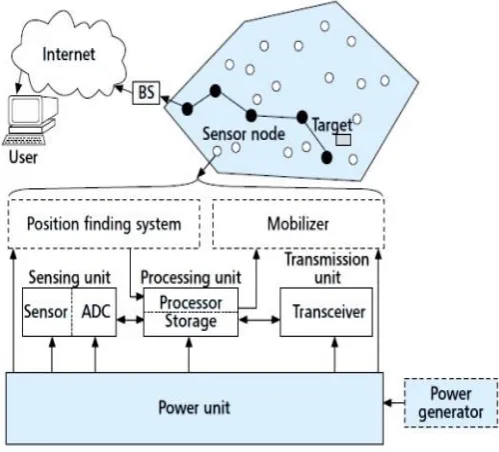
Figure 1: Sensor Node Mechanism II. SYSTEMARCHITECHTURE
Let us look at the architecture of a generic Wireless Sensor Network, and observe how the clustering occurrence is a necessary part of the organizational configuration.
• Sensor Node: A sensor node is a basic element in wireless sensor networks. Sensor nodes are capable to play numerous roles in a sensor network, such as effortless sensing, data storage, routing in a network, data gathering and data processing.
• Clusters: In wireless sensor networks, the Clusters play a role as basic organizational components. Wireless sensor networks are very dense nature so it requires to break them into groups which is helpful to simplify more tasks such a communication.
© 2019, IRJET | Impact Factor value: 7.211 | ISO 9001:2008 Certified Journal
| Page 762
• Base Station: The base station act as a communication bridge between the end user and the sensor network. It exists at the upper level of the hierarchical wireless sensor network.
According to network structure, routing protocols are divided into three different categories:-
Flat
Hierarchical
Location-based
III. DESIGN ISSUES IN WSN
In spite of the immeasurable utilizations of wireless sensor networks, these network systems have a few restrictions, for example, constrained energy supply, restricted computing power, and restricted transmission capacity of the wireless links connecting sensor nodes. One of the fundamental structure objectives of the wireless sensor network is to do information communication while attempting to drag out the lifetime of the network system and prevent connectivity
degradation by employing aggressive energy
administration methodology.
The designing plan of routing protocols in wireless sensor networks is affected by many challenging factors. These elements must be defeated before efficient communication can be accomplished in the wireless sensor networks. In the accompanying, we outline a portion of the routing challenges and configuration issues that influence the routing process in wireless sensor networks.
Depending upon the application, distinctive
architectures and designing plan objectives/limitations have been considered for sensor network systems. Since the execution of a routing protocol is closely identified with the architectural model, in this area we endeavor to catch design issues and feature their suggestions.
Network Dynamics
Node Deployment:
Energy Considerations:
Data Delivery Models:
Node Capabilities:
Data Aggregation/Fusion:
IV.EVOLUTION
In 2004, Raquel A.F. Mini, Antonio A.F. Loureiro, Badri Nath develops The distinctive design characteristic of a wireless sensor network: the energy map in which the key challenge in the design of a wireless sensor network is maximizing its lifetime. This is a fundamental problem and new protocol engineering principles needing to be established in order to achieve this goal. The information about the amount of available energy in each part of the network is called the energy map and can be useful to increase the lifetime of the network. They propose using the energy map as a protocol engineering principle for this kind of network. They argue that an energy map can be the basis for the entire design trajectory including all functionalities to be included in a wireless sensor network. Furthermore, they show how to construct an energy map using both probabilistic and statistical predictions-based approaches.
In 2005, Daniele Puccinelli and Martin Haenggi studied about Wireless Sensor Networks: Applications and Challenges of Ubiquitous Sensing, in which Sensor networks offer a powerful combination of distributed sensing, computing and communication. They lend themselves to countless applications and, at the same time, offer numerous challenges due to their peculiarities, primary the stringent energy constraints to which sensing nodes are typically subjected. The distinguishing traits of sensor networks have a direct impact on the hardware design of the nodes at least four levels: power source, processor, communication hardware, and sensors.
In 2006 John Paul Walters, Zhengqiang Liang, Weisong Shi, and Vipin Chaudhary decribes As wireless sensor networks continue to grow, so does the need for effective security mechanisms. Because sensor networks may interact with sensitive data and/or operate in hostile unattended environments, it is imperative that these security concerns be addressed from the beginning of the system design. However, due to inherent resource and computing constraints, security in sensor networks poses different challenges than traditional network computer security.
In 2006 Yong WangGarhan AtteburyByrav Ramamurthy presents a survey on security issues in WSNs First they outline the constraints, security requirements, and attacks with their corresponding countermeasures in WSNs. Then they present a holistic view of security issues. These issues are classified into five categories: cryptography, key management, secure routing, secure data aggregation, and intrusion detection.
explored general security threats in wireless sensor network and made an extensive study to categorize available data gathering protocols and analyze possible security threats on them.
In 2008 Luis E. Palafox, J. Antonio Garcia-Macias they present the growing challenges related to security in
wireless sensor networks. They show possible attack
scenarios and evidence the easiness of perpetrating several types of attacks due to the extreme resource limitations that wireless sensor networks are subjected to. Nevertheless, they show that security is a feasible goal in this resource-limited environment; to prove that security is possible they Survey several proposed sensor network security protocols targeted to different layers in the protocol stack. The work surveyed in their chapter enables several protection mechanisms vs. well documented network attacks.
In 2009 Chiara Buratti Andrea Conti Davide Dardari and Roberto Verdone their survey paper aims at reporting an overview of WSNs technologies, main applications and standards, features in WSNs design, and evaluations. In particular, some peculiar applications, such as those based on environmental monitoring, are discussed and design strategies highlighted; a case study based on a real implementation is also reported.
In 2010 Amar Adnan Rasheed M.S., Northeastern Dr. Rabi N. Mahapatra In their dissertation, they consider a number of security schemes for WSN (wireless sensor network) with MS. The schemes offer high network’s resiliency and low communication overhead against nodes capture, MS replication and wormhole attacks. They propose two schemes based on the polynomial pool scheme for tolerating nodes capture: the probabilistic generation key pre-distribution scheme combined with a
polynomial pool scheme, and the Q-composite generation
key scheme combined with a polynomial pool scheme. The schemes ensure low communication overhead and high resiliency.
In 2011 Dr. Manoj Kumar Jain in their paper they attempt to present a survey on the major topics in wireless sensor network security, and also present the obstacles and the requirements in the sensor security, classify many of the current attacks, and finally list their corresponding defensive measures.
In 2011 Luís M. L. Oliveira Joel J. P. C. Rodrigues in their paper they survey a comprehensive review of the available solutions to support wireless sensor network environmental monitoring applications.
In 2012 Xiaojiang Ren Weifa Liang In their paper they consider data collection in an energy harvesting sensor network with a mobile sink, where a mobile sink travels
optimal close trajectory for the mobile sink that consists of sojourn locations and the sojourn time at each location.
In 2012 Xuxun Liu In their paper they survey on Clustering Routing Protocols in Wireless Sensor Networks in which Based on network structure, routing protocols in WSNs can be divided into two categories: flat routing and hierarchical or clustering routing. Owing to a variety of advantages, clustering is becoming an active branch of routing technology in WSNs. In this paper, he present a comprehensive and fine grained survey on clustering routing protocols proposed in the literature for WSNs. We outline the advantages and objectives of clustering for WSNs, and develop a novel taxonomy of WSN clustering routing methods based on complete and detailed clustering attributes. In particular, we systematically analyze a few prominent WSN clustering routing protocols and compare these different approaches according to our taxonomy and several significant metrics.
In 2013 R.U.Anitha and Dr P. Kamalakkannan, in their paper they developed Enhanced Cluster Based Routing Protocol for Mobile Nodes in Wireless Sensor Network they propose an enhanced algorithm for Low Energy Adaptive Clustering Hierarchy–Mobile (LEACH-M) protocol called ECBR-MWSN which is Enhanced Cluster Based Routing Protocol for Mobile Nodes in Wireless Sensor Network. ECBR-MWSN protocol selects the CHs using the parameters of highest residual energy, lowest Mobility and least Distance from the Base Station. The BS periodically runs the proposed algorithm to select new CHs after a certain period of time. It is aimed to prolonging the lifetime of the sensor networks by balancing the energy consumption of the nodes. Then compare the performance of our proposed algorithm with the cluster based protocols using ns2 simulator.
In 2014 Agam Gupta and Anand Nayyar studied about Cluster-Based Energy Efficient Routing Protocols in Wireless Sensor Networks, Wireless sensor networks (WSNs) consists of large number of multifunctional sensor nodes. Routing protocols developed for other ad hoc networks cannot be applied directly in WSN because of the energy constraint of the sensor nodes. Sensor nodes are battery powered and deployed in harsh environments so it is not always possible to recharge or replace the batteries.
© 2019, IRJET | Impact Factor value: 7.211 | ISO 9001:2008 Certified Journal
| Page 764
simulation results show that CHEF is about 22.7% more efficient than LEACH.
V. CONCLUSIONANDFURTHERDEVELOPMENT Today wireless sensor technologies are widely used across the globe to support the communication needs of a huge number of end users. The importance of wireless sensor technologies in everyday life has been discussed. In this work, we have discussed about the wireless sensor networks and we have seen that the cluster based have several advantages over traditional wireless sensor networks such as energy, network life cycle. In this paper we discussed the various clustering based WSN and the advantages of these technologies over the wired technology.
Today wireless sensor technologies are broadly utilized over the globe to help the correspondence needs of an enormous number of clients. The significance of wireless sensor advancements in regular daily existence has been discussed. We have talked about the wireless sensor systems and we have seen that the cluster based system have a few points of interest over traditional wireless sensor systems, for example, energy consumption, network life cycle. In this paper we talked about the different cluster based WSN and the benefits of these advancements over the wired technology.
REFERENCES
1. Farooq Anjum and Petros Mouchtaris. Security
for Wireless Ad Hoc Networks. WILEY, 2nd edition, 2007.
2. Behrouz A. Forouzan. Cryptography and Network
Security. Tata McGraw- Hill, 2007.
3. Patrick Albers, Olivier Camp, Jean-Marc Percher,
Bernard Jouga, Ludovic M´e, and Ricardo Staciarini Puttini. Security in ad hoc networks: a
general intrusion detection architecture
enhancing trust based approaches. In Wireless Information Systems, pages 1–12, 2002.
4. Ningrinla Marchang and Raja Datta. Collaborative
techniques for intrusion detection in mobile ad-hoc networks. Ad Hoc Networks, 6(4):508– 523, 2008.
5. Digital Signature. http: ==en: wikipedia:
org=wiki=digital signature.
6. C. Siva Ram Murthy and B. S. Manoj. Ad Hoc
Wireless Networks: Architectures and Protocols. Pearson Education India, 2008.
7. Wenjia Li and Anupam Joshi. Security issues in
mobile ad hoc networks. In Ad Hoc Networks, pages 1–23, 2008.
8. A. S. Tanenbaum. Computer Networks. Prentice
Hall, 3rd edition, 2003.
9. Nikos Komninos, Dimitris Vergados, and Christos
Douligeris. Detecting unauthorized and
compromised nodes in mobile ad hoc networks. Ad Hoc Networks, 5(3):289–298, 2007.
10. Teerawat Issariyakul and Ekram Hossain.
Introduction to Network Simulator NS2. Springer, 2008.
11. Mubashir Husain Rehmani, Sidney Doria, and
Mustapha Reda Senouci. A tutorial on the implementation of ad-hoc on demand distance vector (aodv) protocol in network simulator (ns-2). In Wireless Information Systems, pages 1– 13, 2009.
12. Heinzelman, Anantha Chandrakasan, and Hari
Balakrishnan, Energy-Efficient Communication Protocol for Wireless Microsensor Networks, Hawaii International Conference on System Sciences, January 4-7, 2000, Maui, Hawaii.
13. Sankalpa Gamwarige and Chulantha Kulasekere,
An Algorithm for Energy Driven Cluster Head Rotation in a Distributed Wireless Sensor Network, the International Conference on Information and Automation, December 15-18, 2005, Colombo, Sri Lanka, pages: 354-359.
14. Jong-Myoung Kim, Seon-Ho Park, Young-Ju Han
and Tai-Myoung Chung, CHEF: Cluster Head Election mechanism using Fuzzy logic in Wireless Sensor Networks, Feb. 17-20, 2008 ICACT 2008, ISBN 978-89-5519-136-3, pages 654-659.
15. Pratyay Kuila and Prasanta K. Jana, Energy
efficient clustering and routing algorithms for wireless sensor networks: Particle swarm optimization approach, Engineering Applications of Artificial Intelligence 33 (2014) 127–140.
16. Agam Gupta and Anand Nayyar, A Comprehensive
BIOGRAPHIES
Amit Kumar Wadbude , B.E., M.Tech. Scholar in E-security, Shri Shankaracharya Engineering College, Shri Shankaracharya Technical Campus, Bhilai, India. Research areas are Wireless Sensor Network, mobile ad hoc network & its enhancement.