C
t
O
J
,
a
a
FOctober
,
1968
CD
Special Feature: Time Sharing
UTER RESOURCES SHARING -
~
_
1
11Wtl
··
NTSA~~S
.
..
PERIODICALS
SEC
iL.. iI
f
v
IJ
AR ET S
SAN
FERNA 100
*N126
Susie Meyer
meetsPL/.
The story of how a
sin-glt! language answers
the question, "Can a
young girl with no
pre-vious programming
experience find
happi-ness handl ing bath
commercial and
scien-tific applications,
with-out resorting to an
assembler language?"
Let's face it. The cost of
programming just keeps
going up. So for some
time to come, how well
you do your job depends
on how programmers like
Susie Meyer do theirs.
That's the reason for
PL/I, the high-level
lan-guage for both scientific
and commercial
applica-tions.
With PL/I,
program-mers don't have to learn
other high-level
lan-guages. They can
concen-trate more on the job, less
on the language.
So think about PL/I.
Not just in terms of
training, but in terms of
the total impact it can
·have on your operation.
Take it a step at a time.
Programmers don't have
to learn all of PL/I to use
it.
Tak~New York Life
Insurance Company for
'example. First
program-mer trainees get a good
grounding in computer
basics. Then a
combina-tion of PLII self-study
courses and workshops
readies them to code
meaningful and useful
programs.
As the new
program-mers gain skill and
ex-perience they use other
parts of the language on
tougher problems. Most
importantly, they learn
while doing.
Load Module
(executable)
Freedom of
expres-sion! That's what it's
all about.
The same
fea-tures that make PL/I
easy to learn make it easy
to use. First of all,
pro-gramming time can be
shortened by using a
single high-level
lan-guage. In most cases,
as-sembler languages aren't
needed anymQre.
also a feature
tla1;~i,ml)li1ies
coding for
rienced
program-. It automatically
a choice among
al-·ves. The language
provides a new ease
writing. It's neither
cryptic nor verbose. The
result is a new freedom
of expression - freedom
from arbitrary language
restrictions-freedom to
concentrate on
applica-tion development.
A bright future for
Susie.
PLII has growth
built iIi. As your system
grows, PL/I will grow
right along with it.
IContinued growth of
PL/I means a brighter
future for your
program-mers.
It
also means
con-tinued use of your
pro~grams' and
equipment-with a minimum impact
on your investment.
r - - - -
It's time to get
involved~-We'd like to get you more involved with PL/I. As a first step, send
this coupon for more information.
IBM Data Processing Division, Dept.
31A112 East Post Road, White Plains, New York 10601
Name ______________________________________________ __
Position __________________________________________ _
Company ___________________________________________ __
Division. _______________________________________ __
Add res s ___________________________ ___
Letters To The Editor
Computer Training Schools
I am writing with reference to your March issue, with special reference to the "Test for Evaluating Computer Training Schools" on page 25. As past President of the New Hampshire Per-sonnel and Guidance Association, I was constantly faced with the problem of giving advice with respect to the quality of our computer training schools. The test on page 25 would be particularly useful in assisting some of our guidance counselors to make an evaluation.
Is there any objection to .my making copies of this "Test" for distribution to the Executive Board of the New Hamp-shire Personnel and Guidance Associa-tion? In addition, I would certainly like to have a copy of your March pub-lication for my reference shelf.
VAN A. HARTMAN Dean of Student Personnel Plymouth State College
Plymouth, New Hampshire 03264
In your March issue there appeared several excellent articles on EDP educa-tion. Our city has been subjected at various times to poor quality high-priced private schools. Although none of these schools has survived for any great length of time, they do manage to take a lot of hard-earned money with them when they move to the next city.
With your permission, I would like to publish all or part of page 25 of your March issue - "A Test for Evaluating Computer Training Schools" - in our local newspaper.
JOHN CUSHING Director of Data Processing Sudbury, Ontario, Canada
(Ed. Note - We were glad to give Mr. Hartman and Mr. Cushing permission to reprint page 25 of the March issue as they requested - wifh our standard re-print clause inserted in an appropriate place.)
Social Issues and Science
I am a student of the social effects of automation and technology, and I want to express my admiration for the courageous involvement of past issues of your magazine in important social issues involving science. The "tech-nology of oppression", as described by
Herbert Marcuse in One-Dimensional Man (Beacon, 1964), is increasingly becoming of great concern, especially to scientists who understand it and help create it. I recommend the above book to you and your readers.
RICHARD OCHS Washington, D.C. 20005
Right Answers
Slightly over a year ago you sent me a copy of "Right Answers - A Short Guide for Obtaining Them". In the introduction, this one-sheet summary is identified as a summary that is to be expanded into a forthcoming book.
What is the status of that book?
If it has been published, where may I order a copy and at what cost?
JAMES L. GILDERSLEEVE Senior Systems Engineer General Electric Co. Phoenix, Ariz. 85029
(Ed. Note - The book of which "Right Answers - A Short Guide for Obtaining Them" is a part has as the tentative title, General Science and Problem Solv-ing, or Common Sense, Elementary and Advanced. John Wiley and Sons will publish the book, which I hope will be done ,about a year from now. If you would like to order a copy when it comes out, please tell me, and I will put your name on the list to be notified of its publication and price.)
Computer Art
Your August, 1968 copy (featuring your 6th Annual Computer Art Con-test) was fascinating. I am a math teacher in Arlington County. We have introduced the time shared GE BASIC System into our present math sequence. I have just finished developing supple-mentary materials for our eXIstmg courses. We in Arlington are convinced that the computer will add much to the curriculum, particularly in terms of a new, stimulating approach to the exist-ing courses.
In connection with this, I am sure the students will enjoy seeing the entries in your art contest.
G. P. O'SHAUGHNESSY 'Washington Lee High School Arlington, Va. 22201
©@u1Jl)
Od)
M(~@
O~©
end automation
Vol. 17, No. lO-October, 1968
Edit 01' Edmund C. Berkeley
Associate Editor Sharry Langdale
Assistant Editors Moses M. Berlin Linda Ladd Lovett Neil D. Macdonald
Contributing Editors John Bennett Andrew D. Booth Dick H. Brandon John W. Carr III Ned Chapin Alston S. Householder Peter Kugel Leslie Mezei Rod E. Packer Ted Schoeters
Advisory Committee T. E. Cheatham, Jr. James J. Cryan Richard W. Hamming Alston S. Householder Victor Paschkis
Art Directors Ray W. Hass
Daniel T. Langdale
Fulfillment Manager William J. McMillan
Advertising Representatives
NEW YORK 10018, Bernard Lane
37 West 39 St., 212-279-7281
CHICAGO 60611, Cole, Mason, and Deming
737 N. Michigan Ave., 312-787-6558
PASADENA, CALIF. 91105, Douglas C. Lance
562 Bellefontaine St., 213-682-1464
SAN FRANCISCO 94123, Richard C. Alcorn
2152 Union St., 415-922-3006
ELSEWHERE, The Publisher Berkeley Enterprises, Inc.
815 Washington St., 617-332-5453 Newtonville, Mass. 02160
Editorial Offices
BERKELEY ENTERPRISES, INC. 815 WASHINGTON STREET, NEWTONVILLE, MASS. 02160
CIRCULATION AUDITED BY AUDIT BUREAU OF CIRCULATIONS
COMPUTERS AND AUTOMATION IS PUBLISHED MONTHLY AT 815 WASHINGTON ST" NEWTONVILLE, MASS. 02160, BY BERKELEY ENTER. PRISES, INC. PRINTED IN U.S.A. SU8SCRIPTION RATES: UNITED STATES, $15.00 FOR 1 YEAR, $29.00 FOR 2 YEARS, INCLUDING THE JUNE DIRECTORY ISSUE; CANADA, ADD 50¢ A YEAR FOR POSTAGE; FOREIGN, ADD $3.50 A YEAR FOR POSTAGE, ADDRESS ALL EDITORIAL AND SUBSCRIPTION MAIL TO BERKELEY ENTERPRISES, INC., 815 WASHINGTON ST., NEWTONVILLE, MASS" 02160. SECOND CLASS POSTAGE PAID AT BOSTON, MASS.
©
CQ)
CFLFU
CQ)
[1dJ~
@
[fJ§
a
[il}~
a
~
'li;
(Q)!J'lfi)a
'If;
0
@u=uOctober, 1968, Vol. 17, No. 10 The magazine of the design, applications, and implications of information processing systems.
Special Feature:
Time Sharing
16 SELECTING A VENDOR OF TIME-SHARED COMPUTER SERVICES
by Alan G. Hammersmith
Specific suggestions on how a non-user should go about selecting a time-sharing or remote-batch computer service, and how a current user should evaluate his present service . . . with some general comments on the current state and future potential of the time-sharing industry.
24 MULTIPLE-ACCESS, TIME-SHARING, OPERATING SYSTEM
by B. R. Smith
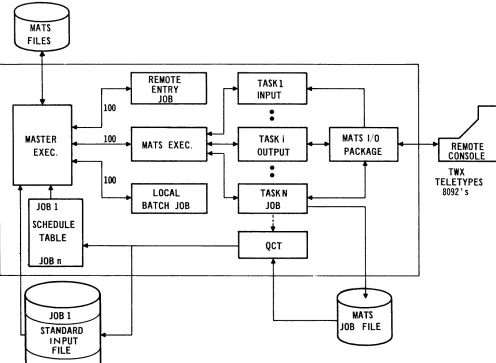
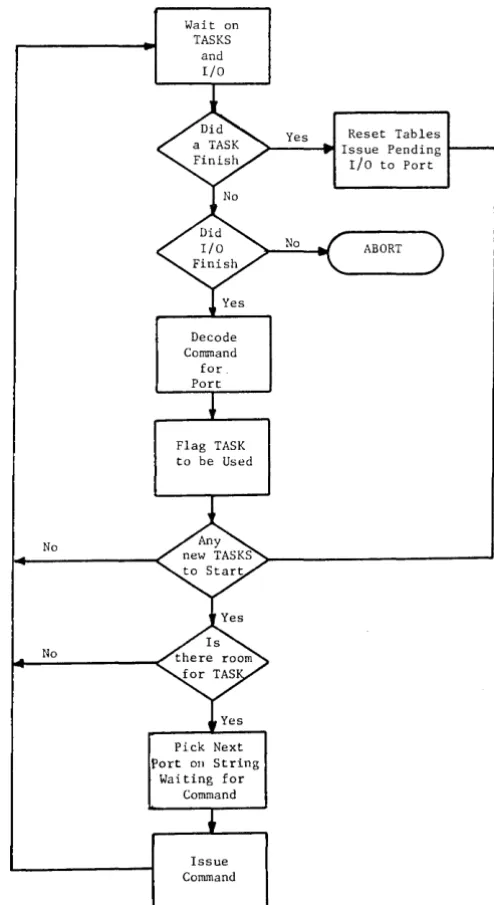
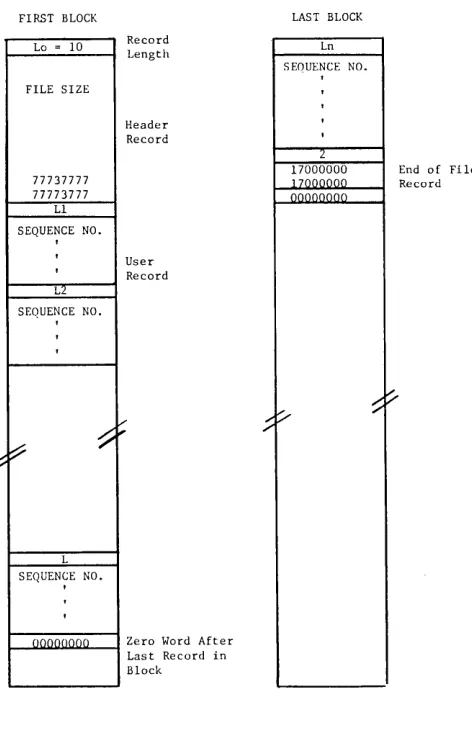
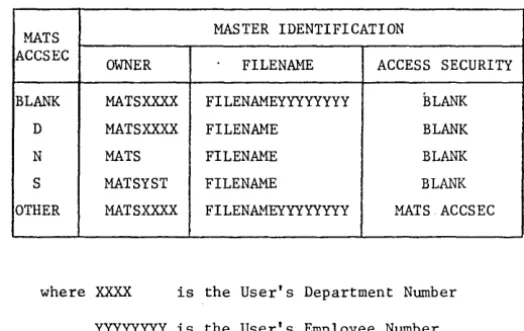
A case history - how the "Multiple Access Time Sharing" (MATS) System at Northern Electric Co., ltd., Ottawa, Canada, operates.
30 A NEW CONCEPT
IN TIME
SHARING: DEDICATED SYSTEMS SHARE ONE COMPUTERby Gerald J. Smolen
A unique type of sharing in which several disc~ete, real-time, on-line information sys-tems share a computer at a neutral site.
36 COMPUTER RESOURCES SHARING-SOME COMMENTS AND PREDICTIONS
by Norman Doelling
What do ti~e-sharing systems currently offer? Where are present trends likely to lead?
40 DATA PROCESSING SERVICES: BANKING'S NEW PRODUCT
by Dr. James A. O'Brien
Why banks are becoming a powerful competitor in providing data processing services. 45 INNOVATION IN TEACHING-WHY INDUSTRY LEADS THE WAY
by Nate A. Newkirk
How efforts to fulfill the purpose of industrial education - "high quality at the lowest possible cost, and with the greatest possible speed" - have led to some significant discoveries that could save industry millions of dollars . . . and could improve the quality of public education.
Regular Features
Editorial
6 Remote Batch Processing and Other Good New Ideas in the Computer Field, by Edmund C. Berkeley
C&
A Worldwide
49 Report from Great Britain, by Ted Schoeters
Fifteen Years Ago in
Computers and Automation51 Electronic Equipment Applied to Periodic Billing, by E. F. Cooley
Jobs and Careers in Data Processing
54 Computer Salary Survey, by Source EDP
Multi-Access Forum
8
10
12 13
14
What Are the Challenges Facing the Computer Industry?, by J. Stanford Smith Converting Staff to a Computer: Two Views, by Elsbeth Ganguin and Ronald Yearsley 1969 IEEE Computer Group Conference - Call for Papers
International Joint Conference on Artificial Intelligence - Call for Papers Who's Who in the Computer Field, 1968·69 - Entries
14 California Computer Products Sponsors Art Competition
COMPUTERS and AUTOMATION for October, 1968
Departments
56 Across the Editor's Desk - Com· puting and Data Processing Newsletter
74 Advertising Index 73 Book Reviews 67 Business News
34 Calendar of Coming Events 4 Letters to the Editor 70 Monthly Computer Census 68 New Contracts
69 New Installations 74 New Patents
by Raymond R. Skolnick 14 Numbles
by Neil Macdonald 54 Problem Corner
by Walter Penney, CDP 50 Proof Goofs
by Neil Macdonald
C-
a
EDITORIAL
R:emote Batch Processing and Other Good New Ideas
in the Computer Field
In one of the articles of this issue ("Selecting a Vendor of Time-Shared Computer Services" by A. G. Hammersmith) a fairly new term appears a number of times. It denotes a relatively new subdivision of computer activity: "remote batch processing." With a high speed communication line between the data station and the central processor, and high-speed in-put and outin-put, the remote proce'ssing of data in batches can often make good sense.
This new idea will become a source of millions of dollars of income for a number of energetic, enterprising people in the computer field. And this idea - along with a number of other new ideas in the computer field - raises some inter-esting general questions:
• What is a significant idea?
• How do you tell the difference between good ideas and poor ones?
• Where do relatively unnoticed, good ideas in the computer field come from?
There is little doubt that the application of good new ideas in the computer field, bursting as it is with expansion in many directions, will help many people become million-aires, as well as help many organizations make major con-tributions to the advancement of society.
As explained in an earlier editoriaP, the word idea here means particularly:
a hypothesis, a concept, an estimate, or a guess which leads to, or may lead to, useful and fruitful results. For example, the following idea does not exist yet, but I can see no theoretical barriers to its future existence:
a complete and very powerful central processor unit no larger than a football which (1) will be "plugged in" to a console, (2) will be made of large-scale-inte-grated (LSI) circuits, and (3) will cost when new no more than about $2000.
I think such a central processor unit will exist before 1978 and will be marketed before 1980.
An idea which was avidly pursued by a number of com-puter people for many years in the 1950's was ~he idea of
automatic translation by programmed computer from one foreign language to another.
This idea encountered shoals and has almost been wrecked on rocks, because nearly all the investigators tried to develop the idea without paying attention to a major variable: mean-ing in context. This is the kind of meanmean-ing which produces change in the grammatical function of the words in the fol-lowing, almost-parallel, three sentences:
Time flies like an arrow : Noun, verb, pre positional
phrase.
Fruit flies like a banana: Adjective, noun, verb, object
of a verb.
Notice flies like a dragon-fly: Imperative verb, noun,
prepositional phrase.
It is worth distinguishing between ideas that we can call
thousand-ho,rsepower ideas and flypower ideas.2 In mathemat-ics, for example, the thousand-horsepower ideas apply widely in human affairs; they give answers to many problems; they provide ways for understanding many situations and pro-cesses; they express models that you can carry around in your mind and that give power to understand many events and processes in the real world. Examples of thousand-horse-power mathematical ideas include: next along a line; variable; formula; graph; etc.
Then there are mathematical ideas that are essentially frills and trifles, and as -far as we can see they will always remain frills and trifles. These ideas apply only narrowly; they give answers to only a 'few problems; they are models for under-standing only a few situations; they do not give many clues to the behavior ()If the real world. An example of a flypower idea is this: if you take the number 142\857 and add it to itself, you will get the same digits in the same order but starting at a different digit, 285,714. This is an example of what is called cyclic order. The preservation of cyclic order when adding one number to another is unusual, amus-ing, puzzling - and one can find more examples; but when all is said and done, the idea of cyclic order of digits pre-served when numbers are added does not apply widely, does not give answers to many problems, does not give power to understand many parts of the real world. It is a flypower idea.
In the computer field, what is called residue arithmetic, it seems to me, is a flypower idea. I do not see any possibility that this idea will become widely useful or important in computer circuits. On the other hand, the idea
computer-assisted (as in such phrases as "computer-computer-assisted instruction,
computer-assisted explanation, computer-assisted documenta-tion, computer-assisted translation") is certainly a thousand-horsepower idea. The idea emphasizes something most de-sirable, the close interaction of computer and human being where each contributes its forte to the solution of baffling problems.
Where do relatively unnoticed, good ideas in the comput-er field come from?
Many good ideas result from new combinations of previous ideas. "Remote batch processing" results from a combination of "batch processing" plus "remoteness".
The idea of "scientific kit" plus the idea of "computer circuits" has led to a number of projects in the computer field, whereby a scientific educational kit with the content of computing and computer circuits has been designed, produced, and marketed.
The combination of "learner-controlh;d instruction" (see the article by Nate A. Newkirk, "Innovation in Teaching -Why Industry Leads the Way", in this issue) with "computer-assisted" produces "computer-assisted learner-controlled in-struction". I think this idea will produce millions of dollars
MULTI-ACCESS FORUM
WHAT ARE THE CHALLENGES FACING THE COMPUTER INDUSTRY?
(Based on an address by J. Stanford Smith, Vice Pres. and Group Executive, Information Systems Group,
General Electric Co., at the DPMA 1968 International Data Processing Conference, Washington, D.C., June
1968.)
Data processing managers today are operating about $20 billion worth of computer systems around the world. In the United States alone, about 40,000 computers worth almost $13 billion are being operated. What challenges must be solved to move the electronic information systems from their period of youthful promise to the condition of productive maturity?
The following are the most important challenges facing the industry, according to the testimony of users themselves:
1.
There is a need for better understanding between data processing management and operating manage-ment.Operating management feels that data processing man-agers, for all their competence, either don't understand or don't concentrate on the needs of the business. And of course, the data processing managers complain about the fuzzy and even misleading inputs they get from operating managers. Until this gap is closed, users feel that the information sys-tems field will be clouded by disappointment on all sides.
What can be done to close this gap? Let me suggest three answers:
First, insist on involvement by line operating management in information systems development. We observe that the companies which are most successful in using computers regularly use operating people on computer development projects, either as members of a project team, or as short-term members of the data processing organization.
Second, in your exploration of new projects for manage-ment approval, concentrate on what is important to the business. The key test for a project is not computer feasi-bility, but relevance to the business. The key question: what is its potential impact on company profits?
Third, become involved personally in the total business process.
At the present time, only a handful of the people who reach top management posts have come up through data
proce~sing. I think this wiIl change. Electronic information systems will live up to their enormous potential as genera-tions of data processing managers think, feel and act as overall business managers. Men who train themselves in this direction may well set the pattern for future executive man-agement.
2. There is a need to find the most productive ways to use the new time-sharing capabilities.
Three years ago, no more than 500 terminals were on-line to time-sharing computers. Today, General Electric alone serves more than 50,000 time-sharing customers, and the field is one of the most rapidly growing businesses in the world. Such rapid growth indicates that time-sharing systems are serving a keenly felt need for users large and small. But what is their place in your total information systems picture?
Objective cost studies may lead you to the use of time-sharing services as supplements to your in-house batch-pro-cessing systems, for peak loads or special services. And, as you may know, computer systems are now available which can handle batch, remote-batch, and time-sharing efficiently, all within· the same system. This gives you a number of realistic alternatives to consider in planning your installations. Users report that on-line computer services, which usually offer a variety of program packages, can help relieve the shortage of programmers. And above all, the simple time-sharing terminal serves as an exciting introduction for man-agement to the discipline and power of data processing.
3.
The rush of technological advance must be brought into better balance with the real needs of users.Information systems technology is growing so very rapidly, it is almost impossible to keep the various phases in balance with each other. Generally speaking, the technology of the central processor has been running ahead much faster than the technology of input-output and storage devices. And software has been running behind hardware.
There are two fundamental thrusts in the information sys-tems field; the thrust toward wider and more profitable
applications, and the thrust toward better
price-to-perfor-mance ratios which come from advancing technology. All too often these two fundamental thrusts are in direct con-flict.
The user can help relieve this conflict and imbalance by accepting the value of standards in programming and per-haps by investing more at the outset in preparing his appli-cations in a well-documented fashion. Then his basic struc-ture can be more easily translated to new equipment, and can even be advanced to a higher order of integration.
The manufacturer can help by providing a planned, evolu-tionary path forward that maintains the past user investment without putting the user into a strait-jacket that prevents the expansion of applications. He can also concentrate valuable talent on developing higher level languages and generalized data management systems.
4. There is a demand for greater speed in the stan-dardization of systems and software.
Realistic standards can cut out wasteful re-invention of wheels. Important work is being accomplished in the areas of programming languages and magnetic tape standards. We now have in COBOL an efficient and accepted programming language for the business user. The ASCII (American Stan-dard Code Information Interchange) is now a Federal Gov-ernment standard as well as the U.S. standard for magnetic tapes; it is also consistent with the International Standard Code.
An altimeter is just one of hundreds of components on every U.S. Air Force plane. Each is a potential trouble spot. The Air Force has skilled mechanics to detect faulty parts on the ground, and it has given them access to a UNIVAC@ real-time computer system to locate replacement parts from inventory in a matter of seconds. And, the parts can be delivered to the flight line in about twelve minutes.
The warehouse location, quantity on hand and cost of 65,000 parts is in the memory of a UNIVAC real-time computer system.
When the mechanic orders a
replacement altimeter, the computer notifies issue clerks and indicates where it's stored. The computer checks its memory again. This time to see how many altimeters should be on hand. If
inventory is now too low to meet expected demand, it initiatesa re-order and updates accounting records for Base Level Supply Command.
Multiply that altimeter order by a few hundred an hour and you have a rough idea how much work the Air Force gets out of this UNIVAC inventory system. A total system with
forecasting, control and cost-cutting functions built in.
There's a UNIVAC system at virtu-ally every Air Force base. 166 systems to be more precise: All equipment and procedures are the same. Personnel have to be trained only once to use any of them.
UNIVAC computer systems are also being used by people in business, government and science. And you don't have to own an air force to have one working for you.
UNIVAC
Univac is saving a lot of people a lot of time .
..JL
IrspEr-«.Y
RAI'D
Designate No. lOon Reader Service Card
According to the instruments
this plane is at 32,000 feet.
It will protect your investment in programs, reduce con-version time and expense, make additional programmers available, and aid communication between equipment of different manufacturers.
I am not speaking of standards that prematurely freeze hardware technology or application packages in the present state of the art. This could stunt the growth of what ob-viously is still a very young technology. But both user and supplier would be able to make more progress through the development of language standards that go beyond the code standards on which the industry is currently working.
5. There is a most urgent need for a much broader scale application of our nation's education resources in preparing people to understand and productively participate in the information revolution.
It is estimated that there are 120,000 programmers in the U.S. today. But it is claimed that there is a need for 180,-000 programmers, and that we'll need half a million by 1973. Regardless of the accuracy of these estimates, they indicate the dimensions of the challenge: to quadruple either the numbers or the effectiveness of the data processing man-power now available, and do it in the next five years!
There are some things that all of us can do to improve the
effectiveness of the available people. Standardization, good documentation, higher-level languages, and good data man-agement systems are all good powers of people.
Every maturing profession must develop people for tech-nical support. The computer industry needs to develop a logical work structure that enables high school graduates, college graduates, and Ph.D.'s each to concentrate on the
areas of work where they can make their greatest contribu-tion.
There are at least six major ways that computers fit into the educational picture.
1. Computer-aided instruction appears to have great po-tential, although it is still largely in the research stage.
2. Computers can be more widely used for the adminis-trative work of the educational establishment. This can help control the skyrocketing costs of education, and more effec-tively utilize our instruction resources.
3. Every college and university should be offering profes-sional-level courses in the computer sciences.
4. Both high schools and colleges should be training people for careers in programming and systems analysis.'
5. Every college student should have the opportunity to develop computer literacy; to read and write computer lan-guages, and use the computer as comfortably as an older generation of engineers and figure manipulators used the slide rule. He will need this experience to fulfill his future career and contribute to the work of his generation.
6. A personal, hands-on acquaintance with a computer terminal should be part of the experience of every liberal arts student. Otherwise, he simply will not understand the greatest revolution of our times and the computerized society in which he will live.
The solution to the challenges facing the industry lie in having each man and woman associated with it look up from his daily tasks, and accept appropriate responsibility for the good of society.
Maturity for the Computer Age will arrive as each of us, individually, matures in his own commitment to the task.
CONVERTING STAFF TO A COMPUTER: TWO VIEWS
I. Based on a report by Elsbeth Ganguin
in:
TheFinancial
Times, London, England, for August 14, 1968.After 121 years in business, the Woolwich Equitable Build-ing Society is about to undergo a great change. It has got itself a computer. Within the next two years, the computer will take over all members' accounts: 350,000 share accounts, 20,000 deposit accounts, and 15,000 savings accounts.
Many of the Woolwich's 1300 employees will be affected by the computer, in one way or another. And though the computer will have to be served by perhaps 65 people once it is fully operative, in two years' time the company will have about 150 fewer employees than it would have had without the computer. But the company has pledged that no one will be fired.
From the start, the Woolwich took its staff into its con-fidence.· Even before management consultants were called in, the general manager sent a note around stating what was afoot. This practice was continued when, a year later, the decision was made to install a computer, and again when the computer had been ordered.
Having been fully informed, the staff took the anticipated changes calmly. The first step was to appoint a data pro-cessing manager. He was a Woolwich man from the onra-nization and methods department. In fact, only one senior man, the systems and programming manager, came trom outside.
Next the Woolwich asked for volunteers for four jobs as systems analysts. About 20 volunteered. They were given aptitude tests. The four best candidates were picked and sent to several courses before their appointments as ana-lysts were confirmed. They were then set the task of pre-paring the "systems" to be adopted by the computer once it arrived.
A few months later the Woolwich sent around another re-quest for volunteers, this time for six programmers. About 35 employees volunteered. Again aptitude tests were given, and the six best candidates were sent to school. This process was repeated again for more programmers and computer operators.
In order to keep faith with its employees, the Woolwich decided on an introductory period for the computer of two years, since a natural wastage of 150 employees could be ex-pected in that time. .
But such natural wastage does. not, of course, solve the whole problem; it just solves that of numpers. For the rest, there is the need for a re-deployment program. For example, the Woolwich now has some 30 senior control clerks, many of whom have been with the organization for over 30 years. They will be hit, because their jobs will vanish. So they have to be transferred to jobs which, in many cases, someone younger could do. This can be a delicate situation.
Then there are the girl specialists, like addressograph, accounting machine of comptometer operators. Their jobs will go, as will anyone's "ledger" occupation. But they will be needed until the computer is fully operative. To help bridge this uncomfortable gap, the Woolwich has hired some married women on a two-year engagement only.
SOFTWARE PROFESSIONALS
We have plenty of solutions. What we need are problems ••• and people who are good at thinking them up.
We're lucky to have some of the most outstanding software people in the coun-tryout here in Sunnyvale, California. And we need the best. Because our assign-ment is the total information system seg-ment of orbiting satellite systems. In-cludes planning, commanding, data man-agement and post flight analysis. We not only design information systems to fill present needs, but anticipate and project information system segments of space systems that will most likely be needed in 1970 or '75.
It should come as no surprise to learn we have more operational software develop-ment and more operating on-orbit experi-ence in complex spacecraft than anyone in America.
Now, since most people are trained as problem-solvers, the people we hire will be quite extraordinary. In a way, we're asking for trouble. That is, we're asking for people who habitually create more problems than they're worth ••• to most other companies.
What we'll do when we find them is make their problems worth more. With us,
they'll be creating more worth than prob-lems, even though they're still creating problems.
Get it?
If you do, you may have real problems. The kind we're looking for.
If you're one of the professionals with a degree in EE, Physics or Math and have 2-10 years applicable experience, see if you can create problems for us in any of the following areas:
MATH SPECIALISTS-COMPUTER APPLI-CATIONS Provide detail design, devel-opment, maintenance, modification and improvements for command and control, event and data evaluation computer pro-grams for use on assigned satellite proj-ects.
PROGRAMMERS Coordinate with systems engineers, ops analysis engineers, and users and/or the customer to determine basic requirements for computer program development and modification. Docu-ment, design, flow chart, code, check-out and validate computer programs.
ANALYSIS ENGINEERS-COMMAND AND CONTROL Provide technical coordina-tion to assure compatibility of computer software programs and data base for
op-erational vehicles and on-orbit opera-tional support for the hardware/software interface areas. Background in analysis and operation of airborne systems and sub-systems with emphasis on digital command and telemetry systems. Knowl-edge of computers, associated software. An understanding of software logic and Jovial language required.
SPECIALISTS - VALIDATION AND TEST Establish test procedures, at the sys-tem, sub-syssys-tem, and module level from preliminary and final design specifica-tions of software programs. Conduct ex-tensive validation tests to ensure com-patibility with all developed programs. Please send details of your educational background and experience, including salary requirements, to Mr.E.Cutter, Gen-eral Electric Co., Space Sysiems, Room 40-K, 1003 West Maude Ave., Sunny-vale, California 94086.
Command & Information Systems Operation
SPACE SYSTEMS
GENERALe ELECTRIC
II. Based on a reply to the above by Ronald Yearsley in The Financial Times, London, England, for August
16, 1968.
The report by Elsbeth Ganguin concerning the computer staffing policy of a leading building society, commendable as it was in solving its problems by extensive internal re-cruitment and training, could be a model of doubtful validity for other organizations.
The following case history reveals some of the weaknesses of internal recruitment. A particularly well-established en-gineering company decided after little thought to purchase a computer, which was ordered and scheduled for delivery in 18 months. The company decided to recruit its systems analysts internally, because the applications to be put on the computer were considered complex and it was thought exter-nal recruits would take too long to understand the company's routines and philosophy.
Hence, three senior clerical staff were appointed as systems analysts. They were sent on a computer manufacturer's course for three weeks, which gave an introduction to com-puting and programming. On their return, they began to design the new computer system. This system was based largely on the old routines of the company's punch card in-stallation. The senior management of the company took no direct interest and gave little guidance to these men.
At that time there was little formal systems training avail-able. Because of their lack of understanding of programming, these men had no chance to comprehend the potential of the proposed computer (and its limitations), and produced a "hodge-podge" of. a system which would use the new com-puter merely as' a. fast printer repeating some of the sterile and redundant routiiles of the punch card installation.
It was later discovered that the computer selected had too small a configuration to cope with the system that had been designed. The computer configuration was' increased, and its delivery delayed by 11 months. In that time some of the system was redesigned and senior staff recruited externally. The cost to the company of this experiment was a little over £50;000.
This is a tragic tale, for nowhere else in the organization
,,,ould one expect to find a function of comparable im-portance carried out by people with so little training or ex-perience. The reason for such practices providing an easy alternative to external recruitment is the rapid growth of computing in this country, which has out-stripped the supply of adequately trained people. The average user finds it diffi-cult to staff his installation with a good mix of business and computing skills. The analyst, in particular, requires the qualities of a good detective, with curiosity, observation and logical power, coupled with a comprehension of the capa-bilities of the software of the computer at his disposal.
A computer installation is as good as the people who staff it, and good people are demanding inflated salary levels at the moment. But high salaries alone are not the answer. Employers must remember that the retention of staff is equally as important as recruitment. In order to achieve this, the installation needs to be well managed and needs to operate in an enlightened company where there is high-level support for the computer department.
The advantage internal recruitment does bring is to solve to· some degree the prublem, so apparent in mobile computer people, of staff turnover. This posture, however, does have the danger that the installation will be inbred, and easily satisfied with its performance in the absence of external yardsticks. The external recruit does bring new ideas and act as a catalyst of change.
Peering into the future may be rash, but in the short term we can see the heavy demand for trained staff continuing. .' Training programs undertaken by such firms as the
Wool-wich Equitable Building Society will help to some degree in solving the problems. But quality rather than quantity is crucial and is not easily attained if the proportion of expe-rienced people in a given installation is low. There is little point in the recruitment externally of a few able technicians who will spend the bulk of their time teaching the uninitiated analysts and programmers recruited internally how to re-invent the wheel.
1969 IEEE COMPUTER GROUP CONFERENCE - CALL FOR PAPERS
Donald L. Epley
Technical Program Chairman
1969 IEEE Computer Group Conference Dept. of Electrical Engineering
Univ. of Iowa
Iowa City, Iowa 52240
The 1969 IEEE Computer Group Conference will be held in Minneapolis, Minnesota, June 17-19, 1969. The purpose of this Conference is to report and explore recent, original developments in "Today's World of Real Time Systems."
Subjects of interest include real time systems for process control, message switching, inventory control, time sharing, command and control, and biomedical computing. Papers are invited describing new developments in software, lan-guages, system organization and interface design including peripheral equipment, special purpose systems, system models and analysis, and hardware.
Potential participants are requested to submit for consid-eration by the Conference Program Committee a 50-word
abstract suitable for publication in the Computer Group News, and alOOO-word illustrated digest suitable for
publi-cation in the Conference Digest. The phone number and complete mailing address of the senior author should be specified for possible later questions and revisions. Four copies of the abstract and digest should be submitted by January 10, 1969. Authors will be notified 8f the Program Committee's decision by March 1, 1969.
In addition, authors may submit complete papers for in-dependent lIeview and consideration for publication in a special issue ! of the IEEE Transactions on Computers.
INTERNATIONAL JOINT CONFERENCE ON ARTIFICIAL INTELLIGENCE - CALL FOR PAPERS
Dr. Donald E. Walker
Program Chairman (U.S.A.)
The MITRE Corp.
Bedford, Mass. 01730
The first International Joint Conference on Artificial In-telligence is scheduled for May 7-9, 1969, in Washington,
D. C. The Conference was initiated by the Special Interest Group on Artificial Intelligence of the Association for Com-puting Machinery. Other co-sponsoring groups currently in-clude: American Federation of Information Processing So-cieties, American Society for Cybernetics, Association for Computational Linguistics, British Computer Society and its AISB Group, Institute of Electrical and Electronics En-gineers (Computer Group, Man-Machine Systems Group, System Sciences and Cybernetics Group), Pattern Recogni-tion Society, SimulaRecogni-tion Councils, Inc., Society of Instrument and Control Engineers of Japan. Additional organizations, both in the United States and abroad, are considering spon-sorship.
Papers for the Conference are requested in the following areas:
- theoretical foundations of artificial intelligence (limi-tations of specific machines, mathematical models)
- heuristic problem solving (frameworks for learning, game-playing)
- theorem proving
- pattern recognztlOn (feature extraction, learning techniques, patterns in 1, 2, 3 dimensions, related linguistic processes)
- computer "understanding" (question-answering sys-tems, self-organizing systems)
- linguistic research relevant to artificial intelligence - integrated artificial intelligence systems (robots,
learn-ing control systems)
- hardware and software specifically relevant to arti-ficial intelligence (higher-level languages, sophisti-cated graphic and acoustic I/O devices)
- man-machine symbiosis in problem-solving
- psychological and physiological modeling (of aspects of intelligent behavior in biological systems, percep-tion, neural networks)
- applications of artificial intelligence work
Manuscripts must be received by January 15, 1969. Speci-fications for their preparation can be obtained from the Pro-gram Chairman. Please submit manuscripts and address in-quiries about the program to the address above.
... ~"""''''''' oxide... . ... the. life ofmagrietictape
Ahd it breeds still more dust as it is ground into fast·runningta
MS~200 Magnetic Tape Head Cleaner sprays oxide dust away. MS~20
recommended by leading tape head manufacturers, prescribed by a maj broadcasting network, used at hundreds of data processing installations. don't lose your head; use MS-200 Magnetic Tape Head Cleaner.
~
miller.stephenson
~
chemical co.,inc.
Route 7. Danbury. Conn. 06813
Price: $2.75/can in cartons of 12 I6-oz. cans; Trial order: 4 cans @ $3.60/can. Prices f. o. b. Los Angeles, Chicago or Danbury, Conn~
u. S. and foreign patents pending. Designate No. 13 on Reader Service Card
WHO'S WHO IN THE COMPUTER FIELD,
1968-69 - ENTRIES
Who's Who in the Computer Field 1968-1969 (the Fifth Edition of our Who's Who), will be published by Computers and Automation during 1969. The Fourth Edition, 253 pages, with about 5000 capsule biographies was published in 1963. The Third Edition, 199 pages, was published in 1957.
In the Fifth Edition we hope to include upwards of
10,000 capsule biographies including as many persons as possible who have distinguished themselves in the field of computers and data processing.
If you wish to be considered for inclusion in the Who's Who, please complete the following form or
pro-vide us wi th the equivalent information. (If you have al-ready sent us a form 'some time during the past eight months, it is not necessary to send us another one unless there is a change in information. )
WHO'S WHO ENTRY FORM (may be copied on any piece of paper)
1. Name? (Please print) _ _ _ _ _ _ _ _ _ _ _ _ _ 2. Home Address (with Zip)? _ _ _ _ _ _ _ _ _ _ _ 3. Organization ? _ _ _ _ _ _ _ _ _ _ _ _ _ _ _ _ 4. Its Address (with Zip) ? _ _ _ _ _ _ _ _ _ _ _ _ 5. Your Title ? _ _ _ _ _ _ _ _ _ -'--_ _ _ _ _ _ _ 6. Your Main Interests?
Applications ( ) Business ( ) Construction ( ) Design ( ) Logic ( ) Management ( )
Mathematics Programming Sales
Systems Other
(Pleas.e specify)
7. Year of Birth? _ _ _ _ _ _ _ _ _ _ _ _ _ _ _ _ 8. Education and Degrees ? _ _ _ _ _ _ _ _ _ _ _ _
9. Year Entered Computer Field ? _ _ _ _ _ _ _ _ _
10. Occupation ? _ _ _ _ _ _ _ _ _ _ _ _ _ _ _ _ _ 11. PublicationS', Honors, Memberships, and other
Distinctions ? _ _ _ _ _ _ _ _ _ _ _ _ _ _ _ _
(attach paper if needed)
12. Do you have access to a computer? )Yes ( )No a. If yes, what kind of computer?
Manufacturer _ _ _ _ _ _ _ _ _ _ _ _ _ _ _ Model _____________________________ ___ b. Where is it installed:
Manufacturer? _________________ ___ Address? _ _ _ _ _ _ _ _ _ _ _ _ _ _ _ _ _ ___ c. Is your access: Batch? ( Time-shared? ( )
Other? ( ) Please explain: _ _ _ _ _ _ _ _ d. Any remarks ? ________________ ___
13. Associates or friends who should be sent Who's Who entry forms?
Name and Address
(attach paper if needed) When completed, please send to:
Who's Who Editor, Computers and Automation,
815 Washington St., Newtonville, Mass. 02160
C·a
NUMBLES
Number Puzzles for Nimble Minds
-
and Computers
Neil Macdonald Assistant Editor
A "numble" is an arithmetical problem in which: digits have been replaced by capital letters; and there are two messages, one which can be read right away and a second one in the digit cipher. The problem is to solve for the digits. Each capital letter in the arithmetical problem stands for just one digit 0 to 9. A digit may be represented by more than one letter. The second message, which is expressed in numerical digits, is to be translated (using the same key) into letters so that it may be read; but the spelling uses puns or is otherwise irregular, to discourage cryptanalytic methods of deciphering.
We invite our readers to send us solutions, together with human programs or computer programs which will produce the solutions.
Numble 6810:
S PEE C H 'was given to man to
X
HID E
PIE DElI P
S-O ElH E S-O' A P
o
M. C'~;_H S IP S
TE'-D~E
=
P G
~H S
.. G{A . A C S,
GUM
=DOG
+
H P A:T E H C HAD T
=H I
~THO UGH T S
and perhaps
75327 84901 37107
96
CALIFORNIA COMPUTER PRODUCTS
SPONSORS ART COMPETITION
CalComp Awards Suite 523
2975 Wilshire Blvd. Los Angeles, Calif. 90005
California Computer Products Inc. is sponsoring an inter-national computer-plotter art competition, offering scholar-ships of $5000, $3000 and $2000 to accredited colleges or universities selected by the first three winners, plus cash awards of $500, $300 and $200, with additional awards of
$50 each to 50 runners-up.
Computer time-sharing services
are all alike ... right?
wrong ... here's why
Your time-sharing service should have certain
features. Most services have some of them. Graphic Controls has them all! For example:
0
Programming
classes, application seminars, plus Technical Consultants in all disciplines, to help you get full benefit
from the service
0
24 hour computer service
0
Advanced communication techniques for local dial-up
service
0
Around the clock programming assistance
0
Your choice of several completely conversational
programming languages including the latest, BASIC+ DThe best hardware available ... always ... because
we're not limited by computer manufacturer affiliation. For the full story on why we're different and why
it's important to you,
write or phone Ken Draeger, Marketing Manager. Area Code 716-853-7500.
~--
COMPUTER SYSTEMS DIVISION
-.. ... - G RAP Hie CON T R 0 L seD R P 0 RAT ION
. . . 189 VAN RENSSELAER STREET, BUFFALO, NEW YORK 14210
SELECTING A VENDOR OF
TIME-SHARED COMPUTER SERVICES
Alan G. Hammersmith, President
Time-Sharing Enterprises, Inc.
251 DeKalb Pike
King of Prussia, Pa. i9406
((Time-sharing systems cannot be compared directly on the basis of
cost. Some systems may appear, from reading pricing schedules of
ven-dors, to be much more expensive than other systems. This may
not
be
true."
Selecting a vendor of time-shared computer services is be-coming increasingly difficult because of the many vendors and types of services available today. Many of these vendors are using the same computer with "special features", lower cost, better response, better customer service, etc. For new users the question becomes, "which service should I select for: my particular use and applications among all of the various services being offered?" For experienced users the question becomes, "am I using the right system for my par-ticular kind of applications?"
Section I of this article deals with some general informa-tion relative to time-sharing and the systems available. Sec-tion II is directed toward the non-user and how he should go about selecting a vendor. Section III is for the user al-ready using time-sharing. Section III points out the various changes that have occurred recently and provides some food for thought in evaluating whether or not you are using the right system. Section IV gives some conclusions and com-ments about the industry in general.
Many companies are using time-sharing for a variety of reasons and applications. This article does not contain all
of the answers; it merely attempts to point out some of the items to consider when evaluating and selecting a vendor.
I. TIME-SHARING/REMO'TE BATCH: GENERAL COMMENTS
It is currently estimated that there are over 5,000 com-panies using time-sharing services. For an industry that is less than four years old this represents a rapid growth. There seems to be no "typical user" of time-sharing. Some com-panies with one or two employees are making heavy and
ef-fective use of the service. Some very large companies with their own in-house systems are also heavy users of time-sharing. However, it is generally agreed that once a com-pany tries and uses time-sharing it is likely to be a continual user.
The General Electric Company is undoubtedly the largest supplier of time-sharing services in the United States. IBM ranks second. Com-Share, Inc., ranks third, relative to the
Mr. Hammersmith is president of Time-Sharing En-terprises, Inc., a consulting firm specializing in Time-Sharing/Remote Access Systems with publications cover-ing the various aspects of this industry. He was formerly associated with Com-Share, Inc. (as a senior sales engi-neer), and with General Electric Co. He received a B.A. in mathematics at the Univ. of Calif., and pursued engineering studies at the Univ. of Sydney, Sydney, Australia.
number of users. Many new vendors have appeared in the market place recently. New companies are being formed every week to provide similar services. Many large corpora-tions are getting ready to form large nationwide time-sharing and/or remote batch networks. Although many changes have occurred'in the past three to four years, the next three to four years should create many new and drastic changes within the industry.
The Market C,hanges
Up until a short time ago the market was a vendor's market. With the addition of all the new services made available, it is now definitely a users' market. This means that users of these services are provided a wider choice of systems and capabilities for much less cost. Costs are ex-pected to drop still further because of the highly competitive nature of this new industry.
Some of the most significant developments that have oc-curred within the last year or so include:
• The entry of many new vendors.
• The addition of many different types of services and capabilities with larger and faster core and storage facilities.
• The portable teletype, which is a vast addition in flexibility.
8 7 6
SPC-12
the new
automation computer
The SPC-12 is a new automation computer designed for economical use in dedicated auto-mation and control functions.
The SPC-12 is powerful-with six program-mable 12-bit registers, a 2-microsecond (4K to 16K) memory of 8-bit bytes, and a unique memory saving "shared command" concept. Fully IC'd for reliable 'round-the-clock' oper-ation. $6400,
including
a teletypewriter interface, control panel, and real time clock, console lock, optional power failure restart, and optional direct memory transfer.That's just half the story. Most computers require expensive engineering and black boxes to work in a control system. Not the SPC-12. It comes with economical functional modules which adapt the SPC-12 easily to instrumentation, computer peripherals, key-boards and displays, sensors and com-munication networks. With these functional modules and its power, the SPC-12 achieves a new cost/performance ratio and makes computer control practical in your system today. Programming aids and application soft-ware of course. Call or write for more information about the SPC-12 -the new automation computer.
GENERAL AUTOMATION, INC.
Automation Products Division
706 West Katella, Orange, Calif.
(714)
633-1091
The future for the time-sharing industry should be excep-tionally interesting. We should see an increase in the num-ber of vendors and capabilities in the market place. There should also be an increased use of in-house systems, thus changing the role of the D.P. Manager. Large data bases with company proprietary information will be placed on these in-house systems. The D.P. Manager will then be in a position to provide this service plus some basic computing power; engineers and programmers will still continue to use outside services for their sophisticated problems and applica-tions. High speed input/output devices will also greatly change the industry.
Time-Sharing
A time-sharing system can best be described in the follow-ing example: If a user has a program to run which requires two minutes of central processor time, the time-sharing or time-slicing system will allocate small portions of the proces-sor to run the job. After each time-slice or "shot" at the processor the program will get swapped out of core to a drum or disc. Some systems allow the program or portions of the program to remain in unused portions of core. The amount of processor time allocated for each "shot" varies anywhere from a fraction of a second to one (sometimes more) second ( s ) .
Let us assume that the user is on a computer system that allows one full second of central processor time per slice. The user in order to run his two minute program would, therefore, get 60 x 2 or 120 shots at the processor.
A time-sharing system therefore allows the user a high degree of interactiveness with the computer. Interactive-ness can occur at any time while the user is connected with the system. Files and programs can readily be created and changed. Execution can be interrupted and restarted. Some systems allow sophisticated debugging techniques whereby a user can stop execution at various specified points in the program and examine the contents of counters and variables. These counters and variables can then be changed and ex-ecution continued from that point or any other point in the program. This debugging technique allows the programmer to make a step by step or block by block trace of his pro-gram. A remote batch system does not allow interactiveness during execution.
Remote Batch
Remote batch has probably been the most significant ca-pability developed commercially within the last year. This capability will drastically alter both the time-sharing and batch-processing industries within the next couple of years. Many production jobs that are presently being run on time-sharing systems should be converted to remote batch systems. This conversion will save the user many dollars. Also, many in-house batch systems are greatly overloaded. Many of the batch jobs being run today should be placed on a remote batch system. Comparisons have shown that the cost of a remote batch processing run can be one-tenth the cost of a batch processing run. Use of an outside remote batch service would reduce the load of an in-house system for other de-velopment and uses. Data Processing managers should look carefully at this capability.
A remote batch system operates basically in one of two different ways. .
(1) Uninterrupted run to completion. Under this type of system the same job as described above would enter the system and the processor would run that job until it was completed. The processor would not operate on any other jobs until that particular job was completed.
(2) Interrupted run to completion. Under this type of system the job would enter core and the system would allocate fixed or variable blocks of time for the job. In other words, there may be three jobs in core and the processor would run around pro-cessing the three jobs until one job was complete and then another job would enter the system.
Remote batch is becoming more and more popular. These systems are used mostly for large production runs where program interaction and fast response time is not necessary. Also, these systems usually have high speed lines available which allows high speed printing at the user's location.
Time-Sharing
·vs.
Remote-BatchTime-sharing and remote-batch systems cannot and should not be compared entirely on the basis of "apparent" costs. These two systems were designed to do basically dif-ferent types of jobs. The person evaluating or investigating systems should first identify whether the system is time-sharing or remote-batch oriented. It is difficult enough to compare one time-sharing system with another, let alone compare a time-sharing and a remote batch system.
The following computer systems are generally considered to be time-sharing systems:
GE-255 GE-265 GE-420 GE-M605
GE-635 (as offered by GE's Information Systems De-partment)
SDS-940 IBM-360/50
IBM-7044 (Quicktran)
The following computer systems are generally considered to be remote-batch systems:
B-5500
G E-635 (as operated by G E's Missile & Space Division) Philco-212
Univac 1108
IBM-360/50-65 (combination)
Confusion in Cost Comparisons
Time-sharing systems cannot be compared directly on the basis of cost. The various systems available contain a wide variety of capabilities. Some systems may appear, from read-ing pricread-ing schedules of vendors, to be much more expensive than other systems. This may not be true. Some systems offer a wide range of capabilities and power. These systems are usually a little more expensive, but the additional capa-bilities may greatly facilitate designing and programming of certain types of applications and therefore reduce your total job cost. On the other hand, if a user does not require the special features and power of the more expensive systems, it obviously would not be wise for him to pay this extra cost. The following is a list of the major reasons why it is dangerous to compare systems solely on a cost basis: