There has been a lot of discussions about internal air temperature in farrowing houses and its influence on the duration of farrowing and stillbirth incidence, but the clear conclusions are still missing.
Stillborn piglets may look quite normal but they die during delivery (Dial et al., 1992; Christianson, 1992). Of the piglets classified as stillborn, 70–75% on average die during the delivery, the rest of them die shortly after birth (Glastonbury, 1977).
In about 30% of cases, pathogenic agents are identified as a cause of stillbirth (Vanroose et al., 2000), 70% of stillbirths are caused by various fac-tors such as litter size, age and condition of the sow, birth weight of the piglet as well as internal temperature in the farrowing house (Madec and Tillion, 1986).
The major cause of piglet losses during the partu-rition is asphyxia (Glastonbury, 1977; English and Wilkinson, 1982; Christianson, 1992, Herpin et al., 2001), which frequently occurs in dystocia cases. Asphyxia is caused by an interruption of oxygen supply to the piglet due to damage of the umbilical cord before the piglet is expelled from the birth canal.
The factors that increase the risk of stillbirth in-clude prolonged parturition, premature rupture of the umbilical cord, birth in the last third of the birth order, litter size over 12 piglets, increasing parity (Bille et al., 1974). Perinatal mortality of piglets can be influenced also by the environment, nutrition and by congenital defects inherited from the sire and/or the dam (Christianson, 1992).
Supported by the Internal Grant Agency of the University of Veterinary and Pharmaceutical Sciences Brno, Czech Republic (Project No. 73/2007/FVL).
The dynamics of changes in selected parameters in
relation to different air temperature
in the farrowing house for sows
S. Odehnalová
1, A. Vinkler
1, P. Novák
2, J. Drábek
11Clinic of Swine Diseases, University of Veterinary and Pharmaceutical Sciences Brno,
Czech Republic
2Department of Animal Nutrition, Husbandry and Hygiene, University of Veterinary
and Pharmaceutical Sciences Brno, Czech Republic
ABSTRACT: The purpose of this study was to analyse the influence of different external air temperature on changes in the air temperature of housing environment in the farrowing house for sows and consequent changes in selected parameters of performance in purebred Landrace sows and gilts. Raw data were analysed for 236 litters. The litters were born from October 2004 to March 2006. Air temperature in the farrowing house was monitored in the sow’s living zone and was closely related to changes in external air temperature (P < 0.01). At the optimal internal temperatures for lactating sows (16–22°C) during mild winter the lowest incidence of stillbirths (9.92%) was detected, whereas at high internal temperatures (above 28°C) the incidence of stillbirths was 11.32% (P < 0.01). The lowest average daily weight gain was recorded during mild winter (P < 0.05).
The effects of genetics on stillbirths were dem-onstrated by Siewerdt and Cardellino (1996), who reported the stillbirth heritability 0.02–0.08, and by studies reporting higher stillbirth rates in purebred than in crossbred litters (Blasco et al., 1995).
Baxter and Petherick (1980) proposed that the farrowing environment could be responsible for prolonged farrowing and increased rate of still-births. Adrenaline, released in response to a short-termstress, counteracts the effect of oxytocin, which causes the contraction of smooth muscle in the uterus. Baxter and Petherick (1980) hypoth-esized that the frustration of natural nest-building behaviour in sows housed in restrictive farrowing crates causes a stress which contributes to the in-efficient expulsion of piglets. Fraser and Broom (1990) described the movements of sow’s legs and body which “force out fluids” and they suggested that a foetus may be expelled at the same time.
Ambient temperatures around 18–23°C are usu-ally recommended in farrowing houses, since high-er temphigh-eratures are suggested to reduce the feed intake and milk production of sows as the period of lactation proceeds (Biensen et al., 1996; Svendsen and Svendsen, 1997; Barnett et al., 2001). At 12°C to 18°C, the sows are in conditions considerably below their lower critical temperature and require additional feed to achieve the projected live weight increase (Radostits et al., 2001). Evaporative criti-cal temperature was estimated to be below 22°C by Quiniou and Noblet (1999). The temperature zone of thermal comfort for the lactating sow ranges from 12 to 22°C depending on the diet, type of flooring and other climatic conditions (Black et al., 1993). The lower critical temperature of a single newborn piglet is 34°C (Berthon et al., 1994), thus there exists an obvious conflict between the heat
requirements of the sow and piglets in the farrow-ing pen that may not be solved easily.
Newborn piglets have remarkably higher require-ments for warmth. For domestic piglets in a pro-duction situation, the lower critical temperature is about 34°C (Curtis, 1983), and a room temperature of 18–20°C is cool enough to depress the rectal temperature and colostrum intake of newborn pig-lets (Le Dividich and Noblet, 1981). However, the piglets’ need for warmth creates a problem for the sow, because her own thermal comfort zone is gen-erally much lower, with the lower limit estimated at about 18–20°C by Curtis (1983).
The purpose of this study was to analyse the in-fluence of different external air temperature on changes in the air temperature of housing environ-ment in the farrowing house for sows and conse-quent changes in selected parameters in purebred Landrace sows and gilts.
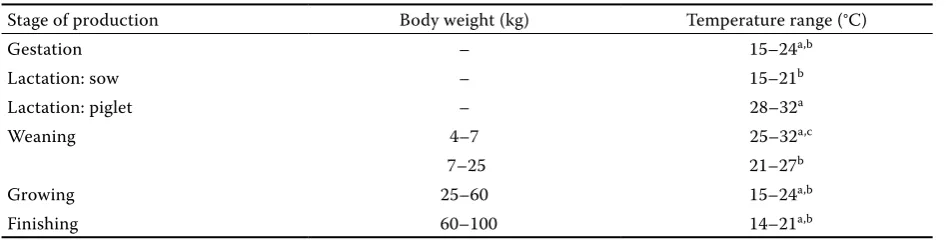
Pig temperature requirements for different stages of production are shown in Table 1.
MATERIAL AND METHODS
The observations were done on a commercial pig farm from October 2004 to March 2006.
Animals
[image:2.595.63.537.100.220.2]The study included 82 litters from gilts and 154 litters from sows of purebred Landrace. The litters under study were divided according to the external temperature periods when the piglets were born: 22 litters born in hot summer, 121 in mild summer, 55 litters in a spring-autumn period and
Table 1. Summary of pig temperature requirements for different stages of production
Stage of production Body weight (kg) Temperature range (°C)
Gestation – 15–24a,b
Lactation: sow – 15–21b
Lactation: piglet – 28–32a
Weaning 4–7 25–32a,c
7–25 21–27b
Growing 25–60 15–24a,b
Finishing 60–100 14–21a,b
65 litters in mild winter. The frosty winter period was not recorded during the observation.
Housing
Sows and gilts were housed in farrowing pens with sow fixation crates and partially slatted floor. The floor of the piglet nests was solid. Barriers between the farrowing pens consisted of vertical bars.
Sows and gilts, ca. 10–14 days before the due date, were moved to the farrowing house to fill one room in the farrowing house (24 sows) every week.
Sows and gilts received wet feed twice per day. The diet was intended for lactating sows. Each pen was equipped with an automatic drinker. Piglets were provided water by an automatic drinker and received prestarter feed ad libitum from 7 days of age. Every day, fresh prestarter was provided and leftovers were removed.
Piglets were weaned at about 28 days of age.
Measurements and experimental protocol
For each litter, the following parameters were recorded: total number of piglets born, number of live-born piglets, number of stillborn piglets, and average daily weight gain of piglets from birth to 21 days of age, number of deaths and also number of piglets weaned. All the deaths (visually normal dead piglets) were either stillborn piglets or those that died very soon after birth.
The external air temperature was measured with Datalogger (COMET), located on the farm
premis-es. Temperature was measured at hourly intervals. Average daily temperature was calculated from 24 values measured. For the description of external temperature periods, average monthly tempera-ture was used (calculated from average daily tem-peratures). The period of frosty winter (FW) was characterized by temperatures lower than –10°C, mild winter (MW) –10°C to 0°C, spring – autumn (SA) 0°C to 10°C, mild summer (MS) 10°C to 20°C, and hot summer (HS) above 20°C.
The internal air temperature was also measured with Datalogger (COMET), kept in the farrowing house in the sow living zone which is character-ized by the height of the sow’s head (35 cm above the floor). Temperature was measured every hour. From the values measured, average daily room tem-perature was calculated.
The internal air temperature values were divided into the following intervals: optimal (O) 16–22°C, elevated (E) 22–28°C, and high (H) 28°C and more, for the lactating sow.
Reproduction parameters were evaluated with regard to the average internal air temperature on the day of delivery – total number of piglets born (TNB), number of live-born (LB) piglets, number of stillbirths (SB), or the average stable temperature in the period of 21 days after each delivery – average daily weight gain (ADWG) of piglets from birth to 21 days of age, preweaning mortality – number of deaths (D) and also the number of piglets weaned (WP).
Statistical analysis
[image:3.595.68.364.608.750.2]Statistical evaluation of correlations between ex-ternal air temperatures in the area of the farm and
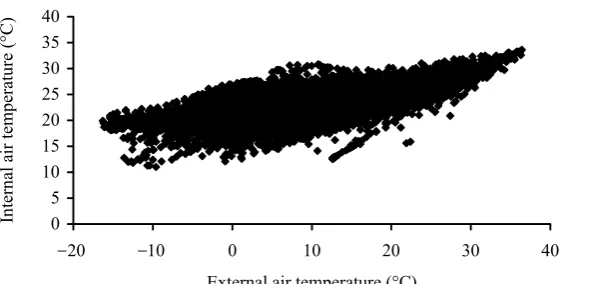
Figure 1. The relationship between internal air temperature in the farro-wing house for sows and external air temperature
0 5 10 15 20 25 30 35 40
-20 -10 0 10 20 30 40
External air temperature (°C)
In
te
rn
al
a
ir
te
m
pe
ra
tu
re
(°
C
)
internal air temperatures in the farrowing house for sows was done by PC Excel software.
The statistical evaluation of data observed was done by STATISTICA.CZ software; the method of general regression models was used.
RESULTS
Influence of external air temperature on internal air temperature
Internal air temperature all the year round was significantly influenced by external temperature measured on the farm premises (Figure 1).
In the hot summer (HS) period, internal air temperature exceeded the optimal temperature
for lactating sows (above 22°C). Also in the mild summer (MS) period and spring-autumn (SA) pe-riod, internal air temperature was usually above the optimal temperature. In the MW period, the room temperature in the farrowing house ranged between the optimal and elevated values. Statistical significance on the level P< 0.01 was calculated for all the external temperature periods with the high-est correlation index in hot summer (Table 2).
Influence of internal air temperature on selected reproductive parameters
No delivery took place under the optimal stable temperature in the farrowing house under study in hot summer. In the mild winter period, no
deliver-Table 2. Relationships between external and internal air temperature with coefficients of correlation
External temperature period Equation Coefficient of correlation Whole observation y = 21.5006 + 0.1554x + 0.0022x2 r = 0.6259
Hot summer y = 21.7161 – 0.0974x + 0.0111x2 r = 0.8125
Mild summer y = 18.2761 + 0.371x – 0.0006x2 r = 0.7325
Spring-autumn period y = 22.9707 + 0.3187x – 0.01x2 r = 0.4395
Mild winter y = 21.593 + 0.2833x + 0.0049x2 r = 0.4530
[image:4.595.65.532.100.191.2]x – external air temperature; y – internal air temperature
Table 3. The number and distribution of parturitions during the time of observation
Internal air temperature High (> 28°C) Elevated (22–28°C) Optimal (16–22°C) All together
Hot summer 6 16 0 22
Mild summer 11 96 14 121
Spring-autumn 3 40 12 55
Mild winter 0 23 42 65
Table 4. Basic data on piglets losses in different external temperature periods
TNB LB SB WP D ADWG till
21 days of age
HS 11.23 9.95 1.27 9.41 0.54 216.5
MS 10.71 9.52 1.18 9.25 0.27 214.9
SA 10.69 9.47 1.22 9.17 0.30 217.1
MW 10.08 9.08 1.00 8.76 0.31 208.1
[image:4.595.62.535.260.333.2] [image:4.595.64.539.624.709.2]ies took place under elevated stable temperatures (Table 3).
Live born piglets
Comparing different external temperature peri-ods a very similar number of live-born piglets was found (Table 4). This finding was also supported by any statistical significance in live-born piglets in each observed external temperature period
(Table 5) and also in each interval of internal air temperature (Table 6).
Stillborn piglets
The evaluation of the number of stillborn piglets according to external temperature periods indi-cated on average 1.27 stillborn piglets per each litter in hot summer, which means 11.3% of the total number of born, 1.18 stillborn piglets per 0.0
0.5 1.0 1.5 2.0 2.5 3.0 3.5 4.0
HS MS SA MW
N
um
be
r
High Elevated Optimal
0 0.1 0.2 0.3 0.4 0.5 0.6 0.7 0.8 0.9
HS MS SA MW
N
um
be
r
[image:5.595.70.516.84.395.2]Elevated Optimal
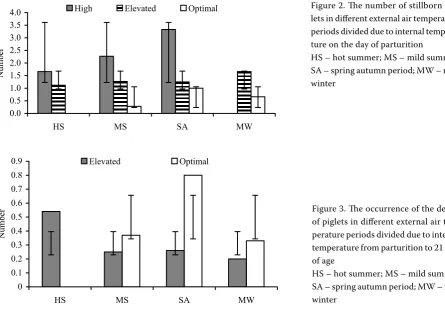
Figure 2. The number of stillborn pig-lets in different external air temperature periods divided due to internal tempera-ture on the day of parturition
HS – hot summer; MS – mild summer; SA – spring autumn period; MW – mild winter
Figure 3. The occurrence of the deaths of piglets in different external air tem-perature periods divided due to internal temperature from parturition to 21 days of age
[image:5.595.65.533.593.710.2]HS – hot summer; MS – mild summer; SA – spring autumn period; MW – mild winter
Table 5. Statistical evaluation of basic parameters according to each external temperature period
LB SB WP D 21 days of ageADWG till
HS vs. MS NS NS NS P < 0.05 NS
HS vs. SA NS NS NS NS NS
HS vs. MW NS NS NS NS NS
MS vs. SA NS NS NS NS NS
MS vs. MW NS NS NS NS P < 0.05
SA vs. MW NS NS NS NS P < 0.05
each litter in mild summer, which means 11.01%, 1.22 stillborn piglets per each litter in the spring-autumn period, which means 11.41%, and finally 1.00 stillborn piglet per each litter in mild winter, which means 9.92% of the total number of born (Figure 5).
No significant influence of any external tem-perature period on the number of stillborn pig-lets was found (Table 5). A significantly negative influence of high internal air temperatures on the occurrence of stillbirths was found by comparing different intervals of internal air temperature in each external temperature period. In mild sum-mer there was a significant difference (P< 0.05) in the occurrence of stillbirths between elevated and high temperatures, and a significant differ-ence (P < 0.01) between optimal and high tem-peratures (Figure 2). In the spring-autumn period as well as in mild winter there was a significant difference (P< 0.05) in the occurrence of still-births between elevated and optimal tempera-tures (P< 0.01) (Table 6). The statistical analysis, compromising just stable temperature not exter-nal temperature periods, indicated the highest number of stillbirths by the deliveries at the high temperature P< 0.01.
Preweaning mortality
Based on the comparison of losses till weaning (Table 4), significantly lower losses were found in mild summer than in hot summer (P< 0.05) (Table 5). However, more piglets died in the interval of optimal internal air temperature while no significant differ-ences were found (Table 7 and Figure 3).
Average daily weight gain till 21 days
The lowest average daily weight gain (208.1 g/kg) (P< 0.05) of the piglets was observed in mild winter and the highest (217.1 g/kg) in the spring-autumn period (P< 0.05) (Tables 4 and 5, and Figure 4). Evaluating the internal air temperature without the influence of the external temperature period the higher average daily weight gain was observed in the interval of elevated internal air temperature than at the optimal temperature (P< 0.05) (Table 7).
Number of weaned piglets
The highest number of weaned piglets per litter 9.41 was recorded in hot summer, but no
signifi-Figure 4. The average daily weight gain of piglets in different external air tem-perature periods divided due to internal temperature from parturition to 21 days of age
HS – hot summer; MS – mild summer; SA – spring autumn period; MW – mild winter
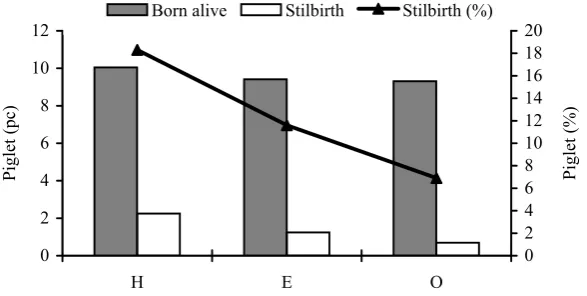
Figure 5. The number of live-born and stillborn piglets at hot, elevated and optimal internal temperature
HS – hot summer; MS – mild summer; SA – spring autumn period; MW – mild winter
200 205 210 215 220 225
HS MS SA MW
W
ei
gh
t (
g)
Elevated Optimal
0 2 4 6 8 10 12
H E O
Pi
gl
et
(p
c)
0 2 4 6 8 10 12 14 16 18 20
Pi
gl
et
(%
)
[image:6.595.67.361.608.756.2]cant differences were observed. More piglets were weaned when the internal air temperature was clas-sified as elevated (P = 0.08) (Table 7).
DISCUSSION
The total number of piglets born is influenced by environmental conditions in the stable at the time of mating and during the whole pregnancy. The observation of this parameter is needed to evaluate the effect of environmental conditions on stillbirths and piglet mortality until weaning.
The comparison of external temperature periods and their influence on stillbirths did not give any significant results, nevertheless, the detailed moni-toring of room temperatures in the farrowing house at the time of delivery provided highly significant results. The highest numbers of stillborn piglets were recorded in the deliveries that took place at high room temperatures; the lowest number was found in those taking place at the optimal room temperature.
If the absolute values were converted into per-centage values, there were 18.3% stillbirths at high stable temperatures, 11.6% stillbirths at elevated temperatures, and 6.9% stillbirths at the optimal
temperature, out of the total number of piglets born. English and Edwards (1996) suggested 4–8% of stillbirths out of the total number of piglets born as acceptable. This range was not exceeded only in the case of deliveries taking place at the optimal room temperature.
The factors that influence the number of still-births include the length of pregnancy, total number piglets born and birth weight (Zaleski and Hacker, 1993; Leenhouwers et al., 1999). A higher occurrence of stillbirths in larger litters could be associated with prolonged parturition (Bille et al., 1974; Zaleski and Hacker, 1993). The most frequent cause of prolonged parturition is uterine hypocon-tractility.
There is either primary or secondary uterine hy-pocontractility. Uterine hypocontractility can be caused, among other factors, by the excretion of adrenalin due to stress. Adrenalin is a sympathicus mediator that influences the uterine myometrium adversely (McDonald, 1980).
Elevated room temperatures exert a stress on the parturient sow. Adrenalin, excreted in the alarm phase, causes the vasoconstriction of vessels in the smooth muscle via the postsynaptic α1-receptors, consequently also in the uterine smooth muscle (Ruckebusch et al., 1991). Vasoconstriction
pre-Table 6. Statistical evaluation of the influence of average daily temperature on the parturition day on piglet losses External
tempe-rature period
Hot summer
Mild summer
Spring-autumn period
Mild winter Internal air
temperature H vs. E H vs. O E vs. O H vs. E H vs. O E vs. O H vs. E H vs. O E vs. O E vs. O
LB NS NS NS NS NS NS NS NS NS NS
SB NS NS NS P < 0.05 P < 0.01 P < 0.05 NS P < 0.05 P < 0.05 P < 0.01
[image:7.595.65.533.102.191.2]LB – live-born piglets; H – hot internal air temperature; SB – stillborn piglets; E – elevated internal air temperature; O – optimal internal air temperature; NS – not statistically significant
Table 7. Statistical evaluation of the influence of average daily temperature during the lactation period on piglet losses without consideration of external temperature periods during the observation
Internal air temperature Elevated Optimal Elevated vs. optimal
Number of parturitions 175 73
Weaned 9.15 8.79 NS
Deaths 0.29 0.36 NS
Average daily gain till 21 days of age (g) 221 204 P < 0.05
[image:7.595.62.534.283.358.2]vents oxytocin from performing its uterotonic ef-fect. Consequently, the parturition is prolonged, and the secondary uterine hypocontractility de-velops. If the parturition is prolonged, both due to the primary or secondary hypocontractility, the interval between the ejected piglets is longer and the risk of hypoxia or asphyxia is higher (Fraser et al., 1997).
The chance for piglets to survive decreases with an increasing litter size because in numerous litters the birth weight is reduced and competition for teats is higher (Dyck and Swierstra, 1987; Roehe and Kalm, 2000). However, some studies reported an increased stillbirth occurrence with decreasing litter size (Šovljanski et al., 1971). The relative im-maturity of piglets is a cause of increased stillbirth occurrence after shortened pregnancy (Zaleski and Hacker, 1993).
Human intervention in the parturition process decreases peripartal mortality by up to 40% (White et al., 1996).
In this study, piglets born and reared at high room temperatures showed higher average daily weight gain. This finding is not in compliance with that reported by Spencer et al. (2003), i.e. high room temperatures during lactation decrease milk pro-duction, piglet growth rate and reproductive per-formance of the sow. This phenomenon could be explained by using the energy supplied by milk not only for growth but also for warming-up the piglet body at the optimal room temperature for a lactat-ing sow, because of the non-functional differential microclimate system taking into account newborn piglets and lactating sow in the farrowing house under study.
CONCLUSION
If the parturition is prolonged due to room temperatures exceeding the critical temperature, the occurrence of stillbirths is increased. Hereto, the conditions in the farrowing house are set to be convenient for the lactating sow (gilt) as well as for the newborn piglet, higher occurrence of parturitions without any problem is reported and the number of stillbirths is getting lower at the optimal temperature for the sow. At high tem-peratures, better growth parameters in piglets were achieved, but high room temperatures have a negative impact on parturient and lactating sows (gilts).
REFERENCES
Barnett J.L., Hemsworth P.H., Cronin G.M., Jongman E.C., Hutson G.D. (2001): A review of the welfare issues for sows and piglets in relation to housing. Aust. J. Agric. Res., 52, 1–28.
Baxter M.R., Petherick J.C. (1980): The effect of restraint on parturition in the sow. In: Nielsen N.C., Hogh P., Bille N. (eds.): Proc. International Pig Veterinary So-ciety Congress. Copenhagen, Denmark, 84 pp. Berthon D., Herpin P., Le Dividich J. (1994): Shivering
thermogenesis in the neonatal pig. J. Therm. Biol., 19, 413–418.
Biensen N.J., von Borell E.H., Ford S.P. (1996): Effects of space allocation and temperature on periparturient maternal behaviours, steroid concentrations, and piglet growth rates. J. Anim. Sci., 74, 2641–2648.
Bille N., Nielsen N.C., Larsen J.L., Svendsen J. (1974): Preweaning mortality in pigs. 2. The perinatal period. Nord. Vet. Med., 26, 294–313.
Black J.L., Mullan B.P., Lorschy M.L., Giles L.R. (1993): Lactation in the sow during heat stress. Livest. Prod. Sci., 35, 153–170.
Blasco A., Bidanel J.P., Haley C.S. (1995): Genetics and neonatal survival. In: Varley M.A. (ed.): The Neonatal Pig. Development and Survival, CAB International, Wallingford, Australia, 17–38.
Curtis S.E. (1983): Environment management in animal agriculture. The Iowa State Univ. Press, Ames IA., USA, 135–138.
Dial G.D., Marsh W.E., Salson D.D., Vaillancourt J.P. (1992): Reproductive failure: differential diagnosis. In: Leman A.D., Straw B.E., Mengeling W.L., D’Allaire S., Taylor D.J. (eds.): Diseases of Swine, 7th ed. Iowa State
University Press, USA, 88–137.
Dyck G.W., Swierstra E.E. (1987): Causes of piglet death from birth to weaning. Can. J. Anim. Sci., 67, 543–547.
English P.R., Wilkinson V. (1982): Management of the sow and litter in late pregnancy and lactation in relation to piglet survival and growth. In: Cole D.J.A., Foxcroft G.R. (eds.): Control of Pig Reproduction. Butterworths, London, Great Britain, 479–506.
English P.R., Edwards S.A. (1996): Management of the nursing sow and her litter. In: Dunkin A.C., Taverner M. (eds.): Pig Production. World Animal Science, Else-vier, Amsterdam, Netherland, C10, 113–140.
Fraser A.F., Broom D.M. (1990): Farm animal behavior and welfare, 3rd ed., Bailliere Tindall, London, Great
Britain, 283–286.
eva-luation of the restraint-stillbirth hypothesis. Appl. Anim. Behav. Sci., 55, 51–66.
Glastonbury J.R.W. (1977): Preweaning mortality in the pig. Pathological findings in piglets dying before and during parturition. Aust. Vet. J., 53, 282–286.
Herpin P., Hulin J.C., Le Dividich J., Fillaut J. (2001): Ef-fect of oxygen inhalation at birth on the reduction of early postnatal mortality in pigs. J. Anim. Sci., 79, 5–10.
Christianson W.T. (1992): Stillbirths, mummies, abor-tions and early embryonic death. In: Tubbs R.C., Leman A.D. (eds.): Veterinary clinics of North America: Food Animal Practice, Swine Reproduction. Saunders, Phil-adelphia, USA, 8, 623–639.
Le Dividich J., Noblet J. (1981): Colostrum intake and thermoregulation in the neonatal pig in relation to en-vironmental temperature. Biol. Neonate, 40, 167–174. Le Dividich J., Herpin P. (1994): Effects of climatic condi-tions on the performance, metabolism and health sta-tus of weaned piglets: a review. Livest. Prod. Sci., 38, 79–90.
Leenhouwers J.I., Van der Lende T., Knol E.F. (1999): Analysis of stillbirth in different lines of pig. Livest. Prod. Sci., 57, 243–253.
Madec F., Tillion J.P. (1986): Epidemiological approach of stillbirth problem in intensive swine herds. In: Proc. International Pig Veterinary Society. Barcelona, Spain, 88–91.
McDonald L.E. (1980): Veterinary Endocrinology and Reproduction. Lea and Febiger. Philadelphia, USA, 386 pp.
McFarlane J.M., Cunningham F. (1993): Environment: Proper ventilation is key to top performance. Vet. Scope, 3, 6–9.
Radostits O.M., Bickert W.G., Chenoweth P.J., Dee S., Deen J., Eriskine R.J., Farin P.W., Gerloff B.J., Griffin D.D., Heinrichs A.J., Kinsel M.L., Morrison R.B., Radke B., Reneau J.K., Ruegg P.L., Sanderson M.W., Scott P. R., Shook G.E., Slenning B.D., Smith R.A., Stokka G. L., Waldner Ch. (2001): Herd health: food animal
pro-duction medicine. 3rd ed., W.B. Saunders company.
Philadelphia, USA, 243–245.
Roehe R., Kalm E. (2000): Estimation of genetic and en-vironmental risk factors associated with pre-weaning mortality in piglets using generalized linear models. Anim. Sci., 70, 227–240.
Ruckebusch Y., Phaneuf L.P., Dunlop R. (1991): Physio-logy of Small and Large Animals. B.C. Decker Inc. Philadelphia, USA. 401 pp.
Quiniou N., Noblet J. (1999): Influence of high ambient temperatures on performance of multiparous lactating sows. J. Anim. Sci., 77, 2124–2134.
Siewerdt F., Cardellino R.A. (1996): Genetic parameters of piglet mortality from birth to 21 days of age in the Landrace breed. Rev. Soc. Bras. Zootéc., 25, 902–909. Spencer J.D., Boyd R.D., Cabrera R., Allee G.L. (2003):
Early weaning to reduce tissue mobilization in lactating sows and milk supplementation to enhance weight dur-ing extreme heat stress. J. Anim. Sci., 81, 2041–2052. Svendsen J., Svendsen L.S. (1997): Intensive (commercial)
systems for breeding sows and piglets to weaning. Livest. Prod. Sci., 49, 165–179.
Šovljanski B., Milosavljevic S., Murgaški S., Trbojevic G., Radovic B. (1971): Effect of litter size on the incidence of stillborn piglets. Acta Vet. Beograd, 21, 241–245. Vanroose G., de Kruif A., Van Soom A. (2000): Embryonic
mortality and embryo-pathogen interactions. Anim. Reprod. Sci., 61, 131–143.
White K.R., Anderson D.M., Bate L.A. (1996): Increasing piglet survival through an improved farrowing manage-ment protocol. Can. J. Anim. Sci., 76, 491–495. Zaleski H.M., Hacker R.R. (1993): Variables related to
the progress of parturition and probability of stillbirth in swine. Can. Vet. J., 34, 109–113.
Zhang Y. (1994): Swine building ventilation: A Guide for confinement swine housing in cold climates. Prairie Swine Centre. Saskatoon, Canada, 144 pp.
Received: 2007–08–29 Accepted after correction: 2008–02–06
Corresponding Author
MVDr. Svetlana Odehnalová, Clinic of Swine Diseases, Faculty of Veterinary Medicine, University of Veterinary and Pharmaceutical Sciences Brno, Palackého třída 1-3, 612 42 Brno, Czech Republic