A Sequence Modeling Approach for Structured Data Extraction
from Unstructured Text
Jayati Deshmukh∗ IIIT-Bangalore jayati.deshmukh
@iiitb.org
Annervaz KM Accenture Technology Labs
annervaz.k.m @accenture.com
Shubhashis Sengupta Accenture Technology Labs shubhashis.sengupta
@accenture.com
Abstract
Extraction of structured information from un-structured text has always been a problem of interest for NLP community. Structured data is concise to store, search and retrieve; and it facilitates easier human & machine consump-tion. Traditionally, structured data extraction from text has been done by using various pars-ing methodologies, applypars-ing domain specific rules and heuristics. In this work, we lever-age the developments in the space of sequence modeling for the problem of structured data extraction. Initially, we posed the problem as a machine translation problem and used the state-of-the-art machine translation model. Based on these initial results, we changed the approach to a sequence tagging one. We pro-pose an extension of one of the attractive mod-els for sequence tagging tailored and effective to our problem. This gave4.4%improvement over the vanilla sequence tagging model. We also propose another variant of the sequence tagging model which can handle multiple la-bels of words. Experiments have been per-formed on Wikipedia Infobox Dataset of bi-ographies and results are presented for both single and multi-label models. These mod-els indicate an effective alternate deep learning technique based methods to extract structured data from raw text.
1 Introduction
A humongous volume of data in the form of text, images, audio and video is being generated daily. It has been reported that 90% of all the data avail-able today has been generated in the last two years (DoMo, 2017). The pace of data genera-tion is growing exponentially. The generagenera-tion of data is not only restricted to open domains and social media; even in closed groups like private organizations and corporations, textual data is be-ing produced in abundance. Unstructured data is
∗
Work done at Accenture Technology Labs
present in a variety of forms like documents, re-ports and surveys, logs etc. Restricting this data to be captured directly in structured form prohibits the natural capturing of the data, leaving out es-sential pieces. But structured data presents the data in a concise and well-defined manner which is easier to understand than a corresponding docu-ment. Structured data can be transformed into ta-bles which can be easily stored in databases. It can be indexed, queried for and searched to retrieve relevant results of a query. Thus structured rep-resentation is quintessential to facilitate machine consumption of data. Moreover in the world of data abundance, such structured representation is essential for human consumption as well.
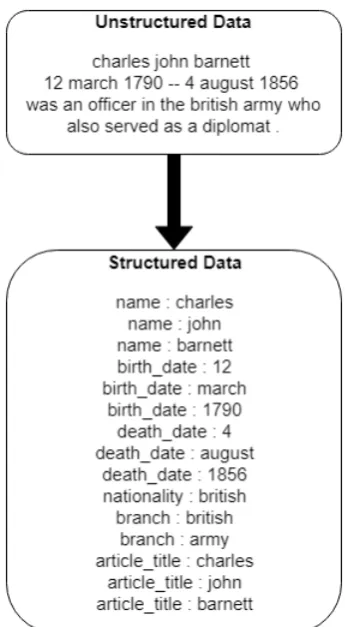
Figure 1: From Unstructured to Structured Data
from the documents into a structured form. This structured information is further used for aggre-gate analytics and decision making by large real estate firms (Annervaz et al.,2015).
Figure1 shows a sample unstructured text and its corresponding structured output. In case the structured data is to be stored in a database, the labels likename,birth dateetc can be the column names of the database and the corresponding val-ues likecharlesand12 march 1970can be the ac-tual values stored.
As mentioned earlier, previous work in this space involved parsing the natural language sen-tences, and writing rules and heuristics on the parse tree or structure to extract the information re-quired (Culotta and Sorensen,2004;Fundel et al.,
2006;Reichartz et al.,2009). In this work, we ap-proach the problem from sequence modeling per-spective and weave together state of the art mod-els in the space to extract structured information from raw unstructured data. The task of informa-tion extracinforma-tion to build structured data can be de-scribed as generating or matching appropriate tags or labels to corresponding parts of raw data. For each token in the raw data, a corresponding tag
is attached marking what kind of data it stands for. OTHERtag gets attached if the data in the raw text is not relevant.
We have approached the problem both from machine translation and sequence tagging per-spectives. In machine translation, typically there are two sequences, one in source language (say English) and the other in target language (say French). Machine learning models try to convert the sequence of tokens in source language to se-quence of tokens in target language. In case of translation problem, the core idea being expressed in the input and the output is the same, however it is in a different language. Similarly, for our problem both the input and output have same con-tent although it is represented in an unstructured or structured format. So to start with, we ap-proach the problem from translation perspective and treat the source text as word sequence of un-structured text and the corresponding tag sequence as target sequence. State of the art machine trans-lation models (sequence to sequence model (Cho et al.,2014; Sutskever et al., 2014)) can then be attempted for the same. We have experimented with this approach and treat it as our baseline. We didn’t find any previous work on this dataset for structured data extraction task. However we real-ized that this problem cannot be directly mapped to a translation problem. There is significantly more word or phrase level information in the in-put which cannot be appropriately represented by translation models. We realized that sequence tag-ging models (like for POS tagtag-ging (Huang et al.,
2015)) are more suitable for this problem. We have experimented with state of the art sequence tagging model for the problem and propose some problem specific variants to improve the perfor-mance.
Main contributions of this work are as follows:
1. We approach the problem from sequence modeling perspective, which is perhaps the first attempt in literature to the best of our knowledge. Modeled this way, we can elim-inate usage of traditional ways for parsing or writing domain specific rules. A parallel cor-pus of unstructured and structured data is suf-ficient to train the models.
im-Figure 2: Seq2seq Example
proves the results compared to the vanilla se-quence tagging model.
3. We have also designed a multi-label sequence tagging model which can generate multiple labels of words using a customized learning loss based on Set similarity.
The paper is organized as follows: We present the details of seq2seq and sequence tagging mod-els in Section2along with some interesting work which has been done previously using these mod-els. In Section 3we give details of our approach along with details of vanilla model and modified models for single and multi-label problems. The details of our experiments are in Section 4. We present some related work in Section5. We con-clude in Section6by giving some future work di-rections.
2 Preliminaries
A variety of NLP problems have been solved using both seq2seq models and sequence tagging mod-els. These models and their variants have pro-duced state-of-the-art results and we discuss these models and some of their applications in the fol-lowing subsection.
2.1 Seq2Seq Models
Seq2seq models are end to end models which transform an input sequence into an output se-quence. These models basically consist of an en-coder which takes the input and encodes it into an intermediate representation and a decoder which takes the intermediate representation as input and generates the output sequence, one token at a time. Encoders and Decoders structurally may be Re-current Neural Networks like RNN, LSTM, GRU (Cho et al.,2014;Sutskever et al.,2014)) or even Convolutional Neural Networks (Gehring et al.,
2017), depending on the problem it is designed to solve. It might also have different variations and additional features like attention, multiple layers etc (Bahdanau et al.,2014). These were the first
citizens ofEncode, Attend, Decodeparadigm deep learning models.
Seq2seq models generate output in two steps as shown in Figure2. Firstlyx, the sequence of beddings which is created by combining the em-beddings (vectors) of words, is given as input to the encoder. The encoder transforms x into an intermediate representationz (which for example for RNN encoder may be the hidden state at the end of processing input) as follows
z=enc(x)
Next, this representation is given as input to the decoder. It generates the outputY token by token asw0, w1, w2, ..., wl fromz as per the following equations:
ht=dec(ht−1, wt)
st=g(ht)
pt=sof tmax(st)
where, att= 1
h0=z
w0=wsos
Here, at t = 1, h0 is the output of encoder z
andw0 is the embedding ofstart of sentencetag.
The decoder takes the previous hidden state and current word embedding as input to generate the next hidden state. Next, functiongtransforms the hidden representation from hidden dimension h
to the dimension of vocabulary v. Next its out-put is passed through a softmax function which transforms the input into probability values for each word in the vocabulary. Finally, it is passed through argmax function to fetch the index of the word of maximum probability and returns the cor-responding word. This process is repeated tillend of sentencetag is generated by the decoder.
Originally, seq2seq models were conceived for language translation task(Cho et al., 2014;
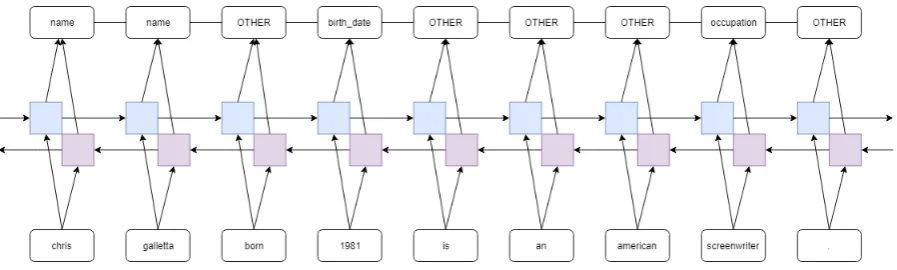
[image:3.595.89.517.61.114.2]Figure 3: Sequence Tagging Example
These simple models generated encouraging re-sults leading to production grade models which parallelize training on multiple GPUs and are used in applications such as Google Translate (Wu et al.,2016). Seq2seq models have also been used for Text Summarization. In this case, the input is a large document and output is its summary which can be used for generating news headlines or ab-stracts. For this purpose, an attention based en-coder and a beam search deen-coder which generated words from the vocabulary gave the best results (Rush et al.,2015;Wu et al.,2016).
Seq2seq models are not just restricted to textual input/outputs. There have been applications with image inputs to automatically generate captions of images using CNN encoder and RNN decoder with attention (Vinyals et al., 2015). These mod-els have also been used on speech data to trans-form speech to text (Chorowski et al.,2015). They have also been used with videos for video trans-lation, subtext generation and video generation etc (Venugopalan et al., 2014; Srivastava et al.,
2015;Yao et al.,2015). Some multi-modal mod-els which take more that one forms of inputs have also been successful (Kiros et al.,2014).
2.2 Sequence Tagging Models
Sequence tagging or labeling models tag all the tokens in the input sequence. Fundamentally, this model consists of recurrent neural network like RNN, LSTM, GRU and Convolutional Neu-ral Network which reads input at token level and a conditional random field (CRF) (Lafferty et al.,
2001) which takes as input the encoded represen-tation and generates corresponding tags for each token. These models may also include other ad-ditional features like word and sentence features, regularization, attention etc. Originally this model was conceived for tasks like Part of Speech (PoS)
tagging, chunking and Named Entity Recognition (NER) (Huang et al., 2015). A joint model for multiple tasks also seems to work well (Hashimoto et al.,2016).
A high level representation of sequence tagging model as shown is Figure 3. Here the input is passed into an bi-LSTM and the hidden vector
h(t) and output vector y(t) are generated as fol-lows:
hf(t) =f(Ufx(t) +Wfhf(t−1))
hb(t) =f(Ubx(t) +Wbhb(t−1))
h(t) = [hf(t) :hb(t)]
y(t) =g(V h(t))
where hf(t) and hb(t) are the hidden repre-sentations of the forward and backward LSTMs respectively. These two are concatenated to generate the final hidden representation h(t).
Uf, Wf, Ub, Wb, V are weights computed during training. These bi-LSTM representations are com-bined with CRF using Viterbi Decoder (Sutton et al.,2012). It takes the hidden state and the pre-viously generated tags in the form of sequence to generate the next tag. If the string of output tags is taken as a sequence, then we can say that the CRF generates the most likely sequence out of all possible output sequences (Huang et al.,2015;Ma and Hovy,2016;Lample et al.,2016)
3 Approach and Models
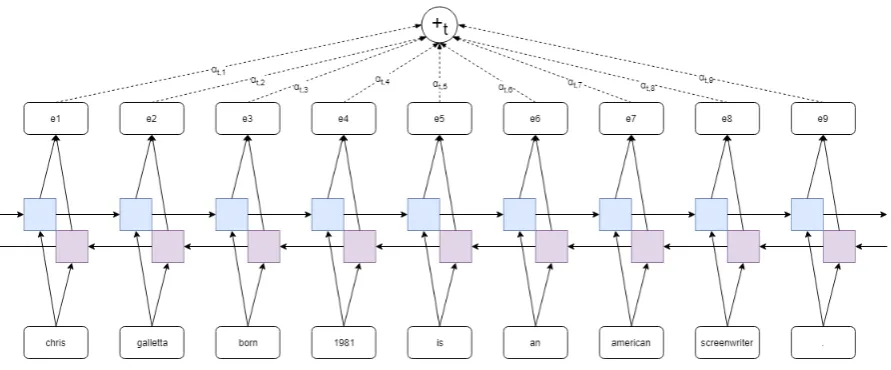
Figure 4: Sequence Tagging with Attention
Figure 5: Computing Attention
Finally, a sequence tagging model which can gen-erate multiple labels for each token has also been designed. Further details of the models are pre-sented in the following subsections.
3.1 Baseline Approach : Seq2seq model
For seq2seq model, the input is the sentence or set of sentences and the structured output is trans-formed to a string which is a series of key-value pairs corresponding to the word-label pairs of the sentence. Here we assume that the tags are at a word level. This model can learn multiple labels of the same word for example chris is name as well as article title in Figure 2. This model by its design also learns the sequence of label-word pairs. Experiments as detailed in Section4 have been performed on different combinations of RNN and CNN encoders and decoders.
3.2 Vanilla Sequence Tagging model
Sequence tagging model reads the input word by word and simultaneously generates the corre-sponding label for the word as shown in Figure
3. Here, blue cells represent the forward LSTM and the violet cells represent the backward LSTM. The line between the output labels represents the CRF. For this model, the data is transformed such that the sentence is split in words by spaces and
then each word is tagged to a corresponding label. Only the first label of a word is considered. If a word does not have any label then it is manually la-beled as ’OTHER’. Structurally this biLSTM-CRF model can comparatively work better even in case of longer inputs. However, this model cannot learn multiple labels of a word. The model generates la-bels at a word level and thus it does not have an ordering as in case of seq2seq models.
3.3 Modified Sequence Tagging model
[image:5.595.81.527.164.349.2]cur-Table 1: Sample Results
Table 2: Single Label Results
Sentence 1 Label 1 Sentence 2 Label 2
w. name renan name
lamont name luce name
was OTHER born OTHER
a OTHER 5 birth date
scottish OTHER march birth date footballer OTHER 1980 birth date
who OTHER , birth place
played OTHER paris birth place
as OTHER is OTHER
a OTHER a OTHER
right position french OTHER
winger position singer occupation
. OTHER and OTHER
songwriter occupation
. OTHER
Table 3: Multi-Label Results
Word Labels
begziin article title name yavuukhulan article title image name
, OTHER
1929-1982 OTHER
was OTHER
a OTHER
mongolian nationality language
poet occupation
of OTHER
the OTHER
communist OTHER
era OTHER
that OTHER
wrote OTHER
in caption
mongolian nationality language
and OTHER
russian language
. OTHER
rent word. To incorporate this in the model, we used self-attention (Vaswani et al.,2017;Tan et al.,
2018) as depicted in Figure4and5.
3.4 Multi-label Sequence Tagging model
As shown in Figure 1 a word can have multiple associated tags / labels. Vanilla sequence tagging models are designed to predict only a single tag for each word. Thus a lot of information might be lost by using these models. The following mod-ified model can give multiple possible labels of words. At the output layer, instead of using soft-max which was used in single label prediction case, we use sigmoid which normalizes each of the label prediction scores between0and1 inde-pendently. We used hamming loss, which is the most common metric used in case of multi-label classification problems (Tsoumakas and Vlahavas,
2007;Elisseeff and Weston,2002). Hamming loss is defined as the fraction of wrong labels to total number of labels. It takes into account both correct and incorrect labels. Let ytbe the vector of true labels andyp be the vector of independent proba-bilities of predicted labels. Then Hamming Loss (HL) is computed as follows:
HL=ytXOR yp
Here, XOR is non-differentiable and cannot be used to train the multi-label sequence tagging model. To overcome this problem, the HL equa-tion is transformed as below:
HLdif f =average(yt∗(1−yp) + (1−yt)∗yp)
For example, let a word have true labels as [1,0,0,1] and the model predicts the la-bels [0.9,0.1,0.2,0.9], then hamming loss in this case is computed as avg([1,0,0,1] ∗
[0.1,0.9,0.8,0.1] + [0,1,1,0]∗[0.9,0.1,0.2,0.9]) oravg(0.1 + 0.1 + 0.1 + 0.2)or0.125.
4 Experiments & Results
We have used the Wikipedia Infobox dataset cre-ated by (Lebret et al.,2016) which is available in the public domain1. It consists of total 728,321 biographies, each having the first Wikipedia para-graph and the corresponding infobox, both of which have been tokenized. Originally this dataset
1https://github.com/DavidGrangier/
[image:6.595.77.296.134.364.2]Table 4: Baseline Results - Seq2Seq Model
Model Accuracy % Perplexity
CNN Encoder Decoder 63.34 5.78
LSTM Encoder Decoder 68.42 3.95
[image:7.595.150.448.186.237.2]LSTM Encoder Decoder with PoS 69.60 3.45
Table 5: Sequence Tagging Results
Model Accuracy % F1 Score %
biLSTM-CRF 79.34 65.00
biLSTM-CRF with PoS & Attention 82.82 62.32
was created to build models to generate text based on the the infobox. In our case, the problem is reversed. Given a paragraph of unstructured data, we try to generate the corresponding infobox or structured data. In the dataset, some information might be present in the paragraph but not in fobox and vice versa. We have pruned the in-foboxes so that it contains only that information which is present in the paragraph. The informa-tion which is not present in the paragraph cannot be generated by any model by itself without exter-nal knowledge.
We have split the dataset into three parts in the ratio 8:1:1 for train, validation and test. We have done basic pre-processing on both paragraphs and infoboxes. Extra information and labels tagged as none have been removed from infoboxes. The words have been initialized to GloVe ( Penning-ton et al., 2014) embeddings and character em-beddings (Santos and Zadrozny,2014) have been randomly initialized. Words are300dimensional and characters are100dimensional. The models have been trained for 15 epochs or until it showed no improvement. Single label model has been trained using Adam Optimizer (Kingma and Ba,
2014) and multi-label model using Adagrad Op-timizer (Zou and Shen,2018). Adaptive learning rate has been used. Dropouts (Guo et al., 2016) have been used as regularizer. Table1shows some sample results of single and multi-label sequence tagging models.
Table 4 shows the Accuracy and Perplexity scores of the baseline approach using seq2seq model. Here, accuracy is calculated as total num-ber of correctly predicted words by total numnum-ber of words. Perplexity metric is from NLP models and it represents probability distribution of a language
model over the text2. Lower perplexity represents better generalization and thus better performance. We observed that LSTM Encoder-Decoder per-forms better than CNN Encoder-Decoder as it is able to take the temporal order or words into ac-count and also because it handles short / medium length text well. We also gave sequence of words and corresponding PoS tags as input and the re-sults of this were the best among all the seq2seq models. Despite these enhancements, this model does not perform well and has a low accuracy.
Table5shows the Sequence Tagging results on the same data using vanilla model and other model variants described earlier. In this case, accuracy metric is computed as number of labels correctly predicted by total number of words and F1 score is calculated as usual as the harmonic mean of pre-cision and recall. We present the results of vanilla model and sequence tagging model with improve-ments like PoS tags and attention. We notice that the results of sequence tagging models are signif-icantly better than the seq2seq models. In multi-label sequence tagging model, the hamming loss on the test dataset was0.1927.
5 Related Work
Traditionally relationships have been extracted from raw text using dependency parse tree based methods (Culotta and Sorensen, 2004; Reichartz et al., 2009). Dependency parse tree shows the grammatical dependency among the words or phrases of the input sentence. To extract relation among words from a dependency parse tree, clas-sifiers are trained to classify the relation. Some-times rules are applied on on dependency parse
2
trees to further improve the results (Fundel et al.,
2006;Atzmueller et al.,2008). These rule based models have shown improved results and have been used in medical domain. It might also fare well in closed domain areas where there is less variation in text. Even at a Web scale, there have been efforts to extract information specifically in the form of named entities and relationships us-ing DBpedia spotlight (Mendes et al., 2011) and OpenIE (Pasca et al.,2006). A joint entity and re-lation extraction model (Miwa and Bansal,2016) is primarily built using LSTMs. It comprises two LSTM models - word sequence LSTM predicts the entities and dependency tree LSTM predicts the relationships among the entities. They also use ad-ditional features like PoS tags, dependency types etc as input. However in our models, we label the words of raw text, these labels are not catego-rized into entities and relationships. The datasets on which they have performed the experiments contain very few(< 10)entities and relations as compared to our labels ( 1000). Attention based encoder-decoder model (Dong and Lapata,2016) has been used to convert raw text to logical format. The output is not entity or relationship but a log-ical string corresponding to the input. They show that this model gives consistent results across dif-ferent domains and logical formats. The seq2seq model which we used as a baseline is similar to this model.
6 Conclusion & Future Work
We proposed a deep learning based approach for the age old NLP problem of information extrac-tion. We have used multiple variants of deep learning based sequence tagging models to extract structured data from unstructured data. Large pub-licly available dataset of Wikipedia Biographies has been used in experiments to prove the effi-cacy. Sequence tagging models further improved with additional features like PoS tags and atten-tion mechanism. Multi-label sequence tagging model gave more complete results from practical perspective. Unlike the traditional methods, our models are generic and not dependent on the struc-ture of Wikipedia Infobox dataset. Similarly, it is also not dependent on English language specifi-cally. Ideally, it should work well for other sim-ilar languages or datasets. A parallel corpus of unstructured data and its corresponding structured data is all that is required to train these models.
The actual performance might be affected by lan-guage specific issues like word order, double nega-tion or other grammatical issues. And there might be minor modifications needed specific for differ-ent datasets or languages.
To the best of our knowledge, this is the first attempt in using sequence models for structured data extraction. Being an initial work, there are plethora of possible future work extensions. In the practical setting, the information to be extracted tends to be hierarchical. So the tags have a hier-archical structure to it. Current model proposed, handles only flat tag structure. Alterations to in-corporate and handle hierarchical tag structure is one direction of work we are considering. In the Wikipedia Infobox dataset the text from where the structured information is extracted is already iden-tified or don’t have large span. In practice, this is not the case. The text usually have larger span, this makes the problem tougher. We have to de-vise models first to prioritize the text snippets from where the information has to be extracted, such an end-to-end trainable model is another direction of work. Similarly there are lot of options for future work, we hope our initial work and results will in-spire the community to work in these directions.
References
K. M. Annervaz, Jovin George, and Shubhashis Sen-gupta. 2015. A generic platform to automate le-gal knowledge work process using machine learn-ing. In 14th IEEE International Conference on Machine Learning and Applications, ICMLA 2015, pages 396–401.
Martin Atzmueller, Peter Kluegl, and Frank Puppe. 2008. Rule-based information extraction for struc-tured data acquisition using textmarker. In LWA, pages 1–7.
Dzmitry Bahdanau, Kyunghyun Cho, and Yoshua Ben-gio. 2014. Neural machine translation by jointly learning to align and translate. arXiv preprint arXiv:1409.0473.
Kyunghyun Cho, Bart Van Merri¨enboer, Caglar Gul-cehre, Dzmitry Bahdanau, Fethi Bougares, Holger Schwenk, and Yoshua Bengio. 2014. Learning phrase representations using rnn encoder-decoder for statistical machine translation. arXiv preprint arXiv:1406.1078.
Aron Culotta and Jeffrey Sorensen. 2004. Dependency tree kernels for relation extraction. In Proceed-ings of the 42nd annual meeting on association for computational linguistics, page 423. Association for Computational Linguistics.
DoMo. 2017.Data Never Sleeps 5.0.
Li Dong and Mirella Lapata. 2016. Language to logical form with neural attention. arXiv preprint arXiv:1601.01280.
Andr´e Elisseeff and Jason Weston. 2002. A kernel method for multi-labelled classification. In Ad-vances in neural information processing systems, pages 681–687.
Katrin Fundel, Robert K¨uffner, and Ralf Zimmer. 2006. Relexrelation extraction using dependency parse trees. Bioinformatics, 23(3):365–371.
Jonas Gehring, Michael Auli, David Grangier, De-nis Yarats, and Yann N Dauphin. 2017. Convolu-tional sequence to sequence learning. arXiv preprint arXiv:1705.03122.
Yanming Guo, Yu Liu, Ard Oerlemans, Songyang Lao, Song Wu, and Michael S Lew. 2016. Deep learning for visual understanding: A review. Neurocomput-ing, 187:27–48.
Kazuma Hashimoto, Caiming Xiong, Yoshimasa Tsu-ruoka, and Richard Socher. 2016. A joint many-task model: Growing a neural network for multiple nlp tasks.arXiv preprint arXiv:1611.01587.
Zhiheng Huang, Wei Xu, and Kai Yu. 2015. Bidirec-tional lstm-crf models for sequence tagging. arXiv preprint arXiv:1508.01991.
Diederik P Kingma and Jimmy Ba. 2014. Adam: A method for stochastic optimization. arXiv preprint arXiv:1412.6980.
Ryan Kiros, Ruslan Salakhutdinov, and Richard S Zemel. 2014. Unifying visual-semantic embeddings with multimodal neural language models. arXiv preprint arXiv:1411.2539.
John Lafferty, Andrew McCallum, and Fernando CN Pereira. 2001. Conditional random fields: Prob-abilistic models for segmenting and labeling se-quence data.
Guillaume Lample, Miguel Ballesteros, Sandeep Sub-ramanian, Kazuya Kawakami, and Chris Dyer. 2016. Neural architectures for named entity recognition.
arXiv preprint arXiv:1603.01360.
R´emi Lebret, David Grangier, and Michael Auli. 2016. Neural text generation from structured data with ap-plication to the biography domain. arXiv preprint arXiv:1603.07771.
Xuezhe Ma and Eduard Hovy. 2016. End-to-end sequence labeling via bi-directional lstm-cnns-crf.
arXiv preprint arXiv:1603.01354.
Anutosh Maitra, K. M. Annervaz, Tom Geo Jain, Mad-hura Shivaram, and Shubhashis Sengupta. 2014. A novel text analysis platform for pharmacovigilance of clinical drugs. In Proceedings of the Complex Adaptive Systems 2014 Conference - Conquering Complexity: Challenges and Opportunities, pages 322–327.
Pablo N Mendes, Max Jakob, Andr´es Garc´ıa-Silva, and Christian Bizer. 2011. Dbpedia spotlight: shedding light on the web of documents. InProceedings of the 7th international conference on semantic sys-tems, pages 1–8. ACM.
Makoto Miwa and Mohit Bansal. 2016. End-to-end re-lation extraction using lstms on sequences and tree structures.arXiv preprint arXiv:1601.00770.
Marius Pasca, Dekang Lin, Jeffrey Bigham, Andrei Lifchits, and Alpa Jain. 2006. Organizing and searching the world wide web of facts-step one: the one-million fact extraction challenge. InAAAI, vol-ume 6, pages 1400–1405.
Jeffrey Pennington, Richard Socher, and Christopher Manning. 2014. Glove: Global vectors for word representation. InProceedings of the 2014 confer-ence on empirical methods in natural language pro-cessing (EMNLP), pages 1532–1543.
Frank Reichartz, Hannes Korte, and Gerhard Paass. 2009. Dependency tree kernels for relation extrac-tion from natural language text. InJoint European Conference on Machine Learning and Knowledge Discovery in Databases, pages 270–285. Springer.
Alexander M Rush, Sumit Chopra, and Jason We-ston. 2015. A neural attention model for ab-stractive sentence summarization. arXiv preprint arXiv:1509.00685.
Cicero D Santos and Bianca Zadrozny. 2014. Learning character-level representations for part-of-speech tagging. In Proceedings of the 31st International Conference on Machine Learning (ICML-14), pages 1818–1826.
Nitish Srivastava, Elman Mansimov, and Ruslan Salakhudinov. 2015. Unsupervised learning of video representations using lstms. InInternational conference on machine learning, pages 843–852.
Ilya Sutskever, Oriol Vinyals, and Quoc V Le. 2014. Sequence to sequence learning with neural net-works. InAdvances in neural information process-ing systems, pages 3104–3112.
Charles Sutton, Andrew McCallum, et al. 2012. An introduction to conditional random fields. Founda-tions and TrendsR in Machine Learning, 4(4):267– 373.
Grigorios Tsoumakas and Ioannis Vlahavas. 2007. Random k-labelsets: An ensemble method for multi-label classification. InEuropean conference on ma-chine learning, pages 406–417. Springer.
Ashish Vaswani, Noam Shazeer, Niki Parmar, Jakob Uszkoreit, Llion Jones, Aidan N Gomez, Łukasz Kaiser, and Illia Polosukhin. 2017. Attention is all you need. InAdvances in neural information pro-cessing systems, pages 5998–6008.
Subhashini Venugopalan, Huijuan Xu, Jeff Donahue, Marcus Rohrbach, Raymond Mooney, and Kate Saenko. 2014. Translating videos to natural lan-guage using deep recurrent neural networks. arXiv preprint arXiv:1412.4729.
Oriol Vinyals, Alexander Toshev, Samy Bengio, and Dumitru Erhan. 2015. Show and tell: A neural im-age caption generator. InComputer Vision and Pat-tern Recognition (CVPR), 2015 IEEE Conference on, pages 3156–3164. IEEE.
Yonghui Wu, Mike Schuster, Zhifeng Chen, Quoc V Le, Mohammad Norouzi, Wolfgang Macherey, Maxim Krikun, Yuan Cao, Qin Gao, Klaus Macherey, et al. 2016. Google’s neural ma-chine translation system: Bridging the gap between human and machine translation. arXiv preprint arXiv:1609.08144.
Li Yao, Atousa Torabi, Kyunghyun Cho, Nicolas Bal-las, Christopher Pal, Hugo Larochelle, and Aaron Courville. 2015. Describing videos by exploiting temporal structure. InProceedings of the IEEE in-ternational conference on computer vision, pages 4507–4515.