Abstract—This study used a prototyping software model to develop a laboratory equipment monitoring and inventory system. Using a low frequency Radio Frequency ID (RFID), the device could detect and record all equipment borrowed and pulled-out in the laboratory. The study was pilot-tested in two laboratories. A questionnaire was used to determine the acceptability of the software. The quality of the software was measured in terms of ISO 9126 software quality criteria. Fifty respondents had high acceptability in the system in terms of functionality, usability, efficiency, maintainability, and portability. Reliability got an acceptable rating from the respondents. Furthermore, it was found out that equipment could be detected within a distance of 5 inches from the device, the RFID reader is not affected by positional orientation of the RF card, and glass and plastic could not interfere with the RFID reading. Limitations and further study were presented.
Index Terms—equipment monitoring, inventory system, ISO 9126, laboratory management, RFID
I. INTRODUCTION
N an educational institution, where there are many laboratory rooms and equipment for the use of students and teachers, it is very important for administrators and laboratory staff to have a computerized monitoring system where they can easily monitor and count in real time the laboratory equipment. The University of the East (UE) is a private higher education institution in the Philippines that offers basic to postgraduate education. It provides facilities that support learning. One of these facilities is the state-of-the-art and adequate laboratories.
UE has ten laboratories which include Science Laboratories, Engineering Laboratories–Caloocan Campus, Engineering Laboratories–Manila Campus, Speech ad Laboratory Room, Media and Communication Laboratory Facilities, Statistics Laboratory, Dental Laboratories,
This work was supported in part by the University of the East. R. P. Bringula, Ph.D. is a faculty member of the College of Computer Studies and Systems of the University of the East, Manila, Philippines, 1008. (phone: (632)7355471 loc 425; e-mail: [email protected]).
J. R. L. Velayo, D.T., is a faculty member of the College of Computer Studies and Systems of the University of the East, Manila, Philippines, 1008 (e-mail: [email protected]).
S. D. Moraga is a faculty member of the College of Computer Studies and Systems of the University of the East, Manila, Philippines, 1008 (e-mail: [email protected]).
M. Y. C. Batalla is a faculty member of the College of Computer Studies and Systems of the University of the East, Manila, Philippines, 1008 (e-mail: [email protected]).
Computer Facilities of the P.O.D.-Center of Information Technology building, College of Computer Studies and Systems Laboratories, and Hotel and Restaurant Management Laboratories. Most of the time, the administrator and the staff cannot immediately produce a daily, weekly, monthly or even annual report of the status of the laboratory equipment. It results to poor inventory and management of the equipment. There are times when equipment could not be located and the staff could not explain what happened to this equipment. When this problem occurred, sometimes the class that used the laboratory was made liable and was asked to replace the missing equipment.
The development of monitoring and inventory system using Radio Frequency Identification (RFID) technology could answer these problems. Thus, this project has been conceived. It aimed to develop a monitoring and inventory system to control access of laboratory rooms. The study was based on a hierarchical structure that used wireless technology. The project would enable the staff to have ready access to all information on the status of the equipment such as previous and current borrowers, condition of the equipment, date of purchase, received date, location of the equipment, etc. In this manner, monitoring and inventory system of all equipment could be improved.
Toward these aims, this study was proposed. The general objective of the study was to develop a passive RFID locator for laboratory equipment monitoring and inventory system. Specifically, it also aimed to provide an analysis of the developed system according to its operational limits and to evaluate the developed system based on the ISO 9126 software evaluation criteria.
II. LITERATURE REVIEW
Radio frequency identification (RFID) is a “generic term that is used to describe a system that transmits the identity (in the form of a unique serial number) of an object or person wirelessly” [1]. RFID has four levels of radio frequencies. Low Frequency (LF) RFID is the first frequency range. It ranges from 30 kilohertz (kHz) to 300 kHz. The second frequency, which is High Frequency (HF) RFID, ranges from 3 megahertz (mHz) to 13.56 mHz. However, Very High Frequency (VHF) which ranges from 30mHz to 300 mHz is not used for RFID. Lastly, UHF (Ultra High Frequency) ranges from 300 mHz to 3 gigahertz [2].
Development of a Passive RFID Locator for
Laboratory Equipment Monitoring and
Inventory System
Jose Randy L. Velayo, Shirley D. Moraga, Ma. Ymelda C. Batalla, and Rex P. Bringula, Member, IAENG
Each frequency range has benefits. According to Control Electronic Company [2], LF tags are more inexpensive to manufacture than UHF tags. UHF tags, on the other hand, provide better read/write range and can transfer data faster than other tags [2]. Furthermore, HF tags work best at close range and are more effective in penetrating non-metal objects especially with high water content [2].
According to Karygiannis et al. [3], LF and HF can propagate through different materials such as clothing, dry wood, graphite, metals, motor oil, paper products, plastics, water, and wet wood without significant loss of energy. On the other hand, UHF will only be transparent on clothing, dry wood, motor oil, paper products, and plastics. UHF will be blocked in graphite and metals, and the energy propagates but will be eventually dispersed in water and water wood.
Previous studies (e.g., [4,5,6]) had shown that other technologies (e.g., fingerprint scanner and barcode readers) showed promising results in monitoring sales and generating accurate inventory. Nevertheless, the technology of RFID is also promising. Angeles [7] commented that its applications can go beyond the health care system.
RFID technology was applied in the retailing industry (e.g., [8]). For example, RFID programs have been used to determine the contents of a shopping cart without removing the items. The items are then placed in a scanner. In this process, the ability to scan the items without removing them in the cart could speed up the process. Thus, decreasing transaction costs for retailers while significantly decrease checkout time for consumers [9].
RFID technology was also used in the inventory system of integrated circuits (ICs) [10]. It was used in monitoring the ICs regardless whether these are in packaging, testing, or in shipping states [10]. RFID technology was combined with a database system to ensure that the aforementioned objectives would be achieved. The study of Liu and Chen [10] found out that RFID contributed significantly in the improvements of wafer receiving processes and inventory transaction process. It also reduced labor costs, operation costs, made errors, and operators’ workloads.
Food science [11] and agriculture [12] also benefitted in this technology. The food industry harnessed the capabilities of RFID in supply chain management, temperature monitoring of foods, and food safety [11]. In agriculture, Hung and Sheng [12] enlisted benefits of incorporating RFID in the operation and information management system for the marketing of fruit and vegetables. With the use of RFID, it was shown that it improved the management and recycling or containers. It also enhanced the safety and responsibility of the produce system. Real-time information generated from the RFID tag could be sent to the wholesale market through a wireless network. In this manner, it could reduced the labor needed for data input, thereby reducing human error. Consequently, this led to efficient tally and reduced costs.
Libraries could also utilize the power of RFID. In the study of Galhotra and Galhotra [13], RFID was used for book identification, borrowers’ self-checkout of the books, sorting and conveying of library books, and theft detection. They opined that with the use of the technology, it could
lead to significant reduction in labor costs and increase in efficiency. The technology also reduced data entry errors, enhanced customer service, and lowered book theft cases. It could also provide a constant update of media collections.
III. METHODOLOGY A. Project Concept and Development
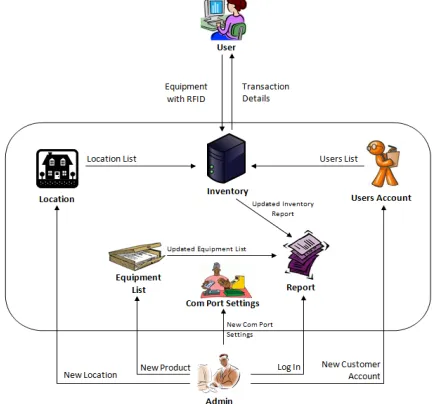
[image:2.612.319.537.267.469.2]In this study, the prototyping model was employed in the development of the prototype. In this study, system, software and prototype are used interchangeably. The RFID system was a computer terminal that provided laboratory equipment records such as monitoring and inventor via local area network. It was capable of displaying laboratory equipment information of the laboratories of the university. The RFID device was placed near the entrance door of the laboratory.
Fig 1. Framework of the Developed System
Figure 1 shows the system framework of developed passive RFID locator for Laboratory Equipment Monitoring and Inventory System. Once new equipment was delivered in the laboratory, an RFID would be attached to the equipment. Once tagged, the administrator of the system would update the inventory. The RFID would be used for further use (e.g., borrowing, pull-out, assignment to a location, etc.) of the equipment.
locating inventory items.
The system was pilot-tested in two laboratories. These two laboratories were connected in Local Area Network (LAN) using network cables connected in a switch. The server room for the database was located beside one of the laboratories where all data from the RFID would be saved and viewed. The working clients were properly configured using the principle of LAN configuration. An RFID reader was utilized that could detect the RFID card by communicating on of low-frequency radio waves through an inductor antenna.
B. Operation and Testing Procedure
In this phase, testing and evaluation of the system software and hardware aspects were evaluated. In this process, it ensured that the system would give an accurate and real time inventory of the equipment and would generate automated reports. Three cases were tested. These cases are as follows.
Case 1: Influence of the distance based on the readability of the RFID System
Case 2: Influence of the position based on the readability of the RFID System.
Case 3: Influence of the material on Radio Frequency Transmission based on the readability of the RFID System.
C. Evaluation Procedure
Evaluation was conducted to evaluate the acceptability of the system based on ISO 9126 software quality. The system was evaluated by the end-users and technical experts. End-users were technical staff of the university. Technical experts were composed of the server administrator, IT professionals, web developers, programmers, and computer science and information technology graduates. There were 50 respondents all in all.
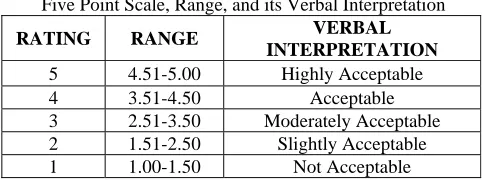
[image:3.612.311.547.68.562.2]Each respondent used and evaluated the system to determine the level of acceptability of the system. Respondents could answer 1 (Not acceptable) to 5 (Highly acceptable) to each question on the quality of the software. The five point scale, range, and its verbal interpretation is shown in Table I.
Table I
Five Point Scale, Range, and its Verbal Interpretation
RATING RANGE VERBAL
INTERPRETATION
5 4.51-5.00 Highly Acceptable
4 3.51-4.50 Acceptable
3 2.51-3.50 Moderately Acceptable
2 1.51-2.50 Slightly Acceptable
1 1.00-1.50 Not Acceptable
The quality of the software was evaluated based on the software quality proposed by ISO 9126 [14]. The software quality metrics were operationally defined shown in Table II.
Table II Software Quality Metrics Software
Quality
No. of
Questions Operational Definition
Functionality 6
The ability of the prototype to perform its intended purpose such as print of reports, interact directly to the system using RFID, protect information, grant authorized access, and accurate interaction of the modules of the software.
Reliability 4
The ability of the prototype to provide consistent correct output, maintains same level of performance when printing documents without errors, problems, crash or service interrupts.
Efficiency 3
The ability of the prototype to provide accurate response and provide precise records upon user’s requests.
Usability 3
An attribute of the prototype can be used as a tool in providing information to the user and as an instrument to have quality services.
Maintainability 3
The capability of the prototype to diagnose a problem or fault alongside with its attribute of being easily modified and tested.
Portability 3
An attribute of the prototype that is easily moved to other environment and easily installed.
IV. RESULTS AND DISCUSSION A. The Developed System
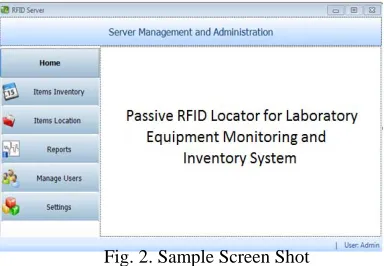
[image:3.612.64.305.540.630.2]Fig. 2. Sample Screen Shot
B. Analysis of the developed system according to its operational limits
Case 1: Influence of distance on the readability of the RFID System
[image:4.612.308.546.230.724.2]Table III shows the results of Case 1 about the influence of the distance based on the readability of the system. In the first distance of 1 inch, the RFID reader detected the switch device because it was in the operation frequency range of 125 kHz. Afterwards, the item was placed 2 inches from the device. The item was still detected. The RFID tag was placed at the top of the switch device and put closer to the reader. This RFID reader could detect and communicate by low frequency radio waves through an inductor antenna. The reader could to read the switch device at a distance of around 4 to 5 inches. This RF card reader is a passive tag RF card which does not need power supply to operate and generally use for close contact operations.
Table III
Test Results on the Influence of Distance
Distance Results 1 inch Readable and Detected
2 inches Readable and Detected 3 inches Readable and Detected 4 inches Readable and Detected 5 inches Readable and Detected 6 inches Not readable and Blocked 7 inches Not readable and Blocked Low frequency (LF) ranges from 30 to 300 kHz. LF transponders need just beyond the actual contact zone of the interrogator, leaving little room for interception. This increased the system’s accuracy and security. In this scenario, the server could add item in the add item form because the switch device was in the proximity range of the RFID reader. For the 6 and 7 inches distance of the RFID reader to the equipment with RFID tag, the reader could no longer detect the item because it was beyond the proximity range of the passive RFID system.
Case 2: Influence of the position based on the readability of the RFID System
The RFID reader is not affected by positional orientation of the RF card both in vertical and horizontal respectively. It also found out that the output was readable and detected.
Case 3: Influence of the material on Radio Frequency Transmission based on the readability of the RFID System
Glass window and plastic material were used to determine if these materials could interfere with the RFID reading. The RFID reader, which was covered by any kind of glass window or plastic material, could still detect the device. This shows that a glass or plastic materials are not barriers in detecting the device by the RFID reader. This could be explained by the fact that an e-Gizmo passive type RFID was able to transmit radio signals regardless of the materials covered. This confirmed the standards set by National Institute of Standards and Technology [3].
Furthermore, the analysis of the existing and the developed system is presented in Table IV.
Table IV
Analysis of the Existing and Developed System
Criteria Existing System Developed System
Data Accessibility
Manual monitoring system required human work and
effort in monitoring and inventory of equipment in the laboratory that was prone to human errors.
Automated
monitoring and inventory system used RFID device which monitors the equipment to reduce the need for human work in the monitoring and inventory of equipment in the laboratory.
Accuracy
Records of the borrowed
equipment were inaccurate because the laboratory head might misplaced the records and some equipment could be borrowed without forms so they were not monitored and recorded properly.
The developed system uses database to record the equipment being log out to assure that the records were accurate. RFID device was also used to prevent and lessen
the missing equipment.
Security
No security access implemented in the existing system.
Implementation of RFID system could
prevent the unmonitored
borrowing of the equipment and the unauthorized access in the records
Efficiency
Inefficiency, inadequate
processing of request takes time
and some equipment was not
monitored.
Table IV presents the different criteria to assess both the existing system and developed system. The inventory of the equipment was recorded manually by the laboratory personnel. This process was inaccurate because voluminous records might be misplaced or lost. Also, there was no security where unauthorized users could access the records. Some equipment were not monitored and recorded.
In the proposed system, with the use of RFID technology, equipment would be monitored. RFID reader could detect the equipment. The detected equipment would be recorded automatically to the database. Equipment would be logged in the database and therefore properly monitored. The system provided security. Only authorized users could access the database. Printing of reports, viewing of records, and granting of access to other users could only be done by authorized users.
C. Evaluation of the System
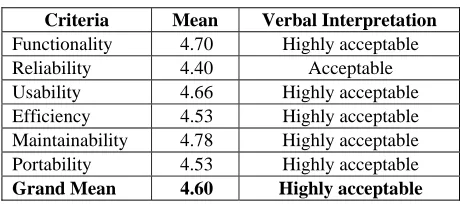
[image:5.612.69.299.356.458.2]Information Technology professionals, computer programmers, students, faculty members, and laboratory personnel of the College of Computer Studies and Systems of the University of the East- Manila Campus evaluated the functionality, reliability, usability, efficiency, and acceptability of the prototype. The results are shown in Table V.
Table V
Evaluation of the Prototype
The functionality (mean = 4.70, Highly Acceptable) of the system satisfies the requirement of accuracy, suitability, security and interoperability. It also passed the reliability test (mean = 4.40, Acceptable) which means the system has fault tolerance. It could handle errors and was capable of recovering or resuming after failure. Usability gathered a mean of 4.66 (Highly acceptable). This indicates that the system has understandable graphical interfaces and can be used by the users without much effort. The prototype was also found to be efficient (mean = 4.53, Highly acceptable) as indicated by the evaluation results. This means the system was capable of providing accurate response and expected results of the users.
For reliability, it was rated as 4.40 which interpreted as acceptable. This means that the respondents are quite satisfied with the reliability of the system on how the system can provide correct output all the time in all requested information. Maintainability obtained a rating of 4.78 which is equivalent to highly acceptable. This means that the respondents perceived that it is quite easy to diagnose, modified and tested the developed system. Portability criterion gained 4.53, highly acceptable as well, which means that the developed system can be flexible to other
environment.
A grand mean of 4.60 was obtained which can be interpreted as highly acceptable. This rating indicates that the developed system performed its intended function as perceived by the respondents.
V. CONCLUSIONS ANDRECOMMENDATIONS The developed system was capable of monitoring and doing inventory of laboratory equipment through the use of RFID. The prototype device successfully automated the monitoring and inventory system. The developed system was able to produce accurate and efficient laboratory records and could sort and update records in the database. The developed system was able to meet the ISO 9126 software quality criteria.
After the results have been analyzed, and based on the stated findings, the following conclusions were drawn. 1) The developed system was successful in monitoring and providing inventory of laboratory equipment through the use of RFID. 2) Using the software programs Microsoft Access and Microsoft Visual Studio, the developed RFID system can be used for the automation of printing the laboratory records such as daily, weekly and monthly reports, borrowed and returned laboratory equipment and log-in/log-out records per day transactions. 3) The developed system successfully integrated the software and hardware technology which provides better IT services needed in the business. 4) The overall performance of the system was evaluated and was proven functional in terms of interoperability and compliant of the system requirements, reliable in generating accurate inventory reports, efficient in providing updated information and is acceptable as an instrument in attaining quality services.
Based on the findings and conclusions, it is recommended that UE and other universities adapt and implement the developed system. It could be expected that the developed prototype could provide effective and accurate reports in dealing with all laboratory transactions.
Nevertheless, the prototype has limitations. The system could not detect objects which are more than 5 inches. Thus, further research on the possibilities of using active type RFID system that can operate at higher frequency could be initiated. Furthermore, future researches may use the results of this study as basis for advance studies to improve the developed system.
ACKNOWLEDGMENT
The authors are greatly indebted to Vice-chairman Jaime Bautista, Dr. Ester A. Garcia, Dr. Linda P. Santiago, Dr. Olivia C. Caoili, Dean Rodany A. Merida, and Dr. Melito Baccay.
REFERENCES
[1] RFID Journal. (2005). What is RFID? [Online]. Available: http://www.rfidjournal.com/article/view/1339
[2] Control Electronic Company. (2004). Types of RFID [Online]. Available:
http://www.controlelectric.com/RFID/Types_of_RFID.html
[3] T. Karygiannis, B. Eydt, G. Barber, L. Bunn, and T. Phillips. (2007). Guidelines for Securing Radio Frequency Identification (RFID) Systems: Recommendations of the National Institute of Standards and
Criteria Mean Verbal Interpretation
Functionality 4.70 Highly acceptable Reliability 4.40 Acceptable
Usability 4.66 Highly acceptable
Efficiency 4.53 Highly acceptable
Maintainability 4.78 Highly acceptable
Portability 4.53 Highly acceptable
Technology [Online]. Available:
http://csrc.nist.gov/publications/nistpubs/800-98/SP800-98_RFID-2007.pdf
[4] R. Agcaoili, T. Aquino, and G. Ramos, “Computerized attendance monitoring and payroll system using finger print scanner for Tri-Color Marketing Corporation”, unpublished.
[5] F. Esquinas and R. Garcia, “Automated sales and inventory system for Elarfoods, Incorporated”, unpublished.
[6] Z. Z. Quang, “Development of inventory system for Global Publishing Solutions Manila”, unpublished.
[7] R. Angeles (2005, December). RFID technologies: supply-chain applications and implementation issues. Information System Management, 22(1). pp. 51–65.
[8] F. Uhrich, U. Sandner, F. Resatsch, J. M. Leimeister, and H. Krcmar (2008, September). RFID in retailing and customer relationship management. Communications of the Association for Information Systems, 23(article 15). pp. 219–234.
[9] S. Shuti. (2010). Improving business process with RFID technology
[Online]. Available:
http://developeriq.in/articles/2010/dec/18/improving-business-process-with-rfid-technology/
[10] C.M. Liu and L.S. Chen (2009, April 2009). Applications of RFID technology for improving production efficiency in an integrated-circuit packaging house. International Journal of Production Research, 47(8). pp. 2203–2216.
[11] P. Kumar, H.W. Reinitz, J. Simunovic, K. P. Sandeep, and P.D. Franzon (2009, October). Overview of RFID technology and its applications in the food industry. Journal of Food Science, 74(8). pp. R101–R106.
[12] C.-C. Hung and C.-T. Sheng (2012, March). Application of plastic containers with RFID in the marketing of fruit and vegetables in Taiwan. International Journal of Agricultural & Biological Engineering, 5(1). pp. 35–42.
[13] M.K. Galhotra and A.M. Galhotra (2009, May). Application of Radio Frequency Identification Technology in Libraries. Journal of Library and Information Technology, 29(3). pp. 59–64.
[14] S. L. Pfleeger, Software Engineering: Theory and Practice, 2nd
edition. Uppder Saddle River, New Jersey: Prentice Hall, 2001, pp.