Abstract—The non textual image recognition is one of the important aspects of the multimedia. The image recognition is also termed as the computer vision and is used in the various areas and devices such as robotics. The ANN (Artificial Neural Networks) is one of the great tools involved in the image recognition. So far, the ANN were used in applications involving the computer vision. Although the artificial neural networks based systems are distinguished for their ability to cope with problems in pattern recognition and computer vision in general, they are rather impotent when faced with the dimensionality of problems in the image understanding domain. That makes them unable to deal sufficiently with problems such as rotation, distortion, clutter and scale variances. In this paper, we are going to deal the image recognition with the technology known as the CANN (Cellular Associative Neural Networks).The main thing which makes the difference between the traditional neural networks and the CANN is the architecture, which resembles the cellular automata. It is used in the interconnection between the various networks. We are going to have a look at the CANN technology, with the learning process and the recognition of images and the process of analysis of one dimensional and two dimensional images.
Index Terms— Artificial neural network (ANN), Cellular Associative Neural Networks (CANN), Electroencephalograph (EEG).
I. INTRODUCTION
The classical problem in computer vision, image processing and machine vision is that of determining whether or not the image data contains some specific object, feature, or activity. This task can normally be solved robustly and without effort by a human, but is still not satisfactorily solved in computer vision for the general case: arbitrary objects in arbitrary situations.[6] The existing methods for dealing with this problem can at best solve it only for specific objects, such as simple geometric objects (e.g., polyhedrons), human faces, printed or hand-written characters, or vehicles, and in specific situations, typically described in terms of well-defined illumination, background, and pose of the object relative to the camera. Different varieties of the recognition problem are described in the literature:
Sasikumar Gurumurthy is with the VIT University, Vellore, Tamil Nadu, India. He is now with the School of computing science and Engineering (phone: 0416-2202016; e-mail: [email protected]).
Dr.B.K.Tripathy is with the VIT University, Vellore, Tamil Nadu, India. He is now with the school of computing science and Engineering (e-mail: [email protected]).
M.Priya is with the Bannari Amman Institute of Technology, Sathyamangalam, Tamil Nadu, India. She is now with the Department of Information Technology.
The Recognition: one or several pre-specified or learned objects or object classes can be recognized, usually together with their 2D positions in the image or 3D poses in the scene.
Identification: An individual instance of an object is recognized. Examples: identification of a specific person face or fingerprint, or identification of a specific vehicle.
Detection: the image data is scanned for a specific condition. Examples: detection of possible abnormal cells or tissues in medical images or detection of a vehicle in an automatic road toll system. Detection based on relatively simple and fast computations is sometimes used for finding smaller regions of interesting image data which can be further analyzed by more computationally demanding techniques to produce a correct interpretation.
II. COMPUTER VISION SYSTEM
The organization of a computer vision system is highly application dependent. Some systems are stand-alone applications which solve a specific measurement or detection problem, while other constitute a sub-system of a larger design which, for example, also contains sub-systems for control of mechanical actuators, planning, information databases, man-machine interfaces, etc.[1][6] The specific implementation of a computer vision system also depends on if its functionality is pre-specified or if some part of it can be learned or modified during operation. There are, however, typical functions which are found in many computer vision systems.
A. Image Acquisition
A digital image is produced by one or several image sensor which, besides various types of light-sensitive cameras, includes range sensors, tomography devices, radar, ultra-sonic cameras, etc. Depending on the type of sensor, the resulting image data is an ordinary 2D image, a 3D volume, or an image sequence. The pixel values typically correspond to light intensity in one or several spectral bands (gray images or color images), but can also be related to various physical measures, such as depth, absorption or reflectance of sonic or electromagnetic waves, or nuclear magnetic resonance.
B. Pre-processing
Before a computer vision method can be applied to image data in order to extract some specific piece of information, it is usually necessary to process the data in order to assure that it satisfies certain assumptions implied by the method. Examples are: Re-sampling in order to assure that the image coordinate system is correct. Noise reduction in order to assure that sensor noise does not introduce false information. Contrast enhancement to assure that relevant information can be detected. Scale space representation to enhance image structures at locally appropriate scales.
Study of Image Recognition Using Cellular
Associated Artificial Neural Networks
C. Feature extraction
Image features at various levels of complexity are extracted from the image data. Typical examples of such features are: Lines, edges and ridges. Localized interest points such as corners, blobs or points. More complex features may be related to texture, shape or motion.
D. Detection/Segmentation
At some point in the processing a decision is made about which image points or regions of the image are relevant for further processing. Examples are: Selection of a specific set of interest points. Segmentation of one or multiple image regions which contain a specific object of interest.
E. High-level processing
At this step the input is typically a small set of data, for example a set of points or an image region which is assumed to contain a specific object. The remaining processing deals with, for example: Verification that the data satisfy model-based and application specific assumptions, Estimation of application specific parameters, such as object pose or object size, classifying a detected object into different categories.
III. ARTIFICIAL NEURAL NETWORK
Artificial Neural Networks are being touted as the wave of the future in computing. They are indeed self learning mechanisms which don't require the traditional skills of a programmer. But unfortunately, misconceptions have arisen. Writers have hyped that these neuron-inspired processors can do almost anything. These exaggerations have created disappointments for some potential users who have tried, and failed, to solve their problems with neural networks. These application builders have often come to the conclusion that neural nets are complicated and confusing. Unfortunately, that confusion has come from the industry itself. Currently, only a few of these neuron-based structures, paradigms actually, are being used commercially.[1][5] One particular structure, the feedforward, back-propagation network, is by far and away the most popular. Most of the other neural network structures represent models for "thinking" that are still being evolved in the laboratories. Yet, all of these networks are simply tools and as such the only real demand they make is that they require the network architect to learn how to use them.
A. Analogy to brain
The exact workings of the human brain are still a mystery. Yet, some aspects of this amazing processor are known. In particular, the most basic element of the human brain is a specific type of cell which, unlike the rest of the body, doesn't appear to regenerate. Because this type of cell is the only part of the body that isn't slowly replaced, it is assumed that these cells are what provide us with our abilities to remember, think, and apply previous experiences to our every action. These cells, all 100 billion of them, are known as neurons. Each of these neurons can connect with up to 200,000 other neurons, although 1,000 to 10,000 are typical. The power of the human mind comes from the sheer numbers of these basic components and the multiple connections between them. It also comes from genetic programming and learning. The
individual neurons are complicated. They have a myriad of parts, sub-systems, and control mechanisms. They convey information via a host of electrochemical pathways. There are over one hundred different classes of neurons, depending on the classification method used. Together these neurons and their connections form a process which is not binary, not stable, and not synchronous.[8][9] In short, it is nothing like the currently available electronic computers, or even artificial neural networks. These artificial neural networks try to replicate only the most basic elements of this complicated, versatile, and powerful organism. They do it in a primitive way. But for the software engineer who is trying to solve problems, neural computing was never about replicating human brains. It is about machines and a new way to solve problems.
B. Artificial neurons and how they work
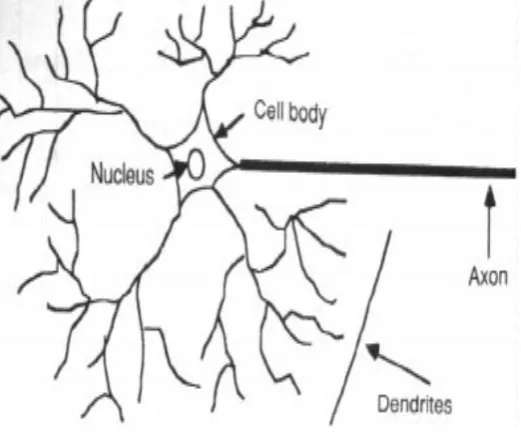
[image:2.595.306.567.329.545.2]The fundamental processing element of a neural network is a neuron. This building block of human awareness encompasses a few general capabilities. Basically, a biological neuron receives inputs from other sources, combines them in some way, performs a generally nonlinear operation on the result, and then outputs the final result. Figure 1 shows the relationship of these four parts.
Fig 1: A Simple Neuron.
Within humans there are many variations on this basic type of neuron, further complicating man's attempts at electrically replicating the process of thinking. Yet, all natural neurons have the same four basic components. These components are known by their biological names - dendrites, soma, axon, and synapses. Dendrites are hair-like extensions of the soma which act like input channels. These input channels receive their input through the synapses of other neurons. The soma then processes these incoming signals over time. The soma then turns that processed value into an output which is sent out to other neurons through the axon and the synapses. [1][4]
building upon man's understanding of the biological brain.[7][[2]
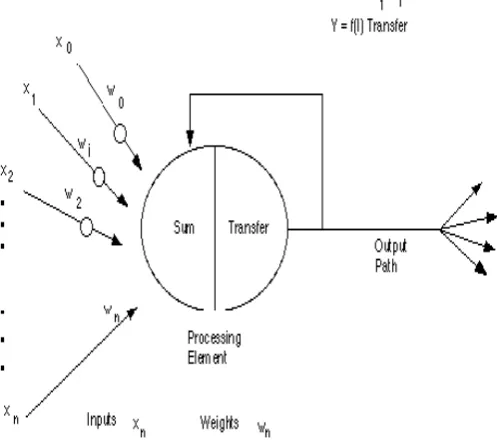
[image:3.595.304.538.54.250.2]But currently, the goal of artificial neural networks is not the grandiose recreation of the brain. On the contrary, neural network researchers are seeking an understanding of nature's capabilities for which people can engineer solutions to problems that have not been solved by traditional computing. To obtain the accurate solution, the basic unit of neural networks, the artificial neurons, simulates the four basic functions of natural neurons. Figure 2 shows a fundamental representation of an artificial neuron.
Fig 2: A Basic Artificial Neuron.
Figures 3, various inputs to the network are represented by the mathematical symbol, x(n). Each of these inputs is multiplied by a connection weight. These weights are represented by w(n). In the simplest case, these products are simply summed, fed through a transfer function to generate a result, and then output. This process lends itself to physical implementation on a large scale in a small package. This electronic implementation is still possible with other network structures which utilize different summing functions as well as different transfer functions. Some applications require "black and white," or binary, answers. These applications include the recognition of text, the identification of speech, and the image deciphering of scenes. These applications are required to turn real-world inputs into discrete values. These potential values are limited to some known set, like the ASCII characters or the most common 50,000 English words. Because of this limitation of output options, these applications don't always utilize networks composed of neurons that simply sum up, and thereby smooth, inputs. These networks may utilize the binary properties of ORing and ANDing of inputs. These functions, and many others, can be built into the summation and transfer functions of a network. Other networks work on problems where the resolutions are not just one of several known values. These networks need to be capable of an infinite number of responses.
Fig 3: Artificial Neuron with various Networks
C. How artificial neural networks are used
Artificial neural networks are undergoing the change that occurs when a concept leaves the academic environment and is thrown into the harsher world of users who simply want to get a job done. Many of the networks now being designed are statistically quite accurate but they still leave a bad taste with users who expect computers to solve their problems absolutely. These networks might be 85% to 90% accurate. Unfortunately, few applications tolerate that level of error.
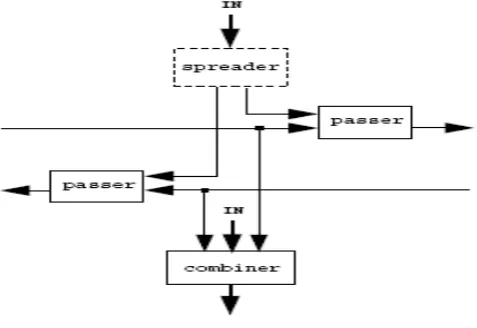
[image:3.595.43.292.195.415.2]V. MODULES OF CANN A. Spreader
The spreader takes the current state of the processor, which is expressed by one or more symbols. This module is represented by dotted lines since its operation tather than this it is depicted. This is because, normally there should be n spreaders if the processor were to communicate with n neighbours.Although the spreader unit constitutes a part of the processing element, there might be cases where its function will not be needed and the current state will go to each direction unmodified.
B. Passer
The passer takes the symbols which come from a direction and the symbol to be passed to this direction and forms the new symbols to be passed to the next processor at this direction so that the state of a processor can probably be affected by the state of more distant processors. Like the previous module, there might be the case where passers are not used and information is exchanged only in local neighborhoods.
C. Combiner
[image:4.595.311.542.291.407.2]The combiner takes the current state of the processor and the symbols which are coming from each direction and produces the new state of the processor. An important point of the whole procedure is that the state of each processor, as well as the information coming from direction could be represented with more than one symbol. The latter might be the case when the application of a combination of symbols in the associative memory has forced it to recall more than one symbol for these antecedents.
Figure 4: Architecture of CANN
Every spreader unit or passer unit or combiner in each processor uses a separate associative memory but these memories can be shared by the corresponding units on different processors.
Formal definition: Δ= [Σ,Χ,A,T,P,δ,μ,κ] Where,
Σ Is the set of all the symbols X C Σ Is the input alphabet A C Σ Is the output alphabet
T C Σ Is the set of symbols used during transition from X to A
P is a triple
Where s is the number of spreader modules and P is the number of passer modules
[image:4.595.48.287.472.636.2]The set Σ contains all symbols which are used in the operation of a CANN. This set can be infinite since there is no limit to the symbols that can be used by the network and it is thus equivalent to the set N of all nonnegative integers. It is used as a pool from where symbols can be withdrawn to represent the basic features of an image, the objects that can be found in an image and the intermediate symbols, in T, to be used for transition from X to A.[6][1][10] An additional element of Σ is the null symbol {.}.This is the only symbol that sets X, A and T have in common. The functions are performed by modules spreader, passer and combiner respectively. They are mappings which are learned by the system during the training session and they are stored in to corresponding associative memories.
Fig 5: One Dimension
In order to know how a CANN system behaves and to obtain the required experience, a one dimensional system is implemented and tested. The system was composed by a one dimensional array of processing elements each of which had one combiner. There were no spreader and passer units as the priority was to have a prototype working system in which the processing elements would be observed.[11] Each site was capable of communicating with its two adjacent sites thus giving rules with arity varying from one to three.
VI. DISCUSSION
VII. CONCLUSION
In this paper, the recognition of an image or the non textual image recognition with the Cellular Associated Artificial Neural Network [CANN] is studied, with a brief introduction to the conventional neural networks. Apart from the hardware and software engineers; there will be a time in which the neural network architects will have their d day in the commercial work space.
These artificial neural networks try to replicate only the most basic elements of this complicated, versatile, and powerful organism. They do it in a primitive way. But for the software engineer who is trying to solve problems, neural computing was never about replicating human brains. It is about machines and a new way to solve problems. The image recognition system developed using the CANN can be employed in the high end applications such as the robotics and the artificial retina.
The further development of the system includes the combination of the criteria mentioned to design a set of formal methods for evaluating the behaviour of the system. The extension of the experimental framework is also included at further development and it will be achieved by investigating the effects of various differentiations at the parameters of the system and by using real image data derived from the first part of the project. Now, advances in biological research promise an initial understanding of the natural thinking mechanism. This research shows that brains store information as patterns. Some of these patterns are very complicated and allow us the ability to recognize individual faces from many different angles. This process of storing information as patterns, utilizing those patterns, and then solving problems encompasses a new field in computing. This field, as mentioned before, does not utilize traditional programming but involves the creation of massively parallel networks and the training of those networks to solve specific problems. This field also utilizes words very different from traditional computing, words like behave, react, self-organize, learn, generalize, and forget.
ACKNOWLEDGMENT
Sasikumar Gurumurthy thanks to the Department of computer science, VIT University and Special thanks to Dr.B.K.Tripathy for his kind help in my research work and sincere thanks for Dr.M.Khalid, Director, SCSE, for his kind financial support. This work has been (Partially) supported by the research program in SCSE, VIT University, India.
REFERENCES
[1] Fukushima K. (1983). Neocognitron: A neural network for a mechanism of visual pattern recognition. IEEE Transactions on
Systems, Man and Cybernetics, 13, 826-834.
[2] Grossberg, S., Mingolla, E., & Todorovic, D. (1989). A neural network architecture for preattentive vision. IEEE Transactions on Biomedical
Engineering, 36, 65-84.
[3] J. Hopfield D.W. Tank, “Neural computation of decisions in optimization problems,” Bio. Cybern, vol. 52, pp. 141-152, 1985. [4] Khotanzad, A., & Lu, J.(1990).Classification of invariant image
representations using a neural network. IEEE Transactions on
Acoustics, Speech and Signal Processing, 38, 1028-1038.
[5] Khotanzad, A., & Lu, J. (1990). Classification of invariant image representations using a neural network. IEEE Transactions on
Acoustics, Speech and Signal Processing, 38, 1028-1038.
[6] L.O. chua and L.Yang, “Cellular neural networks: Theory,” IEEE Trans. Circuit Syst., vol. 35, pp.1257-1272, the issue.
[7] Ramana KV, Khader Basha S. Neural image recognition system with application to tuberculosis detection. Proceedings. ITCC 2004. International Conference on Information Technology: Coding and Computing 2004; 2:694-98.
[8] Ross NE, Pritchard CJ, Rubin DM, Duse AG. Automated image processing method for the diagnosis and classification of Malaria in thin blood smears. Medical and Biomedical Engineering and Computing 2006; 44:427-36.
[9] Prokop, R. J., & Reeves, A. P. (1992). A survey of moment-based techniques for unoccluded object representation and recognition.
CVGIP: Graphical Models and Image Processing, 54, 438-460
[10] Sheikh H, Bin Zhu, Micheli-Tzanakou, E. Blood cell identification using neural networks. Bioengineering Conference, In proceedings of the 1996 IEEE Twenty-Second Annual Northeast, 1996; 119-20.
[11] Ross NE, Pritchard CJ, Rubin DM, Duse AG. Automated image processing method for the diagnosis and classification of Malaria in thin blood smears. Medical and Biomedical Engineering and Computing 2006; 44:427-36.