IOT Based Soil Nutrients Detection System
Sushma Reshmi1, Prof. Vivekanandreddy2
1
Dept. of Computer Science and Engineering , 2Faculty in Dept. of Computer Science and Engg
Centre for Post Graduate Studies, V.T.U, Belagavi
Abstract: In agriculture to grow healthier yield nutrients existing in the soil should be managed properly. Continuous growing of plants affects the soil fertility and its fertility level goes down. Farmers should go to laboratory for testing the fertility of the soil and it’s time consuming. Consequently by using technology the fertility of soil can be verified using various sensors. Temperature/humidity sensor, pH sensor, and NPK sensor are used. Sensed data is sent to server and stored on database, then information is sent to farmers mobile with soil nutrients present and type of crop they can grow to gain better yield. This makes the soil testing procedure easy. Method used to detect soil nutrient is colorimetry.
Index Terms: Temperature/humidity sensor, pH sensor, Color sensor, Raspberry Pi
I. INTRODUCTION
Indian economy is essentially founded on farming. Growth of plant relies upon nutrients present in soil. Soil fertility level goes down if more measure of fertilizers are utilized. Manures have to be prescribed dependent on the fertilizers. Plant will utilize nutrients present in soil. After harvesting the yield, nutrient of soil changes so the testing of soil is required. In soil testing research centers they get a variety of soils for testing, traditional strategy is tedious and financially savvy moreover. In precision agriculture, it will give huge yield of the harvest and improves crop quality. By using sensors the chemical and also physical features of soil can be efficiently mapped. By using color sensors we can suggest farmer, the quantity of manures they can use for their field. Significant nutrients are nitrogen, phosphorous and potassium. Colorimetry strategy is utilized in identification of supplement of soil. The proposed model is to discover nutrients of soil, i.e nitrogen, phosphorous and potassium. Components like minerals, atmosphere, soil nutrients, composts, and so on should be considered. pH sensor, temperature sensor, NPK sensors are utilized for this. PH to gauge whether soil is corrosive or base. Phosphorous helps for improvement in yield of plant. Next supplement is potassium for improvement of the plant. Here it will Impact plant shading, leaves, its taste and natural products. By using these sensors farmers will get data according to their soil nutrients and suggested fertilizer harvest for better yield.
II. RELATED WORK
In literature, the problem and the earlier methods used is described. In [1] Akhil R, Gokul S, Shruti M, Proposed model that distinguishes the soil supplement content using different sensors and recommend the manures that will be added to standardize the soil. These values would then be sent to a server of soil research lab in care of that territory. The farmers would get back the suggestion over their cell phones.
In [2] Shylaja N, Dr. Veena B, The point is to investigate the nutrients of soil progressively by estimating Nitrogen (N), Phosphorous (P), Potassium (K) values by using sensors. Therefore, the information from sensors is sent to IBM Bluemix cloud. These qualities are taken to cloud database which gets to the information from anywhere, whenever required. The sensor detects soil fertility.
In [3] Divya J, Divya M, Janani V, The reason for this model is to give embedded based framework to soil monitoring, and irrigation to reduce the manual detecting of the field, and get the data by android application. The framework is proposed to assist the farmers with increasing the agricultural production. The soil is test is completed using different sensors, for example, pH sensor, temperature sensor, and humidity sensor. Based on the outcome, the farmers can use the proper fertilizer that suits the soil.
In [4] Prachi Sharma, Dr. D.V. Padole, Proposed framework is mainly for handheld device for soil analysis and results are sent using IoT. Framework is microcontroller based gadget connected with EC sensor, pH sensor and colour sensor. It delivers reading from sensors and communicates it to application over Bluetooth. At long last the mobile application will transfer the information over server for further process.
III. METHODOLOGY
The proposed model is soil nutrient detection using IOT consist of Raspberry-pi and sensors. The system data flow diagram is given in fig.
Fig: Data Flow Diagram
Architecture figure detailed each components used for system. Method used to detect nutrients present in soil is determined by colorimetry method using color sensor. Color sensor detects wide range of color based on wavelength. Color sensor has an array of photodiodes which has different filters like RGB. The different colors obtained by testing soil solution result in sensing of colors. Based on detection of these colors, nutrients in the soil are known. The sensed information are stored in the database these are requested by the application. The sensor detects the soil nutrients that are present. Verify those with comparison to the range of the N-P-K values of the crops. Name of the crop is suggested and displayed on the application.
IV. PROPOSED SYSTEM
The advance in the technology help to progress even in the field of agriculture. In proposed framework, soil nutrients can be identified using IOT. PH, temperature and moisture, NPK is found using sensors. By this measure of fertilizers required for the field will be known. Which helps farmers to examine soil and know its fertility level before sowing. By this large amount of yield can be gained. IOT-Internet of Things is the large domain which deals with collecting information through internet at any time, at anywhere. Which helps in monitoring system in the absence of human intervention. Which are observed by sensors, used even in farming to experiment soil, by which the fertility of soil is maintained.
As appeared in outline, sensors are connected with Raspberry-pi and sensed information are sent to server. Then information fetched to database. Measure of nitrogen, phosphorous, potassium, pH of soil, temperature and humidity will be displayed on user’s mobile phone. These outcomes are suggested to farmers. Based on these measures, amount of nutrients to be disbursed for the field are suggested.
A. Temperature/Humidity Sensor
[image:3.612.249.366.246.325.2]The DHT11 as shown in fig is a minimal effort temperature/humidity sensor. It is very helpful for experimenting projects. The gadget just requires three associations with the Pi. +3.3v, ground and one GPIO pin. The library manages the information that should be directed to the sensor. Initially need to update and install packages of python. By using a command, sudo apt-get update next clone Adafruit library then install libraries for python. Python program will result the temperature/humidity readings to an Apache server and later it will be stored on database.
Fig: Temperature and humidity sensor
B. PH Sensor
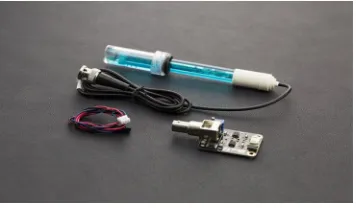
[image:3.612.218.396.444.549.2]Soil pH deals with corrosiveness or alkalinity of the soil. It is a proportion of the grouping of free hydrogen particles (H+) that are in soil. Soil pH is estimated in water (pHw) or a weak calciumchloride solution (pHCaCl). The pH ranges from 0-14, with estimation of 7 being impartial. Soil pH esteems are, Strong acridity if under 5.0. Moderate acridity in range 5.0 to 6.0. Neutral somewhere in the range of 6.5 and 7.5. Strong alkalinity for estimations of 8.5 or more. If Soil pH is not in range can impact on the plants. PH sensor is displayed in fig.
Fig : pH sensor
C. Color Sensor
Colorimetry is used in the estimation of nutrients that are available in soil like Nitrogen, Phosphorus and Potassium, which can be employed in estimating the fertilizer of that will be used for the soil. Colorimetry is used in estimating Nitrogen present in soil also,
in plant. Even in estimation of Potassium Chloride where it is broadly used as extractant for present Nitrogen in soils.
D. Raspberry-pi3 B+
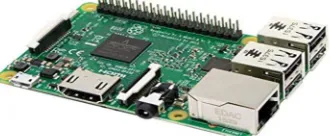
[image:4.612.224.389.196.264.2]The low cost of the Raspberry-pi is clearly a significant piece of the story.Raspberry-pi as a world's most reasonable and incredible Single Board Computer. As far back as the dispatch of Raspberry-pi from 2012, can see a few form of it. This is world's least expensive chip unit uniquely worked for student and producers. We can undoubtedly figure out how software, hardware work together without been worry over harm/cost. The expense of Pi enables beginners to make mistakes and adapt most out of it. Additionally Raspberry-pi has a colossal network and online assets which make learning smooth. Furthermore Raspberry-pi has an enormous system and a great deal of online resources which make learning smooth.
Fig : Raspberry Pi 3 B+ model
E. Soil Test Kit
Soil Test Kit to evaluate essential nutrients (N-P-K) which is displayed in fig. Nitrogen, phosphorus, potassium, and pH (causticity/alkalinity). It contains test tubes, capsules, dropper, color graph. Take sample and blend your soil with water, move clear a part of the solution to the test tubes, include powder from capsules, and wait to develop solution. After obtaining color hold it near
color sensor. The light from the RGB-LED was scattered in test tube that LDR reads. The change in the register of LDR was
[image:4.612.275.388.406.542.2]transformed to a voltage signal by a voltage divider circuit. The outcome of the voltage drop-over the fixed resistor is sent to an ADC of the Raspberry-pi with 10-bit resolution. The analog signal was changed to digital signal. Then it was sent to the server. Finally results are displayed on farmer cell phones.
Fig : Soil Test Kit
V. RESULTS
This segment contains the outcomes achieved in the development of IOT Based Soil Nutrients Detection System. Here we get appropriate fertilizer to suggest to farmers depending on their soil quality.
[image:4.612.193.424.573.712.2]Fig : Crop Recommended to Farmers
VI. CONCLUSION
The proposed system, IOT Based Soil Monitoring System integrates the sensors for smart agriculture. By following the principle of colorimetry, soil nutrient level can be detected. As different sensors are associated with Raspberry-pi it acts as a small computer. Sensor data is sent to farmers on their phone. By this soil nutrient level and fertilizer is recommended. Which profits farmers with high yield and cost effective.
REFERENCES
[1] Akhil R, Gokul M S, Sruthi Menon and Lekshmi S Nair, “Automated Soil Nutrient Monitoring for Improved Agriculture”International Conference, April 3-5, 2018.
[2] VaibhavIngale, Rashmi Vaidya, Amol Phad, PratibhaShingare, “A Sensor Device for Measuring Soil Macronutrient Proportion using FPGA”International Conference,2016.
[3] Rigor G. Regalado, Jennifer C. Dela Cruz, “Soil pH and Nutrient (Nitrogen, Phosphorus and Potassium) Analyzer” 2016 IEEE.
[4] Prachi Sharma, Dr. D.V. Padole, “Design And Implementation Soil Analyser Using IoT”2017 International Conference on Innovations in Information.
[5] Divya J, Divya M, Janani V.“ IoT based Smart Soil Monitoring System for Agricultural Production” 2017 IEEE.
[6] R.Sujatha, R. AnithaNithya, “A Survey on Soil Monitoring and Testing In Smart Farming Using IoT And Cloud Platform” Int. Journal of Engineering Research and Application, 2017.
[7] AkshayBadhe, Sandeep Kharadkar, Prof. ShilpaChavan, “IOT Based Smart Agriculture And Soil Nutrient Detection System” International Journal on Future Revolution in Computer Science, 2018.