University of Warwick institutional repository:http://go.warwick.ac.uk/wrap A Thesis Submitted for the Degree of PhD at the University of Warwick
http://go.warwick.ac.uk/wrap/57212
This thesis is made available online and is protected by original copyright. Please scroll down to view the document itself.
A CONCEPTUAL APPROACH TO THE EARLY LEARNING OF ALGEBRA
USING A COMPUTER
M.O.J.THOMAS B.~C., M.Sc •
..
Ph.D.' IN SCIENCE EDUCATION
WARWICK UNIVERSITY
A Conceptual Approach To The Early Learning of Algebra
Using A Computer
Table of Contents
summary
1. Introduction
2. Psychological perspectives
.1 The Piagetian Model
.1 The Application of Piagetian Theory to Mathematics
.2 Criticisms of the Model .3 Summary
.2 The Cognitive Theory of Ausubel .i Advance Organisers
.2 Reception and Discovery Learning .3 The Cognitive Theory of Skemp
.4 Chapter Summary
3. Towards an Integrated Psychological Model of Cognition
.1 Extending the Theoretical Model
.2 The Qualitative Nature of Conceptual Links .1 The Strength of the Links
.2 Directional Links .3 Modifying the Model
.3 Consequences of the Qualitative Nature of Schematic Links
.1 Levels of Understanding
.2 Coping with problems of Mental Blocks .4 A Consideration of the Cognitive Role of
Mental Images
.1 The Relationship of Mental Images to Cognitive Progress
.5 Some Physiological Investigations of the Brain
.6 Mental Images and The Psychological Model .7 Gender Differences
.1 Some Theoretical Considerations on Gender Differences
.8 Cognitive Integration in Action
.9 Psychological Implications of Cognitive Integration
.10 Relevance to the Current Research .1 A Consideration of Concept Links
.11 The Directional Nature of Conceptual Links .1 Mental Blocks
.2 Mental Imagery .12 Overview of the Chapter
1 2 9 10 18 21 24 25 29 32 34 45 47 48 49 49 52 54 56 59 61 63 65 70 82 90 90 97 103
I I I
Table of contents (Cont.)
4. A Review of the Algebra Background 121
.1 The Nature of the Problem in the Early 122 Learning of Algebra
.1 Some Strategies Adopted By Early 125 Learners
.2 The Persistence of the Problems 126
.1 The Understanding of the Use of 129 Symbolic Literals
.3 Studies Designed to Address Understanding 138 of variable
.4 The Understanding of Algebraic Expressions 144 .1 Studies Aimed at Improving Understanding 147
of Expressions
.5 A Consideration of Linear Equations in One 151 Variable
.6 The Relationship Between Understanding and 153 Method
.1 Informal or Intuitive Procedures 153
.2 Arithmetic Substitution 155
.3 Transposing of Terms 156
.4 Performing the Same Operation on Both 157 Sides
.7 A Comparison of the Value of These Procedures 158 .8 providing Cognitive Meaning for Formal Methods 161 .9 The Conceptual Route to Meaningful Algebraic 163
Equations
.10 Problems Involved in Translating Word Problems 165 To Algebra
.11 Overview of the Relevance to the Research 169
5. A Discussion of The'Role Of the Computer in 170 Mathematics Education
.1 Some Historical Perspectives 171
.2 A Cognitive Integration of the Computer Into 175 Mathematics Education
.1 A Theoretical Overview 175
.2 The Place of Computer Programming ~n 176 Mathematics Education
.3 Enhancing Understanding With Computer 182 Software
.4 Some Examples of Programs D~signed to 186 Improve Understanding
.5 The Structured Environment 195
.3 Algebra In The Computer Environment 198 .1 The Use of Software for Teaching Skills 199 .2 The Computer as an Aid in Conceptual 199
Learning of Algebra
.4 Implications for the Algebra Curriculum of 202 the Future
.1 Symbolic Manipulators and the Facilities 203 Available
.2 Problems and Challenges in Using 206 Symbolic Manipulators
Table of Contents (Cont.)
5.5 Overview of the Chapter
6. The Two Initial Investigations
.1 The Background to the Research
.2 The Rationale Behind the Use of the Computer In the Research
.1 The Concept of Variable Used
.2 The Cultivation of Relevant Mental Imagery
.3 The Capacity for Concretisation of Formal Thinking
.4 Encouragement of Problem solving Abilities
.5 The Capability for Personalisation of Formal Thought
.6 Improving an Understanding of Algebraic Notation
.3 The Cognitive Instruments Developed for the Research
.4 The Initial Investigation
.5 The Details of the First Investigation .1 The Subjects
.2 The Instruments .3 The Research Design .4 The Procedure
.5 The Results
.6 Improving the Teaching Module
.1 problems Arising From the First Experiment
.2 The ~mprovements Decided Upon .3 The Introduction of the Cardboard
'Maths.Machine'
.7 The Details of the Second Investigation .1 The Subjects
.2 The Instruments .3 The Research Design .4 The Procedure
.5 The Teaching Programme
.6 Observations From the Work In the Programme
.8 The Results of the Second Experiment .1 A Comparison With CSMS Results .2 Individual Progress
.3 Specific Questions .4 The Effect on Errors
.9 The Longer Term Effect of the Programme .10 Overview of the Chapter
7. A Description of the Main Teaching Experiment
.1 Areas for Further Consideration
.1 Improvements to the Dynamic Algebra Teaching Module
Table of Contents (Cont.)
7.1.2 Improvements to the Worksheets
.3 Improvements to the Test Instrument Used in the Study
.4 Avoidance of Pupil Interaction
297 298
302
.2 The Main Teaching Experiment 303
.1 The Subjects 303
.2 The Instruments 303
.3 The Research Design 304
.4 The Procedures Followed 304
.5 The Dynamic Algebra Teaching Module 309 Used
.6 The Cognitive Value of This Approach 326
.3 Observations From the Programme in Practice .1 positive Benefits Resulting From the
programme
.2 Difficulties With the Programme .4 Overview of the Chapter
8. An Analysis of the Results of the Third Experiment
.1 The Overall Group Results of the Third Experiment
.1 The Post-Test Results
.2 The Delayed Post-Test Results .2 A Comparison with the Standardised CSMS
Results
.3 The Individual Performance
.1 Pupils of Lower Level Understanding .2 pupils of Middle Level Understanding .3 pupils of Higher Level Understanding .4 Summary
.4 Gender and Ability Related Considerations .1 A Factor Analysis of the Results of
Experiment 3
.2 The Role of the Computer Environment .5 The Effect of the Programme on Errors
.6 Overview of the Chapter
9. The Interviews Following the Third Experiment
.1 The Interviews
.1 The Methods Applied in the Interviews .2 The procedures
.3 The Subjects
.4 The Questions Used .2 The Results of the Interviews
.1 The Left/Right Tendency and Other Mis-Understandings of Notation
.2 Equation Solving and Invented/Formal Procedures
.3 The Understanding of the Use of Letters in Algebra
.1 Letter as Specific Unknown
Table of Contents (Cont.) page
9.3.2 Generalised Number and Variable 436
.4 An Overview of the Chapter 443
10. The Questionnaire 444
.1 The Rationale Behind the Questionnaire 445 .2 Quantitative Results From the Questionnaire 451 .3 A Qualitative Analysis of the Questionnaire 458
Results
.1 The Relationship to the Cognitive 458 Theory
.2 The Extent of Some Misunderstandings 470 .3 Evidence of Understanding of the Use 474
of Letters
.4 Overview 475
11. Implications For Teaching and Recommendations 477 For Further Research
.1 An Overview of the Results 478
.1 Some Pedagogical Considerations 480 .2 The Implications For The Teaching of Algebra 482
.3 Recommendations For Further Research 485
Bibliography
Appendices
A. The Pilot Study Test
B. The Pilot Study Raw Data Facilities
C. Experiment 1 - The VRQ and MQ Used for the Matching D. The Software Maths. Machine Computer Program
E. Experiment 1 - The Pre-Test F. The CSMS Algebra Test
G. Experiment 1 - The Teaching Module H. Experiment 1 - Results
I. Experiment 2 - The Pre-Test
J. Experiment 2 - The Post-Test and Delayed Post-Test K. Experiment 2 - The Individual Results
L. Experiment 2 - The Teaching Module M. Experiment 2 - The Worksheets
N. Experiment 2 - The Question Facilities
o.
Experiment 3 - Raw Data For Correlation of Test With CSMS Algebra TestP. Experiment 3 - Worksheets
Q. Experiment 3 - The Algebra Test Used and Question
R. Experiment 3 S. Experiment 3 T. Experiment 3 U. Experiment 3
v.
Experiment 3- The - The - The - The - The Levels
Pre-Test Results Questionnaire
Traditional Algebra Module Post-Test Individual Results Post-Test and Delayed Post-Test
Question Facilities
W. Experiment 3 - The Delayed Post-Test Individual Results
x.
AbbreviationsTable of Tables
4.1 The CSMS Percentages of Children at Each
Algebra Level At Ages 13, 14 and 15 Years Old
6.1 A Comparison of Experiment 1 Performance on Post-Test and Delayed Post-Test
6.2 A Comparison of Experiment 1 Performance on Level 3 and 4 Questions of the Post-Test and Delayed Post-Test
6.3 A Comparison of Some Experimental and Control Group Facilities on Questions Involving Diagrams
6.4 A Comparison of Experiment 2 Performance on Post-Test and Delayed Post-Test
6.5 A Comparison of Experiment 2 Performance on Level 3 and 4 Questions of the Post-Test and Delayed Post-Test
6.6 A Comparison of Experiment 2 Performance on post-Test, Delayed Post-Test and Test One Year After the End Of the Experiment
6.7 A Comparison of Experiment 2 Performance on Level 3 and 4 questions of the Post-Test, Delayed Post-Test and Test One Year After the End Of the Experiment
127 251 253 258 274 276 288 289
7.1 The Frequency Distribution of Experimental and 306 Control group Pre-Test marks for Pupils Not Used
in the Matched Pairs
8.1 A Comparison of Experiment 3 Performance on 351 Post-Test and Delayed Post-Test
8.2 A Comparison of Experimental and Control 352
Performance on Some Questions Involving Manipulative Type Skills
8.3 A Comparison of Experimental and Control 353
Performance on Some Questions Involving Higher Order Understanding
8.4 Experimental Group Gains From Pre-Test to Post-Test 355 On Individual Questions
8.5 Control Group Gains From Pre-Test to Post-Test 356 On Individual Questions
8.6 A Comparison of Experiment 3 Performance on 358 Levelland 2 as Well as Level 3 and 4 Questions
Table of Tables (Cont.) Page
8.7 Experimental Group Gains From Post-Test to 361 Delayed Post-Test On Individual Questions
8.B A Comparison of Performance on Experiment 3 Questions 363 At Levels 1 or 2 on the Post-Test With the CSMS
Facilities for 13 Year-Olds
8.9 A Comparison of Performance on Experiment 3 Questions 364 At Levels 1 or 2 on the Delayed Post-Test With the
CSMS Facilities for 13 Year-Olds
8.10 A Comparison of Performance on Experiment 3 Questions 364a At Levels 3 or 4 on the Post-Test With the CSMS
Facilities for 13 Year-Olds
8.11 A Comparison of Performance on Experiment 3 Questions 365 At Levels 3 or 4 on the Delayed Post-Test With the
CSMS Facilities for 13 Year-Olds
B.12 A Comparison of Performance on Experiment 3 Questions 368 At Levels 3 or 4 on the Post-Test With the CSMS
Maximum Facilities for 13 Year-Olds
B.13 A Comparison of Performance on Experiment 3 ~uestions 369 At Levels 3 or 4 on the Delayed Post-Test With the
CSMS Facilities for 13 Year-Olds
B.14 A Comparison of Performance on Experiment 3 Questions 370a At Levels 3 or 4 on the Delayed Post-Test With the
CSMS Maximum Facilities for 13 Year-Olds
B.15 A Comparison of The Experimental Group and CSMS 37la Figures for Cumulative Percentages of Children at
Each Level of Algebraic Understanding
8.16 Experiment 3 Factor Analysis Results With Method, 389 Algebraic Ability and Gender as Variables
B.17 A Comparison and Analysis of the Mean Scores on 390 Pre- Post- and Delayed Post-Tests For Random Samples
of Boys and Girls on Experiment 3
8.18 An Analysis of the Comparison of Some Mean Post-Test 391 Score Gains for Random Samples of Boys and Girls
On Experiment 3
9.1 A Comparison of Experiment 3 Performance on Some of 423 The Interview Questions
10.1 A Comparison of Some Experimental and Control Matched Pair Proportions On the Questionnaire
10.2 A Comparison of Some Experimental and Control Matched Pair Proportions on Questionnaire Answers
450
Table of Figures Pag~
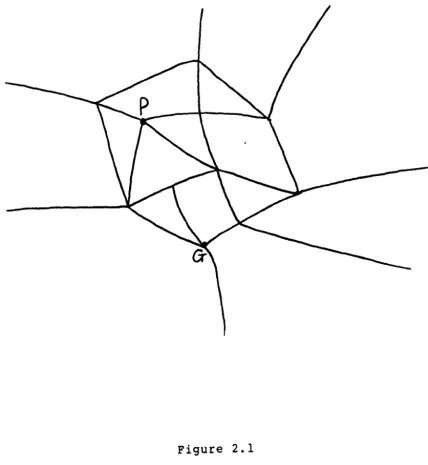
2.1 A Network Representation of a Generalised Schema 40
3.1 A Representation of a Generalised Schema 55
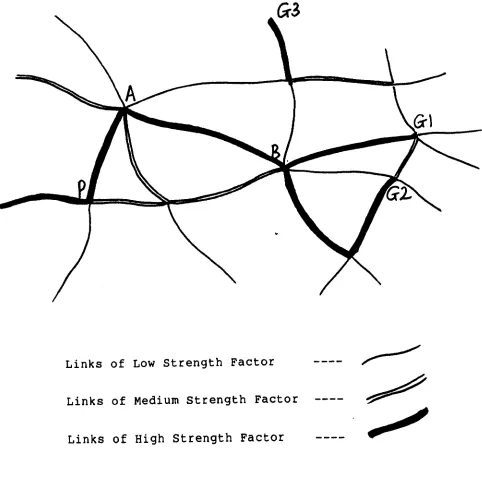
Showing Links of Different Strength Factor and Direction
3.2 A Generalised Schema to Illustrate A Mental Block 57
3.3 An Example of a Generalised Schema to Illustrate 60 The Value of a Reflective change of Present State
3.4 An Integrated Bi-Modal Model of Cognition 86
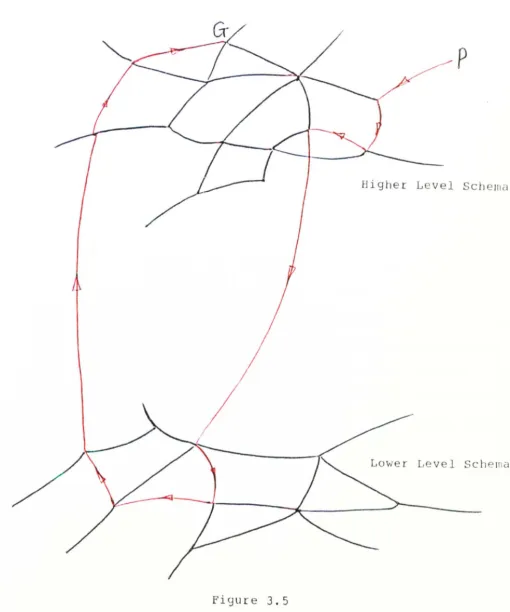
3.5 An Illustration of A Leap of Insight produced By 104 Cognitive Integration
4.1 The Six Uses of Letter In Algebra Given By Kuchemann l3~
4.2 Booth's 'Maths. Machine' 140
4.3 The picture Used By Herscovics and Chalouh to Help 148 Pupils Understand the Concept of Specific Unknown
5.1 A Sample Screen From the Geometric Supposer 187
5.2 Sample Screens From the Algebraic Proposer 188
5.3 Sample Screens From the 'SAM' Software 189
5.4 A Sample Screen From Graphic Calculus 193
6.1 Booth's 'Maths. Machine' 221
6.2 The Mental Model of a Variable 227
6.3 A Typical Screen from the Use of the 'Maths. Machine' 237 Algebra Program
6.4 A Typical Screen from the Use of the 'Maths. Machine' 238 Algebra Program
6.5 An Example of Errors - Pilot Study
6.6 An Example of Errors - Pilot Study
6.7 An Example of Errors - pilot Study
6.8 An Example of Errors - Pilot Study
6.9 An Example of Errors - Pilot Study
6.10 An Example of Errors - Pilot Study
241
242
243
245
246
Table of Figures (Cant.)
6.11 A Comparison of Some Experimental and Control Group Facilities on Questions Involving
Understanding of Variables
6.12 A Typical Set-Up of The Cardboard 'Maths. Machine ,
6.13 Experiment 2
-
The Matched Pairs and Pre-Test Scores6.14 A Blank Stores Sheet
6.15 Experiment 2
-
Som~ Answers to Worksheet 16.16 Experiment 2
-
Some Answers to Worksheet 36.17 Experiment 2
-
Some Answers to Worksheet 46.18 Experiment 2
-
Some Answers to Worksheet 56.19 A Comparison of Some Experimental and Control Group Facilities on Questions Involving Understanding Of Variables
6.20 Experiment 2 - A Comparison With Some CSMS Results
6.21 A Comparison of Some Scores of Matched Pairs on pre-Test, Post-Test and Delayed Post-Test
6.22 Some Specific Examples of Individual Improvements In Understanding
6.23 Some Specific Examples of Individual Improvements In Understanding
6.24 Experiment 2 - Some Facilities on Errors
6.25 Experiment 2 - The Matched Pairs and Scores One Year After the Experiment
6.26 Experiment 2 - A Comparison With Some CSMS Results
7.1 An Answer Sheet Illustrating The Possibility of Group Interaction
254 262 265 268 269 270 271 272 277 279 280 282 283 284 290 291 301
7.2 Experiment 3 - The Matched Pairs and Scores in the 305 Pre-test
7.3 An Example of a Pupil's Work From the Third Experiment 335
7.4 An Example of a pupil's Work From the Third Experiment 336
7.5 An Example of a pupil's Work From the Third Experiment 338
7.6 An Example of a Pupil's Work From the Third Experiment 339
Table of Figures (Cont.)
7.8 An Extract From The Transcript of the pupils' Conversation During the Third Experiment
7.9 An Extract From The Transcript of the pupils' Conversation During the Third Experiment
7.10 An Extract From The Transcript of the pupils' Conversation During the Third Experiment
342
343
344
8.1 A Profile of the Change of Understanding On Experiment 372 3 Questions in pre-test, Post-Test and Delayed
Post-Test of Lisa, A pupil of Lower Initial Understanding
8.2 A Profile of the Change of Understanding On Experiment 373 3 Questions in Pre-test, Post-Test and Delayed
Post-Test of Ellen, A Pupil of Lower Initial Understanding
8.3 A Profile of the Change of Understanding On Experiment 374 3 Questions in Pre-test, Post-Test and Delayed
Post-Test of Peter, A pupil of Lower Initial Understanding
8.4 A Profile of the Change of Understanding On Experiment 375 3 Questions in Pre-test, Post-Test and Delayed
Post-Test of Nigel, A pupil of Lower Initial Understanding
8.5 A Profile of the Change of Understanding On Experiment 377 3 Questions in Pre-test, Post-Test and Delayed
Post-Test of Lucy, A Pupil of Middle Initial Understanding
8.6 A Profile of the Change of Understanding On Experiment 378 3 Questions in Pre-test, Post-Test and Delayed
Post-Test of Nicholas, A pupil of Middle Initial Understanding
8.7 A Profile of the Change of Understanding On Experiment 379 3 Questions in Pre-test, Post-Test and Delayed
Post-Test of Katharine, A Pupil of Middle,Initial Understanding
8.8 A Profile of the Change of Understanding On Experiment 380 3 Questions in Pre-test, Post-Test and Delayed
Post-Test of Jennifer, A pupil of Middle Initial Understanding
8.9 A profile of the Change of Understanding On Experiment 383 3 Questions in Pre-test, Post-Test and Delayed
Table of Figures (Cont.)
8.10 A Profile of the Change of Understanding On Experiment 384 3 Questions in Pre-test, Post-Test and Delayed
Post-Test of Elizabeth, A Pupil of Higher Initial Understanding
8.11 A Profile of the Change of Understanding On Experiment 385 3 Questions in Pre-test, Post-Test and Delayed
Post-Test of Jenny, A pupil of Higher Initial Understanding
8.12 A Profile of the Change of Understanding On Experiment 386 3 Questions in Pre-test, Post-Test and Delayed
Post-Test of Andrew, A pupil of Higher Initial Understanding
8.13 Some Experimental Group Error Facilities For Experiment 395
3 Questions on Pre-Test, Post-Test and Delayed Post-Test
8.14 Some Experimental Group Error Facilities For Experiment 396 3 Questions on Pre-Test, Post-Test and Delayed
Post-Test
9.1 The Semi-Structured Interview Schedule Used For the 404 Experiment 3 Interviews
9.2 The Interview Strategies Used in The Experiment 3 405 Interviews
9.3 The Algebra Test Scores of the Experiment 3 407 Interviewees
9.4 The Interview Questions 408
9.5 The Interview Questions 409
9.6 The Interview Questions 410
9.7 The Interview Questions 411
9.8 An Analysis of Answers to Some Experiment 3 Interview 414 Questions Involving Understanding of Notation
9.9 An Analysis of Answers to Some Experiment 3 Interview 420 Questions Involving Understanding of Notation
9.10 An Analysis of Answers to Some Experiment 3 Interview 427 Questions Involving Understanding of Equations
9.11 An Analysis of Answers to Some Experiment 3 Interview 434 Questions Involving Understanding of Specific
Unknown
9.12 An Analysis of Answers to Some Experiment 3 Interview 437 Questions Involving Understanding of Generalised
Table of Figures (Cont.) page
10.1 Two Discussions on Division taken From the Transcript 448 Of the Pupils' Conversations During the Third
Experiment
10.2 An Analysis of the Answers Given to Question 2a) of 452 The Questionnaie by All the pupils Attempting it
10.3 An Analysis of the Answers Given to Question 2b) of 453 The Questionnaie by All pupils Attempting it
10.4 An Analysis of the Answers Given to Question 2c) of 454 The Questionnaie by All the pupils Attempting it
10.5 An Analysis of the Answers Given to Question 2d) of 455 The Questionnaie by All the Pupils Attempting it
10.6 An Analysis of the Answers Given to Question 2e) of 456 The Questionnaie by All the pupils Attempting it
10.7 An Analysis of the Answers Given to Question 2f) of 457 The Questionnaie by All the Pupils Attempting it
10.8 An Example of A pupil's Answers to the Questionnaire 461 Showing A Misunderstanding of Addition in Algebra
10.9 An Example of A pupil's Answers to the Questionnaire 462 Showing A Misunderstanding of Addition in Algebra
10.10 An Example of A Pupil's Answers to the Questionnaire 463 Showing A Misunderstanding of Addition in Algebra
10.11 An Example of Pupils Answers to the Questionnaire 464 Showing A Misunderstanding of Division
10.12 An Example of Pupils Answers to the Questionnaire 466 Showing A failure to Connect Fractions With
Division
10.13 An Example of A pupil's Answers to the Questionnaire 473 Showing A Elementary Checking Procedures in Questions
With Brackets
11.1 Some Teacher's Comments on the Success of the
Acknowledgements
First I should like to give my sincere thanks to Dr.
David Tall, my supervisor during this research, for the way ir
which he has consistently helped, encouraged and directed me,
both in our discussions together and through his example.
I am also grateful to the governors of Coventr~
School-Bablake, and to the Mathematics Education department at
Warwick University, whose financial backing has enabled me tc
undertake the research. The warm welcome and assistance which
I received from Professor Schwarzenberger and the rest of the
staff whilst working in the latter department for a term was
also very much appreciated.
Thanks are due to E. Stanley, I. Jones and the other
teachers who willingly helped with the teaching
module and the data collection, and to all the
part in the experiments.
of the computer
pupils who took
Finally I should like to thank my wife Christine,
without whose support, encouragement and forebearance over the
I declare that the research presented in this thesis has not been previously submitted for a degree at any university. The only exception is that some of the earlier parts of Chapter 6 were ~sed in a different form as part of a submission for the degree of M.Sc. at Warwick University.
I further declare that the work here presented is my
SUMMARY
This thesis describes an investigation into the conceptual understanding of algebra by early learners (age 11-13 years) and how a computer-based approach may be used to improve such, without any consequent loss of manipulative skills.
The psychological framework for the investigation centred on the importance of the individual child's construction of a cognitive framework of knowledge and the relevance of the current state of this to the facilitating of concept acquisition. As such it incorporates elements of the developmental psychology of Piaget, Ausubel and Skemp. Furthermore, in order to assist in the synthesis of a sufficiently broad psychological theory of education it was necessary to postulate the formulation of a new
integrated bi-modal model of learning. This is described, along with details of its application and significance to a theory of cognitive integration which is designed to promote versatile learning (after Brumby, 1982) in mathematics through a relational linking of global/holistic and serialist/analytic schemas.
The research comprised two initial investigations followed by the main experiment. The results of the initial investigations with early learners of algebra showed that the dynamic algebra module written for the research produced a significant improvement in the children's conceptual understanding of algebra. The main experiment sought to further clarify this improvement and to compare and contrast it with that produced by a traditional skill-based algebra module. In order to facilitate this comparison, the performance of 57 matched pairs of pupils from two groups of three parallel forms of the first year of a 12+ entry co-educational secondary school was analysed.
The results of the investigation confirmed the value of the dynamic algebra module as a generic organiser (in the sense of Tall, 1986) for the understanding of algebraic concepts, producing a significant difference in conceptual understanding, without any detrimental effect on manipulative skills. Furthermore, the beneficial effects of the programme were such that its results showed that it had provided a better base than the skill-based approach for the extension of algebraic understanding past the initial stages and into more
involved areas such as linear equations and inequalities.
The findings of this research show that the use of a module based on a computer environment, with its many advantages for conceptual learning, prior to the more formal introduction of algebraic techniques, is of great cognitive value. They also provide evidence for the theoretical model of learning proposed in the thesis, and suggest that for the production of a versatile learner in mathematics, more attention should be paid to the integration of the global/holistic abilities of the individual with his/her serialist/analytic abilities. The implications for the future are that such
Chapter 1
This thesis describes a method of providing a conceptual
basis in the early stages of children's learning of algebra
(generalised arithmetic),· at around the age of eleven years old,
and provides the psychological framework for its successful
application.
Most teachers of mathematics are more than familiar with
the difficulties which many secondary school children,
throughout the world, have when faced with algebra for the first
time. What they are not familiar with, and this is what this
research sought to address, is what experiences they might use
to help such children to successfully build a conceptual
understanding of basic algebra.
When initially addressing this problem, and seeking to
ascertain its root cause, it becomes clear that one of the main
difficulties such children face is their failure to be able to
attach any significant meaning to the symbols, the letters, used
in algebra. This lack should not be too surprising when we
consider that many textbooks, and indeed teachers, when
introducing the subject for the first time pay scant attention
to building a cognitively meaningful understanding of what such
letters represent. Often they are treated, and encouraged to be
viewed, as objects in their own right e.g. 3a + Sa may be spoken
of as similar to 3 apples plus S apples and the concept of
letters as standing for a range of numbers as, for example, when
they are used as generalised numbers or variables, is rarely
presented. Having made a cognitive link which, although not
necessarily erroneous, has serious limitations with respect to
students to another point of view (see for example Ross
1985). Hence it became clear that the way in which algebra is
introduced is of great importance, since for many children, once
they have embarked on a wrong course it is difficult to turn
them against the tide of their own thinking.
I was aware tbat the computer environment, which is rich
in the use of variables, strong in visualisation and high in
motivating power held great potential for assisting with just
such a problem as this, given a carefully thought out approach
and the right combination of programming and software
experiences. The success of Booth (l983a) in improving the
performance and understanding of pupils by using an imaginary
machine like a computer suggested that the way ahead was indeed
to produce a module of work based on a computer environment and
designed to precede the techniques of algebra in the form of an
advance organiser (Ausubel 1978). The finished module was
entitled 'Dynamic Algebra' since its emphasis was to be on the
dynamic nature of variables as representing ranges of numbers
rather than a more static picture of their treatment as objects
in their own right or as standing for a single unknown. The
programme of work included worksheets and a piece of software
especially written to make the most of the computer's
advantages, as discussed in chapter 5, in the algebra domain.
Whilst engaging in the synthesis of the module, and making sure
that it was set into an appropriate theoretical framework, it
became clear that although the theories of learning of Piaget,
Ausubel and Skemp were a vital consideration, as discussed in
chapter 2, there existed areas which were not so clearly
visual imagery in cognition. Chapter 3 describes the results of
my investigation of these areas of psychological theory and
leads to the presentation of a model of learning which, although
no doubt will be further refined, helps to place visual and
other imagery, reversibility of thought, mental blocks, and
leaps
model
of insight ina theoretical framework. I have called this
the Integrated Bi-Modal model. This model has
implications, I believe, far beyond the context of this thesis,
since it sheds light on the importance of cognitive structures
and the ways in which such qualitatively different but fully
integrated structures may well be organised in the mind. The
ramifications of the insight are such that they suggest that
there may be a need to re-think some of the pedagogical
processes of mathematics education in terms of whether we may
have been neglecting to teach in such a way as to maximise the
potential of the whole of the individual's mind rather than just
part of it. I suggest that the fact that mathematics involves
not just the ability to think logically, i.e.
serially/analytically, but also requires the capacity to take
the global/holistic view of a situation when profitable, and to
be able to switch at will between the two as necessary, in order
to be successful is an important consideration for mathematics
educators. I shall use the term Cognitive Integration to
represent a psychological approach which has this integration of
the two thought processes as its aim. It is the application of
both of these types of thinking which characterise the versatile
thinker (Brumby 1982), who is more likely to be the competent
mathematician with the propensity for continued progress. The
practice has neglected to teach with regard for the global/holistic abilities necessary for versatile learning (Tall & Thomas 1988), since, as chapfer 3 discusses, these are relatively silent and inaccessible to the conscious self. This seems an area rich for future research.
The algebra and the computer backgrounds to the research are considered in chapters 4 and 5 respectively, along with a look at the possible changes to the curriculum which the technological progress may necessitate. This background shows the sound theoretical base of the research both in algebraic practice and in successful applications in
paradigm.
Chapter 6 describes the initial
the computer
stages of the investigation and the resulting confirmation of the cognitive value of the conceptual approach to the early learning of algebra proposed in the work. On the basis of this initial success, improvements suggested and the important result of a longer term follow up study on some of its subjects, the module of work was thoroughly revised. Chapter 7 follows the progress of the module to its final form and then describes the main experiment, where it was compared with a traditional programme of work based mainly on acquisition of algebraic skills rather than conceptual understanding. This experiment involved two sets of three parallel forms in a 12+ entry co-educational comprehensive school.
One of the results which opens up an area for further research
involves the differential effects observed with respect to
gender and performance between the groups. The possibility that
the route to becoming a versatile learner, and hence to success
in mathematics, may be different for boys than for girls is one
which is raised.
Important and valuable though results in tests are, they
are consolidated by the structured interview situation, since it
is here that lack of understanding may surface which has been
concealed previously. Chapter 9 describes the results of such
interviews with some of the pupils who took part in the main
experiment and consists of an in depth investigation of their
understanding of some algebraic concepts through interviews
designed to probe understanding. Chapter 10 then looks in more
detail at some of the issues raised in the study and interview
results through the use of a questionnaire. Both of these
procedures confirmed the value of the dynamic algebra module in
respect of conceptual understanding in algebra, without
detrimental effect on skills. They also provided evidence, which
is discussed, for the theory of learning based on an integrated
mind which I have proposed.
Any scheme of work which is intended to be applicable to
the classroom situation must undergo considerations of
practicability and it should be such that it can be taken and
used by classroom teachers without extensive training on their
part. With regard to a computer-based programme this
pedagogical consideration is a significant point since it is
still the case that many teachers of mathematics are unfamiliar
has been used successfully by such teachers and so their
comments and suggestions, and the knowledge gained from their
,
experience, are worthy of close scrutiny. These are included
where appropriate, and include both the positive and negative
aspects of the classroom application. Chapter 11 includes a
brief summary of these, along with the implications of the
research for the teaching of algebra, and a recommendation that
the beneficial results of the research are such that a programme
such as the one here presented should become more widely used.
Furthermore, the principles on which the programme has been
based are such that they could, and I suggest, should, be
applied to other areas of mathematics both in the primary and
secondary mathematics classroom, and indeed beyond. The computer
paradigm offers mathematics educators advantages which, whilst
not being a panacea for children's difficulties with
mathematics, provides great opportunities for us to help
students achieve the versatility of thought, with integration of
serialist/analytic and global/holistic abilities, which success
Chapter 2
The wide ranging approach to the dynamic learning of
algebra proposed in this thesis is such that it does not fit
neatly into anyone of the previously presented psychological
models, but rather draws on aspects of several of them, as well
as introducing some different concepts. Therefore the
psychological framework for the research is discussed in this
chapter is based on the constructivist piagetian theory,
Ausubel's theory of meaningful learning and the relational
understanding of Skemp. All of these theories relate to the
importance of the 'framework of knowledge' which the individual
constructs in a given cognitive area. Those areas of the theory
of piaget, Ausubel and Skemp which have been the basis of the
research are outlined, in context, below.
2.1 The Piagetian Model
Piaget's model of learning has
valuable research in the last twenty
been the basis of much
to thirty years and
deserves the attention of anyone interested in the processes of
cognitive advancement.
His model is based on the idea that intelligence is an
assimilatory activity whose functional laws are laid down as
organic life and whose structures are elaborated by interaction
between itself and the external environment. Thus activity is
necessary on the part of the individual for the process to be
possible (Piaget 1953). There are two factors affecting the
individual's intelligence in his/her interaction with the
environment. The first is the tendency of the individual to
organise, integrating his/her psychological structures into a
-coherent system. The second is the tendency to adapt these
psychological structures, called schemata by piaget, in
response to the environment. This process of adaptation to the
environment may be considered in terms of two complementary
processes which Piaget calls assimilation and accommodation.
Assimilation is defined in the following terms:
"Intelligence is assimilation to the extent that
it incorporates all the given data of experience
within its framework. Whether it is a question of
thought which, due to judgement, brings the new
into the known and thus reduces the universe to
its own terms or whether it is a question of
sensorimotor intelligence which also structures
things perceived by bringing them into its
schemata, in every case intellectual adaptation
involves an element of assimilation, that is to
say, of structuring through incorporation of
external reality into forms due to the subject's
activity" (Piaget, 1953, p.6)
Hence an individual assimilates an experience by
incorporation into his/her schemata, thus giving it meaning.
Some experiences are not capable of easy assimilation and so
require a change on the part of the person's cognitive
structures to give them meaning. Hence Piaget defines
" .... mental life is also accommodation.
Assimilation can never be pure because by
incorporating new elements into its earlier
schemata the intelligence constantly modifies the
latter in order to adjust them to new elements."
(Piaget, 1953, pp.6,7)
This process of accommodation is accomplished by
changing the schemata in such a way as to make a place for the
new experience.
The power of the theory propounded by Piaget is that all
individuals progress through the same series of stages with
respect to mental abilities by the use of these two processes,
although they do not necessarily do so at the same rate.
Furthermore the order in which they pass through these stages is
the same for all mental abilities, and this is called the unity
of the stage construct. Each of tbe stages is characterised by
different psychological structures or schemata. The four main
stages, in order of development (with approximate ages), given
by Piaget are
.
.
a) Sensor i-motor (Birth - 2 years)
b) pre-operational (2 - 7 years)
c) Concrete operational (7 - 12 years)
d) Formal operational (12 years onward)
It is to be realised that the ages given by Piaget are intended
as rough estimates, since the transition age for each stage
varies from person to person and also from culture to culture.
The order of the stages, however, is declared by Piaget to be
invariant across these and each of the stages must be traversed
and continuing fashion. piaget (1950) argues that the schemata
associated with each stage, and hence the mode of reasoning
available to the individual at that stage involve a change in
kind and not just degree as one passes to the next stage.
During the sensor i-motor eriod the child is actively
seeking contact with the environment, interpreting events which
occur. Development is a process of decentration, or separating
self from the environment, and the production of a mature object
concept, or conceiving the independent existence of objects.
The start of the appearance of the pre-operational stage
is characterised by the emergence of the semiotic function, or
the ability to form mental representations or symbols for
objects. It continues to be characterised by attention to only a
limited part of the total information available, particularly by
that which is static in nature. One feature of later thought
which is noticeably absent at this stage is that of
reversibility, which Piaget speaks of in the following terms
"At the first stage, the child's thought is
still irreversible, in that each perception is a
particular moment in the stream of his
experience, without stable means of return, since
there are no operations by which one perception
can be composed with another ... during the third
stage, the operations go beyond the field of
perception, and in doing so, attain complete
reversibility."
(Piaget, 1952 p.202)
This important ability has been recognised by others, Krutetskii
ability, and refers to it as "the ability to switch from a
direct to a reverse train of thought" (Krutetskii, 1976 p.8S). I
shall return to the subject of reversibility of thought in
chapter 3, when presenting some extensions to the current
psychological models.
In contrast to to
individual at the concrete
the pre-operational child, the
operational stage is capable of
decentration, or being able to focus on several
situation simultaneously. They are also
aspects of a
sensitive to
transformations, are able to appreciate changes which have taken
place in a situation and have the important ability of
reversibility of thought mentioned above. It is this period of
development when the first real mathematical thought emerges,
even though still tied to the concrete, and it is toward the end
of this period when most children meet algebra for the first
time. Hence it is this stage of development which has been of
primary importance in the formulation of the research programme
outlined in this work, the need to have this programme firmly
fixed in a concrete operational mode being very important,
recognising that "in sum, concrete thought remains essentially
attached to empirical reality." (Inhelder & Piaget, 1958, p.250), although it should be appreciated that, as Sinclair
"Concrete operations ... does not mean that the
child can think logically only if he can at
the same time manipulate objects ... Concrete,
in the Piagetian sense, means that the child
can think in a logically coherent manner
about objects that do exist and have real
properties ... he can perform the mental
operations involved ... The actual presence of
the objects is no intrinsic condition."
(Sinclair 1971,pp.5,6)
The child's experiences with algebra at this age are vital if
he/she is to have a strong foundation on which to build the
higher algebraic concepts during the formal operational stage
which piaget propounds.
It is during the formal operational stage Piaget says,
that the child becomes capable of considering the hypothetical,
the possible, rather than the actual, saying that "the most
distinctive property of formal thought is the reversal of
direction between reality and possibility" (Inhelder &
piaget 1958, p.25l). He further states that the concrete to
formal change is a 'fundamental decentering' (Piaget & Inhelder
1969, p.130), the child then working mainly with propositions
rather than objects. These types of abilities enable the
construction of structure in mental schemata, causing piaget to
describe a fundamental difference between this form of thinking
and concrete operational as "the difference between concrete and
formal thinking relates to the construction of the 'structured
whole'." (Inhelder & piaget, 1958, p.163). These abilities
The factors which produce the transition from one of the above mentioned cognitive stages to the next, the mechanisms of transition, are described by Piaget as involving both development and, in a narrow sense, learning. The process of development involves physical maturation, particularly of the brain and central nervous system, experience (or physical interaction with 'things'), social transmission and equilibration. Piaget comments on the concrete to formal change as follows
" .... it seems clear that the development of formal structures in adolescence is linked to the maturation of cerebral structures. However, the exact form of linkage is far from simple, since the organisation of formal st(uctures must depend on the social milieu as well. The age of about 11-12 years, which in our society we found to mark the beginning of formal thinking, must be extremely relative, since the logic of the so-called primitive societies appears to be without such structures. Moreover, the history of formal structures is linked to the evolution of
culture and collective representations as well as their ontogenic history •.••. Thus the age of 11-12 years may be, beyond the neurological factors, a product of a progressive acceleration of
1958, p.337).
Thus Piaget allows for the factors influencing the transition
from one stage to another to lower the age at which the
transition occurs, and this point is worthy of note in respect
of some of the criticisms of Piaget's theory outlined below.
From physical interaction with things around them
children may engage in a simple form of abstraction, the process
of extracting the common properties of the objects or events
they meet. It is by means of this process of abstraction that
the young child acquires a vast category of structured
knowledge, or concepts. Physical experiences alone, however, are
not sufficient to learn some concepts, such as the equivalence
of number. Social transmission enables the child to learn these
through the experience and accumulated wisdom of others through,
for example, reading or instruction, provided he/she has the
necessary cognitive structures. The process of equilibration as
a factor influencing mental progress refers to the child's
self-regulatory processes, as a result of which he/she
progressively attains a higher degree of equilibrium or relative
harmony in interaction with the incoming information from the
environment, at each stage of development. The four factors
influencing development mentioned above may be thought of as
learning in a wide sense. Adding to this, Piaget includes the
process whereby new information is acquired which is only
relevant to a specific situation (e.g. rote learning of the
names of the planets in the solar system) although he believes
that this does not contribute to true cognitive development.
piaget thus explains to educators, it is important for
way from verbal explanation and that concrete experience must
corne first. This is an important principle often neglected in
the initial teaching of algebra, but one which is fundamental to
the reasoning behind this research. The idea of dynamic algebra
is that the child is involved in a concrete model in a very real
way, interacting with it and a small group (2/3) of their peers,
giving maximum opportunity for the abstraction and social
transmission of concepts. Since these children are
primarily at what Piaget calls the concrete operational stage of
development, when, according to Piaget, concrete experience is
still vital, such experiences are important in the learning
process and should precede a more formal and abstract approach.
This is still not the usual approach in most secondary schools.
2.1.1 The Application of piagetian Theory to Mathematics
This approach to cognitive'development of piaget, and
the stages of such which he has defined, have been considered to
be well supported by evidence from research into the learning of
mathematics, and have been the basis of much work into the way
in which children learn mathematical concepts. For example,
Davis (1978, p.38) when discussing his work in mathematics
education states "we have studied Piaget's work extensively and
his influence is clear." Halford (1978) and Collis (1974)
too, adopting
evidence of
a piagetian
levels of
approach, claim to have provided
mathematical concept development
corresponding to the Piagetian levels, the corresponding ages at
which they found that children in general reach these levels and
hence the types of work which children at these levels should be
Dienes. It has been suggested that his work is a successful application of Piagetian cognitive theory to mathematics. He proposes that concepts may be learned by abstracting their properties from different examples of the same concept. Dienes (1960) has listed the stages in the formation of a mathematical concept, in this way, as follows:
1. Free play 2. Games
3. The search for communalities 4. Representation
5. Symbolisation 6. Formalisation
He has also described the types of activity which will enable these stages in concept formation to be successfully reached. They are :
1. The Play Stage.
This is a time of undirected activity with the ingredients of the concept available as play material. 2. A great number of experiences of varying structure
but all leading to the same concept. Although this puposeful it is stage is more directed and
characterised by a lack of any what is being taught.
clear realisation of
3. Adequate practice for the fixing and application of the concept. The games used in this stage are :
a) preliminary games b) Structured games
Since children generally learn constructive thinking before
analytical thinking, Dienes (1960) argues that it is important
when devising learning situations to meet the requirements of
the above stages to concentrate on constructive tasks, only
gradually introducing the analytical aspects. Thus concrete
material should be made freely available to the children,
preferably individually, or in two's or three's, since the
learning of a concept is obviously an individual process which
would be hampered by lack of individual capacity for
advancement.
. h h 11 'The
Dlenes as also shown a principle, which e ca s
Mathematical Variability principle' to be fundamental to the
individual child's understanding of a concept. This principle
says that, if a concept involves variables of any kind, then
these should, wherever possible, be made to vary in the
experience of the child, whilst keeping the concept intact. This
emphasises the need for personal experience of the varying of
the numbers represented by a single letter in algebra in as many
different situations as possible. Whilst this theory has
appeared to be of value in the learning of algebra, where
abstraction plays a fundamental role, there has been some doubt
expressed as to whether it is a sufficiently broad approach to
the learning of mathematics. Borasi (1984), for example, has put
forward the view that several approaches to concept formation,
including abstraction, should be devised and taken into account
since, he argues, the in-depth study of specific instances, or
models, may play a fundamental xole in the acquisition of
mathematics. Lesh (1987) has shown that the value of the
to mathematics education when this is approached via a computer environment.
2.1.2 Criticisms of the Model
Whilst Piaget's model of intelligence and learning, ,
briefly discusssed above, is of undoubted value in modern mathematical education, one must be mindful that there have been some problems associated with the application of some piagetian notions and hence there are some criticisms which have been levelled against it. Wallace (1972), pOints out the difficulty in arriving at definite conclusions to the objections raised, but since these are often based on sound research they deserve our attention. Hiebert and Carpenter (1982) have surveyed the available research and have concluded that the piagetian tasks are not useful readiness measures for success in mathematics. However, there are chree areas in particular where the theory has been questioned. These are :
With
1. The evidence for the existence of a unified stage construct across different tasks.
2. The variability of the age at which children apppear to progress from one stage to another.
3. The validity of the description of the formal operational stage.
regard to the first point above, Brown & Desforges
criticism, Shayer (1979) cites other studies (e.g. Bart 1971,
Lovell & Shields 1967) which tend to support the existence of
such a structure, providing evidence at least for the utility of
such a construct, if not its validity. The evidence for the
existence of such a unified stage construct appears, at least,
to be mixed and it may well be that there are task related
factors which are also important in their effect on the
performance of the child.
Similarly on the question of the age at which transition
from one stage to another occurs, some studies (e.g. Donaldson
1978, Brainerd 1978, Gelman 1969, 1972 and Bryant & Tabasso
1971) have shown that, under suitable conditions, children do
demonstrate certain logical operations at a much earlier age
than predicted by Piaget's model. Churchill (1958) has provided
evidence to show that Piaget's stages may be too rigid to
accommodate the individual differences in children and explains
that the right experience for a particular child can accelerate
the growth of their mental structures. Novak (1977) points out
that studies have shown that :
"a significant number of young children
could demonstrate highly formal reasoning in
explanations of phenomena for which they have
had appropriate cognitive preparation" and
that "most people, children or adults, can
evidence highly formal and abstract thinking
when they have acquired a sufficiently well
developed framework of concepts relevant to
the tasks." (Novak 1972, pp. 472,3)
psychologists such as Blonskii (1961) disagree with Piaget's
stages and have shown that "with special teaching methods,
younger pupils acquire a much greater ability for abstraction
and reasoning than is commonly thought" (Krutetskii 1976, p.
331). Although Piaget himself recognises that the ages of
transition are not immutably fixed, as for example in the
passage quoted above (Inhelder & Piaget, 1958, p.337), the
studies do call into question whether the abilities manifested
by children do appear in the fixed sequence given in the
piagetian theory. Some of the studies purporting to show
precocious ability, such as Mehler and Bever (1967), have been
criticised with regard to procedural errors made or the question
of what the training has actually achieved relative to the
child's level of understanding as opposed to their ability to
tackle a given task in a rote way. Attempts to establish answers
by investigating the level of transfer to other tasks appear
inconclusive. The question is still open but it is an important
one since it is necessary for the educator to know whether
theories such as that of Piaget are decribing what children are
capable of achieving or what they actually are achieving, in
order to ascertain the advisability of attempting a particular
teaching strategy.
The validity of the formal operational stage description
has been questioned by, for example, Bynum, Thomas & Weitz
(1972), Brown & Desforges (1977) and Smedslund (1977). Part of
the problem seems to lie in the fact that an individual who is
capable of what Piaget calls formal thinking may not use such
thinking in a given situation. This may be because he/she thinks
that the effort required is too great. For whatever reason, the
clear emergence of the formal operations stage seems elusive,
with even Piaget introducing the concept of decalage, or
variability of performance, to cover areas where expected
performance is not realised. For others, their concern has led
them to make their own interpretation of what constitutes the
difference between concrete and formal operations and whether
the latter truly exists as a separate stage. In chapter 3 I
shall propose a possible alternative view of what may constitute
this stage of formal operations.
2.1.3 Summary
In this section I have outlined the parts of Piaget's theory of
learning which are relevant to the conceptual learning of
algebra discussed in this thesis, and have outlined some of the
difficulties associated with it. Whilst the questions and
problems attached to piagetian theory outlined above need to
be addressed, they do not prove to be sufficient to topple the
basic theory. Piaget's model of intelligence and its prediction
of the behaviour and learning pattern of an individual have
proved valuable in many areas of research into the learning of
mathematics and other subjects and have much supportive
evidence. The positive contribution of Piaget's work to the
psychological framework for this research included the need for
a concrete approach for the early secondary school age child,
the principles and methods of the abstraction of concepts and
the accommodation of schemata and the importance of
reversibility of thought. It was considered, however, that, in
1983), that there were other psychological models which it was
important to consider when approaching the subject of children's
r
learning of algebra, and that taking these and extending them
might help to explain some of the apparent weaknesses in the
Piagetian framework. Thus below, I have described briefly two of
the theories, the work of Ausubel and Skemp, which I believe to
be of relevance in this area of mathematical learning, and in
chapter 3 I shall consider some extensions to the theories.
2.2 The Cognitive Theory of Ausubel
The main thrust of 'the cognit~ve theory of Ausubel may
be considered to involve the synthesis of what constitutes
meaningful learning for an individual, and under what conditions
such learning may take place. He describes such meaningful
learning, as opposed to learning by rote, in these terms
"In meaningful learning the learner has a
set to relate substantive (as opposed to
verbatim) aspects of new concepts,
information or situations to relevant
components of existing cognitive structure in
various ways that make possible the
incorporation of derivative, elaborative,
correlative, supportive, qualifying or
representational relationships." (Ausubel,
1963, p.22)
Novak (1980, p.136) emphasises the difference between rote anc
"Here we must distinguish between rote learning wherein new knowledge is arbitrarily incorporated into cognitive structure in contrast to meaningful learning wherein new knowledge is assimilated into specifically relevant existing concepts or propositions in cognitive structure."
(Novak, 1980, p.136)
and he stresses that for a given individual and a given knowledge domain, the Ausubelian rote/meaningful distinction is not in the form of a dichotomy but rather is a continuum.
Since, according to the definition above, meaningful learning is subjective in nature, it is natural that one of the principles fundamental to Ausubel's (1963, 1968, 1978) theory of cognitive development is the idea that in order to facilitate learning attention should be 'paid to the pupil's current cognitive structure, and that new material should be learned in relation to the previously learned background of concepts etc. In fact Ausubel (1968, p.vi) has summed up the philosophy of his approach to learning as "The most important single factor influencing learning is what the learner already knows. Ascertain this and teach him accordingly". Thus attention should be paid to the 'framework of knowledge' which the child constructs in relation to an area of study. He states that 'logically meaningful material becomes incorporated most readily and stably into cognitive structure in so far as it is subsumable
concepts)
availability of such subsumers, or existing relevant ideas. In Ausubel et al (1978) he makes it clear that subsurnption is not just a simple linking of new concepts to old, but that rather, in meaningful learning,
"the very process of acquiring information results in a modification of both the newly acquired information and the specifically relevant aspect of cognitive structure to which the new information is linked."
(Ausubel, 1978, p.57)
Hence, as Novak (1977) observes, this process is not quite the same as Piget's concept of assimilation, since
"The process of subsumption differs from Piaget's concept of assimilation in that: (1) new knowledge is linked to specifically relevant concepts or 'propositions and (2) this process is continuous and major changes in meaningful learning ... occur not as a result of general stages of cognitive development but rather as a result of growing
differentiation and integration of
specifically relevant concepts in cognitive structure."
(Novak, 1977, p.456)