The game design
of a serious game about food waste
C. Gruter
A. Schaafstal J. Zwiers
Abstract
Food waste is a large environmental problem. Research has shown that throughout the whole food chain, most food is wasted in households. Current research to food waste in household uses surveys or digging through garbage bins. Since these methods each have their problems, alternative methods to collect data were researched. This research focusses on using a serious game to collect data for food waste research. A serious game is a game that has been created for another purpose than entertainment, it has the purpose to give the player some interesting content to think about. Particularly, this research report focusses on the design of a serious game with the goal of collecting data concerning food waste with the target audience consisting of people who are responsible for the entire food cycle within a household.
Acknowledgement
At first, I want to thank A. Janssen and R. de Wijk from the department Food and Biobased Research at the Wageningen University. They have given the opportunity for this project and they were extremely helpful as clients.
Additionally, I want to thank my supervisor A. Schaafstal for keeping me on track, even though I made it difficult sometimes by going to France for a week. She was a great help and I am grateful that she chose me to do the game design of this project.
I also want to thank M. Plugge as well for being the voice of the king in the game. It was great working with him and his voice was a perfect match for the king.
Table of contents
Food waste in general 13
Food waste in households 13
Current ways of gathering data on food waste 14
What is a serious game? 14
The project 14
Games that collect data 14
Games about food waste 15
Systems that collect data about food waste 16
Novelty of this project 18
Game design 18
Simulations 18
Aesthetics 20
Games for the target audience 23
Conclusion 25
The goals 26
The requirements 26
Conclusion 27
Idea 1 – similar to a Tamagotchi 28
Idea 2 – Mother Earth minigames 28
Idea 3 – process game 29
Idea 4 – AR game 29
Idea 5 – Family game 29
Idea 6 – Serving a king 30
Idea 7 – chef 30
Further research 31
Conclusion 32
Dining room and feeding the king 33
Kitchen and cooking the food 33
Cooking area 33
Storage area 34
Abstract
2
Acknowledgement
3
Table of contents
4
List of figures
8
Chapter 1 – introduction
11
Chapter 2 – state of the art on serious games about food waste
13
Chapter 3 – methods and techniques
26
Chapter 4 – ideation and brainstorming
28
Grocery bag 34
Cookbook 34
The garbage bin catapult 34
Note block 34
Village square 34
Supermarket 35
The village streets 35
Bakery 35
Butcher 35
Greengrocer 35
In-between screen to the castle 35
Monetary overview 35
Overview 36
The king 38
Voice recording sessions 42
King’s symbol 42
The other characters 42
The queen 42
The prince and the princess 44
The garbage man 45
Other scenes 46
Conclusion 55
Sign in screen 56
Opening screen 56
Dining room king 56
Kitchen 58
The cookbook 58
Other icons 59
Village square 59
Supermarket 60
In-between screen to the castle 63
Storing area 63
Cooking area 64
Catapult 67
The other stores 68
Info screen 71
The time bar 71
Conclusion 72
Chapter 6 – realization and creating process
38
The requirements 73
The initial idea 74
The tests 77
Test 1 78
Test 2 80
Test 3 81
Evaluation with the client 84
Research questions 85
The goals 86
The client 86
Next time 86
Existing art 88
Kitchen 88
Products 89
Cooking 90
Note block 90
Supermarket 91
The talking king 91
Wanted art 91
Initial ideas of mechanisms 91
Future for the game 92
Further research possibilities 93
Appendix 1 94
Factors that play a role in decision making related to food 94
Appendix 2 95
Set one of the voice lines of the king 95
Appendix 3 96
Set two of the voice lines of the king 96
Appendix 4 97
Tekst on the opening screen 98
Appendix 5 98
The link to the animations 98
Appendix 6 98
Recipes 98
Appendix 7 100
The link to the digitalized paper-prototype 100
Chapter 8 – evaluation
73
Chapter 9 – conclusion and discussion
85
Chapter 10 – future work
88
Appendix 8 100
Questionnaire test one 100
Appendix 9 102
Interview test two 102
Appendix 10 102
Questionnaire test three 102
Appendix 11 103
Interview test three 103
Appendix 12 103
Results test three 103
List of figures
Figure 1: the food cycle in household, Rene de Wijk, WUR 13
Figure 2: NPD games 15
Figure 3: Alien Rescue 15
Figure 4: Food savers 16
Figure 5: The Zero Waste Game 16
Figure 6: CogZum 17
Figure 7: Food battle 17
Figure 8: Food Fight 18
Figure 9: The Sims 19
Figure 10: Rollercoaster Tycoon 19
Figure 11: Alter Ego 20
Figure 12: NOUR 21
Figure 55: Sketch of the grocery person 54 Figure 56: Sketch of the in-between screen to the castle 54 Figure 57: Sketch of the monetary overview 55 Figure 58: Sign in screen 56 Figure 59: Opening screen 56 Figure 60: Dining room king 57 Figure 61: Emotions of the king 57 Figure 62: Two extra expressions of the king 58 Figure 63: The kitchen 58 Figure 64: The cookbook with recipes one and two 58 Figure 65: The cookbook with recipe three 59 Figure 66: The explanation screen 59 Figure 67: The village square with nothing in the grocery bag 60 Figure 68: The grocery bag 60 Figure 69: Supermarket aisle one 60 Figure 70: Supermarket aisle two 61 Figure 71: Products on a shelf of the supermarket 61 Figure 72: The pop-up with additional information of a product 61 Figure 73: The grocery basket 62 Figure 74: The cash desk of the supermarket 62 Figure 75: The village square with four products in the grocery bag 62 Figure 76: The in-between screen 63 Figure 77: The split screen of the storage space and the grocery bag 63 Figure 78: Dragging broccoli to the fridge 63 Figure 79: The inside of the fridge 64 Figure 80: The inside of the freezer 64 Figure 81: The inside of the dry cupboard 64 Figure 82: The menu where the player chooses a recipe 65 Figure 83: The cooking area with products on the counter 65 Figure 84: The cooking area with pans on the stove 65 Figure 85: The cooking area with the bar where the player fills in how much food they want to prepare 66
Figure 86: The timer 66
Chapter 1 – introduction
The department Food and Biobased Research at the Wageningen University performs a lot of research about food waste. It was discovered that throughout the entire food chain, most food gets wasted in households. For further research, more precise
information is needed on what foods are wasted the most and which factors people consider in wasting food. Current research methods include conducting surveys and digging through garbage bins. The results of surveys have been lacking in accuracy, since people tend to give more socially desired answers, rather than accurately describing their behavior. The downside to digging through garbage bins is that only the result can be observed. No information regarding the reasons for wasting and when the food has been wasted can be discovered using this method. To solve this issue, Wageningen University has contacted students of the University of Twente to develop a serious game that helps collecting data concerning consumer’s behavior regarding food waste. Therefore, the main question becomes; how can a serious game collect data concerning food waste behavior? The process of making this game will be described in this paper.
The clients from the Wageningen University are Anke Janssen, Rene de Wijk and Hilke Bos-Brouwers. From now on they will be referred to as the client. In the first meeting with the client, it became clear that this game has two goals. The primary goal is to gather data about food waste behavior. The secondary goal is to change people’s behavior such that they waste less food.
For the primary goal it is important that the gathered data closely resembles people’s real-life behavior. Therefore, the game needs to be realistic, which means that the player should be able to perform the same actions as in real life.
It is important to keep in mind however, that at some point in the game, players are likely to realize how to play the game optimally. When this happens, there is a risk of newly collected data no longer being an accurate representation of the player’s real-life behavior. It is hoped however, that the in-game behavior change is transferred to the real world, thereby achieving the secondary goal.
The target audience for this game are people who are responsible for the food in a household. This means that they do the groceries, store food, prepare food and throw away food. The client is looking to target people who go shopping only once or twice a week, because daily shopping requires somewhat less coordination and it makes it more difficult to balance the purchasing, storing and preparing, which usually causes to have more food waste. These actions are all aspects of the food cycle in which food can be wasted. Each of these steps will be included in the game, with the goal of measuring how much food is wasted in each step, what foods are wasted most, and for what reasons.
Making a game consists of several tasks; design, art, programming and sound. Design entails the broad view of the game, like what the gameplay should be like, and what the rules of the game are. This part will be done by both students. The game design will be done by Camille, while the game development will be done by Christiaan. For this reason, each student will answer different sub questions.
When a player plays the game, they have an experience. The experience in this game should provoke actions, that are desirable for collecting realistic data. For this, two aspects of game design should be taken into consideration. First, it is important to look at the implementation of real life situations of food waste. This will be used to invent the gameplay and rules of the game. The players’ actions have to be realistic, thus the situations created have to be similar to situations in real life.
Second, the looks of a game define how a player feels about the game. The
becomes: what should the game look and feel like to accomplish the goal of collecting realistic data?
Chapter 2 – state of the art on serious games about food waste
Food waste in general
Before the project starts, it is important to have a good understanding of food waste and what the biggest issues are. Many sources state that about 30% of the produced food is wasted globally (Reutter, Lant, Reynolds & Lane, 2016; Mattsson, Williams & Berghel, 2017; Food and Agriculture Organization of the United States (FAO), 2011 and 2013; Gustavsson, Cederberg, Sonesson, van Otterdijk & Meybeck, 2011). Food production is one of the biggest source that causes environmental damage (Reutter et al., 2016). Notarnicola et al. (2012) and Roy et al. (2012) both state that 50% of environmental impacts is caused by food production. Not only does food production and waste lead to environmental problems, it also globally affects the economic costs and the social and moral implications (Mattsson, Williams & Berghel, 2017). The simplified food supply chain has four segments, which Bellemare, Çakir, Hanawa Peterson, Novak and Rudi (2017) define as growers, processors, retailers and consumers. Stenmarck, Jensen, Quested & Moates (2016) recognize the same
segments, but have added one. In their research the segments of the food supply chain are called primary production, processing, wholesale and logistics combined with retail and markets, food service, and household. Their research shows that most food is wasted in the sectors household and processing. The client is interested in the production of food waste in households.
Food waste in households
Food waste appears at many different, but related, routines of life, like shopping, storing, cooking and eating (Hebrok & Boks, 2017). Additionally, people are not aware of all the factors behind food choice and the food they waste (Quested, Marsh, Stunell & Parry, 2013b). The size of a household and the life phases considerably influence the behavior around food and how much is wasted (Hebrok & Boks, 2017). Hebrok and Boks (2017) identify planning as an important factor in food waste. The client confirmed this in one of the meetings by stating that with a perfect planning there will be no waste. Quested et al. (2013b) observe that food waste generation should be viewed as the result of numerous behaviors rather than just one. These behaviors are connected to different phases of the food's cycle in and around the house: shopping, storage, preparation and consumption of food. The client has created a graph, which shows the cycle and is depicted in Figure 1.
Research has been performed on the food cycle and statistics have been gathered about how much food is bought and how much food is wasted. However, these are only the numbers and that does not tell anything about the reasons behind it. The existing knowledge on food waste excludes the question: why do people waste food? Sometimes it seems necessary, however, it is possible to not waste anything. Nevertheless, the answer is
incomplete and more information on this subject is what the client tries to draw from the data that this project is going to collect.
Current ways of gathering data on food waste
There are many methods of collecting data about food waste. Food waste diaries, interviews and case studies are a few examples. However, many of these methods are either expensive, take a lot of time or they are privacy intrusive. There are some methods that are more accessible and two of them are discussed at the Food and Biobased Research Department. One of the methods is digging through garbage bins. This approach provides information on what foods are wasted and how much of it is wasted. Although this gives accurate numbers, it shows only the end result of the food waste chain. Using this method, does not give knowledge of the phase this food was wasted and why.
The other method used is conducting surveys to ask people what foods they throw away, how much and why. These surveys include which packages of food are bought in a supermarket and at what phase of the food cycle the food has been thrown away. This method provides broader information on food waste. However, there is a tendency to fill in a socially accepted answer, instead of the truth. Another downside to conducting a survey is that people are prone to forget things quickly, especially the small things. Therefore, the answers they give will be incomplete or not accurate enough.
In order to solve these problems, the client has asked for a serious game. To understand the possibilities and challenges of making a serious game for collecting data, it should be looked at what is currently out there in this field. First it is defined what a serious game is and then, current applications are described.
What is a serious game?
There are a couple of words that are similar, but do not mean the same and get mixed up a lot. These words are game, gamification and serious game. A game is made for entertainment and has a certain gameplay, where the player can interact with the game and have fun. Gamification is a way of making something fun. Rehabilitation games, for example, is a gamified way of rehabilitating. Something that used to be a chore is turned into
something enjoyable. A serious game is created for another purpose than entertainment. It still has the feel of a game. However, it has a purpose of giving the player some interesting content to think about (Growth Engineering, 2018).
The project
The client asked for an application with three requirements. It has to be a game (1), it has to collect data (2), and it has to be about food waste (3). A search has been conducted to find applications that fulfill at least two of these requirements.
Games that collect data
There are several examples of games that collect user data for scientific research. However, these are not about food waste. Examples of these games are:
Hooked
their head. A few seconds later, the music starts playing again and the player is asked whether the music continued at the right time or not. If the player answered correctly, they get points. Multiple correct answers in a row grant bonus points. The collected data is used to learn and understand what makes a song catchy.
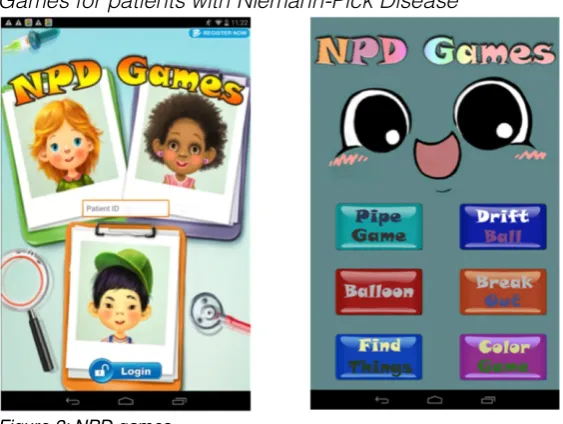
Games for patients with Niemann-Pick Disease
Figure 2: NPD games
NPD games is a platform which hosts 6 different games for NPD patients. The games are relatively trivial for healthy people but challenging for people with this disease. Doctors of these patients can use the collected data by these games to evaluate the patient's ability and any change thereof (Sinnot, Han, Hu, Ma, & Yu, 2015).
[image:15.595.73.355.135.347.2]Alien rescue
Figure 3: Alien Rescue
Alien rescue is a serious game that teaches people to think in a scientific way. Additional research expands on this game by collecting data about people’s behavior in this game to see what people learn by playing this game (Kang, Liu, & Qu, 2017).
Games about food waste
Food savers
Figure 4: Food savers
Food savers is a game developed by the project Food Waste Effect. The game is a board game for up to four players where you can roll the dice if you answer the questions correctly. The first player to reach the end wins the game. The type of questions asked in this game are about food products, processes, traditions, food poverty and food waste
(Erasmus+, 2018).
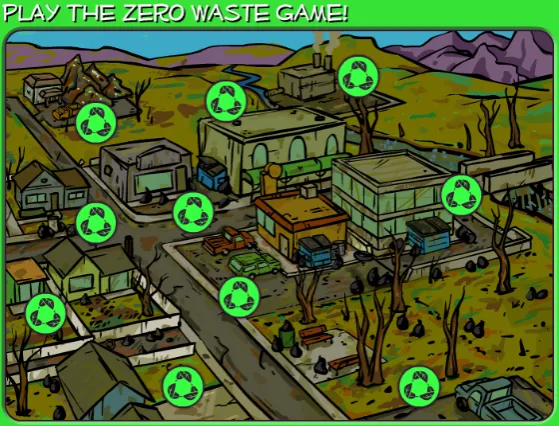
Zero Waste
Figure 5: The Zero Waste Game
Zero waste is a single player game developed by a website called kids science challenge. This game takes place in a very dirty city. The city consists of 10 areas each with a question related to waste or recycling. Every correct answer makes that area of the city cleaner. The goal is to get as many questions correct as you can (Kidsciencechallenge.com, 2018).
Systems that collect data about food waste
[image:16.595.74.354.403.616.2]Cogzum
Figure 6: CogZum
Cogzum is an iOS app developed in Bulgaria that helps you manage your shopping and cooking by making it easy for you to get an overview of the things you have and need as well as information on how long certain foods can be stored. This app is not a game, but it is relevant to the topic of food waste. The collected data is turned into an overview for the user and it will be processed for analytics (Dimitrov, 2018).
Food battle
Figure 7: Food battle
Food Fight
Figure 8: Food Fight
The Food Fight is a gamified system developed as part of a student’s thesis. People can sign up to battle each other. Members can trade food waste for compost. The more food waste you collect, the more points you get. Data is collected about the amount of food you bring, how often you visit, and how much you volunteer. This is being combined into an overview for all players to see how well they are doing (Chun, 2015).
Novelty of this project
The goal in this chapter was to find applications that fulfilled the three requirements of the client; it has to be a game (1), it has to collect data (2), and it has to be about food waste (3). While the search yielded several results that met two of the three requirements there were none that met all three requirements. Therefore, this project can be called novel and is in interesting combination of elements in the research field of food waste.
Game design
In this case, the game design will focus on two things: (1) implementing real life situations to create realistic actions, and (2) designing the art and sound of the game to enhance the goal of the game and that it suits the target audience.
The realistic actions are important to collect the desired data. Above, some examples of games that collect data are described. These games were made to collect data for
scientific goals. This will be done as well in this game. However, it can be argued to what extent these examples are fun to play and to what extent they can be called games.
Simulations
The Sims
Figure 9: The Sims
In the game The Sims the player gets to create your own sims, which are people in the game, and they have to build a house for them. When that is done, the player can play the lives of the sims. The player needs to decide their careers, their friends, their
relationships, and a lot more. This game is a simulation of life. However, now the player has the complete freedom to design your sims and your house. In this simulation game, being creative is the most fun and it is a place where the player has full power over the lives of the sims (Electronic Arts, 2018).
[image:19.595.72.220.70.308.2]Rollercoaster Tycoon
Figure 10: Rollercoaster Tycoon
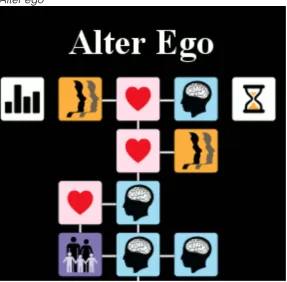
Alter ego
Figure 11: Alter Ego
The game alter ego is built in 1986 and the player gets to experience a whole life. It starts from birth, and by answering questions the player grows older and a personality is created. The vision for this game was to tell the story of an “ordinary” American. Therefore, it is a simulation of a real-life situation. However, the game is played by reading what is
happening and answering questions on how to react on the situation. Because of this, the game lacks elements of fun and surprise (Favaro, 1986).
Aesthetics
The aesthetics of games has a broad field of differences and in this case, it will be looked at from two views. For one, it is important in this game that the aesthetics provoke the desired actions of the player, which are go shopping, storing food, preparing food and
NOUR - experimental food art game
Figure 12: NOUR
NOUR does not have a goal or an objective, but the player can play with the food on the screen. The food can be played with in a way that in real life parents would say ‘don’t play with your food’. The game can be played with a MIDI fighter 3D by DJTechTools, which makes the game more interactive. The aesthetics are in 3D and the images are clean and compelling. Some surrealistic things can happen, however, this is not greatly noticeable, because the aesthetics are satisfying to look at (Hughes, 2018).
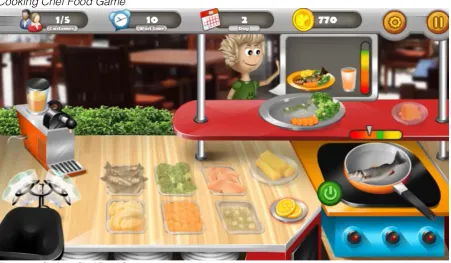
Cooking Chef Food Game
Figure 13: Cooking Chef Food Game
[image:21.595.75.527.446.709.2]fairly simple. The challenge in this game is to prepare and serve the food on time. In order to inform the player about the time, a timer for the food in the pan is shown. However, in
general the game does not look compelling to play (YouTube, 2016).
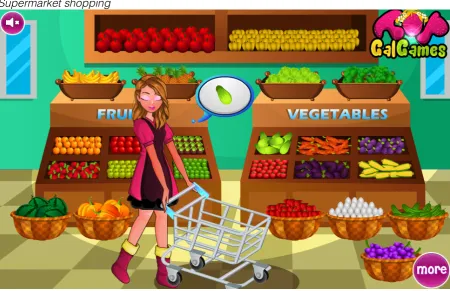
[image:22.595.74.525.119.410.2]Supermarket shopping
Figure 14: Supermarket Shopping
Rethink Waste
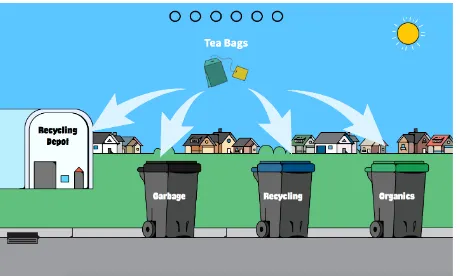
Figure 15: Rethink Waste
Rethink waste is a game about waste, including food waste, where you have to drag the waste into the right garbage bin. If all done right, the player can upgrade the park (visible behind the garbage bins) with objects, some quite weird, but all fun. The aesthetics is simple, but effective. It is immediately clear what to do and the simplicity gives the objects in the park more fun. However, the game is not difficult to play (Surrey.recycle.game, 2018).
Games for the target audience
Machinarium
Figure 16: Machinarium
This is a puzzle-solving game for adults. You play a robot and you have to solve small puzzles in the game to reach a certain goal. The aesthetics are beautiful and fit the theme of robots. There are animations in this game that enhance the playful character of the main robot. Overall the game is very compelling, and it is a style that adults can appreciate (Amanita Design, 2009).
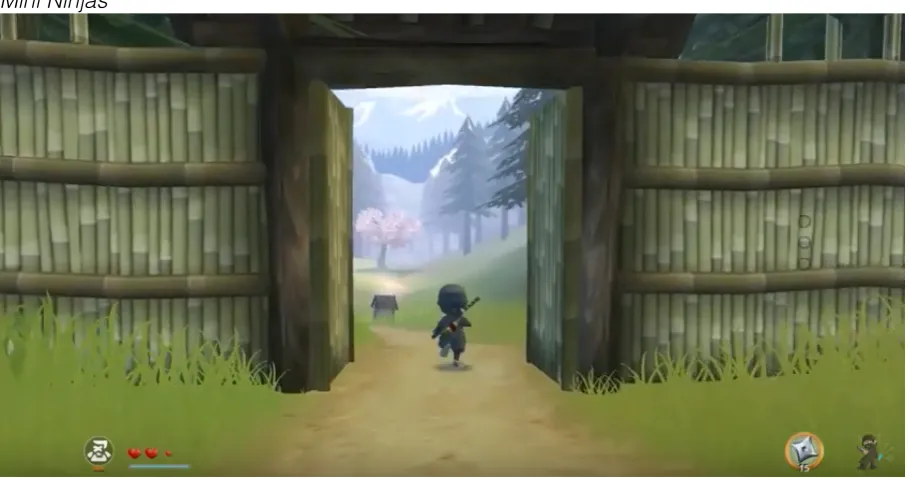
Mini Ninjas
Figure 17: Mini Ninjas
[image:24.595.72.527.442.681.2]Ni no Kuni: Wrath of the White Witch
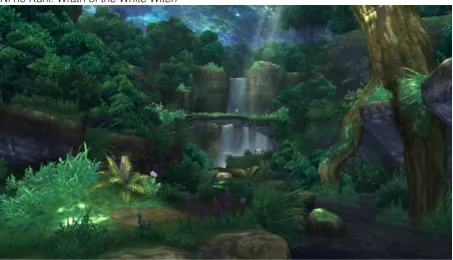
Figure 18: Ni no Kuni: Wrath of the White Witch
This game has a story about a boy who overcomes grief for the death of his mother, by entering a new world and saving it. The style is in anime and therefore the animations are somewhat simplistic, but the backgrounds are beautiful. They have a lot of detail and the color schemes are fitting the theme of the place. Only considering the backgrounds, the game looks appealing. However, anime is a style that one should like, in order to want to play the game (Sony Computer Entertainment Inc., 2011).
Conclusion
Thus, the simulation of real life events is possible to show in a game. However, the most fun in those games is the freedom of creativity. Therefore, it should be looked at the possibilities of giving the player creative freedom for this game. There are games existing for adults and the 3D platform is used a lot in those games, but in most of the games a great eye for detail is put into the aesthetics and they all look very appealing to play. Each game has its own element that speaks to the adults.
The found examples from above give two elements that will be adapted in the serious game of this project:
Chapter 3 – methods and techniques
The client wants to have a better understanding of the behavior of people who are responsible for the food in a household. Therefore, they decided on using a serious game as part of their research, where the in-game behavior is expected to be very similar to real-life behavior. An alternative would have been to use surveys. The problem with surveys in this research is that they are biased. When people fill in surveys they write down what they think they do, instead of what they actually do, which is what the client is interested in. Therefore, a game seemed the best solution, because people are less likely to fake their behavior. Additionally, a game is more fun for the participant and is more engaging to participate in.
The goals
The main research question of the client’s research is: what is the most important motive of people relative to behavior related to food waste? They want to learn and see what happens in households. Because of that, the goals of the food waste game are:
1. Data collection to create insight in people’s behavior 2. Changing the behavior, both in the game and in real-life
The requirements
This gives the following requirements for the product: - The product has to be a serious game
- The product has to collect data
- The product has to be about food waste
- The product has to incorporate the food cycle in a household (fig. XX, > provisioning > storing > preparing > consuming >)
However, a serious game like this one does not exist yet and it has not been proven that it is possible to create such a game that achieves the discussed goals. Therefore, there is a general research question for the game: how can a serious game collect data concerning food waste behavior? Because of the research question and the fact that the client wants to use the game for Dutch household, there are some additional requirements:
- The game has to be in Dutch
- This first version has to be limited, small and simple
A question that should be asked with the second requirement is: how will it stay interesting? The players should feel that they are playing a game, while getting them to perform realistic actions. In order to try to achieve that, the book by Jesse Schell1 has been used. He created lenses that can help make a game better and to have the designer think about different aspects of their game. The big difference with a game and a serious game, is that in the latter there is a secondary goal of raising awareness of an important issue in the world
This game is made as a research tool for the client to collect data about the behavior. To create what they want with the game, it was asked what exactly they want to know when it comes to the data. This created a second additional set of requirements:
- They want to figure out if a person is driven by money, health or the shelf life of products
- They want to be able to check the amount of nutrients, whether the prepared food is relatively healthy
- They want to incorporate the shelf life of products
- They want to keep track of the budget and not have unlimited money
- They would like to be able to see the relation between choices in the supermarket and at the storage to the amount of produced food waste
- They would like to see all the player’s choices
- They would like to see if there is a balance between money and food waste
With these sets of requirements and with help from the client a target audience has been formulated. The people that will play this game are people who are responsible for the food in a household. Since the game has to involve the whole food cycle in a household, these people are the most likely to be responsible for all of the phases. Another important aspect of the target audience is that they preferably go shopping only once or twice a week, because daily shopping requires somewhat less coordination and it makes it more difficult to balance the phases of the food cycle, which usually causes to have more food waste.
Conclusion
As mentioned in the introduction this game is created by two students and in this report the focus will be on the game design, where the research question is: what should the game look and feel like to accomplish the goal of collecting realistic data? In order to answer these questions, a set of gameplay art and sounds will be created. Design decisions of this set will be documented to understand how this set was established. Then the research question is answered by performing three tests divided in two parts.
Chapter 4 – ideation and brainstorming
As shown in the previous chapters, there does not exist yet a serious game that meets the requirements given by the client. Therefore, an idea for the concept game needed to be defined. In order to accommodate for this, a couple of brainstorm sessions have been held. Some of these brainstorm sessions were organized with my fellow student who programs the game. The other meetings in between were with the client, to verify what they like and if it matches with what they want. At first, multiple different ideas were formed such that these could be discussed with the clients. Afterwards, two ideas were chosen to look into. Based on new material for these two ideas, a new meeting with the client was organized to choose the final idea and elements that needed to be considered in creating the final game. In this chapter, at first the seven initial ideas will be presented. Afterwards, the chosen ideas and the final idea are discussed in more detail.
Idea 1 – similar to a Tamagotchi
Figure 19: An example of a Tamagotchi. it is a handheld digital pet, which the player has to take care of
The player has to take care of a little creature, for which you have to buy food, store it and serve it. The waste created will be collected on screen and the more waste, the less view the player has and the more difficult it will be to play the game. Once in a while, a small hand of waste will be taken away. If the creature drowns in the food waste, the game will be over. This idea raises the question how representative the data will be. In this idea, many actions from real life are missing: going to the supermarket, storing the food and preparing the meals are missing from this idea.
Feedback from the client
When discussing the idea with the client, feedback was asked for. The client warned that in real life, it is possible to create a lot of waste without really noticing. Although your garbage bin might start to smell, it is not always directly visible. The client wanted an idea in which it is clearer that the money of people is converted to food waste, because of buying too much food. That would make more impact than only seeing the waste.
Idea 2 – Mother Earth minigames
waste surrounds the player, it will become more and more difficult for the player to move. Eventually, if the food waste is as high as the shoulders, or even higher, the game will be over.
Feedback from the client
When discussing this idea with the client, they thought that both variations of this idea would be fun to play, but not very realistic. They suggested to include the balance between your wallet and the dump of food waste.
Idea 3 – process game
In this game the player or players will experience the whole food process, starting at the farm and ending at the dump. There will be a continuous story, where at each place a game will be played. This game can be played with one or multiple players, where the multiple players can choose if they want to play against each other, or with each other. However, this game seems to be more fun oriented with a message than being able to collect data, because it has not just a consumer’s focus.
Feedback from the client
When discussing the feedback for this idea, the client made clear that the idea has some good aspects but is mostly too large for now. For consumers, the food cycle starts in the store and ends in the garbage bin. They could imagine that when the concept game is realized more features like these could be added to this, because it is true that consumers start looking more for local products and thus the farmer starts to play a bigger role.
Therefore, a factor of biological or animal health could be implemented. However, it seems too much to start with for now.
Idea 4 – AR game
In this game, the player would have to take a picture of some moments involving food, which would open a game for them. For example, the player can take a picture of their fridge and in the app, they would be able to play a game where they have to fit all kinds of food in the fridge. Playing such a game would create points for a competition with other players. In some ways, the data collected this way, is more representative, because it can be seen what is actually bought or stored. However, it could be that some products are hidden by other products and thus they would not be noticed by the app. Another issue with the AR game is that it is privacy intrusive.
Feedback from the client
When discussing the AR game with the client, they warned that there has already been done a lot of research and thinking into keeping track of your household and what you have in your storage. An idea for tracking the food storage in an app has been discussed. However, the biggest bottleneck is how to get the right information without having the people keeping busy with filling everything in. For example, there has been the idea to scan a receipt from a supermarket, but it has been very difficult because most retailers do not want that. The idea of having an AR application providing the same information seems like a whole other project. In addition to this, it would be difficult to check the expiration date of the products on the picture. And thus, to see how long a product in one of the storage places still has. The client’s project has a focus on the expiration dates of products, so that should be in the game. It would be great to be able to create this, but it seems very difficult.
Idea 5 – Family game
game will go through the process of food and at every new place, a game will be played. The person with the role that is most important for that particular game, will play that role.
Everyone else will be side characters at that moment. This way everyone has some way of being dependent on each other, but it should also be possible for each player to want to win. For example, the game that will be played when food is being wasted: the player who has the role of garbage man has the main focus and his goal is to clean up the waste as fast as possible and put it in the right garbage can. The other players can be people who make the food waste and put their bins outside.
This idea could be developed into a board game, or a PlayStation/Wii game.
Feedback from the client
Although the client thought this could be a nice idea, the same problems as with the third idea apply. It is too large for now, but it might work in the future work of the food waste game.
Idea 6 – Serving a king
The player is the servant of the king and has to plan a meal (or multiple, maybe a feast). In order to do this, the player has to go grocery shopping in the king’s village. In the village, the player can find a supermarket, bakery, greengrocer and a butcher. Thereafter, the player has to store the food in the kitchen and prepare the meal. After the meal, the player has to take back the plates and throw away the left-overs. However, all the wasted food gathers in the village, where it makes small dumps of food waste. But the king does not want that, because it causes the villagers to be unhappy and pay fewer taxes.
The goal of the game is to keep the king happy by serving good, healthy and varied meals, not spending too much money and not producing a lot of food waste in the village. In this game world the stores are only open one day a week and at the beginning of the game, it is not told the player that it is about food waste. This is to see what the player will do, only after a will they will figure out what is happening. However, there can be asked a question with this idea: would adults like to play such a game?
Feedback from the client
When discussing the idea with the client, they saw a lot of potential. The village can be seen as a supermarket and the king as your family and/or wallet. This is closer to what the client had in mind, because in this idea there is a balance between waste, storage, buying products and money. The king seems to be the screaming family and the servant is the one who is responsible for the grocery shopping and the food. The environment is the village and the king can become angry if he is not satisfied. The village has to stay clean because if the player creates too much waste, the villagers will not pay enough taxes for the player to do grocery shopping. The client thought that this idea had the most potential.
Idea 7 – chef
This idea is similar to idea 6, except the player is now a chef in a restaurant. The player has to go grocery shopping, storing the food, preparing the food and throwing away any leftovers. This time the food waste gathers itself in front of the restaurant. So, the customers have to pass that first, before entering the restaurant. The goal of the game is thus keeping the customers happy by serving good food and keeping it clean. To make sure the player only goes grocery shopping once a week, customers can reserve places only one day in the week. This way there will never be more customers than the reserved places, but it can be less if they don’t want to enter the restaurant because of the food waste in front of the building. So, at the beginning of the week, the player has to decide what they are going to cook that week. However, this game seems almost very stressful, instead of fun.
Feedback from the client
seems good to think about other environments for this concept, but this one might not work that well.
Further research
After all ideas were discussed with the client, it was decided to think further about ideas 4 and 6. For idea 4 it is going to be looked at the possibilities of AR with pictures from the phone. For idea 6 different kinds of the concept are going to be thought of, to see if there is another way of presenting this idea.
Idea 4
In the case of idea 4, small research has been done to the possibilities of using AR for the food waste game. It seems to be very difficult to use it and to create useful games and data with it. In addition to this, it was quickly realized that the pictures might not get
everything. It could be that a product lies beneath or sits behind other products and thus it would not be seen and be put in the collected data. A picture taken by a phone cannot give information about the expiration date, since that is a detail that is difficult to collect from a picture. A product might be faced differently, so that detail and others would be challenging to collect.
Idea 6
In the case of idea 6, there is an advantage that levels can be created by unlocking new products or recipes. It will also be more difficult to produce little food waste and it will go away less quick. Although this would also apply to idea 7, this idea was not chosen because of the stressful factor.
The concept
In short, the concept of the king has the following aspects:
- The player has to take care of someone by taking care of the food - The player has to prepare meals, which includes
o grocery shopping
o storing the food
o cooking
o serving
- clearing the table or, in other words, throwing away the food.
- The more waste the player produces, the less money the player gets.
Two versions of this concept are already discussed, namely the king (idea 6) and the chef (idea 7). Another version is an adaption of idea 2 with Mother Earth. In this version, she is an actual human being that is part of your family. By keeping the village healthy and happy (by not wasting much food), Mother Earth gets donations from the villagers. A similar idea is to have a sacred animal, with which the village cannot live without.
Another version is by changing the king into the mayor of a village, so the player will have to take care of the mayor. However, it does not seem realistic to have the relationship servant – mayor. To solve that, the player could be the wife of the mayor, which creates a realistic relationship, but it would make it harder to keep it a fun game.
Another version that was thought of is with an army and their captain. The player has to take care of the food of the captain and all the food waste gathers in the camp, where the soldiers stay. The soldiers have to be happy, because if not they will not listen to the captain, which causes the captain to not perform is job well and therefore, not earn enough money for food.
The second last version is with musicians. The player will have to take care of the musicians and all the food waste that is produced will gather in the concert hall, where the fans come at the concert. However, if there is too much food waste there will not be many or any fans, which causes to not have many or any income for food.
have the stores open only one day a week. Another aspect taken into consideration is the feedback loop for the money because there is no connection to the work of the player.
Additionally, a game being too realistic might be boring to play. So, it should be thought of on how to make it more fun and interesting.
Conclusion
After passing these variations of idea 6 on to the client, it was decided to go for the idea with the king. It had also been decided that the game is going to be 2D and made in Unity.
Although the initial idea had been established, a lot of aspects were still unclear and incomplete. Of some of these aspects was already clear that they had to change. For example, the client wants the target audience to be people who only go shopping once a week, it is important to implement this in the game as well. One way to do that is to have the stores open only once a week. However, that does not seem to be realistic. There has to be something else that makes the player go grocery shopping just once a week.
A concept that was not already been though through was the scoring system. While developing the game, the scoring mechanism should carefully be planned. It has to be comparable to the real world.
Chapter 5 – specification and final idea
After the idea of the king was chosen, this idea needed to be developed further. With the requirements in mind, some additions have been made to the original idea. One of these additions is about the in-game budget. Every week there will be a budget for the player. If the villagers give more taxes, it does not mean that the budget will be bigger. Instead, the king will keep track of it and by playing the game in an optimized manner the player gets to pick a reward, which could be all kinds of things related to food like, extra storage space, an
extension of the supermarket or a new cookbook.
In the remaining parts of this chapter, the different scenes and actions in the game will be discussed in detail.
Dining room and feeding the king
The king can always be found at his table in the dining room, where he talks to the player to inform the player how he feels, what he thinks of the food and if he is willing to give rewards. In this room the food will be served to the king and possibly his visitors, which could be the queen, the prince, the princess, an old friend or a cousin. The reactions of the king will be animated, to make him feel alive. Every week the king decides on a budget for the player and informs the player on how many people are eating that week and on which day. This information can also be found in the monetary overview. Every week there will be around the same number of people eating. The player himself doesn’t have to eat.
The king will judge the meals on a couple of requirements. There has to be enough variation between the meals and within a meal. This way the king will get different nutrients. However, ingredients are allowed to partially overlap. For example, the player could make lasagna one day and the day after he could create a pasta. While in both recipes pasta is involved, the other ingredients are different. Therefore, that would be accepted. The king will also judge the meals on the quantity. He should eat enough to not be hungry. The final requirement of the king is that the food needs to be healthy. There may be some unhealthy food from time to time, but the king has to stay alive and healthy. Therefore, he should be given enough healthy food. The king can become really fat and really thin, if the food does not meet the requirements for a longer time. He can even die from obesity or malnutrition and then the game will be over. If the king is fat, he will refuse to eat unhealthy food at some point. He will demand vegetables first. When he is thin, he will be yelling for more food. If he was given too much food, he will just leave it on his plate, which will thus create food waste.
Kitchen and cooking the food
When arriving in the kitchen, the player sees both the cooking area and the storage area. It will be needed to click on one of the areas to zoom in and perform actions. Those areas will be discussed in more detail separately.
Cooking area
left-over, the player gets to choose to either throw it away or save it in Tupperware. If the latter is chosen, the food will be good for one day in the fridge and for three days in the freezer.
Storage area
At the very beginning of the game, the fridge, the freezer and the cupboard will be empty. To fill the storage with products, the player first has to go grocery shopping. When that has been done and the player is back in the kitchen, there will be an icon of a grocery bag on the screen. To open it, the player has to click on it and the screen will split in two, where on one side the storage space will be and on the other side the products in the grocery bag. The player can now drag the products to the storage space that he wants it in. In the cupboard the player has to fit everything on the shelves, which can be a puzzle if he has a lot of products. In order to achieve the feeling of it being a puzzle, the front of the products is used as filler space, since the game will be in 2D. Products can pass their
expiration date. If that happens, the product is not good and should be thrown away. As long as the product has not passed its expiration date, it is still good and can be used in meals.
Grocery bag
If a product stays in the grocery bag, and is thus not put in the storage space, the product will rot much faster than in the cupboards. This has been decided on, to prevent players keeping products in the grocery bag if the cupboards are full.
Cookbook
In the kitchen there is a button to get to the cookbook. In the book there are some recipes that can be made in the game. The player cannot improvise. However, within a recipe there exists possible variations.
The garbage bin catapult
The garbage bin is actually a catapult. If it is full, the player can launch the catapult to empty the garbage bin. However, it costs money to launch the catapult. Although, it is visible that the food is thrown outside, it is not visible that the food ends in the village. This has been decided, to prevent the player from changing its behavior towards the game. The game is created to gather realistic data and if the player is aware that the food waste gathers in the village, which causes to have less money, the player will change his behavior earlier on in the game. Since the game is about food waste, it has been decided to have no packages enter the garbage bin. If a package is emptied during cooking, it will just disappear. If there is a rotten bit of food in a package and both are thrown in the garbage bin, only the food will fill the garbage bin and the package will disappear.
Note block
Before going grocery shopping, the player has the option to create a shopping list or notes. Therefore, a note block is created to have the player being able to write normal notes or bullet lists, where things can be crossed away. The player has to be able to create a new list and to delete existing lists.
Village square
When going to the village, the player starts at the village square. This is the center of the village and the supermarket is right next to it, such that it is clearly visible. There are villagers walking around, either happy or angry, depending on how much food waste is laying around. If there is no waste, they will look happy. Although it might go slow, there is
man. The first thing, the sacred pig, was an idea to add some humor, but also because a pig eats the food waste and it is a used method of getting rid of food waste. The latter can also be created and then it will be an old man with his little cart, slowly picking up the food waste. The client decided to have the garbage man walking around in the game.
Supermarket
The supermarket is next to the village square, which makes it easy accessible. At the supermarket, the products are slightly cheaper than other stores in the game. However, the food is less fresh and therefore, slightly less tasty. To choose products, the player can click on a group of products in the aisle and it will go to the shelf with the products. There it will be visible which products are on the shelf and how much each product costs. To have more information on the product, the player can click it. A pop-up will appear with the product and its information, like the quantity in grams and how much days the product is still good. From the shelf, the player can press ‘buy’ and the product will be added to the grocery basket. At all times in the stores, the basket can be clicked on to view which products are in it. From there, the player can also place a product back. In order to leave the supermarket, the player first has to buy the products in the grocery basket. However, if the basket is empty, the player can also leave the supermarket. This also applies to the other stores.
The village streets
The village has three streets that are visible for the player. In each street there is a store where the food is fresher and tastier. However, it is slightly more expensive than in the supermarket.
Bakery
At the bakery bread, pastries, cakes and pies can be bought. Per category there are a couple of different products to choose from. In the bakery there is a general poster with the expiration date of all the products in the store. In this store it is also possible to click on a category to view the products that can be bought and the same system as in the
supermarket applies here.
Butcher
At the butcher chicken, pork, beef and fish are presented. Per animal there are a couple of different pieces to choose from. In the butcher there is also a general poster with the expiration date of all the meat. In the butcher it is possible to click on an animal category to view the products and the same system as in the supermarket applies here.
Greengrocer
At the greengrocer different kinds of vegetables and fruit can be bought fresh. There is one option per vegetable or fruit. Also, at the greengrocer there is a general poster with the expiration date and the same system as in the supermarket applies here for viewing the product options.
In-between screen to the castle
To go back to the castle, the player can click on the castle that can be viewed from a distance at the village square. At the gate of the castle, the player can choose to which room he wants to go to first. The options are the dining room, the kitchen and the catapult.
Money is an important aspect in the game since that is used to buy food and can give the player some rewards. In the overview different elements can be seen. A player can earn rewards if all three requirements are met: the village is happy, the king is happy, and the king has received more money than a certain amount. Therefore, in the overview the happiness of the villagers and the king can be seen, but also the amount of money the king has. If that passes a certain limit, the king can choose to give that surpassed bit to the player to buy a reward, but the villagers need to be happy then as well. This might not be clear from the start of the game, but that is done deliberately for the same reasoning as with the catapult. If the player knows how to earn rewards, he will optimize his behavior in the game, which is different than real behavior and therefore, not useful for the data. During the game the king will slowly give some information on this subject and thus making the player aware that it is his food waste in the village.
The king receives the money from the villagers as taxes. The villagers will pay more taxes if they are happy with the cleanliness of the village. The more food waste there is, the less taxes they will pay, which will cause the player to have less of a chance to get rewards. The rewards that the player can get are about food, both in the castle and in the village. For example, a bonus can be an extra recipe, or a new variation in a recipe.
In the money overview, it can also be found how much money the player still can use that week and what his budget is. The budget is always the same for each week. The last element in the money overview is the amount of people who are eating with the king that week and on which day. So, the player can always go back to this screen, to see how much food he should prepare.
If, at the end of the week, the player still has some money left, he will get a choice. He can either put the money with the budget for the next week, which will only change the
budget once, or he can put it in a piggy bank to use it for rewards later. If the latter is chosen, the money cannot be taken out later to buy products.
Overview
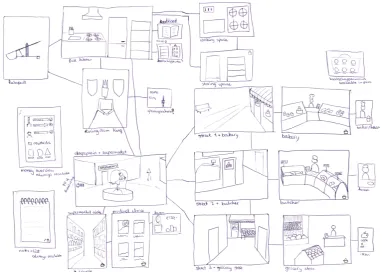
Figure 20: An overview of the screens of the initial idea
Chapter 6 – realization and creating process
In this chapter it will be described how the game play and game art was created. The main idea of the game play had already been decided on, but whilst creating the game many details had to be thought of. This had been done in corporation with Christiaan because he is responsible for programming the whole game. This way it was made sure that the decisions were also possible to program.
For the art of the game, concept art had been created with pen and paper. Some of the final decisions have been made together with the client to confirm that it was going to be what the client had in mind. After the confirmation, the art has been hand drawn into
Photoshop by using a Wacom tablet. To achieve the right effect of buttons, Photoshop’s systems of layers has been used. Each button got its own layer, so that the code of the game could be made much easier.
The king
The most important character in the game is the king. Therefore, a good amount of time was put into his design. The character traits of the king are righteous, kind, happy and strict. These character traits were chosen, because the king is mostly a king. Thus, he has authority and can demand many things. However, the game should still be fun to play and therefore, an additional trait of happiness is added. This makes the king likeable, but still someone with authority.
[image:38.595.85.327.386.731.2]Early in the design phase, when it was not yet decided which game would be created, a fun drawing was made for the king. This can be found in Figure 21.
Although, the king looks fun and well fed in this design, it was decided not to go with this design. The king needed some straight lines to get the feeling that he is a righteous and strict king. At first different design concepts for the king’s face were created. These can be found in Figure 22.
Figure 22: Different kinds of heads for the king
Figure 23: The two heads that were preferred by the client
[image:40.595.84.261.74.207.2] [image:40.595.85.414.280.740.2]With these two heads, silhouettes have been created to find a good body for the king. Different stances and width of the hips and shoulders have been tried out as can be seen in Figure 24.
Eventually a very straight design with some round shapes was chosen and the king now looks like the king in Figure 25.
Figure 25: The final design of the king
As can be seen in Figure 25 the king does not have a mouth. The face is design such that the moustache is very expressive and will help with the emotions, as shown in Figure 26.
Figure 26: Different expressions of the king
client it has been decided that the king is called Karel and that the village is named Schoondorp (Cleanvillage in English).
Voice recording sessions
The king also needs a voice, because he has to guide the players through certain actions in the game, as well as inform the player about the state of the village, the villagers and the food. The voice could be represented in two ways; with text in a text balloon or an actual voice speaking. It was decided to not do the text balloons, because that makes it difficult to present the king as a strict and kind man. With an actual voice, another element is added, which gives more impact on the importance of the king, since other characters do not have that. At least not in this first version of the game.
Three men were asked to come by to record their voices. A good microphone was set up and the voices were recorded in Garageband. Fifty-three sentences were written for the men to say and these sentences can be found in appendix 2. The sentences were about different aspects of the game. For example, if the king had the same meal for a couple of days, he would say that he wants something different. Another example is when a guest is coming over and the king notifies the player that he has to cook for one more person. Each voice actor would act out these sentences, sometimes a couple of times. They were given some instructions on how to express the sentences in order to have it the best way suitable for the king and the game.
After the recording session, for each actor the best expressed sentence for each sentence has been chosen. This way it was clear which sound to use. To choose which voice suited the king best, the actors’ voices were put under the animation of the talking king. Eventually it was decided to go with one of them, since that voice had both the righteous, strict king and the more kind and happy king.
Later in the creating process, it turned out that more sentences were needed. Therefore, the man, whose voice got picked for the king, was asked to come by once more and record the extra sentences. These sentences had more guidance towards the player in the beginning of the game and they were more precise on how much the king liked the food. These additional set of voice lines can be found in appendix 3.
King’s symbol
The symbol of the king is a deer. This animal has been chosen, because it is an elegant, yet imposing animal. It is seen as the king of the forest and therefore, it matches the king in the game. He is strict, yet a kind king, which is reflected in his symbol, the deer. This symbol can be found on the shields in the dining room and it is a fountain in the village.
The other characters
The queen
Figure 27: Concept sketches of the queen
Eventually, together with the client a final design has been chosen, that is depicted in Figure 28.
[image:43.595.91.293.393.732.2]The prince and the princess
The king has two children, who are both around the age of fourteen to sixteen. The princess got a dress and hairstyle that had been tried out for the queen. She got this design, because it was the look of a younger person, who is both sweet and royal. This design can be found in Figure 29.
Figure 29: The design of the princess
The prince is slightly older than the princess, but he is also somewhat more
Figure 30: Sketches of the prince
The garbage man
In the village there is a garbage man walking around slowly cleaning up. The garbage man had to be old, to explain why he is slow. Because of his age, his design also was
Figure 31: The design of the garbage man. On the top middle it names the three items he carries around on his cart, which are pitchfork, broom and shovel. The note about his hair mentions that it is grey
Other scenes
For all the other scenes in the game a quick drawing has been made, that were used as placeholders by the programmer. However, while creating these sketches it was an idea to create an opening screen, where the player can give their name, see the king and read a small description of what should happen in the game.
[image:46.595.91.351.75.396.2]Opening screen
Figure 32: Sketch of the pening screen
Dining room king
Figure 33: Sketch of the dining room king
When the game is started, the player starts at the dining room, where the king is seated. There is enough space at the table for guests. In this room the king will talk to the player and notify him if he is content or not. There will be arrows on each side of the screen to navigate through the castle. To the right will go to the kitchen and to the left will go to the catapult.
Kitchen
Figure 34: Sketch of the kitchen
In the kitchen both the cooking area and the storage area are visible. To get closer to either one, the player has to click on the side he wants to go to. In this full kitchen scene, it is not possible to perform cooking and storing actions.
In the kitchen there are also two arrows on each side of the screen. This time, the arrow to the right will go to the catapult and the arrow to the left will go back to the king.
Cooking area
Figure 35: Sketch of the cooking area
Storage area
Figure 36: Sketch of the storage area
There are three ways to store food. In a dry cupboard, in a fridge and in a freezer. All three are sketched for in the game. The freezer is beneath the fridge. There will be an icon of the grocery bag in the right bottom corner.
Grocery bag
Figure 37: Sketch of the grocery bag
In order to empty the grocery bag, the player has to click on the icon. It will open a split screen, where the storage spaces are on the left side and the grocery bag on the right, as shown in Figure 37. From here, the products can be dragged into the cupboard of the player’s choice. To close the split screen, the player has to click on the icon again, that is still visible in the right bottom corner.
Cookbook
Figure 38: Sketch of the cookbook
Catapult
Figure 39: Sketch of the catapult
The garbage bin is part of a catapult. If the garbage bin is full, it can be emptied by launching the catapult. There is a window on the right of the scene, where the food waste is launched through. The food waste will be thrown outside, but it cannot be seen where to exactly.
Note block
Figure 40: Sketch of the note block
The note block is like any other note block, but for the game with a create new and a delete button.
Village square
Figure 41: Sketch of the village square
Supermarket aisle
Figure 42: Sketch of a supermarket aisle
As soon as the player has entered the supermarket, he will be in one aisle. In total there are two aisles. In the bottom right, there is a button to get to the grocery basket. In order to show how many products are in the basket, a number is going to be displayed on the basket. To see which products are in there, the player can click on the basket. The products in the cupboards are separated in four groups per cupboard. For example, the upper left corner of the left cupboard has the pastas and the bottom right corner of the right cupboard has meat. This is done to keep it organized and to not have more than 6 or 8 products per group. If there are more products than 8 it would not fit on a shelf for the next scene. To get back to the village, the player either has to pay for the products, or if the basket is empty, a ‘village’ button will be available.
Products on shelf
Figure 43: Sketch of products on a shelf
This scene shows 6 or 8 products of a group standing on a shelf. Here it is also displayed how much it costs. For each product there is a ‘buy’ button which will put one product in the basket. In this scene there is also the basket icon in the right bottom corner.
Product information screen
To see more information on a product, the player can click on it and a pop up as shown in the sketch will appear over the scene. In this pop-up some detail information is given, like how much it is and what the expiration date is.
Cash desk supermarket
Figure 45: Sketch of the cash desk of the supermarket
To buy the products in the supermarket, there is a button in the aisle and in the basket with ‘to the cash desk’. Here the total price is shown, and the player can choose to buy the products or to go back to the supermarket if there is not enough money.
Shopping basket
Figure 46: Sketch of the grocery basket
In the shopping basket, the products can be seen. Here it is possible to place the products back or to go to the cash desk.
Street one with bakery
Figure 47: Sketch of street one with the bakery
Street two with butchery
Figure 48: Sketch of street two with the butcher
The player can walk through the village and in the second street, there is a butchery. On the sides of the screens there are arrows. The arrow on the left gets the player back to the first street. The arrow to the right goes to the third street.
Street three with grocery store
Figure 49: Sketch of street three with the grocery store
The player can walk through the village and in the third street he encounters a grocery store. Two arrows are displayed on each side of the screen. The arrow pointing to the left goes back to the second street. The arrow on the right gets the player to the village square.
Bakery
Figure 50: Sketch of the bakery