University of Warwick institutional repository:http://go.warwick.ac.uk/wrap
A Thesis Submitted for the Degree of PhD at the University of Warwick
http://go.warwick.ac.uk/wrap/67790
This thesis is made available online and is protected by original copyright. Please scroll down to view the document itself.
Protecting Injecting Drug Users against Blood-Borne
Viruses: Modelling the impact
of prison-based
interventions
by
Andrew Sutton
A thesis submitted in partial fulfilment of the requirements for the degree of Doctor of Philosophy in Biological Science
University of Warwick, Department of Biological Sciences
INDEX OF TABLES ... 5
INDEX OF FIGURES ... 6
ACKNOWLEDGEMENTS ... 8
DECLARATION ... 9
ABSTRACT ... 11
ABBREVIATIONS AND ACRONYMS ... 12
CHAPTER 1 -INTRODUCTION AND BACKGROUND ... 13
1.1 INJECTING DRUG USERS ... 15
1.1.1 The size and characteristics of the IDU population ... 16
1.2 UNLINKED ANONYMOUS PREVALENCE MONITORING PROGRAMME ... 18
1.3 INJECTING DRUG USERS AND THEIR RISK FROM INFECTION ... 19
1.3.1 Blood-borne viruses ... 19
1.3.1.1 Hepatitis B ... 21
1.3.1.2 Hepatitis C ... 24
1.3.1.3 HIV ... 27
1.3.1.4 The incidence of Blood-borne viruses ... 28
1.3.2 Other infections ... 30
1.4 INJECTING DRUG USERS AND CRIME ... 31
1.5 INTERVENTIONS TARGETING THE IDU POPULATION ... 33
1.5.1 Targeting the injecting drug user population in a prison setting ... 35
1.5.1.1 Hepatitis B vaccination programme in England and Wales ... 37
1.6 MODELLING THE IDU POPULATION ... 38
1.6.1 Injecting and sharing ... 38
1.6.2 Modelling prison populations ... 44
1.6.3 Modelling HBV transmission ... 46
1.7 OBJECTIVES ... 48
CHAPTER 2 - MODELLING THE CHARACTERISTICS OF THE MALE INJECTING DRUG USER POPULATION IN ENGLAND AND WALES ... 49
2.1 AIMS AND INTRODUCTION ... 49
2.2 METHODS ... 50
2.2.1 Data ... 50
2.2.2 Model ... 50
2.2.3 Parameterisation ... 52
2.2.4 Sensitivity Analysis ... 54
2.3 RESULTS ... 55
2.3.1 Data ... 55
2.3.2 Model Fit. ... 56
2.3.3 Under ascertainment (Pi-j) ... 60
2.3.4 Starting with age (fj) ... 60
2.3.5 The relative number of males starting injecting over time (gy) ... 61
2.3.6 Removal Rate ... 62
2.4 DISCUSSION ... 63
CHAPTER 3 - MODELLING THE FLOW OF INJECTING DRUG USERS
THROUGH PRISONS IN ENGLAND AND WALES ... 66
3.1 AIMS AND INTRODUCTION ... 66
3.2 METHODS ... 67
3.2.1 Population ... 67
3.2.2 Model structure ... 67
3.2.3 Mathematical Structure ... 68
3.3 MODEL PARAMETERISATION AND KEY FINDINGS ... 71
3.3.1 Prison discharge rates (p(a) and PI(a» ... 71
3.3.2 Imprisonment Rates (Il(a), Ill(a), 8(a), and 81(a» ... 72
3.3.3 Maximum likelihood fitting to binomial data ... 74
3.4 DISCUSSION ... 78
CHAPTER 4 - MODELLING THE HEPATITIS B VACCINATION PROGRAMME IN PRISONS IN ENGLAND AND WALES ... 81
4.1 AIMS AND INTRODUCTION ... 81
4.2 METHODS ... : ... 83
4.2.1 Model structure ... 83
4.2.2 Vaccination ... 84
4.2.3 Prison Vaccination ... 84
4.2.4 Community Vaccination ... 85
4.3 SENSITIVITY ANALySIS ... 88
4.3.1 Vaccination Scenarios ... 89
4.4 RESULTS ... 91
4.4.1 Results - Sensitivity Analysis ... 91
4.4.2 Results - Vaccination Scenarios ... 92
4.5 DISCUSSION ... 97
CHAPTER 5 - MODELLING THE FORCE OF INFECTION FOR HEPATITIS B AND HEPATITIS C IN INJECTING DRUG USERS IN ENGLAND AND WALES ... 100
5.1 AIMS AND INTRODUCTION ... 100
5.2 METHODS ... 101
5.2.1 Data ... 101
5.2.2 Force of Infection ... 102
5.2.3 Model ... 103
5.2.4 HBV Background Prevalence and Test Sensitivity ... 105
5.2.5 Parameterisation ... 106
5.2.6 Model Fitting ... 107
5.3 RESULTS ... 109
5.4 DISCUSSION ... 116
6.2 METHODS ... 121
6.2.1 Model Structure ... 121
6.2.2 Parameterisation ... 123
6.2.2.1 IDU Population Data ... 123
6.2.2.1.1 Removal Rates ... 124
6.2.2.2 The force of infection and transmission coefficients ... 124
6.2.2.2.1 Proportional Mixing ... , ... 126
6.2.3 Sensitivity Analysis ... 128
6.2.4 Vaccination Scenarios ... 129
6.3 RESULTS ... 132
6.3.1 England and Wales Scenarios ... 132
6.3.2 Age Specific Scenarios ... 134
6.3.3 Equilibrium Scenario Results ... 135
6.3.4 Campaign Scenarios ... 136
6.3.5 Sensitivity Analysis ... 137
6.4 DISCUSSION ... 139
CHAPTER 7 - ESTIMATING THE COST-EFFECTIVENESS OF DETECTING CASES OF CHRONIC HEPATITIS C INFECTION ON RECEPTION INTO PRISONS ... 143
7.1 AIMS AND INTRODUCTION ... 143
7.2 METHODS ... 145
7.2.1 Model Structure ... 145
7.2.2 HCV Case-finding Coverage ... 145
7.2.3 Case-finding Pathway on Prison Reception ... 146
7.2.4 Community HCV Testing and Diagnosis ... 148
7.2.5 Case-finding Scenarios ... 149
7.3 RESULTS ... 155
7.3.1 Sensitivity Analysis ... 158
7.4 DISCUSSION ... 160
CHAPTER 8 - DISCUSSION ... 164
8.1 INTRODUCTION ... 164
8.2 SUMMARY OF MAIN FINDINGS ... 164
8.3 LIMITATIONS OF STUDY AND FUTURE RESEARCH ... 168
8.4 CONCLUDING REMARKS ... 176
REFERENCES ... 177
APPENDIX I - REPRINTS OF PUBLISHED PAPERS ... 191
INDEX OF TABLES
Table 1.1 - Hepatitis B: diagnosis ... 22
Table 2.1 - Parsimonious Model Parameters describing functionsf(a-ro) and A.{a). .. 56
Table 2.2 - Model parameters describing the parsimonious model for functions g and Pi-j ... 57
Table 2.3 - Goodness of fit of initial and reduced models ... 58
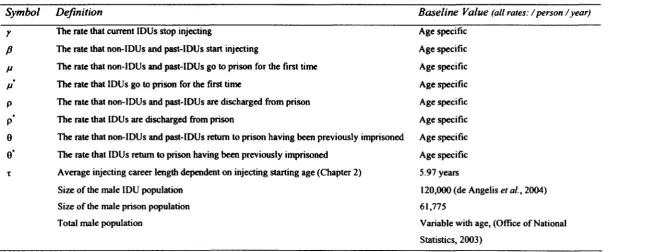
Table 3.1 - Baseline parameter estimates and definitions ... 70
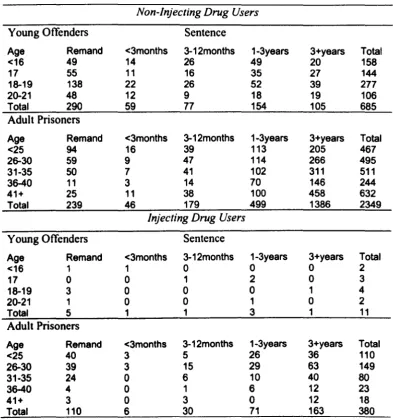
Table 3.2 - Data (1997-1998) from a cross section of prisons in England and Wales.72 Table 3.3 - Baseline estimates for age specific parameters ... 77
Table 4.1 - Data on HCV vaccination doses received on reception into prison and month when first dose was administered ... 85
Table 4.2 - Baseline parameter estimates and definitions ... 87
Table 4.3 - Summary of vaccination scenarios investigated during sensitivity analysis ... 90
Table 4.4 - Summary of results obtained from model with variations in the vaccination scenario applied ... 94
Table 5.1 - Parameter values describing the parsimonious modeL ... 110
Table 5.2 - Goodness of fit for initial and reduced models ... 109
Table 5.3 - Force of infection estimates for HBV and HCV with variations in injecting career length ... 114
Table 5.4 - The impact of the exclusion of the test sensitivities on the force of infection estimates for HBV and HCV ... 115
Table 6.1 - The structure ofthe WAIFM matrix (~ij) with values at baseline ... 126
Table 6.2 - Baseline parameter estimates used in numerical simulations ... 127
Table 6.3 - FOI estimates (/person/yr) used during sensitivity analysis ... 128
Table 6.4 - Values of the transmission coefficients (/yr) as used during sensitivity analysis for: a) Mixing One and b) Mixing Two ... 129
Table 6.5 - Summary of vaccination scenarios ... 130
Table 6.6 - Vaccination rates / IDU / year for scenarios A, B, and C for England and Wales applied to new initiates and experienced IDUs ... 131
Table 6.7 - Vaccination rates / IDU / year for the eqUilibrium scenarios applied to new initiates and experienced IDUs ... 132
Table 6.8 - The impact of alternative age specific vaccination scenarios on the HBV prevalence in the IDU population in 2015 ... 135
Table 7.1 - Summary of case-finding scenarios ... ISO Table 7.2 - Model parameters and values used during sensitivity analysis ... 153
INDEX OF FIGURES
Figure 1.1 - Trends in the HBV vaccine uptake and past HBY infection amongst IDUs in England and Wales ... 23 Figure 1.2 - Example of the natural progression of 100 people infected with Hey .. 25 Figure 1.3 - The trend over time of past Hey infection in current IDUs and new
initiates to injecting in England and Wales ... 26 Figure 1.4 - The trend of time of past HIY infection in current and former IDUs in
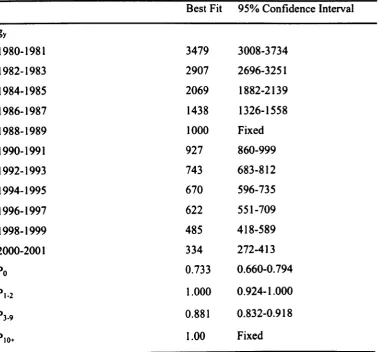
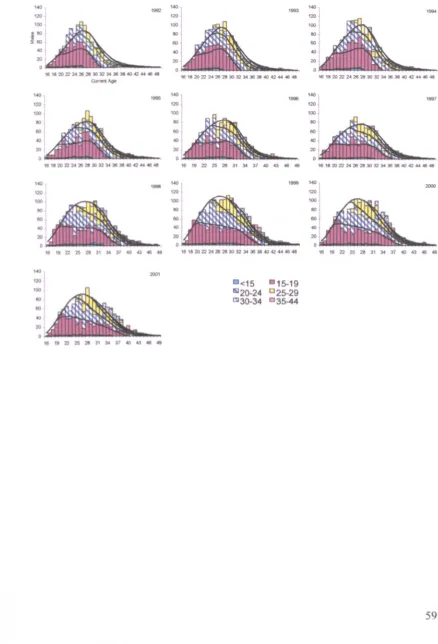
England and Wales ... 27 Figure 2.1 - Age breakdown of the current IDUs ... 55 Figure 2.2 - Age specific data for each survey year 1992-2001 broken down by the
age of first injection with model fit. ... 59 Figure 2.3 - Function fj: The proportion ofIDUs starting injecting by age ... 61 Figure 2.4 - Function gy. The relative proportion of males starting injecting each
year ... 62 Figure 2.5 - The age-specific rate that IDUs leave the IOU population per year (fJ;J. 63 Figure 3.1 - Flow diagram of the age specific turnover ofIDUs and non-IDUs in
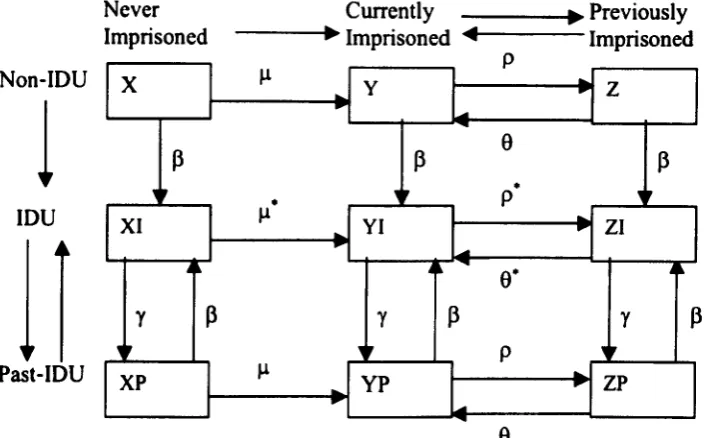
England and Wales repeated for each of the 60 age groups ... 69 Figure 3.2 - Model fit to age specific data ... 73 Figure 3.3 - The calculated rates ofCa) first time imprisonment and (b)
re-imprisonment for IDUs and non-IDUs with variation in age ... 76 Figure 4.1 - Model fit to data describing the % of current IDUs vaccinated in 200 1 .
... 86 Figure 4.2 - Results ofthe sensitivity analysis for the prison model. ... 92 Figure 4.3 - The % of the IDU population that have received 2+ doses of vaccine by
age ... 95 Figure 5.1 - The surveyed IOU population by infection status over injecting career
length and time ... 102 Figure 5.2 - The FOI for HBY and Hey with variation in injecting career length for
1999-2003 ... III Figure 5.3 - Model fit to data for each survey 1998-2003 ... 112 Figure 5.4 - The model to data fit for 1998 survey data describing the prevalence of
HBY and Hey infection ... 113 Figure 5.5 - The estimated frailty distribution and a cumulative density function
describing the frailty for HBY and Hey ... 114 Figure 6.1 - The estimated annual number of acute infections of HBY in the IOU
population and new initiates ... 133 Figure 6.2 - The estimated HBY prevalence in IDUs in 2015 with variations in the
vaccination scenario implemented ... 134 Figure 6.3 - The relationship between the vaccination coverage on prison reception
and the post vaccination equilibrium ... 136 Figure 6.4 - The impact of alternative campaign vaccination scenarios on the
prevalence ofHBY within the IOU population over time ... 137 Figure 6.5 - The estimated annual number of acute infections of HBY in the IOU
population with variations in the estimated FO!. ... 137 Figure 6.6 - The estimated annual number of acute cases in the IOU popUlation with
variations in estimations of the transmission coefficients ... 138 Figure 7.1 - Assumed proportion of prison receptions covered by Hey case - finding
... 146
Figure 7.2 - Model fit to UAPMP survey data 2003-2004 describing the % of current IDUs reporting receiving a previous Hey test ... 149 Figure 7.3 - Schematic diagram of the case-finding scenarios used in this analysis 151 Figure 7.4 - Pathway describing the administering of Hey serological tests ... 152 Figure 7.5 - The results for the first four case-finding scenarios compared with the
current do nothing (no Hey case-finding in prisons) strategy ... 156 Figure 7.6 - The impact on the cumulative average cost effectiveness of scenario one
ACKNOWLEDGMENTS
This PhD has been largely funded by Prison Health at the Department of Health and the Centre for Research on Drugs and Health Behaviour fonnally located at Imperial College London (now at the London School of Hygiene and Tropical Medicine). The majority of the work was undertaken within the Modelling and Economics Department at the Health Protection Agency. I am grateful to all these institutions for providing funding and resources.
I would like to thank all my supervisors. I am grateful to Professor Graham Medley for his supervision at Warwick University, for giving me help in the preparing, the undertaking, and the writing up of this thesis. In the Modelling and Economics Department at the Health Protection Agency I thank John Edmunds and Nigel Gay who have helped me with their expertise and experience and have had the greatest impact on my attempt to become something resembling a scientist. Thanks to Matthew Hickman fonnally at the Centre for Research on Drugs and Health Behaviour who has taught me loads about all things related to injecting drug use. Additional thanks go to my colleagues within the Modelling and Economics Department at the Health Protection Agency, in no particular order, Elisabeth, Ruby, Richard, Alessia, Mark, Mark, Georgios, Y oon, Emilia, and Ben who were all there when I felt the need to ask a stupid question.
Thanks go to Mary Piper at Prison Health at the Department of Health for funding much of this work, and to Noel Gill at the Health Protection Agency. I would also like to thank my colleagues in the Statistics Department (or whatever it's called now) at the HPA, particularly Nick Andrews for providing additional and useful statistical advice.
Finally, thanks go to all my family and friends . for their continuous encouragement, particularly my Dad whose relentless enthusiasm for the whole thing is probably the chief reason why you are holding this thesis today!
DECLARATION
The work presented in this thesis is the result of original research carried out by the author, Andrew Sutton. No part of this thesis has been submitted for a degree elsewhere.
Supervision
The research was carried out under the supervision of Professor Graham F. Medley at the University of Warwick, Dr W. John Edmunds, Mr Nigel 1. Gay, and Professor O. Noel Gill at the Health Protection Agency, Colindale, London.
Publications
Publications arising from this thesis or from work related to this thesis are included in Appendix I. Where work included in this thesis has been published in joint names, the role of each author is outlined below.
Chapter 2
Sutton A.J., Gay N.J., Edmunds W.J., Andrews N.J., Hope V.D., & Gill O.N. (2005). Modelling the Characteristics of the Male Injecting Drug User Population in England and Wales. International Journal of Drug Policy 16, 176-182
A.J Sutton was the primary author, constructed the model and analysed the results. N.J. Gay and W,J. Edmunds provided advice and supervised the work. N.J. Andrews provided statistical advice. V.D. Hope and o.N. Gill supplied the data and provided further advice
Chapter 3 and Chapter 4
Sutton A.J., Gay N.J., Edmunds W.J., Andrews N.J., Hope V.D., Gilbert R.L., Piper, M., & Gill O.N. (2006). Modelling the hepatitis B vaccination programme in prisons. Epidemiol Infect. 134, 231-242.
provided statistical advice. V.D. Hope, R. Gilbert, M Piper, and o.N. Gill helped in the revision of the manuscript and provided additional advice.
Chapter 5
Sutton A.J., Gay N.J., Edmunds W.J., Hope V.D., Gill O.N., & Hickman M. (2006). Modelling the force of infection for hepatitis B and hepatitis C in injecting drug users in England and Wales. BMC Infect. Dis. 6,93.
A.J. Sutton was the primary author, constructed the model and analysed the results. N.J. Gay and W.J. Edmunds provided advice and supervised the work. V.D. Hope supplied the data. O.N. Gill and M Hickman helped in the revision of the manuscript and provided additional advice.
Chapter 6
Sutton A.J., Gay N.J., & Edmunds W.J. (2006). Modelling the impact of prison vaccination on hepatitis B transmission within the injecting drug user population of
England and Wales. Vaccine 24,2377-2386.
A.J. Sutton was the primary author, constructed the model and analysed the results. N.J. Gay and w.J. Edmunds provided advice and supervised the work.
Chapter 7
Sutton A.J., Edmunds W.J., & Gil, O.N. (2006). Estimating the cost-effectiveness of detecting cases of chronic hepatitis C infection on reception into prison. BMC Public Health 6, 170.
A.J. Sutton was the primary author, constructed the model and analysed the results. w.J. Edmunds provided advice and supervised the work. o.N. Gill helped in the revision of the manuscript and provided additional advice.
ABSTRACT
Injecting drug use is a key risk factor, and injecting drug users (lDUs) are a core group for several blood-borne viruses (BBV) including hepatitis B (HBV) and hepatitis C (HCV). In 2003 the Unlinked Anonymous Prevalence Monitoring Programme reported that 62% of surveyed IDUs in England and Wales were found to ever having been imprisoned. Thus prison may provide a good opportunity to administer health interventions against BBVs to this hard to reach population.
The aim of the thesis is to examine a number of alternative intervention measures that target IDUs in a prison setting against BBVs. Methods to inform as to the characteristics of the IOU population and its risk of infection from BBVs are also proposed.
A method to determine the age specific rates at which individuals enter and leave the IOU population is presented. An age-specific dynamic model is developed that describes the flow of IDUs and non-IDUs through prison. This model is used to assess the potential impact of the HBV vaccination programme in England and Wales on the vaccination coverage of the IOU population showing that over 70% of IDUs may be captured with vaccination. Taking data that describes the prevalence of HBV and HCV in current IDUs in England and Wales, the injecting career length specific forces of infection for HBV and HCV in the IOU popUlation in England and Wales are estimated, these provide further evidence that new initiates to injecting may be at increased risk of infection compared to more experienced IDUs. Parameterised models are used to assess the impact that prison vaccination will have on HBV transmission within the IDU population with results showing that prison vaccination may result in a 75% reduction in acute infections in IDUs within 12 years from the start of the programme. Finally the cost effectiveness of HCV case-finding on prison reception is investigated showing the importance of encouraging current or former IDUs to accept ELISA testing on prison reception.
AIDS Anti-HBc Anti-HBc IgM Anti-HBe Anti-HBsAg Anti-HCV Anti-HIV BBV CDSC CI CRDHB ELISA FOI HAV HBeAg HBsAg HBV HCC HCV HCV-RNA HIV HPA Non-IOU PCR RR SARS UA UAPMP WAIFM WHO
ABBREVIATIONS AND ACRONYMS
Acquired Immune Deficiency Syndrome Hepatitis B core antigen
IgM antibodies to the hepatitis B core antigen Antibodies to the hepatitis B e antigen
Antibodies to the hepatitis B surface antigen Antibodies to hepatitis C
Antibodies to human immunodeficiency virus Blood-borne virus
Communicable Disease Surveillance Centre
Confidence interval
Centre for Research on Drugs and Health Behaviour Enzyme linked immunosorbent assay
Force of infection Hepatitis A virus Hepatitis B e antigen Hepatitis B surface antigen
Hepatitis B virus
Hepatocellular carcinoma Hepatitis C virus
Hepatitis C ribonucleic acid Human immunodeficiency virus Health Protection Agency Non-injecting drug user Polymerase chain reaction Relative risk
Severe acute respiratory syndrome Unlinked anonymous
Unlinked anonymous prevalence monitoring programme 'Who acquires infection from whom' matrix
World Health Organisation
CHAPTER 1 - INTRODUCTION AND BACKGROUND
The thesis has two main aims. Firstly, to model the characteristics of the IOU population in England and Wales and in particular consider its risk of infection from HBV and HCV. Secondly to model the impact of a selection of intervention measures on reception into prison including vaccination and case-fmding that target IDUs and BBVs.
the prevalence and incidence of HBV within the IDU population in England and Wales. In Chapter 7 the cost effectiveness of a proposed HCV case-finding programme on reception into prisons in England and Wales is examined. Using the model of the flow of IDUs through prison described in Chapter 3 and the HCV FOI estimates in IDUs obtained in Chapter 5, this chapter considers the cost per new chronic HCV case detected on prison reception under a range of screening scenarios while extensive sensitivity analysis is undertaken. Finally, Chapter 8 is divided into two sections. Firstly, the main findings of the thesis are summarised, and then a discussion of the limitations of the studies and potential future work is undertaken.
1.1 Injecting Drug Users
Due to their behaviour rous are at increased risk of incarceration when compared to non injectors (section 1.4). This may be due to criminal behaviour associated with trying to fund their illegal injecting or in some cases a criminal behaviour may itself have led to an injecting career. The injection of illicit drugs brings its own problems and if injectors share their injecting paraphernalia, as is often the case, then this leads to increased risk from BBYs (section 1.3.1).
The rou population is a hard to reach population i.e. relatively little. is known both about the characteristics and dynamics of the rou population, and is a difficult population to target for intervention measures that may interrupt the transmission of BBVs. Since rous are more likely to go to prison than non-injecting drug users (non-rOUs), this setting may provide a good location in which to target rous for intervention measures (World Health Organisation, 2005; Weinbaum et al., 2005).
A particular problem with studying IOUs is the selection of individuals into an analysis. While considering an IDU as being any individual that had used a syringe for taking drugs at least once in hislher life at the start of a survey (Broers et al.,
1998) may seem attractive for increasing the number of subjects in the analysis, this definition may include individuals who have long since left their drug using days
1.1.1 The size and characteristics of the IOU population
Various mathematical and statistical approaches have been made to gain information about the IOU population and its size (Frischer et 01., 2001; Godfrey et 01., 2002). Large surveys have also been undertaken (Frischer et 01.,2001; Johnson et 01.,2001; Johnson et 01., 1994) with the results extrapolated to draw conclusions about the wider drug using population (Johnson et 01., 2001). Many smaller surveys have also been undertaken, but frequently the size of these surveys limits the generalisability of the results between different populations and through time.
It has been suggested that the IOU population in England and Wales has increased substantially in size since the 1980s. Using data on the number of deaths due to opiate overdose its has been estimated that the prevalence of opiate users / injecting drug users has increased from less than 20,000 in 1980 to between 100,000 and 150,000 in 2000 in England and Wales (de Angelis et 01.,2004). However this work does assume that opiate overdose deaths have been recorded over the period of the analysis in a consistent manner. Alternative estimates of the prevalence of problematic drug use in the UK undertaken in 2001 have ranged from 161,000-266,000 (Frischer et 01., 2001). The proportion of males that have ever injected in Britain has been estimated to be 2.0% in 2000, rising from 1.0% in 1990 (Johnson et 01., 200 I) however this result must be approached with caution as the persons in the survey were selected from the small-user postcode address file for Britain, and as many current IOUs may be homeless a postcode is something that current IOUs are less likely to have compared to the general population.
The incidence of new initiates to injecting that join the IOU population and how this varies over time is difficult to evaluate due to the delay that occurs from the time of injecting initiation until injectors report to services and can be surveyed. Using back-calculation the incidence of opiate use / injecting drug use in England and Wales using data on the number of opiate overdose deaths by year has been estimated (de Angelis et 01., 2004). The authors suggest that the trend in the incidence of opiate use / injecting drug use over time has shown a substantial increase in recent years. While
further evidence of the average age of first injection for an IOU suggests that this often occurs before the age of 20 (Goldberg et a/., 1998; Hutchinson et a/., 2000; Judd el aI., 1999; Muga et aI., 2000; Crofts & Aitken, 1997).
A number of factors may lead to a cessation of injecting for an IDU. IOUs that are in contact with a drug network of other injectors have been shown to be significantly more likely to persist with their injecting behaviours. Whereas a decrease in addiction practices and unsafe sexual behaviours have been found to have a significant impact on injecting cessation (Bouhnik et a/., 2004). The treatment of IOUs and the kind of treatment that they receive can also have an impact on the rates that IOUs cease injecting. The rate that IOUs stop injecting drugs, the cessation rate, has been estimated in a number of studies. Law et a/., (2001) assumed a constant yearly cessation rate of 0.05 which would equate to an average injecting career length of 20 years, while Kaplan, (1989) estimated the cessation rate to be substantially higher at approximately 0.12 per year thereby giving a lower injecting career length of 8 years. Pollack, (2001) assumed that the true cessation rate lay somewhere between and adopted a value of 0.09 which gives an injecting career length of approximately II years, although in all these cases the variation of the cessation rate with age was not considered. It must be remembered however when considering the rates IOUs leave the IOU population that in many cases these rates are arbitrary and periods of relapse will often occur (Langendam et al., 2000).
1.2 Unlinked anonymous prevalence monitoring programme
The most useful and 'representative' data from which inferences about transmission trends within an IOU population can be drawn, are probably those provided by large voluntary, UA cross-sectional surveys of injectors recruited concurrently from drug services and community sites (Hope et al., 2001).
Since 1990, voluntary UA oral fluid samples have been collected from IOUs in contact with specialist drug agencies throughout England and Wales (Noone et ai., 1993; Nicoll et al., 2000). These agencies provide services including needle exchange, methadone maintenance and outreach work. Behavioral information is collected through a brief anonymous questionnaire unlinked from client identifying information. This includes questions on previous HIV testing, characteristics of the IOU population, and the sharing of injecting equipment. Fluid samples can inform as to the prevalence of BBVs in the IOU population including HBV, HCV and HIV (section 1.3.1). These samples have been collected on an annual basis leading to the availability of 15 complete surveys (1990-2004), although they do not extend to Scotland or Northern Ireland where other methods of surveillance are used (Health Protection Agency et ai., 2005). As data from these surveys is used regularly throughout this thesis they are referred to as the UAPMP surveys from here on.
While it is acknowledged that data such as this is representative of IOUs that are in contact with services (Hope et al., 2002), the IOUs recruited into the survey are self-selected and may not be representative of the whole IOU population. Surveys of injectors that are in contact with services will inevitably lead to some bias, IOUs that have short careers will be under sampled whereas older injectors will be over represented and this can lead to a bias in the conclusions drawn from the data. Comparisons have been made between IOUs both in and out of drug treatment. IOUs that report to services are generally older (Cook et ai., 2001) and have a longer average injecting careers than those that do not (Godfrey et ai., 2002). Work has also been done to estimate the lag from the time of heroin use initiation until the time of first reporting (Hickman et al., 2001). It has been speculated that the average delay
from the time a person starts problematic drug use to receiving treatment is 5 years (Coid el al., 2000; Godfrey el al., 2002) or more. These caveats must all be remembered when drawing conclusions from UAPMP survey data.
1.3 Injecting drug users and their risk from infection
1.3.1 Blood-borne viruses
A BBV is transmitted when blood from an infected person gets into the bloodstream of another (Health Protection Agency, 2006). It has been shown that IDUs are at increased risk from BBVs due to risky behaviour associated with their injecting behaviour (Hahne el al., 2004; Patrick el al., 200 I; Rhodes el al., 1996). Risk factors
within the IDU population that have been identified as leading to increased prevalence and incidence of BBV infection include the sharing of needles and injecting paraphernalia, frequency of injection, repeated injecting with used needles, or the inadequate cleaning of injecting paraphernalia (Patrick el al., 2001). In the case of those BBVs that can also be transmitted via sexual contact, this can assist in the transmission of BBVs between IDUs and non-injecting populations. It is not unusual to find that IDUs with a specific ethnicity to be at greater risk from BBVs compared to the general IDU population. This was seen in IDUs with African-American ethnicity in a study of IDUs recruited through street outreach in Baltimore, Maryland in 1988-1989 (Levine et al., 1995). This is likely to be due to increased sharing behaviour and perhaps increased prevalence within specific ethnic groups.
While it is often not possible to prove conclusively that observed BBV infections over time are due to the sharing of injecting equipment, it is likely that most acquired their infection this way (Roy et al., 200 I). In many cases injecting drug use will be
the only risk factor in those injectors that are found to be infected from BBVs. The attendance of 'shooting galleries', places where drug injection equipment is sequentially rented to users resulting in some users injecting with previously used equipment (Kaplan, (989) is also highly correlated with BBV incidence and
It is common amongst studies of the IOU population to find the prevalence of BBV s being associated with injecting career length, with those IOUs with longer injecting careers more likely to have evidence of past BBV infection compared to new initiates to injecting. This can also be said of older injectors compared to younger injectors although injecting career length and age are often found to be highly correlated (Rhodes el al., 1996). However the incidence of BBVs is often found to be higher amongst new initiates to injecting (van Beek et al., 1998). This is due to new initiates being more likely to share injecting paraphernalia in the early days of their injecting career before their injecting practices have been established (Rhodes el al., 1996). In the case of HeV in England and Wales (section 1.3.1.2) evidence has shown that HeV infection in IOUs is difficult to prevent and that infection is acquired rapidly after initiation into injecting (Hope et al., 2001). It has been suggested that younger IOUs could be at relatively higher risk of infection compared with uninfected older IOUs if being uninfected becomes a marker of well-established prevention practices with increasing duration of injection and age. Thus, increasingly lower risk cohorts of IOUs may be established with increasing age as those at higher risk are removed because of BBV seroconversions (van Beek et al., 1998).
1.3.1.1 Hepatitis B
HBV is transmitted by parenteral exposure to infected blood or body fluids, with transmission most frequently occurring either through sexual intercourse, as a result of blood-to-blood contact typically through the sharing of needles and other
equipment by IOUs, or through perinatal transmission from mother to child. Transmission can also occur through transfusion-associated infection, although this is now rare in the UK as all blood donations are screened (Salisbury & Begg, 1996).
It is estimated that 0.3% of the UK population is chronically infected with HBV which is equivalent to approximately 180,000 people. In 2003 there were approximately 1,300 cases of acute HBV in England and Wales reported to the Health Protection Agency (HPA) with the most common reported risk factor being
injecting drug use (Health Protection Agency, 2006). The incidence of infection in the general population of England and Wales has been estimated at 7.4 per 100,000 although this does not represent the huge heterogeneity of risk within the population with high risk groups being determined mainly by country of birth, ethnicity, and adult risk behaviours such as injecting drug use (Hahne et al., 2004).
The average incubation period ranges from 40-160 days. Current infection can be
detected by the presence of HBV surface antigen (HBsAg) in the serum. The risk of developing chronic HBV infection is heavily age dependent and is defined as persistence of HBsAg in the serum for six months or longer (occurring in 2-10% of those infected as adults rising to approximately 90% in those infected perinatally). Among carriers of the virus, those in whom HBV e-antigen (HBeAg) is detected are
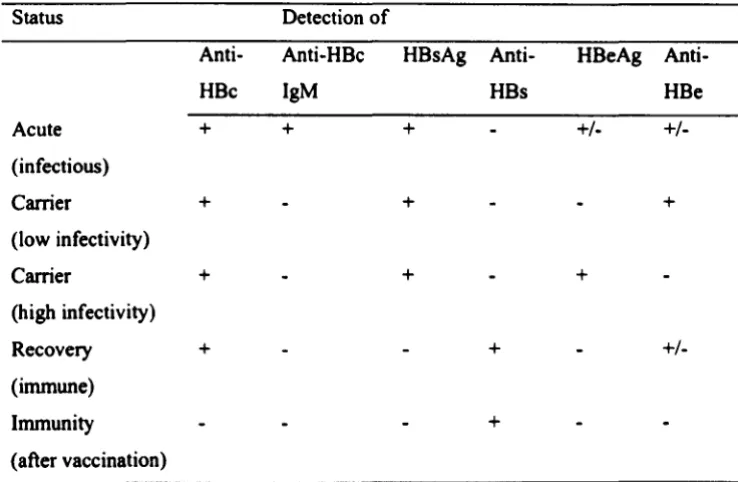
Table 1.1 - Hepatitis B: diagnosis
Status Detection of
Anti- Anti-HBc HBsAg Anti- HBeAg
Anti-HBc IgM HBs HBe
Acute + + + +/-
+/-(infectious )
Carrier + + +
(low infectivity)
Carrier + + +
(high infectivity)
Recovery + +
+/-(immune)
Immunity +
(after vaccination)
Safe and effective vaccines to prevent HBY infection have been available since 1992, with the World Health Organisation (WHO) having recommended that all countries adopt universal HBY vaccination by 1997. This has not been adopted in England and Wales where instead a policy of selectively immunizing key at risk groups from HBY infection has been implemented. This approach to vaccination in England and Wales has been justified by the low incidence of HBY infection within the general population (Hahne et al., 2004). A course of HBY vaccinations consists of three doses of vaccine with a booster dose typically administered 12 months after the lit dose. The timing of the first three doses is variable and is usually implemented at zero, one, and six months. For high risk groups faster schedules are implemented with an accelerated schedule being 0, I, and 2 months and a super accelerated schedule being 0, 7 and 21 days although the super-accelerated schedule is not licensed for those under 18 years of age. The improved compliance of these faster schedules is likely to offset any reduced immunogenicity when compared to the 0, 1, and 6 months schedule (Christensen el al., 2004; Bock et al., 1995).
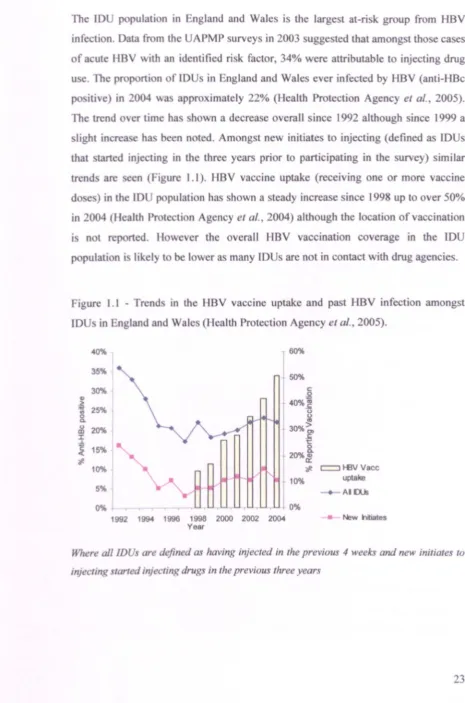
[image:23.525.60.429.91.332.2]The 10 pulali n in ngland and Wale i the largest at-risk group from HBV infection. ala r, m th' APMP urvey in 2003 ugge ted that amongst those cases f a ute HBV \\ ilh an identified ri k factor, 34% were attributable to injecting drug
[image:24.558.23.488.53.755.2]u e. The prop rti n flO in ngland and Wales ever infected by HBV (anti-HBc p iti e in 2004 w approximately 22% (Health Protection Agency el a/., 2005). The trend er time ha hown a decrea e overall since 1992 although since 1999 a light incr e h been n ted. Amongst new initiates to injecting (defrned as lDUs that tarted inje ting in the three years prior to participating in the survey) similar trend are cen (Figure 1.1). HBV vaccine uptake (receiving one or more vaccine do e )in the 10 population has hown a teady increase since 1998 up to over 50% in 2004 (Health Pr tecti n Agency et 0/.,2004) although the location of vaccination n t rep rted. H wever the overall HBV vaccination coverage in the lDU p pulati n i likely t be 1 wer as many IDUs are not in contact with drug agencies.
Figure I. I - Trend in the HBV vaccine uptake and past HBV infection amongst 10 in England and Wale (llcalth Protection Agency et aI., 2005).
10%
5%
60%
50%
I
.o%j
(.)
(.)
IV 30%>
€
20%§.
a::
"at (:::=J H3V Vacc
10% uptake
AI [)Us
0% 0%
1992 1994 1996 1998 2000 2002 2004
Year
New nitiates
Where all IDU. are difined as having injected in the previou 4 weeks and new initiates to
injectmg -tarted injecting dmg in the previous three years
1.3.1.2 Hepatitis C
The WHO estimates that some 170 million people are chronically infected with HCV (World Health Organisation, 1999). On a global scale, the United Kingdom is considered to be a relatively low prevalence country. In 2002, the HPA estimated that the prevalence of HCV-specific antibodies (anti-HCV) in the general population is approximately 0.5%. While it has been estimated that there are approximately 200,000 individuals chronically infected with HCV in England (Health Protection Agency Centre for Infections, 2005).
The transmission of HCV predominantly occurs through blood-borne transmission
such as injecting drug use and blood-transfusion although transmission can occur via routes such as mother to baby and sexual exposure although these are less efficient (Balogun et 01., 2002). As with HBV the transmission of HCV due to blood-transfusion in England and Wales is rare due to the screening of all blood-donations.
There are six major HCV genotypes (I to 6) with a variety of subtypes existing
within each genotype. In the UK genotype I is the most common found in 40-50% of cases, genotypes 2 and 3 contribute another 40-50% while genotypes 4, 5, and 6 constitute the remainder of about 5%. The genotype of the virus has been found to be the most important determinant of efficacy of treatment. Combination therapy with pegylated interferon alfa and ribavirin is recommended for the treatment of people aged 18 years and over with mild to severe chronic HCV. Overall, this treatment is successful in clearing the infection (leaving no detectable virus in the blood 6 months after treatment has ceased) in up to 55% of patients. The effectiveness of treatment varies according to the infecting genotype, from 45% in those infected with genotype I, up to 80% in those infected with genotypes 2 and 3. However, not everybody is suitable for treatment or can tolerate it. Factors such as age, sex, duration of
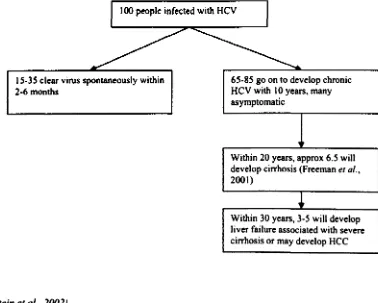
After HCV infection hepatitis C ribonucleic acid (HCV-RNA) can be detected in 1-3 weeks with the acute phase lasting 2-3 months. Of those infected 65-85% will develop chronic HCV and approximately 6.5% will develop cirrhosis within 20 years (Freeman el 01.. 200 I). Within 30 years 3-5% of those infected will develop liver failure associated with severe cirrhosis or may develop hepatocellular carcinoma (Hee). In many cases the infection will not be apparent for many years this is partly because the liver has the capacity to 'cope' with the infection. Symptoms do not often develop until the liver has been quite extensively damaged. Alcohol consumption, acquiring the infection at an older age, and being male, have all been shown to be associated with more progressive disease (Stein et 01.,2002). The natural progress of HeV is summarised in Figure 1.2.
Figure 1.2 - Example of the natural progression of 100 people infected with Hey.
100 people infected with HCV
15-35 clear virus spontaneously within 2-6 months
(Stein et 01 .. 2002)
65-85 go on to develop chronic HCV with 10 years. many asymptomatic
Within 20 years, approx 6.5 wi\1 develop cirrhosis (Freeman et 01., 2001)
Within 30 years, 3-5 will develop liver failure associated with severe cirrhosis or may develop HCC
[image:26.525.78.456.351.654.2]Agency et al., 2005). Amongst the reported laboratory diagnoses ofHCV infection in
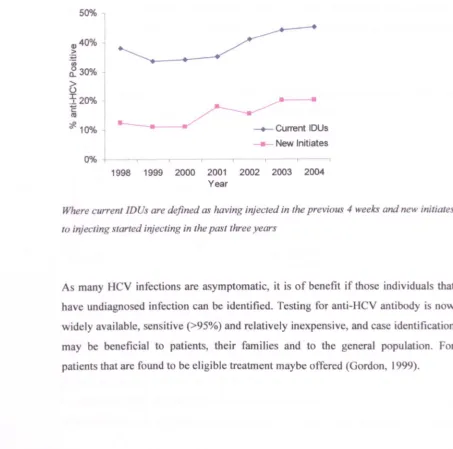
England in 2004, 95% of those with exposure data were attributable to injecting drug use. UAPMP surveys have reported an increase in current IDUs (injected in the previous 4 weeks) that have antibodies to HCV (anti-HCY) in recent years up to 45% in 2004, while a similar increase has been seen in new initiates to injecting (started injecting within the three years prior to participating in the survey). This is shown in Figure 1.3:
Figure 1.3 - The trend over time of past HCV infection in current rDUs and new initiates to injecting in England and Wales (Health Protection Agency et aI., 2005).
50% 1
4)40%
>
~
(/) ~30%
~
720% C
!II
*10%
0%
--+-Current IDUsNew Initiates
1998 1999 2000 2001 2002 2003 2004 Year
,
Where currenllDUs are defined as having injected in the previous 4 weeks and new initiates
to injecting larted injecting in the past three years
As many HCV infections are asymptomatic, it is of benefit if those individuals that have undiagnosed infection can be identified. Testing for anti-HCV antibody is now widely available sensitive (>95%) and relatively inexpensive, and case identification may be beneficial to patients, their families and to the general population. For patients that are found to be eligible treatment maybe offered (Gordon, 1999).
[image:27.557.33.486.276.725.2]1.3.1.3 HIV
In 2004 the number of prevalent HlV infections among adults aged 15-59 in the UK
was estimated to be 58,300. However, unlike HBV and HCY, injecting drug use is
not the biggest risk factor for HIV infection with only an estimated 2,000 cases being
due to injecting drug use, the remainder being predominantly due to either sex
between men or heterosexual sex. Overall HIY infection among IDUs in the UK
remains relatively rare with around one in every 65 injectors infected (Health
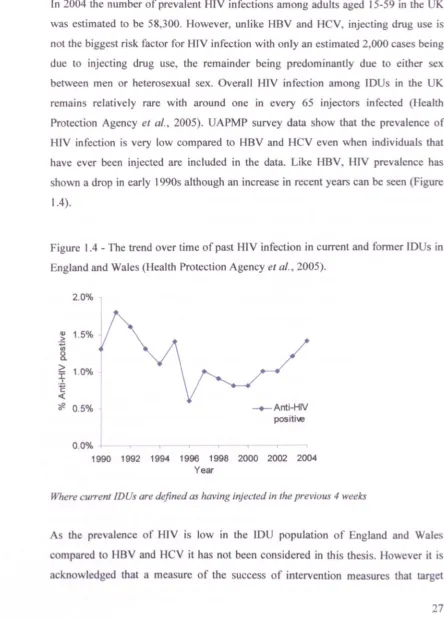
Protection Agency et al., 2005). UAPMP survey data show that the prevalence of
HlV infection is very low compared to HBY and HCY even when individuals that
have ever been injected are included in the data. Like HBV, H1V prevalence has
shown a drop in early 1990s although an increase in recent years can be seen (Figure
1.4).
Figure 1.4 - The trend over time of past HIV infection in current and former IDUs in
England and Wales (Health Protection Agency et al., 2005).
2.0%
.~ 1.5% u;
8.
~ 1.0%
~ <
"#. 0.5% -+-Anti-HIV positiw
0.0% -r T .,
1990 1992 1994 1996 1998 2000 2002 2004
Year
Where current IDUs are defined as having injected in the previous 4 weeks
As the prevalence of H1V is low in the IOU population of England and Wales
compared to HBV and Hey it has not been consid,ered in this thesis. However it is
acknowledged that a measure of the success of intervention mea ures that target
[image:28.557.43.487.121.741.2]IDUs would be to consider their impact on the incidence and prevalence of HIV within the IOU population over time.
1.3.1.4 The incidence of Blood-borne viruses
As FOI of HBV and HCV will be considered in a later chapter (Chapter 5), a brief review of studies that consider the incidence of HBV, HCV, and HIV in England and Wales is included here.
The incidence of infection is often used to gain some idea as to the FOI of a particular infectious disease where the FOI is defined as the per capita rate at which susceptible individuals acquire infection. Calculation of incidence is sometimes undertaken through the use of cohort studies in which IDUs are classified on the basis of the presence or absence of exposure to a particular factor and then followed for a specified period of time to determine the development of disease in each exposure group (Hennekens & Buring, 1987). This was the case in Judd et al.,(2005) where the incidences of HCV and HIV among new IDUs in London were found to be 41.8 cases and 3.4 cases per 100 person years, respectively.
Previous studies have considered the reports of acute HBV in England and Wales as reported to the HP A, Centre for Infections (Health Protection Agency, 2006). Considering reports from 1985-1996 a previous study (Balogun et al., 1999) calculated the average estimated annual rate of laboratory reported HBV infection in adults within each region of England and Wales varied from 1.27 to 2.81 per 100,000 of the population, with the majority of reports being from symptomatic individuals.
Also considered in the incidence calculations was the proportion of infections that are asymptomatic which can also impact on incidence calculations. Taking these factors into account the authors found a higher HBV incidence estimate for England and Wales being 7.4 per 100,000, with injecting drug use being the most frequently reported route of transmission.
An alternative proxy for incidence in the whole IOU population is to consider the prevalence of Bavs in new initiates to injecting as was seen in sections 1.3.1.1 and 1.3.1.2. Assuming that these IOUs have only been exposed to BaVs during their injecting careers and were not at risk before the start of their injecting career then these individuals can provide a useful insight into the trend of recent infection over time within the IOU population. However it must be remembered when using this technique to make conclusions about the FOI in the overall IOU population that it has to be assumed that the at-risk behaviour of new initiates is the same for the rest of the IOU population.
1.3.2 Other infections
The three main BBVs that occur in the IDU population are HBV, HeV, and HIV have been discussed. However these are not the only infections that IDUs are vulnerable to, and so for completeness a brief review of a selection of other infections is included here.
Hepatitis A (HA V) infection may occur in the IOU population through person-to-person contact with other infected individuals through poor-hygiene, via blood through sharing contaminated injecting equipment, through sexual activities that increase risk of oro-faecal contamination, or from drugs that have been contaminated with faeces during smuggling. An effective vaccination is available. In 2004 the number of laboratory reports of HA V in England and Wales was 627 compared with 984 in 2003 and 1,352 in 2002. Only a small proportion of these reports in 2004 contained information on risk factors with 73% reporting travel abroad as the main risk factor rather than injecting drug use (Health Protection Agency et aI., 2005). In the early part of the decade there had been a number of outbreaks of HA V that were associated with IDU and homelessness (Perrett et al., 2003). However 2004 data suggest that the outbreaks of HA V in IDUs have been waning.
IDUs are also vulnerable to a range of bacterial infections as a result of non-sterile injecting or injecting contaminated drugs, a brief summary of which is given below (Health Protection Agency et al., 2005):
Staphylococcus aureus is a common pathogen among IDUs, causing infections that vary in severity from minor skin and soft tissue infections through to life-threatening invasive disease such as bacteraemia and endocarditis.
Group A Streptococci can cause skin sepsis, bacteraemia and necrotic infections among IDUs through infection of injecting sites.
Clostridial infections; clostridia are a group of spore forming bacteria that are widely
injection site, and can then produce toxins causing illness such as tetanus or 'gas gangrene' with a potentially fatal outcome.
Botulism is an illness caused by botulinum toxin, a poison produced by the bacterium clostridium botulinum. Symptoms of botulism include blurred vision and difficulty in swallowing and speaking and may cause paralysis and death. However there is an effective antitoxin. When it infects wounds, including injecting sites, it causes wound botulism. Up until 2000 there had been no case of wound botulism reported among IDUs in the UK however by 2004 89 cases had been reported suggesting that this may be a growing problem.
Neither HA V nor bacterial infections are given further consideration during this thesis although as with HIV, surveillance of these infections over time may provide a good measure of the success of future intervention measures that target the IOU population.
1.4 Injecting drug users and crime
Due to criminal behaviour associated with drug use, IDUs are at increased risk of becoming incarcerated compared to the non-drug using population. For example UAPMP surveys reported that 62% of surveyed IDUs in 2003 were found to have been in prison (Health Protection Agency et aJ., 2005). This is also verified in surveys undertaken in prisons that show the high proportion of prisoners that are found to have injected drugs (Gore et aJ., 1997; Weild et aI., 2000).
the people who become criminals are also likely to become drug abusers (Hammersley et al., 1989).
It has been found that the offending characteristics of IDUs are significantly different when compared to non-IDUs. Due to their behaviour associated with injecting drug use, IDUs are more likely to go to prison than non-IDUs, and there is also evidence of IDUs being given shorter prison sentences than non-IDUs (Bird el al., 1995; Weild et al., 2000). This suggests that the turnover ofIDUs through prison is more rapid than non-IDUs as they pass through prison more rapidly and frequently.
An important risk factor for BBV prevalence within the IDU population is a history of previous imprisonment (Patrick et al., 2001; van Beek et al., 1998). During any period of incarceration it has been shown that some IDUs will continue their injecting behaviour (Gore el al., 1995b; Gore & Bird, 1998; Covell et al., 1993; Allwright el al.. 2000), and while the prevalence of injection within prisons are probably much less frequent than outside (Hutchinson el al., 2000), those who continue to inject are highly likely to share needles when they are imprisoned, thus facilitating the spread of BBVs (Macalino et al., 2004; Covell et al., 1993). Evidence of a high risk needle sharing environment inside prisons has been seen in many previous studies (Gore et al., 1995b; Gore & Bird, 1998; Boys et al., 2002; Covell et al., 1993), and there is evidence of the rapid spread or outbreaks ofBBVs in prisons, this inevitably being due to a high level of circulating virus among inmates who practice needle sharing with ineffective cleaning and a limited number of needles (Taylor et a/., 1995; Hutchinson et al., 1998).
prison for the first time and placing all those who do inject in prison at vastly increased risk of contacting infections (Taylor et al., 1995).
1.5 Interventions targeting the IDU population
It has been shown that IDUs are at increased risk from BBVs and other infections and it is therefore of public health importance if interventions that target this high risk group can be implemented. A number of interventions have been proposed that target individuals within the IDU population; these include vaccination, education, treatment, and needle exchange programmes (Francois et al., 2002).
A needle exchange programme is defined as an organised service for the exchange of sterile needles and syringes used for injections as a potential means of reducing the transmission of infectious diseases (www.biology-online, 2006). Evidence of the impact that needle exchanges can have on the transmission ofBBVs was shown from IOUs in New York City, in which the incidence of HIV seroconversions was significantly lower among IOUs who were regular users of a syringe / needle exchanges than among non-users. Further analysis has shown that the mean annual HIV seroprevalence rate for 29 cities with exchange programs had fallen by 5.8%, whereas that for 52 cities without such programmes had increased by 5.9% (Mansson et aI., 2000). This finding has been echoed in Glasgow where sizeable reductions in anti-HCV prevalence among, newly initiated, injectors from Glasgow and Lothian from the early to mid 1990s support the hypothesis that harm reduction interventions, particularly needle exchanges may have played an important role in reducing the spread ofHCV (Hutchinson et al., 2002).
Knowledge of infection may impact on injecting behaviour and may lead to a reduction in the behaviour that leads to further infection within the IOU popUlation. However this must be tempered against the possibility that identifying a positive individual with a BBV may impact on their quality of life (Forman et al., 2000; Rodger et al., 1999; Tompkins et al., 2005). Lifestyle modifications can be made to decrease the risk of further BBV transmission with education increasing overall public awareness of the disease and potentially improving prevention efforts (Gordon, 1999). In the case of patients that are HCV positive they can be counselled to avoid alcohol consumption and as these individuals typically share the same risk factors that lead to HA V and HBV infection, vaccination against these viruses may also be offered if appropriate (Salisbury & Begg, 1996).
risk-taking behaviour among IOUs, have been published. Most of them show a considerable reduction in risk behaviour after the introduction of prevention activities (such as methadone maintenance programmes and needles exchanges) as well as a decline in the incidence of BBY infection and a stabilization or reduction in BBY prevalence (Broers et al., 1998).
1.5.1 Targeting the injecting drug user population in a prison setting
Oue to the illegality of injecting drug use and the close association between crime and drug manufacture, trafficking, supply, and use, those involved with injecting illicit drugs frequently pass through prisons (Skipper et al., 2003). This suggests that prison may be a good location in which to administer intervention measures targeting the IOU population. These intervention measures may include but are not limited to vaccination, rehabilitation and treatment, and the exposure to screening programmes (McGregor el aI., 2003). Suggested recommendations that should form the basis for HBY prevention programmes within European prisons have included HBY vaccination for all inmates upon entry into prisons, the introduction of accelerated immunisation schedules with the aim of achieving higher vaccine uptake levels among prisoners, and being permitted access to drug rehabilitation programmes for inmates that inject drugs (Francois el al., 2002).
than tripled (16% to 52%) among recent initiates to injecting drug use (i.e. those who had commenced injecting within the previous five years) in the two years since the introduction of universal HBV vaccination in prisons and young offender institutions. Since the introduction of vaccination in Scotland, no outbreaks of HBV among IDUs that had been witnessed prior to the introduction of vaccination have occurred (Hutchinson et al., 2004). Further evidence of the impact of HBV vaccination in prison settings has been seen in the low prevalence of HBV found in prisoners in the Republic of Ireland (Allwright et al., 2000) where there is a policy to offer vaccination to all prisoners with sentences of eight months or longer.
As has already been discussed it is of advantage to identify those individuals that may have undiagnosed BBV infection (section 1.5), and that this may be undertaken in a prison setting. A previous study (Home et al., 2004) has suggested that offering case-finding to all prisoners is less effective than screening in specialist treatment services although this conclusion is largely based on the small numbers of eligible individuals that accepted Hev treatment. However the authors do argue that it may be possible to improve the effectiveness of HeV screening in the prison setting, with recommendations that include developing a standard HeV screening pathway across all prisons and focusing efforts to improve screening uptake among IDUs. An alternative study (Allen et al., 2003) argues that with its closely monitored environment, prison can provide a unique opportunity to identify and treat patients with HeV in a secure setting that may be a safer environment than other community settings. Additionally as most patients treated for HeV have drug dependence histories, prisons can provide an opportunity to treat during a period of forced sobriety.
the community (Allwright et al., 2000). Evidence suggests that there is a need to consider increased provision of measures to reduce harm in Irish prisons and elsewhere.
With evidence of their increased risk of infection (section 1.3.1) new initiates to injecting are ideal candidates to be targeted in an attempt to reduce the transmission of infection within IOU populations. The IOU population is a hard to reach population for intervention measures with new initiates in particular being hard to access, as is evidenced in the reduced number of new initiates to injecting that appear in the UAPMP surveys in England and Wales (Health Protection Agency et al., 2005). However new initiates to injecting can still be imprisoned and prison may therefore provide a good location in which to capture this otherwise hard to reach population with drug related interventions.
J. 5. J. J Hepatitis B vaccination programme in England and Wales
The following description of the HBV vaccination programme in England and Wales has made use ofa previous study (Gilbert et al., 2004).
A vaccination programme offering HBV vaccine at reception into prison began in England and Wales in June 2001. During 2002 it was estimated that approximately 5% of all prisoners on reception into prisons in England and Wales were offered at least 1 dose of HBV vaccine, rising to approximately 15% in 2005.
Ensuring that prisoners complete the full course of injections before they leave prison is an on-going problem particularly when prisoners may be imprisoned for less than 21 days. A further barrier to vaccination uptake within prisons is that prisoners are frequently moved between establishments often at short notice with vaccination being discontinued if the new prison is not participating in the programme. However over time, persistent offenders will begin returning to prison having already received vaccination in prison. As the recidivism rate is particularly high among IOUs this would indicate that this population group may be vaccinated effectively (receive a complete dose of vaccinations) over a series of custodial sentences rather than just one sentence. As more persons return to prison that have been previously vaccinated, less doses of vaccine will be required to maintain vaccination coverage.
It has been found in prisons that are less efficient at delivering vaccination that valuable time is often lost between the prisoner being informed about the vaccination programme on reception and the first dose of vaccine being given. The logistical problems of locating prisoners and subsequently moving them to relevant treatment rooms are often blamed. However, several prisons have overcome this by introducing wing-based clinics situated closer to the prisoners. Problems are also associated with vaccinating prisoners who were reluctant to miss activities such as work, for which they are paid, and legal and domestic visits. Although funding is available for additional staff, prison healthcare centres frequently suffer understaffing issues because of recruitment and staff retention problems.
1.6 Modelling the IDU population
1.6.1 Injecting and sharing
particular interest. The literature under review was identified through manual and computerised searches of the Pubmed and ScienceDirect databases using the subject headings of "modelling" and either "injecting" or "IOU". Additional papers were obtained by considering references in the papers as they were identified. Papers published from 1989-2006 were identified.
In the past numerous intervention programmes have been carried out within various IOU populations around the world; these have included outreach education programmes, testing, counselling, bleach distribution, and access to clean needles and needle exchange programmes (section 1.5). However the impact of these and other prevention strategies can be difficult to measure due to the challenges of follow-up and confounding. Mathematical modelling can be used as an alternative means to overcome some of these problems.
Murray et aJ., (2003) propose a simple deterministic model that describes the injecting behaviour of IOUs. Using this model it is possible to evaluate the effect on the prevalence and incidence of HeV and HIV within the IOU population of those invention measures that target a change in the injecting behaviour of IOUs. Typical intervention measures that can be examined include reduction in the frequency of injections, the cleaning of needles or a reduction of IDUs taking part in each injection event. However this model has a number of shortcomings, it relies heavily on the estimated size of the IOU across the years of interest as an input into the model, and is extremely sensitive to model parameters about which very little is known such as frequency of injection and number of IDUs present at each sharing event.
Peterson et al., (1990) use a stochastic micropopulation model implementing Monte Carlo techniques that describes a community of IOUs to demonstrate the effects of social networks on HIV transmission and the importance of prevalence levels in assessing the effectiveness of interventions in the IOU population. This complex model consists of three interacting models, a model of HIV disease progression within an infected individual, a model describing the heterogeneity of injecting drug use within the IOU community, and a model of the social networks describing the pattern of equipment sharing by IDUs. However a problem with this approach is the amount of data required to parameterise a complex model such as this, indeed authors themselves consider a 'generic' IOU population in which typical parameter values that are reported across the literature from many studies are applied rather than values estimated from one specific IOU population.
evidence of the validity of a needle exchange as an intervention measure to target the IDU population and reduce the transmission ofBBVs.
In many cases the modelling in this field has concentrated on the examination of the important parameters that make the greatest contribution towards the transmission of BBVs. This is often done out of necessity as the data describing a specific IDU population required to parameterise a model is often difficult to obtain. In the case of BBVs and the IDU population, one of the modelling objectives is always to help understand the basic dynamical epidemiological processes underlying the spread of BBVs amongst sharing IDUs (Greenhalgh & Hay, 1997). Using a simple model Mather & Crofts, (1999) show that the rate that HCV spreads through a population of IDUs is extremely sensitive to the interaction rate between IDUs and to the probability of infection through a single contact with an infective. Kretzschmar & Wiessing, (1998) show the importance of IDUs sharing injecting equipment with strangers on the prevalence of HIV while Atkinson, (1996) shows the importance of clean needles and frequency of injecting in the prevention of the transmission of HIV. These models are often used to inform as to the parameters that have the largest impact on BBV transmission (Mather & Crofts, 1999; Kretzschmar & Wiessing, 1998; Atkinson, 1996; Peterson et af., 1990).
Murray et al., (2003) who describes the past and future trends of the incidence and prevalence of HCV and HIV within the IOU population of Australia.
A major problem with modelling the IOU population is that the data required to capture the true characteristics of the whole population is often difficult to obtain (Blower & Medley, 1992). The issues of data must be considered during model design, an overcomplicated model that considers too many subpopulations will result in a model that is impossible to parameterise. While models that consider the flows between subgroups of IOUs depending on their level of risk behaviour (Esposito & Rossi, 2004; Peterson et al., 1990) and their contact with services (Esposito & Rossi, 2004) may seem attractive, to actually parameterise models such as this is often impossible. To avoid problems such as these, a generic IOU population describing a 'typical' IOU population can be used with which to parameterise the model (Kretzschmar & Wiessing, 1998; Atkinson, 1996), leaving the possibility of modelling a true population aside until accurate data become available. Other typical solutions to the problem of hard to obtain data include assuming that IOU population is of constant size over time (Kretzschmar & Wiessing, 1998; Iannelli et al., 1992) or else assuming the IOU population is at steady state (Yakowitz, 1994).