© 2019, IRJET | Impact Factor value: 7.34 | ISO 9001:2008 Certified Journal
| Page 955
Reliability Analysis of Oil Palm Empty Fruit Bunch Fibers by using
Weibull Distribution
Hariome Sharan Gupta
1, Saureng Kumar
21
Department of polymer and process engineering, IIT Roorkee Saharanpur campus
2
Department of Paper Technology, IIT Roorkee Saharanpur campus
---***---Abstract –The reliability of the oil palm empty fruit bunch fiber (OPEFB) is based on reddish pulp which is obtained from fruit of oil palm tree, is processed to yield edible vegetable oil. The OPEFB fibers were prepared by milling of fibers and sieving of fiber to obtain various size of fiber such as long, medium, short and micro particle. The purpose of this paper is to check the reliability of the reddish pulp by using Weibull Distribution which can be used to determine the probability of Size of fiber for long, medium, short and micro. These four parameter Weibull Distribution has a symmetric pattern on density function of the data and the analysis describes the reliability of OPEFB.
KeyWords: oil palm empty fruit bunch fiber, Reliability, Weibull distribution, etc
1. INTRODUCTION
India is the world largest oil palm (Elaeis guineensis) importer of oil palm empty fruit bunch fiber. In India, oil palm is being cultivated in 13 states by covering about 3,50,000 hectares by 2018-19 under irrigated conditions. Potential states are Andhra Pradesh, Gujarat, Karnataka, Tamil Nadu and Bihar. Which registered palm oil as the largest oil production over rapeseed oil. However, disposal oil palm biomass is the great concern issue in oil palm industry. The oil palm industry contributes enormous amount of the biomass as oil palm empty fruit bunch fiber. In this study we perform pre-treatment of biomass like acid alkali treatment, steam explosion, ammonia fiber expainson after that hydrolysis treatment has been performed which will converted in to hexoses and pentoses and process it to fragmentation crushing. This biomass can be used to produce organic fertilizer. However there are cases where this biomass is burned uncontrollably near the processing line with a negative impact on the local as well as the global environment. Reliability analysis is very useful in the oil palm empty bunch fiber it is a great challenges in order to analyse its reliability by using weibull distribution. It was perform to make a clear difference among all of the treatments. Because of the abundant of the oil palm empty fruit bunch fiber.
Fig.1 Flow chart of pre-treatment of biomass
2. METHOD
2.1 MATERIALS
The waste was collected from different places, namely: OPEFB was obtained from Gujrat. The waste material was cleaned and selected; then, pre-treatment process was conducted before the mixing process to remove lignin, cellulose, and another compound which prevents the stickiness and hardening. The EFB fiber of oil palm were processed by chemical-mechanical process with precaution to reduce severe damages of fibers under the following procedures:
a)Preparation of sample for reliability analysis
b)Conversion of the softened sample into fiber by mechanical action
© 2019, IRJET | Impact Factor value: 7.34 | ISO 9001:2008 Certified Journal
| Page 956
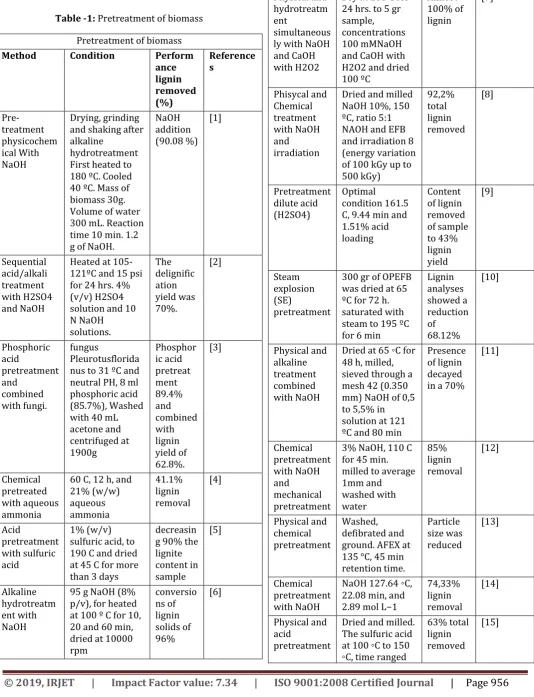
[image:2.595.32.567.103.801.2]2.2 PRETRATMENT OF BIOMASS
Table -1: Pretreatment of biomass
Pretreatment of biomass Method Condition Perform
ance lignin removed (%) Reference s Pre-treatment physicochem ical With NaOH Drying, grinding and shaking after alkaline
hydrotreatment First heated to 180 ºC. Cooled 40 ºC. Mass of biomass 30g. Volume of water 300 mL. Reaction time 10 min. 1.2 g of NaOH.
NaOH addition (90.08 %) [1] Sequential acid/alkali treatment with H2SO4 and NaOH
Heated at 105-121ºC and 15 psi for 24 hrs. 4% (v/v) H2SO4 solution and 10 N NaOH solutions. The delignific ation yield was 70%. [2] Phosphoric acid pretreatment and combined with fungi. fungus Pleurotusflorida nus to 31 ºC and neutral PH, 8 ml phosphoric acid (85.7%), Washed with 40 mL acetone and centrifuged at 1900g Phosphor ic acid pretreat ment 89.4% and combined with lignin yield of 62.8%. [3] Chemical pretreated with aqueous ammonia
60 C, 12 h, and 21% (w/w) aqueous ammonia 41.1% lignin removal [4] Acid pretreatment with sulfuric acid 1% (w/v) sulfuric acid, to 190 C and dried at 45 C for more than 3 days
decreasin g 90% the lignite content in sample [5] Alkaline hydrotreatm ent with NaOH
95 g NaOH (8% p/v), for heated at 100 º C for 10, 20 and 60 min, dried at 10000 rpm conversio ns of lignin solids of 96% [6] Physical and hydrotreatm ent simultaneous ly with NaOH and CaOH with H2O2
Dry at 105 C for 24 hrs. to 5 gr sample, concentrations 100 mMNaOH and CaOH with H2O2 and dried 100 ºC Almost 100% of lignin [7] Phisycal and Chemical treatment with NaOH and irradiation
Dried and milled NaOH 10%, 150 ºC, ratio 5:1 NAOH and EFB and irradiation 8 (energy variation of 100 kGy up to 500 kGy) 92,2% total lignin removed [8] Pretreatment dilute acid (H2SO4) Optimal condition 161.5 C, 9.44 min and 1.51% acid loading Content of lignin removed of sample to 43% lignin yield [9] Steam explosion (SE) pretreatment
300 gr of OPEFB was dried at 65 ºC for 72 h. saturated with steam to 195 ºC for 6 min
Lignin analyses showed a reduction of 68.12% [10] Physical and alkaline treatment combined with NaOH
Dried at 65 ◦C for 48 h, milled, sieved through a mesh 42 (0.350 mm) NaOH of 0,5 to 5,5% in solution at 121 ºC and 80 min
Presence of lignin decayed in a 70%
[11] Chemical pretreatment with NaOH and mechanical pretreatment
3% NaOH, 110 C for 45 min. milled to average 1mm and washed with water 85% lignin removal [12] Physical and chemical pretreatment Washed, defibrated and ground. AFEX at 135 °C, 45 min retention time. Particle size was reduced [13] Chemical pretreatment with NaOH
NaOH 127.64 ◦C, 22.08 min, and 2.89 mol L−1
74,33% lignin removal [14] Physical and acid pretreatment
Dried and milled. The sulfuric acid at 100 ◦C to 150 ◦C, time ranged
63% total lignin removed
© 2019, IRJET | Impact Factor value: 7.34 | ISO 9001:2008 Certified Journal
| Page 957
from 30 to 90 min, and acid loading 0 to 1.3% weight
acid/weight liquid. Chemical
pretreatment with
Ethanol/ben zene,
NaClO2, KOH and
deionized water
The EFB of 0,5 -1cm.
Ethanol/benzene (1:2 v/v) mixed solvent. NaClO2 solution at (pH 4–5) at 70 C for 1 h. 6 wt% KOH solution at 20 ºC for 24 h.
deionized water until the pH 7
Average thickness of nanofiber s was within the range 1– 3.5 nm
[16]
Biological
pretreatment Six days at 30º C cultivated. P. ostreatus CECT 20311 fungi
The lignin degradati on to 50% with P.
ostreatus, a higher value than the 41% reached with P. chrysosp orium
[17]
Chemical pretreatment (Ozone treated) with NaOH
For
ozonetreated:10 0 mL of NaOH (5 wt.%) for 1 h. washed with distilled water. dried in the oven at 105 °C for 50 min
lignin degradati on of 84.7 wt.%
[18]
Bisulfite
pretreatment Pretreated samples were washed and Five oxygen-catalyzed at 0.6 MPa and 30 min at 120 ºC
Lignin removed 75%
[19]
Phisycal and Bisulfite pretreatment
Milled to particle sizes ranging from 0.30 to 0.45 mm. Pretreated samples were washed and Five oxygencatalyzed at 0.6 MPa and 30 min at 120 °C
Lignin removed 79,6%
[20]
Bisulfite
pretreatment t The bisulfite pretreatment at (180 C, 30 min, 8% NaHSO3, 1% H2SO4). Reacted with a solution of sodium bisulfite at 180 C for 30 min, at 8% and 10% NaHSO3
Lignin removed 79,1%
[21]
Phisycal pretreatment (Ball milling (BM))
6–24 h, constant speed of 230 rpm
Lignin removed 81,32%
[22]
Phisycal, chemical and hydrotherma l treatment, combined.
Crushed particle size 5 mm. 1% NaOH (w/w). team treated at 230 C for 15 min in pressure vessel
Lignin decrease until 80 %
[23]
High-pressure steam pre-treatment (HPST)
Press-shredded at 250 ºC and 9.4 MPa. HPST conditions of 170/0.82, 190/1.32, 210/2.03, and 230 ºC/3.00 MPa for 2, 4, 8, and 10 min. oven-dried at 105 ºC for 24 h
Lignin reduction of 83%.
[24]
Chemical pretreatment (organosolv pretreatment )
Aqueous ethanol 1:10 (10 g in 100 mL).
Concentration (35, 55, and 75% vol), at reaction temperature (80, 100, and 120 °C) and reaction time (30, 60, and 90 min).
(KMnO4) 0.1 N, Sulfuric acid (H2SO4) 4.0 N and Potassium iodide (KI) for 10 minutes
Decrease lignin concentra tion of 75%
[25]
Alkaline pretreatment with NaOH and steam.
Wash EFB with NaOH 2%, 4 h at 30 ºC, with solid to liquid ratio of 1:10. Heating at 121 C and 117
Lignin removed 92.3 %.
© 2019, IRJET | Impact Factor value: 7.34 | ISO 9001:2008 Certified Journal
| Page 958
kPa during 6 min Chemical
pretreatment with sulfuric acid
Air-dried and pretreated at 170 C with 0.8 wt% sulfuric acid and a
solid/liquid ratio of 1:6. stirring speed 100 rpm and 15 min
lignin content decrease d
[27]
Ultrasonic pretreatment with H2SO4
500 ml of 2% H2SO4 with 50 g of OPEFB. Ultrasonicated at a power of 2 kW, 20 kHz for 15, 60 and 45 min, and amplitude of study was 15%, 60% and 90%
Lignin removed 81,9 %.
[28]
Alkaline pretreatment s
Washed, air-dried and refined to size of about 2-4 cm. applied pre-treatments at liquid/solid ratio 12:1 for 60 min, Sodium Hydroxide (NaOH) 2% w/v, 120 ºC. The fibers were washed and spin-dried
Lignin removed 91,3 %.
[29]
Sequential pretreatment (Phisycal, dilute acid and alkali pretreatment )
Washed and dried at 90 C for 24 h. Dilute sulfuric acid at concentration of 0,1-8,0% (v/v) at 121 C, 15 psi for 1 h, 10 N NaOH solution at ambient temperature for 4 h, then, was heated at 121 C, 15 psi for 15 min
Removed 70% lignin.
[30]
3. RELIABILITY ANALYSIS USNING THE WEIBULL DISTRIBUTION
The variability of the fracture strength of OPEFB fibres suggests that it may be modelled in a statistical sense to help us address the overall reliability of the fibres for reinforcing composites. To order of magnitude, estimate of the statistical
variation of strength of the fibres may be described using a Weibull distribution (Weibull 1951; Moser et al. 2003), assuming that the fracture strength is notappreciably dependent on the rate of loading. According to the Weibull formulation, the cumulative failure probability, Pr, of a population of the OPEFB fibres isrelated to the stress, σ, applied as
Pr(σ)=1-exp(-[σ/σo] β ………(1)
where β and σ0 are the Weibull modulus and the characteristic strength, respectively. The cumulative failure probability of a population of fibres of number N0 where N0 is large could be thought of as the number of fibres (N0 − N) having abreaking strength less than or equal to σ/ N0, so
Pr(σ) ≈ No-N/No= 1-N/No ………(2)
Consider a bundle containing initially N0 fibres, all of the same length, loaded only from the ends of the fibres. The fibres possess identical load-elongation behaviour (differing only in the strengths as well as elongations to break of the respective fibres), then the load F borne by the bundle is given by
F= σAN …………(3)
where N is the number of unbroken fibres all of cross-sectional area A and all bearing the same stress σ. If a fibre breaks, it no longer bears any load, so Eqs. (1), (2) and (3) then say that the number of fibres surviving application of the F to the bundle satisfies
N/No=exp(-[F/ No σo’A] β {No/N} β) …………(4)
where: σo’stands for σo /L1/β (which is the statistical mode of the strength distribution for fibres of small dispersion in strength). The maximum load which can besustained by a bundle is obtained from Eq. (3), as the maximum value of the product σN, and since N = No (1 − Pr(σ)) for any distribution, Weibull or not, the maximum load is determined by the maximum value of the quantity σ[1 − Pr(σ)]. For the Weibull distribution, this is obtained by differentiating Eq. (4) and equating to zero to obtain
Fbun = No σo’Ae-1/ β β-1/ β …………(5)
The ‘ultimate tensile strength’ of the bundle, σbun, i.e. the maximum load divided by the initial area of cross section, is then Fbun/(No A), i.e.
σbun= Fbun/{NoA}= σo’Ae-1/ β β-1/ β …………(6)
© 2019, IRJET | Impact Factor value: 7.34 | ISO 9001:2008 Certified Journal
| Page 959
a peak value is reached beyond which the F/{ No σo’A} decreases with increase in σ/ σo’..
4. CONCLUSIONS
According to the reliability analysis result of oil palm empty fruit bunch fiber with the four parameter weibull distribution conclude that:
1. The four parameter weibull distribution can be used to determine the reliability of OPEFB.
2. The four parameter weibull distribution has a symmetric pattern on density function of data.
3. High potential of reliability analysis of OPEFB.
4. At medium size of fiber occurs higher reliability.
REFERENCES
1. M. S. Siti Aisyah, Y. Uemura, and S. Yusup, “The Effect of Alkaline Addition in Hydrothermal Pretreatment of Empty Fruit Bunches on Enzymatic Hydrolysis Efficiencies,” Procedia Chem., vol.9, pp. 151–157, 2014.
2. S. Kim and C. H. Kim, “Bioethanol production using the sequential acid/alkali-pretreated empty palm fruit bunch fiber,” Renew. Energy, vol. 54, pp. 150–155, 2013.
3. M. M. Ishola, Isroi, and M. J. Taherzadeh, “Effect of fungal and phosphoric acid pretreatment on ethanol production from oil palm empty fruit bunches (OPEFB),” Bioresour. Technol., vol. 165, no.C, pp. 9–12, 2014.
4. Y. H. Jung, I. J. Kim, J. I. Han, I. G. Choi, and K. H. Kim, “Aqueous ammonia pretreatment of oil palm empty fruit bunches for ethanol production,” Bioresour. Technol., vol. 102, no. 20, pp. 9806–9809, 2011.
5. Y. H. Jung, I. J. Kim, H. K. Kim, and K. H. Kim, “Dilute acid pretreatment of lignocellulose for whole slurry ethanol fermentation,” Bioresour. Technol., vol. 132, pp. 109–114, 2013.
6. D. Carrillo-Nieves, L. Zumalacárregui-de-Cárdenas, R. Franco-Rico, and I. Sarvari-Horvath, “Kinetic of biogas production from oil palm empty fruit bunches,” Dyna, vol. 81, no. 187, pp. 96– 101, 2014.
7. M. Misson, R. Haron, M. F. A. Kamaroddin, and N. A. S. Amin, “Pretreatment of empty palm fruit bunch for production of chemicals via catalytic pyrolysis,” Bioresour. Technol., vol. 100, no. 11, pp. 2867–2873, 2009.
8. A. Kristiani, N. Effendi, Y. Aristiawan, F. Aulia, and Y. Sudiyani, “Effect of Combining Chemical and Irradiation Pretreatment Process to Characteristic of Oil Palm’s Empty Fruit Bunches as Raw Material for Second Generation Bioethanol,” Energy Procedia, vol. 68, pp. 195–204, 2015.
9. S. Chiesa and E. Gnansounou, “Use of empty fruit bunches from the oil palm for bioethanol production: A thorough comparison between dilute acid and dilute alkali pretreatment,” Bioresour.Technol., vol. 159, pp. 355–364, 2014.
10. J. D. C. Medina, A. Woiciechowski, A. Z. Filho, P. S. Nigam, L. P. Ramos, and C. R. Soccol, “Steam explosion pretreatment of oil palm empty fruit bunches (EFB) using autocatalytic hydrolysis: A biorefinery approach,” Bioresour. Technol., vol. 199, pp. 173–180, 2016.
11. J. D. Coral Medina et al., “Biological activities and thermal behavior of lignin from oil palm empty fruit bunches as potential source of chemicals of added value,” Ind. Crops Prod., vol. 94, pp. 630–637, 2016.
12. A. A. Kamoldeen, C. K. Lee, W. N. Wan Abdullah, and C. P. Leh, “Enhanced ethanol production from mild alkali-treated oil-palm empty fruit bunches via co-fermentation of glucose and xylose,” Renew. Energy, vol. 107, pp. 113–123, 2017.
13. M. J. Lau, M. W. Lau, C. Gunawan, and B. E. Dale, “Ammonia fiber expansion (AFEX) pretreatment, enzymatic hydrolysis, and fermentation on empty palm fruit bunch fiber (EPFBF) for cellulosic ethanol production,” Appl. Biochem. Biotechnol., vol. 162, no. 7, pp. 1847–1857, 2010.
14. M. Han, Y. Kim, S. W. Kim, and G. W. Choi, “High efficiency bioethanol production from OPEFB using pilot pretreatment reactor,” J. Chem. Technol. Biotechnol., vol. 86, no. 12, pp. 1527–1534, 2011.
15. R. J. Bouza, Z. Gu, and J. H. Evans, “Screening conditions for acid pretreatment and enzymatic hydrolysis of empty fruit bunches,” Ind. Crops Prod., vol. 84, pp. 67–71, 2016.
16. F. Fahma, S. Iwamoto, N. Hori, T. Iwata, and A. Takemura, “Isolation, preparation, and characterization of nanofibers from oil palm empty-fruit-bunch (OPEFB),” Cellulose, vol. 17, no. 5, pp. 977–985, 2010.
17. Y. Piñeros-Castro and M. Velásquez-Lozano, “Biodegradation kinetics of oil palm empty fruit bunches by white rot fungi,” Int. Biodeterior. Biodegrad., vol. 91, pp. 24– 28, 2014.
18. W. N. N. Wan Omar and N. A. S. Amin, “Multi response optimization of oil palm frond pretreatment by ozonolysis,” Ind. Crops Prod., vol. 85, pp. 389–402, 2016.
19. L. Tan et al., “Pretreatment of empty fruit bunch from oil palm for fuel ethanol production and proposed biorefinery process,” Bioresour. Technol., vol. 135, pp. 275–282, 2013.
© 2019, IRJET | Impact Factor value: 7.34 | ISO 9001:2008 Certified Journal
| Page 960
21. L. Tan et al., “Fractionation of oil palm empty fruit bunch by bisulfite pretreatment for the production of bioethanol and high value products,” Bioresour. Technol., vol. 200, pp. 572–578, 2016.
22. S. X. Chin, C. H. Chia, S. Zakaria, Z. Fang, and S. Ahmad, “Ball milling pretreatment and diluted acid hydrolysis of oil palm empty fruit bunch (EFB) fibres for the production of levulinic acid,” J.Taiwan Inst. Chem. Eng., vol. 52, pp. 85–92, 2015.
23. S. O-Thong, K. Boe, and I. Angelidaki, “Thermophilic anaerobic co-digestion of oil palm empty fruit bunches with palm oil mill effluent for efficient biogas production,” Appl. Energy, vol. 93, pp. 648–654, 2012.
24. A. S. Baharuddin et al., “Selective component degradation of oil palm empty fruit bunches (OPEFB) using high-pressure steam,” Biomass and Bioenergy, vol. 55, pp. 268–275, 2013.
25. Nurfahmi, H. C. Ong, B. M. Jan, C. W. Tong, H. Fauzi, and W. H. Chen, “Effects of organosolv pretreatment and acid hydrolysis on palm empty fruit bunch (PEFB) as bioethanol feedstock,” Biomass and Bioenergy, vol. 95, pp. 78–83, 2016.
26. D. Piarpuzán, J. A. Quintero, and C. A. Cardona, “Empty fruit bunches from oil palm as a potential raw material for fuel ethanol production,” Biomass and Bioenergy, vol. 35, no. 3, pp. 1130–1137, 2011.
27. F. B. Ahmad, Z. Zhang, W. O. S. Doherty, V. S. J. Te’o, and I. M. O’Hara, “Improved microbial oil production from oil palm empty fruit bunch by Mucor plumbeus,” Fuel, vol. 194, pp. 180–187, 2017.
28. R. Yunus, S. F. Salleh, N. Abdullah, and D. R. A. Biak, “Effect of ultrasonic pre-treatment on low temperature acid hydrolysis of oil palm empty fruit bunch,” Bioresour. Technol., vol. 101, no. 24, pp. 9792–9796, 2010.
29. T. Y. Ying, L. K. Teong, W. N. W. Abdullah, and L. C. Peng, “The Effect of Various Pretreatment Methods on Oil Palm Empty Fruit Bunch (EFB) and Kenaf Core Fibers for Sugar Production,” Procedia Environ. Sci., vol. 20, pp. 328–335, 2014.
30. S. Kim, J. M. Park, J. W. Seo, and C. H. Kim, “Sequential acid-/alkali-pretreatment of empty palm fruit bunch fiber,” Bioresour. Technol., vol. 109, pp. 229–233, 2012.
31. Tan, Z.E., Liew, C.K., Yee, F.C., Talamona, D. and Goh, K.L. Oil palm empty fruit bunch fibres and biopolymer composites: possible effects of moisture on the elasticity, fracture properties and reliability. In Green Biocomposites pp. 271-291, 2017.
32. Hermawan, B., Nikmatin, S., Alatas, H. and Sukaryo, S.G. Effect of oil palm empty fruit bunches fibers reinforced polymer recycled. In IOP Conference Series: Materials
Science and Engineering. Vol. 223, No. 1, p. 012064, July 2017.
33. Gea, S., Panindia, N., Piliang, A.F., Sembiring, A. and Hutapea, Y.A. All-cellulose composite isolated from oil palm empty fruit bunch. In Journal of Physics: Conference Series. Vol. 1116, No. 4, p. 042013, Dec 2018.
34. Valášek, P. and Ambarita, H. Material Usage of Oil-Palm Empty Fruit Bunch (EFB) in Polymer Composite Systems.DOI:
10.21062/ujep/161.2018/a/1213-2489/MT/18/4/686, Sept 2018.
BIOGRAPHIES
He has obtained his, M.Tech in Industrial Engineering & Management from IIT(ISM) Dhanbad and Pursuing PhD from IIT Roorkee his area of interest is Quality, Realiability, Industrial Engineering.