1 Title: Evaluating the implementation of a quality improvement process in General Practice using a realist evaluation framework
Authors:
Pam Moule EdD, MSc, BSc(Hons), RN, Professor of Health Services Research
Susan Clompus DHSC, MA, PGCE, BA (Hons) RN, Senior Lecturer Nursing
Jon Fieldhouse, DPhil, MSc, BSc (hons), DipCOT, Senior Lecturer Occupational Therapy
Julie Ellis-Jones, MSc, RN, Senior Lecturer Nursing
Jacqueline Barker, MBA, BSc (Hons), PhD student
Address: UWE, Faculty of Health and Applied Sciences, Glenside Campus, Blackberry Hill, Stapleton, Bristol, BS16 1DD
Corresponding author: Professor Pam Moule, UWE, Faculty of Health and Applied Sciences, Glenside Campus, Blackberry Hill, Stapleton, Bristol, BS16 1DD. Tel: 0117 328 8422: email : [email protected]
Running title: Realist evaluation in General Practice
2 Abstract
(i) Rationale, aims and objectives: Underuse of anticoagulants in atrial fibrillation is known to increase the risk of stroke and is an international problem. The National Institute for Health Care and Excellence guidance CG180 seeks to reduce atrial fibrillation related strokes through prescriptions of Non-vitamin K antagonist Oral Anticoagulants. A quality improvement programme was established by the West of England Academic Health Science Network (West of England AHSN) to implement this guidance into General Practice.
A realist evaluation identified whether the quality improvement programme worked, determining how and in what circumstances. This realist evaluation tested the programme theory through careful, systematic consideration of the General Practice context, the training and support mechanisms provided through the quality
improvement team and reviewed the outcome changes in the practice.
(ii) Methods: Six General Practices in one region, became the case study sites. Quality improvement team, doctor and pharmacist meetings within each of the General Practices were recorded at three stages: initial planning, review and final. Additionally, 15 interviews conducted with the practice leads, explored experiences of the quality improvement process. Observation and interview data were analysed, and compared against the initial programme theory.
(iii) Results: The quality improvement resources available were used variably, with the training being valued by all. The initial programme theories were refined
following the data collection and analysis. In particular, local workload pressures and individual General Practitioner experiences and pre-conceived ideas were
acknowledged. Where key motivators were in place, such as prior experience and a commitment to quality improvement and evidence-based care delivery, the
programme achieved optimal outcomes and secured a lasting quality improvement legacy.
3 Introduction
Atrial Fibrillation (AF) is a chronic condition affecting around one million people in the UK and involves a significantly increased risk of stroke. Atrial Fibrillation related strokes are more likely to be fatal or cause severe disability1. National Institute for Health Care and Excellence (NICE) guidance CG1802 recommends Non-vitamin K antagonist Oral Anticoagulants (NOACs) as equal first-line options alongside warfarin. These guidelines suggest that antiplatelet agents (aspirin) should not be used as monotherapy to prevent non-valvular atrial fibrillation-related stroke.
A report by the Association of the British Pharmaceutical Industry, Stroke in Atrial Fibrillation Initiative 3 found that despite the guidance the uptake of NOACs has been lower and slower than the National Institute for Health Care and Excellence anticipated and its use has varied widely across Clinical Commissioning Groups. Further research has also suggested that uptake is suboptimal4,5. Indeed, internationally there is reported under use of anticoagulants 6,7,8 .
A number of initiatives have been implemented to support oral anticoagulant uptake. Holt et al 9 developed and implemented a software tool used as part of the electronic health record system to improve anti-coagulation use. Using the software improved stroke and haemorrhage rates, but no significant change in prescribing was seen. Adderley et al 10 explored whether the presence of contraindications to treatment influenced prescription. However, this had little influence on the decision to prescribe anticoagulants for the prevention of stroke in the UK and left many patients at risk of AF related stroke.
To support the implementation of the NICE guidance, the West of England Academic Health Science Network (West of England AHSN)11 sought to bring together industry, Clinical Commissioning Groups and General Practitioners (GPs) to work
collaboratively to secure practice change and improve patient outcomes. The Don’t Wait to Anti-coagulate quality improvement programme was established to enable this. A range of innovative interventions to support the implementation of the NICE guidance in primary care intervention was developed and piloted by the West of England AHSN. During the development phase (Phase 1) a series of interventions were piloted with 11 ‘Innovator Practices’ drawn from the seven Clinical
Commissioning Groups. These interventions included education, training materials and patient decision aid tools. Using information gathered in Phase 1, the materials were refined for Phase 2 of the project. The quality improvement implementation methodology adapted the Institute for Healthcare Improvement Model12.
The involvement of GPs in the quality improvement process is not without its
4 and change leadership13. Quality improvement support teams taking a more
systems-based approach to planning, implementing and measuring the impact of evidence-based care have emerged to help practices implement quality
improvement programmes. Here, the quality improvement team were employed in such a role to support the initiative and were keen to understand how the process worked and how a legacy of improvement could be supported. To achieve this, the realist evaluation aimed to identify whether the quality improvement process worked, determining how and in what circumstances.
Methods
A comprehensive evaluation was needed that would consider the implementation context and gather and analyse complex data from a number of general practices. The evaluation therefore employed a theory-based evaluation approach, that
focused on the general practice context, the underpinning programme theory (which outlines why and how the quality improvement intervention leads to certain
outcomes and the conditions in which this takes place)14 and used mixed-methods to test the programme theory.
Evaluation environment
The programme was implemented within one geographical region in the UK. In total, 51 practices were involved in the overall project (n=61%). The evaluation team concentrated on six GP practices selected from the 51. The sample size was based on Evans et al’s15 experience that six case studies provided sufficient data to examine regularities in context, mechanism and outcomes within a realist evaluation.
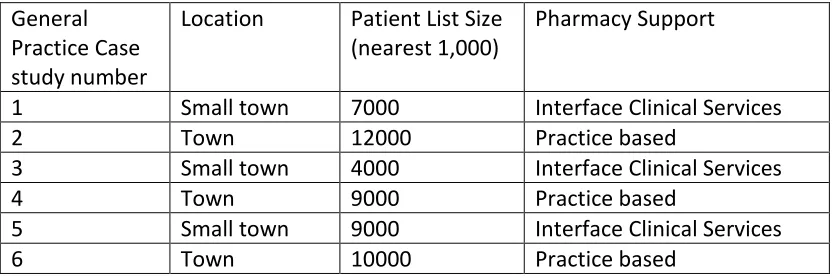
[image:4.595.85.501.539.678.2]Those practices involved ranged in list size and location as shown in Table 1.
Table 1: General Practice Context
General Practice Case study number
Location Patient List Size (nearest 1,000)
Pharmacy Support
1 Small town 7000 Interface Clinical Services
2 Town 12000 Practice based
3 Small town 4000 Interface Clinical Services
4 Town 9000 Practice based
5 Small town 9000 Interface Clinical Services
5 The programme
The programme was developed following initial pilot work in phase 1. Clinical skills training for GPs and pharmacists was offered, along with information on atrial fibrillation management. Attendance at an initial training session was required prior to involvement. A welcome pack for general practices including project information and posters to advertise the programme to patients. A programme website with information about treatment options and answers to frequently asked questions was available. Training on the use of website resources was also accessible. Further online resources included patient information and a decision-making tool. Training in quality improvement methodology was also supplied for the practice. The quality improvement team offered regular reviews and telephone support throughout the lifespan of the project.
A steering group for the project was in place which included representatives from industry, the Clinical Commissioning Group and the West of England AHSN. Importantly, a GP with special interest in cardiac care was involved in the steering group, developed and delivered the specialist training and provided ongoing support to the project. This role was funded as part of the project, alongside a project lead role, additional practice support pharmacy hours and the provision of interface clinical service pharmacists. Two members of the quality improvement team were also funded by the industry partners involved.
All of the participating practices were offered support to complete an initial patient audit by the interface clinical services pharmacist. The purpose of the audit was to interrogate the GP clinical systems and produce a list of patients with a diagnosis of atrial fibrillation. This list was stratified to produce lists of patients for review as per NICE guidelines CG 180. Following this initial stratification, a desktop assessment was undertaken first to determine which patients were suitable for a review by the GP, either face-to-face, on the telephone or in another way chosen by the practice. A meeting was facilitated to enable patient involvement in decision-making about ongoing prescription treatment, which was guided by tools available on the website.
Realist evaluation
Realist evaluation16 is a theory-driven, practice-orientated evaluation method based on case study, or close observation of a programme in ‘real life’ operation which, in this case, was the impact of the quality improvement process on anti-coagulant prescribing by local GPs.
6 achieving the desired outcome and focuses on identifying causal pathways, which are first hypothesised, then tested using qualitative methods to understand complex pathways or idiosyncrasies. Outcomes (O) are the intended and unintended
consequences of a programme 18.
Programme theory
Hypothesizing the programme theory commenced with an initial review of the evidence supporting the intervention. Key to supporting the intervention were: the NICE guidance2, European Society of Cardiology: Guidelines for the Management of Atrial Fibrillation 19, and the Atrial Fibrillation Association: The Safe Report20. These provided the evidence base for best practice in the treatment of atrial fibrillation, leading to preventative prescribing, increased patient care, and improved resource use.
The quality improvement project team identified three underlying theoretical frameworks supporting the programme theory: the model for improvement21, complexity and systems thinking22, and clinical microsystems theory23.
The model for improvement aims to accelerate innovation adoption, working alongside existing change models, which in this case included the Plan Do Study Act (PDSA) cycle24. Complexity and change systems theory considers an organisation as a complex system composed of many components in frequent interaction. Within this programme the GP, pharmacist, quality improvement team members and patients would each have had a perspective of the system. Analysing these different
perspectives enables understanding of the processes operating within the whole system. Clinical microsystems theory also takes a systems approach, but places the patient at the centre of a small, frontline network operating as part of a larger system. In this case, the practices and pharmacists participating in the intervention are viewed as a small team within the wider National Health Service (NHS).
Drawing on best practice in the treatment of atrial fibrillation (including preventative prescribing, enhancing the patient experience and improving resource use), the following programme theory was devised:
General practices have adopted a system for atrial fibrillation patient
pathways that accords with the NICE guidance. The mechanisms that lead to the use of the system are part of a quality improvement process which includes training, information provision, and workload resources used by GPs who reason that it will help them to meet patient, surgery or personal goals.
7
patients and the systems learning legacy is retained for future quality improvement programmes.
The programme components and anticipated CMOs
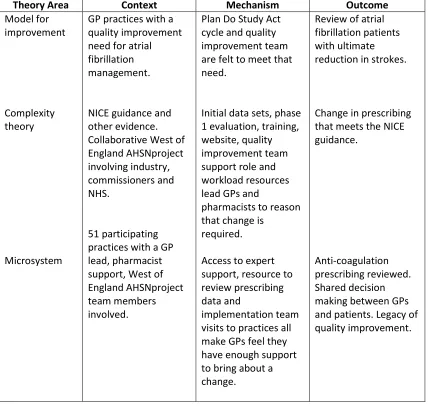
Following the literature and evidence reviews we sought clarification of our
proposed theory areas and additional context, mechanism, outcome configurations through a focus group meeting with the quality improvement team, see Table 2.
[image:7.595.86.518.280.686.2]Insert Table 2
Table 2. Theory areas and candidate CMOs for implementation.
Theory Area Context Mechanism Outcome
Model for improvement
Complexity theory
Microsystem
GP practices with a quality improvement need for atrial fibrillation management.
NICE guidance and other evidence. Collaborative West of England AHSNproject involving industry, commissioners and NHS.
51 participating practices with a GP lead, pharmacist support, West of England AHSNproject team members involved.
Plan Do Study Act cycle and quality improvement team are felt to meet that need.
Initial data sets, phase 1 evaluation, training, website, quality improvement team support role and workload resources lead GPs and
pharmacists to reason that change is
required.
Access to expert support, resource to review prescribing data and
implementation team visits to practices all make GPs feel they have enough support to bring about a change.
Review of atrial fibrillation patients with ultimate
reduction in strokes.
Change in prescribing that meets the NICE guidance.
8 Data collection methods
Ethical approvals were secured from the University ethics committee. This preceded qualitative data collection in the practices, which was completed with informed consent in place for those individuals involved.
Observations
The evaluation team members attended the practice based meetings between the quality improvement team and the practice lead GP and in case study site 2, the pharmacist was also present. These meetings were scheduled to occur at three stages: the initial planning meeting, followed by review and concluding meetings. The main content of the meeting was noted, particularly considering the quality improvement implementation. Notes were made relating to the context and mechanisms that might have impacted on the experience. For example, references to the use of training materials and resources, specialist support, quality
improvement team support and anything related to the practice context such as workload.
Interviews
Individual interviews were completed with GP practice leads regarding what had ‘worked well’ in the quality improvement process, using the context, mechanism and outcome hypothesis as a framework. The GPs were selected as they had led the implementation in the practices and had been involved with the quality
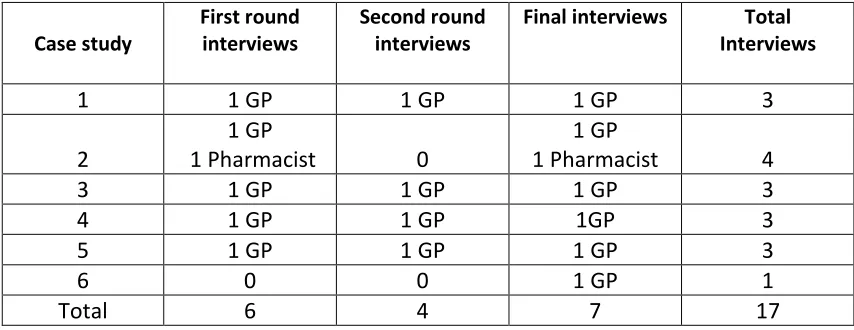
improvement process. In case study site 2, the pharmacist had also been very closely involved and was therefore part of the observation and interview process. In total 17 interviews took place (see Table 3), providing rich data about the quality
[image:8.595.84.511.599.764.2]improvement implementation process.
Table 3: Interviews conducted per case study per round
Case study
First round interviews
Second round interviews
Final interviews Total Interviews
1 1 GP 1 GP 1 GP 3
2
1 GP
1 Pharmacist 0
1 GP
1 Pharmacist 4
3 1 GP 1 GP 1 GP 3
4 1 GP 1 GP 1GP 3
5 1 GP 1 GP 1 GP 3
6 0 0 1 GP 1
9 Recruitment process and sampling strategy.
The project encompassed six GP practices within one clinical commissioning group area, based on Evans et al’s15 experience that six case studies provided sufficient data to examine CMO regularities. The initial aim was to select a range of different sized practices, including rural and urban catchment areas. However, in effect, the sample was a self-selecting convenience sample, being those practices who agreed to participate when approached by the West of England AHSNvia email. Overall, 61% of practices in the region were involved (n=51) and the evaluation proceeded with six of these.
Data analysis
Realist evaluation analyses the data in the form of configuration patterns of context, mechanism and outcome16. These patterns represent the causal pathways, where mechanisms and context are seen to relate to outcomes. The realist evaluation tests and refines the programme theory developed initially. To achieve this the evaluation analysed the data through identifying context, mechanism and outcome
configurations based on the initial programme theory.
Interviews were audio-recorded and transcripts were subjected to a coding and memo-writing process25, along with the observational data recorded at the practice meetings. In coding, specific aspects of the context and mechanism and outcomes of the quality improvement process, as it unfolded in each practice, were identified. Initially, members of the team undertook an analysis of the transcriptions related to interviews and observation they had undertaken. These data were also coded independently by a second team member and the two sets of analysis were
reviewed, developing one set of data for each practice. These were presented as the context, mechanism, and outcome configurations for the practice.
Refining the programme theory
The initial programme theories were compared and contrasted with the findings from GP and pharmacist interviews and observations in the six GP practices. This comparison was used to refine the theory and new mechanisms and patterns were identified.
Results
10 In terms of context, all the GPs worked within the project’s collaborative framework, engaging through the quality improvement team with industry and commissioning. Additionally, one practice was already reviewing their prescriptions as a result of their NHS accountability.
Some GPs were aware of the NICE guidance and wider evidence for the prescribing review. One GP acknowledged their accountability thus,
“It’s part of clinical governance…and I think it’s an important part of everyone’s working, continually developing…services, making sure that the services we offer are kept to a high standard…The NHS is accountable for that and part of the accountability is making sure you regularly do auditing, quality improvement projects.” (GP CS2)
However, one GP noted,
“the workload that doctors and GP staff experience is rising…and it was sometimes difficult to allocate time…to focus on the project.” (GP CS4)
As a consequence, mechanisms that allowed the practices to flexibly implement the programme and achieve the outcomes were adopted. These included aspects such as being able to determine when to start the programme, ways of engaging with the quality improvement team and using online materials when needed.
The training provision was valued by all GP participants and positively noted by those pharmacists who attended. The website resources were used variably with practitioners engaging to greater or lesser extents.
The six GP practices reported changes in prescribing practice and data supporting this was collected by the quality improvement team as part of a wider quality improvement evaluation.
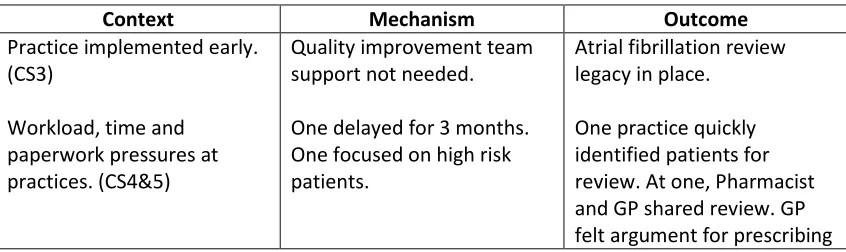
[image:10.595.87.510.637.763.2]As shown in Table 4, the initial theory model for improvement did take account of the range of practice settings all starting at different points and with different contextual issues.
Table 4. CMOs for model for improvement
Context Mechanism Outcome
Practice implemented early. (CS3)
Workload, time and paperwork pressures at practices. (CS4&5)
Quality improvement team support not needed.
One delayed for 3 months. One focused on high risk patients.
Atrial fibrillation review legacy in place.
11 Audit review process in
place, but not all patients captured. (CS1)
Some improvement support and tools used.
NOACs strengthened.
Reviewed 40 patients.
Theory area: Complexity theory
When reviewing the findings it was clear that complexity theory does not take account of established pre-conceived ideas, held in one part of the system, of those in other parts. For example, one GP indicated that they deliberately avoided
interactions with pharma, saying,
“And you know we try not to see drug reps here, because it’s very easy to alter your prescribing.” (GP, CS1)
The initial theory had assumed that bringing a collaboration of industry,
[image:11.595.84.511.72.142.2]commissioning and the NHS would achieve a change in prescribing, without fully appreciating the impact of previous learned routines and pre-conceptions.
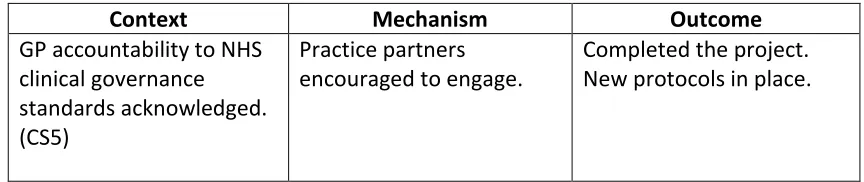
Table 5 shows the extent to which accountability to external bodies provided effective motivation for practices. This new understanding should be encompassed into the theory.
Table 5. CMOs for complexity theory
Context Mechanism Outcome
GP accountability to NHS clinical governance standards acknowledged. (CS5)
Practice partners encouraged to engage.
Completed the project. New protocols in place.
Theory area: Microsystem theory
The initial Microsystem theory has provided a way of understanding the importance of the local general practice context and the provision of key mechanisms in
achieving the outcomes. Where the lead GP lacked experience or resources, the quality improvement programme provided essential mechanisms such as training, networking and materials to ensure that the prescribing review was achieved. For example, one newly appointed GP said,
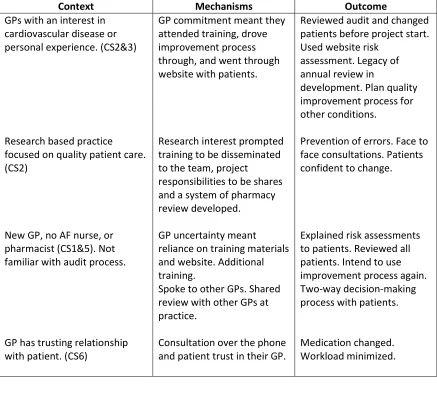
[image:11.595.81.513.485.576.2]12 Interestingly, where key motivators were in place, such as prior experience and a commitment to quality improvement and research based practice, the programme achieved optimal outcomes such as an efficient prescribing review, completed with patient involvement and a lasting QI legacy (see Table 6). For example, the
pharmacist at one such practice said,
[image:12.595.86.523.264.665.2]“they are open to best practice and change and a good clinical team here as there is no resistance to change.” (Pharmacist, CS2)
Table 6. CMOs for microsystem theory
Context Mechanisms Outcome
GPs with an interest in cardiovascular disease or personal experience. (CS2&3)
Research based practice focused on quality patient care. (CS2)
New GP, no AF nurse, or pharmacist (CS1&5). Not familiar with audit process.
GP has trusting relationship with patient. (CS6)
GP commitment meant they attended training, drove improvement process through, and went through website with patients.
Research interest prompted training to be disseminated to the team, project
responsibilities to be shares and a system of pharmacy review developed.
GP uncertainty meant reliance on training materials and website. Additional training.
Spoke to other GPs. Shared review with other GPs at practice.
Consultation over the phone and patient trust in their GP.
Reviewed audit and changed patients before project start. Used website risk
assessment. Legacy of annual review in
development. Plan quality improvement process for other conditions.
Prevention of errors. Face to face consultations. Patients confident to change.
Explained risk assessments to patients. Reviewed all patients. Intend to use improvement process again. Two-way decision-making process with patients.
Medication changed. Workload minimized.
Discussion
13 prescribing. A realist evaluation was able to show whether and how the
implementation of a quality improvement process in general practices worked.
Many practices completed a review of anticoagulation prescribing, making
prescription changes with patient involvement in decision-making seen to varying degrees. In some cases, a quality improvement legacy was also seen, with a number of GPs seeking to use the approach in the future. The evaluation was also able to provide learning about the use of a quality improvement process for the West of England AHSN, demonstrating that certain mechanisms and contexts are important in achieving desired outcomes. In particular, providing training, support and having keen and enthusiastic local expertise involved in the delivery was critical.
In considering the findings more fully, it must be noted that there were some limitations in the evaluation. The six practices taking part in the study were self-selecting, agreeing to take part following an invitation from theWest of England AHSN. This recruitment approach can preference the selection of those with a more positive stance and should be considered as potentially limiting the validity of the study. It should also be noted that significant resource was made available to the practices involved through the provision of the quality improvement team support and the additional training and website materials, which is not generally available.
It was clear that the model for improvement12 used by the Academic Health Science Network allowed flexible implementation of the programme, which achieved some intended outcomes. In particular, the review of patient prescription was completed, and a change of prescribing practice was seen. However, the local context of the practice was an important factor in securing desired outcomes and changes in prescribing. Where GPs had personal experience or expertise in the area this aided motivation to change and greater engagement with the project was seen. In these cases there were reports of patient engagement in the change process and evidence of system review being implemented. However, where practices felt that their approach was already good enough, then there was limited engagement with the support in all its forms.
There was also evidence of some practices adopting the improvement process, with intention to use it as part of ongoing quality improvement activity. This was
particularly the case in those practices where GPs had more experience in atrial fibrillation, engaged fully with the quality improvement project and took an active role in research. This suggests securing a quality improvement legacy is more likely in those practice areas fully engaging in the initial project processes.
14 opposing positions, the NHS having a business model that strives to put patients’ first27. The clear enthusiasm and belief in the benefits of change held by the GP trainer convinced those attending that they could and should act to deliver the project. The joint steering group was also an important mechanism in challenging long-held GP views. Through this unique working relationship, it became clear that all parties were working to secure better patient outcomes and a common goal. The website materials produced were helpful to some practices. They were most often used by those GPs with less experience and interest in atrial fibrillation, who engaged with the range of information and support tools provided.
Some practices were already engaged with the NICE guidelines2, and had their own systems in place for reviewing and following up patients with atrial fibrillation, whilst others did not. This correlates with The King’s Fund finding13 that some GPs may lack a systems ‘mind-set’, and do not have any formal system in place that will enable them to track/monitor patients. As GP practices often work in isolation, a co-ordinated project that included the provision of training, additional support from the quality improvement team and provided highly valued link pharmacists, enabled them to network with each other and share best practice. The provision of such support has seemingly overcome a lack of quality improvement skills and leadership that has been seen to impact on the delivery of quality improvement in general practice13.
In conclusion, it is clear that the quality improvement approach has secured the review of prescriptions and changes in patient medication, which has seen the implementation of the NICE guidelines 2 across six general practices. The key mechanism to adopting the NICE guidelines2 in GP practices was their access to additional expert support and training (provided during the programme). In addition to working in close partnership with the quality improvement team, during a process of education, self-analysis/reflection on existing practice, improvement and change; this gave rise to a greater understanding of the QI process for improving the
outcomes for patients with atrial fibrillation.
To support quality improvement, which aims to secure practice change and deliver a quality improvement legacy, the mechanisms of a team, training and resource provision are helpful. It is also apparent that the use of a model for improvement that allows flexibility in implementation and takes account of local practice context should be encouraged.
15 References
1. Atrial Fibrillation Association (AFA). AF Information & Advice for Patients: What is Atrial Fibrillation?
http://www.heartrhythmalliance.org/afa/uk/atrial-fibrillation Accessed December 6, 2017.
2. National Institute for Health and Care Excellence (NICE). CG180: Atrial Fibrillation: Management. . https:// www.nice.org.uk/guidance/cg180 Accessed December 6, 2017.
3. Association of the British Pharmaceutical Industry (ABPI). Stroke in Atrial Fibrillation Initiative (SAFI): One year on – Why are patients still having unnecessary AF-related strokes? London: ABPI;2016.
4. Ogilvie IM, Newton N, Welner SA, Cowell W, Lip GY. Underuse of oral anticoagulants in atrial fibrillation: a systematic review. American Journal of Medicine.
2010;123:638–645.
5. Holt TA, Hunter TD, Gunnarsson C, Khan N, Cload P, Lip GY. Risk of stroke and oral anticoagulant use in atrial fibrillation: a cross-sectional survey. British Journal of General Practice. 2012;62:e710–e717.
6. Bahri O, Roca F, Lechani T, et al. Underuse of oral anticoagulation for individuals with atrial fibrillation in a nursing home setting in France: comparisons of resident characteristics and physician attitude. Journal of American Geriatrics Society. 2015;63(1):71–76.
7. Baczek VL, Chen WT, Kluger J, Coleman CI. Predictors of warfarin use in atrial fibrillation in the United States: a systematic review and meta-analysis. BMC Fam Pract. 2012; doi:10.1186/1471-2296-13-5.
8. Johansson C, Hägg L, Johansson L, Jansson JH. (2014) Characterization of patients with atrial fibrillation not treated with oral anticoagulants. Scand J Prim Health Care 2014; 32(4):226–231
9. Holt T, Dalton A, Marshall T, et al. (Automated Software System to Promote Anticoagulation and Reduce Stroke Risk. Stroke. 2017;48:787-790.
16 11. West of England Academic Health Science Network (WEAHSN) The West of
England Academic Health Science Network. http://www.weahsn.net
Accessed April 20, 2018.
12. Health Care Improvement Model
http://www.ihi.org/resources/Pages/HowtoImprove/default.aspx. Accessed December 6, 2017.
13. Dawda P, Jenkins R, Varnam R. Quality Improvement in General Practice. London: King’s Fund; 2010.
14. Keely P. Clinical guidelines. Palliative Medicine. 2003; 17 (4): 368-374.
15. Evans D, Coad J, Cotterell K, et al. Public involvement in research: Assessing impact through a realist evaluation. Health Services and Delivery Research. 2014; 2 (36): 1-128.
16. Pawson R, Tilley N. Realist Evaluation. London: Sage; 2004.
]http://www.communitymatters.com.au/RE_chapter.pdf Accessed
November 29, 2016.
17. Rycroft-Malone J, Fontenla M, Bick D, Seers K, Realistic evaluation: the case of protocol-based care. Implement Science.2010; 5:38.
18. Wilson V, McCormack B, Critical realism as emancipatory action: the case for realistic evaluation in practice development. Nursing Philosophy. 2006; 7 :45-57.
19. European Society of Cardiology. Guidelines for the Management of AF.
https://www.escardio.org/Guidelines/Clinical-Practice-Guidelines/Atrial-Fibrillation-Management Accessed September 26, 2016.
20. Atrial Fibrillation Association. The Safe Report.
http://www.anticoagulationeurope.org/files/files/booklets/The%20sAFe%20r eport.pdf Accessed December 2, 2016.
21. Langley GL, Nolan KM, Nolan TW, et al. The Improvement Guide: A Practical Approach to Enhancing Organizational Performance (2nd edition). Jossey-Bass: San Francisco; 2009.
17 23. Nelson E, Bataldon P, Huber T, et al. Microsystems in HealthCare. Part 1:
Learning from higher performing font-line clinical units. Joint Commission Journal on Quality and Patient Safety .2002; 28 (9): 472-493.
24. NHS Institute for Innovation and Improvement. “Plan, Do, Study, Act (PDSA).”
http://www.institute.nhs.uk/quality_and_service_improvement_tools/qualit
y_and_service_improvement_tools/plan_do_study_act.html Accessed
December 2, 2017.
25. Silverman D. Doing Qualitative Research 4th ed. Los Angeles: Sage; 2016.
26. Mason R B. The external environment's effect on management and strategy: A complexity theory approach. Management Decision. 2007; 45 (1): 10-28. 27. NHS England. Putting Patients First: Business Plan 2014/15 to 2016/17.