Apprentice to Graduate: A narrative study into the
progression experience of Advanced Apprentices
Alison Rouncefield-Swales
A thesis submitted in partial fulfilment of the requirements of the University of the West of England, Bristol for the degree of Doctor of Philosophy
Faculty of Arts, Creative Industries and Education, University of the West of England, Bristol
Acknowledgements
This PhD journey has been an unexpected emotional rollercoaster, and like many mature students it has been completed against the background of significant personal change. Firstly, it is only right to thank all the individuals who gave up their time to talk to me without whom this thesis would not have been possible. I especially want to thank the former Apprentices whose voices are insightful, clear and determined. A riding concern has been to do justice to your narratives which I hope I have achieved.
My supervisory team: initially led by Associate Professor Richard Waller and Dr John Ryan, later joined by Associate Professor Neil Harrison following John’s retirement from the University. I wish to thank you for your support and encouragement, you have nurtured my ideas and helped me to be confident with my own voice and direction. This has been a much longer journey that we all anticipated, without your guidance I am not sure I would have made it this far.
To the loves and souls of my life: My husband Ben and my three beautiful children Milo, Matilda and Felix. Ben, I cannot ever thank you enough for the support you have given to me throughout; you have let me talk, have listened intently and have allowed this work to be part of our lives for the past five years. You are my rock; you have pushed me and supported me through this tumultuous journey. You have helped me locate my motivation by believing in me far more than I have ever believed in myself. My dear, darling children, I never believed I would ever get to call myself mother yet here I am three times over. You have brought sweet chaos but you also gave me a new purpose and sense of identity.
To my mother: for instilling in me a sense that I could achieve whatever I set my mind to, for teaching me never to give up and for providing Grandmother duties when we needed you.
To my late father: you were the Apprentice who would have relished the chance to study at university. This is dedicated to you.
Abstract
This thesis explores the biographical journey into and through HE of a small group of former Advanced Apprentices. It explores how early educational experiences relate to pathways into and through the Apprenticeship system and how former Apprentices experience higher education (HE) and how it impacts on their lives, experiences and identities. The changing landscape of both Apprenticeship and HE means we need to capture these accounts of becoming a HE student to understand the lived experience of individuals in increasingly credentialised learning and work settings. This study utilises a narrative, longitudinal approach to explore the experience of former Apprentices within HE, drawing upon data from several semi-structured narrative interviews with sixteen former Apprentices as they progress through their HE programme. The final phase of the study engaged with the broader social network of six participants, illuminating how education and career decision-making and experiences are deeply embedded within family, friendship and peer networks. These rich narrative accounts help unearth the complexities of decisions and experiences of a group of under-researched individuals and calls into question dominant narratives about Apprentices and vocational learners.
Analysing learning experiences, educational transitions and identity highlight the process of becoming a HE student is relational, situational, and part of a web of complex interactions. The study’s multidisciplinary framework has drawn on communities of practice (Lave and Wenger, 1991; Wenger, 1998), possible selves (Markus and Nurius, 1986) and modes of reflexivity (Archer, 2003, 2007, 2012) to guide our understanding of former Apprentices’ learning experiences and how reflexivity help them navigate constellations of education and career possibilities. The longitudinal network methodology produces a rich, intricate picture exploring the complexity of an individual’s modes of reflexivity, how they may demonstrate different reflexive approaches in different contexts (Dyke, Johnson and Fuller, 2012), and how reflexivity may mature or respond to changing network dynamics.
Contents
Chapter 1. Introduction ... 1
1.1 Introduction and background to the research ... 1
1.2 Personal context ... 2
1.3 Transformation of the research questions ... 3
1.4 Overview of the thesis structure ... 5
Chapter 2. Exploration and evaluation of Apprenticeships and progression to HE ... 7
2.1 Synergy with broader education and vocational policy ... 7
2.1.1 The dawn of the Modern Apprenticeship ... 14
2.2 Contemporary developments in Apprenticeships ... 19
2.2.1 Recent trends in participation in Apprenticeships in England ... 22
2.3 Apprenticeship progression to HE ... 25
2.3.1 Apprentices in HE ... 26
2.3.2 Numbers of Apprentices progressing to HE ... 27
2.4 Implications and conclusions... 31
Chapter 3. Theoretical literature relating to choice, learning, identity and agency ... 32
3.1 Choices and embedded decision-making ... 32
3.1.1 Variations in decision-making models ... 33
3.1.2 Choices and decisions framed by social relations ... 34
3.1.2.1 Possible futures, selves and identities ... 35
3.1.2.2 Interconnecting influences: agency, relationships and networks ... 38
3.2 The social practice of learning ... 43
3.2.1 Defining communities of practice ... 43
3.2.1.1 The limitations and challenges of working with communities of practice 47 3.2.1.2 Working with communities of practice and networks of influence ... 49
3.2.2 Expansive and restrictive forms of learning environments ... 49
3.3 Apprenticeship, HE and changing identity ... 53
3.3.1 Learner identity ... 54
3.3.2 Occupational identity ... 56
3.3.3 Student identity ... 58
3.3.4 Interacting, shifting identities ... 60
3.4 Individualisation and Agency ... 61
3.4.1 Modes of reflexivity ... 64
3.4.2 Utilisation of Archer’s modes in studies of learning ... 68
3.5 Conclusion ... 70
Chapter 4. Methodology and methods ... 73
4.1 Ontological, epistemological and methodological underpinnings ... 73
4.1.1 Methodological underpinnings ... 76
4.1.2 Longitudinal approach ... 77
4.2 Qualitative methodology ... 79
4.2.1 Narrative interviews ... 80
4.2.2 Network of influence case study ... 81
4.2.2.1 Type and partiality of networks ... 83
4.3 Methods ... 84
4.3.1 Locating a sample ... 85
4.3.2 Questionnaire ... 87
4.3.3 Achieving a sample ... 88
4.3.4 Conducting the interviews ... 89
4.3.4.1 Interviews with wider actors ... 94
4.3.4.2 Maintaining the relationship ... 94
4.4 Methodological criticisms and concerns ... 95
4.5 Approaching data analysis ... 97
4.5.1 The Apprentice as the unit of analysis ... 97
4.5.2 The analysis process ... 98
4.5.2.1 Network analysis ... 99
4.5.2.2 Thematic analysis ... 100
4.6 Ethical issues ... 101
4.6.1 Voluntary informed consent ... 102
4.6.2 Confidentially and anonymity ... 102
4.6.3 The researcher-participant power relationship ... 103
Chapter 5. Re-storying Apprentice biographies and the influence of social networks . 106 5.1 Jamie Whitefield ... 108
5.1.1 Understanding Jamie... 114
5.2 Lucy Dawson ... 114
5.2.1 Understanding Lucy... 119
5.3 Mo Fakhoury... 120
5.3.1 Understanding Mo ... 126
5.4 Samuel Ramchurn... 127
5.5 Rose Poole ... 134
5.5.1 Understanding Rose ... 138
5.6 Apprentice networks: what can we learn from these cases? ... 139
Chapter 6. The biographical journey to being an Apprentice ... 141
6.1 Representations of narrative data ... 141
6.2 Early educational experiences and learner journeys ... 142
6.2.1 Family tensions ... 142
6.2.2 Rejection of formal learning ... 143
6.2.3 The lure of earning ... 145
6.2.4 The first missed opportunity ... 146
6.2.5 Apprenticeship as a trajectory to HE... 147
6.3 Being an Apprentice ... 148
6.3.1 Participation ... 149
6.3.2 Personal Development ... 152
6.3.3 Institutional Arrangements ... 153
6.4 From being an Apprentice to moving towards HE ... 155
6.4.1 The role and influence of social networks ... 156
6.4.2 From ‘working-class’ jobs to ‘middle-class’ careers ... 160
6.5 Conclusions ... 163
Chapter 7. The journey from being an Apprentice to becoming a HE student ... 164
7.1 How are Apprentices prepared for the transition to HE? ... 164
7.2 Engagement in learning and the academic practice of HE ... 166
7.2.1 Engagement with pedagogy ... 167
7.2.2 The role of assessment and feedback ... 170
7.2.3 The development of critical thinking and theoretical knowledge ... 173
7.3 The influence of support networks, future selves and developing identities in becoming a HE student ... 174
7.3.1 Relationships with networks and peers ... 174
7.3.2 Vision of future possible selves ... 179
7.3.3 The connection to occupational identity ... 182
7.3.4 The conflict in developing identities ... 184
7.4 Conclusions ... 186
Chapter 8. Discussion and Conclusion ... 188
8.1 Reflecting on analysis and limitations of the study ... 188
8.3 Utilising the lens of Archer’s approaches to reflexivity ... 193
8.4 Discussion and implications of the research ... 199
8.4.1 How does the English institutional and policy context frame Apprentice progression to higher education? ... 199
8.4.2 What educational and broader network features have contributed to former Apprentices navigating a pathway to Higher Education? ... 202
8.4.3 How have these experiences and the former Apprentices’ ‘networks of influence’ influenced aspirations and identity? ... 204
8.4.4 How do former Apprentices experience the academic and social practice of Higher Education?... 206
8.4.5 What impact has this had upon their (re)construction of identity as learners within Higher Education? ... 209
8.5 Contribution to knowledge ... 212
8.5.1 Apprentices as a group of HE students ... 212
8.5.2 Networks as a methodological approach ... 213
8.5.3 The role and influence of networks ... 214
8.6 Implications for policy and practice ... 216
8.6.1 Strengthening progression pathways to HE ... 217
8.6.2 Innovative HE support and delivery ... 218
8.7 Future research direction ... 219
References 220 Appendices 244 Appendix One: Screening Survey ... 245
Appendix Two: Apprentices participants ... 253
Appendix Three: Participant vignettes ... 255
Appendix Four: First Interview Topic Guide ... 265
Appendix Five: Consent Form ... 267
Appendix Six: Participant Information Sheet ... 269
List of tables
Table 1: Example qualifications in England, Wales and Northern Ireland ... 9
Table 2 Apprenticeship levels ... 12
Table 3 All Age Apprenticeship Participation by Level and Age (2002/03 to 2014/15) ... 24
Table 4 The Expansive/Restrictive Framework ... 51
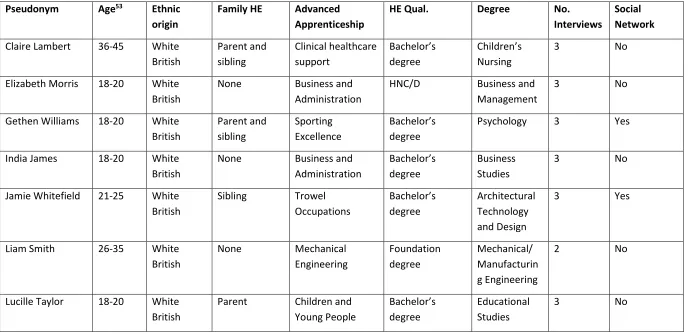
Table 5 Profile of Research Participants ... 92
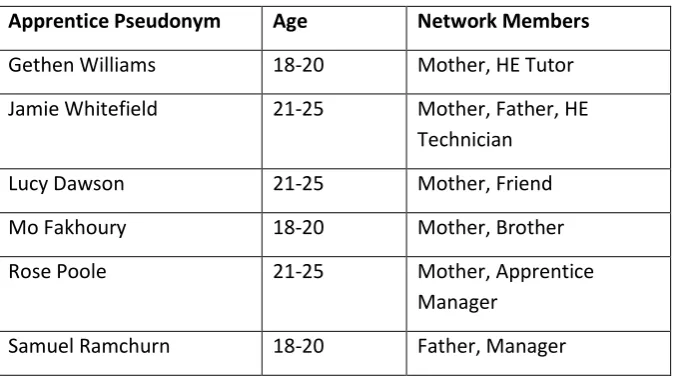
Table 6 Network Participants ... 94
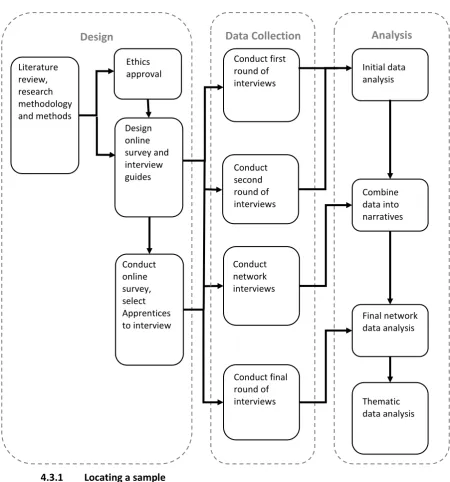
List of figures Figure 1 The case study research process ... 85
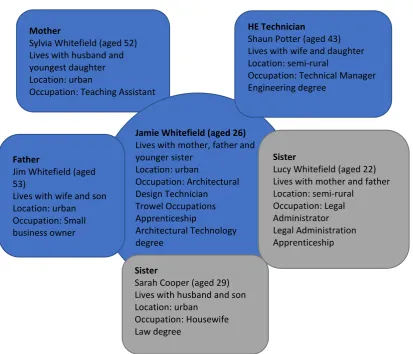
Figure 2 Jamie Whitfield’s Network ... 108
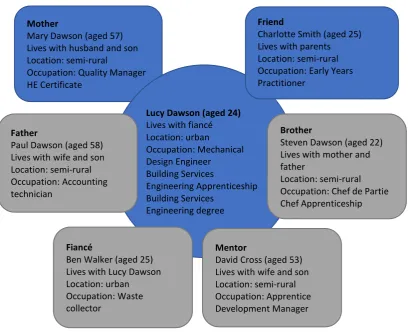
Figure 3 Lucy Dawson’s Network ... 115
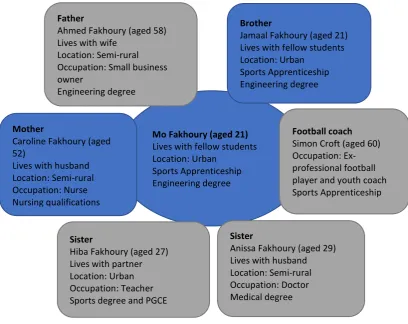
Figure 4 Mo Fakhoury's Network ... 120
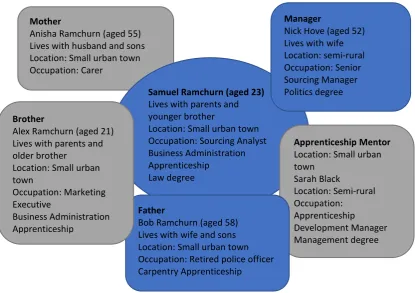
Figure 5 Samuel Ramchurn’s Network ... 127
Glossary/Abbreviations
A Level – General Certificate of Education Advanced Level BA (Hons) Bachelor of Arts (with Honours) degree award BSc (Hons) Bachelor of Science (with Honours) degree award
BTEC – Business and Technology Education Council offering predominantly vocational qualifications
DfE – Department for Education
DfES – Department for Education and Skills EPA – End-point assessment
ESRC – Economic and Social Research Council FE – Further Education (post-compulsory education) GCSE – General Certificate of Secondary Education HE – Higher Education (university level)
HEFCE – Higher Education Funding Council for England HNC/D – Higher National Certificate/Diploma
IAG – Information, Advice and Guidance IfA – Institute for Apprenticeships IB – International Baccalaureate NAS – National Apprenticeship Service
NS-SEC – National Statistics Socio-Economic Classification
NVivo - qualitative and mixed methods research support software NVQ – National Vocational Qualification
ONS – Office for National Statistics POLAR – Participation of Local Area
UCAS – Universities and Colleges Admissions Service VET – Vocational education and training
Chapter 1.
Introduction
1.1 Introduction and background to the research
This thesis explores the biographical journey into and through HE of a small group of former Advanced Apprentices. It examines how early educational experiences relate to pathways into and through the Apprenticeship system and how former Apprentices experience Higher Education (HE) to develop an understanding of how HE impacts on their lives, experiences, and identities. Participation in Apprenticeships in England, has grown significantly over the past decade, rising from 419,000 in 2007/08 to 908,700 in 2016/17 (Skills Funding Agency, 2017) yet the numbers progressing to HE is small and their voices unheard. We currently know little about former Apprentices within the HE system – their decision to pursue HE, the role and influence of their social networks, their social and academic experiences of HE and the impact on their learner, occupational and student identity and sense of self. The changing landscape of both Apprenticeships and HE means we need to capture these accounts of student experience better, depicting the lived, biographical experience of individuals in increasingly credentialised learning and work settings.
This study utilises a narrative, longitudinal approach to explore the experiences of Apprentices who have embarked on HE, drawing upon data from several semi-structured narrative interviews with sixteen participants as they progressed from the early stages of HE until graduation. The final phase of the study engaged with six participants’ wider social networks, all who had been nominated by the Apprentice participant. The interviews with the former Apprentices’ networks illuminates how education and career decision-making and experiences are deeply embedded within family, friendship and peer networks. Drawing on wider network voices enables the reader to understand the former
Apprentices’ biographical and learning experiences, and contextualise them within their broader context.
modes of reflexivity proved difficult to apply as a type or fixed mode reflexivity, making more sense as an approach to reflexivity people adopted, in different contexts and changing circumstances to help them navigate their way through educational and career pathways. Insights from the social networks suggest that individuals adapt their approach to reflexivity according to the social situation, aspects of and stages in their lives.
1.2 Personal context
This section concentrates on my professional experience and personal beliefs leading me to this study. I discuss the research and broader professional work undertaken before my doctorate through which I developed my thinking about the issues addressed in this work; in so doing I highlight my personal journey to this PhD. I began working as a social
researcher shortly after my first degree but felt restricted working for a private research company. I left my position, relocated and gained a role managing a strand of Aimhigher1. This was a transformative experience, firstly because of the young people and colleagues I had the fortune to work with and the insights I gained on the importance of widening participation, and secondly, because the experience offered insight into my own
educational experiences. I was amongst the first in my family to enter HE and did not feel like I ‘belonged’ during my undergraduate experience. I felt trapped by my decision to pursue a business degree but lacked the financial resources to restart a different course, so my whole experience was underlined by a sense of having to complete my course and use the degree to enter a career I wanted. I also felt different from my peers; I came from a working-class background and a working-class community. Despite being proud of this, I was acutely aware of significant difference with peers at my Russell Group institution. That said, this experience has framed my professional career spanning both research and project management in compulsory and post-compulsory education. I remained committed to widening participation and the central notion of ensuring that individuals from non-traditional backgrounds are supported to engage and achieve.
I started a Masters in Educational Research supported by my employer while working on a
project focusing on embedding work-related learning in the 14-19 curriculum and helping to deliver the 14-19 reform programme. This work enlightened me to the role of vocational learning and experiences in engaging learners deemed at risk of disengagement. I
completed the Masters after a move to the University of Bath and a role supporting the development of HE progression pathways for learners from vocational backgrounds including Apprenticeships, BTEC and Access provision. Towards the end of the Masters, I applied to continue with my studies to doctoral level. My Masters dissertation study of Apprentices transitions to HE was highly relevant to my work role and allowed me to build on my contacts with FE and work-based learning providers. Through this work and my studies, I had gained a thorough understanding of the work-based learning sector as well as wider HE policy. My Masters dissertation study was a precursor to this Doctoral study and gave me a firm grasp of some of the challenges of engaging with a group of learners hidden within the HE system. These work experiences led me to reflect on what makes young people disengage or reject academic learning and why there is a lack of fit between some young people and their education. These concerns were relevant to my work in HE, but I felt constrained by perceptions that it is the individuals who are lacking or deficit in some way for failing to engage in academic experiences. Therefore, in this study I wanted a central focus to be on challenging assumptions of deficit through interpreting how
individuals experience the lived reality of Apprenticeships, the role of these experiences in encouraging the pursuit of HE and in ‘becoming’ a HE student.
1.3 Transformation of the research questions
This thesis began with the aim of providing a deeper understanding of former Apprentices’ journeys into and through HE - moving away from defining vocational students in respect of their education pathways and potentially perceived deficits - instead viewing them in relation to their lives and distinctive biographies. Originally the aim was to explore the experiences of Apprentices who have progressed to HE focusing on the personal experience of those who have made the transition into, and through, HE and explore how they feel their prior knowledge and skills are recognised within pedagogy and practice. The original research aims were:
• To critically explore UK and international literature surrounding apprenticeships and work-based progression to HE.
post-compulsory educational experiences and explore how these experiences connect with aspirations and learner identity.
• To explore the educational and social experiences of apprentices who successfully progress to HE.
• To examine the longitudinal (over a 20-month time span) impact of HE progression on self, identity and wider relationships.
• To consider how apprentices feel their skills and knowledge are recognised and valued in HE pedagogy and practice.
Over the course of the study, due in part to my own thinking and engagement, and in part to the direction the interviews with the former Apprentices took, the research became repositioned away from the progression of Apprentices to HE which suggest linear, institutionally sequenced pathways into and through HE which failed to reflect the complexity of HE participation for former Apprentices. The detailed narrative interviews, the insight into personal and social network accounts and the subsequent restorying guided a focus towards the Apprentices’ highly individual and nuanced learning careers and
biographies. Fundamental to understanding Apprentices in HE is the concept of becoming, the influence of networks and learning communities which help to depict changes in the construction of identity resulting from HE participation. The questions outlined below are a more accurate description of the refinement of the research as it developed, having been reworked to better capture the role and influence of social networks in HE decision-making, the influence of different identities, the role of modes of reflexivity on learning, and the impact of previous experiences and knowledge on the (re)construction of Apprentices’ identity as HE learners.
• How does the English institutional and policy context frame Apprentice progression to Higher Education?
• What educational and broader network features have contributed to former Apprentices navigating a pathway to Higher Education?
• How have these experiences and the former Apprentices’ ‘networks of influence’ influenced their aspirations and identity?
• How do former Apprentices experience the academic and social practice of Higher Education?
1.4 Overview of the thesis structure
The following provides a brief summary of the structure of this thesis; this first chapter is followed by seven others.
In Chapter 2 I discuss the contemporary context for Apprenticeships in England which, when I commenced this study, was dominated by government policy to increase both employer and learner participation in Apprenticeship programmes. I explore the structure of Apprenticeship the participants experienced and make comparisons to more recent policy developments in the field. I explore the most recent and robust data on
Apprenticeship progression to HE.
Chapter 3 provides an overview of relevant literature associated with educational decision-making, learning and identity. The first part of the chapter reviews literature surrounding educational decision-making paying attention to the relationship between structure and agency, before moving on to exploring the role of communities of practice in learning and concluding with a review of changing influences and aspects of identity. The second part of this chapter explores Margaret Archer’s (2003, 2007, 2012) work on modes of reflexivity. In ordering the review in this manner, I have sought to present a balance of context and a coherent argument and discussion of a broad field of study.
Chapter 4 outlines the methodological and epistemological approach that underpins this study. The chapter commences by providing an introduction to my philosophical position before outlining the methodology adopted. It then goes on to describe the fieldwork process; detailing the longitudinal narrative interviews with former Apprentices and the interviews with their ‘networks of influence’, the data collection methods and the data analysis process adopted. The chapter concludes with a reflexive consideration of some of the ethical issues encountered during the fieldwork.
words. Each case study is complemented by a short theoretically focused synopsis to guide the reader.
Chapter 6 revisits the theoretical base drawing upon the social network accounts as well as the individual biographical narratives to explore the journey to being an Apprentice. In presenting the data in this way, I want to remind the reader that these thematic
experiences relate to one’s life as a whole. The journey to HE reflects former Apprentices’ interest in their vocation with evidence of meaningful engagement with their work. The experience of Apprenticeship highlights the contribution of the workplace communities of practice and their role in encouraging greater participation not only the learning process but in creating a future vision. The contemplation of future selves both within their
organisation and more broadly leads to future planning, confirming a growing appreciation and commitment to continued learning and development.
Chapter 7 is the second thematic analysis chapter and focuses on the process of becoming a student, connecting the participants’ narratives of making sense of their new academic community and their identity within it. The process of ‘becoming’ as the disposition to learn developed (Bloomer and Hodkinson, 1999, 2002) which was coupled with growing
confidence and greater involvement in the learning experience. The data suggest that most participants struggle to engage with the student identity; finding a greater synergy with an identity which reflects their occupational values and how they want to be perceived by others. The former Apprentices prioritise reaching (and/or remaining) at the core of their workplace community and course community while remaining on the periphery of the wider HE community.
Chapter 2.
Exploration and evaluation of Apprenticeships and progression to
HE
In this chapter, I discuss the contemporary context of Apprenticeship in England and the broader context for progression to HE. The chapter is organised around the first research question which aims to understand the impact of the policy context on the nature of Apprentice progression to HE. The material in this chapter commences with a broad discussion around vocational policy and the resurgence of Apprenticeships through the Modern Apprenticeship (MA) programme. This is followed by a discussion of the more recent developments in England’s model of Apprenticeship and trends in participation. The final section of this chapter anchors this study in recent research that provides a statistical overview of progression to HE from an Apprenticeship (Smith and Joslin, 2011, 2013; Joslin and Smith, 2014; Smith, Joslin and Jameson, 2015). The focus on the developments and trends in England’s Apprenticeships is intended to set the scene for this research study by discussing some of the complex changes within the system and the impact these have had, and may continue to have, upon Apprentice progression to HE.
2.1 Synergy with broader education and vocational policy
Post-compulsory education is a vast sector with sharp divisions between academic and vocational learning. The discord and the differential impact this divide has on learners is compounded by the level of esteem that each type of education affords. Academic study is often perceived as the highest quality, ‘gold standard’ pathway for the most successful students (Foster, 2005) while vocational learning is viewed as suited to those less
levels of societal esteem, which impact on the young people who achieve them, yet these hierarchies are largely unrecognised.
Despite the increasing personal cost of HE, there has been a significant expansion in participation which, it has been argued, has contributed to an “erosion of vocational training from the top” (Busemeyer and Trampusch, 2011, p.30). Busemeyer and Trampusch (2011) contend that while traditionally the “median person in distribution of skills” (ibid., p.30) would have followed a vocational pathway they are now choosing to participate in HE. A broader consequence being that the pool of well-qualified school leavers interested in pursuing a vocational pathway has diminished as more young people opt for HE. If VET is to be seen as aspirational, there must be accessible and robust learning and career
progression opportunities, including pathways into and through HE.
VET across the United Kingdom (UK) has been traditionally work-based and limited by the absence of any extensive general educational input or theoretical content that is present in the dual system2 operated in several European countries. Despite cross-party support and multiple government initiatives3 that have intended to raise standards, promote
competitiveness and enhance economic strength, VET in England is still widely perceived as being of poor quality with low labour market value (Keep, 2005; Wolf, 2011; Swift and Fisher, 2012). Such perceptions may also be centred upon the prevailing belief that educational credentials, in the form of high-status academic qualifications, are necessary for success in contemporary society. Twenty years ago, Ron Dearing’s Review of
Qualifications for 16-19 Year Olds (1996)4 found that attitudes about the inherent worth of the different qualification types are pervasive, suggesting that the separation between institution and qualifications in the post-compulsory education sector continues to be viewed along the dividing lines of ability. In recent work, Tomlinson (2013) argues that despite significant changes to the VET landscape, there remains a hierarchy and division between vocational and academic pathways that perpetuates inequality. Schuller and Watson (2009, p.146) explain:
2 The dual system of apprenticeship operated by several European countries including Germany, Austria, France and the Netherlands combines work-based learning with classroom-based experiences (including theoretical and general content such as languages and economics).
The hyper-complexity of the UK’s pattern of qualifications has led to all sorts of anxieties about equivalence, notably between so-called ‘academic’ and
‘vocational’ awards. The desire for transparency has resulted in frameworks that map vocational and academic qualifications.
The existence of multiple qualification awarding bodies across the UK, the plethora of available qualifications, a predominantly academic secondary school curriculum and the absence of a general education component within vocational programmes underpin the unsuccessful attempts to bring together academic and VET. Throughout this study, I refer to academic and VET to recognise the different forms of compulsory and post-compulsory qualifications that can lead to progression to higher levels. Table 1 below provides a summary of some of the academic, vocational and work-based qualifications available in England, Wales and Northern Ireland5. In general, VET encompasses both vocationally-related qualifications and work-based qualifications with Apprenticeships being defined as work-based learning6 and a framework consisting of several elements and qualification (see Section 2.1.1). While the table below highlights that qualification levels across the
vocational-academic spectrum can be compared there are issues with size, content and learning hours meaning that learner transitions between types can often be challenging (see Section 2.2.1 for a fuller discussion about the implications at HE level).
Table 1: Example qualifications in England, Wales and Northern Ireland
QCF7 Level
Academic Vocationally related Work-based learning
5 In Scotland, the Scottish Qualifications Authority (SQA) regulates and awards all qualifications except of degrees in Scotland under the Scottish Credit and Qualifications Framework (SCQF). The Scottish framework consists of 12 levels, with 1 to 6 being pre-HE and 7 to 12 consisting of HE level. 6 Boud and Symes (2000) make the distinction between work‐based learning and learning in the workplace. The former is given academic recognition, when suitably organised and managed whereas the latter is day‐to‐day learning as employees acquire new skills or approaches and does not gain formal recognition normally.
7 The QCF is the Qualifications and Credit Framework, it recognises qualifications and units by awarding credits giving learners the ability to accrue qualifications and progress up the levels. The QCF is jointly regulated by the England’s regulator Office of Qualifications and Examinations
Level 8 Doctorate Level 8 Award, Certificate and Diploma
NVQ Level 8
Level 7 Master’s degree Postgraduate certificate/diploma
Level 7 Award, Certificate and Diploma
Degree Apprenticeship NVQ Level 7
Level 6 Batchelor degree Graduate
certificate/diploma
Level 6 Award, Certificate and Diploma
Degree Apprenticeship NVQ Level 6
Level 5 Diploma of Higher Education
Level 5 Award, Certificate and Diploma
Higher National Diploma (HND)
Foundation degree
Higher Apprenticeship NVQ Level 5
Level 4 Certificate of Higher Education
Level 4 Award, Certificate and Diploma
Higher National Certificate (HNC) Foundation degree
Higher Apprenticeship NVQ Level 4
Level 3 A & AS Levels
Access to HE Diploma International
Baccalaureate
Level 3 Award, Certificate and Diploma
BTEC National Cambridge Technical
Advanced Apprenticeship NVQ level 3 Tech level qualifications Level 2 Diploma for
Progression GCSE grades A*- C (grades 9 - 4)8
Level 2 Award, Certificate and Diploma
Cambridge National and Technical
Intermediate Apprenticeship NVQ level 2
Level 1 GCSE grades D - G (grades 3 – 1)
Level 1 Award, Certificate and Diploma
Cambridge National and Technical
Traineeship NVQ level 1
Source: Department for Education [DfE] (2015), Government Digital Service [GDS] (2017) A fundamental obstacle for policy makers and education providers is how to overcome prevalent attitudes regarding VET which is too often regarded as a means to increase the motivation of learners who are of average or below average ability (Richardson, 2009).
Young people who have experienced disaffection or dissatisfaction within the educational system may find appeal in the inclusive, practical, and relevant experiences offered by vocational learning. Yet, VET can also address the interests of young people who are academically able but may prefer learning which offers practical experience and the acquisitions of qualifications together with the opportunity of progression to HE (Avis, 2004). This is not to say that these young people, including those who might be characterised as ‘marginalised’, do not have high aspirations for their future career
(Bathmaker, 2001; Atkins, 2009) but may seek learning opportunities that can offer a more significant connection with career interests and the acquisition of technical skills and knowledge.
Bathmaker (2005) suggests that the rhetoric around the importance of academic
qualifications is signalled through a move towards becoming a ‘knowledge society’ whereby individuals are increasingly aware of the need for academic qualifications in order to participate in a high skill, knowledge-based economy and to access professional careers. The recent HE White Paper (2016) aims to strengthen England’s knowledge intensiveness by overhauling the university sector. It is intended to transform universities by creating more of them, in the hope that this will increase the number of people with HE
local opportunities. While schools have a statutory responsibility to provide independent IAG (DfE, 2017), it has long been criticised as being inadequate and patchy. Too many young people stumble through a vocational system that fails to provide a robust platform for progression to the next level of education or enable access to labour market opportunities. Many vocational-related initiatives over the years have suffered from failings that have exacerbated the esteem crisis they were created to solve (for example, Young, 1998; Unwin et al., 2004; Pring et al., 2009). Pring et al. (2009) comment on the difficulty VET faces in
establishing itself as high-status, robust pathway while also welcoming those individuals fleeing from academic qualifications.
An important distinction this thesis utilises is drawn from Ryan, Gospel and Lewis (2006) and recognises the difference between 'Apprenticeship' (upper case) as the government funded, work-based learning programmes and 'apprenticeship' (lower case), which is “training that aims at an intermediate (Levels 3-5)9 skill and combines work-based learning, off-the-job training and technical education” (ibid., p.362). An Apprenticeship Framework comprises several accredited and unaccredited components (see Section 2.1.1 for greater detail) with the qualifications relating to the sector of study predominantly being
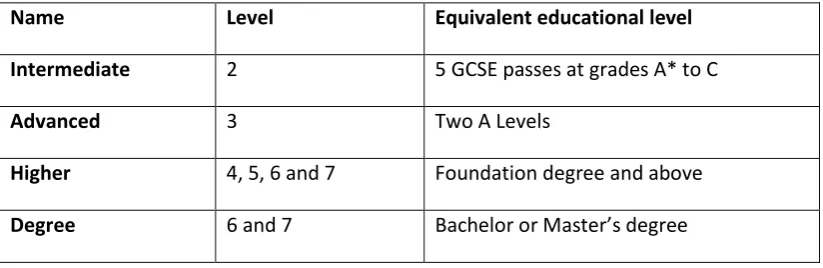
[image:21.595.114.526.503.637.2]vocationally-related qualifications. Government-supported Apprenticeships include Intermediate Apprenticeships, Advanced Apprenticeships, Higher Apprenticeships, and Degree Apprenticeships (Table 2).
Table 2 Apprenticeship levels
Name Level Equivalent educational level
Intermediate 2 5 GCSE passes at grades A* to C
Advanced 3 Two A Levels
Higher 4, 5, 6 and 7 Foundation degree and above
Degree 6 and 7 Bachelor or Master’s degree
Source: National Apprenticeship Service [NAS], (2015a)
One major criticism levied at some Apprenticeships is that training is predominantly offered at Level 2 with little or no worthwhile off-the-job component (Ryan et al., 2006; Ryan,
Gospel and Lewis, 2007; Lewis, Ryan and Gospel, 2008). While there are marked differences in the organisation, funding and management of Apprenticeships across the UK1011, they essentially comprise a contract between an employer and an individual that combines a structured programme of on-the-job training and part-time work, together with assessed technical education (Steedman, Gospel and Ryan, 1998; Lewis, 2014) aimed at equipping individuals with intermediate-level skills. Despite high-quality provision in some sectors and some employers, a significant concern is the historically low standards and frameworks being customised in a manner which negatively impacts an Apprentice’s experience and learning outcomes. Winch, Clark and Brockmann (2010) draw attention to the need to reconcile the conflicting issues of ensuring quality while providing flexibility, which are central facets of recent and ongoing reforms, discussed further in Section 1.3.
The negative perception that Apprenticeships are not for higher achieving school-leavers reinforces the academic-vocational divide as well as broader social inequalities. This has a destructive effect, impacting on skills shortage and economic competitiveness and undermining ambitions of producing a skilled workforce (Young, 2008; Fuller and Unwin, 2011; Pring, Hayward and Hodgson, 2012). It also raises serious questions about social justice; Avis (2004) argues that the scant importance attached to knowledge in vocational provision affects young people's ability to transcend contexts and therefore contributes to existing patterns of class differentiation. Allen and Ainley (2007, 2010; Ainley, 2003, 2013) argue education functions as a means of social control with vocational and academic pathways contributing to increasing social divisions. Furthermore, Atkins (2009, 2010, 2017; Atkins and Flint, 2015) suggests that young people are differentiated in the education system by social class and ability. In the past two decades several researchers (Bates and Riseborough, 1993b; Hodkinson, Sparkes and Hodkinson, 1996; Colley et al., 2003; Bathmaker, 2005) have made clear the association between social class and VET; a significant factor in the replication of classed inequalities. Atkins, Flint and Oilfield (2011) recognise the influence of social class on the perceptions of VET arguing this leads young people down paths traced by their families and broader communities while recognising that
10 Apprenticeship system operates differently across the UK’s devolved administrations. While many of the fundamental principles surrounding an Apprenticeship are common to all four systems there are differences with regard to funding, qualifications, employer involvement and development. Under the new Apprenticeship changes (see Section 2.2) the differences between the devolved administrations are becoming more marked with England implementing many changes which are either not being adopted or only partially adopted by the UK regions.
social class influences are subject to subtle differences (Colley, 2006). Furthermore, they suggest that publicising of VET ‘opportunities’ are heavily classed which contributes to the enduring reproduction of inequality. Whatever liberal ambitions are held for VET these are inhibited by its relationship to other forms of education and broader socioeconomic influences.
Despite these problems, the benefits of vocational learning are indisputable: if we learn by doing as well as by thinking, reading, and writing, we develop skills and competencies as well as underpinning knowledge (Lucas, Claxton and Webster, 2010). A fundamental shift needs to take place for VET to be seen as evidence of intellectual capacity on a par with academic learning and part of this revolution concerns the way 'intelligence' is
characterised and perceived. Unwin (2004) makes a call to move beyond the 'deficit approach' whereby VET is deemed only for those individuals who have not achieved at an academic level.
Fuller (2014, p.5) argues that “the political and industrial will, institutional arrangements, capacity, partnerships and shared collective vision and mission to use apprenticeship and vocational education to generate a skilled generation does not exist as yet”. I will reflect later in this chapter on how some of the structural and policy changes to the
Apprenticeship programme may impact on young peoples’ experience of, and progression through Apprenticeships. Given the gravity of youth unemployment12, declining social mobility (Goldthorpe, 2013; Milburn, 2014) and its impact on life chances, there is a need for an ongoing debate about Apprenticeship, progression routes and occupational destinations available for all young people. There are significant social and economic motives which provide an imperative to ensure that recognised Apprenticeships are framed within a broader system of transition in which young people and adults can achieve
permeability and equivalence irrespective of the pathway chosen.
2.1.1 The dawn of the Modern Apprenticeship
The launch of the Modern Apprenticeship (MAs) in 1994 was born out of concerns about the UK’s deficiencies in supplying intermediate skills in comparison to economic
competitors (Harris, 2003). The MA programme was centred on building partnerships between young people, employers, training organisations and Training and Enterprise Councils (TECs),13 the goal was for MAs to be aspirational and to provide a platform for educational and career progression. To create a distinction with previous government-sponsored schemes, they were set up at a minimum of Level 3 with Apprentices having employed status. In the hope of challenging gender stereotyping they were offered in a more extensive range of sectors than traditional Apprenticeships. Around the same time, National Traineeships (note at this point they were not called Apprenticeships) were introduced at Level 2 to offer “a progression route into Apprenticeships for those young people who were not ready to enter a Level three programme” (Unwin and Wellington, 2001, p.11). Detrimentally, National Traineeships were brought under the Apprenticeship umbrella becoming Foundation MAs with much of the subsequent expansion of
Apprenticeships being mainly at Level 2. This Level 2 expansion has compromised the aim of providing intermediate skills and instead arguably serving as a tool for social inclusion (Fuller and Unwin, 2003; Fuller, 2004).
MAs comprised of three learning components: NVQ14, the practical workplace element; Technical Certificate, providing theoretical underpinning (made optional in response to employer criticism); and Key Skills,15 accrediting basic literacy, numeracy, and
communication skills (subsequently becoming Functional Skills). However, the original philosophy of the MA programme was worn down. Level 2 Apprenticeships became the norm and combined with a lack of consistency in requirements for underpinning
knowledge. Apprenticeships came to be characterised by low status, poor standards, and variable quality of provision (Gospel and Fuller, 1998; Fuller, 2004). Low completion rates and the absence of any general education component contributed to the perception among young people and their parents of Apprenticeship as a low-status pathway (Fuller, 2004; Canning, 2007). Commentators suggest these negative perceptions lead some young
13 TECs were local bodies established in England and Wales in the early 1990s to administer publicly funded training programmes, managing schemes including Youth Training and MAs and promoting training and business enterprise. They were abolished in 2001 under the Learning and Skills Act 2000 and their responsibilities fell under the newly established Learning and Skills Councils.
14 The report 'A New Training Initiative' called for Apprenticeship to be based on the achievement of a set of competencies derived from national occupational standards (Manpower Services
Commission [MSC], 1981) and resulted in a new form of vocational qualification - competency-based National Vocational Qualifications (NVQs). Introduced in 1986, they represent a long-lasting
transformation to the VET landscape.
people to remain in full-time education rather than seek out Apprenticeship opportunities (Roberts, 2004; Beck, Fuller and Unwin, 2006a). Nevertheless, there is a host of factors at play which combine to encourage students to stay in full-time education; including
increasing participation in HE, lack of high-quality Apprenticeships, and crucially inadequate IAG about vocational pathways, particularly in schools (Foskett and Hemsley‐Brown, 2001).
However, despite these shortcomings, Apprenticeship has been a continued focus of government policy in England. In the early 2000s, national frameworks were developed to define minimum standards and were ratified by the Apprenticeships, Skills, Children and Learning (ASCL) Act (2009) with the introduction of the Specifications of Apprenticeship Standards for England (SASE) (Department for Innovation, Universities and Skills [DIUS], 2015). These set out the minimum requirements for an Apprenticeship framework to be recognised and funded. The SASE requires all Apprentices to be employed and guaranteed a national Apprentice minimum wage. It specifies the qualifications required:
• Competency-based qualification16, most frequently a work-based qualification focusing on the skills required to do the job and usually achieved through on-the-job training.
• Knowledge-based qualification16, known previously as a ‘technical certificate’ contains the knowledge required for the job role and is a work-based or vocationally-related qualification involving off-the-job training.
Designed to address some of the criticisms regarding the general education component, such as those expressed by Steedman (2010) and Brockmann, Clarke, and Winch (2011), the SASE introduced elements of broader learning into an Apprenticeship framework including:
• Key and Functional Skills (numeracy, literacy, ICT) although these are mostly remedial in addressing low levels of literacy and numeracy rather than developing general education.
• Employee rights and responsibilities (ERR) which cover legislative aspects including employer and employee statutory rights and responsibilities under Employment Law as well as broader work and social elements.
• Personal learning and thinking skills (PLTS) to show achievement of the six PLTS including independent enquiry, creative thinking, reflective learning, team working,
self-management and effective participation.
The SASE also set out the minimum Guided Learning Hours for off and on the job learning, observers have argued that these components fail to fully recognise the general
educational needs of 16-19-year-olds which were more closely met by the relative high demands of the technical certificate (Pring et al., 2009; Brockmann et al., 2011).
The lack of a robust framework for the provision of Apprenticeships in England is, in part, due to the absence of an established mechanism for the systematic involvement of all interested parties. In the absence of a robust statutory framework, quality has been variable, while there is excellent provision in some sectors, schemes that resemble little more than work experience in others do little justice to reputation (Ryan et al., 2006). Ryan, Gospel and Lewis’s (2006) research into the organisation of Apprenticeships in large
employers revealed wide variability particularly in relation to the technical certificates and found that Apprenticeships were too often marred by a low employer commitment with many large employers contracting out programme responsibilities. Research also found dissatisfaction with the technical certificate and key skills elements being too often viewed as irrelevant, failing to meet employer needs and lacking integration with on-the-job training which has led to them being cited as a reason for non-completion (Unwin and Wellington, 2001; Ryan et al., 2006). However, with employer commitment, for example, where they are utilised to secure the future of the organisation, they often extend beyond government requirements (Fuller and Unwin, 2007).
Concern over the gender and racial imbalance in Apprenticeship participation triggered a major investigation by the Equal Opportunities Commission (EOC) on the perceptions of Apprenticeships, educational and labour market opportunities (Fuller, Beck and Unwin, 2005; Beck et al., 2006a; Beck, Fuller and Unwin, 2006b). The research involving young people, Apprentice employers and other stakeholders found that gendered and racial expectations within informal networks of family, friends, and schools guided young people's decision-making around educational participation and careers. Beck, Fuller and Unwin (2006a) emphasise inconsistent and unreliable IAG provision which infrequently challenged stereotypes instead reinforcing a ‘play it safe’ approach. The study
would not melt away” (Beck et al., 2006a, p.287) even if the quality of IAG were improved. Despite the broadening of Apprenticeship opportunities, recent work suggests a continuing gender divide with women dominating service type Apprenticeships (for example,
hairdressing, health and social care, and early years education), where pay, qualifications and career development prospects are limited while men dominate the highest paid (Fuller and Unwin, 2014).
There is also a growing interest in the relationship between Apprenticeship participation and socioeconomic status. While widening participation has been a longstanding concern in improving HE participation, underpinned by robust data, information on the
socio-economic status and background of Apprentices is limited. In the absence of any sound evidence, it is hard to draw any firm conclusions regarding who the Apprenticeship
programme best serves and its contribution to social mobility. Fuller (2004) has argued that the academic-vocational divide reflects wider social inequalities, with the lower
socioeconomic classes over-represented in Apprenticeships. However, preliminary analysis of the Labour Force Survey suggests that Apprentices are marginally more likely to be drawn from middle- rather than low-income families:
Individuals from the third and fourth quintiles of parental earnings are over-represented amongst Apprentices (24% and 26% respectively), while individuals in the bottom two quintiles are underrepresented amongst Apprenticeships (18% each). A similar pattern emerges in terms of parental education. This suggests that Apprenticeships may do more to help those in the middle rather than the bottom of the income distribution.17
(Crawford et al., 2011, p.21)
However, a recent study by Wyman (2015) suggests that the most well-respected Apprenticeships programmes are disproportionately populated by those from wealthier backgrounds and/or have attended schools with higher levels of progression to elite universities, with far fewer students who have received free school meals and are from low-income families accessing Apprenticeships. In the absence of any large-scale datasets, it is impossible to verify this data, but these two studies point to a two-tier system with
those from wealthier and middle-class backgrounds having greater access to better quality, aspirational Apprenticeships.
2.2 Contemporary developments in Apprenticeships
The most current reform of Apprenticeships is born out of the Holt Review (2012) and Richard Review (2012). The Holt Review considered the position of small and medium-sized enterprises (SMEs) and made recommendations of how to engage them in Apprenticeships. Holt recommended raising awareness of the benefits of Apprenticeships; supporting a more effective relationship between SMEs and training providers; and, simplifying ownership and responsibility for the Apprenticeship programme to reduce barriers to engagement. Richard’s recognised the widespread support for Apprenticeships but
asserted that the definition of what an Apprenticeship is and should be had been stretched to the point that core features have been diluted; leading to a demise of the traditional relationship between employer and Apprentice. Instead, the system is government-led and shaped by training professionals rather than employers, and has lost focus in being a form of education for the Apprentice. The Review recommends redefining Apprenticeship at Level 3 or higher to ensure broader respect and credibility, and to ensure the programme supports educational and career progression.
The Future of Apprenticeships in England (DBIS, 2013a) was the Government’s response to the Holt and Richard Reviews and was followed by the vision to deliver 3 million
Apprenticeships by 202018 (DBIS, 2015a). These reforms represent the most significant and wide-reaching reforms to the VET system in England in modern times. The new ideology and reformed policies could bring about a paradigm shift in cultural assumptions about VET and in the general population’s perceptions of Apprenticeships which, as discussed
previously, have too often been negative. Apprenticeships policy across the UK is evolving, and while education policy is a devolved matter, Apprenticeships are high on the agenda across the devolved administrations and there continue to be broad similarities between Apprenticeship models across the regions. Under the Apprenticeship reforms in England, Apprenticeship Standards will replace the SASE Frameworks (DBIS, 2015b). These new standards19 are being designed, developed, implemented and quality assured by
18 There were 2.2 million apprenticeship starts between 2010 and 2015 19 The new standards, are written definitions of the learning requirements for
led groups known as ‘trailblazers’, giving employers the responsibility to ensure
Apprenticeships meet their needs, the needs of their sector and the economy more widely. Authentic employer partnerships to ensure that Apprenticeships are occupation rather than employer-specific, and targeted at developing competence and skills at Level 3 rather than Level 2, is central to this process and signifies an intention to create a talent pipeline. One controversial and potential adverse change is that under the new standards there is no requirement for an Apprenticeship to include accredited qualifications. Instead, there is an independent end-point assessment (EPA) which removes the chance for an Apprentice to accumulate qualifications through their learning programme20. This marks a significant change to the current continuous assessment approach that underpins the competency-based National Vocational Qualifications (NVQs). The exception is Level 6 and 7
Apprenticeships, which will need to be designed in conjunction with a HE provider. The newly formed Institute for Apprenticeships (IfA)21, which is independent of government, has responsibility for the new standards and funding.
The Apprenticeship Levy22 is also being introduced (DfE, 2016b) which will be paid for by large employers with a pay bill of more than £3 million23. The funding will enter a ‘digital apprenticeship account’, topped up with a government contribution, enabling employers to purchase Apprenticeship training direct from a provider24. Fundamentally, this changes the funding flows – from funding the training provider direct to employers. Smaller employers are not required to pay the levy but must contribute towards some of the costs of the off-the-job training for their Apprentices. While this has been criticised for increasing the
example, in engineering, science and accountancy). The approved standard is a concisely written document that outlines the skills, knowledge and behaviours required of the Apprentice and the job they need to be able to do by the time they have completed their apprenticeship.
20 While England is pursing Apprenticeship Standards; Wales, Scotland and Northern Ireland’s Apprenticeship frameworks will continue to be based on National Occupational Standards (NOS) with a continues focus on qualifications.
21 The IfA is a new independent, employer-led body which has responsibility for regulating the quality of Apprenticeships. It has an independent chair who leads a board of employers, business leaders and their representatives, to ensure employers are able to drive apprenticeship quality. 22 This is a UK-wide policy with which employers across all nations must comply but there will be significant differences in both its implementation and criteria, for example, in Wales funding is being removed for level 2 Apprenticeships (for over 20 year olds) and non-priority sectors, such as Retail, Business Administration and Customer Service.
23 The levy will be 0.5% of the portion of salary costs over £3 million (so an employer with a pay bill of £5 million would pay 0.5% of £2 million, or £10,000).
administrative burden, it offers employers more control over training provider choice.
While many of the changes to the system have been welcomed, one controversial element is the removal of the requirement for an Apprentice to complete nationally-recognised qualifications. Instead, each new Apprenticeship Standard must have an assessment plan including an EPA that is graded, unique to the Apprenticeship and includes a holistic assessment of the underpinning knowledge, skills and behaviour (DBIS, 2015b). It is aimed at assuring employers that Apprentices are job-ready and that they are consistently assessed, regardless of employer or training provider25. It also shifts Apprenticeships away from being loosely modular towards full integration of the knowledge, skills and
behavioural components required to undertake a specific occupation and operate
confidently within a sector. However, as will be discussed further in Section 2.6, removing the mandatory requirement for nationally-recognised qualifications has significant
implications for the portability and transferability of Apprenticeships, specifically for those Apprentices who may wish to progress to HE. More positively, in a recent small-scale study with FE Apprenticeship providers, Saraswat (2016) found that participants believed that academic standards and quality would be maintained through the inclusion of appropriate qualifications, although there are inherent dangers in removing mandatory requirements.
This move to give employers dominant responsibility is essentially how the Apprenticeship system operated from the masters and guilds period to the 1960s and 1970s, the latter of which was typified by large employers with clear progression pathways. Arguably, there are still some sectors of the economy that could operate like this, such as engineering,
construction and pharmaceuticals as these industries are dominated by large employers with effective professional bodies which have historically invested in Apprenticeship style training. There are also several other industries that might respond positively to the new reforms. For example, under the previous system, there were relatively few financial sector Apprenticeships, yet the promise of a levy along with the trailblazer pilots appears to have galvanised action in a previously weak sector26. One of the most positive elements of these
25 Whilst qualifications per se are not required within an apprenticeship there are minimum English and maths requirements. These apply to all apprentices following standards unless already achieved: • For level 2 Apprenticeships: level 1 English and maths and take the test for level 2 prior to taking
their end-point assessment.
• For level 3 to 7 Apprenticeships: level 2 English and maths prior to taking their end-point assessment (DBIS, 2015b).
developments is that several of the Apprenticeship Standards demonstrate clear prospects of progression to the next Apprenticeship level, yet whether this translates into progression will only be seen in time.
2.2.1 Recent trends in participation in Apprenticeships in England
Competition for places for some of the most well-known and respected Apprenticeship schemes is currently more competitive than some of the most respected universities in the UK, illustrating the high level of demand for high-quality Apprenticeships (Skills Taskforce, 2013). Despite some world-class Apprenticeships in some sectors of the economy, the availability of high-quality Apprenticeship in England is far from universal which must be remedied if Apprenticeships are to compete globally. Apprenticeships at Level 3 or above (see Table 2), which offer the opportunity for progression, can provide a realistic alternative to academia and the prospect of financial security, skills development, and career
advancement.
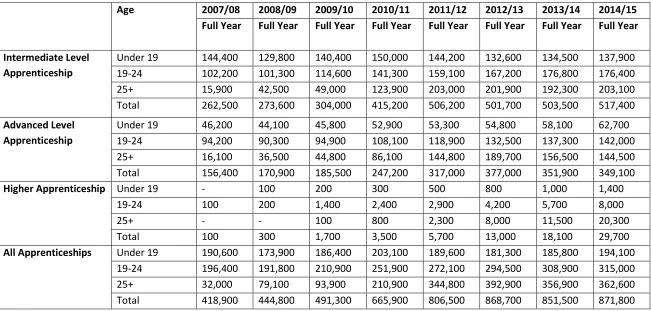
There has been significant growth in Apprenticeships in the past decade, but this is barely reflected in the participation of young people aged 16-1827. In England, in 2008 just 5.4% of young people aged 16-18 participated28 in an Apprenticeship (DFE, 2010) and despite growth in popularity, the participation rate had only marginally increased to 6.9% by 2015 (DFE, 2015). Regarding numbers, this represents a small change from 190,600 16-18 year olds in 2007/08 to 194,100 in 2014/15 (Skills Funding Agency [SFA], 2015). However, these figures do not reflect the increase in overall Apprenticeship participation since 2007/08 (see Table 3) which has been primarily driven by an increase in participation by people aged 25 and over. In 2014/15, they made up 41.6% of all Apprenticeships and were the largest group of participants for the fourth year in a row. However, as adult Apprentices are often already employed when they start an Apprenticeship this practice conflicts with the principle of providing a route into work for young people (House of Commons, 2008; Fuller and Unwin, 2012b). This rapid change in Apprentice age profile was a direct response to the political pressure to quickly increase the number of Apprentices. Training providers who were contracted to deliver a certain number of Apprenticeships found a more accessible
proportions at Level 2 (1,780) and Level 3 (1,700). This represents a growth of over 500% compared to 122% overall growth in Apprenticeship starts (DfES, 2016a).
market in employed adults than recruiting new younger Apprentices (Wolf, 2015).
A second significant area of growth is in the field of Higher Apprenticeships as the most recent additions to the Apprenticeship dynasty. Introduced in 2008 they provide learning at Level 4, 5 and 6 and can provide a genuine alternative to traditional HE (NAS, 2012). Higher and Degree Apprenticeships are approximate to undergraduate degrees, with suggestions that they could pose a substantive threat to ‘traditional’ HE provision (Tudor and Helyer, 2016). However, care needs to be taken in assuming the equivalence between Higher Apprenticeships and traditional HE qualifications, since some of the qualifications included in Higher Apprenticeship frameworks contain significantly fewer credits29 than
undergraduate degrees (for a fuller discussion see Fuller and Unwin, 2012a). Understanding the scope of qualifications is complex, for example, while qualifications at the same level QCF or Framework for Higher Education Qualifications (FHEQ)30 can be compared in terms of standards and level that may vary in terms of magnitudes of study and assessment. For example, a foundation degree normally includes the equivalent of a minimum of two years' full-time study with most of the final year made up of modules at Level 5 leading to an individual having studied 240 credits, with 90 credits at level 5 (QAA, 2009). However, one option for the Higher Apprenticeship for Assistant Practitioner (Health) includes only the Level 5 Diploma for Assistant Practitioners in Healthcare which is 120 credits not all of which are at Level 5 (NAS, 2015b). That is not to say that Higher Apprentices are not operating at the level to which they are qualified, more that there is currently no mechanism which recognises this.
The expansion of desirable Higher and Degree Apprenticeships not only creates a viable new career option for many young people and adults but also has the potential to make a profound and long-lasting impact on the perception of Apprenticeships. A vibrant Higher and Degree Apprenticeship programme can help to locate Apprenticeships as a valued career option and a respectable pathway into a professional career. For those already in the workplace, they present an upskilling pathway enabling advancement and helping to challenge the standard routes into the professions (Crawford-Lee, 2012).
29 Credit is a means of quantifying and recognising learning and can be used as a tool to compare learning achieved in different contexts. Within the UK, one credit represents 10 notional hours of learning.
Table 3 All Age Apprenticeship Participation by Level and Age (2002/03 to 2014/15)
Age 2007/08 2008/09 2009/10 2010/11 2011/12 2012/13 2013/14 2014/15
Full Year Full Year Full Year Full Year Full Year Full Year Full Year Full Year
Intermediate Level Apprenticeship
Under 19 144,400 129,800 140,400 150,000 144,200 132,600 134,500 137,900 19-24 102,200 101,300 114,600 141,300 159,100 167,200 176,800 176,400
25+ 15,900 42,500 49,000 123,900 203,000 201,900 192,300 203,100
Total 262,500 273,600 304,000 415,200 506,200 501,700 503,500 517,400 Advanced Level
Apprenticeship
Under 19 46,200 44,100 45,800 52,900 53,300 54,800 58,100 62,700
19-24 94,200 90,300 94,900 108,100 118,900 132,500 137,300 142,000
25+ 16,100 36,500 44,800 86,100 144,800 189,700 156,500 144,500
Total 156,400 170,900 185,500 247,200 317,000 377,000 351,900 349,100 Higher Apprenticeship
Under 19 - 100 200 300 500 800 1,000 1,400
19-24 100 200 1,400 2,400 2,900 4,200 5,700 8,000
25+ - - 100 800 2,300 8,000 11,500 20,300
Total 100 300 1,700 3,500 5,700 13,000 18,100 29,700
All Apprenticeships
Under 19 190,600 173,900 186,400 203,100 189,600 181,300 185,800 194,100 19-24 196,400 191,800 210,900 251,900 272,100 294,500 308,900 315,000
25+ 32,000 79,100 93,900 210,900 344,800 392,900 356,900 362,600
2.3 Apprenticeship progression to HE
Historically the completion of an Apprenticeship was considered the endpoint, with the individual having become an independent skilled practitioner. However, there is now a standard viewpoint that VET, and specifically Apprenticeships, should provide a platform for progression (Bowers-Brown and Berry, 2005; University Vocational Awards Council [UVAC], 2009; Fuller, Turbin and Wintrup, 2010; Thomas, Cox and Gallagher, 2012; Dismore, 2014a, 2014b) which invariably places HE at the top of the hierarchy. With the proliferation of different forms of HE, McCowan (2012, p.112) contends that “conceptual boundaries must be placed on the notion of higher education”. He argues that HE should build on substantial previous learning and involve in-depth and sustained study involving knowledge specialisation.
NAS (cited in University Vocational Awards Council [UVAC], 2009) have suggested that half of Advanced Apprentices show an interest in pursuing a HE equivalent course while a later study (Vivian et al., 2012) places the figure at almost two thirds. The strategy document, Skills for Sustainable Growth, highlighted the need for “clear ladders of progression” (DBIS, 2010, p.18) and reinforced that “an Apprenticeship will also provide the foundation for further learning at higher levels including, but not exclusively, Level 4 Apprenticeships” (ibid., p.18). While the criticality of Apprenticeship to governments’ skills policies is evident (Leitch, 2006; DIUS, 2008), the extent to which the programme delivers educational and career progression have been recognised as a concern (University Vocational Awards Council [UVAC], 2009; Gittoes, 2009; Fuller and Unwin, 2012a). As discussed in Section 2.2, the Richard Review (2012) identified the potential to strengthen Apprentice educational and career progression, recommending a stronger emphasis on providing better career advancement support. This change of focus and drive for progression to higher-level skills present a significant shift in policy.
Over the past decade, attempts have been made to create a structural ladder from VET to HE, including Foundation degrees and Higher Apprenticeships programmes. Vocational HE