Abstract—The City of Johannesbur (CoJ)’s existing
modes of transport are not sustainable as the vehicles rely on fossil fuel and the natural gas other than renewable energy such as biofuels and biogas. Several African countries are already producing and commercializing biofuels; however, South Africa even though it has a biofuel strategy drafted in 2007; due to food security and political inaction, biofuel is not commercialised. There are 200 small scale producers of biodiesel, which is from used vegetable oils in South Africa. Renewable energies in South Africa has many opportunity and challenges. As South Africa, besides having to consider sustainable transport through the utilization of renewable energy source, it also needs these sources for generating electricity. Hence this study only chose to review the current state of two renewable energies, namely biogas and biofuels. The biofuels are because currently there are small scale biodiesel manufacturers who do not have the stable market for their final products and biogas is one of the selection due to the number of landfills which already exist in South Africa and other waste generation daily converting it into biogas.
Index Terms— Renewable Energy, Biofuels, City of
Johannesburg, Biogas, Sustainable Transport
I. INTRODUCTION
he CoJ is experiencing challenges of rapid population increase, resulting in a higher demand for transportation. The spatial change in Johannesburg has been fast since 1944 with the begin of new local locations and edge urban communities, the movement of the people to the city of Johannesburg increased demand for housing and informal settlements for those who could not afford,[1]. The rapid urbanization, and increase in population demand in public are also bound to increase, [2].
Government faces challenges on how to provide reasonable, sheltered and open transport to South African urban communities because of large amounts of urbanization and internal relocation of a great number of individuals from other African nations to the metropolitan regions of South Africa, [3]. The city is growing at an unprecedented rate as two-thirds of the population of South Africa is residing in urban areas, with 40% of the citizens living in CoJ, [4].
The lack of sustainable transport is still due to the common
Manuscript received February 13, 2019; revised April 04, 2019. S.C. Thaba is with University of Johannesburg, Johannesburg, South Africa, Phone: +27 73 253 5145; email [email protected]
problems such as poverty and unemployment resulting and lack infrastructure and capital to finance development programs and lastly lack of successful renewable energy systems that can sustain the industry and eventually replace fossil fuels, [5]. The high development rates of transportation action have created negative consequences for nature and on populaces who are encountering various movement issues, for example, dangerous activity clog and street mishaps combined with air and noise contamination. In South Africa this is due to business as usual activities such as fossil fuels for transport, burning of coal in the generation of electricity and clean fuel from natural gas, [6]. South African public transportation so far consists of three modes of transport, namely trains, commuter bus industry and the 16 seats mini taxis. All these types of transportation are using fossil fuel and natural gas, [3]. Identified petrol, natural gas, and coal as fossil fuels, and are not renewable so are not sustainable. [7], [8] & [9].
The CoJ’s current modes of transport are not sustainable as the vehicles rely on fossil fuel and the natural gas other than renewable energy such as biofuels and biogas. The are several African countries already producing and commercialising biofuels however South Africa even though it has a biofuel strategy drafted in 2007; due to food security and political inaction, biofuel is not yet commercialized, [10]. There are 200 small scale producers of biodiesel, which is from used vegetable oils in South Africa. Renewable energies in South Africa is facing many opportunity and challenges, [10]. As South Africa, besides having to consider sustainable transport through the utilization of renewable energy sources, it also needs these sources for generating electricity. Hence this study only chose to review the current state of two renewable energies, namely biogas and biofuels. The reason behind selecting the biofuels is because currently there are small scale biodiesel manufacturers who do not have a stable market for their final products while biogas is chosen due to the number of landfills which already exist in South Africa and other waste generation on a daily converting into biogas.
South Africa generates a lot of waste which most of the time, end up in the landfills. Half of the conveyed biogas in the latest years was upgraded and used as vehicle fuel in the nation, [11]. The preparatory standard gauge for nourishment squander in South Africa is in the request of 9.04 million tons for every annum, [12].
II. THE PROBLEM STATEMENT
The biofuels improvement in South Africa is about country advancement and the arrangement of chances to the rustic poor by creating business opportunities that would in some way or another not exist, [13]. The developing biofuels are advantageous because of the proficient use of renewable
The Current State of Renewable Energy in
South Africa, the Case of City of Johannesburg
Sebonkile C. Thaba, Member, IAENG
assets, upgraded vitality security and vitality supply broadening, improved provincial horticulture advancement and interest in country territories, decreased GHG emanations and expanded employments and enhanced work, [10]. The main challenge of meeting this goal is land use. There is restricted horticultural land in South Africa as of the nation's 122 million hectares add up the land surface, [14]. Evaluation of 16 million hectares, or 7.5 for each penny, can be utilised for harvest generation remembering that there are many issues which influence agrarian creation, soil quality and disintegration and absence of foundation, yet water is thought to be a standout amongst the most essential. Several African countries are already producing and importing biofuel as for South Africa is still stacked in the legislation process and not producing and commercialising on a large scale, [14].
The national development plan is seeing a need as well as suggesting that other African countries provide South Africa with renewable energy. The renewable energy sector within the Green economy is recognised as an intervention that could produce critical employments with appraisals of occupation creation running from 36,400 new direct occupations up to 462,000 contingent upon the time allotment and level of renewable vitality and vitality proficient innovation infiltration, [15]. The renewable vitality segment is exceptionally essential to the world all in all, including South Africa. The NDP 2030 is not concentrating on renewable energies interventions which will replace fossil. The NatMap 2050 and the Green Economy [16], [14] & [17] South Africa's vitality deficiencies beside expectations to assemble coal-terminated plants, South Africa's planning to extend renewable vitality sources consistentkl with the global agenda.
The biogas is a primary renewable vitality source made basically from biomass sources, for instance, sustenance squanders, Agricultural remains, faecal matter or slurry from sewage treatment plants, [11]. The biogas is extremely adaptable fuel that can be devoured in a wide range of routes from warming purposes to power electricity, [11]. South Africa is very low in terms of the manufacturing and commercialising of biogas when compared to other countries. South Africa has experienced a limited market penetration for biogas, [18]. In Germany, there are 1000 commercial plants a year built and twelve million in India while in developing countries like Uganda, there are six hundred plants versus only three hundreds in South Africa. [19], [11] & [20] the use of biogas as a vehicle fuel is in its updated structure that is expanding quickly in countries like Sweden.
III. METHODS
The research is based on the review of over 34 articles as not much relevant literature has been documented in SA. The researchers conducted a thorough desktop survey of related Journals, Books, Book Chapters, conference proceedings and company’s reports, civil society, and websites and relevant government, departments, and municipality published document. The researchers visited some of the sites to collect company policy documents together with government policy documents. A few interviews were also conducted where possible. Data gathered was used to complement the secondary data.
IV. LITERATURE REVIEW
A. Biofuels and Biogas in South Africa
Renewable energies in South Africa is facing many opportunities and challenges. Besides having to consider sustainable transport through the utilisation of renewable energy sources, South Africa also needs these sources for electricity. The South African electricity sector plays an essential role in the economy yet in the meantime contributes most to the emanations issue, [21]. The interest for power in South Africa is high and the associations giving it have constrained limit. Right now, renewable energy is an answer in taking care of the demand for power in South Africa. The administration aims to increase South Africa’s outputs; one way includes a step by step rises renewable vitality ability to 9% of South Africa's aggregate power supply limit by 2030.
B. Bio-diesel
South Africa must embrace renewable vitality sources to be reliable with worldwide motivation. The African continent is seen as the most helpless against environmental change influences as the outcome of the higher dependency on natural resources such as minerals, agricultural aspects, and water [21].
Some parts of African countries are experiencing water stress due to their weak adaption capacity, [21]. Water supply, particularly in South Africa, is a risk area concerning climate change, [21]. South Africa is targeting to generate 20 000 MWh of renewable energy by 2030. Progress towards achieving this target has so far been sluggish, with about 1 per cent of electricity generated from renewable sources and no targets achieved in terms of renewable energy sources replacing fossil fuels.
C. Bio-gas
The high levels of local air pollution occur in industrialised areas and in poor households where coal, wood, and paraffin used for cooking and heating, [22]. Most of the renewable energies in South Africa mostly meant for improving the household or the enterprises’ emissions. Biogas is also one of the initiatives, which currently has a heating device for cooking which made for rural residents during the absence of electricity. The device called a biogas digester. The biogas digester gives vitality to cooking purposes made of creature compost, and sustenance squanders and can likewise give lights, warm and even remain by power while wiping out the need to use fossil energies, [23]. Biogas also used to generate electricity in huge manufacturing firms. South Africa is very low in terms of the manufacturing and commercializing of biogas when compared to other countries. South Africa has experienced a limited market penetration for biogas; with Germany, there are 1 000 commercial plants a year built and Twelve million in India while in developing countries like Uganda six hundred plants are built versus only three hundred in South Africa, [18] .
One of the success stories in the utilization of biogas is in countries like Sweden. Sweden’s interest in renewable energy for fuel emerged in the 1970s during the oil crisis, which led to high fossil fuel prices, [24]. The nation is currently manufacturing and commercializing biogas as electricity and as a renewable fuel for energy.
D. Transport sustainability and sustainable development in South Africa
Sustainability issues such as land use, transportation, air quality, water quality, ecosystem protection, and social equity addressed at the regional scale as they cross the boundaries of local jurisdictions, [2]. Currently not much done in terms of sustainable transport in South Africa at the regional level. The country has many essential needs, which seem to be more critical and currently urgent to address than sustainable transport, which is the integration of the three pillars in sustainable transportation. In the regional level, such as the city of Johannesburg, the more significant concern is in ensuring that there is adequate public transport, which is quick, accessible, and available at all times. Bearing in mind that monetary improvement ought to precede ecological assurance, South Africa is encountering critical unemployment, so cannot stand to give up the
occupations to ensure nature, [25]. The main challenge that South Africa should consider is its dependency on limited mineral resources. This paper argues that they can be minimal initiatives that regions like CoJ can undertake to start small development in the sustainable transport sector. These could also support the small-scale biodiesel plants in South Africa as one of the initiatives that currently produces a renewable fuel in replacement of fossil fuel. The vitality part in SA makes work open doors for around 250 000 individuals and contributes approximately 15% to the aggregate GDP. In any case, numerous maintainable vitality activities to implemented locally, along these lines empowering nearby monetary advancement, [21]. Instances of this could be the produce and establishment of sun oriented water radiators, small local power generation plants, and refineries of the biofuels by small-scale manufacturers.
E. City of Johannesburg (CoJ) sustainable transport
The country has different types of public transport, especially in Gauteng Province. It is the wealthiest province in South Africa with the capital city being Johannesburg, which is overpopulated. The region so far has close to seven types of public transport operating between the townships and main towns, and suburban areas to the main cities accommodating close to 13.7 million people. Because of several socio-economic challenges, the country is facing today, the infrastructure and public transportation are not at the same level as most developed countries. The country faced with subsidizing for the people in terms of housing, health care, and education. The monetary requests put on the legislature for school and wellbeing administrations, the arrangement of lodging for poor people and security, [3]. These are the economic aspects, which in the developed countries leave to the citizens to accommodate themselves while paying attention to infrastructure at large, including all modes of transport. The research addresses the question on South Africa transport sustainability by stating that “how can we move towards sustainability in the transport sector and at the same time address the issues of inequity and poverty?” Despite these challenges, there is still a need to do something about sustainable transport, [26]. South Africa is not just a supporter to nursery gas discharges – it is additionally especially defenseless against the impacts of environmental change on wellbeing, employments, water, and sustenance, with a lopsided effect on poor people, particularly women and youngsters. While adjusting to these progressions, ventures and families have to lessen their negative impact on the earth, [16]. This will require sweeping changes to the way individuals live and work. The discharges of carbon dioxide and other nursery gasses are changing the world's atmosphere, possibly forcing a noteworthy worldwide cost that will fall lopsidedly on poor people, [16].
F. Importance of transport sustainability in the City of Johannesburg (CoJ)
must start taking small initiatives, which can lead to addressing the issue of fossil fuels. The will be a need for planners to formulate policy and plan on this new spatial scale to gain momentum as mobility is known as an essential element in the successful integration of these spatial agglomerations, [2]. There it is an essential need for addressing sustainable transport system. What is a sustainable transport system? Too many scholars questioned, however concerning it was [27] & [28] who answered this question, by adopting the Brundtland Commission’s Report from its origin to what is most suitable for sustainable transport. Reasonable transport is characterized as fulfilling current transport and portability needs without trading off the capacity of future eras to address these issues.
[28] The focal thought is to fabricate a transportation framework, which bolsters an adjusted improvement by coordinating financial, social, and ecological destinations while considering the necessities of various intrigue groups. As the CoJ has started with the idea of ensuring mobility by implementing different modes of transport, which discourage a major, contributor of the GHG emissions, the motorists, and meets the economic and social needs of the people. [29] It has to be the first in ensuring and introducing the usage of renewable fuels in the process of replacing renewable energies.
G. The current challenges with renewable fuels
Even though one of the objectives for renewable energy in South Africa is to replace fossil fuel, currently the renewable energies commercialized but mostly for manufacturing companies and household consumption as government targets or initiatives to reduce the GHG emission. [15] The renewables are expected to contribute to both electricity and transport sources. Solar energy is used for geysers to boil water. Biogas is mostly used in heavy machines within the factories; and generated electricity through hydraulic energy is used for supplying electricity in the household. Less implementation in terms of transport sustainability. This is due to socio-economic issues such as poverty, unemployment, and the shortage of electricity in South Africa. [30] In 2008, an emergency was declared in the Republic of South Africa for the urgent need for mass electrification due to the rapid economic growth of industrial sectors, with less planning in terms of maximum load planning which ended in a massive demand for energy, which started to exceed supply. [21] High economic growth in developing countries led to higher energy demand, and the demand is satisfying by fossil fuel resulting in rising emissions. The government should be concerned about better living for all while also influencing positively of the environment. There has to be a way to reduce business as usual, and by taking little steps in initiating projects, which will lead to a sustainable environment. [15] The South African government sees renewables contributing towards making green economy employments; broadening of our vitality blend and general access to present-day vitality administrations, which is a desire based on the specific responsibility to grow the current 85% family zap rate to 97% by 2025. This will address the social challenges that are currently being faced, which are very important. Even
the sustainable transport sector can lead to greener pastures if effective and efficient models are in place. The primary concern is the enterprise development in eradicating poverty and unemployment. Through transport sustainability, the three factors of sustainable development, which are economic, social, and the environment will be impacted. The establishment of a stable market for the SMMEs will lead to satisfying the three aspects. It is mandated of the department of transport to fulfill the three elements of sustainable development.
H. Status quo of transport sustainability in South Africa in terms of renewable energy sources
[6] The transportation sector is the second largest contributor to carbon dioxide (CO2) emissions due to fossil fuel combustion. [31] Transport is one of the most (GHG) radiating areas in South Africa, in light of unsustainable generation and utilisation designs and a substantial dependence on fossil energises. The emphasises that transportation remains dependent on petroleum liquids, and there is minimal scope for improving the availability of petroleum liquids for transportation with savings from other user sectors, [5]. Every other part contributes to lessening emanations, aside from the transportation division in this manner, uncommon consideration must be paid to the requirement for decoupling transportation and CO2, [6]. Clearly, under this specific circumstance, transportation contributes little to consistent improvement; hence, earnest petitions are required to make the transportation division more maintainable. The Department of National Treasury states that South Africa has resolved to lessen GHG discharges underneath current levels by 34 for each penny by 2020 and 42 for each penny by 2025, and additional adjustment measures. To have a half shot of containing the expansion to 2˚C, the world needs to decrease nursery gas outflows to close to 44 billion tons for each time of carbon reciprocals by 2020 and 35 billion tons by 2030, [16]. [31] Already the transport sector contributes to 13% of the nation's discharges, any method for decreasing emanations in the vehicle part holds the potential for a full effect in the move towards an economy that is not in light of fossil fuel misuse, [31]. The realization of a sustainable transport system requires fundamental changes in the energy sources and propulsion technologies to reduce the volume of greenhouse gas emissions from transport and to break away from the overwhelming oil dependency of the transport sector, [32]. Amid the 1960s, most countries were distracted with financial development and vitality utilization, which frequently drove to a sensational increment in vitality request, [33]. Financial growth was the real worry, with social and natural issues being disregarded in correlation. Which, even today, South Africa has several socio-economic challenges, which it still faces. Despite this, the country is more willing to look into the issues, which concern the environment, and in addressing socio-economic challenges. The South African government sees renewables as having a basic part in propelling change of the vitality segment and social value, [15].
financial and social problems,[33]. There was a need for an intervention to rescue the environment, natural resources, and human beings. Then the idea of feasible advancement created and the Brundtland Report characterized it as an improvement that addresses the issues of the present without trading off the capacity without bounds eras to solve their particular problems. The word sustainable identified the tension between economic growth and the state of the environment, [32]. The sustainability has three pillars economic, social, and environment. Sustainable development emphasizes the links among these three pillars, their complementarities and the need for balancing them when conflicts arise, [32]. Transportation has immense economic, social, and environmental effects; it plays a significant role in maintaining sustainable development, [28]. The idea of sustainable development created and the Brundtland Report characterized it as an improvement that addresses the issues of the present without trading off the capacity of future generation to solve own problems, [33].
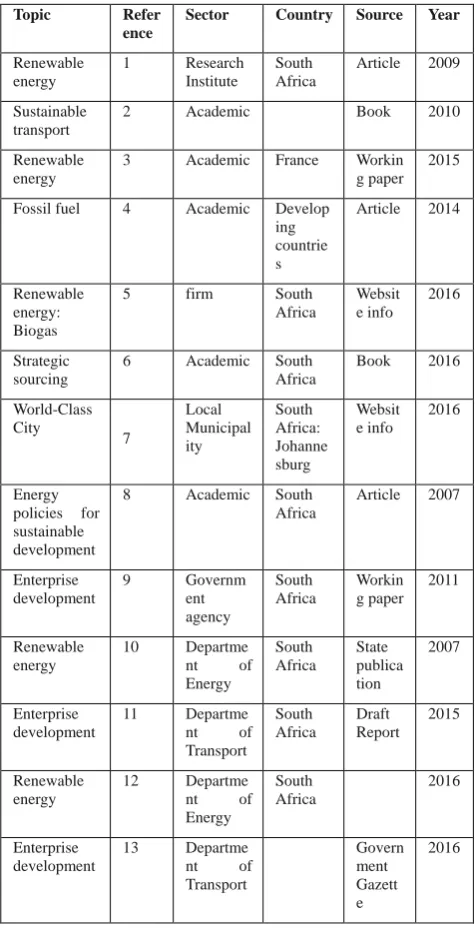
[image:5.595.299.537.50.672.2]V. RESULTSANDANALYSIS TABLE 1
DATA ANALYSIS
Topic Refer
ence
Sector Country Source Year
Renewable energy
1 Research Institute
South Africa
Article 2009
Sustainable transport
2 Academic Book 2010
Renewable energy
3 Academic France Workin g paper
2015
Fossil fuel 4 Academic Develop ing countrie s
Article 2014
Renewable energy: Biogas
5 firm South Africa Websit e info 2016 Strategic sourcing
6 Academic South Africa
Book 2016
World-Class City 7 Local Municipal ity South Africa: Johanne sburg Websit e info 2016 Energy policies for sustainable development
8 Academic South Africa
Article 2007
Enterprise development
9 Governm ent agency South Africa Workin g paper 2011 Renewable energy
10 Departme nt of Energy South Africa State publica tion 2007 Enterprise development
11 Departme nt of Transport South Africa Draft Report 2015 Renewable energy
12 Departme nt of Energy South Africa 2016 Enterprise development
13 Departme nt of Transport Govern ment Gazett e 2016 Enterprise development
14 Governm ent agency South Africa Workin g paper 2016 Sustainable transport
15 Academic South Africa
Article 2010
Strategic Sourcing
16 Academic German y
Article 2015
Renewable energy
17 Academic South Africa Confer ence paper 2011 Renewable energy & Sustainable Transport
18 National Developm ent Plan South Africa State Publica tion 2013 Sustainable Transport
19 Academic South Africa Confer ence paper 2011 Renewable energy
20 Academic South Africa
Article 2011
Renewable energy
21 Academic South Africa
Article 2015
Sustainable transport
22 Academic Canada Confer ence paper
2006
Renewable energy & Sustainable Transport
23 Academic Swedish Article 2015
Renewable energy & Sustainable Transport
24 Internet source
Sweden Interne t source
2012
Sustainable Transport
25 Company South Africa Websit e info 2016 Renewable energy
26 Academic India Article 2013
Sustainable Transport
27 Academic South Africa
Dissert ation
2012
Waste food 28 Academic South Africa
Article 2013
Renewable energy
29 Academic South Africa
Article 2014
Sustainable Transport
30 Academic South Africa
Article 2010
Sustainable Transport
31 Academic Book 2008
Renewable Energy
32 Academic South Africa Dissert ation 2011 Renewable Energy
33 Academic South Africa
Journal 2002
Renewable Energy
34 Organizat ion South Africa Interne t source 2013
[image:5.595.41.279.329.794.2]Fig 1: Publications on Sustainable Transport, Renewable Energy and Enterprise development
TABLE 2
PUBLICATIONS ON SUSTAINABLE TRANSPORT, RENEWABLE ENERGY AND ENTERPRISE
DEVELOPMENT
Publication No. of Publication
Journal Articles 16
Conference Papers 8
State Publication 3
Working Paper 3
Project Report 3
Website Info 4
Most of the sources used as arguments and building up the literature review of this paper based on academic research, and only a few are government publications and internet sources. All the sources managed to bring up the idea of this paper, which is to show the importance of renewable energy in sustaining transport in the city and playing a role in solving the common city illness such as poverty and unemployment.
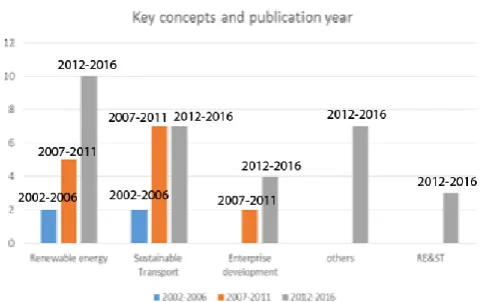
Fig 2: Source for Key concepts
[image:6.595.303.549.62.197.2]Most of the sources used are five years old, while the rest of the papers are five to 15 years old. To find out the number of years of sustainable transport, and renewable energy was in discussion, especially in the South African context. Renewable energy has more publications due to the challenge that South Africa is facing in terms of energy demand, particularly with electricity. South Africa is also still more reliant on fossil fuel.
Fig 4 South African engagements on Renewable Energy The paper aimed to find out the status of renewable energies in South Africa, as well as the opportunities that the renewables energies can bring in a way that they play a role in enterprise development and as well as supporting sustainable transport. It was found out that there is still a lack of integration between enterprise development and renewable fuels. The paper strongly supports strategic sourcing as a wheel that will integrate enterprise development and sustainable transport. There are several research papers on South African renewable energy especially five years older than this research, papers are mostly technical and not bring out opportunities such as eradication of poverty through the creation of employment and enterprise development if renewable energies implemented.
VI. RECOMMENDATIONS
The projects on renewable energies can strengthen enterprise development by supporting the small-scale farmers and business, which are into producing renewable energy. [34] Defines strategic sourcing as a holistically conscious and selective approach in applying business strategies and relationship management skills to purchasing expenditure, in a way that optimizes the results of the entire business. Each organization in South Africa mandated to create an opportunity for jobs; however, the reality is the number of organizations present cannot employ the large percentage of current unemployed in South Africa.
[34] Strategic sourcing has developed as an essential empowering agent for overseeing worldwide inventory network since associations presented to a wide assortment of store network dangers and disturbances these days. With the case of South Africa, every organization has to create an opportunity to support enterprise development through their supply chain process. Development Bank of South Africa [35] adopted Enterprise development definition from Raizcorp (2011) as an essential tool and critical economic elements through investing time, knowledge and capital to expand, establish or improve SMMEs and empowering uncertain income creating casual exercises to be supportable and add to the nearby economy. The transport sector of CoJ could be innovative by coming up with initiatives in terms of supporting SMMEs that can manufacture renewable energy and ensure the enterprises are sustainable.
16 8
3 3 3 4
0 5 10 15 20
PUBLICATION
Publication
34
9 19
0 20 40
Academic papers State reports Non-academic
Publications on Renewable
Energy
[image:6.595.40.277.269.391.2] [image:6.595.50.292.508.659.2]VII. CONCLUSION AND FUTURE RESEARCH To identify elements which can be used to develop an integrated strategic sourcing framework for SMMEs and transport sector, which can encourage enterprise development through the production of renewable energy sources partaking in sustainable transport. The research can be in the form of the case studies from both developed and developing countries, which have successful projects in terms of renewable energies and setting up of the sustainable renewable energy market. There is a need to identify the number of SMMEs are in operation, manufacturing, and commercializing renewable energies in the replacement of fossil oils within the CoJ. Finding the transport Sector organizations which are already using or willing to use renewable energy sources in the replacement of fossil fuels. Determining the existence of strategic sourcing or procurements process, which is already being utilized by the transport sector organization will help the transport sector with the renewable energy initiative. There is also a need to evaluate the efficiency and effectiveness of the strategic sourcing models, which are striving to achieve the preferential procurement system in place by the national treasury. Lastly, future research should look into the importance of enterprise development (renewable fuels), leading to sustainable transport.
The Government is also encouraged to offer more incentives for renewable energy projects and also enact on their sustainability goals and realize them. The researcher also recommends the creation of a national Database for energy resources. Here stakeholders can access information about the status of renewable energies including, incentives, projects, total output, and tenders.
ACKNOWLEDGMENT
I would like to thank Department of Transport and Supply Chain Management for the financial support.
REFERENCES
[1] Todes, A., 2012. Urban growth and strategic spatial planning in Johannesburg, South Africa. Cities, 29(3), pp.158-165.
[2] Ross, C.L., Stiftel, B., Woo, M., and Rao, A. (2010). Measuring Regional Transportation Sustainability: An Exploration. The Urban Lawyer, pp.67-89.
[3] Walters, J. (2013). Overview of Public Transport Policy Developments in South Africa. Research in Transportation Economics, 39(1), pp.34-45.
[4] CoJ (2016). A World-Class African City, Celebrating 130 years. City of Johannesburg (CoJ)
[5] A dot (2016). Notice 2 OF 2016 2 The B-BBEE Act (53/2003): Transport Sector Broad-Based Black Economic Empowerment (B-BBEE) Codes 39744, Draft Amended Aviation Sub-sector Broad-Based Black Economic Empowerment Code, Government Gazette, Vol. 608, 26 February 2016, No. 39744.
Available via:
http://www.transport.gov.za/Portals/0/ITP/2016/docs/G overnmentGazetteNo39744_26Feb2016.pdf
[6] Velazquez, L., Munguia, N.E., Will, M., Zavala, A.G., Verdugo, S.P., Delakowitz, B., and Giannetti, B. (2015). Sustainable Transportation Strategies for Decoupling Road Vehicle Transport and Carbon
Dioxide Emissions. Management of Environmental Quality: An International Journal, 26(3), pp.373-388. [7] Mine, G.P., Magdum, S.S., and Kalyanraman, V., 2013.
Biogas as a sustainable alternative for current energy need of India. Journal of Sustainable Energy & Environment, 4, pp.121-132.
[8] Bildirici, M.E., and Bakirtas, T., 2014. The relationship among oil, natural gas, and coal consumption and economic growth in BRICTS (Brazil, Russian, India, China, Turkey, and South Africa) countries. Energy, 65, pp.134-144.
[9] Baranes, E., Jacqmin, J. and Poudou, J.C., 2015. Non-renewable and intermittent Non-renewable energy sources: friends and foes?.
[10] Pradhan, A., and Mbohwa, C. (2014). Development of Biofuels in South Africa: Challenges and Opportunities. Renewable and Sustainable Energy Reviews, 39, pp.1089-1100.
[11] Sanches-Pereira, A., Lönnqvist, T., Gómez, M.F., Coelho, S.T. and Tudeschini, L.G., 2015. Is natural gas a backup fuel against shortages of biogas or a threat to the Swedish vision of pursuing a vehicle fleet independent of fossil fuels?. Renewable Energy, 83, pp.1187-1199.
[12] Nahman, A., and De Lange, W.J., 2013. Costs of food waste along the value chain: Evidence from South Africa: Presentation.
[13] DME (2007). Biofuels Industrial Strategy of the Republic of South Africa, Department of Minerals and
Energy (DME). Available via:
http://www.gov.za/sites/www.gov.za/files/State%20of %20Renewable%20Energy%20in%20South%20Africa _s.pdf
[14] UNEP (2013). Green Economy Scoping Study: South African Green Economy Modelling Report (SAGEM) – Focus on Natural Resource Management, Agriculture, Transport, and Energy Sectors.
[15] DoE (2015). State of Renewable Energies in South Africa, Department of Energy (DoE).
[16] NDP (2013). NDP 2030 Our Future Make it Work, National Development Plan (NDP). Available via:
http://www.statssa.gov.za/wp- content/uploads/2013/07/NDP-2030-Our-future-make-it-work.pdf
[17] DoT (2016). NATMAP 2050 Synopsis Update Draft Report, Energy and The Environment, Integrated Planning, Department of Transport (DoT). Available via:
http://www.transport.gov.za/Portals/0/ITP/NATMAP% 202050/9%20Environment%20(v8).pdf, accessed 14/04/2016
[18] Munganga, G. (2013). Overview of Biogas Market in South Africa, Green Cape-Waste Economy Sector
Manager. Available from:
http://www.energy.gov.za/files/biogas/presentations/20 13-NBC/2013-Overview-of-biogas-market-in-South-Africa.pdf
[19] Lönnqvist, T., Sanches-Pereira, A., and Sandberg, T., 2015. Biogas potential for sustainable transport–a Swedish regional case. Journal of Cleaner Production, 108, pp.1105-1114.
deployment, and vehicle sales. Journal of Cleaner Production, 112, pp.3774-3784.
[21] Pegels, A. (2010). Renewable Energy in South Africa: Potentials, Barriers, and Options for Support. Energy Policy, 38(9), 4945-4954.
[22] Africa, S. E. (2009). How to Implement Renewable Energy and Energy Efficiency Options. Renewable Energy and Energy Efficiency Partnership.
[23] Biogas (2016). Rural Digesters, BiogasSA. Available via http://www.biogassa.co.za/index.php/91-services-home-articles/81-biogas-rural-digesters, last accessed 09 May 2016.
[24] Mayer, N. (2012). 100% Biogas-fuelled Public Transport in Linkoping, Sweden. Available via https://sustainabilitywriter.wordpress.com/2012/07/27/1 00-biogas-fuelled-public-transport-in-linkoping-sweden/, last accessed 09 Many 2016.
[25] SAEP (2015). Sustainable Development in South Africa, South African Education, and Environment
Projects (SAEP). Available via:
http://www.saep.org/media/docs/123444107312.pdf. [26] Kane, L. (November 2010). Sustainable Transport
Indicators for Cape Town, South Africa: Advocacy, Negotiation, and Partnership in Transport Planning Practice. In Natural Resources Forum (Vol. 34, No. 4, pp. 289-302). Blackwell Publishing Ltd.
[27] Black, W.R. (2010). Sustainable Transportation: Problems and Solutions. Guilford Press.
[28] Kolak, O.İ., Akın, D., Birbil, Ş.İ., Feyzioğlu, O., and Noyan, N. (2011). Multi-criteria Sustainability Evaluation of Transport Networks for Selected European Countries. Lecture Notes in Engineering and Computer Science, 2190(1), pp.117-122.
[29] Vagland, A. & Viehauser, M. (1999). Key Role-players in the Process towards Sustainable Transport in Europe: A Report from the Swedish Euro-EST Project. Naturvaardsverket.
[30] Krupa, J. & Burch, S. (2011). A New Energy Future for South Africa: The Political Ecology of South African Renewable Energy. Energy Policy, 39(10), 6254-6261. [31] WWF (2014). Technical Report, World Wide Fund
(WWF), Climate Change and Energy: Renewable Energy Vision 2030_ South Africa.
[32] Perrels, A., Himanen, V., and Lee-Gosselin, M. (2008). Building Blocks for Sustainable Transport: Obstacles, Trends, Solutions. Emerald Group Publishing.
[33] Davidson, O. (2007), Energy policies for sustainable development in South Africa, Eds Winkler, H., 2007. Energy policies for sustainable development in South Africa. Energy for sustainable Development, 11(1), pp.26-34.
[34] Boateng, D. (2016). Executive Insights into Strategic Sourcing. A Panvest supply chain management reference in partnership with ACSA, p36.
[35] Kotula, M., Ho, W., Dey, P. K. & Lee, C. K. M. (2015). Strategic Sourcing Supplier Selection Misalignment with Critical Success Factors: Findings from Multiple Case Studies in Germany and the United Kingdom. International Journal of Production Economics, 166, 238-247.
[36] DBSA (2011), Enterprise development unpacked: A tool for prosperity, Development Planning Division Working Paper Series No. 18, available via