Conditional Mutations in the Yeast DNA Primase Genes Affect Different
Aspects of DNA Metabolism and Interactions in the DNA
Polymerase a-Primase Complex
Maria Pia Longhese,* Luca Jovine,* Paolo Plevani*
and Giovanna Lucchini**+
*Dipartimento di Genetica e di Biologia dei Microrganismi, Uniuersita di Milano, 20133 Milano, Italy, and Tlstituto di Genetica, Universita di Sassari, 07100 Sassari, Italy
Manuscript received July 28, 1992 Accepted for publication October 2 1 , 1992
ABSTRACT
Different pril and pri2 conditional mutants of Saccharomyces cereuisiae altered, respectively, in the small (p48) and large (p58) subunits of DNA primase, show an enhanced rate of both mitotic intrachromosomal recombination and spontaneous mutation, to an extent which is correlated with the severity of their defects in cell growth and DNA synthesis. These effects might be attributable to
the formation of nicked and gapped DNA molecules that are substrates for recombination and error- prone repair, due to defective DNA replication in the primase mutants. Furthermore, pril and pri2 mutations inhibit sporulation and affect spore viability, with the unsporulated mutant cells arresting with a single nucleus, suggesting that DNA primase plays a critical role during meiosis. The observation that all possible pairwise combinations of two p r i l and two pri2 alleles are lethal provides further evidence for direct interaction of the primase subunits in vivo. Immunopurification and immunopre- cipitation studies on wild-type and mutant strains suggest that the small subunit has a major role in determining primase activity, whereas the large subunit directly interacts with DNA polymerase a , and either mediates or stabilizes association of the p48 polypeptide in the DNA polymerase a-primase complex.
I
N the yeast Saccharomyces cerevisiae, as in all eukar- yotic systems analyzed so far, a DNA primase activity is associated with DNA polymerase a (pola) in a four-subunit complex that appears to play a majorrole in initiation of DNA replication at an origin and
in priming and elongation of Okazaki fragments on the lagging strand (LEHMAN and KAGUNI 1989; TSUR-
IMOTO, MELENDY and STILLMAN 1990). T h e yeast complex can be separated into two fractions, one of which, containing the p48 and p58 polypeptides, is able to synthesize short RNA primers (9-1 1 nucleo- tides in length) that can be elongated by pola (PLEVANI et al. 1985; BROOKS and DUMAS 1989). Cloning and characterization of the PRIl and PRI2 genes encod- ing, respectively, the p48 and p58 protein species, have shown that they are both unique in the haploid yeast genome and essential for cell viability, and that the amino acid sequence of their encoded products is highly homologous to that of the corresponding mouse primase polypeptides (PLEVANI, FRANCESCONI and LUCCHINI 1987; FOIANI et al. 198913; PRUSSAK,
ALMAZAN and TSENC 1989; FRANCESCONI et al. 199 1). Earlier studies with anti-p48 and anti-p58 antibodies and an affinity labeling procedure suggest that both proteins are necessary for optimal DNA primase activ- ity (FOIANI et al. 1989a). However, the inability to purify each primase subunit in an isolated form in any eukaryotic system has until now limited the possibility
Genetics 1 3 3 183-1 91 (February, 1993)
to use in vitro reconstitution studies to further analyze their specific role in determining enzyme activity and their interactions.
To address these questions and to gain some infor- mation about the function of DNA primase in differ- ent aspects of DNA metabolism, we have produced conditional pril and pri2 mutants by random muta- genesis of the cloned genes and replacement of the wild-type copy at the corresponding chromosomal locus (FRANCESCONI et al. 199 1). Preliminary charac- terization of different recessive alleles, i.e., the leaky and temperature-sensitive (ts) pril-1, the cold-sensi- tive (cs) pril-2, the ts pri2-1 and the ts pri2-2 alleles, which all carry single base-pair substitutions causing a change in amino acid residues conserved in the cor-
responding mouse polypeptides, has allowed us to assess the essential role of DNA primase in DNA replication in vivo. In fact, the primary defect in all these mutants, after shifting to nonpermissive temper- ature, is an impairment in DNA synthesis, ranging between a complete arrest in the pri2-1 mutant to only a doubling of the time needed to complete one round of DNA replication in the prz2-2 mutant. These defects are correlated with cell growth arrest or re- duced growth rate, accumulation of dumbbell-shaped cells and inability to synthesize appropriate amounts of high molecular weight DNA molecules (FRANCES-
184 M. P. Lo1
TABLE 1
S. cerevisiae strains
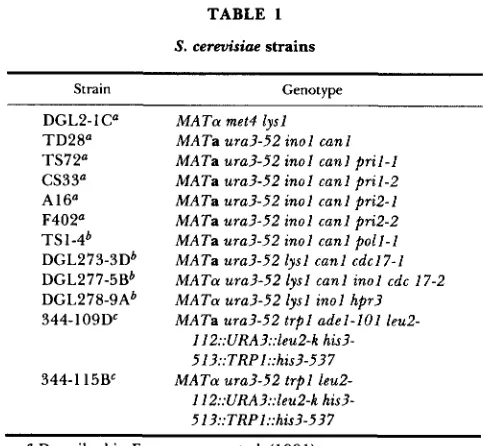
Strain Genotype
DGL2-I Ca MATa met4 lysl TD28" MATa ura3-52 inol canl
TS72a MATa ura3-52 inol canl pril-1
A16a MATa ura3-52 inol canl pri2-1 F402" MATa ura3-52 inol canl pri2-2
TS 1 -4b MATa ura3-52 inol canl poll-I
DGL273-3Db MATa ura3-52 lysl canl c d c l 7 - 1
DGL277-5Bb MATa ura3-52 lysl canl inol cdc 17-2 DGL278-9Ab MATa ura3-52 lysl inol hpr3
cs33a MATa ura3-52 inol canl pril-2
344-109DC MATa ura3-52 trpl adel-I01 leu2-
I 1 Z::URA3::leuZ-k his3- 513::TRPI::his3-537 344-1 15BC MATa ura3-52 trpl leu2-
I I 2::URA3::leu2-k his5
513::TRPI::his3-537
Described in FRANCESCONI et al. (1 99 1). Described in LUCCHINI et al. (1990).
Described in ACUILERA and KLEIN (1 988).
We have now further characterized these mutants by studying their behavior with respect to other proc- esses involving DNA metabolism, including mitotic recombination, spontaneous mutation frequency and meiosis, all of which might be affected by defects in t h e DNA replication machinery. Moreover, we report a preliminary characterization of the pola-primase complex in the different mutants that provides some new insights about protein-protein interactions among the pola-primase polypeptides and the role of t h e primase subunits in supporting enzyme activity.
MATERIALS AND METHODS
Strains and media: The original pril and pri2 mutant strains TS72, CS33, A16 and F402 and their isogenic wild- type strain TD28 (Table 1) were used for immunoprecipi- tation and immunopurification of the pola-primase com- plex. Strains used to determine intrachromosomal recom- bination rate and C A N l to canl mutation rate were con- structed as follows. First, the isogenic mutant strains TS72, CS33, A16 and F402 were crossed to strain 344-1 15B (Table l ) , to generate diploid strain DML82, DML83, DML84, DML85, respectively. One p r i l - 1 , p r i l - 2 , p r i 2 - 1 or
pri2-2 meiotic segregant from each of these diploids was then crossed to strain 344-109D (Table 1) to obtain, respec- tively, the diploid strains DML150, DML148, DML96 and DMLlO2. Strains with the appropriate genotype were cho- sen among the meiotic segregants from this second round of diploids to carry on the t w o assays described in the next section. CANl poll-1 and CANl cdcl7-1 strains were ob- tained as meiotic segregants from crosses TS1-4 to 344- 115B and DGL273-3D to 344-115B, respectively, while CAN1 hpr3 and CANl cdcl7-2 segregants were derived from crosses DGL278-9A to 344-109D and DGL277-5B to 344-
109D, respectively (Table 1). Strain TS1-4 is isogenic to
TD28, while strains DGL273-3D, DGL278-9A and DGL277-5B are strictly related to TD28 (LUCCHINI et al. 1990). Diploid strains for sporulation analysis were con- structed by crossing first TS72, A16 and F402 to DGL2-IC
nghese et al.
(Table 1). M A T a p r i l - 1 , M A T a p r i 2 - 1 and MATa pri2-2 meiotic segregants from the obtained diploid strains were then back-crossed to TS72, A16 and F402, respectively, to originate the corresponding p r i l l p r i l or pri2/pri2 strains, and to TD28 to give rise to P R I l l p r i l or PRI2/pri2 strains. Rich medium YPD, synthetic medium SD and synthetic complete medium with amino acids and bases omitted as specified, were as described by SHERMAN, FINK and HICKS (1 986). L-Canavanine sulfate was added to synthetic com- plete medium lacking arginine at the final concentration of 30 pg/ml. Sporulation media and conditions were as de- scribed by LUCCHINI et al. (1 978).
Fluctuation test: For the recombination assay we used four p r i l - 1 , four pri2-1, three pri2-2, one p r i l - 2 and four PRIl PRI2 (wild-type) strains constructed as described above, which were all Leu- His- Ura+ Trp+ and were shown by Southern analysis to carry both the LEU2 and the HIS3 duplications as depicted in Figure 1A. Analysis of the CANl to canl mutation rate was performed on three C A N l p r i l - l , one C A N l p r i l - 2 , three C A N l p r i 2 - l , one CANl pri2-2, one CANl poll-1, one CANl cdcl7-1, one CANl cdc17-2, one CANl hpr3 and 10 CANl PRIl PRI2 POL1 (wild-type) strains. According to the procedure described by AGUILERA and KLEIN (1988), with minor modifications, single cells were allowed to form colonies (approximately 2-3 X 10' cells/colony) on YPD plates at 25" (wild-type, p r i l - 1 , p r i l - 2 and pri2-1 strains), 28' (wild-type and pri2-2 strains for the recombination test) or 37" (wild-type and pri2-2 strains for the mutation test). Growth temperatures were chosen as the ones providing the higher recombination or mutation rates in the mutants, based on preliminary tests. Five to eight independent colonies for each strain were resuspended in 1 ml of water and plated on selective SD -His and SD -Leu media (approximately 3 X l o 5 cells/plate) for the recombi- nation test, on SD
+
canavanine (approximately 1 X IO' cells/plate) for the mutation test, and on complete synthetic medium (approximately 3 X 10' cells/plate) to determine the exact viable title of each cell suspension. Plates were incubated at 25" and colonies were counted after 5 days. Leu+ o r His+ recombinant clones were then replicated on SD -Ura and SD -Trp, respectively, to distinguish between reciprocal recombination and gene conversion events. Re- combination and mutation rates (recombinants or mutants/ cell/generation) were calculated for each strain according to LEA and COULSON (1948). No significant differences were observed in either recombination or mutation rates among different wild-type strains, even if pregrown at different temperatures, or among different strains carrying the same p r i l or pri2 conditional allele.Yeast DNA Primase Mutants
DNA polymerase or DNA primase reaction mixtures and enzymatic activities in the immunoprecipitates were meas- ured as previously described, with [3H]dATP (750 cpm/ pmol) as the labeled substrate (PLEVANI et al. 1985). The immunological reagents used for Western blot analysis to detect pola were a mixture of anti-pola Mabs (LUCCHINI et al. 1985). Affinity purified rabbit polyclonal antibodies raised against trpE-PRI2 or trpE-PRI 1 fusion proteins, pro- duced in Escherichia coli and containing, respectively, the carboxyl-terminal 4 19 amino acids of p58 or the carboxyl- terminal 307 amino acids of p48 were used to detect p58 or p48 on Western blots. These antibodies specifically recog- nize either p58 or p48 on Western blots of both immuno- purified pola-primase complex and yeast crude extracts (SANTOCANALE et al. 1993; this study).
RESULTS
Conditional
priZ
and pri2 mutations lead to en- hanced rates of intrachromosomal mitotic recombi- nation and mutation: An increase in the rate of mitotic recombination and mutation has been ob- served as a consequence of ts mutations in a numberof DNA synthesis genes, including CDC9 (DNA ligase)
(GAME, JOHNSTON and VON BORSTEL 1979), CDC8
(thymidylate kinase), P O L l I C D C l 7 (DNA polymerase
a), and POL3ICDC2 (DNA polymerase 6) (HARTWELL
and SMITH 1985; ACUILERA and KLEIN 1988).
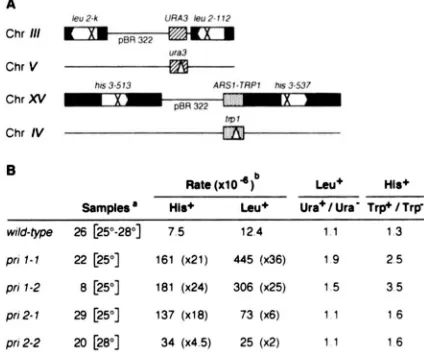
To determine whether defects in the DNA primase subunits would also affect mitotic recombination, we used a genetic system capable of measuring both gene conversion and reciprocal recombination events, pre-
viously described by ACUILERA and KLEIN (1988).
Briefly. the system is based on haploid strains carrying
heteroallelic duplications of the LEU2 gene on chro-
1110some I l l and of the HIS3 gene on chromosome
XV
(Figure 1 A). T h e URA3 marker is located between the
leu2-112 and the leu2-k alleles, while the T R P l marker
separates the his3-513 and the his3-537 alleles, and
the corresponding chromosomal loci carry mutant u r a 3 and t r p l alleles, respectively. Recombinants are selected as Leu+ or His+ clones, which are then ana- lyzed by replica plating to distinguish between differ- ent recombination events involving the repeated se- quences at each locus: (i) reciprocal recombination,
that leads to loss of the URA3 or T R P l marker (Leu+
Ura- and His+ Trp- clones) and (ii) gene conversion
events (Leu+ Ura+ and His+ Trp+ clones). T h e dupli-
cations were introduced into a p r i l or pri2 back-
ground by two rounds of crosses (see MATERIALS AND METHODS) involving the isogenic mutant strains and t w o wild-type strains carrying the duplications, which are genetically related to each other and show nearly identical rates of mitotic intrachromosomal recombi-
nation and spontaneous CAN1 to can1 mutation
(ACUILERA and KLEIN 1988; our unpublished obser-
vation). T h e second round of crosses gave rise to diploid strains DML150, DML148, DML96 and
DML102, that were heterozygous for onepril o r p r i 2
allele and homozygous for the duplications. At least
A
leu 24 URA3 Iou2.112
Chr 111
tIxI
@ R Z * tzBKx3Chr V
-%-Chr XV
Chr N
m
B
hS3413 ARSI.lRP1 hsJ.537
P
I r n 1
Rate ( X l o q LW+ n w
&rnples'
nia+ LW* Ura+tUn- Trp*/Tw"
wild-lype 26 [25"-28O] 7 5 12 4 1 3 1 1
pn 1-1 22 [25O] 161 ( ~ 2 1 ) 445 (x36) 1 9 2 5
pn 1-2 8 [25'] 181 ( ~ 2 4 ) 306 (x25) 1 5 3 5
p n b l 29 [25O] 137 ( ~ 1 8 ) 73 (6) 1 1 1 6
pn2-2 20 [28O] 34 (x4 5) 25 (x2) 1 1 1 6
FIGURE 1.-Experimental scheme to measure the effect of pril and pri2 mutations on intrachromosomal recombination. (A) The common basic genetic features of all the strains used for this study
are shown (see text for details). (B) The rate of recombination at
LEU2 and HIS3 in wild-type, p r i l and pri2 strains is given, as well
as the ratio (Ura'/Ura- and Trp+/Trp-) between gene conversion
and popout events at each locus.
Total number of independent clones analyzed for each p r i l or
pri2 allele. Growth temperature is indicated within brackets.
'
Each entry represents the average value of the rates obtainedfor each different strain carrying the same pril or pri2 alleles according to the fluctuation test of LEA and C o u ~ s o ~ (1948). The
standard error was always <20%. Numbers in parenthesis indicate
increase over the wild-type rate of recombination.
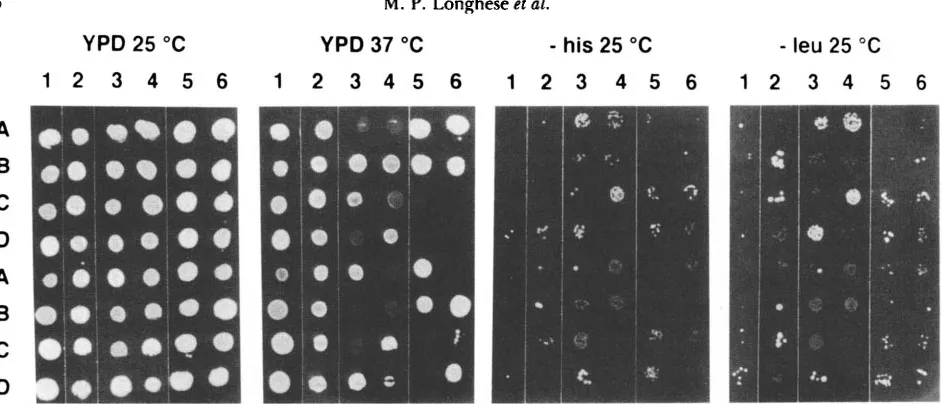
10 tetrads from each of them were analyzed and we observed a 2:2 segregation of high frequency of Leu+ and His+ papillae in all the tested tetrads. This hyper- recombination phenotype always cosegregated with the p r i l or pri2 mutations, as exemplified in Figure 2 for the p r i l - 1 and pri2-1 alleles, and it was not ob-
served in tetrads from PRIIIPRIl PRI2/PRI2 control
strains. These data indicated that the observed hyper-
recombination phenotype was due to the primase
mutations under analysis. To quantify the effect of the p r i l and pri2 alleles on recombination, we per-
formed a fluctuation test as described in MATERIALS
AND METHODS. As shown in Figure IB, all of the
mutations, to different extents, cause a significant
enhancement in recombination rates at both loci.
Quantitative differences among different mutants are
positively correlated with the effect of the mutations
on growth rate at the temperature used for the recom-
bination assay (FRANCESCONI et al. 199 1). Thus, the ts
p r i l - 1 strains and the c s p r i l - 2 strains show the highest recombination rate (20-30-fold increase over the
wild-type rate) and grow more slowly at 25" than the
ts pri2-1 strains (6-18-fold increase). In addition, the growth rate at 28" is nearly wild-type in the ts pri2-2 strains, which show only a modest 2-4-fold enhance- ment in recombination rate. We observed an increase in both reciprocal recombination and gene conversion
events in all the mutants (Figure
1B).
Whereas the186 M. P. Longhese et al.
FIGURE 2.-The pril-I and pri2-l ts phenotype is associated with high frequency of recombination. Tetrads from the diploid strains DML126 PRIl/PRII PR12/PR12 (lanes 1 and 2). DML150 priI-I/PRII PR12/PR12 (lanes 3 and 4) and DML96 PRII/PRII pri2-1lPR12 (lanes 5 and 6), all carrying homozygous LEU2 and HIS3 duplications, were dissected after sporulation and analyzed by spotting about 1 Os
cells for each segregant clone on plates containing the indicated media. Strain DMLl26 was obtained by crossing one PR11 meiotic segregant from DML82 to strain 344-109D. Pictures were taken after 36 hours of incubation at 25" or 37" for YPD plates and after three days of incubation at 25" for SD -Leu and SD -His plates. Growth on SD complete medium was comparable to growth on YPD at the same temperatures. T w o tetrads are shown in each lane and letters A, B. C. D indicate four spores from the same tetrad.
bination events are very similar in wild-type and pri2 TABLE 2
strains, both pril mutations seem to favour gene con- Mutator phenotype of DNA primase mutants
version, since the difference compared to wild type
was significant at P < 0.01 by
x2
analysis. C A N 1 to ran1Mutations affecting mitotic recombination often
have been observed to cause a mutator phenotype
(HARTWELL and SMITH 1985; AGUILERA and KLEIN pri1-l Wild-type 25-37 25 80 24 I .0
1988). For this reason, we analyzed the effect of pril p r i l - 2 25 I6 10.0 7.5
and pri2 mutations on spontaneous rate of mutation pri2- I 25 32 6.7
of the wild-type CAN1 gene to can1 alleles that confer pri2-2 37 8 4.3
resistance to the arginine analogue canavanine, and a Poll-1 25 8 7.7
fluctuation test was performed as described in MATE- cdcl7-l 25 8 6.1 7.0
RIALS AND METHODS. As a control, four different ts C ~ C I 7-2 25 8 3.3
p o l l alleles ( p o l l - l , hpr3, cdcl7-l and cdc17-2) were a Total number of independent clones analyzed for each pril or
assayed in parallel. As summarized in Table 2, all the pri2 allele.
111utants' but One' showed a 6-10-fold enhancement for each different strain carrying the same pril or pri2 allele, b Fach entry represents the average value of the rates obtained
ofCAN1 to can 1 mutation rate compared to wild type, measured by the fluctuation test of Lea and CouIson (see MATERIALS
when colonies were grown at 25
"
before plating on A N D METHODS). Standard error was always <20%.selective medium. Only t h e weak ts pri2-2 strain had diploid strains (see MATERIALS AND METHODS), carry-
to be grown at 37" to observe any increase in the ing each
tS pril and pri2 recessive mutation in the
n1utation rate- Because the CAN1 to canl mutation heterozygous or homozygous state. Cells were grown
rates were identical in wild-type strains grown at 25" in YPD at 250 and then transferred to liquid sporu-
o r at 37", the 4-fold increase found in the pri2-2 lation medium at 250 or 280 (LUCCHINI et al. 1978).
Temperature
Strain ("C) Samplesa
mutation rate (X I0")b
hpr3 25 8
strain can be attributed to the mutation in the PR12 samples for DAPI staining of the nuclei were taken
gene.
P r i I and pri2 ts mutations interfere with meiosis
and spore survival: T h e essential role of polcv in premeiotic D N A synthesis has been clearly demon-
strated (BUDD et al. 1989). I t was therefore of interest
to determine whether the associated D N A primase,
essential for mitotic D N A synthesis, was also involved
in the meiotic process. For this purpose we compared sporulation frequencies and spore survival in isogenic
at different times and sporulation frequency and spore survival were determined after three days.
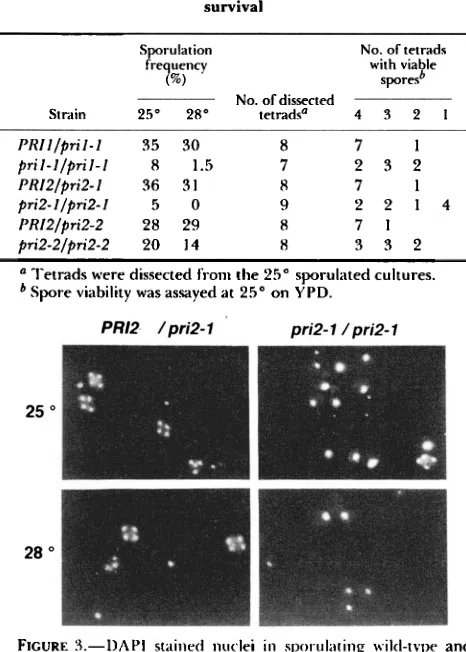
As summarized in Table 3, sporulation is severely
affected in p r i l - l and pri2-l homozygous strains even at 25", a temperature that either does not alter (pri2-
I ) or causes only a slight delay ( p r i l - l ) in the rates of
mitotic growth and DNA synthesis (FRANCESCONI et
al. 1991). T h e pri2-2 homozygous strain also exhibits
a less severe defect in sporulation, as expected from
TABLE 3
Effect of priZ and pri2 mutations on sporulation and spore
survival
~ ~ ~~~~
S rulation Kquincy
No. of tetrads "ith viable
spores'
(%)
Strain 25" 28" No. of dissected tetrads' 4 3 2 I
P R l l / p r i I - l 35 30 8 7 1
p r i l - l / p r i l - l 8 1.5 7 2 3 2
PR121pri2-I 36 3 1 8 7 1
PR121pri2-2 28 29 8 7 1
pri2-21pri2-2 20 14 8 3 3 2
'
Tetrads were dissected from the 25" sporulated cultures.b Spore viability was assayed at 25" on YPD.
pri2-llpn2-1 5 0 9 2 2 1 4
FIGURE J.-DAPI stained nuclei i n sporulating wiltl-type and
pri2-l diploid cells. S;umples for staining with 4',6-dia1nidino-2-
phenylindole ( D A H : -rRUEHEART, BOEKE and FINK, 1987) were
collected 4X hours after cell transfer to sporulation medium (see text for details).
the lesser effect of this mutation on cell growth and
DNA synthesis. All the unsporulated cells in the
homozygous mutants arrested with a single nucleus,
as illustrated for the pri2-l/pri2-1 strain in Figure 3.
Moreover, the appearance of asci was delayed by more
than 12 hr for the homozygous strains compared to the corresponding heterozygous strains at 25" (data
not shown), and a significant number contained invi-
able spores (Table 3). The latter finding suggests that,
even when meiosis and sporulation take place, some meiotic products are genetically defective.
Mutations in the PRIl and
PR12
genes differently affect protein-protein interactions: Since p48 andp58 polypeptides interact with each other, it could be
expected that specific missense mutations in one of the two genes would suppress certain missense muta- tions in the other gene. Alternatively, combinations
of conditional mutations in both genes might result i n
a more dramatic defect than would the single muta- tions. In order to address this question, we crossed the pril and pri2 conditional nlutants i n all the possi-
ble pairwise combinations and analyzed the phenotype
o f double pril and pri2 segregants from these crosses.
As summarized in Table 4, with the only exception of
rare pril-2 pri2-2 segregants, which were severely
affected in growth rate at any temperature, all the
other double pril pri2 combinations had a lethal ef-
fect. These data add further evidence for in vivo
interaction between the two subunits.
A parallel biochemical approach allowed us to ana-
lyze the effect of these mutations on the stability of the corresponding gene products and on their ability to interact with one another and with pola. Immu- noblot analysis of mutant crude extracts (Figure 4) shows that p r i l - l and pri2-l alleles encode very labile polypeptides that are barely detectable using our an-
tibodies, whereas the pril-2 mutation does not signif-
icantly affect the level of the corresponding polypep- tide and p58 level is significantly lower than in wild-
type in pri2-2 cells. These differences in protein sta-
bility correlate well with the effect of the mutations
on growth rate and DNA synthesis. The level of the
other wild-type primase subunit was substantially un-
affected in all the mutant extracts.
T o analyze the effect of the mutations on the inter- actions anlong the pola-primase complex polypep- tides, we applied an immunochromatographic proce-
dure, based on the use of the anti-pola Mab y48,
which allows the purification of the pola-primase com-
plex from wild-type cells (PLEVANI et al. 1985). With
this procedure, we immunopurified pola and the as-
sociated polypeptides from the above pril and pri2
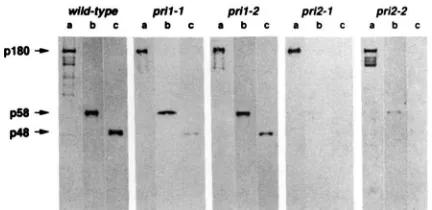
mutant extracts. As shown in Figure 5 , the amount of
p48 associated with pola is severely reduced in pril-I
preparations, in accord with the increased lability of the mutated polypeptide (Figure 4), while the ratio between the amount of p58 and pola polypeptides is similar to the wild-type preparation. In contrast, the amounts of both the mutated p58 and the wild-type
p48 associated with pola in pri2-l are both highly
reduced, even though the level of p48 was normal in
the crude extract (Figure 4). Similarly, the amount of
pola-associated wild-type p48 in pri2-2 preparations is
reduced from the wild-type and seems to be deter- mined by the amount of mutant p58 recovered.
T o further analyze the role of the two subunits in
enzyme function, we tried to correlate primase activity
with the variable levels of the primase polypeptides
observed in wild-type, pril-1 and pri2-l complexes.
Towards this end, we used the anti-pola y48 antibod-
ies, which do not inhibit either DNA polymerase or
primase activity (PLEVANI et al. 1985), to immunopre-
cipitate pola from wild-type and mutant extracts. The
immunoprecipitates were analyzed directly for DNA
polymerase and primase activities and by Western
blotting.
The polypeptide composition of the immunoprecip-
itates was similar to that observed after immuno-
188 M. P. Longhese et al.
TABLE 4
Lethality of pril pri2 double mutants
No. of tetrads with viable sporesb No. of dissected
Strain tetradsa 4 3 2
PRll bri2-2 3 (NPD)
"
pril-l PR12
-
P R l l pri2-l 8 2 (PD) 4 (TT) 2 (NPD)pri 1-2 PR12
-
PRI1 pr12-2 IO 3 (1 PD+ 2TT)
4 (3TT+
INPD) 3 (NPD)pril-2 PRI2
Tetrads were defined as parental ditypes (PD), nonparental ditypes (NDP) or tetratypes (TT) based on segregation of the ts or cs phenotypes, that were shown to correlate with the presence of p r i l or/and pri2 mutations by a complementation test. From this analysis, all the expected pril pri2 double mutants were unviable, with the only exception of three p r i l - 2 pri2-2 segregants, which gave rise to very small colonies.
a Tetrads were dissected from the 25" sporulated cultures.
Spore viability was assayed at 25" on YPD.
.-
4 p180- 7 - c p 4 8
FIGURE 4.-Western blot analysis on crude extract from wild- type and p r i l or pri2 cells. Crude extracts were prepared from cell cultures grown in YPD at 25". Each lane represents 100 r g of the indicated crude extract, analyzed by SDS-PAGE, transferred to
nitrocellulose filters and probed, respectively, with a mixture of anti-pola Mabs (top row), or with anti-p58 (middle row) or anti-p48 (bottom row) polyclonal antibodies (see MATERIALS AND METHODS). The identity of the bands in the crude extracts is assessed by comigration with the corresponding polypeptides in the immuno- purified pola-primase complex, that was run on the same gel.
the recovery of the p48 polypeptide from both mutant
extracts was somewhat higher relative to the level of
1'58 than that shown in Figure 5, but still highly reduced compared to wild-type levels. As summarized
i n Table 5, the amount of DNA polymerase activity
was comparable in wild-type and mutant immunopre-
cipitates, in agreement with the wild-type level of pola
polypeptide observed on Western blots for each prep-
mition. Due to the very low amount of DNA primase
i n these immunoprecipitates, the efficiency of the direct assay measuring the synthesis of labeled
oligo(rA) primers on a poly(dT) template (PLEVANI et
al. 1985) was below the level of detection. Therefore we employed the more sensitive combined assay meas-
uring E. coli DNA polymerase I activity as a function
of primer formation by yeast DNA primase. Under
these assay conditions (Table 5), DNA primase activity
was reduced to 50-60% of the wild-type level in the
wr#-lvp. pfll-1 pfll-2 pfl2-1 pri2-2
a b c . b e a b C a b C * b C
ptm
-
FIGURE 5.-Western blot analysis of proteins purified from wild-
type, pril or pri2 cell extracts by anti-pola monoclonal antibodies. Immunochromatography with Maby48 was performed on the crude extracts described in Figure 4. Polypeptides present in 0.0 15 ml samples of each Mab eluate were separated by SDS-PAGE, transferred to nitrocellulose filters and probed, respectively, with a mixture of anti-pola monoclonal antibodies (lanes a), or with anti- p58 (lanes b) or anti-p48 (lanes c) polyclonal antibodies.
mutants when incubation was performed at the tem-
perature permissive for the mutants (25"). E. coli
DNA polymerase I works poorly at 25". When the
same assay was performed at 37" to optimize elonga-
tion of RNA primers by E. coli polymerase, primase
activity in the mutants was found to be reduced to 6-
11% of the wild-type level. T o confirm that this 5-
fold reduction of primase activity at nonpermissive temperature was due to a lower efficiency of primer formation, a two-step reaction was carried out, where
primer formation was allowed to occur for 20 min. at
25" or 37", before elongation by E. coli DNA polym-
erase I could take place. Under these conditions,
primase activity in the mutant immunoprecipitates was
reduced by preincubation at nonpermissive versus permissive temperature, that we attribute to temper- ature-sensitivity of the primase enzyme. The two-step
reaction comparison also indicates that primase activi-
Yeast DNA Primase Mutants
TABLE 5
DNA polymerase and DNA primase activity in immunoprecipitates
DNA primase activity (cpm)
DNA polymerase One-step reactiona Two-step reactionb
activity (cpm) at
Immunoprecipitate 25" 25" 37" 25" "* 37" 37" + 37"
Wild-type 37,118 2,203 173,990 84,499 179,950
p r i l - 1 37,146 1,157 20,160 8,107 3,440
p r i 2 - 1 30,276 1,335 10,035 10,123 3,170 .
Numbers given in the table represent the average value of two independent assays on each immunoprecipitate. Standard error was always
DNA primase activity was assayed by incubating directly the reaction mixture, including E . coli DNA polymerase I, at the indicated
E . coli DNA polymerase I and ['HIdATP were added after preincubation of the reaction mixture for 20 minutes at 25" or 37" and the < lo % .
temperatures for 1 hr.
reaction was allowed to proceed at 37" for 1 hr.
tectable for the 25" to 37" condition, that is instead
reduced by incubation at 37", whereas activity ac-
tually increases for the wild-type immunoprecipitate when pre-incubated at 37" vs. 25".
DISCUSSION
Initiation of DNA replication at an origin and dis- continuous DNA synthesis on the lagging strand re- quire a primase-mediated RNA priming mechanism
(KORNBERG and BAKER 1991). In eukaryotes, DNA
primase activity is associated with a structurally and functionally highly conserved heterodimer of 50 kDa
and 60 kDa, tightly bound to pola. Its essential func-
tion in mitotic DNA replication has been clearly as-
sessed by in vitro experimental evidence (LEHMAN and
KAGUNI 1989; KORNBERG and BAKER 1991), and in
vivo characterization of yeast pril and pri2 mutants
carrying conditional point mutations in the genes
coding, respectively, for the small (p48) and large
(p58) primase subunits (FRANCESCONI et al. 199 1). T o determine whether the primase polypeptides have specific roles in other aspects of DNA metabolism, we
have tested the ability of two pril and two pri2 con-
ditional mutants to influence rates of mitotic intra- chromosomal recombination, spontaneous mutation
and the efficiency of meiosis. In all the pril and pri2
strains we tested, the recombination rate was signifi- cantly higher than in wild-type strains, similar to what
was observed previously for different poll mutants
(LUCCHINI et al. 1990). Although more pril and pri2
alleles should be analyzed, the differences in the ex-
tent to which the recombination rate is increased
among the mutants seem to be more allele-specific
than gene-specific, and to be correlated with the se- verity of the defects in growth rate and DNA synthe- sis. Both reciprocal recombination and gene conver- sion events are increased in all the mutants, and the two pril mutations seem to have a greater effect on
gene conversion. We have not ruled out the possibility
that this preferential effect on gene conversion is
allele-specific rather than being uniquely characteris-
tic of pril mutations. Moreover, the meaning of such
differential effect seen with other hyperrecombina-
tion mutations is not yet understood (AGUILERA and
KLEIN 1988). T h e fact that pril and pri2 mutations
increase recombination rate by only about one order
of magnitude suggests that neither of the primase
subunits plays a major role in mitotic recombination.
Rather, as suggested for other mutants affected in
DNA metabolism which show a similar hyperrecom- bination phenotype (HARTWELL and SMITH 1985;
LUCCHINI et al. 1990; PETES, MALONE and SYMINGTON
1991), recombination might be stimulated by accu-
mulation of nicks and gaps in the DNA of pril and
pri2 mutant strains.
T h e spontaneous mutation rate is also increased 4-
10-fold over the wild-type rate in all the primase
mutants, as well as in the four poll mutant strains we
tested as controls. A similar pattern has been observed for other DNA replication conditional mutants, sug- gesting that DNA damage caused by defects in the DNA replication apparatus is repaired by an error- prone pathway (HARTWELL and SMITH 1985). We
favour this hypothesis for the pril and pri2 mutants,
since there is no evidence for PRIl and PR12 being
directly involved in the repair of spontaneous DNA damage. Furthermore, we could not detect any dif- ference in U V or MMS sensitivity between wild-type and pril-1, pril-2 or pri2-2 strains at any temperature.
T h e very tight ts pri2-1 strain showed a modest 2-4-
fold increase in both UV and methyl methanesulfo-
nate (MMS) sensitivity only when incubated for 3 hr
at 37" preceding UV irradiation or after plating on
YPD containing 0.02% or 0.04% MMS (our unpub-
lished observation). Therefore, the two primase sub- units do not play a major role in the repair of UV- or MMS-induced DNA damage.
Both pril and pri2 mutations severely affect the
efficiency of sporulation, and unsporulated mutant
190 M. P. Longhese et al.
perature conditions which allow sporulation in the
mutants, the resulting tetrads consistently contain in- viable spores. Such spore inviability might be ex-
plained by improper chromosome segregation, In
f k t , a high frequency of chromosome loss has been observed in other DNA replication mutants, such as cdc2 and cdcl7 (HARTWELL and SMITH 1985), and has
been attributed to accumulation of DNA damage
resulting from imperfect DNA replication. Unfortu-
nately, our attempts to compare the DNA content of
o u r wild-type and mutant strains during sporulation by flow cytometry or radioactive labeling did not
provide a clear pattern, due to the rather inefficient
mid asynchronous sporulation that occurs in o u r wild-
type strains and to clumping and swelling of the mu-
tant cells. Therefore, although our data strongly im- plicate DNA primase in premeiotic DNA synthesis, as
shown for the associated pola (BUDD et al. 1989), the
final demonstration of this point must await more detailed analyses.
From our data thus far, mutations in either one of the two primase genes lead t o similar genetic defects,
a n d all pairwise combinations of the pril and pri2
conditional alleles under study result in a lethal phe- Ilotype. These results provide further evidence for a direct interaction between the t w o subunits of primase in vivo; however, they do not provide any information about the possibility of different roles or unique inter-
actions of the t w o polypeptides with each other, with
pola o r with other components of the DNA replica-
t ion machinery. On the other hand, it is significant to know more about the nature and severity of the
liochemical defect caused by a particular mutation,
while analyzing its effects on various DNA transac-
tions in vivo. O u r biochemical characterization of the
primase subunits has shown that the p r i l - 1 and pri2-
1 gene products are present at low levels in yeast
crude extracts from the corresponding mutants,
whereas the same extracts contain normal level of
wild-type p58 or p48 subunit, respectively. Immu-
nochromatographic purification of polcv from these
extracts, under conditions allowing isolation of the
intact pola-primase complex from wild-type extracts, shows clearly that a normal amount of wild-type p58 is associated with the pola polypeptide even when the 1’48 subunit is nearly absent ( p r i l - I extract), whereas the amount of wild-type p48 associated with pola was climinished in parallel with a reduction in the level of p58 (pri2-I extract). Therefore, p58-pola association seems to occur in the absence of p48, whereas the
p48-pOk~ interaction appears to require the presence
of the large prinlase subunit, which either mediates o r stabilizes the association between p48 and pola. O n the other hand, we find approximately the same low a n d ts prinlase activity in both pril-1 a n d pri2-I im- ~nunoprecipitates, which contain approximately the
same amount of mutated or wild-type p48, respec-
tively, but either a normal amount of wild-type p58
( p r i l - 1 ) o r alnlost none of the mutated polypeptide ( p r i 2 - I ) . Therefore, the level of primase activity cor- relates with the amount of p48, independently on the
presence of p58, suggesting that the small subunit
plays a major role in determining enzyme activity. I n
this case, the temperature-sensitivity observed in the
pri2-I immunoprecipitate, that contains wild-type
p48, might be ascribed to an increased thermolability
of the p48 protein in the absence of p58. These
assumptions are supported by our recent demonstra-
tion that isolated wild-type p48 is sufficient for RNA
primer synthesis in vitro, and it is more heat-sensitive
than when associated with p58 (SANTOCANALE et al.
Further biochemical characterization of the wild-
type and mutant primase subunits, as well as the search
for unlinked genetic suppressors of the pril and pri2
conditional mutations, are in progress to confirm the proposed different roles of the t w o subunits in enzyme activity and to better understand their interactions within the polar-primase complex and with other com- ponents of the DNA replication machinery.
1993).
We thank H. L. KLEIN for providing yeast strains and M. MUZI FALCONI, A. PISERI and C. SANTOCANALE for preparing the anti- bodies used in this study and for their help in the biochemical experiments. This work has been partially supported by grants from the Target Projects Biotechnology and Bioinstrumentation and Genetic Engineering, Consiglio Nazionale delle Ricerche, Italy and by grant SC 1-0479-C(A) from the European Economic Community.
LITERATURE CITED
AGUILERA, A., and H. L. KLEIN, 1988 Genetic control of intra- chromosomal recombination in Saccharomyces cerevisiae. I . lao- lation and genetic characterization of hyper-recombination mu- tations. Genetics 119: 779-790.
BROOKS, M., and L. B. DUMAS, 1989 DNA primase isolated from the yeast DNA primase-DNA polymerase complex. J. Biol. Chem. 264: 3602-3610.
BUDD, M . E., K. D. WITTRUP, J. E. BAILEY and J. L. CAMPBELL, 1989 DNA polymerase I is required for premeiotic DNA replication and sporulation but not for X-ray repair in Succhu-
romyces cerevisiae. Mol. Cell Biol. 9: 365-376.
FOIANI, M., A. LINDER, G . R. HARTMANN, G . LUCCHINI and P. PLEVANI, l989a Affinity labeling of the active center and ribonucleoside triphosphate binding site ofyeast DNA primase. J . Biol. Chem. 2 6 4 2189-2194.
FOIANI, M . , C. SANTOCANALE, P. PLEVANI and G. LUCCHINI, l989b A single essential gene, PR12, encodes the large sub- unit of DNA primase in Saccharomyces cerevisiae. Mol. Cell. Biol. 9: 3081-3087.
FRANCESCONI, S., M. P. LONGHESE, A. PISERI, C. SANTOCANALE, G. L U C C H I N I ~ ~ ~ P. PLEVANI, 1991 Mutations in conserved yeast DNA primase domains impair DNA replication in vivo. Proc. Natl. Acad. Sci. USA 88: 3877-3881.
GAME, J., L. JOHNSTON and R. VON BORSTEL, 1979 Enhanced mitotic recombination in a ligase-defective mutant of the yeast Saccharomyces cerevisiae. Proc. Natl. Acad. Sci. USA 76: 4589-
4592.
chromosome transmission in cell-cycle mutants of S. cerevisiae. Genetics 110: 381-395.
KORNBERG, A., and T . A . 'BAKER, 1991 DNA Replication, Ed. 2, W. H. Freeman, San Francisco.
LEA, D. E., and C. A. COULSON, 1948 The distribution of numbers of mutants in bacterial populations. J. Genet. 49: 264-284. LEHMAN, I. R., and L. S. KAGUNI, 1989 DNA polymerase a. J.
Biol. Chem. 264: 4265-4268.
LUCCHINI, G., A. BIRAGHI, M. L. CARBONE, A. DE SCRILLI and G. E. MAGNI, 1978 Effect of mutation in the aromatic amino acid pathway on sporulation of Saccharomyces cerevisiae. J. Bac- teriol. 136: 55-62.
LUCCHINI, G., A. BRANDAZZA, G. BADARACCO, M. BIANCHI and P. PLEVANI, 1985 Identification of the yeast DNA polymerase I gene with antibody probes. Curr. Genet. 1 0 245-252. LUCCHINI, G., M. MUZI FALCONI, A. PIZZAGALLI, A. AGUILERA, H.
L. KLEIN and P. PLEVANI, 1990 Nucleotide sequence and characterization of temperature-sensitive poll mutants of Sac- charomyces cerevisiae. Gene 90: 99-104.
PETES, T. D., R. E. MALONE and L. S. SYMINGTON, 1991 Recombination in yeast, pp. 407-521 in The Molecular and Cellular Biology of the Yeast Saccharomcyes, edited by J. R. BROACH, J. R. PRINGLE and E. W. JONES. Cold Spring Harbor Laboratory, Cold Spring Harbor, NY.
PLEVANI, P., S. FRANCESCONI and G. LUCCHINI, 1987 The nucleo-
tide sequence of the PRIl gene related to DNA primase in Saccharomyces cerevisiae. Nucleic Acid Res. 15: 7975-7989. PLEVANI, P., M. FOIANI, P. VALSASNINI, G. BADARACCO, R. CHERI-
ATHUNDAM and L. M. S. CHANG, 1985 Polypeptide structure of DNA primase from a yeast DNA polymerase-primase com- plex. J. Biol. Chem. 2 6 0 7 102-7 107.
PRUSSAK, C. E., M. T. ALMAZAN and B. Y. TSENG, 1989 Mouse primase p49 subunit molecular cloning indicates conserved and divergent regions. J. Biol. Chem. 264: 4957-4963.
SANTOCANALE, C., M. FOIANI, G. LUCCHINI and P. PLEVANI, 1993 The isolated 48,000 dalton subunit of yeast DNA pri- mase is sufficient for RNA primer synthesis. J. Biol. Chem.
SHERMAN, F., G. R. FINK and J. B. HICKS, 1986 Methods in Yeast Genetics. Cold Spring Harbor Laboratory, Cold Spring Harbor, N.Y.
TRUEHEART, J. B., J. D. BOEKE and G. R. FINK. 1987 Two genes required for cell fusion during yeast conjugation: evidence for a pheromone-induced surface protein. Mol. Cell. Biol. 7: 23 16- 2328.
TSURIMOTO, T., T . MELENDY and B. STILLMAN, 1990 Sequential initiation of lagging and leading strand synthesis by two differ- ent polymerase complexes at the SV40 DNA replication origin. Nature 346: 534-539.
268: 1343-1 348.