A Novel Activity Detection Method
Gismy George
P.G. Student, Department of ECE, Ilahia College of Engineering and Technology ,Muvattupuzha, Kerala, India
ABSTRACT: This paper presents an approach for activity state recognition of older adults. Care giver can remotely
monitor the activities of them. Data may be collected using web cameras. First of all, silhouettes are extracted from each video frames. Next is the feature extraction from the frames containing silhouette. Here Zernike moment feature is extracted. Then neural network classification is done on the image moments in order to detect the activities. The network is trained using back propagation algorithm. The approach described here is capable of detecting several different activity states like bending, being upright and being on the floor. An alarm can be rung in case of emergency. This method also addresses their privacy concerns since the person monitoring the activity, sees only silhouettes instead of real images.
KEYWORDS: silhouette extraction; zernike moment; back propagation
I. INTRODUCTION
Human activity recognition has been an important focus of research in computer vision for a long time. It has been important in various applications such as surveillance, robot learning, and human-computer interaction, as well as physical function monitoring. Several approaches have been proposed to identify different activities from video sequences. The activity detection method described in this project can be used to monitor the activity of older adults in their apartments, while addressing their privacy concerns. In this system, background subtraction techniques are used to separate the foreground from the background, and the resulting silhouettes are then taken as input to the automatic activity segmentation system. Privacy is maintained by using silhouettes instead of raw images for further analysis. Neural network is employed in order to classify and detect activities. The network was trained using back propagation algorithm. Also an alarm can be given in case of emergency conditions.
II. PROPOSED METHOD
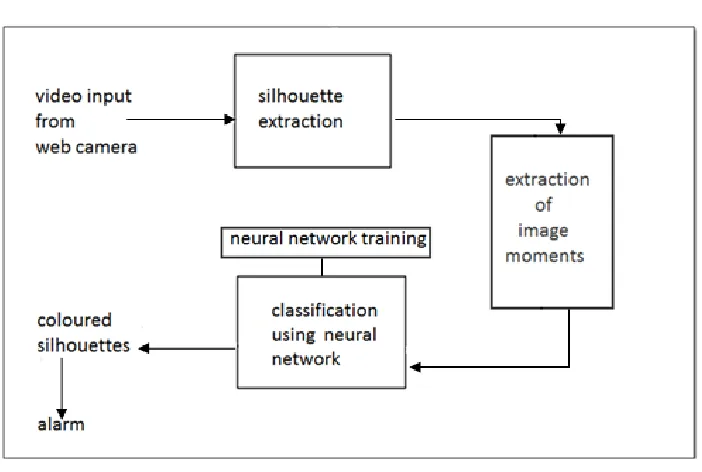
Fig. 1: Block Diagram of The Proposed System
A. Silhouette Extraction
The main advantage of this method is the privacy consideration. So for meeting this purpose, silhouette extraction will be the next step. A silhouette is an image in single colour with no features within. So the person’s privacy can be maintained. The accuracy of silhouette extraction depends on how well the background is modelled. It is a background change detection technique. The background subtraction method implemented uses a mixture of Gaussians. First, a statistical model of the scene is built. The intruding object or foreground can be detected by checking the parts of the image that does not fit the statistical model. Each pixel is modelled as a mixture of Gaussians in the background model.
Fig. 2: A Frame After Silhouette Extraction (right)
B. Extraction of the Image Moments
recognition and image encoding. In this detection process, we are using the Zernike moments. They are often used as shape descriptors of images. The Zernike polynomials in polar coordinates are given as follows:
Vmn (r, θ) = Rmn (r) * exp (jnθ)
The orthogonal radial polynomial is defined by
Where,
For a discrete image, if Pxy is the current pixel intensity (0 or 1 for binary images), the Zernike moments are given by
Moments were used in this experiment with order m = 4 and angular dependence n = 2. The Zernike orthogonal
moments comprise image moments with higher performance in terms of noise resilience, information redundancy, and reconstruction capability.
C. Classification Using Neural Network
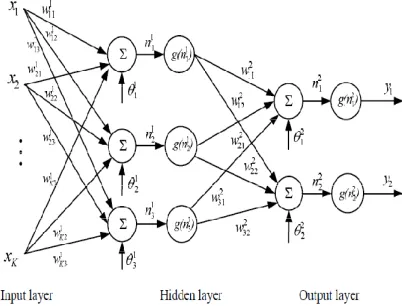
A neural network is a computational structure inspired by the study of biological neural processing. One of the most effective learning methods to approximate real-valued, discrete-valued, and vector–valued functions is neural network. Classification and regression problems, such as handwritten characters, recognizing spoken words, and face recognition widely uses neural network. One of the most useful neural networks in function approximation is multilayer perceptron (MLP) network. A MLP has an input layer, several hidden layers, and an output layer. A node in a MLP network
includes a summer and a nonlinear activation function g.
The weights w gets multiplied with the inputs x to the neuron and then summed up together with the constant bias
term θ. The resulting n is the input to the activation function g. A MLP network is formed by connecting several nodes
in parallel and series. It is a nonlinear parameterized map from input spaceto output space. Activation functions g are
usually assumed to be the same in each layer and known in advance. Given input-output data, finding the best MLP network is formulated as a data fitting problem. The parameters to be determined are weights and biases.
The procedure for using neural network includes the following steps. First the designer needs to fix the structure of the MLP network architecture: the number of hidden layers and neurons (nodes) in each layer. The activation functions for each layer are also chosen at this stage, that is, they are assumed to be known. Many algorithms exist for determining the network parameters. One of the most well-known is the back-propagation algorithm.
Back propagation training takes place in 3 stages as follows: 1. Feed forward of the input training pattern.
2. Back propagation of the associated error 3. Weight adjustment.
During feed forward stage, each input neuron receives an input signal and then it is passed to each hidden neurons, which in turn computes the activation and passes it on to its output unit, which again computes the activation to obtain the net output. During training, the net output is compared with the target value and the appropriate error is calculated. From the error, the error factor is obtained. It is used to distribute the error back to the hidden layer. Then the weights are updated accordingly. The average squared error between the network outputs a and the target outputs t is defined as follows:
The feed forward back propagation network does not have feedback connections, but errors are back propagated during training.
After training, the weights and biases which are tuned through several iterations will be stored. When our video input is given, the activities will get classified by the network and hence we can get the display of each activity in each colour. Also we can provide an alarm in case of emergency.
III.EXPERIMENT AND RESULTS
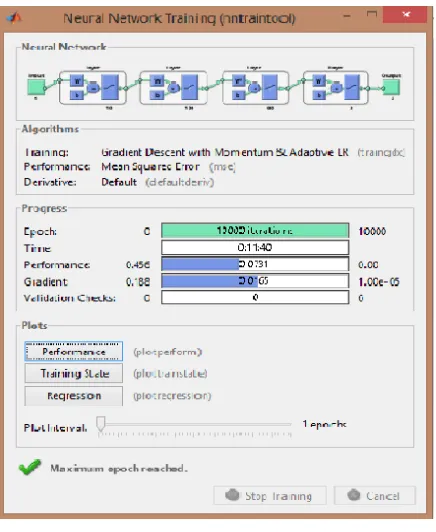
Fig. 4: Network Training Result
Input to the training section was several walking, bending and lying frames. The best training performance was at the epoch 9996. Performance is measured using the parameter mean squared error. Fig 5 shows a plot of the performance curve.
Fig. 5:Performance Curve Produced by the Network
0 1000 2000 3000 4000 5000 6000 7000 8000 9000 10000 10-2
10-1 100
Best Training Performance is 0.073145 at epoch 9996
M
ean
Sq
u
a
re
d
Er
ro
r (
m
se)
10000 Epochs
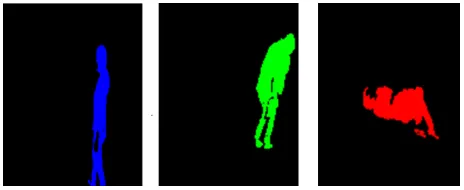
After the training, the weight updates were stored in the network and it is ready to respond to any set of unknown inputs. When the video inputs were given at the rate of 30 frames per second, the activities got identified by the network and hence we got the display of each activity in each colour. Walking posture in blue colour, bending posture in green and lying posture in red colour was displayed as shown in fig. 6. Also we can provide an alarm in case of
emergency.
Fig. 6: Three of the Resulting Frames After Classification Using Neural Network
IV. CONCLUSION
The detection method can remotely monitor the activity states of older adults in their apartments. Their privacy is maintained by the usage of silhouettes. Walking posture, bending posture and lying posture is clearly classified and identified by the neural network. An alarm can also be sent on an emergency condition.
REFERENCES
[1] T. Banerjee, J. M. Keller, Z. Zhou, M. Skubic, and E. Stone, “Day or night activity recognition from video using fuzzy clustering techniques,” IEEE Trans. Fuzzy systems, vol. 22, no. 3, pp. 483–493, June 2013.
[2] T. Banerjee, J. M. Keller, Z. Zhou, M. Skubic, and E. Stone, “Activity segmentation of infrared images using fuzzy clustering techniques,” presented at the World Conf. Soft Comput., San Francisco, CA, USA, May 2011.
[3] H.A. Rowley, S. Baluja, and T. Kanade, “Neural network-based face detection,” IEEE Trans. Pattern Analysis and Machine Intelli-gence, vol. 20, no. 1, pp. 23–38, Jan. 1998.
[4] R. Babuska, P. J. van der Veen, and U. Kaymak, “Improved covariance estimation for Gustafson-Kessel clustering,” in Proc. IEEE Int. Conf. Fuzzy Syst., 2002, pp. 1081–1085.
[5] C. W. Chong, P. Raveendran, and R. Mukundan, “A comparative analysis of algorithms for fast computation of Zernike moments,” Pattern Recognit., vol. 36, pp. 731–742, 2003.
[6] T. Banerjee, “Activity segmentation with special emphasis on sit-to-stand analysis,” Master’s thesis, Dept. Electr. Comput. Eng., Univ. Missouri, Columbia, MO, USA, 2010.