ABSTRACT
Wang, Xiaoling. Responsive Biomaterial Surfaces (under the direction of Dr. Marian McCord and Dr. Sam Hudson).
Responsive biomaterial surfaces were fabricated by grafting stimuli-responsive polymers onto polymer material surfaces via a novel Atmospheric Plasma Treatment (APT). They have potential uses in cell adhesion/detachment control, tissue engineering, medical device, drug delivery, bioreactor, bioseparation, and responsive clothing.
The grafted surface is rough when dry at 22oC, and smooth when wet at 22oC. However, the surface becomes rough again in water at 40oC in response to conformation changes in the PNIPAM hydrogel. Human epithelial cell line HEPG2 cells adhere and proliferate on PNIPAM grafted PS plates at 37oC as on tissue culture plates. However, they detach from the surface automatically at 0oC because of the phase change of PNIPAM. The detachment of HEPG2 cells upon cooling down can be used to recover continuous sheets of tissues from a bioreactor. The tensile property of PNIPAM grafted cotton fabrics was studied. The grafting of PNIPAM still have good tensile property. Comfort test shows thermal sensitivity of the PNIPAM grafted cotton. At 10oC in wet conditions (sweating), less heat transfers from the skin model through the grafted cotton than through the original cotton (control); however at 35oC, more heat transfers from the skin model through the fabric than control.
pH responsive Poly(acrylic acid) (PAA) was also grafted on the nylon surface via atmospheric plasma treatment two- step method. The FTIR and water contact angle confirmed the grafting.
RESPONSIVE BIOMATERIAL SURFACES
by
XIAOLING WANG
A thesis submitted to the Graduate Faculty of North Carolina State University
in partial fulfillment of the requirements for the Degree of
Master of Science
TEXTILE ENGINEERING & BIOMEDICAL ENGINEERING
Raleigh 2005
APPROVED BY:
________________________________ _________________________________
Dr. Marian McCord Dr. Sam Hudson
Co-chair of advisory committee Co-chair of advisory committee
DEDICATION
BIOGRAPHY
ACKNOWLEDGEMENT
First, I own many thanks to my committee members for their wisdom and guidance throughout this research. Co-chair Dr. Marian McCord has been a source of academic support since the beginning of my master study. Thanks for her persistent effort and advice. Co-chair Dr. Sam Hudson has kept giving me support and advice on my experiment. Committee member Dr. Lola Reid has provided many lab supplies and advised the biomedical application of my materials.
Sincere appreciation goes out to Dr. Mohamed Bourham in Nuclear Engineering Department at NCSU, who taught me the plasma knowledge and advised me on the effect of plasma parameters on grafting. Thanks also goes to Dr. Jan Genzer in Chemical Engineering Department for letting me use his goniometer with temperature control and to Dr. Keith Beck for letting me use his water shaking bath. Special thanks go to Mr. William Turner for his help on the study of HEPG2 cells adhesion and detachment on PNIPAM grafted surfaces. I would also like to acknowledge the efforts of Dr. Nancy Monteiro-Riviere and Mr. Al Inman on keratinocyte cell culture.
LIST OF CONTENTS
LIST OF TABLES...x
LIST OF FIGURES ... xi
. Chapter One: Literature Review 1. Stimulus Responsive Polymers...1
1.1 Introduction...1
1.2 pH-responsive polymers ...1
1.3 Temperature responsive polymers ...3
1.4 Glucose responsive polymer or polymer complex...6
1.5 Other stimuli responsive polymers ...7
2. Stimuli-responsive polymer grafted surface and its application in biomedical fields ...8
2.1 The advantages of stimuli-responsive polymers grafted surface... 8
2.2 Cell detachment from PNIPAM grafted surface...9
2.3 Temperatures-Responsive Chromatography...11
2.4 Stimuli-responsive membrane ...12
2.5 Controlled drug release ...14
3. Grafting of SPR on polymer surfaces ...16
3.1 Introduction...16
3.2 Chemical Reagent grafting ...18
3.3 UV grafting ...19
3.4 ozone treatment grafting ...20
3.5 γ- irradiation grafting...20
3.6 Electron Beam (EB) grafting ...21
4. Grafting of SRP by vacuum plasma treatment ...21
4.1 Introduction of vacuum plasma ...21
4.2 Vacuum plasma grafting ...22
4.2.1 Grafting in monomer solution after plasma treatment ...22
4.2.2 Grafting in vapor monomer solution after plasma treatment...23
4.2.3 Simultaneous plasma treatment and grafting in monomer vapor phase ...23
4.3 Disadvantages of vacuum plasma grafting and atmospheric plasma system ...24
5. References...24
2.1. Materials ...33
2.2 Atmospheric Plasma Treatment...34
2.3. Graft Polymerization of NIPAM onto Nylon and PS ...35
2.4. Graft Yield ...35
2.5 FTIR Measurement ...35
2.6 AFM...36
2.7 Water Contact Angle Measurement...36
3. Result and Discussion ...36
3.1 FTIR...37
3.2 Influence of Mohr’s salt on the grafting of PNIPAM...39
3.3 AFM images of PNIPAM grafted surface ...41
3.4 Temperature sensitivity...44
4. Conclusions...46
5. References...47
Chapter Three: Thermoresponsive Polymeric Surfaces Prepared by Atmospheric Plasma Coating for Controlled Cell Detachment 1. Introduction...48
2. Experiments ...50
2.1. Materials ...50
2.2 Atmospheric Plasma Treatment...50
2.3. Graft Polymerization...51
2.4 FTIR Measurement ...52
2.5 Water Contact Angle Measurement...53
2.6 Surface topography ...53
2.7 cell culture...53
2.8 Cell detachment by lowing temperature ...54
3. Result and Discussion ...54
3.1 FTIR...54
3.2 Surface wettability changes with temperature ...56
3.3 AFM images...58
3.4 Cell detachment ...61
4. Conclusions...63
5. References...63
1. Introduction...65
2. Experiments ...67
2.1. Materials ...67
2.2 Atmospheric Plasma Treatment...69
2.3. Graft Methods ...69
2.3.1 Plasma treatment followed with monomer solution grafting(two-step method) ...69
2.3.2 Plasma treatment of NIPAM monomer solution coated samples (coating method) ...69
2.4. Graft Percent of PNIPAM-grafted fabrics ...69
2.5 FTIR Characterization ...70
2.6 Comfort test ...70
2.7 Tensile property test...71
3. Result and Discussion ...72
3.1 FTIR...74
3.2 Graft percent ...76
3.3 Tensile properties...77
3.4 Temperature Responsive heat transfer property ...79
4. Conclusions...81
5. Future Direction ...82
5. References...82
Chapter Five: The Effects of Grafting Parameters on the Graft Yield of Poly(N-isopropylacrylamide) Grafted Polystyrene Surfaces Made by Atmospheric Plasma Treatment Coating 1. Introduction...84
2. Material and Methods ...86
2.1. Materials ...86
2.2 Atmospheric Plasma Treatment...86
2.3. Graft Polymerization...87
2.4. Graft Yield ...87
2.5 FTIR Measurement ...88
2.6 Surface topography ...88
2.7 Water Contact Angle Measurement...88
3. Result and Discussion ...89
3.1 FTIR...89
3.2 Effects of grafting parameters on the graft yield ...90
3.2.3 Effect of NIPAM monomer amount on the graft yield...96
3.3 AFM images of PNIPAM grafted surface ...99
3.4 Temperature Sensitivity ...99
4. Conclusions...100
5. References...101
Chapter Six: Grafting of Poly(acrylic acid) onto Nylon 6,6 Surface Using Atmospheric Plasma Treatment 1. Introduction...103
2. Material and Methods ...104
2.1 Materials ...104
2.2 Atmospheric Plasma Treatment...104
2.3 Graft Polymerization...105
2.4 Graft Yields of the PAA-g-Nylon Membrane ...106
2.5 FTIR Measurement ...106
2.6 Water Contact Angle Measurement...106
3. Result and Discussion ...107
3.1 FTIR...107
3.2 Graft yield ...108
3.3 Water Contact Angle...109
4. Conclusions...110
5. Future Direction ...111
LIST OF TABLE
Page Chapter One: Literature Review
Table 1. Example of pH sensitive of polymers...3
Chapter two: Grafting of PNIPAM onto Nylon and Polystyrene Surfaces by Atmospheric Plasma Treatment Followed with Free Radical Graft Copolymerization
Table 1. Graft yields of PNIPAM grafted nylon and PS by atmospheric plasma induced graft copolymerization with or without addition of Mohr’s salt...40
Chapter Three: Thermoresponsive Polymeric Surfaces Prepared by Atmospheric Plasma Coating for Controlled Cell Detachment
Table 1. Roughness of PNIPAM grafted PS surface at different condition ...61
Chapter Four: Novel Thermoresponsive Fabrics: Poly(N-isopropylacryladie) Grafted Cotton by Atmospheric Plasma Treatment
LIST OF FIGURES
Page Chapter One: Literature Review
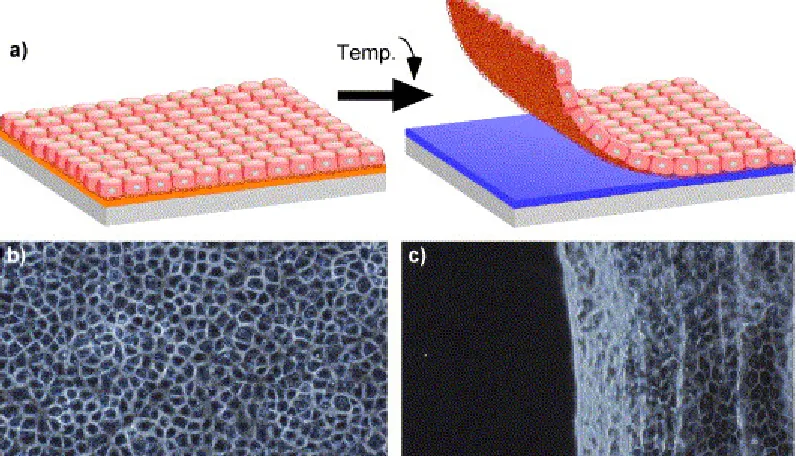
Figure 1. Schematic pH dependent swelling of pH responsive polymers in water. a) Acidic and basic polymers; b) amphoteric polymers...2 Figure 2. Cell sheet engineering using PNIPAM grafted surfaces. (a) Schematic illustration for temperature-induced recovery of intact monolayer cultures. (b) Confluent culture of endothelial cells on PNIPAM-grafted dishes at 37 °C. (c) Detaching endothelial cell sheet by lowering culture temperature to 20 °C ...10 Figure 3. Schematic illustration of thermoresponsive diffusional permeability through PNIPAM-grafted membranes with different grafting yields13
Chapter two: Grafting of PNIPAM onto Nylon and Polystyrene Surfaces by Atmospheric Plasma Treatment Followed with Free Radical Graft Copolymerization
Figure 1. A Schematic of the Atmospheric Pressure Plasma System...33
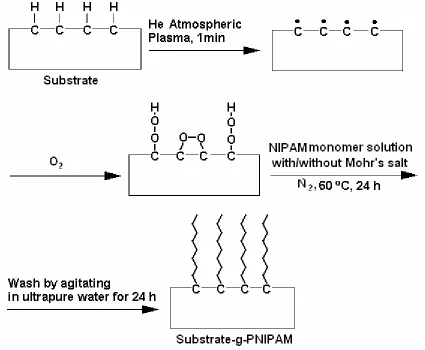
Figure 2. The schematic of graft copolymerization of NIPAM on PS and nylon surfaces ... ...36
Figure 3. FTIR spectra of original and PNIPAM-grafted PS ...37
Figure 4. FTIR spectra of untreated and PNIPAM-grafted nylon ...38
Figure 5. AFM images of PS ( left images are topography while the right ones are phase): a) untreated PS; b) plasma-treated PS; c) PNIPAM-grafted PS ...41
Figure 6. AFM images of nylon( left images are topography while the right ones are phase): a) untreated nylon; b) plasma-treated nylon; c) PNIPAM-grafted nylon with Mohr’s salt ...42
Figure 7. Contact angles of PNIPAM-grafted PS...43
Figure 8. Contact angles of PNIPAM-grafted nylon ...45
Chapter Three: Thermoresponsive Polymeric Surfaces Prepared by Atmospheric Plasma Coating for Controlled Cell Detachment Figure 1. A Schematic of the Atmospheric Pressure Plasma System...51
Figure 2. The schematic of graft polymerization of NIPAM on PS plates...52
Figure 3. FTIR of original and PNIPAM grafted PS ...55
Figure 4. FTIR of original and PNIPAM grafted nylon ...56
Figure 5. Contact angles for PNIPAM-grafted PS...57
Figure 6. Contact angles for PNIPAM-grafted nylon...57
Figure 7. AFM images of PNIPAM grafted surface: a) dry in vacuum at 22°C; b) wet in water at 22°C; c) wet in water at 40oC...60
Figure 8. Microscipic views of HEPG2 cells on PNIPAM grafted PS plates: a) at 37oC; b) at 0oC; c) after removing the media at 0oC ...63
Chapter Four: Novel Thermoresponsive Fabrics: Poly(N-isopropylacryladie) Grafted Cotton by Atmospheric Plasma Treatment Figure 1. A Schematic of the Atmospheric Pressure Plasma System...69
Figure 3. The schematic of graft polymerization of NIPAM on cotton fabrics methods: (i) Atmospheric plasma treatment followed by graft copolymerization (two-step method); (ii) Atmospheric plasma treatment of NIPAM monomer solution coated fabrics (coating method) ... 74 Figure 4. FTIR spectra of original and PNIPAM-grafted cotton...76 Figure 5. Tensile Strength of the original, plasma treated, and PNIPAM-grafted cotton .79 Figure 6. Modulus of the original, plasma treated, and PNIPAM-grafted cotton ...79
Chapter Five: The Effects of Grafting Parameters on the Graft Yield of Poly(N-isopropylacrylamide) Grafted Polystyrene Surfaces Made by Atmospheric Plasma Treatment Coating
Figure 1. A Schematic of the Atmospheric Pressure Plasma System...87 Figure 2. The schematic of graft polymerization of NIPAM on PS plates...88 Figure 3. FTIR of original and PNIPAM grafted PS ...89 Figure 4. Relationship of Graft yield and plasma pretreatment time a) He plasma, 109ul NIPAM coating; b) He plasma, 218ul NIPAM coating; c) He plasma, 436ul NIPAM coating; d) He/Forming plasma, 218ul NIPAM coating...92 Figure 5. Relationship of Graft yield and post plasma treatment time. a) He/O2 plasma, 109ul NIPAM coating; b) He/O2 plasma, 218ul NIPAM coating; c) He/O2 plasma, 436ul NIPAM coating; d) He/Forming plasma, 109ul NIPAM coating...95 Figure 6. Relationship of Graft yield and coated monomer solution amount using
He/Formine plasma treatment. a) 2min posttreatment; b) 5min posttreatment; c) 10min posttreatment...96 Figure 7. AFM images of PS: a) untreated PS; b) plasma-treated PS; c) PNIPAM-grafted PS by coating ...97 Figure 8. Contact angles of PNIPAM-grafted PS...99
Chapter Six: Grafting of Poly(acrylic acid) onto Nylon 6,6 Surface Using Atmospheric Plasma Treatment
Chapter One: Literature Review
1. Stimulus Responsive Polymers
1.1 Introduction
Functional polymers, which can react, adjust or modulate their physicochemical character, i.e., in most cases their water-solubility, in response to an external stimulus, are generally referred as stimulus responsive polymers (SRP), or “smart materials”. The environment stimuli can be pH, temperature, ions, solvents, electrical field, magnetic field, light, pressure, chemical and biochemical compounds (e.g. glucose and others). The physical basis of this “smart” behavior is fast and reversible change of the polymer microstructure from a hydrophilic to a more hydrophobic one, triggered by small changes in the environment. These microscopic changes result at the macroscopic level, for example, in the formation of a precipitate or in a change in the wettability of a surface to which the smart polymer is grafted. The changes are usually reversible and the system returns to its initial state when the stimulus is removed [1].
Among the various stimulus responsive polymers, the most commonly used ones are temperature- and pH-responsive polymers, since the temperature and pH are relatively easy to change. These two kinds of stimulus responsive polymers will be discussed in detail. Some of other stimulus-responsive polymers will be discussed briefly as well.
1.2pH-responsive polymers
PKa for acidic polymer, below its PKa for basic polymers, and either side of bioelectric point(IEP) for amphoteric polymers[2]. The transition from collapsed state to expanded state is explained by the osmotic pressure exerted by mobile counterions [3]. The chain repulsion due to charge on the chain is the other reason for the formation of gel.
Figure 1: Schematic pH dependent swelling of pH responsive polymers in water. a) Acidic and basic polymers; b) amphoteric polymers (redrawn from [2]).
protons at neutral and high pH. The leave of proton causes the anions in the polymer chain, which repulse each other. On the other hand, polybases like poly(4-vinylpyridine) is protonated at high pH and positively ionized at neutral and low pH.
Table 1. Example of pH sensitive of polymers [2].
Temperature is the most widely used stimulus in environmentally responsive polymer systems. The change of temperature is not only relatively easy to control, but also easily applicable both in vitro and in vivo [4]. One of the unique properties of
temperature-responsive polymers is the presence of a critical solution temperature. Critical solution temperature is the temperature at which the phase of polymer and solution (or the other polymer) is discontinuously changed according to their composition. If the polymer solution has one phase below a specific temperature, which depends on the polymer concentration, and is phase-separated above this temperature, these polymers generally have a lower critical solution temperature (LCST), the lowest temperature of the phase separation curve on concentration–temperature diagram [4].
Many polymers composed of both hydrophobic and hydrophilic residues are characterized by LCST. Example of these polymers include poly(N-alkylacrylamide), poly(ethylene oxide)-poly(propylene oxide) (PEO-PPO) block copolymers, pyrrolidone containing polymers, and cellulose ethers[2]. These polymers dissolve in aqueous media at about room temperature, and precipitate from solution at certain higher temperatures.
Among various LCST polymers, poly(N-isopropylacrylamide)(PNIPAM) and its copolymer are the most extensively studied , because of their relatively sharp transition (narrow transition temperature region). PNIPAM exhibits a lower critical solution temperature (LCST) of 32°C. Above 32°C, the polymer is in a solid state and is hydrophobic. Below 32°C, the polymer is fully–hydrated, and exhibits a hydrophilic property. PNIPAM is particularly advantageous for potential medical applications because the LCST falls between body temperature and room temperature. Heskins and Guillet first reported in 1968 that LCST of PNIPAM solution decreases with increasing polymer concentration, and then increases after reaching a minimum [5]. Synthesis of PNIPAM had been reported by Wooten as early as in 1957[6].
temperature. Consequently, at lower temperature, PNIPAM has sufficient hydrogen bonding with water molecules and is soluble in water. However, above a critical temperature, 32oC, the efficiency of hydrogen bonding becomes insufficient to maintain the macromolecule in solution (segment/segment contact preferred over segment/water contact), the macromolecule collapse and aggregation/precipitation usually take place. Therefore, PNIPAM undergoes phase transition because it becomes progressively more hydrophobic with increase in temperature.
However, Wu et al [2] think that both hydrophobic interactions of PNIPAM segments and polymer-water hydrogen bonding are involved in the phase transition of PNIPAM at ca. 32oC. They think that hydrogen bonding on its own is unlikely to be significant, because polyacrylamide(PAAm), that has no hydrophobic N-alkyl groups, is soluble in water at all temperatures. Furthermore, poly-N-alkylacrylamides with more hydrophobic N-alkyl groups exhibit lower LCSTs, again suggesting that polymer-water H-bonding may not be the only factors. So it appears that both hydrophobic interactions of PNIPAM segments and polymer-water hydrogen bonding play roles in the phase change. As temperature decreases, at some point the hydrophobic interactions between polymer molecules become more favorable than polymer-water interactions and the polymer molecules collapse.
There are other temperature-responsive polymers with similar structure to PNIPAM. For example, poly(N-vinylisobutyramide) with a transition temperature of 39oC, or poly(N-vinyl caprolactam) with a transition temperature of 32-33oC[1]. The critical temperature of a given thermosensitive (co)polymer can often be fine-tuned by adding more hydrophilic or more hydrophobic co-monomers to the structure. The former increases the transition temperature of the polymer while hydrophobic co-monomers have the opposite effect [7].
triple-helix, during which physical junctions are promoted and gel networks occur. At high temperature, the network breaks down [8].
1.4Glucose responsive polymer or polymer complex
Polymers with glucose responsive phase transition have received extensive attention in recent years because of their potential application in self regulated insulin delivery for treatment of insulin-dependent diabetes. Various mechanisms have been employed to induce glucose responsive insulin release, which can be classified into direct and indirect glucose triggers, both of which undergo changes in swelling in response to glucose. The direct system is based on competitive substrate binding to glucose and hydrogel, and the indirect system involved pH sensitive hydrogels [2].
Polymer complexes that are directly sensitive to glucose are based on polymer-polymer or glucose-protein binding. One example involves competitive binding of glucose and PVA to PVP-4-aminophenylboronic acid [12]. Hydroxyl groups of PVA form boronate ester with boronic acid polymer, and lead to the formation of a hydrogel network. In presence of glucose, the gel reverts to sol due to competitive binding of glucose with borate groups.
pH sensitive hydrogels containing weakly basic or acidic groups in combination with glucose oxidase provide indirect sensitivity to glucose. Glucose is oxidized by glucose oxidase to gluconic acid, which reduces the pH of the medium, leading to increased hydrogel swelling (for weak base) or shrinking (for weak acid). Polymer carrying amino groups, are used as the pH sensitive component. pH decreases with increasing glucose concentration, leading to increased protonation of the amino groups on the polymer, increased hydrogel swelling, and higher solute permeability through the gel matrix [13]. Thus, amino polymers are potentially suitable for preparation of glucose sensitive hydrogels for controlled insulin delivery.
they are more complex than nonenzymeic direct systems, and a particular challenge is to maintain the activity of the immobilized enzyme.
1.5Other stimuli responsive polymers
In addition to response to pH, polymers with ionic groups are sensitive to electric field owing to their ionic charge, and hence their phase transition behavior is altered by electric field. This property of such polymers has been applied for bio-related applications such as drug delivery systems, artificial muscle, or biomimetic actuators [9]. It is reported that hydration of crosslinked hyaluronic acid hydrogels decreases as the gel is exposed to a DC voltage of 5v/cm or 10v/cm, and increases again when the current is switched off [10].
Light-responsive polymers can change their structures upon UV or visible light irradiation. It originates from their chromophores, i.e., residues with double or triple bonds or other conjugated systems [2]. The mechanism of light sensitivity including cis-trans isomerization, ionization, and ring opening that increase polymer hydrophilicity, and hence lead to irradiation stimulated phase transition (increased hydration). Typical examples of polymers carrying light sensitive residues including poly (N, N-dimethylacrylamide-4-phenylazophenyl acrylate), partially esterified poly(NIPAM-hydroxyethylacrylamide), and poly(NIPAM-triphenylmethane leuconitrile)[2]. Light-responsive polymers can be used in optical switches, displays, drug delivery.
An antigen responsive system was reported recently by Miyata et al. [11], consisting of poly(AAM-vinyl-GAR IgG) and poly(AAM-vinyl rabbit IgG). The reaction of immobilized antibody (GAR IggG) and antigen (rabbit IfG) on the two polymers forms a crosslinked gel. As free antigen is added to the system, it replaced the immobilized antigen, resulting in reduced crosslinkng density, and thus increased swelling. The authors report that the process is reversible and permeation of a model protein (hemoglobin) through the gel is antigen responsive. The antigen responsive property could thus be specifically utilized in a drug delivery system.
2.1 The advantages of stimuli-responsive polymers grafted surface
The stimuli-responsive polymers (SRP) can change their properties dramatically upon environment stimuli. Several applications have been proposed in a variety of area including sensors, drug delivery, and chromatography. However most SRP like PNIPAM and PAA form hydrogels with water and are crosslinked. There are two problems in the applications, the crosslinked hydrogels respond slowly to environment stimuli, and the mechanical property of hydrogels are poor.
In order to overcome these problems, SRP have been grafted or covalently coupled to solid surfaces (polymer or textile surface). Although SRP chains are covalently coupled to the surfaces, they still can respond to environment stimuli. So the graft of SRP endows the material surfaces with a new property, i.e., stimuli-responsive ability. The advantage of SRP-grafted surface is that the material substrate acts as a dimensionally stable matrix for mechanical support, whereas the conformation change of grafted SRP on the surface induced by environment stimuli results a stimuli-response surface. In addition, the stimulus response of the grafted SRP may be faster than that of crosslinked SRP hydrogel. Because the grafted chain has a freely mobile end, distinct from the typical crosslinked network structure with a relatively immobile chain end, a more rapid conformation change is expected.
SRP grafted surfaces may revolutionize certain areas of biotechnology, medicine, and smart textile due to the ensuing ability for self–recovery, self-adjustment or control, self-diagnosis, stand-by capability for detecting nonlinear onset, but also improved mechanical strength and quick stimulus response. The possible application of stimulus responsive polymers including responsive clothing, separation membranes, controlled drug release, site-selected drug delivery, cell adhesion and detachment, tissue engineering, bioreactor, biosensors, etc. Some types of application of SRP grafted surfaces will be described in detail in the rest of this section.
2.2 Cell detachment from PNIPAM grafted surface
from their substrate. Mammalian cells are cultivated on a hydrophobic solid substrate and are usually detached from it by protease treatment, which often damages them. At a temperature of 37°C, a substrate surface grafted with PNIPAM is hydrophobic because this temperature is above the critical temperature of the polymer and the cells grow well. However, decreasing the temperature to 25°C or below results in the surface becoming hydrophilic, and the cells can then be easily detached without any damage.
Okano and his coworkers have successfully used the PNIPAM grafted Tissue Culture Polystyrene (TCPS) dishes to achieve temperature-modulated cell adhesion detachment control [14-18]. Active cell adhesion and proliferation on the PNIPAM-grafted surfaces are observed on surfaces modified with PNIPAM amounts ranging from 1.5 to 2.0 µg/cm2 [14,
15]. They found that on PNIPAM grafted surface with less than 1.5 µg/cm2, cells adhere and proliferate appropriately, but these cells never detach from the surfaces by lowering the temperature below 32 oC unless a digestive enzyme (trypsin) is used. Likewise, cells do not
adhere to surfaces with more than 2.0 µg/ cm2 graft yield or with a graft thickness of more than 30 nm. This cell behavior can be correlated with similar surface presence of the cell-adhesive protein, fibronectin (FN) on the PNIPAM-grafted surfaces with different PNIPAM graft amounts.
Furthermore, these monolayers of cells maintain basal surface extracellular matrix proteins after detachment, which can be used in readhesion of the released cell sheet on other surface. To prevent cell sheet shrinking, rigid support hydrophilic poly(-vinylidene difluoride) (PVDF) membranes [19, 20] are used to peel off the cell sheet from the PNPAM grafted surface.
Figure 2. Cell sheet engineering using PNIPAM grafted surfaces. (a) Schematic illustration for temperature-induced recovery of intact monolayer cultures. (b) Confluent culture of endothelial cells on PNIPAM-grafted dishes at 37 °C. (c) Detaching endothelial cell sheet by lowering culture temperature to 20 °C [16].
Cell sheet engineering can be used not only as automatic cell release devices, but also in many other applications. For example, keratinocyte sheets from thermoresponsive dishes[18] are currently used clinically to treat burns and bruises. A corneal epithelium sheet transplantation is an effective treatment for patients suffering from alkali burns, or from the Stevens–Johnson syndrome[21]. Thermoresponsive culture dishes are also be utilized to prepare multi-layer tissue constructs with both homotypic [22] and heterotypic cells[23].
Ratner et al[24], Werner et al[25], and Cassinelli et al [26] also found cell detachment
adhesive patterned surface, which is used to direct site-specific cell attachment. Patterned adhesion of two types of cells has been visualized on the array through fluorescent markers [24].
2.3 Temperatures-Responsive Chromatography
The idea to change the structure and adsorptivity of polymer-grafted surfaces by a slight change of the temperature or the pH is very attractive, because a dramatic change in the interaction (for example adsorptivity) of this surface with a given solute may thus be achieved. One area, which depends strongly on the controlled interaction of solutes with adsorptive surfaces, is chromatography. For example, the chromatographic separation of some steroids and drugs, using HPLC-columns packed with PNIPAM grafted beads, was strongly dependent on the temperature with a steep increase in both retention and resolution when the temperature was increased from 5oC to 50oC.[27, 28] Especially the retention times of the more hydrophobic steroids were significantly longer at higher temperature. The retention times observed for the reference column packed with nongrafted beads, on the other hands were much shorter and decreased in face with increasing temperature. At low temperatures, retention was preferably through hydrogen bond acceptors, while hydrophobic interactions dominated the retention of the solutes at higher temperatures.
displacing the enzyme. Lactate dehydrogenase has been purified using only the temperature change as the eluting factor [30]. This approach seems quite promising because it eliminates the step of separating the target protein from the eluent, which (for dye-affinity chromatography) usually involves adding a competing nucleotide or increasing the salt concentration.
2.4 Stimuli-responsive membranes
One type of stimuli-responsive membranes is prepared by grafting stimuli-responsive polymers possessing functional groups onto porous membrane substrates [31-33]. The porous substrate provides mechanical strength and dimensional stability, while the conformational changes of the grafted functional polymers result in environment-responsive characteristics. These environmental responsive membranes may find applications ranging from controlled drug delivery, to chemical separation, to water treatment, to bioseparation, to chemical sensor, to tissue engineering, etc. There is an increasing interest in these intelligent membranes.
Figure 3. Schematic illustration of thermoresponsive diffusional permeability through PNIPAM-grafted membranes with different grafting yields [32].
Figure 4. A schematic representation of the thermo-responsive release principle of core-shell microcapsules with a porous membrane and thermo-responsive polymeric gates [33].
Chu and his coworkers have extended this system to a thermo-responsive core-shell microcapsule with a porous membrane and poly(N-isopropylacrylamide) (PNIPAM)
the pores in the microcapsule wall. The proposed thermo-responsive microcapsule could be a positive thermo-response controlled-release one or a negative thermo-response one by changing the PNIPAM graft yield.
2.5 Controlled drug release
Controlled drug release is a system in which a drug is liberated in response to a chemical signal (e.g. insulin release in response to rising glucose concentration). Then this drug can be controlled released or site-selected released. The swelling or shrinking of SRP-grafted surface in response to small changes in pH or temperature can be used successfully to control drug release, because the diffusion of the drug out of the surfaces depends on the gel state. When a smart polymer is integrated into a microcapsule wall, the conformational transition of the polymer affects the integrity of the porous film or microcapsule and allows the regulated release of the drugs loaded into the microcapsule or liposome.
The development of a glucose-sensitive insulin-releasing system for diabetes therapy is a long-standing challenge for biomedical engineers. Unsurprisingly, therefore, it became a popular model for the systems using smart polymers. An insulin-loaded matrix has been produced by mechanical mixing and compression a dry pH-responsive polymer, poly[(N,N
-dimethylamino)ethyl methacrylate-co-ethylacrylamide], glucose oxidase, bovine serum
albumin and insulin. Exposure to glucose resulted in the oxidation of glucose to gluconic acid and thus a decrease in the pH, protonation and swelling of the polymer, accompanied by insulin release. The insulin release stopped within 10 min of glucose removal and could be restimulated by glucose addition [34]. A variety of designs for an insulin-delivery system that responds to glucose were also developed by Klumb and Hotter using glucose-sensitive membranes containing glucose oxidase [35].
glucose, the pH drops and the polymer chains become protonated and adopt a more compact conformation. The blocking of pores is reduced and insulin is transported through the membrane [37].
Figure 5. Schematic presentation of a ‘chemical valve’[36]. Glucose oxidase is immobilized on pH-responsive polyacrylic acid, which is grafted onto a porous polycarbonate membrane. (a) Poly(acrylic acid) is in an expanded conformation blocking insulin transport. (b) The oxidation of glucose is accompanied by a decrease in pH and the transition of poly(acrylic acid) into a compact conformation, resulting in the opening of the pores and the transport of insulin[36].
3. Grafting of SPR on polymer surface
3.1Introduction
They may revolutionize certain areas of biotechnology, medicine, and smart textiles. Unsurprisingly, therefore, grafting of SRP on polymer surface has become a popular research topic recently. Therefore, various grafting methods of SRP will be reviewed in this section.
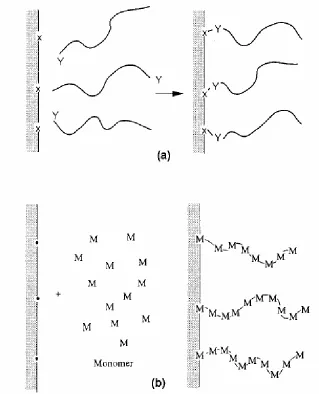
There are in principle two methods for producing grafted surfaces, as schematically illustrated in Figure 6: direct coupling reaction of existing polymer molecules to the surface and graft polymerization of monomers to the surfaces[38].
If the polymer surface to be modified possesses reactive groups capable of reactive with SRP, surface modification can be readily conducted by chemical coupling reaction (Figure 8a). For example, PAA has been grafted onto Nylon surface using the reaction of the carboxyl groups with amide end groups on Nylon [39]. The direct polymer coupling reaction will not be discussed further in this review. Because normally this procedure needs two special groups, it is not straightforward enough for industry applications, although the precise control of chain structure.
Most material and monomer do not have paired coupling bonds, so the grafting can not happen in a direct polymer coupling reaction. However, the second grafting method, i.e., graft copolymerization (Figure 8), can be used. The material surface can be activated by chemical reagent, or high energy irradiation. Activation creates active species, including free radicals, peroxide groups, and ions formed on the surface. The active species can initiate graft polymerization when they are in contact with monomer. Monomers usually have double bonds or cyclical bonds, which can be broken to initiate and propagate the polymerization.
A variety of methods for graft polymerization onto different substrate surfaces from recent reports will be described below. Plasma induced graft copolymerization is very versatile and convenient, hence, it will be described in the next section in detail.
3.2 Chemical reagent grafting
energy source [44]. It was found that ceric ion initiation produced more degradation than the Co-60 initiation. Beside ceric ions, other chemical reagents are also used in grafting, e.g., Poly(Methyl Methanacrylic acid) has been grafted onto chitosan with Fenton’s reagent (Fe2+ -H2O2) as a redox initiatiator[45]. Thermoresponsive Hyaluronic Acid (HAs) were prepared by graft polymerization of NIPAM on HA using dithiocarbamate which is a kind of iniferte(initiator, transferator, and terminator)[46].
3.3 UV grafting
UV energy has been extensively applied for surface graft polymerization of polymers with the aid of a photo initiator or photo sensitizer, such as benzophenone (BP). Earlier reports were concerned with UV irradiation at the vapor phase of monomer and sensitizer under a reduced pressure or in the presence of inert gas. The surface of polyethylene (PE) and Polystyrene (PS) was modified by grafting with Acrylic Acid (AA)[47]. BP and AA in the vapor phase were UV-irradiated in the presence of a polymer substrate. Grafting was affected by the solvent/carrier used and the type of polymer to be grafted. PS was easier to graft, presumably because it contains easily abstractable, tertiary hydrogens. PNIPAM was also grafted onto PS and Polyethylene terephthalate (PET) surface by immersing substrates into monomer solution under N2 and exposing them to UV radiation [48]. A novel thermo-sensitive switching membrane regulated by pore-covering polymer brushes was prepared by photografting NIPAM onto the PET track membranes with BP as initiator[49].The photografting was carried out as presented in Figure 7 and 8.
Figure 8. Chemistry of BP initiated photografting polymerization: (1) PET nucleopore membrane; (2) membrane pore; (3) surface free radical; (4) semipinacol radical; (5) graft layer of PNIPAM [49].
3.4 Ozone treatment grafting
Exposure of isotactic Polypropylene (PP) to ozone resulted in surface oxidation and formation of peroxides and hydrogen peroxides . 2-hydroxyethyl methacrylate was grafted to the ozonated samples, and the graft copolymer acted as a continuous matrix consequently linked to and reinforced by the PP crystals[50]. Cellulose fiber-supported hydrogels sensitive to pH were prepared by ozone-induced graft polymerization of AAc using cotton linters and wood pulp fiber substrates [51]. Immediately after ozone treatment, the substrates were placed in the monomer solution prepared by diluting monomer in deionized water containing ammonium sulfate hexahydrate salt (Mohr's salt), which forms a redox initiator. Polyacrylamide was also grafted on poly(ether urethane) by ozone pretreatment[52].
3.5 γ- irradiation grafting
to form free radicals and peroxide groups in the surface. Then the preirradiated substrate was immersed in grafting monomer solution at desired temperature with bubbling N2 for various a certain period of time. Beside γ-induced graft copolymerization can also be carried out by simultaneous irradiation and grafting through in situ forming free radicals. Jan et al. [56] modified a porous poly(vinylidene fluoride) membrane to introduce positive charge by γ
irradiation in the presence of vinyl-triphenyl-phosphonium bromide monomer.
3.6 Electron Beam (EB) grafting
Various vinyl polymers were grafted onto an ultrahigh molecular weight polyethylene (UHMWPE) fiber surface after pretreatment with electron beam irradiation[57]. Acrylamide was also grafted onto PCL using EB preirradiation followed by graft copolymerization [58]. Okano and his coworkers have grafted PNIPAM onto Tissue culture grade polystyrene(TCPS) dishes via EB irradiation and used the grafted TCPS as cell release device and cell sheet
engineering[15]. Briefly, 30~100 µl amounts of PNIPAM 2-propanol solution is coated uniformly over 6 well TCPS plate surfaces, followed by electron beam irradiation with a dose of 0.3MGy at 150kv. During this procedure, the NIPAM monomer is grafted on to the TCPS surfaces. And then it is rinsed by water. Various types of cultured cells adhere and proliferate on PNIPAM-grafted culture dish surfaces under normal culture conditions at 37 oC with 5% CO2. These adhesion–proliferation processes are comparable to that on
conventional TCPS dishes.
4. Grafting of SRP by vacuum plasma treatment
4.1Introduction of vacuum plasma
environment in which many plasma-surface reactions occur. Low-pressure (vacuum) plasma has been used extensively to modify the surface properties of materials, including wettability, finishing, dyability, functionalization, sterilization, and cross link. The plasma is effective at near-ambient temperature and can modify almost any kinds of geometry. Furthermore, plasma treatment modifies only the near surface of treated substrates and does not change the bulk material properties [59].
4.2 Vacuum plasma grafting
It should be stressed that polymer surfaces can also be modified by graft copolymerization utilizing free radical or peroxides generated by the plasma treatment, similar to the other irradiation systems. When polymeric materials are exposed to plasma, radicals are created in the polymer chains. These radicals can and do initiate grafting copolymerization reactions when put in contact with monomers in the liquid or gas phase. Since the plasma produces radicals only close to the surface of the polymers, plasma-grafting copolymerization is restricted to the near surface [60].
In the literature, only conventional vacuum plasma is used to graft vinyl polymer on material surfaces. There are mainly three different methods to graft monomers onto polymer surface using plasma, i.e., i) grafting in monomer solution after plasma treatment, ii) grafting in monomer vapor after plasma treatment, iii) simultaneous plasma treatment and grafting in vapor phase.
4.2.1 Grafting in monomer solution after plasma treatment.
5min to modify carbon radicals to peroxide groups, which are able to initiate graft copolymerization. The PTFE film was then immersed into an aqueous solution of sodium vinylsulfonate at 65~80oC for 1-72 hour under N2. Similarly, PNIPAM was grafted onto porous PE membranes [62-64] and poly(vinylidenefluoride) (PVDF) [32] membrane by a plasma induced graft copolymerization. Poly(acrylic acid) was grafted using this methods to various substrates, including silicone rubber[65], PVDF[66], polyamide[67], poly[1-(trimethylsilyl)-1-propyne] [68], and PU[69].
Besides grafted on the surface, PNIPAM has also been grafted onto the pores of Polyamide microcapsules by a pore filling polymerization. Interfacial polymerization is used to prepare polyamide core-shell microcapsules, and plasma-graft pore-filling polymerization to graft PNIPAM into the pores in the microcapsule wall [33].
4.2.2 Grafting in vapor monomer solution after plasma treatment.
After plasma treatment, the plasma grafting copolymerization can also occur in the vapor phase beside liquid phase. The polymer materials are put into plasma chamber. After the plasma treatment is completed and the plasma gas is cut off, the monomer vapor will be introduced into the chamber, and graft copolymerization occurs. For example, polar monomers have been grafted onto polyolefin surfaces with the aid of inert gas plasma [4]. In the first stage, inert gas plasma (argon plasma) was used to generate free radicals on the polyolefin surface. In the second stage, the plasma generator was turned off and a vinyl monomer was introduced as a vapor. Polymer was surface grafted by free radical polymerization of the monomer vapor.
4.2.3 Simultaneous plasma treatment and grafting in monomer vapor phase.
Above methods contains two steps, plasma pretreatment and graft polymerization. SRP can be grafted onto material surface via one step methods, too, i.e., simultaneous plasma
introduced to the plasma chamber and the chamber pressure is controlled independently by a throttle valve and, in this case, maintained to 100mT. When the substrate is irradiated by plasma, the monomer grafting occurs simultaneously. Gancarz et al. [71] modified
polysulfone membranes with acrylic acid (AA) using plasma-initiated graft polymerization via three methods, i.e., (1) grafting in solution; the plasma-treated polymer membrane was exposed to air for 5 min and dipped into deaerated aqueous solution of monomer; (2) grafting in vapor phase; when Ar plasma treatment on polymers was completed, the argon flow was cutoff and monomer vapor was introduced into the chamber; (3) simultaneous plasma treatment and grafting: a polymer membrane was placed in a plasma reactor; the reactor was evacuated and Ar was introduced and vapors of monomer were introduced to give a desired pressure. Comparing the above three methods, the polysulfone membrane with AA plasma-initiated grafting in the vapor phase of the monomer seemed to be the most promising from the point of view of filtration properties.
Figure 9. Schematic diagram of radio frequency plasma polymerization reactor utilized for the deposition of smart PNIPAM coating [70].
Over all, vacuum plasma is widely used to graft polymers on material surface. Compared to other irradiation grafting methods, vacuum plasma offers flexibility, effectiveness, safety, and environmental friendliness [59].Although vacuum plasma process has so many advantages over other methods, it require low-pressure conditions. Therefore, there is still need a high cost and limitation of processing of large surface area and continuous production lines.
In light of the disadvantages of low-pressure plasma systems, atmospheric pressure plasma treatment has recently emerged as a novel technique. By using an atmospheric plasma treatment device, the machine can operate in a pre-existing continuous processing line. Atmospheric pressure can also save the cost of vacuum environment. It has been successfully used to change material surface adhesion, wettability, and finishing processing [72-74].
There is no research about grafting of vinyl monomers using atmospheric plasma treatment in literature yet. Therefore, atmospheric plasma treatment will be used to graft various substrates in this thesis. pH sensitive polyacrylic acid and thermoresponsive PNIPAM will be grafted on nylon and PS surfaces. Cell adhesion/detachment will be studied on the PNIPAM grafted PS cell culture plates. Responsive textile will be made by grafting PNIPAM on cotton fabrics and then heat diffusion at different temperature will be studied
5. References:
1. I.Y. Galaev and B. Mattiasson, Stimulus Responsive Surfaces: Possible Implication for Biochromatography, Cell Detachment and Drug Delivery. In: R. Freitag (ed) Synthetic Polymers for Biotechnology and Medicine(p 116~129). Georgetown, Texas:
Landes Bioscience 2003.
2. X.Y. Wu, Q. Zhang, and R. Arshady, Stimuli Sensitive Hydrogels. In: R. Arshady (ed)
Introduction to Polymer Biomaterials. London, UK: Citus, 2003.
3. A.S. Lee, V. Butun, M. Vamvakaki, S.P. Armes, J.A. Pople and A.P. Gast, Structure of pH-dependent block copolymer micelles: charge and ionic strength dependence.
Macromolecules, 35: 8540–8551, 2002.
4. E.S. Gil and S. M. Hudson, Stimuli-responsive polymers and their bioconjugates.
Progress in Polymer Science, 29: 1173-1222, 2004.
6. W.C. Wooten, R.B. Blanton, and H.W. Coover, Effect of pH on homopolymerization of N-isopropylacrylamide. J. Polym. Sci. 25:403-412, 1957.
7. H.G. Schild, Poly(N-isopropylacrylamide): Experiment, theory and application. Prog Polym Sci, 17:163-249, 1992.
8. A.J. Kuijpers, G.H.M. Engbers, J. Feijen, S.C. De Smedt, T.K.L. Meyvis, J. Demeester, J. Krijgsveld, S.A.J. Zaat and J. Dankert, Characterization of the network structure of carbodiimide cross-linked gelatin gels. Macromolecules, 32: 3325–3333,
1999.
9. T. Shiga, Deformation and viscoelastic behavior of polymer gels in electric fields.
Adv. Polym. Sci.i 134: 131–163, 1997.
10.R. Tomer, D. dimitrijevic, A.T. Florence, Electrically controlled-release of macromolecules from cross-linked hyaluronic-acid hydrogel. J. Control . Release, 33:
405-413, 1995.
11.T. Miyata, N. Asami, and T. Uragami, A reversibly antigen-responsive hydrogel.
Nature, 399: 766-769, 1999.
12.S. Kitano, I. Hisamitsu, Y. Koyama, K. Kataoka, T. Okano, and Y. Sakurai, Effect of the incorporation of amino groups in a glucose-responsive polymer complex having phenylboronic acid moieties. Polym. Adv. Tech., 2: 261-264, 1991.
13.K. Podual, F. J. Doyle III, and N. A. Peppas, Glucose-Sensitivity of glucose oxidaase-containing cationic copolymer hydrogels having poly( ethylene glycol) grafts. J. Control. Rel., 67: 9-17, 2007.
14.Y. Akiyama , A. Kikuchi , M. Yamato , and T. Okano T, Ultrathin poly(N-isopropylacrylamide) grafted layer on polystyrene surfaces for cell adhesion/detachment control. Langmuir, 20 (13): 5506-5511, 2004.
15.Y. Tsuda, A. Kikuchi, M. Yamato, S. Yasuhisa, and U. Mitsuo, Control of cell adhesion and detachment using temperature and thermoresponsive copolymer grafted culture surfaces. J. Biomed. Mater. Res., 69A:70-78, 2004.
16.A. Kikuchi and T. Okano, Nanostructured designs of biomedical materials: Applications of cell sheet engineering to functional regenerative tissues and organs.
Journal of Controlled Release, 101 (1-3): 69-84, 2005.
17.F. A. Tobiesen and S. michielsen, Method for grafting poly(acrylic acid) onto nylon 6,6 using amine end groups on nylon surface. J. Polym. Sci. Part A: Polym. Chem.,
40: 719-728, 2002.
18.M. Yamato, M. Utsumi, A. Kushida, C. Konno, A. Kikuchi, and T. Okano, Thermo-responsive culture dishes allow the intact harvest of multilayered keratinocyte sheets without dispase by reducing temperature. Tissue Engineering, 7: 473-480, 2001.
19.A. Kushida, M. Yamato, C. Konno, A. Kikuchi, Y. Sakurai and T. Okano, Decrease in culture temperature releases monolayer endothelial cell sheets together with deposited fibronectin matrix from temperature-responsive culture surfaces, J. Biomed. Mater. Res., 45: 355-362,1999.
20.M. Hirose, O.H. Kwon, M. Yamato, A. Kikuchi and T. Okano, Creation of designed shape cell sheets that are noninvasively harvested and moved onto another surface.
Biomacromolecules, 1(3): 377–381, 2000.
corneal epithelial sheet grafts from corneal stem cells expanded ex vivo on a temperature-responsive cell culture surface. Transplant, 77(3): 379–385, 2004.
22. T. Shimizu, M. Yamato, Y. Isoi, T. Akutsu, T. Setomaru, K. Abe, A. Kikuchi, M. Umezu and T. Okano, Fabrication of pulsatile cardiac tissue grafts using a novel 3-dimensional cell sheet manipulation technique and temperature-responsive cell culture surfaces. Circ. Res., 90: e40–e48, 2002.
23.M. Harimoto, M. Yamato, M. Hirose, C. Takahashi, Y. Isoi, A. Kikuchi, and T. Okano, Novel approach for achieving double layered cell sheets co-culture: overlayering endothelial cell onto monolayer hepatocytes utilizing temperature-responsive culture dishes. J. Biomed. Mater. Res., 62(3): 464–470, 2002.
24.X. Cheng, Y. Wang, Y. Hanein, K.F. Böhringer, and B.D. Ratner, Novel cell patterning using microheater-controlled thermoresponsive plasma films. Journal of Biomedical Material Research Part A, 70A (2): 159-168, 2004.
25.D. Schmaljohann, J. Oswald, B. Jorgensen, M. Nitschke, D. Beyerlein, and C. Werner, Thermo-responsive PNiAAm-g-PEG films for controlled cell detachment.
Biomacromolecules, 4 (6): 1733-1739, 2003.
26.M. Morra and C. Cassinelli, Thermal recovery of cells cultured on poly(N-isopropylacrylamide) surface-grafted polystyrene dishes. In B. D. Ratner and D. G. Castner (Ed) Surface Modification of Polymeric Biomaterials(175-181), New York
and London: Plenum Press 1997.
27.H. Kanazawa, Y. Kashiwase, K. Yamamoto et al, Temperature-responsive liquid chromatography. 2. Effects of hydrophobic groups in N-isopropylacrylamide copolymer-modified silica. Anal. Chem., 69:823-830, 1997.
28.K. Hosoya, K. Kimata, T. Araki et al, Temperature-controlled high-performance liquid chromatography using a uniformly sized temperature-responsive polymer-based packing material. Anal. Chem., 67:1807-1911, 1995.
29.B. Mattiasson, I.Y. Galaev and N. Garg., Polymer-shielded dye-affinity
chromatography. J. Mol. Recog., 9: 509–514, 1996.
30.I.Y. Galaev, C. Warrol and B. Mattiasson., Temperature-induced displacement of proteins from dye-affinity columns using an immobilized polymeric displacer. J. Chromatogr. A, 684: 37–43, 1994.
31.W. C. Wang, G. T. Ong, S. L. Lim, R. H. Vora, E. T. Kang and K. G. Neoh, Synthesis and characterization of fluorinated polyimide with grafted poly (N-isopropylacrylamide) side chains and the temperature-sensitive microfiltration membranes. Ind. Eng. Chem. Res., 42: 3740-3749, 2003.
32.Y. Li, L. Y. Chu, J. H. Zhu, H. D. Wang, S. L. Xia, and W. M. Chen,
Thermoresponsive gating characteristics of poly(N-isopropylacrylamide) –grafted porous poly(vinylidenefluoride) Membranes. Ind. Eng. Chem. Res., 43: 2643-2648,
2004.
33.L. Y. Chu, S. H. Park, T. Yamaguchi, S. I. Nakao, Preparation of thermo-responsive core-shell microcapsules with a porous membrane and poly(N-isopropylacrylamide) gates. J. Memb. Sci., 192:27-39, 2001.
34.S.H. Yuk, S.H. Cho and S.H. Lee, pH/Temperature-responsive polymer composed of poly((N,N-dimethylamino)ethyl methacrylate-co-ethylacrylamide). Macromolecules,
35.L.A. Klumb and T.A. Horbett, Design of insulin delivery devices based on glucose sensitive membranes. J. Control. Release, 18: 59–80, 1992.
36.I. Y. Galaev and B. Mattiasson, 'Smart' polymers and what they could do in biotechnology and medicine. Trends in Biotechnology, 17 (8): 335-340, 1999.
37.Y. Imanishi and Y. Ito, Glucose-sensitive insulin-releasing molecular systems. Pure Appl. Chem., 67 (1995), pp. 2015–2021.
38.Yoshikimi Uyama1, Koichi Kato2, and Yoshito Ikada1, Surface Modification of Polymers by Grafting. Advances in Polymer Science, 147:1-39, 1998.
39.F. A. Tobiesen and S. Michielsen, Method for grafting poly(acrylic acid) onto nylon 6,6 using amine end groups on nylon surface. J. Polym. Sci. Part A- Polym. Chem.,
40 (5): 719-728, 2002.
40.D.W. Jenkins, S. M. Hudson, Review of vinyl graft copolymerization featuring recent advances toward controlled radical-based reactions and illustrated with chitin/chitosan trunk polymers. Chemical Reviews, 101 (11): 3245-3273, 2001.
41.S. Nagarajan, S. Sudhakar, K. S. V. Srinivasan, Block copolymerization initiated by Mn(III)-poly(ethylene glycol) redox system- general features and kinetics. Colloid and Polymer Science, 272 (7): 777-783, 1994.
42.J. Xie, and Y. L. Hsieh, Thermosensitive poly(N-isopropylacrylamide) hydrogels bonded on cellulose supports. J. Appl. Polym. Sci., 89:999-1006, 2003.
43.K. C. Gupta and K. Khandekar, Temperature-responsive cellulose by Ceric(IV) ion-initiated graft copolymerization of N-isopropylacrylamide. Biomacromolecules,
4:758-765, 2003.
44.D. J. McDowall, B. S. Gupta, and V. T. Stannett, A comparison of the properties of ceric ion and preirradiated acrylic acid grafts to rayon fibers. Polymer Journal, 19(5):
643-648, 1987.
45.A. Lagos and J. Reyes, Grafting onto chitosan. I. graft copolymerization of methyl methacrylate onto chitosan of methyl methacrylate onto chitosan with Fenton’s reagent (Fe2+-H2O2) as a redox initiator. J. Polym. Sci Part A, 26:985-991, 1988.
46.S. Ohya, Y. Nakayama, and T. Matsuda, Thermoresponsive artificial extracellular matrix for tissue engineering: hyaluronic acid bioconjugated with poly(N-isopropylacrylamide) grafts. Biomacromolecules, 2: 856-863, 2001.
47.K. Allmer, A. Hult and B. Rånby , Surface modification of polymers. I. Vapor phase photografting with acrylic acid. J. Polym. Sci., Polym Chem, 26: 2099–2111, 1988.
48.P. S. Curti, M. R. De Moura, E. Radovanovic, A. F. Rubira, and E. C. Muniz, Surface modification of polystyrene and poly(ethylene terephthalate) by grafting poly(N-isopropylacrylamide). Journal of Material Science: Materials in Medicine, 13:
1175-1180, 2002.
49.B. Yang, W. T. Yang, Thermo-sensitive switching membranes regulated by pore-covering polymer brushes. Journal of Membrane Science, 218 (1-2): 247-255, 2003.
50.P. Gatenholm, T. Ashida, and A.S. Hoffman , Hybrid biomaterials prepared by ozone-induced polymerization. 1. Ozonation of microporous polypropylene. J. Polym. Sci., 35(8): 1461–1467, 1997.
51. J.O. Karlsson and P. Gatenholm , Cellulose fiber-supported pH-sensitive hydrogels.
Polymer, 40 (1999), pp. 379–387.
52.K. Fujimotok, Y. Takebayashi, H. Inoue, and Y. Ikada, Ozone-induced graft
53.J. Liu, M. Zhai, and H. Ha, Pre-irradiation grafting of temperature sensitive hydrogel on cotton cellulose fabric. Radiation Physics and Chemistry, 55: 55-59, 1998.
54.R. Mazzei, E. Smolko, D. Tadey, and L. Gizzi, Radiation grafting of NIPAAm on PVDF nuclear track membranes. Nuclear Instrumentas & Methods in Physics Research B- Bam Interacions with Materials & Atoms, 170: 419-426, 2000.
55.O. Palacios, R. Aliev, and G. Burillo, Radiation graft copolymerization of acrylic acid and N-isopropylacrylamide from binary mixtures onto polytetrafluoroethylene.
Polymer Bulletin, 51: 191-197, 2003.
56.D. Jan, J. S. Jeon, and S. Raghavan. J. Adhesion Sci. Technol., 8:1157–1168, 1995.
57.L. Zhang, Z. Liu, N. Yang, A. Zhang. Zhongguo Fangzhi Daxue Xuebao, 21: 88–93,
1995.
58.M. Ohrlander, T. Lindberg, A. Wirsën, and A. C. Alebertsson, the grafting of acrylamide onto poly(ε-caprolactone) and poly(1, 5- dioxepan-2-one) using electron beam preirradiation. II. An in vitro degradation study on grafted poly(ε-caprolactone).
J. Polym. Sci. Part A, 37: 1651-1657, 1999.
59.I. H. Loh, Plasma surface modification in biomedical application. AST Technical Journal, 2004 (www.astp.com).
60.P.K. Chu, J.Y. Chen, L.P. Wang, and N. Huang, plasma-surface modification of biomaterials”, Material Science and Engineering R., 36:143-206, 2002.
61.N. Inagaki, S. Tasaka, Y. Goto, Surface modification of poly(tetrafluoroethylene) film by plasma graft polymerization of sodium vinylsulfonate. J. Appl. Polym. Sci.,
66:77-84, 1997.
62.J. Huang, X. Wang, X. Chen, and X. Yu, Temperature-sensitive membranes prepared by the plasma-induced graft polymerization of N-isopropylacrylamide into porous polyethylene membrane. J. Appl. Polym. Sci., 89:3180-3187, 2003.
63.X. Wang, J. Huang, X. Chen, and X. Yu, Graft polymerization of N-isopropylamide into a microporous polyethylene membrane by the plasma method: technique and morphology. Desalination, 146: 337-343, 2002.
64.J. Huang, X. Wang, W. Qi, and X. Yu, Temperature sensitivity and electrokinetic behavior of a N-isopropylacrylamide grafted microporous polyethylene membrane.
Desalination, 146:345-351, 2002.
65.S. Lee, G. Hsiure, P. C. Chang, and C. Kao, Plasma-induced grafted polymerization of acrylic acid and subsequent grafting of collagen onto polymer film as biomaterials.
Biomaterials, 17:1599-1608, 1996.
66.D. Klee, Z. Ademovic, A. Bosserhoff, H. Hoecker, G. Maziolis, and H. Erli, Surface modification of poly(vinylidenefluoride) to improve the osteoblast adhesion.
Biomaterials, 24:3663-3670, 2003.
67.Y. M. Lee, S. Y. Ihm, J. K. Shim, and J. H. Kim, Preparation of surface-modified stimuli-responsive polymeric membranes by plasma and ultraviolet grafting methods and their riboflavin permeation. Polymer, 36:81-85, 1995.
68.T. Masuda, M. Kotoura, K. Tsuchihara, and T. Higashimura, Glow-discharge-induced graft polymerization of acrylic acid onto poly[1-(trimethylsilyl)-1-propyne] film. J. Appl. Polym. Sci., 43:423-428, 1991.
70.Y. V. Pan, R. A. Wesley, R. Luginbuhl, D. D. Denton, and B. D. Ratner, Plasma polymerized N-isopropylacrylamide: Synthesis and characterization of a smart thermally responsive coating. Biomacromolecules, 2:32-36, 2001.
71.P. Auroy, L. Auvray, and L. Leger, Building of a graft layer. 1. Role of the concentration of free polymer in the reaction bath. Macromolecules , 24:5158–5166,
1991
72.M. G. McCord, Y. J. Hwang, P. J. Hauser, Y. Qiu, J. J. Cuomo, O. E. Hankins, and M. A. Bourham, Modifying nylon and polypropylene fabrics with atmospheric pressure plasmas. Textile. Res. J., 72(6):491-498, 2002.
73.Y. Qiu, C. Zhang, Y. J. Hwang, B. L. Bures, and M. McCord, The effect of atmospheric pressure helium plasma treatment on the surface and mechanical properties of ultrahigh-modulus polyethylene fibers. J. Adhesion Sci. Technol.,
16(1):99-107, 2002.
74.Y. J. Hwang, S. Matthews, M. McCord, and M. Bourham, Surface modification of organic polymer films treated in atmospheric plasmas. Journal of the Electrochemical Society, 151(7):C495-C501, 2004.
Chapter Two: Grafting of PNIPAM onto Nylon and Polystyrene
Surfaces by Atmospheric Plasma Treatment Followed with Free
Radical Graft Copolymerization
ABSTRACT
Temperature-responsive polymer materials have potential uses in drug delivery, tissue engineering, bioreactors, and cell-surface adhesion control. Temperature-responsive surfaces were fabricated by grafting poly(N-isopropylacrylamide) (PNIPAM) onto nylon and polystyrene (PS) surfaces via a new procedure, i.e., He atmospheric plasma treatment followed with free radical graft copolymerization. The atmospheric plasma exhibits the activation capability to initiate graft copolymerization. The procedure is suitable for integration into a continuous manufacturing process. To reduce homopolymerization and enhance graft yield, Mohr’s salt was added. The graft of PNIPAM was confirmed by Fourier transform infrared spectroscopy (FTIR) and Atomic Force Microscopy (AFM). Dramatic water contact angle increase was found for PNIPAM-grafted polymers at ca. 32oC, indicating
the temperature sensitivity of the grafted surface, i.e., the change of surface from hydrophilic to hydrophobic when temperature increases. The addition of Mohr’s salt enhances the grafting reaction and the magnitude of temperature sensitivity.
1. Introduction
composition, photo, electric stimulation, etc. This response can be used to regulate the activity of biological tissues, for example, the automatic cell detachment from the substrate.
A responsive biomaterial surface can be made by grafting a stimuli-responsive polymers (SRP) onto another polymer surface. SRPs are defined as polymers which can react, adjust or modulate their physicochemical characters, i.e., in most cases, their water-solubility, in response to an external stimulus. The environment stimuli can be pH, temperature, ions, solvents, electrical field, magnetic field, light, pressure, and chemical/biochemical compounds [2]. Poly(N-isopropylacrylamide) (PNIPAM) is one kind of thermo responsive polymers among SRPs. It shows remarkable changes in aqueous swelling with a change in temperature. The thermoresponsive polymer shows fully hydrated and extended conformation below 32oC. Over 32oC, however, it extensively dehydrates and exhibits a compact chain conformation [3]. Grafting thermoresponsive polymers, such as PNIPAM, onto a surface endows the surface with considerable thermoresponsive properties – hydrophilic below the LCST and hydrophobic above it [4]. The PNIPAM grafted surfaces offer possibilities for a number of novel applications, which include smart and thermally responsive coating as cell culture substrate to control the attachment and detachment of cells, the recovery of cultured cells, a biofouling releasing coating, temperature responsive membranes, controlled release of drugs and growth factor, and temperature responsive chromatography. Thus, a PNIPAM grafted surface is an enabling technology that can facilitate experiments and applications which were previously difficult or impossible [5].
Because of wide biomedical application of PNIPAM grafted surface, grafting of PNIPAM on polymer biomaterial surfaces has been a hot topic recently. Different methods about grafting PNIPAM on surface have been reported, some example are ultraviolet (UV) irradiation [6, 7, 8], vacuum plasma treatment [5, 8, 9, 10], ozone treatment [11, 12], electron-beam [3, 13, 14] and γ irradiation [15], and chemical treatment [16], etc. Among them, irradiation is a convenient way to graft PNIPAM, including UV, vacuum plasma, ozone, electron-beam and
the surface, which provides the polypropylene membrane a thermo responsive permeability [10]. Polyamide has also been activated by ozone treatment and then grafted by PNIPAM [12].
Among many irradiation methods, the vacuum plasma treatment technique has been widely used due to its commercial advantages. It offers flexibility, effectiveness, safety and environmental friendliness. The vacuum plasma is effective at near-ambient temperature without damage for most heat-sensitive biomaterials. Vacuum plasma treatment modifies only the near surface of treated substrates and does not change the bulk material properties. It can be used to modify any kind of substrate geometry. However, it has some disadvantages, including the need for a vacuum environment, relatively high cost, and being limited to continuous process [17].
In contrast, atmospheric plasma operates at atmospheric pressure while maintaining the positive effects. Compared with conventional vacuum plasma treatment, atmospheric plasma method has several advantages, including no vacuum requirement, and therefore lower cost, and application in continuous processing [18]. In this investigation, atmospheric plasma treatment with subsequent graft copolymerization was used to graft PNIPAM onto Nylon and PS surfaces. The PNIPAM grafted surfaces were investigated by FTIR, contact angle, and AFM.
2. Experiments
2.1 Materials
Science) and hexane (95%, Acros Organic) were used without further purification after purchase.
2.2 Atmospheric Plasma Treatment
Figure 1. A Schematic of the Atmospheric Pressure Plasma System.
continuous filaments and yarns. Since the chamber is not pumped down, it operates at atmospheric pressure.
In this investigation, PS and Nylon were treated in the batch chamber with atmospheric plasma generated from 100% He. The power level used was 4.8 kW, the frequency was 5 kHz. The flow rate of He was 10.18 L/min. All nylon and PS samples were treated for 1 min.
2.3 Graft Polymerization of NIPAM onto Nylon and PS
After Nylon and PS were treated by He plasma for 1 min, they were immersed immediately into a NIPAM aqueous solution (5%wt) in a reaction kettle. The monomer solution was degassed with N2 for 30 min to remove the existing O2. The kettle was then sealed under N2 and placed in a 60 oC water shaking bath to begin the graft copolymerization. After 24 hours reaction time, the PNIPAM grafted films were washed by agitating in ultrapure water at room temperature for 24 h to remove unreacted monomers and ungrafted homopolymers. Then the samples were dried at 60oC for 3 hours and weighted. Mohr’s salt was added in the monomer solution at a concentration of 0.345mM in half of the reactions to adjust the degree of grafting.
2.4 Graft Yield
The graft polymerization of PNIPAM was evaluated by weighing the nylon and PS samples before and after the graft polymerization. The amount of PNIPAM grafted on any PS surface was calculated using
Graft Yield (mg/cm2) = (W1-W0)/A,
where W0 is the weight of untreated film, W1 is the weight of grafted film, and A is the film surface area.
Fourier transform infrared spectroscopy (Nicolet 510P FTIR spectrometer) was used to examine the surface chemistry of the grafted nylon and PS. The spectra were collected at 4 cm-1 resolution with an FTIR microscopic spectrometer over 32 scans. The sampling area was coupled with an attenuated total reflection accessory and a 45° KRS-5 crystal.
2.6 AFM
Surface topography of original, plasma treated, and PNPAM-grafted nylon and PS was examined using Atomic Force Microscopy (JEOL JSPM-5200) under Tapping Mode in air. Measurements were carried out with a silicon probe (Olympus AC-160) at a scan area of 5µm2.
2.7 Water Contact Angle Measurement
The water contact angle of PNIPAM grafted nylon and PS was measured in air at 20, 25, 30, 32, 37, and 42 oC using the sessile method with a goniometer (Model A-100, Ramé-Hart, Inc.). The temperature of the test cell of the goniometer was controlled by a circulated water bath. ultrapure water (12 µl) was placed on the sample surfaces using a syringe. The contact angle was read after 1 min. The contact angle reported was an average of eight readings at different places on the same sample.
3. Result and Discussion
The process for grafting PNIPAM onto nylon and PS surface consists of a He atmospheric plasma treatment of nylon and PS and subsequent graft copolymerization in NIPAM monomer solution. A schematic presentation of the grafting method is depicted in Figure 2. The atmospheric plasma treatment activates the substrate surface and forms free radicals on the substrate surface. Since the plasma chamber is not sealed, there is always oxygen in the system, and the free radical react with oxygen to form hydrogen peroxide groups either inside the chamber or outside the system while being taken out. The hydrogen peroxide groups are thermally labile in nature and initiate the graft copolymerization of NIPAM to introduce graft brush layers on the surface [1].
Figure 2. The schematic of graft copolymerization of NIPAM on PS and nylon surfaces.
FTIR spectra of original PS and PNIPAM-grafted PS are shown in Figure 3. Absorption bands of 1540, 1650, and 3350 cm-1, attributed to the secondary amide C=O stretching and secondary amide N-H stretching of PNIPAM chains [9], respectively, are found in both PNIPAM-grafted PS samples, indicating that PNIPAM has been successfully grafted onto the PS surface. The addition of Mohr’s salt increases the intensity of the absorption bands at 1650and 3350 cm-1of PNIPAM grafted PS, indicating that the Mohr’s salt enhances the graft copolymerization and increases the PNIPAM chain density on the PS surface.
4000 3500 3000 2500 2000 1500 1000
0.0 0.2 0.4 0.6 0.8 1.0 1.2 1.4 1.6 1.8
Abs
o
rb
an
ce
Wavenumber / [cm
-1]
c
b
a
a) original PS
b) PS-g-PNIPAM without Mohr's Salt c) PS-g-PNIPAM with Mohr's salt
3350 cm
-11650 & 1540 cm
-1Figure 3. FTIR spectra of original and PNIPAM-grafted PS.
![Figure 1: Schematic pH dependent swelling of pH responsive polymers in water. a) Acidic and basic polymers; b) amphoteric polymers (redrawn from [2])](https://thumb-us.123doks.com/thumbv2/123dok_us/1679581.1211780/18.612.218.412.177.503/schematic-dependent-swelling-responsive-polymers-polymers-amphoteric-polymers.webp)
![Table 1. Example of pH sensitive of polymers [2].](https://thumb-us.123doks.com/thumbv2/123dok_us/1679581.1211780/19.612.94.525.170.645/table-example-ph-sensitive-polymers.webp)
![Figure 5. Schematic presentation of a ‘chemical valve’[36]. Glucose oxidase is immobilized](https://thumb-us.123doks.com/thumbv2/123dok_us/1679581.1211780/31.612.211.426.153.438/figure-schematic-presentation-chemical-valve-glucose-oxidase-immobilized.webp)


![Figure 9. Schematic diagram of radio frequency plasma polymerization reactor utilized for the deposition of smart PNIPAM coating [70]](https://thumb-us.123doks.com/thumbv2/123dok_us/1679581.1211780/39.612.92.540.354.602/figure-schematic-diagram-frequency-polymerization-reactor-utilized-deposition.webp)