University of Windsor University of Windsor
Scholarship at UWindsor
Scholarship at UWindsor
Electronic Theses and Dissertations Theses, Dissertations, and Major Papers
1-1-1967
The facilitation of human maze performance by electric shock for
The facilitation of human maze performance by electric shock for
the correct response as a function of maze difficulty.
the correct response as a function of maze difficulty.
Michael J. Ray University of Windsor
Follow this and additional works at: https://scholar.uwindsor.ca/etd
Recommended Citation Recommended Citation
Ray, Michael J., "The facilitation of human maze performance by electric shock for the correct response as a function of maze difficulty." (1967). Electronic Theses and Dissertations. 6493.
https://scholar.uwindsor.ca/etd/6493
THE FACILITATION OF HUMAN MAZE PERFORMANCE
BY ELECTRIC SHOCK FOR THE CORRECT
RESPONSE AS A FUNCTION OF MAZE DIFFICULTY
by
MICHAEL J. RAY, B. A. University of Windsor
1966
A Thesis
Submitted to the faculty of Graduate Studies Through the Department of Psychology in Partial Fulfillment
of the Requirements for the Degree of Master of Arts at the University
of Windsor
UMI Number: EC52674
INFORMATION TO USERS
The quality of this reproduction is dependent upon the quality of the copy
submitted. Broken or indistinct print, colored or poor quality illustrations and
photographs, print bleed-through, substandard margins, and improper
alignment can adversely affect reproduction.
In the unlikely event that the author did not send a complete manuscript
and there are missing pages, these will be noted. Also, if unauthorized
copyright material had to be removed, a note will indicate the deletion.
®
UMI
UMI Microform EC52674
Copyright 2008 by ProQuest LLC.
All rights reserved. This microform edition is protected against
unauthorized copying under Title 17, United States Code.
A6
>7 bibs
ABSTRACT
This thesis was conducted in an attempt to discover the
effects of shock for the correct response as a function of problem
difficulty over four graded mazes. It was hypothesized that shock
would act as an aversive stimulus when used in conjunction with
an easy problem. However, as the tasks became more difficult, the
shock would function as a cue for the correct response and
would thereby facilitate the learning of the tasks.
The subjects constituting the sample used, were 24 males
and 24 females, all right handed. They were presently attending
or had attended the University of Windsor. These 48 subjects were
randomly divided into eight groups. Each group consisted of three
male and three female subjects.
The experimental variables which were manipulated were
two shock conditions, viz. shock for the correct response and no
shock; the two sexes; and four levels of task difficulty, viz. four
different maze patterns. In the overall measure of performance by
the eight groups an analysis of total errors was employed. A supple
mentary analysis of initial errors and an analysis of trials to
criterion were also used as comparative measures.
The statistical analysis of variance for the overall
measure (total errors) produced significant differences between the
two shock conditions, maze difficulty and a shock conditions by
PREFACE AND ACKNOWLEDGMENTS
The present study resulted from the author's interest in
Shock for the Correct Response. In particular, the question of
shock's influence on varying levels of task difficulty is the main
concern of this thesis.
The author is indebted to Dr. S. A. Kushnick, the director,
for his prolific guidance and expert tutelage during the course of
this work. A sincere expression of appreciation must also be given to
Dr. H. Kirby for his helpful suggestions and support at critical stages
in the development of this thesis. This author is also obliged to
Mr. L. LeDuc for his constructive comments, corrections and conclusions.
Finally, the author wishes to thank Mrs. P. Ray for
TABLE OF CONTENTS
Page
PREFACE iii
LIST OF TABLES v
LIST OF FIGURES vi
Chapter
1 INTRODUCTION 1
Purpose of the Present Research 15
Statement of the Problem 16
II METHODOLOGY AND PROCEDURE 17
Subjects 17
Apparatus 17
Procedure 19
III RESULTS 23
Total Errors-Combined Measure 23
Trials to Criterion and Verbal Reports 32
IV DISCUSSION 38
Suggestions for Future Research 44
V SUMMARY 47
APPENDIX A INSTRUCTIONS 49
APPENDIX B NUMBER OF TOTAL ERRORS BY TRIAL
BY SHOCK CONDITION BY SEX 52
APPENDIX C MAZE DIAGRAMS 53
APPENDIX D PILOT WORK 54
REFERENCES 55
LIST OF FIGURES
Figure Page
1 Number of total errors by shock condition
by m a z e ... 28
2 Total number of errors by maze... 30
3 Number of total errors by trial per shock
c o n d i t i o n ... 34
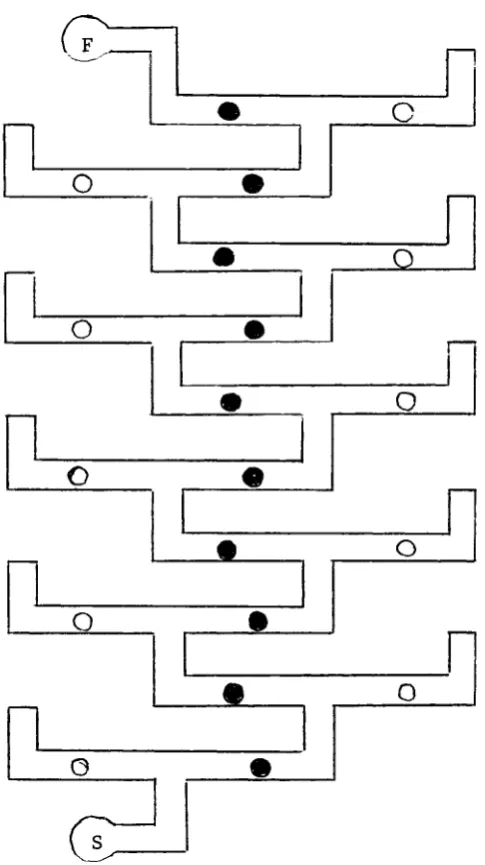
4 Schematic representation of the easiest maze 53 (Le)
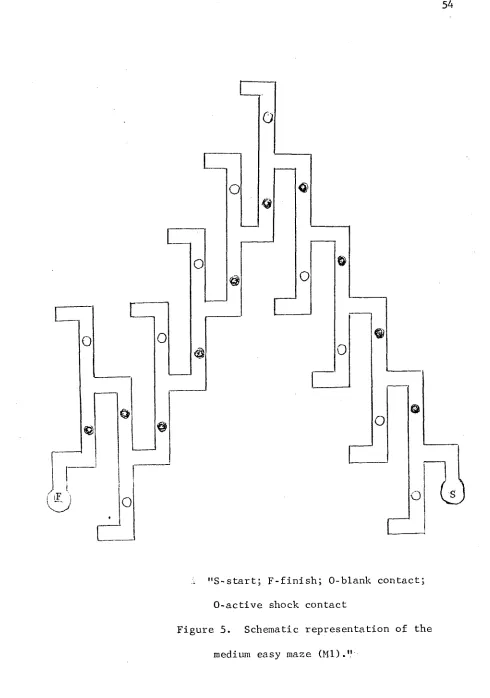
5 Schematic representation of the medium easy
maze ( M l ) ... 54
6 Schematic representation of the medium hard
maze ( M 4 ) ... 55
7 Schematic representation of the hardest
maze ( L d ) ... 56
LIST OF TABLES
Table Page
1 Summary of Analysis of Variance for the
Number of Total Errors by Shock Conditions
by Maze Difficulty by S e x ... 24
2 Analysis of Simple Effects of Shock Condition
by Maze Difficulty Interaction ... 27
3 Orthogonal Comparisons Between the Mean Number of Total Errors by Task Difficulty
by Shock Conditions ... 29
4 Test for Trends of Total Errors for Combined
Shock Conditions Across Mazes ... 33
5 Summary of Analysis of Variance for the Number of Trials to Criterion by Shock Conditions
by Maze Difficulty by S e x ... 35
6 Subjective Intensity of Electric Shock by
Shock Conditions by Mazes by Sex . . . . 37
CHAPTER I
INTRODUCTION
Learning as a distinct area of psychology has contributed
a great deal to the knowledge of man. From learning, two basic
themes for directing behavior have been evolved, i.e. reward and
punishment. Reward characteristically enhances the strength and
frequency of an organism's response when applied to that response.
Punishment, on the other hand, tends to decrease the probability of the
occurrence of a specific response as a result of the immediate delivery
of a punishing stimulus for the response (Arzin and Holz, 1966).
Electric shock has become the most commonly employed punishing stimulus.
Used in conjunction with an organism's response, shock will decrease
the magnitude and frequency of that response (Estes, 1944 and Karsh,
1962). Moreover, shock for the incorrect response may increase the
likelihood of the acquisition of the correct response (Bunch, 1928;
Crafts and Gilbert, 1934; Jensen, 1934). It would appear however,
that shock may also exhibit a paradoxical facilitating effect when
applied for the correct response (Tolman, Hall and Bretnall, 1932;
Muenzinger, 1934a; Muenzinger and Wood, 1935; Mosley, 1967). Instead
of acting so as to weaken the response, mild shock may increase the
performance of the correct response and actually promote the learning
of that response.
2
These experimenters set out to test whether or not the "Law of
Effect" invariably held in all learning situations, dt'hey had 139
human subjects pretrain (3 trials) on a punch board maze by hitting
every hole. For testing, the subjects were randomly and unevenly
distributed into five groups. The first two groups learned the
pattern in the conventional manner with a bell sound signifying an
error (negative reinforcement). The second of these groups learned
the reverse pattern of the other as a control for identicalness of
task difficulty. A third group was presented with this pattern,
but in this case a bell signified a correct choice (positive rein
forcement). These three groups constituted the controls of the
study. The fourth group performed the same task as the first two
groups except that when an error was made, mild shock was adminis
tered along with the bell. The final group, like the third, received
a bell for making a correct response but along with the bell a mild
shock was also given. The results of this experiment showed that
the bell right (third) and the bell-shock right (fifth) groups
were superior to the bell wrong (group one being equal to group two)
and the bell-shock wrong groups in terms of fewer cumulative average
errors. The authors concluded from this that the laws of emphasis,
motivation and disruption, should be substituted for, and should
be a correction to the "Law of Effect".
Muenzinger (1934b) was interested in the function of shock
and became intrigued with the results of Tolman, Hall and Bretnall
significant difference in learning ability under Shock Right (SR),
Shock Wrong (SW) and No Shock (NS) conditions. As an attempt to
explain these results and the conflict with previous work, he sugg
ested that humans are so well motivated in a laboratory setting
that shock has little or no effect in facilitating learning. How
ever, the author did agree with Tolman, Hall and Bretnall that there
was a disruptive element to shock, but that it was not shown in
their performance on the bolt head maze task.
Muenzinger (1934a) wished to study the veracity of the
hypothesis that punishment reduces or suppresses a response. He
rationalized that achievement of the correct response by the sub
ject was the estimate of a successful experiment. He therefore held
that, in order to accurately study the suppression of behavior by
shock, it is the correct response which should be punished and not
the incorrect. i'A T-maze apparatus and a visual discrimination task were employed. For this study three groups of 25 rats each were
used: Shock Right, Shock Wrong and No Shock groups. These animals
were deprived of food in order to motivate them. The Shock Right
group received shock plus food for a correct response, but received
nothing for an error. The Shock Wrong subjects received food for
a correct response and shock for an incorrect one. The third, a
No Shock control group, obtained food if correct and nothing if
wrong. The results showed that the No Shock group was definitely
Wrong group was slightly better than that of the Shock Right group
over the same measurements. He concluded that shock, in addition
to the primary motivation of food and irrespective of its contingency
upon the right or wrong response, makes the animal respond more
quickly to the significant cues of the situation. Shock does not
weaken or inhibit the specific response to which it is paired; but
rather it makes the subject more sensitive to the cues to be discrim
inated. Muenzinger, in alluding to the paradoxical effect of shock,
qualified these conclusions by stating that this effect may only hold
for rat subjects and then only in the discrimination habit.
The phenomenon of shock's facilitating effect had been
demonstrated for humans by Tolman, Hall and Bretnall (1932) and for
animals by Muenzinger (1934a). It was for future research now to
discern initial conditions under which it could be best exemplified.
Within this paradoxical situation, at least four avenues
of research lay open for immediate investigation. The first syste
matic study of these conditions was that of the physical position of
shock in the maze which best produces this facilitating effect. The
second evolved from methodological disputes concerning the actual
training procedure to be employed. The third area of study dealt
with shock intensity, and the most recent area of inquiry reported
in the literature has been the problem of task difficulty.
locations in the maze. They employed 50 rats in a visual discrim
ination task and under three shock conditions, SR, SW and NS. These
shock conditions were administered before, after and at the choice
point. Only when the shock was placed after the choice point was
there a facilitation of learning for the shock groups. From this,
they concluded that the disrupting of the tracing of the maze, due
to the introduction of shock was not by itself a sufficient reason
for the facilitating effect. In effect, all shock groups were dis
rupted by the shock, but only those subjects who received the shock
after the choice point showed the typical paradoxical effect. Muen
zinger and Wood claimed that shock after the choice point "sensitizes
the animal so that the likelihood of the rats observing and utilizing
the discriminative stimuli is increased. They do not, however, state
specifically why shock must be placed after the choice point. This
author hypothesizes that shock received before the choice point gener
alizes to the whole situation. As a result, little of this "sensit
ization" is carried over to the discriminative stimuli. Therefore,
shock administered before the choice point generalizes to both the
correct and the incorrect response and does very little in
developing a discrimination between them.
Muenzinger and Newcomb (1936) wished to compare the
effectiveness of shock with other methods of disrupting or inter
fering with the conventional visual discrimination learning for
point. The control groups were the shock groups, SR and SW and
the No Shock group, NS, previously used in the Muenzinger
(1934a) study and discussed above (p.3) It was found that the
subjects which jumped a gap in the floor after the choice point
were equal in learning to the groups which were shocked after the
choice point. Similarly, the subjects which jumped the gap before
the choice point were comparable to the group that was shocked
before the choice point and the group that was not shocked at all.
This experiment also lent support to the Muenzinger and Wood
(1935) study in that facilitation took place only when the gap
came after the choice point. Two reasons were postulated for
the gap's effect being similar to that of shock: first, the gap
produced an "enforced pause" and thus the rats became more aware
of the discriminative stimulus and second, an error forced the rat
to jump three gaps, since a correction procedure had been used.
This last explanation requires further elucidation.
Under the correction procedure, if a subject made an error, it
had to retrace the maze arm to the choice point and then had to
make another choice. The trial was completed when it reached the
appropriate goal. In this way, if a subject entered the wrong goal
as in the Muenzinger and Newcomb (1936) study, it had to cross the
original gap of the wrong alley. It had to turn around and recross
the gap to get out, and then cross another gap in the correct alley
From this, and the assumption that the subject ^resented" jumping
these gaps, it was hypothesized that the more gaps the animal was
in turn led to more dissociation of discriminative stimulus and
correct goal present in the situation.
The aversive element in jumping three gaps, instead of
one, builds up negative reinforcement. Added to this is the
frustration of entering the incorrect goal and receiving no
reward, which increases inhibition. This increases the negative
reinforcement to enter the wrong goal. According to empirical
findings, the more negative reinforcement there is, the greater
the tendency for the animal to avoid the incorrect goal. The
positive reinforcement of food, plus the increasing negative
reinforcement, will eventually lead the animal to respond correctly
In this way, the frustration and inhibition of jumping the three
gaps produces a tendency for the rat to approach the correct goal.
However, the correction procedure is not the only one
available. Wischner (1947) performed an experiment based on the
assumption that the results thus far obtained in studies on shocK
for the correct response, have been invalidated by the procedure
employed. He held that the correction procedure used by Muenzinger
(1936) was inferior. Instead, Wischner proposed to employ a noncor
rection procedure. In the noncorrection procedure the trial ends
when the subject reaches the goal without error or when an error
is made. If such an error does occur, there is no returning to the
choice point, as in the correction procedure. The subject is re
Wischner (1947) tendered five reasons for the super
iority of the noncorrection procedure. The first reason was that
the subject responded to only one stimulus cue in a given trial,
since after one response (correct or incorrect) the trial ended.
Secondly, only one consequence followed a choice, i.e. food,
shock or nothing. In the correction procedure a multitude of
responses was possible. In the latter case, the shock right
subject, for example received nothing for entering a wrong alley,
then corrected itself and received shock, plus food, upon
entering the correct alley. The third reason dealt with time.
In the noncorrection procedure the interval between a response
and its consequences was better controlled and was relatively
the same for all conditions, SR, SW and NS. The fourth was
that all animals must have made essentially the same response
to shock, i.e. continued over the grid to the stimulus cue. In
the correction procedure the no shock animal, if incorrect, was
allowed to retrace to the rewarded goal without actually crossing
the grid. The fifth reason was that the total distance traveled
by an animal in the course of a training trial, following a choice,
was constant for all animals and for all trials. It was for
these reasons that Wischner decided to use the noncorrection
procedure. He used 30 rats in a Yerkes-Watson discrimination box.
His results showed that the Shock Wrong group was superior to
the Shock Right and the No Shock groups (the latter two being
down and tended to decrease responses whichwwere not in accord
with the stimulus cues. In constrast to Muenzinger (1934a),
Wischner stated that shock administered after the choice point,
actually retarded learning.
Wischner (1947) felt that the difference between the
two studies was a consequence of the procedures employed. In the
correction procedure only the correct response terminated the
trial. The Shock Right subject was forced to cross the grid every
time. Therefore, there was a weakening of the approach response
to the negative stimulus cue (due to frustration) and a strength
ening of the approach response to the positive stimulus cue (due
to food reinforcement). The noncorrection procedure, on the other
hand, afforded alternate responses for the Shock Right subject.
He could enter the correct or incorrect goal and thereby terminate
the trial. Entering the incorrect goal was reinforcing for the
subject by reducing the experience of shock and ending the trial.
The correction procedure forced the subject to respond correctly
and guaranteed reinforcement on each trial. This made for a
rapid shift in relative strengths between the positive and negative
discriminative cues. As a result, the correction procedure, as
used by Muenzinger (1934a), led to different results.
Muenzinger and Powloski (1951) claimed that if Wischner
(1947) had analysed his data in terms of the number of reinforce
10
errors or wrong turns, he would have seen an indication of a
facilitating effect for the Shock Right group. They also stated
that this effect would have been much more pronounced if a
correction procedure had been used. This is because in the
correction procedure the animal adapted more quickly to the
adverse aspect of shock for the correct response, since the select
ion of the incorrect goal always led to frustration and a retracing
to the correct goal with which the shock was associated. There
fore, the "sensitizing" effect of shock took place much sooner
with the correction procedure. Consequently, Muenzinger and
Powloski attempted to compare the correction and the noncorrection
procedures in the visual discrimination habit, using 60 rats as
subjects. They succeeded in demonstrating the superiority of
the correction procedure for all shock conditions, SR, SW and
NS. With the correction procedure, the Shock Right subjects
were superior to the No Shock group; while the tendency was only
slightly so in the noncorrection procedure. This superiority
was reasoned on the basis of 1) as the subject moved from the
wrong alley, the stimulation and the lessening of frustration
were moved toward the positive alley, and 2) the correction
procedure followed up frustration with reinforcement more
quickly than the noncorrection.
The third area of examination for the paradoxical
11
Feldman (1961), in reviewing previous work, noted that, with
animal subjects on whom a relatively high intensity of shock was
employed, the Shock Wrong was superior to the Shock Right group.
However, with human subjects the intensity of shock had been kept
fairly low. He therefore attempted to ascertain the proper inten
sity of shock for human subjects. Using a nail head finger maze,
with Shock Right and Shock Wrong conditions, he varied the inten
sity between 9 ma (high) and 3 ma (low). He found low Shock Right
superior to low Shock Wrong and high Shock Wrong better than low
Shock Wrong. In the combined conditions, he found low Shock Right
plus high Shock Wrong superior to low Shock Wrong plus high Shock
Right. From this he concluded that the direction of difference
in the intensity level in all cases, favoured the Shock Right
subjects at low intensities and the Shock Wrong group at high
intensities. In addition he stated that, once the avoidance
tendency of the Shock Right group was overcome, the shock acted
as a signal or cue for approach behavior and that shock right
becomes a better condition for learning.
Wischner, Fowler and Kushnick (1963), working on the
premise that little experimentation had been done on shock inten
sities per se, set out to comment on the remark of Muenzinger
(1934a) - that relatively mild shock is best for facilitation in
learning. Employing rats in a noncorrection procedure under Shock
inten-sity of shock from 0.15 ma to 0.20 ma to 0.25 ma. It was shown
that as the shock increased in intensity for the Shock Right
subjects, so did their corresponding number of errors; however,
for the Shock Wrong group, as the intensity increased, the number
of errors decreased. The main findings, based onathe behavior of
the rats at varying intensity levels, would seem to be in agree
ment with the conclusion of Feldman (1961), i.e. low shock
intensity produces superior learning for the Shock Right groups,
while high intensity is better for Shock Wrong groups. In summary
then, the most advantageous intensity for the facilitation effect
of shock is low (approximately 3 ma. for humans and .15 ma for
rats) with Shock Right condition and high (about 9 ma. for humans
and .3 ma. for rats) with Shock Wrong condition.
Kushnick (1963) saw that in the results of the Muenzinger
(1934a) study, Shock Right was superior to No Shock and in the
Wischner, Fowler and Kushnick (1963) work, No Shock was superior to
Shock Right. He proposed that the difference between the studies may
lie in the task presented to the subjects. Kushnick observed that
Muenzinger had employed a simple black-white discrimination problem.
The animal was required however, to move into a gray goal box for
food reinforcement, following a correct response. There resulted,
because of this, a temporal dissociation between the positive dis-
criminandum and the reinforcement. Therefore, the degree of the
discrimination was difficult, since a generalization of reinforce
1 3
being painted a neutral gray). However, in the Wischner, Fofrler
and Kushnick study the animal entered the arm of a simple T-maze
and was rewarded in the presence of the discriminandum, if correct.
The position of the reinforcement was directly below the discrimin
ative stimulus. There was no dissociation between the positive
discriminandum and the reinforcement and little, if any, possible
generalization could occur. It would seem then, that the problem
difficulty would be less than in the Muenzinger study. In order
to test the hypothesis that problem difficulty was the determining
factor for.iretardation or facilitation of learning by shock, Kush
nick used rat subjects on a T-maze, under two shock conditions, SR
and NS. He varied the problem by terminating the discriminandum,
i.e. the illumination of the goal box, end plate, at three different
locations in the arms of the maze. No significant differences were
obtained between the No Shock and Shock Right groups in either trials
or errors to criterion; however, correct responses to criterion were
found to be significantly fewer for the Shock Right group. Kushnick
suggested that the facilitating effect of shock is evidenced in
only difficult problems where the trials and errors of the No Shock
subjects are protracted. This should allow the Shock Right group
to overcome their initial avoidance to shock and to utilize shock
as a cue in learning.
Fowler and Wischner (1965) reported studies which,
an avoidance element and a cue property. They proposed that shock
as a cue increased the subject's ability to discriminate between
the goal arms and thereby decreased the probability of "secondary
reinforcement" generalizing from the correct to the incorrect respons
much like Kushnick (1963). If this was true, then it was further
assumed that by increasing the difficulty of the problem or task, the
cue aspect would become more and more important. In order to deter
mine this, Fowler and Wischner varied the brightness differential
between the positive and negative discriminanda in a T-maze, thus
increasing the task difficulty by means of decreasing brightness
differential. As the discriminanda approached equality the cue
property of shock would become more critical. Their findings were
in accord with their reasoning insofar as the shock groups were
superior to the No Shock controls within each level of task diffi
culty. Also, as the task became more difficult, the errors for
both shock groups increased; but, less than the errors for the No
Shock subjects. With regards go the Shock Right group alone, the
avoidance property predominated on the easy tasks; but this was
offset by the cue element on difficult problems. However, no sign
ificant interaction of shock condition and problem difficulty was
found over all of the levels of difficulty.
In a later study, Mosley (1967) tested this interaction
and the question of procedural differences. With 80 human subjects
15
procedures (correction and rerun noncorrection), he used two levels
of maze difficulty. He found significant main effects for shock
conditions and task difficulty and that the rerun noncorrection
procedure was superior. The interaction, however, did not meet the
predetermined level of significance. There was a tendency in the
direction of fewer errors for the Shock Right subjects in relation
to the No Shock subjects on the difficult maze; but no difference
between the two shock conditions on the easy maze. These findings
are in accord with Kushnick (1963) and Fowler and Wischner (1965).
Purpose of the Present Research
Shock has been proven to exhibit a facilitating effect
for learning when paired with the correct response (Tolman, Hall and
Bretnall, 1932; Muenzinger, 1934a; Mosley, 1967). There still re
mains, however, the condition (s) under which shock can be traced
from its retarding to its facilitating effect upon performance and
ultimately, learning.
Mosley (1967) raised the question of task difficulty as
being the parameter of shock facilitation. However, onlyttwo levels
of task difficulty were used. This difference was not of significant
degree or in the proper direction to result in the expected inter
action. There was only a tendency for this to occur (p .10) as
measured by total errors.
This author posits that the failure to obtain a statist
16
ing levels of task difficulty. It is believed that by introducing
two levels of difficulty, the degree of difference between the shock
conditions is statistically allowed an increased probability. This
increased chance of statistical significance should be sufficient
to raise the interaction from a .10 level, as found by Mosley (1967),
to at least the customary level of .05. Therefore it is proposed in
the present study to rerun the two mazes Mosley employed and to add to
this a maze of an increased difficulty. In addition to this a fourth
maze is to be employed, the degree of difficulty of which lies between
Mosley's two mazes. In order to assure reliable and comparable re
sults much of the methodology of the present study is drawn from the
Mosley work.
Statement of the Problem
It is hypothesized that as the problem level increases in
difficulty, there will result an interaction between the problem diff
iculty factor and the shock condition factor. At easy levels the No
Shock condition will prove superior to Shock Right but as the task
increases in difficulty, Shock Right will become superior and event
CHAPTER II
METHODOLOGY AND PROCEDURE
Subj ects
The subjects (Ss) for this study were 48 right-handed
undergraduates, recruited from the elementary psychology classes
at the University of Windsor. Their ages ranged from 18 to 31
years. Half of the Ss were male and half female. The Ss were
randomly assigned to groups according to an equal distribution of
sexes for all conditions, filling the 2 x 2 x 4 factorial design of
two shock conditions, Shock Right (SR) and No Shock (NS); two
sexes (M and F) and four levels of difficulty (n = 3, for each
factor).
Apparatus
The apparatus used in this study consisted of four mazes,
an electric shocking device, a manually operated signal bell and a
pair of translucent goggles. Four, ten-choice point mazes were used.
They were of the multiple-U semi-linear pattern similar to that employed
by Warden (1924) and Mosley (1967). Two wooden mazes measured 12"
wide x 14" long and %" high. The other two wooden mazes were 14"
wide x 14" long and %" high. All mazes were raised 2" from the table
on which they rested. A one-quarter inch plexiglass cover was placed
and securely fastened to the base. The covers had the grooves of
1 8
The level of task difficulty was determined empirically by the
design of the pattern for the correct turns as indicated in a pilot
study (see Appendix D for pilot project on task difficulty).
The Ss received shock through two Type E 1-B Durable
Disc electrodes (Grass Medical Instruments) secured to the back of
the left, non-preferred hand by means of adhesive tape. In order to
ensure good surface contact, the electrode cups were filled with
Beckman Offner Paste. The shock source consisted of a variable trans
former Powerstat Type 3PE 116 (Superior Electric Company), set at
30 volts for each subject with 9400 ohms fixed resistance in series .
with the S, thus producing an intensity of approximately 3 milliamperes
(ma). The S received shock when ?the -stylus touched an active contact
point in the floor of the correct arm for each U in the maze pattern.
A. similar but electrically inactive contact point was placed in the
floor of the incorrect alley, midway between the choice point and
the closed arm for each U in the maze pattern.
The active shock contact points were connected to a
Model 330-S Hunter Photo Contact Relay. The shock interval was
controlled by means of a Model 100-C Hunter Decade Interval Timer,
which was set at 0.2 seconds for all Ss. A primer circuit was incor
porated, which required E to reset the circuit by means of a micro-
switch after each administration of shock. The circuit was employed
to ensure that the S would receive no more than one shock for each
19
The end of each trial was signalled by a bell, which the E
operated manually. This bell was activated only when the S arrived
at the finish position of the maze. A pair of adjustable transluc
ent goggles was used for each S in order to control for visual in
spection of the maze during the experiment.
Lastly, each S was processed individually and was asked
not to divulge the nature of the experiment to anyone.
Procedure
The instructions were read to the S in an area adjacent to
the experimental room. Each S was given a copy of the instructions
and was told to follow as the E read them aloud. After the first
reading, questions were asked for and answered. The instructions were
read aloud a second time and further questions were answered.
The method to be followed was the re-run noncorrection
procedure, in which one trial was defined as an errorless run through
the maze (Towart and Boe, 1965, p.407). In this procedure, the S
was prevented from retracing the arm to the choice point. Instead,
both the S's right hand and the clutched stylus were picked up by the
E and returned to the start position where another trial was begun.
The procedure for the test phase of this study was the
same for all Ss, regardless of the group to which he was originally
assigned. After reading the instructions and answering all the
questions, the E took the S to an adjacent area where he was prepared
in the following manner:
20
ii) The area of electrode contact was then scraped with a tongue depressor until a red glow appeared
iii) The subject was then istructed to wash the scraped area with >•warm water and then to dry that area.
iv) A small amount of electrode cream (Type EC-2) was then managed into the skin at the contact point.
v) This area was washed with soap and water and then dried.
After completing the above steps, the S was then taken into
the experimental room where he was seated before the appropriate maze
as called for by the design of the experiment. The maze was covered
with a white towel in order to eliminate any visual cues. The cups
of the metal disc electrodes were filled with Beckman Offner Paste and
securely attached to a contact area on the back of the non-stylus left
hand by means of a one-inch square of adhesive tape.
In keeping with the procedure of Mosley (1967), the follow
ing instructions were read, in addition to those given aloud at the
beginning of the experimental session:
Once you decide on the direction to move the stylus, go as far as you can in that direction. DO NOT
move backwards. If you should come to a blind alley, I will say "stop" and place you back at the start
---'tion. Keep the stylus moving away from your'
was fitted with the translucent goggles. All Ss were given two sample ADDITIONAL INSTRUCTIONS
body, i.e. up the board. Use a light pressure on the stylus and try to keep the stylus perfectly up right (Mosley, 1967, p.21).
21
I am now going to give you the two shocks I mentioned earlier. After the second of these
two shocks I would like you to describe the sensation you experienced (Mosley, 1967, p.20).
The Ss were then administered the two shocks, separated by an interval
of three seconds. They were asked to classify their sensation of the
shock as to being "noticeable", "irritable", or "painful".
During the maze training proper, each S was given ten
trials on the appropriate maze. After each trial, a one minute rest
period was given, during which time the maze was covered by the
towel and the goggles were removed from the S's head.
The Ss were trained under two shock conditions, SR and NS.
The experimental shock groups received shock during the training proper,
i.e. when the stylus crossed the active contact points in the floor
of the correct alley. The control groups received no shock during their
training, except for the two introductory shocks given at the onset of
the experiment. The Shock Right S received an electric shock of approx
imately 3 ma. in intensity for a duration of 0.02 seconds. The shock
was delivered when the stylus made contact with the active points in
the correct arm of each U in the maze pattern, for each attempt within
a test trial.
At the termination of the experimental session each S of
the Shock Right condition was asked whether the shock "hindered",
"helped", or "made no difference" during any or all of the task
performance. At the end of each session, the S was asked not to
22
Shock condition. This was to ensure that those Ss who had not yet
performed in the training procedure would remain unbiased and free
of prior knowledge about the experiment.
After each S finished the experimental session, the E
cleaned the electrodes with Isopropyl alcohol rubbing compound, and
the towel was placed over the maze. Preparation was then made for
the next S.
The maze performance of each S was scored according to
1) initial errors, i.e. first entry into each of the blind alleys
on each test trial, 2) repetitive errors, i.e. subsequent entry
Into a previously entered blind alley on each of the test trials,
CHAPTER III
RESULTS
For the analysis of results in the present study, the total
number of errors was utilized as an overall measure. The combined
total error score, as defined in the present study, was the total
number of initial errors, viz. the first entry into each of the blind
alleys within each test trial, plus the total number of repetitive
errors, viz. the subsequent entries into each of the blind alleys with
in each test trial (Mosley, 1967, pp. 21-22). Two subsidiary measures
were also included. These were the number of trials to criterion,
viz. the last trial of the 10 test trials on which either an initial
or repetitive error was made, and the subjective report of the subject
regarding shock intensity on the two pre-experimental shocks.
Total Errors - Combined Measure
Learning in this experiment was inferred from the perform
ance of the subjects on the maze task. Theoretically, an infinite
number of total errors was possible, and by comparing the frequency
of the errors produced, learning can be inferred. The best single
measure of this changing behavior was the number of total errors,.as
previously defined directly above.
In Table I is shown the summary of the analysis of the
total error scores. The main effect of shock conditions (Factor A)
R e p ro d u ce d w ith p e rm is sio n of the co p yr ig h t o w n e r. F u rth e r re p ro d u ct io n p ro h ib ite d w ith o u t p e rm is s io n .
table i
Summary of Analysis of Variance for the Number of Total Errors Difficulty by Sex
by Shock Conditions by MaSe
Source of Variance SS df MS F
A (shock condition) 9,408.00 1 9,408.00 18.81***
B (maze difficulty) 22,386.50 3 7,462.17 14.92*****
Linear 20,203.35 1 20,203.35 40.00***
Quadratic 2,054.08 1 2,054.08 4.11*
Residual 129.07 1 129.07 1
C (sex) 133.33 1 133.33 1
AB 5,050.17 3 1,683.39 3.37****
AC 208.33 1 208.33 1
BC 2,445.83 3 815.28 1.63
ABC 2,198.50 3 732.83 1.46
Within Cell 16,001.33 32 500.04
Total 57,832.00 47
2%
of maze difficulty (Factor B), was also significant beyond the .01
level. However, sex differences (Factor C) were not statistically
reliable (F<1). The first order interaction (shock condition by maze
difficulty), (Factor AB), was statistically significant (p<.05).
None of the other interactions, shock condition by sex (Factor AC),
maze difficulty by sex (Factor BC) or shock condition by maze diffic
ulty by sex (Factor ABC) proved to be statistically significant.
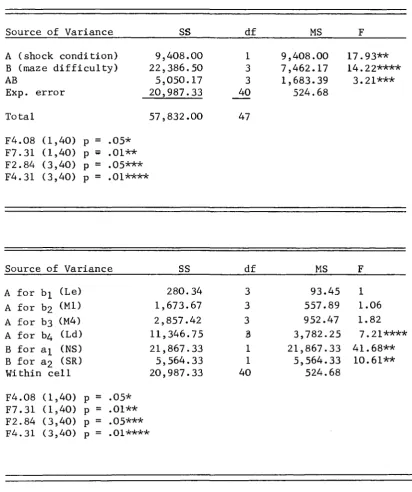
In order to determine the nature of the shock condition by
maze difficulty interaction, an analysis of simple effects for Factor
AB was computed on the number of total errors. The results are pre
sented in Table 2. This interaction was broken down into the simple
niain effects of maze difficulty over the shock conditions. By Table
2, the overall analysis for the shock condition by maze difficulty
interaction (Factor AB) shows the variables of shock condition (Factor
A) and maze difficulty (Factor B) significant beyond the .01 level.
Their resultant interaction also proved reliable (p<.05). The
shock condition (Factor A) differentially affected the performance
of the Ss on the hardest maze (Ld) (p^.01). The effect on the
other three mazes contributed to the significant interaction, but
only directionally. It can also be noted that the maze difficulty
(Factor B) affected the performance of the Ss in the two shock
conditions.
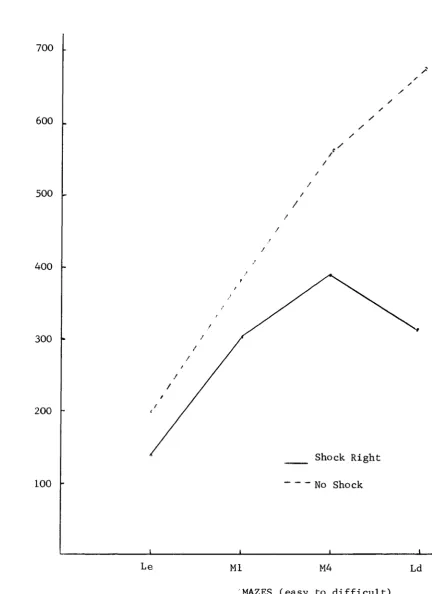
Figure 1 is a graphic summary of the total error
scores distributed by the parameters of shock conditions and
26
errors for the four No Shock groups as the mazes increase in difficulty.
The magnitude of the difference between the total errors for the two
shock conditions also increases progressively. The Shock Right group
across the first three mazes shows an increase in total errors until
the most difficult maze (Ld), on which the number of total errors is
approximately equal to the total errors of the second easiest maze
(Ml). From Figure 1 it appears that the significant shock conditions
by maze difficulty interaction (Factor AB) is due primarily to the
decrease in the number of total errors by the Shock Right Ss, when
performing on the most difficult maze (Ld). It should be noted that
the No Shock groups have a consistantly greater number of total errors
than the Shock Right groups, over the four mazes.
The statistical results of the Duncan's Multiple Range Test
(Edwards 1962, pp. 136-139), which was applied to assess the relia
bility of the differences between mean group performances on the four
mazes, is shown in Table 3, below. There is a statistically signifi
cant difference for the No Shock groups between Ld and Ml, Le and M4,
Le and Ld; between mazes Ml and M4, Ml and Ld; but no difference be
tween mazes M4 and Ld. In the case of the Shock Right groups there
is a. statistically reliable difference between mazes Le and Ml, Le
and Ld, Le and M4; between mazes Ml and M4; and between M4 and Ld
(p^.05).
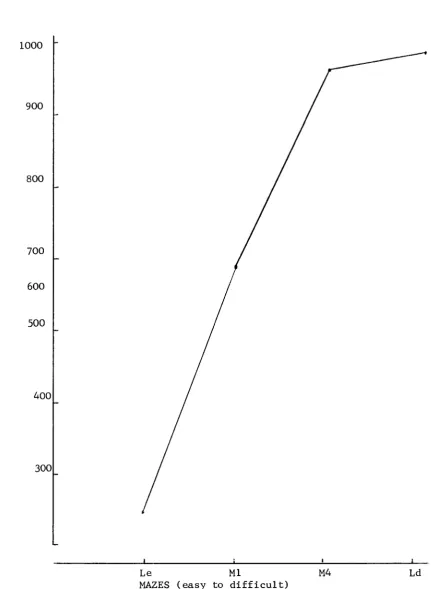
Figure 2 shows the number of total errors of the combined
shock conditions over the four mazes. It shows that as the difficulty
27
Table 2
ANALYSIS OF SIMPLE EFFECTS OF SHOCK CONDITION BY
MAZE DIFFICULTY INTERACTION
Source of Variance SS df MS F
A (shock condition) 9,408.00 1 9,408.00 17.93**
B (maze difficulty) 22,386.50 3 7,462.17 14.22****
AB 5,050.17 3 1,683.39 3.21***
Exp. error 20,987.33 40 524.68
Total 57,832.00 47
F4.08 (1,40) p = .05* F7.31 (1,40) p = .01** F2.84 (3,40) p = .05*** F4.31 (3,40) p = .01****
Source of Variance SS df MS F
A for (Le) 280.34 3 93.45 1
A for b2 (Ml) 1,673.67 3 557.89 1.06
A for b3 (M4) 2,857.42 3 952.47 1.82
A for b4 (Ld) 11,346.75 3 3,782.25 7.21****
B for (NS) 21,867.33 1 21,867.33 41.68**
B for a2 (SR) 5,564.33 1 5,564.33 10.61**
Within cell 20,987.33 40 524.68
N
U
M
B
E
R
OF
T
O
T
A
L
E
R
RO
RS
•28
700
600
500
400
300
200
Shock Right
100 - No Shock
R e p ro d u ce d w ith p e rm is sio n of the co p yr ig h t o w n e r. F u rth e r re p ro d u ct io n p ro h ib ite d w ith o u t p e rm is s io ' I
- L a u j. c u
Orthogonal Comparisons Between the Mean Number of Total Conditions
(N = 48)
Errors by Task Difficulty by Shock
Shock
Easiest Mazes (ordered) (Le)
Medium Easy (Ml) Medium Difficult (M4) Most Difficult
(Ld) Mazes Shortest
Conditions Total Errors 201 382 563 678 Significant
Mean of total
Errors 33.50 63.66 93.83 113.00
Ranges (p<.05)
- 30.16* 60.33** 79.50*** Le Rl= 26.66*
No shock - - 30.17* 49.44** Ml r2= 28.03**
- - - 19.17 M4 R3= 28.86***
- - - Ld
Mazes (ordered) (Le) (Ml) (Ld) (M4)
N
U
M
B
E
R
OF
T
O
T
A
L
E
R
R
O
R
S
3 0
1000 "
900
800
700
600
500
400
300
_______________I______________ i______________ !______________ 1
31
combined shock conditions. However, between the mazes M4 and Ld,
total errors do not increase to a magnitude as great as the other
mazes (Le and Ml, Ml and M4). Instead, they tend to level off. In
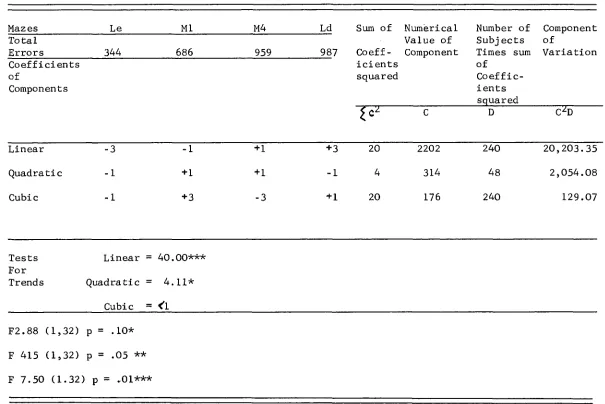
order to assess the statistical properties of this curve, a test
for trends was applied to the total errors across the four levels
of task difficulty.
The results of Table 4 show that there is a definite
linear trend (p^.01), a borderline quadratic trend (p^. 10), but
no cubic component (F<1). The linear trend is indicative of a
graded scale of difficulty, as was to be expected from the Pilot
Work (see Appendix D ) .
Figure 3 shows the number of total errors, by each
shock condition across the ten test trials (see Appendix B for
data of total errors by shock condition, by sex and by maze diffi
culty for each test trial). It is readily seen that the Shock
Right groups showed fewer errors than the No Shock groups across
all ten trials. The Shock Right Ss consistantly have fewer total
errors per trial than the No Shock Ss. Of particular note is the
increase in the number of total errors for the No Shock Ss on every
other trial during early training. Although there is a general
decrease in the overall total errors over the ten trials, the third,
fifth, seventh and ninth trials do represent a small increase in
the number of total errors over the number of total errors of the
32
It is also observed in Figure 3 that as the number of'
trials increases, the difference in total errors between the two
shock conditions decreases until they are almost identical in number
by trial ten. This indicates that within the ten trials allowed,
both groups (SR and NS) reached approximately the same level of
learning or performance. Consequently, it is only the differential
rate of error reduction which discriminates between the two shock
conditions. Therefore the main differences produced by the shock
conditions must occur early in training.
Trials to Criterion
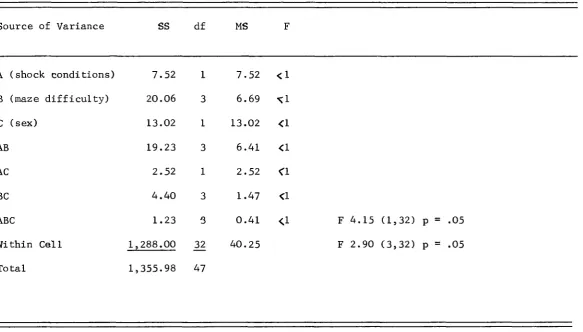
Table 5 below, presents a summary analysis for the
number of trials to criterion by shock conditions by maze diffi
culty, by sex. In the analysis, none of the main effects or any
of the interactions are statistically significant (F<1). Compared
to the analysis of the total error scores, the use of the trials to
criterion appears to be an inadequate measure, for this type of
experiment.
Verbal Reports
In order to ascertain whether or not the subjective
intensity of the shock had any revelant bearing on the results,
the Ss were asked to qualify the perceived shock under these three
headings: "noticeable", "irritable" or "painful". Any remark by
the S, other than the three qualities asked for, was classified acc
R e p ro d u ce d w ith p e rm is sio n of the co p yr ig h t o w n e r. F u rth e r re p ro d u ct io n p ro h ib ite d w ith o u t p e rm is s io Table 4
Test For Trends of Total Errors For Combined Shock Conditions Across Mazes
Mazes Le Ml M4 Ld Sum of Numerical Number of Component
Total
Errors 344 686 959 987
Coeff-Value of Component
Subj ects Times sum
of Variation Coefficients of Components icients squared of Coeffic ients squared
C D C^D
Linear -3 -1 +1 +3 20 2202 240 20,203.35
Quadratic -1 +1 +1 -1 4 314 48 2,054.08
Cubic -1 +3 -3 + 1 20 176 240 129.07
Tests Linear = 40.00***
For
Trends Quadratic = 4.11*
N
U
M
B
E
R
OF
T
O
T
A
L
E
R
R
O
R
S
3 4
1 4 0 0
1380
1360
920
900
860
860
Shock Right
No Shock
140
120
100
80
60
40
20
6 9 10
R e p ro d u ce d w ith p e rm is sio n of the co p yr ig h t o w n e r. F u rth e r re p ro d u ct io n p ro h ib ite d w ith o u t p e rm is s io Table 5
Summary of Analysis of Variance for the Number of Trials to Criterian by Shock Conditions by Maze Difficulty by Sex
Source of Variance SS df MS F
A (shock conditions) 7.52 1 7.52 <1
B (maze difficulty) 20.06 3 6.69
C (sex) 13.02 1 13.02 <1
AB 19.23 3 6.41 <1
AC 2.52 1 2.52 <1
BC A. 40 3 1.47 <1
ABC 1.23 3 0.41 <1 F 4.15 (1,32) p = .05
Within Cell 1,288.00 32 40.25 F 2.90 (3,32) p = .05
36
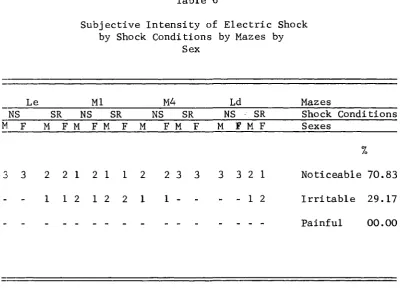
if the S said "just barely noticeable" then the subjective quality of
the shock was categorized as "noticeable". Table 6 shows the numerical
subjective categorization of the obtained responses according to shock
conditions, maze difficulty, and sex. The results of this classific
ation of subjective reports points to the fact that the shock intensity was
high enough to be noticeable for all Ss, but no Ss reported the shock as
37
Table 6
Subjective Intensity of Electric Shock by Shock Conditions by Mazes by
Sex
Le________ Ml__________M4_________Ld__________Mazes___________ NS SR NS SR NS SR NS SR______Shock Conditions M F M F M F M F M F M F M F M F _____Sexes___________
%
3 3 2 2 1 2 1 1 2 2 3 3 3 3 2 1 Noticeable 70.83
- - 1 1 2 1 2 2 1 1 - - - - 1 2 Irritable 29.17
... - . . . . . . . Painful 00.00
The Shock Right Ss were asked at the termination of the
experiment, whether the shock helped, hindered or was or negligible
importance in their learning of the maze. The shock was said to
have helped 78% of the people, hindered 9%, and was negligible in
the remaining 13% of the cases. This indicates that the shock,
in at least 78% of the cases, was recognized as having been associated
with the correct response, and as such, was utilized in learning the
CHAPTER IV
DISCUSSION
The study presented herein was undertaken in an effort
to ascertain the effects of shock for the correct response on
varying levels of task difficulty. In resume, the design called
for 48 Ss to be randomly distributed into six groups of 8 Ss each
(4M, 4F) under two shock conditions (SR and NS), four tasks of
increasing difficulty (Le, Ml, M4 and Ld mazes, respectively), and
two sexes. These groups were trained on a rerun noncorrection pro
cedure in which an error resulted in a return to the start position
and the termination of a trial was the result of an errorless tracing
of the maze from the start position to the finish position.
It was hypothesized that the shock conditions would differ
entiate themselves and, that as the individual group difficulty of
the mazes was increased, there would result an interaction between
task difficulty and shock conditions. It should be noted that’-ithis
differential would favour the No Shock groups on easy tasks in terms
of fewer total errors. However, in a more difficult task, the Shock
Right groups would manifest fewer total errors than the No Shock
groups. These predilections emanated from the work of Mosley (1967).
The results of this experiment showed that the two shock
conditions exhibited divergent performance characteristics and that
the mazes were differentiated in terms of the number of total errors
3 9
made. Furthermore, as the main finding of this study, it was
shown that by an increase in maze difficulty and the use of shock,
fewer total errors for the Shock Right groups over the No Shock
groups were found. However, the postulate that there would be fewer
total errors on easy tasks for the No Shock groups, as opposed to
the Shock Right groups, failed to materialize.
There are several possible interpretations of these find
ings. Mosly (1967) posited that the facilitating effect of shock
for the correct response could be accounted for on the basis of
shock's acquiring secondary reinforcing properties for the S. He
claimed that shock derived these properties from its pairing with
the primary reinforcement afforded by the S's entry into the open arm
of each U in the maze pattern. The strength of these secondary rein
forcing properties was said to be directly related to the number of
pairings with the primary reinforcement (correct responses). But since
shock, 'per se', is an aversive stimulus, the secondary reinforcing
properties were directly influenced by the motivation of the S to
successfully complete the maze task.
From this author's point of view, Mosley's (1967) explanat
ion relies too heavily on the intrinsic motivation of the S. Further
more, Mosley thoroughly investigated the essential question as to how
the aversive stimulus of shock can acquire secondary reinforcing pro
perties of an approach characteristic.
Kushnick (1963) attempted to explain the facilitating
4 0
the No Shock Ss learned the problem rather quickly. On the other
hand, the Shock Right Ss made avoidance responses to the shock early
in training and were unable to utilize the shock as a cue until
much later. Due to these early avoidance responses the Shock Right
Ss required more trials and exhibited more errors than the No Shock
Ss. As a result, the data gathered on the easy tasks appeared to
show retardation in learning on the part of the Shock Right Ss, as
opposed to the data posited for the No Shock Ss. However, on the
more difficult problems, where the number of erros was protracted
for the No Shock Ss, there was sufficient recovery time for the
Shock Right Ss to overcome their initial avoidance to shock and to
utilize the shock as a cue. In so doing, the Shock Right Ss exhib
ited this facilitating effect of shock, not shown by the No Shock Ss.
The theory of Kushnick is adequate to explain how shock facilitates
learning, but it does not fully answer the question as to why shock
for the correct response should facilitate learning.
Another possible explanation of shock's facilitating
effect when paired with the correct response was expounded by
Muenzinger (1934a). In his interpretation of the facilitation of
shock, he concluded that moderate shock slowed the organism down
at the choice point and made the organism respond more readily to
the significant cues in the learning situation. As Muenzinger says,
the organism is "sensitized". What happens internally to the organism
4 1
a matter of conjecture. In the present study however, an attempt
was made to eliminate all possible cues outside of the shock itself.
It is believed that even upon reaching the choice point, the S in
the Shock Right condition obtains no extraneous auditory, visual or
olfactory cues regarding the direction in which to turn. There is
the possibility that proprioceptive cues are available and that the
"sensitization" heightens the receptiveness to these. The supposit
ion, however, is highly unlikely since proprioceptive cues are very
difficult to detect and they retain only a moderate reliability
(Warden, 1924). Secondly, when an error occurs, the S is removed from
the maze and returns to the start position. This would mean that there
is a time lapse of varying lengths before the proprioceptive cues are
again encountered. As mentioned, these cues are unreliable and with
the lapse of time between making an error and restarting, this author
cannot lend much credence to the hypothesis that the proprioceptive
cues are so strong and so drive inducing that they could account for
the facilitation of shock for the correct response.
In terms of the present study, shock for the correct response
is discussed from an informational standpoint. Shock possesses primary
reinforcing information in so far as it confirms verbal decisions of
turns as are being tested by the S. The S is motivated to learn the
maze since the instructions explicitly tell him that it is his task
to learn the maze. The voluntary nature of the experiment and the
42
ten test trials.
The S is instructed in the beginning of the experiment
that the best method for learning the maze is the 'verbal method1.
Therefore the S is disposed to verbalize his turns before he makes
them. However, along with this instruction, it is further stated
that he may or may not receive shock while performing in the maze
situation. As a result of previous associations with shock and
punishment, and punishment and an incorrect response, the S is dis*
posed to believe that he will receive shock for making an incorrect
response.
On the first trial, the S begins to trace the maze and
subsequently arrives at the first choice point. Since he has been told
that he will not be allowed to retrace, i.e. move backwards, and since
he is prevented from moving forward by the wall of the maze, the S
verbalizes to move right or left. The instructions to verbalize his
moves, plus his natural tendency to do so, facilitate this verbal
approach to the learning of the maze. The S then, either aloud or
to himself says for example "right" and moves in this direction.
Assume for a moment, that this is an incorrect response. The S says
"right", moves right, but comes to the end of the blind alley.
Immediately he is told to stop and is returned to the start position.
As a result, the S is frustrated in his attempt to learn the correct
maze pattern. He again traces the maze to the first choice point.
He remembers that turning right was frustrating, so he therefore ver
balizes "left" and begins tracing left. However in going left, the
4 3
It is because of the past experience of associating
shock with an incorrect response, that initially, the S in the
Shock Right condition should make avoidance responses. Over a
number of attempts at avoiding shock, the S is continually frust
rated at learning the maze. Soon, however, the S begins to trace
the alley (s) in which shock is forthcoming and he then associates
shock with the correct response. By verbalizing each turn before
it is made, the S can then seek shock as a means of confirming his
hypothesis about making a "right" or "left" turn as each choice
point. In this way shock becomes a primary reinforcer for the ver
balization and turning of the S in the maze situation.
The S in the No Shock condition, on the other hand,
receives no similar reinforcement or information in his verbalized
attempts to learn the maze. The S in this situation must rely on
trial and error and receives reinforcement only upon tracing the
correct alley a number of times.
As theorized by Kushnick (1963), on easy levels of
task difficulty the S in the No Shock condition, learns the maze
quickly. The S in the Shock Right condition however, must overcome
his initial hypothesis about shock being associated with an error
and his resultant initial avoidance responses. The avoidance
responses tend to mask any facilitation by shock for the correct
response which might otherwise be shown. In difficult problems,
on the other hand, the errors are protracted for the No Shock Ss.
44
It is noted that there exists a relative increase in the
number of total errors for the No Shock Ss across the odd numbered
trials (see Figure 3). This is contrasted with the smooth decrease
in total error scores for the Shock Right Ss over the ten test trials.
This is a result of the trial and error approach of the No Shock Ss
when attempting to learn the maze. The No Shock Ss are approaching
the task on different trials with various methods, until about the
fifth to seventh trials, where they eventually settle on one method.
However, the Shock Right Ss determine their method of learning the
maze during the first trial. This occurs when the Shock Right Ss
overcome their avoidance to shock and use it as a primary reinforcer
to their verbal approach. The subsequent trials result in a gradual
decrease in the number of total errors for these Ss.
In summary, this author finds that shock for the correct
response, in human maze learning, influences to a significant degree
the performance of Ss on varying levels of task difficulty, in such
a way that, as the difficulty of the task is increased, there is a
facilitation for learning.
Suggestions For Future Research
The following section of the Discussion deals more
pragmatically with the results of the experiment. In particular,
the discrepancies in the performance of the Ss in both shock con
ditions (SR and NS) will be highlighted and the important findings
will be evaluated in terms of possible future research.
There is no significant retardation as would be