Review
1
Biogenesis and function of small non-coding RNAs derived from
2
eukaryotic ribosomal RNA
3
Marine Lambert1, Abderrahim Benmoussa1 and Patrick Provost1,*
4
1CHU de Québec Research Center/CHUL Pavilion, 2705 Blvd Laurier, Quebec City, QC, G1V 4G2 and
5
Department of Microbiology, Infectious Diseases and Immunology, Faculty of Medicine, Université Laval,
6
Quebec City, QC, G1V 0A6, Canada
7 8
* Correspondence: Dr. Patrick Provost
9
CHU de Québec Research Center/CHUL Pavilion
10
2705 Blvd Laurier, Room T1-65
11
Quebec City, QC G1V 4G2 Canada
12
Phone: +1 418 525 4444 (ext. 48842)
13
Fax: +1 418 654 2765
14
E-mail: [email protected]
15
Web page: http://www.crchuq.ca/en/research/researchers/4691
16
17
Abstract: The advent of RNA-sequencing (RNA-Seq) technologies has markedly
18
improved our knowledge and expanded the compendium of small non-coding
19
RNAs, most of which derive from the processing of longer RNA precursors. In this
20
review article, we will discuss about the biogenesis and function of small
21
non-coding RNAs derived from eukaryotic ribosomal RNA (rRNA), called rRNA
22
fragments (rRFs), and their potential role(s) as regulator of gene expression. This
23
relatively new class of ncRNAs remained poorly investigated and
24
underappreciated until recently, due mainly to the a priori exclusion of rRNA
25
sequences – because of their overabundance – from RNA-Seq datasets. The
26
situation surrounding rRFs resembles that of microRNAs (miRNAs), which used to
27
be readily discarded from further analyses, for more than five decades, because we
28
could not believe that RNA of such a short length could bear biological
29
significance. As if we had not yet learned our lesson not to restrain our
30
investigative, scientific mind from challenging widely accepted beliefs or dogmas,
31
and from looking for the hidden treasures in the most unexpected places.
32
Keywords: biogenesis; microRNAs; ribosomal RNA-derived fragment (rRF);
33
ribosomes; small ribosomal RNA (srRNA); ribosomal DNA (rDNA); small RNAs.
34 35
1. Introduction 36
The ribosomes are ribonucleoprotein (RNP) complex assemblies required for the
37
translation of all proteins1-2. Each ribosome is composed of ribosomal RNA (rRNA), 38
constituting its functional core, and ribosomal proteins. In eukaryotes, ribosomes
39
consist of four rRNAs and approximately 80 ribosomal proteins arranged into two
40
subunits: 60S and 40S3. During the ribosome biogenesis process, eukaryotic rRNAs 41
are usually synthesized by the RNA polymerase I (RNA Pol-I) in the nucleolus,
42
giving rise to a single rRNA precursor: the 45S rRNA4. This long primary transcript 43
contains several different rRNAs separated by spacer regions, known as internal
44
transcribed spacers (ITS; ITS1 and ITS2). Indeed, three of the four mature rRNAs
45
(18S, 5.8S and 28S rRNAs) originate from this common 45S precursor, while the 5S
46
rRNA is synthesized by RNA polymerase III (RNA pol-III) 5-6. 47
Mammalian rDNA genes code for rRNAs that are generally comprised of
48
several hundreds of transcription units organized in tandem repeats and clustered
49
on a number of chromosomal loci7-9. For example, in humans, there are 50
approximately 300–400 rDNA repeats in five clusters on chromosomes 13, 14, 15,
51
21 and 228, potentially explaining the rRNA sequence variability. Although the 52
rRNA sequence of the 18S, 5.8S and the 28S may contain variations, consensus
53
motives can be found10-11. The rRNA secondary structure is also extremely well 54
conserved in eukaryotes, thanks to a strong selection pressure12-13. Being the main 55
component of ribosomes and acting at the core of their function14, rRNA expression 56
is finely controlled, from the regulation of transcription to their biogenesis7, 15-17. 57
Other processes involved in the rRNA maturation can also be regulated, such as
58
biochemical modifications of their RNA sequence18-20 or incorporation into the 59
ribosomal complex15, 21. 60
Nevertheless, it has been shown that distinct ribosomal genes (rDNA) are
61
expressed at different stages of development, leading to the incorporation of
62
alternative forms of rRNA with heterogeneous sequences into ribosomes22-23. It is 63
admitted that embryogenesis is a tightly regulated process, in which the control of
64
expression of specific proteins, at key embryonic stages, is important24. Thus, the 65
heterogeneity found in ribosomes may allow this regulation by favoring
66
translation of specific sets of mRNAs into proteins. Both the type of proteins
67
present in the RNP complex3, 25-28 and the rRNAs may contribute to this regulation, 68
as in some alternative pathways during the eukaryotic rRNA maturations4, 21, 29. In 69
addition, splicing of some rRNA transcripts may be decoupled and lead to the
70
production of new rRNA intermediates (e.g. 43S and 26S)30. Furthermore, the first 71
rRNA variants described are at the 5' end of the 5.8S rRNA31. Thus, two forms of 72
5.8S rRNA exist: the 5.8S short (5.8SS) and the 5.8S long (5.8SL), which differ in size
73
by an extension in the 5’ end of 7 or 8 nucleotides (nt)15, 28, 32. Accordingly, similarly 74
to ribosomal proteins, some of these rRNA variants may play a role in ribosome
75
Since the discovery of the first small silencing RNA in 199334, a noteworthy 77
number of small RNA classes has been discovered, including microRNAs
78
(miRNAs)35, small interfering RNAs (siRNAs)36-37 and Piwi-associated small RNAs 79
(piRNAs)38-39, all of which exerting important roles in various biological processes40. 80
More recently, additional new classes of small non-coding RNAs have been
81
discovered in the wake of the next-generation sequencing (NGS) revolution41, 82
which markedly expanded our knowledge of small RNAs. For instance, a class of
83
small RNAs originating from small nucleolar RNAs (snoRNAs) has been identified
84
to function like miRNAs42. Such studies have fueled interest in small RNAs that 85
could derive from other non-coding RNAs, such as transfer RNA (tRNA) 43-46, 86
snoRNA42, 47-48, and rRNA49. The importance of ncRNAs in cellular regulatory 87
mechanisms, especially during ribosome biogenesis, and their contribution to
88
ribosome heterogeneity, both compositional and functional,20 raised a particular 89
interest in this field of study.
90
These studies range from the small RNAs like the snoRNA18 (HBII-95, HBII-234, 91
etc.) which contribute to the rRNA maturation, notably by induce biochemical
92
changes on the rRNA sequence; to the large RNAs like the nucleolar-specific
93
lncRNA (LoNA), which can suppress rRNA transcription and reduce rRNA
94
methylation50. These two examples illustrate how by changing rRNA methylation
95
level ncRNAs can modulate ribosome biogenesis and contribute to the ribosome
96
heterogeneity by acting in specific environments (localization and times)51-52.
97
During eukaryotic evolution, ribosomes have considerably increased in size,
98
forming a surface-exposed ribosomal RNA (rRNA) shell of unknown function53. 99
This surface may be an interface for interacting proteins, as suggested by the
100
identification of hundreds of ribosome-associated proteins (RAPs) from categories
101
including metabolism and cell cycle, as well as RNA- and protein-modifying
102
enzymes that functionally diversify mammalian ribosomes27. rRNA sequences may 103
also be modified, as the presence of ufmylation suggests27, or be cleaved to form 104
new functional small ncRNA species. Therefore, the interplay between RAPs,
105
biochemical changes and generation of new small ncRNAs may provide an
106
additional layer of regulation and govern one of life’s most ancient molecular
107
machines involved in protein expression52, 54. 108
rRNAs (~80%), mRNAs (~5%) and tRNAs (~15%) are the most abundant RNA
109
molecules found in mammalian cells. Despite their relatively high enrichment and
110
potential function, the small ribosomal RNA-derived fragments (rRFs) are usually
111
removed as a by-product of RNA degradation from RNA-sequencing (RNA-seq) or
112
small RNA-seq analyses55,56. Similarly, the full-length rDNA sequences are not 113
included in human and mouse genome assembly, which represents an important
114
gap in genome information9. 115
Nevertheless, over the past few years, scientists have begun investigating the
116
existence, role and function of specific small rRFs, which will be the topic of this
review article. Whereas rRNA plays a role in ribosome heterogeneity, rRFs may be
118
involved in the control of translation, albeit not excluding other important
119
biological functions. Here, we will discuss about the discovery, biogenesis,
120
protein-binding capacity and function of small ncRNAs derived from rRNA.
121
2. Small RNA derived from ribosomal RNA 122
2.1. Fragments of the 28S ribosomal RNA
123
2.1.1. Discovery: cleavage, localization and expression pattern
124
The 28S rRNA is the longest rRNA and forms the large subunit (LSU) of
125
eukaryotic cytoplasmic ribosomes57. The mature 28S rRNA is generated from the 126
45S rRNA upon cleavage into 32S pre-rRNA, which finally matures into the 28S
127
rRNA after endonucleolytic and exonucleolytic processing30. Mature 28S rRNA 128
may also be produced through the endonucleolytic processing of the 41S rRNA to
129
a 36S intermediate58. Since they are mediated by endo- and exonucleases, which are 130
often implicated in the generation of small ncRNAs, these parallel processing
131
pathways might lead to the generation of functional and biologically relevant small
132
rRNA-derived ncRNAs.
133
Wei et al.49 have shown that up to 64.0 to 70.0% of rRFs were distributed to the 134
human rDNA region encoding the 28S rRNA, as compared to 16.1–22.4% and 4.5–
135
7.0% for the 18S and 5.8S, respectively. Therefore, the majority of rRFs mapped to
136
the 28S rRNA, which is consistent with its larger size, suggesting that rRFs may be
137
produced during nonspecific rRNA degradation. In this case, one would expect the
138
rRF sequences to be randomly distributed along the 28S rRNA. So, when Chen and
139
collaborators found that rRFs were significantly enriched at the 5’ and 3’ ends of
140
the 28S rRNA gene, in the Amblyomma testudinarium model and human cell lines59, 141
the hypothesis that rRFs were generated by a specific endonucleolytic cleavage
142
process, rather than a random exonucleolytic digestion59, gained more credibility. 143
The rRF3 series were significantly more highly expressed than the rRF5 series in
144
this study. Moreover, they demonstrated the biological significance of one specific
145
rRF359. 146
The 28S rRNA may also be the subject of atypical processing events, and give
147
rise to known classes of small ncRNAs. In 2013, a study revealed that a number of
148
non-canonical miRNAs mapped to ribosomal RNA molecules, with 1% of
149
annotated miRNAs mapping to mature rRNA sequences. Whereas miR-2182
150
originates from the 45S rRNA precursor, miR-5102, miR-5105, miR-5109 and
151
miR-5115 are produced from the 28S rRNA35. In mice, a total of 10 miRNAs are 152
rRFs, and 62 rRFs perfectly match piRNA sequences, including piR-16, piR-38,
153
piR-170 and piR-171 (Figures 1 and 2)60. Therefore, these findings – including the 154
overlap of rRFs with miRNAs and piRNAs – support the idea that rRFs are not
155
generated from random degradation of rRNAs.
The first small ncRNA species known to derive from the 28S rRNA was
157
discovered in the filamentous fungus Neurospora crassa in 200961. Assigned to the 158
siRNA family, they are now known as qiRNAs (QDE-2-interacting small RNAs).
159
QDE-1 and QDE-3 proteins, together with OsRecQ1 and OsRDR1, are required and 160
play critical roles in qiRNA biogenesis61-62. qiRNAs have been shown to mediate
161
gene silencing in the DNA damage response (DDR) pathway, and are induced by
162
DNA-damaging agents [ethyl methanesulphonate (EMS and UV-C) (Figure 1).
163
qiRNA expression has been reported to be affected in diabetes49, where unique and 164
redundant reads of rRFs peaked at different sizes for normal samples compared to
165
the diabetic ones49. 166
In plants, other rRFs, called phased small interfering RNAs (phasiRNAs), have
167
been discovered (Figure 2)36. They are normally regulated by miRNAs36. The study 168
reporting their existence revealed that some LSU-rRNAs (28 and 5.8S) could also
169
generate phasiRNAs, suggesting that some rRNAs may be processed through the
170
PHAS siRNA biogenesis pathway36. 171
Finally, the longest rRF originating from the 28S rRNA, as reported among
172
other rRFs in an RNA-seq study of Zebrafish development, measures 80 nt22-23. This 173
80-nt rRF, known as rRF3, maps to the 3’ end of the 28S rRNA sequence. Notably,
174
rRF3 is relatively more abundant in the egg and adult tissue, compared to other
175
embryonic stages22-23 and differ in 5 nucleotides. As part of 28S rRNA which can 176
form a stem-loop structure. Thus, this rRF3 can reverse-complement bind to the 3'
177
end of another complete 28S rRNA molecule. In this context, rRF3 may provide a
178
protective hairpin, which could be part of a feedback loop for 28S rRNA
179
degradation.
180
2.1.2. Sequence, length and structure
181
Previously described qiRNAs are approximately 20–21 nt in length and form a
182
hook structure61. For phasiRNAs, 50% of the 21-nt PHAS loci are in rRNA or 183
repeats, and five are annotated as LSU-rRNA (Figure 1)36. In Wei et al. (2013), the 184
RNA-seq data analysis from human samples revealed that the most abundant rRF
185
was 21-nt long49. Thus, in most of the models and studies, the length of most rRFs 186
is around 20-21 nt, a size comparable to miRNAs and other classes of small RNAs
187
(e.g. piRNA, qiRNA, siRNA, tFR).
188
The 28S rRNA sequence giving rise to rRF3 is involved in a stem-loop structure;
189
a small rRF3 ncRNA can thus reverse-complementary bind to the 3' end of another
190
complete 28S rRNA molecule22. This mode of recognition may regulate the stability 191
and expression of the 28S rRNA, or favor the formation of RNA duplexes that are
192
more susceptible to cleavage by endonucleases (e.g. Dicer), along a process that
193
produces new small rRNA-derived ncRNAs.
Finally, the two rRFs (maternal and somatic) reported by Locati and al.23 exhibit 195
major differences in terms of primary sequence and secondary structures,
196
suggesting that they may be processed differently, associate to different ribosomal
197
proteins and base pair with different mRNAs. As explained above, this could be
198
part of the mechanisms underlying ribosomal heterogeneity and differential
199
translation regulation.
200
2.1.3. Function and protein binding
201
shRNA-induced depletion of the 28S rRF3, in the H1299 cell line, significantly
202
increased cell apoptosis and inhibited cell proliferation59. Moreover, rRF3 depletion 203
resulted in a significant decrease of H1299 cells in the G2 phase of the cell cycle.
204
Although the mechanisms involved in rRF5 and rRF3 biogenesis remain unclear,
205
these results support the functionality of rRFs59. 206
qiRNAs have been shown to be required for the DDR and repair pathway in
207
rice61-62. In another study, qiRNAs from 28S rRNA were very closely related to 208
piRNAs, and potentially work as small guide RNAs (Figure 1)63. The differential 209
expression of the qiRNAs in diabetes samples suggests their possible involvement
210
in the pathophysiology of the disease. Wei et al.49 have shown that overexpression 211
of these particular rRFs could impact expression of the key gluconeogenic enzyme
212
genes PEPCK and G6Pase, by modulation of their promoter activity and also that
213
of PPAR gamma, which regulates lipid and glucose metabolism. Furthermore, the
214
authors described a negative effect of these rRFs on intracellular ATP level, which
215
is also downregulated in patients with type 2 diabetes. These results suggest that
216
rRFs may participate to a biological processes related to metabolic diseases49. An 217
involvement of these rRFs in multiples pathways as p53 signaling pathway or other
218
pathways involved in PUMA transcriptional activation have been shown.
219
Moreover, they detected an effect of rRFs on ERK pathway including the
220
phosphorylation of ERK1/2, p90RSK, Elk-1 and p70S6K. ERK pathway plays an
221
important role in the transmission of cellular proliferation and developmental
222
signals, then rRFs seems to modulate in a broad range of biological processes and
223
signaling pathways.
224
Studies involving Argonaute (Ago) protein immunoprecipitation, followed by
225
high-throughput sequencing, on various species, including Arabidopsis, Drosophila
226
models and human cell lines, revealed that rRFs co-immunoprecipitated with Ago1
227
and Ago264-67. The size distribution of the rRFs bound to Ago proteins were mainly 228
around 20–22 nt, suggesting that rRFs may be part of, and mediate their function
229
via, Ago complexes49, just like miRNAs. Notably the rRF expression profile and 230
distribution patterns seemed to be tissue specific49, suggesting that Ago•rRF 231
complexes may be cell- or tissue-specific.
232
Also similar to miRNAs, phasiRNAs encoded by PHAS play important
233
Generally, phasiRNA could be associated with the AGO proteins, to repress the
235
translation or contribute to the mRNA target degradation. Like miRNAs,
236
phasiRNAs serve as guide to recognize the target RNA (Figure 1). In this way,
237
another 28S rRFs co-immunoprecipitated with tRNase ZL in human kidney 293
238
cells and could work as small guide RNAs (sgRNAs) for tRNase ZL in vivo as well
239
as in vitro63.The existence of small RNAs derived from 28S rRNA with functional 240
properties has been demonstrated in several studies, as discussed above. The small
241
rRF ncRNAs have been raising significant interest among the scientific community,
242
mainly because of the potentially high abundance of these small RNAs
243
(comparable to that of their rRNA precursors) as well as their possible involvement
244
in gene regulatory mechanisms. New studies have demonstrated the presence of a
245
diverse array of RAPs on ribosomes52, 68 that may be capable of generating other 246
rRFs and, as the example of phasiRNA36, using rRFs into a RNP complex of 247
249
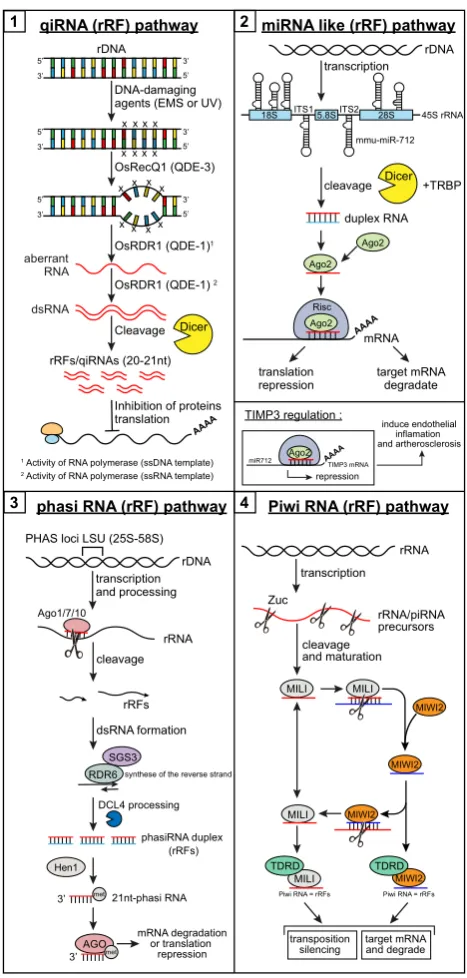
Figure 1. The biogenesis and function of rRFs. (1) QiRNA/rRF pathway
250
discovered in fungi (Neurospora crassa)61, and recently found in plants, flies
251
and mammals64, 69-71. These rRFs originate from rDNA after DNA damage, 252
which is detected by OsRecQ1 (RecQ DNA helicase homologue/QDE-3). This
253
leads to recruitment of OsRDR1 (RNA-dependent RNA polymerase [RdRp]
254
homologue/QDE-1) at the ssDNA site, production of aberrant RNA (aRNA)
255
from ssDNA and conversion of the aRNA into double-stranded RNA
256
(dsRNA) via its RdRp activity. The dsRNA substrate is processed by Dicer
257
into qiRNA rRFs, which then serves as guide RNA to repress mRNA
258
translation. (2) Native rRNAs harbor miRNA sequences, which may be
259
generated under specific conditions (e.g., stress). These miRNAs may be
260
located in ITS1, as hsa-miRNA-663 in humans60, or in ITS2, as 261
1 Activity of RNA polymerase (ssDNA template)
2 Activity of RNA polymerase (ssRNA template)
rDNA
DNA-damaging agents (EMS or UV)
transcription rDNA cleavage +TRBP duplex RNA mRNA miR712 repression target mRNA degradate translation repression
TIMP3 regulation :
AAAA AAAA Ago2 Ago2 Ago2 Risc OsRecQ1 (QDE-3)
OsRDR1 (QDE-1)1
OsRDR1 (QDE-1) 2
rRFs/qiRNAs (20-21nt)
Inhibition of proteins translation
transcription and processing PHAS loci LSU (25S-58S)
Cleavage
aberrant RNA
dsRNA x
x x x x
x x x x
x x x x x x x
qiRNA (rRF) pathway miRNA like (rRF) pathway
1 2
phasi RNA (rRF) pathway 4 Piwi RNA (rRF) pathway 3 5’ 3’ 3’ 5’ rDNA rRNA rRNA cleavage rRFs 5’ 3’ 3’ 5’ 5’ 3’ 3’ 3’ 5’
18S 28S 45S rRNA mmu-miR-712 5.8S ITS1 ITS2 TIMP3 mRNA induce endothelial inflamation and artherosclerosis AAAA Ago2 MILI MILI MIWI2 MIWI2 MIWI2 MIWI2 MILI MILI
Piwi RNA = rRFs
Dicer Dicer Ago1/7/10 dsRNA formation transcription Zuc rRNA/piRNA precursors cleavage and maturation SGS3
Piwi RNA = rRFs
TDRD target mRNA and degrade transposition silencing RDR6 DCL4 processing
synthese of the reverse strand
mmu-miRNA-712 in mice72. In Opium poppy, two and three miRNAs are 262
present in the 18S and 28S rRNAs, respectively73. These miRNAs/rRFs follow
263
the non-canonical miRNA pathway and repress translation of its mRNA
264
targets. For example, in mice, tissue inhibitor of metalloproteinase 3 (TIMP3)
265
mRNA is repressed by miR-712. TIMP3 being an inhibitor of MMP2/9
266
(matrix metalloproteinase-2/9) and of ADAM 10/12 (disintegrin and
267
metalloproteinase 10/12) expression72, its repression induces endothelial 268
inflammation and atherosclerosis. (3) In the phasiRNA/rRF pathway, the
269
large subunit (LSU) loci of rDNA are transcribed into phasiRNA precursors
270
(pre-phasiRNAs). A miRNA incorporated into AGO1 (or 7 or 10) effector
271
complexes guides endonucleolytic cleavage of the pre-phasiRNA74, 272
generating two rRFs, one of which acts as an RDR6 template, leading to the
273
production of dsRNA. DCL4 processes the dsRNA, and produces
274
phasiRNAs that are methylated (Met) by HEN175. Once incorporated into 275
AGO1-loaded RISC, phasiRNAs/rRFs (21 nt) guide cleavage of homologous
276
mRNAs76, illustrating the importance and biological significance of rRFs. (4) 277
In the PIWI–piRNA/rRF pathway, some piRNA/rRF precursors are produced
278
from rDNA. In the primary processing pathway, piRNA precursor are
279
transcribed, exported to the cytoplasm, processed by Zuc and methylated by
280
the methyltransferase Hen177. The resulting mature piRNAs are selected and 281
loaded onto MILI protein (in mouse, PIWI or AUB in Drosophila), which can
282
enter the secondary processing pathway (the ping-pong cycle).
283
MILI-piRNA/rRF complexes mediate cleavage of piRNA precursors and
284
transposon (and protein-coding) transcripts, which silences transposon and
285
gene expression at the post-transcriptional level78. These cleavage products 286
are then loaded onto MIWI proteins (in mouse, Ago3 in Drosophila), which
287
share functional features with MILI-piRNA/rRF complexes. The piRNA
288
biogenesis pathways are well conserved across species, such as C. elegans,
289
fish and mouse. MILI/PIWI–piRNA complexes are involved in translational
290
regulation by interacting with polysomes79, mRNA cap-binding complex 291
(CBC, in mice), and mRNA deadenylase (DeA, in Drosophila)80. MILI/PIWI 292
proteins and piRNAs regulate the expression of genes and transposons at
293
both transcriptional and post-transcriptional levels. EMS, ethyl
294
methanesulfate; UV, ultraviolet.
295
2.2. Fragments of the 18S ribosomal RNA
296
The biogenesis pathway leading to the formation of the 18S rRNA is different
297
from that of the 5.8S and 28S rRNAs81-82; rRFs derived from the 18S rRNA may thus 298
be generated through different mechanisms and have different regulation
299
modalities59. 300
2.2.1. Discovery: Cleavage, localization and expression pattern
302
The most abundant maternal-type rRF detected during Zebrafish
303
developpement22 comes from the 5’ end of the 18S rRNA and measures 21 nt. The 304
most abundant somatic-type rRFs, however, originate from the 5.8S rRNA, with
305
some rRFs originating from the 18S rRNA. The most abundant rRF derives from
306
the 5’ end of the 18S rRNA and is 130 nt long; it may either exert a function per se or
307
be the precursor of the 21-nt rRF detected in the maternal-type, along a process
308
resembling that of primary miRNAs giving rise to mature miRNAs22. 309
Interestingly, a group of clustered non-canonical miRNAs derive from
310
pre-rRNA (Figures 1 and 2), and three of these miRNAs were mapped to the 18S
311
subunit: miR-2914, miR-2916 and miR-291073. 312
2.2.2. Structure, localization and expression
313
The 130-nt rRF ncRNA derived from the 18S rRNA, as described above, has a
314
secondary structure with a stem and a complex hinge with three smaller hairpins22. 315
In fact, this rRF can form a stem-loop structure potentially similar to other
316
functional ncRNAs, such as tRNAs83 and snoRNAs84, which represents a further 317
clue in the search for evidence that rRFs are not mere degradation products.
318
2.2.3. Function and protein binding
319
It has been reported22 that both the guide and passenger strands of rRFs can 320
associate with Ago proteins, suggesting that the 21-nt rRF RNAs may function like
321
miRNAs and regulate gene expression85; as many as 532 putative target transcripts 322
of rRFs have been identified22. 323
The existence of rRNAs and of rRFs suggest dual molecular functions35, 60, 73, 86. 324
As reported for tRNAs46, rRNAs may either function as mature rRNAs inside 325
ribosomes or be processed into smaller fragments and act in a miRNA-like fashion.
326
Indeed, such rRNA transcript units were shown to harbor as many as five different
327
miRNAs, which, upon their release, are able to directly repress the expression of
328
hundreds of genes at the post-transcriptional level. Finally, these clustered
329
miRNAs were differentially expressed in different tissues, suggesting that rRNA
330
processing into rRFs may be placed under specific spatio-temporal control73. 331
2.3. Fragments of the 5.8S ribosomal RNA
332
The existence of two forms of 5.8S rRNA, with 7 or 8 different nt at their 5' end,
333
is widely described in eukaryotes15, 31-32, 87. Although the ratio between the two 334
forms varies from one organism to another, the shorter form of 5.8S rRNA (5.8Ss) is
335
predominant over the longer form (5.8SL), as it accounts for 80% of the total30, 81, 87. 336
The short and long forms of 5.8S rRNA derive from different biosynthetic
337
pathways, revealing the heterogeneity in the cleavage and processing of this
RNA15, 57, 88, which may lead to the release of small non-coding RNA fragments that 339
have yet-to-discover biological roles. In this section, we will describe the small
340
non-coding RNAs resulting from the 5.8S rRNA, their origin, sequence and
341
cleavage, but also the proteins they are associated with, their expression pattern
342
and their function.
343
2.3.1. Discovery: Cleavage, localization and expression pattern
344
RNA-seq data, obtained from developing Zebrafish22, unveiled the existence of 345
two distinct fragments of the 5.8S rRNA, which correspond to the 5’ and 3’ halves
346
of the 5.8S rRNA. The rRF originating from the 5.8S rRNA 5' end measures 75–76
347
nt or 74 nt, according to whether they come from maternal or somatic cells,
348
respectively23. The length of the 5.8S rRNA 3' end rRF is 74 nt in maternal cells and 349
81 nt in somatic cells22-23. These fragments are relatively long for non-coding 350
RNAs67; although they are longer than miRNAs68 or piwiRNAs38, they have a 351
length similar to other small ncRNAs, such as tRNA fragments (tRFs)43, 46, 89, and 352
snoRNAs. Interestingly, tRNA cleavage into tRFs has often been described as a
353
stress-dependent phenomenon90-94, and many authors describe a role for these tRFs 354
in translational regulation95-98. One can thus imagine that a similar phenomenon 355
may occur for the 5.8S rRNA and lead to the production of long and shorter rRFs
356
under stress conditions99-100. 357
Because the rRFs mentioned above are not the only ones originating from the
358
5.8S RNA in eukaryotes; some forms are shorter and more abundant59, 99-100, and are 359
possibly generated by a process similar to the one described for miRNAs and
360
involving one or more Dicer-like endoribonucleases. For instance, the highly
361
abundant rRFs discovered in Piper nigrum77, originating from the 5’ end of the 362
5.8SL rRNA and representing the largest subset of rRFs of 23 nt99. 363
The majority of the 20-nt long fragments deriving from the mature sequences of
364
tRNAs, rRNAs, snoRNAs and small nuclear RNAs (snRNAs), are produced, in a
365
specific cleavage pattern, from the 5' or 3' end100-101. The 5’ or 3’ end origin seems to 366
be different according to the tissues, development stages22 or environment101. Li et 367
al.101 have shown that the rRFs derived from 5.8S, 18S and 28S rRNAs are 368
generated upon cleavage of either the 5' and 3' end, with a preference for a 3' end
369
origin in human cells. Interestingly, most of the prominent clustered rRFs are
370
coming from the 5.8S, rather than the 18S or 28S, rRNA22, 59, 99, which is surprising 371
given that the 5.8S rRNA is the shortest of the three. In plants, the 5' end rRF
372
cluster (rRF5) from the 5.8S rRNA is the most abundant, whereas the proportion of
373
rRFs from the internal and 3' end (rRF3) of 5.8S rRNA is much lower99. Similarly, in 374
eggs and in adult tissues of Zebrafish, the 5.8S rRF5 is 3 and 4 times more abundant
375
than the rRF3, respectively22. It differs from the rRFs of the 18S and 28S rRNAs, 376
which are mainly produced by cleavage at the 3’ extremity22. In human cells and in 377
ticks, rRF5 and rRF3, from both the 5.8S and 28S rRNAs, derive from either
378
long, and belong to the rRF3 series59. The higher abundance of rRFs derived from 380
the 5.8S rRNA, compared to the 18S and 28S rRNA-derived fragments, suggests
381
that these rRFs may be protected from degradation and stabilized through their
382
association with proteins. The relative abundance and cross-species conservation
383
of the rRFs generated59, as well as the bioactivity of RNA sequences of similar size, 384
prompt the need for further investigations into the molecular and biological role
385
and function of rRFs.
386
Interestingly, three regions of 5.8S rRNA can form helices by base pairing with
387
the 28S rRNA102. The longest interaction occurs between the 3’ end of 5.8S and the 388
5’ end of 28S rRNA103, whereas the last two helices form between the 5’ end of 5.8S 389
and the 3’ extremity of 28S rRNA. These helices may be recognized and processed
390
by endoribonucleases to generate rRFs from both 5.8S and 28S rRNAs. Similarly to
391
tRFs, termini-specific processing and asymmetric stabilization could be observed
392
for rRNAs, snoRNAs and snRNAs93, 101. The level of rRF3 and rRF5 produced differ 393
according to the species, environment, aging or developmental stage.
394
A 5’ consensus 5.8S rRF sequence of 22 nt was found in all seed plants
395
(Spermatophytes)99. The major cleavage was observed at the cytosine (C) in all 396
species belonging to the Poaceae family. The rRF5 variants harboring a C as the
397
terminal nucleotide ranged from 21 to 25 nt in length, and were the major form of
398
rRF5 produced during pathogenic infection. Together, these results suggest that
399
the 5.8S rRNA precursor may be cleaved at the C, to generate the small ncRNA
400
rRF5, during the formation of 5.8S rRNA in pathogen-stressed plants. The rRF
401
sequences produced by the 5.8S rRNA are also well defined and conserved,
402
suggesting that rRF generation is a finely tuned process, and that rRFs may fulfill
403
conserved function(s) as yet to be determined.
404
A new small ncRNA, mapping to the 5’ region of rRFs and called cosRNAs
405
(clustered organellar short RNA fragments), were recently identified104. These rRFs 406
are between 18 and 40 nt in length, and could be generated by endonucleolytic
407
cleavage along rRNA maturation. Importantly, cosRNAs do not exhibit a random
408
distribution, as expected for a stochastic RNA degradation process, but were found
409
specifically enriched at selected 5’ ends of rRNA. Together, these data further
410
support that specific small ncRNAs could be derived from rRNA.
411
A large group of piRNAs and endogenous small interfering
412
RNAs (endo-siRNAs), produced upon rRNA processing, have been identified as
413
“unconventional” small ncRNAs with regulatory functions105. These rRFs are 414
particularly abundant in spermatozoa. Notably, the most abundant rRF comes
415
from the 5’ end of the 5.8S rRNA, measures 23 nt in length and is present at >4
416
million reads in the spermatozoa samples105; such an abundant rRF likely plays a 417
role in gametes.
The 5.8S rRNA participates to ribosome translocation and thus exerts an
419
essential role in protein synthesis14, 106. The formation of 5.8S rRNA may give rise to 420
rRFs that may regulate 5.8S rRNA function in mRNA translation, by (i) interfering
421
with the liaison between the 5.8S and the 28S rRNAs, (ii) impairing the function of
422
ribosomal proteins, and/or (iii) exerting a different function as part of another RNP
423
complex. The abundance of 5.8S rRNA in cells and the different pathways involved
424
in its processing are expected to yield relatively high levels of rRFs, which may
425
mediate important regulatory functions, and possibly contribute to ribosome
426
heterogeneity by interacting with the translation machinery elements105, 107-109. 427
2.3.2. Structure, localization and expression
428
In silico analysis of Arabidopsis thaliana 5.8S rRNA predicts a secondary structure
429
composed of hairpins and of a non-canonical miRNA-like short hairpin precursor,
430
to which the second most abundant class of 5.8S rRFs could be mapped99. Locati et 431
al.23 discovered that the cleavage site lies in a loop at the exact location where the 432
maternal-type 5.8S rRNA sequence has an AC insertion, as compared to the
433
somatic one22. This process is similar to the cleavage of the tRNA anticodon loop, 434
by an endoribonuclease, yielding tRNA 5’ and 3’ halves110-112. Lately, the 5’ and 3’ 435
halves, resulting from the 5.8S rRNA cut, were found to display rather strong
436
secondary structures, showing long stable stems22. Once the 5.8S rRNA is cut, the 5’ 437
half (rRF5) has only two 28S rRNA binding regions, and the 3’ half (rRF3) one.
438
Regarding these two or one potentials binding region between the two rRFs and
439
the 28S rRNA, we could imagine a competition effect of these rRFs on the 5.8S and
440
28S rRNA hybridation. For example, this competition may slow down the LSU
441
speed association.
442
Concerning expression patterns, rRNA-derived sequences were more abundant
443
than snoRNAs and snRNAs, but less abundant than tRFs in human and mouse
444
cells100. Several observations indicate that cleavage of tRNAs and rRNAs is induced 445
by various stresses93, 95-97, 100. Wang et al.100 found that 8,822 srRNAs were responsive 446
to heat stress, and that production of sRNAs from tRNAs, 5.8S rRNAs and 28S
447
rRNAs was more specific than that from the 5S rRNAs and 18S rRNAs100. Although 448
maternal-type 5.8S rRNA is degraded during the late stages of embryogenesis, the
449
level of 5.8S rRFs is relatively unaffected, suggesting that these rRFs are stabilized
450
and are not by-products of normal 5.8S rRNA degradation.
451
2.3.3. Function and protein binding
452
RNA-seq analysis of Argonaute co-immunoprecipitation experiments113-115 in 453
Arabidopsis thaliana and Oryza sativa revealed an association between 5.8S rRF5
454
variants and Argonaute complexes99, such as Ago1 to Ago999. Specific Argonaute 455
association may confer specialized function to 5.8S rRF5s, support their
456
functionality and suggests that they may have a gene regulatory role similar to
457
miRNAs. However, unlike miRNAs, rRF maturation neither depends on Dicer or
Drosha-mediated processing, nor does it rely on DGCR8 activity101. Interestingly, 459
studies have found an association between rRFs and some proteins, such as PIWI
460
proteins for qiRNA or piRNA, and their potential involvement in
461
post-transcriptional regulation of mRNA transcripts (Figure 1)40. 462
Together, these results suggest that rRFs may exert important functions in
463
fundamental mechanisms through their association with specific proteins, as each
464
rRF may exert a specialized function depending on its incorporation into specific
465
RNP complexes.
466
2.4. Fragments of the ITS1 and ITS2 RNAs
467
Deep sequencing analysis of small RNAs that emanate from the highly repetitive
468
rDNA arrays of Drosophila revealed the existence of small RNAs deriving from
469
internal transcribed spacer (ITS) of rRNA60. The authors also identified a novel, 470
deeply conserved and widely expressed noncanonical miRNA mapping to the ITS1
471
region of rDNA60, which was not identified previously due to bioinformatics filters 472
removing such repetitive sequences.
473
Furthermore, in the filamentous fungus model Neurospora, numerous qiRNAs
474
derived from the external and internal transcribed spacer regions (ETS, ITS1 and
475
ITS2) have been described61. They are about 20–21 nt long with a strong occurrence 476
of uridine (U) at their 5′ end and originate from both sense and antisense strands of
477
the ribosomal DNA locus (Figure 2). The biogenesis of qiRNAs requires the
478
formation of double-stranded RNAs (dsRNAs) reminiscent of the structure of
479
miRNA duplexes49, 61. Their association with the QDE-2 protein, as well as their 5′ 480
and 3′ end nucleotide preferences suggest that qiRNAs are specific rRNA-derived
481
RNAs, and not degradation products (Figure 1)61. qiRNA expression requires DNA 482
damage-induced aberrant RNAs (aRNAs) as a precursor, a process that depends
483
on QDE-1 and QDE-3 function. One potential role for qiRNAs in DNA damage
484
response would be to inhibit protein translation.
485
According to a study conducted by Son et al.72, it is now clear that miR-712 is 486
generated upon pre-ribosomal RNA cleavage by the exoribonuclease XRN1, which
487
is involved in pre-rRNA maturation72, 81. In mice, the pre-miR-712 sequence is 488
embedded in the ITS2 region of the pre-rRNA72. The authors identified miR-712 as 489
a negative regulator of tissue inhibitor of metalloproteinase 3 (TIMP3) expression.
490
Furthermore, neutralizing miR-712 by anti-miR-712 rescues TIMP3 expression and
491
prevents disease progression in murine models of atherosclerosis. Similarly to
492
miR-712 in mice, a human-specific miR-663 could be derived from the spacer
493
region of human RN45S gene (Figures 1 et 2)72. 494
Like mature rRNA, the ITS1 and ITS2 sequence length increased during
495
evolution116. These lengthened sequences not only serve to recruit proteins and 496
enzymes involved in rRNA biogenesis, but they may also harbor the sequence of
functional ncRNAs, such as miRNAs or qiRNAs61, 72, and participate to 498
post-transcriptional regulation or DNA damage response. This is why ITS1 and
499
ITS2 should be studied, not only for their role in rRNA biogenesis, but also as
500
template sequences for the biogenesis of small ncRNAs.
501
502
Figure 2. List of the major rRFs reported in the literature. The rRFs have
503
been classified beyond the provenance from the 18S, 5.8S, 28S, ITS1 or ITS2
504
rRNA. For each rRF, the name, species of origin and length are specified.
505
3. Conclusions 506
Taken together, the studies discussed in this review article demonstrate that the
507
28S, 18S and 5.8S rRNAs, and even the ITS1 and ITS2, produce one or more small
508
rRFs. These rRFs are present at various, yet significant, levels in different cell types
509
or organs, and during development, like in the oftenly described Zebrafish
510
development model. The generation of these small rRFs does not appear to result
511
from random degradation of the associated mature rRNAs. Moreover, the
512
degradation rate of mature cytoplasmic rRNAs is generally beyond detection
513
under normal conditions117, as the rRNA is first fragmented by endoribonucleases 514
and then the resulting by-products are rapidly degraded into mononucleotides by
515
exoribonucleases118-119. Small rRF detection attests of their relative stability and 516
implies that they do not result from normal cellular ribosome turnover. The caveat
517
has to be taken into account that the study of rRFs has been hampered, and is still
518
hampered, by the long-set bioinformatics pipelines that consider rRFs as mere 519
degradation products and systematically remove small RNA sequencing reads
520
mapping to rRNAs from the data56, 86.
521
Whereas the notion of degradation products is the first to come to mind when
522
considering small rRFs, it was shown recently that tRNAs and rRNAs undergo
523
stress-induced cleavage to produce stable rRFs products, and that this mechanism
524
is conserved from yeast to human cells93-96, 98. Interestingly, the best-described rRFs 525
in the literature were found to be associated with proteins, such as Ago, PIWI or
526
PHAS proteins, suggesting that they function as part of RNP complexes. While
527
their functional and biological significance remains to be fully appreciated, we
528
ETS 18S ITS1 5.8S ITS2 28S
rRF from 28S rRNA
rRF from ITS1 rRNA
rRF from 5.8S rRNA rRF from 18S rRNA
45S rRNA 5’ 3’
Name Species Lenght (nt)
rRF3-00000159 Human 20
rRF3 (srRNA maternal type)22 Zebrafish 80
rRF3 (srRNA somatic type)22 Zebrafish 80
mir-2182 (rRF5)35 Mouse 22
mir-5102 (rRF)35 Mouse 24
mir-5109 (rRF)35 Mouse 23
piR-1056 (rRF) 9 Mouse 26
piR-16 (rRF3,srRNA-12811-28 )49 Mouse 28
phasiRNA/rRF (sf-326-1-siR1)36 Plant (Chinese Sacred Lotus) 21
phasiRNA/rRF (sf-326-1-siR16)36 Plant (Chinese Sacred Lotus) 21
qiRNA (rRF)61 Filamentous fungus 27
Name Species Lenght (nt) rRF5 (srRNA maternal type)22 Zebrafish 21
rRF5 (srRNA somatic type)22 Zebrafish 130
srRNA-4074-28 (piR-638)49 Mouse 28
srRNA-5850-27 (piR-1963)49 Mouse 27
Name Species Lenght (nt) rRF5 (srRNA maternal type)22 Zebrafish 82
rRF5 (srRNA somatic type)22 Zebrafish 81
piRNA (rRF, spermatozoa specific)105 Mouse 21
phasiRNA/rRF (sf-326-2-siR9)36 Chinese Sacred Lotus 21
qiRNA (rRF)61 Filamentous fungus 20
Name Species Lenght (nt) mir-10404/mir-ITS1 60 Drosophila 22
rRF from ITS2 rRNA
might want to speculate that some rRFs may play a role in rRNA
529
processing/degradation as well as in miRNA-like pathways. Therefore, we may
530
want to consider rRNA both as a central player in the mRNA translational
531
machinery, as a constituent of ribosomes, as well as a cleavable precursor of small
532
rRFs, which may be considered as a novel class of potentially functional sRNAs
533
that may regulate gene expression post-translationally.
534
Funding: This work and the article processing charges (APC) were funded by
535
Natural Sciences and Engineering Research Council of Canada (NSERC) Discovery
536
Grant number 262938-2013.
537
Acknowledgments: None.
538
Conflicts of Interest: The authors state that they have no conflict of interests.
539
References 540
1. Ben-Shem, A.; Garreau de Loubresse, N.; Melnikov, S.; Jenner, L.; Yusupova, G.; 541
Yusupov, M., The structure of the eukaryotic ribosome at 3.0 A resolution. Science 2011, 542
334 (6062), 1524-9. 543
2. Sloan, K. E.; Bohnsack, M. T.; Schneider, C.; Watkins, N. J., The roles of SSU 544
processome components and surveillance factors in the initial processing of human 545
ribosomal RNA. RNA 2014, 20 (4), 540-50. 546
3. de la Cruz, J.; Karbstein, K.; Woolford, J. L., Jr., Functions of ribosomal proteins in 547
assembly of eukaryotic ribosomes in vivo. Annu Rev Biochem 2015, 84, 93-129. 548
4. Ramesh, M.; Woolford, J. L., Jr., Eukaryote-specific rRNA expansion segments 549
function in ribosome biogenesis. RNA 2016, 22 (8), 1153-62. 550
5. Ciganda, M.; Williams, N., Eukaryotic 5S rRNA biogenesis. Wiley Interdiscip Rev RNA 551
2011, 2 (4), 523-33. 552
6. Kobayashi, T., Ribosomal RNA gene repeats, their stability and cellular senescence. 553
Proc Jpn Acad Ser B Phys Biol Sci 2014, 90 (4), 119-29.
554
7. Goodfellow, S. J.; Zomerdijk, J. C., Basic mechanisms in RNA polymerase I 555
transcription of the ribosomal RNA genes. Subcell Biochem 2013, 61, 211-36. 556
8. Mancio-Silva, L.; Zhang, Q.; Scheidig-Benatar, C.; Scherf, A., Clustering of dispersed 557
ribosomal DNA and its role in gene regulation and chromosome-end associations in malaria 558
parasites. Proc Natl Acad Sci U S A 2010, 107 (34), 15117-22. 559
9. Zentner, G. E.; Saiakhova, A.; Manaenkov, P.; Adams, M. D.; Scacheri, P. C., 560
Integrative genomic analysis of human ribosomal DNA. Nucleic Acids Res 2011, 39 (12), 561
4949-60. 562
10. Cullings, K. W.; Vogler, D. R., A 5.8S nuclear ribosomal RNA gene sequence database: 563
applications to ecology and evolution. Mol Ecol 1998, 7 (7), 919-23. 564
11. Doris, S. M.; Smith, D. R.; Beamesderfer, J. N.; Raphael, B. J.; Nathanson, J. A.; Gerbi, 565
S. A., Universal and domain-specific sequences in 23S-28S ribosomal RNA identified by 566
12. Gagnon, S.; Bourbeau, D.; Levesque, R. C., Secondary structures and features of the 568
18S, 5.8S and 26S ribosomal RNAs from the Apicomplexan parasite Toxoplasma gondii. 569
Gene 1996, 173 (2), 129-35.
570
13. Schultz, J.; Wolf, M., ITS2 sequence-structure analysis in phylogenetics: a how-to 571
manual for molecular systematics. Mol Phylogenet Evol 2009, 52 (2), 520-3. 572
14. Abou Elela, S.; Nazar, R. N., Role of the 5.8S rRNA in ribosome translocation. Nucleic 573
Acids Res 1997, 25 (9), 1788-94.
574
15. Lafontaine, D. L., Noncoding RNAs in eukaryotic ribosome biogenesis and function. 575
Nat Struct Mol Biol 2015, 22 (1), 11-9.
576
16. Nerurkar, P.; Altvater, M.; Gerhardy, S.; Schutz, S.; Fischer, U.; Weirich, C.; Panse, V. 577
G., Eukaryotic Ribosome Assembly and Nuclear Export. Int Rev Cell Mol Biol 2015, 319, 578
107-40. 579
17. Poole, A. R.; Vicino, I.; Adachi, H.; Yu, Y. T.; Hebert, M. D., Regulatory RNPs: a novel 580
class of ribonucleoproteins that potentially contribute to ribosome heterogeneity. Biol Open 581
2017, 6 (9), 1342-1354. 582
18. Buchhaupt, M.; Sharma, S.; Kellner, S.; Oswald, S.; Paetzold, M.; Peifer, C.; Watzinger, 583
P.; Schrader, J.; Helm, M.; Entian, K. D., Partial methylation at Am100 in 18S rRNA of 584
baker's yeast reveals ribosome heterogeneity on the level of eukaryotic rRNA modification. 585
PLoS One 2014, 9 (2), e89640.
586
19. Sharma, S.; Lafontaine, D. L. J., 'View From A Bridge': A New Perspective on 587
Eukaryotic rRNA Base Modification. Trends Biochem Sci 2015, 40 (10), 560-575. 588
20. Sloan, K. E.; Warda, A. S.; Sharma, S.; Entian, K. D.; Lafontaine, D. L. J.; Bohnsack, M. 589
T., Tuning the ribosome: The influence of rRNA modification on eukaryotic ribosome 590
biogenesis and function. RNA Biol 2017, 14 (9), 1138-1152. 591
21. Nazar, R. N., Ribosomal RNA processing and ribosome biogenesis in eukaryotes. 592
IUBMB Life 2004, 56 (8), 457-65.
593
22. Locati, M. D.; Pagano, J. F. B.; Abdullah, F.; Ensink, W. A.; van Olst, M.; van Leeuwen, 594
S.; Nehrdich, U.; Spaink, H. P.; Rauwerda, H.; Jonker, M. J.; Dekker, R. J.; Breit, T. M., 595
Identifying small RNAs derived from maternal- and somatic-type rRNAs in zebrafish 596
development. Genome 2018, 61 (5), 371-378. 597
23. Locati, M. D.; Pagano, J. F. B.; Girard, G.; Ensink, W. A.; van Olst, M.; van Leeuwen, 598
S.; Nehrdich, U.; Spaink, H. P.; Rauwerda, H.; Jonker, M. J.; Dekker, R. J.; Breit, T. M., 599
Expression of distinct maternal and somatic 5.8S, 18S, and 28S rRNA types during zebrafish 600
development. RNA 2017, 23 (8), 1188-1199. 601
24. Yi, H.; Xue, L.; Guo, M. X.; Ma, J.; Zeng, Y.; Wang, W.; Cai, J. Y.; Hu, H. M.; Shu, H. 602
B.; Shi, Y. B.; Li, W. X., Gene expression atlas for human embryogenesis. FASEB J 2010, 24 603
(9), 3341-50. 604
25. Sauert, M.; Temmel, H.; Moll, I., Heterogeneity of the translational machinery: 605
Variations on a common theme. Biochimie 2015, 114, 39-47. 606
26. Shi, Z.; Fujii, K.; Kovary, K. M.; Genuth, N. R.; Rost, H. L.; Teruel, M. N.; Barna, M., 607
Heterogeneous Ribosomes Preferentially Translate Distinct Subpools of mRNAs 608
27. Simsek, D.; Tiu, G. C.; Flynn, R. A.; Byeon, G. W.; Leppek, K.; Xu, A. F.; Chang, H. Y.; 610
Barna, M., The Mammalian Ribo-interactome Reveals Ribosome Functional Diversity and 611
Heterogeneity. Cell 2017, 169 (6), 1051-1065 e18. 612
28. Wang, M.; Parshin, A. V.; Shcherbik, N.; Pestov, D. G., Reduced expression of the 613
mouse ribosomal protein Rpl17 alters the diversity of mature ribosomes by enhancing 614
production of shortened 5.8S rRNA. Rna 2015, 21 (7), 1240-8. 615
29. Pan, W.-A.; Tsai, H.-Y.; Wang, S.-C.; Hsiao, M.; Wu, P.-Y.; Tsai, M.-D., The RNA 616
recognition motif of NIFK is required for rRNA maturation during cell cycle progression. 617
RNA Biology 2015, 12 (3), 255-267.
618
30. Henras, A. K.; Plisson-Chastang, C.; O'Donohue, M. F.; Chakraborty, A.; Gleizes, P. E., 619
An overview of pre-ribosomal RNA processing in eukaryotes. Wiley Interdiscip Rev RNA 620
2015, 6 (2), 225-42. 621
31. Mitchell, P.; Petfalski, E.; Tollervey, D., The 3' end of yeast 5.8S rRNA is generated by 622
an exonuclease processing mechanism. Genes Dev 1996, 10 (4), 502-13. 623
32. Thomson, E.; Tollervey, D., The final step in 5.8S rRNA processing is cytoplasmic in 624
Saccharomyces cerevisiae. Mol Cell Biol 2010, 30 (4), 976-84. 625
33. Krogh, N.; Jansson, M. D.; Häfner, S. J.; Tehler, D.; Birkedal, U.; 626
Christensen-Dalsgaard, M.; Lund, A. H.; Nielsen, H., Profiling of 2′-O-Me in human rRNA 627
reveals a subset of fractionally modified positions and provides evidence for ribosome 628
heterogeneity. Nucleic Acids Research 2016, 44 (16), 7884-7895. 629
34. Lee, R. C.; Feinbaum, R. L.; Ambros, V., The C. elegans heterochronic gene lin-4 630
encodes small RNAs with antisense complementarity to lin-14. Cell 1993, 75 (5), 843-54. 631
35. Castellano, L.; Stebbing, J., Deep sequencing of small RNAs identifies canonical and 632
non-canonical miRNA and endogenous siRNAs in mammalian somatic tissues. Nucleic 633
Acids Research 2013, 41 (5), 3339-3351.
634
36. Zheng, Y.; Wang, S.; Sunkar, R., Genome-wide discovery and analysis of phased small 635
interfering RNAs in Chinese sacred lotus. PLoS One 2014, 9 (12), e113790. 636
37. Ghildiyal, M.; Zamore, P. D., Small silencing RNAs: an expanding universe. Nat Rev 637
Genet 2009, 10 (2), 94-108.
638
38. Brennecke, J.; Aravin, A. A.; Stark, A.; Dus, M.; Kellis, M.; Sachidanandam, R.; 639
Hannon, G. J., Discrete small RNA-generating loci as master regulators of transposon 640
activity in Drosophila. Cell 2007, 128 (6), 1089-103. 641
39. Houwing, S.; Kamminga, L. M.; Berezikov, E.; Cronembold, D.; Girard, A.; van den 642
Elst, H.; Filippov, D. V.; Blaser, H.; Raz, E.; Moens, C. B.; Plasterk, R. H.; Hannon, G. J.; 643
Draper, B. W.; Ketting, R. F., A role for Piwi and piRNAs in germ cell maintenance and 644
transposon silencing in Zebrafish. Cell 2007, 129 (1), 69-82. 645
40. Garcia-Lopez, J.; Alonso, L.; Cardenas, D. B.; Artaza-Alvarez, H.; Hourcade Jde, D.; 646
Martinez, S.; Brieno-Enriquez, M. A.; Del Mazo, J., Diversity and functional convergence of 647
small noncoding RNAs in male germ cell differentiation and fertilization. RNA 2015, 21 (5), 648
946-62. 649
41. Wittmann, J.; Jack, H. M., Serum microRNAs as powerful cancer biomarkers. Biochim 650
Biophys Acta 2010, 1806 (2), 200-7.
42. Taft, R. J.; Glazov, E. A.; Lassmann, T.; Hayashizaki, Y.; Carninci, P.; Mattick, J. S., 652
Small RNAs derived from snoRNAs. RNA 2009, 15 (7), 1233-40. 653
43. Lee, Y. S.; Shibata, Y.; Malhotra, A.; Dutta, A., A novel class of small RNAs: 654
tRNA-derived RNA fragments (tRFs). Genes Dev 2009, 23 (22), 2639-49. 655
44. Keam, S. P.; Hutvagner, G., tRNA-Derived Fragments (tRFs): Emerging New Roles for 656
an Ancient RNA in the Regulation of Gene Expression. Life (Basel) 2015, 5 (4), 1638-51. 657
45. Soares, A. R.; Santos, M., Discovery and function of transfer RNA-derived fragments 658
and their role in disease. Wiley Interdiscip Rev RNA 2017, 8 (5). 659
46. Venkatesh, T.; Suresh, P. S.; Tsutsumi, R., tRFs: miRNAs in disguise. Gene 2016, 579 660
(2), 133-8. 661
47. Martens-Uzunova, E. S.; Olvedy, M.; Jenster, G., Beyond microRNA--novel RNAs 662
derived from small non-coding RNA and their implication in cancer. Cancer Lett 2013, 340 663
(2), 201-11. 664
48. Falaleeva, M.; Stamm, S., Processing of snoRNAs as a new source of regulatory 665
non-coding RNAs: snoRNA fragments form a new class of functional RNAs. Bioessays 666
2013, 35 (1), 46-54. 667
49. Wei, H.; Zhou, B.; Zhang, F.; Tu, Y.; Hu, Y.; Zhang, B.; Zhai, Q., Profiling and 668
identification of small rDNA-derived RNAs and their potential biological functions. PLoS 669
One 2013, 8 (2), e56842. 670
50. Li, D.; Zhang, J.; Wang, M.; Li, X.; Gong, H.; Tang, H.; Chen, L.; Wan, L.; Liu, Q., 671
Activity dependent LoNA regulates translation by coordinating rRNA transcription and 672
methylation. Nat Commun 2018, 9 (1), 1726. 673
51. Erales, J.; Marchand, V.; Panthu, B.; Gillot, S.; Belin, S.; Ghayad, S. E.; Garcia, M.; 674
Laforets, F.; Marcel, V.; Baudin-Baillieu, A.; Bertin, P.; Coute, Y.; Adrait, A.; Meyer, M.; 675
Therizols, G.; Yusupov, M.; Namy, O.; Ohlmann, T.; Motorin, Y.; Catez, F.; Diaz, J. J., 676
Evidence for rRNA 2'-O-methylation plasticity: Control of intrinsic translational capabilities 677
of human ribosomes. Proc Natl Acad Sci U S A 2017, 114 (49), 12934-12939. 678
52. Genuth, N. R.; Barna, M., The Discovery of Ribosome Heterogeneity and Its 679
Implications for Gene Regulation and Organismal Life. Mol Cell 2018, 71 (3), 364-374. 680
53. Noeske, J.; Cate, J. H., Structural basis for protein synthesis: snapshots of the ribosome 681
in motion. Curr Opin Struct Biol 2012, 22 (6), 743-9. 682
54. Wang, B.; Ye, K., Nop9 binds the central pseudoknot region of 18S rRNA. Nucleic 683
Acids Res 2017, 45 (6), 3559-3567.
684
55. Fowler, E. K.; Mohorianu, I.; Smith, D. T.; Dalmay, T.; Chapman, T., Small RNA 685
populations revealed by blocking rRNA fragments in Drosophila melanogaster reproductive 686
tissues. PLoS One 2018, 13 (2), e0191966. 687
56. Choy, J. Y.; Boon, P. L.; Bertin, N.; Fullwood, M. J., A resource of ribosomal 688
RNA-depleted RNA-Seq data from different normal adult and fetal human tissues. Sci Data 689
2015, 2, 150063. 690
57. Gonzalez, I. L.; Sylvester, J. E.; Schmickel, R. D., Human 28S ribosomal RNA sequence 691
58. Tomecki, R.; Labno, A.; Drazkowska, K.; Cysewski, D.; Dziembowski, A., hUTP24 is 693
essential for processing of the human rRNA precursor at site A1, but not at site A0. RNA Biol 694
2015, 12 (9), 1010-29. 695
59. Chen, Z.; Sun, Y.; Yang, X.; Wu, Z.; Guo, K.; Niu, X.; Wang, Q.; Ruan, J.; Bu, W.; Gao, 696
S., Two featured series of rRNA-derived RNA fragments (rRFs) constitute a novel class of 697
small RNAs. PLoS One 2017, 12 (4), e0176458. 698
60. Chak, L.-L.; Mohammed, J.; Lai, E. C.; Tucker-Kellogg, G.; Okamura, K., A deeply 699
conserved, noncanonical miRNA hosted by ribosomal DNA. Rna 2015, 21 (3), 375-384. 700
61. Lee, H. C.; Chang, S. S.; Choudhary, S.; Aalto, A. P.; Maiti, M.; Bamford, D. H.; Liu, 701
Y., qiRNA is a new type of small interfering RNA induced by DNA damage. Nature 2009, 702
459 (7244), 274-7. 703
62. Rishi, A.; Chen, H.; Kobayashi, K.; Miyao, A.; Hirochika, H.; Yamaoka, N.; 704
Nishiguchi, M., Both OsRecQ1 and OsRDR1 Are Required for the Production of Small 705
RNA in Response to DNA-Damage in Rice. PLoS ONE 2013, 8 (1), e55252 706
63. Elbarbary, R. A.; Takaku, H.; Uchiumi, N.; Tamiya, H.; Abe, M.; Takahashi, M.; 707
Nishida, H.; Nashimoto, M., Modulation of gene expression by human cytosolic tRNase 708
Z(L) through 5'-half-tRNA. PLoS One 2009, 4 (6), e5908. 709
64. Wei, W.; Ba, Z.; Gao, M.; Wu, Y.; Ma, Y.; Amiard, S.; White, C. I.; Rendtlew 710
Danielsen, J. M.; Yang, Y. G.; Qi, Y., A role for small RNAs in DNA double-strand break 711
repair. Cell 2012, 149 (1), 101-12. 712
65. Zhang, X.; Zhao, H.; Gao, S.; Wang, W. C.; Katiyar-Agarwal, S.; Huang, H. D.; Raikhel, 713
N.; Jin, H., Arabidopsis Argonaute 2 regulates innate immunity via miRNA393( *)-mediated 714
silencing of a Golgi-localized SNARE gene, MEMB12. Mol Cell 2011, 42 (3), 356-66. 715
66. Czech, B.; Malone, C. D.; Zhou, R.; Stark, A.; Schlingeheyde, C.; Dus, M.; Perrimon, 716
N.; Kellis, M.; Wohlschlegel, J. A.; Sachidanandam, R.; Hannon, G. J.; Brennecke, J., An 717
endogenous small interfering RNA pathway in Drosophila. Nature 2008, 453 (7196), 718
798-802. 719
67. Benhamed, M.; Herbig, U.; Ye, T.; Dejean, A.; Bischof, O., Senescence is an 720
endogenous trigger for microRNA-directed transcriptional gene silencing in human cells. 721
Nat Cell Biol 2012, 14 (3), 266-75.
722
68. Genuth, N. R.; Barna, M., Heterogeneity and specialized functions of translation 723
machinery: from genes to organisms. Nat Rev Genet 2018, 19 (7), 431-452. 724
69. Francia, S.; Michelini, F.; Saxena, A.; Tang, D.; de Hoon, M.; Anelli, V.; Mione, M.; 725
Carninci, P.; d'Adda di Fagagna, F., Site-specific DICER and DROSHA RNA products 726
control the DNA-damage response. Nature 2012, 488 (7410), 231-5. 727
70. Michalik, K. M.; Bottcher, R.; Forstemann, K., A small RNA response at DNA ends in 728
Drosophila. Nucleic Acids Res 2012, 40 (19), 9596-603. 729
71. Sharma, V.; Misteli, T., Non-coding RNAs in DNA damage and repair. FEBS Lett 2013, 730
587 (13), 1832-9. 731
72. Son, D. J.; Kumar, S.; Takabe, W.; Kim, C. W.; Ni, C. W.; Alberts-Grill, N.; Jang, I. H.; 732
Kim, S.; Kim, W.; Won Kang, S.; Baker, A. H.; Woong Seo, J.; Ferrara, K. W.; Jo, H., The 733
atypical mechanosensitive microRNA-712 derived from pre-ribosomal RNA induces 734
73. Davoodi Mastakani, F.; Pagheh, G.; Rashidi Monfared, S.; Shams-Bakhsh, M., 736
Identification and expression analysis of a microRNA cluster derived from pre-ribosomal 737
RNA in Papaver somniferum L. and Papaver bracteatum L. PLoS One 2018, 13 (8), 738
e0199673. 739
74. Fei, Q.; Xia, R.; Meyers, B. C., Phased, secondary, small interfering RNAs in 740
posttranscriptional regulatory networks. Plant Cell 2013, 25 (7), 2400-15. 741
75. Borges, F.; Martienssen, R. A., The expanding world of small RNAs in plants. Nat Rev 742
Mol Cell Biol 2015, 16 (12), 727-41.
743
76. Eckardt, N. A., The plant cell reviews aspects of microRNA and PhasiRNA regulatory 744
function. Plant Cell 2013, 25 (7), 2382. 745
77. Siomi, M. C.; Sato, K.; Pezic, D.; Aravin, A. A., PIWI-interacting small RNAs: the 746
vanguard of genome defence. Nat Rev Mol Cell Biol 2011, 12 (4), 246-58. 747
78. Ku, H. Y.; Lin, H., PIWI proteins and their interactors in piRNA biogenesis, germline 748
development and gene expression. Natl Sci Rev 2014, 1 (2), 205-218. 749
79. Grivna, S. T.; Pyhtila, B.; Lin, H., MIWI associates with translational machinery and 750
PIWI-interacting RNAs (piRNAs) in regulating spermatogenesis. Proc Natl Acad Sci U S A 751
2006, 103 (36), 13415-20. 752
80. Rouget, C.; Papin, C.; Boureux, A.; Meunier, A. C.; Franco, B.; Robine, N.; Lai, E. C.; 753
Pelisson, A.; Simonelig, M., Maternal mRNA deadenylation and decay by the piRNA 754
pathway in the early Drosophila embryo. Nature 2010, 467 (7319), 1128-32. 755
81. Lindahl, L.; Bommankanti, A.; Li, X.; Hayden, L.; Jones, A.; Khan, M.; Oni, T.; Zengel, 756
J. M., RNase MRP is required for entry of 35S precursor rRNA into the canonical processing 757
pathway. RNA 2009, 15 (7), 1407-16. 758
82. Tafforeau, L.; Zorbas, C.; Langhendries, J. L.; Mullineux, S. T.; Stamatopoulou, V.; 759
Mullier, R.; Wacheul, L.; Lafontaine, D. L., The complexity of human ribosome biogenesis 760
revealed by systematic nucleolar screening of Pre-rRNA processing factors. Mol Cell 2013, 761
51 (4), 539-51. 762
83. Pak, D.; Root-Bernstein, R.; Burton, Z. F., tRNA structure and evolution and 763
standardization to the three nucleotide genetic code. Transcription 2017, 8 (4), 205-219. 764
84. Shah, B. N.; Liu, X.; Correll, C. C., Imp3 unfolds stem structures in pre-rRNA and U3 765
snoRNA to form a duplex essential for small subunit processing. RNA 2013, 19 (10), 766
1372-83. 767
85. Jonas, S.; Izaurralde, E., Towards a molecular understanding of microRNA-mediated 768
gene silencing. Nat Rev Genet 2015, 16 (7), 421-33. 769
86. Blenkiron, C.; Tsai, P.; Brown, L. A.; Tintinger, V.; Askelund, K. J.; Windsor, J. A.; 770
Phillips, A. R., Characterisation of the small RNAs in the biomedically important 771
green-bottle blowfly Lucilia sericata. PLoS One 2015, 10 (3), e0122203. 772
87. Yu, Z.; Cai, C.; Gao, S.; Simon, N. I.; Shen, H. C.; Balk, S. P., Galeterone prevents 773
androgen receptor binding to chromatin and enhances degradation of mutant androgen 774
receptor. Clin Cancer Res 2014, 20 (15), 4075-85. 775
88. Marcel, V.; Catez, F.; Diaz, J. J., Ribosome heterogeneity in tumorigenesis: the rRNA 776